

翻訳
過去
過去分詞
三人称単数
動名詞
意味
例文
例文の翻訳
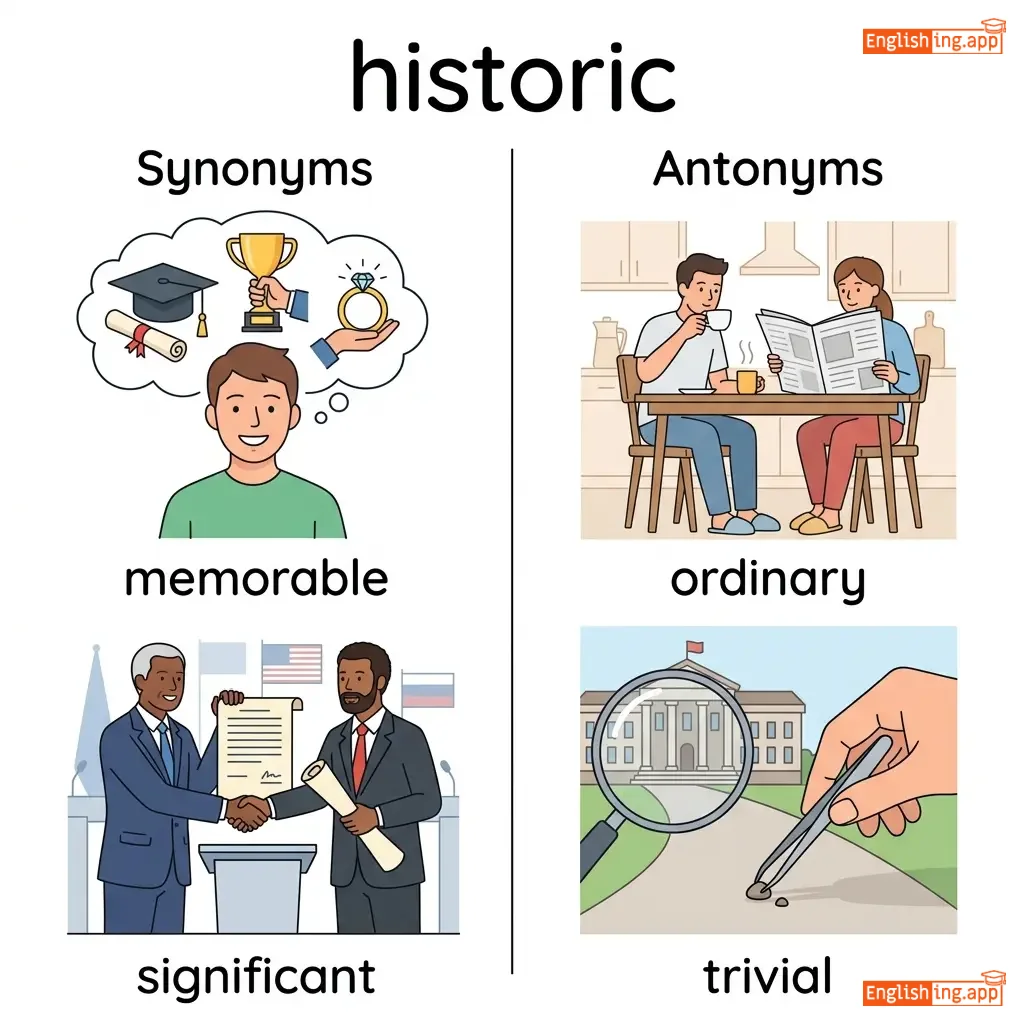
同義語
対義語
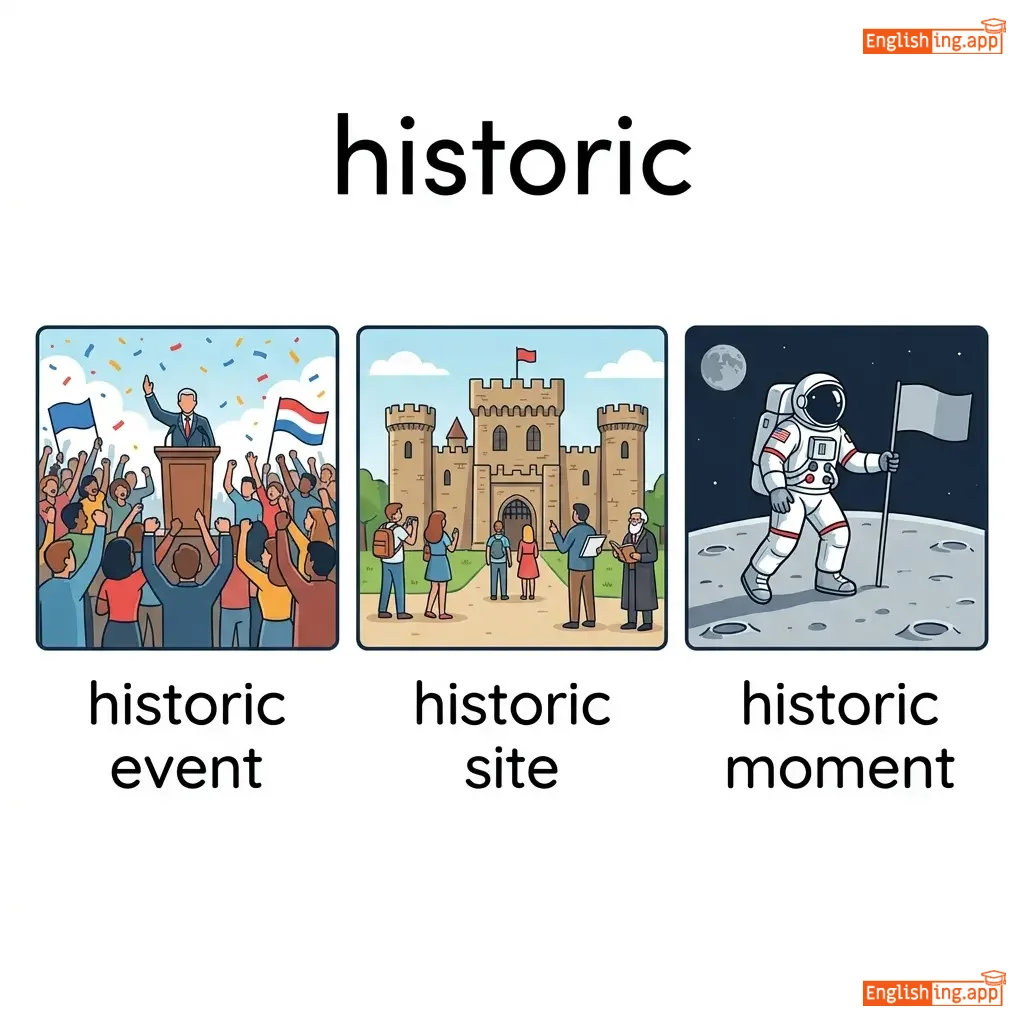
コロケーション
ニーモニック

Swipe left or right, or use the buttons. Tap image to zoom.
例文の翻訳
単語
Lesson 18Lesson 18 - マスクトグル
|
絵文字
|
単語 | Images | 翻訳 | 意味 | 例文 | 例文の翻訳 | 同義語 | 対義語 | コロケーション | ニーモニック |
|---|---|---|---|---|---|---|---|---|---|---|
|
#341
🏛️
|
/hɪˈstɔːrɪk/
adjective
(歴史的)
••••••
|
|
歴史的
rekishiteki
••••••
|
relating to history; famous or important in history; having great and lasting importance
••••••
|
The historic building was preserved as a national monument.
その歴史的な建物は国の記念物として保存されました。
••••••
|
その歴史的な建物は国の記念物として保存されました。
Sono rekishiteki na tatemono wa kuni no kinenbutsu toshite hozon saremashita.
••••••
|
famous, significant, notable, memorable
••••••
|
modern, contemporary, insignificant, unimportant
••••••
|
historic moment, historic building, historic event, historic site
••••••
|
歴史的な建物を保存することを覚えておくために使う。
••••••
|
|
#342
😋
|
/ˈhʌŋɡri/
adjective
(hanguri)
••••••
|
- •••••• |
お腹がすいている
onaka ga suite iru
••••••
|
feeling the need for food; having a strong desire or craving
••••••
|
I am very hungry after working all day.
一日中働いた後でとてもお腹がすいています。
••••••
|
一日中働いた後でとてもお腹がすいています。
Ichinichijuu hataraita ato de totemo onaka ga suiteimasu.
••••••
|
starving, famished, ravenous, peckish
••••••
|
full, satisfied, satiated
••••••
|
hungry for success, go hungry, hungry stomach
••••••
|
お腹 = お + 中 + すいて
••••••
|
|
#343
🏠😢
|
/ˈhoʊmˌsɪk/
adjective
(ホームシック)
••••••
|
- •••••• |
ホームシック; 家と家族を恋しがる
hōmu shikku; ie to kazoku o koishigaru
••••••
|
feeling sad because you are away from home; longing for one's home and family
••••••
|
She felt homesick during her first week at college.
彼女は大学の最初の週にホームシックを感じていました。
••••••
|
彼女は大学の最初の週にホームシックを感じていました。
Kanojo wa daigaku no saisho no shū ni hōmu shikku o kanjite imashita.
••••••
|
nostalgic, longing, yearning
••••••
|
content, settled, at home
••••••
|
feel homesick, get homesick, homesick for home
••••••
|
家から離れると、ホームシックになることがある
••••••
|
|
#344
😠
|
/ˈhɒs.taɪl/
adjective
(ホスタイル)
••••••
|
- •••••• |
敵対的; 攻撃的; 対立的;
tekitai-teki; kōgeki-teki; tairitsuteki
••••••
|
unfriendly; aggressive; antagonistic;
••••••
|
The hostile environment made it difficult to work. |
敵対的な環境は仕事を難しくしました。
tekitai-teki na kankyō wa shigoto o muzukashiku shimashita.
••••••
|
aggressive, unfriendly, antagonistic, belligerent
••••••
|
friendly, welcoming, peaceful, amicable
••••••
|
hostile environment, hostile takeover, hostile attitude
••••••
|
Hostile = 敵対的な環境は戦場のように感じられる。
••••••
|
|
#345
🤧
|
/hɔːrs/
adjective
(ホース)
••••••
|
- •••••• |
しゃがれ声; 叫びすぎや病気でしゃがれる
shagaregoe; sakebisugi ya byouki de shagareru
••••••
|
rough or harsh in sound; having a rough voice from shouting or illness
••••••
|
His voice became hoarse after shouting at the concert. |
コンサートで叫んだ後、彼の声はしゃがれた。
Konsāto de sakenda ato, kare no koe wa shagareta.
••••••
|
rough, harsh, croaky, raspy
••••••
|
clear, smooth, melodious, sweet
••••••
|
hoarse voice, hoarse whisper, hoarse cough, hoarse throat
••••••
|
ja: 'shagare' is rough and easy to recall
••••••
|
|
#346
😤
|
/ˌhɪpəˈkrɪtɪkəl/
adjective
(ヒポクリティカル)
••••••
|
- •••••• |
偽善的な
gizenteki na
••••••
|
behaving in a way that contradicts one's stated beliefs or values
••••••
|
It's hypocritical to preach honesty while lying yourself.
それは嘘をつきながら正直を説くのは偽善的です。
••••••
|
嘘をつきながら正直を説くのは偽善的です。
uso o tsuki nagara shōjiki o toku no wa gizenshiteki desu
••••••
|
two-faced, insincere, dishonest, duplicitous
••••••
|
sincere, genuine, honest, authentic
••••••
|
hypocritical behavior, hypocritical attitude, hypocritical statement
••••••
|
偽善的とは言っていることとすることが反対のこと
••••••
|
|
#347
🔥
|
/hɒt/
adjective
(ホット)
••••••
|
- •••••• |
熱い; 温かい; 焼けるような;
atsui; atakai; yakeru youna
••••••
|
having high temperature; warm; heated;
••••••
|
The coffee is too hot to drink. |
コーヒーは飲むには熱すぎる。
Kōhī wa nomu ni wa atsusugiru
••••••
|
warm, heated, burning, scorching
••••••
|
cold, cool, chilly, freezing
••••••
|
hot weather, hot food, hot water
••••••
|
熱いコーヒー、手が火傷しそう
••••••
|
|
#348
🌟😊
|
/ˈhoʊpfəl/
adjective
(ホープフル)
••••••
|
- •••••• |
希望に満ちた
kibou ni michita
••••••
|
feeling or inspiring optimism about a future event; confident; optimistic
••••••
|
He remained hopeful despite the challenges.
彼は挑戦にもかかわらず希望を持ち続けました。
••••••
|
彼は挑戦にもかかわらず希望を持ち続けました。
Kare wa chōsen ni mo kakawarazu kibou o mochitsuzukemashita.
••••••
|
optimistic, positive, confident
••••••
|
hopeless, pessimistic, despairing
••••••
|
hopeful sign, remain hopeful, hopeful outlook
••••••
|
希望の力で前に進む
••••••
|
|
#349
😔💔
|
/ˈhoʊpləs/
adjective
(ホープレス)
••••••
|
- •••••• |
絶望的; 希望がない
zetsubōteki; kibō ga nai
••••••
|
feeling or causing despair about something; without hope; desperate
••••••
|
The situation seemed hopeless until help arrived. |
助けが到着するまで、状況は絶望的に見えた。
Tasuke ga tōchaku suru made, jōkyō wa zetsubōteki ni mietā.
••••••
|
desperate, despairing, impossible
••••••
|
hopeful, optimistic, promising
••••••
|
hopeless situation, feel hopeless, hopeless case
••••••
|
Hopeless - 絶望的な状況で希望が失われる。
••••••
|
|
#350
🙏
|
/ˈhʌm.bəl/
adjective
(ハンブル)
••••••
|
- •••••• |
謙虚
kenkyo
••••••
|
modest; not proud; unassuming;
••••••
|
Despite his success, he remained humble and kind.
ディスパイト ヒズ サクセス、 ヒー リメインド ハンブル アンド カインド。
••••••
|
彼の成功にもかかわらず、彼は謙虚で親切だった。
Kare no seikou ni mo kakawarazu, kare wa kenkyo de shinsetsu datta.
••••••
|
modest, meek, unassuming, unpretentious
••••••
|
arrogant, proud, boastful, conceited
••••••
|
humble person, humble beginnings, humble opinion
••••••
|
humble = hum + ble; imagine a quiet monk (kenkyo 謙虚) whispering kenkyo to keep ego low.
••••••
|
|
#351
🕳️
|
/ˈhɑlːoʊ/
adjective
(ハロウ)
••••••
|
- •••••• |
空洞; 中身がない;
kudou; nakami ga nai;
••••••
|
having an empty space inside; lacking substance or meaning; insincere
••••••
|
The hollow tree trunk provided shelter for small animals.
ハロウツリーの幹は小さな動物に避難場所を提供しました。
••••••
|
空洞の木の幹は小さな動物に避難場所を提供しました。
Kudou no ki no mi wa chiisana doubutsu ni hinan basho o teikyō shimashita.
••••••
|
empty, vacant, void, concave
••••••
|
solid, full, dense, compact
••••••
|
hollow tree, hollow sound, hollow promise, hollow victory
••••••
|
空洞という意味は、物が空っぽのようなものです。
••••••
|
|
#352
🧊
|
/ˈaɪsi/
adjective
(aisi)
••••••
|
- •••••• |
氷のような; 非常に冷たい; 敵対的
kōri no yō na; hijō ni tsumetai; tekitaiteki
••••••
|
extremely cold; covered with ice; unfriendly or hostile
••••••
|
The icy wind made everyone shiver.
氷のような風が皆を震えさせた。
••••••
|
氷のような風が皆を震えさせた。
Kōri no yō na kaze ga mina o furueta.
••••••
|
freezing, cold, frigid, frosty
••••••
|
warm, hot, friendly, welcoming
••••••
|
icy cold, icy stare, icy road
••••••
|
Icy like ice freezes you (氷のように冷たい)
••••••
|
|
#353
😱👹
|
/ˈhɔːrəbəl/
adjective
(ホリブル)
••••••
|
- •••••• |
恐ろしい; ひどい; 恐怖を引き起こす;
osoroshī; hidoi; kyōfu o hikiokosu
••••••
|
causing or likely to cause horror; shocking; terrible; extremely unpleasant
••••••
|
The accident was a horrible sight to witness. |
その事故は目撃するには恐ろしい光景でした。
Sono jiko wa mokugeki suru ni wa osoroshī kōkei deshita.
••••••
|
terrible, awful, dreadful
••••••
|
wonderful, pleasant, delightful
••••••
|
horrible accident, horrible smell, horrible experience
••••••
|
A horrible accident that leaves you shocked and shaken to your core.
••••••
|
|
#354
💧
|
/ˈhjuː.mɪd/
adjective
(ヒューミッド)
••••••
|
- •••••• |
湿気のある; 湿った
shikke no aru; shimatta
••••••
|
containing moisture; damp; moist;
••••••
|
The humid climate makes it feel hotter than it actually is. |
湿度の高い気候は、実際よりも暑さを感じさせます。
Shitsudo no takai kikō wa, jissai yori mo atsusa o kanjisasemasu.
••••••
|
moist, damp, muggy, sticky
••••••
|
dry, arid, dehydrated
••••••
|
humid weather, humid climate, humid conditions
••••••
|
日本語: 湿気が暑さを増す感じ
••••••
|
|
#355
✨
|
/ˈhoʊli/
adjective
(ホーリー)
••••••
|
- •••••• |
神聖な; 神や宗教目的に捧げられた; 道徳的で精神的に優れた
shinsei na; kami ya shukyo mokuteki ni sasagerareta; dotorokuteki de seishinteki ni sugureta
••••••
|
sacred; dedicated to God or religious purposes; morally and spiritually excellent
••••••
|
The holy shrine attracts thousands of pilgrims every year.
その聖地は毎年何千人もの巡礼者を引き寄せます。
••••••
|
その聖地は毎年何千人もの巡礼者を引き寄せます。
Sono seichi wa maitoshi nansen-nin mo no junrei-sha o hikiyose masu.
••••••
|
sacred, divine, blessed, consecrated
••••••
|
profane, unholy, secular, mundane
••••••
|
holy place, holy water, holy book, holy ground
••••••
|
Think of 'shinsei' as the sacred land for pilgrims.
••••••
|
|
#356
✨
|
/ˌaɪdiəˈlɪstɪk/
adjective
(アイデアリスティック)
••••••
|
- •••••• |
理想主義的
risoushugiteki
••••••
|
pursuing high principles or ideals; unrealistically optimistic
••••••
|
She has an idealistic view of changing the world. |
彼女は世界を変えるという理想主義的な見方を持っています。
Kanojo wa sekai wo kaeru to iu risoushugitena mikata wo motteimasu.
••••••
|
optimistic, visionary, utopian, romantic
••••••
|
realistic, practical, cynical, pessimistic
••••••
|
idealistic young person, idealistic goals, idealistic vision
••••••
|
理想を追い求め、現実を忘れないように。
••••••
|
|
#357
🏠🤗
|
/hɑːˈspɪtəbəl/
adjective
(ホスピタブル)
••••••
|
- •••••• |
見知らぬ人やゲストに対して親切で歓迎する; ゲストを受け入れることに寛大である
Mishiranu hito ya gesuto ni taishite shinsetsu de kangei suru; gesuto o ukeireru koto ni kandai de aru
••••••
|
friendly and welcoming to strangers or guests; generous in receiving guests
••••••
|
The local people were very hospitable to the tourists. |
地元の人々は観光客にとても親切でした。
Jimoto no hitobito wa kankōkyaku ni totemo shinsetsu deshita.
••••••
|
welcoming, friendly, generous
••••••
|
inhospitable, unwelcoming, hostile
••••••
|
hospitable host, hospitable environment, hospitable people
••••••
|
訪問者には優しく、家族のように迎えること
••••••
|
|
#358
🏠
|
/ˈhoʊmli/
adjective
(ホムリー)
••••••
|
- •••••• |
シンプルで快適; 飾らない; 外見が素朴; 居心地の良い、親しみやすい
shinpuru de kaiteki; kazarunai; gaiken ga soboku; igokochi no yoi, shitashimi yasui
••••••
|
simple and comfortable; unpretentious; plain in appearance; cozy and familiar
••••••
|
She enjoyed the homely atmosphere of the small café. |
彼女は小さなカフェの居心地の良い雰囲気を楽しんでいた。
Kanojo wa chiisana kafe no igokochi no yoi fun'iki o tanoshinde ita
••••••
|
simple, plain, cozy, comfortable
••••••
|
elegant, sophisticated, glamorous, fancy
••••••
|
homely atmosphere, homely appearance, homely comfort, homely meal
••••••
|
Think of a cozy 'home' when describing something 'homely' in Japanese.
••••••
|
|
#359
😄
|
/ˈhjuː.mər.əs/
adjective
(ヒューマラス)
••••••
|
- •••••• |
ユーモアのある; 面白い; 笑いを引き起こす;
yūmoa no aru; omoshiroi; warai o hikiokosu;
••••••
|
funny; amusing; causing laughter;
••••••
|
His humorous stories always make everyone laugh. |
彼のユーモラスな話はいつも皆を笑わせる。
Kare no yūmorasuna hanashi wa itsumo mina o warawaseru.
••••••
|
funny, amusing, witty, comical
••••••
|
serious, solemn, grave, humorless
••••••
|
humorous story, humorous person, humorous remark
••••••
|
ユーモアのある話で笑わせよう
••••••
|
|
#360
👯
|
/aɪˈdentɪkəl/
adjective
(アイデンティカル)
••••••
|
- •••••• |
同一の; 全く同じ
dōitsu no; mattaku onaji
••••••
|
exactly the same; not different in any way
••••••
|
The twins look completely identical to each other.
双子は完全に同じに見えます。
••••••
|
双子は完全に同じに見えます。
Futago wa kanzen ni onaji ni miemasu.
••••••
|
same, equal, matching, duplicate
••••••
|
different, distinct, unique, dissimilar
••••••
|
identical twins, identical results, identical copies
••••••
|
Identicalは日本語で全く同じ。
••••••
|
Vocabulary Quiz
Test your vocabulary by matching words with their translations or meanings.
Login to take the quiz
Comments (0)
Share your thoughts and join the discussion.
Join the discussion by logging in
Login to CommentNo comments yet
Be the first to share your thoughts!