

翻訳
過去
過去分詞
三人称単数
動名詞
意味
例文
例文の翻訳
同義語
対義語
コロケーション
ニーモニック


Swipe left or right, or use the buttons. Tap image to zoom.
例文の翻訳
単語
Lesson 13Lesson 13 - マスクトグル
|
絵文字
|
単語 | Images | 翻訳 | 意味 | 例文 | 例文の翻訳 | 同義語 | 対義語 | コロケーション | ニーモニック |
|---|---|---|---|---|---|---|---|---|---|---|
|
#241
⭐
|
/ɪkˈsepʃənəl/
adjective
(ikˈsɛpʃə.nəl)
••••••
|
|
例外の; 卓越した; 特別な
reigai no; takusetsu shita; tokubetsu na
••••••
|
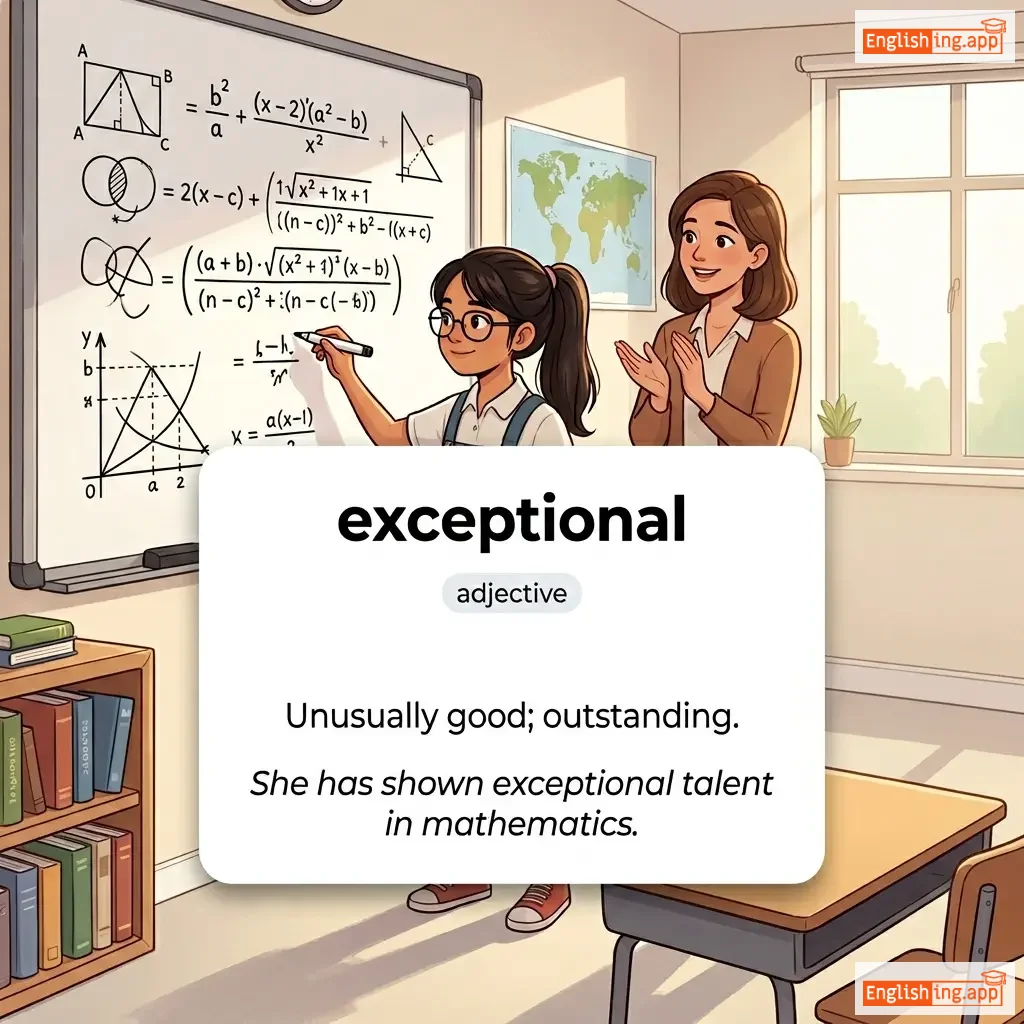
unusually good; outstanding; remarkable; special
••••••
|
Her performance was exceptional and impressed everyone. |
彼女のパフォーマンスは例外的で、皆を感動させました。
Kanojo no pafōmansu wa reigai-teki de, mina o kandō saseshimashita.
••••••
|
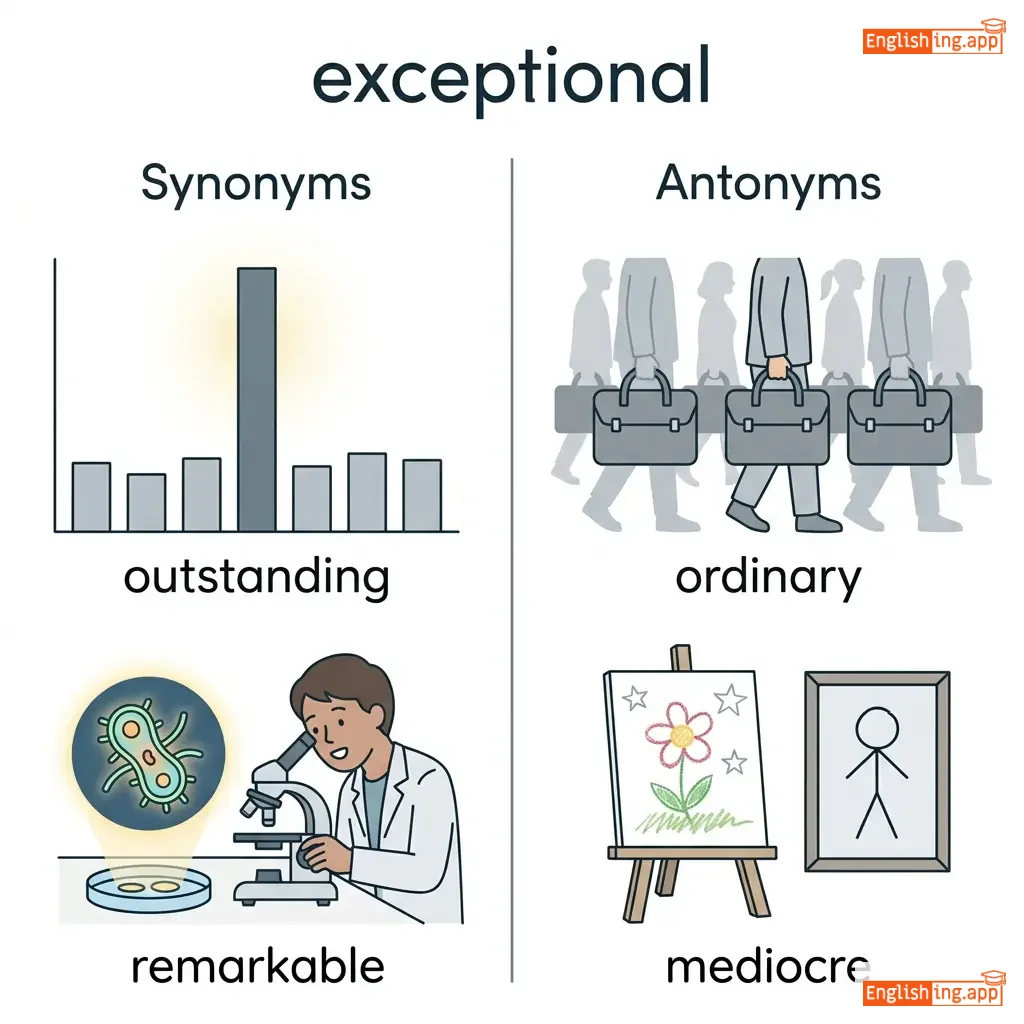
outstanding, remarkable, extraordinary, excellent
••••••
|
ordinary, common, typical, average
••••••
|
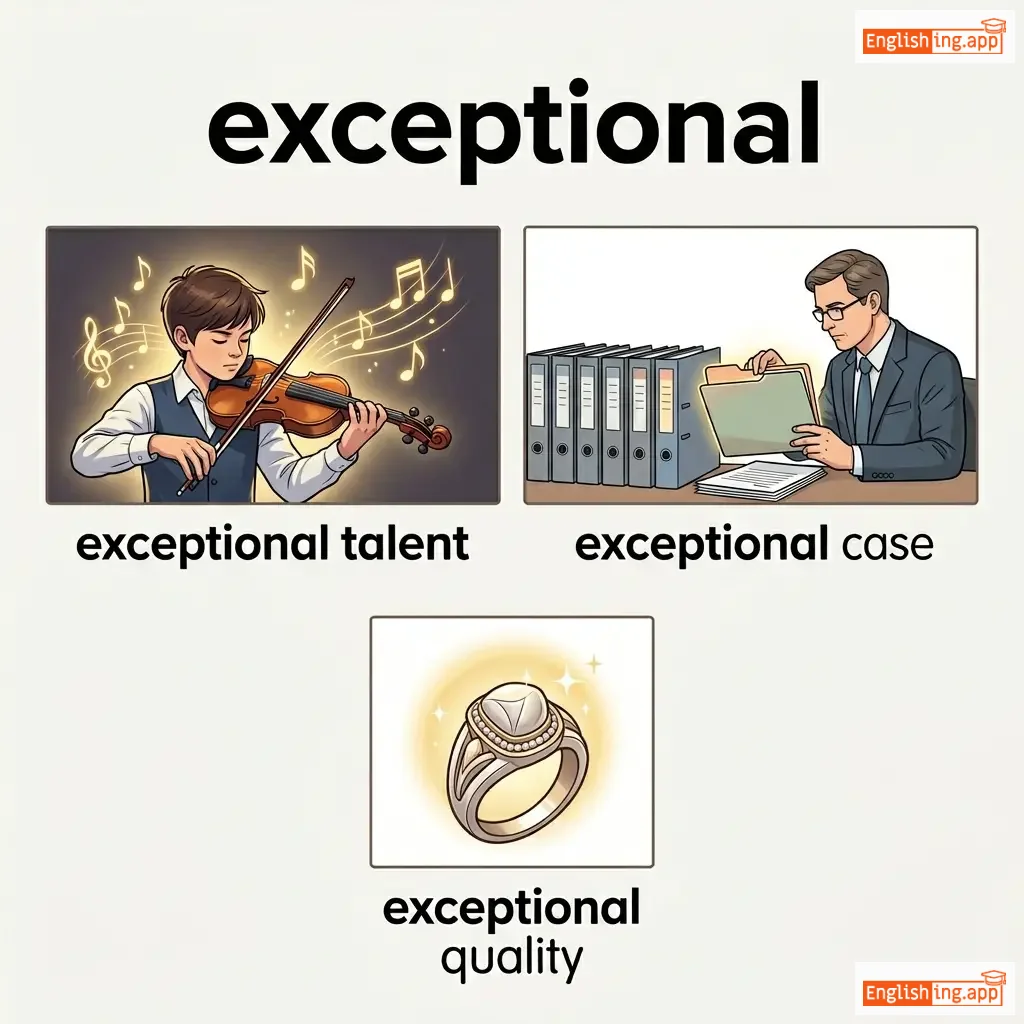
exceptional ability, exceptional circumstances, exceptional quality
••••••
|
例外的なパフォーマンスは常に記憶に残ります。
••••••
|
|
#242
🎭
|
/feɪk/
adjective
(fēki)
••••••
|
- •••••• |
偽物; 人工的; 偽造; 偽の
nisemono; jinkō-teki; giso; nise no
••••••
|
not genuine; artificial; counterfeit; false
••••••
|
The painting was revealed to be a fake masterpiece.
その絵画は偽の傑作として明らかにされました。
••••••
|
その絵画は偽の傑作として明らかにされました。
Sono kaiga wa nise no kessaku toshite akiraka ni saremashita.
••••••
|
artificial, counterfeit, phony, false
••••••
|
real, genuine, authentic, true
••••••
|
fake news, fake smile, fake documents
••••••
|
Fake = Nise, 例えば偽のブランド (fake brand)
••••••
|
|
#243
⭐
|
/ɪkˈstrɔːr.dɪ.nər.i/
adjective
(エクストラオーディナリー)
••••••
|
- •••••• |
非凡な; 顕著な;
hibanna; kencho na
••••••
|
very unusual; remarkable; going beyond what is normal or expected
••••••
|
The magician's performance was extraordinary and left everyone amazed. |
魔法使いのパフォーマンスは非凡で、すべての人を驚かせました
Mahoutsukai no pafōmansu wa hibanna de, subete no hito wo odorokasemashita
••••••
|
exceptional, remarkable, outstanding, incredible
••••••
|
ordinary, common, usual, normal
••••••
|
extraordinary circumstances, extraordinary measures, extraordinary talent
••••••
|
Japanese '非凡な' means extraordinary, aligning with the English word
••••••
|
|
#244
🦕
|
/ɪkˈstɪŋkt/
adjective
(ikusuṭinku)
••••••
|
|
絶滅した; 絶滅した;
zetsumetsu shita; zetsumetsu shita
••••••
|
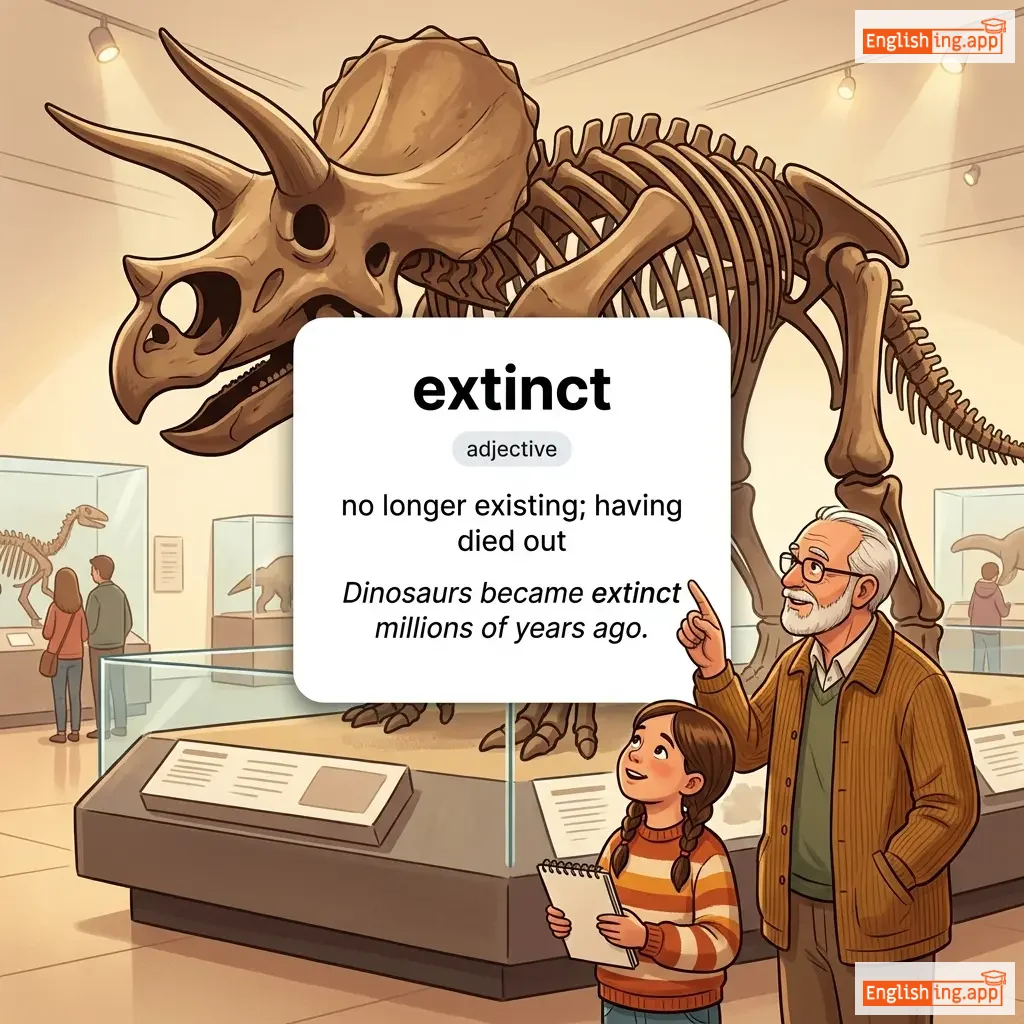
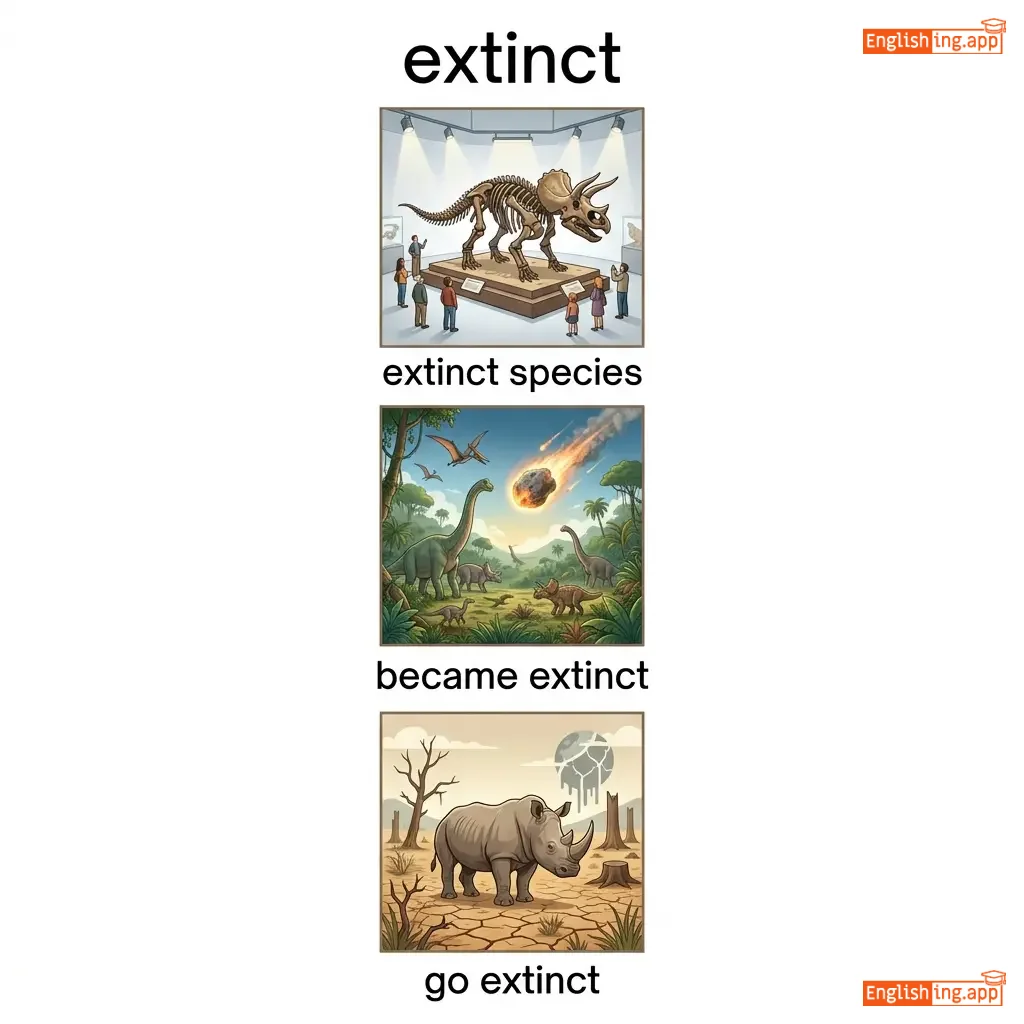
no longer in existence; having died out completely
••••••
|
The dodo bird is extinct and will never return to Earth.
ドードー鳥は絶滅し、決して地球に戻ることはありません。
••••••
|
ドードー鳥は絶滅し、決して地球に戻ることはありません。
Dōdō dori wa zetsumetsu shi, kesshite chikyū ni modoru koto wa arimasen.
••••••
|
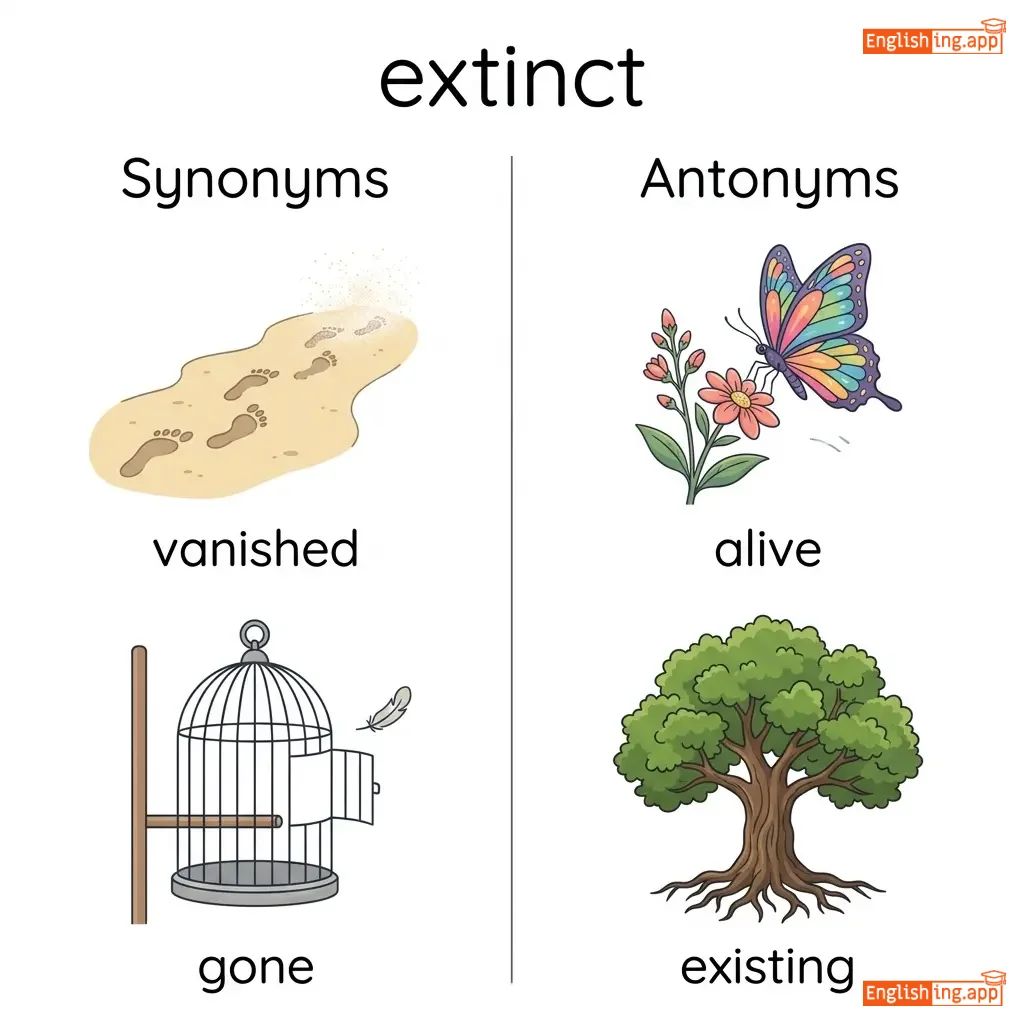
vanished, disappeared, dead, gone
••••••
|
existing, alive, surviving, thriving
••••••
|
extinct species, extinct volcano, become extinct
••••••
|
絶滅した意味は、完全に消えたこと。ドードー鳥のように。
••••••
|
|
#245
📊
|
/ɪkˈses/
adjective
(ekusesu)
••••••
|
- •••••• |
過剰
kajo
••••••
|
more than the usual or necessary amount; extra
••••••
|
The excess weight in the luggage will cost extra fees.
荷物の過剰な重量は追加料金を発生させるでしょう。
••••••
|
荷物の過剰な重量は追加料金を発生させるでしょう。
Nimotsu no kajō na jūryō wa tsūka ryōkin o hassei saseru deshō.
••••••
|
extra, additional, surplus, spare
••••••
|
insufficient, lacking, deficient, inadequate
••••••
|
excess baggage, excess weight, excess capacity
••••••
|
過剰な量は必ず追加料金を生む!
••••••
|
|
#246
⚖️
|
/fer/
adjective
(フェア)
••••••
|
- •••••• |
公正な; 妥当な; 魅力的な
kōseina; datōna; miryokuteki na
••••••
|
just and reasonable; treating people equally; light in color; attractive
••••••
|
The judge made a fair decision in the case. |
裁判官はその事件で公正な判断を下しました。
Saibankan wa sono jiken de kōsei na handan o kudashimashita.
••••••
|
just, equitable, impartial, reasonable
••••••
|
unfair, biased, unjust, partial
••••••
|
fair play, fair trial, fair price
••••••
|
フェア - 公正で合理的、選択肢の公平さを象徴する。
••••••
|
|
#247
🔥
|
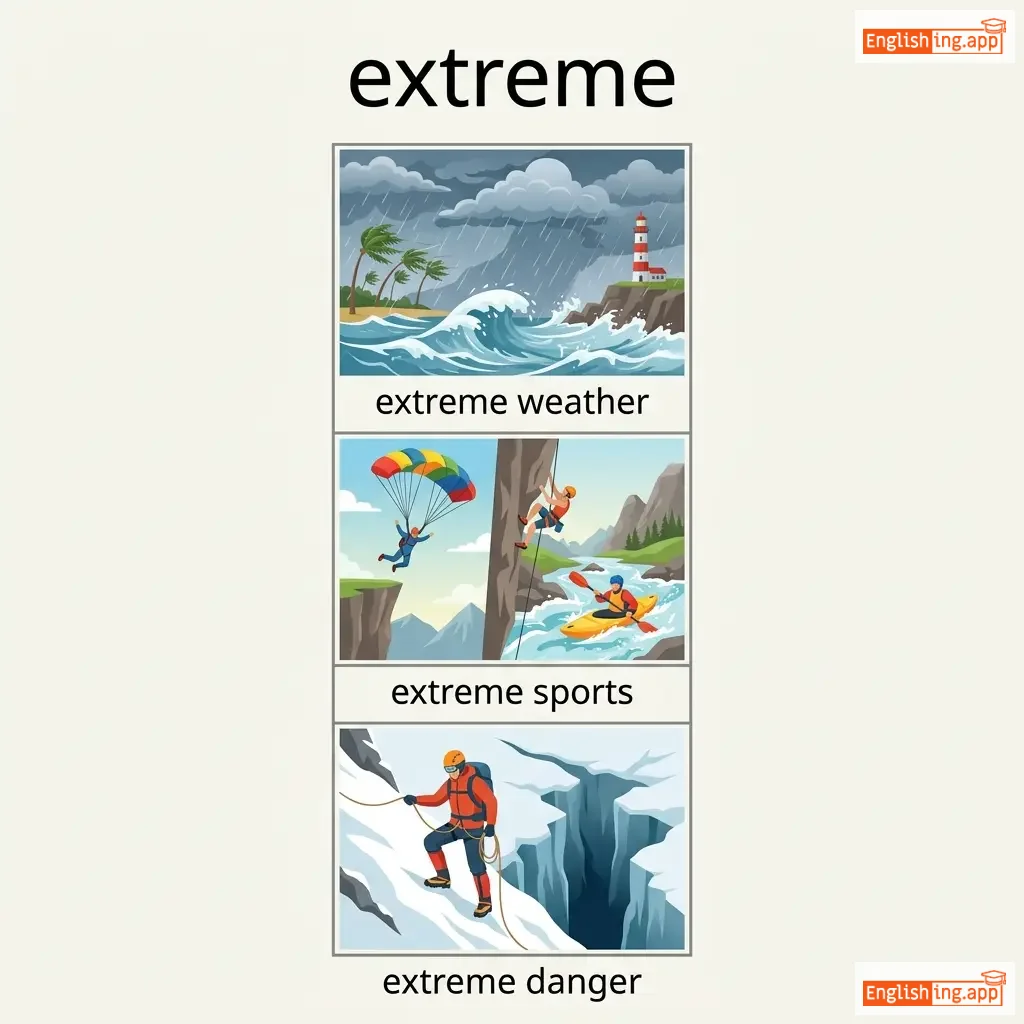
/ɪkˈstriːm/
adjective
(ekusutoreemu)
••••••
|
|
極端; 激しい; 強烈
kyokutan
••••••
|
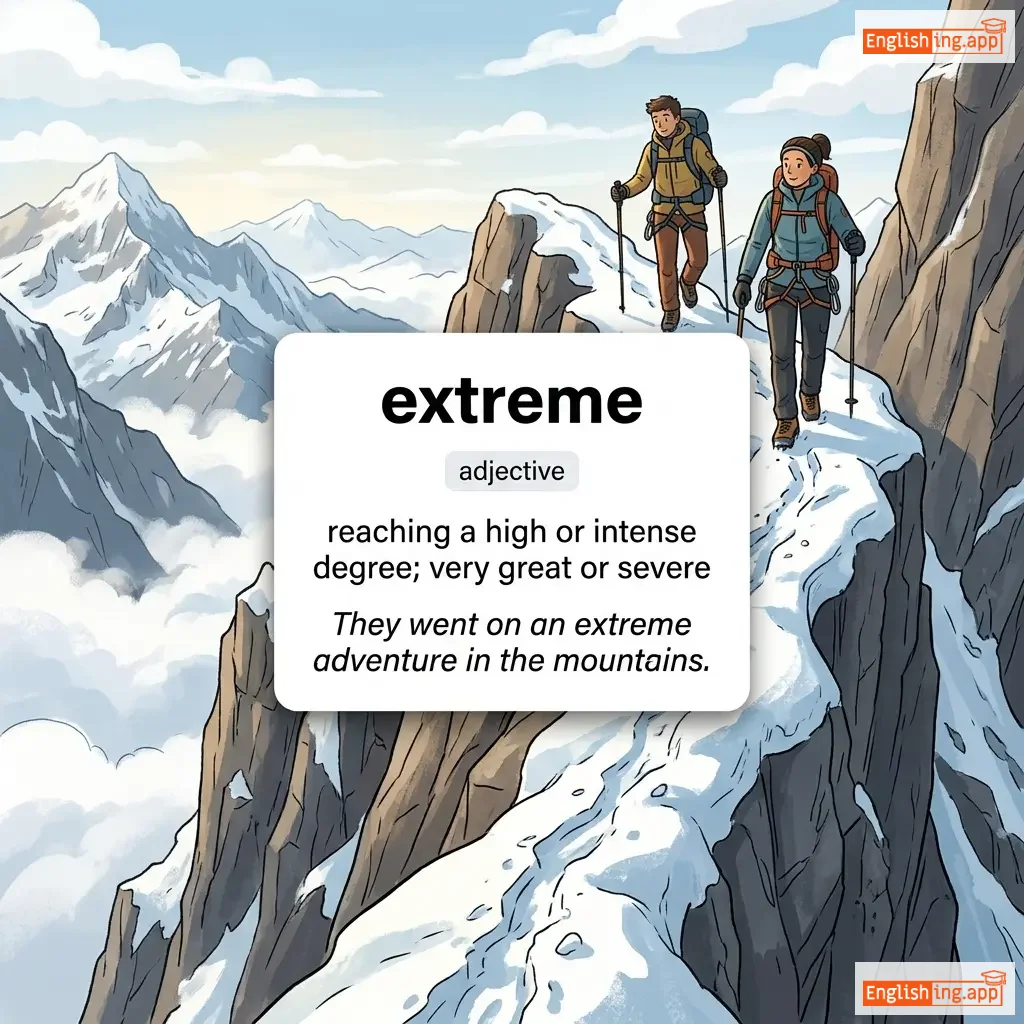
very great in degree; furthest from the center; radical
••••••
|
The weather was extremely hot during the summer.
夏の間、天気は極端に暑かった。
••••••
|
夏の間、天気は極端に暑かった。
Natsu no aida, tenki wa kyokutan ni atsukatta.
••••••
|
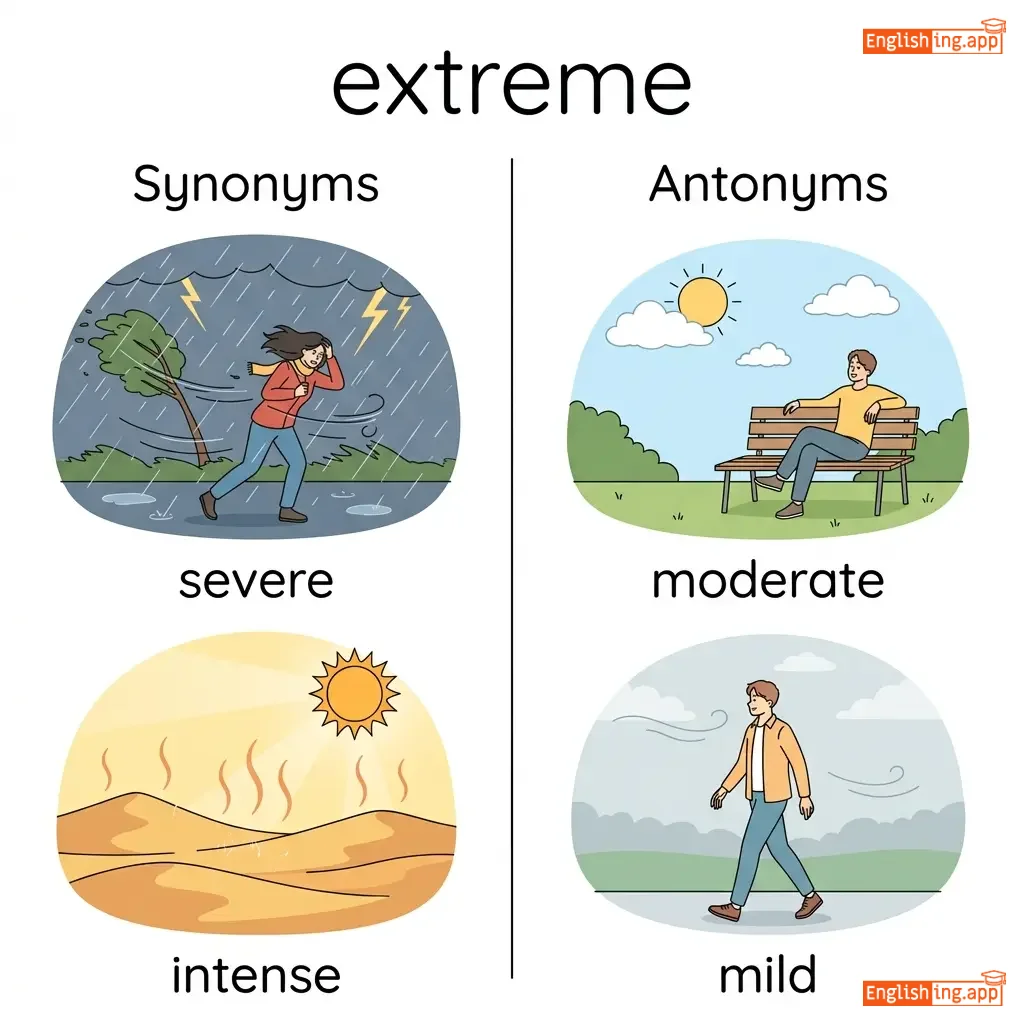
intense, severe, radical, excessive
••••••
|
moderate, mild, gentle, reasonable
••••••
|
extreme weather, extreme sports, extreme measures
••••••
|
Extreme は、夏の強烈な暑さのようなものです。
••••••
|
|
#248
💸
|
/ɪkˈstræv.ə.ɡənt/
adjective
(エクストラバガント)
••••••
|
- •••••• |
豪華な
gōkana
••••••
|
spending much more than is necessary; wasteful; lacking restraint in spending
••••••
|
His extravagant lifestyle included expensive cars and luxury vacations.
彼の豪華なライフスタイルは高価な車や豪華な休暇を含んでいました。
••••••
|
彼の豪華なライフスタイルは高価な車や豪華な休暇を含んでいました。
Kare no gōkana raifusutairu wa kōka na kuruma ya gōkana kyūka o fukunde imashita.
••••••
|
wasteful, lavish, excessive, spendthrift
••••••
|
frugal, economical, thrifty, modest
••••••
|
extravagant spending, extravagant lifestyle, extravagant claims
••••••
|
‘Gōkana’ in Japanese means luxurious, which is very similar to ‘extravagant’ in English.
••••••
|
|
#249
📏
|
/ɪkˈsten.sɪv/
adjective
(イクステンシブ)
••••••
|
- •••••• |
広範囲の; 大規模な; 広い
kōhan'i no; daikibona; hiroi
••••••
|
covering or affecting a large area; comprehensive; wide-ranging
••••••
|
The company conducted extensive research before launching the new product. |
企業は新しい製品を発売する前に広範囲の研究を行いました。
Kigyō wa atarashī seihin o hatsubai suru mae ni kōhan'i no kenkyū o okonaimashita.
••••••
|
comprehensive, vast, wide-ranging, broad
••••••
|
limited, narrow, restricted, small
••••••
|
extensive research, extensive damage, extensive experience
••••••
|
Japanese '広範囲の' mirrors 'extensive'—both cover large areas.
••••••
|
|
#250
✨
|
/ˈfæbjələs/
adjective
(fabyurasu)
••••••
|
- •••••• |
素晴らしい; 驚くべき; 非凡な
fabyurasu
••••••
|
extremely good; wonderful; extraordinary
••••••
|
She wore a fabulous dress to the party.
彼女はパーティーに素晴らしいドレスを着ていた。
••••••
|
彼女はパーティーに素晴らしいドレスを着ていた。
Kanojo wa pātī ni subarashī doresu o kite ita.
••••••
|
wonderful, amazing, fantastic, spectacular
••••••
|
terrible, awful, ordinary, mediocre
••••••
|
fabulous wealth, fabulous dress, fabulous performance
••••••
|
素晴らしいはパーティーの素敵なドレスのようです。
••••••
|
|
#251
🤝
|
/ˈfeɪθ.fəl/
adjective
(フェイスフル)
••••••
|
- •••••• |
忠実な; 誠実な; 信念に忠実
chūjitsuna; seijitsuna; shinnen ni chūjitsu
••••••
|
loyal and committed; reliable; true to one's beliefs
••••••
|
She remained faithful to her principles throughout her career. |
彼女はキャリアを通じて自分の信念に忠実でした。
kanojo wa kyaria o tōjite jibun no shinnen ni chūjitsu deshita.
••••••
|
loyal, devoted, trustworthy, reliable
••••••
|
unfaithful, disloyal, treacherous, unreliable
••••••
|
faithful friend, faithful servant, faithful dog
••••••
|
Faithful in Japanese is staying true to your beliefs, just like a committed partner.
••••••
|
|
#252
🔥
|
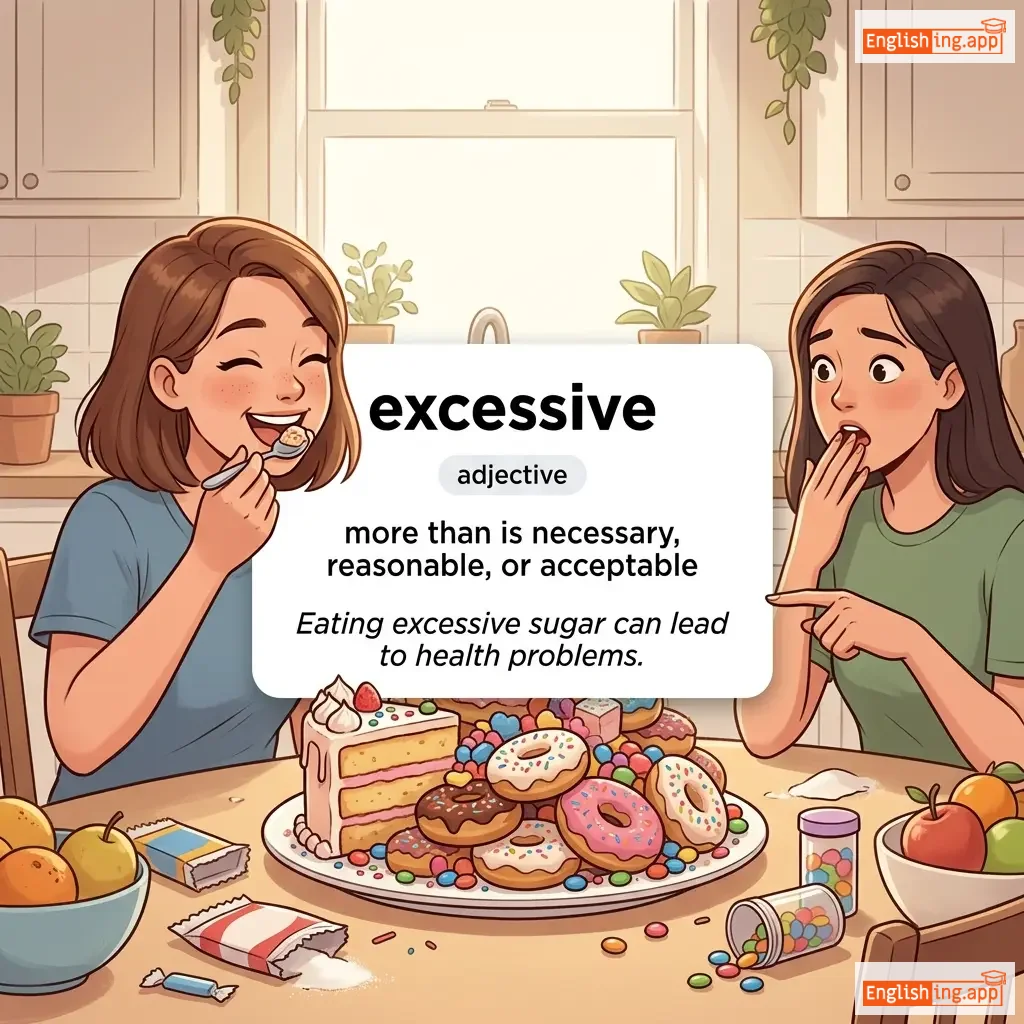
/ɪkˈsesɪv/
adjective
(ikˈsesiv)
••••••
|
|
過度の; 過剰な; 極端な
kado no; kajōna; kyokutan na
••••••
|
too much; more than is reasonable or acceptable; extreme
••••••
|
His excessive spending habits led to financial problems. |
彼の過度な支出の習慣は、財政的な問題を引き起こしました。
Kare no kado na shishutsu no shūkan wa, zaiseiteki na mondai o hikiokoshimashita.
••••••
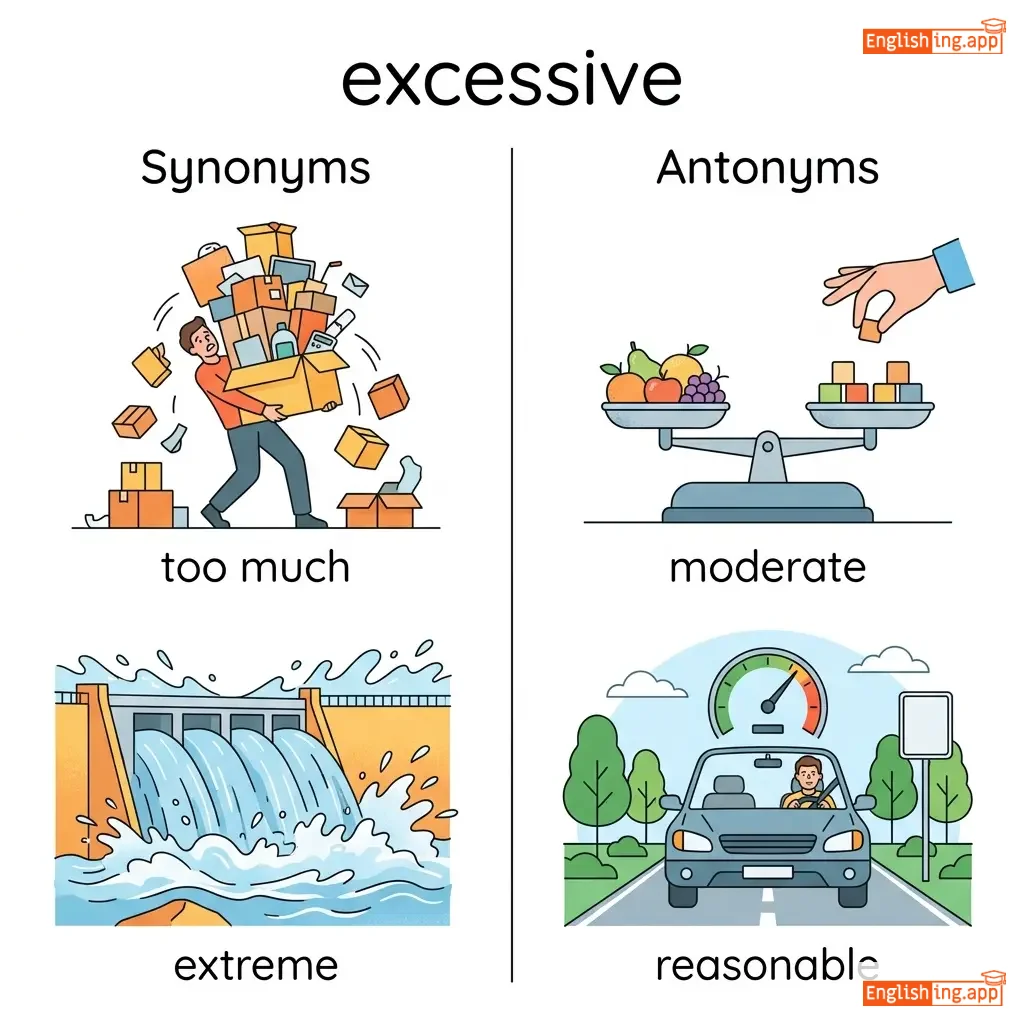
|
extreme, immoderate, unreasonable, extravagant
••••••
|
moderate, reasonable, restrained, limited
••••••
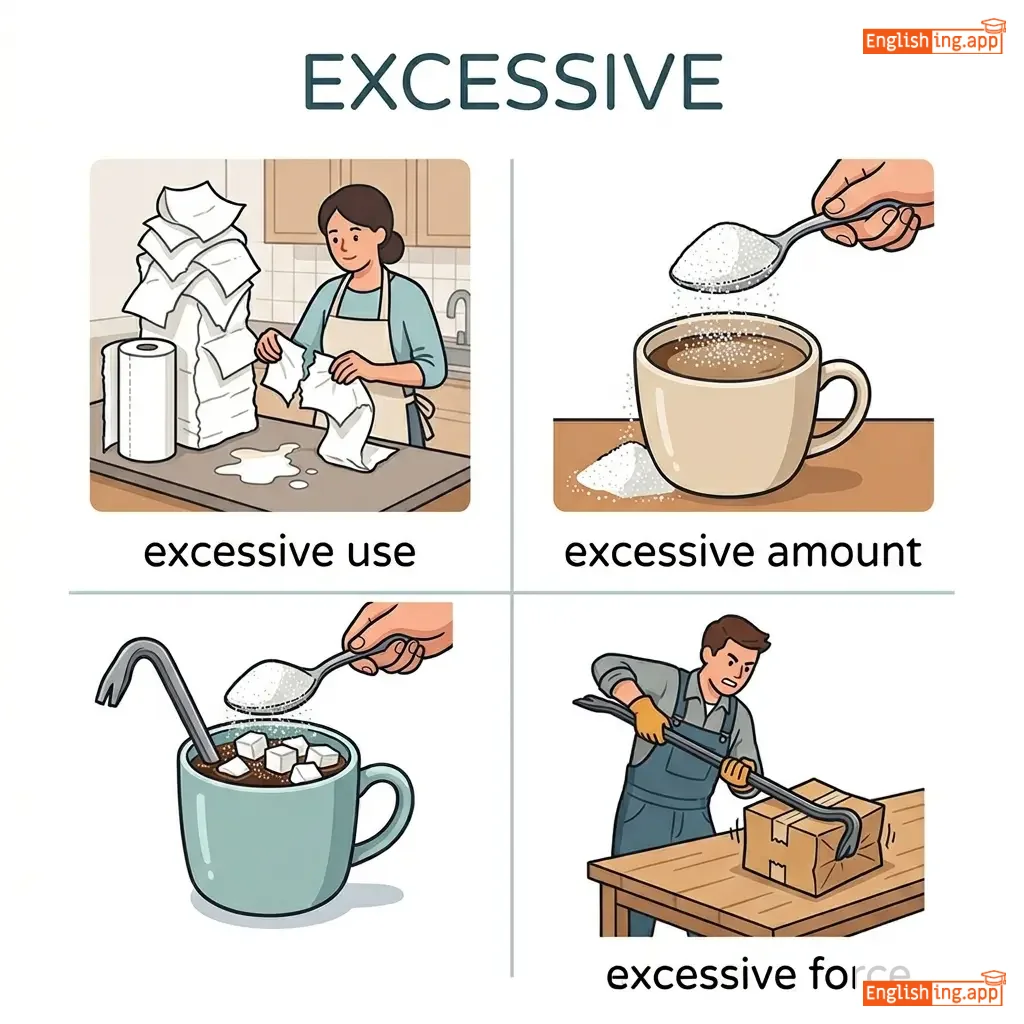
|
excessive heat, excessive force, excessive drinking
••••••
|
過度な支出は常に財政問題を引き起こす
••••••
|
|
#253
🏠
|
/ɪkˈstɪr.i.ər/
adjective
(エクステリア)
••••••
|
- •••••• |
外部の; 外見; 外の表面
gaibu no
••••••
|
relating to the outside part or surface of something; outer
••••••
|
The exterior of the building was painted in bright colors.
その建物の外観は明るい色で塗られていました。
••••••
|
その建物の外観は明るい色で塗られていました。
Sono tatemono no gaikan wa akarui iro de nurarete imashita.
••••••
|
outside, outer, external, surface
••••••
|
interior, inside, inner, internal
••••••
|
exterior wall, exterior design, exterior paint
••••••
|
The word 'Exterior' in Japanese 'エクステリア' is like 'outside' in meaning.
••••••
|
|
#254
😌
|
/ˈfæsaɪl/
adjective
(fasil)
••••••
|
- •••••• |
簡単な; 浅薄な; 深みのない
kantanna
••••••
|
easily achieved; superficial; lacking depth
••••••
|
His facile explanation didn't address the real problem.
彼の簡単な説明は実際の問題に対処しませんでした。
••••••
|
彼の簡単な説明は実際の問題に対処しませんでした。
kare no kantan na setsumei wa jissai no mondai ni taisho shimasen deshita.
••••••
|
easy, simple, superficial, shallow
••••••
|
difficult, complex, profound, thorough
••••••
|
facile answer, facile solution, facile reasoning
••••••
|
簡単な仕事で問題を解決したい時に
••••••
|
|
#255
🎉
|
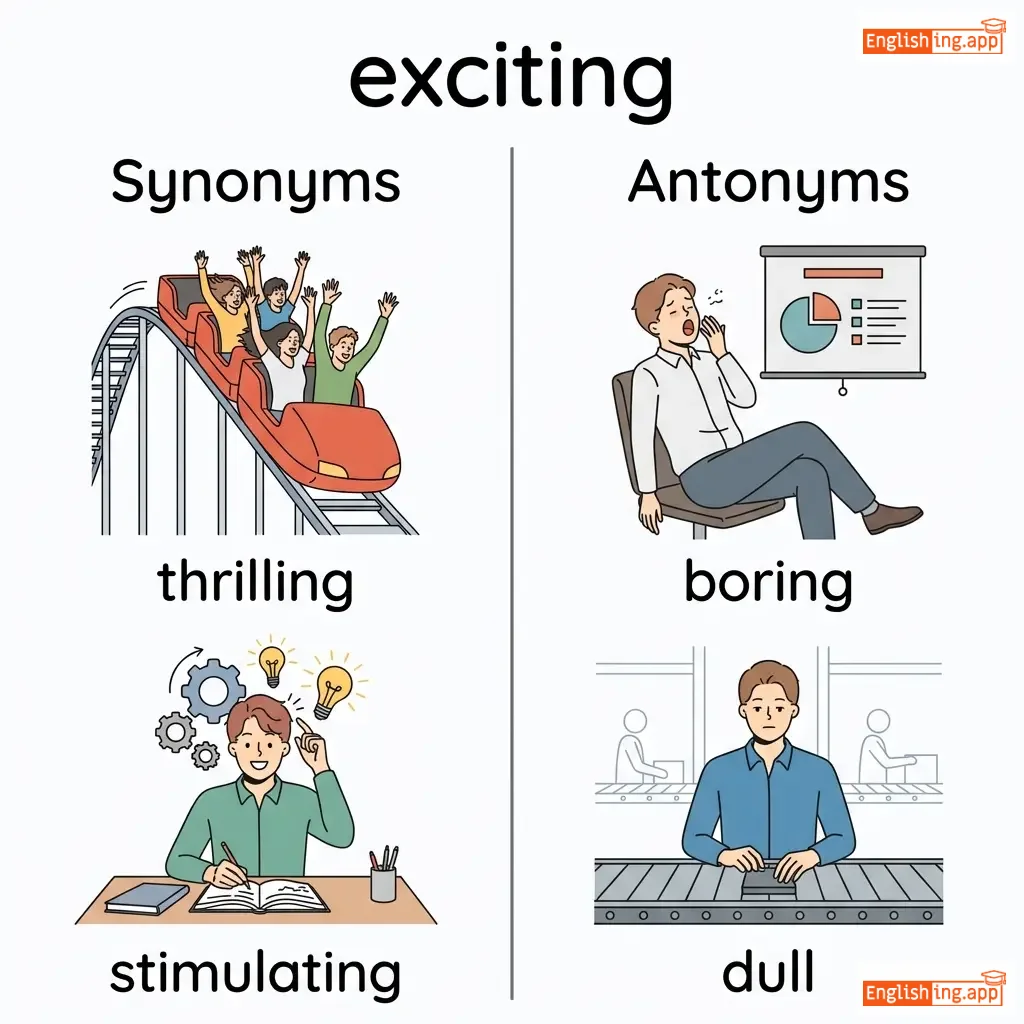
/ɪkˈsaɪtɪŋ/
adjective
(エキサイティング)
••••••
|
|
興奮させる
kōfun saseru
••••••
|
causing feelings of enthusiasm and eagerness; thrilling
••••••
|
The roller coaster ride was very exciting and thrilling. |
ローラーコースターの乗り物は非常に興奮させるもので、スリル満点でした。
Rōrā kōsutā no norimono wa hijō ni kōfun saseru mono de, suriru manten deshita.
••••••
|
thrilling, stimulating, exhilarating, electrifying
••••••
|
boring, dull, tedious, uninteresting
••••••
|
exciting news, exciting adventure, exciting opportunity
••••••
|
興奮するエキサイティングな乗り物
••••••
|
|
#256
❌
|
/fɔːls/
adjective
(フォールス)
••••••
|
- •••••• |
偽; 不正確; 欺瞞; 人工
gi; fuseikaku; gimam; jinko
••••••
|
not true; incorrect; deceptive; artificial
••••••
|
The witness gave false testimony in court. |
証人は法廷で偽証をした。
Shōnin wa hōtei de gishō o shita.
••••••
|
untrue, incorrect, wrong, fake
••••••
|
true, correct, right, genuine
••••••
|
false alarm, false statement, false teeth
••••••
|
False = 偽 (Gi) in Japanese.
••••••
|
|
#257
🔗
|
/ɪkˈstɜːr.nəl/
adjective
(エクスターンナル)
••••••
|
- •••••• |
外部の
gaibu no
••••••
|
coming from or relating to the outside; not belonging to or originating from within
••••••
|
The company hired external consultants to review their business strategy. |
その会社はビジネス戦略を見直すために外部のコンサルタントを雇いました。
Sono kaisha wa bijinesu senryaku o minaosu tame ni gaibu no konsarutanto o yatoi mashita.
••••••
|
outside, outer, foreign, independent
••••••
|
internal, inside, domestic, native
••••••
|
external factors, external audit, external consultant
••••••
|
Gaibu no means external, like external consultants hired from outside.
••••••
|
|
#258
🚫
|
/ɪkˈskluːdɪd/
adjective
(ikuskuru:diddo)
••••••
|
- •••••• |
除外された; 追放された
jogai sareta; tsuihō sareta
••••••
|
not included; left out; barred from participation
••••••
|
He felt excluded from the group activities and conversations.
彼はグループ活動や会話から除外されたと感じていた。
••••••
|
彼はグループ活動や会話から除外されたと感じていた。
Kare wa gurūpu katsudō ya kaiwa kara jogai sareta to kanjite ita.
••••••
|
omitted, left out, banned, barred
••••••
|
included, welcomed, accepted, embraced
••••••
|
excluded from, excluded member, excluded group
••••••
|
グループから除外されると、外部に取り残されたように感じる。
••••••
|
|
#259
📊
|
/ˈfæktʃuəl/
adjective
(fakuchuaru)
••••••
|
- •••••• |
事実に基づいた; 真実の
jijitsu ni motozuita; shinjitsu no
••••••
|
based on facts; accurate; true
••••••
|
The report contains only factual information.
レポートには事実に基づく情報のみが含まれています。
••••••
|
レポートには事実に基づく情報のみが含まれています。
repōto ni wa jijitsu ni motozuita jōhō nomi ga fukumareteimasu.
••••••
|
accurate, true, real, authentic
••••••
|
false, fictional, inaccurate, untrue
••••••
|
factual information, factual report, factual evidence
••••••
|
Japanese '事実' (jijitsu) means fact, linking to '事実に基づく' for factual.
••••••
|
|
#260
👋
|
/fəˈmɪl.jər/
adjective
(ファミリア)
••••••
|
- •••••• |
馴染みのある; 親しみやすい; インフォーマルで友好的
najimi no aru; shitashimi yasui; infōmaru de yūkōteki
••••••
|
well-known; easily recognized; having knowledge of; informal and friendly
••••••
|
This song sounds familiar to me.
この歌は私には馴染みがあるように感じます。
••••••
|
この歌は私には馴染みがあるように感じます。
Kono uta wa watashi ni wa najimi ga aru yō ni kanjimasu.
••••••
|
known, recognizable, acquainted, common
••••••
|
unfamiliar, strange, unknown, foreign
••••••
|
familiar face, familiar territory, familiar with
••••••
|
ファミリアは 'ファミリー'(家族)に似ていて、どこか親しみやすい感じがします。
••••••
|
Vocabulary Quiz
Test your vocabulary by matching words with their translations or meanings.
Login to take the quiz
Comments (0)
Share your thoughts and join the discussion.
Join the discussion by logging in
Login to CommentNo comments yet
Be the first to share your thoughts!