

翻訳
過去
過去分詞
三人称単数
動名詞
意味
例文
例文の翻訳
同義語
対義語
コロケーション
ニーモニック
Swipe left or right, or use the buttons. Tap image to zoom.
例文の翻訳
単語
Lesson 47Lesson 47 - マスクトグル
|
絵文字
|
単語 | Images | 翻訳 | 意味 | 例文 | 例文の翻訳 | 同義語 | 対義語 | コロケーション | ニーモニック |
|---|---|---|---|---|---|---|---|---|---|---|
|
#921
⏰
|
/ˈtrænziənt/
adjective
(トランジエント)
••••••
|
|
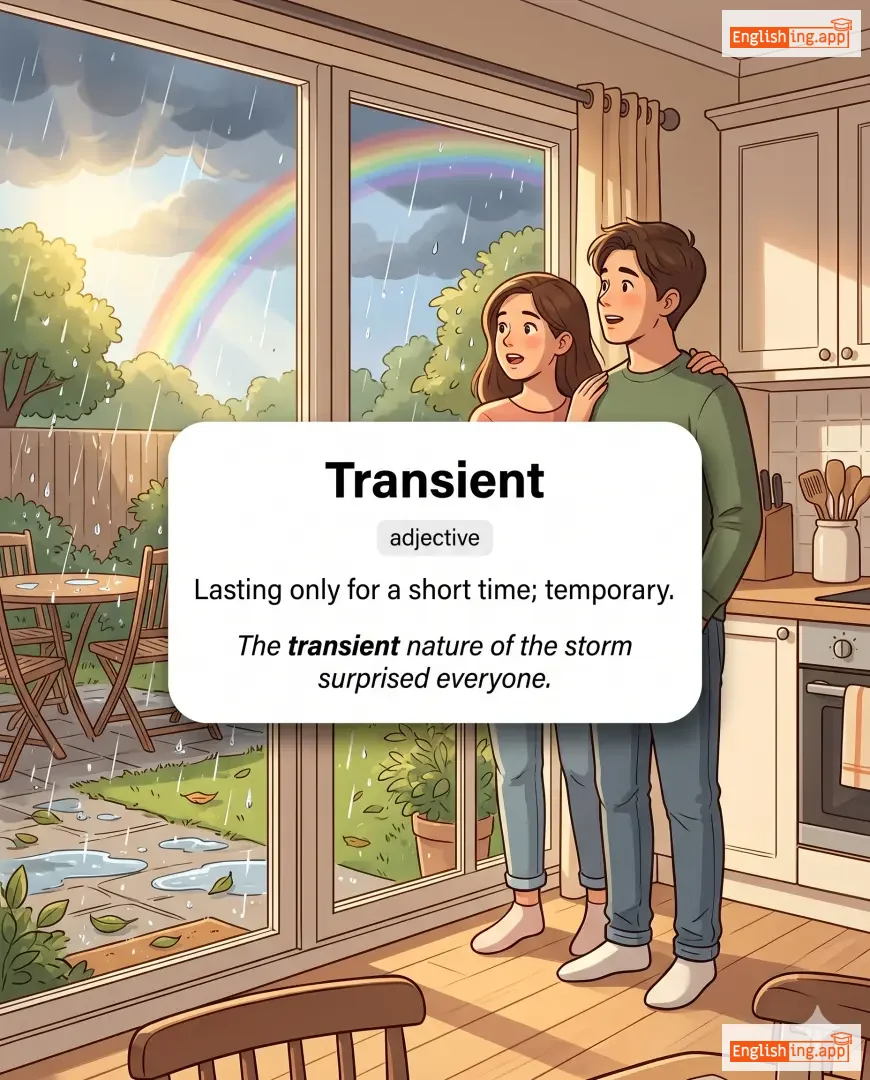
一時的な; 使い捨て
ichijiteki na; tsukaizute
••••••
|
lasting for only a short time; temporary
••••••
|
The beauty of spring flowers is transient.
春の花の美しさは一時的です。
••••••
|
春の花の美しさは一時的です。
Haru no hana no utsukushisa wa ichijiteki desu.
••••••
|
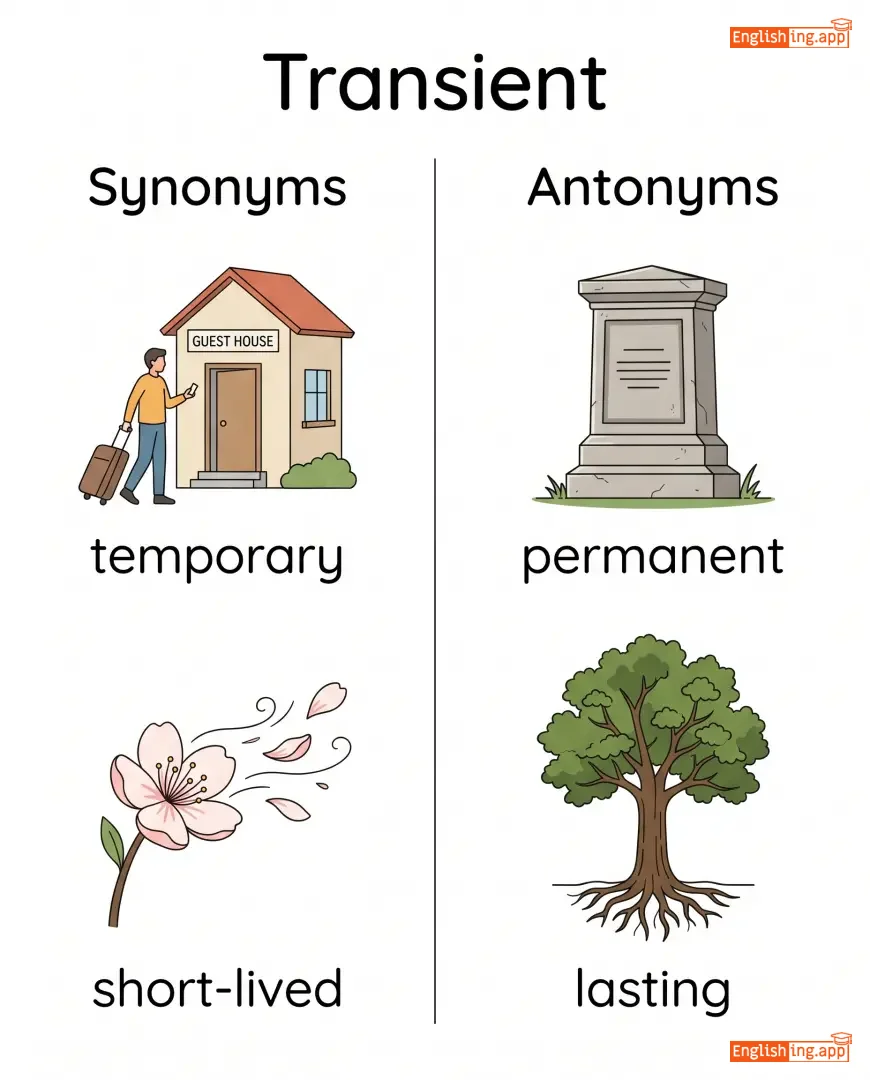
temporary, brief, short-lived, fleeting, momentary
••••••
|
permanent, lasting, enduring, eternal
••••••
|
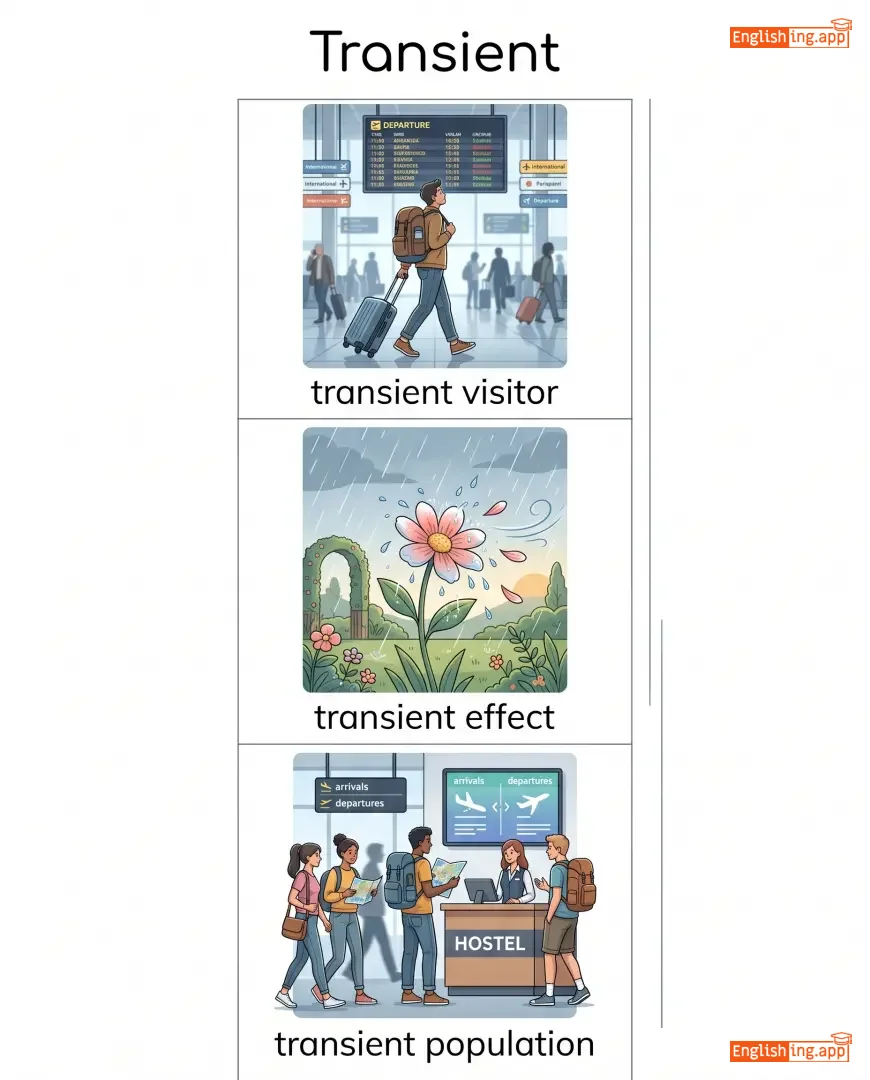
transient nature, transient population, transient phenomenon
••••••
|
Transient = 一時的 = 短期間で終わるもの
••••••
|
|
#922
⏰
|
/ˈtaɪm.li/
adjective
(taimli)
••••••
|
- •••••• |
タイムリーな; 時間通りの
taimurī na; jikan dōri no
••••••
|
happening at the right time; punctual
••••••
|
His timely arrival saved the meeting.
彼のタイムリーな到着は会議を救いました。
••••••
|
彼のタイムリーな到着は会議を救いました。
Kare no taimurī na tōchaku wa kaigi o sukūmashita.
••••••
|
punctual, prompt, opportune, well-timed
••••••
|
untimely, late, delayed, tardy
••••••
|
timely manner, timely response, timely intervention, timely warning
••••••
|
Timely - 時間通り、適切なタイミングで。
••••••
|
|
#923
😤
|
/ˈtʌtʃi/
adjective
(タッチィ)
••••••
|
- •••••• |
敏感な
binkan na
••••••
|
easily upset or offended; overly sensitive
••••••
|
He's very touchy about his height. |
彼は自分の身長について非常に敏感です。
Kare wa jibun no shinchou ni tsuite hijou ni binkan desu.
••••••
|
sensitive, irritable, temperamental, moody
••••••
|
calm, easygoing, thick-skinned, tolerant
••••••
|
touchy subject, touchy person, touchy situation
••••••
|
触れるとすぐに反応してしまう敏感な人。
••••••
|
|
#924
😴
|
/ˈtaɪə.səm/
adjective
(タイアサム)
••••••
|
- •••••• |
疲れる; 退屈な
tsukareru; taikutsu na
••••••
|
causing weariness or boredom; tedious
••••••
|
The long lecture was tiresome and repetitive. |
長い講義は疲れさせ、繰り返しが多かった。
Nagai kōgi wa tsukaresase, kurikaeshi ga ōkatta.
••••••
|
boring, tedious, wearisome, dull
••••••
|
interesting, exciting, engaging, stimulating
••••••
|
tiresome task, tiresome journey, tiresome work
••••••
|
疲れや退屈を連想し、この言葉を覚えましょう。
••••••
|
|
#925
🕐
|
/ˈtrænzɪtəri/
adjective
(トランジトリー)
••••••
|
|
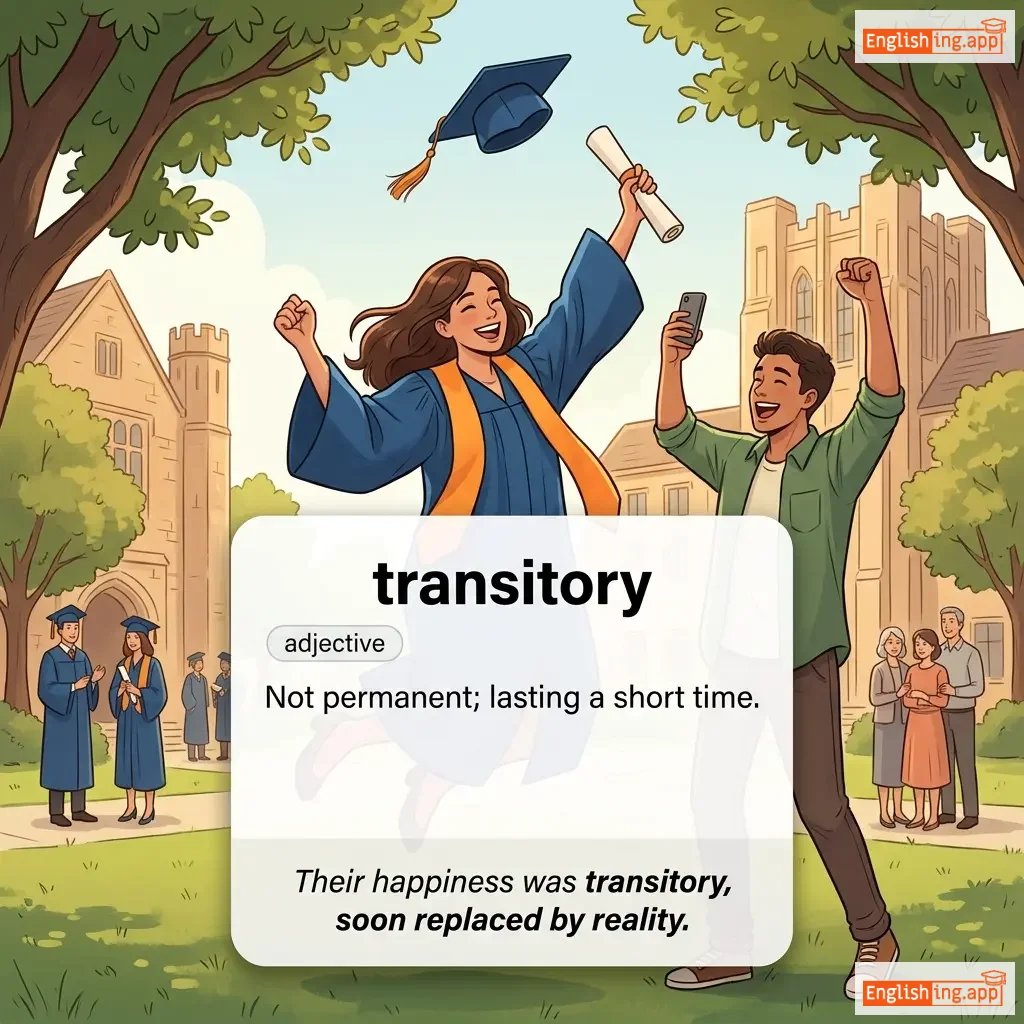
一時的な; 短期的な
ichijiteki na; tanki-teki na
••••••
|
not permanent; lasting for a limited time
••••••
|
Life's troubles are often transitory.
人生の問題はしばしば一時的です。
••••••
|
人生の問題はしばしば一時的です。
Jinsei no mondai wa shibashiba ichijiteki desu.
••••••
|
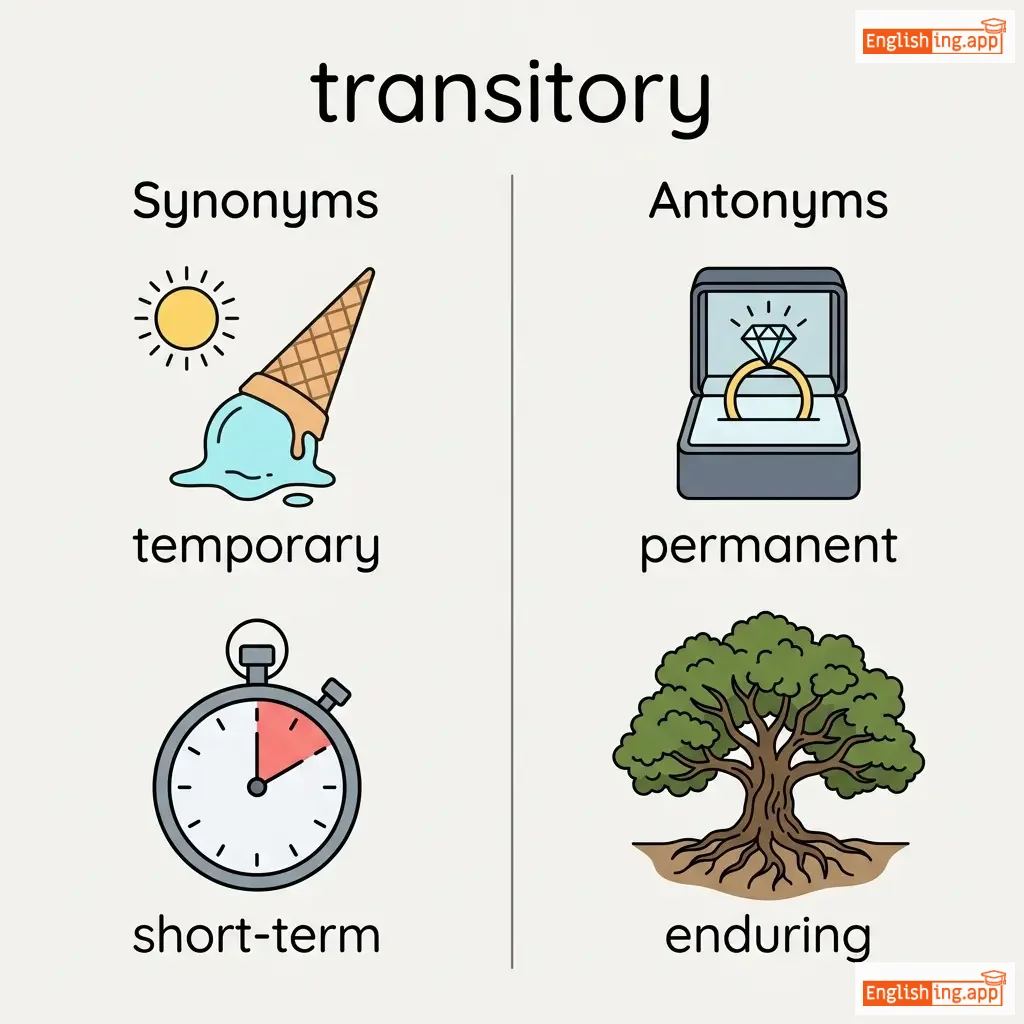
temporary, ephemeral, fleeting, brief, short-term
••••••
|
permanent, lasting, enduring, stable
••••••
|
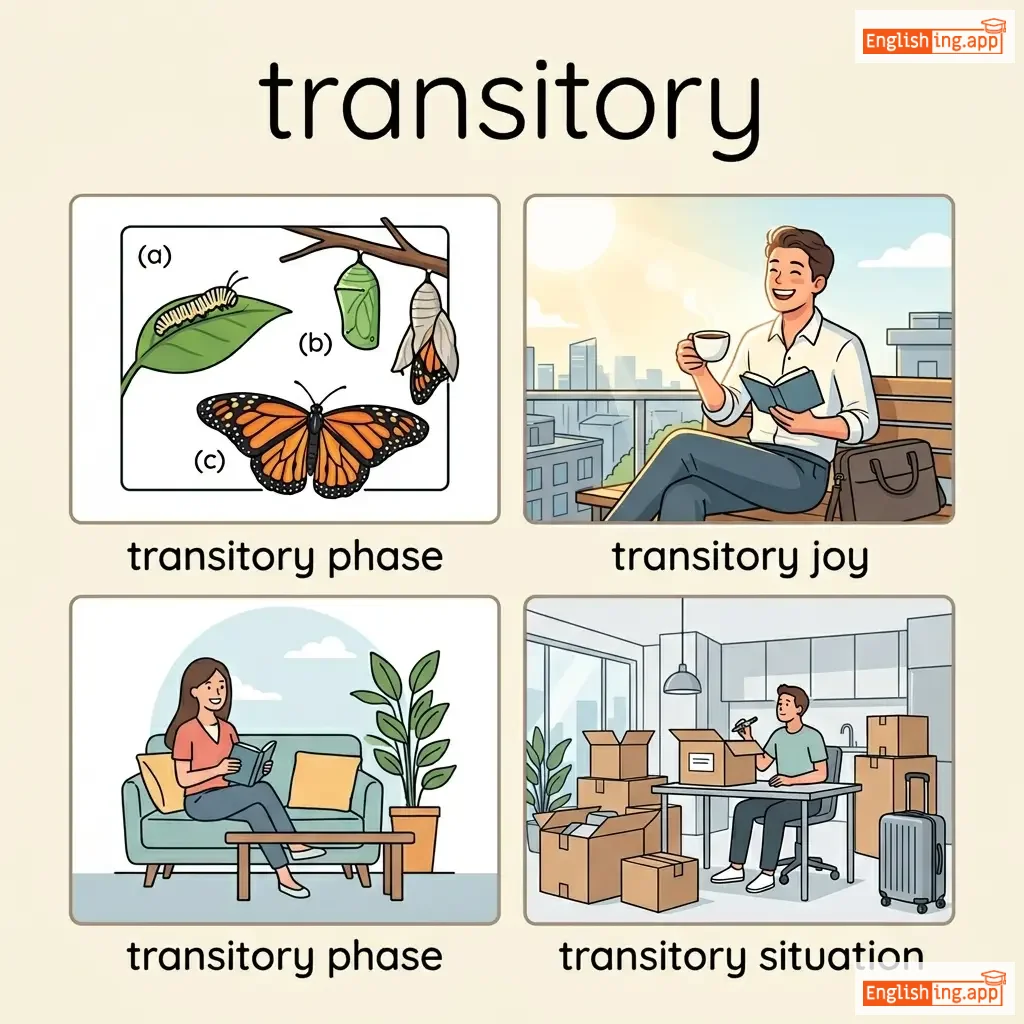
transitory phase, transitory period, transitory state
••••••
|
Transitory sounds like 'temporary'. Think of it like the passing of a moment in time.
••••••
|
|
#926
😰
|
/ˈtɪm.ɪd/
adjective
(ティミッド)
••••••
|
- •••••• |
内気; 恥ずかしがり屋
naiki; hazukashigariya
••••••
|
shy and lacking confidence; easily frightened
••••••
|
She was too timid to speak in public. |
彼女は人前で話すのがあまりにも内気だった。
Kanojo wa hitomae de hanasu no ga amarini mo naiki datta
••••••
|
shy, fearful, nervous, apprehensive, bashful
••••••
|
bold, confident, brave, fearless, outgoing
••••••
|
timid nature, timid voice, timid smile, timid approach
••••••
|
内気 = Nai + ki (Shyness)
••••••
|
|
#927
☠️
|
/ˈtɒksɪk/
adjective
(トキシック)
••••••
|
- •••••• |
有毒な; 有害なまたは不快な
yūdokuna; yūgaina matawa fukai na
••••••
|
poisonous; very harmful or unpleasant
••••••
|
The factory released toxic chemicals into the river.
工場は有害な化学物質を川に排出しました。
••••••
|
工場は有害な化学物質を川に排出しました。
Kōjō wa yūgaina kagaku busshitsu o kawa ni haishutsu shimashita.
••••••
|
poisonous, harmful, dangerous, noxious
••••••
|
safe, harmless, beneficial, non-toxic
••••••
|
toxic waste, toxic relationship, toxic chemicals
••••••
|
Toxicu to wa yūdokuna mono desu.
••••••
|
|
#928
👌
|
/ˈtɒl.ər.ə.bəl/
adjective
(トレラブル)
••••••
|
- •••••• |
耐えられる; 受け入れ可能だが理想的ではない
tae rareru; ukeire kanou daga risouteki de wa nai
••••••
|
able to be endured; acceptable though not ideal
••••••
|
The heat was barely tolerable in the afternoon. |
午後の暑さはほとんど耐えられるものでした。
gogo no atsusa wa hotondo tae rareru mono deshita
••••••
|
bearable, acceptable, endurable, passable
••••••
|
intolerable, unbearable, unacceptable, insufferable
••••••
|
tolerable level, tolerable conditions, tolerable pain
••••••
|
耐えるという意味を使って、暑い日を思い出す
••••••
|
|
#929
🔝
|
/ˈtɒp.məʊst/
adjective
(toppumōsuto)
••••••
|
- •••••• |
最上部; 最高
saijōbu; saikō
••••••
|
highest in position or rank
••••••
|
The flag was placed on the topmost branch of the tree.
旗は木の一番高い枝に置かれました。
••••••
|
旗は木の一番高い枝に置かれました。
ki wa ki no ichiban takai eda ni okaremashita.
••••••
|
highest, uppermost, supreme, peak
••••••
|
lowest, bottom, bottommost, deepest
••••••
|
topmost floor, topmost priority, topmost level
••••••
|
木の一番上の枝
••••••
|
|
#930
🏛️
|
/trəˈdɪʃənəl/
adjective
(トラディショナル)
••••••
|
- •••••• |
伝統的な
dentō-teki na
••••••
|
relating to or following long-established customs; conventional
••••••
|
They had a traditional wedding ceremony. |
彼らは伝統的な結婚式を行いました。
Karera wa dentō-teki na kekkon-shiki o okonaimashita.
••••••
|
conventional, customary, classical, orthodox
••••••
|
modern, contemporary, innovative, unconventional
••••••
|
traditional values, traditional music, traditional medicine
••••••
|
Traditional = 'Dentō-teki', like the traditional Japanese tea ceremonies.
••••••
|
|
#931
🌹
|
/ˈθɔːr.ni/
adjective
(ソーニー)
••••••
|
- •••••• |
とげのある; 扱いにくい
toge no aru; atsukai nikui
••••••
|
having thorns; difficult to handle or deal with
••••••
|
The thorny issue of budget cuts needs careful consideration. |
予算削減の難しい問題には慎重な検討が必要です。
Yosan sakugen no muzukashii mondai ni wa shinchou na kentou ga hitsuyou desu.
••••••
|
spiky, prickly, difficult, problematic
••••••
|
smooth, easy, simple, straightforward
••••••
|
thorny issue, thorny problem, thorny bush, thorny question
••••••
|
とげのように触れるのが痛くて、難しい問題。
••••••
|
|
#932
🐭
|
/ˈtaɪ.ni/
adjective
(タイニー)
••••••
|
- •••••• |
とても小さい; 小さな
totemo chiisai; chiisana
••••••
|
extremely small in size or amount
••••••
|
The baby bird was tiny and helpless.
ザ ベイビー バード ワズ タイニー アンド ヘルプレス。
••••••
|
その小さな鳥はとても小さくて無力でした。
Sono chiisana tori wa totemo chiisakute muryoku deshita.
••••••
|
small, miniature, microscopic, minute, little
••••••
|
huge, enormous, gigantic, massive, large
••••••
|
tiny house, tiny amount, tiny details, tiny steps
••••••
|
Tiny in Japanese is 'とても小さい', just think of a tiny little Japanese bird!
••••••
|
|
#933
🌧️
|
/təˈren.ʃəl/
adjective
(トレンシャル)
••••••
|
- •••••• |
土砂降り; 激しい雨
doshaburi; hageshii ame
••••••
|
falling rapidly in copious streams; extremely heavy rainfall
••••••
|
The torrential rain flooded the streets within hours. |
土砂降りの雨が数時間以内に通りを浸水させた。
Doshaburi no ame ga suujikan inai ni tōri o shinsui saseta
••••••
|
heavy, pouring, pelting, driving
••••••
|
light, drizzling, gentle, sparse
••••••
|
torrential rain, torrential downpour, torrential storm
••••••
|
激しい雨が通りを浸水させるイメージ
••••••
|
|
#934
⭐
|
/ˈtɪp.tɒp/
adjective
(ティップトップ)
••••••
|
- •••••• |
最高の; 完璧な状態
saikou no; kanpeki na joutai
••••••
|
of the highest quality; excellent; in perfect condition
••••••
|
The car is in tiptop condition. |
車は最高の状態です。
Kuruma wa saikou no joutai desu
••••••
|
excellent, perfect, outstanding, superb, first-rate
••••••
|
poor, terrible, awful, inferior, substandard
••••••
|
tiptop condition, tiptop shape, tiptop form, tiptop quality
••••••
|
Tiptop = Top condition = 完璧な状態
••••••
|
|
#935
😢
|
/ˈtrædʒɪk/
adjective
(トラジック)
••••••
|
- •••••• |
悲劇的な
higekiteki na
••••••
|
very sad; involving death or extreme suffering
••••••
|
The plane crash was a tragic accident.
飛行機事故は悲劇的な事故でした。
••••••
|
飛行機事故は悲劇的な事故でした。
Hikōki jiko wa higekiteki na jiko deshita.
••••••
|
devastating, heartbreaking, catastrophic, sorrowful
••••••
|
joyful, happy, fortunate, comic
••••••
|
tragic accident, tragic loss, tragic hero
••••••
|
Tragic = Higekiteki (same meaning in Japanese)
••••••
|
|
#936
⚡
|
/ˈθret.ən.ɪŋ/
adjective
(スレッティニング)
••••••
|
- •••••• |
脅威的な; 威圧的な
kyouiteki na; iatsuteki na
••••••
|
expressing a threat; menacing; intimidating
••••••
|
The dark clouds looked threatening before the storm. |
嵐の前に暗い雲が脅威的に見えた。
Arashi no mae ni kurai kumo ga kyouiteki ni mieta.
••••••
|
menacing, intimidating, ominous, dangerous
••••••
|
reassuring, comforting, peaceful, safe
••••••
|
threatening behavior, threatening letter, threatening gesture, threatening tone
••••••
|
In Japanese, '脅威的' is similar to 'threatening'.
••••••
|
|
#937
🥺
|
/ˈtʌtʃ.ɪŋ/
adjective
(タッチング)
••••••
|
- •••••• |
感動的な; 情熱的な
kandō-teki na; jōnetsu-teki na
••••••
|
causing feelings of sympathy or emotion; moving
••••••
|
The touching story brought tears to everyone's eyes. |
感動的な物語が、皆の目に涙をもたらしました。
Kandō-teki na monogatari ga, minna no me ni namida o motarashimashita.
••••••
|
moving, emotional, heartwarming, poignant
••••••
|
unemotional, cold, indifferent, heartless
••••••
|
touching story, touching moment, touching scene
••••••
|
Touching (感動的) - 心を動かす話
••••••
|
|
#938
😴
|
/taɪəd/
adjective
(タイアード)
••••••
|
- •••••• |
疲れた
tsukareta
••••••
|
feeling exhausted; in need of sleep or rest
••••••
|
I am too tired to continue working.
私は仕事を続けるには疲れすぎています。
••••••
|
私は仕事を続けるには疲れすぎています。
Watashi wa shigoto o tsudzukeru ni wa tsukare sugiteimasu.
••••••
|
exhausted, weary, fatigued, drained, worn out
••••••
|
energetic, refreshed, alert, vigorous, rested
••••••
|
tired eyes, tired voice, feel tired, getting tired
••••••
|
疲れた = 仕事の後、疲れた身体
••••••
|
|
#939
↔️
|
/trænsˈfɜːrəbəl/
adjective
(トランスファラブル)
••••••
|
- •••••• |
転送可能な
tensou kanou na
••••••
|
able to be moved from one place to another; able to be given to someone else
••••••
|
The skills you learn here are transferable to other jobs. |
ここで学んだスキルは他の仕事に転送可能です。
Koko de mananda sukiru wa hoka no shigoto ni tensou kanou desu.
••••••
|
portable, movable, assignable, convertible
••••••
|
fixed, permanent, non-transferable, immovable
••••••
|
transferable skills, transferable credits, transferable ticket
••••••
|
No •••••• |
|
#940
🧹
|
/ˈtaɪ.di/
adjective
(taidi)
••••••
|
- •••••• |
整頓された; 清潔な
seiton sareta; seiketsu na
••••••
|
arranged neatly and in order; clean and organized
••••••
|
She keeps her room very tidy and organized. |
彼女は自分の部屋を非常に整頓されていて清潔に保っています。
Kanojo wa jibun no heya o hijō ni seiton sarete ite seiketsu ni tamotsutteimasu.
••••••
|
neat, organized, orderly, clean
••••••
|
messy, untidy, disorganized, chaotic
••••••
|
tidy room, tidy up, tidy appearance, keep tidy
••••••
|
Tidy = タイディ = たい = 体 (body organized) and 'デ' = で (neatly).
••••••
|
Vocabulary Quiz
Test your vocabulary by matching words with their translations or meanings.
Login to take the quiz
Comments (0)
Share your thoughts and join the discussion.
Join the discussion by logging in
Login to CommentNo comments yet
Be the first to share your thoughts!