

Swipe left or right, or use the buttons. Tap image to zoom.
例句翻译
单词
Lesson 47Lesson 47 - 遮罩切换
|
表情符号
|
单词 | Images | 翻译 | 含义 | 例句 | 例句翻译 | 同义词 | 反义词 | 搭配词 | 助记符 |
|---|---|---|---|---|---|---|---|---|---|---|
|
#921
⏰
|
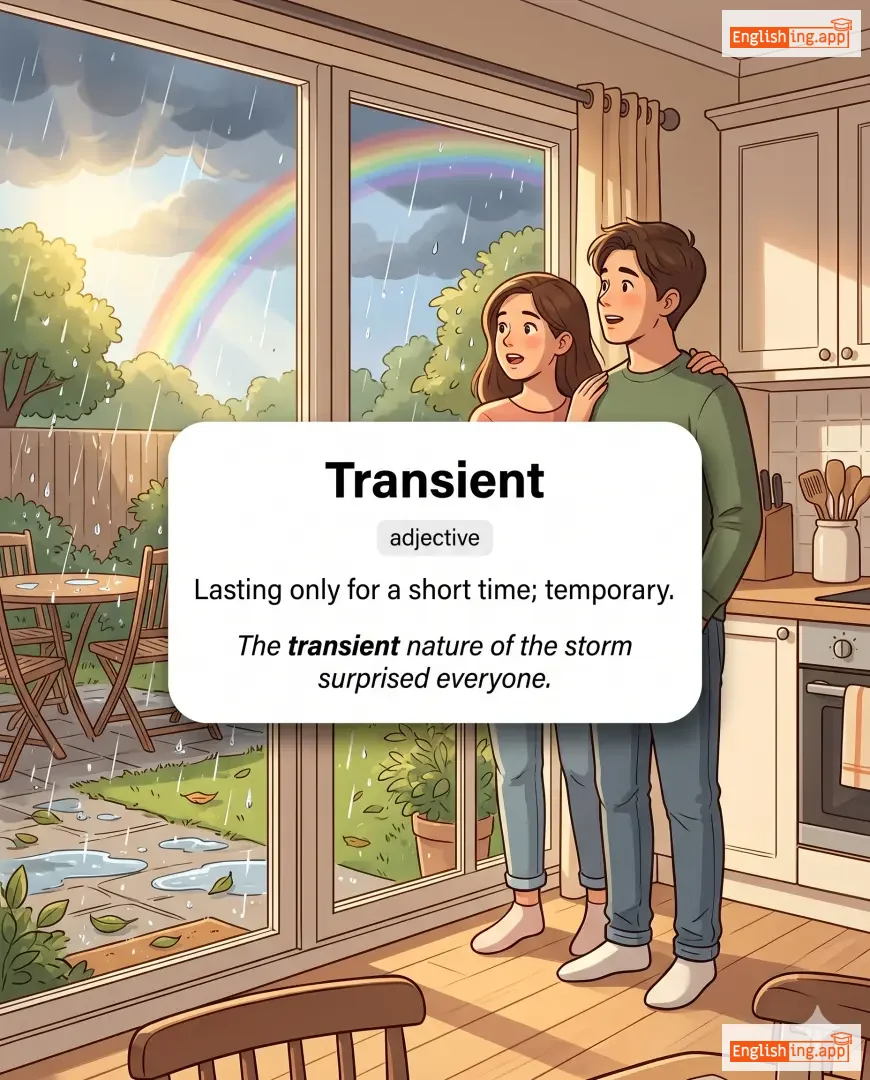
/ˈtrænziənt/
adjective
(tránzìyǎnt)
••••••
|
|
短暂的; 临时的
duǎnzàn de; línshí de
••••••
|
lasting for only a short time; temporary
••••••
|
The beauty of spring flowers is transient.
春天花朵的美丽是短暂的。
••••••
|
春天花朵的美丽是短暂的。
Chūntiān huāduǒ de měilì shì duǎnzàn de.
••••••
|
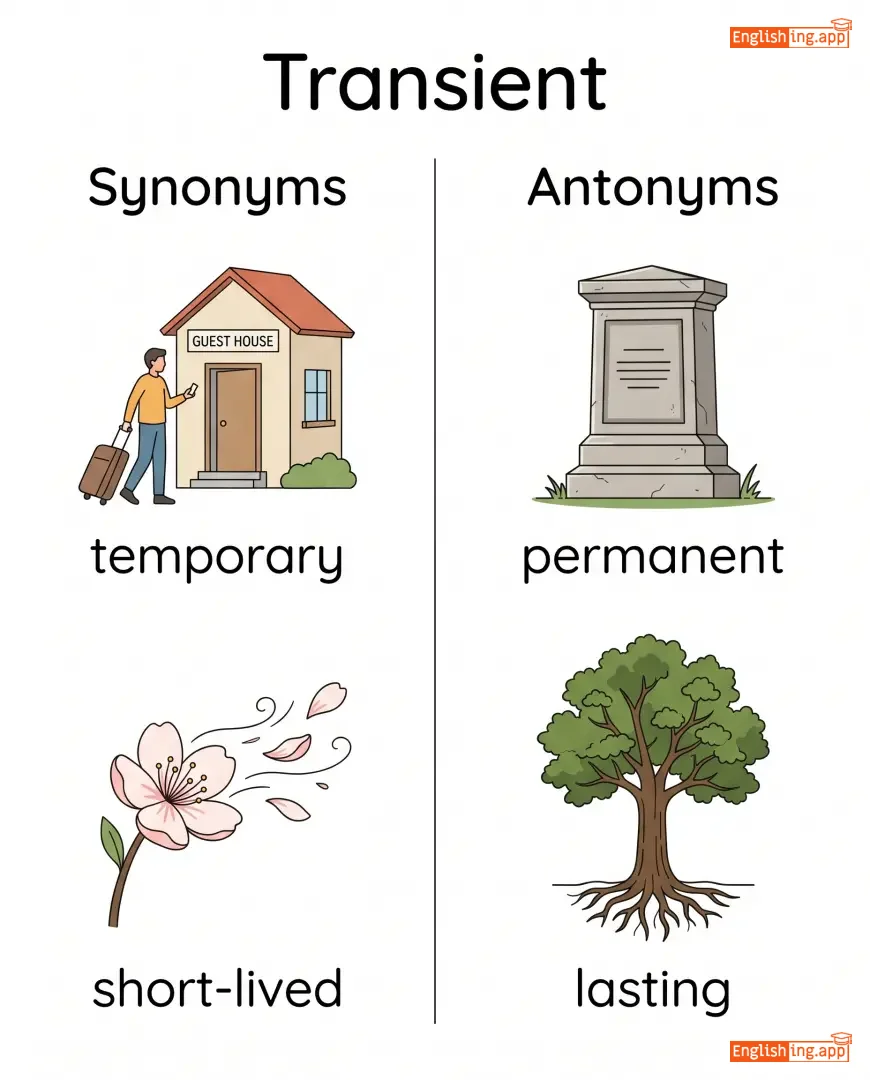
temporary, brief, short-lived, fleeting, momentary
••••••
|
permanent, lasting, enduring, eternal
••••••
|
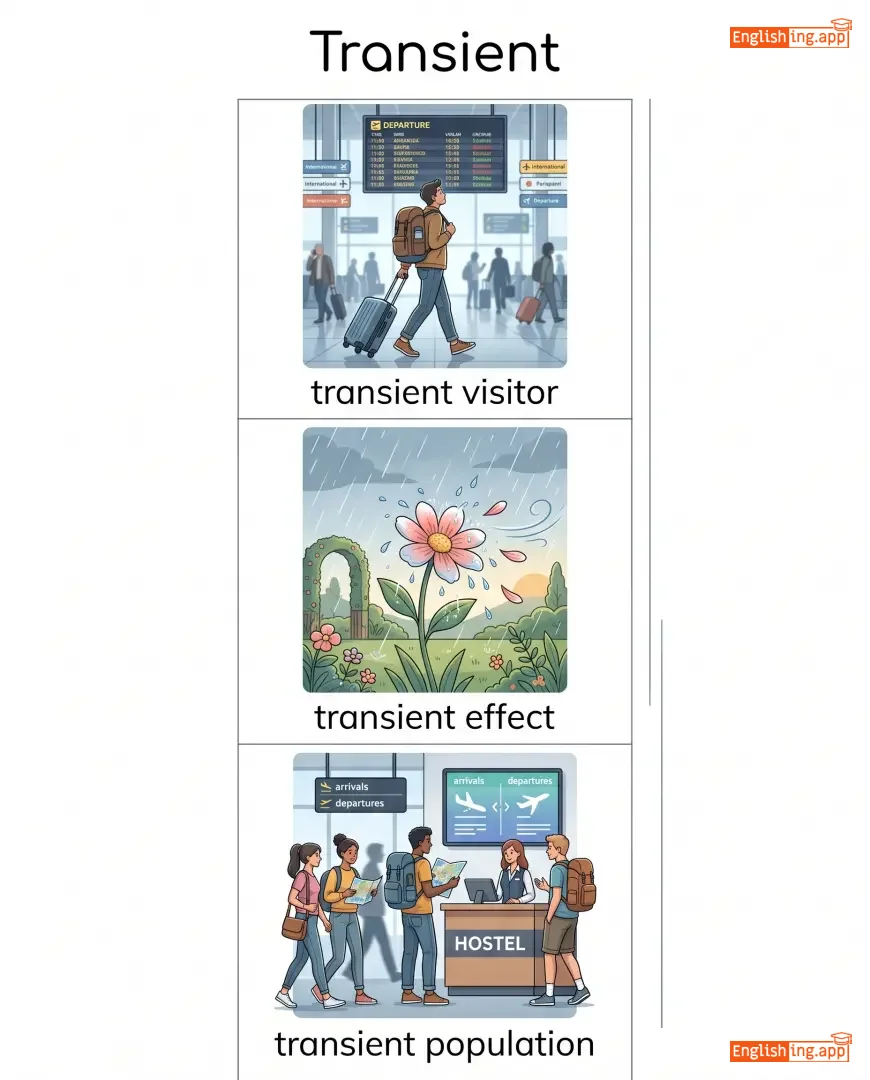
transient nature, transient population, transient phenomenon
••••••
|
Transient = 短暂的 = 迅速消逝的事物
••••••
|
|
#922
⏰
|
/ˈtaɪm.li/
adjective
(taimli)
••••••
|
- •••••• |
及时的; 准时的
jí shí de; zhǔn shí de
••••••
|
happening at the right time; punctual
••••••
|
His timely arrival saved the meeting.
他及时的到达拯救了会议。
••••••
|
他及时的到达拯救了会议。
Tā jíshí de dào dá zhěng jiù le huì yì.
••••••
|
punctual, prompt, opportune, well-timed
••••••
|
untimely, late, delayed, tardy
••••••
|
timely manner, timely response, timely intervention, timely warning
••••••
|
Timely - 按时到达,恰如其时。
••••••
|
|
#923
😤
|
/ˈtʌtʃi/
adjective
(tàqī)
••••••
|
- •••••• |
敏感的
mǐngǎn de
••••••
|
easily upset or offended; overly sensitive
••••••
|
He's very touchy about his height. |
他对自己的身高非常敏感。
Tā duì zìjǐ de shēngāo fēicháng mǐngǎn.
••••••
|
sensitive, irritable, temperamental, moody
••••••
|
calm, easygoing, thick-skinned, tolerant
••••••
|
touchy subject, touchy person, touchy situation
••••••
|
像触碰到的物品一样,他很敏感,容易生气。
••••••
|
|
#924
😴
|
/ˈtaɪə.səm/
adjective
(taɪərsəm)
••••••
|
- •••••• |
令人疲倦的; 无聊的
lìng rén pílèi de; wúliáo de
••••••
|
causing weariness or boredom; tedious
••••••
|
The long lecture was tiresome and repetitive. |
长时间的演讲令人疲倦且重复。
cháng shíjiān de yǎnjiǎng lìng rén pílèi qiě chóngfù.
••••••
|
boring, tedious, wearisome, dull
••••••
|
interesting, exciting, engaging, stimulating
••••••
|
tiresome task, tiresome journey, tiresome work
••••••
|
疲倦和无聊的联系有助于记住这个词。
••••••
|
|
#925
🕐
|
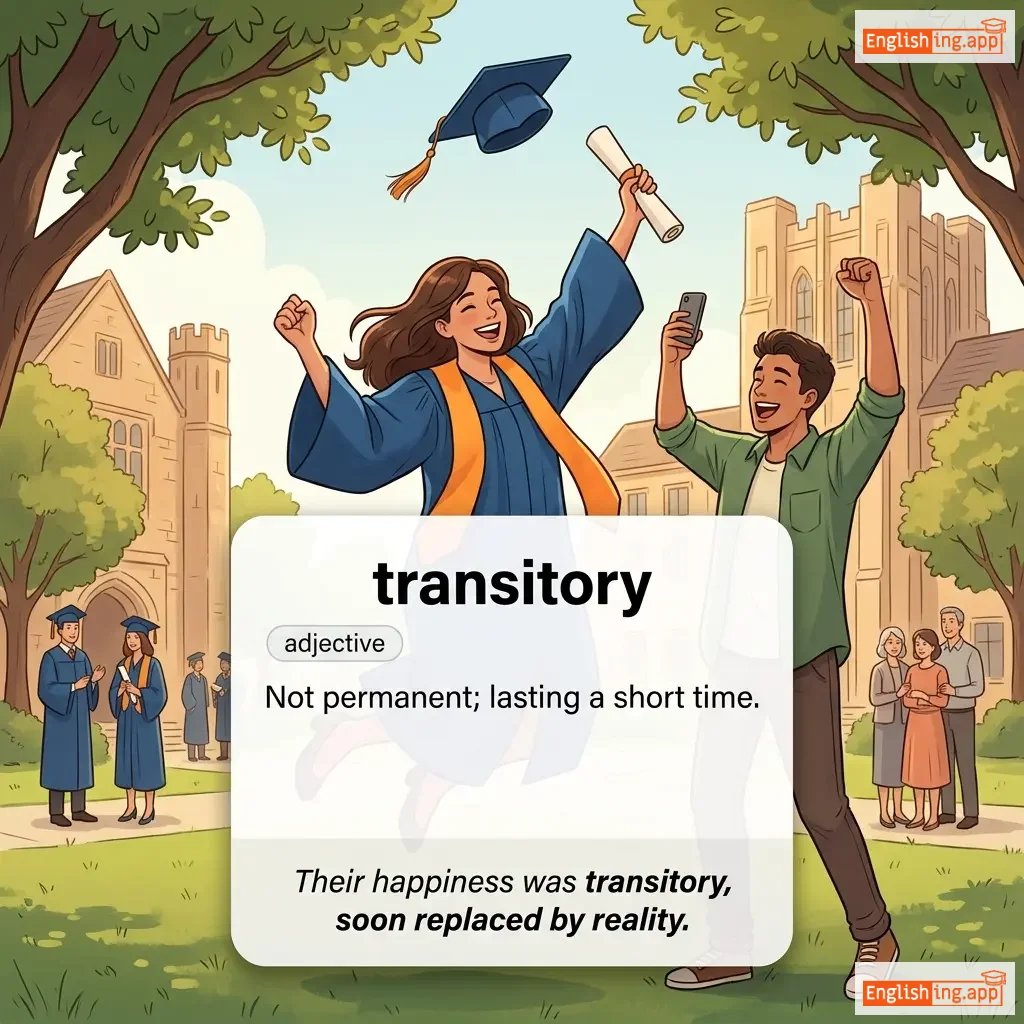
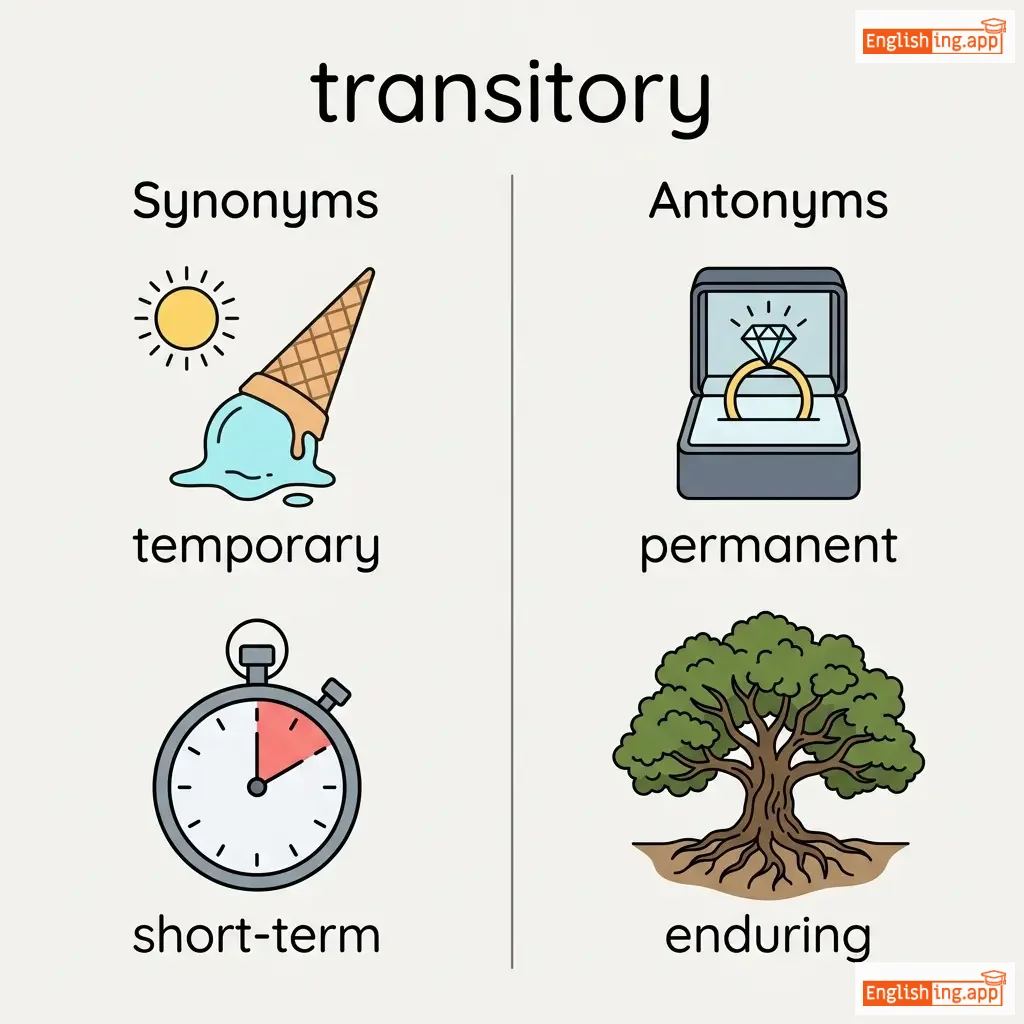
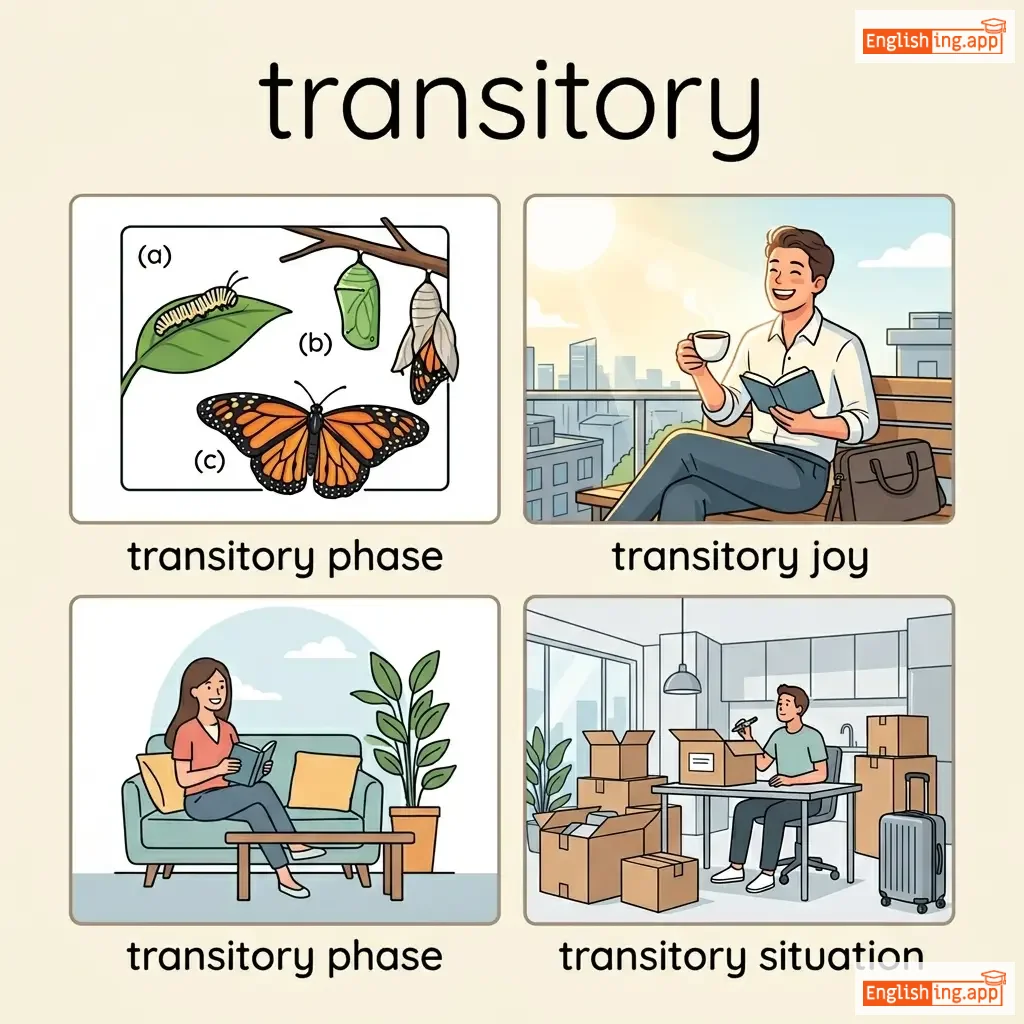
/ˈtrænzɪtəri/
adjective
(tránzītòulǐ)
••••••
|
|
短暂的; 临时的
duǎnzàn de; línshí de
••••••
|
not permanent; lasting for a limited time
••••••
|
Life's troubles are often transitory.
生活中的问题常常是暂时的。
••••••
|
生活中的问题往往是短暂的。
Shēnghuó zhōng de wèntí wǎngwǎng shì duǎnzàn de.
••••••
|
temporary, ephemeral, fleeting, brief, short-term
••••••
|
permanent, lasting, enduring, stable
••••••
|
transitory phase, transitory period, transitory state
••••••
|
Transitory sounds like 'temporary'. It's like a brief moment that doesn't last forever.
••••••
|
|
#926
😰
|
/ˈtɪm.ɪd/
adjective
(tɪmɪd)
••••••
|
- •••••• |
害羞; 胆小
haixiu; danxiao
••••••
|
shy and lacking confidence; easily frightened
••••••
|
She was too timid to speak in public. |
她太害羞,无法在公众面前讲话。
Ta tai haixiu, wufa zai gongzhong mianqian jianghua
••••••
|
shy, fearful, nervous, apprehensive, bashful
••••••
|
bold, confident, brave, fearless, outgoing
••••••
|
timid nature, timid voice, timid smile, timid approach
••••••
|
害羞 = Hai + 'xiu' (Shyness)
••••••
|
|
#927
☠️
|
/ˈtɒksɪk/
adjective
(tóxī kè)
••••••
|
- •••••• |
有毒的; 有害的或令人不悦的
yǒu dú de; yǒu hài de huò lìng rén bù yuè de
••••••
|
poisonous; very harmful or unpleasant
••••••
|
The factory released toxic chemicals into the river.
工厂将有毒化学品排放到河里。
••••••
|
工厂将有毒化学品排放到河里。
gōngchǎng jiāng yǒu dú huàxuépǐn páifàng dào héli.
••••••
|
poisonous, harmful, dangerous, noxious
••••••
|
safe, harmless, beneficial, non-toxic
••••••
|
toxic waste, toxic relationship, toxic chemicals
••••••
|
Tóxī kè zhèngmíng zhège duì rén yǒu hǎn.
••••••
|
|
#928
👌
|
/ˈtɒl.ər.ə.bəl/
adjective
(托勒拉布尔)
••••••
|
- •••••• |
可忍受的; 可接受的,但不理想
ke ren shou de; ke jie shou de, dan bu li xiang
••••••
|
able to be endured; acceptable though not ideal
••••••
|
The heat was barely tolerable in the afternoon. |
下午的热量几乎是可以忍受的。
xia wu de re liang ji hu shi ke yi ren shou de
••••••
|
bearable, acceptable, endurable, passable
••••••
|
intolerable, unbearable, unacceptable, insufferable
••••••
|
tolerable level, tolerable conditions, tolerable pain
••••••
|
想象在高温中,你能忍受的那一刻
••••••
|
|
#929
🔝
|
/ˈtɒp.məʊst/
adjective
(tòp mòu sī tè)
••••••
|
- •••••• |
最上; 顶端
zui shang; dingduan
••••••
|
highest in position or rank
••••••
|
The flag was placed on the topmost branch of the tree.
旗帜被放置在树的最高分支上。
••••••
|
旗帜被放置在树的最高分支上。
qizhi bei fangzhi zai shu de zuishang fenzhi shang.
••••••
|
highest, uppermost, supreme, peak
••••••
|
lowest, bottom, bottommost, deepest
••••••
|
topmost floor, topmost priority, topmost level
••••••
|
树顶的最高点
••••••
|
|
#930
🏛️
|
/trəˈdɪʃənəl/
adjective
(传统的)
••••••
|
- •••••• |
传统的
chuántǒng de
••••••
|
relating to or following long-established customs; conventional
••••••
|
They had a traditional wedding ceremony. |
他们举办了一个传统的婚礼仪式。
Tāmen jǔbànle yīgè chuántǒng de hūnlǐ yíshì.
••••••
|
conventional, customary, classical, orthodox
••••••
|
modern, contemporary, innovative, unconventional
••••••
|
traditional values, traditional music, traditional medicine
••••••
|
Traditional = 'Chuántǒng', like the rich cultural celebrations of Chinese New Year.
••••••
|
|
#931
🌹
|
/ˈθɔːr.ni/
adjective
(桑尼)
••••••
|
- •••••• |
多刺的; 难以处理的
duocide de; nanyi chuli de
••••••
|
having thorns; difficult to handle or deal with
••••••
|
The thorny issue of budget cuts needs careful consideration. |
预算削减的棘手问题需要仔细考虑。
yusuan xuejian de jishou wenti xuyao zixi kaolv.
••••••
|
spiky, prickly, difficult, problematic
••••••
|
smooth, easy, simple, straightforward
••••••
|
thorny issue, thorny problem, thorny bush, thorny question
••••••
|
就像带刺的东西,触碰时很痛且难以解决。
••••••
|
|
#932
🐭
|
/ˈtaɪ.ni/
adjective
(tai ni)
••••••
|
- •••••• |
非常小; 微小
fēi cháng xiǎo; wēi xiǎo
••••••
|
extremely small in size or amount
••••••
|
The baby bird was tiny and helpless.
ðə ˈbeɪbi bɜːrd wəz ˈtaɪni ənd ˈhɛlpləs.
••••••
|
小鸟宝宝非常小并且无助。
xiǎo niǎo bǎobǎo fēicháng xiǎo bìngqiě wúzhù.
••••••
|
small, miniature, microscopic, minute, little
••••••
|
huge, enormous, gigantic, massive, large
••••••
|
tiny house, tiny amount, tiny details, tiny steps
••••••
|
Tiny in Chinese is '非常小' like a tiny bird!
••••••
|
|
#933
🌧️
|
/təˈren.ʃəl/
adjective
(tɔˈɹɛnʃəl)
••••••
|
- •••••• |
倾盆大雨; 极其强烈的降雨
qingpen dayu; jiqi qianglie de jiangyu
••••••
|
falling rapidly in copious streams; extremely heavy rainfall
••••••
|
The torrential rain flooded the streets within hours. |
倾盆大雨在几个小时内淹没了街道。
Qingpen dayu zai ji ge xiaoshi nei yanmo le jiedao
••••••
|
heavy, pouring, pelting, driving
••••••
|
light, drizzling, gentle, sparse
••••••
|
torrential rain, torrential downpour, torrential storm
••••••
|
像暴风雨一样猛烈的雨水冲刷过街道。
••••••
|
|
#934
⭐
|
/ˈtɪp.tɒp/
adjective
(tiptop)
••••••
|
- •••••• |
极好的;一流的
jí hǎo de; yī liú de
••••••
|
of the highest quality; excellent; in perfect condition
••••••
|
The car is in tiptop condition. |
这辆车处于极好的状态。
Zhè liàng chē chǔ yú jí hǎo de zhuàng tài
••••••
|
excellent, perfect, outstanding, superb, first-rate
••••••
|
poor, terrible, awful, inferior, substandard
••••••
|
tiptop condition, tiptop shape, tiptop form, tiptop quality
••••••
|
Tiptop = 顶级质量 = 极好的状态
••••••
|
|
#935
😢
|
/ˈtrædʒɪk/
adjective
(trā jí kè)
••••••
|
- •••••• |
悲惨的
bēicǎn de
••••••
|
very sad; involving death or extreme suffering
••••••
|
The plane crash was a tragic accident.
飞机失事是一起悲惨的事故。
••••••
|
飞机失事是一起悲惨的事故。
Fēijī shīshì shì yīqǐ bēicǎn de shìgù.
••••••
|
devastating, heartbreaking, catastrophic, sorrowful
••••••
|
joyful, happy, fortunate, comic
••••••
|
tragic accident, tragic loss, tragic hero
••••••
|
Tragic = Bēicǎn (same meaning, easy pronunciation)
••••••
|
|
#936
⚡
|
/ˈθret.ən.ɪŋ/
adjective
(瑟雷特宁)
••••••
|
- •••••• |
威胁的; 恐吓的
wēixié de; kǒnghè de
••••••
|
expressing a threat; menacing; intimidating
••••••
|
The dark clouds looked threatening before the storm. |
暴风雨来临前,黑暗的云看起来威胁重重。
Bàofēngyǔ láilín qián, hēi'àn de yún kàn qǐlái wēixié zhòngzhòng.
••••••
|
menacing, intimidating, ominous, dangerous
••••••
|
reassuring, comforting, peaceful, safe
••••••
|
threatening behavior, threatening letter, threatening gesture, threatening tone
••••••
|
Chinese '威胁' sounds like 'threatening'.
••••••
|
|
#937
🥺
|
/ˈtʌtʃ.ɪŋ/
adjective
(tʌtʃɪŋ)
••••••
|
- •••••• |
感人的; 情感的
gǎn rén de; qínggǎn de
••••••
|
causing feelings of sympathy or emotion; moving
••••••
|
The touching story brought tears to everyone's eyes. |
感人的故事让每个人的眼里都充满了泪水。
Gǎn rén de gùshì ràng měi gè rén de yǎn lǐ dōu chōngmǎn le lèishuǐ.
••••••
|
moving, emotional, heartwarming, poignant
••••••
|
unemotional, cold, indifferent, heartless
••••••
|
touching story, touching moment, touching scene
••••••
|
Touching (感人) - 故事触动心灵。
••••••
|
|
#938
😴
|
/taɪəd/
adjective
(泰尔德)
••••••
|
- •••••• |
疲倦
píjuàn
••••••
|
feeling exhausted; in need of sleep or rest
••••••
|
I am too tired to continue working.
我太累了,不能继续工作。
••••••
|
我太累了,不能继续工作。
Wǒ tài lèi le, bù néng jìxù gōngzuò.
••••••
|
exhausted, weary, fatigued, drained, worn out
••••••
|
energetic, refreshed, alert, vigorous, rested
••••••
|
tired eyes, tired voice, feel tired, getting tired
••••••
|
疲倦 = 需要恢复精力才能继续工作
••••••
|
|
#939
↔️
|
/trænsˈfɜːrəbəl/
adjective
(trænsfɜːrəbəl)
••••••
|
- •••••• |
可转移的
ke zhuan yi de
••••••
|
able to be moved from one place to another; able to be given to someone else
••••••
|
The skills you learn here are transferable to other jobs. |
你在这里学到的技能可以转移到其他工作。
Ni zai zheli xue dao de jineng keyi zhuanyi dao qita gongzuo.
••••••
|
portable, movable, assignable, convertible
••••••
|
fixed, permanent, non-transferable, immovable
••••••
|
transferable skills, transferable credits, transferable ticket
••••••
|
No •••••• |
|
#940
🧹
|
/ˈtaɪ.di/
adjective
(taidi)
••••••
|
- •••••• |
整洁; 干净
zhěngjié; gānjìng
••••••
|
arranged neatly and in order; clean and organized
••••••
|
She keeps her room very tidy and organized. |
她保持房间非常整洁和干净。
Tā bǎochí fángjiān fēicháng zhěngjié hé gānjìng.
••••••
|
neat, organized, orderly, clean
••••••
|
messy, untidy, disorganized, chaotic
••••••
|
tidy room, tidy up, tidy appearance, keep tidy
••••••
|
Tidy = '田'代表整齐, '地'代表干净 (fields neat and clean).
••••••
|
Vocabulary Quiz
Test your vocabulary by matching words with their translations or meanings.
Login to take the quiz
Comments (0)
Share your thoughts and join the discussion.
Join the discussion by logging in
Login to CommentNo comments yet
Be the first to share your thoughts!