



Swipe left or right, or use the buttons. Tap image to zoom.
例句翻译
单词
Lesson 53Lesson 53 - 遮罩切换
|
表情符号
|
单词 | Images | 翻译 | 含义 | 例句 | 例句翻译 | 同义词 | 反义词 | 搭配词 | 助记符 |
|---|---|---|---|---|---|---|---|---|---|---|
|
#1041
💪
|
/ʌnˈtaɪərɪŋ/
adjective
(ʌnˈtaɪərɪŋ)
••••••
|
- •••••• |
不知疲倦的; 坚持不懈的; 永不止步的
bù zhī pítuì de; jiānchí bùxiè de; yǒng bù zhǐbù de
••••••
|
continuing without stopping; persistent; tireless
••••••
|
Her untiring efforts finally led to success. |
她的不知疲倦的努力最终带来了成功。
Tā de bù zhī pítuì de nǔlì zuìzhōng dàilái le chénggōng.
••••••
|
tireless, persistent, relentless, indefatigable
••••••
|
tired, exhausted, weary, lazy
••••••
|
untiring efforts, untiring work, untiring dedication
••••••
|
像风一样永不停息,始终向前走。
••••••
|
|
#1042
❌
|
/ˌʌnrɪˈlaɪəbl/
adjective
(ān ríláièbù)
••••••
|
- •••••• |
不可靠的; 不能被信任或依赖
bù kěkào de; bù néng bèi xìnrèn huò yīlài
••••••
|
not dependable; not able to be trusted or relied upon
••••••
|
The old car is unreliable and breaks down frequently.
Di old kar is ān ríláièbù end breiks dǎo frikwéntlì.
••••••
|
这辆老车不可靠,常常坏掉。
Zhè liàng lǎo chē bù kěkào, chángcháng huài diào.
••••••
|
undependable, untrustworthy, inconsistent
••••••
|
reliable, dependable, trustworthy
••••••
|
unreliable source, unreliable data, unreliable narrator
••••••
|
不可靠的车就像坏掉的机器一样,无法信任。
••••••
|
|
#1043
❌
|
/ˌʌnsəkˈsesfl/
adjective
(ān sē kè sī fú ěr)
••••••
|
- •••••• |
失败的; 没有成功的;
shībài de; méiyǒu chénggōng de
••••••
|
not achieving desired aims or results; failing to accomplish a purpose
••••••
|
His unsuccessful attempt to climb the mountain left him disappointed.
His unsuccessful attempt to climb the mountain left him disappointed.
••••••
|
他未能成功登上山顶,感到失望。
Tā wèinéng chénggōng dēng shàng shāndǐng, gǎndào shīwàng.
••••••
|
failed, defeated, futile, fruitless
••••••
|
successful, victorious, triumphant, effective
••••••
|
unsuccessful attempt, unsuccessful candidate, unsuccessful business
••••••
|
记住'失败的'表示目标未达成。
••••••
|
|
#1044
👁️🗨️
|
/ʌnˈsiːn/
adjective
(ʌnˈsiːn)
••••••
|
- •••••• |
看不见的;未曾看到或注意到的
kan bu jian de; wei ceng kan dao huo zhu yi dao de
••••••
|
not previously seen or noticed; invisible; hidden
••••••
|
The unseen forces of nature can be very powerful. |
自然界的看不见的力量可能非常强大。
ziran jie de kan bu jian de li liang ke neng fei chang qiang da.
••••••
|
invisible, hidden, unnoticed, concealed
••••••
|
visible, seen, noticed, apparent
••••••
|
unseen forces, unseen dangers, unseen world
••••••
|
In Chinese, '看不见的' refers to something that is unseen or invisible.
••••••
|
|
#1045
♾️
|
/ʌnˈtoʊld/
adjective
(ʌnˈtoʊld)
••••••
|
- •••••• |
不可计数的; 无尽的
bù kě jì shù de; wú jìn de
••••••
|
very great in amount or degree; countless; immeasurable
••••••
|
The earthquake caused untold damage to the city.
ði ɛrθkweɪk kɔzd ʌnˈtoʊld ˈdæmɪdʒ tu ðə sɪti.
••••••
|
地震对城市造成了无法计数的损害。
Dìzhèn duì chéngshì zàochéngle wúfǎ jì shù de sǔnhài.
••••••
|
countless, immeasurable, infinite, limitless
••••••
|
limited, finite, countable, measurable
••••••
|
untold wealth, untold suffering, untold damage
••••••
|
不可计数,代表没有数量上限!
••••••
|
|
#1046
🍌
|
/ʌnˈraɪp/
adjective
(ʌnraɪp)
••••••
|
- •••••• |
未成熟的
wèi chéngzhí de
••••••
|
not fully developed or matured; not ready to be eaten
••••••
|
The unripe bananas will turn yellow in a few days.
未成熟的香蕉几天后会变黄。
••••••
|
未成熟的香蕉几天后会变黄。
Wèi chéngzhí de xiāngjiāo jǐ tiān hòu huì biàn huáng.
••••••
|
immature, underdeveloped, green
••••••
|
ripe, mature, ready
••••••
|
unripe fruit, unripe bananas, unripe tomatoes
••••••
|
未成熟的香蕉未准备好吃,稍后会变色。
••••••
|
|
#1047
🚫
|
/ʌnˈsuːtəbl/
adjective
(ānsùtèbù)
••••••
|
- •••••• |
不适合; 不合适
bù shìhé; bù héshì
••••••
|
not fitting or appropriate for a particular purpose or situation
••••••
|
This formal dress is unsuitable for a casual beach party.
这件正式的衣服不适合参加随意的海滩派对。
••••••
|
这件正式的衣服不适合参加随意的海滩派对。
Zhè jiàn zhèngshì de yīfú bù shìhé cānjiā suíyì de hǎitān pàiduì.
••••••
|
inappropriate, unfit, improper, inadequate
••••••
|
suitable, appropriate, fitting, proper
••••••
|
unsuitable behavior, unsuitable candidate, unsuitable conditions
••••••
|
Chinese word '不适合' sounds like 'unsuitable'.
••••••
|
|
#1048
❌
|
/ʌnˈsɜːrvɪsəbəl/
adjective
(ānsèrvīsàbèl)
••••••
|
- •••••• |
无法使用的; 有缺陷的
wúfǎ shǐyòng de; yǒu quēxiàn de
••••••
|
not in working order; unable to be used; defective
••••••
|
The old computer became unserviceable after the system crash. |
那台旧电脑在系统崩溃后变得无法使用。
Nà tái jiù diànnǎo zài xìtǒng bēngkuì hòu biàn dé wúfǎ shǐyòng.
••••••
|
unusable, defective, broken, faulty
••••••
|
serviceable, usable, functional, working
••••••
|
unserviceable equipment, unserviceable condition, unserviceable vehicle
••••••
|
无法使用 = 无法使用,不能工作
••••••
|
|
#1049
🗿
|
/ʌnˈʃeɪkən/
adjective
(ʌnˈʃeɪkən)
••••••
|
- •••••• |
坚定不移; 坚固
jiān dìng bù yí; jiān gù
••••••
|
not disturbed or affected; firm and steady; unwavering
••••••
|
Her faith remained unshaken despite all the challenges. |
尽管面临所有挑战,她的信念依然坚定不移。
Jǐnguǎn miànlín suǒyǒu tiǎozhàn, tā de xìnniàn yīrán jiāndìng bù yí.
••••••
|
firm, steady, unwavering, resolute
••••••
|
shaken, disturbed, wavering, uncertain
••••••
|
unshaken faith, unshaken confidence, unshaken belief
••••••
|
Chinese and English: '坚定不移' means unshaken, like strong faith.
••••••
|
|
#1050
🤯
|
/ʌnˈθɪŋkəbl/
adjective
(安思克贝尔)
••••••
|
- •••••• |
难以想象的
nán yǐ xiǎng xiàng de
••••••
|
impossible to conceive or imagine; beyond belief or consideration
••••••
|
It was unthinkable that such a tragedy could happen in our peaceful town. |
在我们和平的小镇上发生这样一场悲剧,简直是难以想象的。
Zài wǒmen hépíng de xiǎo zhèn shàng fāshēng zhèyàng yī chǎng bēijù, jiǎnzhí shì nán yǐ xiǎngxiàng de.
••••••
|
inconceivable, unimaginable, impossible, incredible
••••••
|
thinkable, conceivable, imaginable, possible
••••••
|
unthinkable tragedy, unthinkable consequences, unthinkable act
••••••
|
难以想象的 – 无法想象的事物,难以思考和接受的事。
••••••
|
|
#1051
✅
|
/ʌnˈkwes.tʃən.ə.bl̩/
adjective
(ʌnˈkwes.tʃə.nə.bl̩)
••••••
|
- •••••• |
无可争议的; 确定的
wú kě zhēng yì de; què dìng de
••••••
|
not able to be disputed or doubted; certain and beyond doubt
••••••
|
Her honesty and integrity are unquestionable qualities. |
她的诚实和正直是无可争议的品质。
tā de chéngshí hé zhèngzhí shì wú kě zhēng yì de pǐnzhì.
••••••
|
indisputable, undeniable, certain
••••••
|
questionable, doubtful, disputable
••••••
|
unquestionable authority, unquestionable evidence, unquestionable truth
••••••
|
Chinese: Unquestionable - '无可争议' means beyond doubt, no dispute.
••••••
|
|
#1052
😤
|
/ʌnˈruːli/
adjective
(ānruòli)
••••••
|
- •••••• |
不守规矩的; 乱七八糟的;
bù shǒu guījǔ de, luànqībāzāo de
••••••
|
difficult to control or manage; disorderly and disruptive
••••••
|
The unruly crowd refused to follow the safety instructions.
那群无法控制的人群拒绝遵循安全指令。
••••••
|
那群无法控制的人群拒绝遵循安全指令。
Nà qún wúfǎ kòngzhì de rénqún jùjué zūnxún ānquán zhǐlìng.
••••••
|
disobedient, rebellious, wild, disorderly
••••••
|
obedient, disciplined, orderly, well-behaved
••••••
|
unruly behavior, unruly children, unruly crowd
••••••
|
Unruly crowd chaos
••••••
|
|
#1053
🔰
|
/ʌnˈskɪld/
adjective
(ānsīkēld)
••••••
|
- •••••• |
无技能的; 无技术的工人
wú jìnéng de; wú jìshù de gōngrén
••••••
|
lacking technical training or ability; not requiring special skills
••••••
|
Many unskilled workers are looking for training opportunities.
许多没有技能的工人正在寻找培训机会。
••••••
|
许多没有技能的工人正在寻找培训机会。
xǔduō méiyǒu jìnéng de gōngrén zhèngzài xúnzhǎo péixùn jīhuì.
••••••
|
inexperienced, untrained, unqualified, amateur
••••••
|
skilled, trained, qualified, experienced
••••••
|
unskilled worker, unskilled labor, unskilled job
••••••
|
无技能意味着没有培训的技能
••••••
|
|
#1054
⚠️
|
/ʌnˈseɪf/
adjective
(ān sèf)
••••••
|
- •••••• |
不安全; 危险的;
bù ānquán, wēixiǎn de
••••••
|
involving or causing danger or risk; not protected from harm
••••••
|
It is unsafe to walk alone in this neighborhood at night.
晚上在这个社区独自行走是不安全的。
••••••
|
晚上在这个社区独自行走是不安全的。
Wǎnshàng zài zhège shèqū dúzì xíngzǒu shì bù ānquán de.
••••••
|
dangerous, hazardous, risky, perilous
••••••
|
safe, secure, protected, harmless
••••••
|
unsafe conditions, unsafe area, unsafe driving
••••••
|
Unsafe = Danger in both English and Chinese
••••••
|
|
#1055
🗑️
|
/ʌnˈtaɪdi/
adjective
(ʌnˈtaɪdi)
••••••
|
- •••••• |
凌乱的; 无序的;
língluàn de
••••••
|
not neat or orderly; messy and disorganized
••••••
|
Her untidy room was filled with clothes scattered everywhere. |
她凌乱的房间充满了四处散落的衣服。
tā língluàn de fángjiān chōngmǎn le sìchù sànluò de yīfú.
••••••
|
messy, disorganized, cluttered, unkempt
••••••
|
tidy, neat, organized, orderly
••••••
|
untidy room, untidy appearance, untidy desk
••••••
|
凌乱的 - 就像一堆混乱的物品
••••••
|
|
#1056
😰
|
/ʌnˈkwaɪ.ət/
adjective
(ānkuàiè)
••••••
|
- •••••• |
不安的; 焦虑的; 激动的
bu'an de; jiaolü de; jīdòng de
••••••
|
restless; unable to remain still or quiet; anxious or troubled
••••••
|
She spent an unquiet night worrying about the exam results. |
她度过了一个不安的夜晚,担心考试结果。
Tā dùguòle yīgè bù'ān de yèwǎn, dānxīn kǎoshì jiéguǒ.
••••••
|
restless, troubled, anxious
••••••
|
quiet, peaceful, calm
••••••
|
unquiet mind, unquiet sleep, unquiet spirit
••••••
|
Unquiet = 无法安静的夜晚
••••••
|
|
#1057
⚖️
|
/ʌnˈsteɪbəl/
adjective
(ān sī tè bù ěr)
••••••
|
- •••••• |
不稳定
bù wěn dìng
••••••
|
likely to change; not steady or secure; unsteady
••••••
|
The unstable economy made people worried about their jobs.
不稳定的经济让人们担心他们的工作。
••••••
|
不稳定的经济让人们担心他们的工作。
Bù wěn dìng de jīng jì ràng rén men dān xīn tā men de gōng zuò.
••••••
|
unsteady, volatile, changeable, fluctuating
••••••
|
stable, steady, secure, firm
••••••
|
unstable economy, unstable relationship, unstable condition
••••••
|
不稳定 = 不 + 稳定 (没有稳定)
••••••
|
|
#1058
😈
|
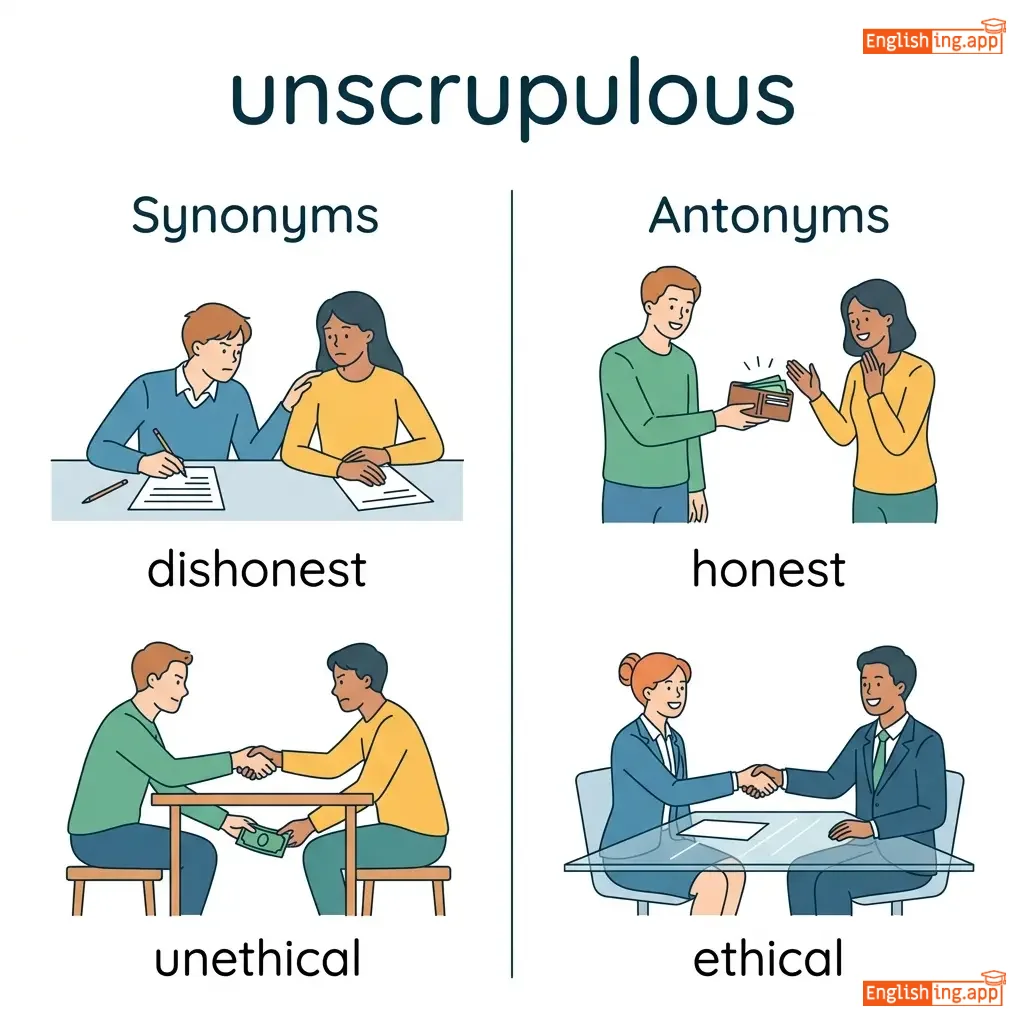
/ʌnˈskruːpjələs/
adjective
(ān sī kè pǔ lā sī)
••••••
|
|
不道德的; 不诚实的; 不公正的
bù dàodé de; bù chéngshí de; bù gōngzhèng de
••••••
|
having or showing no moral principles; not honest or fair
••••••
|
The unscrupulous businessman cheated his customers with false promises. |
那个不道德的商人用虚假的承诺欺骗了他的顾客。
Nàgè bù dàodé de shāngrén yòng xūjiǎ de chéngnuò qīpiàn le tā de gùkè.
••••••
|
dishonest, corrupt, immoral, unprincipled
••••••
|
honest, ethical, principled, scrupulous
••••••
|
unscrupulous behavior, unscrupulous dealer, unscrupulous methods
••••••
|
像一个用虚假承诺欺骗客户的商人。
••••••
|
|
#1059
⏰
|
/ʌnˈtaɪmli/
adjective
(ʌnˈtaɪmli)
••••••
|
- •••••• |
不合时宜
bù hé shí yí
••••••
|
happening at an inappropriate or inconvenient time; premature
••••••
|
His untimely death at the age of thirty shocked everyone.
他的过早死亡在30岁时震惊了所有人。
••••••
|
他的过早死亡在30岁时震惊了所有人。
Tā de guòzǎo sǐwáng zài 30 suì shí zhènjīngle suǒyǒu rén.
••••••
|
premature, early, inappropriate, inopportune
••••••
|
timely, appropriate, opportune, well-timed
••••••
|
untimely death, untimely end, untimely demise
••••••
|
不合时宜(bù hé shí yí)就像突然过早的死亡
••••••
|
|
#1060
🔗❌
|
/ʌn.rɪˈleɪ.tɪd/
adjective
(an-re-lé-i-te-d)
••••••
|
- •••••• |
无关的; 不相关
wúguān de; bù xiāngguān
••••••
|
having no connection or relationship; not connected by family ties
••••••
|
The two incidents were completely unrelated to each other.
这两个事件完全无关。
••••••
|
这两个事件完全无关。
Zhè liǎng gè shìjiàn wánquán wúguān.
••••••
|
unconnected, independent, separate
••••••
|
related, connected, linked
••••••
|
unrelated events, unrelated topics, unrelated issues
••••••
|
中文: '无关' = unrelated
••••••
|
Vocabulary Quiz
Test your vocabulary by matching words with their translations or meanings.
Login to take the quiz
Comments (0)
Share your thoughts and join the discussion.
Join the discussion by logging in
Login to CommentNo comments yet
Be the first to share your thoughts!