


Swipe left or right, or use the buttons. Tap image to zoom.
例句翻译
单词
Lesson 44Lesson 44 - 遮罩切换
|
表情符号
|
单词 | Images | 翻译 | 含义 | 例句 | 例句翻译 | 同义词 | 反义词 | 搭配词 | 助记符 |
|---|---|---|---|---|---|---|---|---|---|---|
|
#861
🏆
|
/səkˈsɛsfəl/
adjective
(sʌkˈsɛsfʊl)
••••••
|
- •••••• |
成功的; 富裕的; 胜利的
chénggōng de; fùyù de; shènglì de
••••••
|
having achieved a desired aim or result; prosperous
••••••
|
She was successful in her career as a doctor.
她在医生的职业生涯中取得了成功。
••••••
|
她在医生的职业生涯中取得了成功。
Tā zài yīshēng de zhíyè shēngyá zhōng qǔdéle chénggōng.
••••••
|
triumphant, victorious, prosperous, accomplished
••••••
|
unsuccessful, failed, defeated
••••••
|
successful business, successful career, successful attempt
••••••
|
Chinese '成功的' sounds like 'successful' and means prosperous or victorious.
••••••
|
|
#862
🗿
|
/stɪf/
adjective
(stif)
••••••
|
- •••••• |
僵硬的; 坚固的; 刚硬的
jiangying de, jiangu de, gangying de
••••••
|
not easily bent or changed; rigid; firm
••••••
|
The old wooden board was too stiff to bend. |
那块老木板太硬了,弯不起来。
Na kuai lao muban tai ying le, wan bu qilai.
••••••
|
rigid, inflexible, hard, firm
••••••
|
flexible, soft, pliable, bendable
••••••
|
stiff neck, stiff competition, stiff penalty
••••••
|
在中国,椅子是僵硬的,不能弯曲。
••••••
|
|
#863
🧠
|
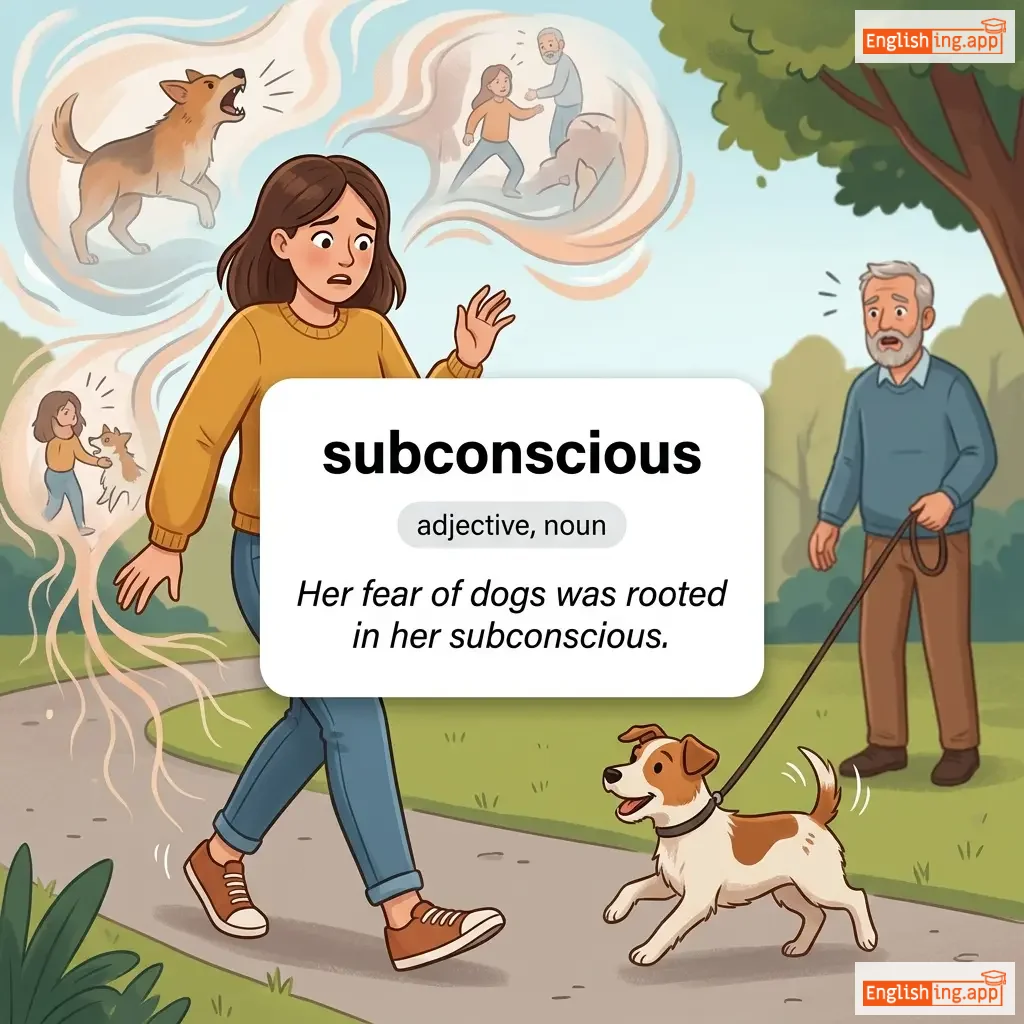
/ˌsʌbˈkɒn.ʃəs/
adjective
(sàbùkōngshí)
••••••
|
|
潜意识
qian yishi
••••••
|
relating to the part of the mind that is not fully conscious but influences thoughts and behavior
••••••
|
His subconscious fears affected his decision-making process. |
他的潜意识恐惧影响了他的决策过程。
Tā de qián yìshí kǒngjù yǐngxiǎngle tā de juécè guòchéng.
••••••
|
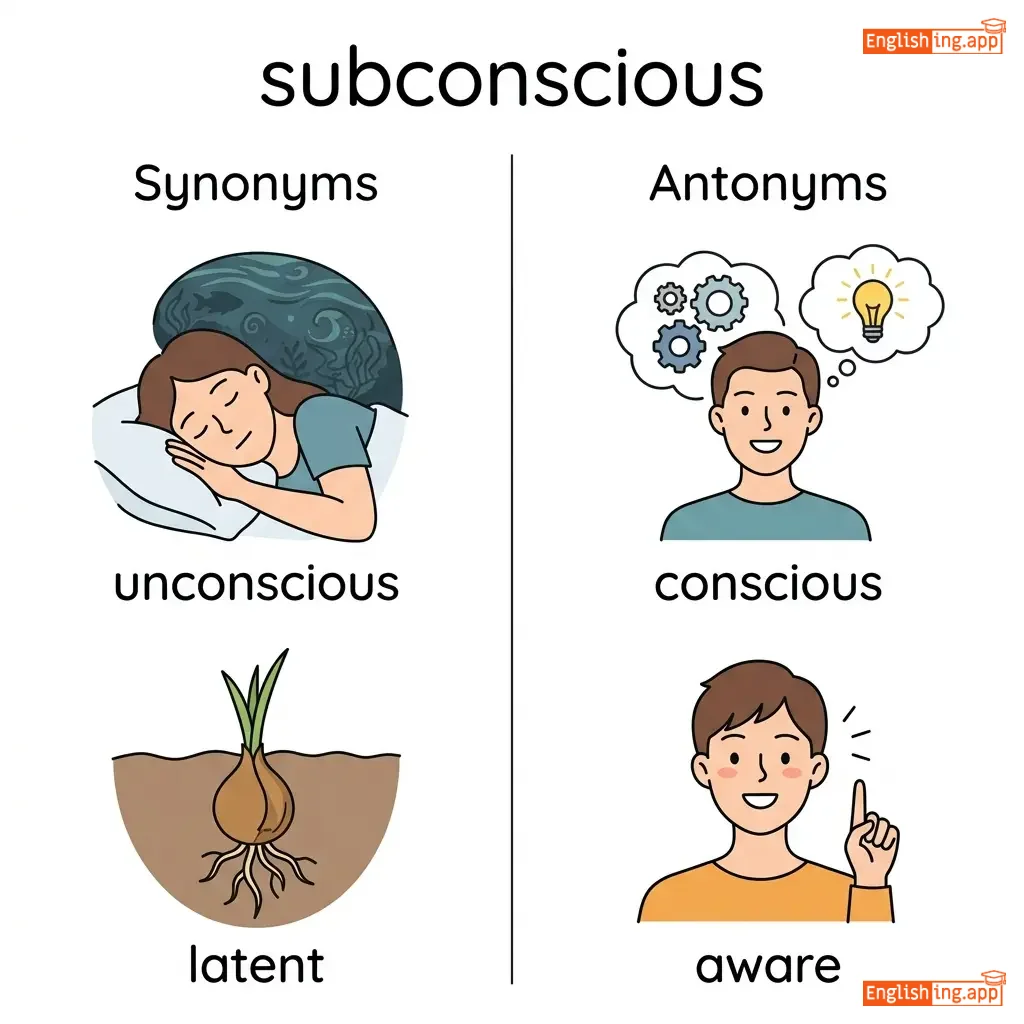
unconscious, subliminal, automatic, instinctive
••••••
|
conscious, aware, deliberate, intentional
••••••
|
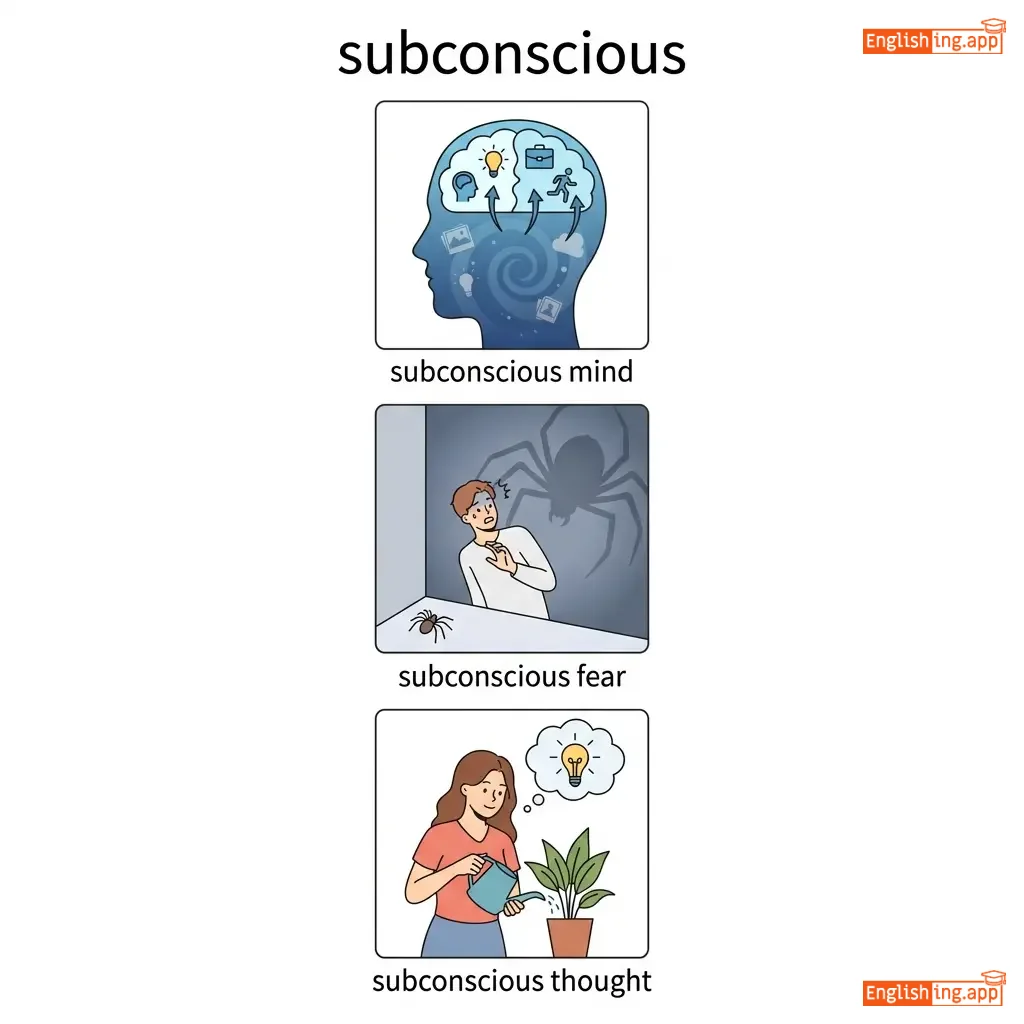
subconscious mind, subconscious thoughts, subconscious level, subconscious fears
••••••
|
潜意识 works in the background of your mind.
••••••
|
|
#864
📚
|
/ˈstuː.di.əs/
adjective
(学霸)
••••••
|
- •••••• |
学霸; 专心学习
xué bà; zhuān xīn xué xí
••••••
|
characterized by diligent study; devoted to learning
••••••
|
She is a studious student who spends hours in the library. |
她是一个学霸,常常在图书馆待上好几个小时。
Tā shì yīgè xué bà, chángcháng zài túshūguǎn dāi shàng hǎo jǐ gè xiǎoshí.
••••••
|
diligent, scholarly, academic, industrious
••••••
|
lazy, careless, inattentive, negligent
••••••
|
studious nature, studious habits, studious approach
••••••
|
Xué bā = Study + Ba (霸 – dominant) – The student who dominates study!
••••••
|
|
#865
🔢
|
/səkˈsɛsɪv/
adjective
(suksesiv)
••••••
|
- •••••• |
连续的; 连续的
lianxu de; lianxu de
••••••
|
following one after the other in order; consecutive
••••••
|
The team won three successive matches. |
球队赢得了三场连续的比赛。
Qiúduì yíngdé le sān chǎng liánxù de bǐsài.
••••••
|
consecutive, sequential, continuous, following
••••••
|
intermittent, interrupted, discontinuous
••••••
|
successive days, successive generations, successive victories
••••••
|
Successive refers to things happening one after another, like a series of victories!
••••••
|
|
#866
📏
|
/streɪt/
adjective
(斯特雷特)
••••••
|
- •••••• |
直的; 直接的; 诚实的;
zhí de, zhí jiē de, chéng shí de
••••••
|
extending or moving uniformly in one direction; not curved or bent; honest
••••••
|
Draw a straight line from point A to point B. |
从点A到点B画一条直线。
Cóng diǎn A dào diǎn B huà yītiáo zhíxiàn.
••••••
|
direct, linear, upright, honest
••••••
|
curved, bent, crooked, dishonest
••••••
|
straight line, straight hair, straight answer
••••••
|
Straight in Chinese, '直的', means direct and honest, just like a straight line.
••••••
|
|
#867
🙇
|
/səbˈmɪs.ɪv/
adjective
(səbˈmɪsɪv)
••••••
|
- •••••• |
顺从; 听话; 顺从的
shun cong; ting hua; shun cong de
••••••
|
ready to obey others; yielding to authority; humble and compliant
••••••
|
She became submissive after years of harsh treatment. |
她在多年的严厉对待后变得顺从。
Ta zai duonian de yanli duidai hou biande shuncong
••••••
|
obedient, compliant, docile, meek, passive
••••••
|
dominant, assertive, defiant, rebellious
••••••
|
submissive behavior, submissive attitude, submissive wife, submissive nature
••••••
|
顺从是为服从他人的标志。
••••••
|
|
#868
😤
|
/ˈstʌf.i/
adjective
(stafi)
••••••
|
- •••••• |
缺乏新鲜空气; 通风不良; 态度正式和保守
quēfá xīnxiān kōngqì; tōngfēng bùliáng; tàidù zhèngshì hé bǎoshǒu
••••••
|
lacking fresh air; poorly ventilated; formal and conservative in attitude
••••••
|
The room was stuffy and needed fresh air. |
房间里缺乏新鲜空气,需要新鲜空气。
fángjiān lǐ quēfá xīnxiān kōngqì, xūyào xīnxiān kōngqì.
••••••
|
airless, stifling, suffocating, oppressive
••••••
|
airy, fresh, ventilated, breezy
••••••
|
stuffy room, stuffy atmosphere, stuffy nose
••••••
|
缺乏新鲜空气会让你的态度变得更加保守和正式。
••••••
|
|
#869
🌳
|
/ˈstʌm.pi/
adjective
(斯坦皮)
••••••
|
- •••••• |
矮胖
ǎi pàng
••••••
|
short and thick; having a short, thick appearance
••••••
|
The stumpy little dog wagged its tail enthusiastically. |
那只矮胖的小狗兴奋地摇着尾巴。
Nà zhī ǎi pàng de xiǎo gǒu xīngfèn de yáo zhe wěibā.
••••••
|
short, squat, stocky, thick
••••••
|
tall, slender, elongated, lanky
••••••
|
stumpy fingers, stumpy legs, stumpy tail
••••••
|
像球一样矮胖的狗狗,叫做斯坦皮!
••••••
|
|
#870
➡️
|
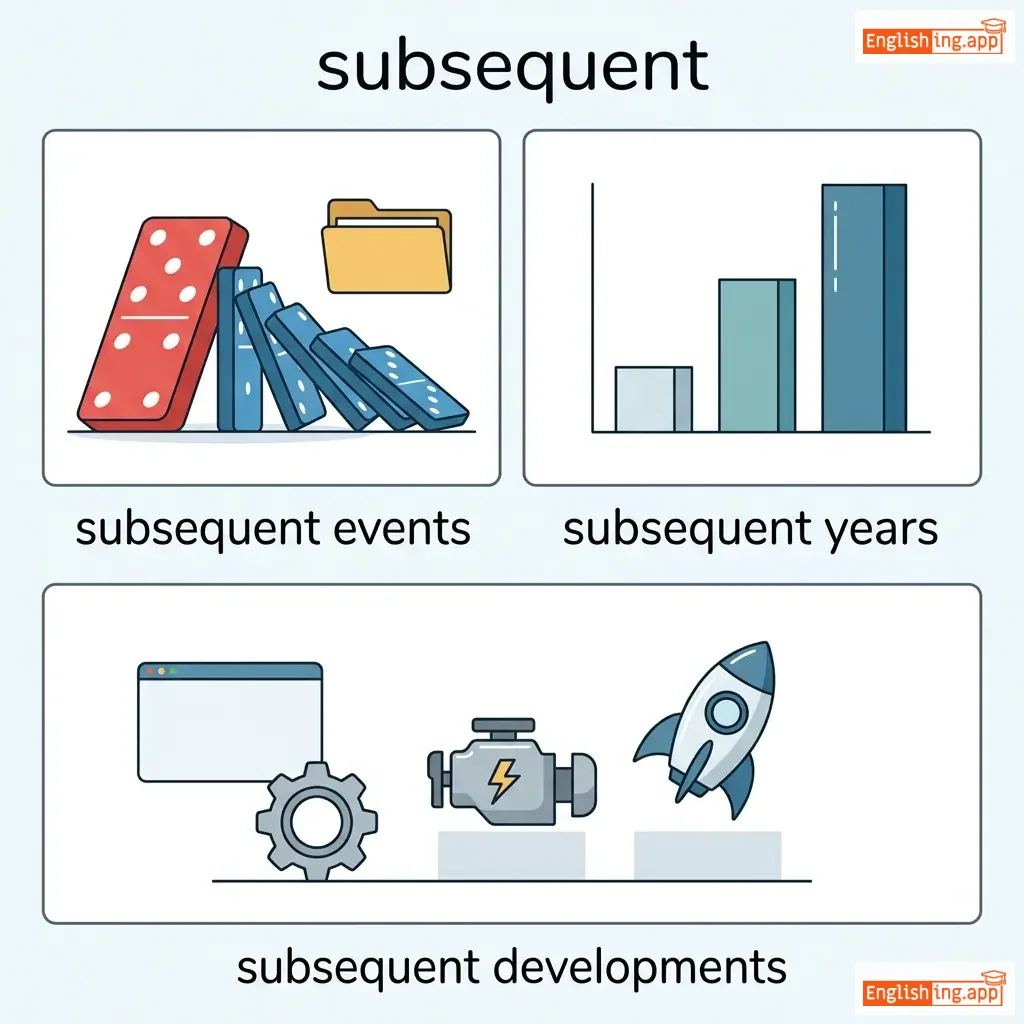
/ˈsʌb.sɪ.kwənt/
adjective
(sʌb.sɪ.kwənt)
••••••
|
|
随后的; 后续的
suí hòu de; hòu xù de
••••••
|
coming after something in time; following in order or succession
••••••
|
The subsequent events proved his theory correct. |
随后的事件证明了他的理论是正确的。
Suí hòu de shìjiàn zhèngmíngle tā de lǐlùn shì zhèngquè de
••••••
|
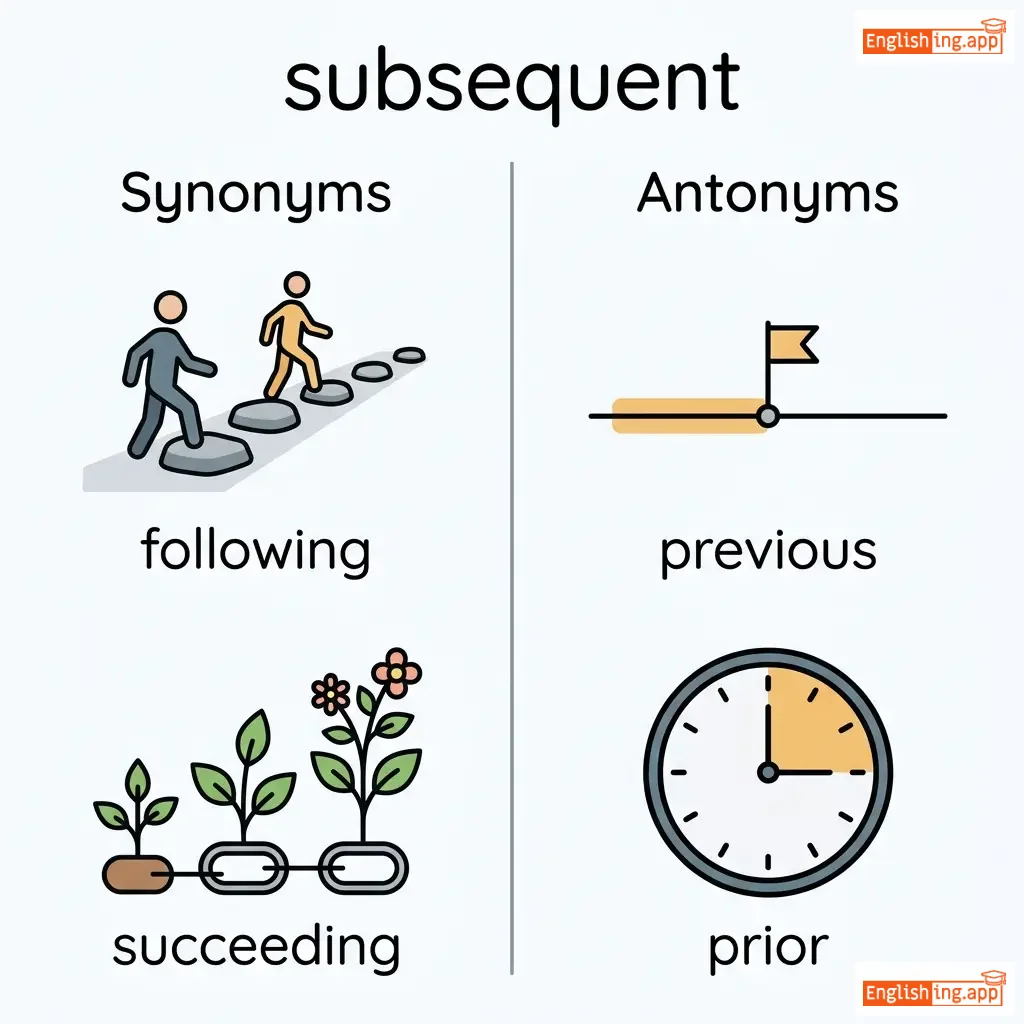
following, later, next, succeeding, ensuing
••••••
|
previous, prior, preceding, earlier
••••••
|
subsequent events, subsequent years, subsequent developments, subsequent analysis
••••••
|
'随后的' in Chinese matches events that come after, similar to 'subsequent'.
••••••
|
|
#871
⭐
|
/ˈstɑː.ri/
adjective
(stari)
••••••
|
- •••••• |
星光灿烂的; 闪亮的;
xingguang canlan de
••••••
|
full of stars; shining like stars; relating to stars
••••••
|
We enjoyed the starry night sky while camping in the mountains. |
我们在山区露营时,享受着星光灿烂的夜空。
women zai shanqu luking shi, xiangshou zhe xingguang canlan de yekong.
••••••
|
stellar, celestial, sparkling, twinkling
••••••
|
starless, cloudy, dark, dim
••••••
|
starry night, starry sky, starry-eyed
••••••
|
Starry night, 满是星星
••••••
|
|
#872
🎯
|
/ˌstreɪt ˈfɔːr.wərd/
adjective
(sītrèit fɔːrwɜːrd)
••••••
|
- •••••• |
诚实直率; 不复杂; 容易理解
chéngshí zhíshuài; bù fùzá; róngyì lǐjiě
••••••
|
honest and open; not complicated; easy to understand
••••••
|
His explanation was very straightforward and easy to follow.
Tā de jiěshì fēicháng zhíjiē ér qiě róngyì zhuīzōng.
••••••
|
他的解释非常直白,并且易于理解。
Tā de jiěshì fēicháng zhíjiē ér qiě róngyì lǐjiě.
••••••
|
simple, direct, honest, clear
••••••
|
complicated, dishonest, confusing, indirect
••••••
|
straightforward approach, straightforward answer, straightforward person
••••••
|
Straightforward 就像简单的指引,清晰且直白!
••••••
|
|
#873
🤦
|
/ˈstuː.pɪd/
adjective
(愚蠢的)
••••••
|
- •••••• |
愚蠢的; 笨的; 傻的
yúchǔn de, bèn de, shǎ de
••••••
|
lacking intelligence or common sense; foolish
••••••
|
It was stupid of me to forget my umbrella on a rainy day. |
在一个下雨的日子里,我忘记带伞真是愚蠢。
Zài yīgè xià yǔ de rìzi lǐ, wǒ wàngjì dài sǎn zhēn shì yúchǔn.
••••••
|
foolish, silly, dumb, ignorant
••••••
|
intelligent, smart, clever, wise
••••••
|
stupid mistake, stupid idea, stupid question
••••••
|
愚蠢就是忘记带伞。
••••••
|
|
#874
👨🏫
|
/strɪkt/
adjective
(斯特里克特)
••••••
|
- •••••• |
严格;要求严格遵守规则
yán gé; yāo qiú yán gé zūn shǒu guī zé
••••••
|
demanding exact conformity to rules; severe; rigorous
••••••
|
The teacher is very strict about homework deadlines. |
老师对作业截止日期非常严格。
Lǎoshī duì zuòyè jiézhǐ rìqī fēicháng yángé.
••••••
|
severe, rigorous, stern, demanding
••••••
|
lenient, relaxed, permissive, flexible
••••••
|
strict rules, strict teacher, strict discipline
••••••
|
严格就是要求每条规则都不能违反。
••••••
|
|
#875
🏢
|
/səbˈsɪd.i.ər.i/
adjective
(子公司)
••••••
|
- •••••• |
附属的; 次要的; 与子公司相关
fùshǔ de; cìyào de; yǔ zǐ gōngsī xiāngguān
••••••
|
less important than the main thing; secondary; of or relating to a subsidiary company
••••••
|
The subsidiary company handles all overseas operations. |
子公司负责所有海外业务。
Zǐ gōngsī fùzé suǒyǒu hǎiwài yèwù.
••••••
|
secondary, auxiliary, subordinate, ancillary, supporting
••••••
|
primary, main, principal, chief, major
••••••
|
subsidiary company, subsidiary role, subsidiary income, subsidiary rights
••••••
|
子公司是一个附属但重要的角色
••••••
|
|
#876
🛡️
|
/ˈsted.fæst/
adjective
(斯泰德法斯特)
••••••
|
- •••••• |
坚定; 坚决; 不动摇
jiāndìng; jiānjué; bù dòngyáo
••••••
|
firm in belief, determination, or adherence; unwavering
••••••
|
She remained steadfast in her commitment to helping the poor. |
她在帮助穷人方面保持坚定的决心。
Tā zài bāngzhù qióngrén fāngmiàn bǎochí jiāndìng de juéxīn.
••••••
|
unwavering, resolute, loyal, constant
••••••
|
wavering, fickle, unreliable, changeable
••••••
|
steadfast loyalty, steadfast commitment, steadfast support
••••••
|
坚定就像钢铁般的决心,永远不动摇
••••••
|
|
#877
💅
|
/ˈstaɪ.lɪʃ/
adjective
(shtai-lish)
••••••
|
- •••••• |
时尚和有吸引力;在外观上有优雅或品味
shíshàng hé yǒu xīyǐn lì; zài wàiguān shàng yǒu yōuyǎ huò pǐnwèi
••••••
|
fashionable and attractive; having elegance or taste in appearance
••••••
|
She wore a stylish dress to the party.
她穿着一件时尚的裙子参加派对。
••••••
|
她穿着一件时尚的裙子参加派对。
Tā chuānzhuó yī jiàn shíshàng de qúnzi cānjiā pàiduì.
••••••
|
fashionable, trendy, chic, elegant
••••••
|
unfashionable, outdated, frumpy, unstylish
••••••
|
stylish clothes, stylish appearance, stylish design
••••••
|
当你穿时尚的衣服时,你就是 'stylish'。
••••••
|
|
#878
🐴
|
/ˈstʌb.ərn/
adjective
(sɪtʌbɚn)
••••••
|
- •••••• |
固执; 顽固; 倔强
guzhi, wangu, juexiang
••••••
|
refusing to change opinion or course of action; persistent; obstinate
••••••
|
The stubborn child refused to eat his vegetables.
那个固执的孩子拒绝吃蔬菜。
••••••
|
那个固执的孩子拒绝吃蔬菜。
Na ge guzhi de haizi jujue chi shucai.
••••••
|
obstinate, headstrong, persistent, inflexible
••••••
|
flexible, compliant, agreeable, cooperative
••••••
|
stubborn person, stubborn stain, stubborn attitude
••••••
|
In Chinese, '固执' (guzhi) means someone who refuses to change, much like a child refusing to eat vegetables.
••••••
|
|
#879
📏
|
/səbˈstæn.ʃəl/
adjective
(səbˈstænʃəl)
••••••
|
- •••••• |
实质的; 相当的; 重要的
shízhì de; xiāngdāng de; zhòngyào de
••••••
|
large in size, amount, or importance; considerable; significant
••••••
|
There was a substantial increase in sales this quarter. |
本季度销售量有了显著增加。
Běn jìdù xiāoshòu liàng yǒule xiǎnzhù zēngjiā.
••••••
|
considerable, significant, large, major, sizeable
••••••
|
insignificant, minor, small, negligible, trivial
••••••
|
substantial amount, substantial increase, substantial evidence, substantial progress
••••••
|
在中文中,'实质的'是指大的东西,象征着重大的成就或者重要的内容。
••••••
|
|
#880
😠
|
/stɜːrn/
adjective
(斯特恩)
••••••
|
- •••••• |
严格的;严厉的
sī tè ēn
••••••
|
serious and demanding exact conformity to rules; strict and severe
••••••
|
The teacher gave the students a stern warning about cheating. |
老师给学生们关于作弊的严厉警告。
Lǎoshī gěi xuéshēngmen guānyú zhòubì de yánlì jǐnggào.
••••••
|
strict, severe, harsh, austere
••••••
|
lenient, gentle, mild, soft
••••••
|
stern warning, stern look, stern discipline
••••••
|
Stern就像严格的规定,无法避免。
••••••
|
Vocabulary Quiz
Test your vocabulary by matching words with their translations or meanings.
Login to take the quiz
Comments (0)
Share your thoughts and join the discussion.
Join the discussion by logging in
Login to CommentNo comments yet
Be the first to share your thoughts!