



Swipe left or right, or use the buttons. Tap image to zoom.
例句翻译
单词
Lesson 45Lesson 45 - 遮罩切换
|
表情符号
|
单词 | Images | 翻译 | 含义 | 例句 | 例句翻译 | 同义词 | 反义词 | 搭配词 | 助记符 |
|---|---|---|---|---|---|---|---|---|---|---|
|
#881
🤗
|
/ˌsɪm.pəˈθet.ɪk/
adjective
(同情的)
••••••
|
- •••••• |
有同情心的; 富有理解的; 敏感的;
yǒu tóngqíng xīn de; fù yǒu lǐjiě de; mǐn gǎn de;
••••••
|
showing compassion or understanding for someone's feelings or situation
••••••
|
She was very sympathetic when I told her about my problems. |
当我告诉她我的问题时,她表现得非常有同情心。
Dāng wǒ gàosù tā wǒ de wèntí shí, tā biǎoxiàn dé fēicháng yǒu tóngqíng xīn.
••••••
|
compassionate, understanding, caring, empathetic
••••••
|
unsympathetic, indifferent, cold, heartless
••••••
|
sympathetic ear, sympathetic listener, sympathetic response
••••••
|
同情与理解伴随,情感的连结。
••••••
|
|
#882
😤
|
/ˈsʌl.ki/
adjective
(萨尔基)
••••••
|
- •••••• |
脾气坏且沉默; 易怒
píqì huài qiě chénmò; yì nù
••••••
|
bad-tempered and sullen; moody
••••••
|
The child became sulky when he couldn't get his favorite toy.
当孩子无法得到他最喜欢的玩具时,他变得很萨尔基。
••••••
|
孩子变得脾气坏,因为他无法得到自己最喜欢的玩具。
Háizi biàn dé píqì huài, yīnwèi tā wúfǎ dédào zìjǐ zuì xǐhuān de wánjù.
••••••
|
moody, grumpy, petulant, sullen
••••••
|
cheerful, happy, pleasant, good-natured
••••••
|
sulky mood, sulky behavior, sulky child
••••••
|
萨尔基的孩子看起来就像一个生气的云彩。
••••••
|
|
#883
🏆
|
/sər'pæs.ɪŋ/
adjective
(sərˈpæsɪŋ)
••••••
|
- •••••• |
卓越; 超过; 非凡
zhuóyuè, chāoguò, fēifán
••••••
|
exceeding; going beyond; outstanding
••••••
|
Her surpassing beauty made everyone stop and stare.
她超凡的美丽让每个人都停下来盯着她看。
••••••
|
她超凡的美丽让每个人都停下来盯着她看。
Tā chāofán de měilì ràng měi gèrén dōu tíng xiàlái dīngzhe tā kàn.
••••••
|
exceeding, outstanding, extraordinary, exceptional
••••••
|
ordinary, mediocre, average, inferior
••••••
|
surpassing beauty, surpassing excellence, surpassing skill
••••••
|
卓越是当你超越其他人的时候,你才成为突出的人物。
••••••
|
|
#884
👻
|
/ˌsuː.pəˈnætʃ.ər.əl/
adjective
(苏珀纳特尤尔)
••••••
|
- •••••• |
超自然的
supernatural
••••••
|
relating to things that cannot be explained by natural or scientific laws; beyond the normal or physical world
••••••
|
The old house was said to have supernatural powers.
据说那座老房子具有超自然的力量。
••••••
|
据说那座老房子具有超自然的力量。
ju shuo na zuo lao fang zi ju you chao zi ran de li liang
••••••
|
paranormal, mystical, otherworldly, unearthly
••••••
|
natural, normal, ordinary, earthly
••••••
|
supernatural powers, supernatural forces, supernatural beings
••••••
|
Super = 超级, natural = 自然; 想象一个 SUPERHERO 站在 NATURAL 的 上方, 就记住 超自然
••••••
|
|
#885
🤝
|
/ˈtækt.fəl/
adjective
(塔克福尔)
••••••
|
- •••••• |
圆滑的; 老练的;
yuán huá de; lǎo liàn de;
••••••
|
showing skill and sensitivity in dealing with others or difficult situations
••••••
|
He gave a tactful response to avoid hurting her feelings. |
他给出了一个圆滑的回答,以避免伤害她的感情。
Tā gěi chūle yīgè yuán huá de huídá, yǐ bìmiǎn shānghài tā de gǎnqíng.
••••••
|
diplomatic, discreet, considerate, polite
••••••
|
tactless, blunt, insensitive, rude
••••••
|
tactful approach, tactful manner, tactful response
••••••
|
圆滑 (yuán huá) 代表智慧和技巧,像在复杂情境中的回应。
••••••
|
|
#886
☀️
|
/ˈsʌn.i/
adjective
(sani)
••••••
|
- •••••• |
阳光明媚的; 乐观的
yangguang mingmei de; leguan de
••••••
|
bright with sunlight; cheerful and optimistic
••••••
|
It's a beautiful sunny day perfect for a picnic. |
这是一个美丽的阳光明媚的日子,适合野餐。
Zhe shi yige meili de yangguang mingmei de rizi, shihuo yecan.
••••••
|
bright, cheerful, radiant, clear
••••••
|
cloudy, gloomy, dark, overcast
••••••
|
sunny day, sunny weather, sunny disposition
••••••
|
Sunny in Chinese is bright and cheerful, perfect for a picnic in the sun!
••••••
|
|
#887
😲
|
/sər'praɪzd/
adjective
(sər'praɪzd)
••••••
|
- •••••• |
惊讶
jingya
••••••
|
feeling or showing surprise; astonished
••••••
|
I was surprised to see my old friend at the market.
我在市场看到我的老朋友时感到惊讶。
••••••
|
我在市场看到我的老朋友时感到惊讶。
Wǒ zài shìchǎng kàn dào wǒ de lǎo péngyǒu shí gǎndào jīngyà.
••••••
|
astonished, amazed, shocked, startled
••••••
|
unsurprised, expectant, prepared, anticipated
••••••
|
pleasantly surprised, quite surprised, genuinely surprised
••••••
|
惊讶就像你突然发现了一个神秘的宝藏。
••••••
|
|
#888
✈️
|
/ˌsuː.pəˈsɒn.ɪk/
adjective
(超音速)
••••••
|
- •••••• |
比声音的速度更快; 与超过声音速度的速度相关
bǐ shēngyīn de sùdù gèng kuài; yǔ chāoguò shēngyīn sùdù de sùdù xiāngguān
••••••
|
faster than the speed of sound; relating to speeds greater than the speed of sound
••••••
|
The supersonic jet broke the sound barrier. |
超音速飞机打破了音障。
Chāo yīn sù fēijī dǎpòle yīn zhàng
••••••
|
ultra-fast, hypersonic, high-speed
••••••
|
subsonic, slow, sluggish
••••••
|
supersonic speed, supersonic aircraft, supersonic flight
••••••
|
超音速飞行打破声音障碍
••••••
|
|
#889
➕
|
/ˌsʌp.lɪˈmen.tər.i/
adjective
(补充的)
••••••
|
- •••••• |
补充的; 附加的; 额外的
bǔchōng de; fùjiā de; éwài de
••••••
|
completing or making an addition to something; additional; extra
••••••
|
Students need to buy supplementary books for the course.
学生需要为课程购买补充书籍。
••••••
|
学生需要为课程购买补充书籍。
xuéshēng xūyào wèi kèchéng gòumǎi bǔchōng shūjí.
••••••
|
additional, extra, complementary, auxiliary
••••••
|
primary, main, essential, basic
••••••
|
supplementary material, supplementary income, supplementary information
••••••
|
Bǔchōng de: '补充' is like adding extra resources.
••••••
|
|
#890
😯
|
/sər'praɪz.ɪŋ/
adjective
(sànpūlài zìng)
••••••
|
- •••••• |
令人惊讶的; 出人意料的
lìng rén jīngyà de; chū rén yì liào de
••••••
|
causing surprise; unexpected; remarkable
••••••
|
It's surprising how quickly children learn new languages. |
令人惊讶的是,孩子们学新语言的速度有多快。
lìng rén jīngyà de shì, háizimen xué xīn yǔyán de sùdù yǒu duō kuài.
••••••
|
astonishing, amazing, unexpected, remarkable
••••••
|
predictable, expected, ordinary, unsurprising
••••••
|
surprising news, surprising result, not surprising
••••••
|
令人惊讶的 (surprising) 事件总是出人意料的 (unexpected).
••••••
|
|
#891
⚡
|
/ˈsʌdən/
adjective
(萨登)
••••••
|
- •••••• |
突如其来的; 突然的; 出乎意料的;
tū rú qí lái de; tū rán de; chū hū yì liào de
••••••
|
happening or done quickly and unexpectedly; abrupt
••••••
|
There was a sudden change in the weather. |
天气发生了突如其来的变化。
tiān qì fā shēng le tū rú qí lái de biàn huà.
••••••
|
abrupt, unexpected, rapid, swift
••••••
|
gradual, slow, expected, planned
••••••
|
sudden change, sudden death, sudden movement
••••••
|
No •••••• |
|
#892
🏊♂️
|
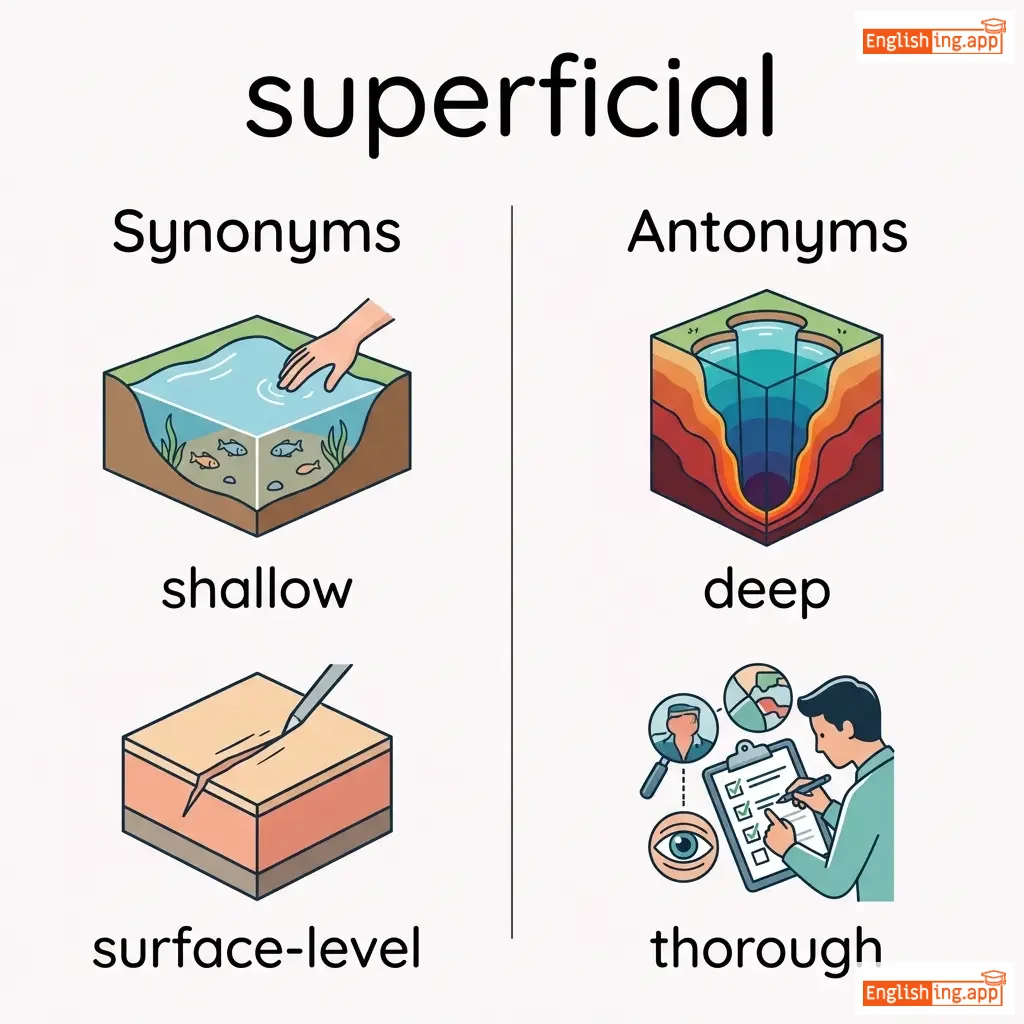
/ˌsuː.pəˈfɪʃ.əl/
adjective
(su-pu-er-fi-xi-al)
••••••
|
|
表面上的; 浅薄的; 不彻底的
biaomian shang de; qianbo de; bu chedi de
••••••
|
existing or occurring at or on the surface; shallow; not thorough or deep
••••••
|
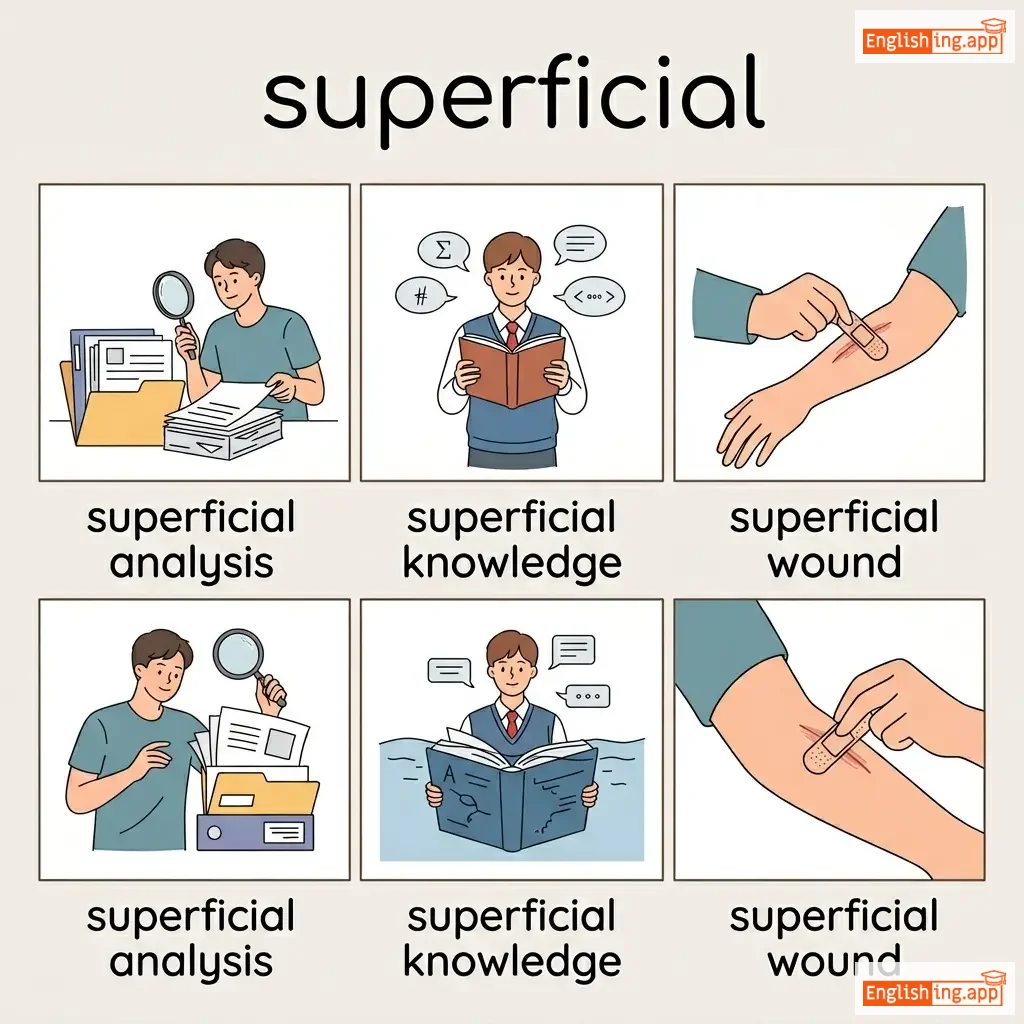
His knowledge of the subject was only superficial. |
他对这个话题的了解只是表面上的。
ta dui zhege huati de liaojie zhishi biaomian shang de
••••••
|
shallow, surface-level, cursory, skin-deep
••••••
|
deep, thorough, profound, comprehensive
••••••
|
superficial knowledge, superficial understanding, superficial wound
••••••
|
想象水面上的反射,只是表面而已。
••••••
|
|
#893
👑
|
/suːˈpriːm/
adjective
(suːˈpriːm)
••••••
|
- •••••• |
最高的
zuìgāo de
••••••
|
highest in rank, authority, or quality; greatest; most important
••••••
|
The Supreme Court made the final decision. |
最高法院作出了最终决定。
zuìgāo fǎyuàn zuò chūle zuìzhōng juédìng
••••••
|
highest, ultimate, paramount, top
••••••
|
lowest, inferior, subordinate, minor
••••••
|
supreme court, supreme authority, supreme power
••••••
|
No •••••• |
|
#894
🗑️
|
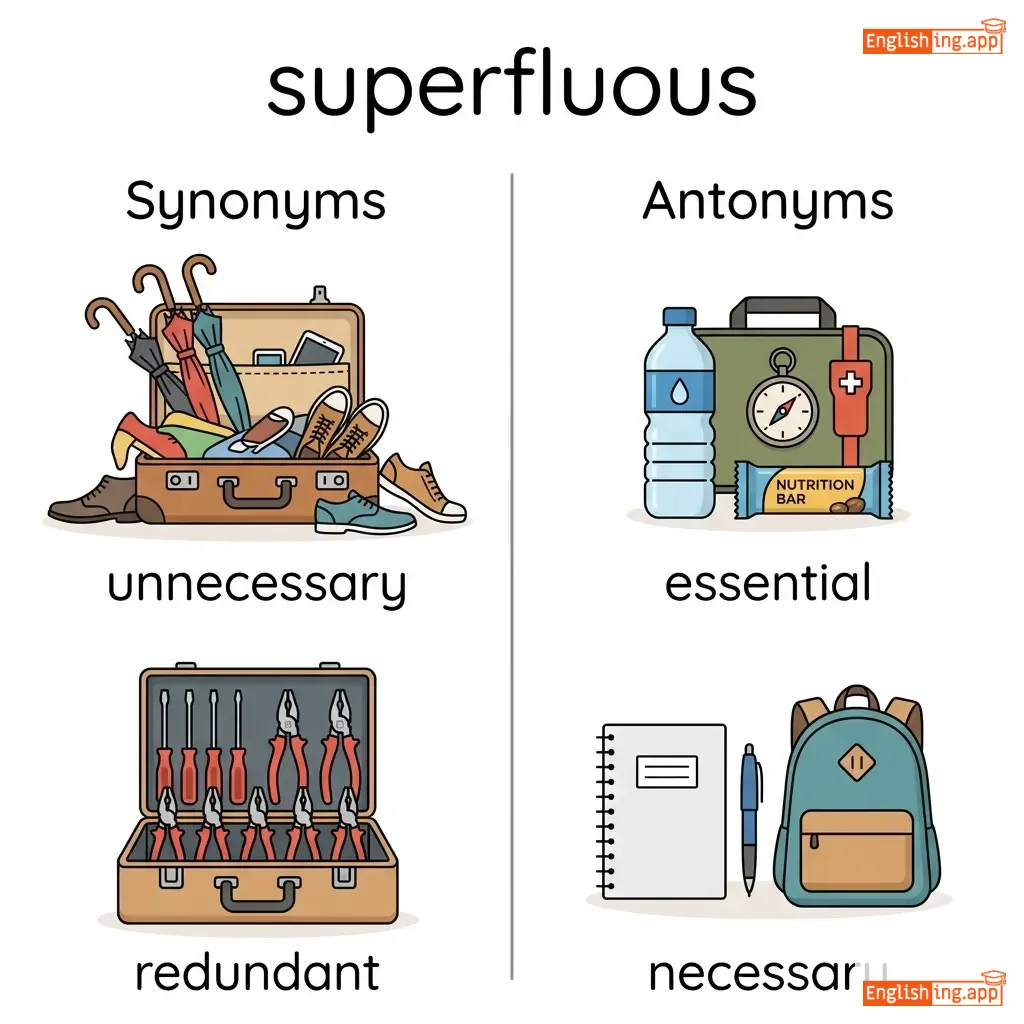
/suːˈpɜː.flu.əs/
adjective
(苏珀弗卢厄斯)
••••••
|
|
多余的
superfluous
••••••
|
unnecessary; excessive; more than what is needed
••••••
|
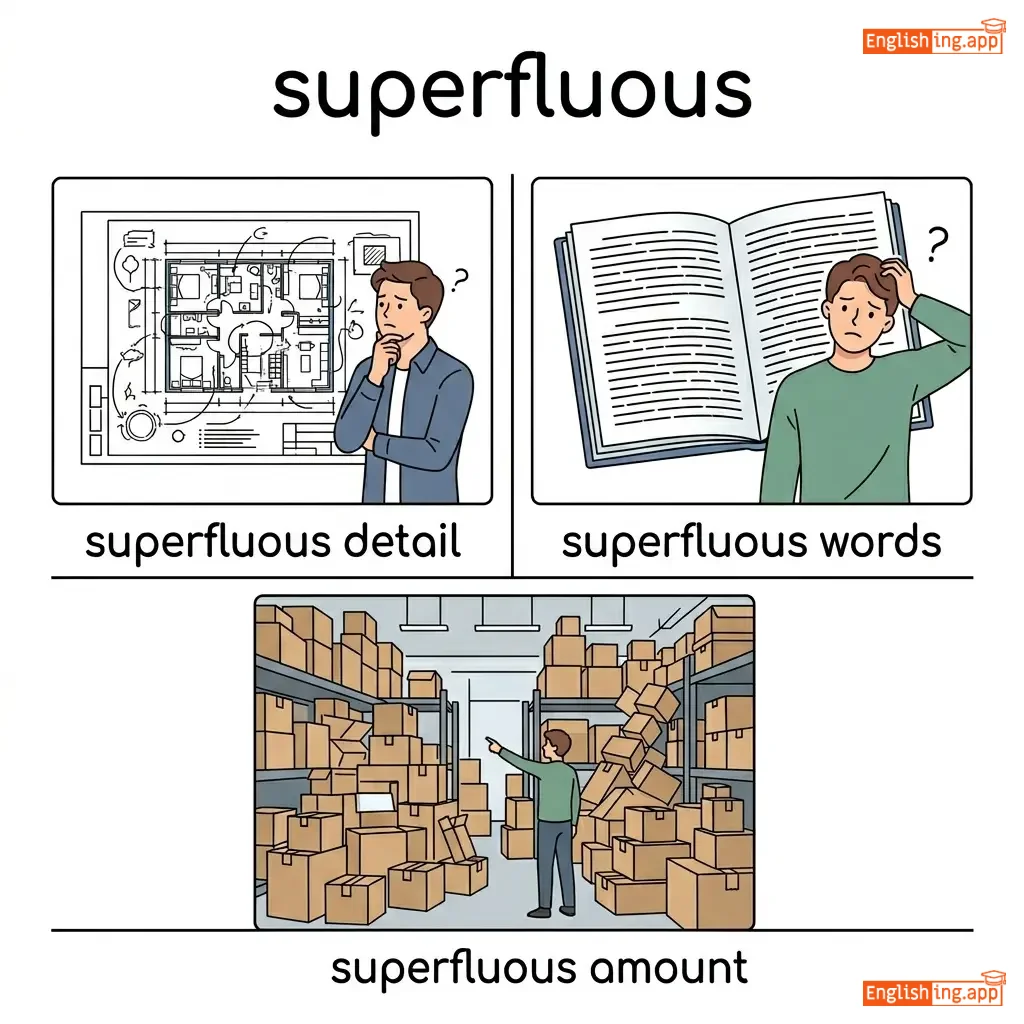
The long introduction was superfluous and should be removed.
冗长的介绍是多余的,应当被删除。
••••••
|
冗长的介绍是多余的,应该被删除。
rongzhang de jieshao shi duoyu de yinggai bei shanchu
••••••
|
unnecessary, excessive, redundant, surplus
••••••
|
necessary, essential, required, needed
••••••
|
superfluous information, superfluous details, superfluous words
••••••
|
SuPerFlooUs 超出需要 的 东西 要 清除
••••••
|
|
#895
🤔
|
/sə'spɪʃ.əs/
adjective
(sū sī pī shī sī)
••••••
|
- •••••• |
可疑的;怀疑的
kě yí de; huái yí de
••••••
|
having or showing distrust; doubtful; questionable
••••••
|
The police found his behavior very suspicious.
警察发现他的行为非常可疑。
••••••
|
警察发现他的行为非常可疑。
Jǐngchá fāxiàn tā de xíngwéi fēicháng kěyí.
••••••
|
doubtful, questionable, dubious, distrustful
••••••
|
trusting, unsuspicious, certain, confident
••••••
|
suspicious behavior, suspicious activity, look suspicious
••••••
|
Suspicious在中文里就是可疑的,像警察觉得某些行为很奇怪。
••••••
|
|
#896
✅
|
/səˈfɪʃənt/
adjective
(苏菲仙特)
••••••
|
- •••••• |
足够的; 适合目的的; 满意的
zúgòu de; shìhé mùdì de; mǎnyì de
••••••
|
enough; adequate for the purpose; satisfactory
••••••
|
We have sufficient time to complete the project.
我们有足够的时间来完成这个项目。
••••••
|
我们有足够的时间来完成这个项目。
Wǒmen yǒu zúgòu de shíjiān lái wánchéng zhège xiàngmù.
••••••
|
enough, adequate, satisfactory, ample
••••••
|
insufficient, inadequate, lacking, deficient
••••••
|
sufficient time, sufficient evidence, sufficient funds
••••••
|
Sufficient in Chinese is 'zúgòu' – think of 'zu' as the sound for enough.
••••••
|
|
#897
✅
|
/ʃʊr/
adjective
(shur)
••••••
|
- •••••• |
确定的; 确实
quèdìng de; quèshí
••••••
|
completely confident that something is true; certain; definitely true
••••••
|
I am sure that he will come tomorrow. |
我确定他明天会来。
wǒ quèdìng tā míngtiān huì lái
••••••
|
certain, confident, positive, definite
••••••
|
uncertain, doubtful, unsure, hesitant
••••••
|
make sure, sure thing, for sure
••••••
|
Chinese '确定' is similar to the English 'sure', meaning certain.
••••••
|
|
#898
👑
|
/suːˈpɪə.ri.ər/
adjective
(超级)
••••••
|
- •••••• |
卓越; 优于平均水平
zhuóyuè; yōu yú píngjūn shuǐpíng
••••••
|
higher in rank, quality, or importance; better than average
••••••
|
This product is superior to all others in the market. |
该产品在市场上优于所有其他产品。
Gāi chǎnpǐn zài shìchǎng shàng yōu yú suǒyǒu qítā chǎnpǐn.
••••••
|
better, excellent, outstanding, supreme
••••••
|
inferior, worse, lower, substandard
••••••
|
superior quality, superior performance, superior officer
••••••
|
Superior = 超越所有
••••••
|
|
#899
🍯
|
/swiːt/
adjective
(sui:t)
••••••
|
- •••••• |
甜的; 亲切的; 迷人的
tián de, qīnqiè de, mírén de
••••••
|
having a pleasant taste; kind and gentle; pleasing
••••••
|
She has a sweet voice that everyone loves to hear.
Shī hǎz à suìt vɔɪs dæt èvrɪwæn lʌvz tú hɪr.
••••••
|
她有一个甜美的声音,人人都喜欢听。
Tā yǒu yīgè tiánměi de shēngyīn, rén rén dōu xǐhuān tīng.
••••••
|
pleasant, lovely, kind, gentle, sugary
••••••
|
bitter, sour, harsh, unpleasant, rude
••••••
|
sweet taste, sweet smell, sweet dreams, sweet person
••••••
|
Sweet is like 甜的, and 甜的 means sweet!
••••••
|
|
#900
⚠️
|
/ˌsuːɪˈsaɪdəl/
adjective
(自杀的)
••••••
|
- •••••• |
自杀的
zìshā de
••••••
|
relating to or having thoughts of killing oneself; extremely dangerous or harmful
••••••
|
The reckless driving was suicidal behavior. |
鲁莽的驾驶是一种自杀行为。
Lǔmǎng de jiàshǐ shì yī zhǒng zìshā xíngwéi.
••••••
|
self-destructive, dangerous, reckless, deadly
••••••
|
safe, careful, protective, life-affirming
••••••
|
suicidal thoughts, suicidal behavior, suicidal tendencies
••••••
|
自杀的中文翻译与英语中的suicidal相同
••••••
|
Vocabulary Quiz
Test your vocabulary by matching words with their translations or meanings.
Login to take the quiz
Comments (0)
Share your thoughts and join the discussion.
Join the discussion by logging in
Login to CommentNo comments yet
Be the first to share your thoughts!