






Swipe left or right, or use the buttons. Tap image to zoom.
例句翻译
单词
Lesson 24Lesson 24 - 遮罩切换
|
表情符号
|
单词 | Images | 翻译 | 含义 | 例句 | 例句翻译 | 同义词 | 反义词 | 搭配词 | 助记符 |
|---|---|---|---|---|---|---|---|---|---|---|
|
#461
😢
|
/ˈloʊn.li/
adjective
(lúnlí)
••••••
|
- •••••• |
孤独的; 孤立的
gūdú de; gūlì de
••••••
|
solitary; isolated; without companions
••••••
|
She felt lonely after moving to a new city.
她在搬到一个新城市后感到孤独。
••••••
|
她在搬到一个新城市后感到孤独。
Tā zài bān dào yīgè xīn chéngshì hòu gǎndào gūdú.
••••••
|
isolated, solitary, alone
••••••
|
social, accompanied, together
••••••
|
feel lonely, lonely person, lonely place
••••••
|
孤独的感觉没有人陪伴
••••••
|
|
#462
😈
|
/məˈlɪʃəs/
adjective
(恶意)
••••••
|
- •••••• |
恶意的; 有害的
è yì de; yǒu hài de
••••••
|
having or showing a desire to cause harm to someone; spiteful
••••••
|
The malicious software damaged many computers. |
恶意软件损坏了许多计算机。
È yì ruǎn jiàn sǔn huài le xǔ duō jì suàn jī.
••••••
|
spiteful, vindictive, harmful, nasty
••••••
|
benevolent, kind, helpful, good-natured
••••••
|
malicious intent, malicious gossip, malicious attack
••••••
|
恶意软件是有害的,能够伤害计算机。
••••••
|
|
#463
❤️
|
/ˈlʌv.ɪŋ/
adjective
(lʌvɪŋ)
••••••
|
- •••••• |
慈爱的; 关怀的; 表现出爱与温暖
cí'ài de; guānhuái de; biǎoxiàn chū ài yǔ wēnnuǎn
••••••
|
affectionate; caring; showing love and warmth
••••••
|
She is a loving mother who cares deeply for her children.
她是一个慈爱的母亲,深深地关心着她的孩子们。
••••••
|
她是一个慈爱的母亲,深深地关心着她的孩子们。
Tā shì yīgè cí'ài de mǔqīn, shēnshēn de guānxīn zhe tā de háizimen.
••••••
|
caring, affectionate, tender, devoted
••••••
|
hateful, cruel, cold, indifferent
••••••
|
loving care, loving relationship, loving family
••••••
|
母亲的爱总是温暖的
••••••
|
|
#464
🌙
|
/ˈluː.nər/
adjective
(月球的)
••••••
|
- •••••• |
月球的
yuèqiú de
••••••
|
relating to the moon; of or concerning the moon
••••••
|
The lunar eclipse was visible last night.
月食昨晚可见。
••••••
|
月食昨晚可见。
yuèshí zuó wǎn kějiàn.
••••••
|
moon-related, celestial
••••••
|
solar, terrestrial
••••••
|
lunar eclipse, lunar calendar, lunar surface
••••••
|
月球的表示与月亮相关的事物,比如月食。
••••••
|
|
#465
📏
|
/lɔːŋ/
adjective
(lóng)
••••••
|
- •••••• |
长
chang
••••••
|
having great length; extended in distance or time
••••••
|
The long road stretched for miles ahead. |
这条长路延伸了好几英里。
zhè tiáo cháng lù yánshēn le hǎo jǐ yīnglǐ
••••••
|
lengthy, extended, elongated
••••••
|
short, brief, compact
••••••
|
long time, long way, long road
••••••
|
长路像是无尽的时间。
••••••
|
|
#466
😠
|
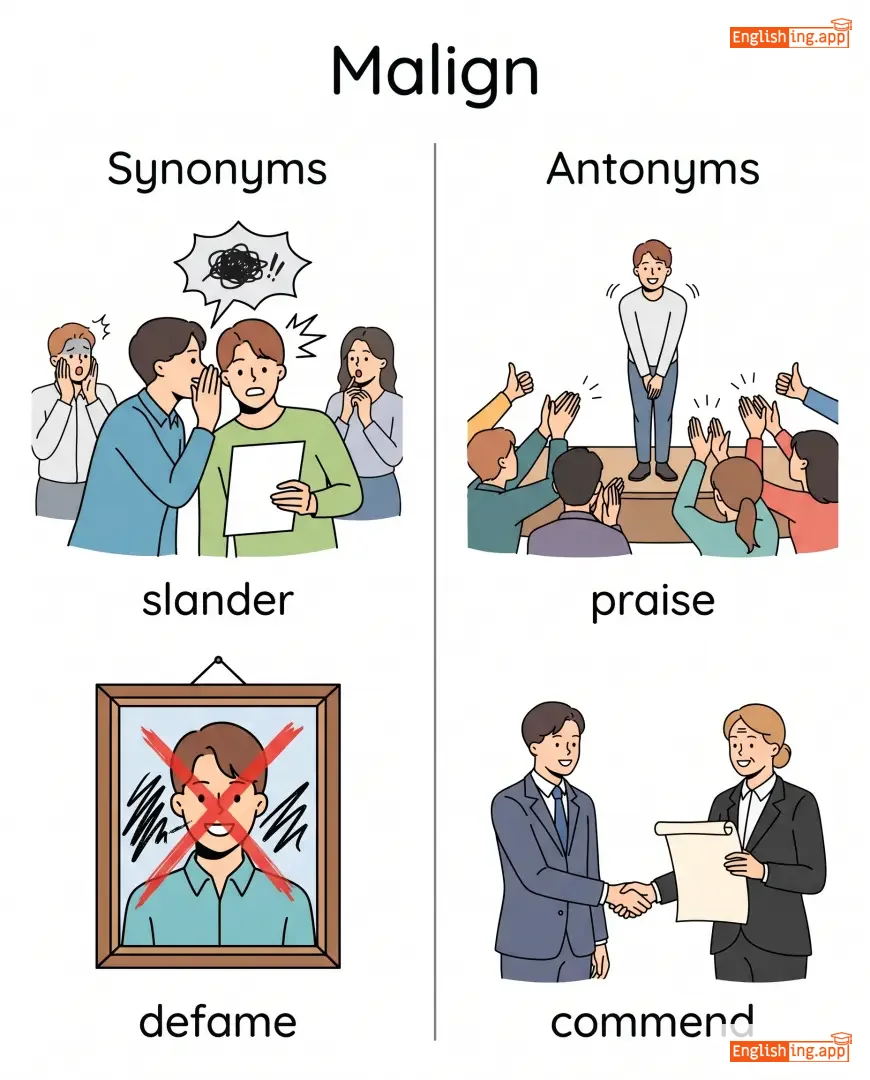
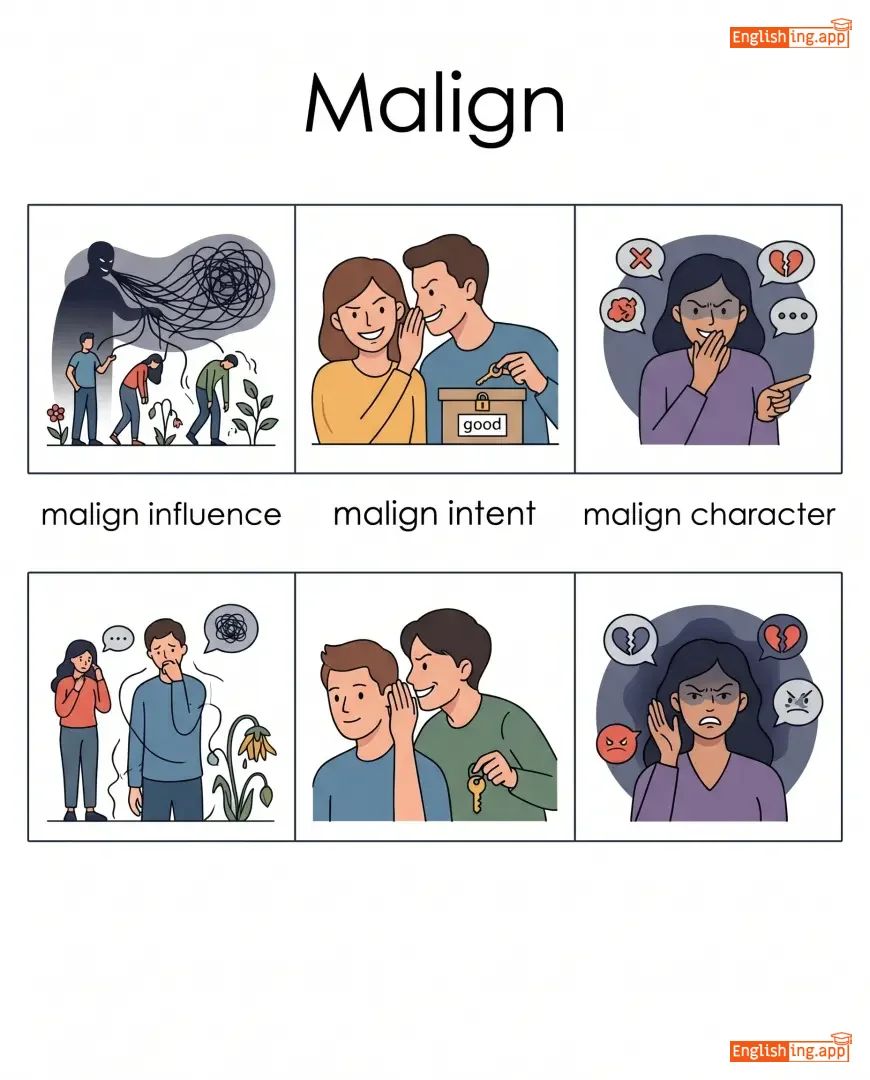
/məˈlaɪn/
adjective
(máláiyīn)
••••••
|
|
有害的;诽谤的
yǒuhài de; fěibà de
••••••
|
evil in nature or effect; harmful; slanderous
••••••
|
He spread malign rumors about his colleague. |
他传播了关于他同事的有害谣言。
Tā chuánbōle guānyú tā tóngshì de yǒuhài yáoyuán.
••••••
|
evil, harmful, wicked, bad
••••••
|
benign, good, beneficial, kind
••••••
|
malign influence, malign forces, malign intent
••••••
|
恶意或诽谤的话,具有有害效果。
••••••
|
|
#467
💀
|
/məˈkɑː.brə/
adjective
(mákèbù)
••••••
|
- •••••• |
可怕
kepa
••••••
|
disturbing because concerned with death; gruesome and horrifying
••••••
|
The horror movie had a macabre atmosphere.
这部恐怖片有一个可怕的氛围。
••••••
|
这部恐怖片有一个可怕的氛围。
Zhè bù kǒngbù piàn yǒu yīgè kěpà de fēnwéi
••••••
|
gruesome, ghastly, horrifying
••••••
|
pleasant, cheerful, delightful
••••••
|
macabre humor, macabre story, macabre scene
••••••
|
可怕 (恐怖 + 恶心) = 恐怖的感觉
••••••
|
|
#468
🤝
|
/ˈlɔɪ.əl/
adjective
(洛亚尔)
••••••
|
- •••••• |
忠诚的; 忠实的; 可信的
zhōngchéng de; zhōngshí de; kěxìn de
••••••
|
faithful; devoted; trustworthy
••••••
|
He remained loyal to his friends through difficult times.
他在困难时期对朋友保持忠诚。
••••••
|
他在困难时期对朋友保持忠诚。
Tā zài kùnnán shíqī duì péngyǒu bǎochí zhōngchéng.
••••••
|
faithful, devoted, trustworthy, steadfast
••••••
|
disloyal, unfaithful, treacherous, traitorous
••••••
|
loyal friend, loyal customer, loyal supporter
••••••
|
忠诚的朋友,永远在你最需要的时候支持你
••••••
|
|
#469
💡
|
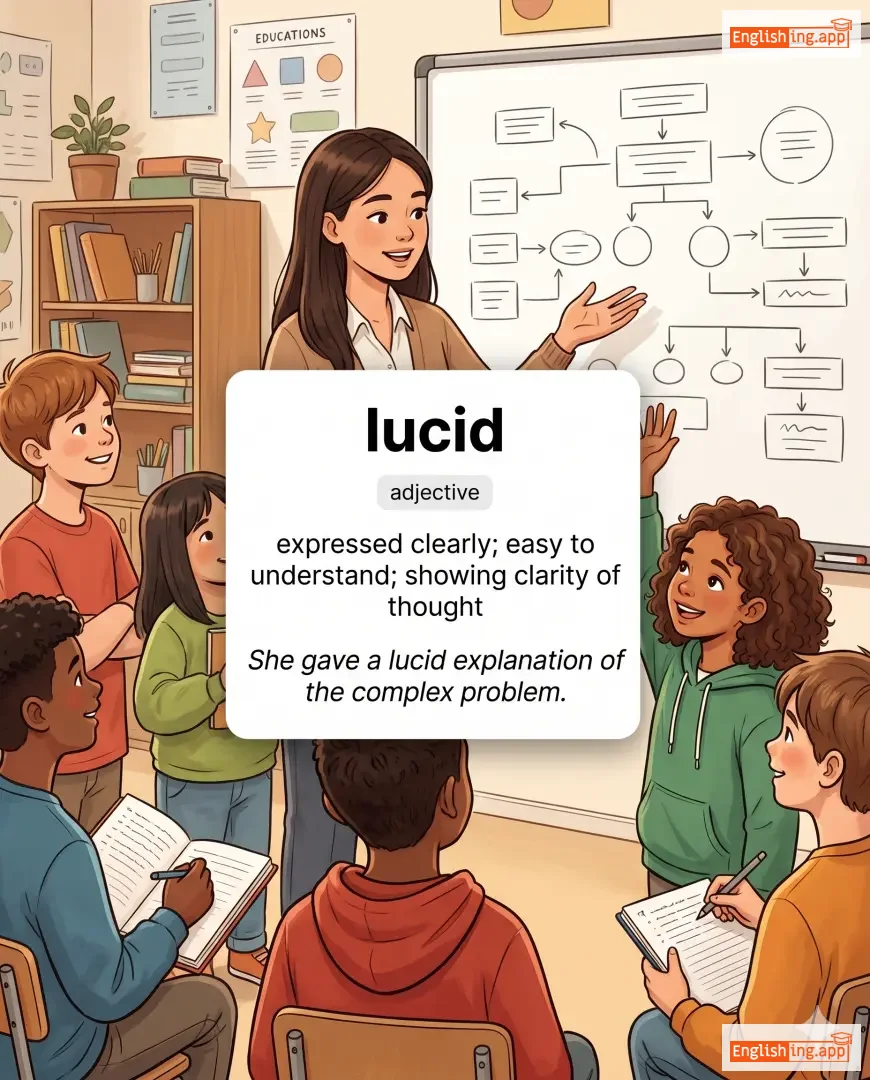
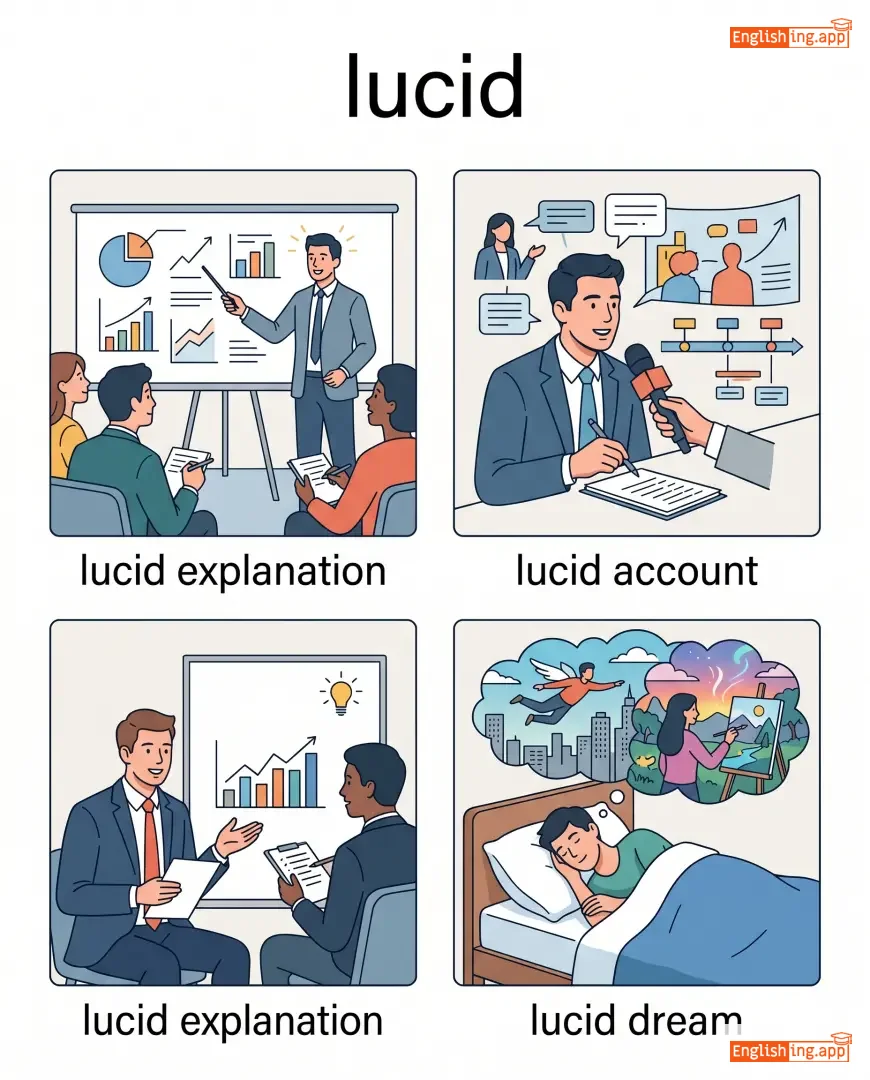
/ˈluː.sɪd/
adjective
(lùsīdé)
••••••
|
|
清晰
qīngxī
••••••
|
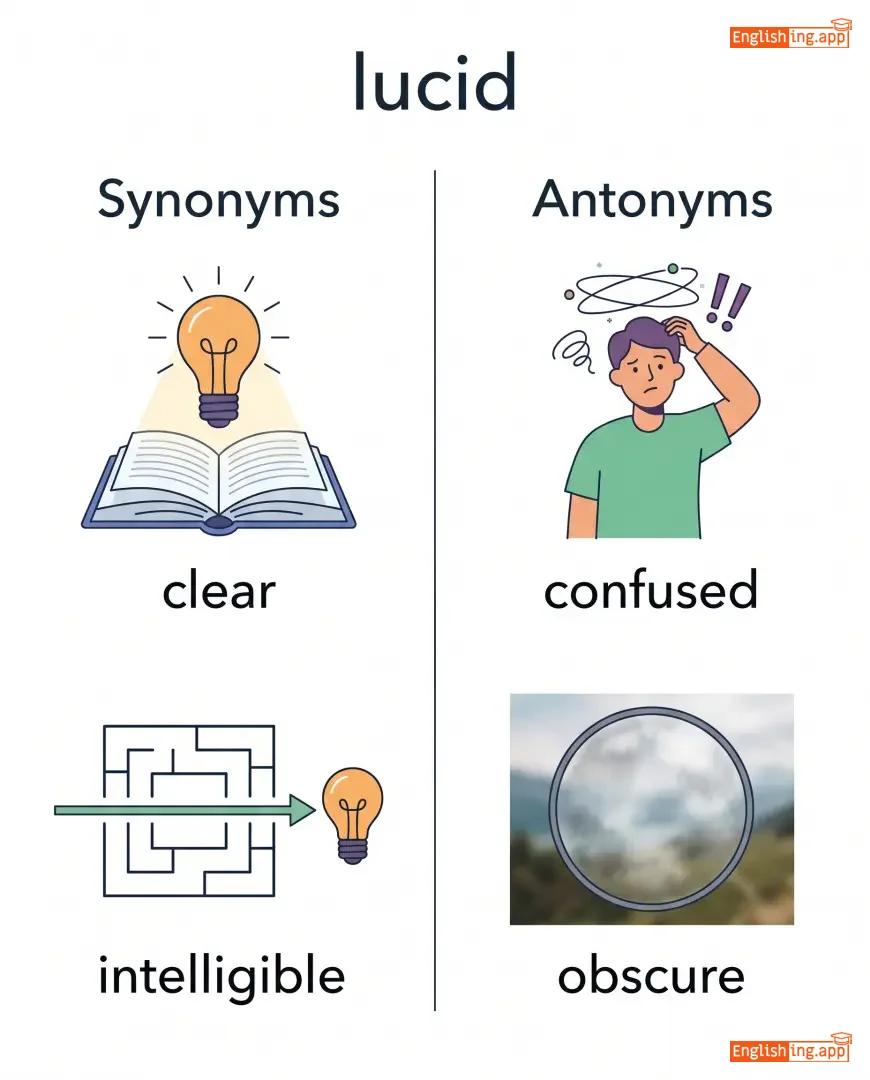
clear; easily understood; coherent
••••••
|
The professor gave a lucid explanation of the complex theory. |
教授清晰地解释了复杂的理论。
Jiàoshòu qīngxī de jiěshìle fùzá de lǐlùn.
••••••
|
clear, coherent, understandable, transparent
••••••
|
confused, unclear, muddled, obscure
••••••
|
lucid explanation, lucid thinking, lucid dream
••••••
|
Lucid in Chinese is '清晰' – as clear as the sky.
••••••
|
|
#470
😤
|
/mæd/
adjective
(麦德)
••••••
|
- •••••• |
生气; 精神病; 疯狂
mad
••••••
|
angry; mentally ill; insane
••••••
|
He was mad at his friend for being late.
他因迟到而生气。
••••••
|
他因迟到而生气。
ta yin chidao er shengqi.
••••••
|
angry, furious, insane
••••••
|
calm, sane, rational
••••••
|
mad at someone, mad about something, go mad
••••••
|
Think of a mad panda when you're angry!
••••••
|
|
#471
🤪
|
/ˈluː.ni/
adjective
(lùní)
••••••
|
- •••••• |
疯狂的; 傻的; 精神不稳定
fēngkuáng de; shǎ de; jīngshén bù wěndìng
••••••
|
crazy; silly; mentally unstable
••••••
|
His loony behavior made everyone laugh.
他的疯狂行为让每个人都笑了。
••••••
|
他的疯狂行为让每个人都笑了。
tā de fēngkuáng xíngwéi ràng měi gèrén dōu xiàole
••••••
|
crazy, silly, mad
••••••
|
sane, sensible, rational
••••••
|
loony behavior, loony idea, loony person
••••••
|
疯狂 = crazy, 傻 = silly, 精神不稳定 = mentally unstable.
••••••
|
|
#472
✅
|
/ˈmænɪdʒəbəl/
adjective
(mǎnèjié bǎo)
••••••
|
- •••••• |
可管理的;可控制的
kě guǎnlǐ de; kě kòngzhì de
••••••
|
able to be controlled or dealt with; feasible
••••••
|
The workload is manageable if we plan properly.
gōngzuò zhòngdān kěyǐ mǎnèjié bǎo, rúguǒ wǒmen zhèngquè dì jìhuà
••••••
|
工作负载是可管理的,如果我们正确规划。
Gōngzuò fùzài shì kě guǎnlǐ de, rúguǒ wǒmen zhèngquè dì jìhuà.
••••••
|
controllable, feasible, doable, handleable
••••••
|
unmanageable, impossible, uncontrollable, overwhelming
••••••
|
manageable size, manageable workload, manageable task
••••••
|
想象你可以轻松地'管理'工作负载。
••••••
|
|
#473
💰
|
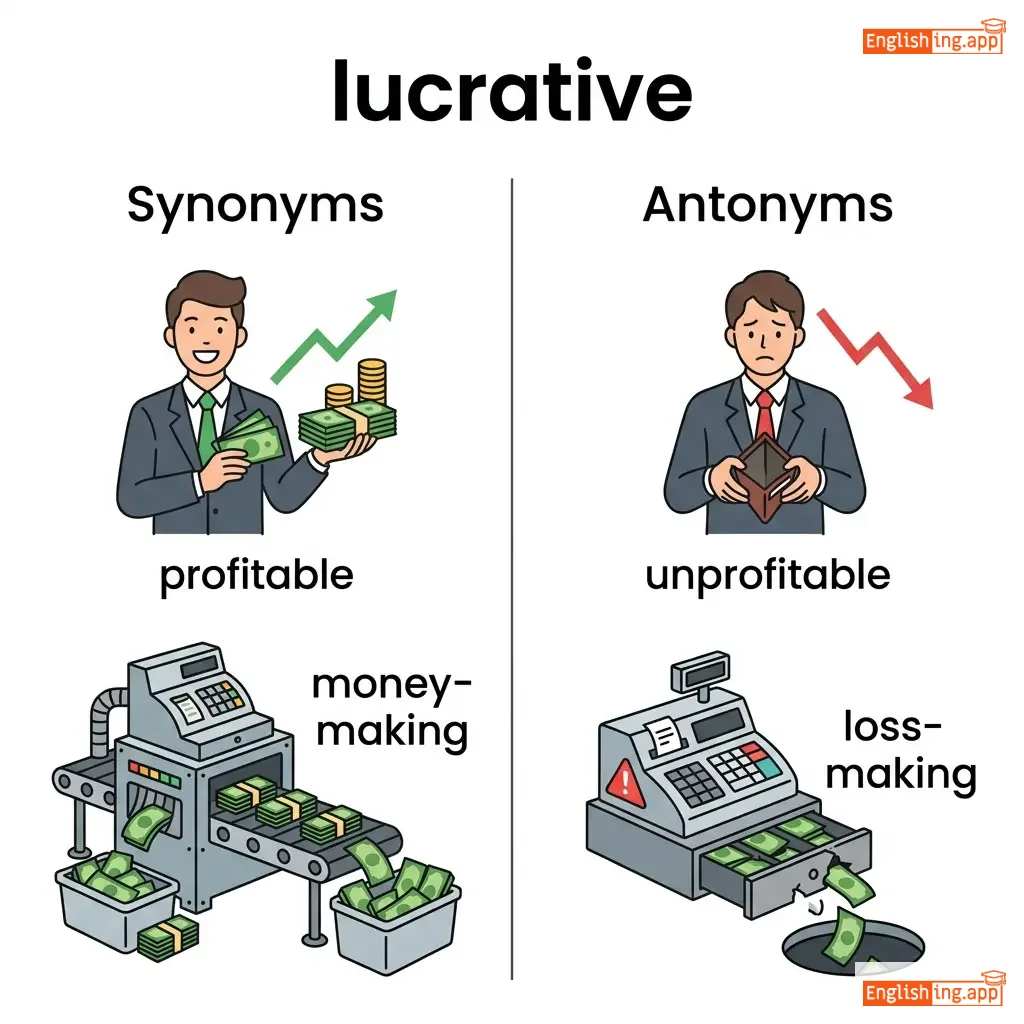
/ˈluː.krə.tɪv/
adjective
(lǔkèlètí fū)
••••••
|
|
有利可图的
you li ke tu de
••••••
|
profitable; producing wealth or gain
••••••
|
She found a lucrative job in the technology sector. |
她在技术领域找到了一份有利可图的工作。
Ta zai jishu lingyu zhǎodàole yī fèn yǒu lì kě tú de gōngzuò.
••••••
|
profitable, rewarding, beneficial, gainful
••••••
|
unprofitable, costly, loss-making, unrewarding
••••••
|
lucrative business, lucrative deal, lucrative career
••••••
|
Lucrative = lucky (money gain)
••••••
|
|
#474
🟣
|
/məˈdʒen.tə/
adjective
(mǎɡèntǎ)
••••••
|
- •••••• |
品红色
pǐnhóng sè
••••••
|
a bright purplish-red color
••••••
|
She wore a beautiful magenta dress to the party.
她穿了一件漂亮的品红色裙子去派对。
••••••
|
她穿了一件漂亮的品红色裙子去派对。
Tā chuānle yī jiàn piàoliang de pǐnhóng sè qúnzi qù pàiduì.
••••••
|
fuchsia, purple-pink, crimson
••••••
|
green, cyan, lime
••••••
|
magenta color, magenta ink, bright magenta
••••••
|
Magenta 是一种像紫红色宝石一样闪亮的颜色。
••••••
|
|
#475
💕
|
/ˈlʌv.ə.bəl/
adjective
(lʌvəbəl)
••••••
|
- •••••• |
值得爱的; 可爱的
zhí dé ài de; kě ài de
••••••
|
deserving of love; endearing; adorable
••••••
|
The puppy was so lovable that everyone wanted to adopt it.
ðə pʌpi wəz soʊ lʌvəbəl ðæt ɛvrɪwʌn wɑntɪd tʊ əˈdɑpt ɪt.
••••••
|
小狗是如此可爱,所有人都想领养它。
Xiǎo gǒu shì rúcǐ kě'ài, suǒyǒu rén dōu xiǎng lǐngyǎng tā.
••••••
|
adorable, charming, endearing
••••••
|
hateful, detestable, repulsive
••••••
|
lovable character, lovable pet, lovable child
••••••
|
‘Love’ 加 ‘able’ 就是爱不完的人/事。
••••••
|
|
#476
👁️
|
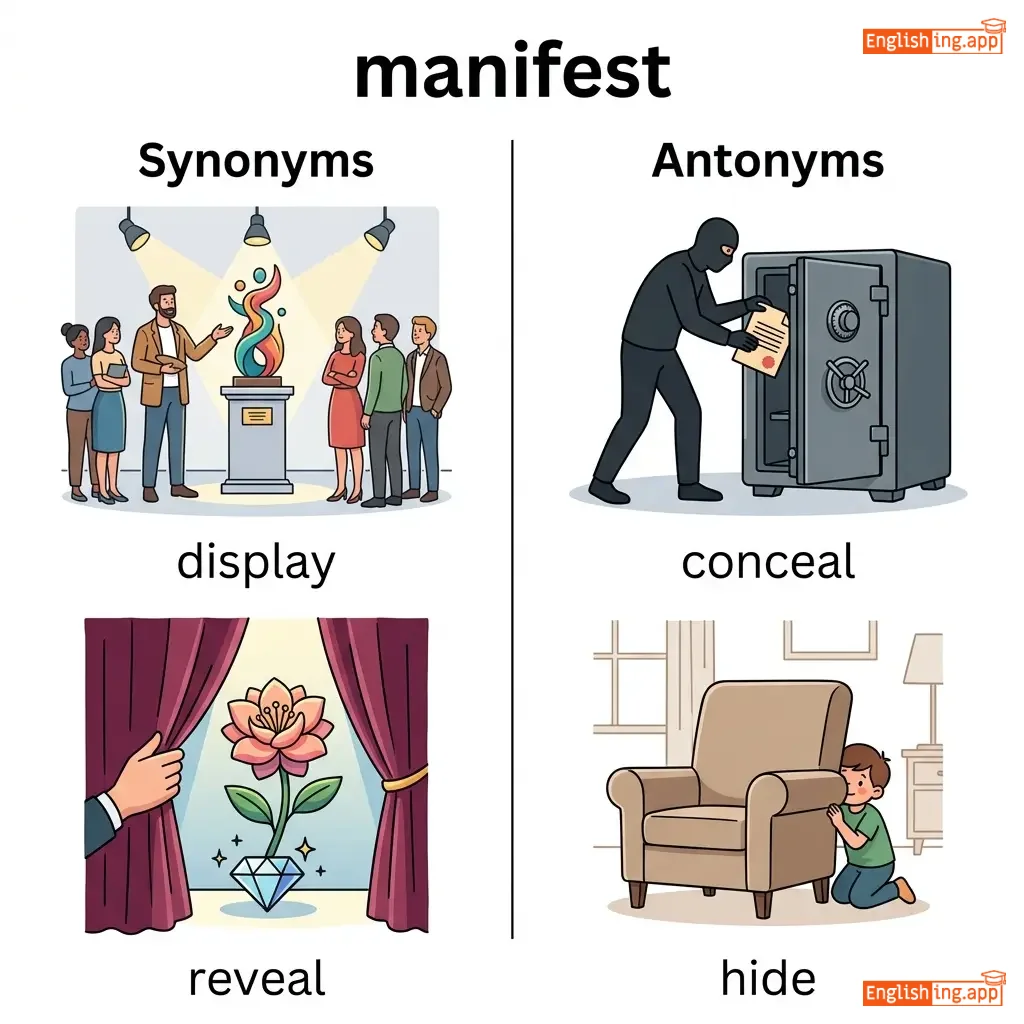
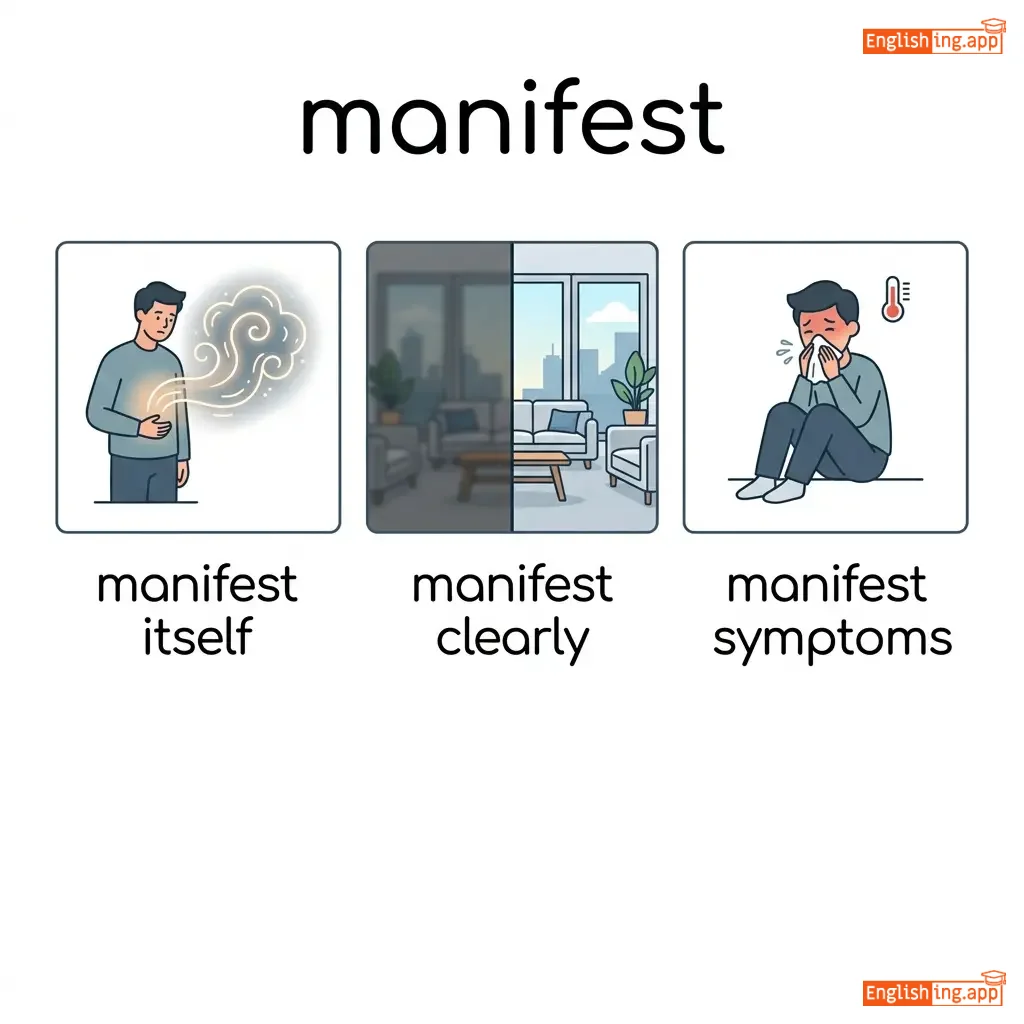
/ˈmænɪfest/
adjective
(manifest)
••••••
|
|
显而易见的;清晰的
xiǎn ér yìjiàn de; qīngxī de
••••••
|
clear or obvious to the eye or mind; evident
••••••
|
His anger was manifest in his facial expression.
他的愤怒在他的面部表情中表现出来。
••••••
|
他的愤怒在他的面部表情中表现出来。
Tā de fènnù zài tā de miànbù biǎoqíng zhōng biǎoxiàn chūlái.
••••••
|
obvious, clear, evident, apparent
••••••
|
hidden, concealed, unclear, obscure
••••••
|
manifest destiny, manifest signs, manifest itself
••••••
|
Manifest在中文里意味着一切显而易见,就像阳光照亮黑暗。
••••••
|
|
#477
✨
|
/ˈluː.mɪ.nəs/
adjective
(卢米诺斯)
••••••
|
|
光亮的; 发光的; 明亮的
guāng liàng de; fā guāng de; míng liàng de
••••••
|
bright; shining; emitting light; radiant
••••••
|
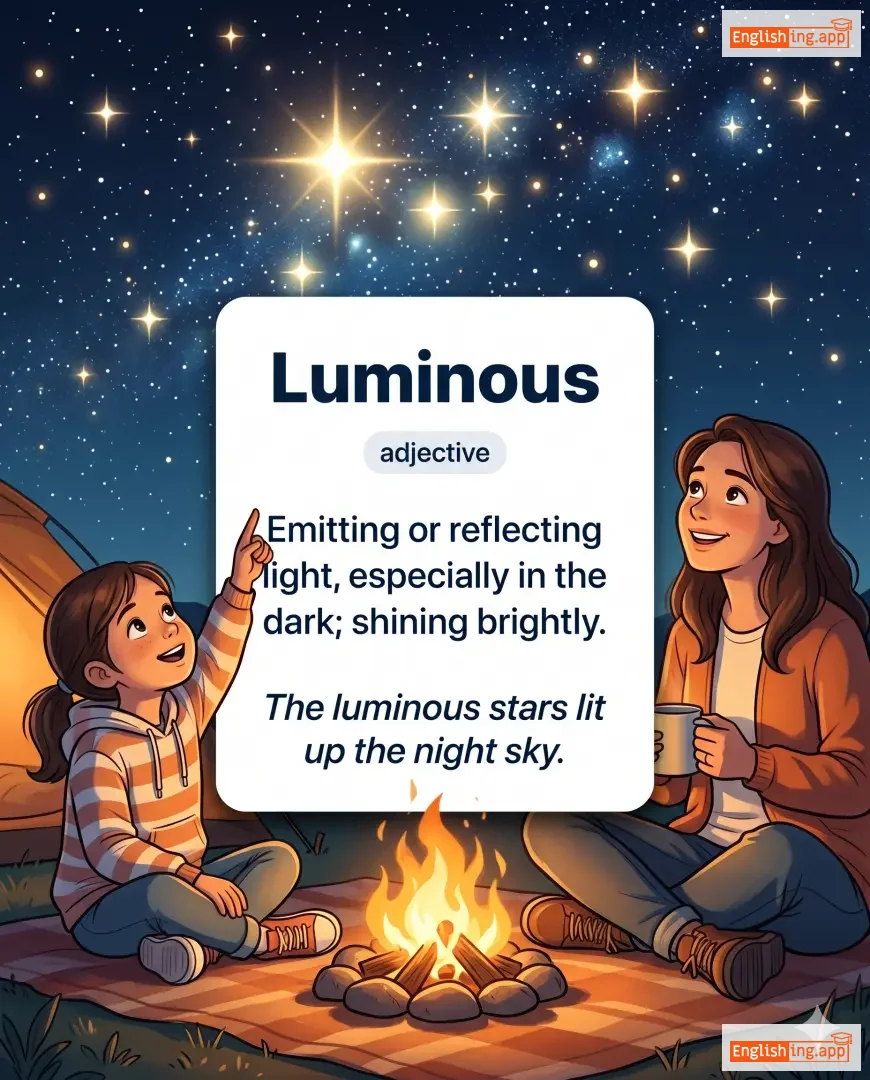
The luminous stars filled the dark night sky. |
明亮的星星照亮了黑暗的夜空。
míng liàng de xīng xīng zhào liàng le hēi àn de yè kōng.
••••••
|
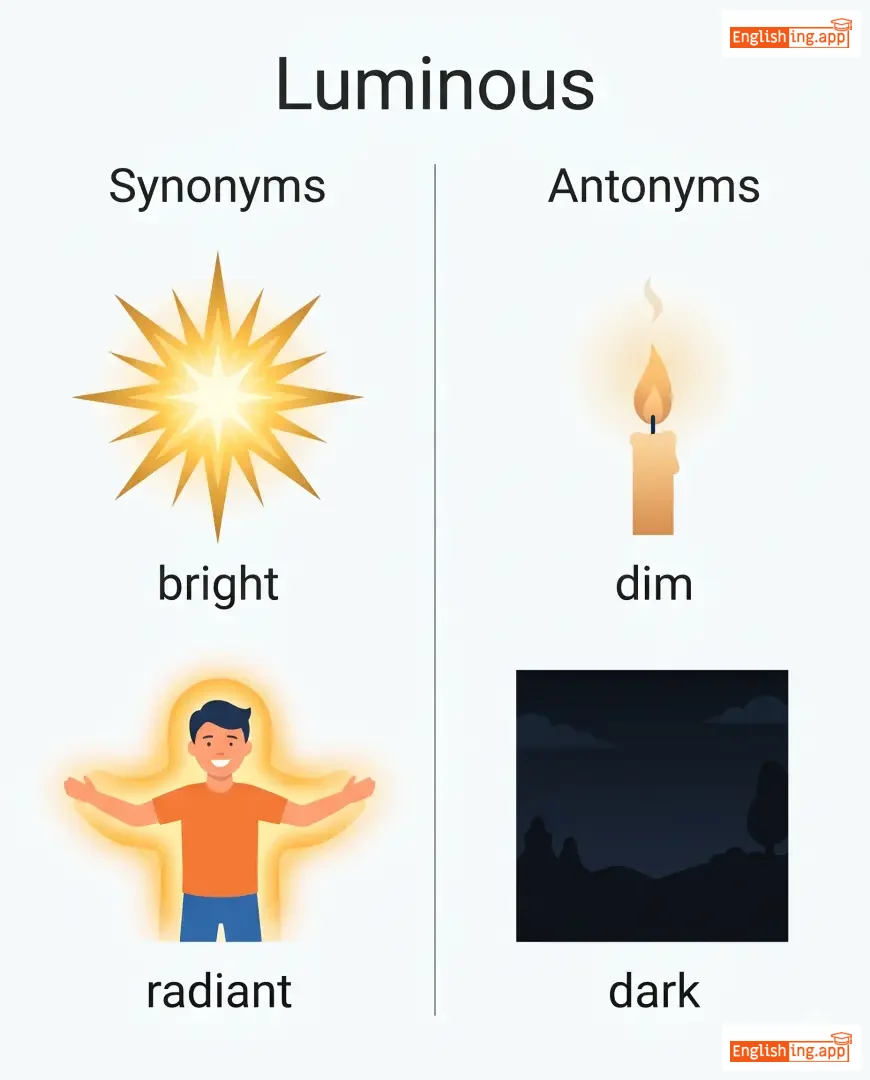
bright, shining, glowing, radiant
••••••
|
dark, dim, dull, shadowy
••••••
|
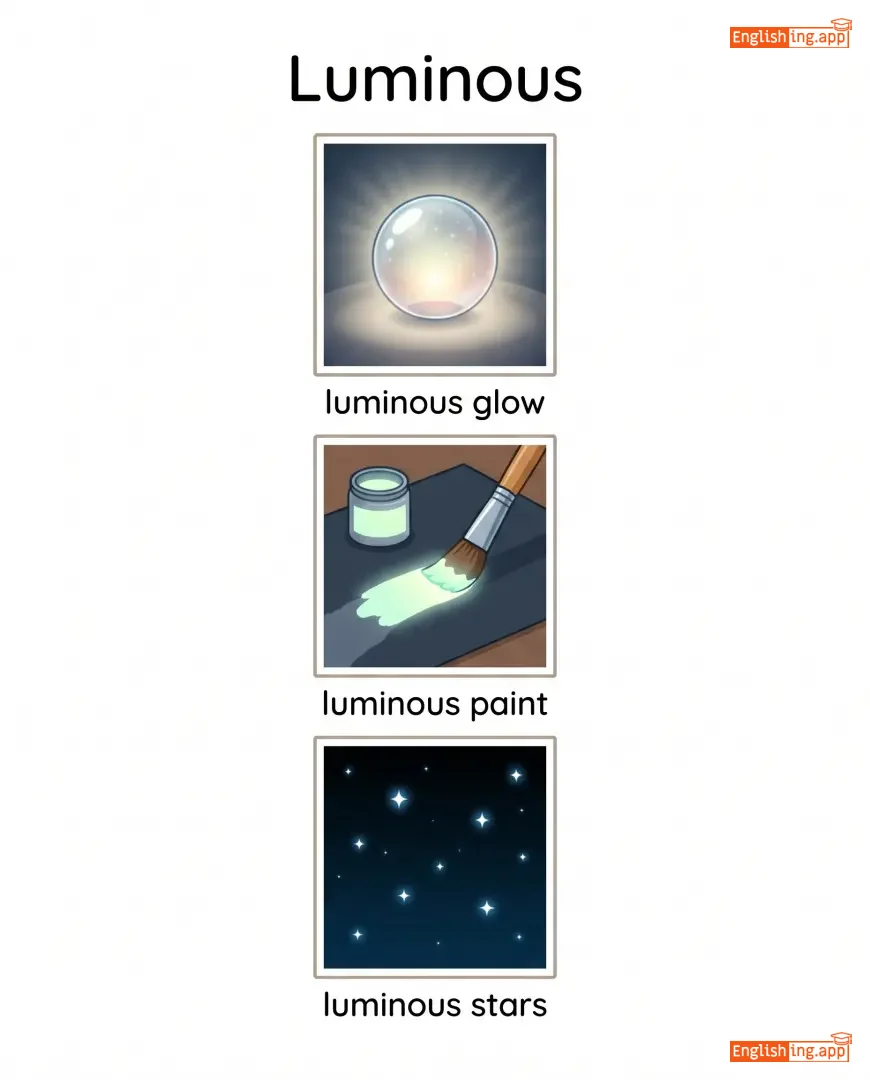
luminous paint, luminous glow, luminous display
••••••
|
星星发光如此明亮,它们让夜空也变亮了。
••••••
|
|
#478
😍
|
/ˈlʌv.li/
adjective
(lʌvli)
••••••
|
- •••••• |
美丽的;迷人的;愉快的;吸引人的
měilì de; mírén de; yúkuài de; xīyǐn rén de
••••••
|
beautiful; charming; delightful; attractive
••••••
|
What a lovely day for a picnic!
什么美好的一天适合野餐!
••••••
|
什么美好的一天适合野餐!
Shénme měihǎo de yītiān shìhé yěcān!
••••••
|
beautiful, charming, delightful
••••••
|
ugly, unpleasant, horrible
••••••
|
lovely day, lovely weather, lovely person
••••••
|
Imagine a lovely picnic in a beautiful garden.
••••••
|
|
#479
👑
|
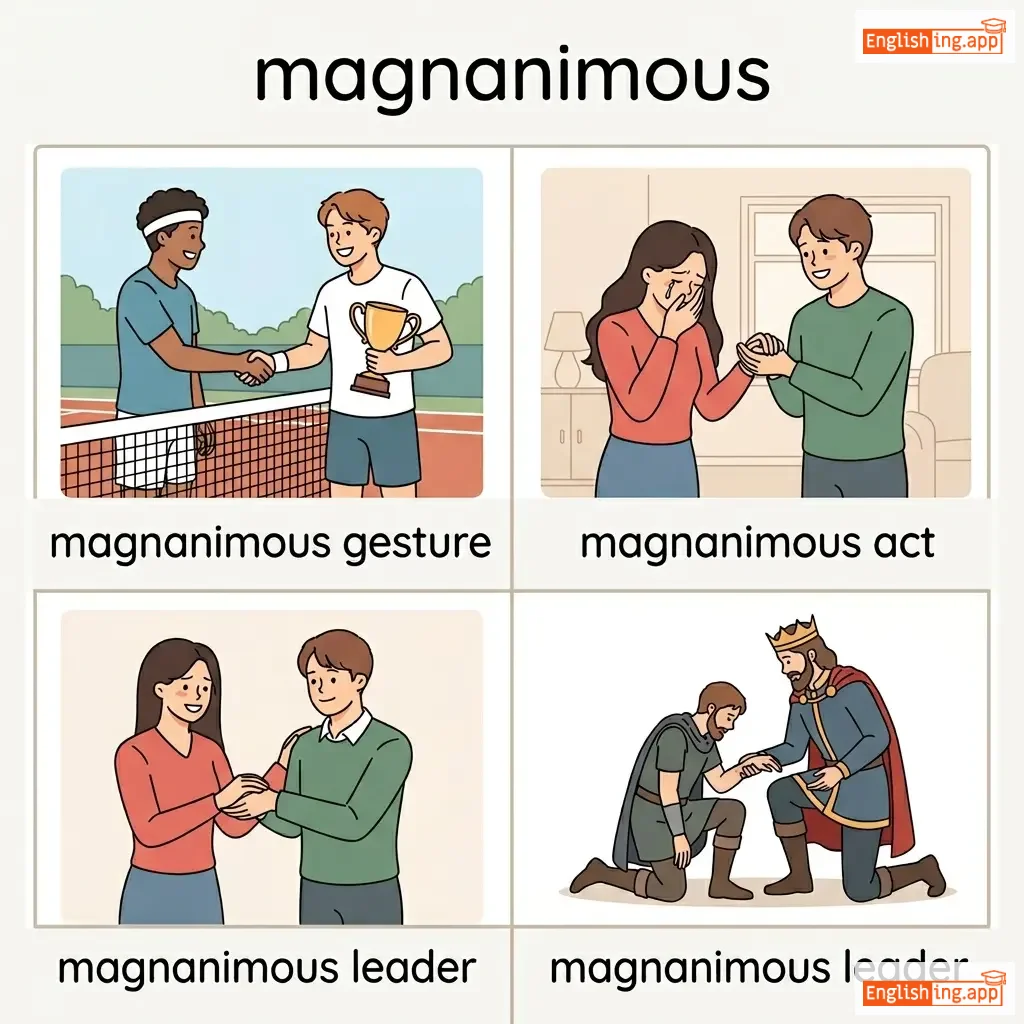
/mæɡˈnæn.ɪ.məs/
adjective
(magnanimous)
••••••
|
|
宽宏大量; 崇高的精神; 表现出巨大的慷慨
magnanimous
••••••
|
generous and forgiving; noble in spirit; showing great generosity
••••••
|
The king was magnanimous in victory and forgave his enemies.
国王在胜利中表现得宽宏大度,宽恕了他的敌人。
••••••
|
国王在胜利中表现得宽宏大度,宽恕了他的敌人。
guó wáng zài shèng lì zhōng biǎo xiàn dé kuān hóng dà dù, kuān shù le tā de dí rén
••••••
|
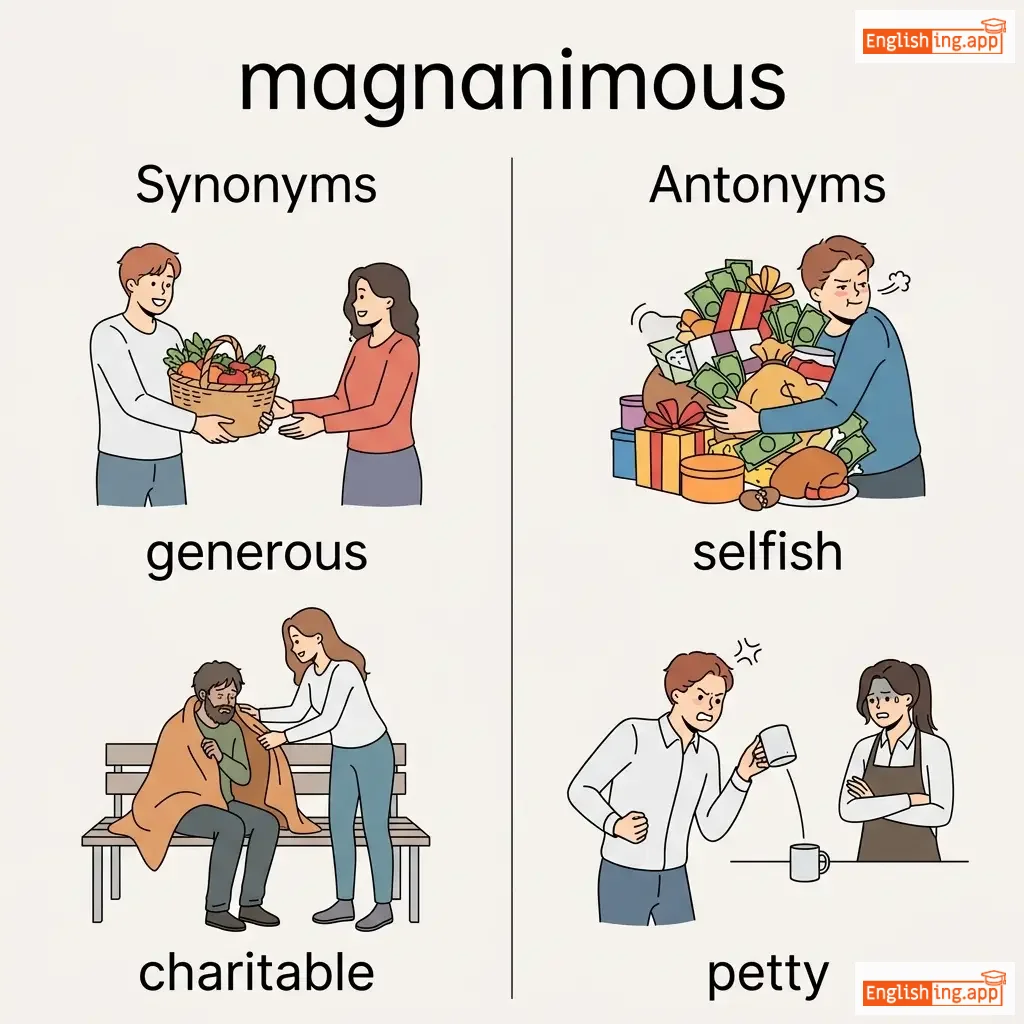
generous, noble, benevolent
••••••
|
petty, mean, vindictive
••••••
|
magnanimous gesture, magnanimous spirit, magnanimous leader
••••••
|
MAGNANIMOUS - MAGICAL generosity for a king!
••••••
|
|
#480
🔢
|
/ˈmænɪfoʊld/
adjective
(曼尼福德)
••••••
|
- •••••• |
多方面的
manifo ld
••••••
|
many and of several different types; multiple; various
••••••
|
The project has manifold benefits for the community.
德 普罗杰克特 哈斯 曼尼福德 贝尼菲茨 福尔 德 康慕纽尼蒂
••••••
|
这个项目对社区有多方面的好处。
zhe ge xiang mu dui she qu you duo fang mian de hao chu
••••••
|
multiple, various, numerous, diverse
••••••
|
single, singular, simple, uniform
••••••
|
manifold benefits, manifold purposes, manifold ways
••••••
|
many + fold -> 多 面 的 世界; 想象 一张纸 被 fold 成 many 面, 记住 manifold 就是 多方面 的 含义
••••••
|
Vocabulary Quiz
Test your vocabulary by matching words with their translations or meanings.
Login to take the quiz
Comments (0)
Share your thoughts and join the discussion.
Join the discussion by logging in
Login to CommentNo comments yet
Be the first to share your thoughts!