

Swipe left or right, or use the buttons. Tap image to zoom.
例句翻译
单词
Lesson 56Lesson 56 - 遮罩切换
|
表情符号
|
单词 | Images | 翻译 | 含义 | 例句 | 例句翻译 | 同义词 | 反义词 | 搭配词 | 助记符 |
|---|---|---|---|---|---|---|---|---|---|---|
|
#1101
⚠️
|
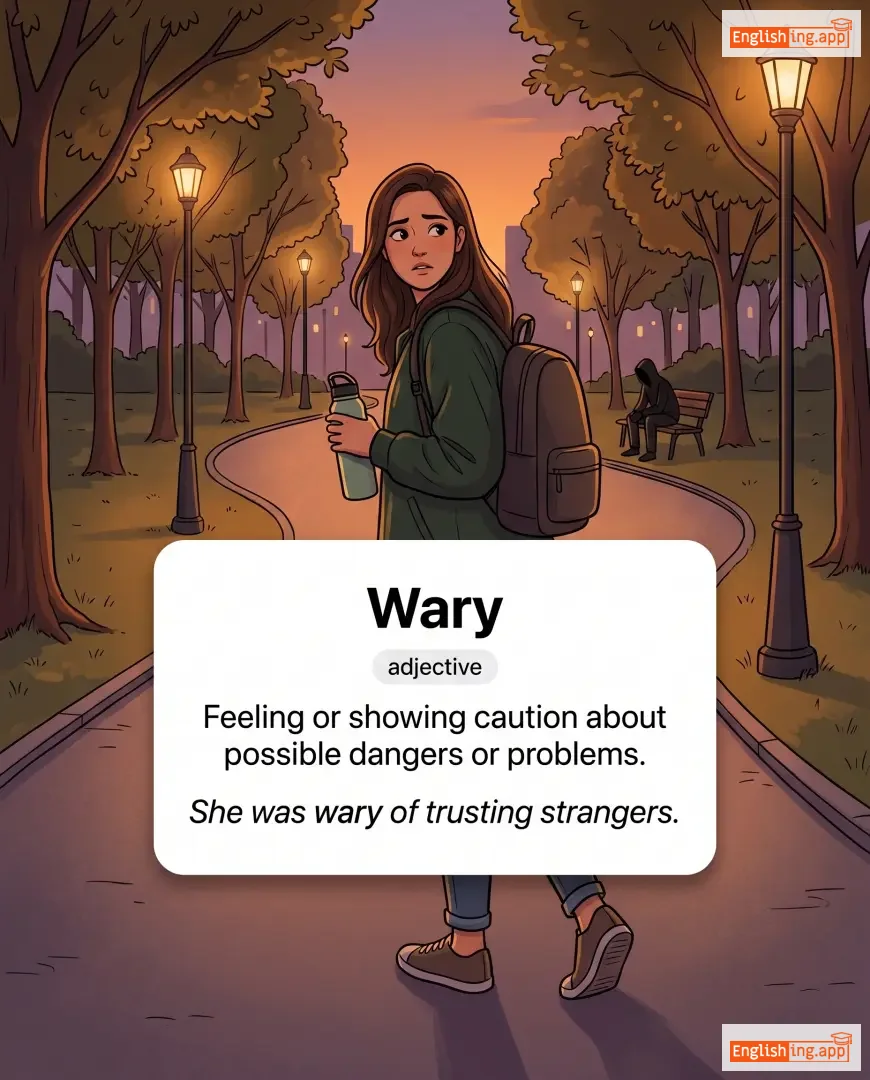
/ˈwer.i/
adjective
(wéilì)
••••••
|
|
谨慎的; 提防的
jǐnshèn de; tífáng de
••••••
|
cautious; careful to avoid danger or problems
••••••
|
She was wary of strangers approaching her at night. |
她对晚上接近她的陌生人保持警惕。
Tā duì wǎnshàng jiējìn tā de mòshēngrén bǎochí jǐngtì.
••••••
|
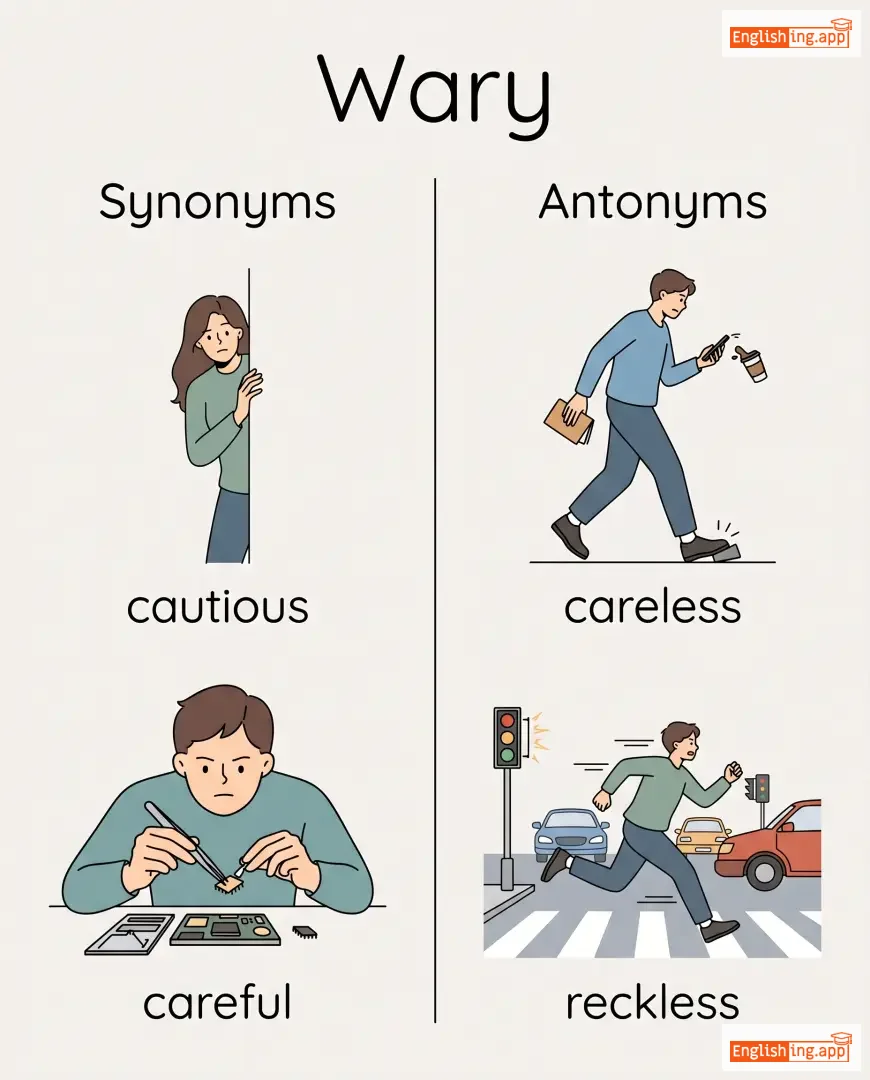
cautious, careful, suspicious, vigilant
••••••
|
careless, trusting, reckless, naive
••••••
|
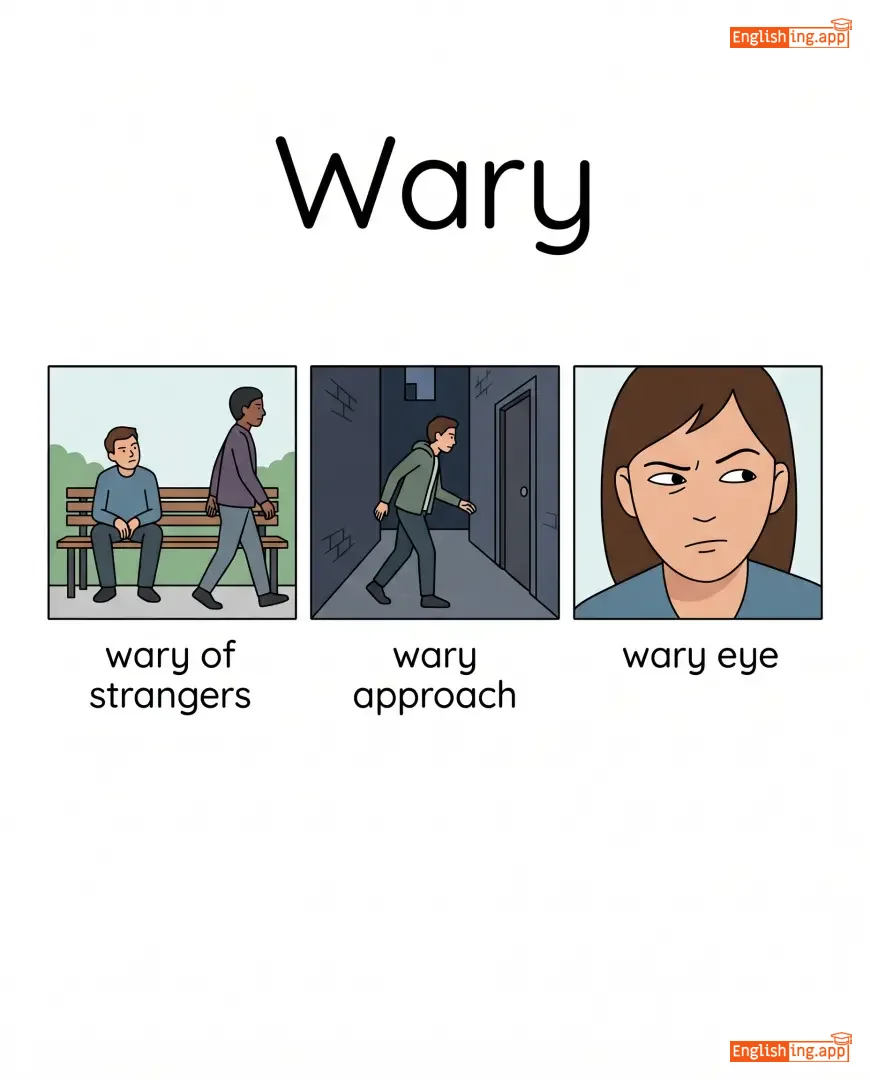
wary of, remain wary, grow wary, be wary
••••••
|
zh: '谨慎的' means careful and alert, just like 'wary'.
••••••
|
|
#1102
💪
|
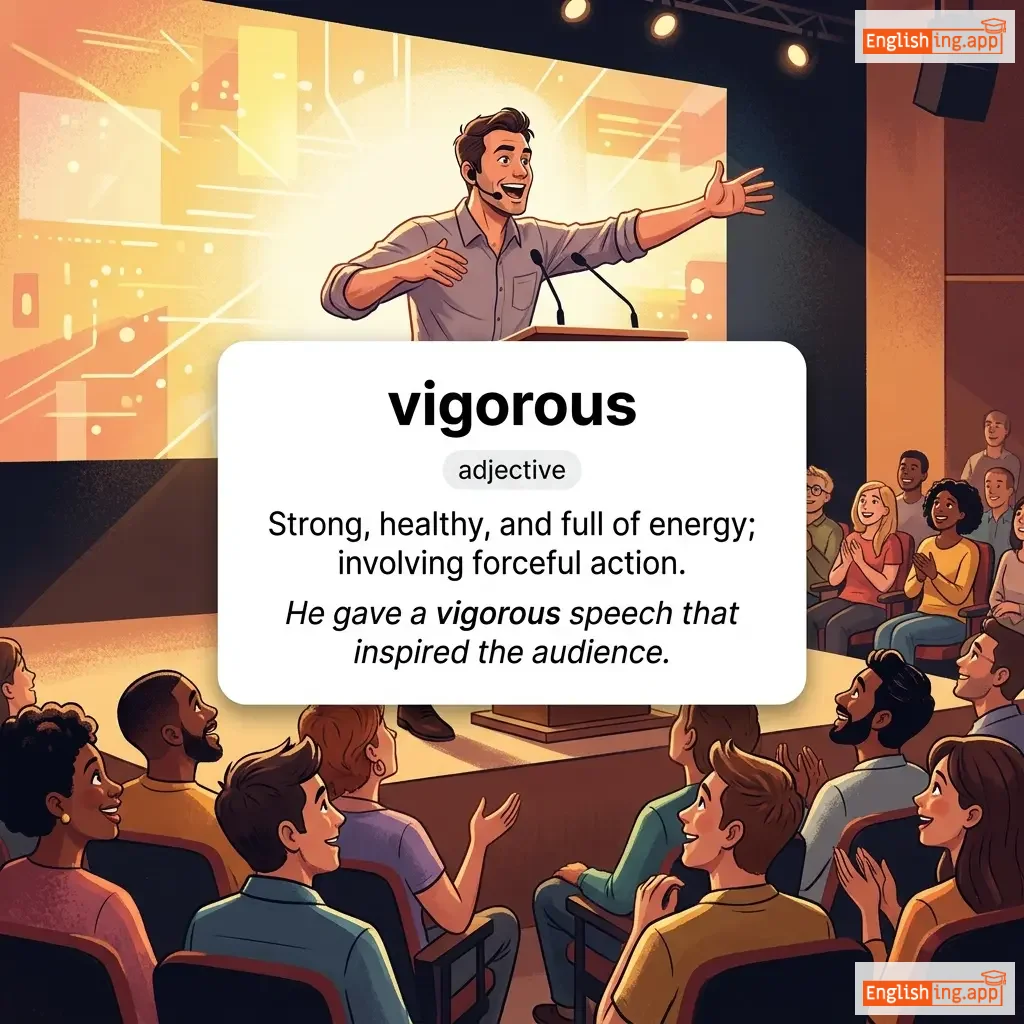
/ˈvɪɡ.ər.əs/
adjective
(维戈罗斯)
••••••
|
|
充满活力的; 强健的; 健康的
chongman huoli de; qiangjian de; jiankang de
••••••
|
full of physical strength, effort, activity, or energy; strong and healthy
••••••
|
She took a vigorous walk in the park every morning.
她每天早晨在公园里走着充满活力的步伐。
••••••
|
她每天早晨在公园里走着充满活力的步伐。
Ta mei tian zao chen zai gong yuan li zou zhe chongman huoli de bufa.
••••••
|
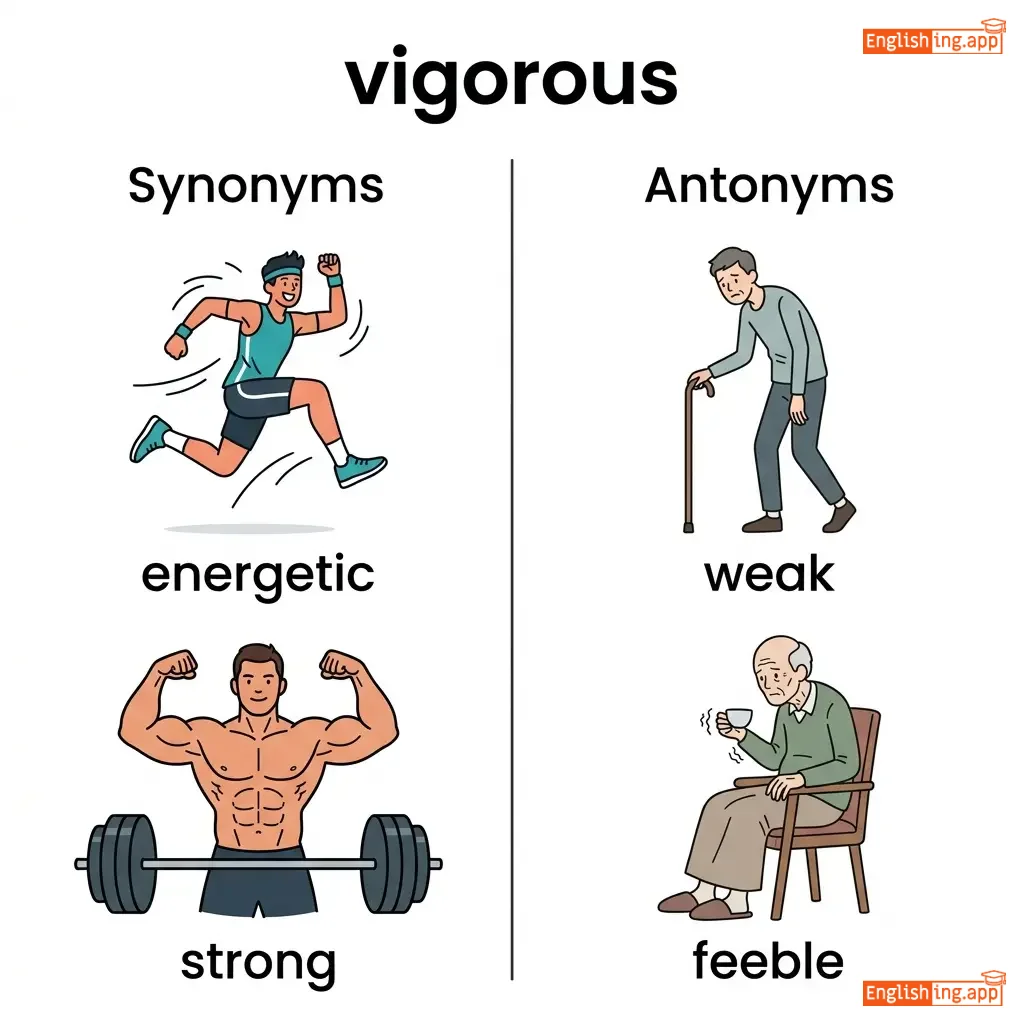
energetic, strong, powerful, robust, dynamic
••••••
|
weak, feeble, sluggish, lethargic, frail
••••••
|
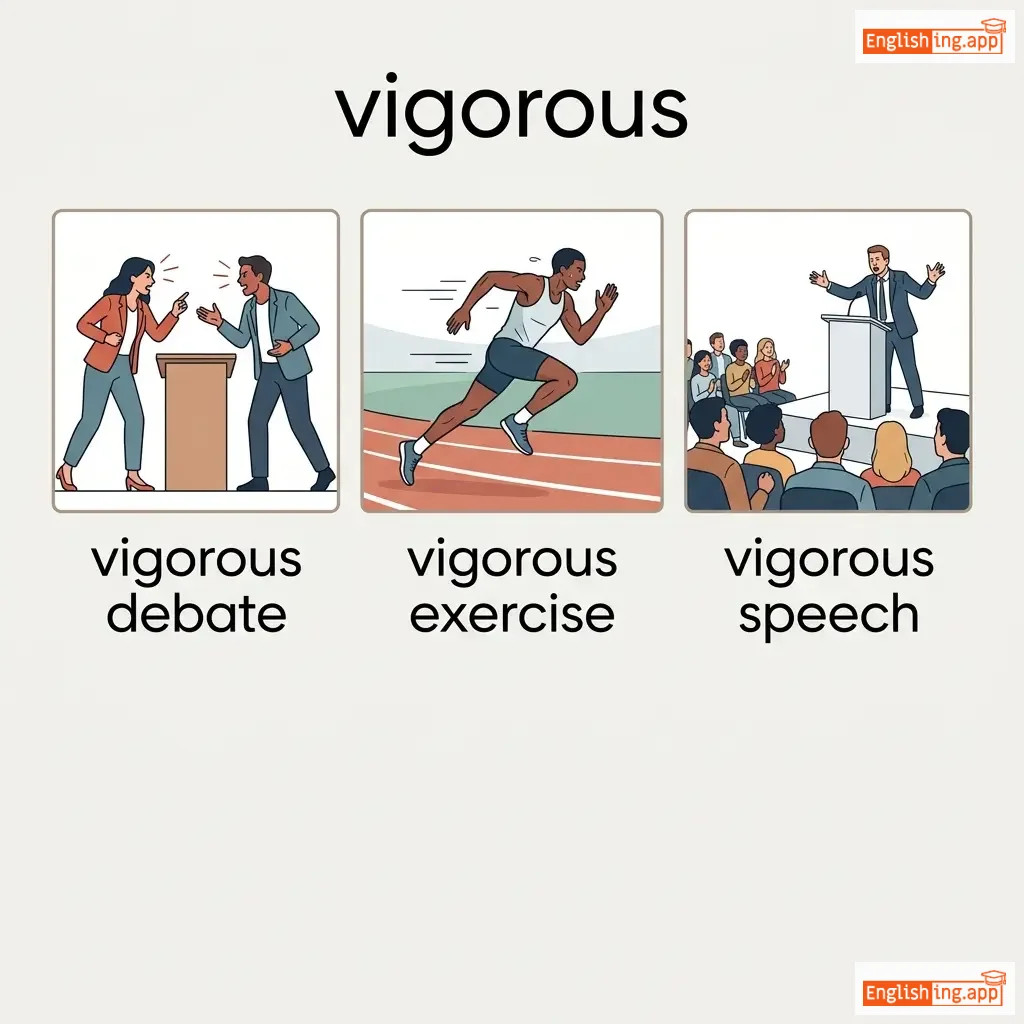
vigorous exercise, vigorous debate, vigorous growth
••••••
|
Vigorous = 充满活力的步伐 (强健和健康)
••••••
|
|
#1103
🙋♀️
|
/ˈvɒl.ən.tər.i/
adjective
(志愿的)
••••••
|
- •••••• |
自愿的
zìyuàn de
••••••
|
done willingly without being forced; given or done freely
••••••
|
She made a voluntary donation to the charity. |
她自愿向慈善机构捐款。
Tā zìyuàn xiàng císhàn jīgòu juān kuǎn.
••••••
|
optional, willing, deliberate, intentional
••••••
|
mandatory, compulsory, forced, involuntary
••••••
|
voluntary work, voluntary service, voluntary basis
••••••
|
自愿帮助他人,不求回报。
••••••
|
|
#1104
😇
|
/ˈvɜːr.tʃu.əs/
adjective
(vɜːr.tʃu.əs)
••••••
|
- •••••• |
有德行的; 正直的; 道德上卓越的;
yǒu déxíng de; zhèngzhí de; dàodé shàng zhuóyuè de
••••••
|
having high moral standards; righteous; morally excellent
••••••
|
She is known for her virtuous character and honest dealings.
她以其高尚的品格和诚实的行为而闻名。
••••••
|
她以其高尚的品格和诚实的行为而闻名。
tā yǐ qí gāoshàng de pǐngé hé chéngshí de xíngwéi ér wénmíng
••••••
|
moral, righteous, ethical, noble, pure
••••••
|
immoral, corrupt, wicked, sinful, vicious
••••••
|
virtuous behavior, virtuous person, virtuous cycle, virtuous life
••••••
|
Virtuous: 在中文中想象一位具有道德标准的人。
••••••
|
|
#1105
🗑️
|
/weɪst/
adjective
(wèisī)
••••••
|
|
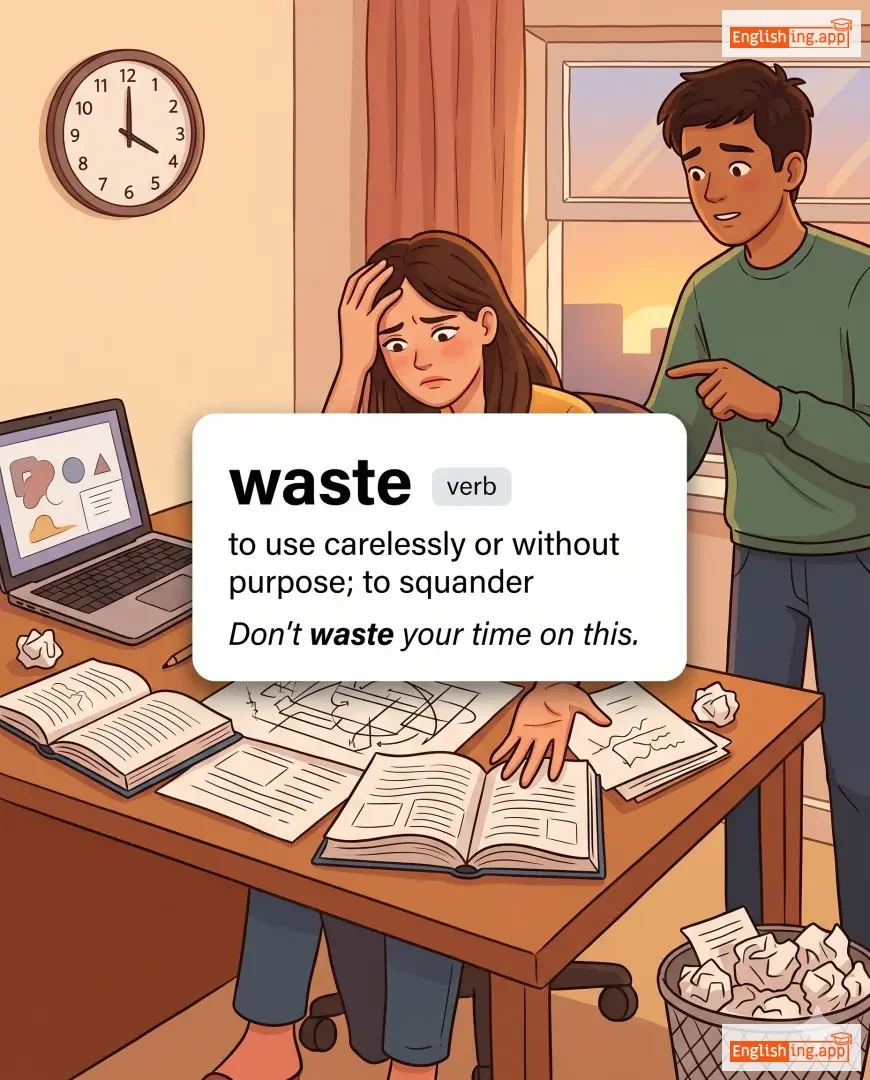
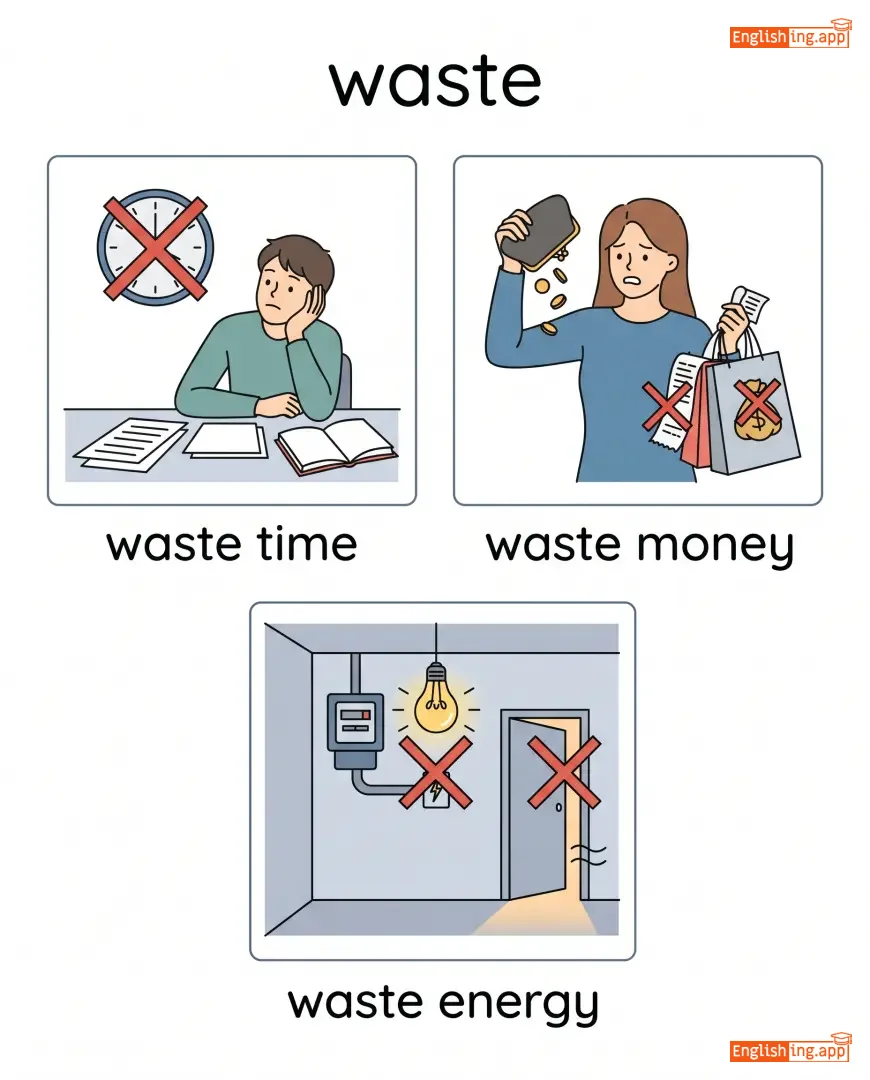
浪费; 废弃; 荒芜或未开垦的
làngfèi; fèiqì; huāngwú huò wèi kāikěn de
••••••
|
unused; discarded; barren or uncultivated
••••••
|
The waste land was converted into a beautiful park.
荒地被转化为美丽的公园。
••••••
|
荒地被转化为美丽的公园。
Huāngdì bèi zhuǎnhuà wéi měilì de gōngyuán.
••••••
|
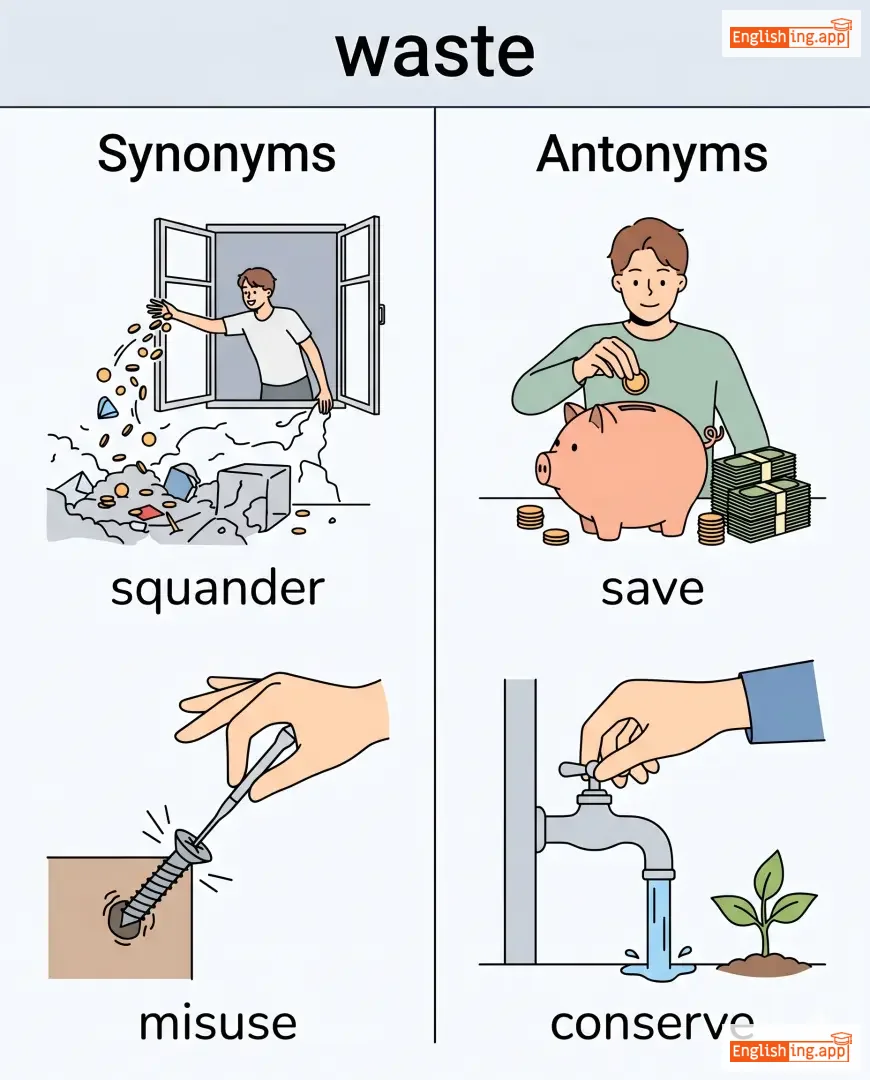
unused, discarded, barren, desolate
••••••
|
useful, productive, fertile, cultivated
••••••
|
waste land, waste material, waste products, waste time
••••••
|
Waste = 浪费 (làngfèi) - Imagine wasting space on barren land
••••••
|
|
#1106
😠
|
/vɪnˈdɪk.tɪv/
adjective
(vɪnˈdɪktɪv)
••••••
|
|
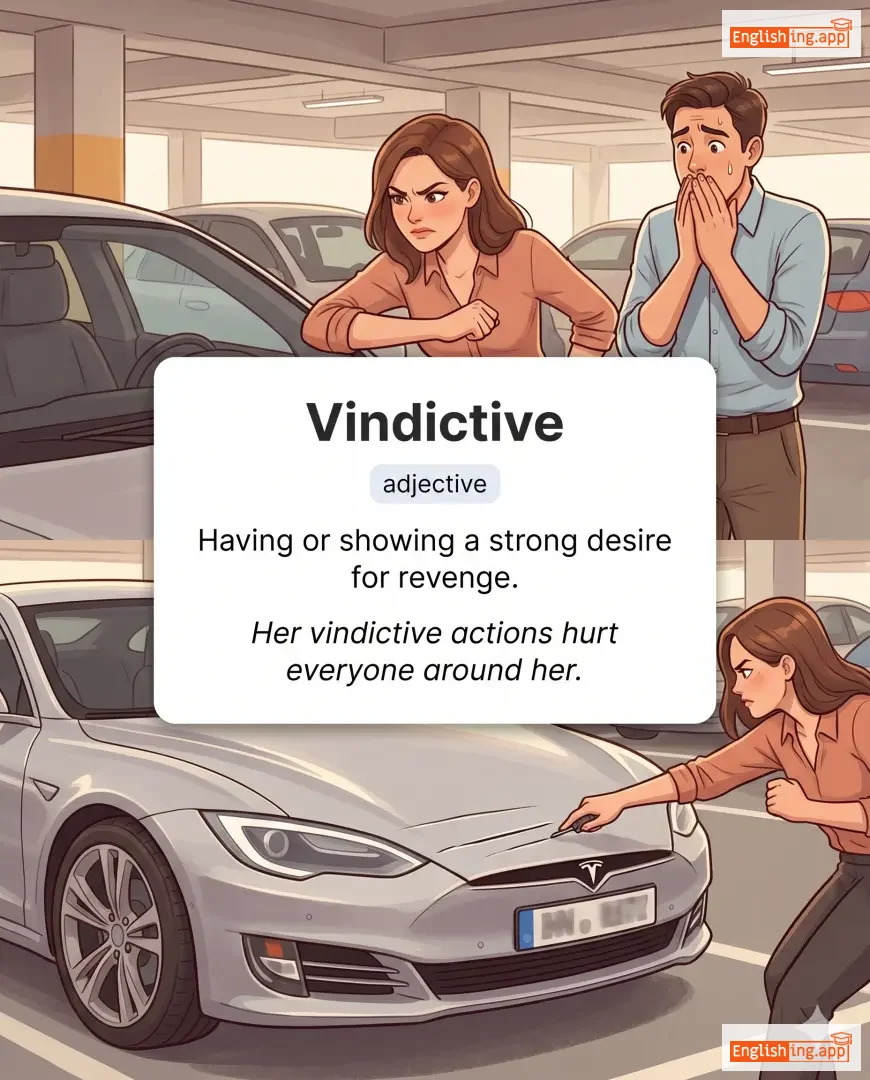
复仇心强的
fùchóu xīn qiáng de
••••••
|
having or showing a strong or unreasoning desire for revenge
••••••
|
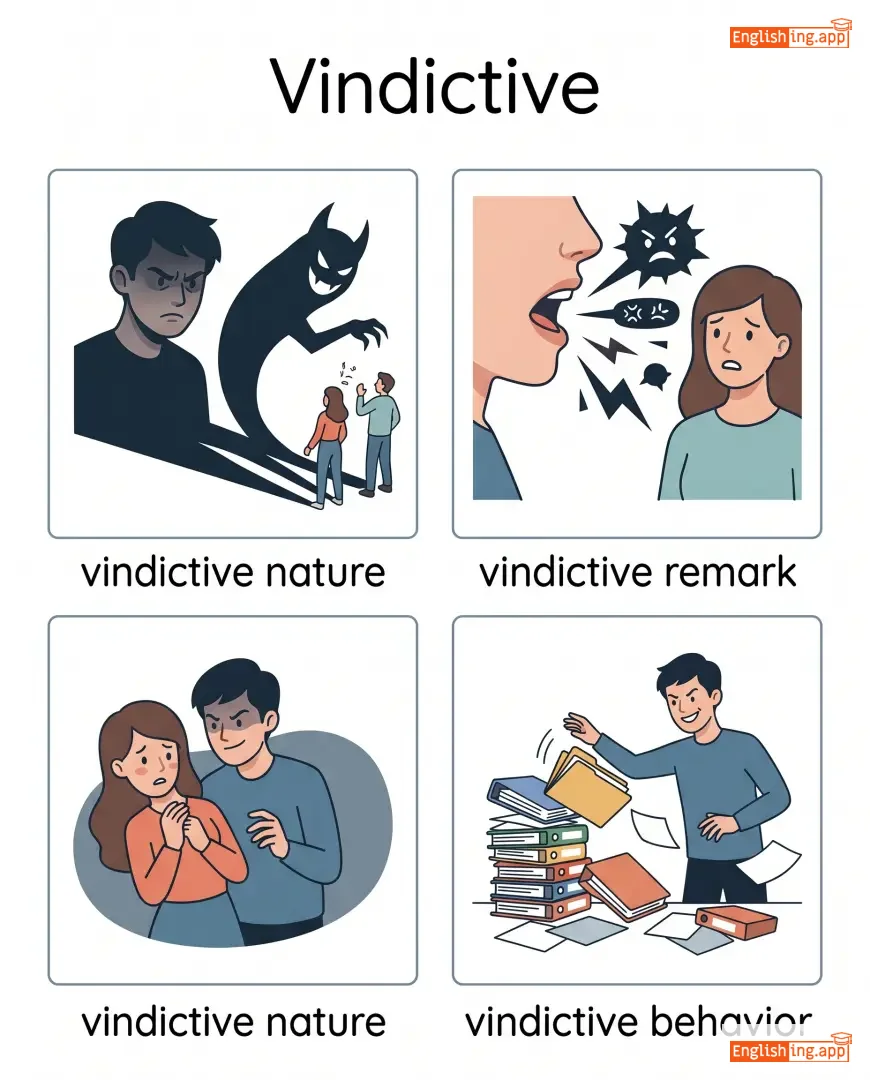
His vindictive behavior towards his former colleagues was unprofessional.
His vindictive behavior towards his former colleagues was unprofessional.
••••••
|
他对前同事的复仇心态非常不专业。
Tā duì qián tóngshì de fùchóu xīntài fēicháng bù zhuānyè.
••••••
|
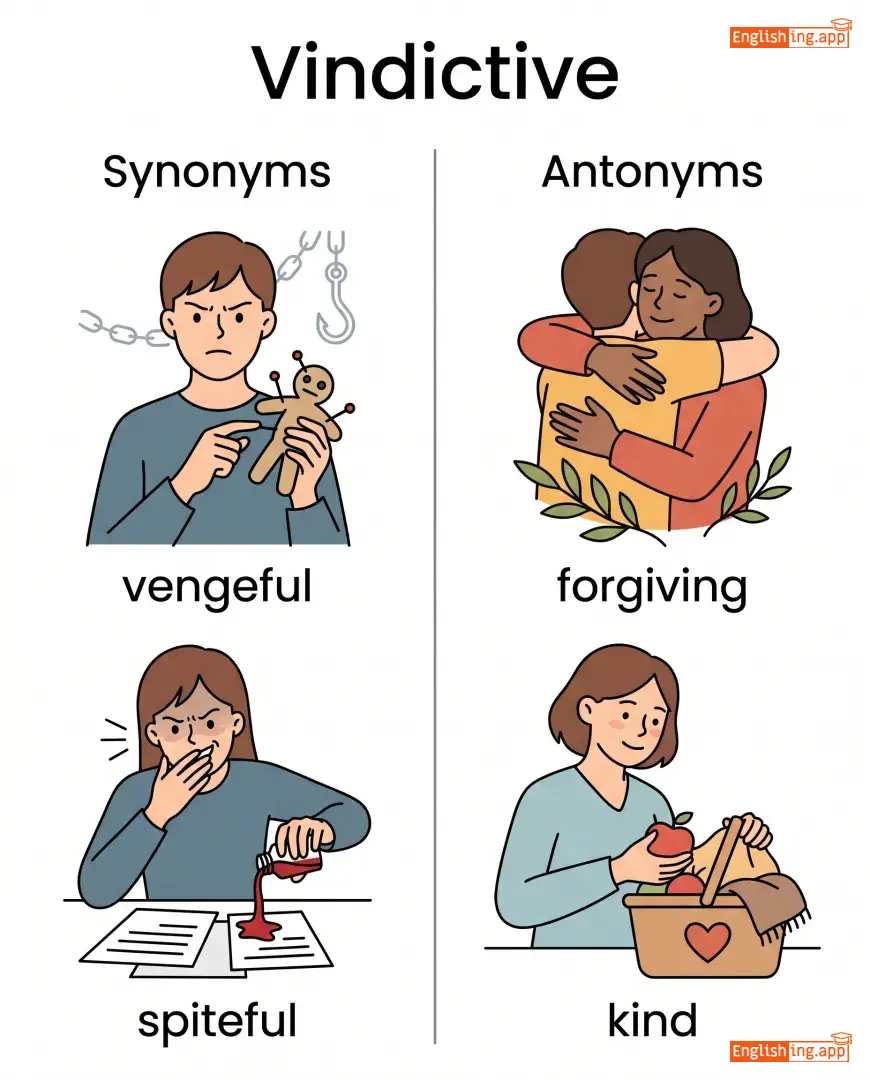
vengeful, spiteful, malicious, revengeful, retaliatory
••••••
|
forgiving, merciful, compassionate, magnanimous, benevolent
••••••
|
vindictive attitude, vindictive behavior, vindictive person
••••••
|
复仇心强的就像一个渴望报复的人。
••••••
|
|
#1107
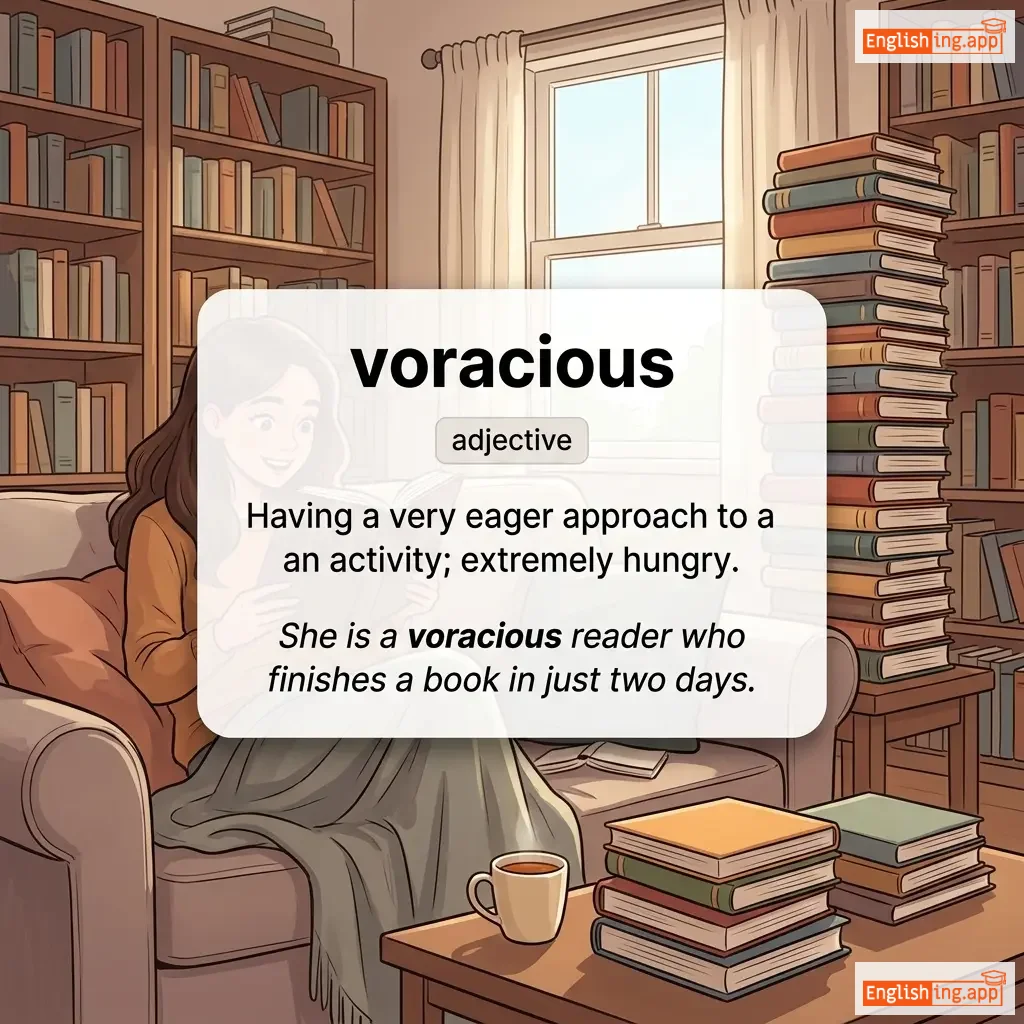
🍽️
|
/vəˈreɪ.ʃəs/
adjective
(wòruìshìsī)
••••••
|
|
贪吃的; 极度饥饿的
tānchī de; jídù jī'è de
••••••
|
having a very eager approach to an activity; extremely hungry
••••••
|
He is a voracious reader who finishes three books a week. |
他是一个贪吃的读者,每周读完三本书。
Tā shì yīgè tānchī de dúzhě, měi zhōu dú wán sān běn shū.
••••••
|
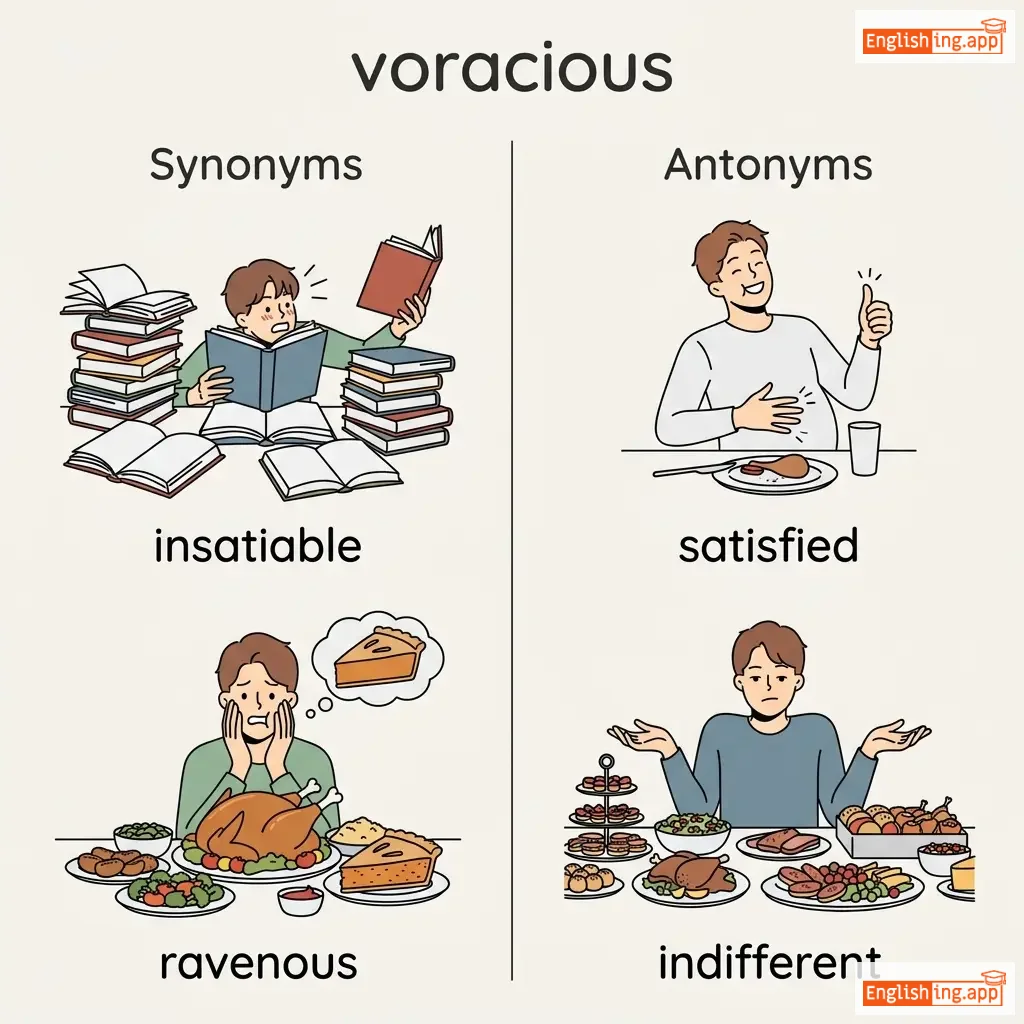
greedy, insatiable, ravenous, eager
••••••
|
satisfied, moderate, restrained, temperate
••••••
|
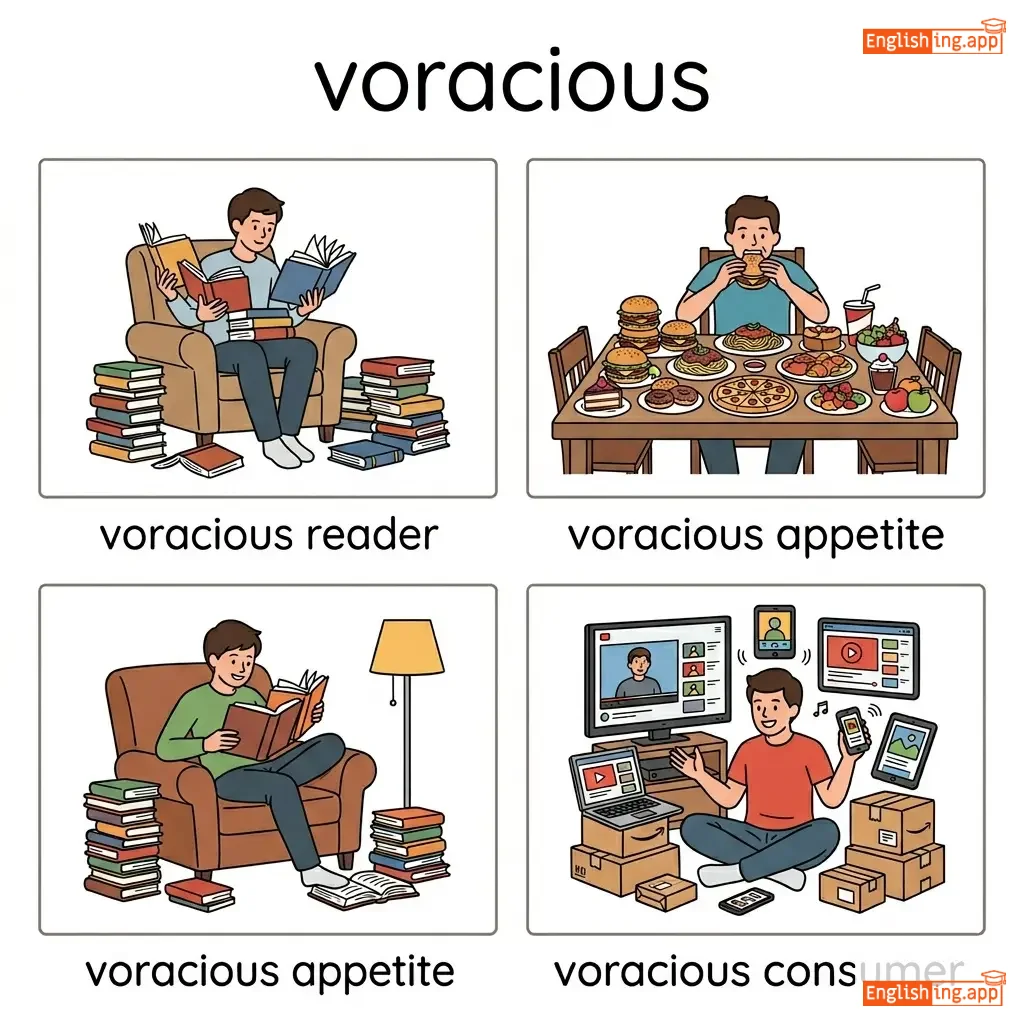
voracious appetite, voracious reader, voracious learner
••••••
|
Voracious = 贪吃的,像一个贪图书籍的读者。
••••••
|
|
#1108
👁️
|
/ˈvɪz.ə.bəl/
adjective
(可见的)
••••••
|
- •••••• |
可见的; 清晰的; 显而易见的
kě jiàn de; qīng xī de; xiǎn ér yì jiàn de
••••••
|
able to be seen; noticeable; apparent
••••••
|
The mountain peak was clearly visible from our hotel room. |
山峰从我们的酒店房间中清晰可见。
Shānfēng cóng wǒmen de jiǔdiàn fángjiān zhōng qīngxī kějiàn.
••••••
|
apparent, noticeable, evident, observable, clear
••••••
|
invisible, hidden, concealed, obscured, unseen
••••••
|
clearly visible, highly visible, barely visible, visible light, visible signs
••••••
|
‘可见的’ 表示你可以清楚地看到的东西。
••••••
|
|
#1109
🔮
|
/ˈvɪʒ.ən.er.i/
adjective
(visionary)
••••••
|
- •••••• |
有远见的;富有想象力的;
you yuanjian de; fuyu xiangxiang li de
••••••
|
having original ideas about what the future will bring; innovative; imaginative
••••••
|
Steve Jobs was a visionary leader who revolutionized technology. |
史蒂夫·乔布斯是一位远见卓识的领导者,他革命性地改变了科技。
Shidifu Qiaobuosi shi yiwei yuanjian zhuoshi de lingdaozhe, ta gemingxing di gaibianle keji.
••••••
|
innovative, imaginative, forward-thinking, pioneering, prophetic
••••••
|
conventional, traditional, backward-thinking, unimaginative, realistic
••••••
|
visionary leader, visionary ideas, visionary thinking, visionary approach
••••••
|
In Chinese, visionary leader is '有远见的领导者'!
••••••
|
|
#1110
🤢
|
/ˈvʌl.ɡər/
adjective
(粗俗)
••••••
|
- •••••• |
粗俗; 粗鲁; 不文雅;
cūsú; cūlǔ; bù wényǎ
••••••
|
lacking sophistication or good taste; crude and offensive in language or behavior
••••••
|
His vulgar language offended everyone at the dinner party.
他的粗俗语言冒犯了晚宴上的所有人。
••••••
|
他的粗俗语言冒犯了晚宴上的所有人。
tā de cūsú yǔyán màofànle wǎnyàn shàng de suǒyǒu rén.
••••••
|
crude, coarse, rude, offensive, indecent
••••••
|
refined, polite, sophisticated, tasteful, decent
••••••
|
vulgar language, vulgar behavior, vulgar display
••••••
|
粗俗在中文和Vulgar在英语中意义相似!
••••••
|
|
#1111
🏆
|
/vɪkˈtɔː.ri.əs/
adjective
(vɪkˈtɔːriəs)
••••••
|
- •••••• |
胜利的
shengli de
••••••
|
having won a victory; successful in a struggle or contest
••••••
|
The victorious team celebrated their championship win with great joy.
胜利的队伍以巨大的喜悦庆祝他们的冠军胜利。
••••••
|
胜利的队伍以巨大的喜悦庆祝他们的冠军胜利。
Shengli de duiwŭ yǐ jùdà de xǐyuè qìngzhù tāmen de guànjūn shènglì.
••••••
|
triumphant, successful, winning, conquering, champion
••••••
|
defeated, losing, unsuccessful, vanquished, beaten
••••••
|
victorious army, victorious candidate, victorious team, victorious battle
••••••
|
胜利的队伍庆祝他们的胜利,带来欢乐。
••••••
|
|
#1112
💥
|
/ˈvaɪə.lənt/
adjective
(wāi ào lěn tè)
••••••
|
- •••••• |
暴力的; 激烈的
baoli de; jilie de
••••••
|
using or involving physical force intended to hurt, damage, or kill; very forceful or powerful
••••••
|
The violent storm caused significant damage to the coastal areas. |
暴力风暴对沿海地区造成了重大损害。
baoli fengbao dui yánhǎi dìqū zàochéngle zhòngdà sǔnhuài.
••••••
|
aggressive, brutal, fierce, intense, savage
••••••
|
peaceful, gentle, calm, mild, nonviolent
••••••
|
violent crime, violent storm, violent behavior
••••••
|
Violence uses force and aggression.
••••••
|
|
#1113
🌈
|
/ˈvɪv.ɪd/
adjective
(维维德)
••••••
|
- •••••• |
生动的; 明亮的; 清晰的;
shengdong de; mingliang de; qingshi de
••••••
|
producing powerful feelings or strong, clear images in the mind; bright and intense
••••••
|
She has vivid memories of her childhood in the countryside.
她对自己在乡村的童年有着生动的记忆。
••••••
|
她对自己在乡村的童年有着生动的记忆。
ta dui ziji zai xiangcun de tongnian youzhe shengdong de jiyi.
••••••
|
bright, intense, clear, graphic, lifelike
••••••
|
dull, faint, vague, pale, dim
••••••
|
vivid colors, vivid imagination, vivid description, vivid memory, vivid dreams
••••••
|
Vivid - 'V' for 'Vibrant' and '生动' (shengdong) in Chinese, meaning lively and bright!
••••••
|
|
#1114
💜
|
/ˈvaɪə.lət/
adjective
(wāiōlè)
••••••
|
- •••••• |
紫罗兰色
zǐluólán sè
••••••
|
of a bluish-purple color
••••••
|
She wore a beautiful violet dress to the party.
她穿了一件漂亮的紫罗兰色裙子参加派对。
••••••
|
她穿了一件漂亮的紫罗兰色裙子参加派对。
Tā chuānle yī jiàn piàoliang de zǐluólán sè qúnzi cānjiā pàiduì.
••••••
|
purple, lavender, mauve, lilac, amethyst
••••••
|
yellow, orange, green, red, blue
••••••
|
violet color, violet flower, violet light
••••••
|
紫罗兰色像暮光中的颜色,美丽又神秘。
••••••
|
|
#1115
😳
|
/ˈweɪ.kɪŋ/
adjective
(wéikīng)
••••••
|
- •••••• |
醒着的; 有意识的
xingzhe de; you yishi de
••••••
|
awake and conscious; relating to the time when one is awake
••••••
|
She spent her waking hours studying for the exam. |
她在清醒的时光里为考试学习。
Ta zai qingxing de shiguang li wei kaoshi xuexi.
••••••
|
awake, conscious, alert, aware
••••••
|
sleeping, unconscious, dormant, asleep
••••••
|
waking hours, waking life, waking moment
••••••
|
清醒并且有意识的备考时光。
••••••
|
|
#1116
👻
|
/ˈvjuː.ləs/
adjective
(fjuːləs)
••••••
|
- •••••• |
不可见的;没有观点的
bù kě jiàn de; méiyǒu guāndiǎn de
••••••
|
invisible; having no views or opinions
••••••
|
The ghost remained viewless to most people in the haunted house.
鬼魂对大多数人来说在鬼屋里是不可见的。
••••••
|
鬼魂对大多数人来说在鬼屋里是不可见的。
Guǐhún duì dàduōshù rén lái shuō zài guǐ wū lǐ shì bù kě jiàn de.
••••••
|
invisible, unseen, hidden, imperceptible, unobservable
••••••
|
visible, observable, apparent, noticeable, evident
••••••
|
viewless spirit, viewless presence, viewless form, viewless entity
••••••
|
鬼魂总是隐形的,像一个没有观点的'viewless'存在!
••••••
|
|
#1117
🗣️
|
/ˈvɒl.jʊ.bəl/
adjective
(沃-鲁-布尔)
••••••
|
- •••••• |
多话的; 话多的
duō huà de; huà duō de
••••••
|
speaking fluently and readily; talkative; having a continuous flow of words
••••••
|
The voluble salesman talked for hours about his products. |
多话的销售员谈了几个小时关于他的产品。
duō huà de xiāo shòu yuán tán le jǐ gè xiǎo shí guānyú tā de chǎn pǐn
••••••
|
talkative, fluent, eloquent, glib, chatty
••••••
|
taciturn, silent, quiet, reserved, reticent
••••••
|
voluble speaker, voluble chatter, voluble explanation, voluble response
••••••
|
Voluble = 像不间断的流水一样讲个不停
••••••
|
|
#1118
💻
|
/ˈvɜː.tʃu.əl/
adjective
(虚拟)
••••••
|
- •••••• |
虚拟的
xū nǐ de
••••••
|
almost or nearly as described, but not completely or according to strict definition; existing in essence or effect, though not in fact
••••••
|
The virtual meeting allowed participants from different countries to collaborate.
虚拟会议使来自不同国家的参与者能够进行合作。
••••••
|
虚拟会议使来自不同国家的参与者能够进行合作。
Xūnǐ huìyì shǐ láizì bùtóng guójiā de cānyù zhě nénggòu jìnxíng hézuò.
••••••
|
simulated, digital, online, computerized, artificial
••••••
|
real, actual, physical, tangible, concrete
••••••
|
virtual reality, virtual meeting, virtual world
••••••
|
虚拟: 看起来像现实,但并不完全是。
••••••
|
|
#1119
😈
|
/ˈwɒn.tən/
adjective
(wanton)
••••••
|
- •••••• |
故意且未被挑衅的; 性别不拘或放荡
wanton
••••••
|
deliberate and unprovoked; sexually immodest or promiscuous
••••••
|
The vandals caused wanton destruction to the public property. |
破坏者对公共财产造成了故意的破坏。
Pohuai zhe dui gonggong caichan zaocheng le guyi de pohuai.
••••••
|
reckless, deliberate, malicious, unprovoked, wild
••••••
|
restrained, controlled, modest, justified, careful
••••••
|
wanton destruction, wanton cruelty, wanton behavior
••••••
|
WANTON - 不负责任的破坏
••••••
|
|
#1120
👁️
|
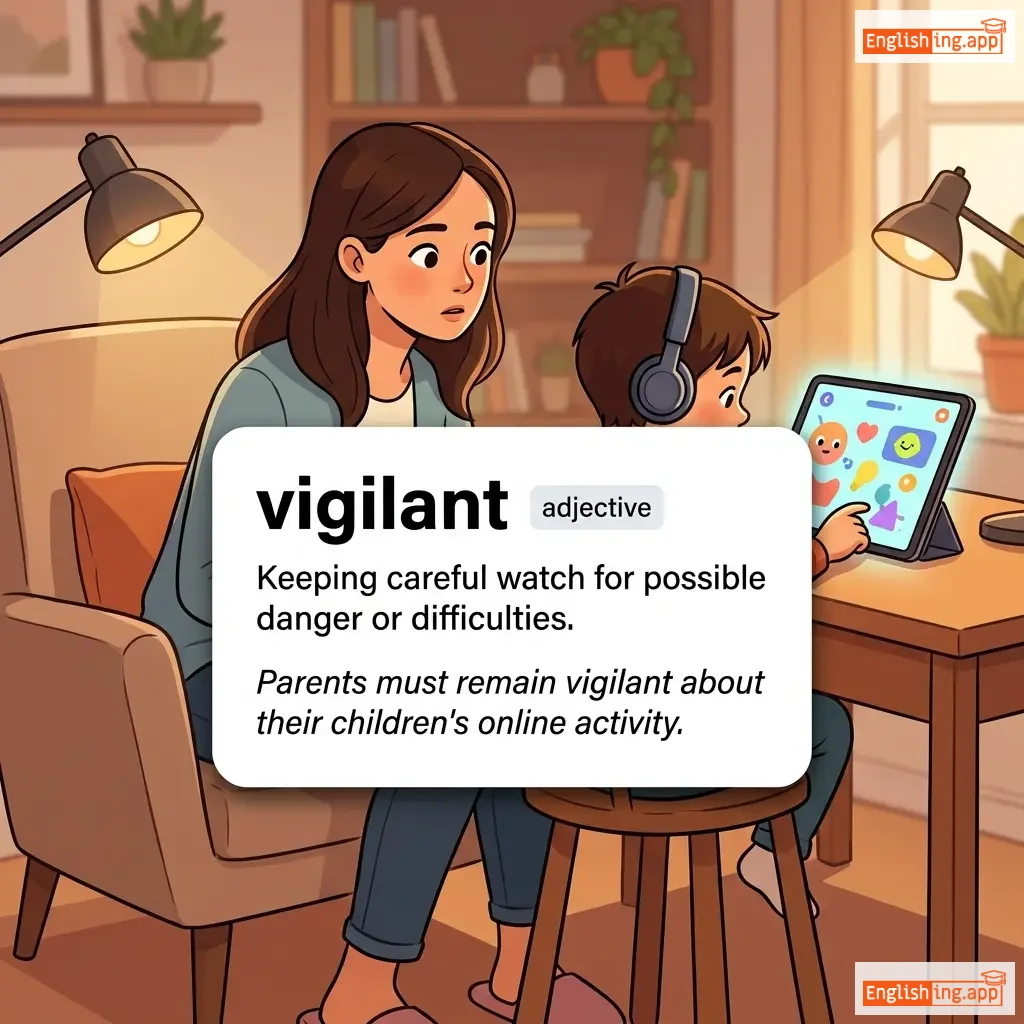
/ˈvɪdʒ.ɪ.lənt/
adjective
(警觉)
••••••
|
|
警觉的
jingjue de
••••••
|
keeping careful watch for possible danger or difficulties
••••••
|
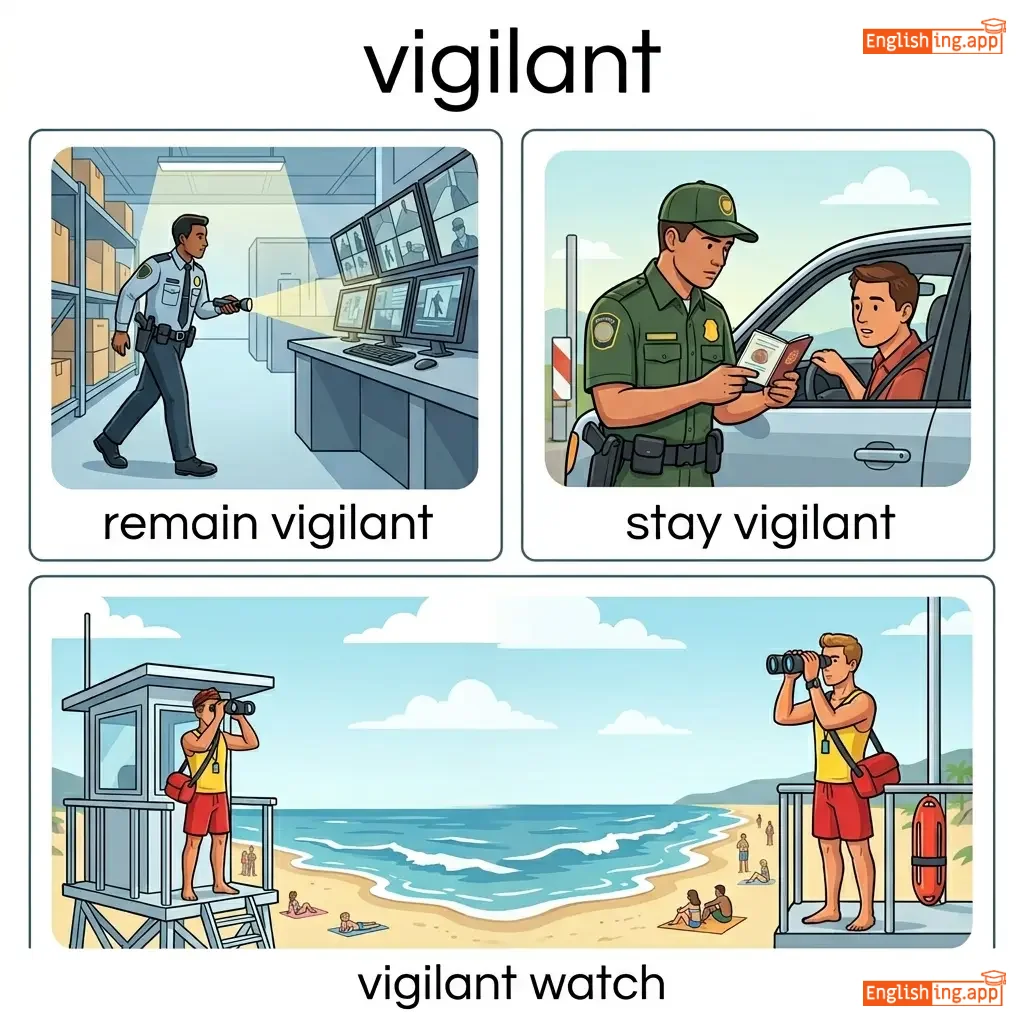
The security guard remained vigilant throughout the night shift. |
保安在夜班期间保持警觉。
Baoan zai yeban qijian baochi jingjue.
••••••
|
alert, watchful, cautious, attentive, observant
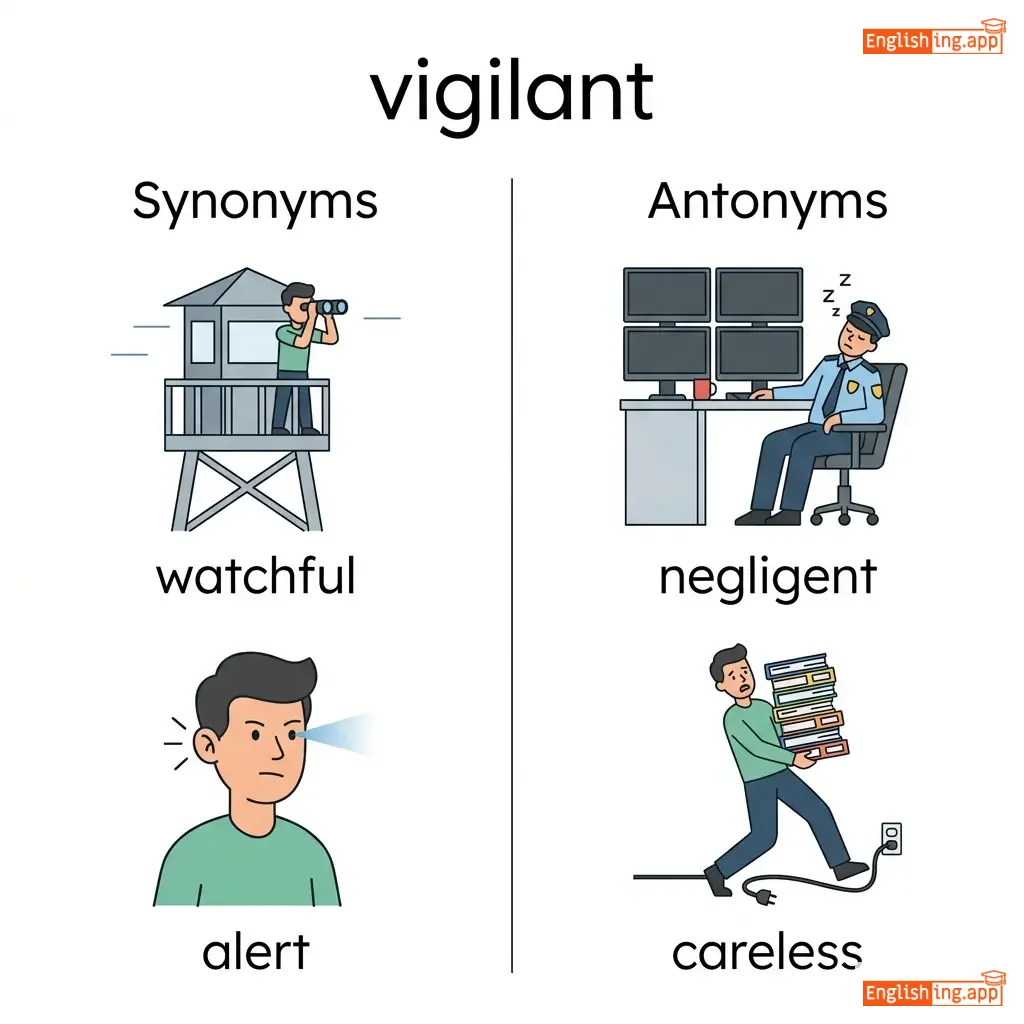
••••••
|
careless, negligent, inattentive, unaware, oblivious
••••••
|
vigilant guard, vigilant citizen, vigilant watch, vigilant surveillance
••••••
|
警觉 - 像保安一样保持警觉
••••••
|
Vocabulary Quiz
Test your vocabulary by matching words with their translations or meanings.
Login to take the quiz
Comments (0)
Share your thoughts and join the discussion.
Join the discussion by logging in
Login to CommentNo comments yet
Be the first to share your thoughts!