


Swipe left or right, or use the buttons. Tap image to zoom.
例句翻译
单词
Lesson 43Lesson 43 - 遮罩切换
|
表情符号
|
单词 | Images | 翻译 | 含义 | 例句 | 例句翻译 | 同义词 | 反义词 | 搭配词 | 助记符 |
|---|---|---|---|---|---|---|---|---|---|---|
|
#841
🚱
|
/ˈstæɡ.nənt/
adjective
(斯塔格南特)
••••••
|
- •••••• |
停滯的; 靜止的; 無發展的
tingzhi de
••••••
|
not moving or flowing; showing no activity or development
••••••
|
The stagnant water in the pond was covered with algae. |
池塘裡的停滯水被藻類覆蓋。
Chítáng lǐ de tíngzhì shuǐ bèi zǎolèi fùgài.
••••••
|
motionless, still, static, inactive
••••••
|
flowing, active, dynamic, moving
••••••
|
stagnant water, stagnant economy, stagnant growth
••••••
|
停滯的水就像停滯不前的狀態,沒有流動
••••••
|
|
#842
🍋
|
/saʊər/
adjective
(saur)
••••••
|
- •••••• |
酸
suan
••••••
|
having an acid taste like lemon or vinegar; unpleasant or disagreeable
••••••
|
The milk has gone sour and smells terrible. |
牛奶变酸了,闻起来很难闻。
Niunai bian suan le, wen qilai hen nan wen.
••••••
|
acidic, tart, bitter, sharp
••••••
|
sweet, pleasant, fresh
••••••
|
sour taste, sour milk, sour grapes, sour mood
••••••
|
酸奶,像柠檬一样!
••••••
|
|
#843
✨
|
/ˈsplendɪd/
adjective
(splendid)
••••••
|
- •••••• |
壮丽的; 极好的; 印象深刻的
zhuangli de; jihao de; yinxiang shenkede
••••••
|
magnificent; excellent; very impressive
••••••
|
The castle looked splendid in the sunset.
城堡在日落时看起来很壮丽。
••••••
|
城堡在日落时看起来很壮丽。
Chengbao zai riluo shi kan qilai hen zhuangli.
••••••
|
magnificent, excellent, superb, wonderful, marvelous
••••••
|
awful, terrible, poor, mediocre
••••••
|
splendid view, splendid performance, splendid opportunity
••••••
|
壮丽就是宏伟,想象日落下的城堡。
••••••
|
|
#844
✨
|
/spɪk/
adjective
(spik)
••••••
|
- •••••• |
极其干净整洁;完美无瑕
spik
••••••
|
extremely clean and neat; immaculate
••••••
|
The house was spick and span after the cleaning. |
清洁后,房子变得一尘不染,整洁如新。
qīngjié hòu, fángzi biàn dé yī chén bù rǎn, zhěng jié rú xīn.
••••••
|
clean, neat, tidy, pristine, immaculate
••••••
|
dirty, messy, untidy, unkempt
••••••
|
spick and span, spick clean
••••••
|
Spick意味着非常干净和整洁,就像经过彻底清洁的房子一样。
••••••
|
|
#845
🍞
|
/steɪl/
adjective
(stèier)
••••••
|
- •••••• |
陈旧的; 过时的; 不新鲜的
chénjiù de; guòshí de; bù xīnxiān de
••••••
|
no longer fresh; lacking originality or novelty
••••••
|
The bread became stale after sitting out for three days. |
面包放了三天后变得陈旧。
Miànbāo fàngle sāntiān hòu biàn dé chénjiù.
••••••
|
old, musty, rancid, outdated
••••••
|
fresh, new, crisp, novel
••••••
|
stale bread, stale air, stale joke
••••••
|
In Chinese, 'stale' sounds like 'stèier', and 'chénjiù' means 'stale'.
••••••
|
|
#846
🏠
|
/ˈspeɪ.ʃəs/
adjective
(s-pā-shi-ō-sī)
••••••
|
- •••••• |
宽敞的;宽阔的
kuan chang de; kuan kuo de
••••••
|
having a lot of space; roomy and comfortable
••••••
|
The house has a spacious living room with high ceilings. |
这座房子有一个宽敞的客厅,高高的天花板。
Zhe zuo fangzi you yige kuan chang de keting, gao gao de tian hua ban.
••••••
|
roomy, large, extensive, broad
••••••
|
cramped, narrow, small, confined
••••••
|
spacious room, spacious apartment, spacious garden, spacious interior
••••••
|
宽敞的客厅让家变得舒适
••••••
|
|
#847
🧽
|
/ˈspʌndʒi/
adjective
(海绵状)
••••••
|
- •••••• |
海绵状
hǎimián zhuàng
••••••
|
soft and full of holes like a sponge; porous
••••••
|
The cake had a light and spongy texture.
蛋糕有轻盈而海绵状的质地。
••••••
|
蛋糕有轻盈而海绵状的质地。
Dàn gāo yǒu qīng yíng ér hǎimián zhuàng de zhìdì.
••••••
|
soft, porous, absorbent, cushiony
••••••
|
hard, solid, dense, firm
••••••
|
spongy cake, spongy ground, spongy material
••••••
|
海绵状帮助记住物体柔软和多孔的特性。
••••••
|
|
#848
🌶️
|
/ˈspaɪ.si/
adjective
(spaisi)
••••••
|
- •••••• |
辛辣
xinla
••••••
|
having a strong, hot flavor from spices; containing spices
••••••
|
This curry is too spicy for me to eat. |
这道咖喱对我来说太辣了。
zhe dao gāli duì wǒ lái shuō tài là le.
••••••
|
hot, peppery, pungent, fiery, seasoned
••••••
|
mild, bland, plain, unseasoned
••••••
|
spicy food, spicy curry, spicy sauce
••••••
|
辛辣的味道,像香料一样的热辣!
••••••
|
|
#849
😰
|
/ˈspaɪn.ləs/
adjective
(spai-nles)
••••••
|
- •••••• |
缺乏勇气; 意志薄弱; 胆小
spinles
••••••
|
lacking courage or determination; weak-willed
••••••
|
He was too spineless to stand up for his beliefs.
他太软弱,无法为自己的信仰站出来。
••••••
|
他太软弱,无法为自己的信仰站出来。
Ta tai ruanruo, wufaa wei ziji de xinyang zhan chulai.
••••••
|
cowardly, weak, timid, gutless, feeble
••••••
|
brave, courageous, bold, strong-willed
••••••
|
spineless leader, spineless behavior
••••••
|
Spineless - 没有脊梁骨,像个胆小鬼。
••••••
|
|
#850
🎭
|
/spɒnˈteɪniəs/
adjective
(spontanious)
••••••
|
- •••••• |
自发的
zifa de
••••••
|
done without planning; natural and unforced
••••••
|
Their spontaneous dance in the rain was beautiful.
他们在雨中即兴的舞蹈非常美丽。
••••••
|
他们在雨中即兴的舞蹈非常美丽。
tamen zai yu zhong jixing de wudao feichang meili.
••••••
|
impulsive, unplanned, natural, automatic, instinctive
••••••
|
planned, deliberate, forced, calculated
••••••
|
spontaneous reaction, spontaneous applause, spontaneous decision
••••••
|
自发的 = 不加计划的自然行为
••••••
|
|
#851
🤏
|
/ˈsʌm.wʌt/
adjective
(som-wat)
••••••
|
- •••••• |
有点; 稍微; 适度
yǒudiǎn; shāowéi; shìdù
••••••
|
to some extent; rather; moderately
••••••
|
The movie was somewhat interesting but not great.
这部电影有点有趣,但不太棒。
••••••
|
这部电影有点有趣,但不太棒。
zhè bù diànyǐng yǒudiǎn yǒuqù, dàn bù tài bàng.
••••••
|
rather, fairly, moderately, slightly
••••••
|
completely, entirely, extremely, very
••••••
|
somewhat disappointed, somewhat surprised, somewhat difficult
••••••
|
Imagine a movie that's somewhat funny but not too impressive.
••••••
|
|
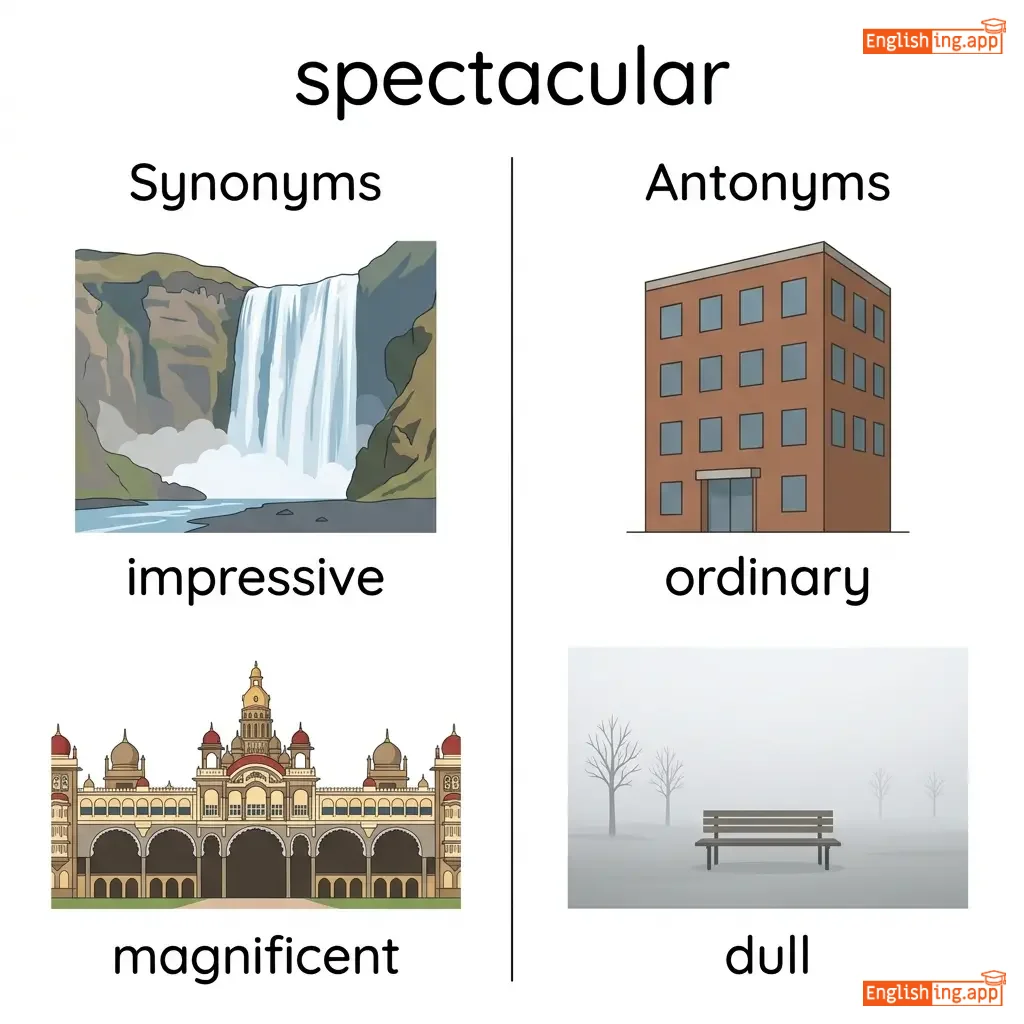
#852
🎆
|
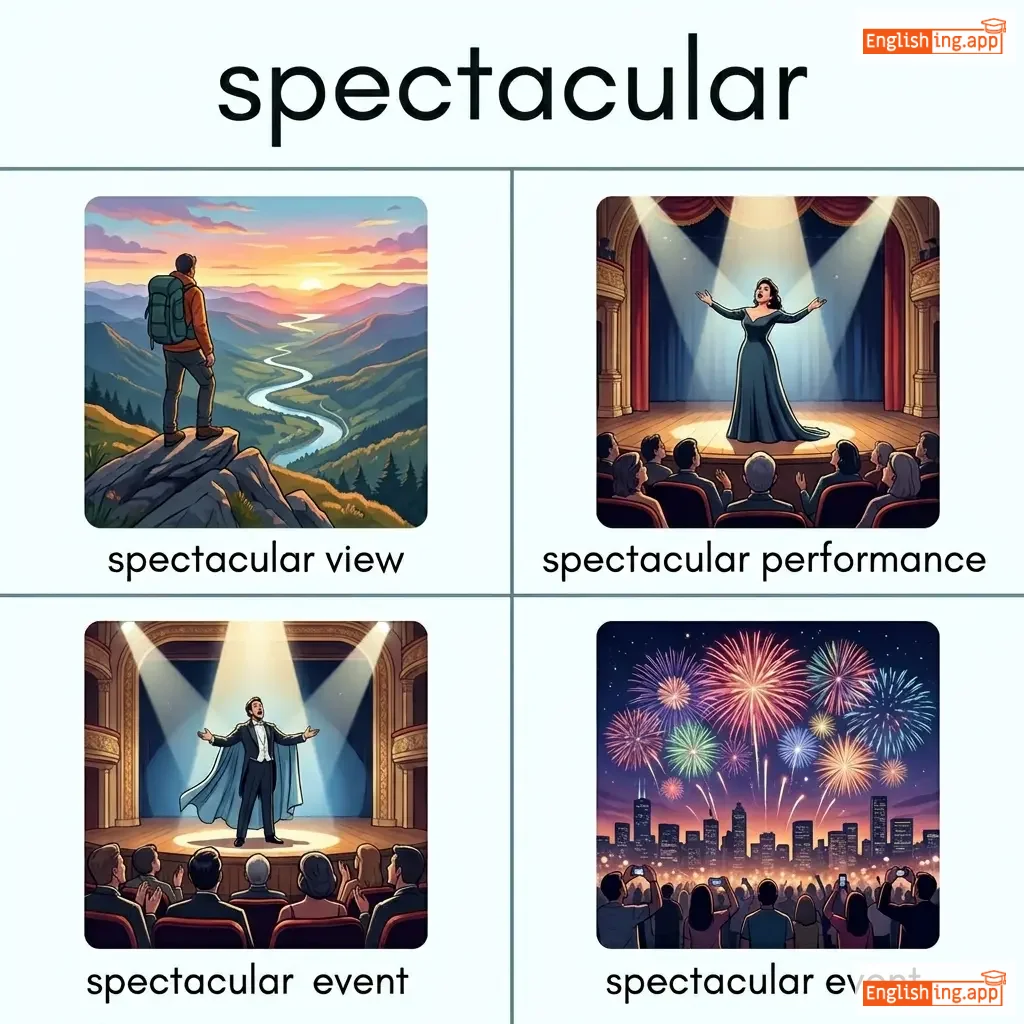
/spekˈtæk.jə.lər/
adjective
(壮观)
••••••
|
|
壮观; 印象深刻; 惊人
zhuangguan, yinxiang shenke, jingren
••••••
|
very impressive; beautiful in a dramatic way; remarkable
••••••
|
The sunset over the mountains was absolutely spectacular. |
山上的日落绝对壮观。
Shan shang de riluò juéduì zhuàngguān.
••••••
|
amazing, stunning, breathtaking, magnificent
••••••
|
ordinary, plain, dull, unremarkable
••••••
|
spectacular view, spectacular performance, spectacular success, spectacular failure
••••••
|
A sunset in the mountains is truly 'zhuangguan,' like a movie scene!
••••••
|
|
#853
🌀
|
/ˈspaɪ.rəl/
adjective
(螺旋)
••••••
|
- •••••• |
螺旋
luoxuan
••••••
|
winding in a continuous curve; helical
••••••
|
The spiral staircase led to the top floor. |
螺旋楼梯通向了最上面的一层。
Luóxuán lóutī tōngxiàngle zuì shàngmiàn de yī céng.
••••••
|
helical, coiled, twisted, winding, curved
••••••
|
straight, linear, direct
••••••
|
spiral staircase, spiral shape, spiral galaxy
••••••
|
螺旋就像海螺一样,弯曲地转动着。
••••••
|
|
#854
🏃
|
/ˈspiː.di/
adjective
(spí dì)
••••••
|
- •••••• |
快速的; 极速的; 敏捷的;
kuài sù de, jí sù de, mǐn jié de
••••••
|
moving or happening quickly; fast
••••••
|
The speedy delivery service arrived within an hour.
快速的送货服务在一小时内到达。
••••••
|
快速的送货服务在一小时内到达。
Kuai su de song huo fu wu zai yi xiao shi nei dao da.
••••••
|
fast, quick, rapid, swift
••••••
|
slow, sluggish, delayed, gradual
••••••
|
speedy delivery, speedy recovery, speedy service, speedy response
••••••
|
Picture a lightning bolt speeding by to remember '快速'.
••••••
|
|
#855
🔴
|
/ˈspɒtɪd/
adjective
(斯波特)
••••••
|
- •••••• |
斑点的; 有标记的; 被看到
bāndiǎn de; yǒu biāojì de; bèi kàn dào
••••••
|
having spots or marks; noticed or seen
••••••
|
The spotted leopard moved silently through the jungle. |
斑点猎豹静静地穿过丛林。
Bāndiǎn lièbào jìngjìng de chuānguò cónglín.
••••••
|
dotted, speckled, marked, stained
••••••
|
plain, unmarked, solid, uniform
••••••
|
spotted animal, spotted pattern, spotted dress
••••••
|
Spotted - 斑点的,像猎豹身上的斑点一样。
••••••
|
|
#856
🎩
|
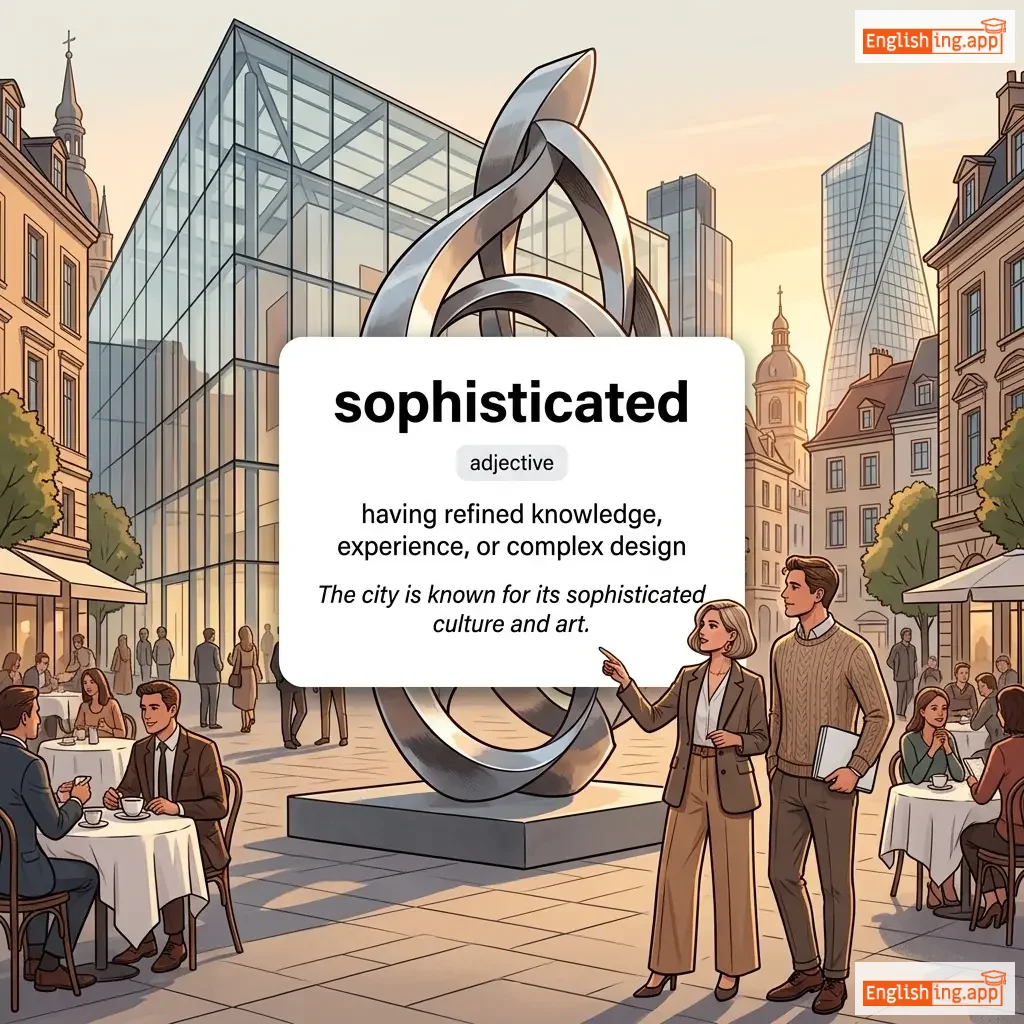
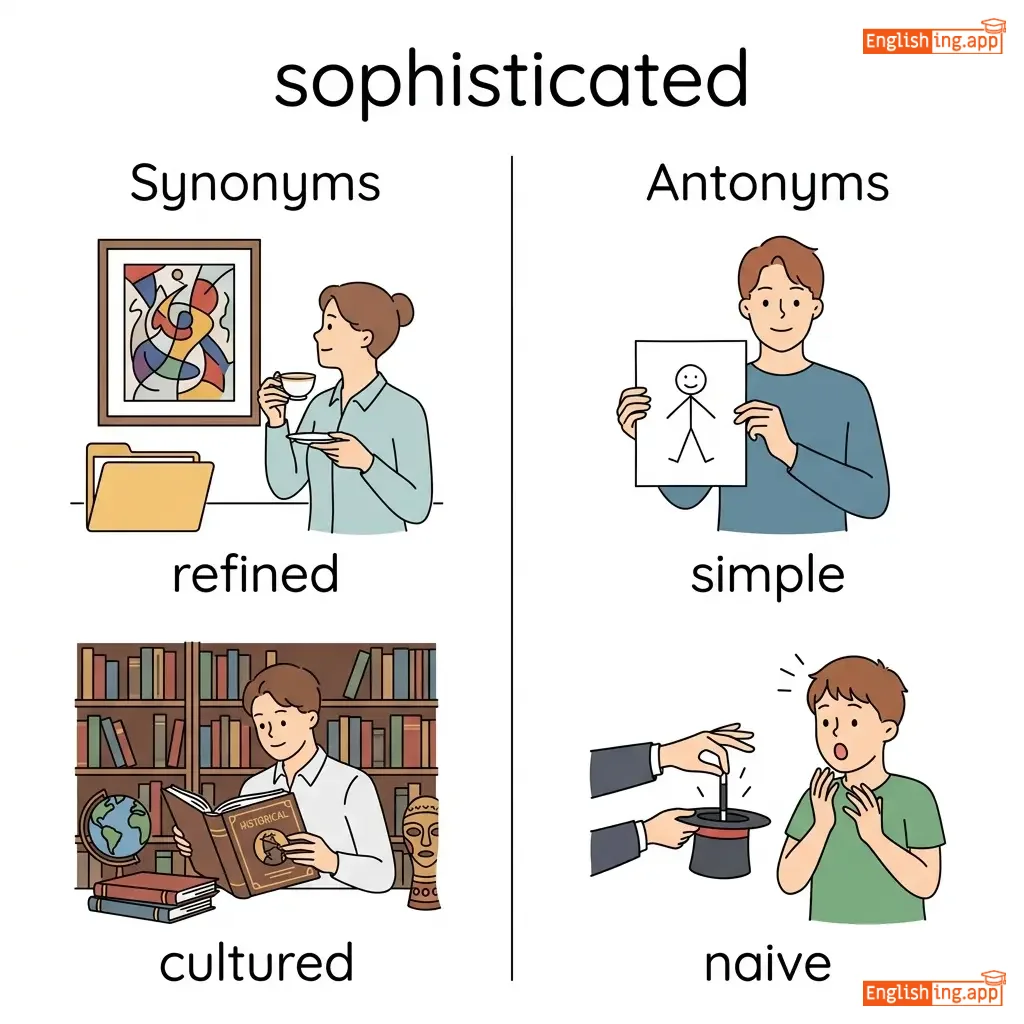
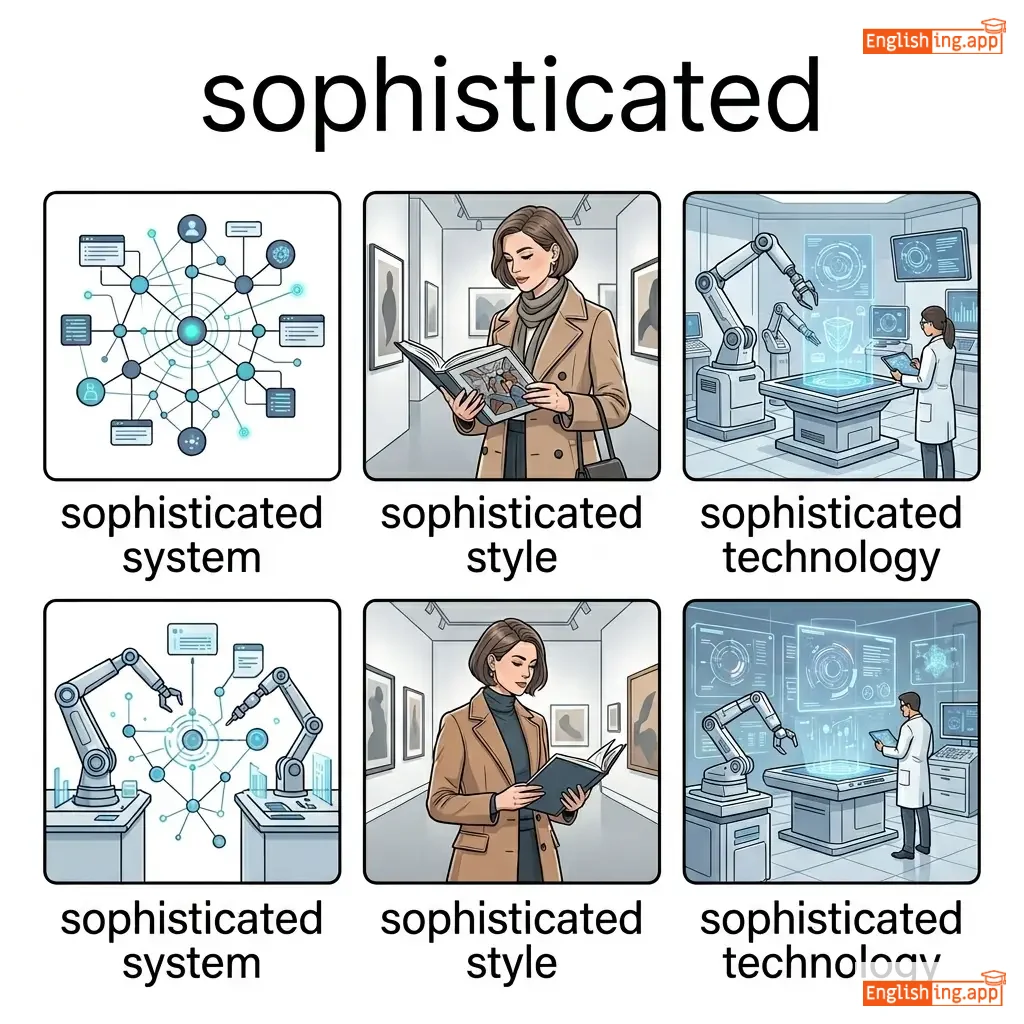
/səˈfɪs.tɪ.keɪ.tɪd/
adjective
(sō fī sī tè kè tè)
••••••
|
|
复杂的; 精致的; 先进的; 高级的
fuza de; jingzhi de; xianjin de; gaoji de
••••••
|
having great knowledge or experience; complex; refined; advanced
••••••
|
She has a very sophisticated taste in art. |
她在艺术方面有非常精致的品味。
Ta zai yishu fangmian you feichang jingzhi de pinwei.
••••••
|
refined, cultured, elegant, advanced
••••••
|
simple, naive, unsophisticated, basic
••••••
|
sophisticated technology, sophisticated analysis, sophisticated taste
••••••
|
复杂且精致的艺术
••••••
|
|
#857
🙏
|
/ˈspɪr.ɪ.tʃu.əl/
adjective
(精神的)
••••••
|
- •••••• |
精神的; 宗教的; 神圣的
jīngshén de
••••••
|
relating to the human spirit or soul; religious or sacred
••••••
|
She found spiritual peace through meditation.
她通过冥想找到了精神的平静。
••••••
|
她通过冥想找到了精神的平静。
Tā tōngguò míngxiǎng zhǎodào le jīngshén de píngjìng.
••••••
|
religious, sacred, divine, holy, mystical
••••••
|
material, physical, secular, worldly
••••••
|
spiritual leader, spiritual journey, spiritual growth
••••••
|
精神的意味着通过冥想找到内心的平静。
••••••
|
|
#858
✨
|
/ˈspel.baʊnd/
adjective
(sī bào wān dé)
••••••
|
- •••••• |
着迷的; 迷住的
zhuó mí de, mí zhù de
••••••
|
completely fascinated and unable to move or think about anything else; enchanted
••••••
|
The children sat spellbound as the magician performed his tricks. |
孩子们看到魔术师表演时都目瞪口呆。
Háizimen kàn dào móshù shī biǎoyǎn shí dōu mù dèng kǒu dāi.
••••••
|
enchanted, mesmerized, captivated, fascinated
••••••
|
bored, disinterested, unimpressed, indifferent
••••••
|
spellbound audience, spellbound by beauty, spellbound silence, spellbound children
••••••
|
Think of the spellbinding magic that captivates in Chinese ‘zhuó mí de’.
••••••
|
|
#859
⚖️
|
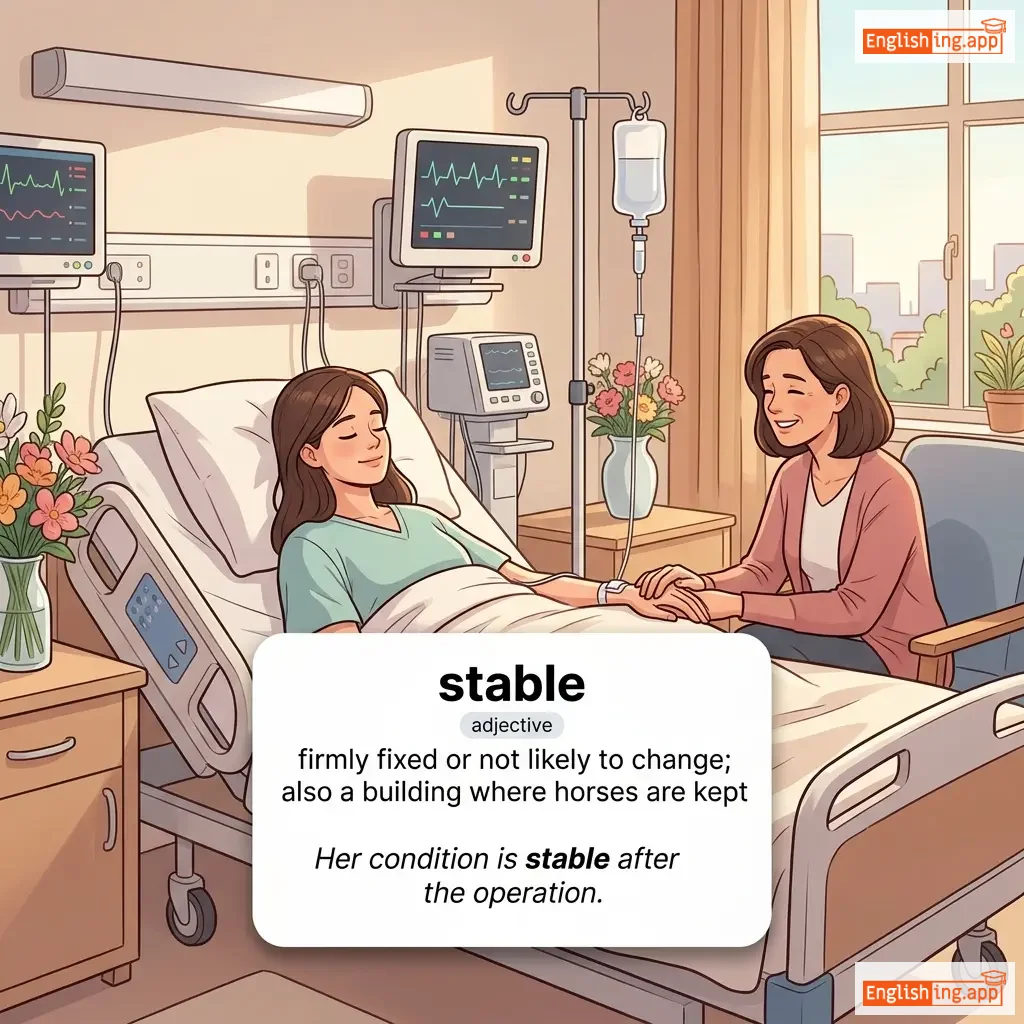
/ˈsteɪbəl/
adjective
(sī tè bēi ěr)
••••••
|
|
稳定
wěn dìng
••••••
|
firmly fixed; not likely to change or fail
••••••
|
The patient's condition is now stable.
病人的情况现在稳定。
••••••
|
病人的情况现在稳定。
Bìngrén de qíngkuàng xiànzài wěn dìng.
••••••
|
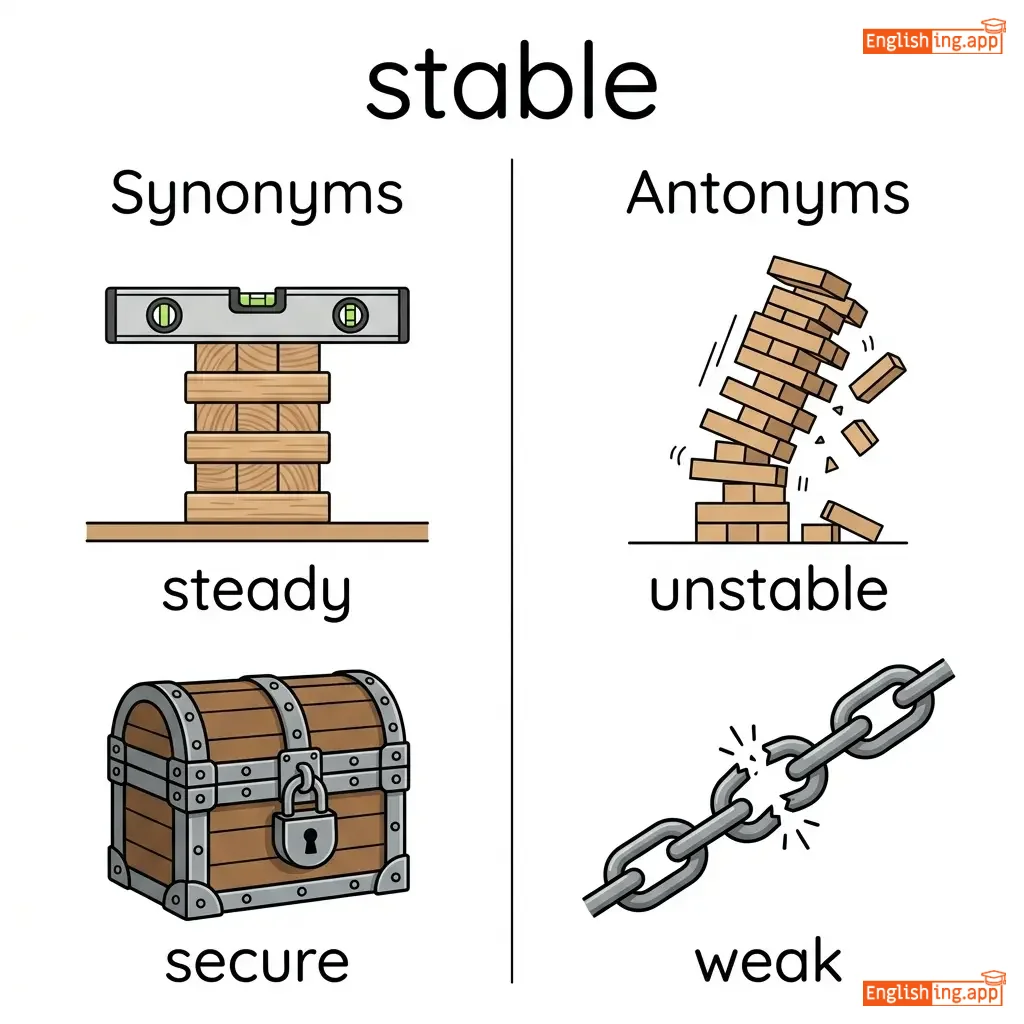
steady, firm, secure, constant, reliable
••••••
|
unstable, shaky, unreliable, changeable
••••••
|
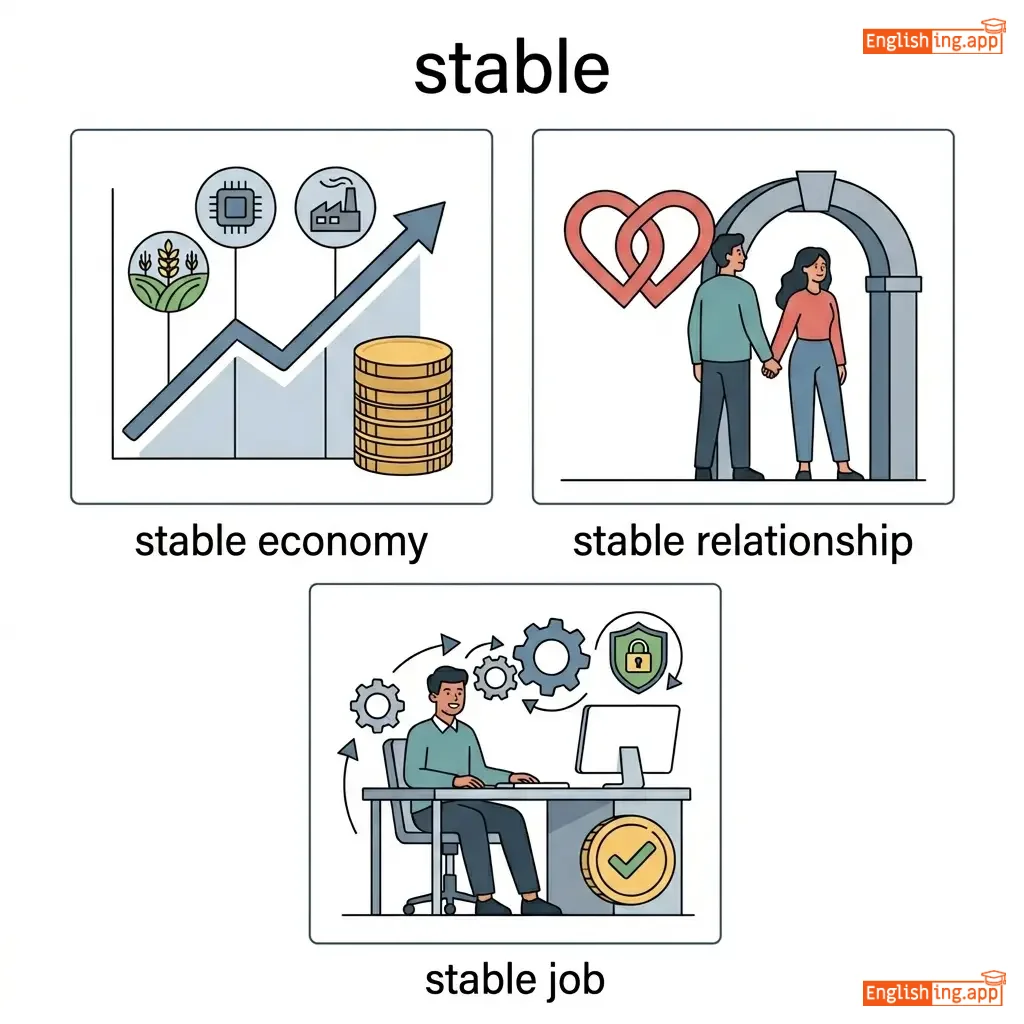
stable condition, stable relationship, stable economy
••••••
|
想象你的心情像是一个稳定的'立场',永不改变。
••••••
|
|
#860
🔇
|
/ˈsaʊnd.pruːf/
adjective
(sáo'nd-pǔf)
••••••
|
- •••••• |
隔音的; 防止声音进出
géyīn de
••••••
|
impervious to sound; preventing sound from entering or leaving
••••••
|
The recording studio has sound-proof walls.
录音室有隔音墙。
••••••
|
录音室有隔音墙。
lùyīn shì yǒu géyīn qiáng.
••••••
|
noise-proof, acoustic, insulated, sealed
••••••
|
permeable, open, echoing, resonant
••••••
|
sound-proof room, sound-proof walls, sound-proof material
••••••
|
隔音墙可以隔离外界的噪音。
••••••
|
Vocabulary Quiz
Test your vocabulary by matching words with their translations or meanings.
Login to take the quiz
Comments (0)
Share your thoughts and join the discussion.
Join the discussion by logging in
Login to CommentNo comments yet
Be the first to share your thoughts!