

翻訳
過去
過去分詞
三人称単数
動名詞
意味
例文
例文の翻訳
同義語
対義語
コロケーション
ニーモニック


Swipe left or right, or use the buttons. Tap image to zoom.
例文の翻訳
単語
Lesson 43Lesson 43 - マスクトグル
|
絵文字
|
単語 | Images | 翻訳 | 意味 | 例文 | 例文の翻訳 | 同義語 | 対義語 | コロケーション | ニーモニック |
|---|---|---|---|---|---|---|---|---|---|---|
|
#841
🚱
|
/ˈstæɡ.nənt/
adjective
(スタグナント)
••••••
|
- •••••• |
停滞した; 動かない; 発展していない
teitai shita
••••••
|
not moving or flowing; showing no activity or development
••••••
|
The stagnant water in the pond was covered with algae. |
池の中の停滞した水は藻で覆われていました。
ike no naka no teitai shita mizu wa mo de owarete imashita.
••••••
|
motionless, still, static, inactive
••••••
|
flowing, active, dynamic, moving
••••••
|
stagnant water, stagnant economy, stagnant growth
••••••
|
停滞した水は動かず、静かに存在している
••••••
|
|
#842
🍋
|
/saʊər/
adjective
(サワー)
••••••
|
- •••••• |
酸っぱい
suppai
••••••
|
having an acid taste like lemon or vinegar; unpleasant or disagreeable
••••••
|
The milk has gone sour and smells terrible. |
牛乳は酸っぱくなり、ひどい匂いがします。
Gyunyu wa suppaku nari, hidoi nioi ga shimasu.
••••••
|
acidic, tart, bitter, sharp
••••••
|
sweet, pleasant, fresh
••••••
|
sour taste, sour milk, sour grapes, sour mood
••••••
|
酸っぱい牛乳、レモンみたい!
••••••
|
|
#843
✨
|
/ˈsplendɪd/
adjective
(スプレンディッド)
••••••
|
- •••••• |
素晴らしい; 壮大な; 印象的な
subarashii; soudaina; inshou-teki na
••••••
|
magnificent; excellent; very impressive
••••••
|
The castle looked splendid in the sunset.
お城は夕日で素晴らしく見えました。
••••••
|
お城は夕日で素晴らしく見えました。
O-shiro wa yuhi de subarashiku miemashita.
••••••
|
magnificent, excellent, superb, wonderful, marvelous
••••••
|
awful, terrible, poor, mediocre
••••••
|
splendid view, splendid performance, splendid opportunity
••••••
|
素晴らしいは'卓越した'。夕日での城を想像してみてください。
••••••
|
|
#844
✨
|
/spɪk/
adjective
(スピック)
••••••
|
- •••••• |
非常にきれいで整頓された; 完璧
supikku
••••••
|
extremely clean and neat; immaculate
••••••
|
The house was spick and span after the cleaning. |
掃除後、家はまるで新品のようにきれいで整然としていました。
Sōji go, ie wa marude shinpin no yō ni kirei de seizen to shite imashita.
••••••
|
clean, neat, tidy, pristine, immaculate
••••••
|
dirty, messy, untidy, unkempt
••••••
|
spick and span, spick clean
••••••
|
Spickは、完璧にきれいで整頓された状態を意味します。まるで掃除した後の家のように。
••••••
|
|
#845
🍞
|
/steɪl/
adjective
(suteiru)
••••••
|
- •••••• |
古くなった; しけた; 新鮮でない
furukunatta; shiketa; shinsen de nai
••••••
|
no longer fresh; lacking originality or novelty
••••••
|
The bread became stale after sitting out for three days. |
パンは三日後に古くなった。
Pan wa mikka go ni furukunatta.
••••••
|
old, musty, rancid, outdated
••••••
|
fresh, new, crisp, novel
••••••
|
stale bread, stale air, stale joke
••••••
|
In Japanese, 'stale' sounds like 'suteiru', and 'furukunatta' means 'old' or 'stale'.
••••••
|
|
#846
🏠
|
/ˈspeɪ.ʃəs/
adjective
(スペーシャス)
••••••
|
- •••••• |
広々とした; 快適な
hirobirō to shita; kaiteki na
••••••
|
having a lot of space; roomy and comfortable
••••••
|
The house has a spacious living room with high ceilings. |
その家には高い天井を持つ広々としたリビングルームがあります。
Sono ie ni wa takai tenjō o motsu hirobiro to shita ribingu rūmu ga arimasu.
••••••
|
roomy, large, extensive, broad
••••••
|
cramped, narrow, small, confined
••••••
|
spacious room, spacious apartment, spacious garden, spacious interior
••••••
|
広々としたリビングルームでくつろげる
••••••
|
|
#847
🧽
|
/ˈspʌndʒi/
adjective
(スポンジ状)
••••••
|
- •••••• |
スポンジ状
suponji-jou
••••••
|
soft and full of holes like a sponge; porous
••••••
|
The cake had a light and spongy texture.
ケーキは軽くてスポンジ状の質感がありました。
••••••
|
ケーキは軽くてスポンジ状の質感がありました。
Kēki wa karukute suponji-jou no shitsukan ga arimashita.
••••••
|
soft, porous, absorbent, cushiony
••••••
|
hard, solid, dense, firm
••••••
|
spongy cake, spongy ground, spongy material
••••••
|
スポンジ状は、スポンジのような柔らかくて穴の開いた質感を覚えるために使われます。
••••••
|
|
#848
🌶️
|
/ˈspaɪ.si/
adjective
(スパイシー)
••••••
|
- •••••• |
スパイシー
supaisī
••••••
|
having a strong, hot flavor from spices; containing spices
••••••
|
This curry is too spicy for me to eat. |
このカレーは私には辛すぎます。
kono karē wa watashi ni wa karasugimasu.
••••••
|
hot, peppery, pungent, fiery, seasoned
••••••
|
mild, bland, plain, unseasoned
••••••
|
spicy food, spicy curry, spicy sauce
••••••
|
スパイスが効いてるから、スパイシー!
••••••
|
|
#849
😰
|
/ˈspaɪn.ləs/
adjective
(su-pa-inresu)
••••••
|
- •••••• |
勇気がない; 意志が弱い; 臆病
su-painresu
••••••
|
lacking courage or determination; weak-willed
••••••
|
He was too spineless to stand up for his beliefs.
彼は自分の信念を貫くには、あまりにも臆病すぎた。
••••••
|
彼は自分の信念を貫くには、あまりにも臆病すぎた。
Kare wa jibun no shinnen wo tsuranuku ni wa, amari ni mo okubyou sugita.
••••••
|
cowardly, weak, timid, gutless, feeble
••••••
|
brave, courageous, bold, strong-willed
••••••
|
spineless leader, spineless behavior
••••••
|
Spineless - 背骨がなく、勇気もない。
••••••
|
|
#850
🎭
|
/spɒnˈteɪniəs/
adjective
(suponteiniasu)
••••••
|
- •••••• |
自発的な
jihatsuteki na
••••••
|
done without planning; natural and unforced
••••••
|
Their spontaneous dance in the rain was beautiful.
雨の中で彼らの自発的なダンスは美しかった。
••••••
|
雨の中で彼らの自発的なダンスは美しかった。
ame no naka de karera no jihatsuteki na dansu wa utsukushikatta.
••••••
|
impulsive, unplanned, natural, automatic, instinctive
••••••
|
planned, deliberate, forced, calculated
••••••
|
spontaneous reaction, spontaneous applause, spontaneous decision
••••••
|
自発的な = 自然に起こる、計画なし
••••••
|
|
#851
🤏
|
/ˈsʌm.wʌt/
adjective
(サムワット)
••••••
|
- •••••• |
やや; 少し; ほどほど
yaya; sukoshi; hodohodo
••••••
|
to some extent; rather; moderately
••••••
|
The movie was somewhat interesting but not great.
その映画は少し面白かったが、すごくはなかった。
••••••
|
その映画は少し面白かったが、すごくはなかった。
sono eiga wa sukoshi omoshirokatta ga, sugoku wa nakatta.
••••••
|
rather, fairly, moderately, slightly
••••••
|
completely, entirely, extremely, very
••••••
|
somewhat disappointed, somewhat surprised, somewhat difficult
••••••
|
Imagine a somewhat fun but not thrilling movie.
••••••
|
|
#852
🎆
|
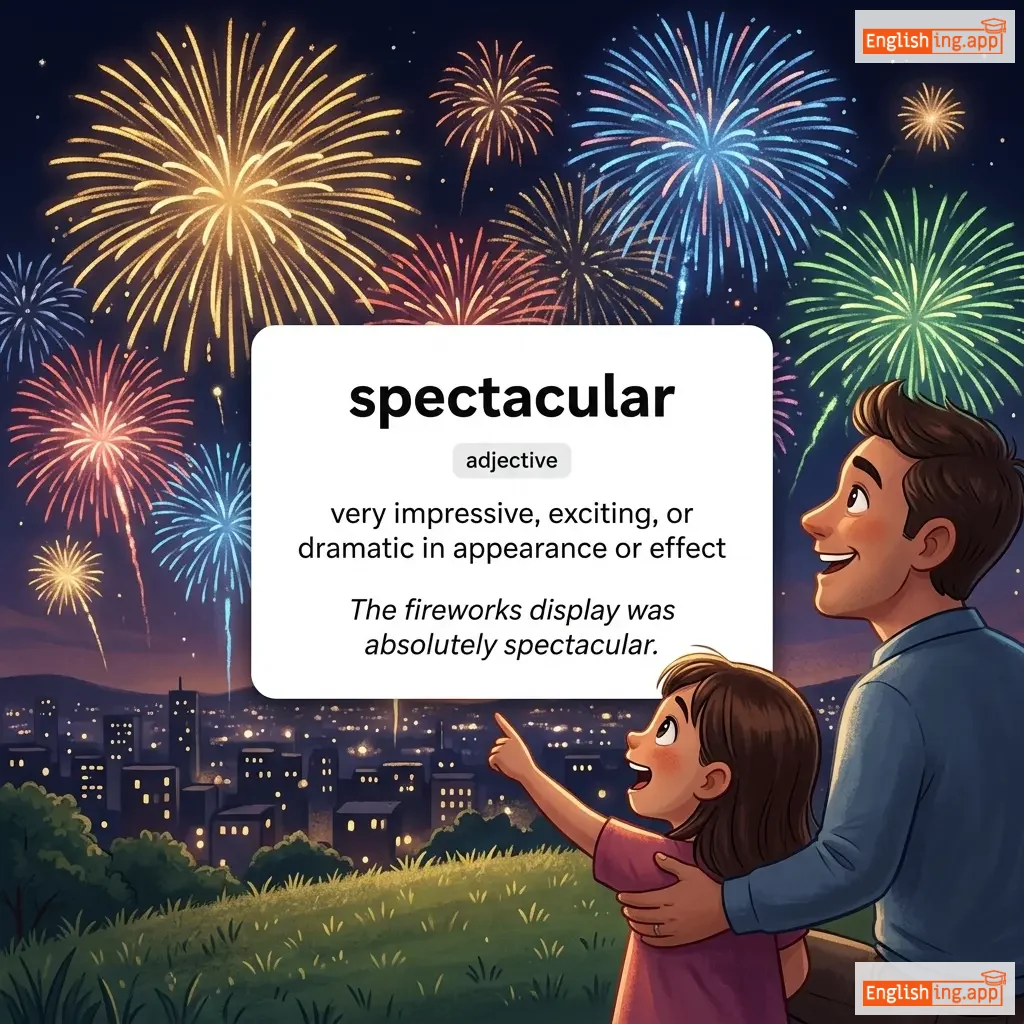
/spekˈtæk.jə.lər/
adjective
(スペクタキュラー)
••••••
|
|
壮観; 素晴らしい; 驚くべき
sokkan, subarashii, odorokubeki
••••••
|
very impressive; beautiful in a dramatic way; remarkable
••••••
|
The sunset over the mountains was absolutely spectacular. |
山の上での夕日がまさに壮観でした。
Yama no ue de no yuuhi ga masani soukan deshita.
••••••
|
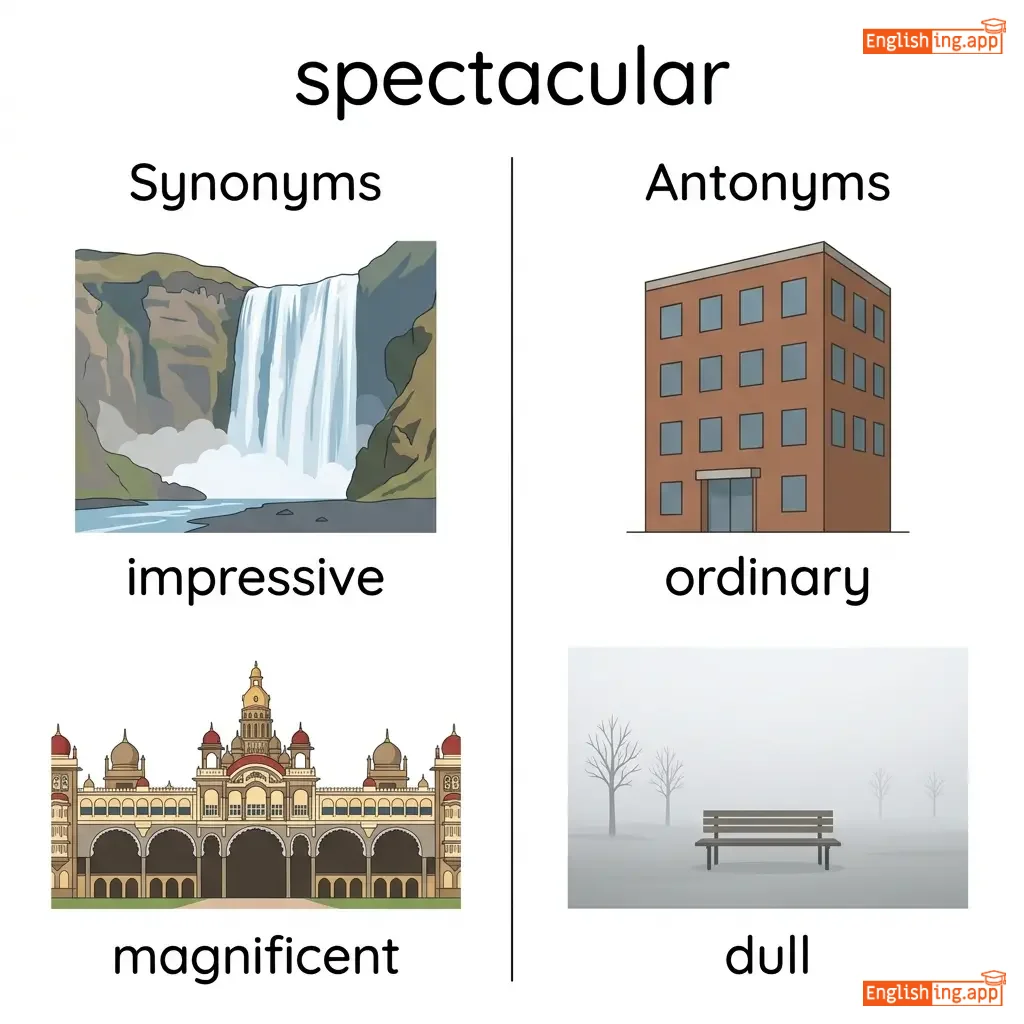
amazing, stunning, breathtaking, magnificent
••••••
|
ordinary, plain, dull, unremarkable
••••••
|
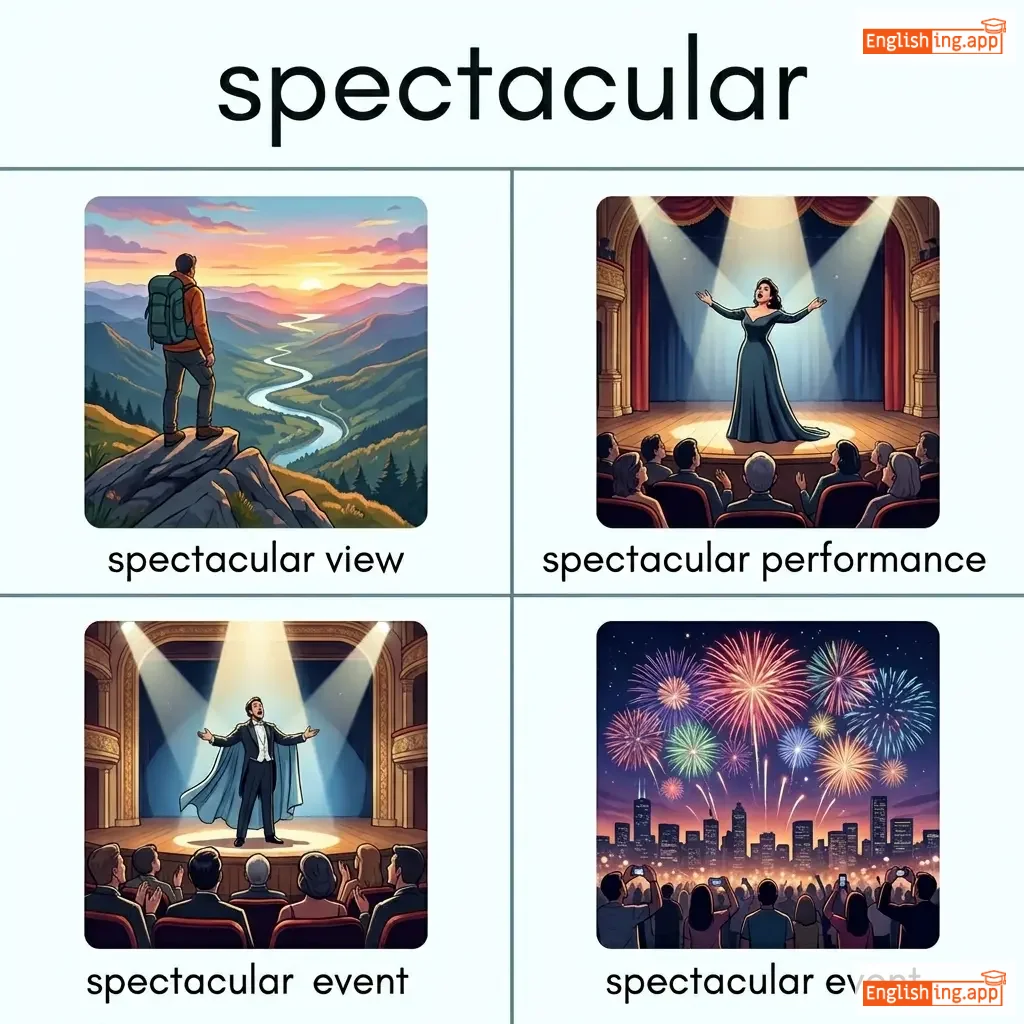
spectacular view, spectacular performance, spectacular success, spectacular failure
••••••
|
A sunset in the mountains is 'sokkan' — it's a real spectacle!
••••••
|
|
#853
🌀
|
/ˈspaɪ.rəl/
adjective
(スパイラル)
••••••
|
- •••••• |
螺旋
rasen
••••••
|
winding in a continuous curve; helical
••••••
|
The spiral staircase led to the top floor. |
螺旋階段は最上階に通じていました。
Rasen kaidan wa saijoukai ni tsuujiteimashita.
••••••
|
helical, coiled, twisted, winding, curved
••••••
|
straight, linear, direct
••••••
|
spiral staircase, spiral shape, spiral galaxy
••••••
|
螺旋は、まるで貝のようにぐるぐると回る形をしています。
••••••
|
|
#854
🏃
|
/ˈspiː.di/
adjective
(スピーディ)
••••••
|
- •••••• |
速い; 素早い; 機敏な;
hayai, subayai, kibi na
••••••
|
moving or happening quickly; fast
••••••
|
The speedy delivery service arrived within an hour.
速い配送サービスは1時間以内に到着しました。
••••••
|
速い配送サービスは1時間以内に到着しました。
Hayai haisou sābisu wa 1 jikan inai ni tōchaku shimashita.
••••••
|
fast, quick, rapid, swift
••••••
|
slow, sluggish, delayed, gradual
••••••
|
speedy delivery, speedy recovery, speedy service, speedy response
••••••
|
Think of a sports car zooming by to recall '速い'.
••••••
|
|
#855
🔴
|
/ˈspɒtɪd/
adjective
(スポッテッド)
••••••
|
- •••••• |
斑点のある; 見られた; マークされた
hanten no aru; mirareta; māku sareta
••••••
|
having spots or marks; noticed or seen
••••••
|
The spotted leopard moved silently through the jungle. |
斑点のあるヒョウはジャングルを静かに歩いた。
Hanten no aru hyou wa janguru o shizuka ni aruita.
••••••
|
dotted, speckled, marked, stained
••••••
|
plain, unmarked, solid, uniform
••••••
|
spotted animal, spotted pattern, spotted dress
••••••
|
Spotted - ヒョウの斑点のように、スポットされた。
••••••
|
|
#856
🎩
|
/səˈfɪs.tɪ.keɪ.tɪd/
adjective
(ソフィスティケイテッド)
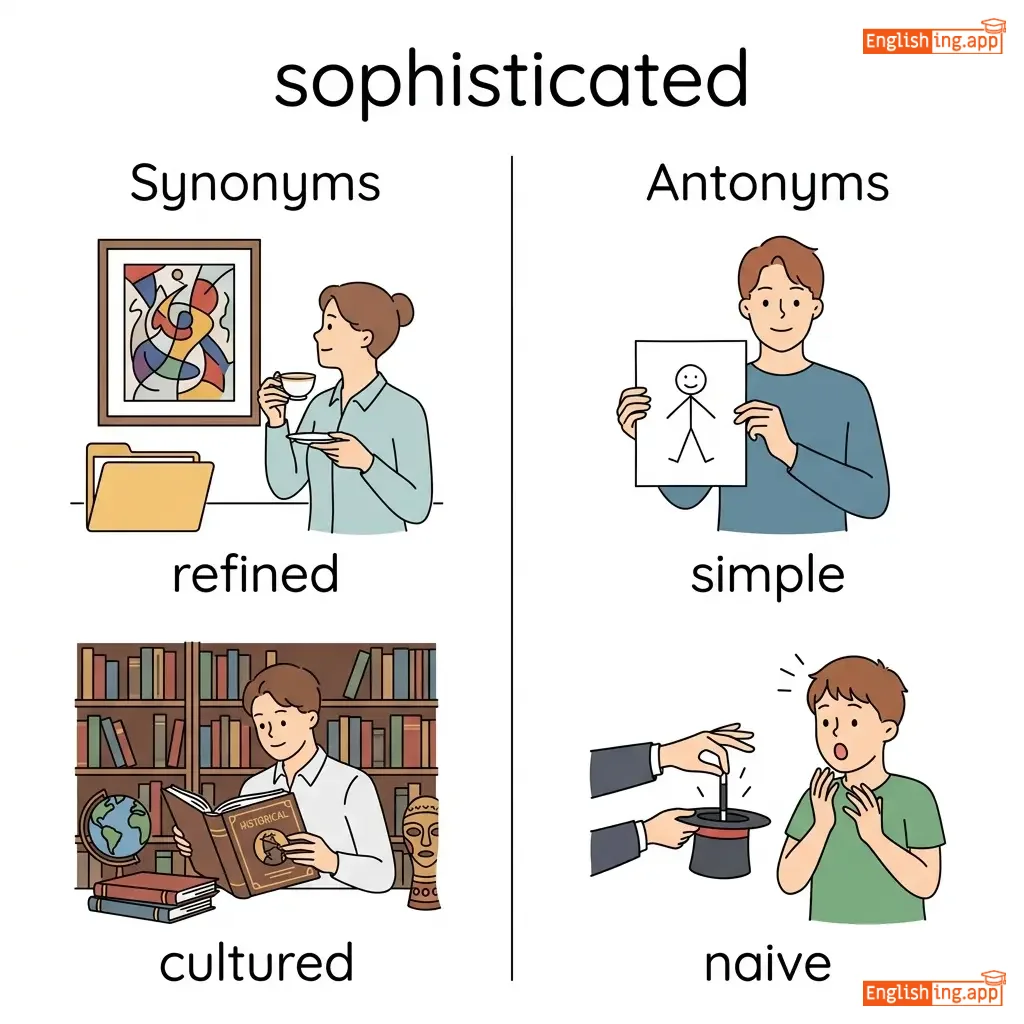
••••••
|
|
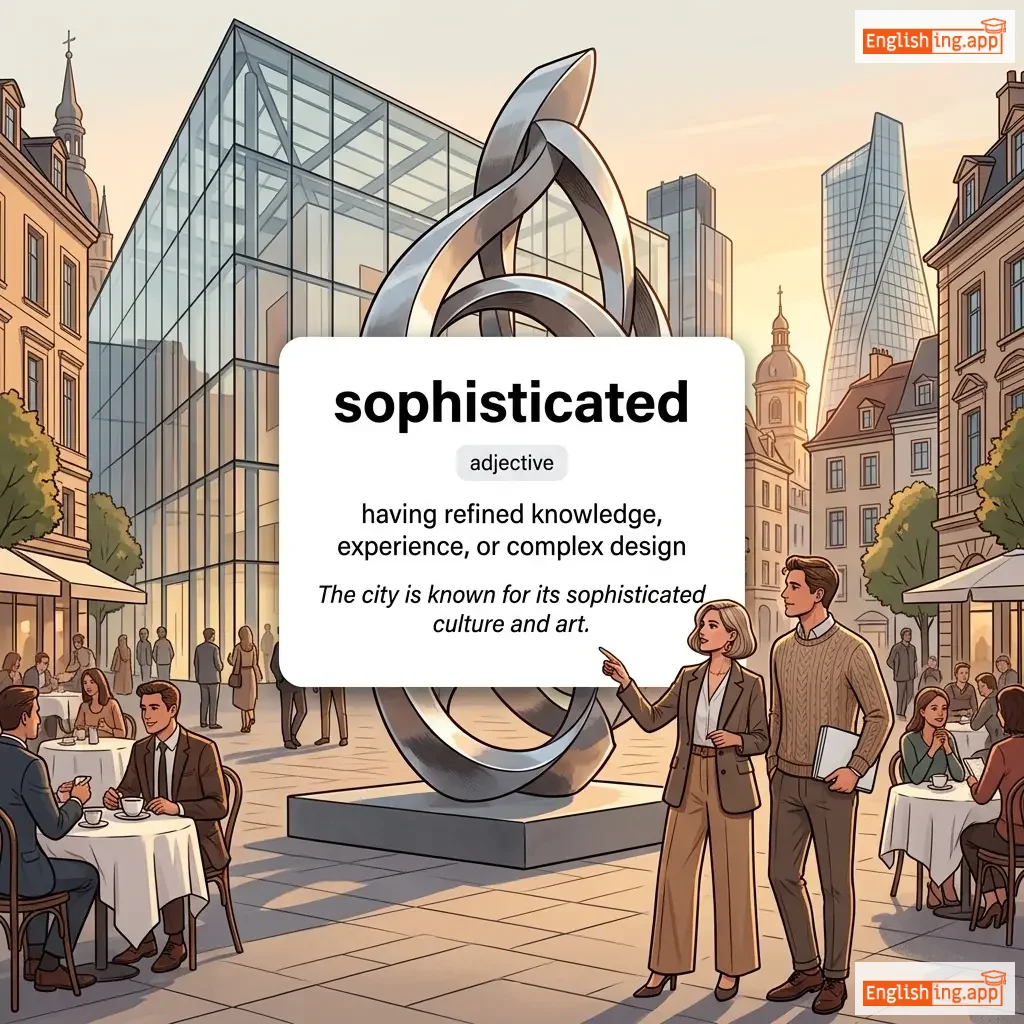
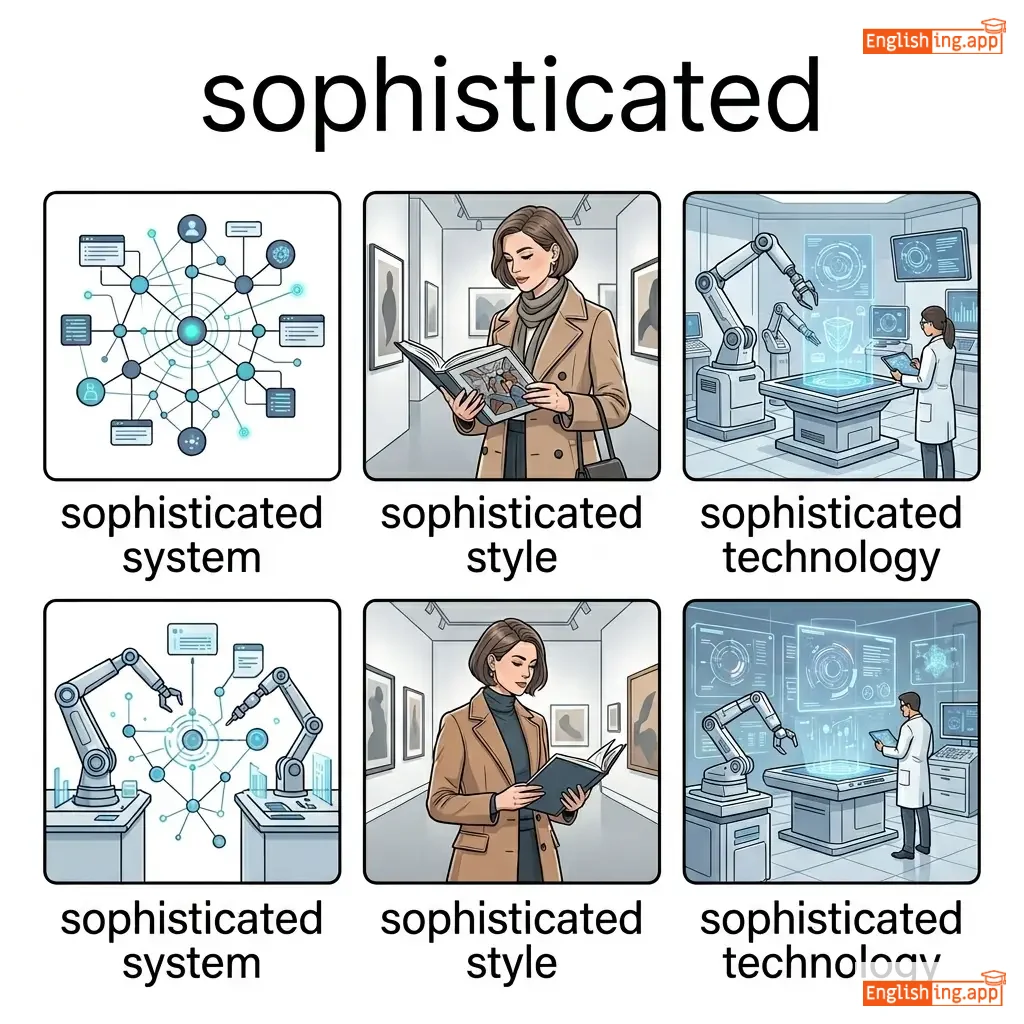
洗練された; 複雑な; 進んだ; 高度な
senren sareta; fukuzatsu na; susunda; koudo na
••••••
|
having great knowledge or experience; complex; refined; advanced
••••••
|
She has a very sophisticated taste in art. |
彼女はアートにとても洗練された味覚を持っています。
Kanojo wa aato ni totemo senren sareta mikaku o motteimasu.
••••••
|
refined, cultured, elegant, advanced
••••••
|
simple, naive, unsophisticated, basic
••••••
|
sophisticated technology, sophisticated analysis, sophisticated taste
••••••
|
洗練されたアートの味
••••••
|
|
#857
🙏
|
/ˈspɪr.ɪ.tʃu.əl/
adjective
(スピリチュアル)
••••••
|
|
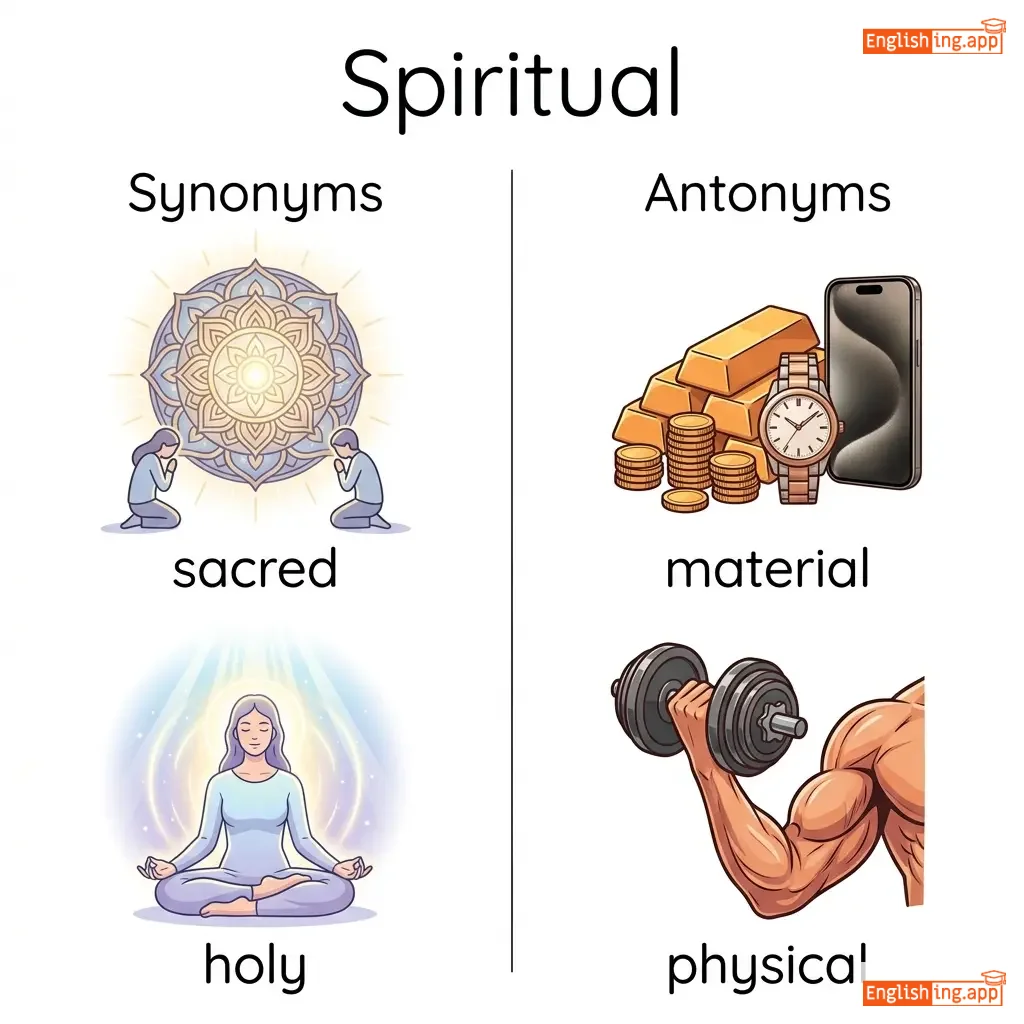
精神的; 宗教的; 神聖な
supirichuaru
••••••
|
relating to the human spirit or soul; religious or sacred
••••••
|
She found spiritual peace through meditation.
彼女は瞑想を通じて精神的な平和を見つけました。
••••••
|
彼女は瞑想を通じて精神的な平和を見つけました。
Kanojo wa meisō o tōjite seishinteki na heiwa o mitsukemashita.
••••••
|
religious, sacred, divine, holy, mystical
••••••
|
material, physical, secular, worldly
••••••
|
spiritual leader, spiritual journey, spiritual growth
••••••
|
精神的は瞑想によって心の平和を見つけることです。
••••••
|
|
#858
✨
|
/ˈspel.baʊnd/
adjective
(supeirubaundo)
••••••
|
- •••••• |
夢中; 魅了された
muchuu, miryou sareta
••••••
|
completely fascinated and unable to move or think about anything else; enchanted
••••••
|
The children sat spellbound as the magician performed his tricks. |
子供たちは魔法使いが技を披露するのを夢中で見ていました。
Kodomotachi wa mahou tsukai ga waza o hirou suru no o muchuu de miteimashita.
••••••
|
enchanted, mesmerized, captivated, fascinated
••••••
|
bored, disinterested, unimpressed, indifferent
••••••
|
spellbound audience, spellbound by beauty, spellbound silence, spellbound children
••••••
|
Imagine being so fascinated by magic that you become 'miryou sareta' in Japanese.
••••••
|
|
#859
⚖️
|
/ˈsteɪbəl/
adjective
(sutēberu)
••••••
|
|
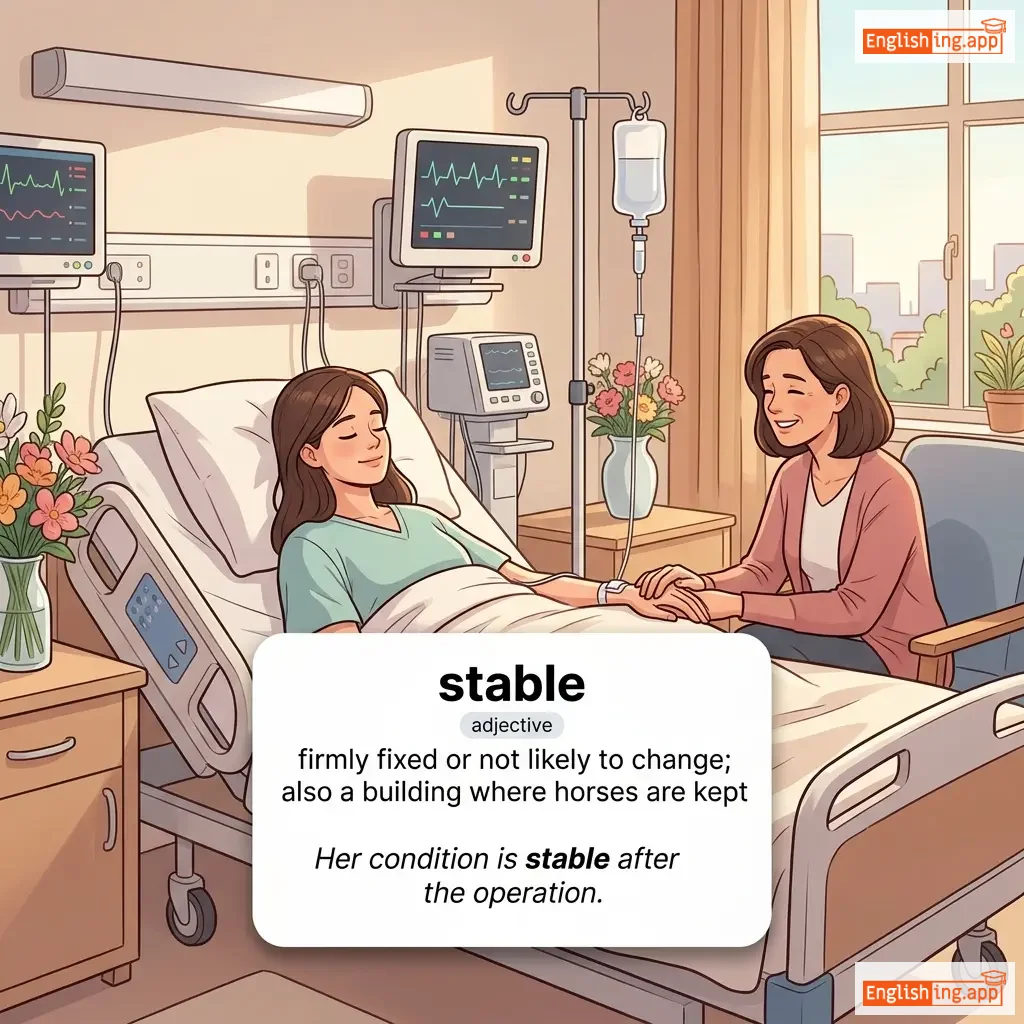
安定
antei
••••••
|
firmly fixed; not likely to change or fail
••••••
|
The patient's condition is now stable.
患者の状態は今、安定しています。
••••••
|
患者の状態は今、安定しています。
Kanja no joutai wa ima, antei shiteimasu.
••••••
|
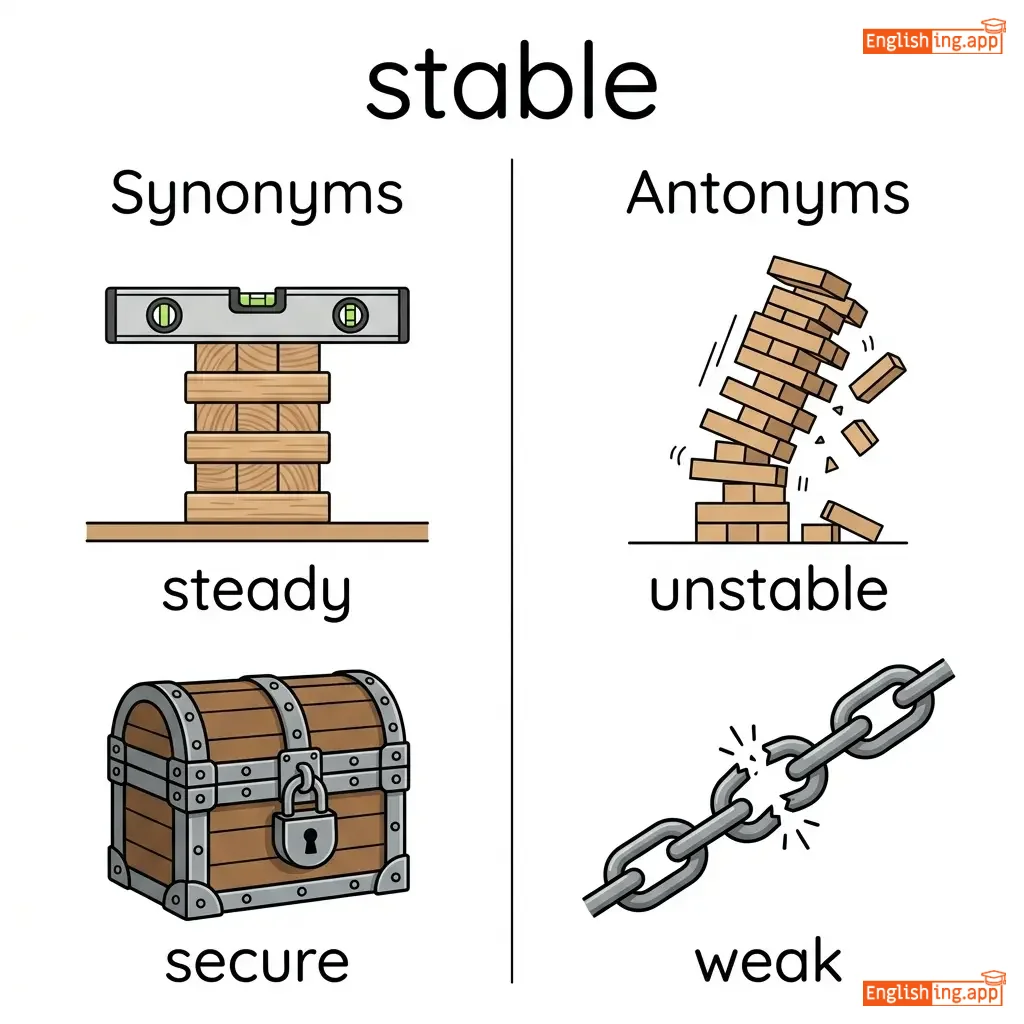
steady, firm, secure, constant, reliable
••••••
|
unstable, shaky, unreliable, changeable
••••••
|
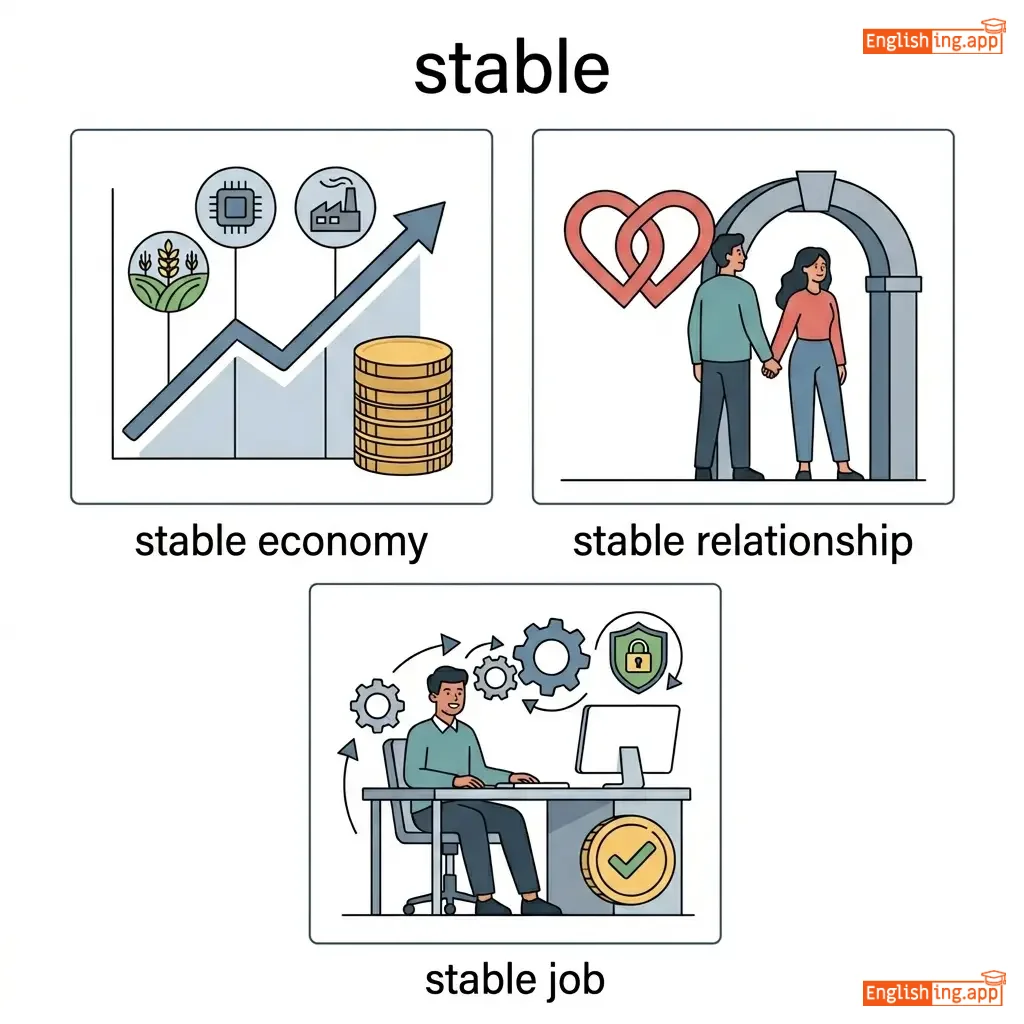
stable condition, stable relationship, stable economy
••••••
|
安定した机の上に座って、何も揺れることなく過ごせる。
••••••
|
|
#860
🔇
|
/ˈsaʊnd.pruːf/
adjective
(サウンドプルーフ)
••••••
|
- •••••• |
防音; 音の出入りを防ぐ
bōon
••••••
|
impervious to sound; preventing sound from entering or leaving
••••••
|
The recording studio has sound-proof walls.
レコーディングスタジオには防音壁があります。
••••••
|
レコーディングスタジオには防音壁があります。
rekōdingu sutajio ni wa bōon kabe ga arimasu.
••••••
|
noise-proof, acoustic, insulated, sealed
••••••
|
permeable, open, echoing, resonant
••••••
|
sound-proof room, sound-proof walls, sound-proof material
••••••
|
防音壁でスタジオの音を保ちます。
••••••
|
Vocabulary Quiz
Test your vocabulary by matching words with their translations or meanings.
Login to take the quiz
Comments (0)
Share your thoughts and join the discussion.
Join the discussion by logging in
Login to CommentNo comments yet
Be the first to share your thoughts!