

翻訳
過去
過去分詞
三人称単数
動名詞
意味
例文
例文の翻訳
同義語
対義語
コロケーション
ニーモニック

Swipe left or right, or use the buttons. Tap image to zoom.
例文の翻訳
単語
Lesson 9Lesson 9 - マスクトグル
|
絵文字
|
単語 | Images | 翻訳 | 意味 | 例文 | 例文の翻訳 | 同義語 | 対義語 | コロケーション | ニーモニック |
|---|---|---|---|---|---|---|---|---|---|---|
|
#161
🧹
|
/ˈdɜː.ti/
adjective
(ダーティ)
••••••
|
|
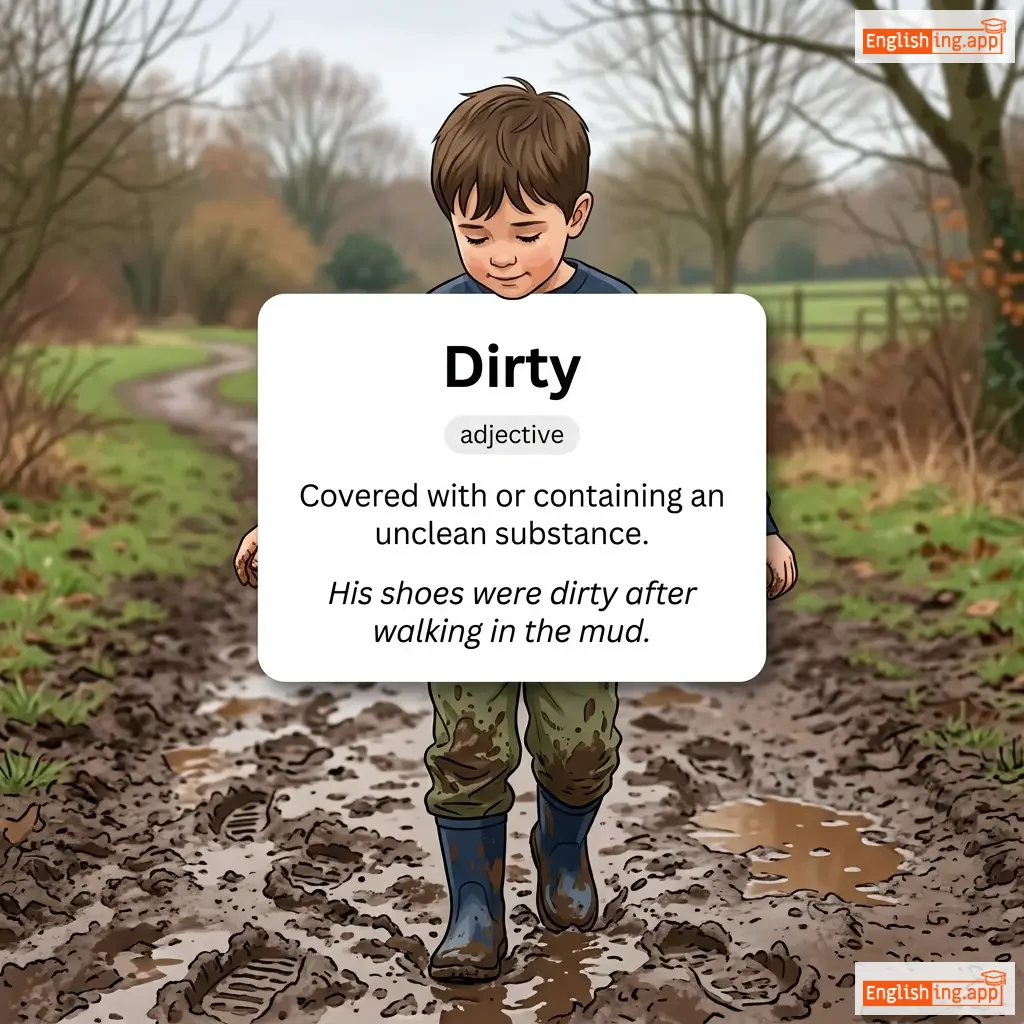
汚い; よごれた; 不快な; 道徳的に堕落した
kitanai; yogoreta; fukai na; doutoku-teki ni daraku shita
••••••
|
not clean; covered with dirt; unpleasant; morally corrupt
••••••
|
The kitchen was dirty after cooking. |
料理後、台所は汚かった。
Ryouri go, daidokoro wa kitanakatta.
••••••
|
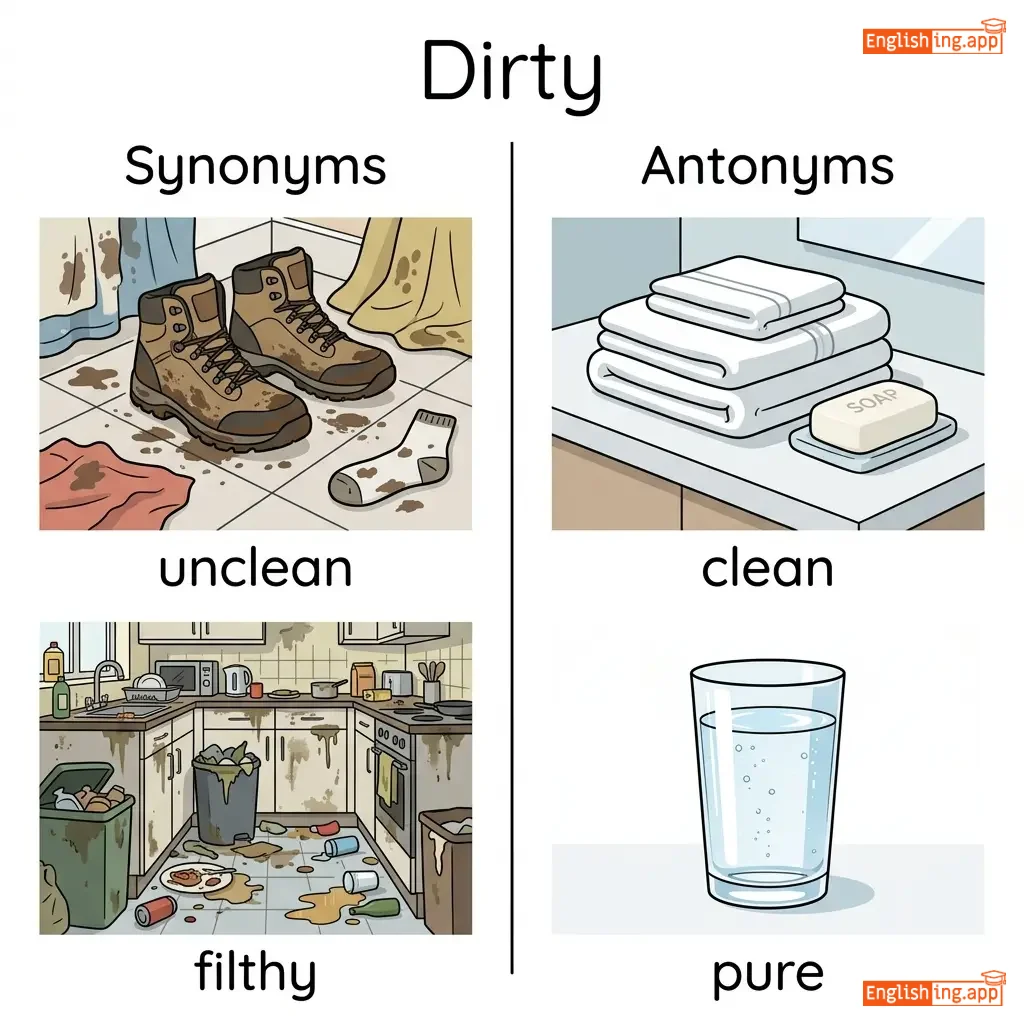
filthy, unclean, soiled, grimy
••••••
|
clean, pure, spotless, immaculate
••••••
|
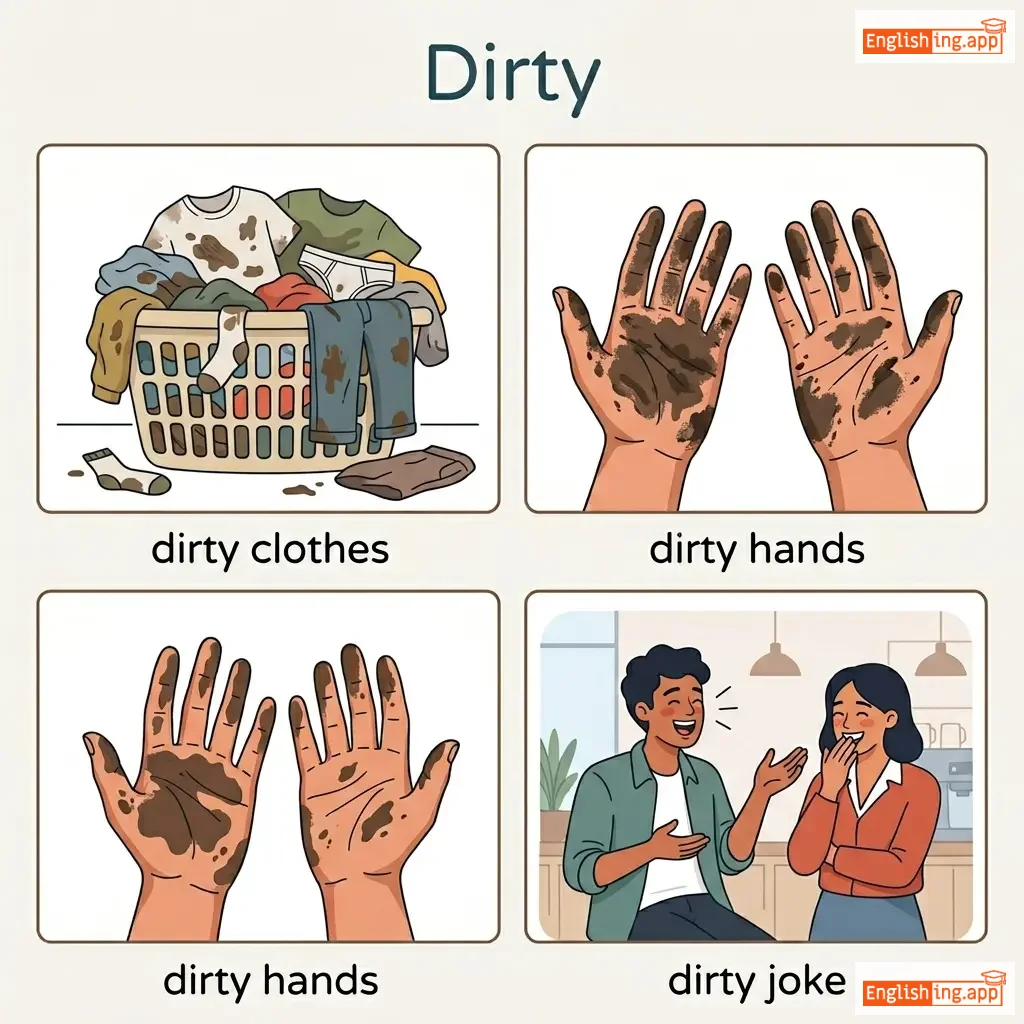
dirty clothes, dirty hands, dirty water
••••••
|
料理後に汚い台所。
••••••
|
|
#162
🏆
|
/dɪˈstɪŋɡwɪʃt/
adjective
(ディスティングウィシュト)
••••••
|
- •••••• |
優れた; 名誉のある; 有名な; 尊厳のある外見または態度
sugureta; meiyo no aru; yuumei na
••••••
|
notable; honored; famous; having a dignified appearance or manner
••••••
|
He is a distinguished professor at the university. |
彼は大学の優れた教授です。
Kare wa daigaku no sugureta kyoushadesu.
••••••
|
notable, eminent, renowned, celebrated, illustrious
••••••
|
ordinary, common, unremarkable, undistinguished
••••••
|
distinguished career, distinguished guest, distinguished service
••••••
|
日本での優れた教授は名誉を持つ
••••••
|
|
#163
🤒
|
/dɪˈziːzd/
adjective
(dɪˈziːzd)
••••••
|
- •••••• |
病気の; 患者の
byouki no; kanja no
••••••
|
affected by disease; suffering from illness; sick
••••••
|
The diseased tree had to be removed from the garden. |
病気の木は庭から取り除かれなければならなかった。
Byouki no ki wa niwa kara torinozokarenakereba naranakatta
••••••
|
sick, infected, unhealthy, contaminated
••••••
|
healthy, well, sound, robust
••••••
|
diseased plant, diseased animal, diseased organ
••••••
|
Diseased in English sounds like '病気の' (byouki no) in Japanese, so think of a sick tree.
••••••
|
|
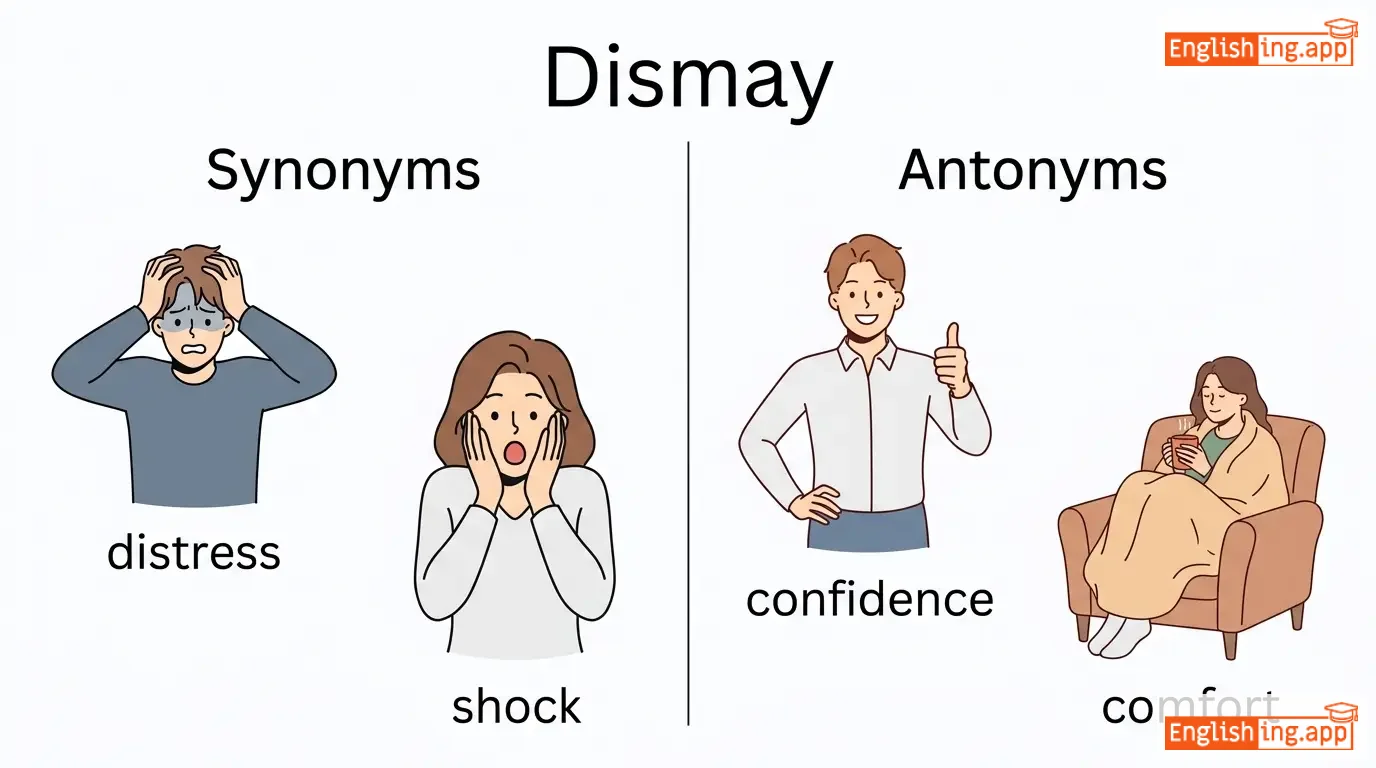
#164
😰
|
/dɪsˈmeɪ/
adjective
(ディスメイ)
••••••
|
|
恐れ; 驚き; 不安; 動揺
osore; odoroki; fuan; doyo
••••••
|
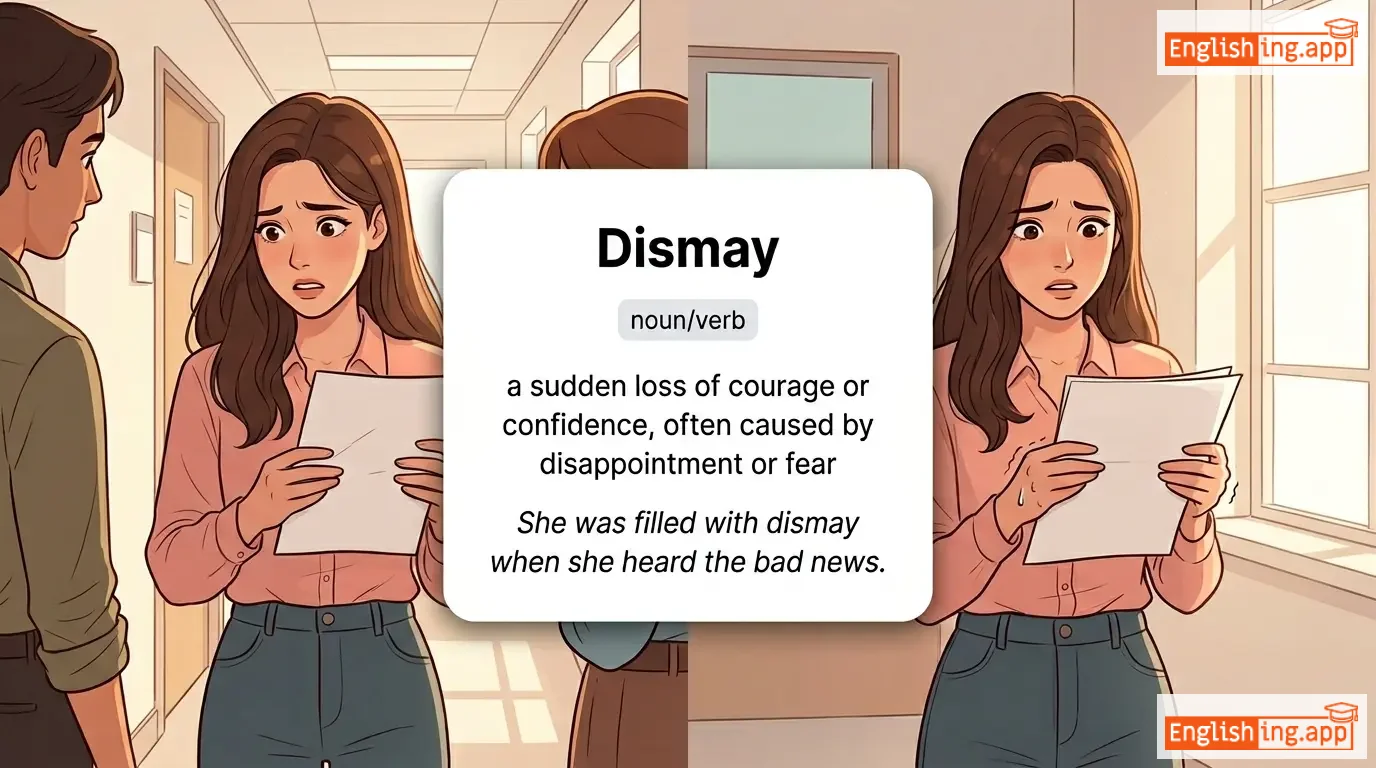
fear; distress; anxiety; alarm
••••••
|
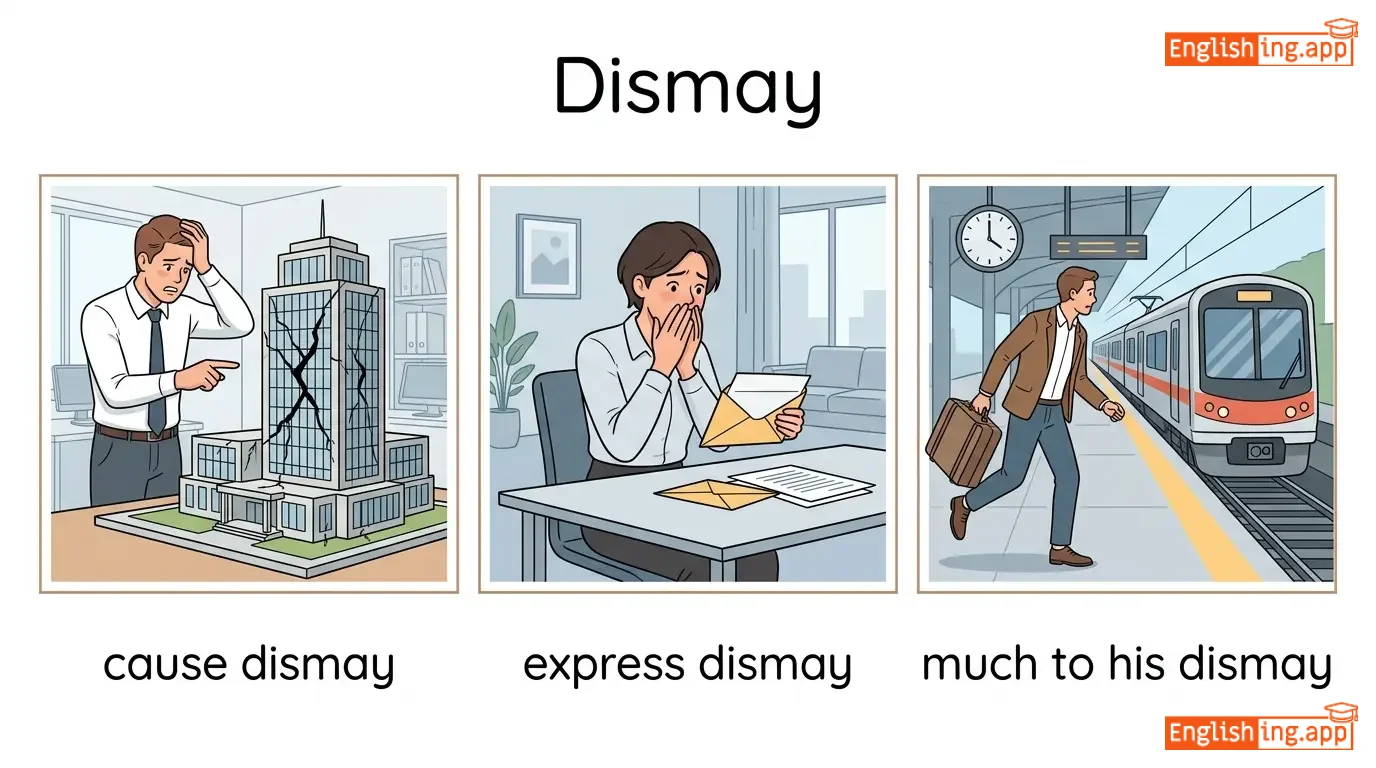
She felt dismay when she saw the test results. |
彼女はテスト結果を見て恐れを感じた。
Kanojo wa tesuto kekka wo mite osore wo kanjita.
••••••
|
alarm, distress, concern, worry
••••••
|
comfort, reassurance, relief, calm
••••••
|
feel dismay, express dismay, cause dismay
••••••
|
恐れ (osore) と不安 (fuan) が動揺 (doyo) を引き起こす。
••••••
|
|
#165
😞
|
/ˌdɪs.əˈpɔɪn.tɪd/
adjective
(ディスアポイントゥッド)
••••••
|
- •••••• |
がっかり
gakkari
••••••
|
sad because something has not happened or is not as good as expected
••••••
|
She was disappointed with her exam results. |
彼女は試験の結果にがっかりしていた。
kanojo wa shiken no kekka ni gakkari shite ita
••••••
|
upset, dismayed, dejected, disheartened
••••••
|
pleased, satisfied, delighted, encouraged
••••••
|
disappointed with, disappointed in, deeply disappointed
••••••
|
The word 'がっかり' in Japanese perfectly expresses the feeling of disappointment.
••••••
|
|
#166
✨
|
/dɪˈvaɪn/
adjective
(divine)
••••••
|
- •••••• |
神聖な; 天上的な; 神のような; 神または神格に関連する
shinseina; tenjoutekina; kami no youna; kami mata wa shinkaku ni kanren suru
••••••
|
heavenly; sacred; godlike; relating to God or a deity
••••••
|
The divine beauty of the sunset took their breath away. |
夕日の神聖な美しさは彼らの息を奪いました。
Yuuhi no shinsei na utsukushisa wa karera no iki o ubaimashita.
••••••
|
heavenly, sacred, holy, blessed, celestial
••••••
|
earthly, mortal, secular, profane
••••••
|
divine intervention, divine beauty, divine right
••••••
|
Divine beauty takes your breath away, like a sunset.
••••••
|
|
#167
😤
|
/ˌdɪsəˈbiːdiənt/
adjective
(ディソビーディアント)
••••••
|
- •••••• |
不従順な
fuzūjun na
••••••
|
refusing to obey rules or authority; rebellious
••••••
|
The disobedient child refused to follow the rules.
その不従順な子供はルールに従うことを拒否しました。
••••••
|
その不従順な子供はルールに従うことを拒否しました。
Sono fuzūjun na kodomo wa rūru ni shitagau koto o kyohi shimashita.
••••••
|
defiant, rebellious, unruly, insubordinate
••••••
|
obedient, compliant, submissive, dutiful
••••••
|
disobedient behavior, disobedient student, become disobedient
••••••
|
In Japanese, 'fuzūjun na' means 'disobedient' and is simple to recall.
••••••
|
|
#168
😞
|
/dɪsˈɡreɪsfəl/
adjective
(disuguresufuru)
••••••
|
- •••••• |
恥ずべき; 不名誉な; 非難に値する
hazubeki; fumyou na; hinan ni ataisuru
••••••
|
shameful; bringing dishonor; worthy of condemnation
••••••
|
His disgraceful behavior shocked everyone at the party. |
彼の恥ずべき行動はパーティーでみんなを驚かせました。
kare no hazubeki koudou wa paatii de minna wo odorokasemashita
••••••
|
shameful, dishonorable, scandalous, deplorable
••••••
|
honorable, respectable, admirable, decent
••••••
|
disgraceful conduct, disgraceful behavior, disgraceful act
••••••
|
Hazubeki behavior in a party shocks everyone.
••••••
|
|
#169
😔
|
/dɪsˈhɑːrtənd/
adjective
(ディスハーテンド)
••••••
|
- •••••• |
落胆した
rakutan shita
••••••
|
discouraged; feeling dejected; losing hope or confidence
••••••
|
She felt disheartened after failing the exam twice. |
彼女は試験に2回失敗した後、落胆していました。
Kanojo wa shiken ni 2-kai shippai shita ato, rakutan shite imashita.
••••••
|
discouraged, dejected, dispirited, downhearted
••••••
|
encouraged, inspired, motivated, hopeful
••••••
|
feel disheartened, become disheartened, look disheartened
••••••
|
In Japanese, '落胆した' directly translates to disheartened, emphasizing emotional defeat.
••••••
|
|
#170
🤔
|
/dɪˈspjuːtəbl/
adjective
(ディスピュータブル)
••••••
|
- •••••• |
議論の余地がある; 疑わしい
gironnoyochi ga aru; utagawashii
••••••
|
open to debate or argument; questionable
••••••
|
The facts in the case are disputable and need further investigation.
その事件の事実は議論の余地があり、さらなる調査が必要です。
••••••
|
その事件の事実は議論の余地があり、さらなる調査が必要です。
Sono jiken no jijitsu wa gironnoyochi ga ari, saranaru chousa ga hitsuyou desu.
••••••
|
debatable, questionable, arguable, controversial
••••••
|
undisputable, certain, clear, indisputable
••••••
|
disputable claim, disputable evidence, highly disputable
••••••
|
Disputable = 疑問が残る事実を調べる.
••••••
|
|
#171
💥
|
/dɪˈzæs.trəs/
adjective
(ディザストラス)
••••••
|
- •••••• |
壊滅的な
kaimetsuteki na
••••••
|
extremely bad or unsuccessful; causing great damage
••••••
|
The hurricane had disastrous effects on the city. |
ハリケーンは街に壊滅的な影響を与えました。
Harikēn wa machi ni kaimetsuteki na eikyō o ataemashita.
••••••
|
catastrophic, devastating, calamitous, ruinous
••••••
|
beneficial, fortunate, successful, favorable
••••••
|
disastrous consequences, disastrous effects, disastrous results
••••••
|
‘壊滅’ = ‘壊滅的な’
••••••
|
|
#172
🤔
|
/ˈdɒdʒi/
adjective
(ドジ)
••••••
|
- •••••• |
疑わしい; 質が悪い; 信頼できない; 危険なまたはリスクのある
utagawashii; shitsu ga warui; shinrai dekinai; kiken na matawa risuku no aru
••••••
|
suspicious; questionable; unreliable; risky or dangerous
••••••
|
That deal sounds dodgy to me. |
その取引は私には疑わしく聞こえます。
Sono torihiki wa watashi ni wa utagawashiku kikoemasu.
••••••
|
suspicious, questionable, unreliable, risky, dubious
••••••
|
trustworthy, reliable, honest, legitimate
••••••
|
dodgy deal, dodgy character, dodgy business
••••••
|
疑わしい取引、リスクあり
••••••
|
|
#173
🤥
|
/dɪsˈɒnəst/
adjective
(ディスオネスト)
••••••
|
- •••••• |
不正直な; 詐欺的な; ごまかしの
fuseijikana
••••••
|
not honest; fraudulent; deceitful
••••••
|
The dishonest salesman tried to sell them a broken car. |
その不正直な販売員は、壊れた車を売ろうとした。
sono fuseijikana hanbaiin wa, kowareta kuruma o urou to shita
••••••
|
deceitful, fraudulent, untruthful, corrupt
••••••
|
honest, truthful, trustworthy, sincere
••••••
|
dishonest person, dishonest practice, dishonest behavior
••••••
|
不正直な人は壊れた車を売ろうとする
••••••
|
|
#174
🌅
|
/ˈdɪstənt/
adjective
(ディスタント)
••••••
|
- •••••• |
遠い
tooi
••••••
|
far away in space or time; remote
••••••
|
We could see a distant mountain on the horizon. |
私たちは地平線に遠くの山を見ることができました。
Watashitachi wa chiheisen ni tooku no yama wo miru koto ga dekimashita.
••••••
|
far, remote, faraway, far-off
••••••
|
near, close, nearby, adjacent
••••••
|
distant past, distant future, distant relative
••••••
|
Tooi means distant, imagine a faraway mountain on the horizon.
••••••
|
|
#175
⚖️
|
/ˈdɪs.ə.plɪ.ner.i/
adjective
(ディスシプリナリー)
••••••
|
- •••••• |
懲戒的
chōkaiteki
••••••
|
relating to discipline; intended to correct behavior
••••••
|
The company took disciplinary action against the employee. |
会社は従業員に対して懲戒措置を取りました。
Kaisha wa jūgyōin ni taishite chōkai sochi o torimashita.
••••••
|
corrective, punitive, regulatory, reformative
••••••
|
permissive, lenient, indulgent, tolerant
••••••
|
disciplinary action, disciplinary measures, disciplinary committee
••••••
|
規律による行動の修正
••••••
|
|
#176
🗣️
|
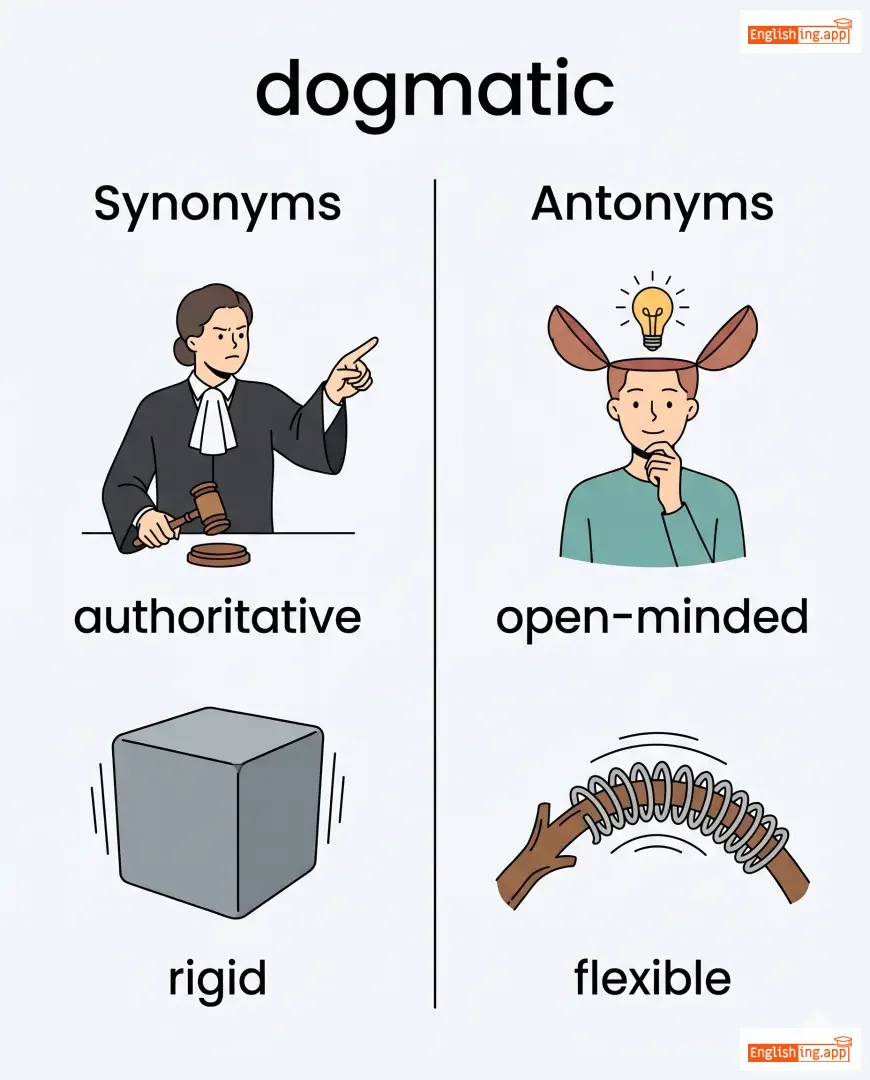
/dɒɡˈmætɪk/
adjective
(ドグマティック)
••••••
|
|
ドグマティックな; 自分の信念に固執した; 原則を絶対的な真実として押し付ける傾向がある
dogumatikkuna
••••••
|
opinionated; rigid in beliefs; inclined to lay down principles as incontrovertibly true
••••••
|
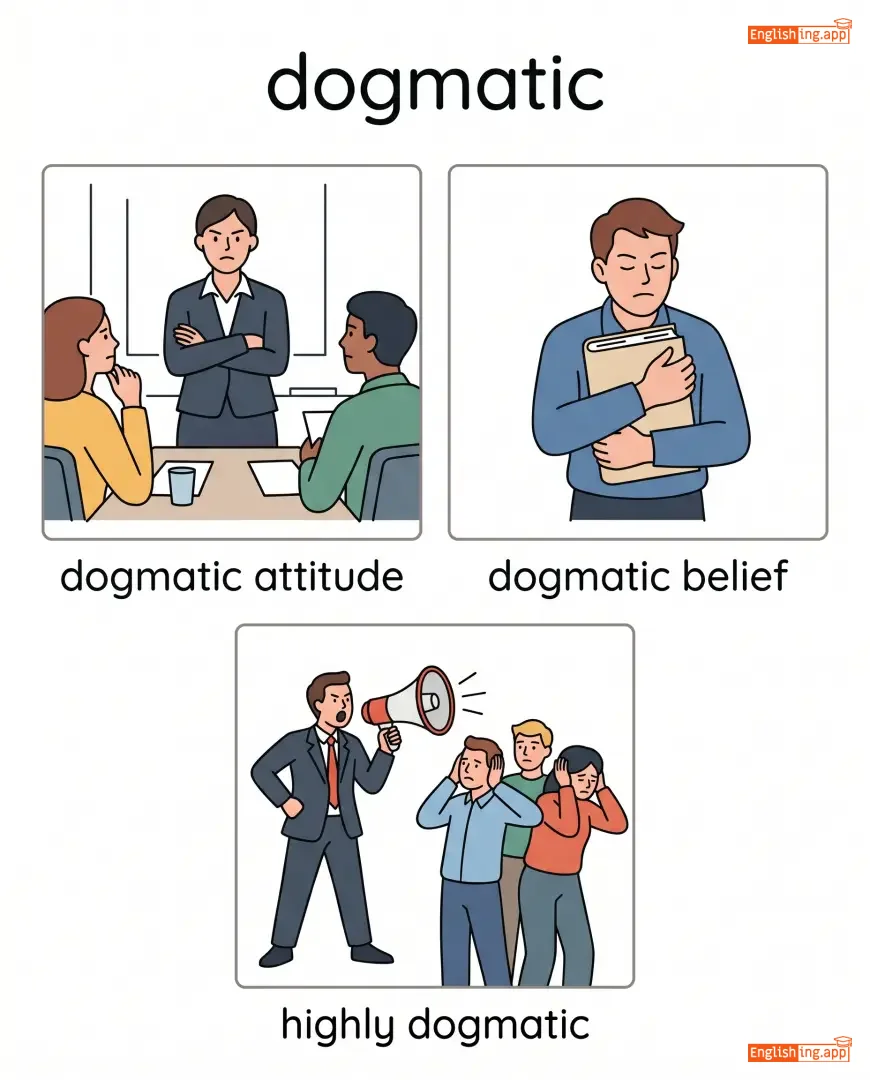
He has very dogmatic views about politics.
彼は政治について非常にドグマティックな見解を持っています。
••••••
|
彼は政治について非常にドグマティックな見解を持っています。
Kare wa seiji ni tsuite hijō ni dogumatikkuna kenka o motteimasu.
••••••
|
opinionated, doctrinaire, rigid, inflexible, authoritarian
••••••
|
flexible, open-minded, tolerant, receptive
••••••
|
dogmatic approach, dogmatic belief, dogmatic person
••••••
|
Dogmatic sounds like 'dog' + 'mat' – a dog who insists on staying on its mat, just like dogmatic beliefs stay firm.
••••••
|
|
#177
😰
|
/ˈdɪzməl/
adjective
(ディズマル)
••••••
|
- •••••• |
陰気な; 落ち込んだ; 悲しい
inki na; ochikonda; kanashii
••••••
|
gloomy; depressing; causing sadness or despair
••••••
|
The weather was dismal with heavy rain and dark clouds. |
天気は雨と暗い雲で陰気でした。
Tenki wa ame to kurai kumo de inki deshita.
••••••
|
gloomy, dreary, depressing, bleak
••••••
|
cheerful, bright, pleasant, uplifting
••••••
|
dismal weather, dismal performance, dismal prospects
••••••
|
陰気な = dismal
••••••
|
|
#178
😔
|
/dɪˈskʌr.ɪ.dʒɪŋ/
adjective
(ディスカレイジング)
••••••
|
- •••••• |
落胆させる
rakkansaseru
••••••
|
making someone feel less confident or enthusiastic about doing something
••••••
|
The coach's discouraging words affected the team's morale.
コーチの落胆させる言葉は、チームの士気に影響を与えました。
••••••
|
コーチの落胆させる言葉は、チームの士気に影響を与えました。
Kōchi no rakutansaseru kotoba wa, chīmu no shiki ni eikyō o ataemashita.
••••••
|
demoralizing, disheartening, dispiriting, demotivating
••••••
|
encouraging, inspiring, motivating, uplifting
••••••
|
discouraging news, discouraging words, discouraging results
••••••
|
Rakkansaseru sounds like ‘discouraging’ and means discouraging in Japanese.
••••••
|
|
#179
✨
|
/dɪˈstɪŋkt/
adjective
(ディスティンクト)
••••••
|
- •••••• |
独特の; ユニークな; 明確な; 認識できる
dokutoku no; yunikuna; meikakuna; ninshiki dekiru
••••••
|
separate and different; clear and recognizable; unique
••••••
|
Each painting has its own distinct style and character.
各々の絵画には、それぞれ独自のスタイルと特徴があります。
••••••
|
各々の絵画には、それぞれ独自のスタイルと特徴があります。
Oonou no kaiga ni wa, sorezore dokujino sutairu to tokuchou ga arimasu.
••••••
|
separate, different, unique, individual
••••••
|
similar, same, identical, indistinct
••••••
|
distinct difference, distinct possibility, distinct style
••••••
|
独特の = ユニークな特徴
••••••
|
|
#180
😢
|
/ˈdoʊlfəl/
adjective
(ドールフル)
••••••
|
- •••••• |
悲しげな; 哀れな;
kanashigena; aware na;
••••••
|
sorrowful; mournful; expressing grief or sadness
••••••
|
She gave him a doleful look when he left.
彼が去ったとき、彼女は悲しげな表情を彼に向けた。
••••••
|
彼が去ったとき、彼女は悲しげな表情を彼に向けた。
Kare ga satta toki, kanojo wa kanashigena hyōjō o kare ni muketa.
••••••
|
sorrowful, mournful, sad, melancholy, woeful
••••••
|
cheerful, happy, joyful, upbeat
••••••
|
doleful expression, doleful voice, doleful eyes
••••••
|
Japanese 'kanashimi' (sadness) + 'ful' (full) = sad
••••••
|
Vocabulary Quiz
Test your vocabulary by matching words with their translations or meanings.
Login to take the quiz
Comments (0)
Share your thoughts and join the discussion.
Join the discussion by logging in
Login to CommentNo comments yet
Be the first to share your thoughts!