

翻訳
過去
過去分詞
三人称単数
動名詞
意味
例文
例文の翻訳
同義語
対義語
コロケーション
ニーモニック
Swipe left or right, or use the buttons. Tap image to zoom.
例文の翻訳
単語
Lesson 44Lesson 44 - マスクトグル
|
絵文字
|
単語 | Images | 翻訳 | 意味 | 例文 | 例文の翻訳 | 同義語 | 対義語 | コロケーション | ニーモニック |
|---|---|---|---|---|---|---|---|---|---|---|
|
#861
🏆
|
/səkˈsɛsfəl/
adjective
(sʌkˈsɛsfʊl)
••••••
|
- •••••• |
成功した; 裕福な; 勝者の
seikou shita; yūfukuna; shōsha no
••••••
|
having achieved a desired aim or result; prosperous
••••••
|
She was successful in her career as a doctor.
彼女は医師としてのキャリアで成功しました。
••••••
|
彼女は医師としてのキャリアで成功しました。
Kanojo wa ishi toshite no kyaria de seikou shimashita.
••••••
|
triumphant, victorious, prosperous, accomplished
••••••
|
unsuccessful, failed, defeated
••••••
|
successful business, successful career, successful attempt
••••••
|
Japanese '成功した' sounds like 'successful' and means prosperous or victorious.
••••••
|
|
#862
🗿
|
/stɪf/
adjective
(スティフ)
••••••
|
- •••••• |
硬直した; 固い; 堅固な
kōchoku shita, katai, kengona
••••••
|
not easily bent or changed; rigid; firm
••••••
|
The old wooden board was too stiff to bend. |
古い木の板は曲がりにくく、硬すぎた。
Furui ki no ita wa magarinikuku, katasugita.
••••••
|
rigid, inflexible, hard, firm
••••••
|
flexible, soft, pliable, bendable
••••••
|
stiff neck, stiff competition, stiff penalty
••••••
|
日本の家具は硬直していて、曲がりません。
••••••
|
|
#863
🧠
|
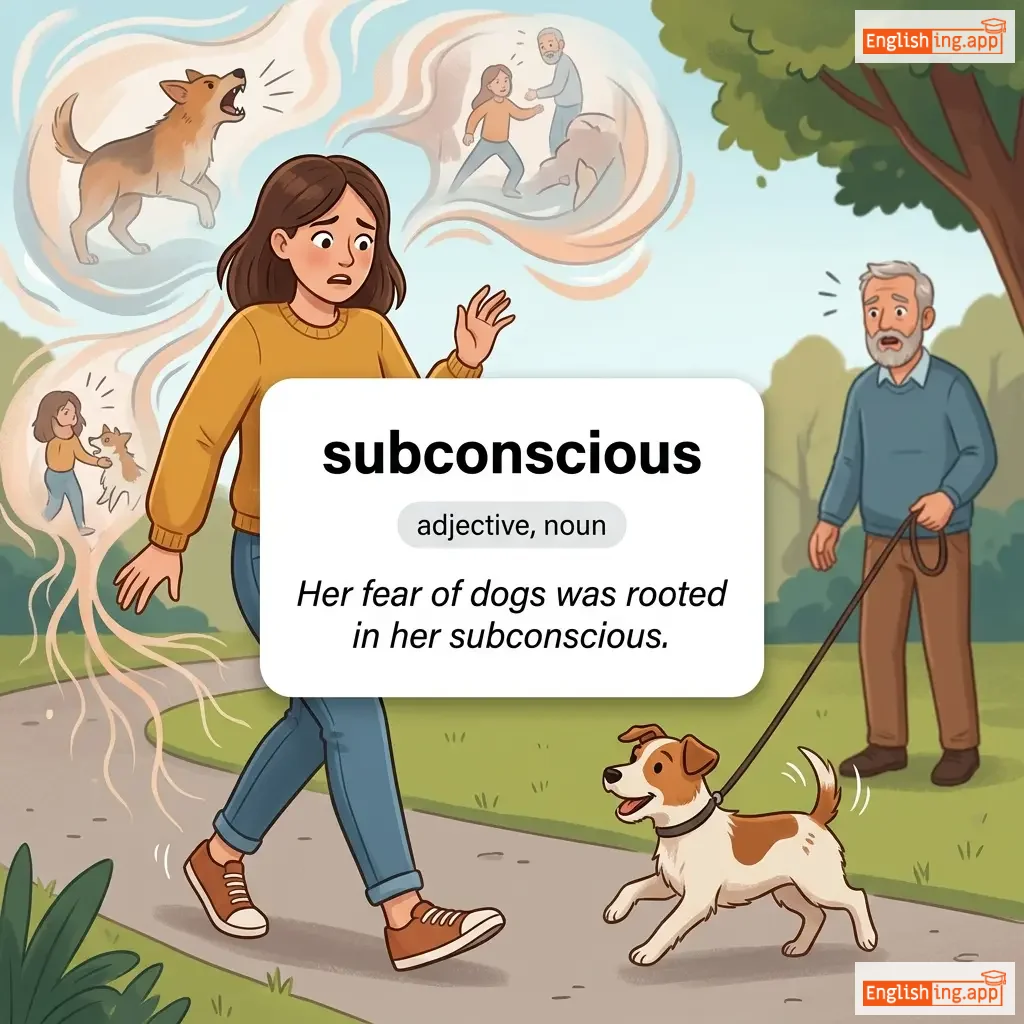
/ˌsʌbˈkɒn.ʃəs/
adjective
(サブコンシャス)
••••••
|
|
潜在意識
sentai ishiki
••••••
|
relating to the part of the mind that is not fully conscious but influences thoughts and behavior
••••••
|
His subconscious fears affected his decision-making process. |
彼の潜在意識の恐怖は、彼の意思決定過程に影響を与えた。
Kare no sentai ishiki no kyōfu wa, kare no ishidō kōdō ni eikyō o ataeta.
••••••
|
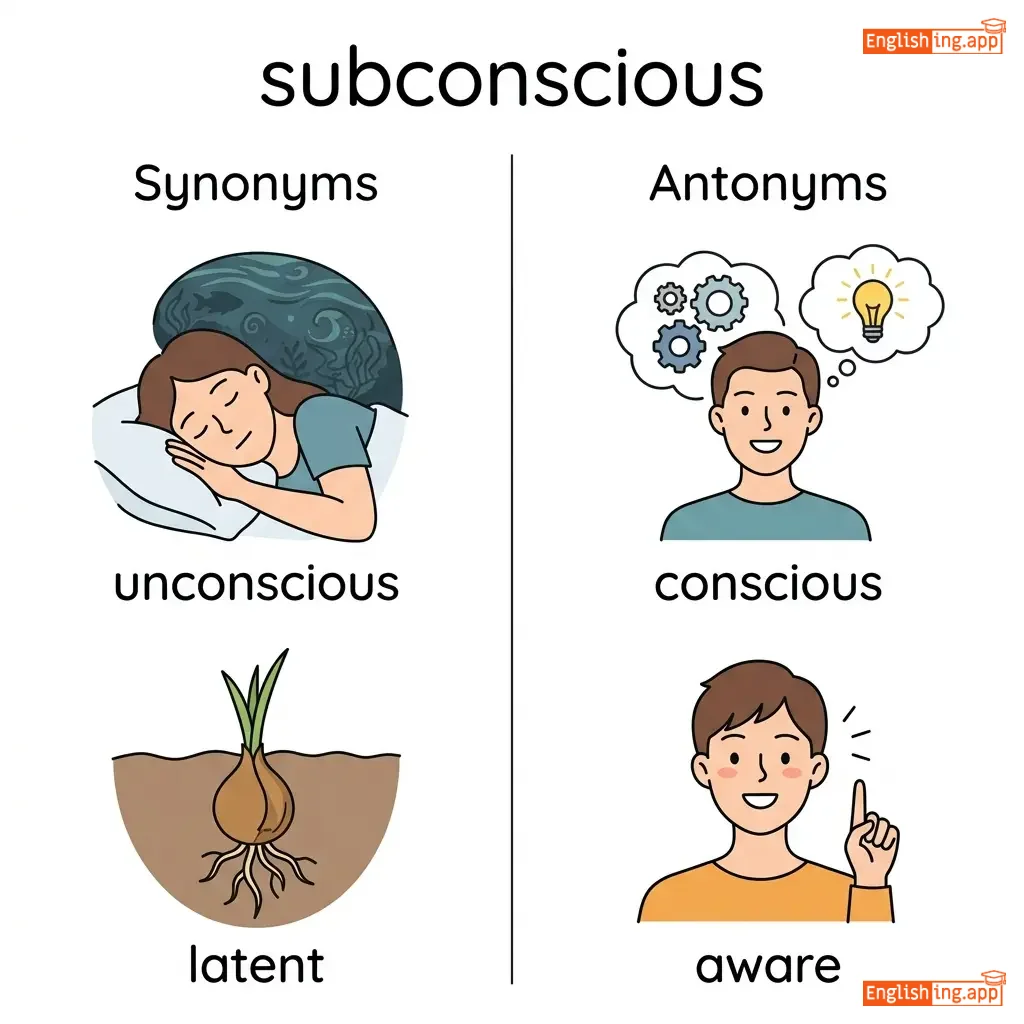
unconscious, subliminal, automatic, instinctive
••••••
|
conscious, aware, deliberate, intentional
••••••
|
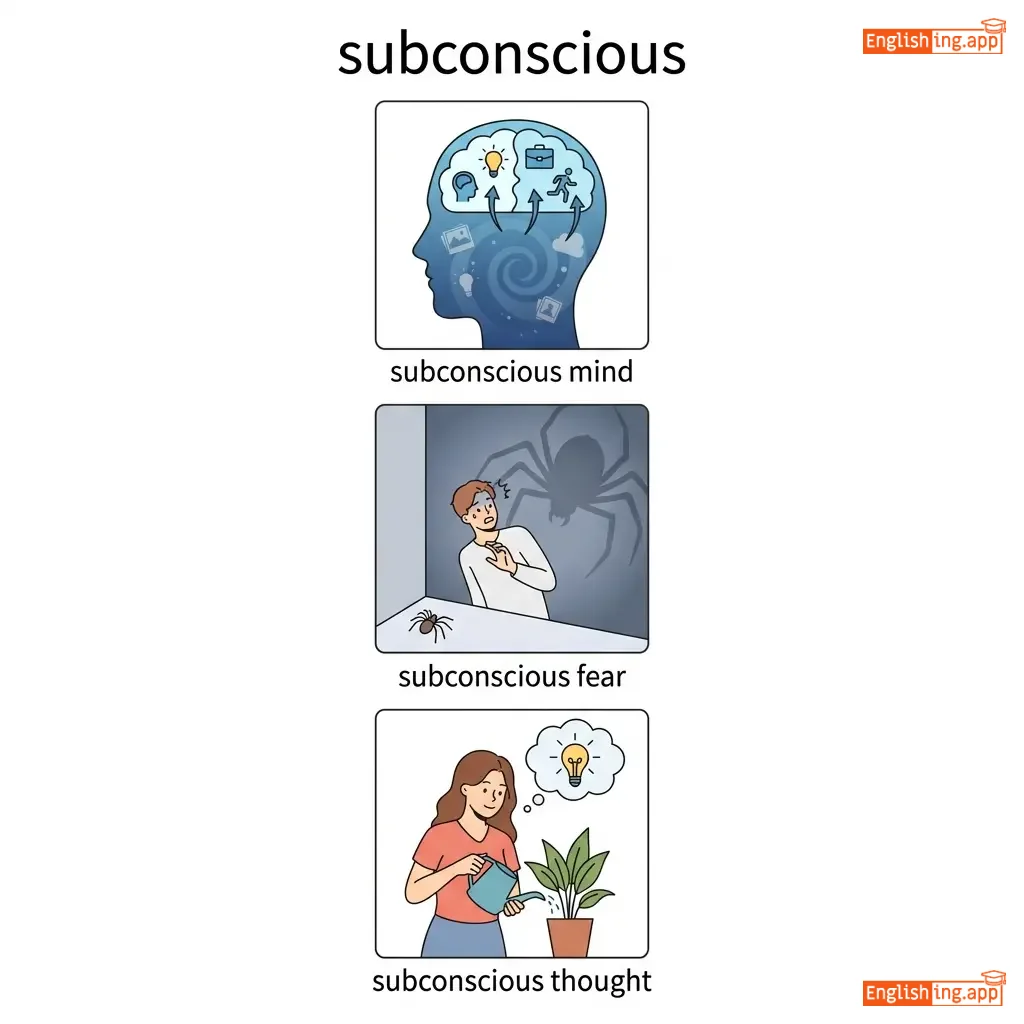
subconscious mind, subconscious thoughts, subconscious level, subconscious fears
••••••
|
潜在意識 is like a hidden force shaping your choices.
••••••
|
|
#864
📚
|
/ˈstuː.di.əs/
adjective
(スタディアス)
••••••
|
- •••••• |
勉強熱心; 学問に没頭
benkyou nesshin; gakumon ni bottou
••••••
|
characterized by diligent study; devoted to learning
••••••
|
She is a studious student who spends hours in the library. |
彼女は図書館で何時間も過ごす勉強熱心な学生です。
Kanojo wa toshokan de nanjikan mo sugosu benkyou nesshin na gakusei desu.
••••••
|
diligent, scholarly, academic, industrious
••••••
|
lazy, careless, inattentive, negligent
••••••
|
studious nature, studious habits, studious approach
••••••
|
Studious – Study like a student who is truly serious!
••••••
|
|
#865
🔢
|
/səkˈsɛsɪv/
adjective
(suksesiv)
••••••
|
- •••••• |
連続的な; 連続した
renzokuteki na; renzoku shita
••••••
|
following one after the other in order; consecutive
••••••
|
The team won three successive matches. |
チームは三回連続して試合に勝ちました。
Chīmu wa san-kai renzoku shite shiai ni kachimashita.
••••••
|
consecutive, sequential, continuous, following
••••••
|
intermittent, interrupted, discontinuous
••••••
|
successive days, successive generations, successive victories
••••••
|
Successive is like consecutive events happening one after another, such as consecutive wins!
••••••
|
|
#866
📏
|
/streɪt/
adjective
(ストレート)
••••••
|
- •••••• |
まっすぐな; 直線的な; 正直な;
massugu na, chokusenteki na, shoujiki na
••••••
|
extending or moving uniformly in one direction; not curved or bent; honest
••••••
|
Draw a straight line from point A to point B. |
ポイントAからポイントBまでまっすぐな線を引いてください。
Pointo A kara Pointo B made massugu na sen o hiite kudasai.
••••••
|
direct, linear, upright, honest
••••••
|
curved, bent, crooked, dishonest
••••••
|
straight line, straight hair, straight answer
••••••
|
In Japanese, 'まっすぐな' (massugu na) means straight, like a direct, honest path.
••••••
|
|
#867
🙇
|
/səbˈmɪs.ɪv/
adjective
(サブミッシブ)
••••••
|
- •••••• |
従順; 服従的; 謙虚な
juujun; fukujuuteki; kenkyona
••••••
|
ready to obey others; yielding to authority; humble and compliant
••••••
|
She became submissive after years of harsh treatment. |
厳しい扱いの後、彼女は従順になった。
Kibishii atsukai no ato, kanojo wa juujun ni natta
••••••
|
obedient, compliant, docile, meek, passive
••••••
|
dominant, assertive, defiant, rebellious
••••••
|
submissive behavior, submissive attitude, submissive wife, submissive nature
••••••
|
従順さは他者への服従を表す。
••••••
|
|
#868
😤
|
/ˈstʌf.i/
adjective
(stafi)
••••••
|
- •••••• |
新鮮な空気が不足している; 通気性が悪い; 形式的で保守的な態度
shinsen na kūki ga fusokushiteiru; tsūki-sei ga warui; keishikiteki de hoshuteki na taido
••••••
|
lacking fresh air; poorly ventilated; formal and conservative in attitude
••••••
|
The room was stuffy and needed fresh air. |
部屋はこもっていて、新鮮な空気が必要でした。
heya wa komotte ite, shinsen na kūki ga hitsuyō deshita.
••••••
|
airless, stifling, suffocating, oppressive
••••••
|
airy, fresh, ventilated, breezy
••••••
|
stuffy room, stuffy atmosphere, stuffy nose
••••••
|
新鮮な空気がないと、形式的で保守的な感じがします。
••••••
|
|
#869
🌳
|
/ˈstʌm.pi/
adjective
(スタンピ)
••••••
|
- •••••• |
短くて太い
mijikakute futoi
••••••
|
short and thick; having a short, thick appearance
••••••
|
The stumpy little dog wagged its tail enthusiastically. |
その短くて太い小さな犬は、興奮して尾を振っていました。
Sono mijikakute futoi chiisana inu wa, kōfun shite o o futte imashita.
••••••
|
short, squat, stocky, thick
••••••
|
tall, slender, elongated, lanky
••••••
|
stumpy fingers, stumpy legs, stumpy tail
••••••
|
短くて太い犬が「スタンピ」と呼ばれた!
••••••
|
|
#870
➡️
|
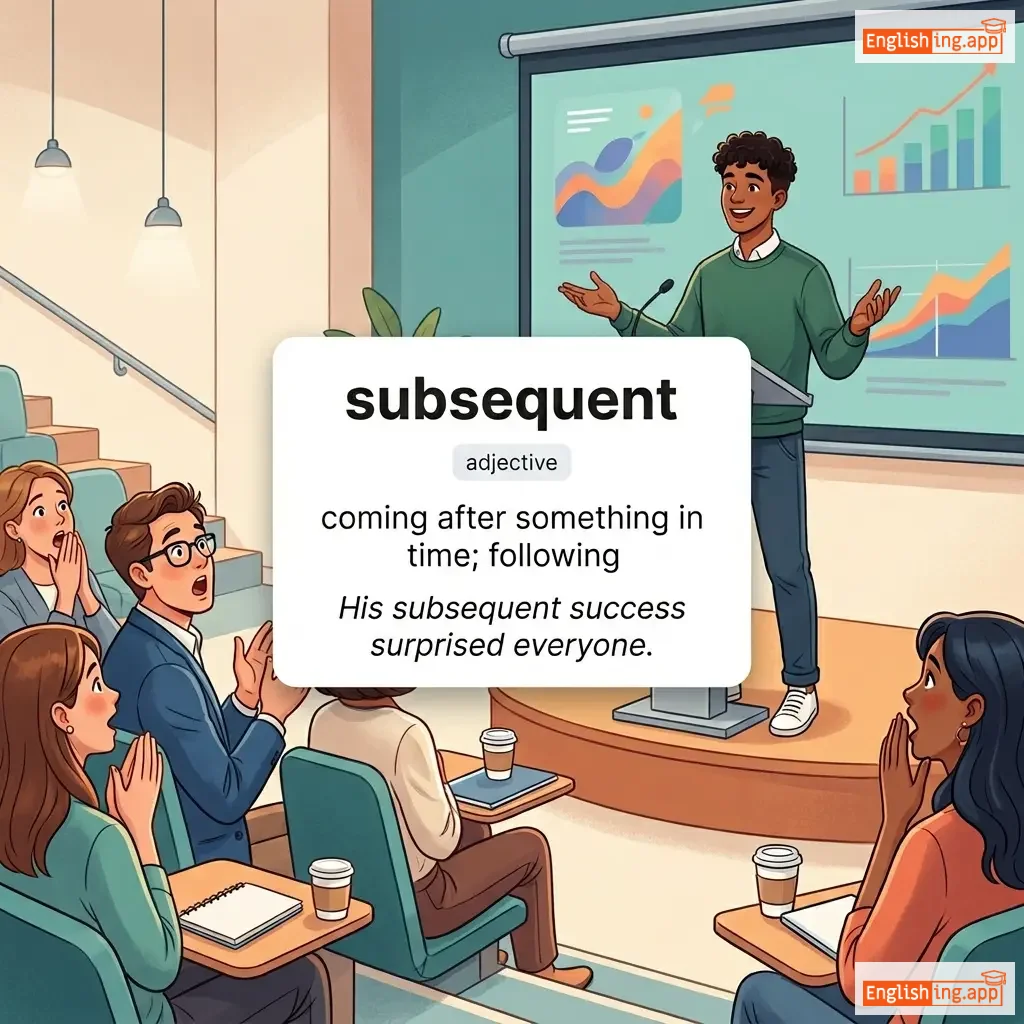
/ˈsʌb.sɪ.kwənt/
adjective
(サブスィクエント)
••••••
|
|
その後の; 続く
sono ato no; tsuzuku
••••••
|
coming after something in time; following in order or succession
••••••
|
The subsequent events proved his theory correct. |
その後の出来事が彼の理論が正しいことを証明した。
Sono ato no dekigoto ga kare no riron ga tadashii koto o shōmei shita
••••••
|
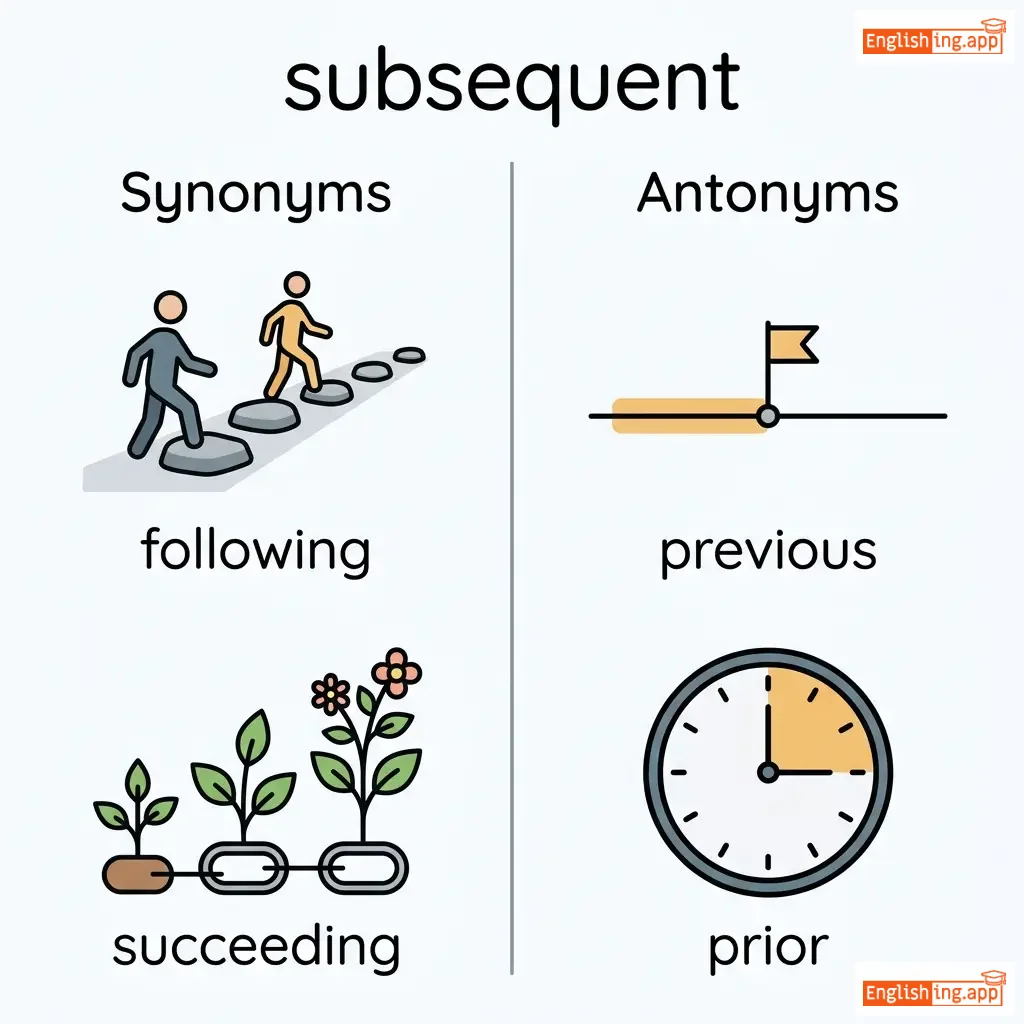
following, later, next, succeeding, ensuing
••••••
|
previous, prior, preceding, earlier
••••••
|
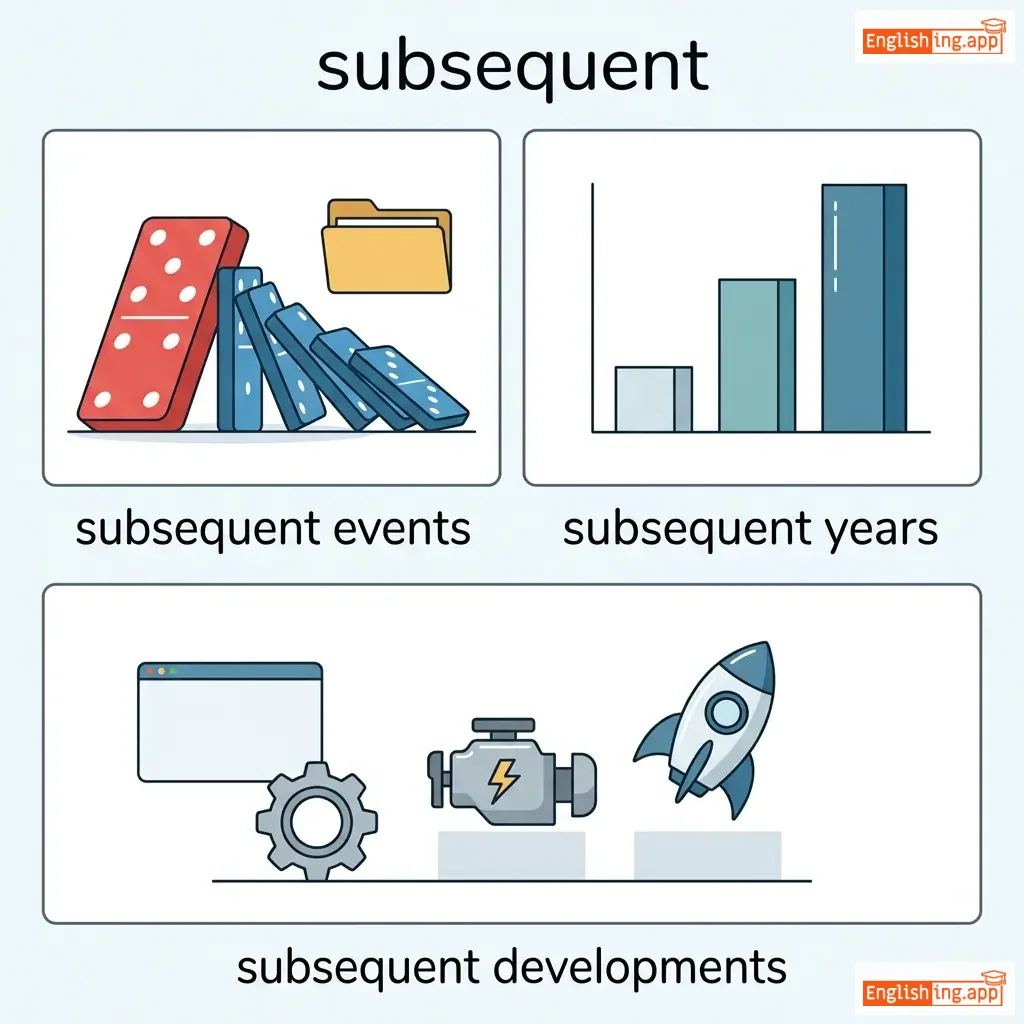
subsequent events, subsequent years, subsequent developments, subsequent analysis
••••••
|
Japanese 'その後の' connects to things coming after, much like 'subsequent'.
••••••
|
|
#871
⭐
|
/ˈstɑː.ri/
adjective
(スタリー)
••••••
|
- •••••• |
星のような; 輝く;
sutarii
••••••
|
full of stars; shining like stars; relating to stars
••••••
|
We enjoyed the starry night sky while camping in the mountains. |
私たちは山でキャンプしながら、星空を楽しみました。
watashitachi wa yama de kyanpu shinagara, hoshizora wo tanoshimimashita.
••••••
|
stellar, celestial, sparkling, twinkling
••••••
|
starless, cloudy, dark, dim
••••••
|
starry night, starry sky, starry-eyed
••••••
|
Starry night, 星のような輝き
••••••
|
|
#872
🎯
|
/ˌstreɪt ˈfɔːr.wərd/
adjective
(suto-ree-to fōwādo)
••••••
|
- •••••• |
率直で明確; 複雑ではない; 理解しやすい
Sotchoku de meikaku; fukuzatsu de wa nai; rikai shiyasui
••••••
|
honest and open; not complicated; easy to understand
••••••
|
His explanation was very straightforward and easy to follow.
Kare no setsumei wa totemo straightforward de, kantan ni tsuite ikemashita.
••••••
|
彼の説明はとても率直で、簡単に理解できました。
Kare no setsumei wa totemo sōtokude, kantan ni rikai dekimashita.
••••••
|
simple, direct, honest, clear
••••••
|
complicated, dishonest, confusing, indirect
••••••
|
straightforward approach, straightforward answer, straightforward person
••••••
|
Straightforward は、明確にするための簡単な方法!
••••••
|
|
#873
🤦
|
/ˈstuː.pɪd/
adjective
(バカ)
••••••
|
- •••••• |
愚かな; 馬鹿な; ばかげた
oroka na, baka na, bakageta
••••••
|
lacking intelligence or common sense; foolish
••••••
|
It was stupid of me to forget my umbrella on a rainy day. |
雨の日に傘を忘れるのは愚かだった。
Ame no hi ni kasa o wasureru no wa oroka datta.
••••••
|
foolish, silly, dumb, ignorant
••••••
|
intelligent, smart, clever, wise
••••••
|
stupid mistake, stupid idea, stupid question
••••••
|
バカなことをしたときには、すぐに思い出せるように覚えておこう。
••••••
|
|
#874
👨🏫
|
/strɪkt/
adjective
(ストリクト)
••••••
|
- •••••• |
厳格; 規則に厳密に従うことを求める
genkaku; kisoku ni genmitsu ni shitagau koto o motomeru
••••••
|
demanding exact conformity to rules; severe; rigorous
••••••
|
The teacher is very strict about homework deadlines. |
教師は宿題の締め切りに非常に厳格です。
Kyōshi wa shukudai no shimekiri ni hijō ni genkaku desu.
••••••
|
severe, rigorous, stern, demanding
••••••
|
lenient, relaxed, permissive, flexible
••••••
|
strict rules, strict teacher, strict discipline
••••••
|
厳格は規則に従うことを意味します。
••••••
|
|
#875
🏢
|
/səbˈsɪd.i.ər.i/
adjective
(サブシディアリ)
••••••
|
- •••••• |
子会社の; 二次的な; 子会社に関連する
kogaisya no; nijiteki na; kogaisya ni kanren suru
••••••
|
less important than the main thing; secondary; of or relating to a subsidiary company
••••••
|
The subsidiary company handles all overseas operations. |
子会社はすべての海外業務を管理しています。
Kogaisya wa subete no kaigai gyōmu o kanri shiteimasu.
••••••
|
secondary, auxiliary, subordinate, ancillary, supporting
••••••
|
primary, main, principal, chief, major
••••••
|
subsidiary company, subsidiary role, subsidiary income, subsidiary rights
••••••
|
子会社は重要なサポート役です
••••••
|
|
#876
🛡️
|
/ˈsted.fæst/
adjective
(ステッドファスト)
••••••
|
- •••••• |
不動の; 固い; 揺るがない
fudō no; katai; yuruganai
••••••
|
firm in belief, determination, or adherence; unwavering
••••••
|
She remained steadfast in her commitment to helping the poor. |
彼女は貧しい人々を助けるという自分の誓いに不動であり続けました。
Kanojo wa mazushī hitobito o tasukeru to iu jibun no chikau ni fudō de aritsuzukemashita.
••••••
|
unwavering, resolute, loyal, constant
••••••
|
wavering, fickle, unreliable, changeable
••••••
|
steadfast loyalty, steadfast commitment, steadfast support
••••••
|
不動の決意は鉄のように固い
••••••
|
|
#877
💅
|
/ˈstaɪ.lɪʃ/
adjective
(sutairisshu)
••••••
|
- •••••• |
流行に敏感で魅力的な; 外見に優雅さや味を持つ
ryūkō ni binkan de miryokuteki na; gaiken ni yūgasa ya aji o motsu
••••••
|
fashionable and attractive; having elegance or taste in appearance
••••••
|
She wore a stylish dress to the party.
彼女はパーティーでスタイリッシュなドレスを着ていた。
••••••
|
彼女はパーティーでスタイリッシュなドレスを着ていた。
Kanojo wa pāti de sutairisshu na doresu o kite ita.
••••••
|
fashionable, trendy, chic, elegant
••••••
|
unfashionable, outdated, frumpy, unstylish
••••••
|
stylish clothes, stylish appearance, stylish design
••••••
|
「スタイリッシュ」な服を着ると、あなたはもっと魅力的になる。
••••••
|
|
#878
🐴
|
/ˈstʌb.ərn/
adjective
(スターバン)
••••••
|
- •••••• |
頑固な; しつこい; 強情な
ganko na, shitsukoi, gojin na
••••••
|
refusing to change opinion or course of action; persistent; obstinate
••••••
|
The stubborn child refused to eat his vegetables.
その頑固な子供は野菜を食べるのを拒否した。
••••••
|
その頑固な子供は野菜を食べるのを拒否した。
Sono ganko na kodomo wa yasai o taberu no o kyohi shita.
••••••
|
obstinate, headstrong, persistent, inflexible
••••••
|
flexible, compliant, agreeable, cooperative
••••••
|
stubborn person, stubborn stain, stubborn attitude
••••••
|
In Japanese, '頑固な' (ganko na) refers to someone who refuses to change, like a child who refuses to eat vegetables.
••••••
|
|
#879
📏
|
/səbˈstæn.ʃəl/
adjective
(サブスタンシャル)
••••••
|
- •••••• |
実質的; かなりの; 重要な
jisshitsuteki; kanari no; jūyōna
••••••
|
large in size, amount, or importance; considerable; significant
••••••
|
There was a substantial increase in sales this quarter. |
この四半期に売上は実質的に増加しました。
Kono shihanki ni uriage wa jisshitsuteki ni zōka shimashita.
••••••
|
considerable, significant, large, major, sizeable
••••••
|
insignificant, minor, small, negligible, trivial
••••••
|
substantial amount, substantial increase, substantial evidence, substantial progress
••••••
|
日本語で'実質的'と言うと、それは大きな意味や影響を持つことを意味します。
••••••
|
|
#880
😠
|
/stɜːrn/
adjective
(スターン)
••••••
|
- •••••• |
厳格な; 厳しい
sutān
••••••
|
serious and demanding exact conformity to rules; strict and severe
••••••
|
The teacher gave the students a stern warning about cheating. |
教師は学生に対してカンニングについて厳しい警告を与えました。
Kyōshi wa gakusei ni taishite kanningu ni tsuite genkutsu keikoku o ataemashita.
••••••
|
strict, severe, harsh, austere
••••••
|
lenient, gentle, mild, soft
••••••
|
stern warning, stern look, stern discipline
••••••
|
Sternのように、ルールに厳格で譲れない。
••••••
|
Vocabulary Quiz
Test your vocabulary by matching words with their translations or meanings.
Login to take the quiz
Comments (0)
Share your thoughts and join the discussion.
Join the discussion by logging in
Login to CommentNo comments yet
Be the first to share your thoughts!