

翻訳
過去
過去分詞
三人称単数
動名詞
意味
例文
例文の翻訳
同義語
対義語
コロケーション
ニーモニック
Swipe left or right, or use the buttons. Tap image to zoom.
例文の翻訳
単語
Lesson 12Lesson 12 - マスクトグル
|
絵文字
|
単語 | Images | 翻訳 | 意味 | 例文 | 例文の翻訳 | 同義語 | 対義語 | コロケーション | ニーモニック |
|---|---|---|---|---|---|---|---|---|---|---|
|
#221
😊
|
/ɪnˈdʒɔɪ.ə.bəl/
adjective
(エンジョイアブル)
••••••
|
- •••••• |
楽しい; 快適な
tanoshī; kaiteki na
••••••
|
pleasant; giving satisfaction or pleasure
••••••
|
The movie was very enjoyable and made everyone laugh. |
その映画はとても楽しくて、皆を笑わせました。
Sono eiga wa totemo tanoshikute, mina o warawase mashita.
••••••
|
pleasant, delightful, amusing, entertaining
••••••
|
unpleasant, boring, tedious, disagreeable
••••••
|
enjoyable experience, enjoyable evening, enjoyable activity
••••••
|
Imagine a 'tanoshī' movie that brings joy to everyone.
••••••
|
|
#222
♾️
|
/ˈevər ˈlæstɪŋ/
adjective
(エヴァーラスティング)
••••••
|
- •••••• |
永遠の; 永続的な;
eien no; eizokuteki na
••••••
|
eternal; permanent; enduring forever
••••••
|
Their love is ever-lasting and will never fade. |
彼らの愛は永遠で、決して色あせることはありません。
karera no ai wa eien de, kesshite iroaseru koto wa arimasen.
••••••
|
eternal, permanent, enduring, perpetual
••••••
|
temporary, fleeting, brief, short-lived
••••••
|
ever-lasting love, ever-lasting peace, ever-lasting memory
••••••
|
Ever-lasting love は永遠で、永遠に続く愛。
••••••
|
|
#223
😍
|
/ˈen.vi.ə.bəl/
adjective
(en-vi-a-bu-ru)
••••••
|
- •••••• |
うらやましい
urayamashii
••••••
|
causing envy; desirable
••••••
|
Her success was enviable among her peers.
彼女の成功は仲間の間でうらやましかった。
••••••
|
彼女の成功は仲間の間でうらやましかった。
Kanojo no seikou wa nakama no aida de urayamashikatta.
••••••
|
desirable, coveted, admirable
••••••
|
undesirable, pitiful, unenviable
••••••
|
enviable position, enviable reputation, enviable lifestyle
••••••
|
うらやましい + 望ましい = うらやましい
••••••
|
|
#224
⚖️
|
/ɪˈkwɪv.ə.lənt/
adjective
(エクイヴァレント)
••••••
|
- •••••• |
等価; 同等
tōka; dōtō
••••••
|
equal in value, amount, function, or meaning; having the same effect or result
••••••
|
This amount is equivalent to ten dollars. |
この金額は10ドルに相当します。
Kono kingaku wa 10 doru ni sōtō shimasu
••••••
|
equal, same, comparable, identical
••••••
|
different, unequal, distinct
••••••
|
equivalent value, equivalent amount, equivalent to
••••••
|
日本語: 'エクイヴァレント'は'同じ'を意味します。数字が等しいように、ものが等しいことをイメージしましょう。
••••••
|
|
#225
💡
|
/ɪnˈlaɪ.tənd/
adjective
(インライトンド)
••••••
|
- •••••• |
啓蒙された; 精神的に目覚めた; 賢い;
keimou sareta; seishinteki ni mezameta; kashikoi
••••••
|
having or showing a rational, modern outlook; having spiritual knowledge or understanding
••••••
|
The enlightened teacher shared wisdom with all her students.
啓蒙された教師は、すべての生徒と知恵を共有しました。
••••••
|
啓蒙された教師は、すべての生徒と知恵を共有しました。
Keimou sareta kyoushi wa, subete no seito to chie wo kyoyu shimashita.
••••••
|
wise, knowledgeable, informed, educated
••••••
|
ignorant, unaware, uninformed, confused
••••••
|
enlightened person, enlightened thinking, enlightened approach
••••••
|
In Japanese, '啓蒙された' means enlightened, combining wisdom and awakening.
••••••
|
|
#226
🔄
|
/ˈevri/
adjective
(エブリ)
••••••
|
- •••••• |
すべての; どれも; 例外なし
subete no; doremo; reigai nashi
••••••
|
each one; all; without exception
••••••
|
Every student must complete their homework. |
すべての学生は宿題を終わらせなければなりません。
subete no gakusei wa shukudai o owarasenakereba narimasen.
••••••
|
each, all, any, whole
••••••
|
no, none, some, few
••••••
|
every day, every time, every person, every single
••••••
|
Every in Japanese is 'subete no', and 'doremo' for all.
••••••
|
|
#227
🙏
|
/ɪˈstiːmd/
adjective
(エスティームド)
••••••
|
- •••••• |
尊敬される
sonkei sareru
••••••
|
respected and admired; held in high regard
••••••
|
He is an esteemed professor at the university. |
彼は大学で尊敬されている教授です。
Kare wa daigaku de sonkei sarete iru kyōju desu.
••••••
|
respected, honored, revered, admired
••••••
|
despised, dishonored, disrespected
••••••
|
esteemed colleague, highly esteemed, esteemed member
••••••
|
この'尊敬される'教授は大学で高く評価されています。
••••••
|
|
#228
😒
|
/ˈen.vi.əs/
adjective
(エンヴィアス)
••••••
|
- •••••• |
嫉妬深い; ねたむ
shittobukai; netamu
••••••
|
feeling or showing envy; jealous
••••••
|
She felt envious of her friend's new car.
彼女は友達の新しい車に嫉妬していた。
••••••
|
彼女は友達の新しい車に嫉妬していた。
Kanojo wa tomodachi no atarashī kuruma ni shitto shite ita.
••••••
|
jealous, resentful, covetous
••••••
|
generous, content, satisfied
••••••
|
envious look, envious feelings, envious of someone
••••••
|
‘Shitto’ sounds like ‘envy’, meaning jealousy.
••••••
|
|
#229
⚖️
|
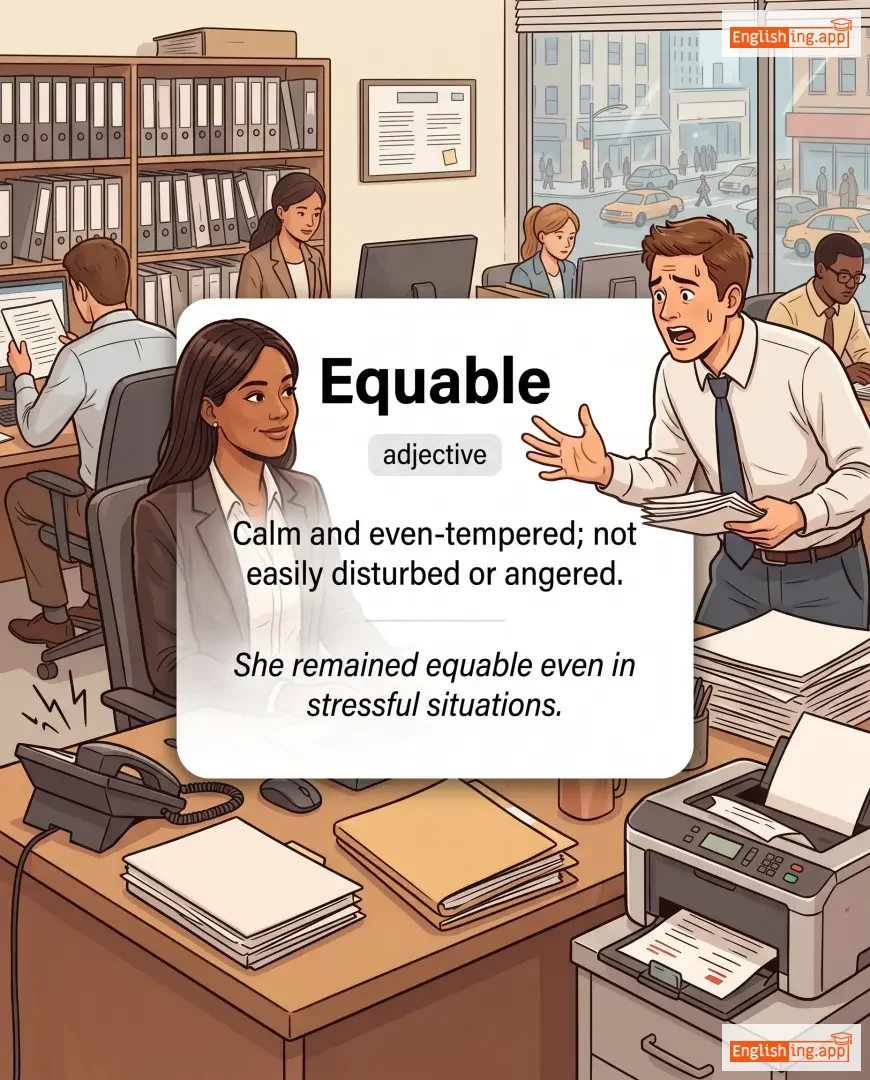
/ˈek.wə.bəl/
adjective
(エクウェイブル)
••••••
|
|
冷静
reisei
••••••
|
calm and even-tempered; not easily disturbed
••••••
|
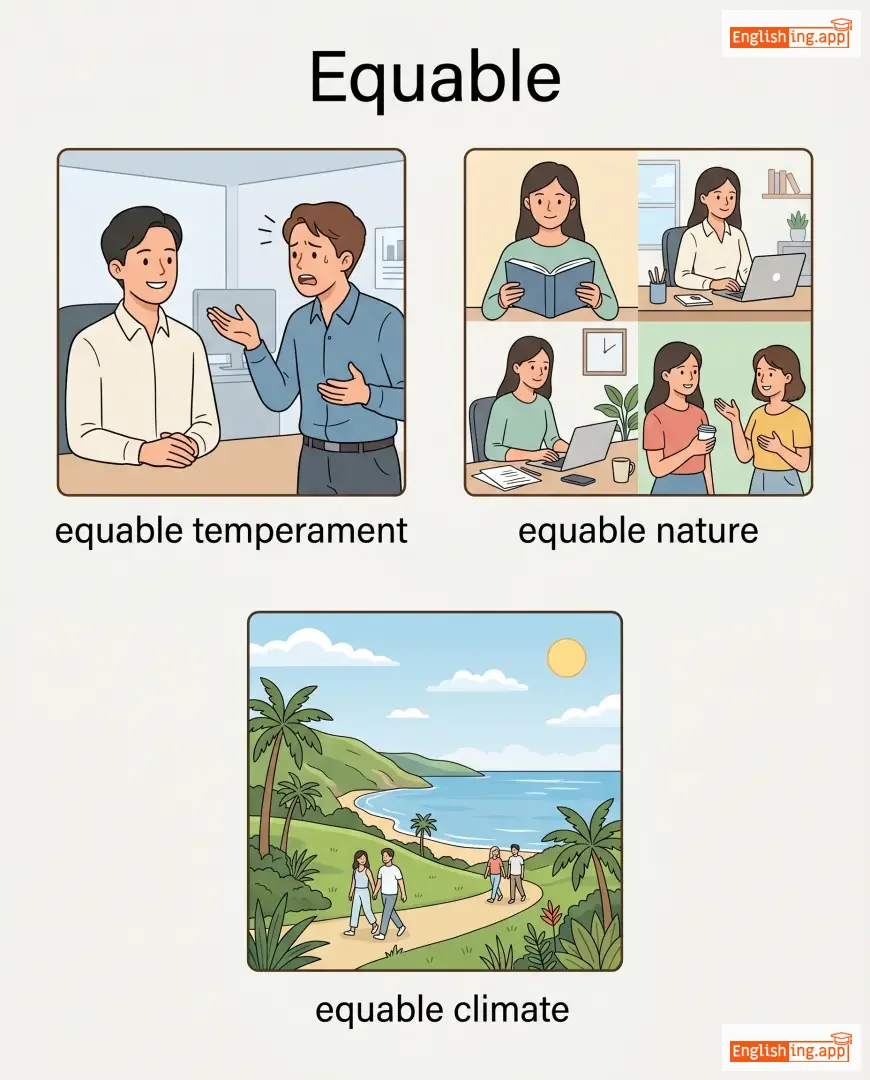
He maintained an equable temperament throughout the crisis.
彼は危機の間、冷静な気質を保ち続けた。
••••••
|
彼は危機の間、冷静な気質を保ち続けた。
Kare wa kiki no aida, reisei na kishitsu wo tamochitsuzuketa.
••••••
|
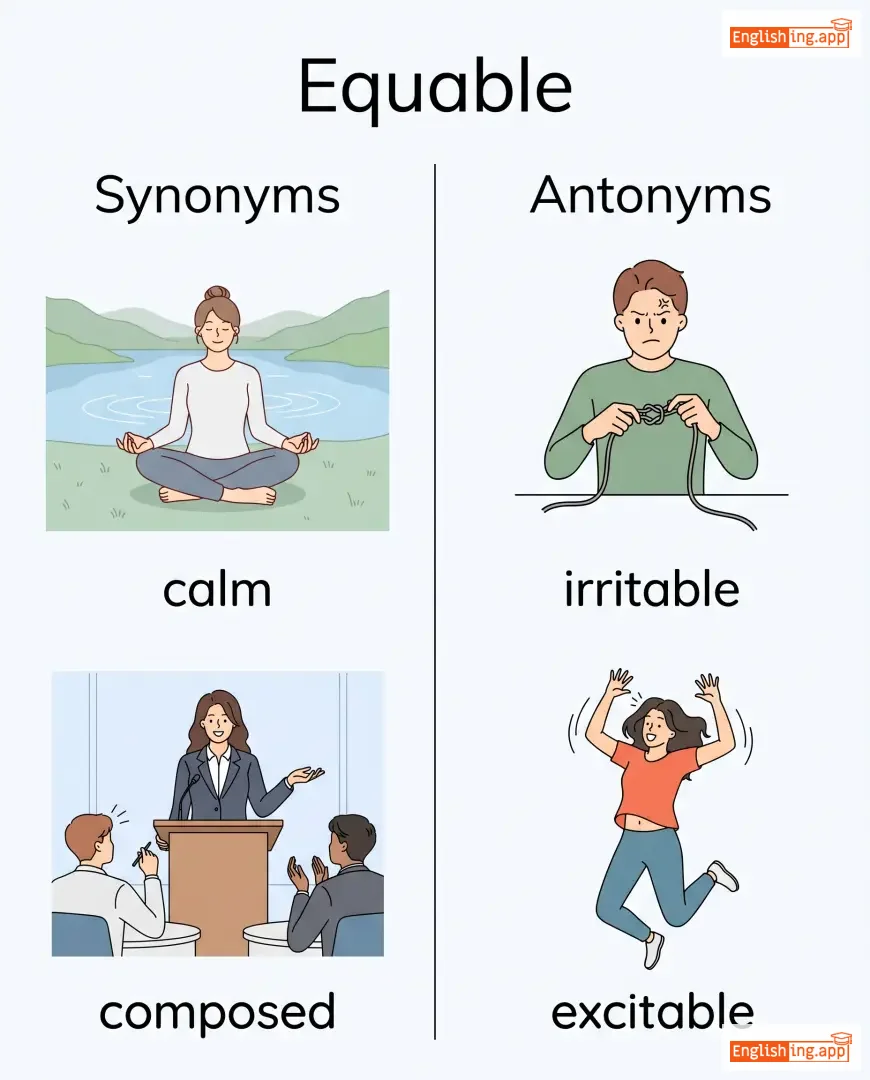
steady, even, uniform, consistent
••••••
|
changeable, variable, inconsistent
••••••
|
equable climate, equable temperament, equable disposition
••••••
|
冷静は 'equable' のように、穏やかで均等な状態を意味します。
••••••
|
|
#230
♾️
|
/ɪˈtɜː.nəl/
adjective
(itānaru)
••••••
|
- •••••• |
永遠の; 無限の; 不朽の; 永久の
eien no; mugen no; fukyū no; eikyū no
••••••
|
lasting or existing forever; without end or beginning; everlasting
••••••
|
Their love seemed eternal and unbreakable.
彼らの愛は永遠で壊れないように見えました。
••••••
|
彼らの愛は永遠で壊れないように見えました。
karera no ai wa eien de kowarenai yō ni miemashita.
••••••
|
everlasting, endless, perpetual, infinite
••••••
|
temporary, finite, brief, momentary
••••••
|
eternal love, eternal life, eternal peace
••••••
|
Eternal love, lasting forever, with no end.
••••••
|
|
#231
🐘
|
/ɪˈnɔː.məs/
adjective
(エノーマス)
••••••
|
- •••••• |
巨大な; 膨大な; 巨大
kyodaina; bōdaina; kyodai
••••••
|
very large in size, quantity, or extent; huge
••••••
|
The elephant was enormous and weighed several tons. |
象は巨大で、数トンの重さがありました。
Zou wa kyodaina de, suu ton no omosa ga arimashita.
••••••
|
huge, massive, gigantic, immense
••••••
|
tiny, small, minute, miniature
••••••
|
enormous size, enormous amount, enormous pressure
••••••
|
巨大な象を想像して、それがどれだけ大きいか考えてみてください。
••••••
|
|
#232
🎯
|
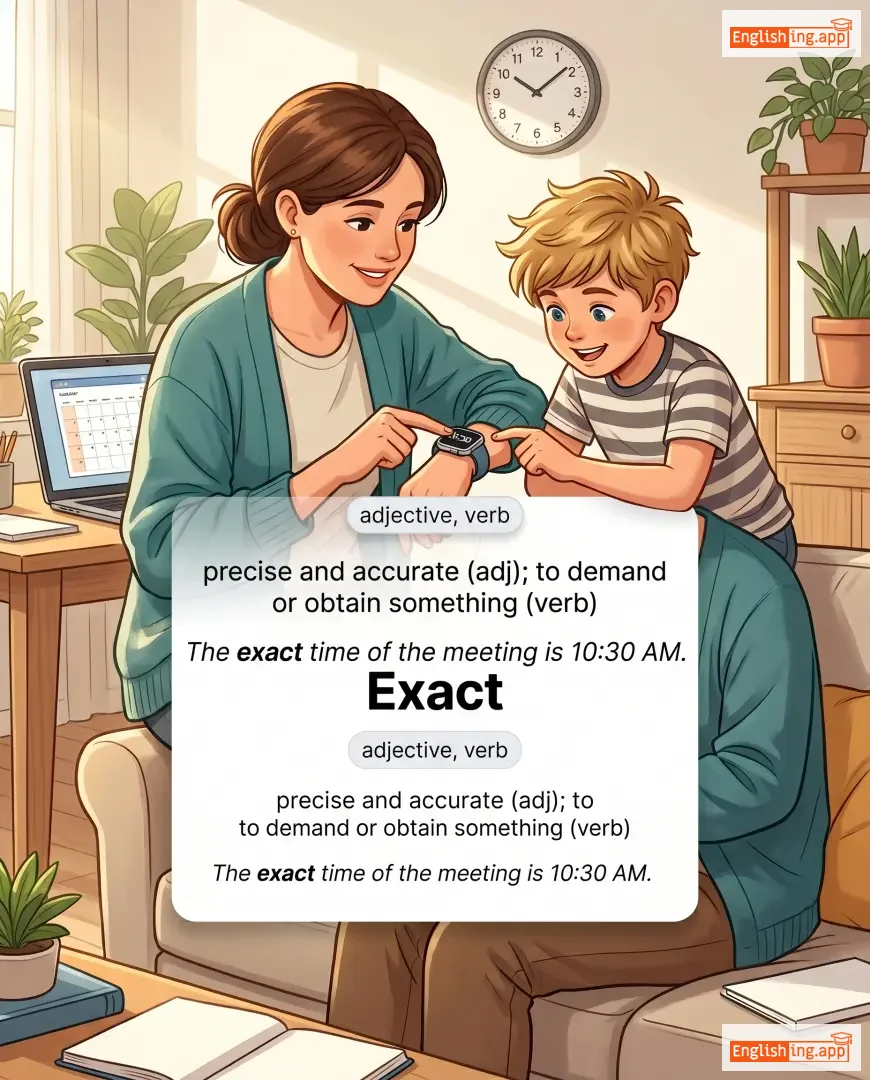
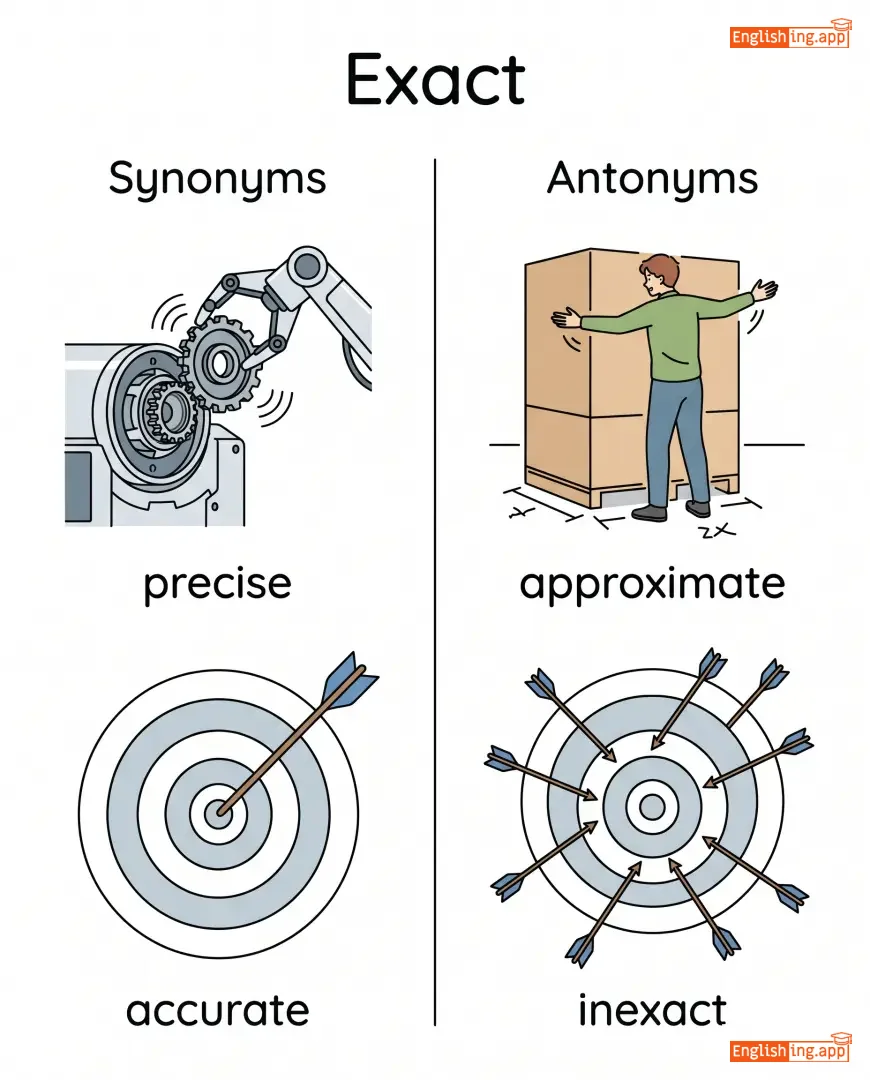
/ɪɡˈzækt/
adjective
(エグザクト)
••••••
|
|
正確な; 精密な; 完全に正しい
seikakuna; seimitsuna; kanzen ni tadashii
••••••
|
precise; accurate; completely correct
••••••
|
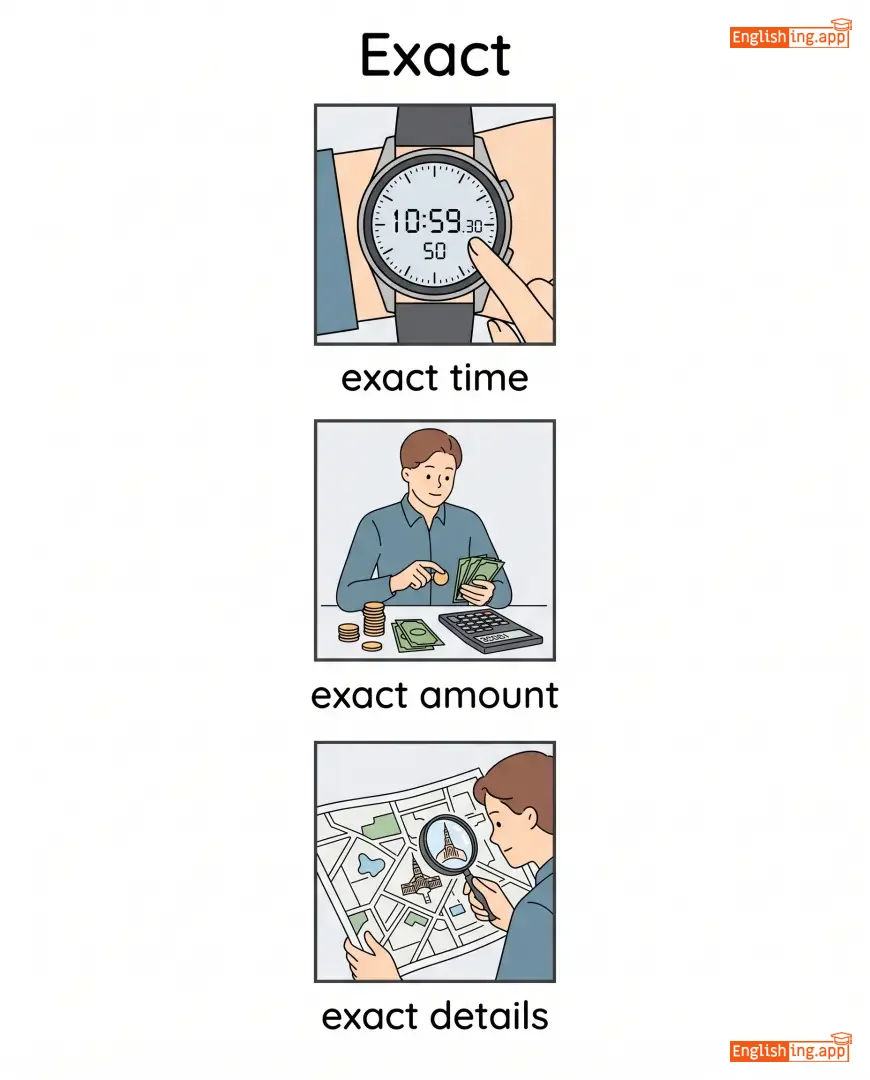
Please give me the exact time of the meeting. |
会議の正確な時間を教えてください。
Kaigi no seikaku na jikan wo oshiete kudasai.
••••••
|
precise, accurate, correct, perfect
••••••
|
approximate, rough, inaccurate, wrong
••••••
|
exact time, exact location, exact amount, exact words
••••••
|
Exact = Egusakuto, just like the right time in Japanese!
••••••
|
|
#233
⚖️
|
/ˈiː.kwəl/
adjective
(イクワル)
••••••
|
|
平等
byoudou
••••••
|
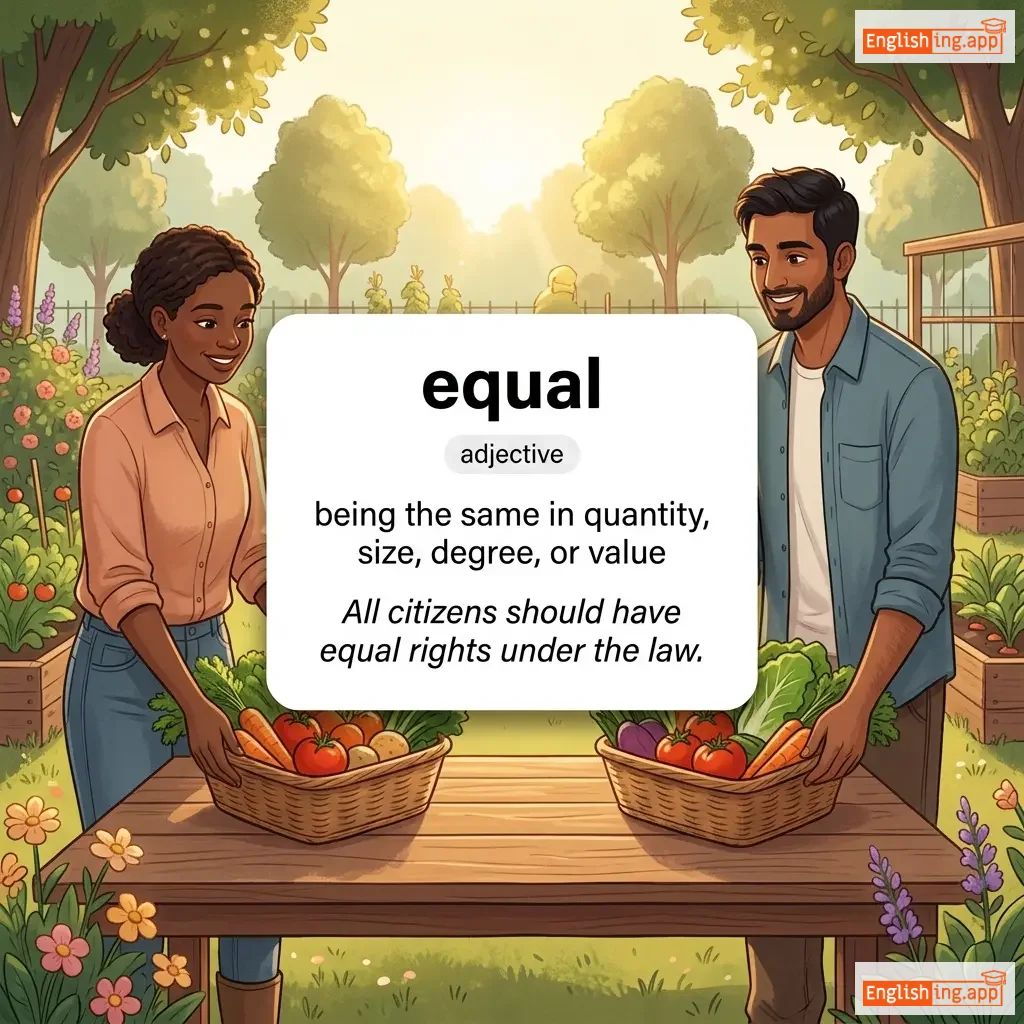
being the same in quantity, size, degree, or value; identical
••••••
|
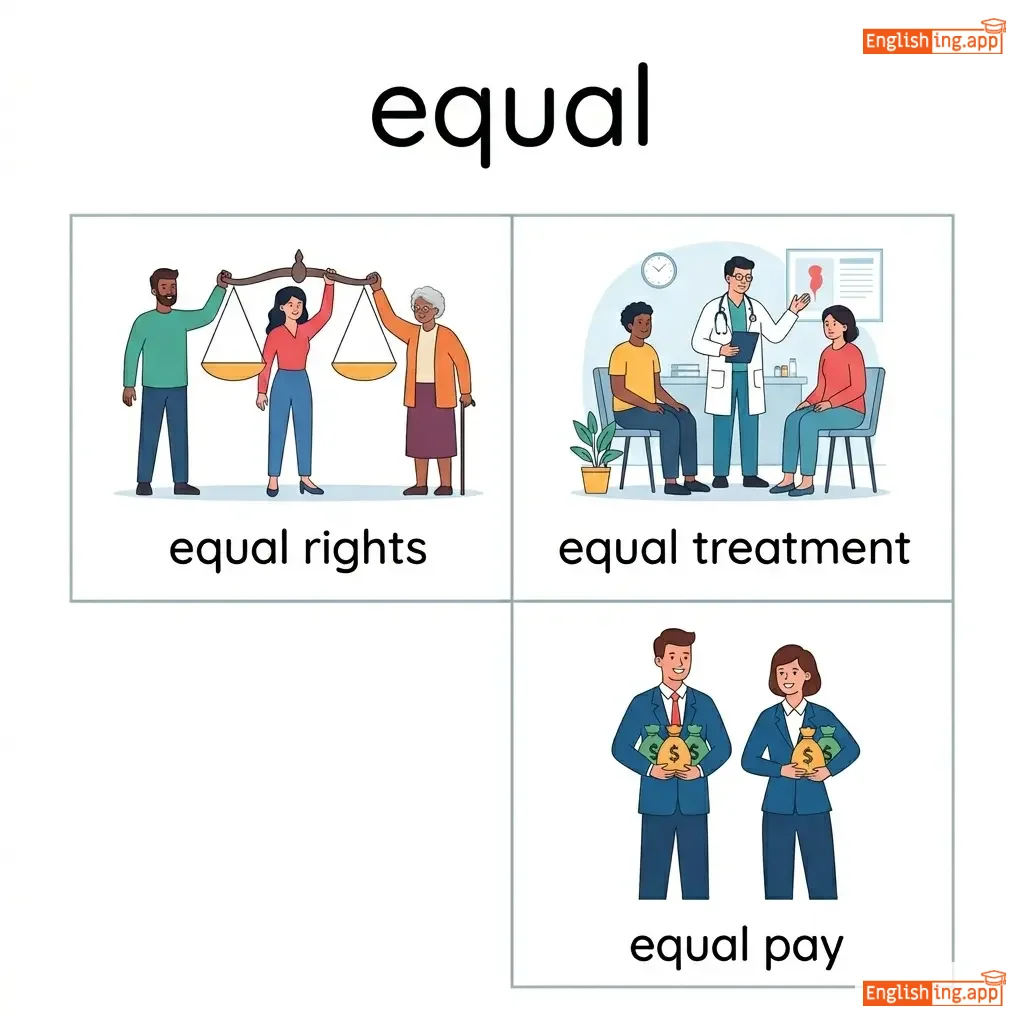
All students are equal in the eyes of the law. |
すべての学生は法の前では平等です。
Subete no gakusei wa hō no mae de wa byōdō desu.
••••••
|
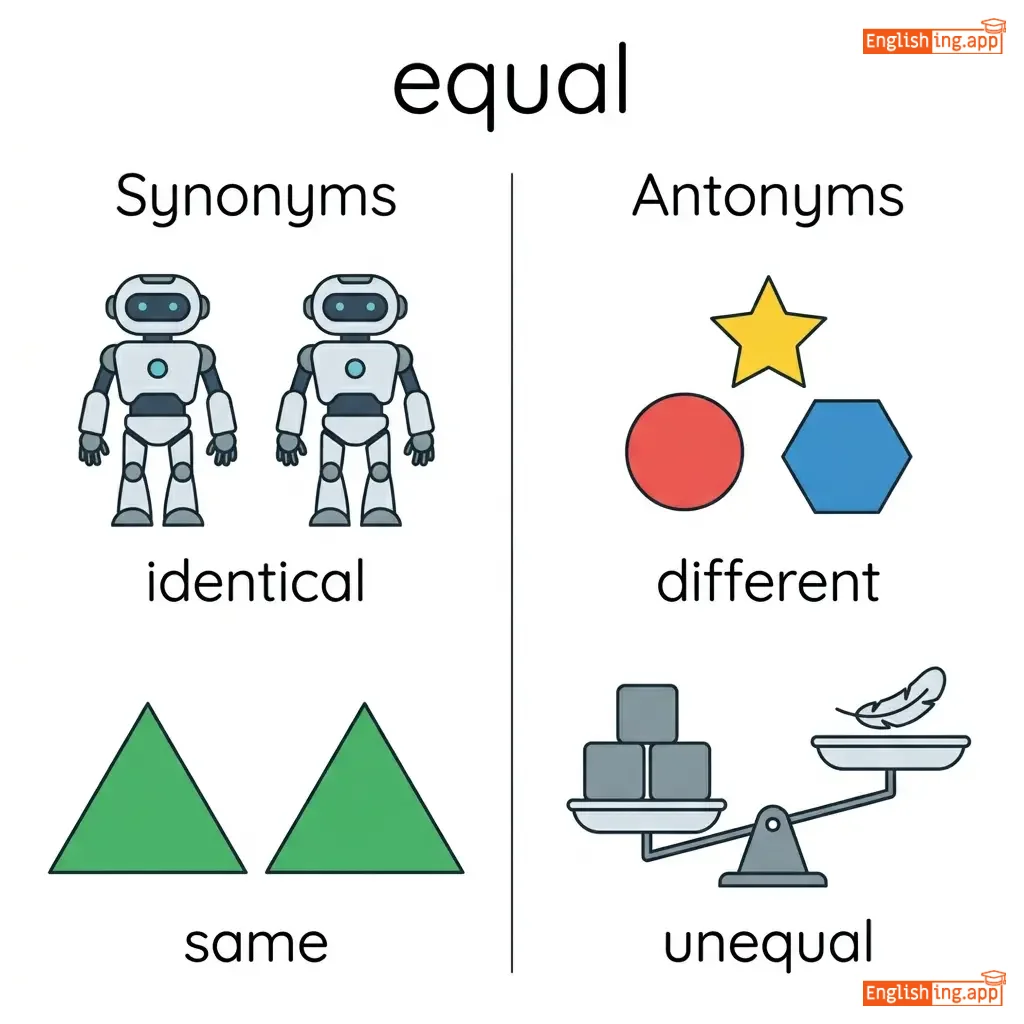
same, identical, equivalent, uniform
••••••
|
unequal, different, varied, disparate
••••••
|
equal rights, equal opportunity, equal treatment
••••••
|
Byoudou (equal) in Japanese is similar to 'equal' in English.
••••••
|
|
#234
📏
|
/ˈiː.vən/
adjective
(イーブン)
••••••
|
- •••••• |
平ら; 均等; 水準
taira; kintou; suijun
••••••
|
flat and smooth; equal or uniform; level
••••••
|
The surface was completely even and smooth. |
表面は完全に平らで滑らかでした。
Hyōmen wa kanzen ni taira de nameraka deshita.
••••••
|
flat, level, smooth, uniform
••••••
|
uneven, rough, irregular, bumpy
••••••
|
even surface, even distribution, even number
••••••
|
In Japanese, 'イ' (i) sounds like 'even', a smooth and level surface.
••••••
|
|
#235
🎭
|
/ˌen.təˈteɪ.nɪŋ/
adjective
(エンターテイニング)
••••••
|
- •••••• |
面白い; 楽しくて魅力的
omoshiroi; tanoshikute miryokuteki
••••••
|
providing amusement or enjoyment; funny and engaging
••••••
|
The comedian's performance was very entertaining and kept the audience laughing. |
コメディアンのパフォーマンスは非常に面白く、観客を笑わせ続けました。
Komedian no pafōmansu wa hijō ni omoshiroku, kankyaku o warawase tsudzukemashita.
••••••
|
amusing, enjoyable, funny, engaging
••••••
|
boring, dull, tedious, uninteresting
••••••
|
entertaining show, entertaining story, entertaining guest
••••••
|
面白い = 楽しい; どんなパフォーマンスが面白いですか?楽しくて魅力的です!
••••••
|
|
#236
📈
|
/ɪkˈsiːdɪŋ/
adjective
(エクスシーディング)
••••••
|
- •••••• |
過剰な; 超越した
kajō na; chōetsu shita
••••••
|
going beyond; surpassing; extremely
••••••
|
The project was completed with exceeding excellence. |
プロジェクトは極めて優れた成果で完了しました。
Purojekuto wa kiwamete sugureta seika de kanryou shimashita.
••••••
|
surpassing, extraordinary, extreme, outstanding
••••••
|
lacking, insufficient, moderate, ordinary
••••••
|
exceeding expectations, exceeding limits, exceeding standards
••••••
|
過剰な優れた成果
••••••
|
|
#237
⚖️
|
/ˈek.wɪ.tə.bəl/
adjective
(ekwɪtəbl)
••••••
|
|
公平な
kōhei na
••••••
|
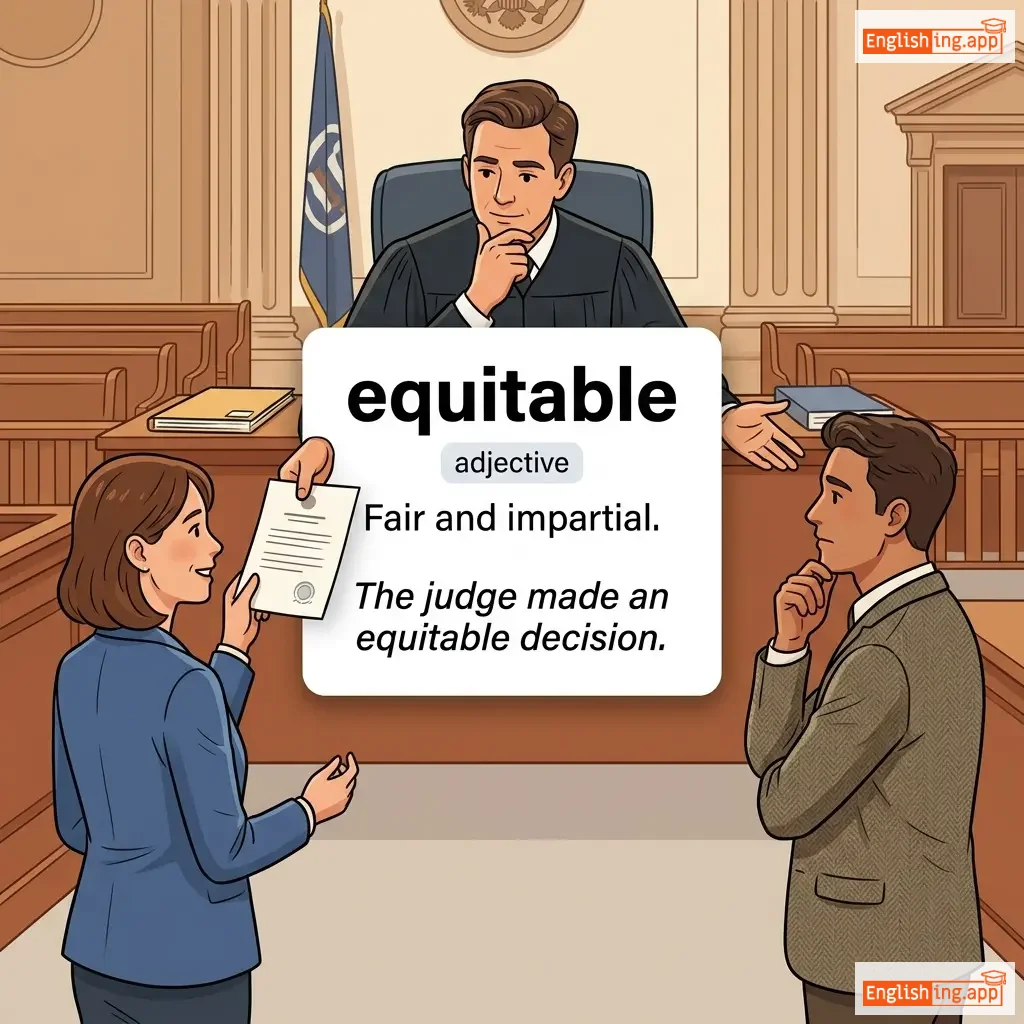
fair and impartial; just
••••••
|
The judge made an equitable decision that satisfied both parties. |
裁判官は両方の当事者を満足させる公平な決定を下しました。
Saibankan wa ryōhō no tōjisha o manzoku sa seru kōhei na kettei o kudashimashita.
••••••
|
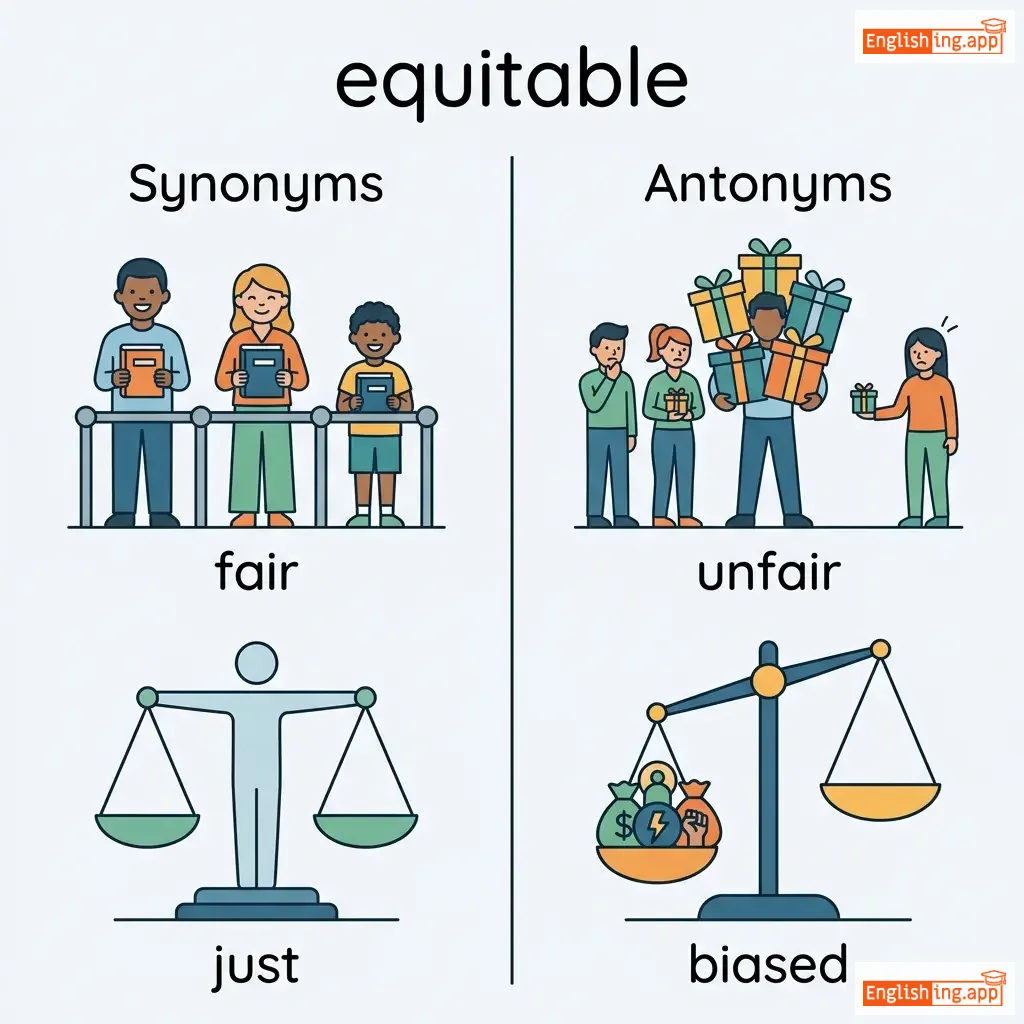
fair, just, impartial, reasonable
••••••
|
unfair, unjust, biased, inequitable
••••••
|
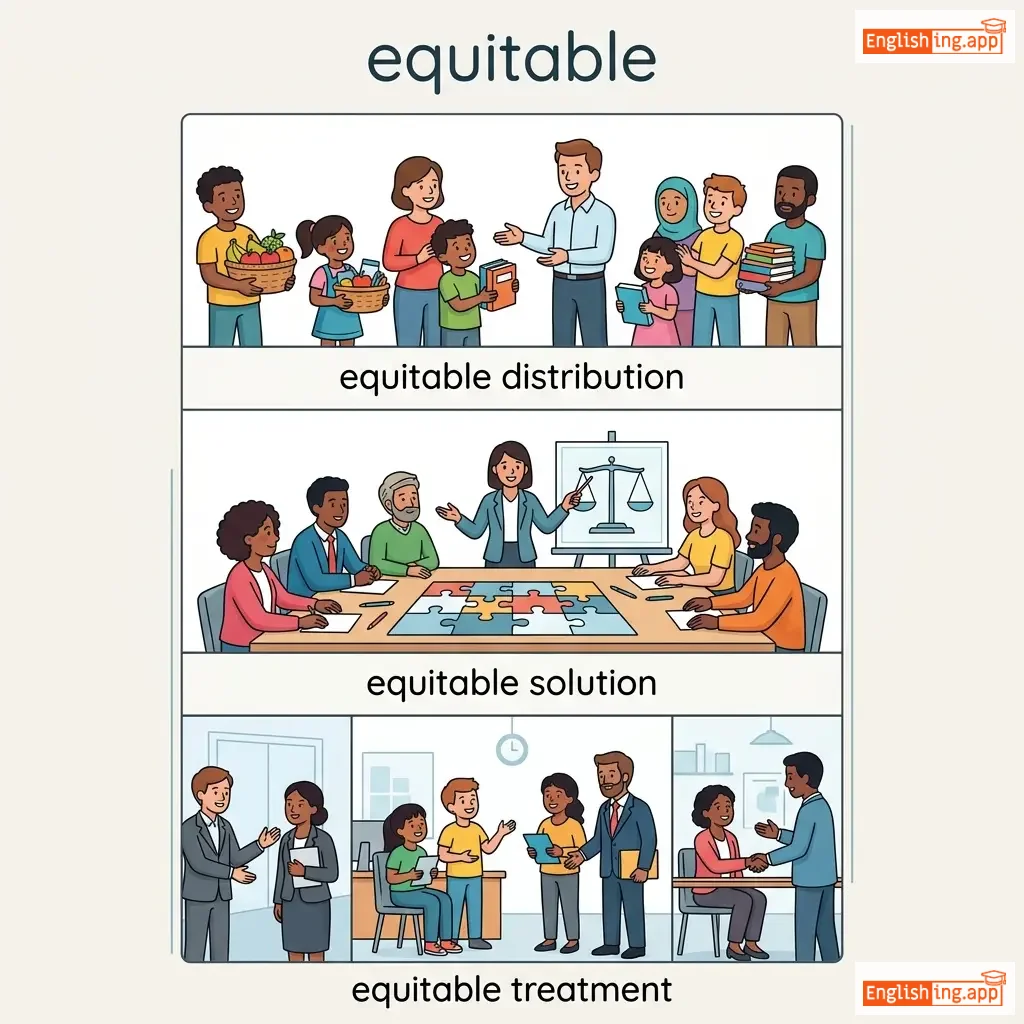
equitable distribution, equitable solution, equitable treatment
••••••
|
Equitable – Kōhei na: 'Equi' は公平を意味します。
••••••
|
|
#238
🔄
|
/ɪnˈtaɪər/
adjective
(エンタイア)
••••••
|
- •••••• |
完全な; 全体; 分割されていない
kanzen na; zentai; bunkatsu sarete inai
••••••
|
complete; whole; not divided or in parts
••••••
|
She read the entire book in one sitting. |
彼女は一気に本全体を読みました。
Kanojo wa ikkini hon zentai o yomimashita.
••••••
|
complete, whole, full, total
••••••
|
partial, incomplete, fragmented, divided
••••••
|
entire day, entire family, entire world
••••••
|
完全な理解はすべてを含んでいます。
••••••
|
|
#239
🔮
|
/ɪˈven.tʃu.əl/
adjective
(イヴェンチュアル)
••••••
|
- •••••• |
最終的な
saishū-teki na
••••••
|
happening or existing at the end of a process; final; ultimate
••••••
|
The eventual outcome was better than expected. |
最終的な結果は予想より良かった。
Saishū-teki na kekka wa yosō yori yokatta.
••••••
|
final, ultimate, concluding, resulting
••••••
|
immediate, initial, current, present
••••••
|
eventual outcome, eventual success, eventual result
••••••
|
最終的な結果が出ることを意味する、'eventual' と同じ意味です
••••••
|
|
#240
⭐
|
/ˈeksələnt/
adjective
(エクセレント)
••••••
|
- •••••• |
優れた; 卓越した; 完璧な;
sugureta; takusetsu shita; kanpeki na
••••••
|
extremely good; outstanding; superior
••••••
|
She received excellent grades in all her subjects.
彼女はすべての科目で優れた成績を収めました。
••••••
|
彼女はすべての科目で優れた成績を収めました。
Kanojo wa subete no kamoku de sugureta seiseki o osamemashita.
••••••
|
outstanding, superb, magnificent, brilliant
••••••
|
poor, terrible, awful, mediocre
••••••
|
excellent performance, excellent quality, excellent service, excellent condition
••••••
|
'優れた' とは何かが抜きんでて良いことを示しています。
••••••
|
Vocabulary Quiz
Test your vocabulary by matching words with their translations or meanings.
Login to take the quiz
Comments (0)
Share your thoughts and join the discussion.
Join the discussion by logging in
Login to CommentNo comments yet
Be the first to share your thoughts!