

翻訳
過去
過去分詞
三人称単数
動名詞
意味
例文
例文の翻訳
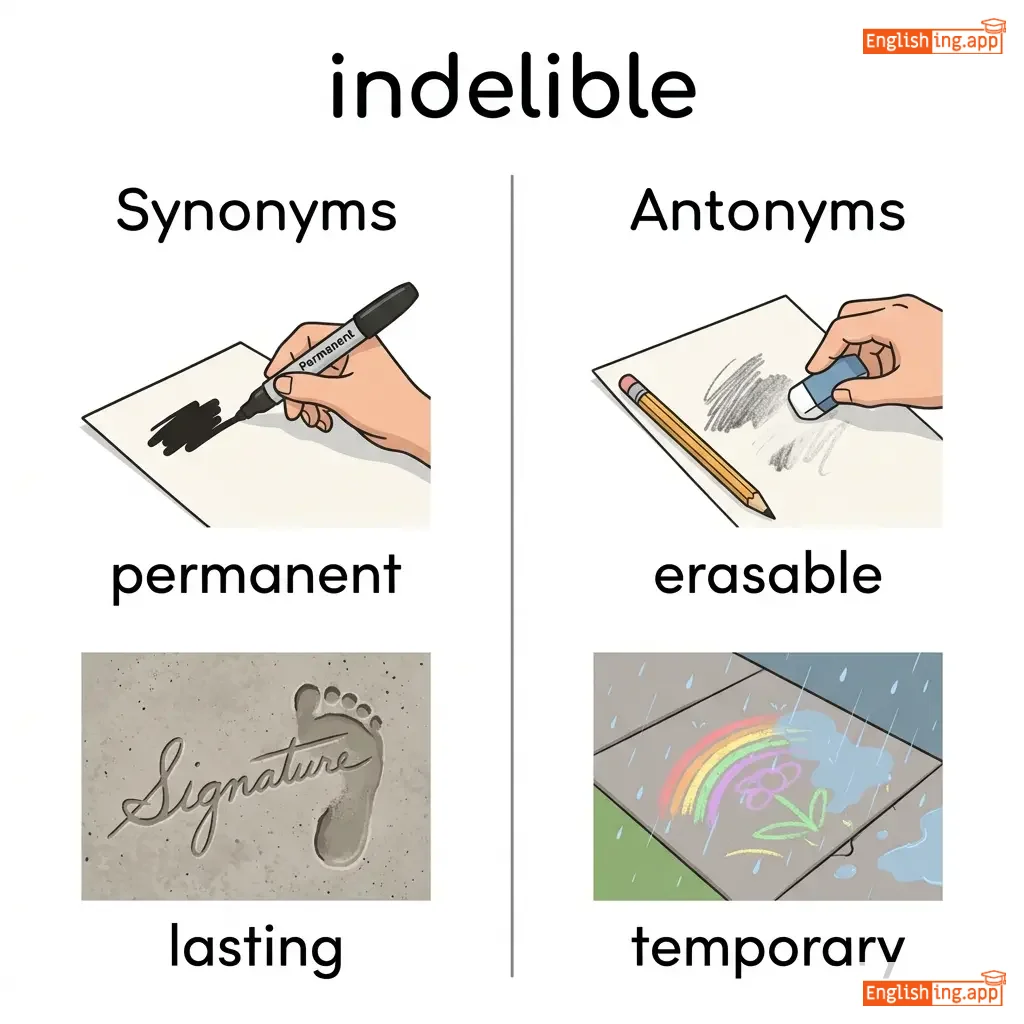
同義語
対義語
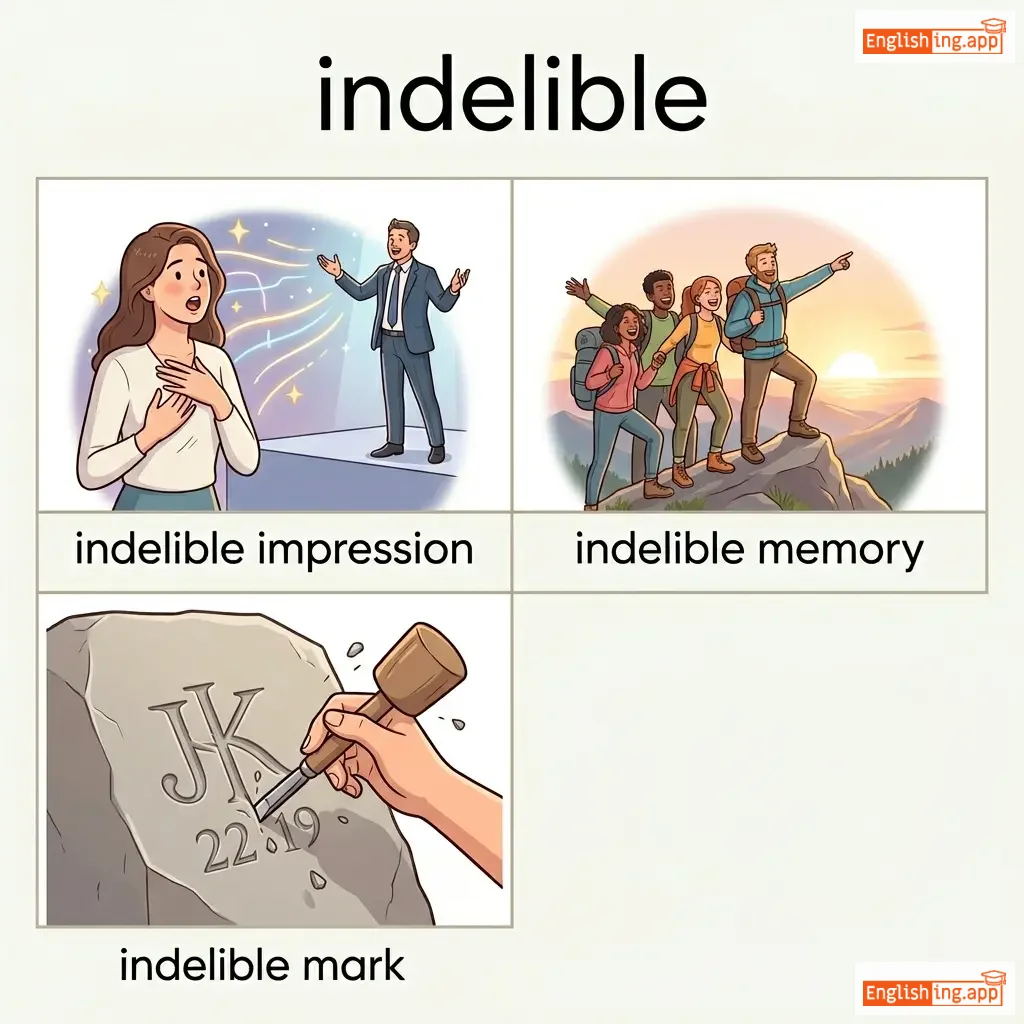
コロケーション
ニーモニック


Swipe left or right, or use the buttons. Tap image to zoom.
例文の翻訳
単語
Lesson 20Lesson 20 - マスクトグル
|
絵文字
|
単語 | Images | 翻訳 | 意味 | 例文 | 例文の翻訳 | 同義語 | 対義語 | コロケーション | ニーモニック |
|---|---|---|---|---|---|---|---|---|---|---|
|
#381
❌
|
/ɪnˈækjərət/
adjective
(inakyuret)
••••••
|
- •••••• |
不正確; 間違っている; 誤り
fuseikaku; machigatte iru; ayamari
••••••
|
not correct; containing errors; wrong
••••••
|
The weather forecast was inaccurate yesterday. |
昨日の天気予報は不正確でした。
Kinō no tenki yohō wa fuseikaku deshita.
••••••
|
wrong, incorrect, false, imprecise
••••••
|
accurate, correct, precise, exact
••••••
|
inaccurate information, inaccurate data, inaccurate measurement
••••••
|
天気予報が間違っていたら、それは不正確だと覚えておく!
••••••
|
|
#382
❌
|
/ˌɪnɪˈfɛktɪv/
adjective
(インエフェクティブ)
••••••
|
|
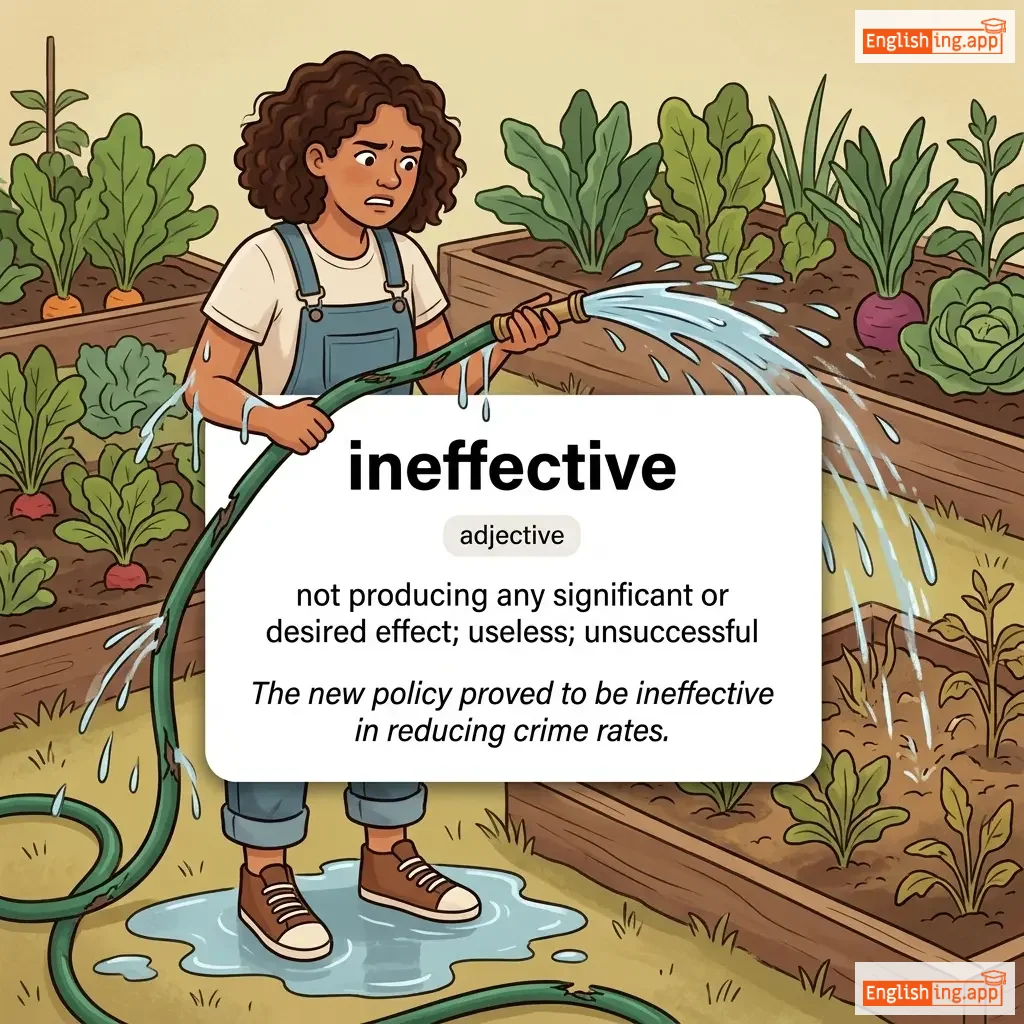
効果がない; 無駄な; 失敗した
kouka ga nai; muda na; shippai shita
••••••
|
not producing any significant or desired effect; useless; unsuccessful
••••••
|
The new policy proved to be ineffective in reducing crime rates.
新しい政策は犯罪率の削減には効果がないことが証明された。
••••••
|
新しい政策は犯罪率の削減には効果がないことが証明された。
atarashii seisaku wa hanzairitsu no sakugen ni wa kouka ga nai koto ga shoumei sareta.
••••••
|
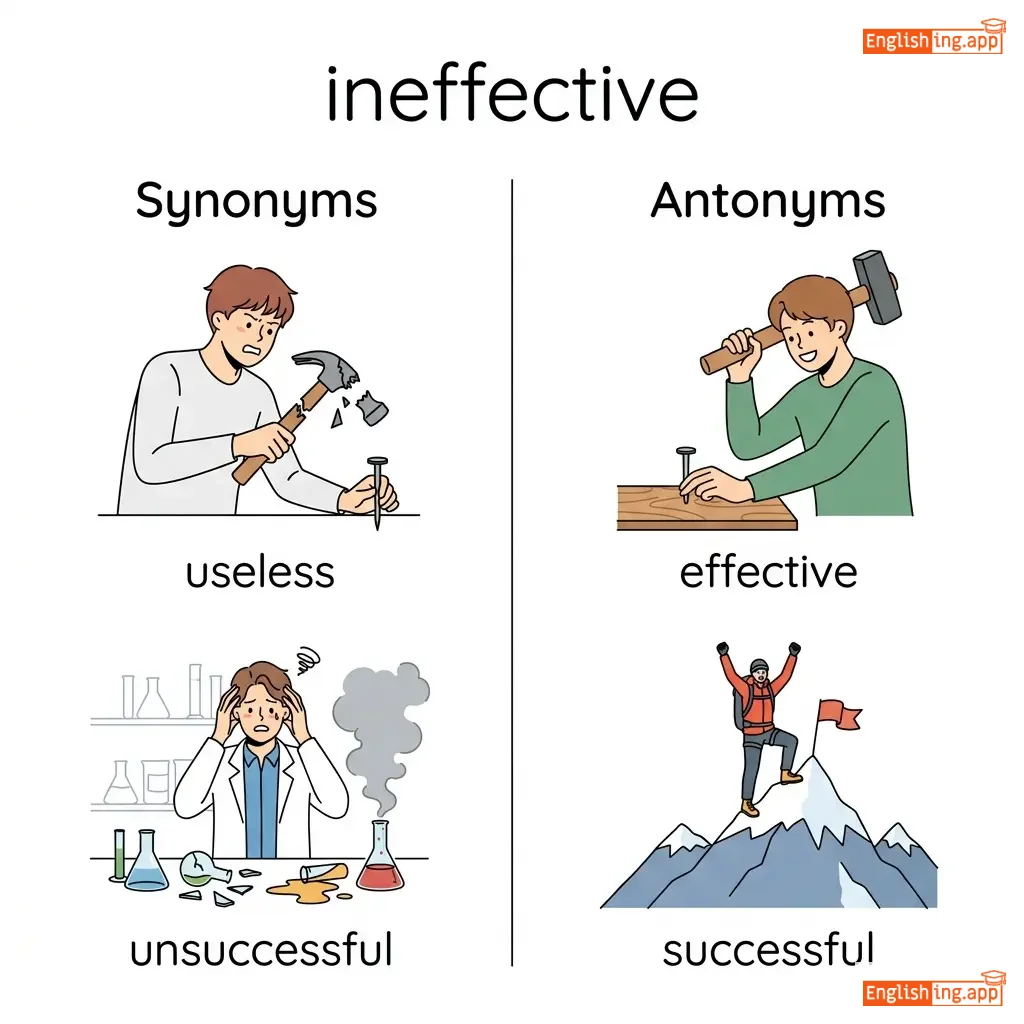
useless, unsuccessful, futile, powerless
••••••
|
effective, successful, powerful, efficient
••••••
|
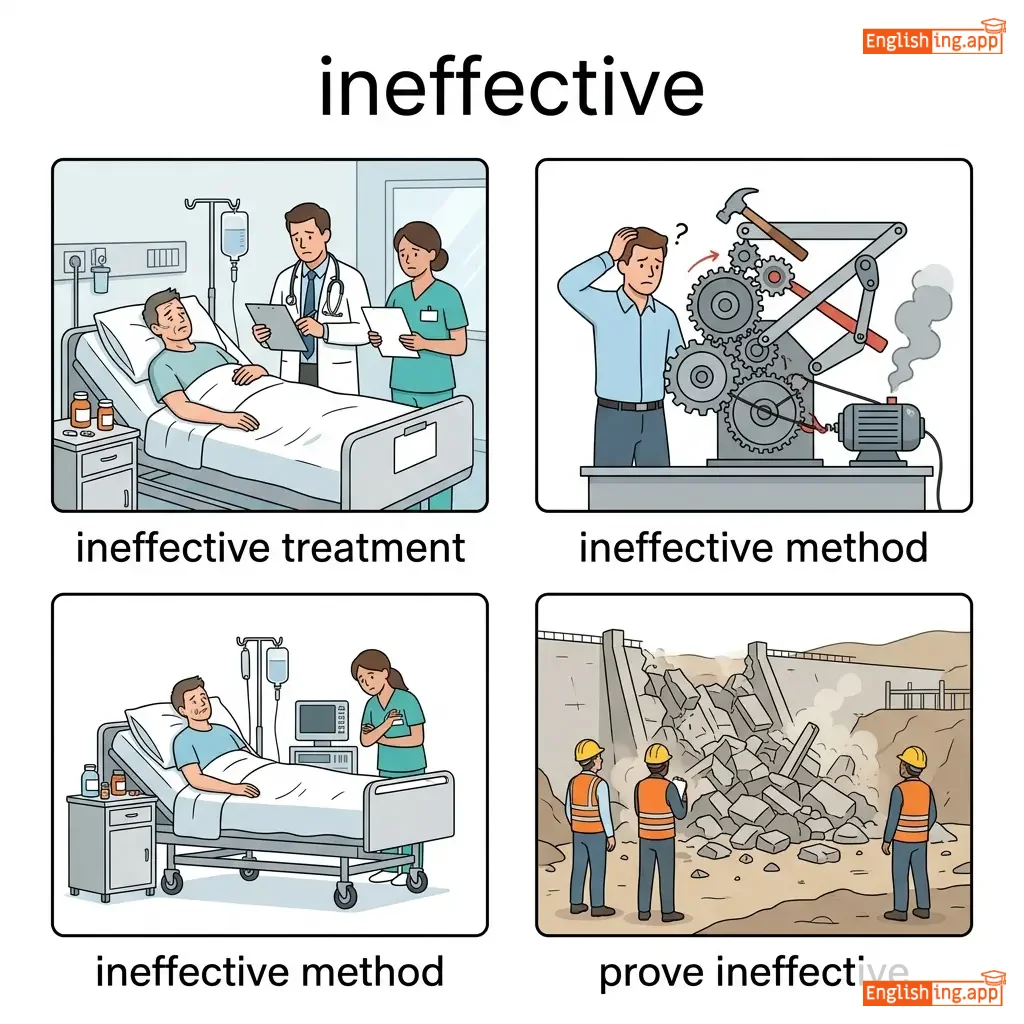
ineffective treatment, ineffective method, prove ineffective
••••••
|
Think of '効果がない' as ineffective, like trying to use an umbrella in a storm!
••••••
|
|
#383
😤
|
/ˌɪnkənˈviːniənt/
adjective
(インコンヴィニエント)
••••••
|
- •••••• |
不便な; 面倒な; 困難な
fuben na; mendō na; konnan na
••••••
|
causing trouble, difficulties, or discomfort; awkward; troublesome
••••••
|
The broken elevator made it inconvenient to reach the top floor.
壊れたエレベーターは、最上階に到達するのを不便にしました。
••••••
|
壊れたエレベーターは、最上階に到達するのを不便にしました。
Kowareta erebētā wa, saijōkai ni tōtatsu suru no o fuben ni shimashita.
••••••
|
troublesome, awkward, bothersome, difficult
••••••
|
convenient, easy, suitable, helpful
••••••
|
inconvenient time, inconvenient location, highly inconvenient
••••••
|
壊れたエレベーターで不便な状況。
••••••
|
|
#384
😮
|
/ˌɪndɪˈskraɪbəbəl/
adjective
(インディスクリバブル)
••••••
|
- •••••• |
言葉では表現できない
kotoba de wa hyōgen dekinai
••••••
|
impossible to describe or express in words; beyond description
••••••
|
The beauty of the sunset was indescribable. |
夕日の美しさは言葉では表現できないほどでした。
Yūhi no utsukushisa wa kotoba de wa hyōgen dekinai hodo deshita.
••••••
|
inexplicable, ineffable, unutterable, beyond words
••••••
|
describable, expressible, definable
••••••
|
indescribable feeling, indescribable beauty, indescribable joy
••••••
|
夕日が美しすぎて、言葉では表現できないと思ってください!
••••••
|
|
#385
🚫
|
/ɪnˈæpt/
adjective
(イナプト)
••••••
|
- •••••• |
不適切; 不適当
futekisetsu; futetō
••••••
|
not suitable; inappropriate; unfit
••••••
|
His comment was inapt for the formal meeting. |
彼のコメントは正式な会議には不適切でした。
Kare no komento wa seishiki na kaigi ni wa futekisetsu deshita.
••••••
|
inappropriate, unsuitable, unfit, improper
••••••
|
apt, appropriate, suitable, fitting
••••••
|
inapt comparison, inapt remark, inapt choice
••••••
|
Inapt を日本語で言うと '不適切' や '不適当' です
••••••
|
|
#386
🐌
|
/ˌɪnɪˈfɪʃənt/
adjective
(イネフィシエント)
••••••
|
- •••••• |
非効率的
hikouritsuteki
••••••
|
not achieving maximum productivity; wasteful of time or resources
••••••
|
The old computer system was inefficient and wasted a lot of time.
古いコンピュータシステムは非効率的で、多くの時間を無駄にしました。
••••••
|
古いコンピュータシステムは非効率的で、多くの時間を無駄にしました。
Furui konpyūta shisutemu wa hikouritsuteki de, ōku no jikan o muda ni shimashita.
••••••
|
unproductive, wasteful, slow, incompetent
••••••
|
efficient, productive, effective, competent
••••••
|
inefficient process, inefficient use, energy inefficient
••••••
|
非効率的 is inefficient in Japanese; both wasteful of time.
••••••
|
|
#387
🌱
|
/ɪnˈdɪdʒɪnəs/
adjective
(インディジナス)
••••••
|
|
先住民; 土着民
senjūmin; dochakumin
••••••
|
native to a particular place; originating naturally in a country or region
••••••
|
The indigenous people have lived here for thousands of years.
先住民は何千年もここに住んでいます。
••••••
|
先住民は何千年もここに住んでいます。
Senjūmin wa nan-sen-nen mo koko ni sundeimasu.
••••••
|
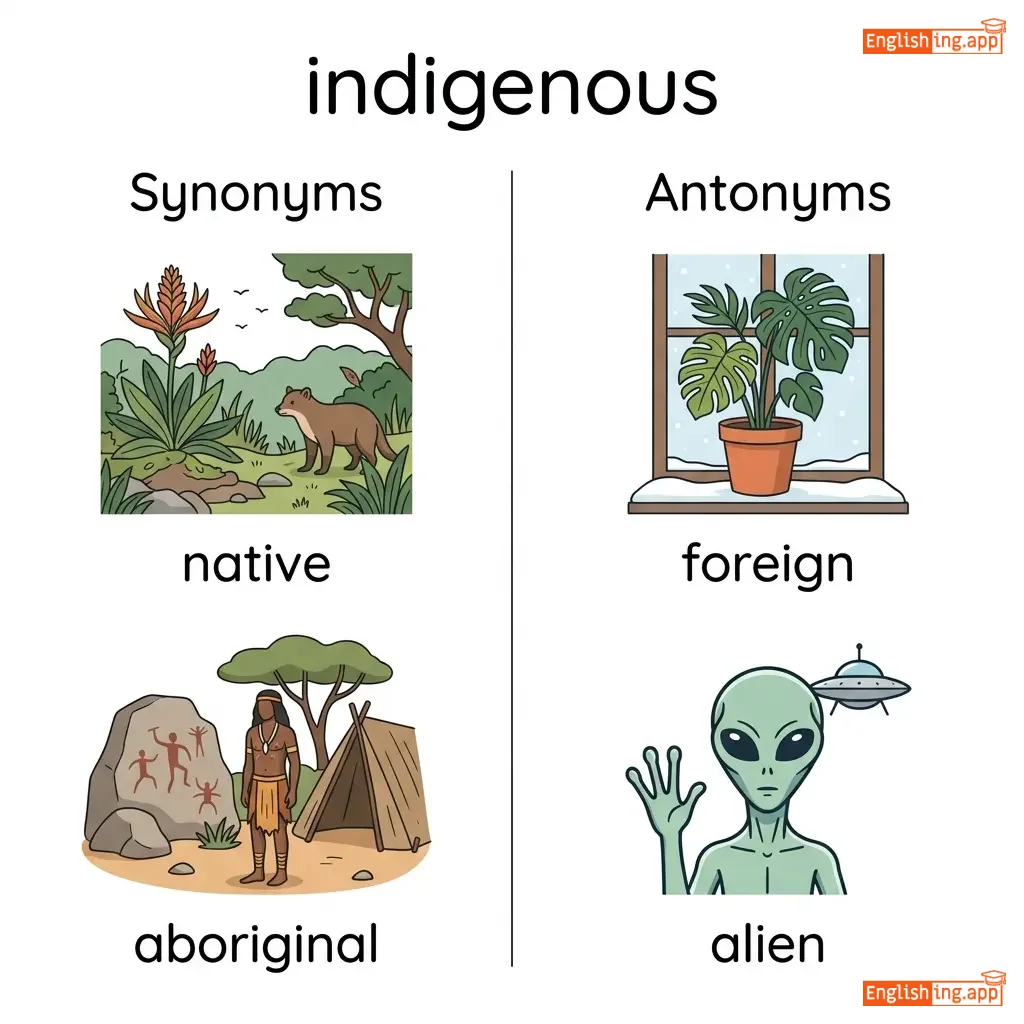
native, local, aboriginal, autochthonous
••••••
|
foreign, exotic, imported, alien
••••••
|
indigenous people, indigenous culture, indigenous language
••••••
|
先住民は地元の人々で、何千年もここに住んでいます。
••••••
|
|
#388
💳
|
/ɪnˈdetɪd/
adjective
(インデッド)
••••••
|
- •••••• |
借金がある; 感謝している
shakkin ga aru; kansha shite iru
••••••
|
owing money or gratitude to someone; obligated; grateful
••••••
|
I am deeply indebted to my teacher for all her guidance. |
私は先生のすべての指導に深く感謝しています。
Watashi wa sensei no subete no shidō ni fukaku kansha shite imasu.
••••••
|
obligated, grateful, owing, beholden
••••••
|
free, independent, unobligated
••••••
|
deeply indebted, forever indebted, heavily indebted
••••••
|
Indebted means being grateful, remember 'I am deeply grateful to my teacher.'
••••••
|
|
#389
🤷
|
/ˌɪndɪˈsaɪsɪv/
adjective
(インデシシブ)
••••••
|
- •••••• |
優柔不断な
indeshishibu
••••••
|
unable to make decisions quickly; hesitant; wavering
••••••
|
She was indecisive about which university to attend.
彼女はどの大学に入学すべきか決めかねていた。
••••••
|
彼女はどの大学に入学すべきか決めかねていた。
kanojo wa dono daigaku ni nyuugaku subeki ka kimekaneteita
••••••
|
hesitant, uncertain, wavering, irresolute
••••••
|
decisive, determined, resolute, confident
••••••
|
indecisive moment, indecisive leader, chronically indecisive
••••••
|
Indecisive = A or B? 迷う panda が AB の扉の間にいるイメージを思い浮かべよう。 I cant decide のセリフとともに覚えると、優柔不断な気持ちがすぐに頭に浮かぶ
••••••
|
|
#390
🤢
|
/ˌɪndaɪˈdʒestəbəl/
adjective
(インディジェスティブル)
••••••
|
- •••••• |
消化不良な; 消化しにくい
shōkafuryō na; shōka shinikui
••••••
|
difficult or impossible to digest; hard to process in the stomach
••••••
|
The old bread became hard and indigestible. |
古いパンは硬くなり、消化不良になった。
Furui pan wa kataku nari, shōkafuryō ni natta.
••••••
|
unpalatable, hard to digest, heavy, tough
••••••
|
digestible, palatable, light, easy to digest
••••••
|
indigestible food, indigestible matter, indigestible substance
••••••
|
インディジェスティブルは、消化しにくいもの、例えば古いパンを意味します。
••••••
|
|
#391
🎉
|
/ɪˈnɔːɡjərəl/
adjective
(イナウグラル)
••••••
|
- •••••• |
開幕
kaimaku
••••••
|
marking the beginning of something; first; opening
••••••
|
The president delivered his inaugural speech. |
大統領は彼の開幕スピーチを行いました。
Daitōryō wa kare no kaimaku supīchi o okonaimashita.
••••••
|
opening, initial, first, introductory
••••••
|
final, concluding, closing, last
••••••
|
inaugural speech, inaugural ceremony, inaugural address
••••••
|
Inaugural speech – 'Kaimaku' signifies the opening of an event.
••••••
|
|
#392
🚫
|
/ɪnˈɛlɪdʒəbəl/
adjective
(イネリジブル)
••••••
|
- •••••• |
不適格; 無資格; 選ばれない
futekikaku; mushikaku; erabarenai
••••••
|
not qualified or entitled to participate or be chosen; unsuitable
••••••
|
Students with poor grades are ineligible for the scholarship program. |
成績が悪い学生は奨学金プログラムに応募できません。
Seiseki ga warui gakusei wa shougakukin puroguramu ni oubo dekimasen.
••••••
|
unqualified, disqualified, unsuitable, unfit
••••••
|
eligible, qualified, suitable, fit
••••••
|
ineligible for benefits, deemed ineligible, ineligible candidate
••••••
|
Ineligible means ‘not’ and ‘eligible’ (qualified), so it’s ‘not qualified’.
••••••
|
|
#393
❓
|
/ɪnˈdefɪnət/
adjective
(インディフィニット)
••••••
|
- •••••• |
不確定な
fukakutei na
••••••
|
not clearly defined; uncertain; vague; unlimited in time
••••••
|
The meeting has been postponed for an indefinite period.
会議は不確定な期間に延期されました。
••••••
|
会議は不確定な期間に延期されました。
Kaigi wa fukakutei na kikan ni enkisaremashita.
••••••
|
uncertain, unclear, vague, unlimited
••••••
|
definite, specific, clear, precise
••••••
|
indefinite period, indefinite postponement, indefinite article
••••••
|
In Japanese, '不確定な' represents an undefined situation, just like indefinite time.
••••••
|
|
#394
✅
|
/ˌɪndɪˈspjuːtəbəl/
adjective
(インディスピュータブル)
••••••
|
- •••••• |
議論の余地がない; 否定できない; 確定的
giron no yochi ga nai; hitei dekinai; kakutei-teki
••••••
|
impossible to deny or argue against; undeniable; certain
••••••
|
The evidence against him was indisputable. |
彼に対する証拠は議論の余地がなかった。
Kare ni taisuru shōko wa giron no yochi ga nakatta.
••••••
|
undeniable, unquestionable, certain, irrefutable
••••••
|
disputable, questionable, doubtful, debatable
••••••
|
indisputable fact, indisputable evidence, indisputable truth
••••••
|
Indisputable in Japanese is '議論の余地がない' – no argument possible!
••••••
|
|
#395
🌩️
|
/ˌɪnɔːˈspɪʃəs/
adjective
(イナスピシャス)
••••••
|
- •••••• |
不吉
fukitsu
••••••
|
unlucky; showing signs that future success is unlikely; unfavorable
••••••
|
The dark clouds seemed inauspicious for the wedding. |
暗い雲は結婚式にとって不吉に思えた。
Kurai kumo wa kekkonshiki ni totte fukitsu ni omoeta.
••••••
|
unlucky, unfavorable, ominous, ill-omened
••••••
|
auspicious, favorable, lucky, promising
••••••
|
inauspicious beginning, inauspicious timing, inauspicious signs
••••••
|
不吉は、未来に悪い予感を示す兆しです。
••••••
|
|
#396
⏳
|
/ɪnˈɛvɪtəbəl/
adjective
(イネヴィタブル)
••••••
|
|
避けられない
sakerarenai
••••••
|
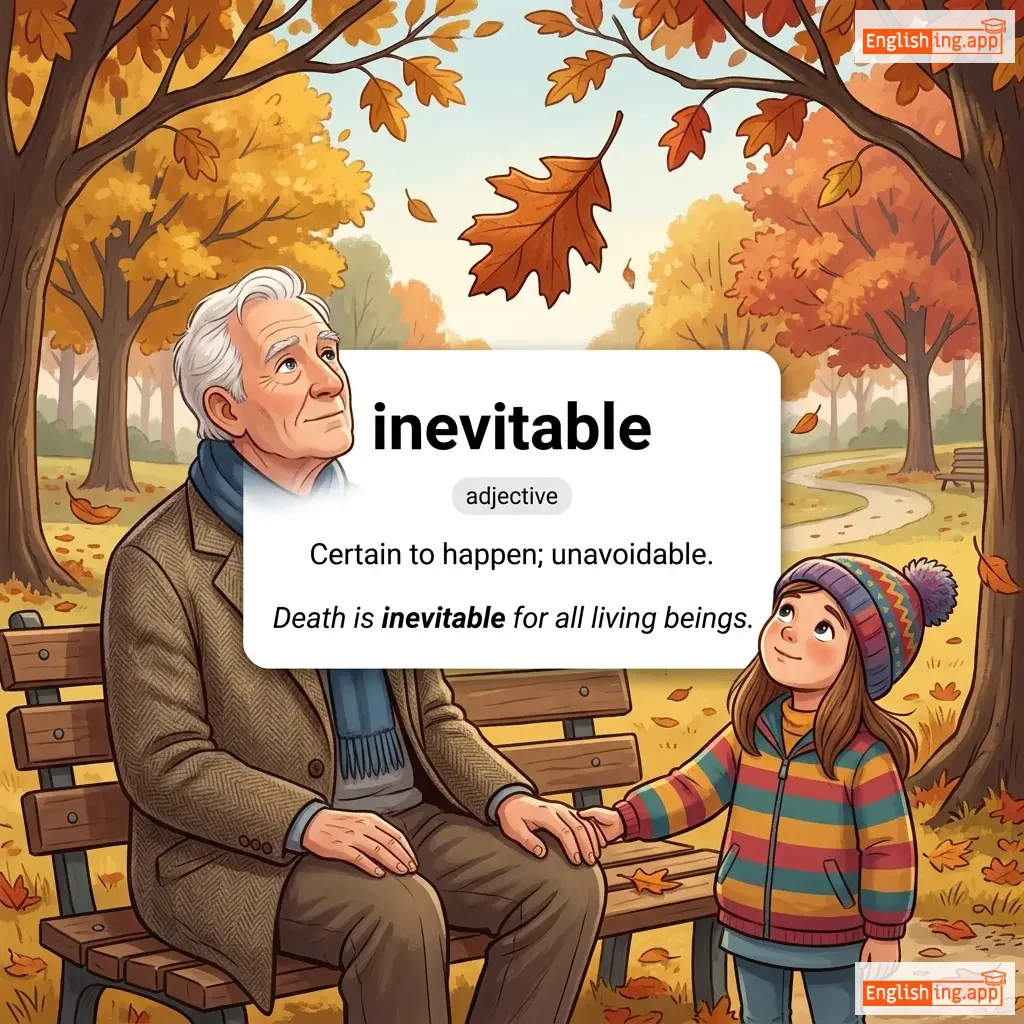
certain to happen; unavoidable; bound to occur
••••••
|
Death is an inevitable part of life that everyone must face.
死は避けられない人生の一部で、誰もが直面しなければならない。
••••••
|
死は避けられない人生の一部で、誰もが直面しなければならない。
Shi wa sakerarenai jinsei no ichibu de, daremo ga chokumen shinakereba naranai.
••••••
|
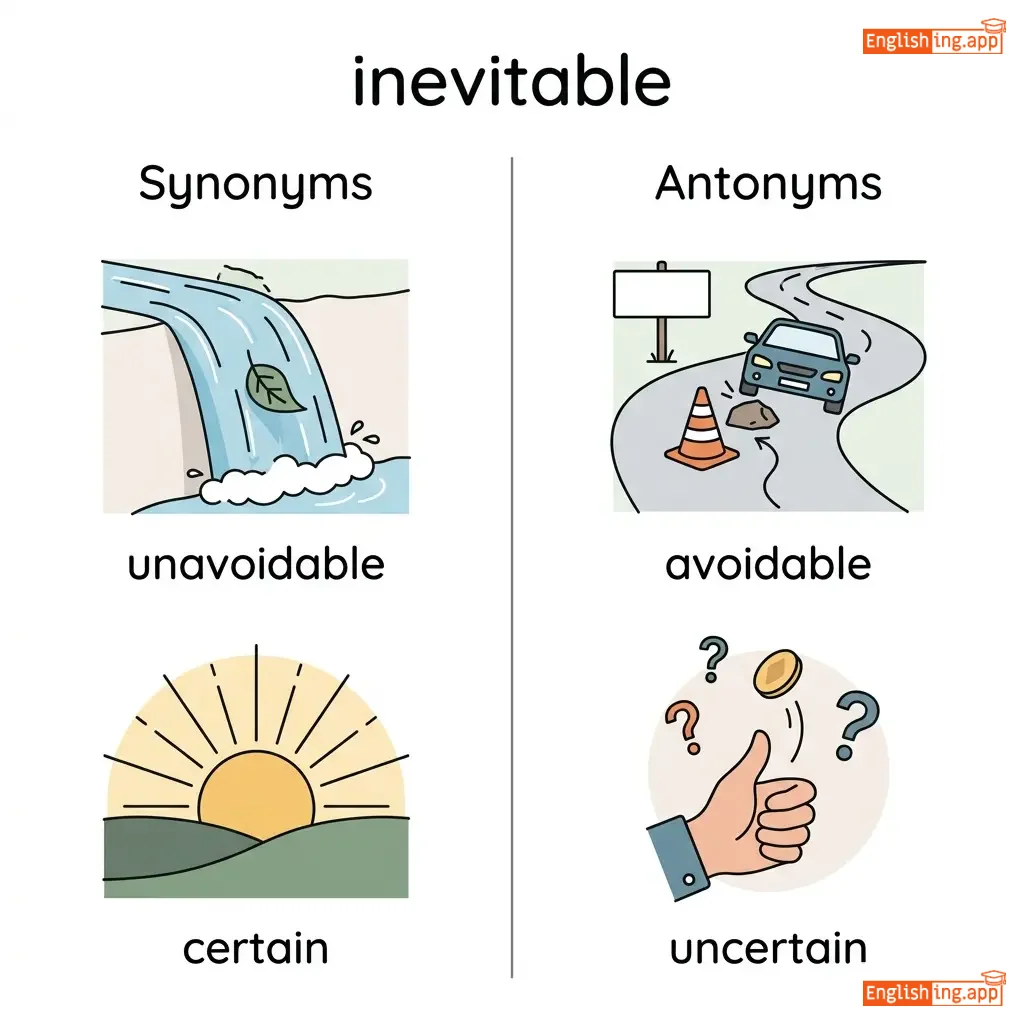
unavoidable, inescapable, certain, bound to happen
••••••
|
avoidable, preventable, uncertain, optional
••••••
|
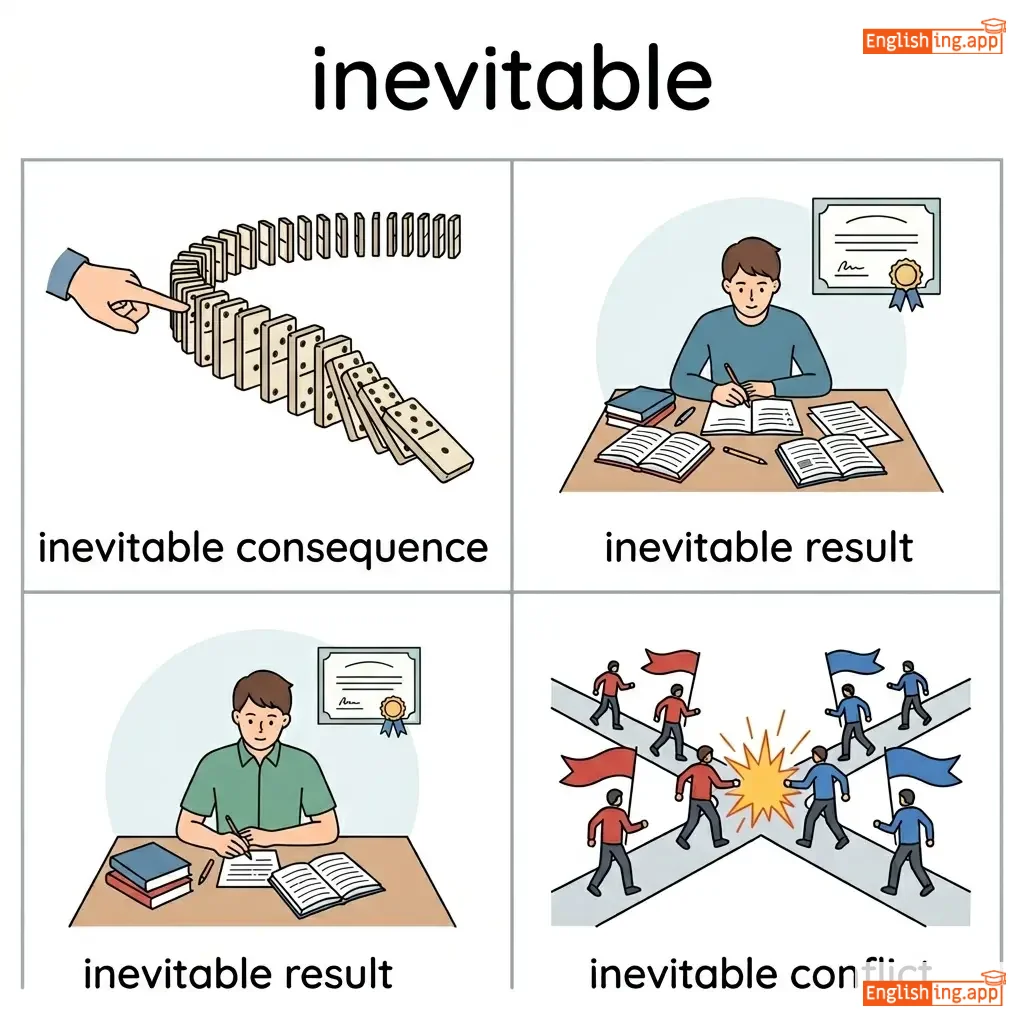
inevitable consequence, inevitable outcome, seem inevitable
••••••
|
In Japanese, '避けられない' is similar to 'inevitable' in English, helping you recall it easily.
••••••
|
|
#397
🖊️
|
/ɪnˈdeləbəl/
adjective
(インデリブル)
••••••
|
|
消えない; 削除できない、または忘れられない
kienai; sakujo dekinai, matawa wasurerarenai
••••••
|
permanent; impossible to remove or forget; lasting
••••••
|
The accident left an indelible mark on his memory.
事故は彼の記憶に消えない印を残しました。
••••••
|
事故は彼の記憶に消えない印を残しました。
Jiko wa kare no kioku ni kienai shirushi o nokoshimashita.
••••••
|
permanent, lasting, enduring, unforgettable
••••••
|
erasable, temporary, removable, forgettable
••••••
|
indelible mark, indelible impression, indelible ink
••••••
|
インデリブル—記憶に残る永遠の痕跡
••••••
|
|
#398
🧬
|
/ˈɪnbɔːrn/
adjective
(インボーン)
••••••
|
- •••••• |
生まれつきの; 生来の; 内在的な
umaretsuki no; seiraino; naizai tekina
••••••
|
existing from birth; natural; inherent
••••••
|
She has an inborn talent for music.
彼女は音楽のための生まれつきの才能を持っています。
••••••
|
彼女は音楽のための生まれつきの才能を持っています。
Kanojo wa ongaku no tame no umaretsuki no sainou o motteimasu.
••••••
|
innate, natural, inherent, native
••••••
|
acquired, learned, developed, trained
••••••
|
inborn ability, inborn trait, inborn talent
••••••
|
Inborn = 生まれつき持っている才能のように
••••••
|
|
#399
🚫🍽️
|
/ɪnˈedəbəl/
adjective
(イネディブル)
••••••
|
- •••••• |
食べられない
taberarenai
••••••
|
not suitable or safe for eating; not edible
••••••
|
The mushrooms were poisonous and completely inedible.
そのキノコは毒性があり、完全に食べられないものでした
••••••
|
そのキノコは毒性があり、完全に食べられないものでした。
Sono kinoko wa dokusei ga ari, kanzen ni taberarenai mono deshita.
••••••
|
uneatable, unpalatable, poisonous, toxic
••••••
|
edible, palatable, eatable, consumable
••••••
|
inedible mushrooms, inedible plants, inedible food
••••••
|
食べられない means you can't eat it!
••••••
|
|
#400
💰
|
/ˌɪnɪkˈspɛnsɪv/
adjective
(イネクスペンシブ)
••••••
|
- •••••• |
安い; 手頃な; 経済的
yasui; tegotona; keizaiteki
••••••
|
not costing a lot of money; affordable; budget-friendly
••••••
|
This restaurant offers delicious and inexpensive meals for students. |
このレストランは学生のためにおいしくて安い食事を提供しています。
Kono resutoran wa gakusei no tame ni oishikute yasui shokuji o teikyō shiteimasu.
••••••
|
cheap, affordable, budget-friendly, economical
••••••
|
expensive, costly, dear, pricey
••••••
|
inexpensive option, relatively inexpensive, inexpensive alternative
••••••
|
安くておいしい、学生向けのお店!
••••••
|
Vocabulary Quiz
Test your vocabulary by matching words with their translations or meanings.
Login to take the quiz
Comments (0)
Share your thoughts and join the discussion.
Join the discussion by logging in
Login to CommentNo comments yet
Be the first to share your thoughts!