





Swipe left or right, or use the buttons. Tap image to zoom.
例句翻译
单词
Lesson 20Lesson 20 - 遮罩切换
|
表情符号
|
单词 | Images | 翻译 | 含义 | 例句 | 例句翻译 | 同义词 | 反义词 | 搭配词 | 助记符 |
|---|---|---|---|---|---|---|---|---|---|---|
|
#381
❌
|
/ɪnˈækjərət/
adjective
(inakyuret)
••••••
|
- •••••• |
不正确; 错误的; 错误的
bù zhèngquè; cuòwù de; cuòwù de
••••••
|
not correct; containing errors; wrong
••••••
|
The weather forecast was inaccurate yesterday. |
昨天的天气预报不准确。
Zuótiān de tiānwēi yùbào bù zhèngquè.
••••••
|
wrong, incorrect, false, imprecise
••••••
|
accurate, correct, precise, exact
••••••
|
inaccurate information, inaccurate data, inaccurate measurement
••••••
|
想到错误的天气预报总是让你困惑。
••••••
|
|
#382
❌
|
/ˌɪnɪˈfɛktɪv/
adjective
(yǐnɪfèktɪv)
••••••
|
|
无效的; 无用的; 失败的
wúxiàode; wúyòngde; shībàide
••••••
|
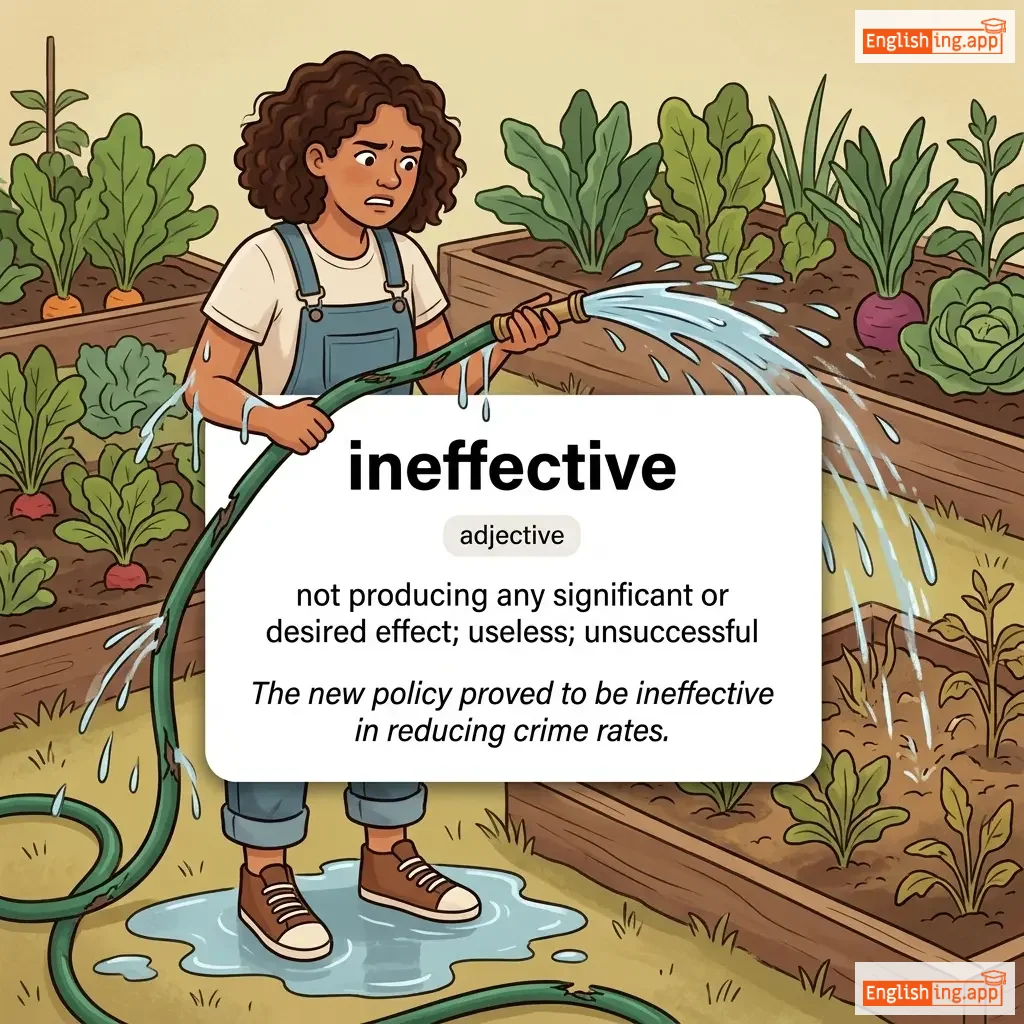
not producing any significant or desired effect; useless; unsuccessful
••••••
|
The new policy proved to be ineffective in reducing crime rates.
新的政策证明在减少犯罪率方面无效。
••••••
|
新的政策证明在减少犯罪率方面无效。
xīn de zhèngcè zhèngmíng zài jiǎnshǎo fànzuì lǜ fāngmiàn wúxiào.
••••••
|
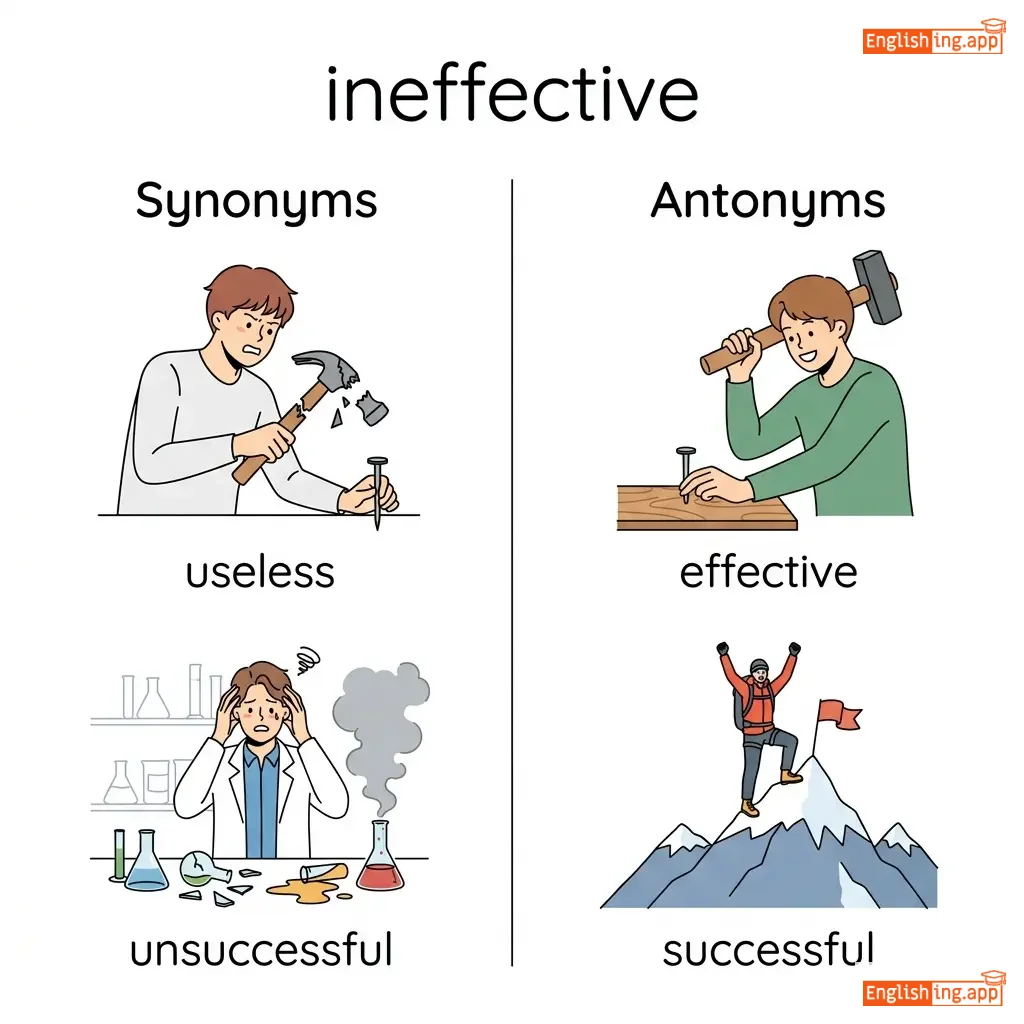
useless, unsuccessful, futile, powerless
••••••
|
effective, successful, powerful, efficient
••••••
|
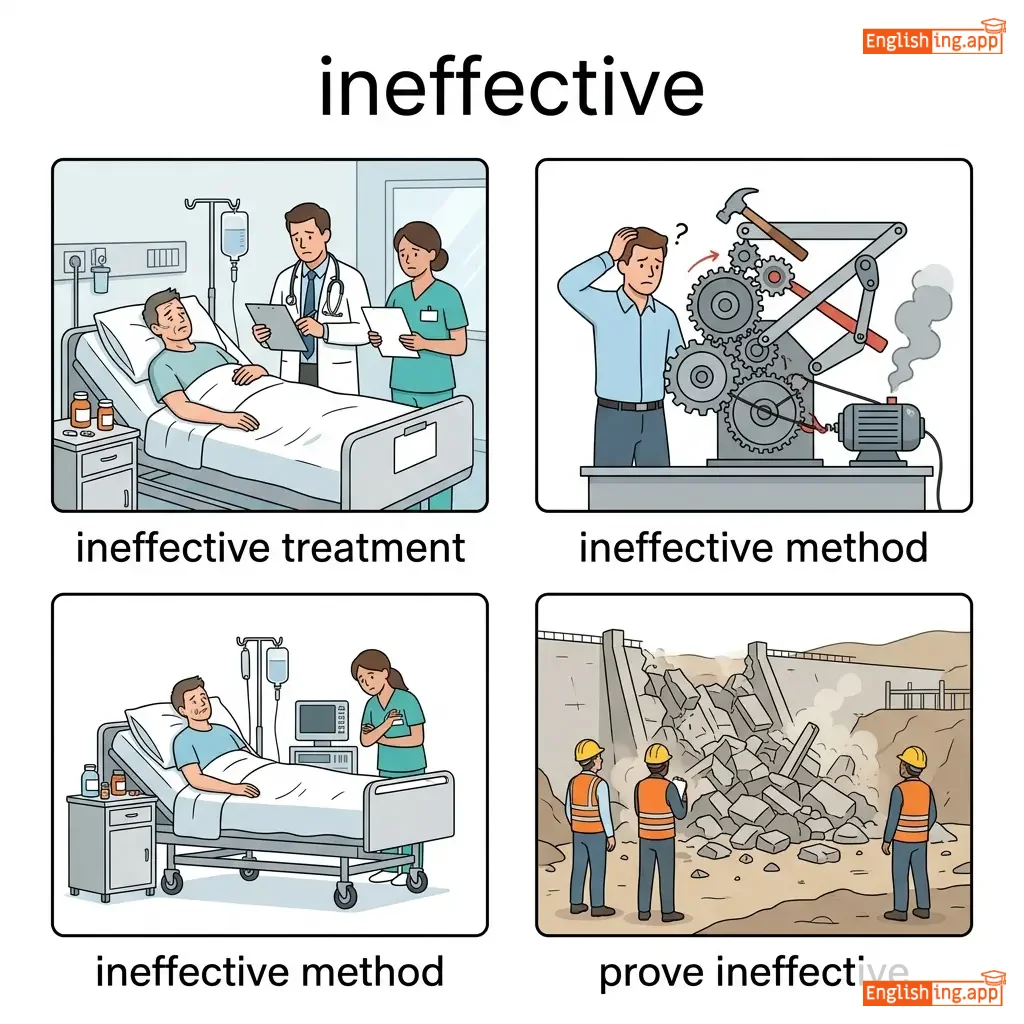
ineffective treatment, ineffective method, prove ineffective
••••••
|
Think of '无效的' as ineffective, like something that just doesn't work!
••••••
|
|
#383
😤
|
/ˌɪnkənˈviːniənt/
adjective
(yīnkānvīniēnt)
••••••
|
- •••••• |
不便的; 难堪的; 麻烦的
bùbiàn de; nánkān de; máfan de
••••••
|
causing trouble, difficulties, or discomfort; awkward; troublesome
••••••
|
The broken elevator made it inconvenient to reach the top floor.
坏掉的电梯使得到达顶楼变得不方便。
••••••
|
坏掉的电梯使得到达顶楼变得不方便。
Huàidiào de diàntī shǐdé dào dá dǐng lóu biàn dé bù fāngbiàn.
••••••
|
troublesome, awkward, bothersome, difficult
••••••
|
convenient, easy, suitable, helpful
••••••
|
inconvenient time, inconvenient location, highly inconvenient
••••••
|
电梯坏了使得出行不方便。
••••••
|
|
#384
😮
|
/ˌɪndɪˈskraɪbəbəl/
adjective
(yīn dì sī kè lāi bèi ěr)
••••••
|
- •••••• |
无法形容
wúfǎ xíngróng
••••••
|
impossible to describe or express in words; beyond description
••••••
|
The beauty of the sunset was indescribable. |
夕阳的美丽是无法形容的。
Xīyáng de měilì shì wúfǎ xíngróng de.
••••••
|
inexplicable, ineffable, unutterable, beyond words
••••••
|
describable, expressible, definable
••••••
|
indescribable feeling, indescribable beauty, indescribable joy
••••••
|
想象一下,夕阳美丽到无法用语言描述。
••••••
|
|
#385
🚫
|
/ɪnˈæpt/
adjective
(inapt)
••••••
|
- •••••• |
不合适; 不适当
bù héshì; bù shìdàng
••••••
|
not suitable; inappropriate; unfit
••••••
|
His comment was inapt for the formal meeting. |
他的评论对正式会议不合适。
Tā de pínglùn duì zhèngshì huìyì bù héshì.
••••••
|
inappropriate, unsuitable, unfit, improper
••••••
|
apt, appropriate, suitable, fitting
••••••
|
inapt comparison, inapt remark, inapt choice
••••••
|
Inapt 的中文意思是 '不合适' 或者 '不适当'
••••••
|
|
#386
🐌
|
/ˌɪnɪˈfɪʃənt/
adjective
(无效率)
••••••
|
- •••••• |
无效率
wú xiàolǜ
••••••
|
not achieving maximum productivity; wasteful of time or resources
••••••
|
The old computer system was inefficient and wasted a lot of time.
老旧的计算机系统效率低,浪费了很多时间。
••••••
|
老旧的计算机系统效率低,浪费了很多时间。
Lǎojiù de jìsuànjī xìtǒng xiàolǜ dī, làngfèi le hěnduō shíjiān.
••••••
|
unproductive, wasteful, slow, incompetent
••••••
|
efficient, productive, effective, competent
••••••
|
inefficient process, inefficient use, energy inefficient
••••••
|
无效率 means inefficient in Chinese, both wasting resources.
••••••
|
|
#387
🌱
|
/ɪnˈdɪdʒɪnəs/
adjective
(印第安人)
••••••
|
|
土著; 本地人
tǔzhù; běndìrén
••••••
|
native to a particular place; originating naturally in a country or region
••••••
|
The indigenous people have lived here for thousands of years.
土著人民在这里生活了数千年。
••••••
|
土著人已经在这里生活了几千年。
Tǔzhù rén yǐjīng zài zhèlǐ shēnghuóle jǐ qiān nián.
••••••
|
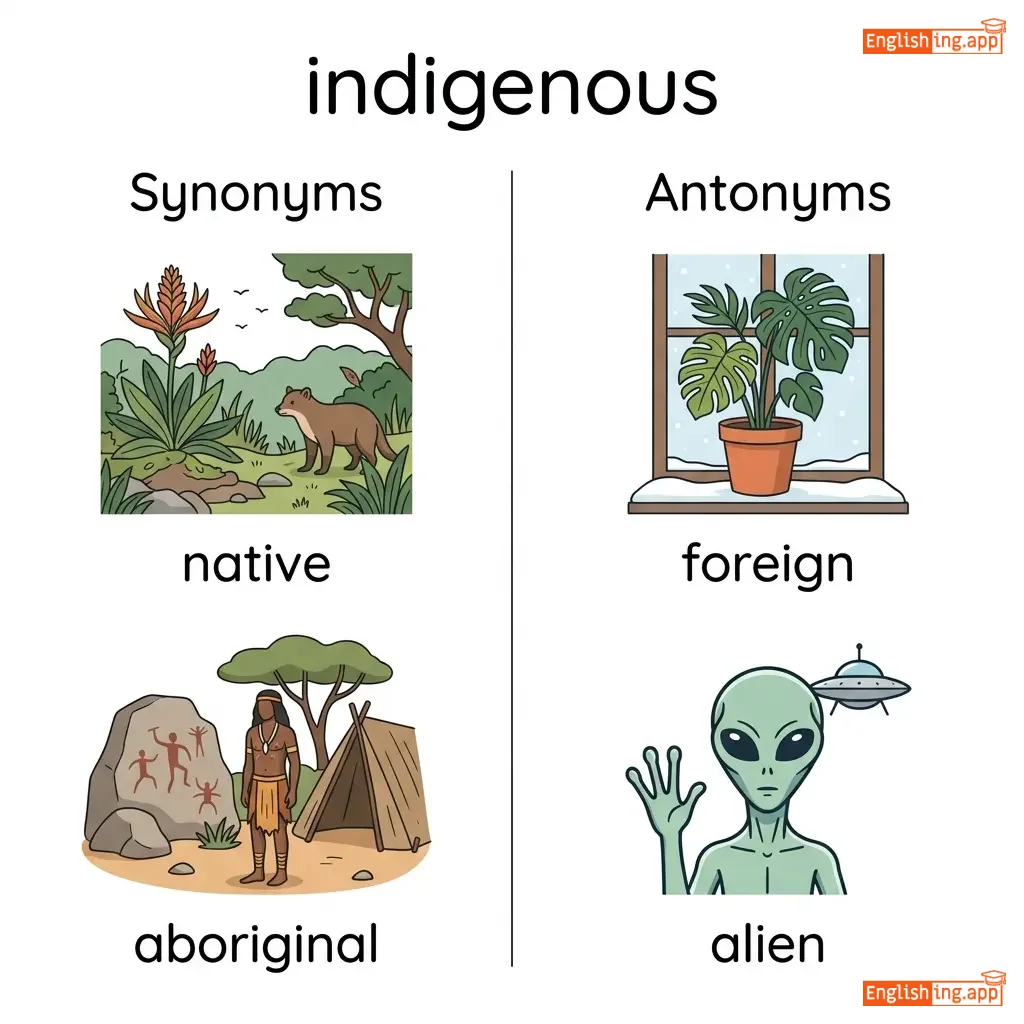
native, local, aboriginal, autochthonous
••••••
|
foreign, exotic, imported, alien
••••••
|
indigenous people, indigenous culture, indigenous language
••••••
|
印第安人是土生土长的,几千年来一直生活在这里。
••••••
|
|
#388
💳
|
/ɪnˈdetɪd/
adjective
(因德特)
••••••
|
- •••••• |
负债的; 感激的
fù zhài de; gǎn jī de
••••••
|
owing money or gratitude to someone; obligated; grateful
••••••
|
I am deeply indebted to my teacher for all her guidance. |
我对我的老师为我提供的所有指导深感感激。
Wǒ duì wǒ de lǎoshī wèi wǒ tígōng de suǒyǒu zhǐdǎo shēn gǎn gǎnjī.
••••••
|
obligated, grateful, owing, beholden
••••••
|
free, independent, unobligated
••••••
|
deeply indebted, forever indebted, heavily indebted
••••••
|
Indebted means being grateful, remember 'I am deeply grateful to my teacher.'
••••••
|
|
#389
🤷
|
/ˌɪndɪˈsaɪsɪv/
adjective
(印迪西西夫)
••••••
|
- •••••• |
优柔寡断的
indecisive
••••••
|
unable to make decisions quickly; hesitant; wavering
••••••
|
She was indecisive about which university to attend.
她对要去哪个大学犹豫不决。
••••••
|
她对要去哪个大学犹豫不决。
ta dui yao qu na ge da xue you yu bu jue
••••••
|
hesitant, uncertain, wavering, irresolute
••••••
|
decisive, determined, resolute, confident
••••••
|
indecisive moment, indecisive leader, chronically indecisive
••••••
|
In Deep Choice I See Value 记忆法 将 indecisive 与 深层 选择 联系起来
••••••
|
|
#390
🤢
|
/ˌɪndaɪˈdʒestəbəl/
adjective
(难以消化)
••••••
|
- •••••• |
难以消化; 难以处理
nán yǐ xiāo huà; nán yǐ chǔ lǐ
••••••
|
difficult or impossible to digest; hard to process in the stomach
••••••
|
The old bread became hard and indigestible. |
老面包变得坚硬且难以消化。
Lǎo miànbāo biàn dé jiānyìng qiě nán yǐ xiāohuà.
••••••
|
unpalatable, hard to digest, heavy, tough
••••••
|
digestible, palatable, light, easy to digest
••••••
|
indigestible food, indigestible matter, indigestible substance
••••••
|
Indigestible 是指难以消化的东西,比如老面包。
••••••
|
|
#391
🎉
|
/ɪˈnɔːɡjərəl/
adjective
(inaugural)
••••••
|
- •••••• |
开幕
kaimu
••••••
|
marking the beginning of something; first; opening
••••••
|
The president delivered his inaugural speech. |
总统发表了他的开幕演讲。
Zongtong fabiao le tade kaimu yanjiang.
••••••
|
opening, initial, first, introductory
••••••
|
final, concluding, closing, last
••••••
|
inaugural speech, inaugural ceremony, inaugural address
••••••
|
Inaugural speech marks the opening, like 'kaimu' that starts everything.
••••••
|
|
#392
🚫
|
/ɪnˈɛlɪdʒəbəl/
adjective
(ineligible)
••••••
|
- •••••• |
不合格; 不适合; 无资格
bù hé gé; bù shì hé; wú zī gé
••••••
|
not qualified or entitled to participate or be chosen; unsuitable
••••••
|
Students with poor grades are ineligible for the scholarship program. |
成绩差的学生不符合奖学金计划的资格。
Chéngjī chà de xuéshēng bù fúhé jiǎngxuéjīn jìhuà de zīgé.
••••••
|
unqualified, disqualified, unsuitable, unfit
••••••
|
eligible, qualified, suitable, fit
••••••
|
ineligible for benefits, deemed ineligible, ineligible candidate
••••••
|
Ineligible means ‘in’ (not) and ‘eligible’ (qualified), so ‘not qualified’.
••••••
|
|
#393
❓
|
/ɪnˈdefɪnət/
adjective
(インディフィニット)
••••••
|
- •••••• |
不确定的
bù què dìng de
••••••
|
not clearly defined; uncertain; vague; unlimited in time
••••••
|
The meeting has been postponed for an indefinite period.
会议被推迟到一个不确定的时期。
••••••
|
会议被推迟到一个不确定的时期。
Huìyì bèi tuīchí dào yīgè bù què dìng de shíqī.
••••••
|
uncertain, unclear, vague, unlimited
••••••
|
definite, specific, clear, precise
••••••
|
indefinite period, indefinite postponement, indefinite article
••••••
|
In Chinese, '不确定的' describes something undefined in time, like an indefinite meeting delay.
••••••
|
|
#394
✅
|
/ˌɪndɪˈspjuːtəbəl/
adjective
(インディスピュータブル)
••••••
|
- •••••• |
不可争辩的; 不容否认的; 确定的
bù kě zhēngbiàn de; bù róng fǒu rèn de; quèdìng de
••••••
|
impossible to deny or argue against; undeniable; certain
••••••
|
The evidence against him was indisputable. |
反对他的证据是不可争辩的。
Fǎnduì tā de zhèngjù shì bù kě zhēngbiàn de.
••••••
|
undeniable, unquestionable, certain, irrefutable
••••••
|
disputable, questionable, doubtful, debatable
••••••
|
indisputable fact, indisputable evidence, indisputable truth
••••••
|
Indisputable in Chinese means '不可争辩的' – you can’t argue against it!
••••••
|
|
#395
🌩️
|
/ˌɪnɔːˈspɪʃəs/
adjective
(inaspishus)
••••••
|
- •••••• |
不吉利
bù jí lì
••••••
|
unlucky; showing signs that future success is unlikely; unfavorable
••••••
|
The dark clouds seemed inauspicious for the wedding. |
黑云似乎对婚礼不吉利。
Hēi yún shìhū duì hūnlǐ bù jí lì.
••••••
|
unlucky, unfavorable, ominous, ill-omened
••••••
|
auspicious, favorable, lucky, promising
••••••
|
inauspicious beginning, inauspicious timing, inauspicious signs
••••••
|
不吉利是暗示未来不好的征兆。
••••••
|
|
#396
⏳
|
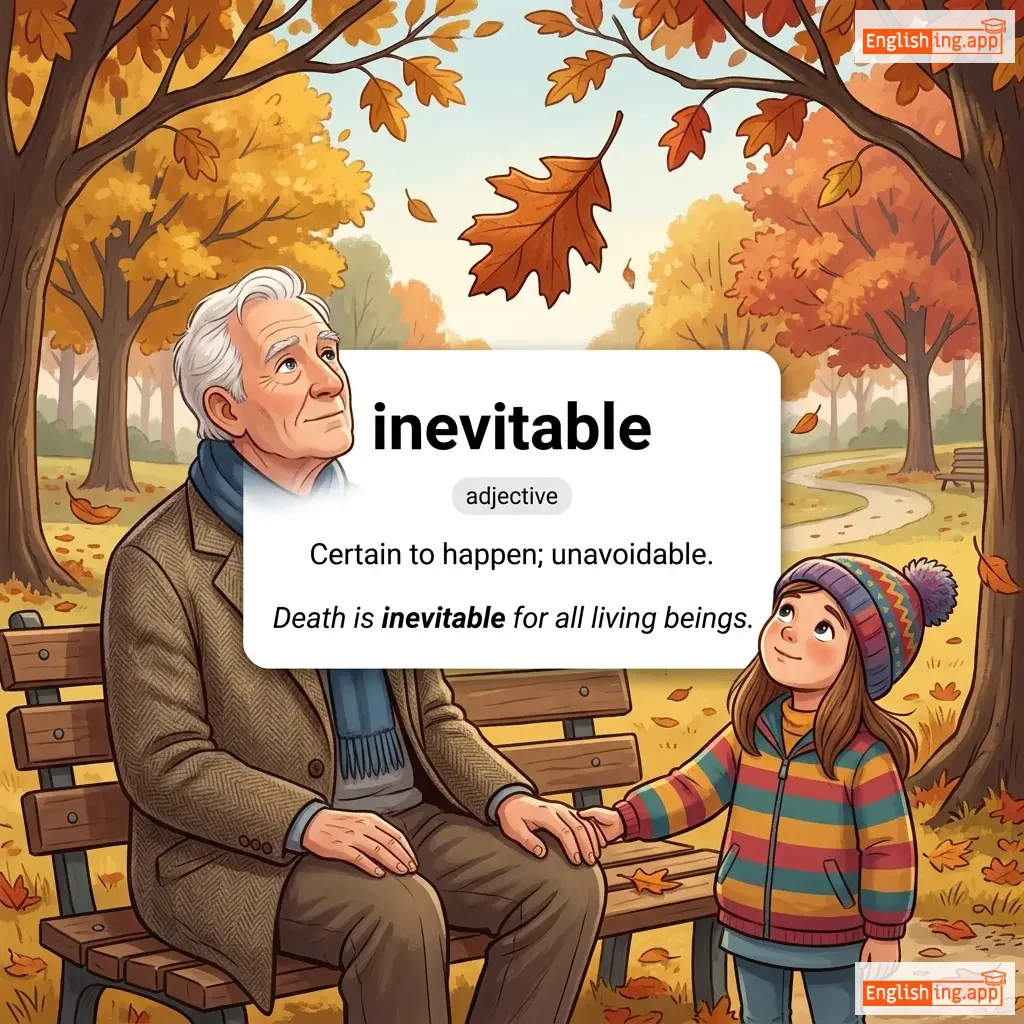
/ɪnˈɛvɪtəbəl/
adjective
(必然的)
••••••
|
|
必然的
birandee
••••••
|
certain to happen; unavoidable; bound to occur
••••••
|
Death is an inevitable part of life that everyone must face.
死亡是生活中不可避免的一部分,每个人都必须面对。
••••••
|
死亡是生活中不可避免的一部分,每个人都必须面对。
Siwang shi shenghuo zhong buke bianmian de yi bufen, meige ren dou bixu mian dui.
••••••
|
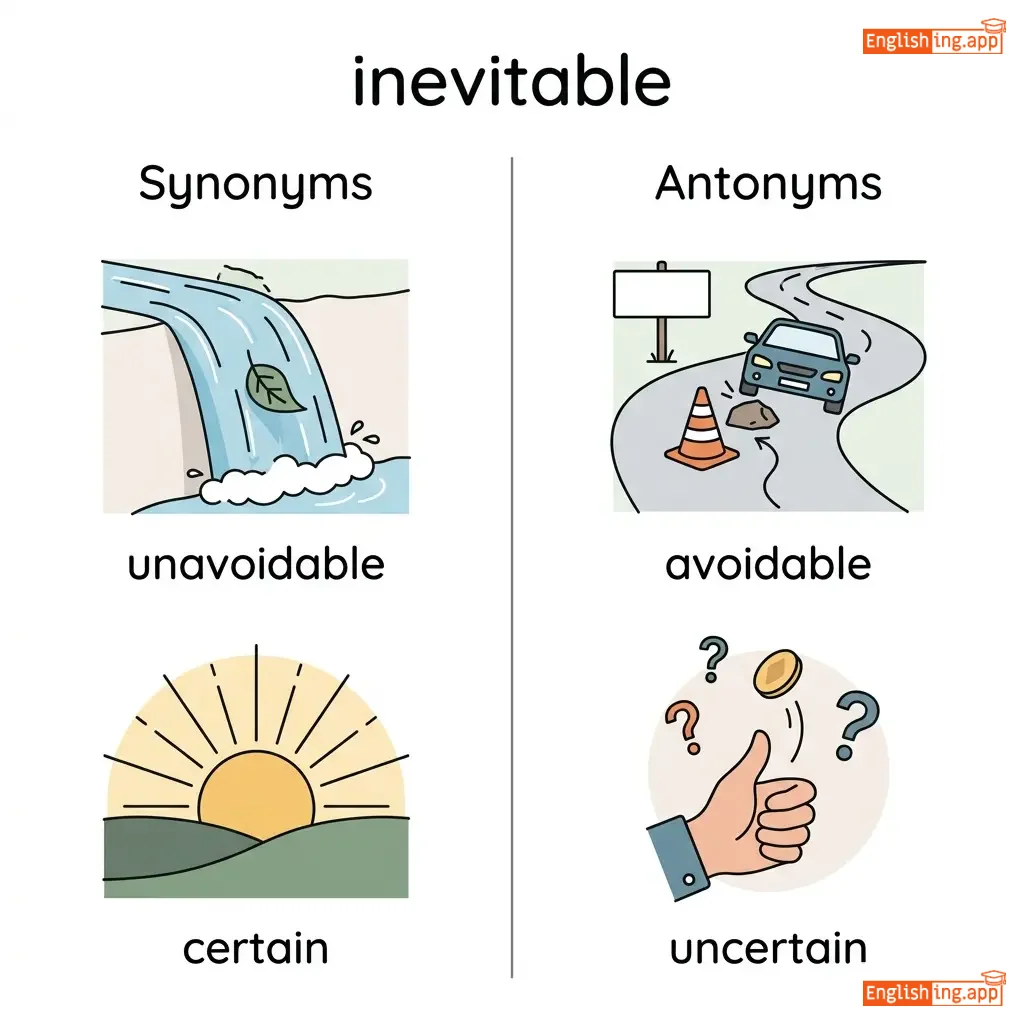
unavoidable, inescapable, certain, bound to happen
••••••
|
avoidable, preventable, uncertain, optional
••••••
|
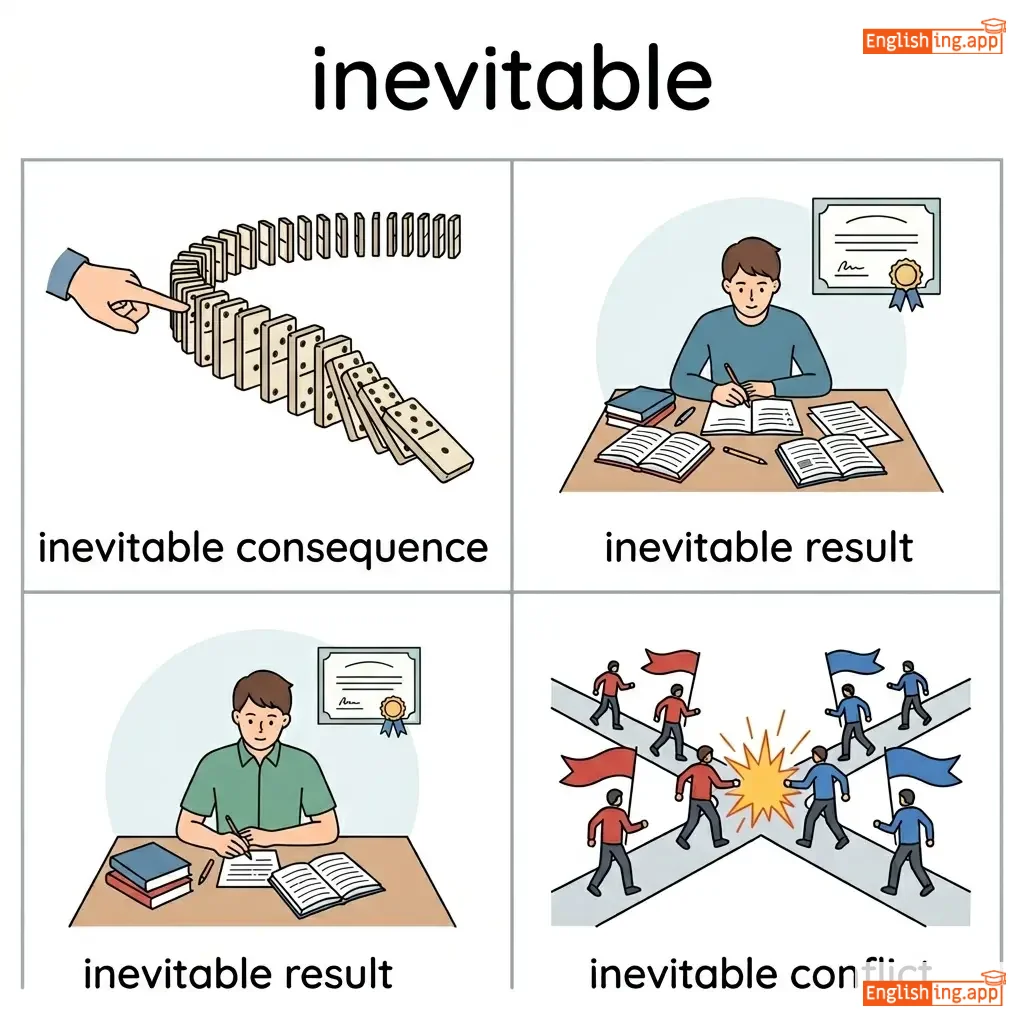
inevitable consequence, inevitable outcome, seem inevitable
••••••
|
In Chinese, '必然的' closely mirrors the English word 'inevitable', aiding in recall.
••••••
|
|
#397
🖊️
|
/ɪnˈdeləbəl/
adjective
(印地利布尔)
••••••
|
|
不可磨灭的; 不可删除或遗忘的
bùkě mómiè de; bùkě shānchú huò yíwàng de
••••••
|
permanent; impossible to remove or forget; lasting
••••••
|
The accident left an indelible mark on his memory.
事故在他的记忆中留下了无法磨灭的痕迹。
••••••
|
事故在他的记忆中留下了无法磨灭的痕迹。
shìgù zài tā de jìyì zhōng liúxià le wúfǎ mómiè de hénjī.
••••••
|
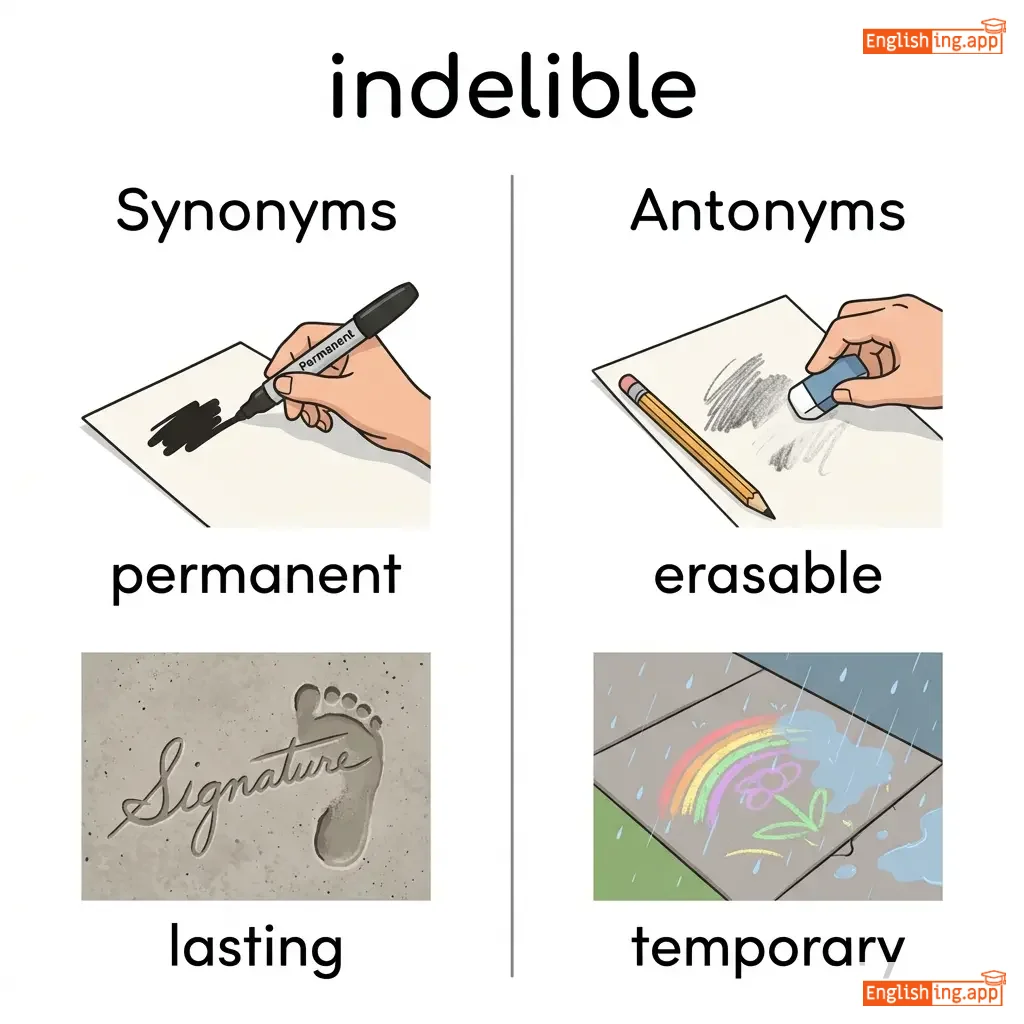
permanent, lasting, enduring, unforgettable
••••••
|
erasable, temporary, removable, forgettable
••••••
|
indelible mark, indelible impression, indelible ink
••••••
|
印地利布尔的记忆,永远不会消失
••••••
|
|
#398
🧬
|
/ˈɪnbɔːrn/
adjective
(inborn)
••••••
|
- •••••• |
与生俱来的; 天生的; 内在的
yǔ shēng jù lái de; tiān shēng de; nèi zài de
••••••
|
existing from birth; natural; inherent
••••••
|
She has an inborn talent for music.
她有天生的音乐才能。
••••••
|
她有天生的音乐才能。
Tā yǒu tiānshēng de yīnyuè cáinéng.
••••••
|
innate, natural, inherent, native
••••••
|
acquired, learned, developed, trained
••••••
|
inborn ability, inborn trait, inborn talent
••••••
|
Inborn = 从出生时便具备的才能,如天生的音乐天赋
••••••
|
|
#399
🚫🍽️
|
/ɪnˈedəbəl/
adjective
(不适合食用)
••••••
|
- •••••• |
不可食用
bù kě shí yòng
••••••
|
not suitable or safe for eating; not edible
••••••
|
The mushrooms were poisonous and completely inedible.
蘑菇是有毒的,完全不可食用
••••••
|
蘑菇是有毒的,完全不可食用。
Mógū shì yǒudú de, wánquán bù kě shíyòng.
••••••
|
uneatable, unpalatable, poisonous, toxic
••••••
|
edible, palatable, eatable, consumable
••••••
|
inedible mushrooms, inedible plants, inedible food
••••••
|
不可食用 means you cannot eat it!
••••••
|
|
#400
💰
|
/ˌɪnɪkˈspɛnsɪv/
adjective
(yī nèikè sī pīn sī fú)
••••••
|
- •••••• |
便宜的; 经济实惠的; 负担得起的
pianyi de; jingji shi hui de; fudan de qi
••••••
|
not costing a lot of money; affordable; budget-friendly
••••••
|
This restaurant offers delicious and inexpensive meals for students. |
这家餐厅为学生提供美味且便宜的餐点。
Zhe jia cāntīng wèi xuéshēng tígōng měiwèi qiě piányí de cāndiǎn.
••••••
|
cheap, affordable, budget-friendly, economical
••••••
|
expensive, costly, dear, pricey
••••••
|
inexpensive option, relatively inexpensive, inexpensive alternative
••••••
|
用便宜的钱,吃到美味!
••••••
|
Vocabulary Quiz
Test your vocabulary by matching words with their translations or meanings.
Login to take the quiz
Comments (0)
Share your thoughts and join the discussion.
Join the discussion by logging in
Login to CommentNo comments yet
Be the first to share your thoughts!