

Swipe left or right, or use the buttons. Tap image to zoom.
例句翻译
单词
Lesson 55Lesson 55 - 遮罩切换
|
表情符号
|
单词 | Images | 翻译 | 含义 | 例句 | 例句翻译 | 同义词 | 反义词 | 搭配词 | 助记符 |
|---|---|---|---|---|---|---|---|---|---|---|
|
#1081
🌟
|
/ˈvaɪ.brənt/
adjective
(vibrant)
••••••
|
- •••••• |
充满活力; 鲜艳的; 生动的
chōngmǎn huólì; xiānyàn de; shēngdòng de
••••••
|
full of energy and life; bright and striking
••••••
|
The vibrant colors of the sunset painted the sky beautifully. |
日落的鲜艳色彩美丽地涂抹了天空。
rìluò de xiānyàn sècǎi měilì de túmǒ le tiānkōng
••••••
|
lively, energetic, bright, vivid, dynamic
••••••
|
dull, lifeless, bland, monotonous, colorless
••••••
|
vibrant colors, vibrant community, vibrant personality, vibrant culture
••••••
|
Imagine a vibrant, energetic sunset lighting up the sky.
••••••
|
|
#1082
✅
|
/ˈvælɪd/
adjective
(有效)
••••••
|
- •••••• |
有效; 法律上或官方上可接受的
youxiao
••••••
|
legally or officially acceptable; having a sound basis in logic or fact
••••••
|
The passport is valid for ten years.
护照有效期为十年。
••••••
|
护照有效期为十年。
Huzhao youxiaoqi wei shinian.
••••••
|
legitimate, legal, authentic, genuine
••••••
|
invalid, illegal, false, fake
••••••
|
valid passport, valid argument, valid point, valid reason
••••••
|
Remember '有效' like 'you sure' — if the passport is valid, it's good to go!
••••••
|
|
#1083
😠
|
/ˈvendʒ.fəl/
adjective
(wénjìfūl)
••••••
|
- •••••• |
怀恨的
huái hèn de
••••••
|
seeking to harm someone in return for a perceived injury; vindictive
••••••
|
She felt vengeful after her friend betrayed her trust.
她在朋友背叛她的信任后感到复仇心重。
••••••
|
她在朋友背叛她的信任后感到复仇心重。
Tā zài péngyǒu bèipàn tā de xìnrèn hòu gǎndào fùchóu xīn zhòng.
••••••
|
vindictive, revengeful, spiteful, retaliatory
••••••
|
forgiving, merciful, compassionate, benevolent
••••••
|
vengeful spirit, vengeful thoughts, vengeful person
••••••
|
她感到复仇心重,因为朋友背叛了她。
••••••
|
|
#1084
🎨
|
/ˈvɛərid/
adjective
(韦瑞德)
••••••
|
- •••••• |
多样的; 各种各样的
duōyàng de; gè zhǒng gè yàng de
••••••
|
showing differences; diverse; containing different types
••••••
|
The museum has a varied collection of ancient artifacts. |
博物馆拥有各种各样的古代文物收藏。
Bówùguǎn yǒngyǒu gè zhǒng gè yàng de gǔdài wénwù shōucáng.
••••••
|
diverse, mixed, assorted, different
••••••
|
uniform, identical, same, consistent
••••••
|
varied collection, varied experiences, varied diet, varied background
••••••
|
多样的东西就像色彩斑斓的画布,丰富多彩。
••••••
|
|
#1085
😡
|
/ˈvɪʃ.əs/
adjective
(威胁)
••••••
|
- •••••• |
恶毒的; 残忍的; 野性的
èdú de; cánrěn de; yěxìng de
••••••
|
deliberately cruel or violent; having a savage nature
••••••
|
The vicious dog attacked anyone who came near its territory. |
那只恶狗攻击任何接近其领土的人。
nà zhī è gǒu gōngjí rènhé jiējìn qí lǐngtǔ de rén
••••••
|
cruel, savage, brutal, fierce, malicious
••••••
|
kind, gentle, benevolent, compassionate, merciful
••••••
|
vicious attack, vicious cycle, vicious rumors, vicious behavior
••••••
|
Vicious,就像一只恶毒的狗
••••••
|
|
#1086
💎
|
/ˈvæljʊəbl/
adjective
(ˈvæljʊəbl)
••••••
|
- •••••• |
有价值的; 重要的
yǒu jiàzhí de; zhòngyào de
••••••
|
worth a great deal of money; extremely useful or important
••••••
|
The painting is very valuable and worth millions.
这幅画非常有价值,价值数百万。
••••••
|
这幅画非常有价值,价值数百万。
Zhè fú huà fēicháng yǒu jiàzhí, jiàzhí shù bǎi wàn.
••••••
|
precious, expensive, costly, priceless
••••••
|
worthless, cheap, valueless, insignificant
••••••
|
valuable asset, valuable experience, valuable time, valuable information
••••••
|
V – 价值是有价值的 (yǒu jiàzhí de),这就是我们需要的重要事物
••••••
|
|
#1087
😌
|
/ˈviː.ni.əl/
adjective
(维尼尔)
••••••
|
- •••••• |
可原谅的;不严重错误;轻微的
kě yuánliàng de; bù yánzhòng cuòwù; qīngwēi de
••••••
|
forgivable; not seriously wrong; minor
••••••
|
His late arrival was considered a venial offense. |
他的迟到被认为是一个可原谅的过错。
Tā de chídào bèi rènwéi shì yīgè kě yuánliàng de guòcuò.
••••••
|
forgivable, pardonable, excusable, minor
••••••
|
mortal, serious, grave, unforgivable
••••••
|
venial sin, venial fault, venial offense
••••••
|
小过错可以被原谅
••••••
|
|
#1088
🔀
|
/ˈvɛəriəs/
adjective
(维里厄斯)
••••••
|
- •••••• |
各种各样的; 多种类型的
gè zhǒng gè yàng de; duō zhǒng lèi xíng de
••••••
|
several different; many different types of
••••••
|
She has lived in various countries around the world.
她曾在世界各地的多个国家生活过。
••••••
|
她曾在世界各地的多个国家生活过。
Tā céng zài shìjiè gèdì de duō gè guójiā shēnghuó guò.
••••••
|
different, several, numerous, many
••••••
|
single, one, same, identical
••••••
|
various reasons, various methods, various sources, various options
••••••
|
In Chinese, '各种' (gè zhǒng) means various, remember by thinking of diversity.
••••••
|
|
#1089
🌊
|
/væst/
adjective
(vast)
••••••
|
- •••••• |
广阔; 巨大; 无边
guang kuo; ju da; wu bian
••••••
|
extremely large in size, amount, or extent; immense
••••••
|
The vast ocean stretched endlessly to the horizon.
广阔的海洋延伸至地平线。
••••••
|
广阔的海洋延伸至天际。
Guang kuo de haiyang yanshen zhi tianji.
••••••
|
huge, enormous, immense, massive
••••••
|
tiny, small, limited, narrow
••••••
|
vast majority, vast area, vast knowledge, vast difference
••••••
|
想象一个没有边际的巨大海洋。
••••••
|
|
#1090
🐍
|
/ˈven.ə.məs/
adjective
(毒性)
••••••
|
- •••••• |
有毒的; 恶意的;
yǒu dú de; èyì de
••••••
|
secreting venom; full of malice or spite; extremely hostile
••••••
|
The venomous snake struck quickly at its prey. |
毒蛇迅速袭击了它的猎物。
Dú shé xùnsù xíjīle tā de lièwù.
••••••
|
poisonous, toxic, malicious, spiteful
••••••
|
harmless, benign, kind, gentle
••••••
|
venomous snake, venomous bite, venomous attack
••••••
|
有毒的 + 恶意 = 一条毒蛇带着恶意迅速攻击
••••••
|
|
#1091
❓
|
/veɪɡ/
adjective
(veɪɡ)
••••••
|
- •••••• |
模糊; 不确定
móhū; bù quèdìng
••••••
|
unclear or uncertain in meaning; not clearly expressed
••••••
|
His explanation was too vague for me to understand. |
他的解释太模糊,我无法理解。
Tā de jiěshì tài móhū, wǒ wúfǎ lǐjiě
••••••
|
unclear, ambiguous, indefinite, imprecise
••••••
|
clear, specific, precise, definite
••••••
|
vague idea, vague memory, vague answer
••••••
|
模糊就像英语中的 vague,一切都不清晰
••••••
|
|
#1092
💨
|
/ˈveɪpərəs/
adjective
(wéiporus)
••••••
|
- •••••• |
蒸汽的; 模糊的
zhēngqì de; móhu de
••••••
|
consisting of vapor; vague or insubstantial
••••••
|
The morning air was filled with vaporous mist.
De môrning air woz fild wid véiporus mist.
••••••
|
早晨的空气充满了蒸汽般的雾气。
Zǎochén de kōngqì chōngmǎnle zhēngqì bān de wùqì.
••••••
|
misty, hazy, gaseous, ethereal
••••••
|
solid, concrete, substantial, clear
••••••
|
vaporous cloud, vaporous substance, vaporous atmosphere, vaporous form
••••••
|
蒸汽的(蒸汽)和模糊的(雾气)
••••••
|
|
#1093
🔥
|
/ˈviːəmənt/
adjective
(维埃门特)
••••••
|
- •••••• |
激烈的; 强烈的; 热情的; 精力充沛的
jīliè de; qiángliè de; rèqíng de; jīnglì chōngpèi de
••••••
|
showing strong feeling; forceful; passionate; intense
••••••
|
She gave a vehement denial of the accusations. |
她坚决否认了这些指控。
Tā jiānjué fǒurènle zhèxiē zhǐkòng.
••••••
|
passionate, intense, forceful, fierce
••••••
|
mild, gentle, calm, subdued
••••••
|
vehement protest, vehement denial, vehement opposition, vehement argument
••••••
|
No •••••• |
|
#1094
🔄
|
/ˈvɛriəbl/
adjective
(wéiˈæbəl)
••••••
|
- •••••• |
可变的
kěbiàn de
••••••
|
able to change; not consistent or having a fixed pattern
••••••
|
The weather has been very variable this week.
这周的天气变化很大。
••••••
|
这周的天气变化很大。
zhè zhōu de tiānrì biànhuà hěn dà
••••••
|
changeable, fluctuating, unstable, inconsistent
••••••
|
constant, fixed, stable, unchanging
••••••
|
variable weather, variable rate, variable cost, variable speed
••••••
|
Variable = 可以变的 = 天气总是变化
••••••
|
|
#1095
🏔️
|
/ˈven.tʃər.əs/
adjective
(文图罗斯)
••••••
|
- •••••• |
冒险的; 大胆的
màoxiǎn de; dàdǎn de
••••••
|
willing to take risks; adventurous; bold
••••••
|
The venturous explorer climbed the dangerous mountain.
勇敢的探险者攀登了危险的山脉。
••••••
|
勇敢的探险者攀登了危险的山脉。
Yǒnggǎn de tànxiǎn zhě pān dēng le wēixiǎn de shānmài.
••••••
|
adventurous, daring, bold, courageous
••••••
|
cautious, timid, careful, conservative
••••••
|
venturous spirit, venturous journey, venturous person
••••••
|
Venturous = 冒险 + 大胆
••••••
|
|
#1096
💄
|
/veɪn/
adjective
(韦因)
••••••
|
- •••••• |
虚荣; 徒劳
xūróng; túláo
••••••
|
having excessive pride in one's appearance; futile or unsuccessful
••••••
|
She spent hours in front of the mirror being quite vain. |
她在镜子前花了好几个小时,非常虚荣。
Tā zài jìngzi qián huāle hǎo jǐ gè xiǎoshí, fēicháng xūróng.
••••••
|
conceited, proud, narcissistic, futile
••••••
|
humble, modest, successful, effective
••••••
|
vain attempt, vain person, vain effort
••••••
|
虚荣的vain,徒劳的vain,形象过度自豪
••••••
|
|
#1097
👴
|
/ˈvɛnərəbəl/
adjective
(威望)
••••••
|
- •••••• |
尊敬的; 受人尊敬的
zunjing de; shou ren zunjing de
••••••
|
deserving respect due to age, wisdom, or character; revered
••••••
|
The venerable professor has taught at the university for fifty years. |
这位威望的教授在大学里教书已五十年。
Zhe wei wei wang de jiaoshou zai daxue li jiaoshu yi wushi nian.
••••••
|
respected, revered, esteemed, honored
••••••
|
disrespected, dishonored, despised, scorned
••••••
|
venerable institution, venerable tradition, venerable elder, venerable sage
••••••
|
In Chinese, '威望' directly connects to the idea of someone respected due to wisdom.
••••••
|
|
#1098
🔀
|
/ˈvɛriənt/
adjective
(vɛrɪənt)
••••••
|
- •••••• |
变体;不同版本
biàntǐ; bùtóng bǎn běn
••••••
|
differing in form, details, or in some other respect; alternative
••••••
|
There are several variant spellings of this word.
这个词有几个变体。
••••••
|
这个词有几个变体。
Zhège cí yǒu jǐ gè biàntǐ.
••••••
|
different, alternative, modified, divergent
••••••
|
standard, original, uniform, identical
••••••
|
variant form, variant spelling, variant version, genetic variant
••••••
|
在中文中,'变体'是指某事物的不同形式或版本,就像'variant'。
••••••
|
|
#1099
📝
|
/vɜːrˈbeɪ.tɪm/
adjective
(vərˈbeɪtɪm)
••••••
|
|
逐字; 字面意思
zhúzì; zìmiàn yìsi
••••••
|
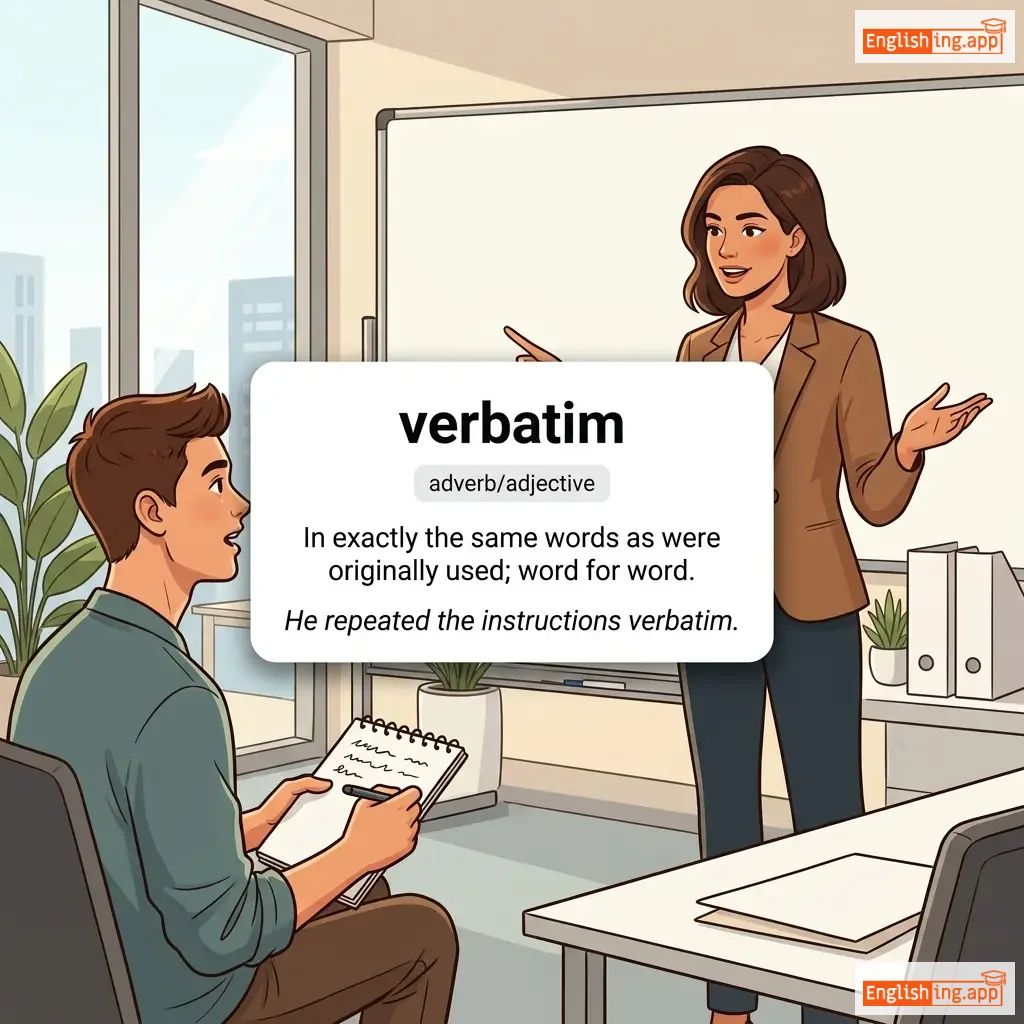
in exactly the same words; word for word; literal
••••••
|
She repeated his speech verbatim without changing a single word.
她毫无改变地逐字重复了他的演讲。
••••••
|
她毫无改变地逐字重复了他的演讲。
Tā háo wú gǎibiàn de zhúzì chóngfùle tā de yǎnjiǎng.
••••••
|
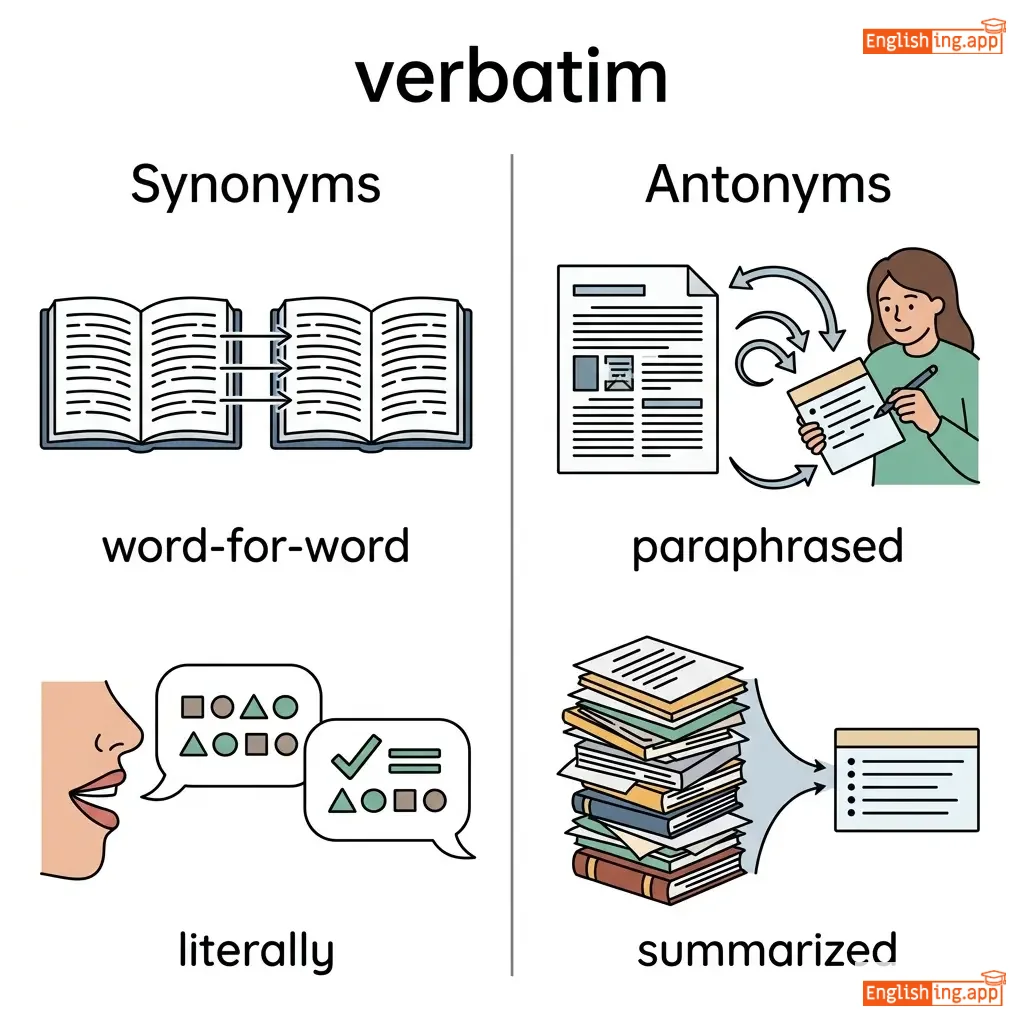
word-for-word, exactly, literally, precisely
••••••
|
paraphrased, summarized, interpreted, approximate
••••••
|
verbatim quote, verbatim record, verbatim transcript
••••••
|
记住 '逐字' 在中文,像是完全相同的重复,逐字不改。
••••••
|
|
#1100
⚔️
|
/ˈvæljənt/
adjective
(韦里安特)
••••••
|
- •••••• |
英勇的; 英雄的
yīngyǒng de; yīngxióng de
••••••
|
showing courage or determination; brave and heroic
••••••
|
The valiant soldier fought bravely to protect his country.
英勇的士兵勇敢地战斗,保护了他的国家。
••••••
|
英勇的士兵勇敢地战斗,保护了他的国家。
Yīngyǒng de shìbīng yǒnggǎn de zhàndòu, bǎohùle tā de guójiā.
••••••
|
brave, courageous, heroic, bold
••••••
|
cowardly, timid, fearful, weak
••••••
|
valiant effort, valiant warrior, valiant attempt
••••••
|
记住‘英勇的’和‘英雄的’,像‘英勇’一样勇敢!
••••••
|
Vocabulary Quiz
Test your vocabulary by matching words with their translations or meanings.
Login to take the quiz
Comments (0)
Share your thoughts and join the discussion.
Join the discussion by logging in
Login to CommentNo comments yet
Be the first to share your thoughts!