







Swipe left or right, or use the buttons. Tap image to zoom.
例句翻译
单词
Lesson 7Lesson 7 - 遮罩切换
|
表情符号
|
单词 | Images | 翻译 | 含义 | 例句 | 例句翻译 | 同义词 | 反义词 | 搭配词 | 助记符 |
|---|---|---|---|---|---|---|---|---|---|---|
|
#121
✅
|
/kənˈkluː.sɪv/
adjective
(kənˈkluːsɪv)
••••••
|
- •••••• |
决定性的; 终结的; 完全解决问题
juédìngxìng de; zhōngjié de; wánquán jiějué wèntí
••••••
|
final; decisive; settling a matter completely
••••••
|
The evidence was conclusive and left no room for doubt.
证据是决定性的,没有留下任何怀疑的空间。
••••••
|
证据是决定性的,没有留下任何怀疑的空间。
Zhèngjù shì juédìngxìng de, méiyǒu liúxià rènhé huáiyí de kōngjiān.
••••••
|
decisive, final, definitive, absolute
••••••
|
inconclusive, uncertain, doubtful, ambiguous
••••••
|
conclusive evidence, conclusive proof, conclusive result
••••••
|
'Con' is final and decisive; 'clusive' means complete resolution.
••••••
|
|
#122
🏛️
|
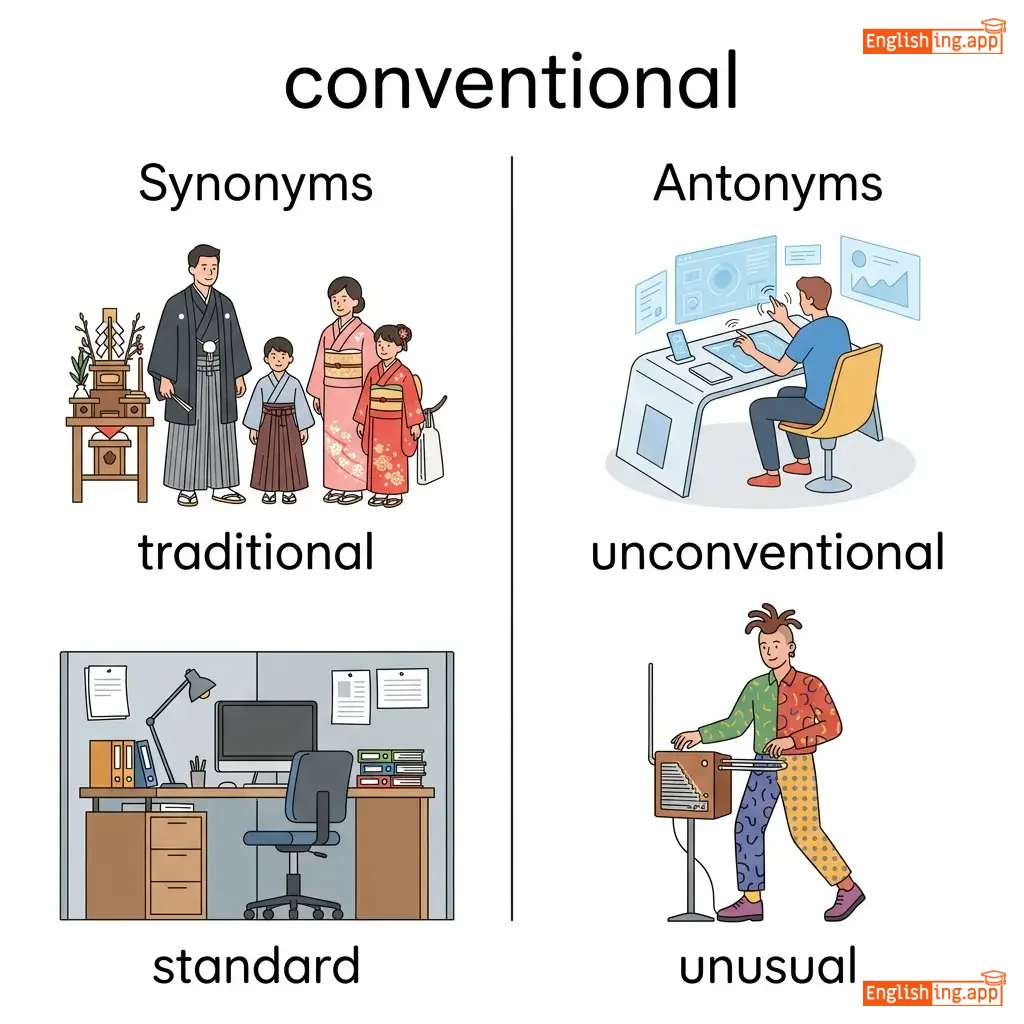
/kənˈvenʃənəl/
adjective
(kənˈvɛnʃənəl)
••••••
|
|
传统的; 传统的; 通常接受的; 受习俗约束
chuántǒng de; chuántǒng de; tōngcháng jiēshòu de; shòu xí sú yuēshù
••••••
|
following traditional practices; customary; generally accepted; bound by convention
••••••
|
She chose a conventional wedding dress for her big day. |
她为她的大日子选择了一件传统的婚纱。
Tā wèi tā de dà rìzi xuǎnzéle yī jiàn chuántǒng de hūnshā.
••••••
|
traditional, orthodox, standard, normal
••••••
|
unconventional, innovative, radical, modern
••••••
|
conventional wisdom, conventional approach, conventional medicine
••••••
|
传统婚礼的选择
••••••
|
|
#123
🔗
|
/kənˈsek.jə.tɪv/
adjective
(kənˈsɛk.jʊ.tɪv)
••••••
|
- •••••• |
连续的
liánxù de
••••••
|
following each other in uninterrupted succession; sequential
••••••
|
She won three consecutive matches in the tournament. |
她在比赛中赢得了三场连续的比赛。
Tā zài bǐsài zhōng yíng dé le sān chǎng liánxù de bǐsài.
••••••
|
sequential, successive, continuous, uninterrupted
••••••
|
alternate, intermittent, sporadic, random
••••••
|
consecutive days, consecutive wins, consecutive numbers, consecutive years
••••••
|
连续的比赛,意味着无中断地进行。
••••••
|
|
#124
🔄
|
/kənˈtɪn.ju.əl/
adjective
(kǒngtīnùyào)
••••••
|
- •••••• |
持续的;不停的
chíxù de; bùtíng de
••••••
|
happening repeatedly over a long period of time; constant and uninterrupted
••••••
|
The continual noise from the construction site was very annoying. |
来自建筑工地的持续噪音非常让人烦恼。
Láizì jiànzhú gōngdì de chíxù zàoyīn fēicháng ràng rén fánnǎo.
••••••
|
continuous, constant, persistent, ongoing
••••••
|
intermittent, occasional, sporadic
••••••
|
continual improvement, continual process, continual effort
••••••
|
持续的声音,如同连绵不断的噪音。
••••••
|
|
#125
🧱
|
/ˈkɒŋ.kriːt/
adjective
(kǒngkrìt)
••••••
|
- •••••• |
坚固的;真实的;有形的;具体的
jiāngù de; zhēnshí de; yǒuxíng de; jùtǐ de
••••••
|
solid; real; tangible; actual and specific
••••••
|
We need concrete evidence to support our claims. |
我们需要具体的证据来支持我们的主张。
Wǒmen xūyào jùtǐ de zhèngjù lái zhīchí wǒmen de zhǔzhāng.
••••••
|
solid, real, tangible, actual
••••••
|
abstract, theoretical, vague, intangible
••••••
|
concrete evidence, concrete example, concrete steps
••••••
|
坚固的证据使得主张更加有力。
••••••
|
|
#126
💪
|
/kənˈvɪnsɪŋ/
adjective
(kənˈvɪnsɪŋ)
••••••
|
- •••••• |
令人信服的; 可信的; 有说服力的; 能使某人相信某事的
lìng rén xìn fú de
••••••
|
believable; credible; persuasive; able to make someone believe something
••••••
|
His convincing argument won over the entire jury.
他的有说服力的论点赢得了整个陪审团。
••••••
|
他的有说服力的论点赢得了整个陪审团。
Tā de yǒu shuōfú lì de lùndiǎn yíngdé le zhěnggè péishěn tuán.
••••••
|
persuasive, compelling, believable, credible
••••••
|
unconvincing, doubtful, weak, implausible
••••••
|
convincing evidence, convincing performance, convincing argument
••••••
|
Convincing = 令人信服的 (你怎么用有说服力的论点说服别人)
••••••
|
|
#127
⚡
|
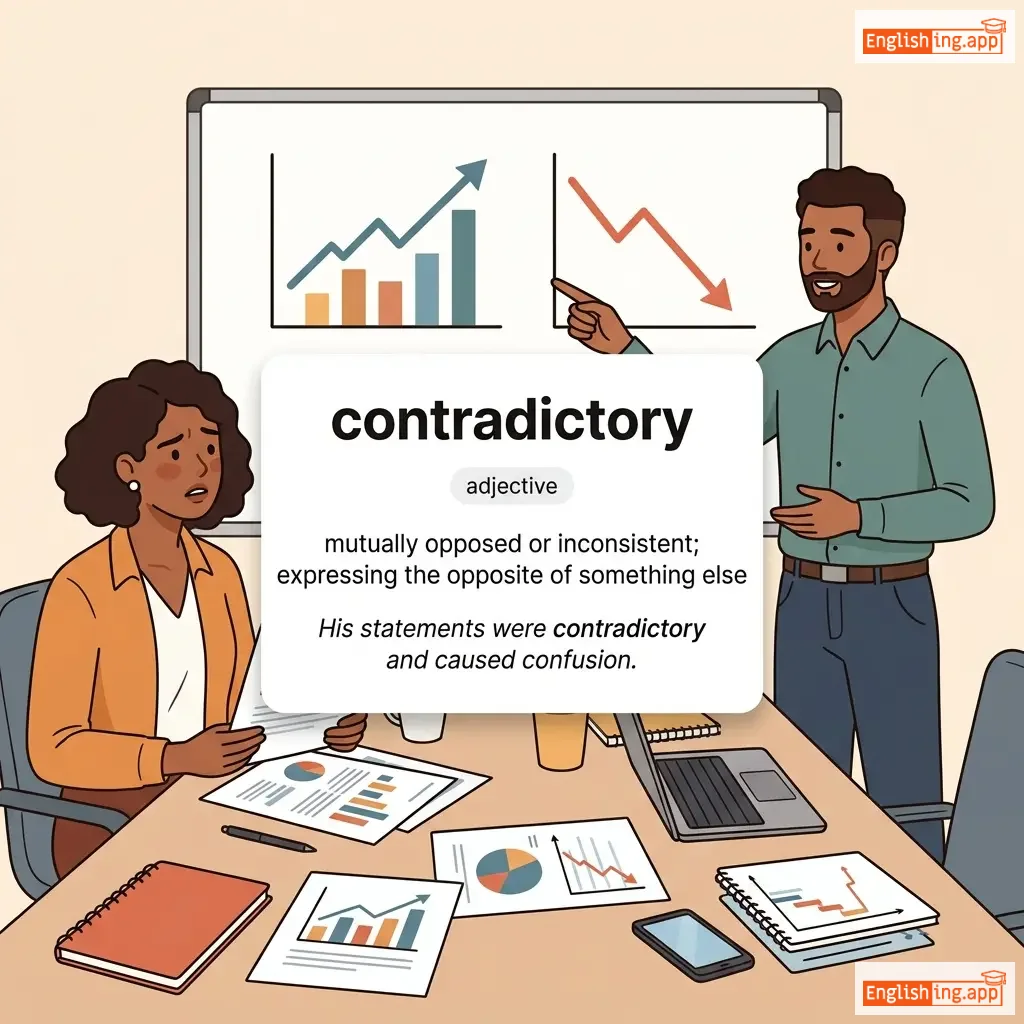
/ˌkɒn.trəˈdɪk.tər.i/
adjective
(康特拉迪克托里)
••••••
|
|
矛盾的
kontruhdiktoree
••••••
|
containing elements that are opposed to one another; inconsistent and conflicting
••••••
|
His statements were contradictory and confusing.
他的陈述彼此矛盾,令人困惑。
••••••
|
他的陈述彼此矛盾,令人困惑。
ta de chen shu bi ci mao dun, ling ren kun huo.
••••••
|
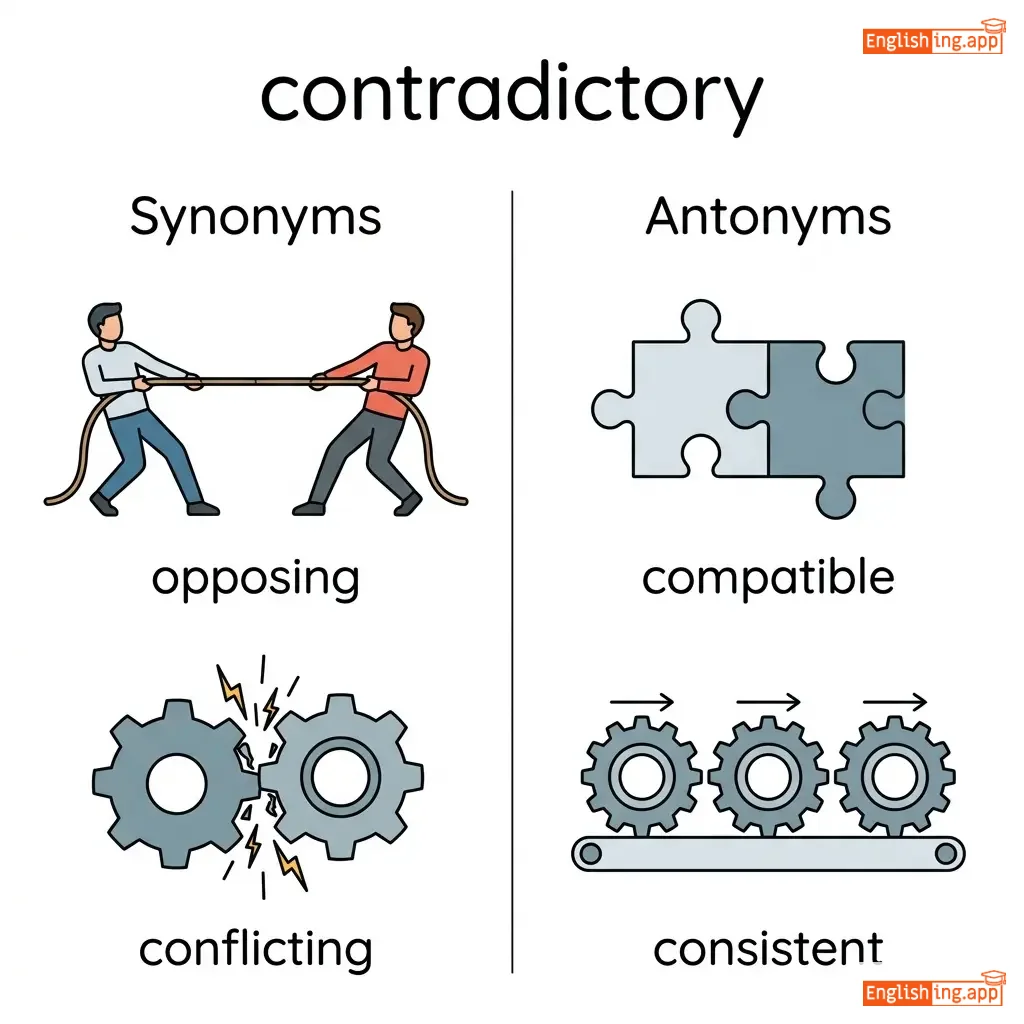
conflicting, opposing, inconsistent, paradoxical
••••••
|
consistent, compatible, harmonious
••••••
|
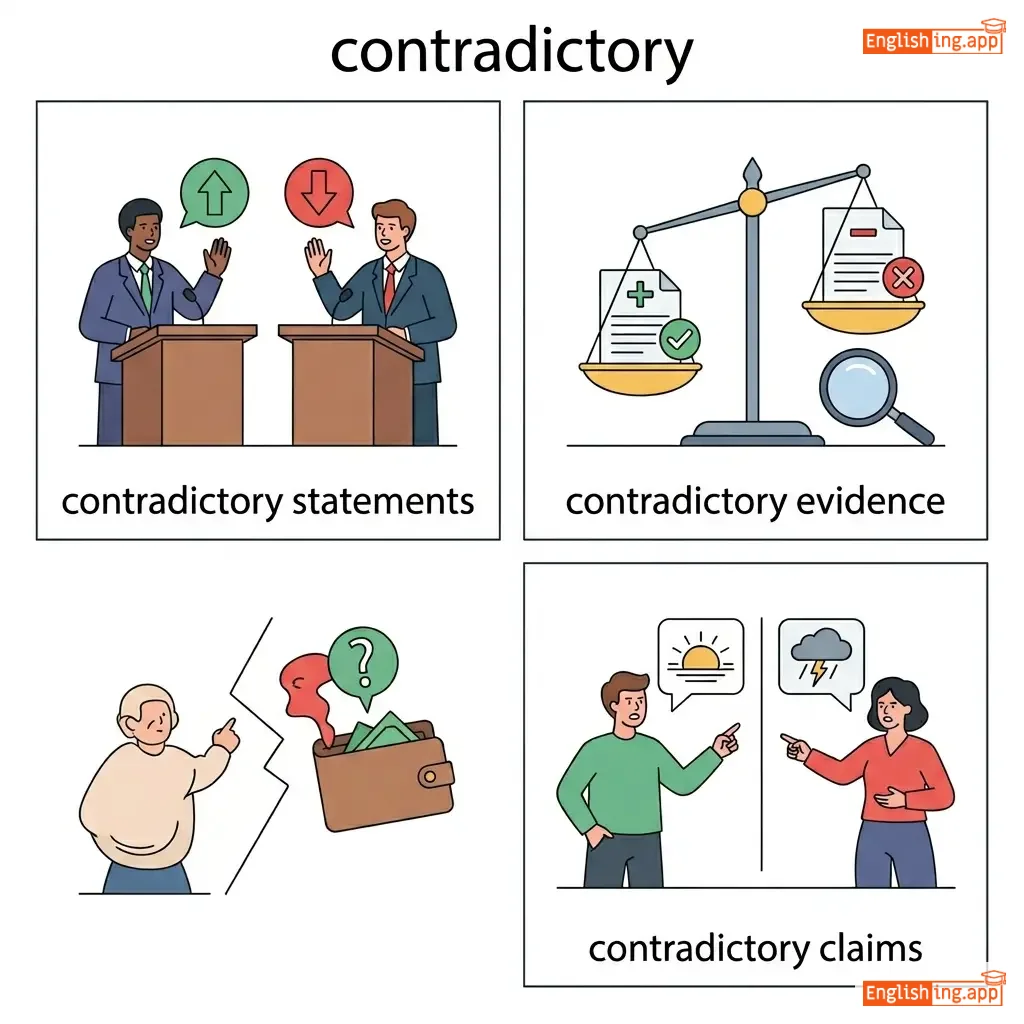
contradictory evidence, contradictory statements, contradictory advice
••••••
|
Con = against, trad = 互相 对立, ict = 讲话 的 声音, ory = 故事 的 结尾; 把 Con 和 Dict 放在一起, 就知道 Contradictory 表示 对立 的 矛盾.
••••••
|
|
#128
🤗
|
/kənˈsɪd.ər.ɪt/
adjective
(kənˈsɪd.ər.ɪt)
••••••
|
- •••••• |
体贴; 体贴入微
tǐtiē, tǐtiē rùwēi
••••••
|
showing careful thought about the feelings or wishes of others; thoughtful
••••••
|
He is always considerate of others' feelings.
他总是考虑到别人的感受。
••••••
|
他总是考虑到别人的感受。
Tā zǒng shì kǎolǜ dào bié rén de gǎnshòu.
••••••
|
thoughtful, caring, kind, attentive, mindful
••••••
|
inconsiderate, thoughtless, selfish, rude
••••••
|
considerate person, considerate behavior, considerate gesture, considerate friend
••••••
|
In Chinese, '体贴' (tǐtiē) means thoughtful and shows that you're considerate of others' feelings.
••••••
|
|
#129
⚙️
|
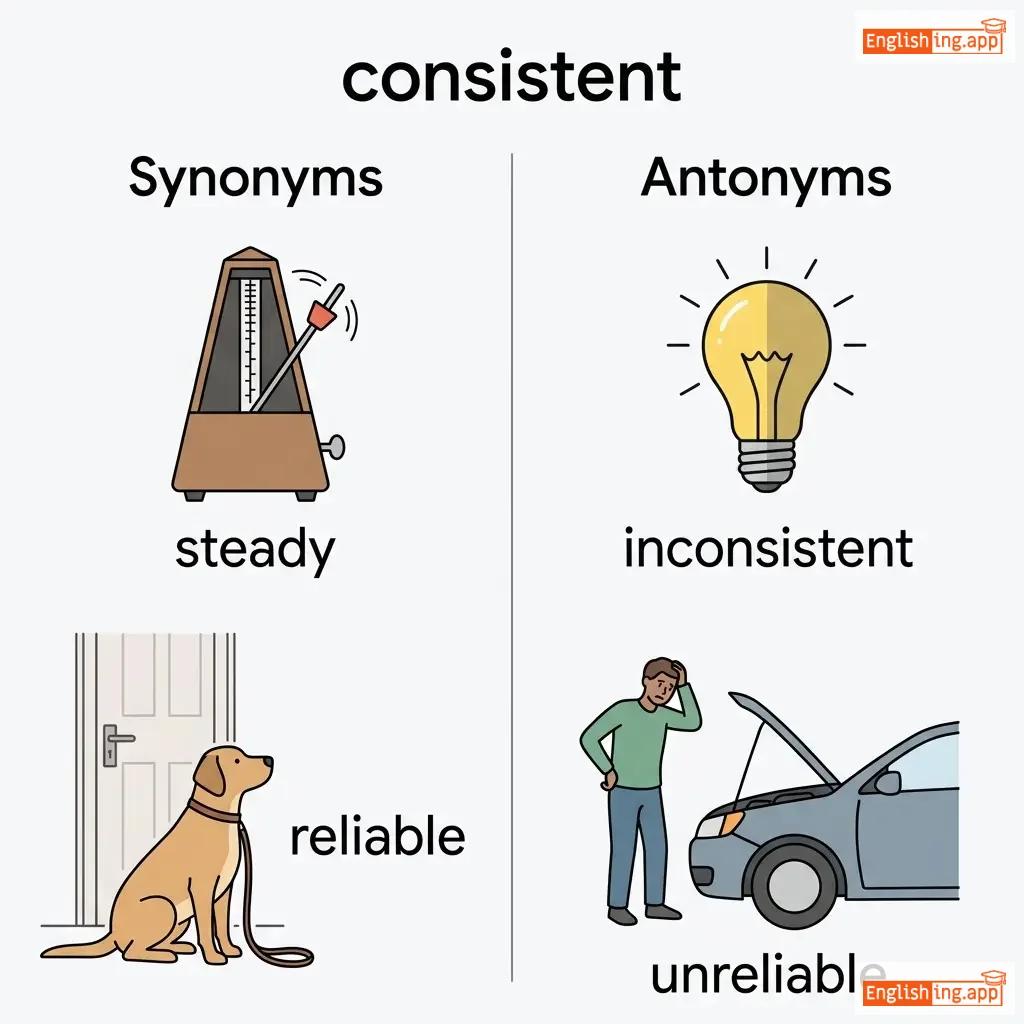
/kənˈsɪs.tənt/
adjective
(kənˈsɪstənt)
••••••
|
|
一致的
yīzhì de
••••••
|
acting or done in the same way over time; unchanging in behavior or attitude
••••••
|
She is consistent in her work quality. |
她在工作质量上始终如一。
tā zài gōngzuò zhìliàng shàng shǐzhōng rú yī
••••••
|
uniform, steady, regular, reliable, constant
••••••
|
inconsistent, irregular, variable, unreliable
••••••
|
consistent results, consistent performance, consistent quality, consistent approach
••••••
|
Consistent = 一直 = 一致的
••••••
|
|
#130
⬅️➡️
|
/ˈkɒn.trər.i/
adjective
(kǎntrɛrī)
••••••
|
- •••••• |
相反的; 反对的;
xiangfandek; fanduide
••••••
|
opposite in nature, direction, or meaning; completely different
••••••
|
Contrary to popular belief, cats can be very social animals. |
与流行的看法相反,猫可以是非常社交的动物。
yu liuxing de kanfa xiangfan, mao keyi shi feichang shejiao de dongwu.
••••••
|
opposite, opposing, reverse, different
••••••
|
similar, same, agreeable, consistent
••••••
|
contrary to expectations, contrary opinion, contrary evidence
••••••
|
Chinese 'xiangfan' means opposite, just like 'contrary'.
••••••
|
|
#131
❓
|
/kənˈdɪʃ.ən.əl/
adjective
(条件)
••••••
|
- •••••• |
有条件的; 依赖于条件
yǒu tiáojiàn de; yīlài yú tiáojiàn
••••••
|
dependent on certain conditions; not absolute
••••••
|
The job offer is conditional upon passing the background check. |
工作机会取决于通过背景调查。
Gōngzuò jīhuì qǔjué yú tōngguò bèijǐng diàochá.
••••••
|
dependent, contingent, provisional, qualified
••••••
|
unconditional, absolute, definite, certain
••••••
|
conditional offer, conditional approval, conditional agreement
••••••
|
有条件意味着必须满足某些条件才行。
••••••
|
|
#132
🤝
|
/ˈkɔːrdiəl/
adjective
(可心的)
••••••
|
- •••••• |
亲切的; 真诚的; 热情的
qīnqiè de; zhēnchéng de; rèqíng de
••••••
|
warmly friendly; sincere; heartfelt
••••••
|
She gave us a cordial welcome at the front door. |
她在门口给了我们热情的欢迎。
Tā zài ménkǒu gěile wǒmen rèqíng de huānyíng.
••••••
|
warm, friendly, sincere, heartfelt
••••••
|
cold, hostile, unfriendly, distant
••••••
|
cordial relationship, cordial welcome, cordial invitation
••••••
|
'可心的'是'亲切'和'真诚'的结合。
••••••
|
|
#133
🌊
|
/ˈkɒn.stənt/
adjective
(kɑnstənt)
••••••
|
- •••••• |
恒定的; 不变的; 稳定的
héngdìng de, bùbiàn de, wěndìng de
••••••
|
occurring continuously over a period of time; unchanging; steady
••••••
|
The machine runs at a constant speed.
机器以恒定的速度运行。
••••••
|
机器以恒定的速度运行。
Jīqì yǐ héngdìng de sùdù yùnxíng.
••••••
|
continuous, steady, unchanging, persistent, fixed
••••••
|
variable, changing, intermittent, irregular
••••••
|
constant pressure, constant temperature, constant speed, constant change
••••••
|
就像钟表的指针永远保持不变,机器保持恒定的速度
••••••
|
|
#134
🔥
|
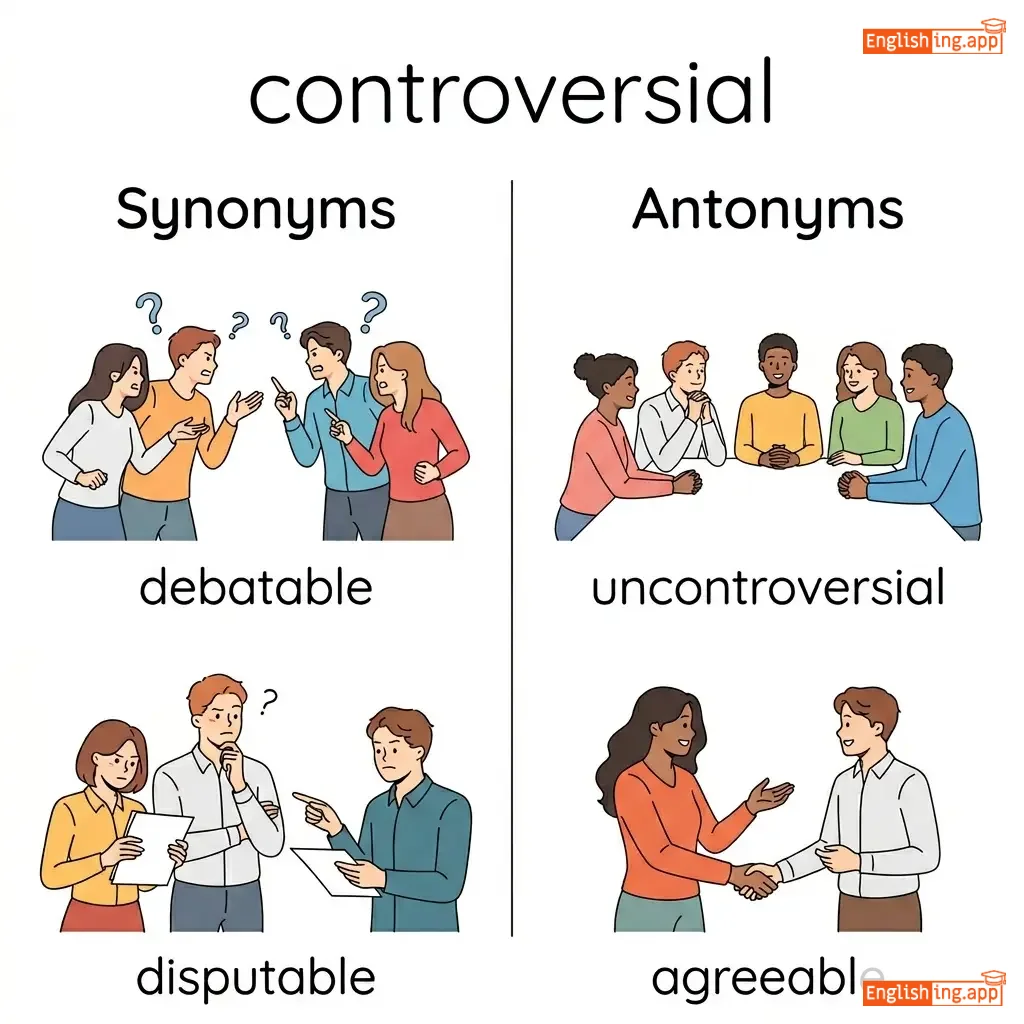
/ˌkɒn.trəˈvɜː.ʃəl/
adjective
(kóntróuérshial)
••••••
|
|
有争议的; 争论的;
you zhengyi de
••••••
|
causing disagreement or heated discussion; disputed and debatable
••••••
|
The politician's controversial remarks sparked a heated debate.
政治家的争议性言论引发了激烈的辩论。
••••••
|
政治家的争议性言论引发了激烈的辩论。
Zhengzhijia de zhengyixing yanlun yinfa le jilie de bianlun.
••••••
|
disputed, debatable, contentious, polarizing
••••••
|
uncontroversial, accepted, agreed-upon
••••••
|
controversial topic, controversial decision, controversial figure
••••••
|
有争议的 = '有' + '激烈' (像没有休止的争议)
••••••
|
|
#135
💪
|
/ˈkɒn.fɪ.dənt/
adjective
(kón-fi-dent)
••••••
|
- •••••• |
自信的; 确信的; 有信心的
zixin de; quexin de; you xinxin de
••••••
|
self-assured; certain; having belief in one's abilities
••••••
|
She felt confident about her performance in the exam. |
她对自己在考试中的表现充满信心。
Ta dui ziji zai kaoshi zhong de biaoxian chongman xinxin.
••••••
|
assured, certain, self-assured, positive
••••••
|
insecure, uncertain, doubtful, hesitant
••••••
|
confident person, feel confident, confident smile
••••••
|
Chinese 'zixin' means confidence, easily linked to confident
••••••
|
|
#136
🦁
|
/kəˈreɪdʒəs/
adjective
(kəˈreɪdʒəs)
••••••
|
- •••••• |
勇敢的; 无畏的; 在面对危险时展现勇气
yǒnggǎn de; wúwèi de; zài miànduì wēixiǎn shí zhǎnxiàn yǒngqì
••••••
|
brave; fearless; showing courage in the face of danger
••••••
|
The courageous firefighter rescued the family from the burning building. |
勇敢的消防员从燃烧的建筑物中救出了家庭。
Yǒnggǎn de xiāofángyuán cóng ránshāo de jiànzhùwù zhōng jiùchūle jiātíng.
••••••
|
brave, fearless, bold, heroic
••••••
|
cowardly, fearful, timid, scared
••••••
|
courageous act, courageous decision, courageous leader
••••••
|
勇敢的 (Courageous) 就是面对危险时仍然展现出勇气的表现。
••••••
|
|
#137
🦠
|
/kənˈteɪ.dʒəs/
adjective
(康泰吉厄斯)
••••••
|
- •••••• |
传染性; 有感染力
chuánrǎn xìng, yǒu gǎnrǎn lì
••••••
|
likely to spread to and affect others; infectious
••••••
|
Her laughter is contagious and makes everyone smile. |
她的笑声具有传染性,让每个人都微笑。
tā de xiàoshēng jùyǒu chuánrǎn xìng, ràng měi gè rén dōu wēixiào
••••••
|
infectious, spreading, transmissible, catching
••••••
|
non-contagious, isolated, contained
••••••
|
contagious disease, contagious laughter, contagious enthusiasm, contagious smile
••••••
|
传染性像是 '传染',提醒我们它会传播给别人
••••••
|
|
#138
🤐
|
/ˌkɒn.fɪˈden.ʃəl/
adjective
(kěn fī dén xià ěr)
••••••
|
- •••••• |
机密; 私人; 应保持秘密的
jī mì; sī rén; yīng bǎo chí mìmì de
••••••
|
secret; private; intended to be kept secret
••••••
|
Please keep this information confidential.
请保持这些信息的机密性。
••••••
|
请保持这些信息的机密性。
qǐng bǎochí zhèxiē xìnxī de jīmì xìng.
••••••
|
secret, private, classified, restricted
••••••
|
public, open, disclosed, revealed
••••••
|
confidential information, confidential document, strictly confidential
••••••
|
Confidential 指的就是保持秘密,就像秘密文件一样。
••••••
|
|
#139
✅
|
/kənˈviː.ni.ənt/
adjective
(kāngwīni'ānt)
••••••
|
- •••••• |
方便的;适用的;实用的;
fāngbiàn de; shìyòng de; shíyòng de
••••••
|
fitting in well with a person's needs, activities, and plans; suitable and practical
••••••
|
The new shopping mall is very convenient for our family.
新购物中心对我们家庭非常方便。
••••••
|
新购物中心对我们家庭非常方便。
Xīn gòuwù zhōngxīn duì wǒmen jiātíng fēicháng fāngbiàn.
••••••
|
handy, suitable, practical, accessible
••••••
|
inconvenient, impractical, unsuitable
••••••
|
convenient location, convenient time, convenient store
••••••
|
方便到像一个购物中心就在家附近。
••••••
|
|
#140
🤪
|
/ˈkreɪzi/
adjective
(kùlèisī)
••••••
|
- •••••• |
疯狂的; 极其愚蠢; 对某事狂热
fēngkuáng de; jíqí yúchǔn; duì mǒu shì kuángrè
••••••
|
mentally ill; extremely foolish; wildly enthusiastic about something
••••••
|
That's a crazy idea, but it might just work. |
这是一个疯狂的想法,但它可能会奏效。
Zhè shì yīgè fēngkuáng de xiǎngfǎ, dàn tā kěnéng huì zòuxiào.
••••••
|
insane, mad, wild, absurd
••••••
|
sane, rational, sensible, normal
••••••
|
crazy idea, crazy about, driving crazy
••••••
|
Crazy = '疯狂的' – Imagine a person screaming '疯狂的!' while being crazy.
••••••
|
Vocabulary Quiz
Test your vocabulary by matching words with their translations or meanings.
Login to take the quiz
Comments (0)
Share your thoughts and join the discussion.
Join the discussion by logging in
Login to CommentNo comments yet
Be the first to share your thoughts!