


Swipe left or right, or use the buttons. Tap image to zoom.
例句翻译
单词
Lesson 52Lesson 52 - 遮罩切换
|
表情符号
|
单词 | Images | 翻译 | 含义 | 例句 | 例句翻译 | 同义词 | 反义词 | 搭配词 | 助记符 |
|---|---|---|---|---|---|---|---|---|---|---|
|
#1021
📉
|
/ʌnˈprɒf.ɪ.tə.bl̩/
adjective
(àn pǒ fēi tè bù)
••••••
|
- •••••• |
无利可图
wú lì kě tú
••••••
|
not yielding profit or gain; not producing financial benefit
••••••
|
The unprofitable business was forced to close down after three years. |
这个无利可图的生意在三年后被迫关闭。
Zhè ge wú lì kě tú de shēng yì zài sān nián hòu bèi pò guān bì.
••••••
|
unpaying, unremunerative, loss-making
••••••
|
profitable, lucrative, gainful
••••••
|
unprofitable business, unprofitable venture, unprofitable investment
••••••
|
无利可图意味着不能带来任何收益。
••••••
|
|
#1022
😞
|
/ʌnˈlʌki/
adjective
(ān lā kè)
••••••
|
- •••••• |
倒霉; 不幸运
dàoméi; bù xìngyùn
••••••
|
having bad luck; unfortunate
••••••
|
He was unlucky to miss the winning shot. |
他很倒霉错过了获胜的投篮。
Tā hěn dàoméi cuòguòle huòshèng de tóulán.
••••••
|
unfortunate, hapless, cursed
••••••
|
lucky, fortunate, blessed
••••••
|
unlucky day, unlucky number, unlucky person
••••••
|
当你不幸时,记住中文的'倒霉',它描述了运气不好的状态。
••••••
|
|
#1023
😣
|
/ʌnˈplɛz.ənt/
adjective
(ānpūléizènt)
••••••
|
- •••••• |
令人不悦的
lìng rén bù yuè de
••••••
|
not giving or causing pleasure; disagreeable
••••••
|
The medicine had an unpleasant taste. |
药物有一种令人不悦的味道。
Yàowù yǒu yī zhǒng lìng rén bù yuè de wèi dào.
••••••
|
disagreeable, distasteful, horrible, nasty
••••••
|
pleasant, agreeable, nice, enjoyable
••••••
|
unpleasant experience, unpleasant smell, unpleasant surprise
••••••
|
令人不悦的和 'unpleasant' 是相似的词。
••••••
|
|
#1024
👁️
|
/ˌʌnˈnoʊ.tɪst/
adjective
(an-noticed)
••••••
|
- •••••• |
未被注意到; 被忽视
wei bei zhuyi dao; bei hushi
••••••
|
not seen or observed; ignored
••••••
|
His hard work went unnoticed by his manager. |
他的辛勤工作没有被经理注意到。
tade xinqin gongzuo meiyou bei jingli zhuyi dao
••••••
|
overlooked, ignored, unseen, invisible
••••••
|
noticed, observed, seen, visible
••••••
|
go unnoticed, remain unnoticed, pass unnoticed
••••••
|
Chinese: 未被注意到 - 未 (wei) 不是 (bushi) 注意的.
••••••
|
|
#1025
❌
|
/ʌnˈkwɒl.ɪ.faɪd/
adjective
(ān kè wǎ lì fāi dé)
••••••
|
- •••••• |
不合格的; 无资格的;
bù hé gé de; wú zī gé de
••••••
|
not having the necessary skills or qualifications; complete or absolute
••••••
|
He was unqualified for the engineering position due to lack of experience.
他因缺乏经验而不适合这个工程职位。
••••••
|
他因缺乏经验而不适合这个工程职位。
Tā yīn quēfá jīngyàn ér bù shìhé zhège gōngchéng zhíwèi.
••••••
|
incompetent, inexperienced, untrained
••••••
|
qualified, competent, experienced
••••••
|
unqualified person, unqualified success, unqualified opinion
••••••
|
没有资格,无经验—就像缺少汽油的汽车!
••••••
|
|
#1026
🤹♂️
|
/ʌnˈmænɪdʒəbəl/
adjective
(ān-màn-é-jí-bó)
••••••
|
- •••••• |
无法控制的; 失控
wúfǎ kòngzhì de; shī kòng
••••••
|
difficult or impossible to control or handle
••••••
|
The large class became unmanageable without proper supervision. |
没有适当的监督,班级变得无法控制。
méiyǒu shìdàng de jiāndū, bānjí biàndé wúfǎ kòngzhì.
••••••
|
uncontrollable, unwieldy, chaotic
••••••
|
manageable, controllable, orderly
••••••
|
unmanageable situation, unmanageable behavior, unmanageable workload
••••••
|
无法控制的状况就像班级失去了控制。
••••••
|
|
#1027
🆕
|
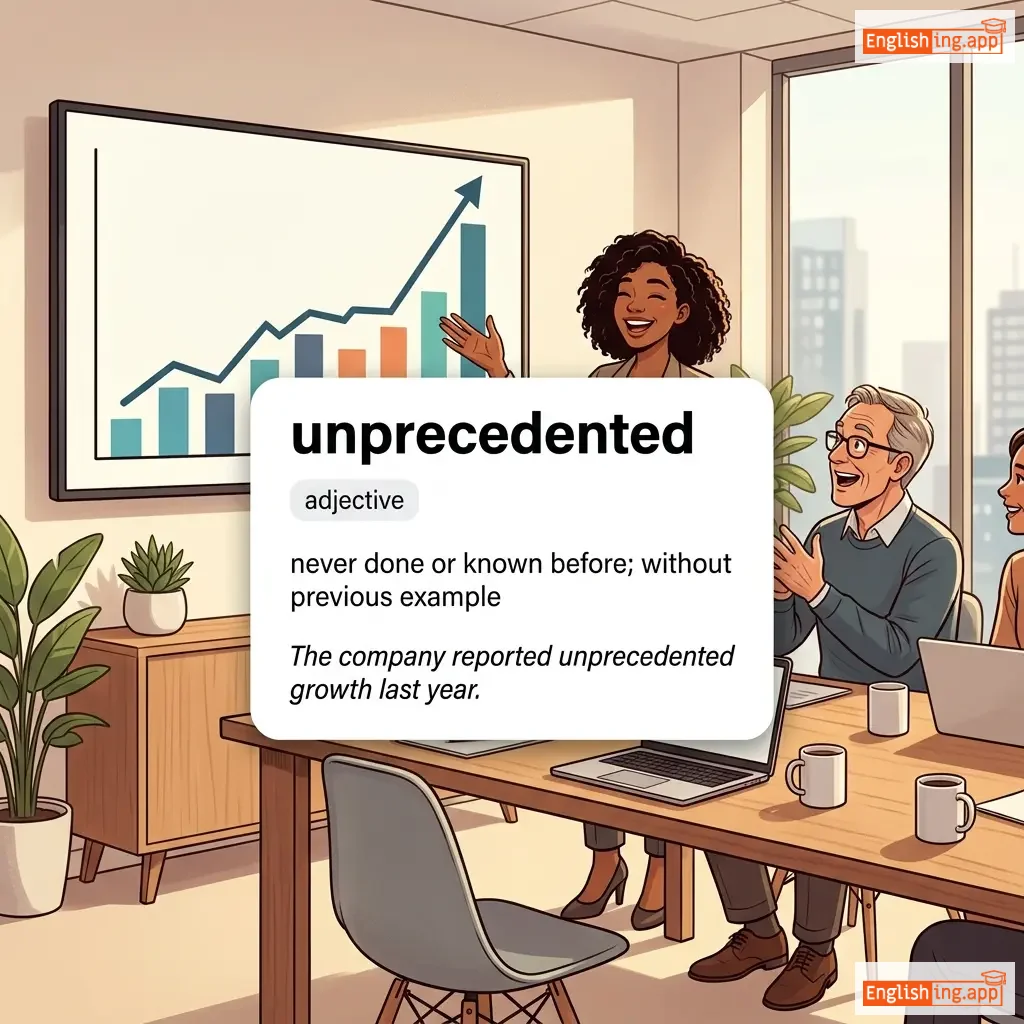
/ʌnˈprɛs.ɪ.dən.tɪd/
adjective
(anpresidenti)
••••••
|
|
前所未有的
qian suo wei you de
••••••
|
never done or known before; having no previous example
••••••
|
The company achieved unprecedented growth this year. |
公司在今年实现了前所未有的增长。
gongsi zai jinnian shixianle qiansuo weiyoude zengzhang
••••••
|
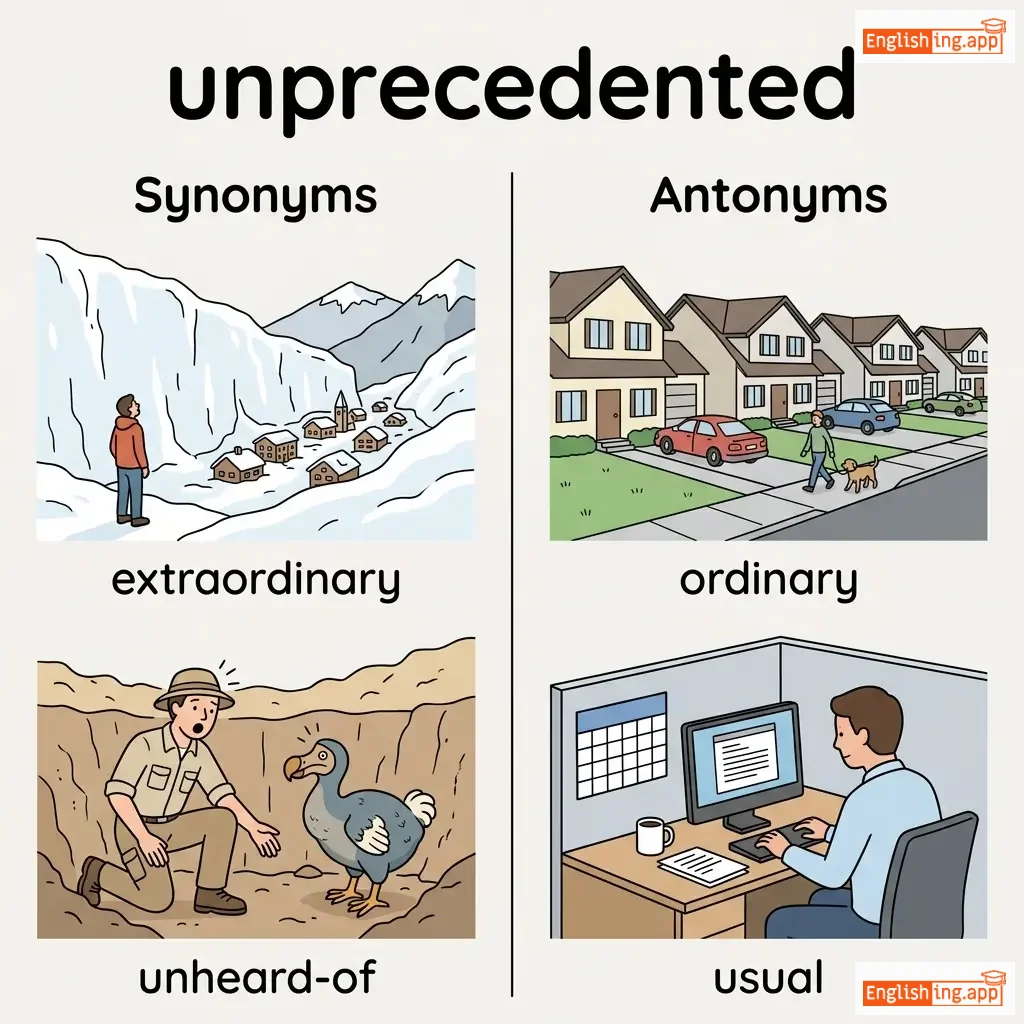
unparalleled, extraordinary, remarkable, unique
••••••
|
typical, ordinary, common, usual
••••••
|
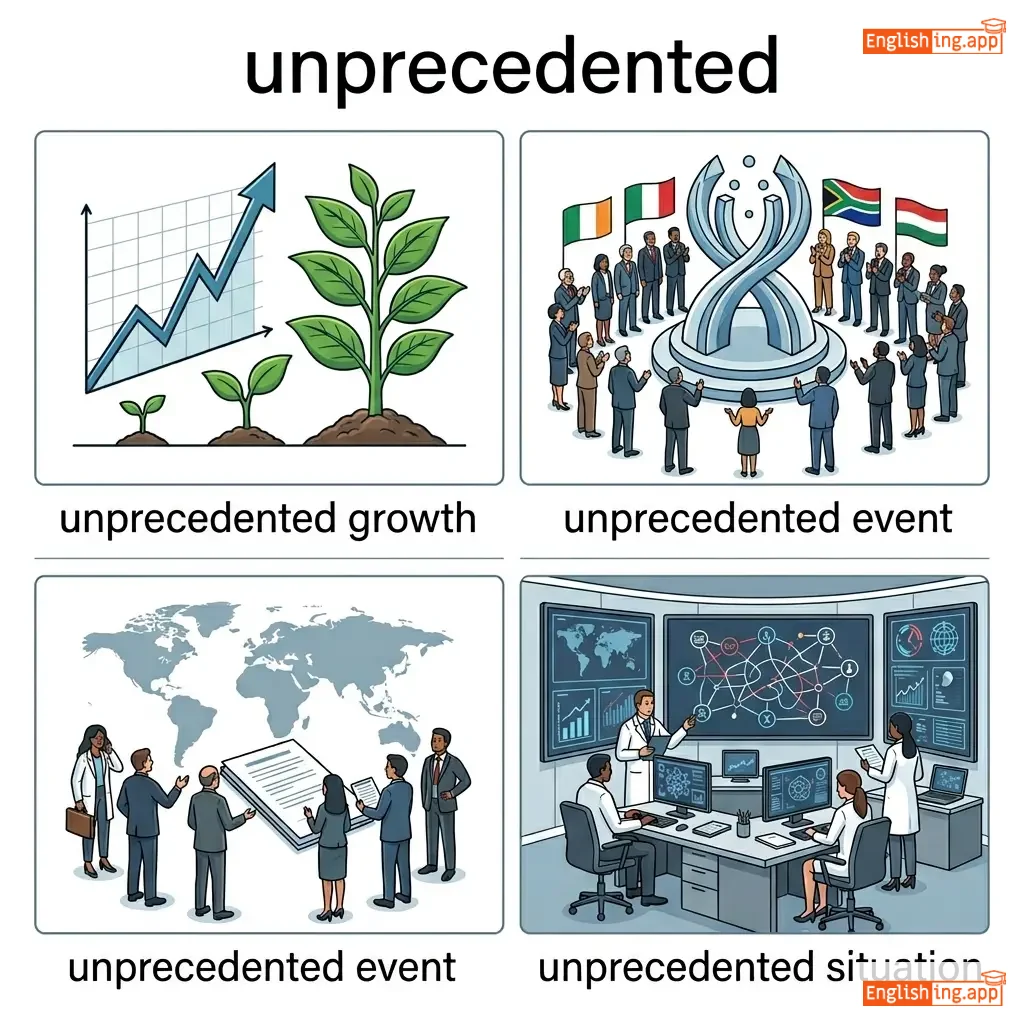
unprecedented success, unprecedented scale, unprecedented circumstances
••••••
|
Unprecedented - '前所未有的' means something never seen before
••••••
|
|
#1028
📋
|
/ˌʌnəˈfɪʃ.əl/
adjective
(ānuòfēishì'ěr)
••••••
|
- •••••• |
非官方的
fei guanfang de
••••••
|
not officially authorized or confirmed; informal
••••••
|
The unofficial results showed a close race. |
非官方的结果显示出一场激烈的比赛。
fēi guānfāng de jiéguǒ xiǎnshì chū yī chǎng jīliè de bǐsài.
••••••
|
informal, unauthorized, casual, private
••••••
|
official, formal, authorized, sanctioned
••••••
|
unofficial report, unofficial visit, unofficial capacity
••••••
|
非官方的就像秘密派对,虽然没有官方邀请,但依然有乐趣。
••••••
|
|
#1029
💸
|
/ˌʌnˈpeɪd/
adjective
(ānpéi dé)
••••••
|
- •••••• |
未支付的; 无薪的
wei zhi fu de; wu xin de
••••••
|
not paid for; without payment or salary
••••••
|
She worked as an unpaid intern for six months. |
她作为一名无薪实习生工作了六个月。
ta zuo wei yi ming wu xin shi xi sheng gong zuo le liu ge yue
••••••
|
outstanding, unsettled, voluntary, free
••••••
|
paid, settled, compensated, salaried
••••••
|
unpaid bills, unpaid work, unpaid leave, unpaid volunteer
••••••
|
Unpaid in Chinese means '未支付的'; 没有薪水, 就是没有报酬.
••••••
|
|
#1030
😰
|
/ʌnprɪˈpɛrd/
adjective
(ānpūpèiérd)
••••••
|
- •••••• |
未准备好
wei zhunbei hao
••••••
|
not ready or able to deal with something
••••••
|
He was unprepared for the difficult exam.
他对困难的考试毫无准备。
••••••
|
他对困难的考试毫无准备。
Ta dui kunnan de kao shi hao wu zhunbei
••••••
|
unready, caught off guard, surprised
••••••
|
prepared, ready, equipped, organized
••••••
|
unprepared student, caught unprepared, unprepared speech
••••••
|
Chinese '未' meaning un- and '准备好' meaning prepared
••••••
|
|
#1031
⚖️
|
/ʌnˈlɔːfl/
adjective
(ān luò fú ěr)
••••••
|
- •••••• |
非法; 不合法
fēi fǎ; bù hé fǎ
••••••
|
not authorized by law; illegal
••••••
|
The court declared the search unlawful.
法院宣布搜索是非法的。
••••••
|
法院宣布搜索是非法的。
Fǎyuàn xuānbù sōusuǒ shì fēifǎ de.
••••••
|
illegal, forbidden, prohibited, unauthorized
••••••
|
lawful, legal, authorized, legitimate
••••••
|
unlawful activity, unlawful entry, unlawful arrest
••••••
|
Just like 'fēi fǎ' sounds, unlawful means not permitted by law.
••••••
|
|
#1032
😵💫
|
/ʌnˈmaɪndfəl/
adjective
(anmaindful)
••••••
|
- •••••• |
不留心的; 疏忽的;
bù liúxīn de; shūhu de
••••••
|
not paying attention; careless; heedless
••••••
|
She was unmindful of the danger around her.
她没有注意到周围的危险。
••••••
|
她没有注意到周围的危险。
Tā méiyǒu zhùyì dào zhōuwéi de wēixiǎn.
••••••
|
careless, heedless, inattentive
••••••
|
mindful, careful, attentive
••••••
|
unmindful of consequences, unmindful behavior, unmindful attitude
••••••
|
像走路看不见的漫不经心
••••••
|
|
#1033
🏆
|
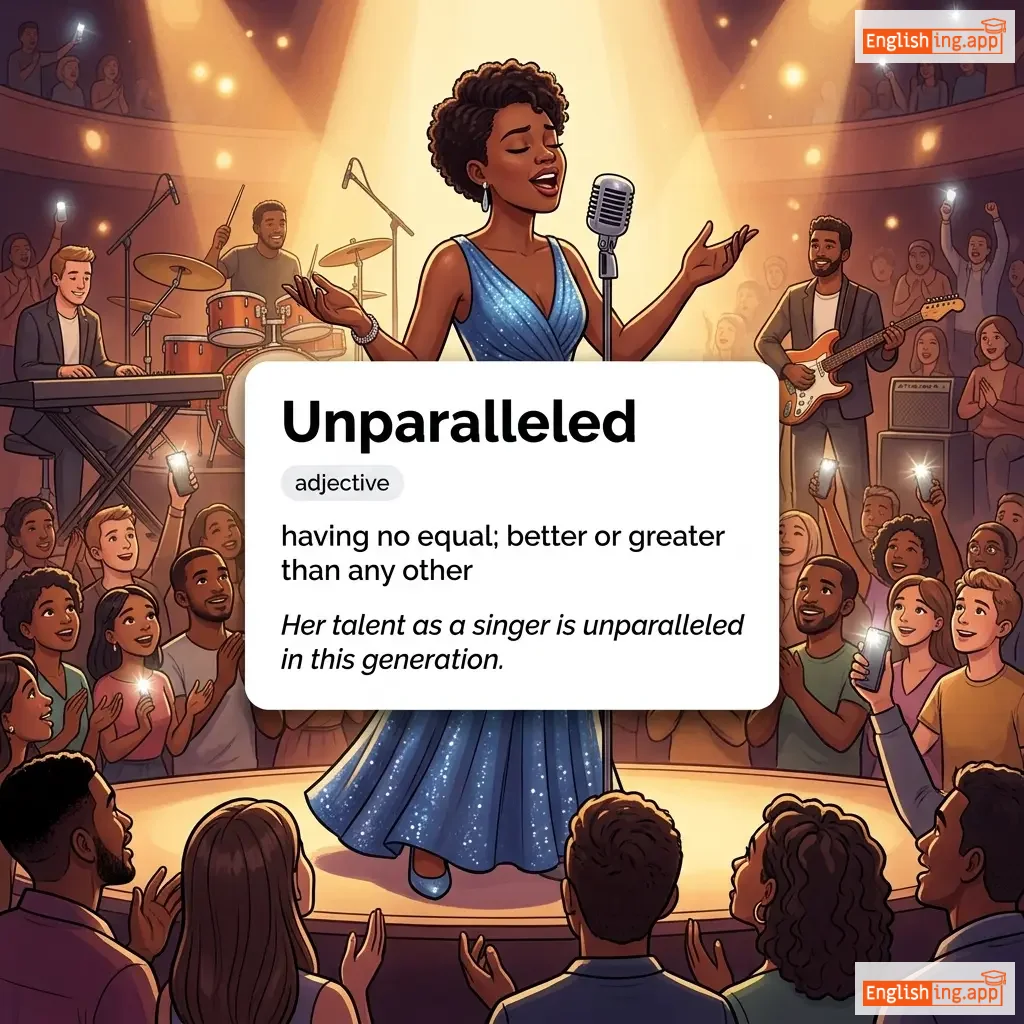
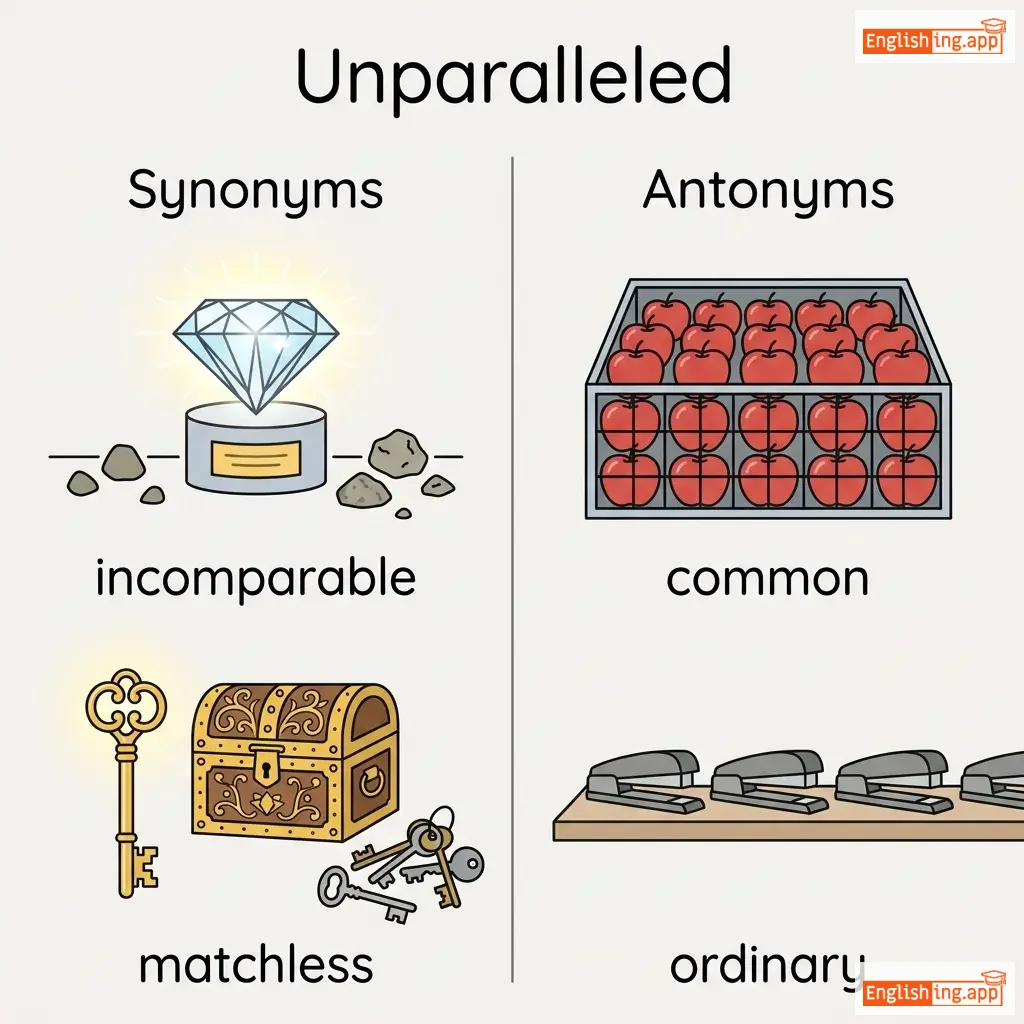
/ˌʌnˈpær.ə.leld/
adjective
(ʌnˈpærəlɛld)
••••••
|
|
无与伦比; 独一无二; 无敌
wuyu lunbi; duyi wuyi; wudi
••••••
|
having no equal; better or greater than any other
••••••
|
Her talent as a singer is unparalleled in this generation.
她作为歌手的才华在这一代人中是无可比拟的。
••••••
|
她作为歌手的才华在这一代人中是无可比拟的。
Ta zuowei geshou de caihua zai zhe yi dai ren zhong shi wu ke bini de.
••••••
|
incomparable, matchless, unique, exceptional
••••••
|
common, ordinary, typical, comparable
••••••
|
unparalleled success, unparalleled beauty, unparalleled achievement
••••••
|
Chinese '无与伦比' means unmatched, similar to 'unparalleled'.
••••••
|
|
#1034
🤖
|
/ʌnˈnætʃərəl/
adjective
(安那秋若)
••••••
|
- •••••• |
不自然的
bu ziran de
••••••
|
not existing in nature; artificial; forced
••••••
|
The actor's smile looked unnatural and forced.
演员的笑容看起来很安那秋若,很勉强。
••••••
|
演员的笑容看起来很不自然,很勉强。
yanyuan de xiaorong kan qilai hen bu ziran hen mianqiang
••••••
|
artificial, fake, forced
••••••
|
natural, genuine, authentic
••••••
|
unnatural behavior, unnatural smile, unnatural pose
••••••
|
‘Bu ziran’ means ‘not natural’ — exactly ‘unnatural’ in Chinese!
••••••
|
|
#1035
📉
|
/ʌnprəˈdʌk.tɪv/
adjective
(anpɹəʊdʌktɪv)
••••••
|
- •••••• |
无效的; 不起作用的
wú xiào de; bù qǐ zuò yòng de
••••••
|
not achieving much; not producing good results
••••••
|
The meeting was unproductive and wasted everyone's time.
会议是无效的,浪费了大家的时间。
••••••
|
会议是无效的,浪费了大家的时间。
Huìyì shì wúxiào de, làngfèi le dàjiā de shíjiān
••••••
|
ineffective, fruitless, futile, useless
••••••
|
productive, effective, fruitful, successful
••••••
|
unproductive meeting, unproductive day, unproductive discussion
••••••
|
无效 = 无 (not) + 效 (effective)
••••••
|
|
#1036
≠
|
/ʌnˈlaɪk/
adjective
(ān lài kè)
••••••
|
- •••••• |
不同的; 不相似的
bùtóng de; bù xiāngsì de
••••••
|
different from; not similar to
••••••
|
Unlike his brother, he prefers quiet activities.
Ān lài tā de xiōngdì, tā bǐjiào xǐhuān ānjìng huódòng.
••••••
|
与他哥哥不同,他喜欢安静的活动。
Yǔ tā gēgē bùtóng, tā xǐhuān ānjìng de huódòng.
••••••
|
different from, dissimilar to, contrary to
••••••
|
like, similar to, same as
••••••
|
unlike others, unlike before, unlike anything
••••••
|
unlike 就是两者之间没有相似之处
••••••
|
|
#1037
😡
|
/ˌʌnˈpɑr.də.nə.bəl/
adjective
(anpardonable)
••••••
|
- •••••• |
不可宽恕的
bù kě kuān shù de
••••••
|
too bad to be forgiven; inexcusable
••••••
|
His betrayal of trust was an unpardonable offense.
他的背叛是不可原谅的罪行。
••••••
|
他的背叛是不可原谅的罪行。
tā de bèi pàn shì bù kě yuán liàng de zuì xíng
••••••
|
inexcusable, unforgivable, intolerable, heinous
••••••
|
forgivable, excusable, pardonable, acceptable
••••••
|
unpardonable sin, unpardonable crime, unpardonable behavior
••••••
|
Unpardonable = bù kě kuān shù de = 太坏以至于无法原谅
••••••
|
|
#1038
🚫
|
/ʌnˈnesəseri/
adjective
(ān.nè.sè.sà.lì)
••••••
|
- •••••• |
不必要的;多余的
bù bì yào de; duō yú de
••••••
|
not needed; not required; pointless
••••••
|
The meeting was unnecessary since all decisions were already made.
会议是多余的,因为所有的决定已经做出。
••••••
|
会议是多余的,因为所有的决定已经做出。
Huìyì shì duōyú de, yīnwèi suǒyǒu de juédìng yǐjīng zuòchū.
••••••
|
unneeded, pointless, redundant
••••••
|
necessary, essential, required
••••••
|
unnecessary expense, unnecessary risk, unnecessary delay
••••••
|
不必要的东西就像无用的决定。
••••••
|
|
#1039
🚫
|
/ʌnprəˈfɛʃ.ən.əl/
adjective
(anpofeixianer)
••••••
|
- •••••• |
不专业
bù zhuānyè
••••••
|
not conforming to the standards expected in a particular profession
••••••
|
His unprofessional behavior led to his dismissal from the company. |
他的不专业行为导致他被公司解雇。
Tā de bù zhuānyè xíngwéi dǎozhì tā bèi gōngsī jiěgù.
••••••
|
inappropriate, improper, unethical, incompetent
••••••
|
professional, appropriate, ethical, competent
••••••
|
unprofessional conduct, unprofessional behavior, unprofessional appearance
••••••
|
不专业 - 不符合职业标准,行为不符合专业要求。
••••••
|
|
#1040
🤔
|
/ʌnˈlaɪkli/
adjective
(anlaikli)
••••••
|
- •••••• |
不太可能; 不大可能
butai keneng; buda keneng
••••••
|
not likely to happen; improbable
••••••
|
It's unlikely to rain today with such clear skies.
Its anlaikli tu rein tudei wid sach kliar skaiz.
••••••
|
今天晴空万里,几乎不可能下雨。
Jintian qingkong wanli, jihu butai keneng xiayu.
••••••
|
improbable, doubtful, remote, questionable
••••••
|
likely, probable, certain, expected
••••••
|
unlikely event, unlikely scenario, unlikely outcome
••••••
|
Unlikely = 不太可能, 事情几乎不可能发生
••••••
|
Vocabulary Quiz
Test your vocabulary by matching words with their translations or meanings.
Login to take the quiz
Comments (0)
Share your thoughts and join the discussion.
Join the discussion by logging in
Login to CommentNo comments yet
Be the first to share your thoughts!