

Swipe left or right, or use the buttons. Tap image to zoom.
例句翻译
单词
Lesson 27Lesson 27 - 遮罩切换
|
表情符号
|
单词 | Images | 翻译 | 含义 | 例句 | 例句翻译 | 同义词 | 反义词 | 搭配词 | 助记符 |
|---|---|---|---|---|---|---|---|---|---|---|
|
#521
🏥
|
/ˈmɔːrɪbʌnd/
adjective
(莫里邦德)
••••••
|
- •••••• |
濒死的; 在衰退或腐烂的状态中
moribund
••••••
|
near death; dying; in a state of decline or decay
••••••
|
The moribund patient was in critical condition.
这个濒死的病人处于危急状态。
••••••
|
这个濒死的病人处于危急状态。
Zhège bīnsǐ de bìngrén chǔyú wēijí zhuàngtài.
••••••
|
dying, failing, declining, decaying
••••••
|
thriving, flourishing, vigorous, healthy
••••••
|
moribund state, moribund economy, moribund industry
••••••
|
记住Moribund意味着接近死亡。
••••••
|
|
#522
🧍
|
/ˈneɪ.kɪd/
adjective
(néikèdè)
••••••
|
- •••••• |
赤裸的; 没有衣服; 暴露的; 裸露的
chiluode; meiyou yifu; baolude; luolude
••••••
|
without clothes or covering; bare; exposed; unclothed
••••••
|
The naked truth about the situation shocked everyone. |
关于局势的赤裸真相震惊了所有人。
guanyu jushi de chiluozhenxiang zhenjing le suoyouren.
••••••
|
bare, nude, exposed, uncovered
••••••
|
clothed, covered, dressed, concealed
••••••
|
naked eye, naked truth, naked flame, stark naked
••••••
|
In Chinese, 'naked' translates to '赤裸的', like the uncovered truth in plain sight.
••••••
|
|
#523
📦
|
/ˈmuː.və.bl̩/
adjective
(mù wéi bù)
••••••
|
- •••••• |
可移动的; 便携的; 可转移的
ke yi dong de; bian xie de; ke zhuan yi de
••••••
|
capable of being moved; not fixed in position
••••••
|
The furniture is movable so we can rearrange the room easily. |
家具是可移动的,我们可以轻松地重新布置房间。
jiaju shi ke yidong de, women keyi qingsong de chongxin buchi fangjian.
••••••
|
portable, mobile, transportable, relocatable
••••••
|
fixed, immovable, stationary, permanent
••••••
|
movable parts, movable furniture, movable property
••••••
|
动动手指,家具就能转移!
••••••
|
|
#524
🔪
|
/ˈmɜː(r)dərəs/
adjective
(谋杀的)
••••••
|
- •••••• |
谋杀的; 有杀意的; 极其暴力的; 嗜血的
mousha de; you sha yi de; jiqu baoli de; shixue de
••••••
|
having the intent to kill; extremely violent; bloodthirsty
••••••
|
The murderous look in his eyes frightened everyone. |
他眼中那谋杀的目光吓坏了所有人。
Ta yanzhong na mousha de muguang xia huai le suoyouren.
••••••
|
deadly, lethal, homicidal, violent
••••••
|
peaceful, harmless, gentle, kind
••••••
|
murderous intent, murderous rage, murderous attack
••••••
|
Murderous = 谋杀的 + 可怕的眼神
••••••
|
|
#525
💀
|
/ˈmɔːtəl/
adjective
(莫特尔)
••••••
|
- •••••• |
凡人; 有限寿命的; 人类
fánrén; yǒuxiàn shòumìng de; rénlèi
••••••
|
subject to death; having a limited lifespan; human
••••••
|
All human beings are mortal and will eventually die.
所有人类都是凡人,并最终会死。
••••••
|
所有人类都是凡人,并最终会死。
Suǒyǒu rénlèi dōu shì fánrén, bìng zuìzhōng huì sǐ.
••••••
|
human, earthly, temporal, perishable
••••••
|
immortal, eternal, divine, everlasting
••••••
|
mortal being, mortal enemy, mortal danger, mortal coil
••••••
|
凡人(fánrén)意味着每个人都会死亡,就像每个生命都有尽头。
••••••
|
|
#526
❓
|
/ˈneɪm.ləs/
adjective
(内姆雷斯)
••••••
|
- •••••• |
无名的; 匿名的; 不知名的; 未识别的
wúmíng de; nìmíng de; bù zhīmíng de; wèi shíbié de
••••••
|
having no name; anonymous; unknown; unidentified
••••••
|
The nameless fear haunted him throughout the night.
无名的恐惧整晚困扰着他。
••••••
|
无名的恐惧整晚困扰着他。
Wúmíng de kǒngjù zhěng wǎn kùnrǎo zhe tā.
••••••
|
anonymous, unknown, unnamed, unidentified
••••••
|
named, identified, known, famous
••••••
|
nameless fear, nameless dread, nameless grave, remain nameless
••••••
|
无名的恐惧是无法识别的恐惧,永远不会消失。
••••••
|
|
#527
🤐
|
/mjuːt/
adjective
(缪特)
••••••
|
- •••••• |
哑的; 无法说话的; 没有声音
miut
••••••
|
silent; unable to speak; without sound
••••••
|
He remained mute during the entire meeting. |
他在整个会议期间保持沉默。
Ta zai zhengge huiyi qi jian baochi chenmo.
••••••
|
silent, speechless, voiceless, quiet
••••••
|
vocal, talkative, loud, audible
••••••
|
mute button, struck mute, remain mute
••••••
|
Mute = 没声音,像是哑巴
••••••
|
|
#528
🌈
|
/ˌmʌl.tɪˈfeə.ri.əs/
adjective
(万象)
••••••
|
- •••••• |
多样的;多方面的
duo yang de; duo fang mian de
••••••
|
having many different aspects or forms; diverse and varied
••••••
|
The company has multifarious business interests including technology, finance, and healthcare. |
公司有多种商业利益,包括技术、金融和医疗保健。
Gongsi you duozhong shangye liyi, baokuo jishu, jinrong he yiliaobaojian.
••••••
|
diverse, varied, manifold, numerous, multiple
••••••
|
uniform, singular, simple, homogeneous
••••••
|
multifarious activities, multifarious interests, multifarious duties
••••••
|
Multifarious 就像 '万象',许多方面和不同事物。
••••••
|
|
#529
🔢
|
/ˈmʌl.tɪ.pl̩/
adjective
(多重)
••••••
|
- •••••• |
多个; 多样的; 不同的
duo ge; duoyang de; butong de
••••••
|
having many parts, elements, or members; numerous
••••••
|
She suffered multiple injuries in the accident. |
她在事故中受了多次伤。
Tā zài shìgù zhōng shòule duō cì shāng.
••••••
|
numerous, many, several, various, manifold
••••••
|
single, sole, individual, unique
••••••
|
multiple choice, multiple injuries, multiple times
••••••
|
多样的、多元的,'多重'就是这么来的!
••••••
|
|
#530
🤝
|
/ˈmjuːtʃuəl/
adjective
(mù qiú ěr)
••••••
|
- •••••• |
相互
xiang hu
••••••
|
shared by two or more parties; reciprocal
••••••
|
They have a mutual respect for each other.
他们彼此有相互尊重。
••••••
|
他们彼此有相互尊重。
Tāmen bǐcǐ yǒu xiānghù zūnzhòng.
••••••
|
reciprocal, shared, common, joint
••••••
|
unilateral, one-sided, individual, separate
••••••
|
mutual respect, mutual agreement, mutual understanding
••••••
|
相互描述的是两个人或多个参与者之间共享的东西,例如互相尊重。
••••••
|
|
#531
🌿
|
/ˈmɒsi/
adjective
(móusī)
••••••
|
- •••••• |
覆盖苔藓的;生苔的
fùgài táixiǎn de; shēng tái de
••••••
|
covered with moss; having moss growing on it
••••••
|
The old tree trunk was mossy and covered with green vegetation.
这棵老树干上覆盖着苔藓,并且被绿色植物覆盖。
••••••
|
这棵老树干上覆盖着苔藓,并且被绿色植物覆盖。
Zhè kē lǎo shù gàn shàng fùgài zhe táixiǎn, bìngqiě bèi lǜsè zhíwù fùgài.
••••••
|
moss-covered, verdant, overgrown, green
••••••
|
bare, clean, smooth, moss-free
••••••
|
mossy rock, mossy ground, mossy tree, mossy stone
••••••
|
Mossy 意味着覆盖苔藓的,像树干上的苔藓。
••••••
|
|
#532
📖
|
/ˈnær.ə.tɪv/
adjective
(叙述的)
••••••
|
- •••••• |
叙述的; 描述性的; 讲述故事的
xushude; miaoshuxing de; jiangshu gushi de
••••••
|
relating to storytelling; descriptive; telling a story; recounting events
••••••
|
The narrative structure of the novel was quite complex.
这本小说的叙述结构相当复杂。
••••••
|
这本小说的叙述结构相当复杂。
Zhe ben xiaoshuo de xushude jiegou xiangdang fuzaku.
••••••
|
storytelling, descriptive, recounting, relating
••••••
|
non-narrative, expository, analytical, factual
••••••
|
narrative structure, narrative voice, narrative style, personal narrative
••••••
|
No •••••• |
|
#533
🛠️
|
/ˌmʌl.tiˈpɜː.pəs/
adjective
(múl-ti-pǒr-pǎs)
••••••
|
- •••••• |
多用途的
duō yòng tú de
••••••
|
having multiple uses or functions; versatile
••••••
|
This multipurpose tool can be used as a knife, screwdriver, and bottle opener.
这个多功能工具可以用作刀子、螺丝刀和开瓶器。
••••••
|
这个多功能工具可以用作刀子、螺丝刀和开瓶器。
Zhège duō yòngtú de gōngjù kěyǐ yòng zuò dāozi, luósīdāo hé kāi píngqì.
••••••
|
versatile, multifunctional, all-purpose, universal
••••••
|
specialized, single-purpose, specific, dedicated
••••••
|
multipurpose room, multipurpose tool, multipurpose vehicle
••••••
|
多用途的 = 具有多种功能的工具
••••••
|
|
#534
🔮
|
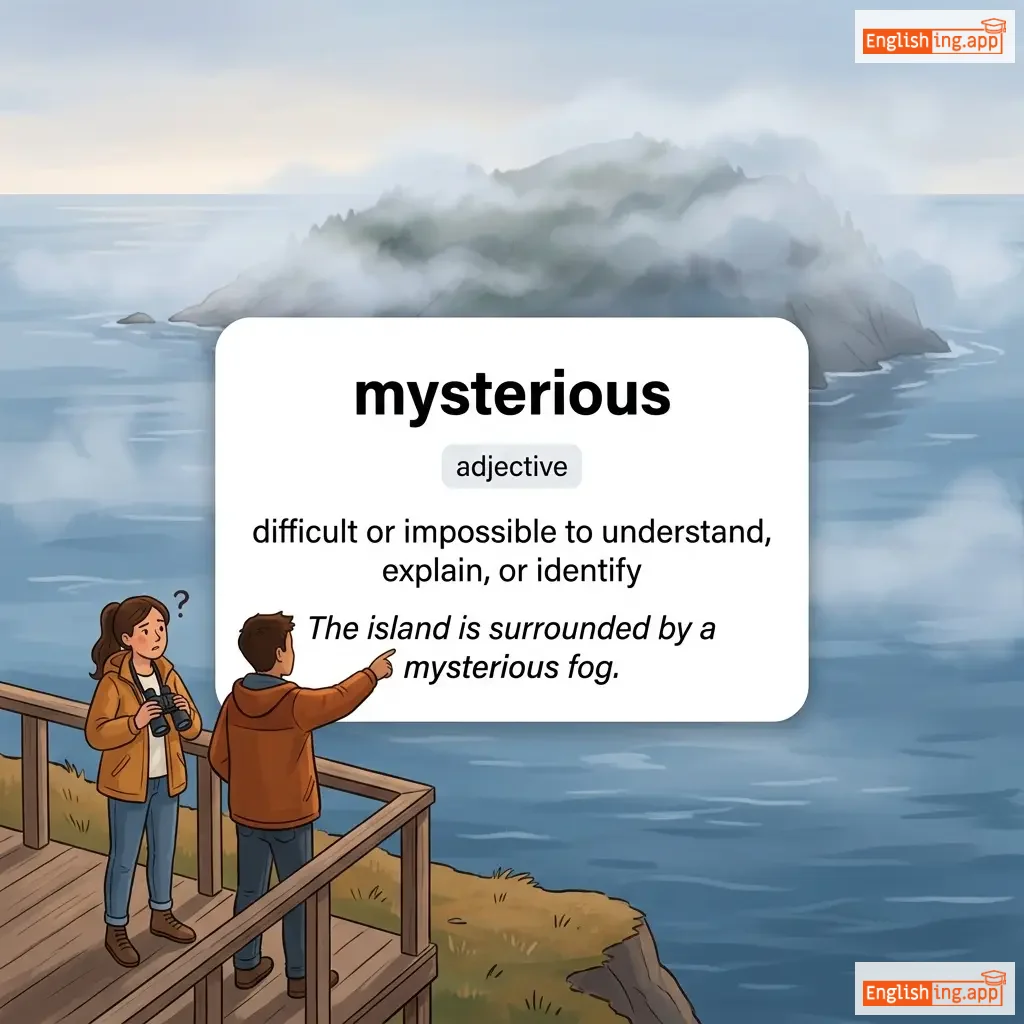
/mɪˈstɪəriəs/
adjective
(mìsītiǎo)
••••••
|
|
神秘的; 难以理解的; 充满秘密气息
shenmide
••••••
|
difficult to understand or explain; having an air of secrecy
••••••
|
The mysterious stranger disappeared into the night. |
神秘的陌生人消失在夜晚。
Shenmide mòshēngrén xiāoshī zài yèwǎn.
••••••
|
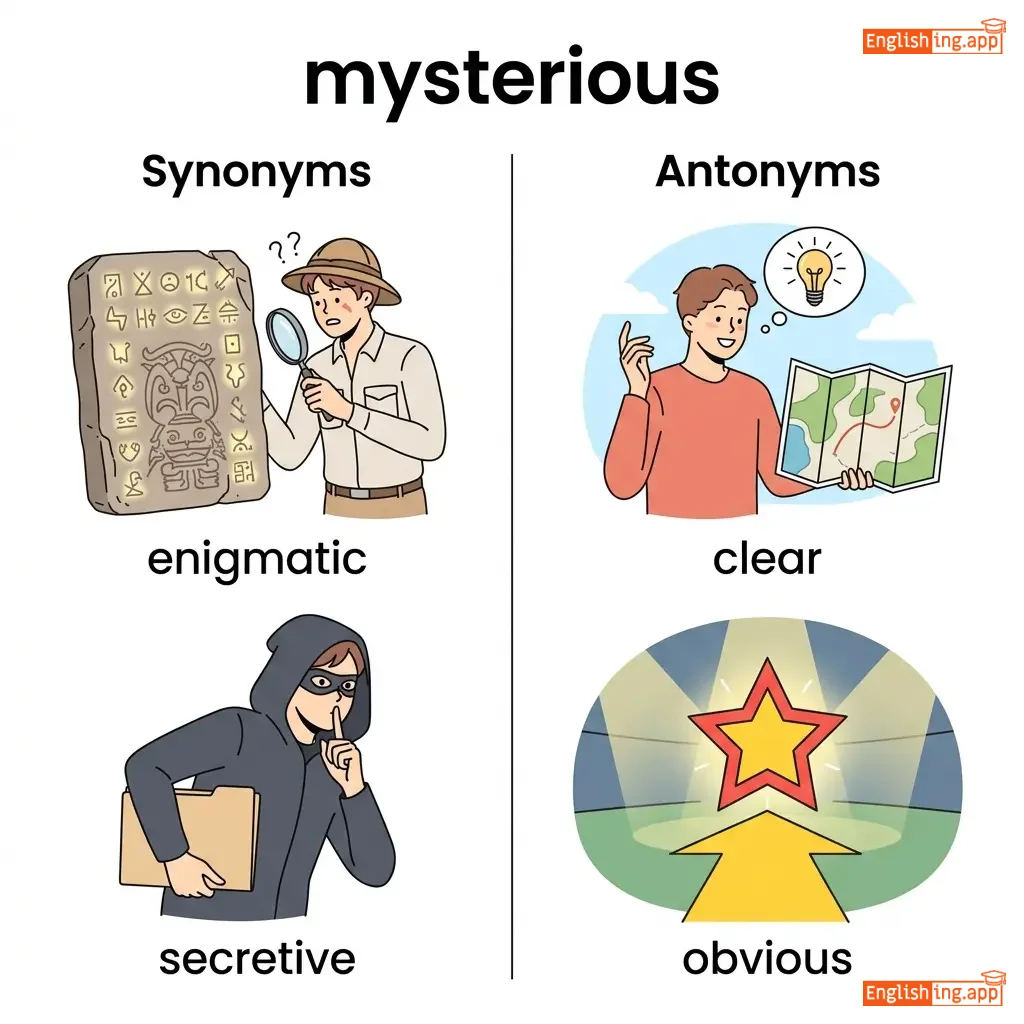
enigmatic, puzzling, cryptic, secretive
••••••
|
clear, obvious, transparent, open
••••••
|
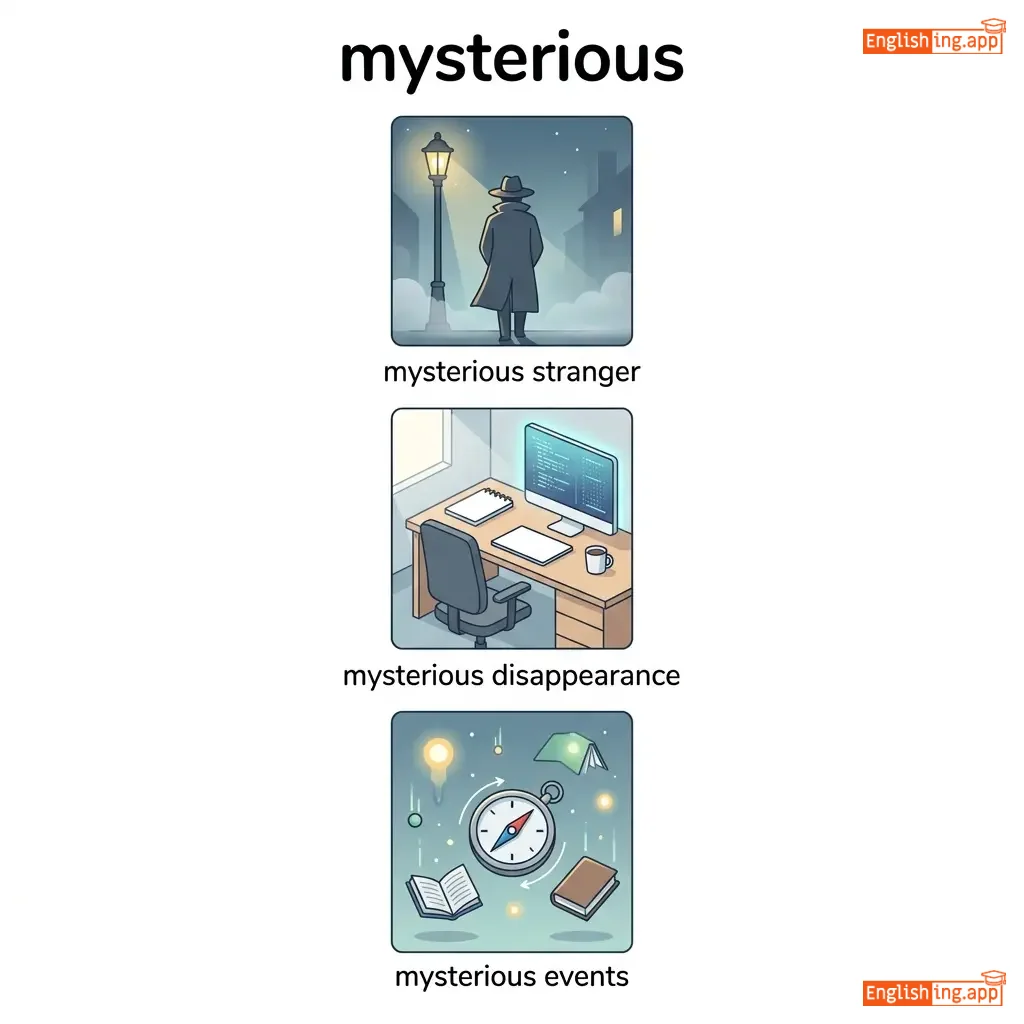
mysterious circumstances, mysterious disappearance, mysterious smile
••••••
|
神秘 = 神秘 (mystery) + 密 (secret)
••••••
|
|
#535
👩👧👦
|
/ˈmʌðərli/
adjective
(maderli)
••••••
|
- •••••• |
母性
muxing
••••••
|
having qualities characteristic of a mother; caring and protective
••••••
|
She showed motherly care and affection towards all the children.
她向所有孩子展示了母亲般的关爱和温情。
••••••
|
她向所有孩子展示了母亲般的关爱和温情。
Ta xiang suoyou haizi zhanshiley muqinban de guanai he wenqing.
••••••
|
maternal, nurturing, caring, protective
••••••
|
unmotherly, neglectful, harsh, cold
••••••
|
motherly love, motherly instinct, motherly care, motherly advice
••••••
|
Motherly care in Chinese: muxing
••••••
|
|
#536
↔️
|
/ˈnær.oʊ/
adjective
(奈罗)
••••••
|
- •••••• |
狭窄的; 限制的; 受限的
xiázhǎi de; xiànzhì de; shòuxiàn de
••••••
|
having a small width; thin; limited in scope; restricted
••••••
|
The narrow street was barely wide enough for two cars. |
这条狭窄的街道几乎不足以容纳两辆车。
Zhè tiáo xiázhǎi de jiēdào jīhū bùzú yǐ róngnà liǎng liàng chē.
••••••
|
thin, slim, tight, confined
••••••
|
wide, broad, spacious, expansive
••••••
|
narrow street, narrow margin, narrow escape, narrow minded
••••••
|
狭窄的街道上两辆车的通过空间非常有限。
••••••
|
|
#537
🤐
|
/mʌm/
adjective
(mam)
••••••
|
- •••••• |
沉默的; 什么也不说; 保持安静
chenmo de; shenme ye bu shuo; baochi anjing
••••••
|
silent; saying nothing; keeping quiet
••••••
|
He kept mum about the surprise party plans. |
他对惊喜派对的计划保持沉默。
Ta dui jingxi paidui de jihua baochi chenmo.
••••••
|
silent, quiet, speechless, mute, taciturn
••••••
|
talkative, vocal, outspoken, communicative
••••••
|
keep mum, stay mum, remain mum
••••••
|
就像'妈妈'一样保持沉默。
••••••
|
|
#538
⛰️
|
/ˈmaʊntɪnəs/
adjective
(màuntènəs)
••••••
|
- •••••• |
山区的
shānqū de
••••••
|
having many mountains; characterized by mountains
••••••
|
The mountainous region was difficult to travel through.
这个山区地区很难旅行。
••••••
|
这个山区地区很难旅行。
Zhège shānqū dìqū hěn nán lǚxíng.
••••••
|
hilly, alpine, elevated, highland
••••••
|
flat, level, lowland, plain
••••••
|
mountainous terrain, mountainous region, mountainous area, mountainous landscape
••••••
|
Imagine a mountainous region with steep slopes that make traveling difficult!
••••••
|
|
#539
🐲
|
/ˈmɪθɪkəl/
adjective
(mìtí kǎo)
••••••
|
- •••••• |
神话的
shénhuà de
••••••
|
existing only in myths or legends; imaginary or fictitious
••••••
|
Dragons are mythical creatures that appear in many cultures.
lóng shì mìtí kǎo de huǐ wù, huì chūxiàn zài hěn duō wénhuà zhōng.
••••••
|
龙是神话中的生物,出现在许多文化中。
lóng shì shénhuà zhōng de shēngwù, chūxiàn zài xǔduō wénhuà zhōng.
••••••
|
legendary, fictional, imaginary, fantastical
••••••
|
real, factual, historical, actual
••••••
|
mythical creatures, mythical beings, mythical stories
••••••
|
想象一个龙出现在神话的世界,成为传奇的一部分。
••••••
|
|
#540
🤏
|
/ˈnær.oʊ ˈmaɪn.dɪd/
adjective
(纳罗-迈因迪德)
••••••
|
- •••••• |
心胸狭窄
xīnxiōng xiázhǎi
••••••
|
unwilling to consider new ideas; prejudiced; intolerant; having a limited perspective
••••••
|
His narrow-minded attitude prevented him from accepting new ideas. |
他的心胸狭窄使他无法接受新想法。
tā de xīnxiōng xiázhǎi shǐ tā wúfǎ jiēshòu xīn xiǎngfǎ.
••••••
|
prejudiced, intolerant, bigoted, close-minded
••••••
|
open-minded, tolerant, broad-minded, liberal
••••••
|
narrow-minded person, narrow-minded approach, narrow-minded thinking, narrow-minded views
••••••
|
Narrow-minded = Xīnxiōng xiázhǎi - 思想局限
••••••
|
Vocabulary Quiz
Test your vocabulary by matching words with their translations or meanings.
Login to take the quiz
Comments (0)
Share your thoughts and join the discussion.
Join the discussion by logging in
Login to CommentNo comments yet
Be the first to share your thoughts!