

Traducción
Pasado
Participio Pasado
Tercera Persona Singular
Gerundio
Meaning
Oración de Ejemplo
Traducción de Oración de Ejemplo
Synonyms
Antonyms
Colocaciones
Mnemotécnico
Swipe left or right, or use the buttons. Tap image to zoom.
Traducción de Oración de Ejemplo
Palabra
Lesson 27Lesson 27 - Alternar Máscara
|
Emoji
|
Palabra | Images | Traducción | Meaning | Oración de Ejemplo | Traducción de Oración de Ejemplo | Synonyms | Antonyms | Colocaciones | Mnemotécnico |
|---|---|---|---|---|---|---|---|---|---|---|
|
#521
🏥
|
/ˈmɔːrɪbʌnd/
adjective
(moribundo)
••••••
|
- •••••• |
moribundo; en declive o muerte
moribundo
••••••
|
near death; dying; in a state of decline or decay
••••••
|
The moribund patient was in critical condition.
El paciente moribundo estaba en estado crítico.
••••••
|
El paciente moribundo estaba en estado crítico.
El paciente moribundo estaba en estado crítico.
••••••
|
dying, failing, declining, decaying
••••••
|
thriving, flourishing, vigorous, healthy
••••••
|
moribund state, moribund economy, moribund industry
••••••
|
Recuerda moribundo como una persona cerca de la muerte.
••••••
|
|
#522
🧍
|
/ˈneɪ.kɪd/
adjective
(néikid)
••••••
|
- •••••• |
desnudo; sin ropa; descubierto; expuesto
desnudo; sin ropa; descubierto; expuesto
••••••
|
without clothes or covering; bare; exposed; unclothed
••••••
|
The naked truth about the situation shocked everyone. |
La verdad desnuda sobre la situación sorprendió a todos.
La verdad desnuda sobre la situación sorprendió a todos.
••••••
|
bare, nude, exposed, uncovered
••••••
|
clothed, covered, dressed, concealed
••••••
|
naked eye, naked truth, naked flame, stark naked
••••••
|
En español, 'naked' se traduce como 'desnudo', lo cual significa estar sin ropa.
••••••
|
|
#523
📦
|
/ˈmuː.və.bl̩/
adjective
(múvébal)
••••••
|
- •••••• |
movible; portátil; transferible
movible; portatil; transferible
••••••
|
capable of being moved; not fixed in position
••••••
|
The furniture is movable so we can rearrange the room easily. |
Los muebles son movibles, por lo que podemos reorganizar la habitación fácilmente.
Los muebles son movibles, por lo que podemos reorganizar la habitacion facilmente.
••••••
|
portable, mobile, transportable, relocatable
••••••
|
fixed, immovable, stationary, permanent
••••••
|
movable parts, movable furniture, movable property
••••••
|
¡Mueve los muebles como si fueran de juguete!
••••••
|
|
#524
🔪
|
/ˈmɜː(r)dərəs/
adjective
(murderous)
••••••
|
- •••••• |
asesino; con intención de matar; extremadamente violento; sanguinario
asesino; con intencion de matar; extremadamente violento; sanguinario
••••••
|
having the intent to kill; extremely violent; bloodthirsty
••••••
|
The murderous look in his eyes frightened everyone. |
La mirada asesina en sus ojos asustó a todos.
La mirada asesina en sus ojos asusto a todos.
••••••
|
deadly, lethal, homicidal, violent
••••••
|
peaceful, harmless, gentle, kind
••••••
|
murderous intent, murderous rage, murderous attack
••••••
|
Murderous = asesino + mirada aterradora
••••••
|
|
#525
💀
|
/ˈmɔːtəl/
adjective
(mortal)
••••••
|
- •••••• |
mortal; perecedero; humano
mortal; perecedero; humano
••••••
|
subject to death; having a limited lifespan; human
••••••
|
All human beings are mortal and will eventually die.
Todo ser humano es mortal y eventualmente morirá.
••••••
|
Todos los seres humanos son mortales y eventualmente morirán.
Todos los seres humanos son mortales y eventualmente morirán.
••••••
|
human, earthly, temporal, perishable
••••••
|
immortal, eternal, divine, everlasting
••••••
|
mortal being, mortal enemy, mortal danger, mortal coil
••••••
|
Mortal en español se refiere a todo ser humano que, al final, morirá.
••••••
|
|
#526
❓
|
/ˈneɪm.ləs/
adjective
(néimles)
••••••
|
- •••••• |
sin nombre; anónimo; desconocido; no identificado
sin nombre; anonimo; desconocido; no identificado
••••••
|
having no name; anonymous; unknown; unidentified
••••••
|
The nameless fear haunted him throughout the night.
La fobia sin nombre lo acosaba durante toda la noche.
••••••
|
El miedo sin nombre lo acechaba durante toda la noche.
El miedo sin nombre lo acechaba durante toda la noche.
••••••
|
anonymous, unknown, unnamed, unidentified
••••••
|
named, identified, known, famous
••••••
|
nameless fear, nameless dread, nameless grave, remain nameless
••••••
|
Un miedo sin nombre es un miedo desconocido, anónimo.
••••••
|
|
#527
🤐
|
/mjuːt/
adjective
(miút)
••••••
|
- •••••• |
mudo; incapaz de hablar; sin sonido
miut
••••••
|
silent; unable to speak; without sound
••••••
|
He remained mute during the entire meeting. |
Él permaneció mudo durante toda la reunión.
El permaneció mudo durante toda la reunion.
••••••
|
silent, speechless, voiceless, quiet
••••••
|
vocal, talkative, loud, audible
••••••
|
mute button, struck mute, remain mute
••••••
|
Mute = mudo, no habla
••••••
|
|
#528
🌈
|
/ˌmʌl.tɪˈfeə.ri.əs/
adjective
(múltiferius)
••••••
|
- •••••• |
diverso; de muchos aspectos
diverso; de muchos aspectos
••••••
|
having many different aspects or forms; diverse and varied
••••••
|
The company has multifarious business interests including technology, finance, and healthcare. |
La empresa tiene intereses comerciales multifacéticos, incluidos tecnología, finanzas y atención médica.
La empresa tiene intereses comerciales multifacéticos, incluidos tecnología, finanzas y atención médica.
••••••
|
diverse, varied, manifold, numerous, multiple
••••••
|
uniform, singular, simple, homogeneous
••••••
|
multifarious activities, multifarious interests, multifarious duties
••••••
|
Multifarious es como 'multifacético' en español, muchas formas o caras.
••••••
|
|
#529
🔢
|
/ˈmʌl.tɪ.pl̩/
adjective
(múltiple)
••••••
|
- •••••• |
múltiples; varios; diversos
multiplays; varios; diversos
••••••
|
having many parts, elements, or members; numerous
••••••
|
She suffered multiple injuries in the accident. |
Ella sufrió múltiples lesiones en el accidente.
Ella sufrio multiples lesiones en el accidente.
••••••
|
numerous, many, several, various, manifold
••••••
|
single, sole, individual, unique
••••••
|
multiple choice, multiple injuries, multiple times
••••••
|
Más que uno, ¡múltiple significa más de uno!
••••••
|
|
#530
🤝
|
/ˈmjuːtʃuəl/
adjective
(mjúchual)
••••••
|
- •••••• |
mutuo
mutuo
••••••
|
shared by two or more parties; reciprocal
••••••
|
They have a mutual respect for each other.
Ellos tienen un respeto mutuo el uno por el otro.
••••••
|
Ellos tienen un respeto mutuo el uno por el otro.
Ellos tienen un respeto mutuo el uno por el otro.
••••••
|
reciprocal, shared, common, joint
••••••
|
unilateral, one-sided, individual, separate
••••••
|
mutual respect, mutual agreement, mutual understanding
••••••
|
Mutuo se refiere a algo compartido entre dos o más personas, como el respeto mutuo entre amigos.
••••••
|
|
#531
🌿
|
/ˈmɒsi/
adjective
(mossi)
••••••
|
- •••••• |
cubierto de musgo; con musgo creciendo en él
cubierto de musgo; con musgo creciendo en él
••••••
|
covered with moss; having moss growing on it
••••••
|
The old tree trunk was mossy and covered with green vegetation.
El tronco viejo del árbol estaba cubierto de musgo y cubierto de vegetación verde.
••••••
|
El tronco viejo del árbol estaba cubierto de musgo y cubierto de vegetación verde.
El tronco viejo del árbol estaba cubierto de musgo y cubierto de vegetación verde.
••••••
|
moss-covered, verdant, overgrown, green
••••••
|
bare, clean, smooth, moss-free
••••••
|
mossy rock, mossy ground, mossy tree, mossy stone
••••••
|
Mossy significa cubierto de musgo, como el tronco de un árbol con musgo creciendo encima.
••••••
|
|
#532
📖
|
/ˈnær.ə.tɪv/
adjective
(narrativo)
••••••
|
- •••••• |
narrativo; descriptivo; contar una historia
narrativo; descriptivo; contar una historia
••••••
|
relating to storytelling; descriptive; telling a story; recounting events
••••••
|
The narrative structure of the novel was quite complex.
La estructura narrativa de la novela era bastante compleja.
••••••
|
La estructura narrativa de la novela era bastante compleja.
La estructura narrativa de la novela era bastante compleja.
••••••
|
storytelling, descriptive, recounting, relating
••••••
|
non-narrative, expository, analytical, factual
••••••
|
narrative structure, narrative voice, narrative style, personal narrative
••••••
|
Spanish 'narrativo' links with 'narrative' for storytelling.
••••••
|
|
#533
🛠️
|
/ˌmʌl.tiˈpɜː.pəs/
adjective
(múlti-pérpas)
••••••
|
- •••••• |
multifuncional
multifuncional
••••••
|
having multiple uses or functions; versatile
••••••
|
This multipurpose tool can be used as a knife, screwdriver, and bottle opener.
Esta herramienta multipropósito se puede usar como cuchillo, destornillador y abridor de botellas.
••••••
|
Esta herramienta multifuncional se puede usar como cuchillo, destornillador y abridor de botellas.
Esta herramienta multifuncional se puede usar como cuchillo, destornillador y abridor de botellas.
••••••
|
versatile, multifunctional, all-purpose, universal
••••••
|
specialized, single-purpose, specific, dedicated
••••••
|
multipurpose room, multipurpose tool, multipurpose vehicle
••••••
|
Multipurpose = Multifuncional, herramienta con muchas funciones.
••••••
|
|
#534
🔮
|
/mɪˈstɪəriəs/
adjective
(misterius)
••••••
|
|
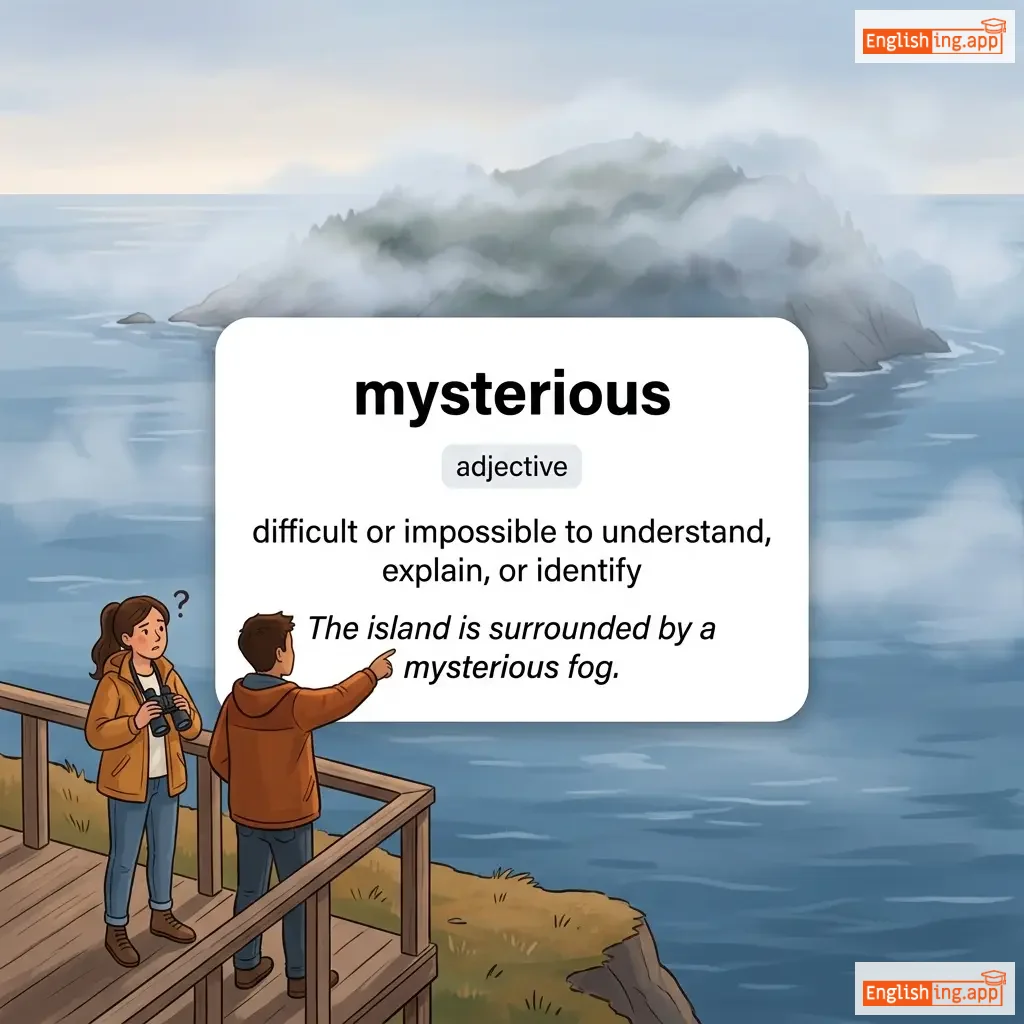
misterioso; enigmático; difícil de entender
misterioso
••••••
|
difficult to understand or explain; having an air of secrecy
••••••
|
The mysterious stranger disappeared into the night. |
El misterioso extraño desapareció en la noche.
El misterioso extraño desapareció en la noche.
••••••
|
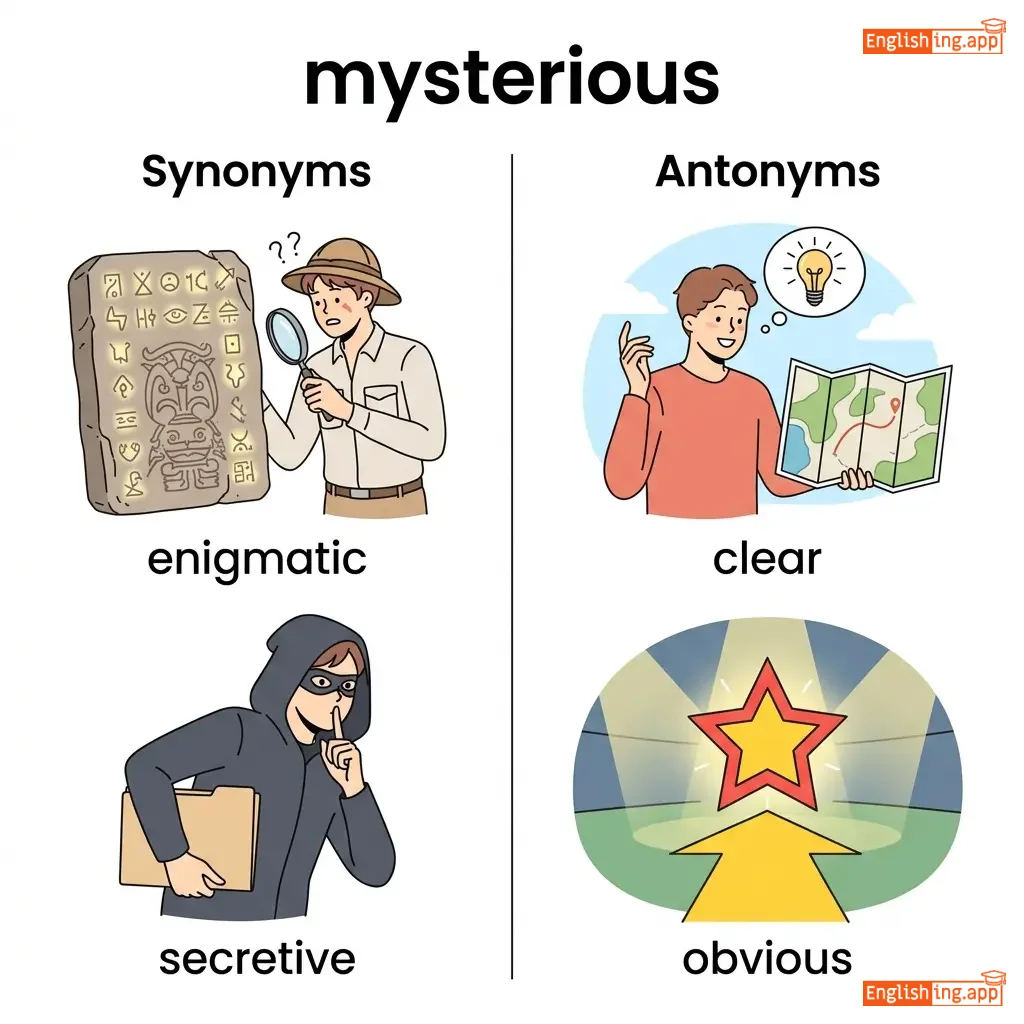
enigmatic, puzzling, cryptic, secretive
••••••
|
clear, obvious, transparent, open
••••••
|
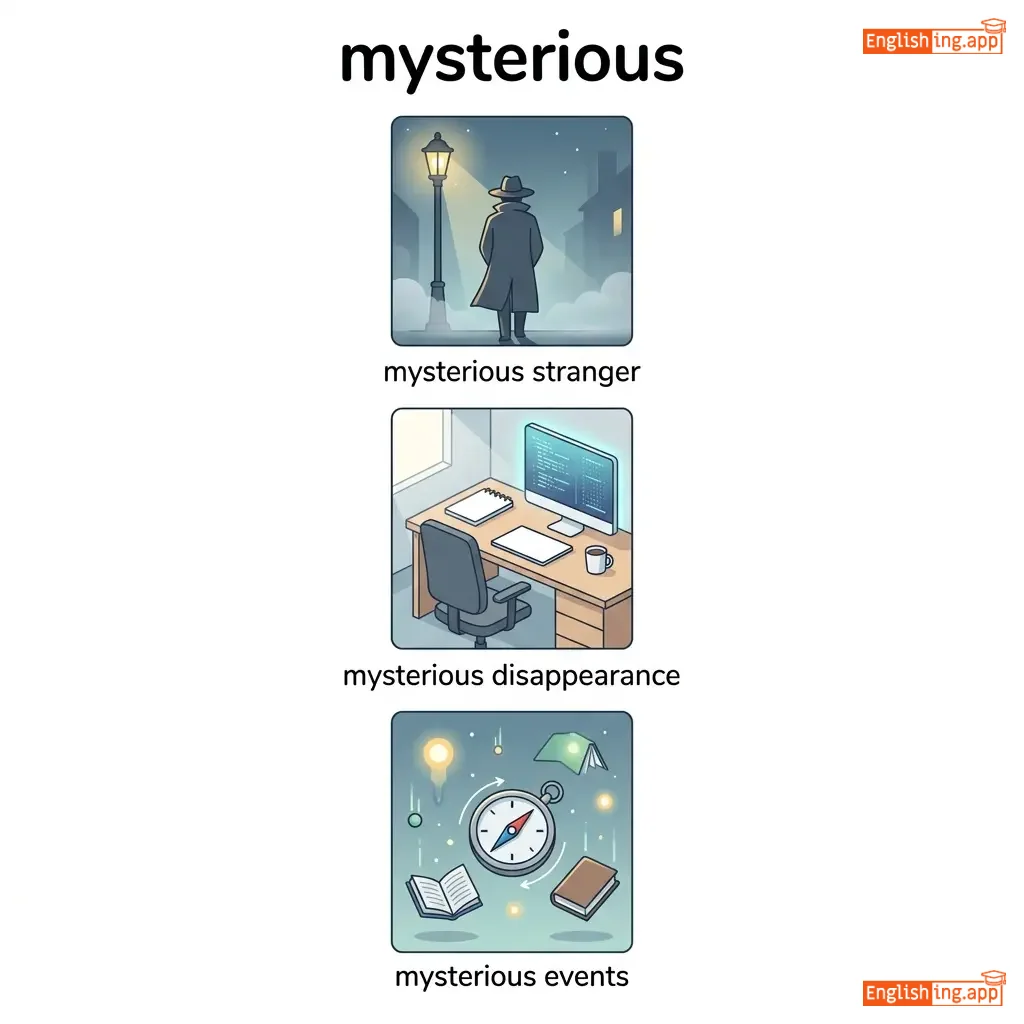
mysterious circumstances, mysterious disappearance, mysterious smile
••••••
|
Misterioso = Mistery (misterio) + oso (oso es misterioso en su forma)
••••••
|
|
#535
👩👧👦
|
/ˈmʌðərli/
adjective
(mádərli)
••••••
|
- •••••• |
maternal
maternal
••••••
|
having qualities characteristic of a mother; caring and protective
••••••
|
She showed motherly care and affection towards all the children.
Ella mostró cuidado y afecto maternal hacia todos los niños.
••••••
|
Ella mostró cuidado y afecto maternal hacia todos los niños.
Ella mostro cuidado y afecto maternal hacia todos los ninos.
••••••
|
maternal, nurturing, caring, protective
••••••
|
unmotherly, neglectful, harsh, cold
••••••
|
motherly love, motherly instinct, motherly care, motherly advice
••••••
|
Motherly care in Spanish: maternal
••••••
|
|
#536
↔️
|
/ˈnær.oʊ/
adjective
(ná-ro)
••••••
|
- •••••• |
estrecho; limitado; angosto
estrecho; limitado; angosto
••••••
|
having a small width; thin; limited in scope; restricted
••••••
|
The narrow street was barely wide enough for two cars. |
La calle estrecha apenas era lo suficientemente ancha para dos coches.
La calle estrecha apenas era lo suficientemente ancha para dos coches.
••••••
|
thin, slim, tight, confined
••••••
|
wide, broad, spacious, expansive
••••••
|
narrow street, narrow margin, narrow escape, narrow minded
••••••
|
La calle angosta hacía que fuera difícil para los coches pasar.
••••••
|
|
#537
🤐
|
/mʌm/
adjective
(mam)
••••••
|
- •••••• |
silencioso; no decir nada; quedarse callado
silencioso; no decir nada; quedarse callado
••••••
|
silent; saying nothing; keeping quiet
••••••
|
He kept mum about the surprise party plans. |
Él se quedó callado sobre los planes de la fiesta sorpresa.
El se quedo callado sobre los planes de la fiesta sorpresa.
••••••
|
silent, quiet, speechless, mute, taciturn
••••••
|
talkative, vocal, outspoken, communicative
••••••
|
keep mum, stay mum, remain mum
••••••
|
Mantén silencio como una 'mamá' que no habla.
••••••
|
|
#538
⛰️
|
/ˈmaʊntɪnəs/
adjective
(mauntenas)
••••••
|
- •••••• |
montañoso
montanoso
••••••
|
having many mountains; characterized by mountains
••••••
|
The mountainous region was difficult to travel through.
La región montañosa era difícil de recorrer.
••••••
|
La región montañosa era difícil de recorrer.
La region montanosa era dificil de recorrer.
••••••
|
hilly, alpine, elevated, highland
••••••
|
flat, level, lowland, plain
••••••
|
mountainous terrain, mountainous region, mountainous area, mountainous landscape
••••••
|
Imagine a mountainous terrain, where traveling is like going up steep hills.
••••••
|
|
#539
🐲
|
/ˈmɪθɪkəl/
adjective
(mítikal)
••••••
|
- •••••• |
mitológico
mitologico
••••••
|
existing only in myths or legends; imaginary or fictitious
••••••
|
Dragons are mythical creatures that appear in many cultures.
dragons ar mítikal kríchers dhat apír in méni kúlchures.
••••••
|
Los dragones son criaturas míticas que aparecen en muchas culturas.
Los dragones son criaturas míticas que aparecen en muchas culturas.
••••••
|
legendary, fictional, imaginary, fantastical
••••••
|
real, factual, historical, actual
••••••
|
mythical creatures, mythical beings, mythical stories
••••••
|
Imagina un dragón en una tierra mitológica, parte de las leyendas antiguas.
••••••
|
|
#540
🤏
|
/ˈnær.oʊ ˈmaɪn.dɪd/
adjective
(náro-maínded)
••••••
|
- •••••• |
de mentalidad cerrada
de mentalidad cerrada
••••••
|
unwilling to consider new ideas; prejudiced; intolerant; having a limited perspective
••••••
|
His narrow-minded attitude prevented him from accepting new ideas. |
Su actitud de mentalidad cerrada le impidió aceptar nuevas ideas.
Su actitud de mentalidad cerrada le impidió aceptar nuevas ideas.
••••••
|
prejudiced, intolerant, bigoted, close-minded
••••••
|
open-minded, tolerant, broad-minded, liberal
••••••
|
narrow-minded person, narrow-minded approach, narrow-minded thinking, narrow-minded views
••••••
|
Narrow-minded = De mentalidad cerrada - Cerrando la mente
••••••
|
Vocabulary Quiz
Test your vocabulary by matching words with their translations or meanings.
Login to take the quiz
Comments (0)
Share your thoughts and join the discussion.
Join the discussion by logging in
Login to CommentNo comments yet
Be the first to share your thoughts!