

Traducción
Pasado
Participio Pasado
Tercera Persona Singular
Gerundio
Meaning
Oración de Ejemplo
Traducción de Oración de Ejemplo
Synonyms
Antonyms
Colocaciones
Mnemotécnico
Swipe left or right, or use the buttons. Tap image to zoom.
Traducción de Oración de Ejemplo
Palabra
Lesson 41Lesson 41 - Alternar Máscara
|
Emoji
|
Palabra | Images | Traducción | Meaning | Oración de Ejemplo | Traducción de Oración de Ejemplo | Synonyms | Antonyms | Colocaciones | Mnemotécnico |
|---|---|---|---|---|---|---|---|---|---|---|
|
#801
🤪
|
/ˈsɪli/
adjective
(sili)
••••••
|
- •••••• |
tonto; estúpido
sili
••••••
|
foolish; lacking good sense or judgement
••••••
|
Don't be silly, of course you can do it!
¡No seas tonto, por supuesto que puedes hacerlo!
••••••
|
¡No seas tonto, por supuesto que puedes hacerlo!
¡No seas tonto, por supuesto que puedes hacerlo!
••••••
|
foolish, absurd, ridiculous, stupid
••••••
|
sensible, wise, intelligent, rational
••••••
|
silly mistake, silly joke, silly behavior
••••••
|
Si eres 'sili', entonces actúas tonto, como si no tuvieras buen juicio.
••••••
|
|
#802
🌫️
|
/ˈʃeɪp.ləs/
adjective
(ʃeɪpləs)
••••••
|
- •••••• |
sin forma
sin forma
••••••
|
having no definite or well-defined shape or form
••••••
|
The fog created a shapeless mass in the distance.
ðə fɔɡ kriˈeɪtɪd ə ˈʃeɪpləs mæs ɪn ðə dɪsˈtæns.
••••••
|
La niebla creó una masa sin forma a lo lejos.
La niebla creó una masa sin forma a lo lejos.
••••••
|
formless, amorphous, undefined, irregular
••••••
|
shaped, formed, structured, defined
••••••
|
shapeless blob, shapeless mass, shapeless garment
••••••
|
sin forma = without form
••••••
|
|
#803
🤒
|
/sɪk/
adjective
(sik)
••••••
|
- •••••• |
enfermo; con náuseas; mal
enfermo; con nauseas; mal
••••••
|
unwell; having a disease or illness; feeling nauseous
••••••
|
She stayed home from work because she was feeling sick. |
Ella se quedó en casa del trabajo porque se sentía mal.
ella se quedo en casa del trabajo porque se sentia mal
••••••
|
ill, unwell, diseased, nauseous
••••••
|
healthy, well, fine
••••••
|
sick leave, sick day, feel sick, get sick
••••••
|
enfermo, con náuseas, mal
••••••
|
|
#804
📏
|
/ʃɔːrt/
adjective
(short)
••••••
|
- •••••• |
corto; breve
corto; breve
••••••
|
having a small length, height, or duration; not long
••••••
|
The meeting was very short, lasting only ten minutes. |
La reunión fue muy corta, duró solo diez minutos.
La reunion fue muy corta, duro solo diez minutos.
••••••
|
brief, small, little, compact
••••••
|
long, tall, extended, lengthy
••••••
|
short story, short time, short distance, short hair
••••••
|
Corto es como un corto en una película.
••••••
|
|
#805
🧵
|
/ˈsɪlkən/
adjective
(sílken)
••••••
|
- •••••• |
de seda; suave; brillante;
de seda
••••••
|
made of silk; smooth and soft like silk
••••••
|
She wore a beautiful silken dress to the party.
Ella llevaba un hermoso vestido de seda a la fiesta.
••••••
|
Ella llevaba un hermoso vestido de seda a la fiesta.
Ella llevaba un hermoso vestido de seda a la fiesta.
••••••
|
smooth, soft, lustrous, sleek
••••••
|
rough, coarse, harsh, bumpy
••••••
|
silken hair, silken fabric, silken touch
••••••
|
A silken dress makes you feel as smooth and elegant as silk itself.
••••••
|
|
#806
🔪
|
/ʃɑːrp/
adjective
(shárp)
••••••
|
- •••••• |
agudo; intenso; repentino y fuerte; rápido para entender
agudo; intenso; repentino y fuerte; rapido para entender
••••••
|
having a cutting edge or point; sudden and intense; quick to understand
••••••
|
The knife has a very sharp blade.
La cuchilla tiene una hoja muy afilada.
••••••
|
El cuchillo tiene una hoja muy afilada.
El cuchillo tiene una hoja muy afilada.
••••••
|
keen, pointed, acute, piercing
••••••
|
blunt, dull, rounded, obtuse
••••••
|
sharp knife, sharp pain, sharp mind, sharp turn
••••••
|
Un cuchillo agudo siempre es sharp en la cocina.
••••••
|
|
#807
😷
|
/ˈsɪk.li/
adjective
(sikli)
••••••
|
- •••••• |
débil; enfermizo; pálido
debil
••••••
|
weak and unhealthy; prone to illness; appearing weak or pale
••••••
|
The sickly child needed extra care and attention. |
El niño enfermizo necesitaba atención y cuidados especiales.
El nino enfermizo necesitaba atencion y cuidados especiales
••••••
|
weak, frail, unhealthy, pale
••••••
|
healthy, robust, strong
••••••
|
sickly appearance, sickly child, sickly complexion
••••••
|
Un niño débil, como una planta enferma, necesita más cuidado.
••••••
|
|
#808
👓
|
/ˈʃɔːrt ˌsaɪtɪd/
adjective
(short-sighted)
••••••
|
- •••••• |
miopía; visión a corto plazo
miopia; vision a corto plazo
••••••
|
lacking foresight or consideration for the future; myopic
••••••
|
His short-sighted decision to quit school early affected his career prospects.
Su decisión miope de abandonar la escuela temprano afectó sus perspectivas profesionales.
••••••
|
Su decisión miope de abandonar la escuela temprano afectó sus perspectivas profesionales.
su desicion miope de abandonar la escuela temprano afecto sus perspectivas profesionales.
••••••
|
myopic, narrow-minded, imprudent, unwise
••••••
|
far-sighted, visionary, prudent, wise
••••••
|
short-sighted policy, short-sighted thinking, short-sighted approach
••••••
|
Corto plazo siempre enfocado, no viendo el futuro
••••••
|
|
#809
😡
|
/ˈʃɔːrt ˌtempərd/
adjective
(shɔːrt ˈtempərd)
••••••
|
- •••••• |
irritable; fácilmente enfadado
irritable; facilmente enfadado
••••••
|
quick to lose one's temper; easily angered
••••••
|
She became short-tempered when the traffic made her late for the meeting.
Ella se volvió irritable cuando el tráfico la hizo llegar tarde a la reunión.
••••••
|
Ella se volvió irritable cuando el tráfico la hizo llegar tarde a la reunión.
Ella se volvio irritable cuando el trafico la hizo llegar tarde a la reunion.
••••••
|
irritable, quick-tempered, irascible, hot-headed
••••••
|
patient, calm, even-tempered, good-natured
••••••
|
short-tempered person, short-tempered behavior, get short-tempered
••••••
|
Short-tempered means quickly upset, like someone who becomes angry when traffic causes delay.
••••••
|
|
#810
👁️🗨️
|
/ˈsaɪt.ləs/
adjective
(saitles)
••••••
|
- •••••• |
ciego; sin visión
ciego; sin vision
••••••
|
unable to see; blind; lacking vision
••••••
|
The sightless man navigated the street with his guide dog.
The sightless man navigated the street with his guide dog.
••••••
|
El hombre ciego navegó por la calle con su perro guía.
El hombre ciego navego por la calle con su perro guia
••••••
|
blind, unseeing, visually impaired
••••••
|
sighted, seeing, visual
••••••
|
sightless person, sightless eyes
••••••
|
Ciego y sin visión, el perro guía lo lleva por la calle.
••••••
|
|
#811
🏖️
|
/ˈʃæl.oʊ/
adjective
(shálou)
••••••
|
- •••••• |
superficial; poco profundo; falta de conocimiento profundo
superficial; poco profundo; falta de conocimiento profundo
••••••
|
not deep; superficial; lacking depth of knowledge
••••••
|
The shallow water is perfect for children to play. |
El agua superficial es perfecta para que los niños jueguen.
El agua superficial es perfecta para que los niños jueguen.
••••••
|
superficial, surface-level, cursory, trivial
••••••
|
deep, profound, thorough, comprehensive
••••••
|
shallow water, shallow thinking, shallow breathing
••••••
|
El agua superficial es tan buena como un conocimiento superficial.
••••••
|
|
#812
💯
|
/ʃɪər/
adjective
(shir)
••••••
|
- •••••• |
completo; absoluto; transparente; muy empinado
completo; absoluto; transparente; muy empinado
••••••
|
complete; absolute; transparent; very steep
••••••
|
It was sheer luck that we found the place.
It was sheer luck that we found the place.
••••••
|
Fue pura suerte que encontramos el lugar.
Fue pura suerte que encontramos el lugar.
••••••
|
pure, complete, absolute, utter
••••••
|
partial, incomplete, mixed, gradual
••••••
|
sheer luck, sheer cliff, sheer fabric, sheer determination
••••••
|
Think of sheer as absolute luck in Spanish – 'pura suerte'.
••••••
|
|
#813
🧠
|
/ʃruːd/
adjective
(shruúd)
••••••
|
- •••••• |
astuto; inteligente; perspicaz
astuto; inteligente; perspicaz
••••••
|
having or showing sharp powers of judgment; astute
••••••
|
The shrewd businessman made a profitable deal in the competitive market.
El astuto hombre de negocios hizo un trato rentable en el mercado competitivo.
••••••
|
El astuto hombre de negocios hizo un trato rentable en el mercado competitivo.
El astuto hombre de negocios hizo un trato rentable en el mercado competitivo.
••••••
|
astute, clever, cunning, sharp
••••••
|
naive, gullible, foolish, simple
••••••
|
shrewd businessman, shrewd investment, shrewd observer, shrewd move
••••••
|
El astuto empresario nunca pierde una oportunidad.
••••••
|
|
#814
✨
|
/ˈʃaɪ.ni/
adjective
(shaíni)
••••••
|
- •••••• |
brillante; reluciente;
brillante; reluciente;
••••••
|
reflecting light; bright and polished; glossy
••••••
|
The shiny new car caught everyone's attention.
La coche nuevo brillante atrajo la atención de todos.
••••••
|
El coche nuevo brillante llamó la atención de todos.
El coche nuevo brillante llamó la atención de todos.
••••••
|
bright, glossy, polished, gleaming
••••••
|
dull, matte, tarnished, dim
••••••
|
shiny surface, shiny hair, shiny object, shiny new
••••••
|
Shiny car shines as 'brillante' as the sun.
••••••
|
|
#815
⭐
|
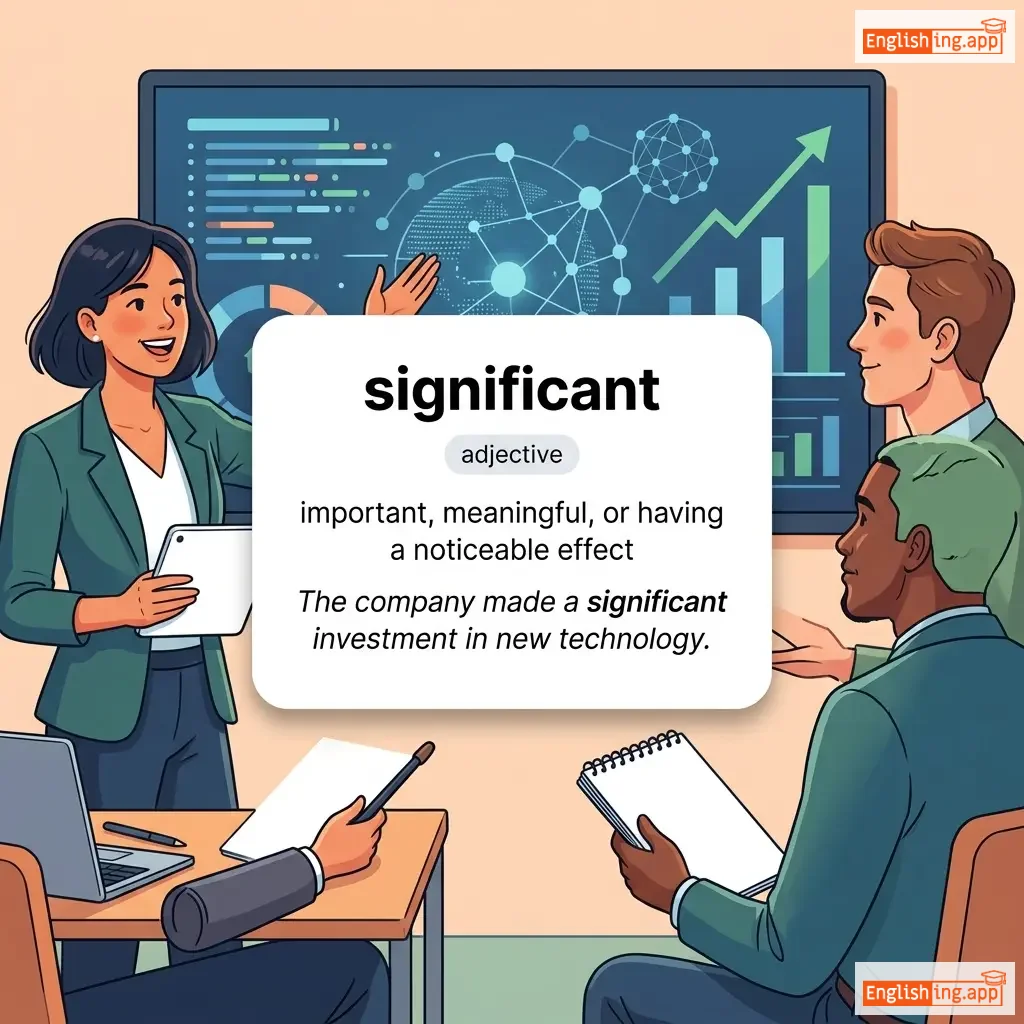
/sɪɡˈnɪf.ɪ.kənt/
adjective
(signifícante)
••••••
|
|
significativo; notable;
significativo; notable
••••••
|
important; notable; having meaning or consequence
••••••
|
The discovery of the vaccine was a significant breakthrough in medicine. |
El descubrimiento de la vacuna fue un avance significativo en la medicina.
El descubrimiento de la vacuna fue un avance significativo en la medicina
••••••
|
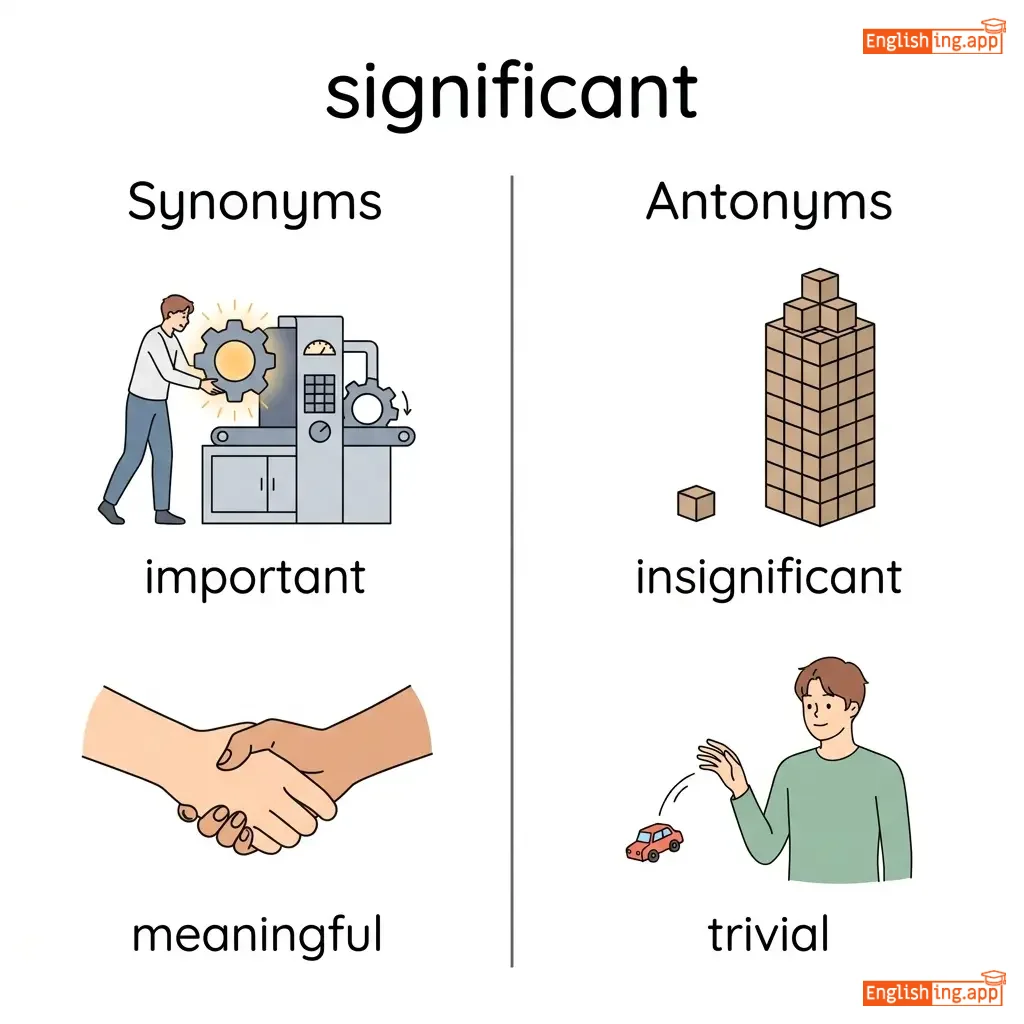
important, meaningful, notable, considerable
••••••
|
insignificant, trivial, minor
••••••
|
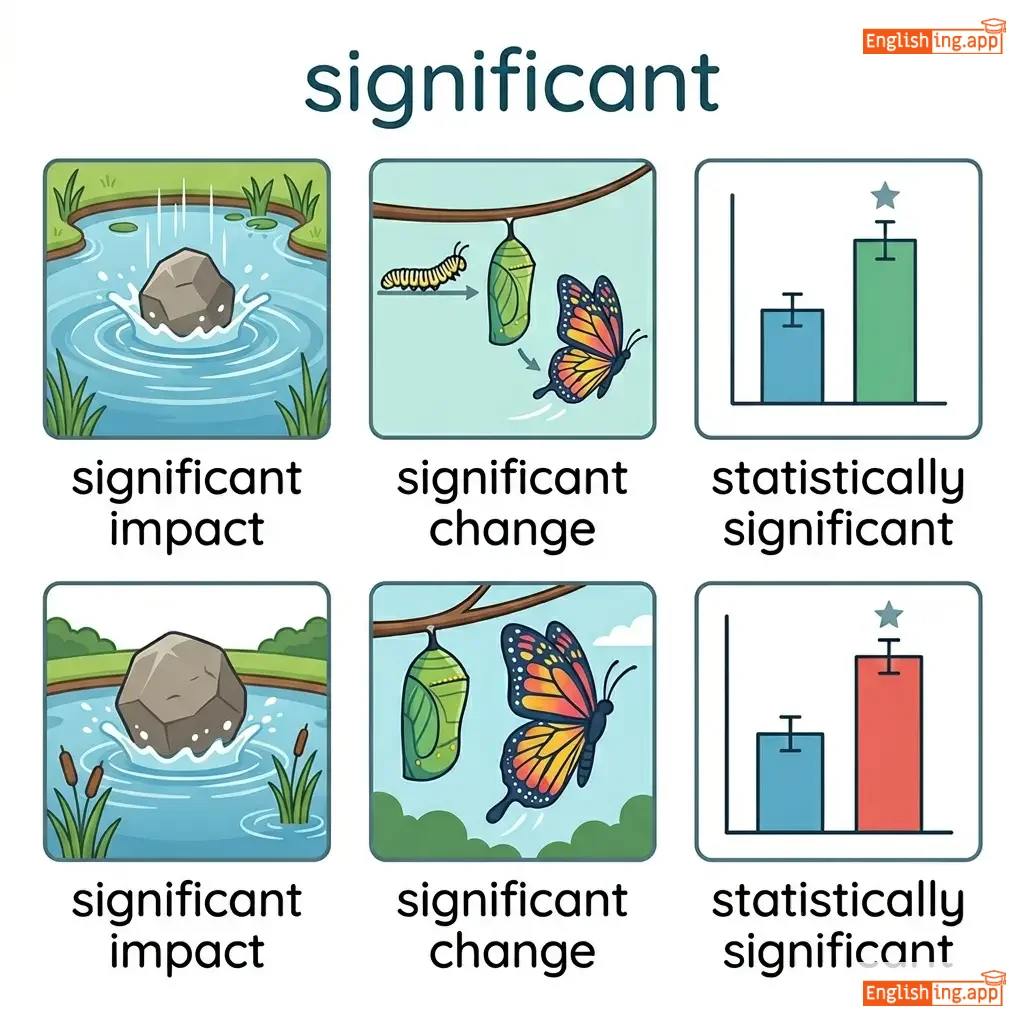
significant impact, significant change, significant difference
••••••
|
Algo significativo es importante y tiene consecuencias.
••••••
|
|
#816
😳
|
/ˈʃeɪm.fəl/
adjective
(ʃeɪmfʊl)
••••••
|
- •••••• |
vergonzoso; deshonroso; embarazoso
vergonzoso; deshonroso; embarazoso
••••••
|
causing shame; disgraceful; embarrassing
••••••
|
His shameful behavior embarrassed the entire family.
his sheɪmfʊl bɪˈheɪvjər ɪmˈbærəst ði ˈɛnˌtaɪər ˈfæmɪli
••••••
|
Su comportamiento vergonzoso avergonzó a toda la familia.
Su comportamiento vergonzoso avergonzó a toda la familia.
••••••
|
disgraceful, embarrassing, humiliating, dishonorable
••••••
|
honorable, respectable, dignified, admirable
••••••
|
shameful act, shameful behavior, shameful secret
••••••
|
Vergonzoso: piensas en vergüenza al hacer algo malo.
••••••
|
|
#817
😳
|
/ʃaɪ/
adjective
(shái)
••••••
|
- •••••• |
tímido; vergonzoso
timido; vergonzoso
••••••
|
nervous or timid in the company of other people
••••••
|
The shy student rarely spoke up in class discussions.
El estudiante tímido rara vez participaba en las discusiones de clase.
••••••
|
El estudiante tímido rara vez participaba en las discusiones de clase.
El estudiante timido rara vez participaba en las discusiones de clase.
••••••
|
timid, bashful, reserved, introverted
••••••
|
confident, outgoing, bold, extroverted
••••••
|
shy person, shy smile, feel shy, shy away
••••••
|
El tímido estudiante siempre se esconde detrás de la pizarra, como un ratón que no se atreve a salir.
••••••
|
|
#818
🚢
|
/ˈʃɪp.ʃeɪp/
adjective
(ship-sheyp)
••••••
|
- •••••• |
ordenado; bien organizado; en buen estado
ordenado; bien organizado; en buen estado
••••••
|
neat and tidy; in good order; well-organized
••••••
|
Everything was shipshape before the inspection.
Todo estaba en perfecto estado antes de la inspección.
••••••
|
Todo estaba en perfecto estado antes de la inspección.
Todo estaba en perfecto estado antes de la inspección.
••••••
|
tidy, neat, orderly, organized
••••••
|
messy, disorganized, untidy, chaotic
••••••
|
shipshape condition, shipshape and Bristol fashion, keep things shipshape
••••••
|
Shipshape – Orden en un barco
••••••
|
|
#819
🤫
|
/ˈsaɪ.lənt/
adjective
(sáilent)
••••••
|
- •••••• |
silencioso; callado; tranquilo
silensioso; callado; tranquilo
••••••
|
making no sound; quiet; not speaking
••••••
|
The library was completely silent during study hours. |
La biblioteca estaba completamente silenciosa durante las horas de estudio.
La biblioteca estaba completamente silenciosa durante las horas de estudio
••••••
|
quiet, noiseless, mute, speechless
••••••
|
noisy, loud, vocal, talkative
••••••
|
silent treatment, silent film, remain silent
••••••
|
Silencio es igual a tranquilidad y calma.
••••••
|
|
#820
😤
|
/ˈʃeɪm.ləs/
adjective
(Shameless)
••••••
|
- •••••• |
desvergonzado
Shameless
••••••
|
having no shame; bold and rude; impudent
••••••
|
The shameless politician refused to apologize for his mistakes.
El político desvergonzado se negó a disculparse por sus errores.
••••••
|
El político desvergonzado se negó a disculparse por sus errores.
El politico desvergonzado se nego a disculparse por sus errores
••••••
|
brazen, impudent, audacious, unashamed
••••••
|
ashamed, modest, humble, bashful
••••••
|
shameless behavior, shameless lie, shameless person
••••••
|
DesVerGonzaDo: des remove verguenza and do; imagine a guy named Gonza doing bold acts with no verguenza
••••••
|
Vocabulary Quiz
Test your vocabulary by matching words with their translations or meanings.
Login to take the quiz
Comments (0)
Share your thoughts and join the discussion.
Join the discussion by logging in
Login to CommentNo comments yet
Be the first to share your thoughts!