


Swipe left or right, or use the buttons. Tap image to zoom.
例句翻译
单词
Lesson 33Lesson 33 - 遮罩切换
|
表情符号
|
单词 | Images | 翻译 | 含义 | 例句 | 例句翻译 | 示例表达翻译 | 同义词 | 反义词 | 搭配词 | 助记符 |
|---|---|---|---|---|---|---|---|---|---|---|---|
|
#641
📚
|
/prɪˈpærəˌtɔːri/
adjective
(预备的)
••••••
|
- •••••• |
预备的; 初步的; 用于准备的
yùbèi de
••••••
|
preliminary; introductory; intended as preparation
••••••
|
She attended preparatory classes before the final exam. |
她参加了考试前的预备课程。
Tā cānjiāle kǎoshì qián de yùbèi kèchéng.
••••••
|
- •••••• |
preliminary, introductory, initial
••••••
|
final, concluding, advanced
••••••
|
preparatory work, preparatory school, preparatory course
••••••
|
考试前的准备课程。
••••••
|
|
#642
⬇️
|
/proʊn/
adjective
(普隆)
••••••
|
- •••••• |
倾向于
qīngxiàng yú
••••••
|
having a tendency to; inclined; lying face down
••••••
|
He is prone to making mistakes when he's tired.
他容易犯错,当他累的时候。
••••••
|
他容易犯错,当他累的时候。
Tā róngyì fàncuò, dāng tā lèi de shíhòu.
••••••
|
- •••••• |
inclined, liable, susceptible, disposed
••••••
|
upright, resistant, immune
••••••
|
prone to error, prone position, accident-prone
••••••
|
倾向于错误的发生,特别是当你感到疲劳时。
••••••
|
|
#643
⏮️
|
/ˈpriː.vi.əs/
adjective
(pree-vee-əs)
••••••
|
- •••••• |
先前
xianqian
••••••
|
occurring before in time or order; earlier; former
••••••
|
I reviewed the previous chapter before starting the new one.
我在开始新的一章之前复习了前一章。
••••••
|
我在开始新的一章之前复习了前一章。
Wo zai kaishi xin de yi zhang zhiqian fuxi le qian yi zhang.
••••••
|
- •••••• |
former, earlier, preceding, prior
••••••
|
next, following, subsequent, later
••••••
|
previous experience, previous year, previous chapter, previous owner
••••••
|
‘先前’ 意味着我们回顾过去的内容,先处理完毕,再进入新的一章。
••••••
|
|
#644
🔒
|
/ˈpraɪ.vət/
adjective
(práivet)
••••••
|
- •••••• |
私人; 保密的; 非公开的; 个别的
sīrén; bǎomì de; fēi gōngkāi de; gèbié de
••••••
|
personal; confidential; not public; individual
••••••
|
This is a private conversation between two friends.
这是两个朋友之间的私人对话。
••••••
|
这是两个朋友之间的私人对话。
Zhè shì liǎng gè péngyǒu zhī jiān de sīrén duìhuà.
••••••
|
- •••••• |
personal, confidential, secret, individual
••••••
|
public, open, shared, common
••••••
|
private property, private life, private school, private sector
••••••
|
私人对话就像秘密一样不公开。
••••••
|
|
#645
👔
|
/prɪˈzentəbl/
adjective
(pǔtōng bāo)
••••••
|
- •••••• |
适合公众展示; 看起来体面
shìhé gōngzhòng zhǎnshì; kàn qǐlái tǐmiàn
••••••
|
neat and suitable for being seen in public; acceptable in appearance
••••••
|
Make sure you look presentable for the job interview.
确保在面试中看起来像个体面的人。
••••••
|
确保在面试中看起来像个体面的人。
quèbǎo zài miànshì zhōng kàn qǐlái xiàng gè tǐmiàn de rén
••••••
|
- •••••• |
neat, tidy, respectable, suitable
••••••
|
scruffy, untidy, disheveled, inappropriate
••••••
|
look presentable, presentable appearance, presentable condition
••••••
|
想象一个面试,穿着得体的样子。
••••••
|
|
#646
💰
|
/ˈprɑːspərəs/
adjective
(prosperous)
••••••
|
- •••••• |
繁荣的; 兴旺的;
fánróng de; xīngwàng de
••••••
|
successful in material terms; flourishing financially
••••••
|
The company became very prosperous after launching their new product.
该公司在推出新产品后变得非常繁荣。
••••••
|
该公司在推出新产品后变得非常繁荣。
Gāi gōngsī zài tuīchū xīn chǎnpǐn hòu biàn dé fēicháng fánróng.
••••••
|
- •••••• |
wealthy, affluent, successful, thriving
••••••
|
poor, unsuccessful, declining, struggling
••••••
|
prosperous business, prosperous nation, prosperous future
••••••
|
推出创新产品,使企业获得繁荣。
••••••
|
|
#647
👑
|
/ˈprɪv.ə.lɪdʒd/
adjective
(普里维利吉德)
••••••
|
- •••••• |
特权的
privuhlidzhd
••••••
|
having special advantages; favored; elite
••••••
|
She comes from a privileged background with many opportunities.
她来自一个有特权的背景,拥有许多机会。
••••••
|
她来自一个有特权的背景,拥有许多机会。
Ta laizi yi ge you tequan de beijing, yongyou xuduo jihui
••••••
|
- •••••• |
advantaged, favored, elite, fortunate
••••••
|
disadvantaged, underprivileged, deprived, unlucky
••••••
|
privileged position, privileged information, privileged few, privileged class
••••••
|
想象一个 VIP 被 lead 到 top 位置, 因而成为 privileged, 就是 有特权的 background
••••••
|
|
#648
💎
|
/ˈpraɪs.ləs/
adjective
(ˈpɾajs.ləs)
••••••
|
- •••••• |
无价的;极其宝贵的
wú jià de; jí qí bǎo guì de
••••••
|
extremely valuable; invaluable; beyond price
••••••
|
Her grandmother's antique jewelry is absolutely priceless.
她祖母的古董珠宝是绝对无价的。
••••••
|
她祖母的古董珠宝是绝对无价的。
Tā zǔmǔ de gǔdǒng zhūbǎo shì juéduì wú jià de.
••••••
|
- •••••• |
invaluable, precious, valuable, treasured
••••••
|
worthless, cheap, valueless, insignificant
••••••
|
priceless artifact, priceless moment, priceless collection, priceless treasure
••••••
|
无价的就像你心中的珍宝,无法用金钱衡量。
••••••
|
|
#649
🪨
|
/ˈprɪm.ɪ.tɪv/
adjective
(原始)
••••••
|
- •••••• |
原始的; 基础的; 粗糙的; 未开发的; 简单的
yuánshǐ de; jīchǔ de; cūcāo de; wèi kāifā de; jiǎndān de
••••••
|
ancient; basic; crude; undeveloped; simple
••••••
|
The tribe still uses primitive tools for hunting and farming.
部落仍然使用原始工具进行狩猎和耕种。
••••••
|
部落仍然使用原始工具进行狩猎和耕种。
Bùluò réngrán shǐyòng yuánshǐ gōngjù jìnxíng shòuliè hé gēngzhòng.
••••••
|
- •••••• |
ancient, basic, crude, simple
••••••
|
modern, advanced, sophisticated, refined
••••••
|
primitive tools, primitive society, primitive conditions, primitive technology
••••••
|
部落的狩猎工具来自远古
••••••
|
|
#650
🤔
|
/ˈprɒb.ə.bəl/
adjective
(普罗巴布尔)
••••••
|
- •••••• |
可能的
keneng de
••••••
|
likely to happen; expected; plausible
••••••
|
It is probable that it will rain tomorrow according to the weather forecast. |
根据天气预报,明天可能会下雨。
Genju tianqi yubao, mingtian keneng hui xia yu.
••••••
|
- •••••• |
likely, possible, plausible, expected
••••••
|
improbable, unlikely, impossible, doubtful
••••••
|
probable cause, probable outcome, highly probable, most probable
••••••
|
明天可能下雨,带上伞吧!
••••••
|
|
#651
🌸
|
/ˈprɪti/
adjective
(priti)
••••••
|
- •••••• |
漂亮的; 可爱的; 吸引人的
piaoliang de; ke ai de; xi yin ren de
••••••
|
attractive in a delicate way; fairly or moderately
••••••
|
She wore a pretty dress to the party.
她穿着一件漂亮的裙子参加聚会。
••••••
|
她穿着一件漂亮的裙子参加聚会。
Tā chuānzhuó yī jiàn piàoliang de qúnzi cānjiā jùhuì.
••••••
|
- •••••• |
beautiful, lovely, attractive, charming
••••••
|
ugly, unattractive, plain, hideous
••••••
|
pretty girl, pretty good, pretty much
••••••
|
想象一下,穿着漂亮衣服的你,成为派对的焦点!
••••••
|
|
#652
😤
|
/praʊd/
adjective
(proud)
••••••
|
- •••••• |
自豪
zìháo
••••••
|
feeling deep pleasure from one's achievements; having high self-respect
••••••
|
She was proud of her daughter's academic achievements.
她为女儿的学术成就感到自豪。
••••••
|
她为女儿的学术成就感到自豪。
Tā wèi nǚ'ér de xuéshù chéngjiù gǎndào zìháo.
••••••
|
- •••••• |
pleased, satisfied, delighted, honored
••••••
|
ashamed, humble, modest, embarrassed
••••••
|
proud moment, proud parent, proud achievement
••••••
|
In Chinese, '自豪' (zìháo) sounds like 'zih-hao', and it represents being proud.
••••••
|
|
#653
🎯
|
/ˈprɪn.sə.pəl/
adjective
(prinsipal)
••••••
|
- •••••• |
主要的; 首要的; 最重要的; 首席
zhuyao de; shouyao de; zui zhongyao de; shouxi
••••••
|
main; primary; most important; chief
••••••
|
The principal reason for the meeting was to discuss the budget. |
会议的主要原因是讨论预算。
Huiyi de zhuyao yuanyin shi taolun yusuan.
••••••
|
- •••••• |
main, primary, chief, major
••••••
|
secondary, minor, subsidiary, lesser
••••••
|
principal reason, principal amount, principal concern, principal objective
••••••
|
在学校里,主任是做主要决策的领导者。
••••••
|
|
#654
⚠️
|
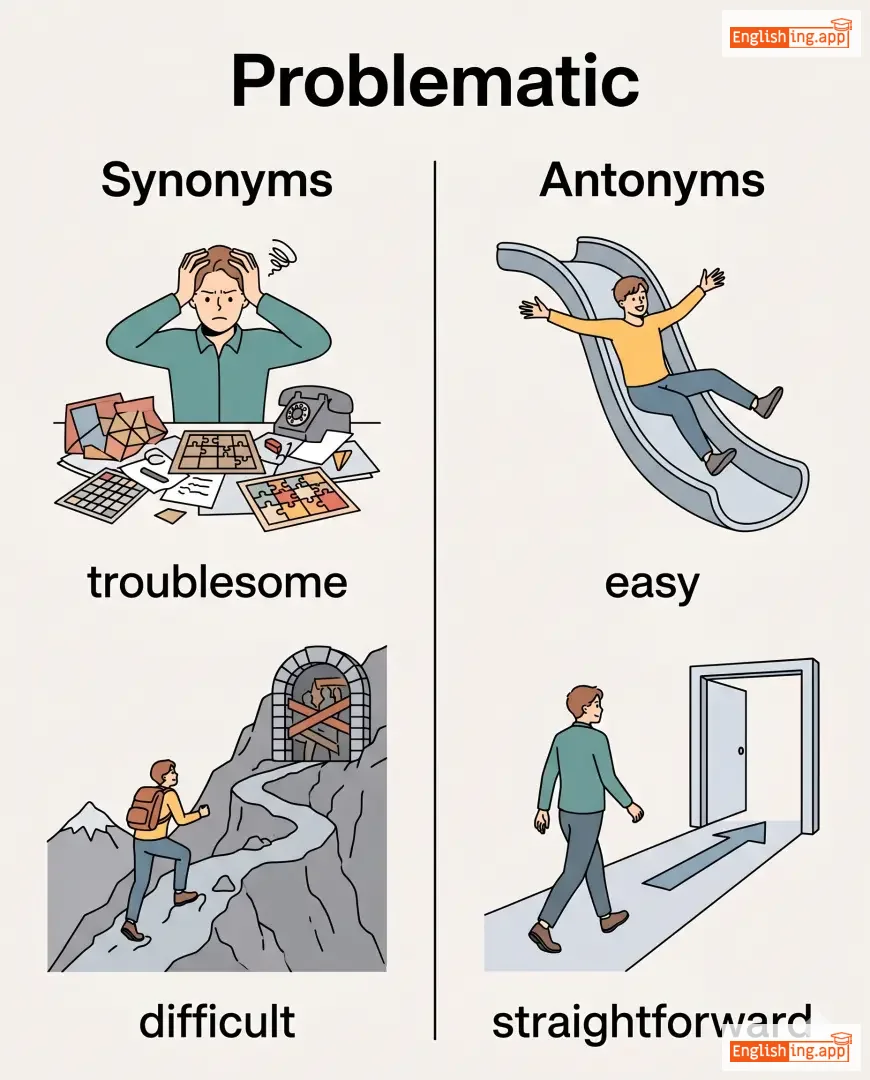
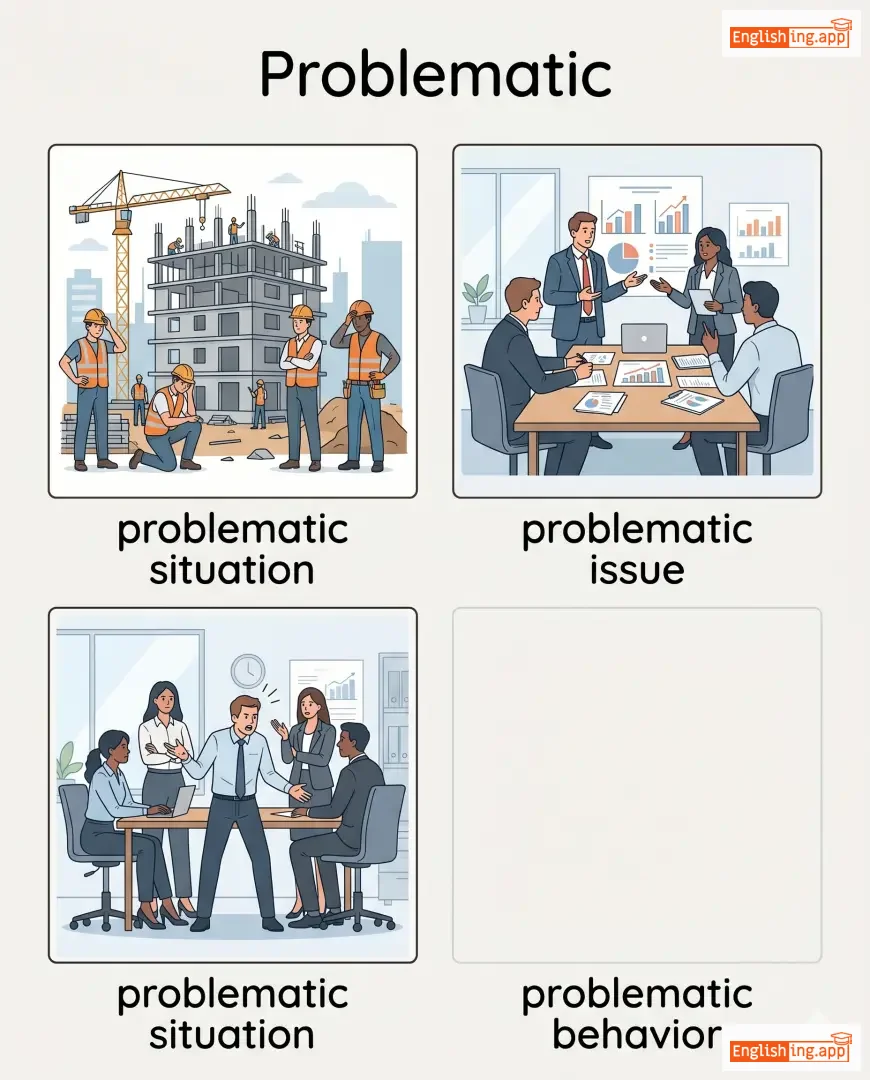
/ˌprɒb.ləˈmæt.ɪk/
adjective
(问题的)
••••••
|
|
有问题的; 导致问题的
you wenti de; daozhi wenti de
••••••
|
causing problems; troublesome; difficult to deal with
••••••
|
The new policy changes are problematic and need to be reviewed.
新政策的变化是有问题的,需要审查。
••••••
|
新政策的变化是有问题的,需要审查。
Xin zhengce de bianhua shi you wenti de, xuyao shencha.
••••••
|
- •••••• |
troublesome, difficult, challenging, questionable
••••••
|
unproblematic, easy, simple, straightforward
••••••
|
problematic situation, problematic behavior, highly problematic, potentially problematic
••••••
|
问题 (wenti) + 的 (de) = 有问题的 (you wenti de)
••••••
|
|
#655
📈
|
/ˈprevələnt/
adjective
(普雷瓦伦特)
••••••
|
- •••••• |
普遍的
prevalent
••••••
|
widespread; existing very commonly; generally occurring
••••••
|
Smoking is still prevalent among teenagers despite health warnings.
尽管有健康警告,青少年中仍然普遍吸烟。
••••••
|
尽管有健康警告,青少年中仍然普遍吸烟。
Smoking is still prevalent among teenagers despite health warnings
••••••
|
- •••••• |
widespread, common, frequent, extensive
••••••
|
rare, uncommon, infrequent, isolated
••••••
|
prevalent disease, prevalent opinion, prevalent practice
••••••
|
PREVALENT mnemonic: PREV ALL AROUND NOT RARE -> 记住 普遍存在 的 含义
••••••
|
|
#656
⏰
|
/prəˈvɪʒənəl/
adjective
(临时的)
••••••
|
- •••••• |
临时
lin shi
••••••
|
arranged for the present; temporary; subject to later confirmation
••••••
|
The provisional agreement will be reviewed next month. |
临时协议将在下个月进行审查。
Lin shi xie yi jiang zai xia ge yue jin xing shen cha.
••••••
|
- •••••• |
temporary, interim, tentative, conditional
••••••
|
permanent, final, definitive, confirmed
••••••
|
provisional government, provisional license, provisional agreement
••••••
|
Think of '临时' as 'temporary' in Chinese – temporary, just like provisional!
••••••
|
|
#657
⏪
|
/ˈpraɪ.ər/
adjective
(普赖尔)
••••••
|
- •••••• |
先前的
pulai er
••••••
|
existing or coming before in time; previous; earlier
••••••
|
You need prior approval before making any changes to the system.
在对系统进行任何修改之前,你需要事先获得批准。
••••••
|
在对系统进行任何修改之前,你需要事先获得批准。
zai dui xi tong jin xing ren he xi gai zhi qian ni xu yao shi xian huo de pi zhi
••••••
|
事先批准
shi xian pizhun
••••••
|
previous, earlier, former, preceding
••••••
|
subsequent, later, following, after
••••••
|
prior approval, prior experience, prior knowledge, prior notice
••••••
|
Prior = 先前的 in time, 想象 calendar 上写着 PRIOR 的日期, 先前 的 meaning 就是 before
••••••
|
|
#658
🛡️
|
/prɪˈventɪv/
adjective
(预防性)
••••••
|
- •••••• |
预防的;设计用来防止某事发生
yùfáng de
••••••
|
designed to prevent something from happening; protective against disease
••••••
|
Regular exercise is a preventive measure against heart disease. |
定期锻炼是预防心脏病的措施。
Dìngqī duànliàn shì yùfáng xīnzàngbìng de cuòshī.
••••••
|
- •••••• |
protective, precautionary, prophylactic, defensive
••••••
|
curative, remedial, therapeutic, corrective
••••••
|
preventive medicine, preventive care, preventive measures
••••••
|
预防的保护措施如锻炼心脏
••••••
|
|
#659
💪
|
/prəˈdʌk.tɪv/
adjective
(生产力)
••••••
|
- •••••• |
高效的
gaoxiaode
••••••
|
efficient; yielding good results; fruitful
••••••
|
Working from home has made me more productive than ever before.
在家工作让我比以往更高效。
••••••
|
在家工作让我比以往更高效。
Zai jia gongzuo rang wo bi yiwang geng gaoxiaode.
••••••
|
- •••••• |
efficient, fruitful, effective, constructive
••••••
|
unproductive, inefficient, wasteful, counterproductive
••••••
|
productive work, productive meeting, highly productive, productive capacity
••••••
|
高效的 = 提高成果的工作
••••••
|
|
#660
😠
|
/prəˈvoʊkɪŋ/
adjective
(provoking)
••••••
|
- •••••• |
挑衅的
tiaoxian de
••••••
|
causing anger or strong reaction; irritating; stimulating
••••••
|
His provoking comments made everyone angry.
his provoking comments made everyone angry
••••••
|
他挑衅的评论让每个人都生气了。
Tā tiǎoxiàn de pínglùn ràng měi gèrén dōu shēngqì le.
••••••
|
- •••••• |
irritating, annoying, aggravating, inciting
••••••
|
calming, soothing, peaceful, pacifying
••••••
|
provoking behavior, provoking remarks, thought-provoking
••••••
|
引发挑衅的强烈反应!
••••••
|
Vocabulary Quiz
Test your vocabulary by matching words with their translations or meanings.
Login to take the quiz
Comments (0)
Share your thoughts and join the discussion.
Join the discussion by logging in
Login to CommentNo comments yet
Be the first to share your thoughts!