

Swipe left or right, or use the buttons. Tap image to zoom.
例句翻译
单词
Lesson 22Lesson 22 - 遮罩切换
|
表情符号
|
单词 | Images | 翻译 | 含义 | 例句 | 例句翻译 | 同义词 | 反义词 | 搭配词 | 助记符 |
|---|---|---|---|---|---|---|---|---|---|---|
|
#421
🤷♂️
|
/ɪˈrɪˌspɑn.sə.bəl/
adjective
(irresponsible)
••••••
|
- •••••• |
不负责任
bù fù zérèn
••••••
|
lacking a sense of responsibility; careless
••••••
|
It was irresponsible of him to leave without telling anyone. |
他在没有告诉任何人就离开,这是不负责任的行为。
Tā zài méiyǒu gàosù rènhé rén jiù líkāi, zhè shì bù fù zérèn de xíngwéi.
••••••
|
reckless, careless, thoughtless, negligent
••••••
|
responsible, careful, thoughtful, reliable
••••••
|
irresponsible behavior, irresponsible person, act irresponsibly
••••••
|
不负责任的意思是缺乏责任感,就像没有告诉别人就离开一样。
••••••
|
|
#422
🦵
|
/leɪm/
adjective
(leim)
••••••
|
- •••••• |
跛; 残疾
bó; cánjí
••••••
|
unable to walk normally because of an injury or illness affecting the leg or foot; weak and unconvincing
••••••
|
The injured horse was lame and couldn't walk properly.
受伤的马跛行,不能正常行走。
••••••
|
受伤的马跛行,不能正常行走。
Shòushāng de mǎ bǒxíng, bùnéng zhèngcháng xíngzǒu.
••••••
|
disabled, crippled, limping, hobbling
••••••
|
agile, nimble, healthy, able-bodied
••••••
|
lame excuse, lame duck, lame horse, go lame
••••••
|
跛行的马走得很慢。
••••••
|
|
#423
🐘
|
/ˈdʒʌm.boʊ/
adjective
(巨型)
••••••
|
- •••••• |
极其大; 巨大
jumbo
••••••
|
exceptionally large; enormous; gigantic
••••••
|
The jumbo jet was delayed at the airport. |
巨型喷气机在机场延误。
Juxing penqi ji zai jichang yanwu.
••••••
|
huge, enormous, giant, massive
••••••
|
tiny, small, miniature
••••••
|
jumbo jet, jumbo size, jumbo shrimp
••••••
|
想象一下一个巨大的喷气机在空中飞行。
••••••
|
|
#424
🌀
|
/ˈkɪŋ.ki/
adjective
(金基)
••••••
|
- •••••• |
不寻常的性行为;卷曲或弯曲的头发
kinki
••••••
|
having or involving unconventional sexual practices; having tight curls or bends
••••••
|
His kinky hair made him look unique.
他的卷发使他看起来独特。
••••••
|
他的卷发使他看起来独特。
tā de juǎn fà shǐ tā kàn qǐlái dútè.
••••••
|
curly, twisted, bizarre, peculiar
••••••
|
straight, normal, conventional
••••••
|
kinky hair, kinky behavior, kinky ideas
••••••
|
Kinky sounds like '金基', and remember '卷发' (curly hair) for kinky.
••••••
|
|
#425
😠
|
/ˈdʒel.əs/
adjective
(杰洛斯)
••••••
|
- •••••• |
嫉妒; 忌妒; 对某人的注意或喜爱的占有欲
ji-du; ji-du; dui mou-ren de zhu-yi huo xi-ai de zhan-you-yu
••••••
|
feeling envious or resentful; possessive of someone's attention or affection
••••••
|
She felt jealous when her friend got promoted.
她在朋友晋升时感到嫉妒。
••••••
|
她在朋友晋升时感到嫉妒。
Ta zai peng-you jin-sheng shi gan-dao ji-du.
••••••
|
envious, resentful, covetous, possessive
••••••
|
content, satisfied, generous, unenvious
••••••
|
jealous husband, feel jealous, jealous rage, jealous nature
••••••
|
嫉妒别人得到更多的关注
••••••
|
|
#426
😴
|
/ˈlæŋɡwɪd/
adjective
(lángwíd)
••••••
|
- •••••• |
无力的; 懒惰的; 虚弱的
wúlì de; lǎnduò de; xūruò de
••••••
|
lacking energy or vitality; slow and relaxed; weak or faint
••••••
|
After the long journey, she felt languid and needed to rest. |
经过长时间的旅程后,她感到无力并需要休息。
Jīngguò cháng shíjiān de lǚchéng hòu, tā gǎndào wúlì bìng xūyào xiūxí.
••••••
|
sluggish, listless, lethargic, weary, tired
••••••
|
energetic, vigorous, lively, active, spirited
••••••
|
languid movement, languid atmosphere, languid summer day, languid pace
••••••
|
Imagine being exhausted, 'languid' fits perfectly in Chinese.
••••••
|
|
#427
😴
|
/ˈnæk.ərd/
adjective
(nā kǎ dé)
••••••
|
- •••••• |
极其疲惫; 累坏了
jiqi pibei; leibailiao
••••••
|
extremely tired; exhausted
••••••
|
I'm absolutely knackered after working all day.
我工作了一整天,现在完全累坏了。
••••••
|
我工作了一整天,现在完全累坏了。
Wo gongzuo le yi zheng tian, xianzai wanquan leihuailiao.
••••••
|
exhausted, tired, worn out, fatigued
••••••
|
energetic, refreshed, rested, vigorous
••••••
|
absolutely knackered, completely knackered, totally knackered
••••••
|
在一天的工作后,像'nā kǎ dé'一样累坏。
••••••
|
|
#428
👶
|
/ˈdʒuː.ni.ər/
adjective
(junior)
••••••
|
- •••••• |
初级的; 较年轻的; 新的; 下属的
junior
••••••
|
lower in rank; younger; newer; subordinate
••••••
|
She is a junior employee at the company.
她是公司的一名初级员工。
••••••
|
她是公司的一名初级员工。
Ta shi gongsi de yiming chūjí yuángōng.
••••••
|
younger, lower-ranking, subordinate
••••••
|
senior, older, superior
••••••
|
junior high, junior year, junior partner
••••••
|
Junior在中文里表示较年轻的职位。
••••••
|
|
#429
⚖️
|
/dʒʌst/
adjective
(贾斯特)
••••••
|
- •••••• |
公正的; 正义的; 适当的
gōngzhèng de; zhèngyì de; shìdàng de
••••••
|
fair; righteous; morally right; appropriate
••••••
|
The judge made a just decision in the case.
法官在案件中作出了公正的决定。
••••••
|
法官在案件中作出了公正的决定。
Fǎguān zài ànjiàn zhōng zuòchūle gōngzhèng de juédìng.
••••••
|
fair, righteous, equitable, honest
••••••
|
unjust, unfair, dishonest
••••••
|
just cause, just war, just society
••••••
|
就像公正的法官做出公正的判决,在你的行为中也要公正。
••••••
|
|
#430
⚔️
|
/ˈnaɪt.li/
adjective
(naitli)
••••••
|
- •••••• |
骑士般的; 高贵和勇敢
qishi ban de; gao gui he yong gan
••••••
|
having the characteristics of a knight; chivalrous; noble and brave
••••••
|
He showed knightly courage in defending the innocent.
他在保护无辜时展现了骑士般的勇气。
••••••
|
他在保护无辜时展现了骑士般的勇气。
Ta zai baohu wugu shi zhanshi le qishi ban de yongqi.
••••••
|
chivalrous, noble, gallant, heroic
••••••
|
cowardly, ignoble, dishonorable, base
••••••
|
knightly virtue, knightly behavior, knightly code
••••••
|
Knightly means acting brave like a knight, noble and courageous!
••••••
|
|
#431
😄
|
/ˈdʒes.tɪŋ/
adjective
(杰斯廷)
••••••
|
- •••••• |
打趣的
jesting
••••••
|
joking or teasing in a playful manner
••••••
|
He was only jesting when he said he would quit his job.
他只是开玩笑地说自己要辞掉工作。
••••••
|
他只是开玩笑地说自己要辞掉工作。
ta zhi shi kai wan xiao de zi ji yao ci diao gong zuo
••••••
|
joking, kidding, teasing, playful
••••••
|
serious, earnest, sincere, solemn
••••••
|
jesting manner, jesting tone, stop jesting
••••••
|
JestING 就是 Jest + ing, 玩笑 (jest) 正在进行 (ing),所以 打趣 的 意义 就是在进行中的玩笑
••••••
|
|
#432
📏
|
/lɑːrdʒ/
adjective
(lāzhí)
••••••
|
- •••••• |
大; 巨大的; 庞大的
dà; jù dà de; páng dà de
••••••
|
of considerable size, extent, or intensity; big
••••••
|
The large building dominated the city skyline.
那座大楼主宰了城市的天际线。
••••••
|
那座大楼主宰了城市的天际线。
Nà zuò dà lóu zhǔ zǎi le chéngshì de tiānjìxiàn.
••••••
|
big, huge, enormous, massive, giant
••••••
|
small, tiny, little, minute, petite
••••••
|
large scale, large number, large amount, large family
••••••
|
Imagine a 'large' panda in a Chinese bamboo forest!
••••••
|
|
#433
🔪
|
/kiːn/
adjective
(kīn)
••••••
|
- •••••• |
敏锐的; 强烈的; 渴望的
keen
••••••
|
sharp; acute; intense; eager
••••••
|
She has a keen interest in science.
她对科学有浓厚的兴趣。
••••••
|
她对科学有浓厚的兴趣。
Tā duì kēxué yǒu nónghòu de xìngqù.
••••••
|
sharp, acute, intense, eager
••••••
|
dull, blunt, uninterested
••••••
|
keen interest, keen eye, keen sense
••••••
|
科学的好奇心越强烈,兴趣就越尖锐。
••••••
|
|
#434
😏
|
/ˈnoʊ.ɪŋ/
adjective
(nóing)
••••••
|
- •••••• |
知道; 敏锐; 狡猾;
noing
••••••
|
showing awareness or understanding; perceptive; shrewd
••••••
|
She gave him a knowing smile when he mentioned the secret.
她提到秘密时,给了他一个会心的微笑。
••••••
|
她提到秘密时,给了他一个会心的微笑。
Tā tí dào mìmì shí, gěi le tā yīgè huìxīn de wéixiào.
••••••
|
aware, perceptive, shrewd, cunning
••••••
|
naive, innocent, unaware, ignorant
••••••
|
knowing look, knowing smile, knowing glance
••••••
|
用一个微笑显示会心的狡猾
••••••
|
|
#435
😵💫
|
/ˈdʒɪg.ərd/
adjective
(吉格德)
••••••
|
- •••••• |
惊讶; 震惊;
jiged
••••••
|
surprised or astonished; confused or puzzled
••••••
|
I'll be jiggered if I know what happened here. |
如果我知道这里发生了什么,我会感到惊讶。
Rúguǒ wǒ zhīdào zhèlǐ fāshēngle shénme, wǒ huì gǎndào jīngyà.
••••••
|
confused, surprised, amazed, baffled
••••••
|
clear, understanding, certain, unsurprised
••••••
|
well I'll be jiggered, jiggered if I know
••••••
|
Imagine being so surprised, you shout 'jiged!'
••••••
|
|
#436
⏳
|
/ˈlæstɪŋ/
adjective
(là sīng)
••••••
|
- •••••• |
持久的; 永久的
chí jiǔ de; yǒng jiǔ de
••••••
|
enduring for a long time; permanent; durable
••••••
|
Their friendship had a lasting impact on both their lives. |
他们的友谊对他们的生活产生了持久的影响。
Tāmen de yǒuyì duì tāmen de shēnghuó chǎnshēngle chí jiǔ de yǐngxiǎng.
••••••
|
enduring, permanent, durable, persistent, continuing
••••••
|
temporary, brief, short-lived, fleeting, momentary
••••••
|
lasting impression, lasting relationship, lasting peace, lasting effect
••••••
|
持久的友谊给生活留下了永远的痕迹。
••••••
|
|
#437
😊
|
/kaɪnd/
adjective
(kāi'nd)
••••••
|
- •••••• |
友善的;有同情心的
kaindo
••••••
|
gentle; caring; compassionate; showing sympathy
••••••
|
He is a kind person who always helps others. |
他是一个友善的人,总是帮助别人。
Tā shì yīgè yǒushàn de rén, zǒng shì bāngzhù biérén
••••••
|
gentle, caring, compassionate, generous
••••••
|
cruel, mean, harsh, unkind
••••••
|
kind heart, kind words, kind gesture
••••••
|
Kind 在英语中意味着 '友善的', 就像总是帮助别人的人。
••••••
|
|
#438
🤝
|
/dʒɔɪnt/
adjective
(dʒɔɪnt)
••••••
|
- •••••• |
共同; 联合
gòngtóng; liánhé
••••••
|
shared or done together; combined or united
••••••
|
They made a joint decision to start the business together. |
他们做出了共同决定,一起开始了生意。
Tāmen zuò chūle gòngtóng juédìng, yīqǐ kāishǐle shēngyì.
••••••
|
shared, combined, collective, mutual
••••••
|
separate, individual, independent, solo
••••••
|
joint effort, joint venture, joint decision, joint account
••••••
|
Joint 在中文中表示 '一起' 或 '联合'
••••••
|
|
#439
🧠
|
/ˈnɑː.lɪ.dʒə.bəl/
adjective
(nàlèdʒábùl)
••••••
|
- •••••• |
博学的; 知识丰富的; 有教养的
bóxué de; zhīshì fēngfù de; yǒu jiàoyǎng de
••••••
|
having extensive knowledge; well-informed; educated
••••••
|
She is very knowledgeable about ancient history. |
她对古代历史非常了解。
Tā duì gǔdài lìshǐ fēicháng liǎojiě.
••••••
|
informed, educated, learned, well-versed
••••••
|
ignorant, uninformed, uneducated, naive
••••••
|
highly knowledgeable, very knowledgeable, knowledgeable about
••••••
|
Knowledgeable means '博学的' – imagine a scholar who knows everything from ancient history.
••••••
|
|
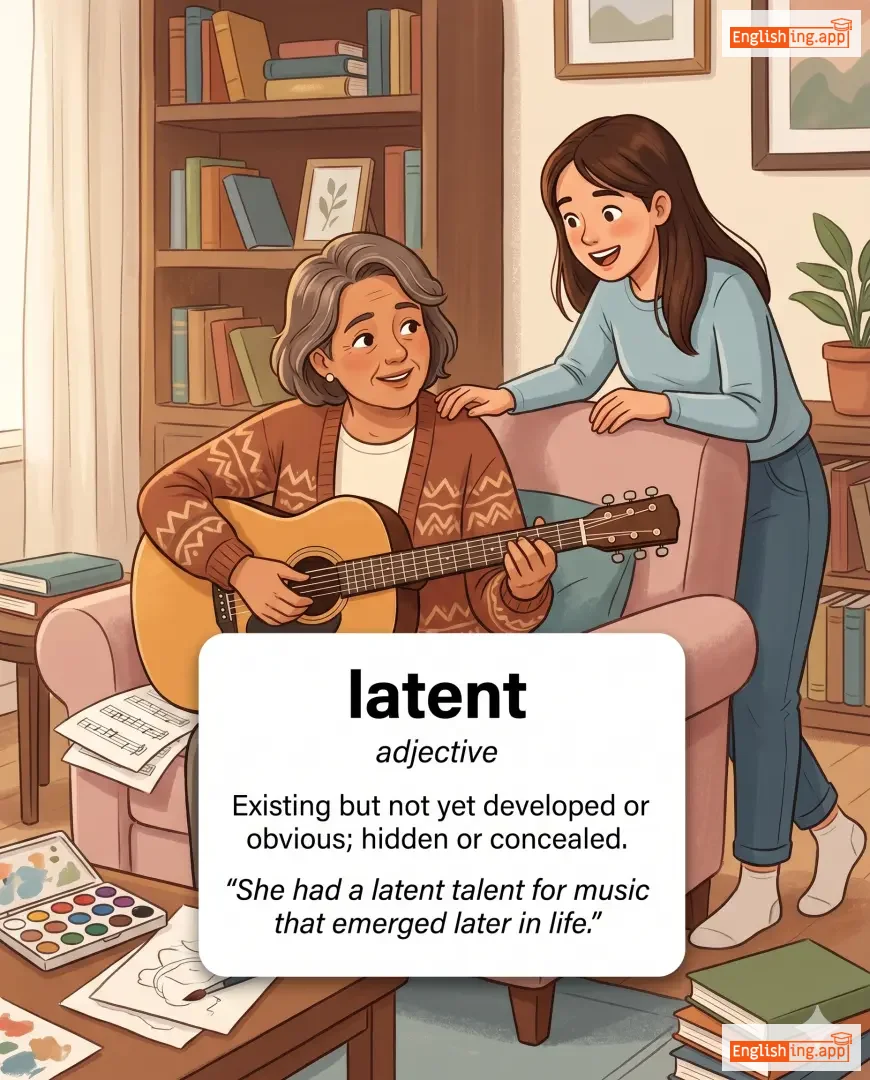
#440
🌱
|
/ˈleɪtənt/
adjective
(léitèntè)
••••••
|
|
潜在的
qiánzài de
••••••
|
existing but not yet developed or manifest; hidden; dormant
••••••
|
She had latent artistic talents that emerged later in life.
她有潜在的艺术天赋,后来在生活中展现出来。
••••••
|
她有潜在的艺术天赋,后来在生活中展现出来。
Tā yǒu qiánzài de yìshù tiānfù, hòulái zài shēnghuó zhōng zhǎnxiàn chūlái.
••••••
|
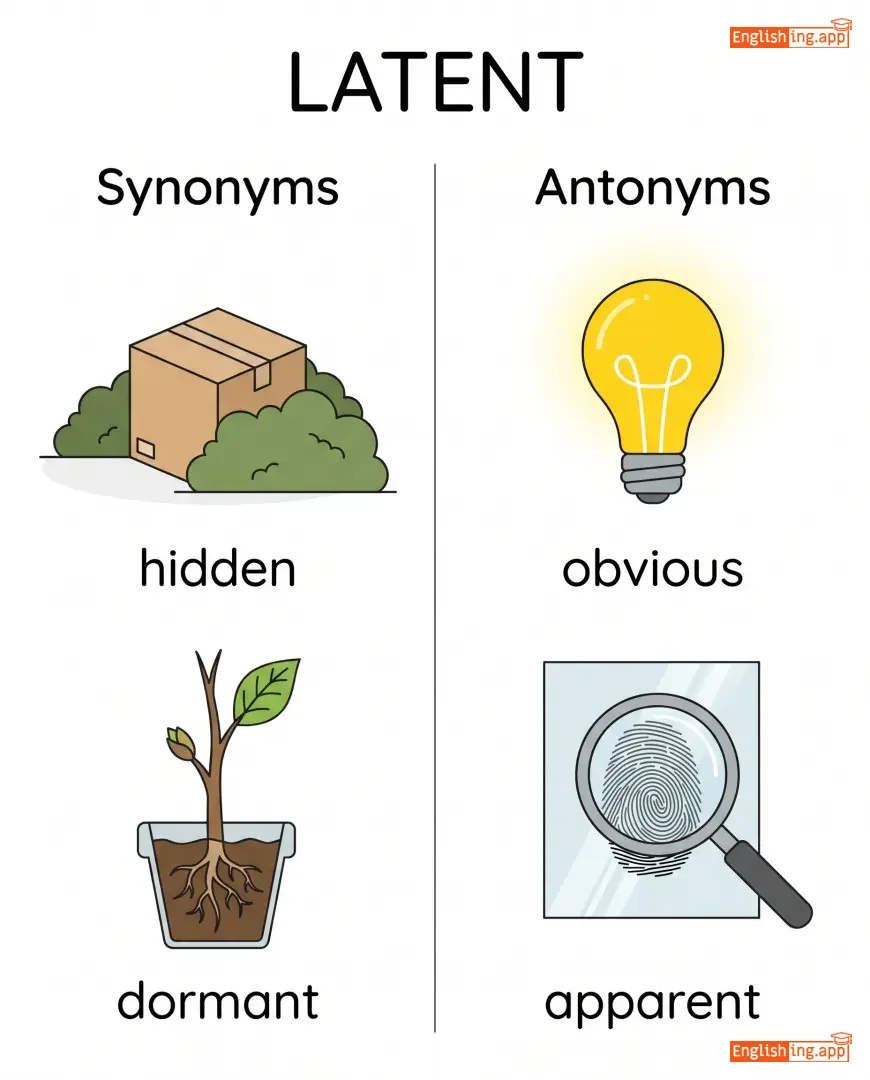
dormant, hidden, concealed, potential, undeveloped
••••••
|
manifest, obvious, apparent, evident, active
••••••
|
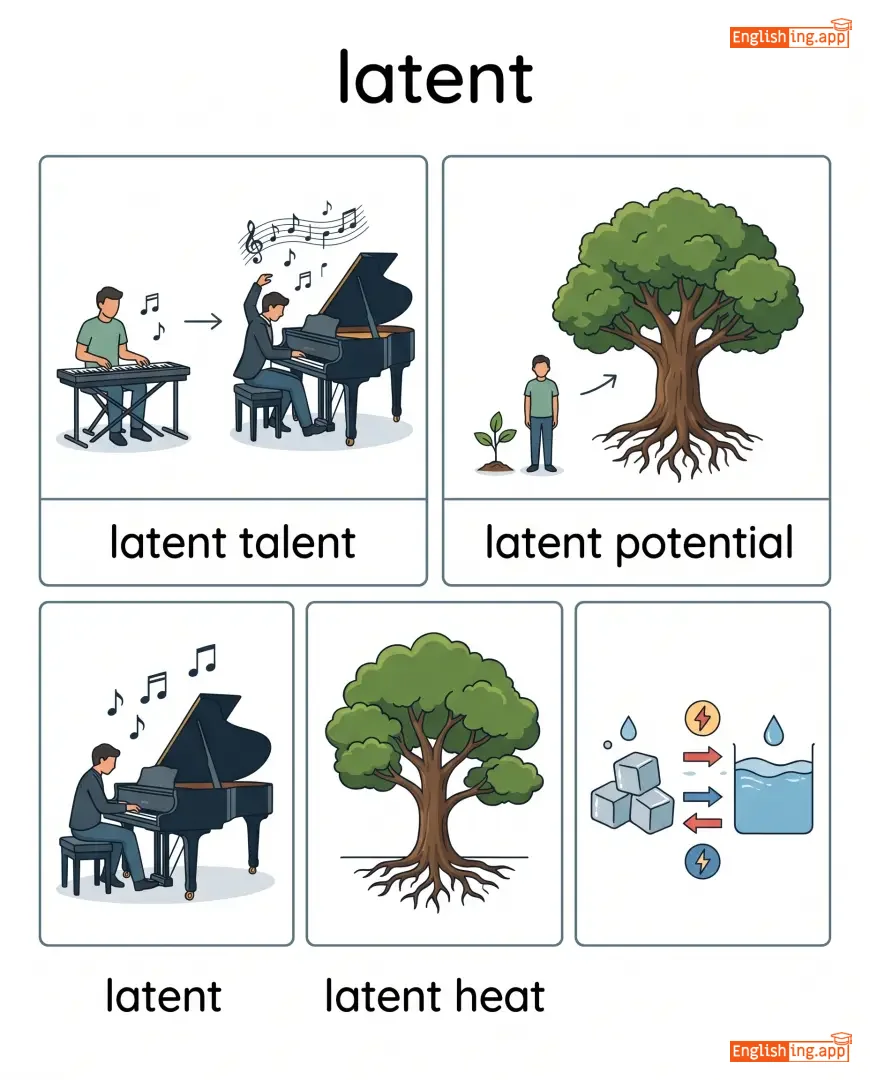
latent talent, latent potential, latent power, latent heat
••••••
|
潜在的才能会在生活中逐渐显现。
••••••
|
Vocabulary Quiz
Test your vocabulary by matching words with their translations or meanings.
Login to take the quiz
Comments (0)
Share your thoughts and join the discussion.
Join the discussion by logging in
Login to CommentNo comments yet
Be the first to share your thoughts!