

Swipe left or right, or use the buttons. Tap image to zoom.
例句翻译
单词
Lesson 29Lesson 29 - 遮罩切换
|
表情符号
|
单词 | Images | 翻译 | 含义 | 例句 | 例句翻译 | 同义词 | 反义词 | 搭配词 | 助记符 |
|---|---|---|---|---|---|---|---|---|---|---|
|
#561
🔢
|
/ˈnjuː.mər.ə.bəl/
adjective
(niúmérábl)
••••••
|
- •••••• |
可计数的; 数得出的
ke jishu de; shu de chu
••••••
|
capable of being counted; countable
••••••
|
The stars in the sky are not numerable.
天空中的星星是不可计数的。
••••••
|
天空中的星星是不可计数的。
tiānkōng zhōng de xīngxīng shì bù kě jìshù de.
••••••
|
countable, measurable, calculable
••••••
|
innumerable, countless, infinite
••••••
|
numerable items, numerable objects, numerable quantities
••••••
|
可计数 = 你可以数它们
••••••
|
|
#562
🤔
|
/ɒd/
adjective
(odd)
••••••
|
- •••••• |
奇怪的; 不寻常的; 不同于正常或预期的
qiguai de; bu xunchang de; butong yu zhengchang huo yuqi de
••••••
|
strange; unusual; different from what is normal or expected
••••••
|
That's an odd way to solve the problem.
那是解决问题的一种奇怪方式。
••••••
|
那是解决问题的一种奇怪方式。
Na shi jiejue wenti de yi zhong qiguai fangshi.
••••••
|
strange, unusual, weird, peculiar
••••••
|
normal, usual, ordinary, typical
••••••
|
odd number, odd behavior, odd feeling, odd situation
••••••
|
奇怪的解决方案总是令人惊讶。
••••••
|
|
#563
⚖️
|
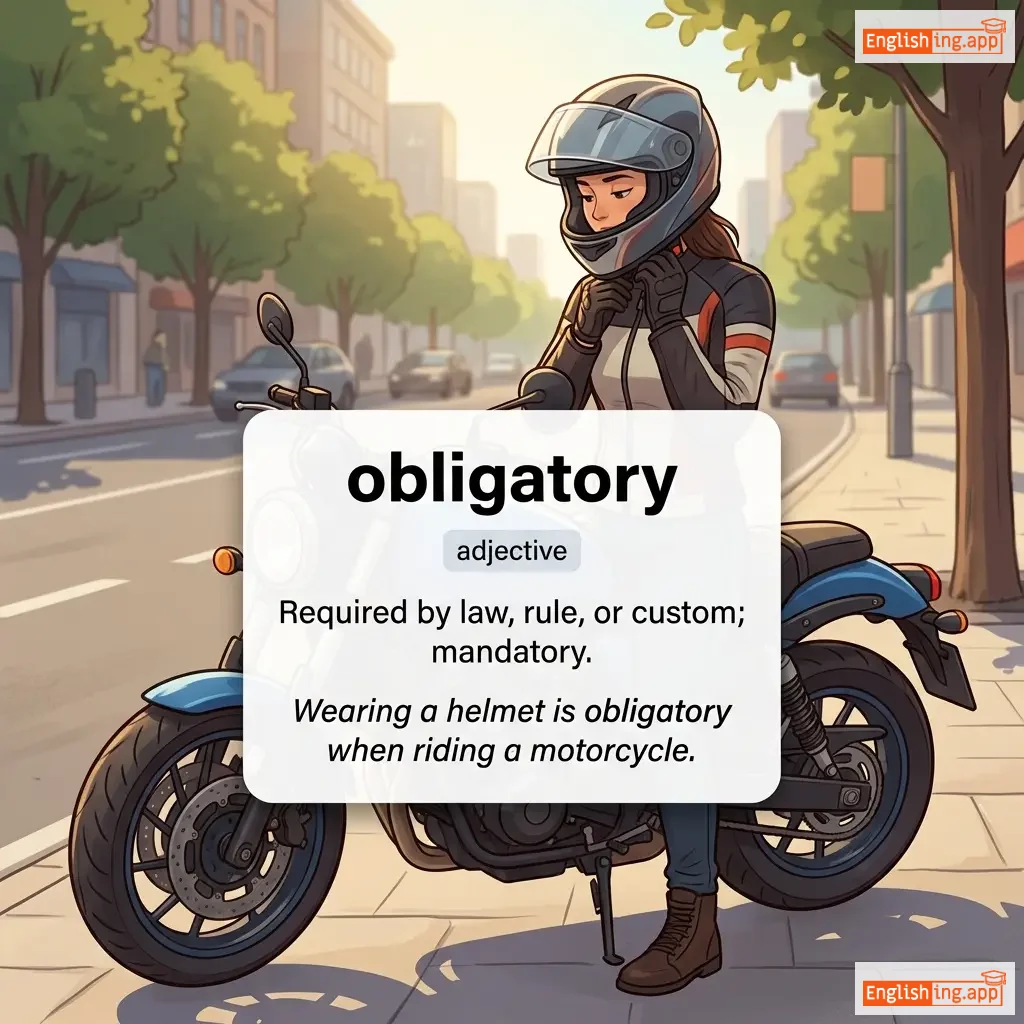
/əˈblɪɡətɔːri/
adjective
(强制性的)
••••••
|
|
强制性
qiángzhìxìng
••••••
|
required by law or rules; compulsory; mandatory
••••••
|
Attendance at the meeting is obligatory for all employees.
参加会议对所有员工来说是强制性的。
••••••
|
参加会议对所有员工来说是强制性的。
Cānjiā huìyì duì suǒyǒu yuángōng lái shuō shì qiángzhìxìng de.
••••••
|
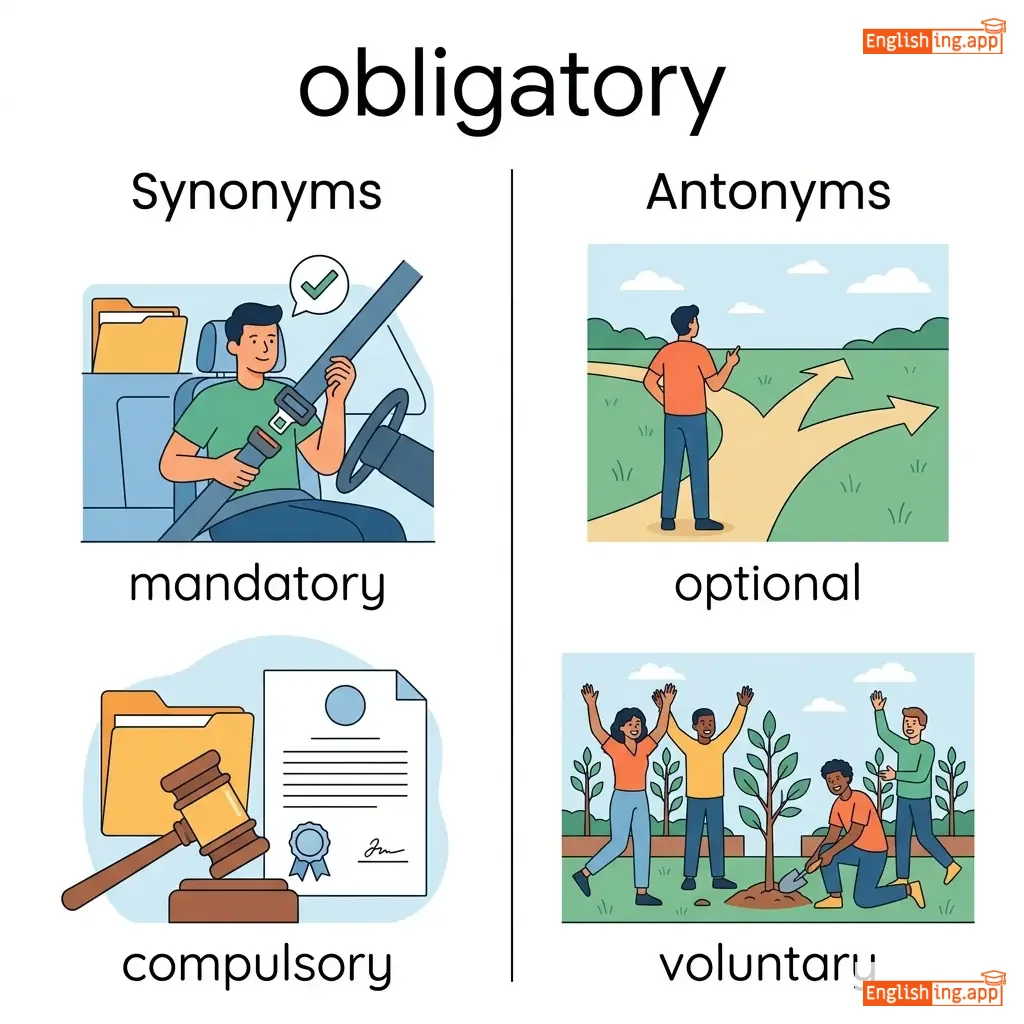
mandatory, compulsory, required, necessary
••••••
|
optional, voluntary, discretionary, elective
••••••
|
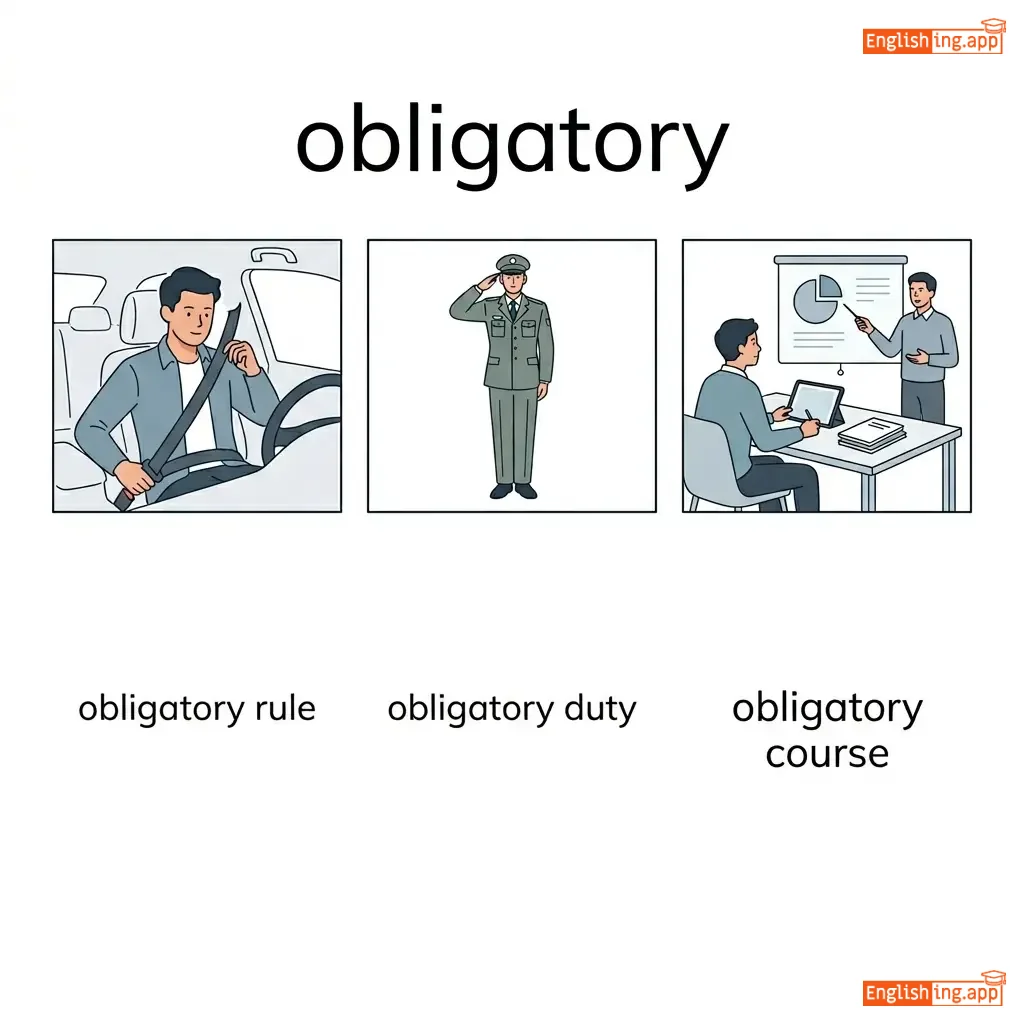
obligatory service, obligatory attendance, obligatory requirement
••••••
|
强制性就像所有员工都必须参加会议一样
••••••
|
|
#564
😤
|
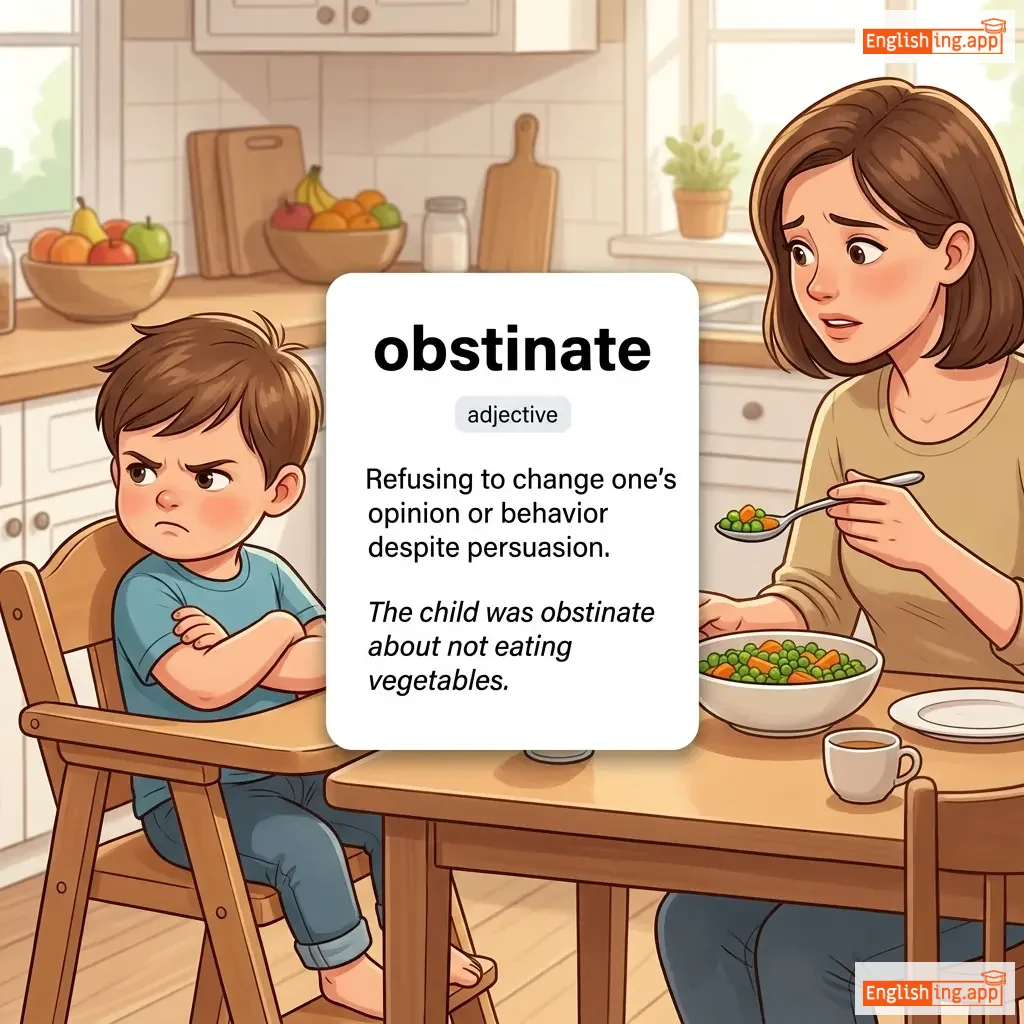
/ˈɒb.stɪ.nət/
adjective
(顽固)
••••••
|
|
顽固
wángù
••••••
|
stubbornly refusing to change one's opinion or chosen course of action; persistent in maintaining a position despite opposition
••••••
|
He was obstinate and refused to change his mind. |
他顽固地拒绝改变主意。
Tā wángù de jùjué gǎibiàn zhǔyì
••••••
|
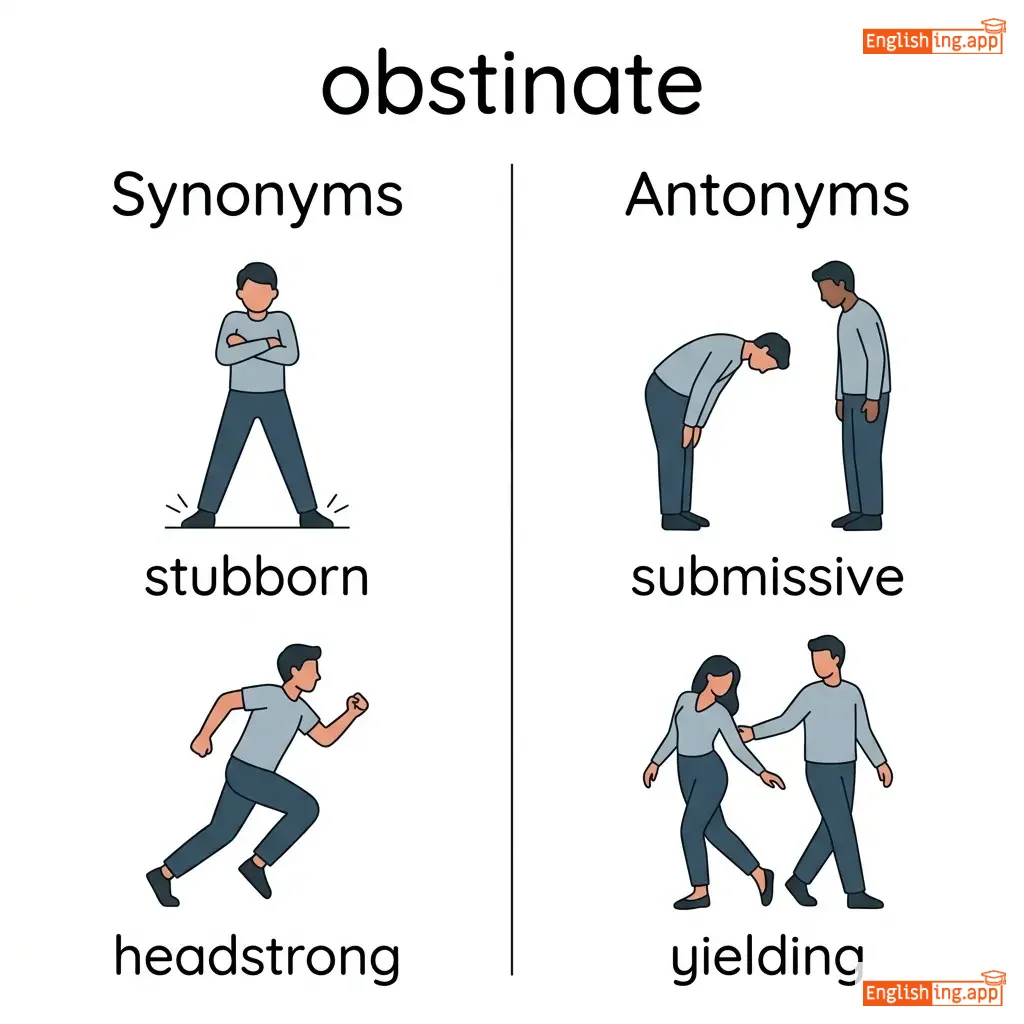
stubborn, headstrong, unyielding, inflexible
••••••
|
flexible, yielding, compliant, cooperative
••••••
|
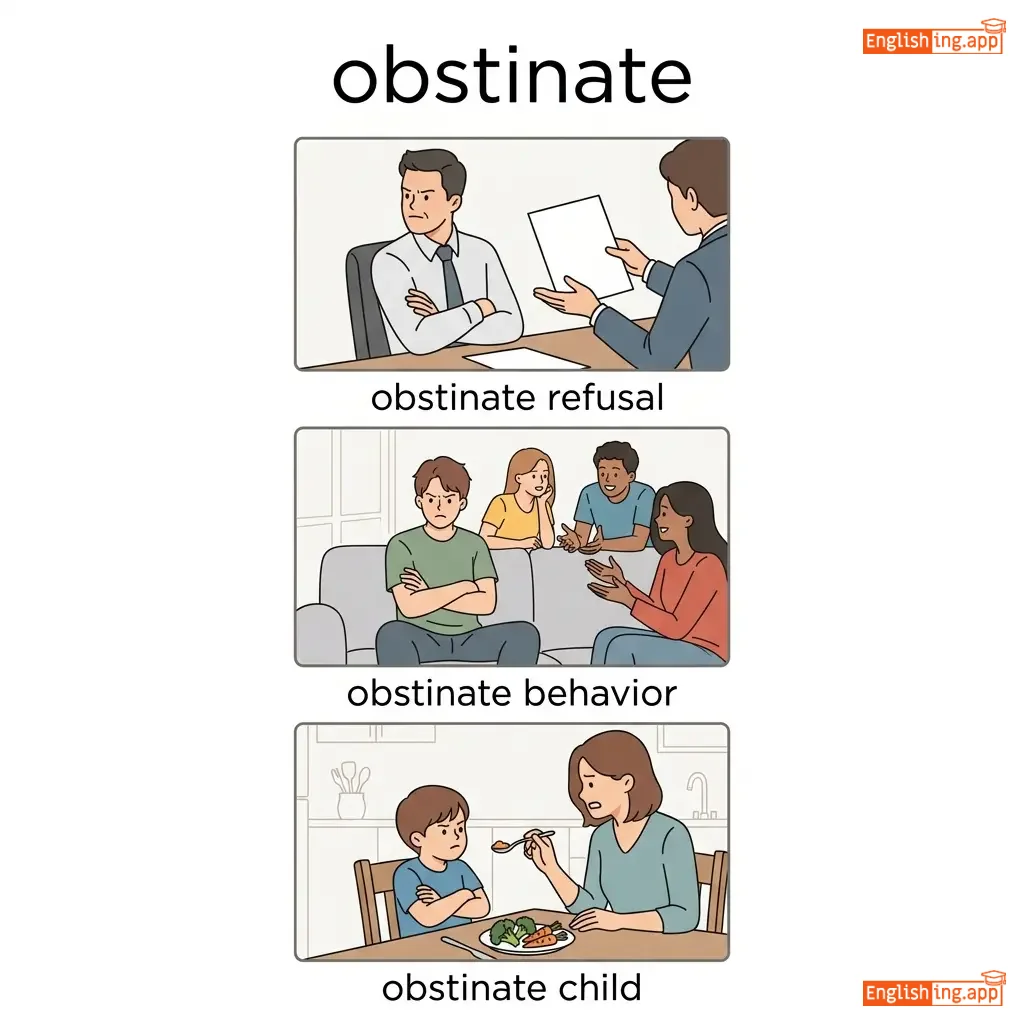
obstinate refusal, obstinate child, obstinate behavior
••••••
|
顽固如铁, 不易改变
••••••
|
|
#565
🔢
|
/ˈnjuː.mər.əs/
adjective
(niú mǐ ruó sī)
••••••
|
- •••••• |
众多的; 很多的; 丰富的
zhòng duō de; hěn duō de; fēng fù de
••••••
|
existing in large numbers; many; abundant
••••••
|
There are numerous benefits to exercising regularly.
定期锻炼有许多好处。
••••••
|
定期锻炼有许多好处。
Dìngqī duànliàn yǒu xǔduō hǎochù.
••••••
|
many, countless, abundant, plentiful
••••••
|
few, scarce, limited
••••••
|
numerous occasions, numerous benefits, numerous examples
••••••
|
定期锻炼让你拥有更多的好处。
••••••
|
|
#566
🌸
|
/ˈəʊ.dər.əs/
adjective
(ōduòruòsi)
••••••
|
- •••••• |
芬芳的; 香气的
fēn fāng de; xiāng qì de
••••••
|
having a strong smell; fragrant; aromatic
••••••
|
The garden was filled with odorous flowers. |
花园里充满了芬芳的花朵。
huāyuán lǐ chōngmǎn le fēn fāng de huāduǒ.
••••••
|
fragrant, aromatic, perfumed, scented
••••••
|
odorless, scentless, unscented
••••••
|
odorous plants, odorous substances, sweet odorous
••••••
|
芬芳的花朵
••••••
|
|
#567
🚧
|
/əbˈstrʌk.tɪv/
adjective
(奥布斯特拉克蒂夫)
••••••
|
- •••••• |
阻碍性的
obstructive
••••••
|
deliberately creating difficulties or preventing progress; hindering or blocking something
••••••
|
The obstructive policies hindered economic growth.
这些阻碍性的政策阻碍了经济增长。
••••••
|
这些阻碍性的政策阻碍了经济增长。
zhexiezuaixingdezhengcezuhaillejingjizengzhang
••••••
|
blocking, hindering, impeding, disruptive
••••••
|
helpful, supportive, cooperative, facilitating
••••••
|
obstructive behavior, obstructive tactics, obstructive sleep apnea
••••••
|
Obstructive = 阻碍 + ive, 想象一扇 door 被 阻挡 前进, 门上 写着 阻碍性的 政策, 记住 经济 增长 会 被 阻挡
••••••
|
|
#568
↗️
|
/əˈbliːk/
adjective
(欧布里克)
••••••
|
- •••••• |
倾斜; 对角线; 间接或回避
qingxie; duijiaoxian; jianjie huo huibi
••••••
|
slanting; diagonal; indirect or evasive
••••••
|
The artist drew an oblique line across the canvas.
艺术家在画布上画了一条倾斜的线。
••••••
|
艺术家在画布上画了一条倾斜的线。
Yishujia zai huabu shang hua le yitiao qingxie de xian.
••••••
|
diagonal, slanted, angled, inclined
••••••
|
straight, direct, perpendicular, vertical
••••••
|
oblique angle, oblique reference, oblique line
••••••
|
倾斜的线条,像艺术家在画布上画的那样
••••••
|
|
#569
😵💫
|
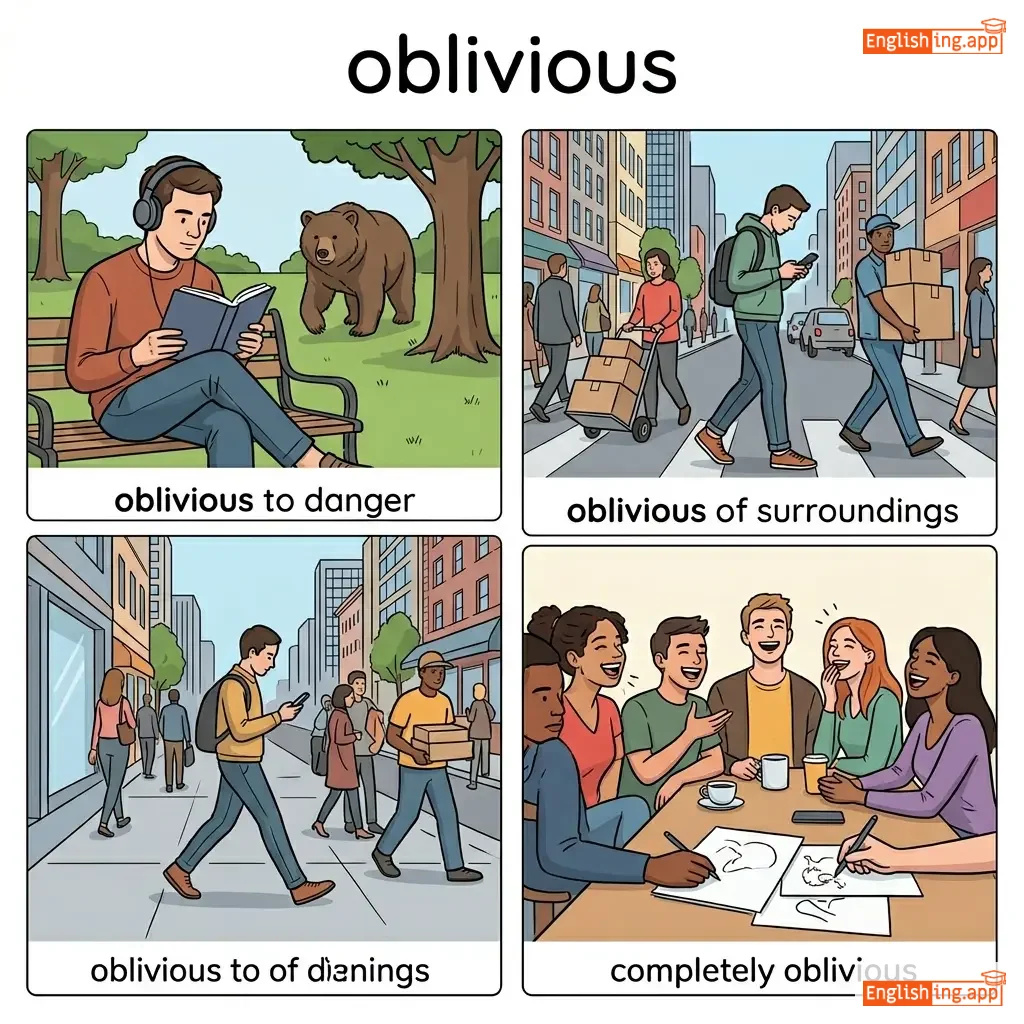
/əˈblɪviəs/
adjective
(oblivious)
••••••
|
|
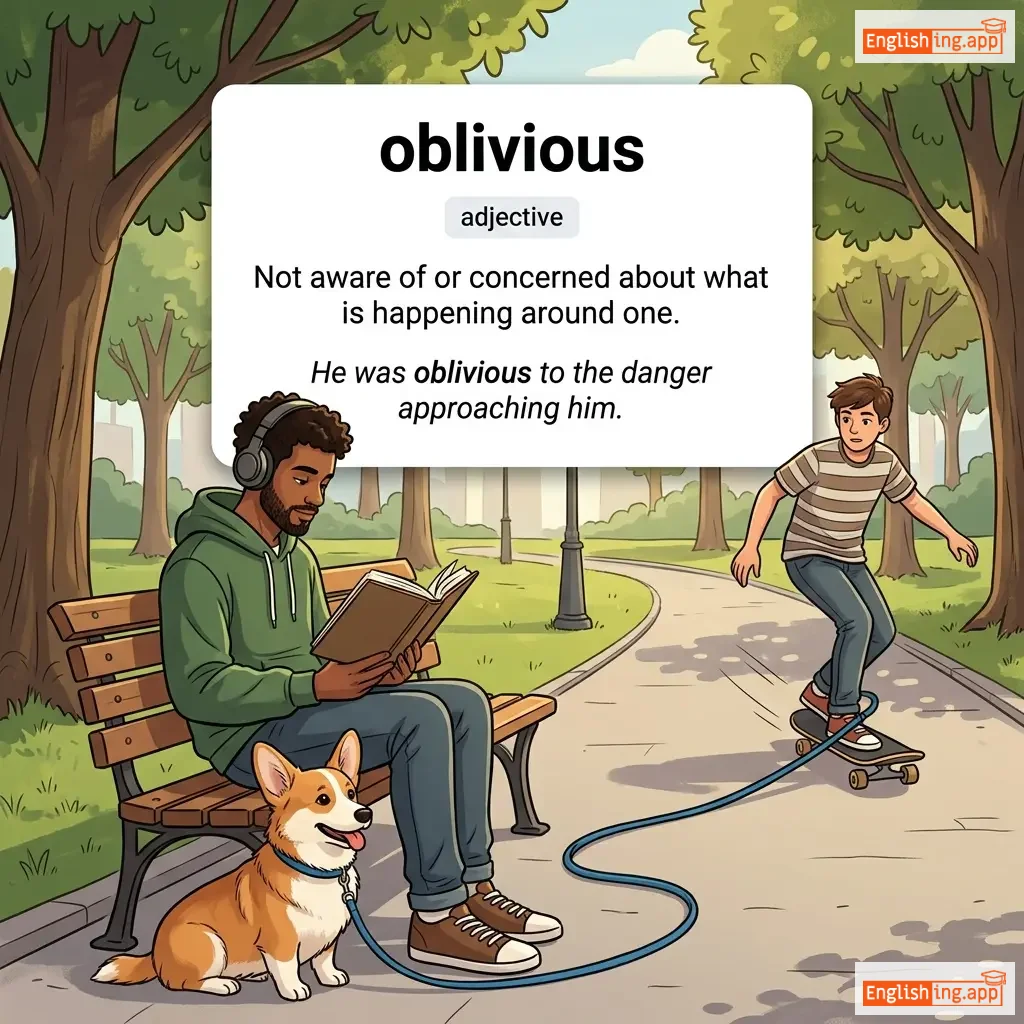
无意识的; 没有意识的
wú yìshí de; méi yǒu yìshí de
••••••
|
unaware; not conscious or concerned about something
••••••
|
She was oblivious to the danger surrounding her. |
她对周围的危险一无所知。
Tā duì zhōuwéi de wēixiǎn yī wú suǒ zhī.
••••••
|
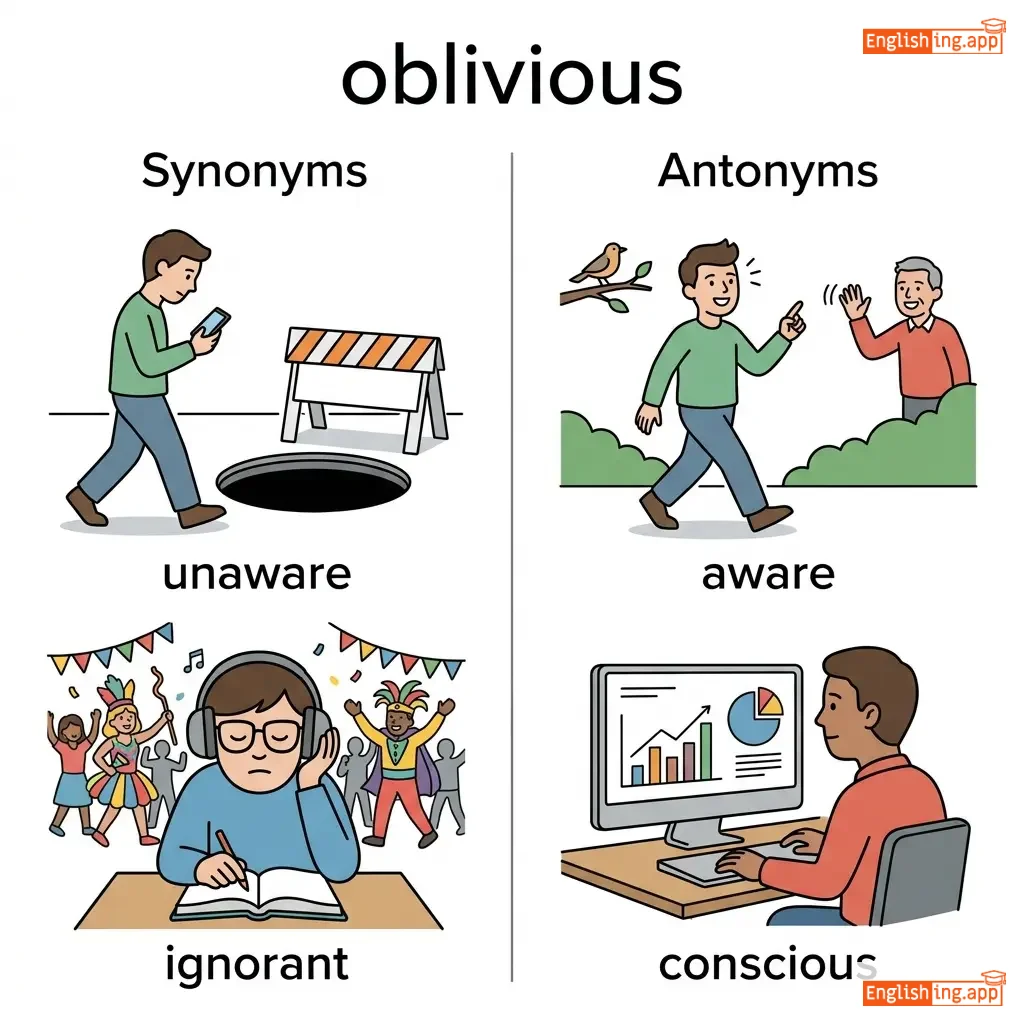
unaware, unconscious, ignorant, unmindful
••••••
|
aware, conscious, alert, attentive
••••••
|
oblivious to danger, completely oblivious, oblivious of consequences
••••••
|
就像无意识的走路,看不到周围的危险。
••••••
|
|
#570
😕
|
/əbˈtjuːs/
adjective
(obtu-sī)
••••••
|
- •••••• |
迟钝的; 愚笨的; 理解慢
chídùn de; yúbèn de; lǐjiě màn
••••••
|
annoyingly insensitive or slow to understand; lacking in intelligence or perception
••••••
|
He was being deliberately obtuse about the instructions.
他故意在指令上表现得迟钝。
••••••
|
他故意在指令上表现得迟钝。
Tā gù yì zài zhǐlìng shàng biǎoxiàn dé chí dùn.
••••••
|
stupid, dull, slow, dense
••••••
|
sharp, intelligent, clever, acute
••••••
|
obtuse angle, obtuse comment, deliberately obtuse
••••••
|
Obtu-sī就像是一块理解迟钝的石头。
••••••
|
|
#571
🥗
|
/njuːˈtrɪʃ.əs/
adjective
(纽特里修斯)
••••••
|
- •••••• |
有营养的
nyutrishus
••••••
|
containing substances that help the body grow and stay healthy; nourishing
••••••
|
Eating nutritious food helps maintain good health.
吃有营养的食物有助于保持身体健康。
••••••
|
吃有营养的食物有助于保持身体健康。
chiyouyingyangdeshiwuyouzhuyubaochishentijiankang
••••••
|
healthy, nourishing, wholesome, beneficial
••••••
|
unhealthy, junk, harmful
••••••
|
nutritious food, nutritious diet, nutritious meal
••••••
|
Nutritious 记作 纽特里修斯, 吃 有营养 的 食物 Nourish your body, health up, 生活更 bright.
••••••
|
|
#572
😡
|
/əˈfen.sɪv/
adjective
(冒犯的)
••••••
|
- •••••• |
冒犯的; 侮辱的; 攻击性的
màofàn de; wūrǔ de; gōngjí xìng de
••••••
|
causing displeasure or resentment; insulting; aggressive
••••••
|
His offensive remarks hurt everyone's feelings.
他的冒犯言论伤害了每个人的感情。
••••••
|
他的冒犯言论伤害了每个人的感情。
Tā de màofàn yánlùn shānghài le měi gè rén de gǎnqíng.
••••••
|
insulting, rude, hurtful, aggressive
••••••
|
polite, respectful, defensive, kind
••••••
|
offensive language, offensive behavior, offensive comment, offensive attack
••••••
|
想象某人说了冒犯性的话,让每个人的心情都不好了。
••••••
|
|
#573
😤
|
/əbˈnɒkʃəs/
adjective
(欧布诺克西厄斯)
••••••
|
- •••••• |
令人讨厌的;惹人厌的;极其讨厌的
oubunuokexiesi
••••••
|
extremely unpleasant; offensive; annoying
••••••
|
His obnoxious behavior at the party annoyed everyone.
希斯 欧布诺克西厄斯 比哈维尔 阿特 德 派蒂 阿诺伊德 艾弗瑞万
••••••
|
他在聚会上的令人讨厌的举止惹恼了在场的每一个人。
ta zai ju hui shang de lingren taoyande juzhi re nao le zaichang de mei yi ge ren
••••••
|
annoying, offensive, disgusting, repulsive
••••••
|
pleasant, agreeable, charming, delightful
••••••
|
obnoxious behavior, obnoxious smell, obnoxious person
••••••
|
Oh No Xious 记忆法: 哦, 不要 对 这样的人 say 'you are obnoxious' 的感觉, 记住它, 你就知道 what obnoxious means
••••••
|
|
#574
🔍
|
/ˈɒb.vi.əs/
adjective
(óbvíous)
••••••
|
- •••••• |
显而易见的; 容易理解的
xian er yi jian de; rong yi li jie de
••••••
|
easily perceived or understood; clear and apparent to the mind
••••••
|
It was obvious that she was upset about something.
很明显,她因某事而不高兴。
••••••
|
很明显,她因某事而不高兴。
hen mingxian, ta yin moshiren bu gaoxing
••••••
|
clear, evident, apparent, plain
••••••
|
hidden, unclear, obscure, subtle
••••••
|
obvious reason, obvious choice, obvious mistake
••••••
|
Obvious 说明事情显而易见,像一个大红色的标志。
••••••
|
|
#575
🙏
|
/əˈbiː.di.ənt/
adjective
(欧必迪恩特)
••••••
|
- •••••• |
顺从的
ohbeedeeuhnt
••••••
|
willing to comply with orders or instructions; submissive
••••••
|
The obedient student always follows the teacher's instructions.
听话的学生总是遵循老师的指示。
••••••
|
听话的学生总是遵循老师的指示。
tinghuadexueshengzongshizunxunlaoshidezhishi
••••••
|
compliant, dutiful, submissive, respectful
••••••
|
disobedient, rebellious, defiant
••••••
|
obedient child, obedient student, obedient servant
••••••
|
Oh Be Di Ent: 想象 Oh=哦, Be=贝, Di=迪, Ent=恩特, 合成音节 即 可读成 obedient, 提醒自己 要 听话 顺从 指令
••••••
|
|
#576
🛢️
|
/ˈɔɪl.i/
adjective
(óuīlì)
••••••
|
- •••••• |
油腻的; 油覆盖的; 油滑的
yóunì de; yóu fùgài de; yóuhuá de
••••••
|
covered with oil; containing oil; greasy
••••••
|
Her oily skin needs special care.
她的油腻皮肤需要特别护理。
••••••
|
她的油腻皮肤需要特别护理。
Tā de yóunì pífū xūyào tèbié hùlǐ.
••••••
|
greasy, fatty, slippery, slick
••••••
|
dry, clean, fresh, matte
••••••
|
oily skin, oily hair, oily food, oily surface
••••••
|
油腻的皮肤像涂了油一样光滑。
••••••
|
|
#577
👁️
|
/əbˈzɜːrvənt/
adjective
(ʔɑbˈzɜːrvənt)
••••••
|
- •••••• |
观察力强的
guānchá lì qiáng de
••••••
|
quick to notice things; watchful; attentive
••••••
|
The observant detective noticed every small detail at the crime scene. |
观察力强的侦探注意到了犯罪现场的每个细节。
guānchá lì qiáng de zhēntàn zhùyì dào le fànzuì xiànchǎng de měi gè xìjié.
••••••
|
watchful, attentive, perceptive, alert
••••••
|
inattentive, careless, unobservant, oblivious
••••••
|
observant eye, observant nature, highly observant
••••••
|
观察力强的侦探总是注意到每个小细节。
••••••
|
|
#578
❌
|
/əbˈdʒek.ʃən.ə.bəl/
adjective
(objectionable)
••••••
|
- •••••• |
令人反感的
lìng rén fǎn gǎn de
••••••
|
arousing distaste or opposition; unpleasant or offensive
••••••
|
His objectionable behavior made everyone uncomfortable.
他的令人反感的行为让每个人都感到不舒服。
••••••
|
他的令人反感的行为让每个人都感到不舒服。
Tā de lìng rén fǎn gǎn de xíngwéi ràng měi gèrén dōu gǎndào bù shūfu.
••••••
|
offensive, unacceptable, inappropriate, disagreeable
••••••
|
acceptable, agreeable, pleasant
••••••
|
objectionable behavior, objectionable content, objectionable language
••••••
|
令人不悦的行为让每个人都感到不适。
••••••
|
|
#579
🔄
|
/əˈkeɪ.ʒən.əl/
adjective
(偶然的)
••••••
|
- •••••• |
偶然的
ǒurán de
••••••
|
occurring infrequently or irregularly; happening from time to time
••••••
|
She enjoys occasional walks in the park. |
她喜欢在公园里偶尔散步。
Tā xǐhuān zài gōngyuán lǐ ǒ'ěr sànbù.
••••••
|
sporadic, infrequent, irregular, intermittent
••••••
|
frequent, regular, constant, continuous
••••••
|
occasional visit, occasional rain, occasional smoker
••••••
|
偶然的活动就像偶尔散步一样,来去匆匆!
••••••
|
|
#580
⚡
|
/ˈɒm.ɪ.nəs/
adjective
(恶兆)
••••••
|
- •••••• |
不祥的; 威胁的
bù xiáng de; wēi xié de
••••••
|
giving the impression that something bad will happen; threatening; foreboding
••••••
|
The dark clouds looked ominous before the storm.
暴风雨前,黑云看起来预示着灾难。
••••••
|
暴风雨前,黑云看起来预示着灾难。
bàofēng yǔ qián, hēi yún kàn qǐlái yù shì zhe zāinàn.
••••••
|
threatening, menacing, foreboding, sinister
••••••
|
promising, hopeful, encouraging, auspicious
••••••
|
ominous clouds, ominous warning, ominous sign, ominous silence
••••••
|
Bù xiáng de clouds mean the storm is near.
••••••
|
Vocabulary Quiz
Test your vocabulary by matching words with their translations or meanings.
Login to take the quiz
Comments (0)
Share your thoughts and join the discussion.
Join the discussion by logging in
Login to CommentNo comments yet
Be the first to share your thoughts!