

Swipe left or right, or use the buttons. Tap image to zoom.
例句翻译
单词
Lesson 8Lesson 8 - 遮罩切换
|
表情符号
|
单词 | Images | 翻译 | 含义 | 例句 | 例句翻译 | 同义词 | 反义词 | 搭配词 | 助记符 |
|---|---|---|---|---|---|---|---|---|---|---|
|
#141
💨
|
/ˈdæʃ.ɪŋ/
adjective
(达什英)
••••••
|
- •••••• |
英俊; 魅力; 自信;
yingjun; meili; zixin
••••••
|
stylish and confident; lively and energetic; attractive and charming
••••••
|
He looked dashing in his new suit. |
他穿上新西装看起来英俊。
Ta chuan shang xin xizhuang kan qilai yingjun.
••••••
|
stylish, elegant, charming, handsome
••••••
|
dull, plain, unattractive
••••••
|
dashing gentleman, dashing hero, dashing appearance
••••••
|
想象一个穿西装的英俊男士
••••••
|
|
#142
💪
|
/ˈdɪl.ɪ.dʒənt/
adjective
(dɪlɪdʒənt)
••••••
|
- •••••• |
勤奋的
qinfen de
••••••
|
hardworking and careful; showing persistent effort
••••••
|
She is a diligent student who studies every day. |
她是一个勤奋的学生,每天都在学习。
Ta shi yige qinfen de xuesheng, meitian dou zai xuexi.
••••••
|
hardworking, industrious, conscientious, persevering
••••••
|
lazy, careless, negligent, idle
••••••
|
diligent student, diligent worker, diligent effort
••••••
|
勤奋的学生,如同一只正在努力工作的蚂蚁。
••••••
|
|
#143
❌
|
/dɪˈfektɪv/
adjective
(dɪˈfɛktɪv)
••••••
|
- •••••• |
有缺陷的; 不完整的
you quexian de; bu wanzheng de
••••••
|
having faults or defects; imperfect
••••••
|
The defective product was returned to the store. |
有缺陷的产品被退还到商店。
You quexian de chanpin bei tuihuan dao shangdian.
••••••
|
faulty, flawed, imperfect, broken
••••••
|
perfect, flawless, functional, working
••••••
|
defective product, defective goods, defective gene
••••••
|
A defective product is 'you quexian de' because it is imperfect.
••••••
|
|
#144
🏜️
|
/ˈdesələt/
adjective
(德索列特)
••••••
|
- •••••• |
荒凉; 孤独; 不毛
huangliang; gudu; bumao
••••••
|
deserted; lonely; barren
••••••
|
The abandoned village looked desolate and empty. |
废弃的村庄看起来荒凉且空荡。
Feiqi de cunzhuang kàn qǐlái huāngliáng qiě kōngdàng.
••••••
|
barren, deserted, forsaken, isolated
••••••
|
populated, bustling, thriving, lively
••••••
|
desolate landscape, desolate place, feel desolate
••••••
|
荒凉 (huangliang) means desolate like an empty land.
••••••
|
|
#145
🦁
|
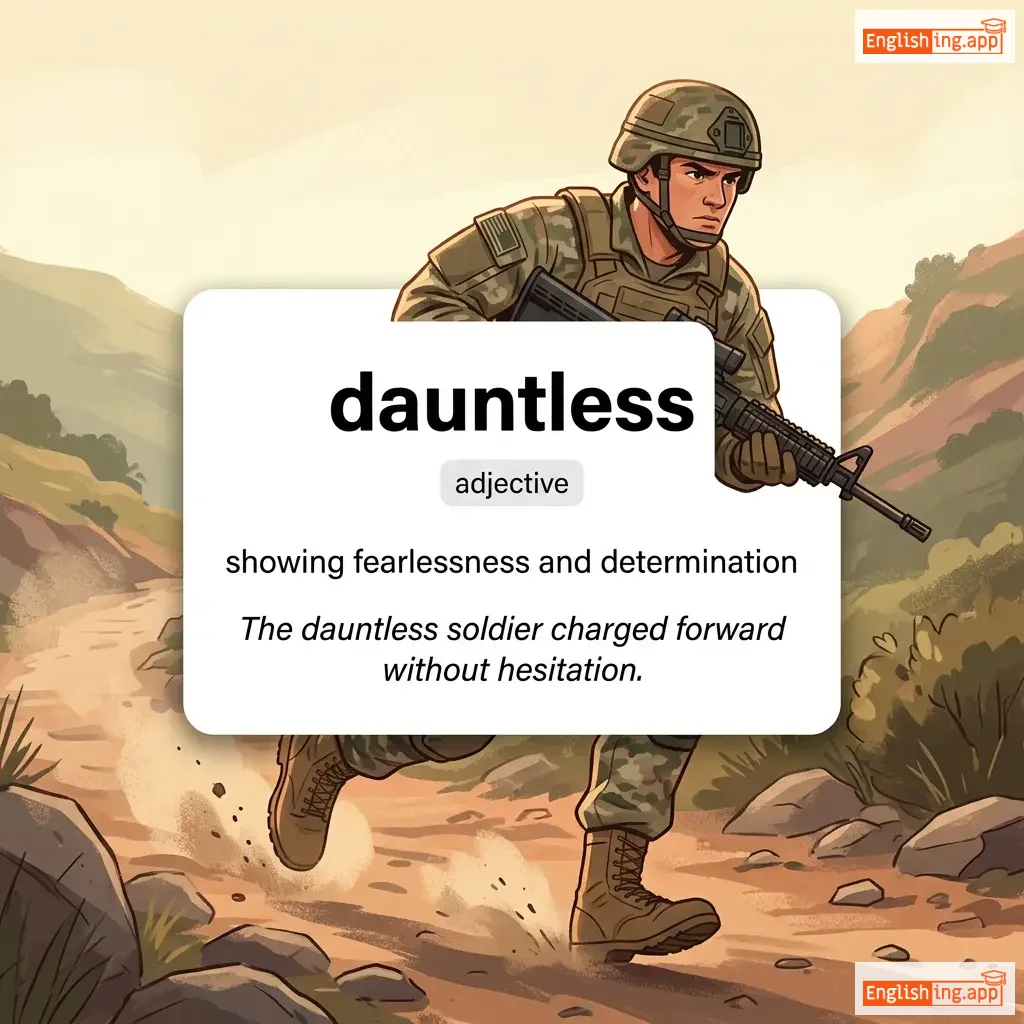
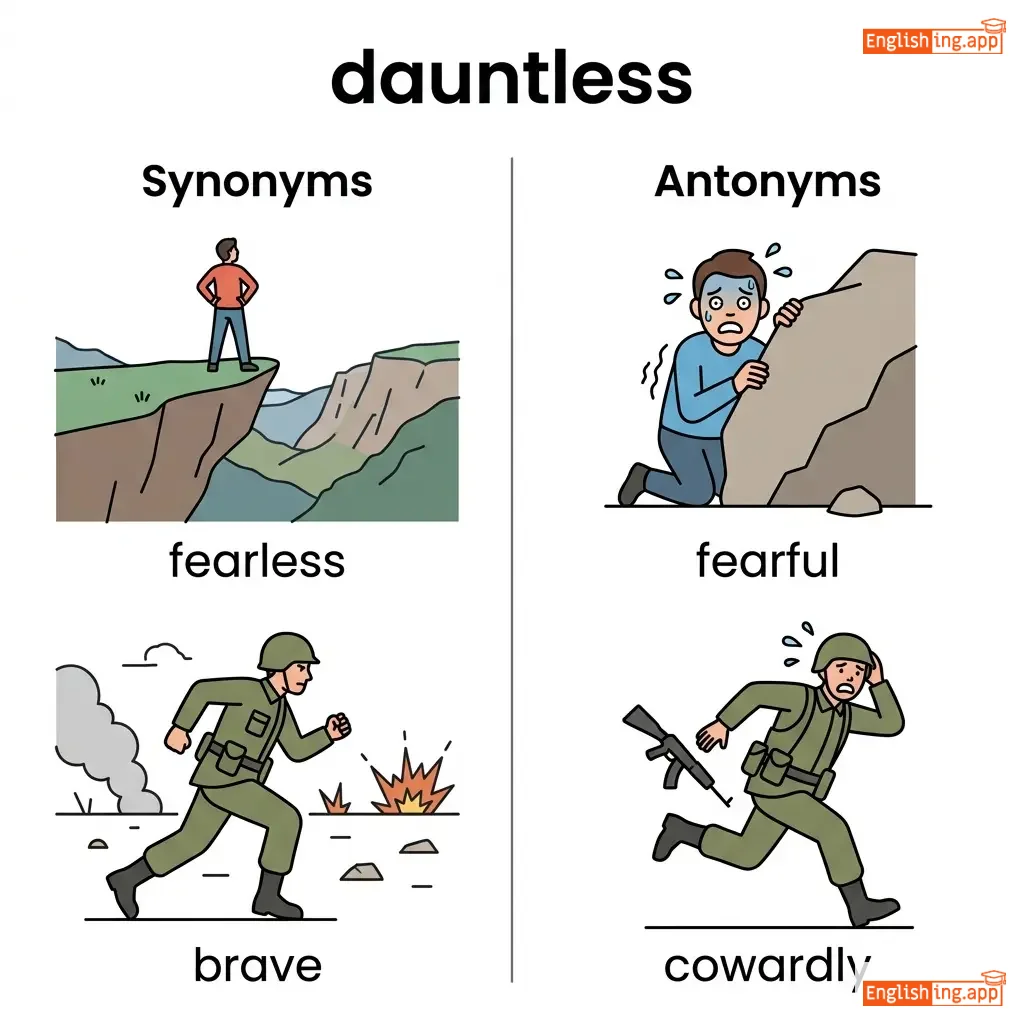
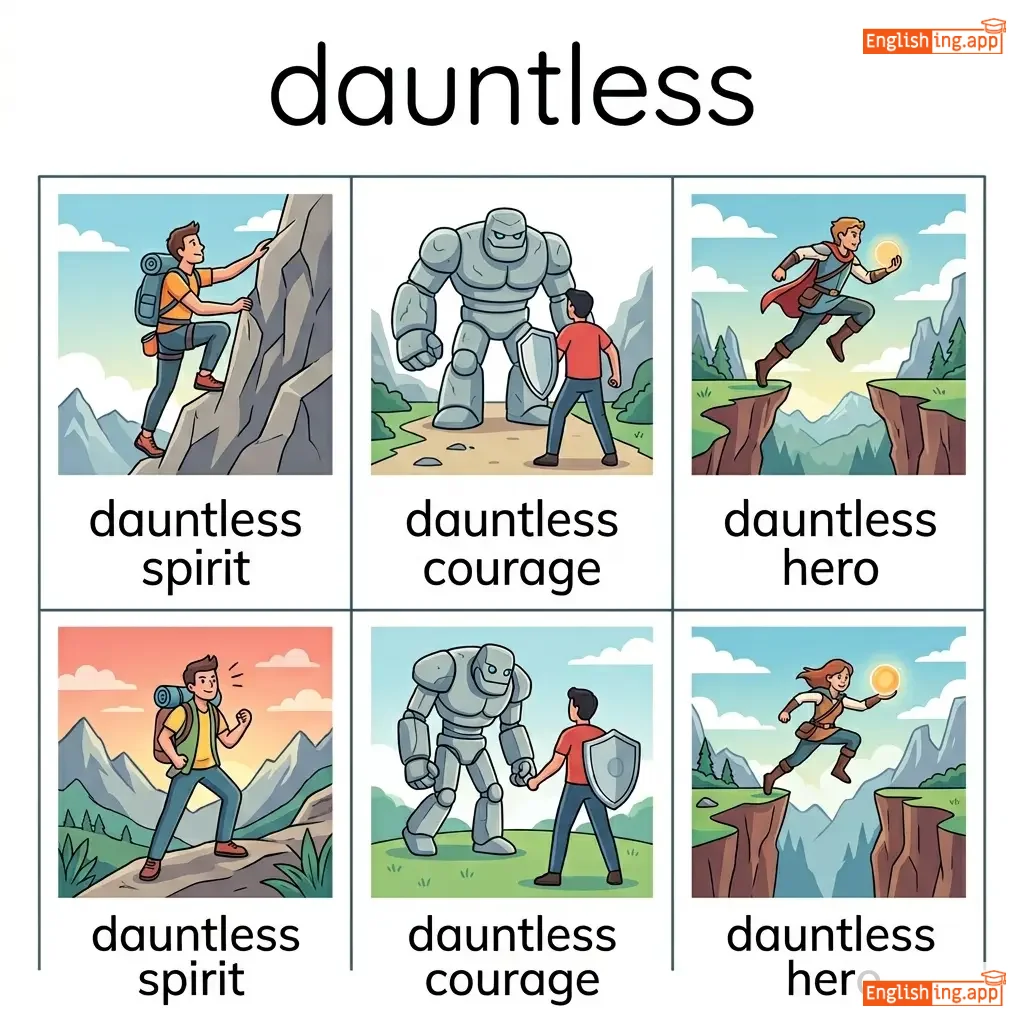
/ˈdɔːnt.ləs/
adjective
(dɔːntləs)
••••••
|
|
无畏的; 勇敢的; 大胆的;
wúwèi de; yǒnggǎn de; dàdǎn de
••••••
|
fearless; showing courage and determination; bold and brave
••••••
|
The dauntless soldier faced the enemy without fear. |
无畏的士兵毫不畏惧地面对敌人。
Wúwèi de shìbīng háobù wèijù de miànduì dírén.
••••••
|
fearless, brave, courageous, bold
••••••
|
fearful, cowardly, timid
••••••
|
dauntless courage, dauntless spirit, dauntless warrior
••••••
|
Chinese: '无畏的' means fearless, just like someone who is dauntless and brave.
••••••
|
|
#146
🌙
|
/dɪm/
adjective
(dim)
••••••
|
- •••••• |
昏暗; 光线微弱; 微弱
hun'an; guangxian wei ruo; wei ruo
••••••
|
not bright; having little light; faint
••••••
|
The room was dim with only a small candle for light.
房间昏暗,只有一只小蜡烛提供光线。
••••••
|
房间昏暗,只有一只小蜡烛提供光线。
Fangjian hun'an, zhiyou yizhi xiao laozhu ti gong guangxian.
••••••
|
faint, dark, dull, shadowy
••••••
|
bright, brilliant, clear, vivid
••••••
|
dim light, dim room, dim memory
••••••
|
Dim, Hun'an – 'Dim' is like faint light.
••••••
|
|
#147
😞
|
/dɪˈsperɪŋ/
adjective
(dɪsˈpɛərɪŋ)
••••••
|
- •••••• |
绝望的
juéwàng de
••••••
|
feeling hopeless; in despair
••••••
|
She felt despairing after losing her job. |
她在失去工作后感到绝望。
Tā zài shīqù gōngzuò hòu gǎndào juéwàng.
••••••
|
hopeless, dejected, discouraged, downcast
••••••
|
hopeful, optimistic, encouraged, uplifted
••••••
|
despairing cry, feel despairing, despairing look
••••••
|
失去工作时的绝望感
••••••
|
|
#148
🛡️
|
/dɪˈfensɪv/
adjective
(dɪˈfensɪv)
••••••
|
- •••••• |
防御性
fangyuxing
••••••
|
used or intended to defend or protect; showing a tendency to react in an angry or hurt way when criticized
••••••
|
He became defensive when criticized about his work. |
当他因为工作受到批评时,他变得防御性很强。
dāng tā yīnwèi gōngzuò shòudào pīpíng shí, tā biànde fángyùxìng hěn qiáng
••••••
|
protective, guarded, cautious, wary
••••••
|
offensive, aggressive, attacking, open
••••••
|
defensive strategy, defensive position, defensive attitude
••••••
|
No •••••• |
|
#149
😤
|
/dɪˈfaɪənt/
adjective
(dɪˈfaɪənt)
••••••
|
- •••••• |
挑衅的; 不服从的
tiǎoxìn de; bù fúcóng de
••••••
|
boldly resistant or challenging; disobedient
••••••
|
The defiant student refused to follow the rules.
那个挑战性的学生拒绝遵守规则。
••••••
|
那个挑战性的学生拒绝遵守规则。
Nàgè tiǎozhàn xìng de xuéshēng jùjué zūnshǒu guīzé.
••••••
|
rebellious, disobedient, insubordinate, stubborn
••••••
|
obedient, compliant, submissive, cooperative
••••••
|
defiant attitude, defiant behavior, defiant look
••••••
|
一个挑衅的学生总是挑战规则。
••••••
|
|
#150
😱
|
/ˈdespərət/
adjective
(dɛsˈpɛrɛt)
••••••
|
- •••••• |
绝望
juewang
••••••
|
reckless; extremely urgent; critical
••••••
|
The situation became desperate as water supplies ran out. |
当水源耗尽时,情况变得绝望。
Dang shuiyuan hao jin shi, qingkuang biande juewang.
••••••
|
urgent, extreme, dire, critical
••••••
|
calm, controlled, hopeful, secure
••••••
|
desperate situation, desperate attempt, desperate need
••••••
|
绝望是指没有希望的时刻。
••••••
|
|
#151
✨
|
/ˈdæz.lɪŋ/
adjective
(dāz-líng)
••••••
|
- •••••• |
耀眼的; 令人印象深刻的
yàoyǎn de; lìng rén yìnxiàng shēnkè de
••••••
|
extremely bright and impressive; brilliant and stunning
••••••
|
The dazzling lights of the city amazed the tourists.
城市的耀眼灯光让游客感到惊讶。
••••••
|
城市的耀眼灯光让游客感到惊讶。
Chéngshì de yàoyǎn dēngguāng ràng yóukè gǎndào jīngyà.
••••••
|
brilliant, stunning, spectacular, blinding
••••••
|
dull, dim, ordinary
••••••
|
dazzling beauty, dazzling performance, dazzling smile
••••••
|
想象一下耀眼的灯光让你惊叹!
••••••
|
|
#152
🏚️
|
/ˈdɪn.dʒi/
adjective
(dīng-jī)
••••••
|
- •••••• |
肮脏和阴沉的; 色彩暗淡
ang zang he yin chen de; se cai an dan
••••••
|
dark and dirty; gloomy; dull in color
••••••
|
The old building had dingy walls that needed painting. |
这座老建筑有肮脏的墙壁,需要粉刷。
Zhe zuo lao jianzhu you ang zang de qiangbi, xuyao fenshua.
••••••
|
grimy, dirty, shabby, discolored
••••••
|
clean, bright, fresh, spotless
••••••
|
dingy room, dingy clothes, dingy appearance
••••••
|
想象一个阴沉的地方,色彩很暗淡。
••••••
|
|
#153
📉
|
/dɪˈfɪʃənt/
adjective
(缺乏的)
••••••
|
- •••••• |
缺乏的
quēfá de
••••••
|
not having enough of a specified quality or ingredient; lacking or inadequate
••••••
|
His diet was deficient in essential vitamins. |
他的饮食缺乏必需的维生素。
tā de yǐnshí quēfá bìxū de wéishēngsù.
••••••
|
inadequate, insufficient, lacking, incomplete
••••••
|
adequate, sufficient, complete, abundant
••••••
|
deficient in vitamins, deficient diet, deficient skills
••••••
|
缺乏就像是少了一块拼图。
••••••
|
|
#154
💸
|
/ˈdestatəʊt/
adjective
(dɛstɪtjut)
••••••
|
- •••••• |
贫困的; 极其贫穷的; 无钱无物
pínkùn de; jíqí pínqióng de; wú qián wú wù
••••••
|
extremely poor; without money or possessions
••••••
|
Many families became destitute after the economic collapse.
许多家庭在经济崩溃后变得贫困。
••••••
|
许多家庭在经济崩溃后变得贫困。
Xǔduō jiātíng zài jīngjì bēngkuì hòu biàn dé pínkùn.
••••••
|
impoverished, penniless, poor, indigent
••••••
|
wealthy, rich, prosperous, affluent
••••••
|
destitute family, become destitute, utterly destitute
••••••
|
没有财富,只有极端贫困。
••••••
|
|
#155
☠️
|
/ˈded.li/
adjective
(dèdǐlì)
••••••
|
- •••••• |
致命的; 死亡的; 危险的
zhìmìng de; sǐwáng de; wéixiǎn de
••••••
|
causing or able to cause death; extremely dangerous; lethal
••••••
|
The deadly poison killed the plant instantly. |
致命的毒药立即杀死了这株植物。
Zhìmìng de dúyào lìjí shāsǐle zhè zhū zhíwù.
••••••
|
lethal, fatal, dangerous, poisonous
••••••
|
harmless, safe, beneficial
••••••
|
deadly weapon, deadly disease, deadly serious
••••••
|
Deadly = 致命的 (zhìmìng de) = 死亡的 (sǐwáng de)
••••••
|
|
#156
🤝
|
/ˌdɪp.ləˈmæt.ɪk/
adjective
(外交的)
••••••
|
- •••••• |
外交的; 善于处理人际关系
waijiao de; shan yu chuli renji guanxi
••••••
|
relating to diplomacy; tactful; skilled in managing relationships
••••••
|
She gave a diplomatic answer to avoid offending anyone.
她给出了外交的回答,以避免冒犯任何人。
••••••
|
她给出了外交的回答,以避免冒犯任何人。
Tā gěi chūle waijiao de huídá, yǐ bìmiǎn màofàn rènhé rén.
••••••
|
tactful, politic, strategic, skillful
••••••
|
blunt, tactless, rude, direct
••••••
|
diplomatic immunity, diplomatic relations, diplomatic approach
••••••
|
Diplomatic: 就像外交官一样,始终小心回答每个问题。
••••••
|
|
#157
✅
|
/ˈdefɪnət/
adjective
(德菲尼特)
••••••
|
- •••••• |
明确的; 清晰的; 特定的
mingque de; qingxi de; teding de
••••••
|
clearly stated or decided; not vague or uncertain; specific
••••••
|
We need a definite answer by tomorrow. |
我们需要明天之前的确定答案。
Wǒmen xūyào míngtiān zhīqián de quèdìng dá'àn
••••••
|
certain, clear, specific, precise
••••••
|
indefinite, uncertain, vague, unclear
••••••
|
definite answer, definite plan, definite article
••••••
|
Míngquè, qīngxī, tìdìng! Yǒu zhíjiē de huídá.
••••••
|
|
#158
🧏
|
/def/
adjective
(def)
••••••
|
- •••••• |
聋; 听力障碍
lóng; tīnglì zhàng'ài
••••••
|
unable to hear; having a hearing impairment
••••••
|
The deaf child learned to communicate using sign language.
那个聋哑孩子学会了使用手语进行沟通。
••••••
|
那个聋哑孩子学会了使用手语进行沟通。
Nàgè lóng yǎ háizi xuéhuìle shǐyòng shǒuyǔ jìnxíng gōutōng.
••••••
|
hearing-impaired, hard of hearing
••••••
|
hearing, able to hear
••••••
|
deaf person, deaf community, stone deaf
••••••
|
聋人无法听见,用手语交流。
••••••
|
|
#159
💥
|
/dɪˈstrʌktɪv/
adjective
(毁灭性)
••••••
|
- •••••• |
破坏性
pohuai xing
••••••
|
causing damage; harmful
••••••
|
The hurricane was highly destructive to coastal areas. |
飓风对沿海地区造成了极大的破坏。
Jufeng dui yanhai diqu zao cheng le jidada pohuai.
••••••
|
damaging, harmful, devastating, ruinous
••••••
|
constructive, beneficial, creative, helpful
••••••
|
destructive force, destructive behavior, highly destructive
••••••
|
In Chinese, '破坏性' (pohuai xing) literally means 'destructive.'
••••••
|
|
#160
⚠️
|
/daɪər/
adjective
(dài'ěr)
••••••
|
- •••••• |
严重的; 紧急的; 可怕的
yánzhòng de; jǐnjí de; kěpà de
••••••
|
extremely serious; urgent; terrible
••••••
|
The country is facing a dire economic crisis.
该国正面临严重的经济危机。
••••••
|
该国正面临严重的经济危机。
Gāi guó zhèng miàn lín yánzhòng de jīngjì wéijī.
••••••
|
terrible, awful, dreadful, urgent
••••••
|
hopeful, encouraging, positive, mild
••••••
|
dire consequences, dire situation, dire need
••••••
|
Dire sounds dreadful, just like the urgency in Chinese.
••••••
|
Vocabulary Quiz
Test your vocabulary by matching words with their translations or meanings.
Login to take the quiz
Comments (0)
Share your thoughts and join the discussion.
Join the discussion by logging in
Login to CommentNo comments yet
Be the first to share your thoughts!