





Swipe left or right, or use the buttons. Tap image to zoom.
例句翻译
单词
Lesson 6Lesson 6 - 遮罩切换
|
表情符号
|
单词 | Images | 翻译 | 含义 | 例句 | 例句翻译 | 同义词 | 反义词 | 搭配词 | 助记符 |
|---|---|---|---|---|---|---|---|---|---|---|
|
#101
🔄
|
/ˈtʃeɪn.dʒə.bəl/
adjective
(tʃeɪndʒəbəl)
••••••
|
- •••••• |
可变的; 易变的
kě biàn de; yì biàn de
••••••
|
able to be changed; likely to change frequently
••••••
|
The weather is very changeable in spring.
ðə wɛðər ɪz vɛri tʃeɪndʒəbəl ɪn sprɪŋ
••••••
|
春天的天气非常多变。
Chūntiān de tiānqì fēicháng duōbiàn.
••••••
|
variable, unstable, inconsistent, fickle
••••••
|
stable, constant, fixed, unchanging
••••••
|
changeable weather, changeable mood, changeable conditions
••••••
|
Changeable = Change + Able,像是容易变化的东西。
••••••
|
|
#102
👷
|
/ˈkɒm.pɪ.tənt/
adjective
(能力强)
••••••
|
- •••••• |
有能力的; 能干的
yǒu nénglì de
••••••
|
having the necessary skill or knowledge to do something successfully; capable
••••••
|
She is a competent manager who handles all tasks efficiently. |
她是一个能干的经理,能够高效地处理所有任务。
Tā shì yīgè nénggàn de jīnglǐ, nénggòu gāoxiào dì chǔlǐ suǒyǒu rènwù.
••••••
|
capable, skilled, able, proficient
••••••
|
incompetent, incapable, unskilled
••••••
|
competent worker, competent authority, highly competent
••••••
|
能力强, 就像一个有能力的经理
••••••
|
|
#103
😊
|
/ˈtʃɪə.fəl/
adjective
(qiérfúl)
••••••
|
- •••••• |
愉快的; 乐观的; 充满喜悦
yúkuài de; lèguān de; chōngmǎn xǐyuè
••••••
|
happy and optimistic; full of joy and good spirits; bright and lively
••••••
|
She has a cheerful personality that brightens everyone's day. |
她有一个愉快的个性,照亮了每个人的日子。
Tā yǒu yīgè yúkuài de gèxìng, zhàoliàngle měi gèrén de rìzi.
••••••
|
happy, joyful, upbeat, bright, merry
••••••
|
sad, gloomy, cheerless, depressed, melancholy
••••••
|
cheerful smile, cheerful mood, cheerful disposition, cheerful voice
••••••
|
想象 '愉快的' 就是像阳光一样明亮的笑容。
••••••
|
|
#104
🥶
|
/koʊld/
adjective
(kōld)
••••••
|
- •••••• |
寒冷的; 冰冷的; 冷淡的;
hán lěng de; bīng lěng de; lěng dàn de
••••••
|
having a low temperature; lacking warmth; unfriendly
••••••
|
The cold winter wind made everyone shiver.
寒冷的冬季风让每个人都打了寒战。
••••••
|
寒冷的冬季风让每个人都打了寒战。
Hán lěng de dōng jì fēng ràng měi gè rén dōu dǎ le hán zhàn.
••••••
|
chilly, cool, freezing, icy
••••••
|
hot, warm, heated
••••••
|
cold weather, cold water, cold shoulder
••••••
|
Cold: 想象寒冷的风让你不自觉地颤抖。
••••••
|
|
#105
🌀
|
/keɪˈɒtɪk/
adjective
(凯奥蒂克)
••••••
|
- •••••• |
混乱的; 无秩序的
hùnluàn de; wú zhìxù de
••••••
|
in a state of complete confusion and disorder
••••••
|
The situation became chaotic after the announcement.
情况在公告后变得混乱。
••••••
|
情况在公告后变得混乱。
Qíngkuàng zài gōnggào hòu biàn dé hùnluàn.
••••••
|
disorderly, confused, turbulent, messy
••••••
|
organized, orderly, systematic, peaceful
••••••
|
chaotic situation, chaotic traffic, chaotic scene
••••••
|
想象一个完全混乱的局面!
••••••
|
|
#106
🧩
|
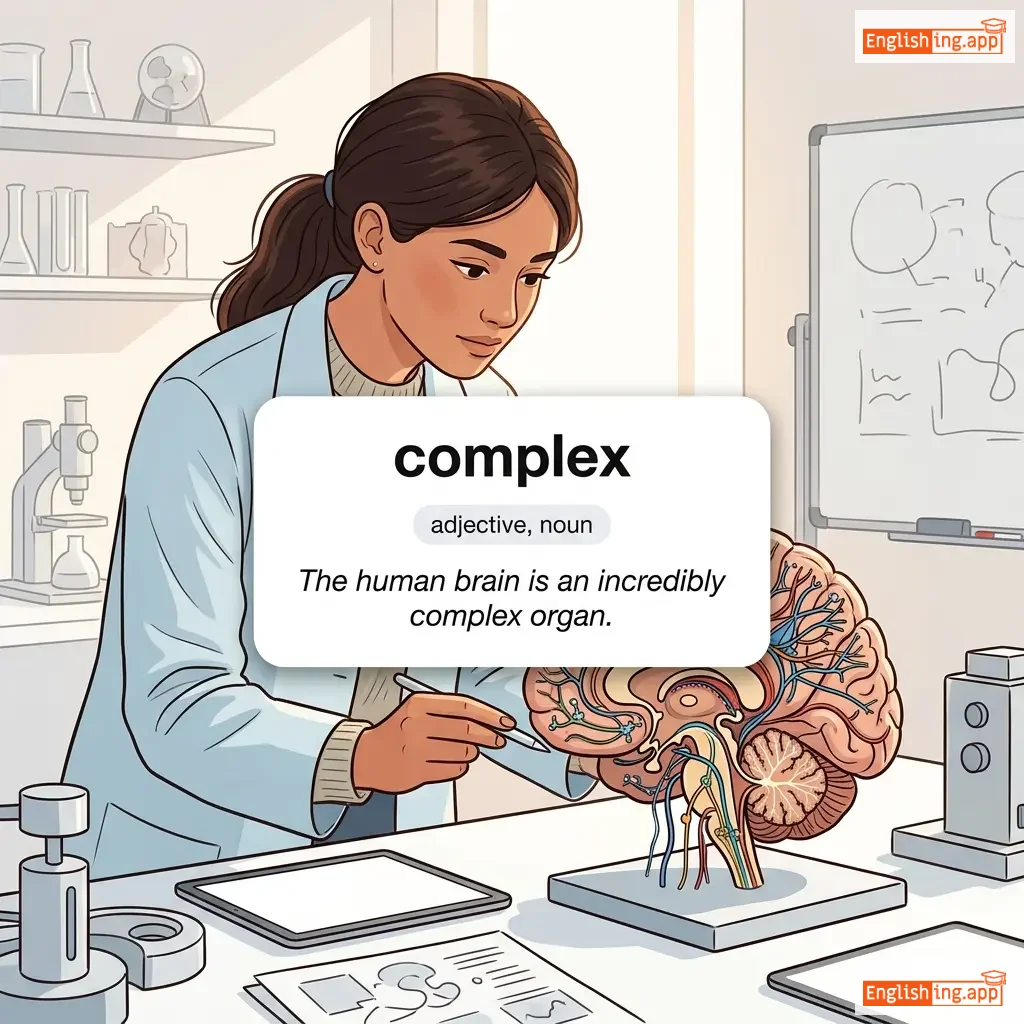
/ˈkɒm.pleks/
adjective
(kǎomǔpù)
••••••
|
|
复杂的; 难理解的; 难懂
fùzá de
••••••
|
consisting of many different and connected parts; complicated; difficult to understand
••••••
|
The math problem was too complex for me to solve quickly. |
数学问题对于我来说太复杂了,无法快速解决。
Shùxué wèntí duìyú wǒ lái shuō tài fùzá le, wúfǎ kuàisù jiějué.
••••••
|
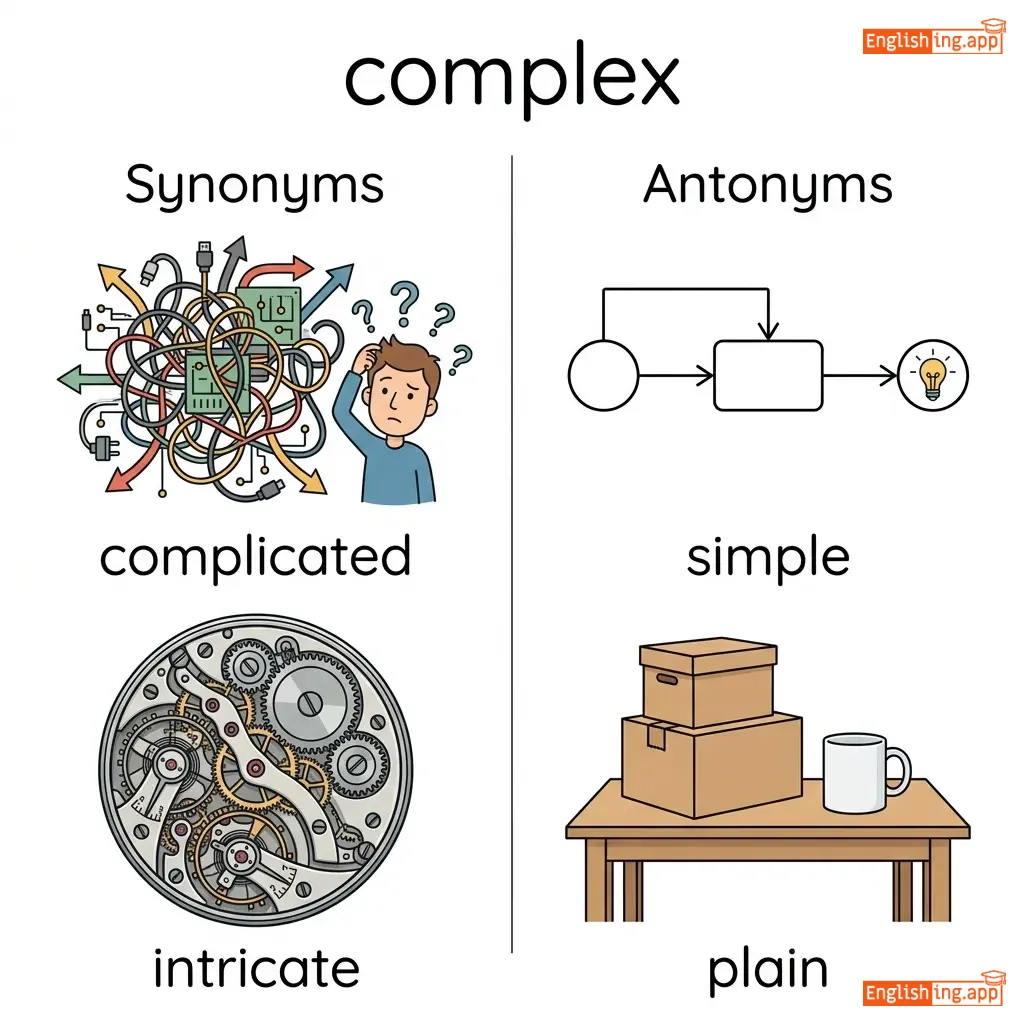
complicated, intricate, difficult, sophisticated
••••••
|
simple, easy, basic, straightforward
••••••
|
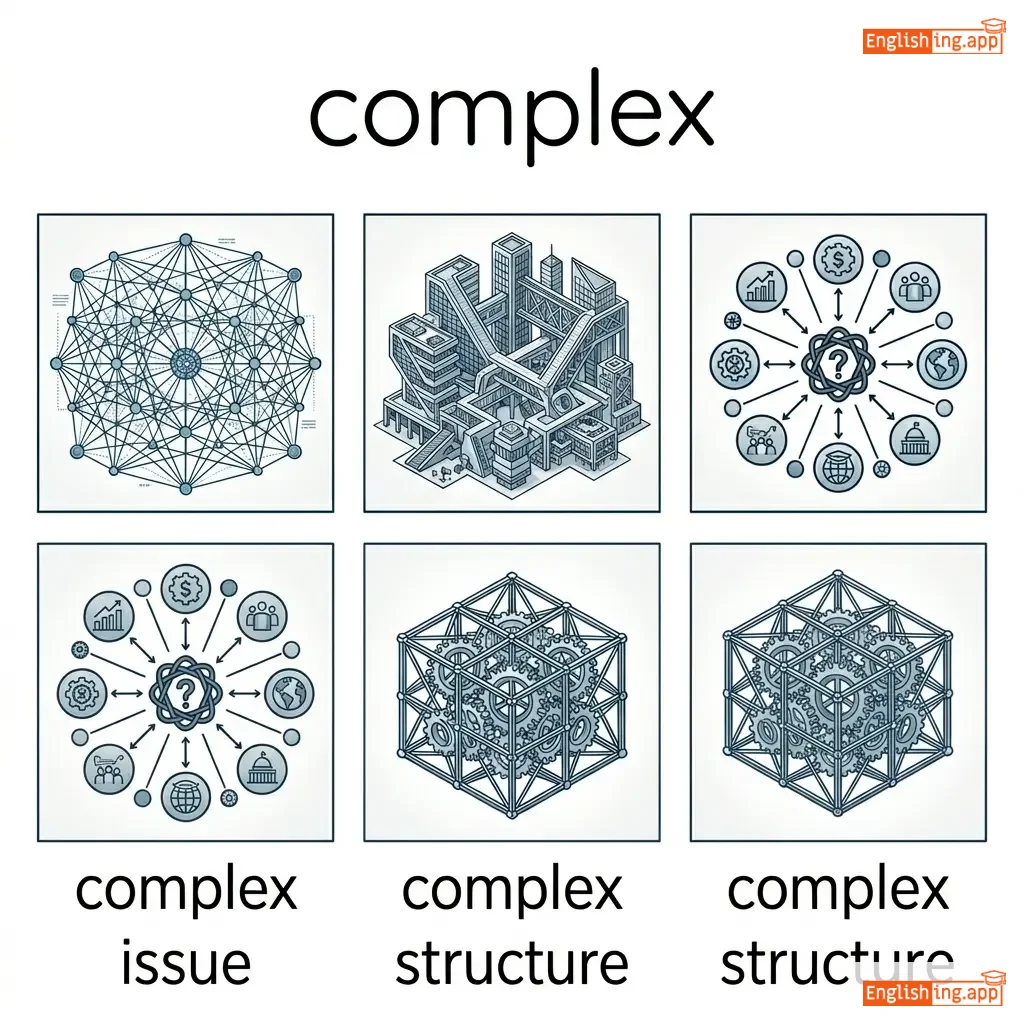
complex system, complex problem, highly complex
••••••
|
复杂的难题无论在哪种语言中都难以理解。
••••••
|
|
#107
😌
|
/ˈkʌmftərbəl/
adjective
(kʌmftərbəl)
••••••
|
|
舒适的
shūshì de
••••••
|
giving physical ease and relaxation; free from stress
••••••
|
This comfortable chair makes reading a pleasure. |
这把舒适的椅子让阅读成为一种享受。
Zhè bǎ shūshì de yǐzi ràng yuèdú chéngwéi yī zhǒng xiǎngshòu.
••••••
|
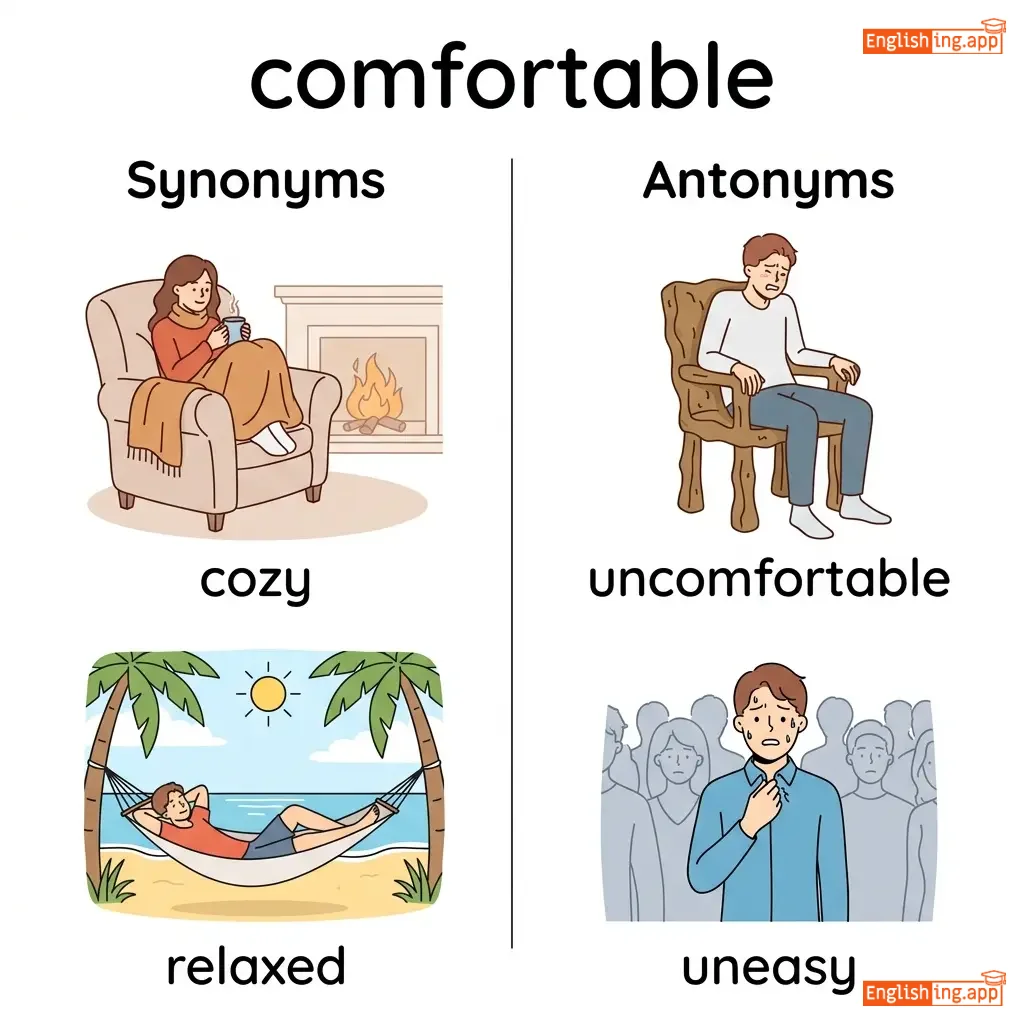
cozy, relaxed, pleasant, easy
••••••
|
uncomfortable, awkward, painful
••••••
|
comfortable bed, comfortable clothes, comfortable life
••••••
|
舒适的 (shūshì de) 与 COMFORTABLE 让你感觉放松和轻松。
••••••
|
|
#108
😞
|
/ˈtʃɪə.ləs/
adjective
(chírles)
••••••
|
- •••••• |
沉闷; 沮丧; 悲伤; 无欢乐
chenmen; jushan; beishang; wu huanle
••••••
|
lacking happiness or comfort; gloomy; depressing; without cheer
••••••
|
The old house looked cheerless and abandoned in the winter rain.
这座老房子在冬雨中看起来显得沉闷和荒废。
••••••
|
这座老房子在冬雨中看起来显得沉闷和荒废。
Zhe zuo lao fangzi zai dongyu zhong kan qilai xiande chenmen he huangfei.
••••••
|
gloomy, depressing, dismal, bleak, dreary
••••••
|
cheerful, bright, joyful, happy, uplifting
••••••
|
cheerless room, cheerless day, cheerless atmosphere, cheerless winter
••••••
|
chírles = 沉闷; 想象一下没有欢乐的空房子。
••••••
|
|
#109
🧒
|
/ˈtʃaɪl.dɪʃ/
adjective
(chaildizh)
••••••
|
- •••••• |
孩子气; 典型的儿童行为,但对于成年人不合适
haiziqi; dianxing de ertong xingwei, dan duiyu chengnianshen bu heshi
••••••
|
immature and silly; behaving in a way that is typical of a child but inappropriate for an adult
••••••
|
His childish behavior during the meeting was quite embarrassing.
His childish behavior during the meeting was quite embarrassing.
••••••
|
他在会议期间的孩子气行为非常令人尴尬。
Ta zai huiyi qijian de haiziqi xingwei feichang ling ren gan'ga.
••••••
|
immature, juvenile, infantile, naive, puerile
••••••
|
mature, adult, sophisticated, grown-up, responsible
••••••
|
childish behavior, childish games, childish tantrum, childish attitude
••••••
|
孩子气=像孩子一样不成熟的行为
••••••
|
|
#110
📦
|
/kəmˈpækt/
adjective
(紧凑)
••••••
|
- •••••• |
紧凑; 小巧且高效设计
jǐn còu; xiǎo qiǎo qiě gāo xiào shè jì
••••••
|
closely and neatly packed together; small and efficiently designed
••••••
|
She bought a compact car that fits easily in small parking spaces. |
她买了一辆紧凑型汽车,轻松停入小停车位。
Tā mǎi le yī liàng jǐn còu xíng qì chē, qīng sōng tíng rù xiǎo tíng chē wèi
••••••
|
small, dense, tight, condensed
••••••
|
large, loose, spacious, expanded
••••••
|
compact disc, compact car, compact design
••••••
|
紧凑型车,小巧且高效,像完美打包的物品一样。
••••••
|
|
#111
❤️
|
/ˈtʃær.ɪ.tə.bəl/
adjective
(查里塔布尔)
••••••
|
- •••••• |
慈善的; 慷慨的; 仁慈的
císhàn de; kāngkǎi de; réncí de
••••••
|
generous in giving to those in need; showing kindness
••••••
|
She is known for her charitable work in the community.
她因在社区的慈善工作而闻名。
••••••
|
她因在社区的慈善工作而闻名。
Tā yīn zài shèqū de císhàn gōngzuò ér wénmíng.
••••••
|
generous, kind, benevolent, philanthropic
••••••
|
selfish, greedy, stingy, cruel
••••••
|
charitable organization, charitable donation, charitable cause
••••••
|
查理 (Charlie) 做的善事总是令人感动,跟‘charitable’类似
••••••
|
|
#112
🆓
|
/ˌkɒm.plɪˈmen.tər.i/
adjective
(kəmˈplɪmɛnˌtɛri)
••••••
|
- •••••• |
赠送的;赞美的;作为礼节免费提供
zèngsòng de; zànměi de; zuòwéi lǐjié miǎnfèi tígōng
••••••
|
expressing praise or admiration; given or supplied free of charge as a courtesy
••••••
|
The hotel offers complimentary breakfast for all guests.
酒店为所有客人提供免费的早餐。
••••••
|
酒店为所有客人提供免费的早餐。
Jiǔdiàn wèi suǒyǒu kèrén tígōng miǎnfèi de zǎocān.
••••••
|
free, praising, appreciative, flattering
••••••
|
critical, paid, charged, disparaging
••••••
|
complimentary ticket, complimentary remarks, complimentary service
••••••
|
赠送的意思就是免费提供,像早餐
••••••
|
|
#113
😇
|
/ˈtʃaɪld.laɪk/
adjective
(chaildlaik)
••••••
|
- •••••• |
像孩子一样; 天真和信任; 纯净和简单
xiàng háizi yīyàng; tiānzhēn hé xìnrèn; chúnjìng hé jiǎndān
••••••
|
innocent and trusting like a child; having the good qualities of a child; pure and simple
••••••
|
She maintained a childlike wonder about the world around her. |
她对周围的世界保持着孩子般的惊奇。
tā duì zhōuwéi de shìjiè bǎochí zhe háizi bān de jīngqí.
••••••
|
innocent, pure, naive, simple, trusting
••••••
|
cynical, sophisticated, worldly, jaded, experienced
••••••
|
childlike innocence, childlike wonder, childlike enthusiasm, childlike curiosity
••••••
|
像孩子一样的天真,可以帮助我们记住纯净和简单。
••••••
|
|
#114
⚖️
|
/kəmˈpærətɪv/
adjective
(比较的)
••••••
|
- •••••• |
比较的
bijiao de
••••••
|
involving comparison between two or more things; relative
••••••
|
The study showed comparative results between different teaching methods.
研究显示了不同教学方法之间的比较结果。
••••••
|
研究显示了不同教学方法之间的比较结果。
Yánjiū xiǎnshìle bùtóng jiàoxué fāngfǎ zhī jiān de bǐjiào jiéguǒ.
••••••
|
relative, proportional, corresponding
••••••
|
absolute, independent, unrelated
••••••
|
comparative study, comparative analysis, comparative advantage
••••••
|
比较的: 用来对比不同的结果或方法
••••••
|
|
#115
✨
|
/tʃeɪst/
adjective
(cheste)
••••••
|
- •••••• |
贞洁; 纯洁
zhēn jié; chún jié
••••••
|
pure and morally good; abstaining from sexual activity
••••••
|
She lived a chaste and virtuous life.
她过着纯洁而美德的生活。
••••••
|
她过着纯洁而美德的生活。
Tā guòzhe chúnjié ér měidé de shēnghuó.
••••••
|
pure, virtuous, innocent, modest
••••••
|
impure, immoral, promiscuous, corrupt
••••••
|
chaste behavior, chaste life, chaste thoughts
••••••
|
Chaste: Like a pure lotus, untouched and serene.
••••••
|
|
#116
📚
|
/ˌkɒm.prɪˈhen.sɪv/
adjective
(kòng-pu-lei-hen-si-fu)
••••••
|
|
全面的; 综合的; 包罗万象的
quánmiàn de; zōnghé de; bāoluó wànxiàng de
••••••
|
complete and including everything that is necessary; covering a wide range of topics
••••••
|
The report provides a comprehensive analysis of the market trends. |
报告提供了对市场趋势的全面分析。
bàogào tígōngle duì shìchǎng qūshì de quánmiàn fēnxī.
••••••
|
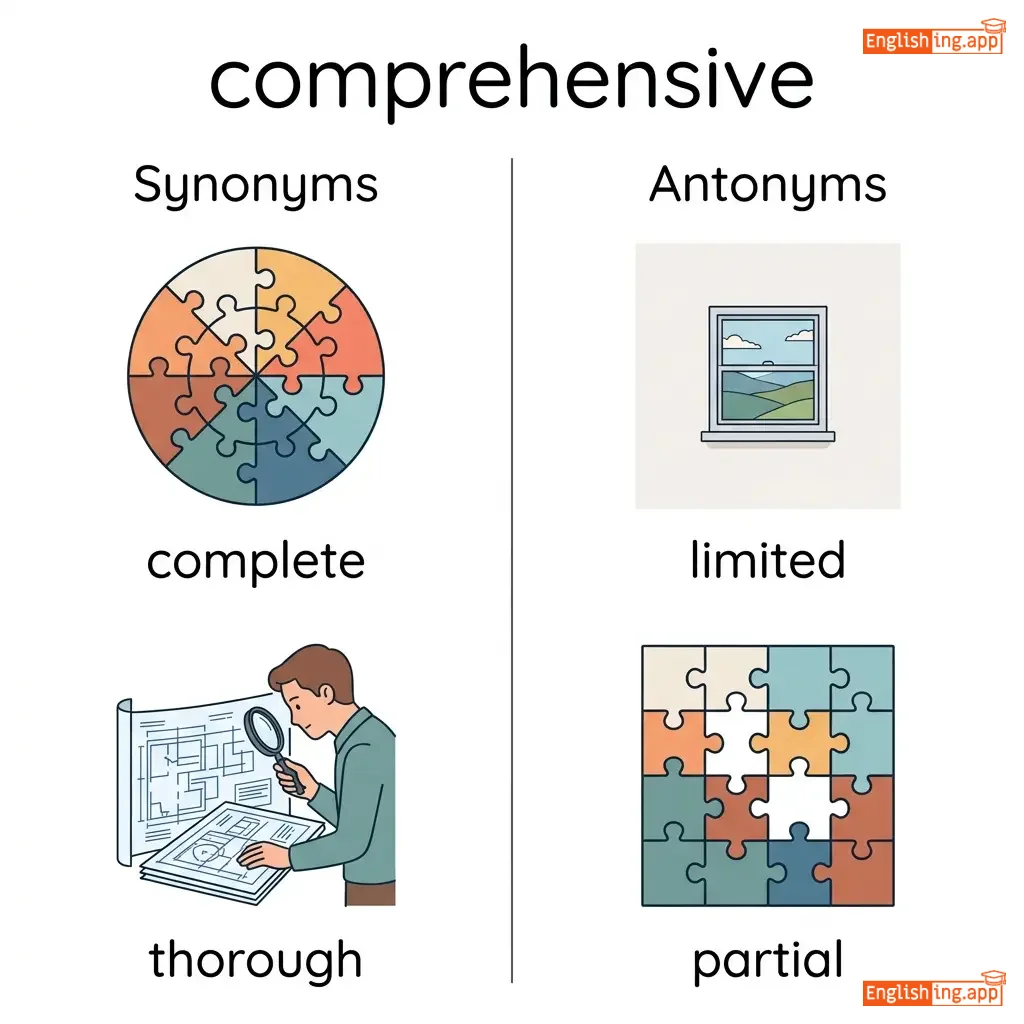
complete, thorough, extensive, all-inclusive
••••••
|
partial, incomplete, limited, narrow
••••••
|
comprehensive study, comprehensive report, comprehensive coverage
••••••
|
理解一个问题,必须看到全局。
••••••
|
|
#117
🤔
|
/ˈtʃuː.zi/
adjective
(chu-zi)
••••••
|
- •••••• |
挑剔的; 非常挑选的; 对喜欢或接受的东西非常挑剔
tiao ti de
••••••
|
very careful in choosing; selective; particular about what one likes or accepts
••••••
|
He's very choosy about the restaurants where he eats. |
他对他吃的餐馆非常挑剔。
Ta dui ta chi de canguan feichang tiaoti.
••••••
|
selective, picky, particular, fussy, discriminating
••••••
|
unselective, easy-going, accepting, indiscriminate, lenient
••••••
|
choosy eater, choosy buyer, choosy about friends, very choosy
••••••
|
挑剔意味着只选择最好的选项
••••••
|
|
#118
💰
|
/tʃiːp/
adjective
(qi:p)
••••••
|
- •••••• |
便宜; 低价
pianyi; di jia
••••••
|
low in price; costing little money
••••••
|
This restaurant serves cheap but delicious food. |
这家餐厅提供便宜但美味的食物。
Zhe jia canting tigong pianyi dan meiwei de shiwu.
••••••
|
inexpensive, affordable, low-cost, budget
••••••
|
expensive, costly, dear, pricey
••••••
|
cheap price, cheap goods, cheap hotel
••••••
|
Cheap means 便宜, like getting a 便宜 deal!
••••••
|
|
#119
❤️
|
/kəmˈpæʃənət/
adjective
(kəmˈpæʃənət)
••••••
|
- •••••• |
有同情心的; 富有同情心的
yǒu tóngqíng xīn de; fùyǒu tóngqíng xīn de
••••••
|
feeling or showing sympathy and concern for others who are suffering
••••••
|
The compassionate nurse took extra time to comfort the worried patients. |
富有同情心的护士花时间安慰忧虑的病人。
fùyǒu tóngqíng xīn de hùshì huā shíjiān ānwèi yōulǜ de bìngrén
••••••
|
caring, kind, sympathetic, merciful
••••••
|
cruel, heartless, indifferent, merciless
••••••
|
compassionate care, compassionate person, compassionate response
••••••
|
想象一个富有同情心的护士,她帮助焦虑的病人。
••••••
|
|
#120
✂️
|
/kənˈsaɪs/
adjective
(kòn-sài-sī)
••••••
|
|
简洁
jianjie
••••••
|
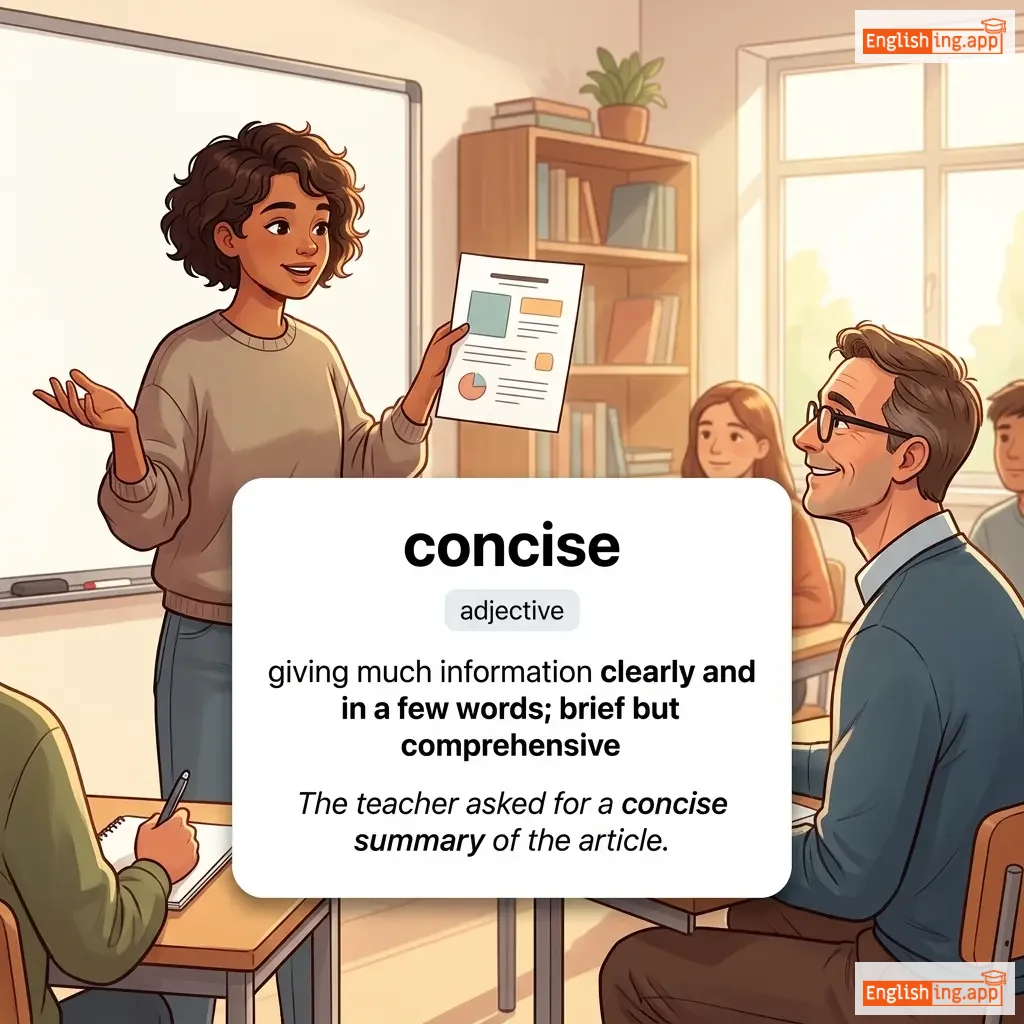
giving a lot of information clearly and in a few words; brief but comprehensive
••••••
|
Please write a concise summary of the main points.
请写出主要点的简洁总结。
••••••
|
请写出主要点的简洁总结。
Qing xie chu zhuyao dian de jianjie zongjie.
••••••
|
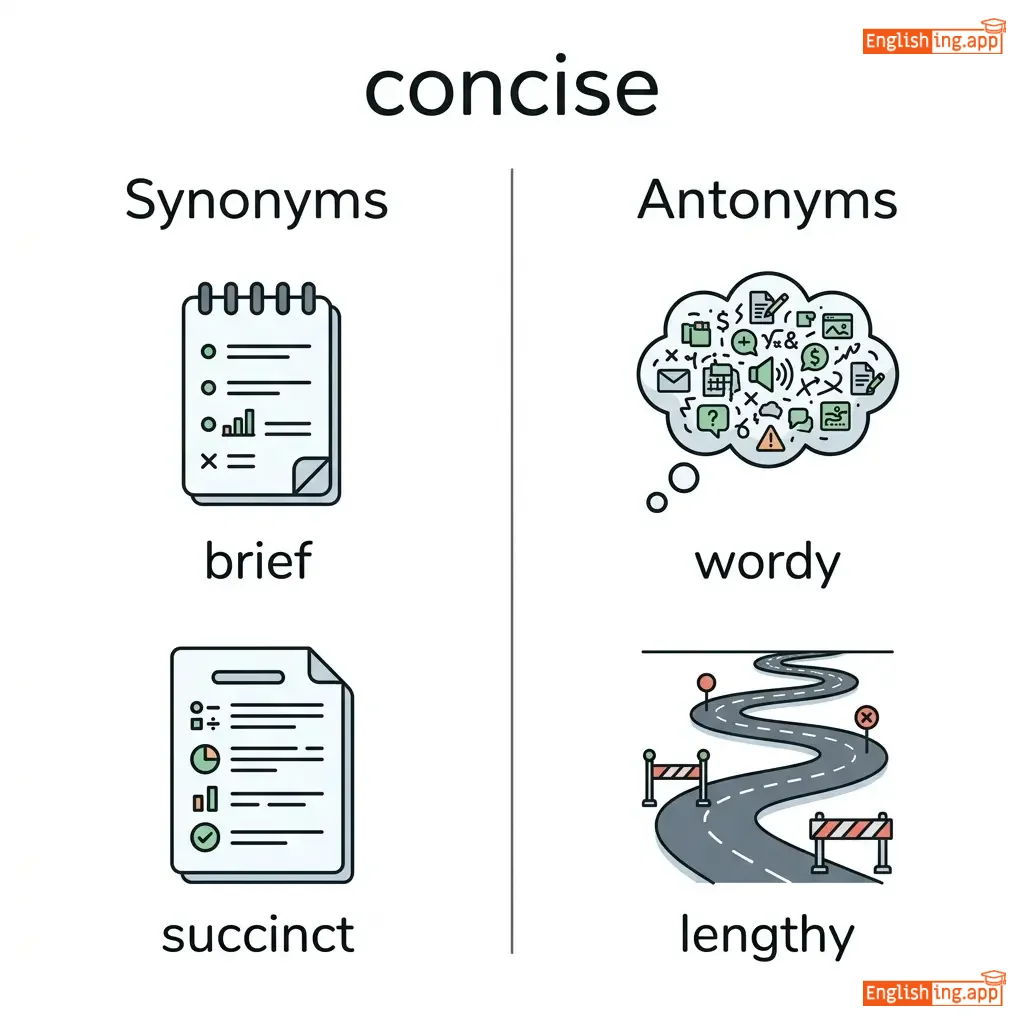
brief, short, succinct, compact
••••••
|
verbose, lengthy, wordy, elaborate
••••••
|
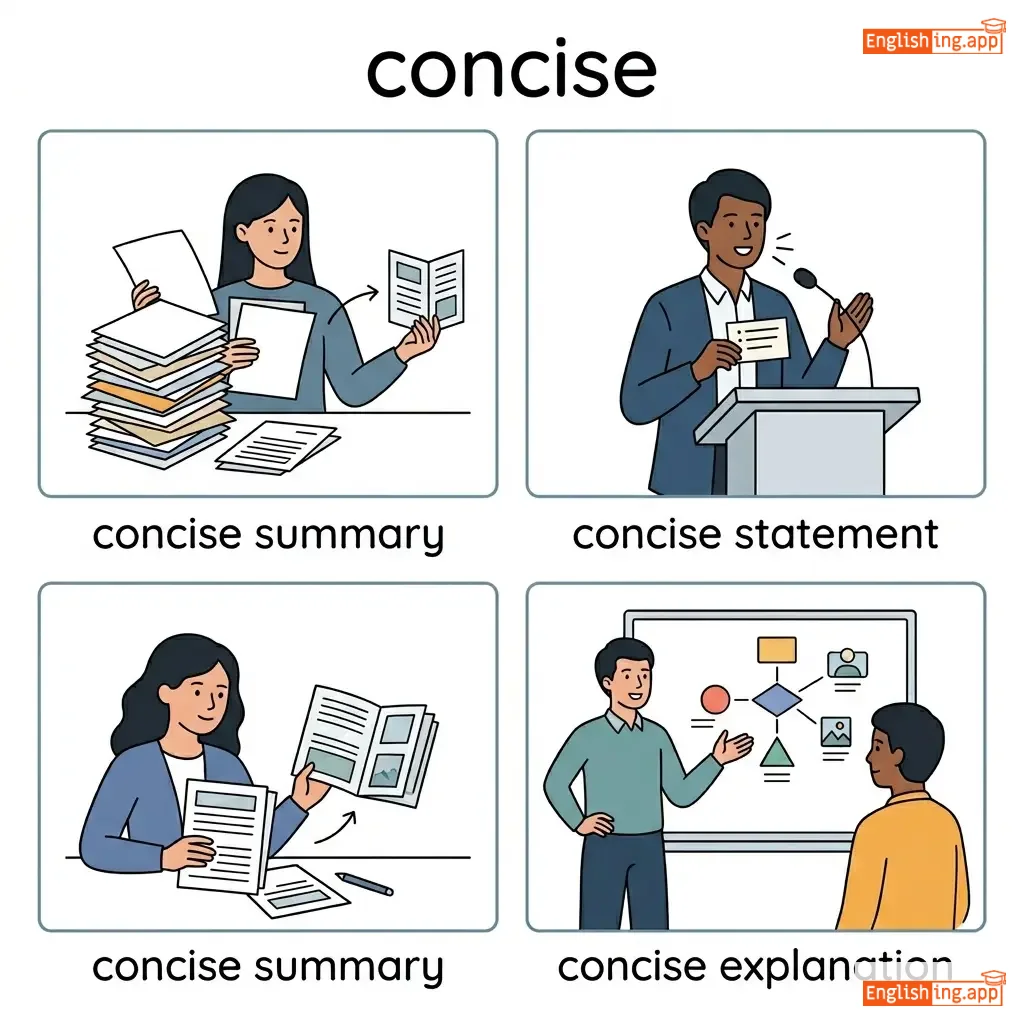
concise statement, concise summary, concise explanation
••••••
|
记住'简洁'是用少的字清楚表达,简单而全面!
••••••
|
Vocabulary Quiz
Test your vocabulary by matching words with their translations or meanings.
Login to take the quiz
Comments (0)
Share your thoughts and join the discussion.
Join the discussion by logging in
Login to CommentNo comments yet
Be the first to share your thoughts!