

Swipe left or right, or use the buttons. Tap image to zoom.
例句翻译
单词
Lesson 12Lesson 12 - 遮罩切换
|
表情符号
|
单词 | Images | 翻译 | 含义 | 例句 | 例句翻译 | 同义词 | 反义词 | 搭配词 | 助记符 |
|---|---|---|---|---|---|---|---|---|---|---|
|
#221
😊
|
/ɪnˈdʒɔɪ.ə.bəl/
adjective
(enjoyable)
••••••
|
- •••••• |
愉快的; 令人愉悦的
yúkuài de; lìng rén yúyuè de
••••••
|
pleasant; giving satisfaction or pleasure
••••••
|
The movie was very enjoyable and made everyone laugh. |
这部电影非常愉快,让每个人都笑了。
Zhè bù diànyǐng fēicháng yúkuài, ràng měi gè rén dōu xiàole.
••••••
|
pleasant, delightful, amusing, entertaining
••••••
|
unpleasant, boring, tedious, disagreeable
••••••
|
enjoyable experience, enjoyable evening, enjoyable activity
••••••
|
Imagine a 'yúkuài' movie that makes everyone 'lìng rén yúyuè'.
••••••
|
|
#222
♾️
|
/ˈevər ˈlæstɪŋ/
adjective
(éwò-lás-tíng)
••••••
|
- •••••• |
永恒的; 持久的;
yǒnghéng de; chíjiǔ de
••••••
|
eternal; permanent; enduring forever
••••••
|
Their love is ever-lasting and will never fade. |
他们的爱是永恒的,永不褪色。
tāmen de ài shì yǒnghéng de, yǒng bù tuìsè.
••••••
|
eternal, permanent, enduring, perpetual
••••••
|
temporary, fleeting, brief, short-lived
••••••
|
ever-lasting love, ever-lasting peace, ever-lasting memory
••••••
|
Ever-lasting love 是永恒的,就像永恒的爱。
••••••
|
|
#223
😍
|
/ˈen.vi.ə.bəl/
adjective
(en-vi-a-ble)
••••••
|
- •••••• |
值得羡慕的
zhí dé xiàn mù de
••••••
|
causing envy; desirable
••••••
|
Her success was enviable among her peers.
她的成功在同事中是值得羡慕的。
••••••
|
她的成功在同事中是值得羡慕的。
Tā de chénggōng zài tóngshì zhōng shì zhídé xiànmù de.
••••••
|
desirable, coveted, admirable
••••••
|
undesirable, pitiful, unenviable
••••••
|
enviable position, enviable reputation, enviable lifestyle
••••••
|
羡慕 + 渴望 = 值得羡慕的
••••••
|
|
#224
⚖️
|
/ɪˈkwɪv.ə.lənt/
adjective
(等价)
••••••
|
- •••••• |
等价的; 相等的
dengjia de; xiangdeng de
••••••
|
equal in value, amount, function, or meaning; having the same effect or result
••••••
|
This amount is equivalent to ten dollars. |
这个金额等于十美元。
Zhe ge jine dengyu shi mei yuan
••••••
|
equal, same, comparable, identical
••••••
|
different, unequal, distinct
••••••
|
equivalent value, equivalent amount, equivalent to
••••••
|
中文: '等价'意味着两者相等,就像两个数字相等一样。
••••••
|
|
#225
💡
|
/ɪnˈlaɪ.tənd/
adjective
(yīn lái tè nèi dé)
••••••
|
- •••••• |
开明的; 觉悟的; 智慧的;
kaiming de; juewu de; zhihui de
••••••
|
having or showing a rational, modern outlook; having spiritual knowledge or understanding
••••••
|
The enlightened teacher shared wisdom with all her students.
那位开明的老师与她的所有学生分享了智慧。
••••••
|
那位开明的老师与她的所有学生分享了智慧。
Na wei kaiming de laoshi yu ta de suoyou xuesheng fenxiang le zhihui.
••••••
|
wise, knowledgeable, informed, educated
••••••
|
ignorant, unaware, uninformed, confused
••••••
|
enlightened person, enlightened thinking, enlightened approach
••••••
|
In Chinese, '开明' means enlightened, linking light and wisdom.
••••••
|
|
#226
🔄
|
/ˈevri/
adjective
(éwèi)
••••••
|
- •••••• |
每个; 所有; 无一例外
měi ge; suǒ yǒu; wú yī lì wài
••••••
|
each one; all; without exception
••••••
|
Every student must complete their homework. |
每个学生都必须完成作业。
měi ge xuéshēng dōu bìxū wánchéng zuòyè.
••••••
|
each, all, any, whole
••••••
|
no, none, some, few
••••••
|
every day, every time, every person, every single
••••••
|
Every is 'měi ge' in Chinese for each, 'suǒ yǒu' for all.
••••••
|
|
#227
🙏
|
/ɪˈstiːmd/
adjective
(伊斯蒂姆德)
••••••
|
- •••••• |
尊敬的
zunjing de
••••••
|
respected and admired; held in high regard
••••••
|
He is an esteemed professor at the university. |
他是大学里一位受人尊敬的教授。
Tā shì dàxué lǐ yī wèi shòu rén zūnjìng de jiàoshòu.
••••••
|
respected, honored, revered, admired
••••••
|
despised, dishonored, disrespected
••••••
|
esteemed colleague, highly esteemed, esteemed member
••••••
|
这位'尊敬的'教授在大学里非常受欢迎和敬重。
••••••
|
|
#228
😒
|
/ˈen.vi.əs/
adjective
(ɪnˈvɪəs)
••••••
|
- •••••• |
嫉妒的; 羡慕的
jidu de; xianmu de
••••••
|
feeling or showing envy; jealous
••••••
|
She felt envious of her friend's new car.
她对朋友的新车感到嫉妒。
••••••
|
她对朋友的新车感到嫉妒。
Tā duì péngyǒu de xīn chē gǎndào jídù.
••••••
|
jealous, resentful, covetous
••••••
|
generous, content, satisfied
••••••
|
envious look, envious feelings, envious of someone
••••••
|
嫉妒 (jidu) 与 envy 类似,意味着嫉妒和羡慕。
••••••
|
|
#229
⚖️
|
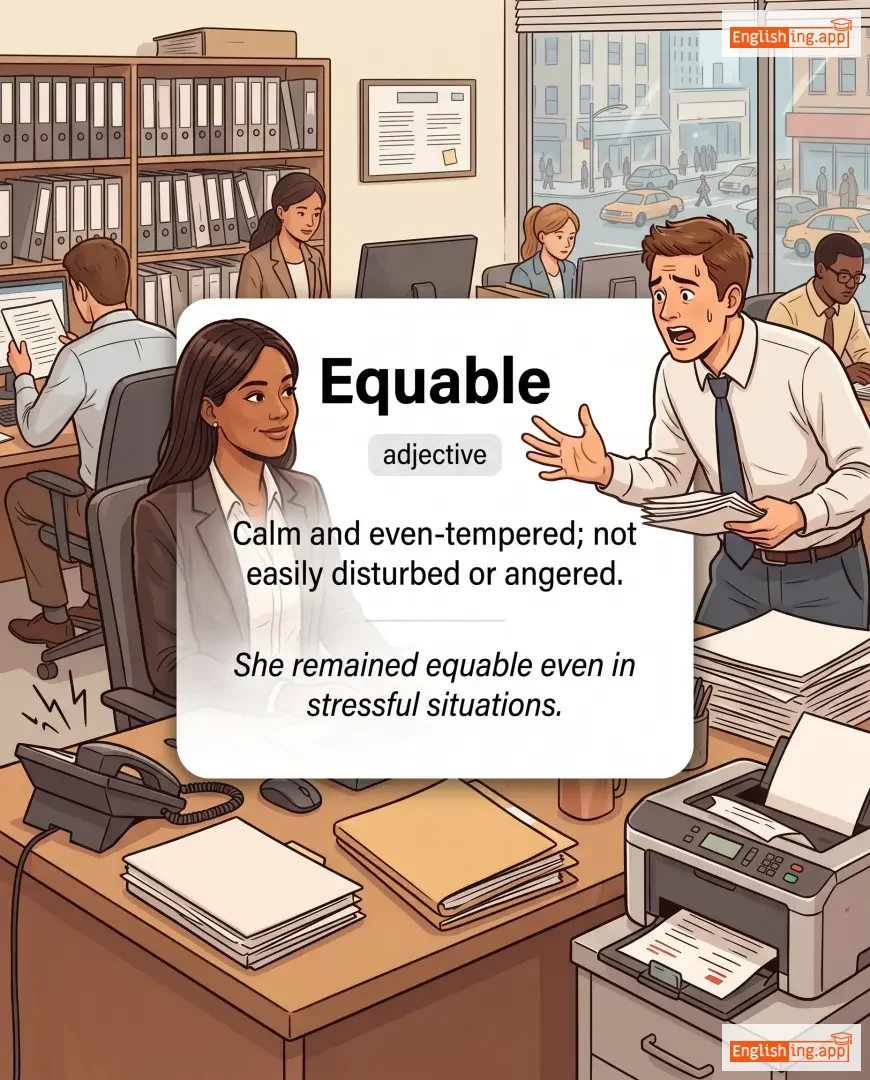
/ˈek.wə.bəl/
adjective
(伊奎布尔)
••••••
|
|
平和
pinghe
••••••
|
calm and even-tempered; not easily disturbed
••••••
|
He maintained an equable temperament throughout the crisis.
他在整个危机期间保持了平和的性格。
••••••
|
他在整个危机期间保持了平和的性格。
Ta zai zhengge weiji qi jian baochi le pinghe de xingge.
••••••
|
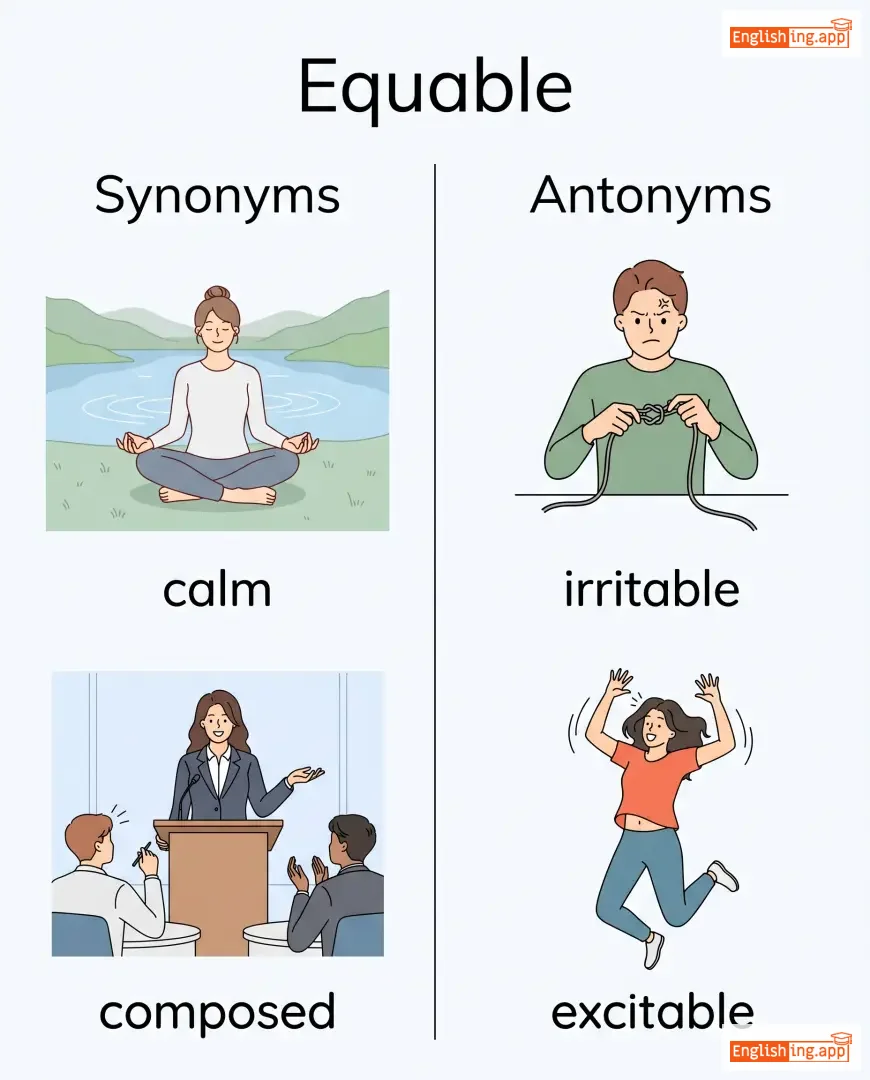
steady, even, uniform, consistent
••••••
|
changeable, variable, inconsistent
••••••
|
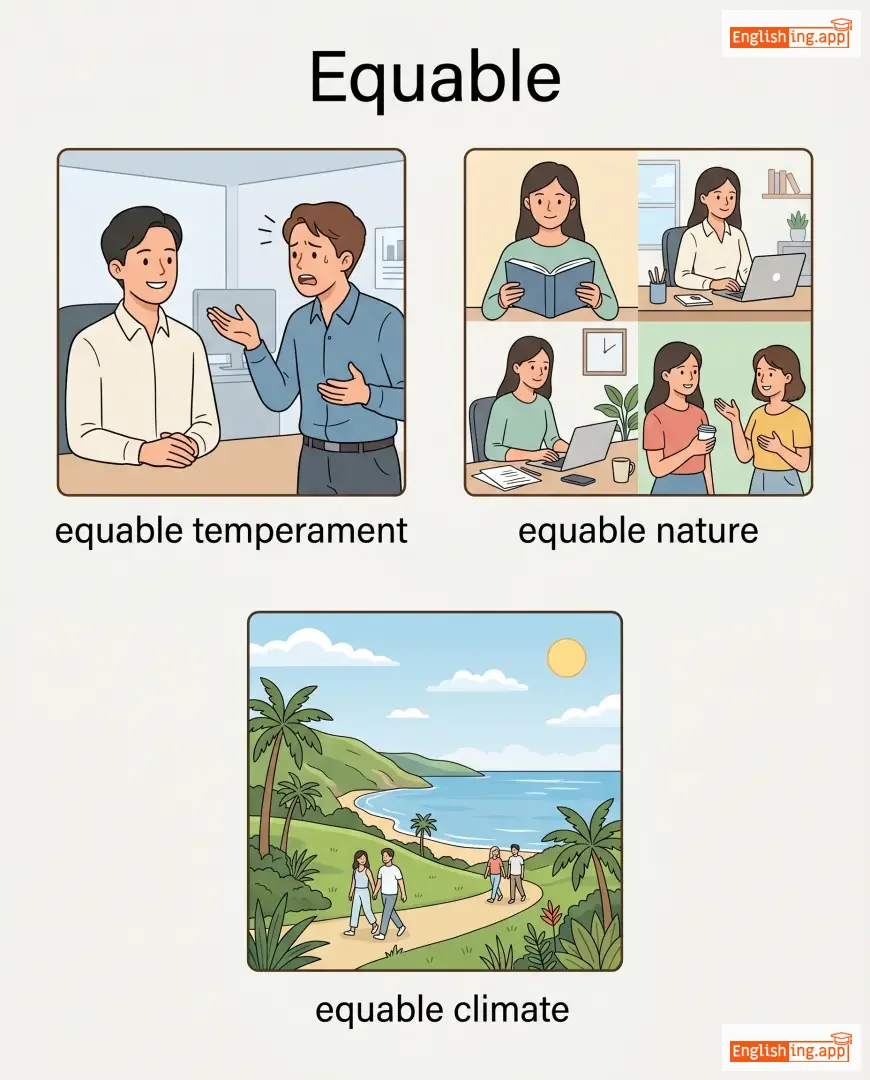
equable climate, equable temperament, equable disposition
••••••
|
平和的意思是像 'equable' 一样,保持冷静与沉稳。
••••••
|
|
#230
♾️
|
/ɪˈtɜː.nəl/
adjective
(yìtān'ěr)
••••••
|
- •••••• |
永恒的; 无尽的; 不朽的; 永远
yǒnghéng de; wújìn de; bùxiǔ de; yǒngyuǎn
••••••
|
lasting or existing forever; without end or beginning; everlasting
••••••
|
Their love seemed eternal and unbreakable.
他们的爱似乎永恒且不可打破。
••••••
|
他们的爱似乎永恒且不可打破。
tāmen de ài shìhū yǒnghéng qiě bùkě dǎpò.
••••••
|
everlasting, endless, perpetual, infinite
••••••
|
temporary, finite, brief, momentary
••••••
|
eternal love, eternal life, eternal peace
••••••
|
Eternal love, lasting forever, with no end.
••••••
|
|
#231
🐘
|
/ɪˈnɔː.məs/
adjective
(恩诺马斯)
••••••
|
- •••••• |
巨大的; 庞大的; 异常大的
jùdà de; pángdà de; yìcháng dà de
••••••
|
very large in size, quantity, or extent; huge
••••••
|
The elephant was enormous and weighed several tons. |
大象非常巨大,重达几吨。
Dà xiàng fēicháng jùdà, zhòng dá jǐ dùn.
••••••
|
huge, massive, gigantic, immense
••••••
|
tiny, small, minute, miniature
••••••
|
enormous size, enormous amount, enormous pressure
••••••
|
想象一只大象,它庞大得让你无法想象。
••••••
|
|
#232
🎯
|
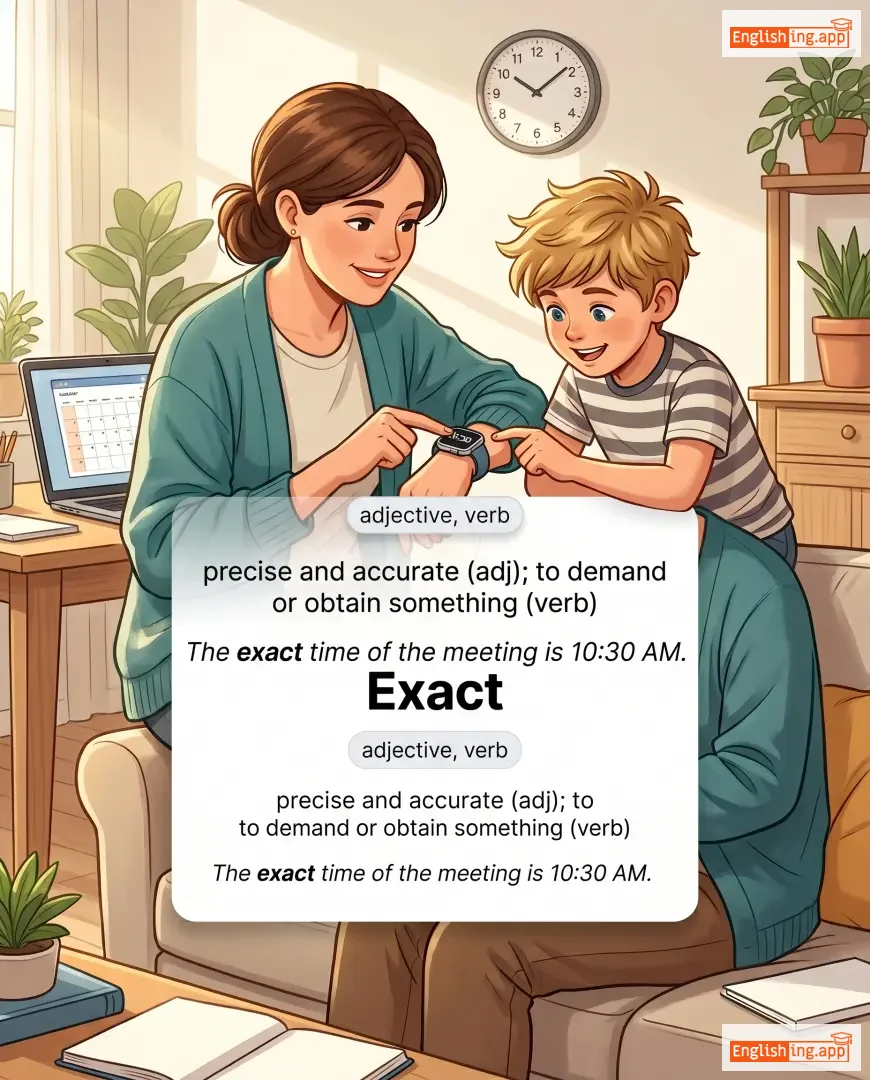
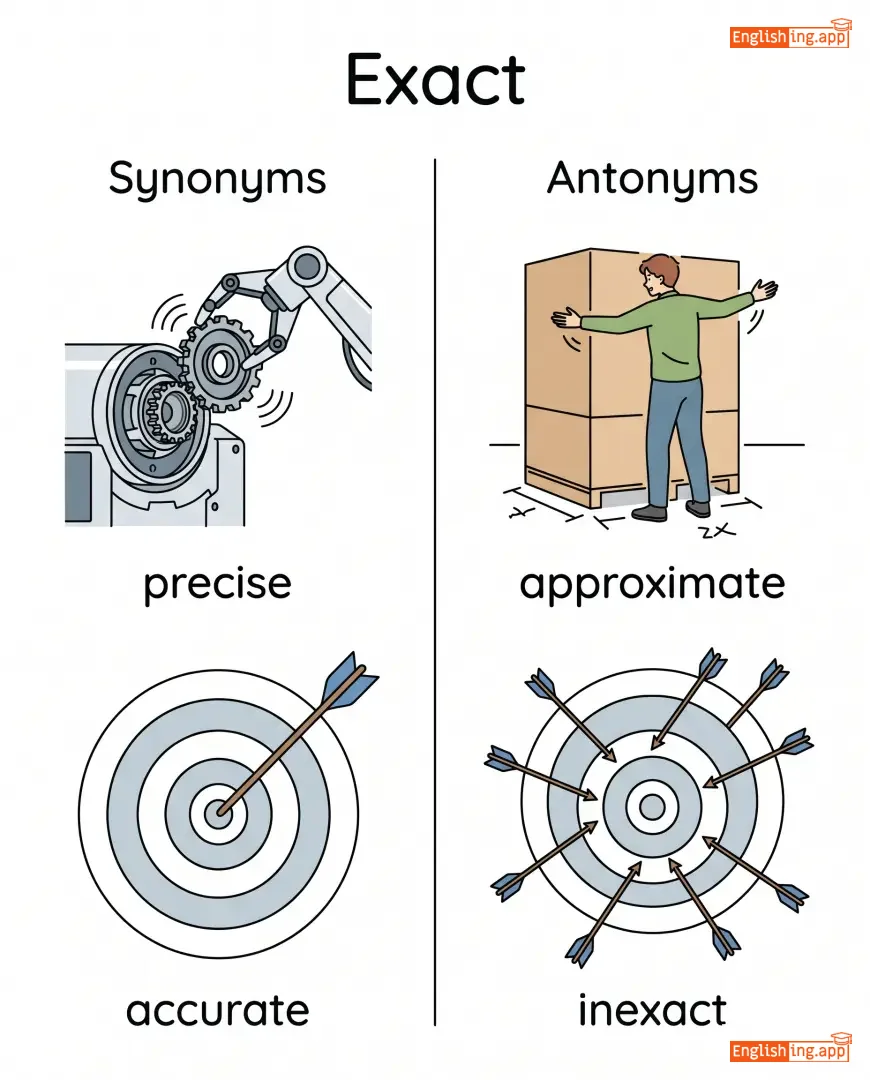
/ɪɡˈzækt/
adjective
(精确)
••••••
|
|
精确的; 正确的; 完全正确
jingque de; zhengque de; wanquan zhengque
••••••
|
precise; accurate; completely correct
••••••
|
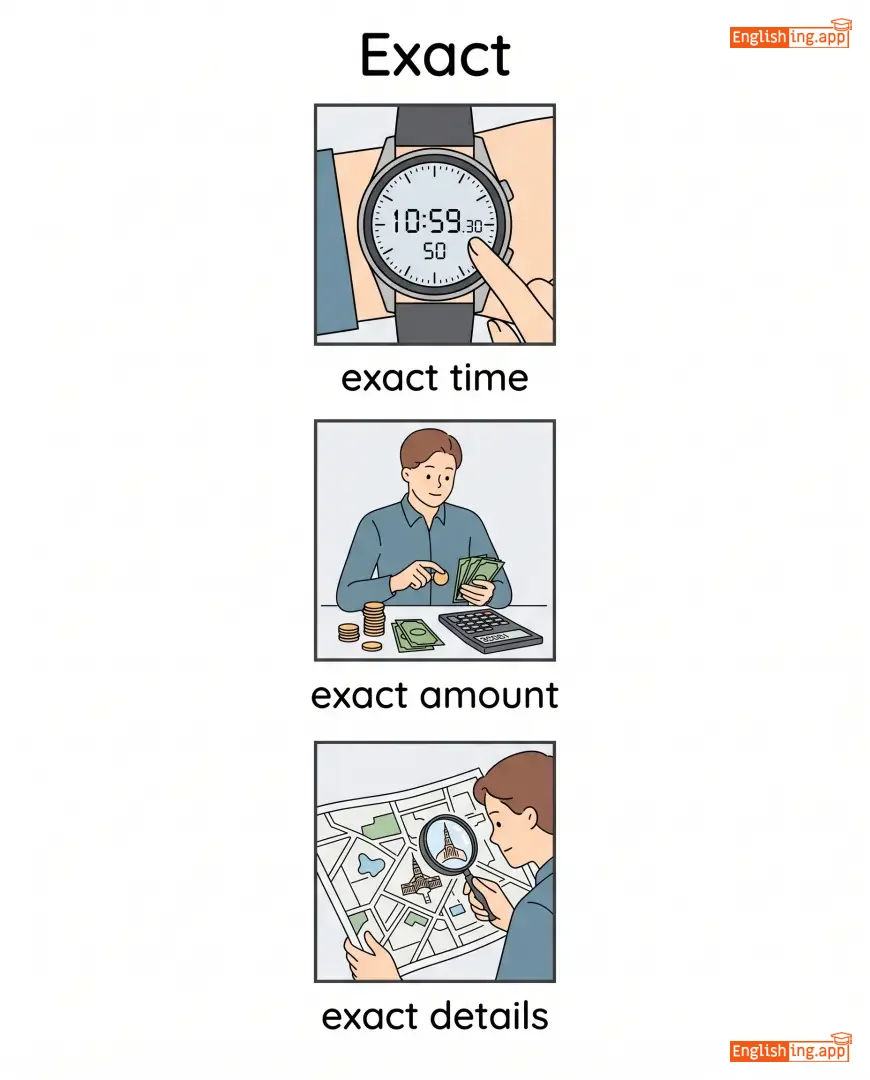
Please give me the exact time of the meeting. |
请告诉我会议的准确时间。
Qing gaosu wo huiyi de zhunque shijian.
••••••
|
precise, accurate, correct, perfect
••••••
|
approximate, rough, inaccurate, wrong
••••••
|
exact time, exact location, exact amount, exact words
••••••
|
Exact = Jingque, like asking for the exact time in Chinese!
••••••
|
|
#233
⚖️
|
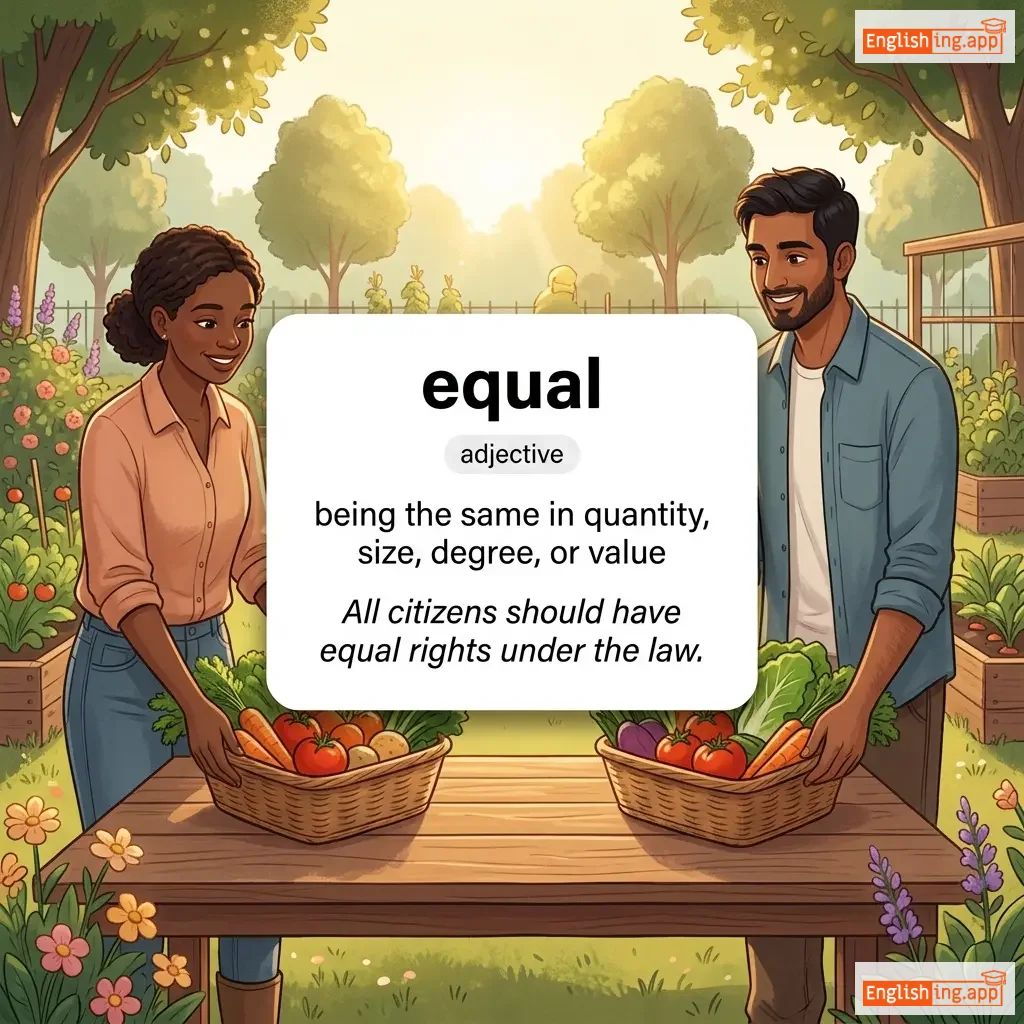
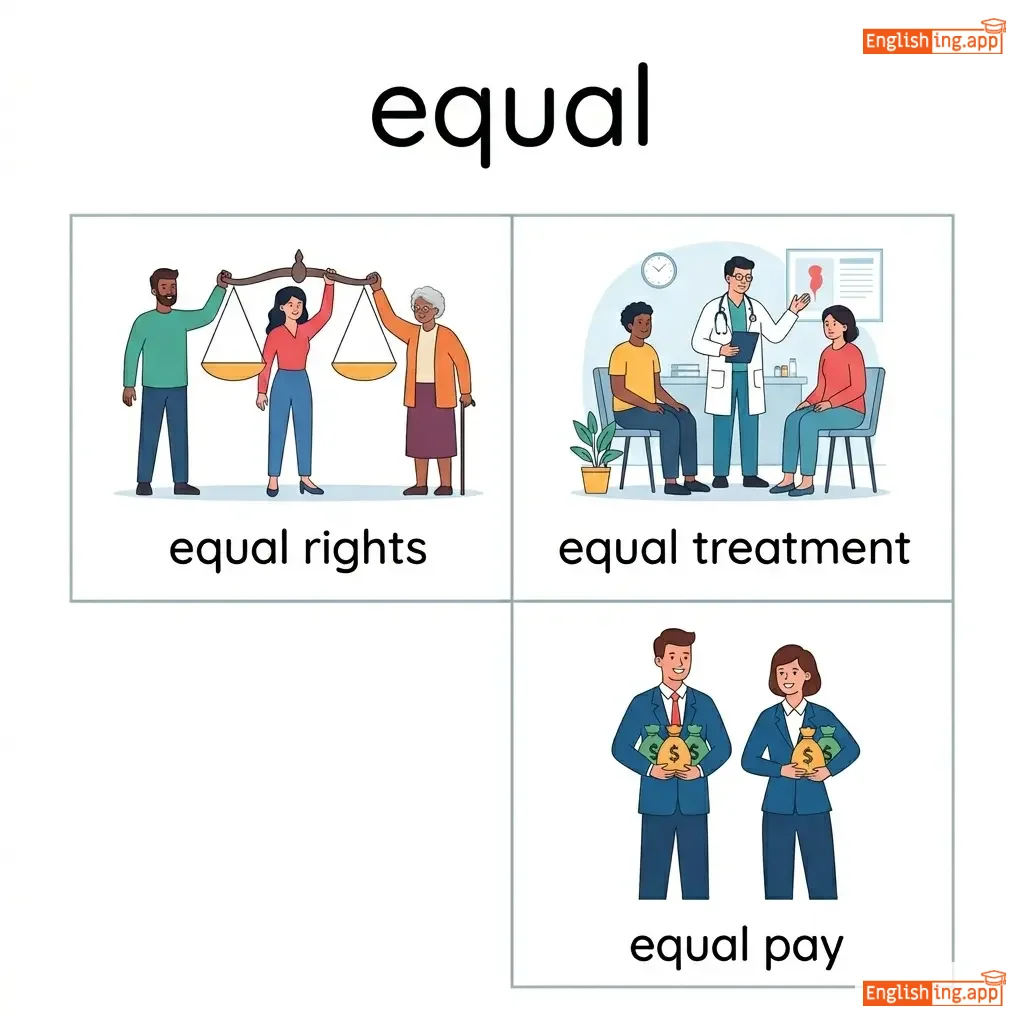
/ˈiː.kwəl/
adjective
(伊奎尔)
••••••
|
|
相等
xiāngděng
••••••
|
being the same in quantity, size, degree, or value; identical
••••••
|
All students are equal in the eyes of the law. |
所有学生在法律面前是平等的。
suǒyǒu xuéshēng zài fǎlǜ miànqián shì píngděng de.
••••••
|
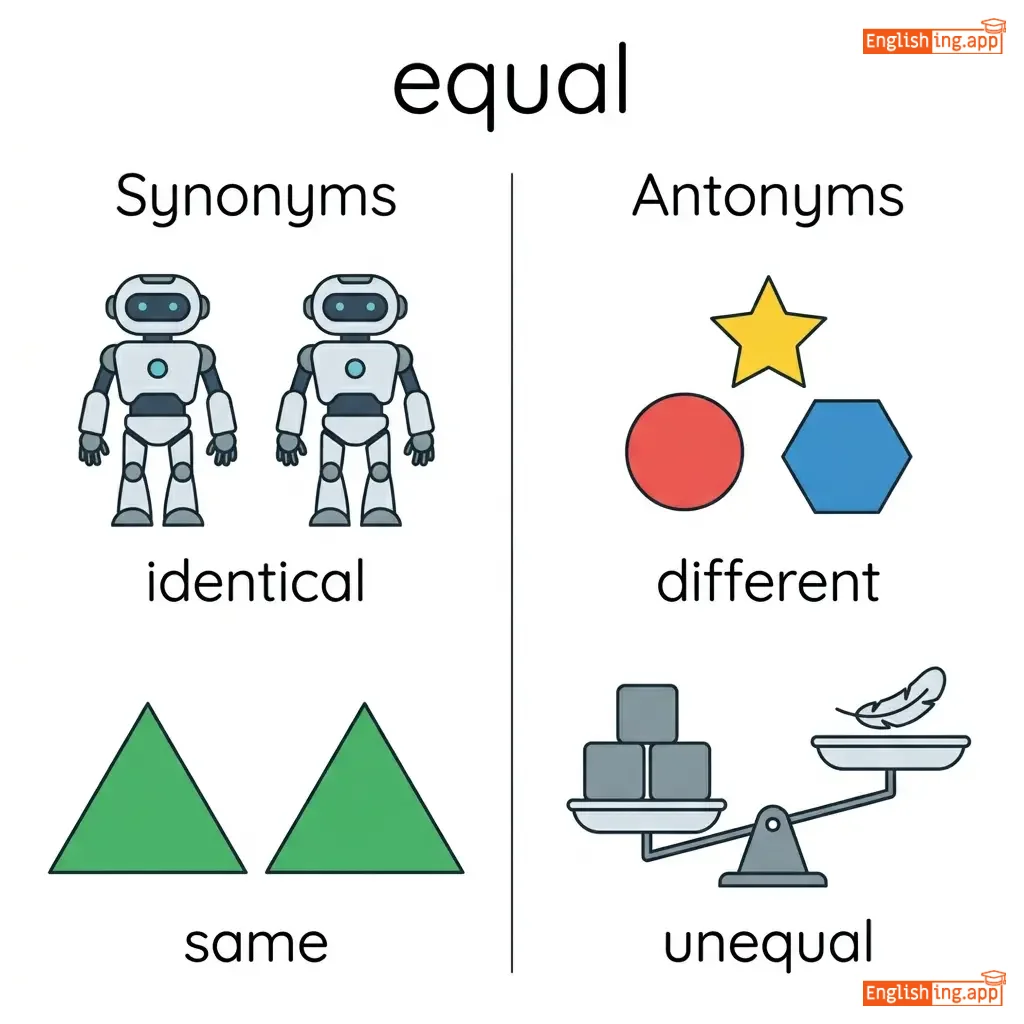
same, identical, equivalent, uniform
••••••
|
unequal, different, varied, disparate
••••••
|
equal rights, equal opportunity, equal treatment
••••••
|
Xiāngděng (equal) in Chinese sounds like 'same' in English.
••••••
|
|
#234
📏
|
/ˈiː.vən/
adjective
(yī wén)
••••••
|
- •••••• |
平坦; 均匀; 平级
pingtan; junyun; pingji
••••••
|
flat and smooth; equal or uniform; level
••••••
|
The surface was completely even and smooth. |
表面完全平坦且光滑。
Biaomian wanquan pingtan qie guanghua.
••••••
|
flat, level, smooth, uniform
••••••
|
uneven, rough, irregular, bumpy
••••••
|
even surface, even distribution, even number
••••••
|
In Chinese, '平' (ping) sounds like 'even', level and smooth!
••••••
|
|
#235
🎭
|
/ˌen.təˈteɪ.nɪŋ/
adjective
(娱乐的)
••••••
|
- •••••• |
娱乐的; 有趣且引人入胜
yúlè de; yǒuqù qiě yǐn rén rù shèng
••••••
|
providing amusement or enjoyment; funny and engaging
••••••
|
The comedian's performance was very entertaining and kept the audience laughing. |
那位喜剧演员的表演非常娱乐,观众笑声不断。
Nà wèi xǐjù yǎnyuán de biǎoyǎn fēicháng yúlè, guānzhòng xiàoshēng bùduàn.
••••••
|
amusing, enjoyable, funny, engaging
••••••
|
boring, dull, tedious, uninteresting
••••••
|
entertaining show, entertaining story, entertaining guest
••••••
|
娱乐的 = 有趣; 使表演娱乐的关键是它有趣且引人入胜!
••••••
|
|
#236
📈
|
/ɪkˈsiːdɪŋ/
adjective
(èksīdìng)
••••••
|
- •••••• |
过度的; 超越的
guòdù de; chāoyuè de
••••••
|
going beyond; surpassing; extremely
••••••
|
The project was completed with exceeding excellence. |
该项目以极高的卓越完成。
Gāi xiàngmù yǐ jí gāo de zhuóyuè wánchéng.
••••••
|
surpassing, extraordinary, extreme, outstanding
••••••
|
lacking, insufficient, moderate, ordinary
••••••
|
exceeding expectations, exceeding limits, exceeding standards
••••••
|
卓越的超越
••••••
|
|
#237
⚖️
|
/ˈek.wɪ.tə.bəl/
adjective
(ɛk.wɪ.tə.bəl)
••••••
|
|
公正的
gongzheng de
••••••
|
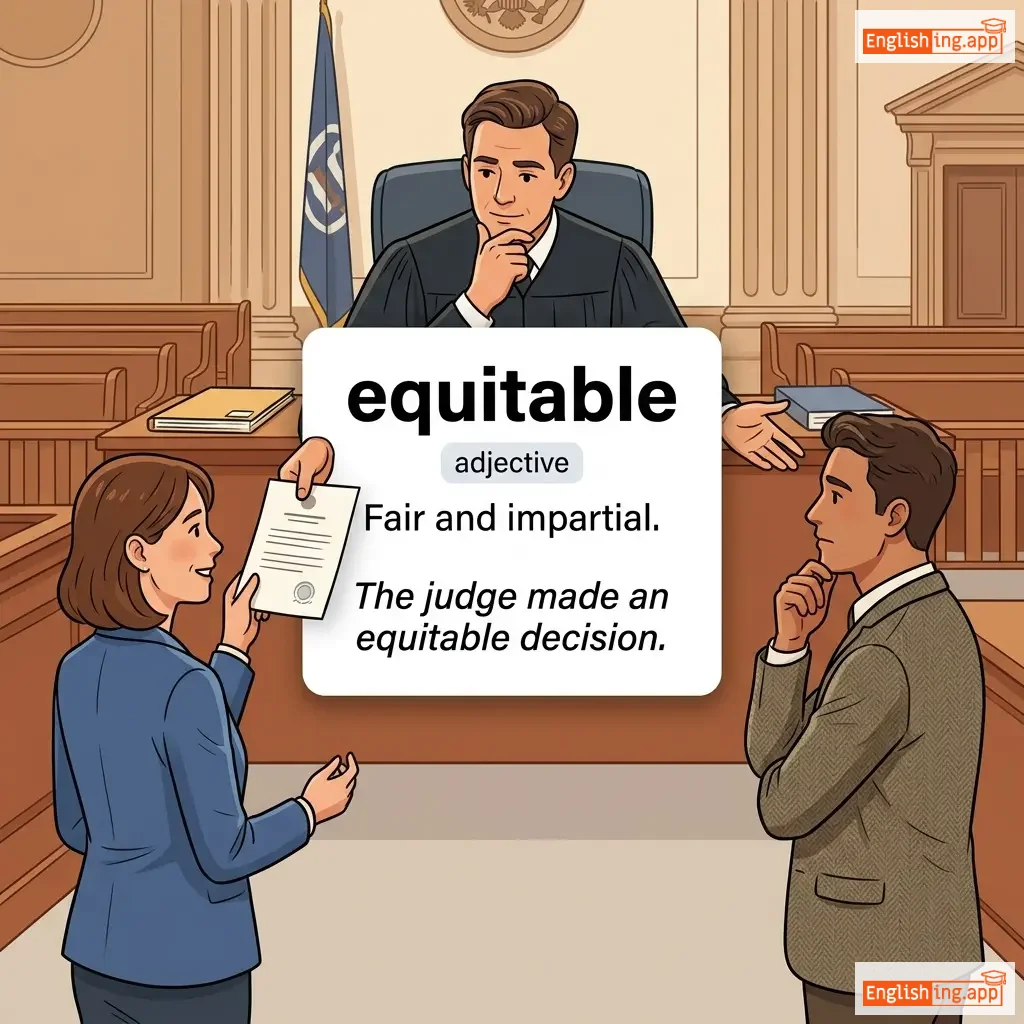
fair and impartial; just
••••••
|
The judge made an equitable decision that satisfied both parties. |
法官做出了公正的决定,满足了双方的要求。
Fǎguān zuòchūle gōngzhèng de juédìng, mǎnzúle shuāngfāng de yāoqiú.
••••••
|
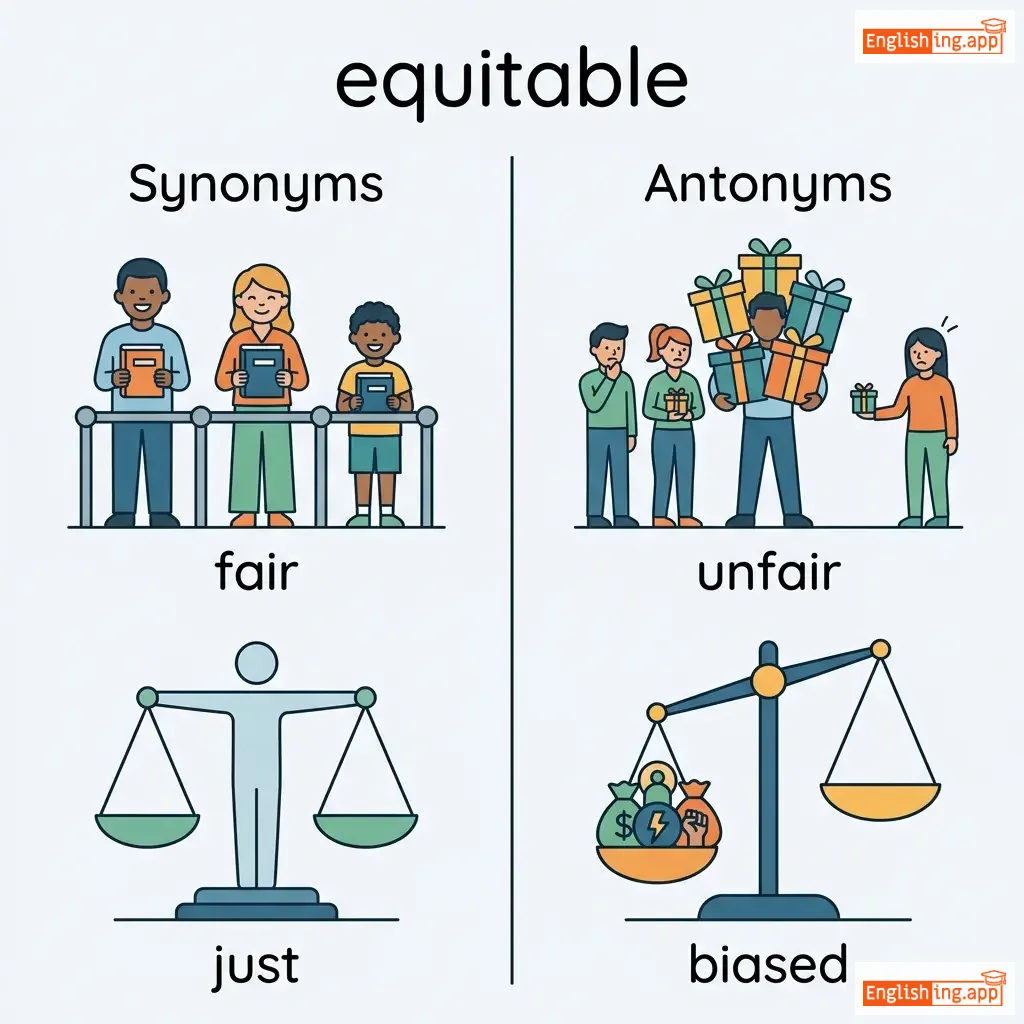
fair, just, impartial, reasonable
••••••
|
unfair, unjust, biased, inequitable
••••••
|
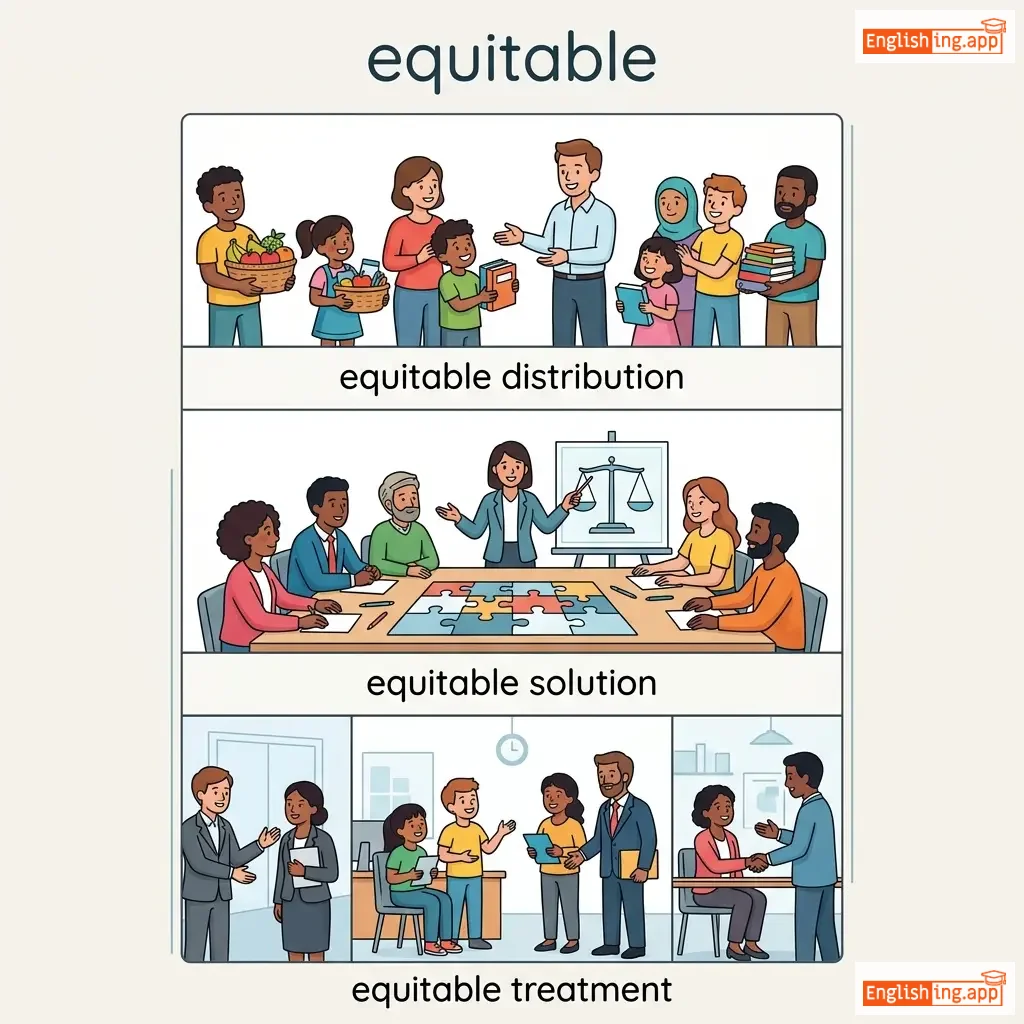
equitable distribution, equitable solution, equitable treatment
••••••
|
Equitable – Gongzheng de: ‘Equi’ 就是公正的意思。
••••••
|
|
#238
🔄
|
/ɪnˈtaɪər/
adjective
(ēntàiěr)
••••••
|
- •••••• |
完整的; 完全的; 不分割的
wánzhěng de; wánquán de; bù fēngē de
••••••
|
complete; whole; not divided or in parts
••••••
|
She read the entire book in one sitting. |
她一口气读完了整本书。
Tā yī kǒu qì dú wánle zhěng běn shū.
••••••
|
complete, whole, full, total
••••••
|
partial, incomplete, fragmented, divided
••••••
|
entire day, entire family, entire world
••••••
|
完整的世界无分割,一切都统一。
••••••
|
|
#239
🔮
|
/ɪˈven.tʃu.əl/
adjective
(事件的)
••••••
|
- •••••• |
最终的
zuìzhōng de
••••••
|
happening or existing at the end of a process; final; ultimate
••••••
|
The eventual outcome was better than expected. |
最终结果比预期的更好。
Zuìzhōng jiéguǒ bǐ yùqí de gèng hǎo.
••••••
|
final, ultimate, concluding, resulting
••••••
|
immediate, initial, current, present
••••••
|
eventual outcome, eventual success, eventual result
••••••
|
最终的结果是事件的最后的部分,'eventual' 就是最终的意思
••••••
|
|
#240
⭐
|
/ˈeksələnt/
adjective
(èksèlènt)
••••••
|
- •••••• |
卓越的;出色的;优秀的;
zhuóyuè de; chūsè de; yōuxiù de
••••••
|
extremely good; outstanding; superior
••••••
|
She received excellent grades in all her subjects.
她在所有科目中都得到了优秀的成绩。
••••••
|
她在所有科目中都得到了优秀的成绩。
Tā zài suǒyǒu kēmù zhōng dōu dédàole yōuxiù de chéngjī.
••••••
|
outstanding, superb, magnificent, brilliant
••••••
|
poor, terrible, awful, mediocre
••••••
|
excellent performance, excellent quality, excellent service, excellent condition
••••••
|
‘卓越的’意味着优秀和无与伦比的好,体现了最高水平。
••••••
|
Vocabulary Quiz
Test your vocabulary by matching words with their translations or meanings.
Login to take the quiz
Comments (0)
Share your thoughts and join the discussion.
Join the discussion by logging in
Login to CommentNo comments yet
Be the first to share your thoughts!