






Swipe left or right, or use the buttons. Tap image to zoom.
例句翻译
单词
Lesson 13Lesson 13 - 遮罩切换
|
表情符号
|
单词 | Images | 翻译 | 含义 | 例句 | 例句翻译 | 同义词 | 反义词 | 搭配词 | 助记符 |
|---|---|---|---|---|---|---|---|---|---|---|
|
#241
⭐
|
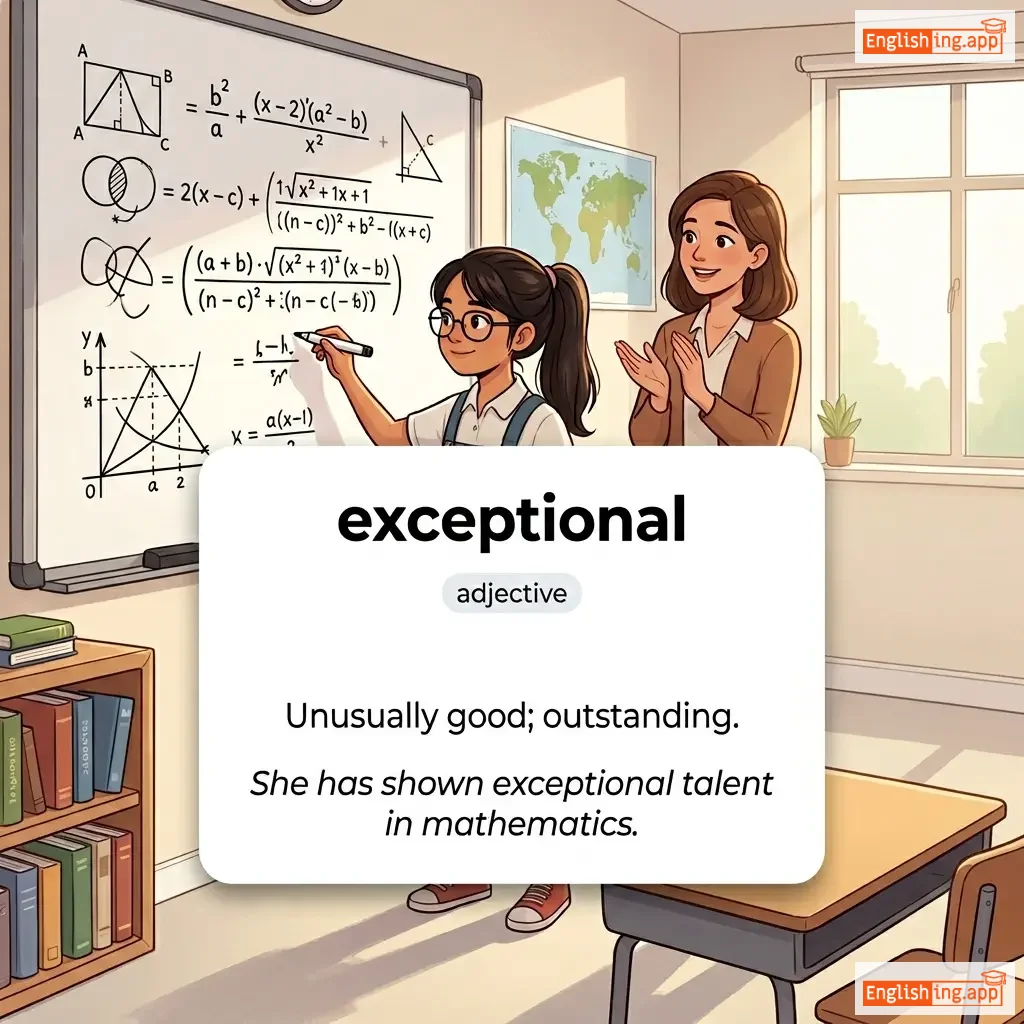
/ɪkˈsepʃənəl/
adjective
(ɪkˈsɛpʃə.nəl)
••••••
|
|
非凡的; 卓越的; 特别的
fēi fán de; zhuó yuè de; tè bié de
••••••
|
unusually good; outstanding; remarkable; special
••••••
|
Her performance was exceptional and impressed everyone. |
她的表现非常出色,给大家留下了深刻的印象。
Tā de biǎoxiàn fēicháng chū sè, gěi dàjiā liú xià le shēn kè de yìnxiàng.
••••••
|
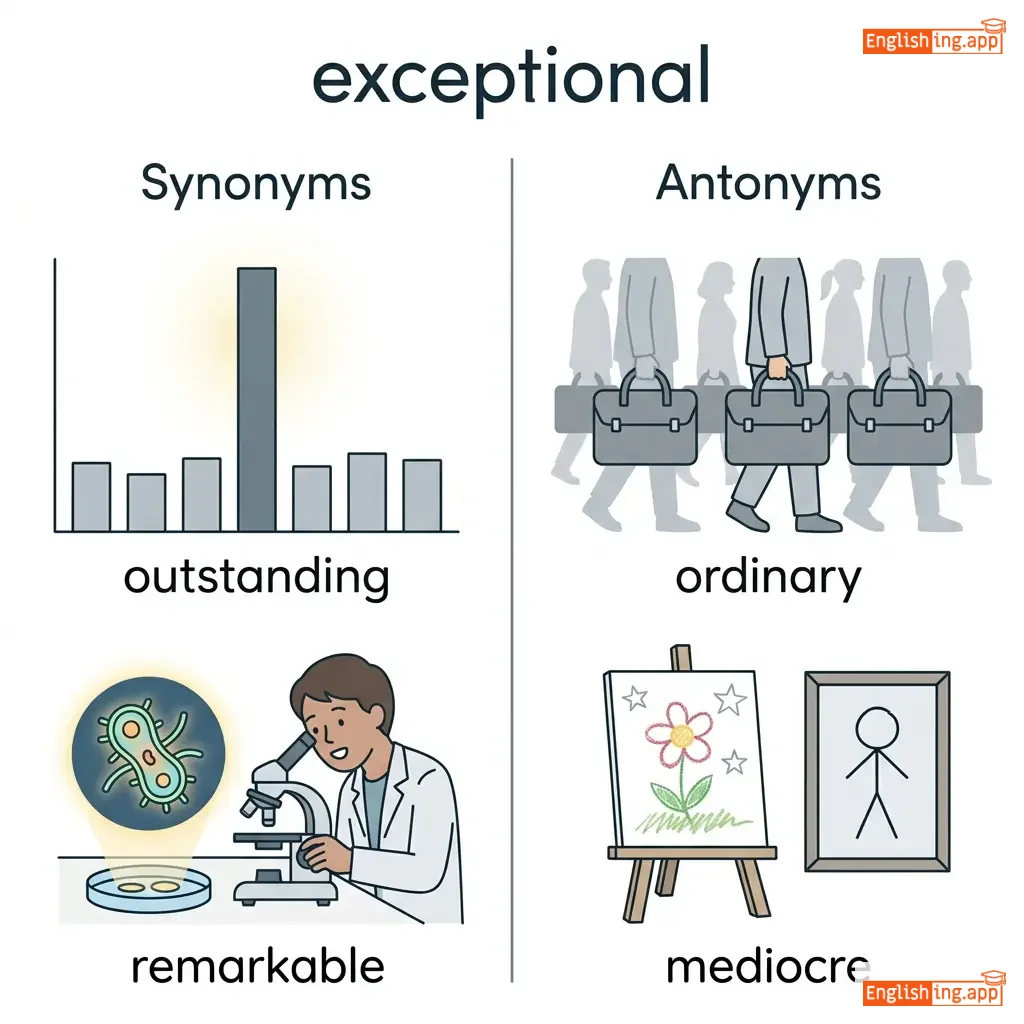
outstanding, remarkable, extraordinary, excellent
••••••
|
ordinary, common, typical, average
••••••
|
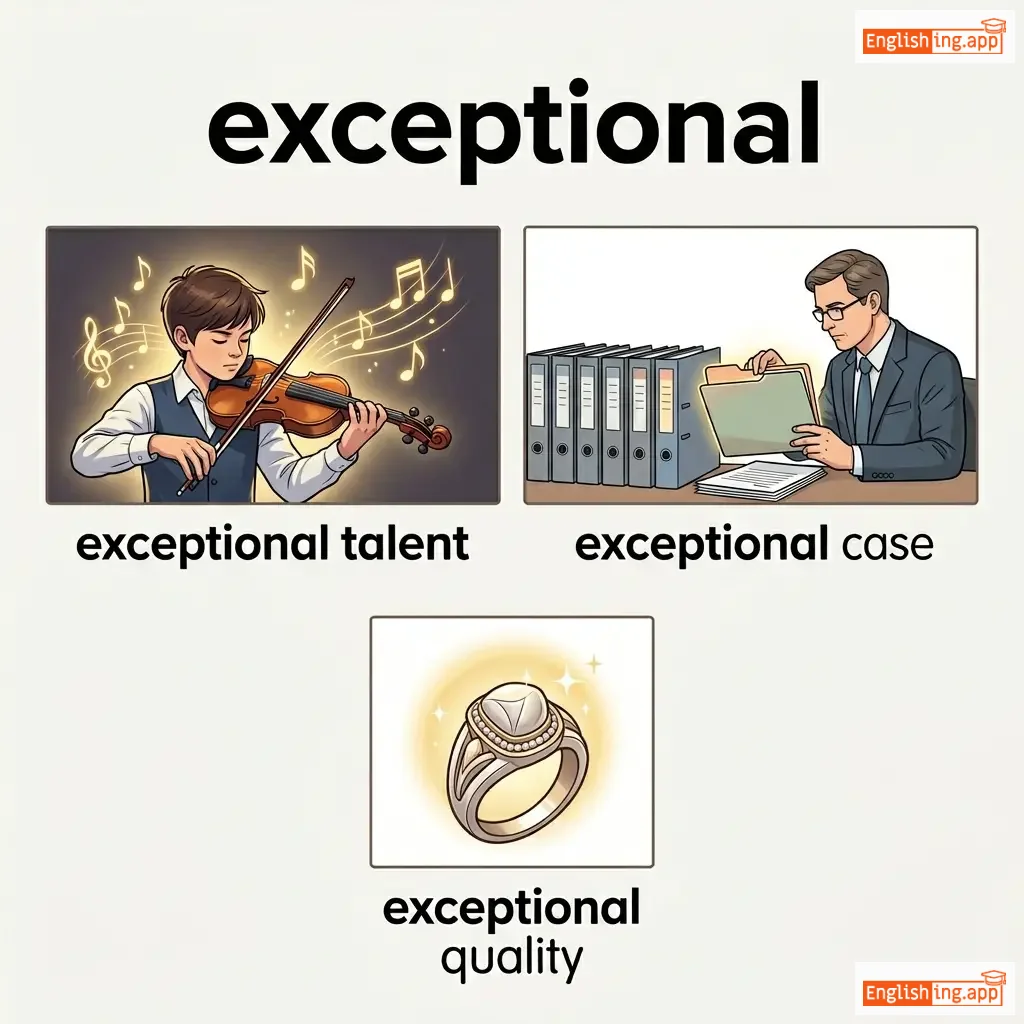
exceptional ability, exceptional circumstances, exceptional quality
••••••
|
非凡的表现令人难以忘记。
••••••
|
|
#242
🎭
|
/feɪk/
adjective
(fēikè)
••••••
|
- •••••• |
假; 人造; 伪造; 虚假的
jiǎ; rénzào; wěizào; xūjiǎ
••••••
|
not genuine; artificial; counterfeit; false
••••••
|
The painting was revealed to be a fake masterpiece.
这幅画被揭示为一幅伪造的杰作。
••••••
|
这幅画被揭示为一幅伪造的杰作。
Zhè fú huà bèi jiēshì wéi yī fú wěizào de jiézuò.
••••••
|
artificial, counterfeit, phony, false
••••••
|
real, genuine, authentic, true
••••••
|
fake news, fake smile, fake documents
••••••
|
Fake = Jiǎ, 就像假的身份证 (fake ID)
••••••
|
|
#243
⭐
|
/ɪkˈstrɔːr.dɪ.nər.i/
adjective
(非凡的)
••••••
|
- •••••• |
非凡的; 卓越的;
feifan de; zhuoyue de
••••••
|
very unusual; remarkable; going beyond what is normal or expected
••••••
|
The magician's performance was extraordinary and left everyone amazed. |
魔术师的表演非常不寻常,令所有人都感到惊讶
Moshushi de biaoyan feichang bu xunchang, ling suoyouren dou gandao jingya
••••••
|
exceptional, remarkable, outstanding, incredible
••••••
|
ordinary, common, usual, normal
••••••
|
extraordinary circumstances, extraordinary measures, extraordinary talent
••••••
|
Chinese '非凡的' means extraordinary, matching the meaning of the English word
••••••
|
|
#244
🦕
|
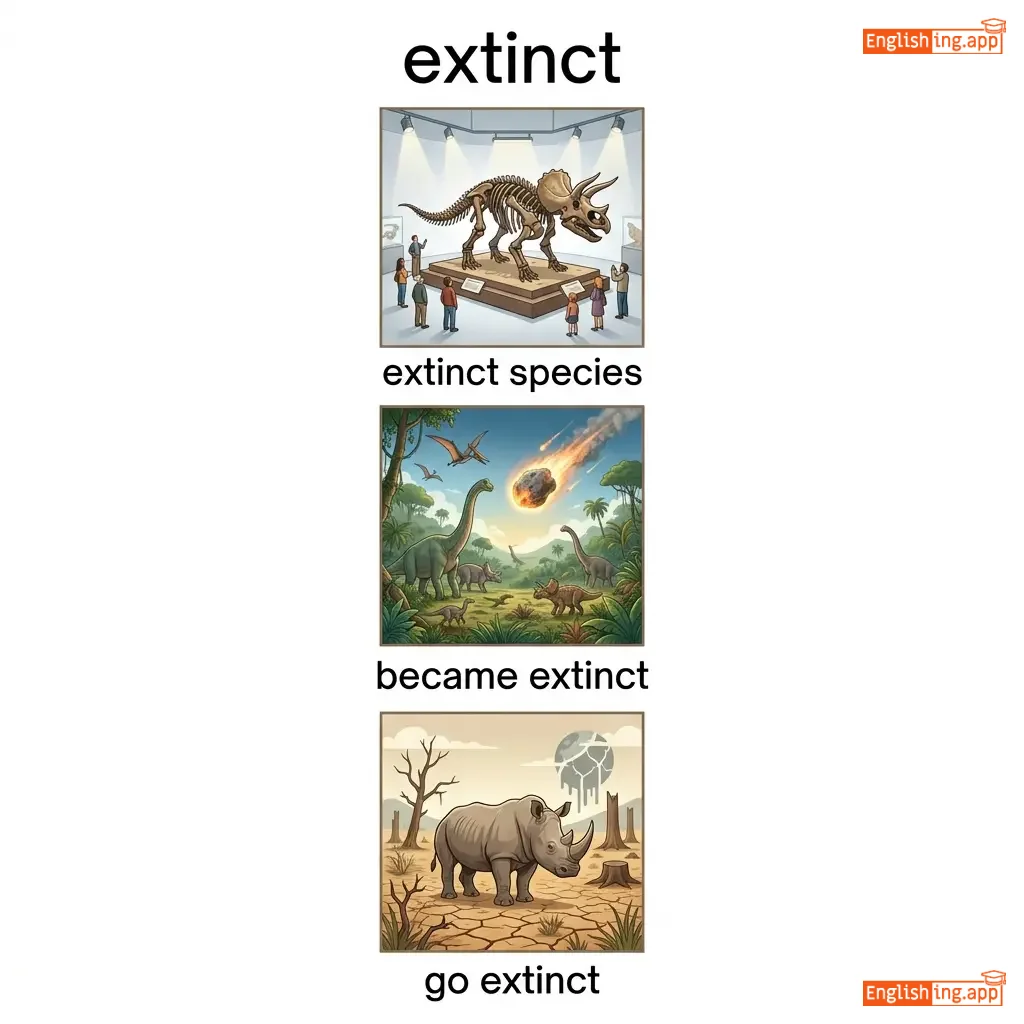
/ɪkˈstɪŋkt/
adjective
(ɪkˈstɪŋkt)
••••••
|
|
灭绝的; 绝迹的;
mièjué de; juéjì de
••••••
|
no longer in existence; having died out completely
••••••
|
The dodo bird is extinct and will never return to Earth.
渡渡鸟已经灭绝,永远不会再回到地球。
••••••
|
渡渡鸟已经灭绝,永远不会再回到地球。
Dùdù niǎo yǐjīng mièjué, yǒngyuǎn bù huì zài huídào dìqiú.
••••••
|
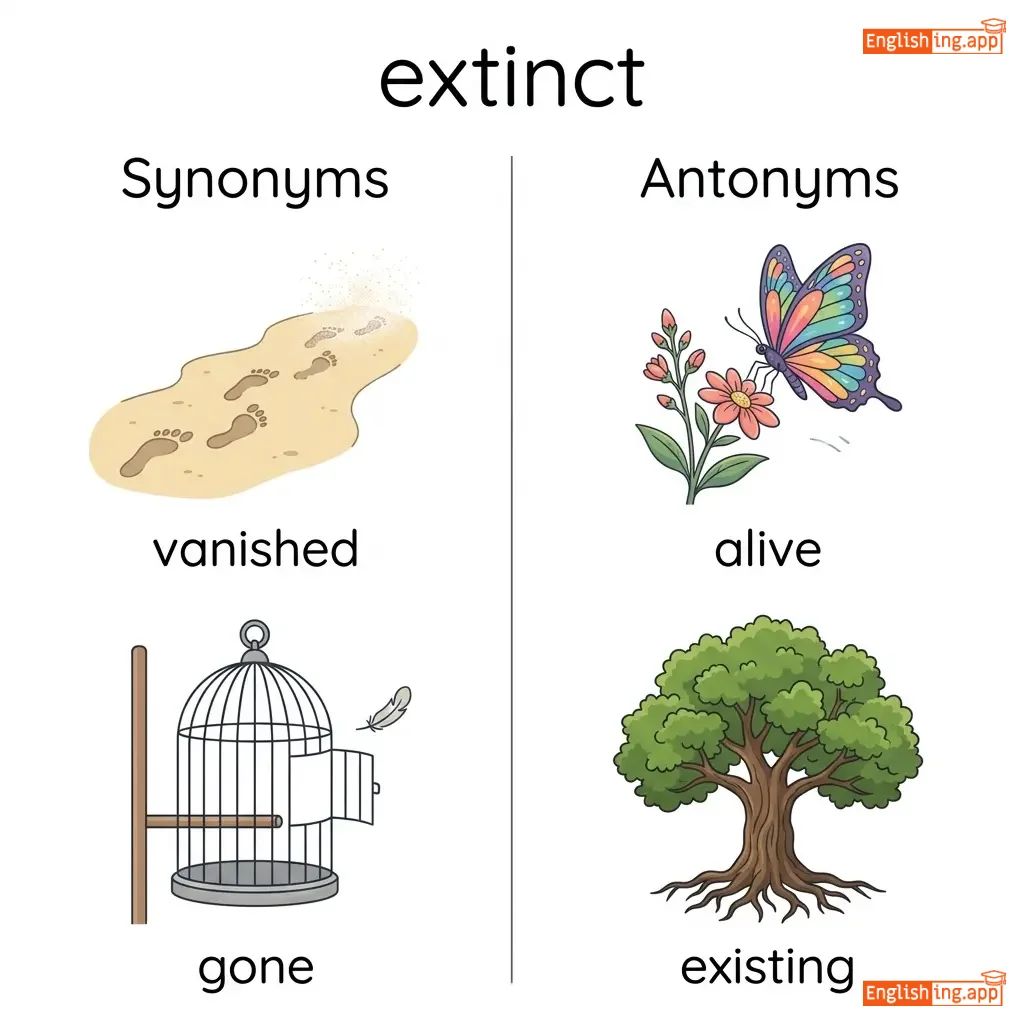
vanished, disappeared, dead, gone
••••••
|
existing, alive, surviving, thriving
••••••
|
extinct species, extinct volcano, become extinct
••••••
|
灭绝意味着永远消失,就像渡渡鸟一样。
••••••
|
|
#245
📊
|
/ɪkˈses/
adjective
(èksèss)
••••••
|
- •••••• |
过多
guoduo
••••••
|
more than the usual or necessary amount; extra
••••••
|
The excess weight in the luggage will cost extra fees.
行李中的超重将会额外收费。
••••••
|
行李中的超重将会额外收费。
Xínglǐ zhōng de chāozhòng jiāng huì éwài shōufèi.
••••••
|
extra, additional, surplus, spare
••••••
|
insufficient, lacking, deficient, inadequate
••••••
|
excess baggage, excess weight, excess capacity
••••••
|
过多意味着超出所需,像是增加额外费用!
••••••
|
|
#246
⚖️
|
/fer/
adjective
(费尔)
••••••
|
- •••••• |
公正的; 合理的; 吸引人的
gōngzhèng de; hélǐ de; xīyǐn rén de
••••••
|
just and reasonable; treating people equally; light in color; attractive
••••••
|
The judge made a fair decision in the case. |
法官在案件中做出了公正的决定。
Fǎguān zài ànjiàn zhōng zuò chūle gōngzhèng de juédìng.
••••••
|
just, equitable, impartial, reasonable
••••••
|
unfair, biased, unjust, partial
••••••
|
fair play, fair trial, fair price
••••••
|
费尔 - 公正合理的选择,像阳光一样明亮。
••••••
|
|
#247
🔥
|
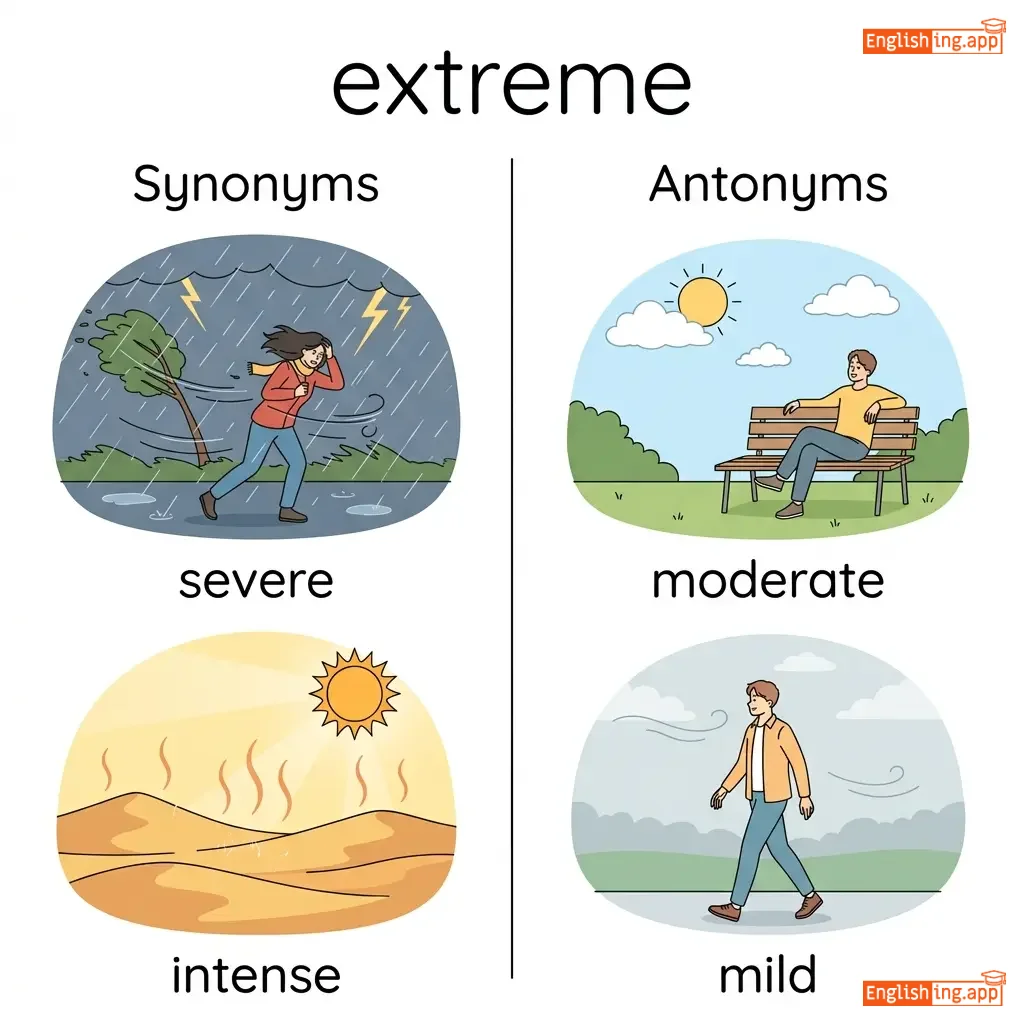
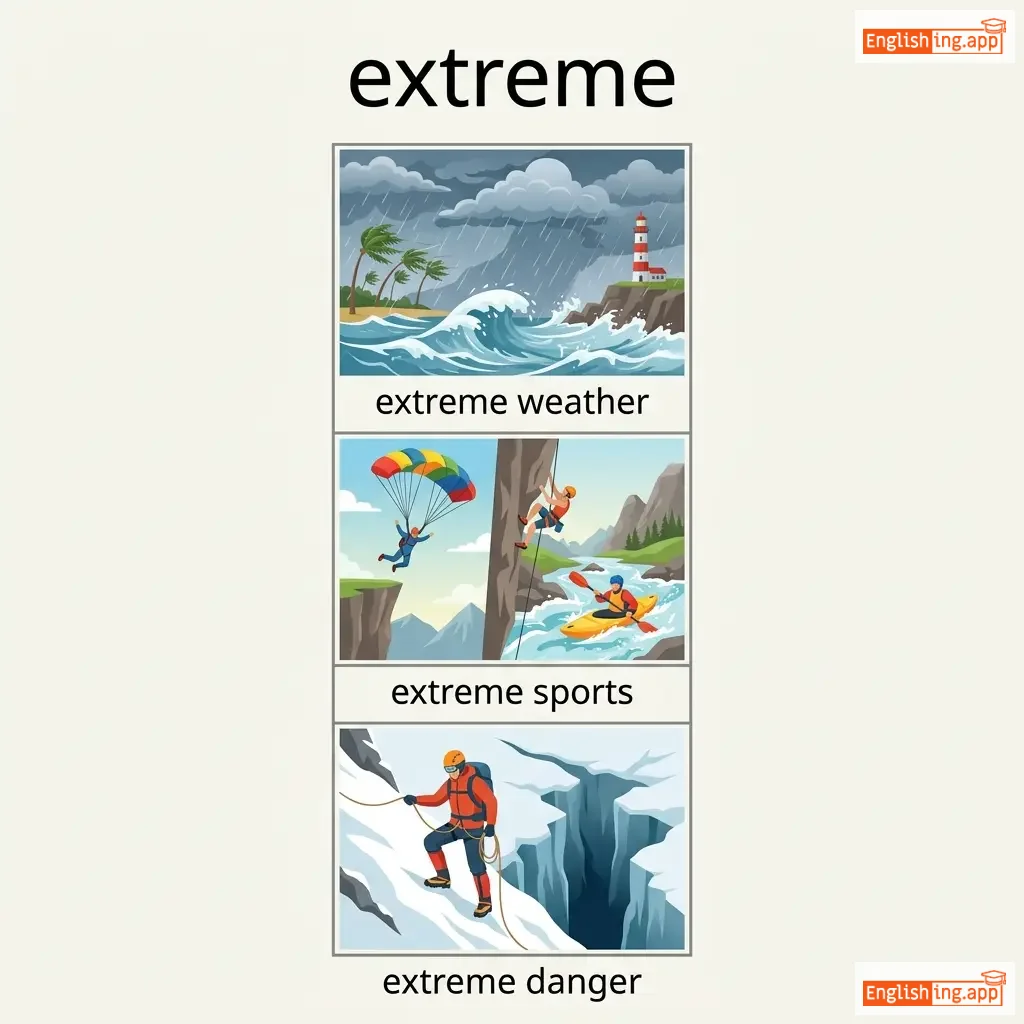
/ɪkˈstriːm/
adjective
(èksutélīm)
••••••
|
|
极端; 激进; 强烈
jíduān
••••••
|
very great in degree; furthest from the center; radical
••••••
|
The weather was extremely hot during the summer.
夏天的天气异常炎热。
••••••
|
夏天的天气异常炎热。
Xiàtiān de tiānqì yìcháng yánrè.
••••••
|
intense, severe, radical, excessive
••••••
|
moderate, mild, gentle, reasonable
••••••
|
extreme weather, extreme sports, extreme measures
••••••
|
Extreme 就是像夏天的酷热天气。
••••••
|
|
#248
💸
|
/ɪkˈstræv.ə.ɡənt/
adjective
(奢华)
••••••
|
- •••••• |
奢华
shēhuá
••••••
|
spending much more than is necessary; wasteful; lacking restraint in spending
••••••
|
His extravagant lifestyle included expensive cars and luxury vacations.
他奢华的生活方式包括昂贵的汽车和奢华的度假。
••••••
|
他奢华的生活方式包括昂贵的汽车和奢华的度假。
Tā shēhuá de shēnghuó fāngshì bāokuò ángguì de qìchē hé shēhuá de dùjià.
••••••
|
wasteful, lavish, excessive, spendthrift
••••••
|
frugal, economical, thrifty, modest
••••••
|
extravagant spending, extravagant lifestyle, extravagant claims
••••••
|
‘Shēhuá’ in Chinese is used for ‘luxurious’ and shares the same concept of ‘extravagant’ in English.
••••••
|
|
#249
📏
|
/ɪkˈsten.sɪv/
adjective
(艾克斯坦西夫)
••••••
|
- •••••• |
广泛的; 大规模的; 广阔的
guǎngfàn de; dà guīmó de; guǎngkuò de
••••••
|
covering or affecting a large area; comprehensive; wide-ranging
••••••
|
The company conducted extensive research before launching the new product. |
公司在推出新产品之前进行了广泛的研究。
Gōngsī zài tuīchū xīn chǎnpǐn zhīqián jìnxíngle guǎngfàn de yánjiū.
••••••
|
comprehensive, vast, wide-ranging, broad
••••••
|
limited, narrow, restricted, small
••••••
|
extensive research, extensive damage, extensive experience
••••••
|
Chinese '广泛' translates to 'extensive'—both cover large areas.
••••••
|
|
#250
✨
|
/ˈfæbjələs/
adjective
(fabiulas)
••••••
|
- •••••• |
极好的;不可思议的;非凡的
fabiulas
••••••
|
extremely good; wonderful; extraordinary
••••••
|
She wore a fabulous dress to the party.
她穿了一件精彩的裙子去参加派对。
••••••
|
她穿了一件精彩的裙子去参加派对。
Tā chuānle yī jiàn jīngcǎi de qúnzi qù cānjiā pàiduì.
••••••
|
wonderful, amazing, fantastic, spectacular
••••••
|
terrible, awful, ordinary, mediocre
••••••
|
fabulous wealth, fabulous dress, fabulous performance
••••••
|
Fabulous 是极好的,就像派对上精彩的裙子。
••••••
|
|
#251
🤝
|
/ˈfeɪθ.fəl/
adjective
(费斯福尔)
••••••
|
- •••••• |
忠诚的; 忠实的; 可靠的
zhongcheng de; zhongshi de; kekaode
••••••
|
loyal and committed; reliable; true to one's beliefs
••••••
|
She remained faithful to her principles throughout her career. |
她在整个职业生涯中始终忠诚于自己的原则。
ta zai zhengge zhiye shengya zhong shizhong zhongcheng yu ziji de yuanze.
••••••
|
loyal, devoted, trustworthy, reliable
••••••
|
unfaithful, disloyal, treacherous, unreliable
••••••
|
faithful friend, faithful servant, faithful dog
••••••
|
Faithful in Chinese means staying loyal to your beliefs, like a loyal friend.
••••••
|
|
#252
🔥
|
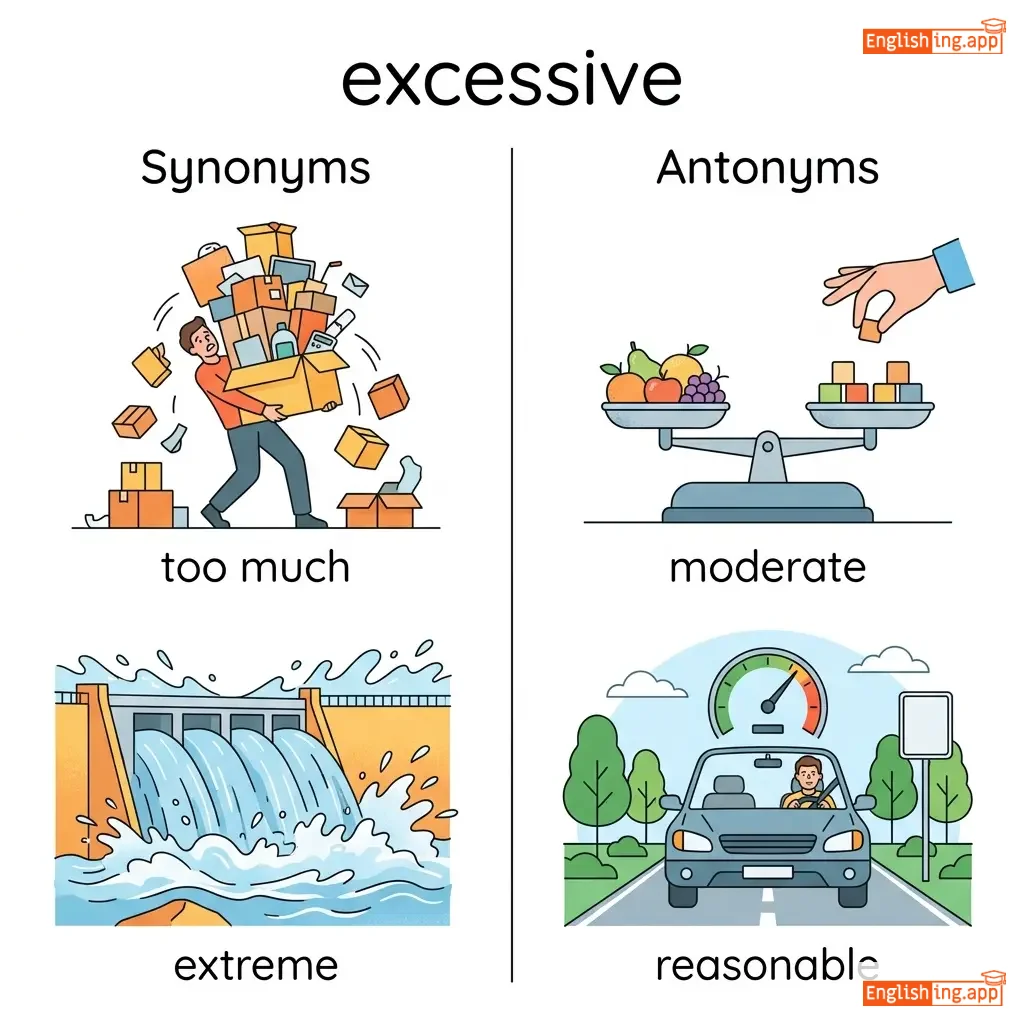
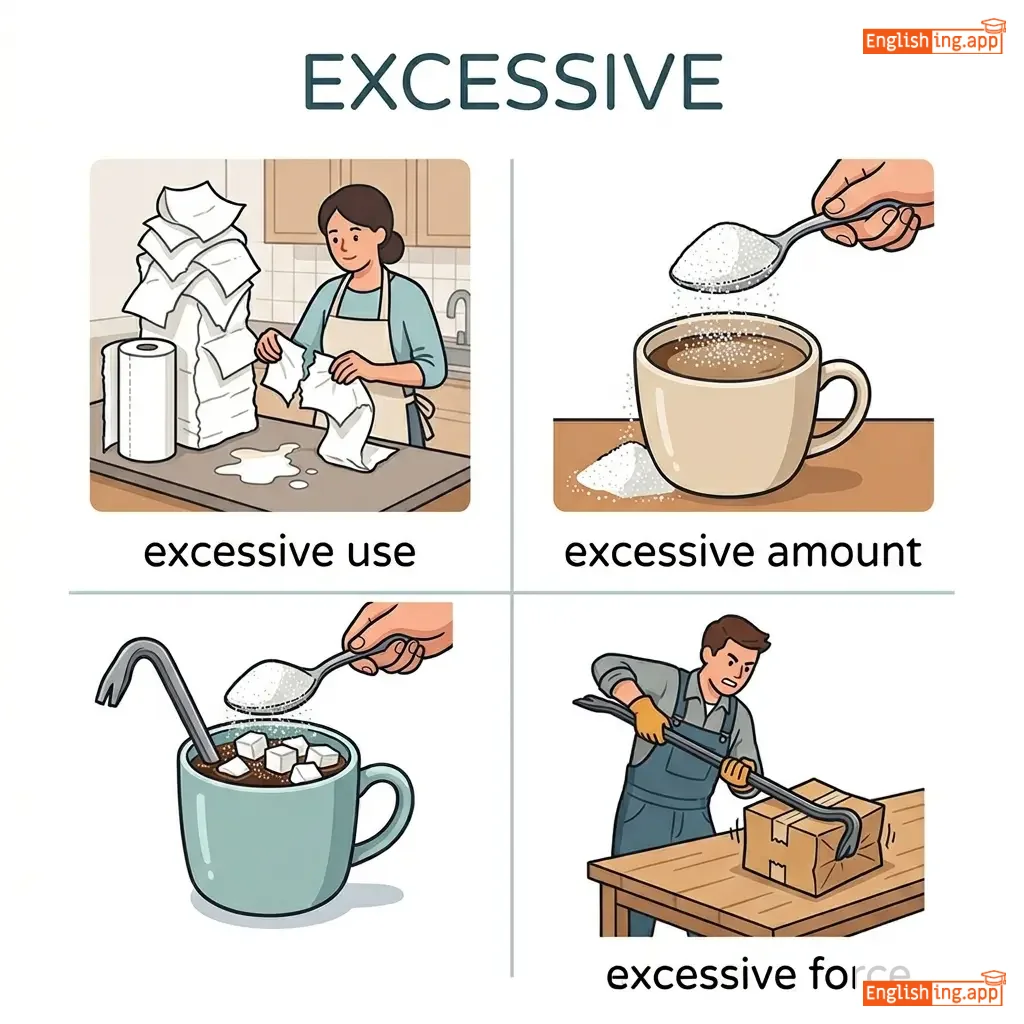
/ɪkˈsesɪv/
adjective
(èksè sīfū)
••••••
|
|
过度的;过多的;极端的
guòdù de; guò duō de; jí duān de
••••••
|
too much; more than is reasonable or acceptable; extreme
••••••
|
His excessive spending habits led to financial problems. |
他过度的消费习惯导致了财务问题。
Tā guòdù de xiāofèi xíguàn dǎozhìle cáiwù wèntí.
••••••
|
extreme, immoderate, unreasonable, extravagant
••••••
|
moderate, reasonable, restrained, limited
••••••
|
excessive heat, excessive force, excessive drinking
••••••
|
过度的花费总会带来财务问题
••••••
|
|
#253
🏠
|
/ɪkˈstɪr.i.ər/
adjective
(ěkè sī tiěr)
••••••
|
- •••••• |
外部的;外表的;外部表面
waibu de
••••••
|
relating to the outside part or surface of something; outer
••••••
|
The exterior of the building was painted in bright colors.
这座建筑的外观被涂上了鲜艳的颜色。
••••••
|
这座建筑的外观被涂上了鲜艳的颜色。
Zhe zuo jianzhu de waiguan bei tushangle xianyan de yanse.
••••••
|
outside, outer, external, surface
••••••
|
interior, inside, inner, internal
••••••
|
exterior wall, exterior design, exterior paint
••••••
|
In Chinese, '外部' means external, similar to 'Exterior' in English.
••••••
|
|
#254
😌
|
/ˈfæsaɪl/
adjective
(fasil)
••••••
|
- •••••• |
容易的; 浅显的; 缺乏深度的
fasil
••••••
|
easily achieved; superficial; lacking depth
••••••
|
His facile explanation didn't address the real problem.
他的简单解释没有解决真正的问题。
••••••
|
他的简单解释没有解决真正的问题。
tā de jiǎndān jiěshì méiyǒu jiějué zhēnzhèng de wèntí.
••••••
|
easy, simple, superficial, shallow
••••••
|
difficult, complex, profound, thorough
••••••
|
facile answer, facile solution, facile reasoning
••••••
|
Facile 就像什么都能快速完成
••••••
|
|
#255
🎉
|
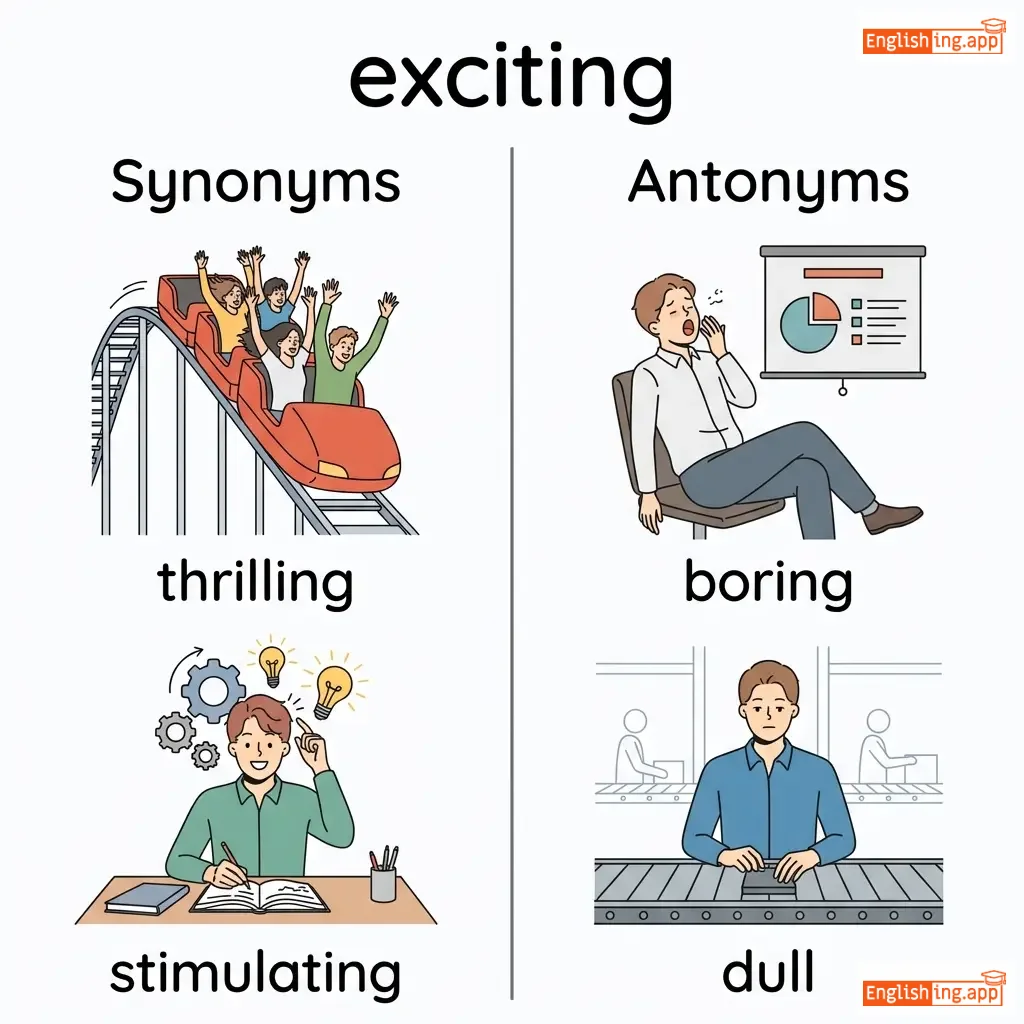
/ɪkˈsaɪtɪŋ/
adjective
(激动人心的)
••••••
|
|
令人兴奋的
lìng rén xīngfèn de
••••••
|
causing feelings of enthusiasm and eagerness; thrilling
••••••
|
The roller coaster ride was very exciting and thrilling. |
过山车非常令人兴奋和刺激。
guò shān chē fēicháng lìng rén xīngfèn hé cìjī.
••••••
|
thrilling, stimulating, exhilarating, electrifying
••••••
|
boring, dull, tedious, uninteresting
••••••
|
exciting news, exciting adventure, exciting opportunity
••••••
|
让人兴奋的roller coaster,像梦想一样激动人心
••••••
|
|
#256
❌
|
/fɔːls/
adjective
(fǎo sī)
••••••
|
- •••••• |
虚假; 错误; 欺骗性; 人造
xu jia; cuo wu; qi pian xing; ren zao
••••••
|
not true; incorrect; deceptive; artificial
••••••
|
The witness gave false testimony in court. |
证人给出了虚假的证词。
Zheng ren gei chu le xu jia de zheng ci.
••••••
|
untrue, incorrect, wrong, fake
••••••
|
true, correct, right, genuine
••••••
|
false alarm, false statement, false teeth
••••••
|
False = 虚假 (Xu jia)
••••••
|
|
#257
🔗
|
/ɪkˈstɜːr.nəl/
adjective
(ɪkˈstɜːr.nəl)
••••••
|
- •••••• |
外部的
waibu de
••••••
|
coming from or relating to the outside; not belonging to or originating from within
••••••
|
The company hired external consultants to review their business strategy. |
公司聘请了外部顾问来审查他们的商业战略。
Gongsi pinqing le waibu guwen lai shencha tamen de shangye zhanlue.
••••••
|
outside, outer, foreign, independent
••••••
|
internal, inside, domestic, native
••••••
|
external factors, external audit, external consultant
••••••
|
Waibu de means external, like external consultants hired to help from outside.
••••••
|
|
#258
🚫
|
/ɪkˈskluːdɪd/
adjective
(ikskluːdɪd)
••••••
|
- •••••• |
被排除; 被孤立
bei paichu; bei guli
••••••
|
not included; left out; barred from participation
••••••
|
He felt excluded from the group activities and conversations.
他感到被排除在小组活动和对话之外。
••••••
|
他感到被排除在小组活动和对话之外。
Ta gandao bei paichu zai xiaozu huodong he duihua zhihou.
••••••
|
omitted, left out, banned, barred
••••••
|
included, welcomed, accepted, embraced
••••••
|
excluded from, excluded member, excluded group
••••••
|
当你被排除在外时,你感到孤立无援。
••••••
|
|
#259
📊
|
/ˈfæktʃuəl/
adjective
(faktual)
••••••
|
- •••••• |
基于事实的; 真实的
jīyú shìshí de; zhēnshí de
••••••
|
based on facts; accurate; true
••••••
|
The report contains only factual information.
报告仅包含事实性的信息。
••••••
|
报告仅包含事实性的信息。
bàogào jǐn bāokuò shìshíxìng de xìnxī.
••••••
|
accurate, true, real, authentic
••••••
|
false, fictional, inaccurate, untrue
••••••
|
factual information, factual report, factual evidence
••••••
|
Chinese '事实' (shìshí) means facts, central to '事实性' meaning factual.
••••••
|
|
#260
👋
|
/fəˈmɪl.jər/
adjective
(法米利尔)
••••••
|
- •••••• |
熟悉的; 了解的; 非正式且友好的
shúxī de; liǎojiě de; fēi zhèngshì qiě yǒuhǎo de
••••••
|
well-known; easily recognized; having knowledge of; informal and friendly
••••••
|
This song sounds familiar to me.
这首歌听起来对我很熟悉。
••••••
|
这首歌听起来对我很熟悉。
Zhè shǒu gē tīng qǐlái duì wǒ hěn shúxī.
••••••
|
known, recognizable, acquainted, common
••••••
|
unfamiliar, strange, unknown, foreign
••••••
|
familiar face, familiar territory, familiar with
••••••
|
Familiar 就像你认识的亲戚,和他们在一起感觉很自然,很舒服。
••••••
|
Vocabulary Quiz
Test your vocabulary by matching words with their translations or meanings.
Login to take the quiz
Comments (0)
Share your thoughts and join the discussion.
Join the discussion by logging in
Login to CommentNo comments yet
Be the first to share your thoughts!