

Swipe left or right, or use the buttons. Tap image to zoom.
例句翻译
单词
Lesson 58Lesson 58 - 遮罩切换
|
表情符号
|
单词 | Images | 翻译 | 含义 | 例句 | 例句翻译 | 同义词 | 反义词 | 搭配词 | 助记符 |
|---|---|---|---|---|---|---|---|---|---|---|
|
#1141
🥴
|
/ˈwɒŋki/
adjective
(wóngkī)
••••••
|
- •••••• |
不稳定的; 不可靠的; 不正常工作
wongki
••••••
|
unstable; unreliable; not working properly
••••••
|
The old chair was wonky and wobbled every time someone sat on it. |
那把旧椅子不稳定,每次有人坐下时都会摇晃。
Nà bǎ jiù yǐzi bù wěn dìng, měi cì yǒu rén zuò xià shí dōu huì yáo huàng
••••••
|
unstable, shaky, unreliable, faulty
••••••
|
stable, reliable, sturdy, solid
••••••
|
wonky chair, wonky table, wonky system
••••••
|
记住,'wonky'的意思是'不稳定的',就像不稳定的椅子。
••••••
|
|
#1142
🎯
|
/ˈwʊd biː/
adjective
(wʊd biː)
••••••
|
- •••••• |
有前途的; 可能的;
yǒu qiántú de; kěnéng de;
••••••
|
prospective; intending to be; aspiring
••••••
|
The would-be actor practiced his lines every day.
这个未来的演员每天都在练习台词。
••••••
|
这个有前途的演员每天都在练习台词。
Zhège yǒu qiántú de yǎnyuán měitiān dōu zài liànxí táicí.
••••••
|
prospective, aspiring, potential, future
••••••
|
actual, current, existing, established
••••••
|
would-be actor, would-be politician, would-be writer
••••••
|
有前途的演员每天努力练习以取得成功。
••••••
|
|
#1143
🔥
|
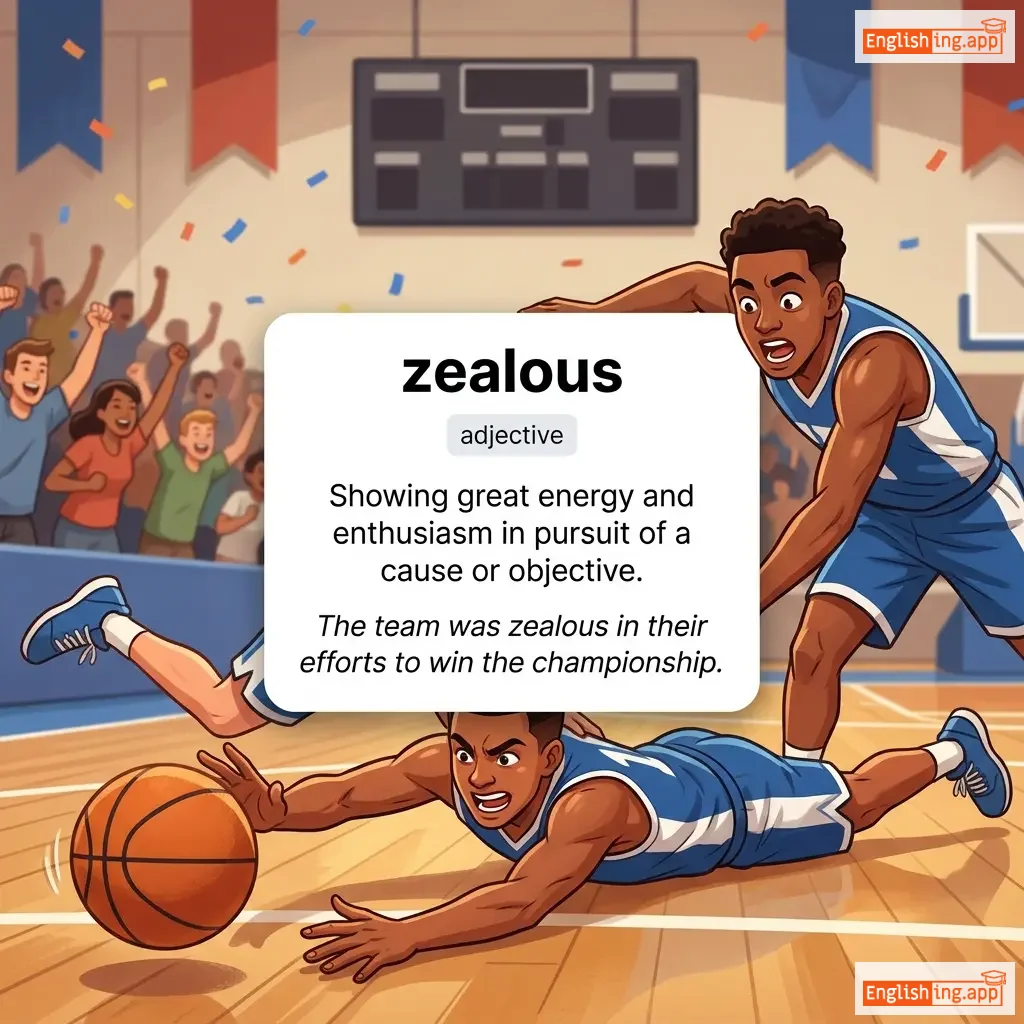
/ˈzel.əs/
adjective
(泽洛斯)
••••••
|
|
热心的; 狂热的
rèxīn de, kuángrè de
••••••
|
showing great energy or passion in pursuit of something; enthusiastic
••••••
|
She was zealous about environmental protection and attended every rally. |
她对环境保护充满热情,参加了每一场集会。
Tā duì huánjìng bǎohù chōngmǎn rèqíng, cānjiāle měi yī chǎng jíhuì.
••••••
|
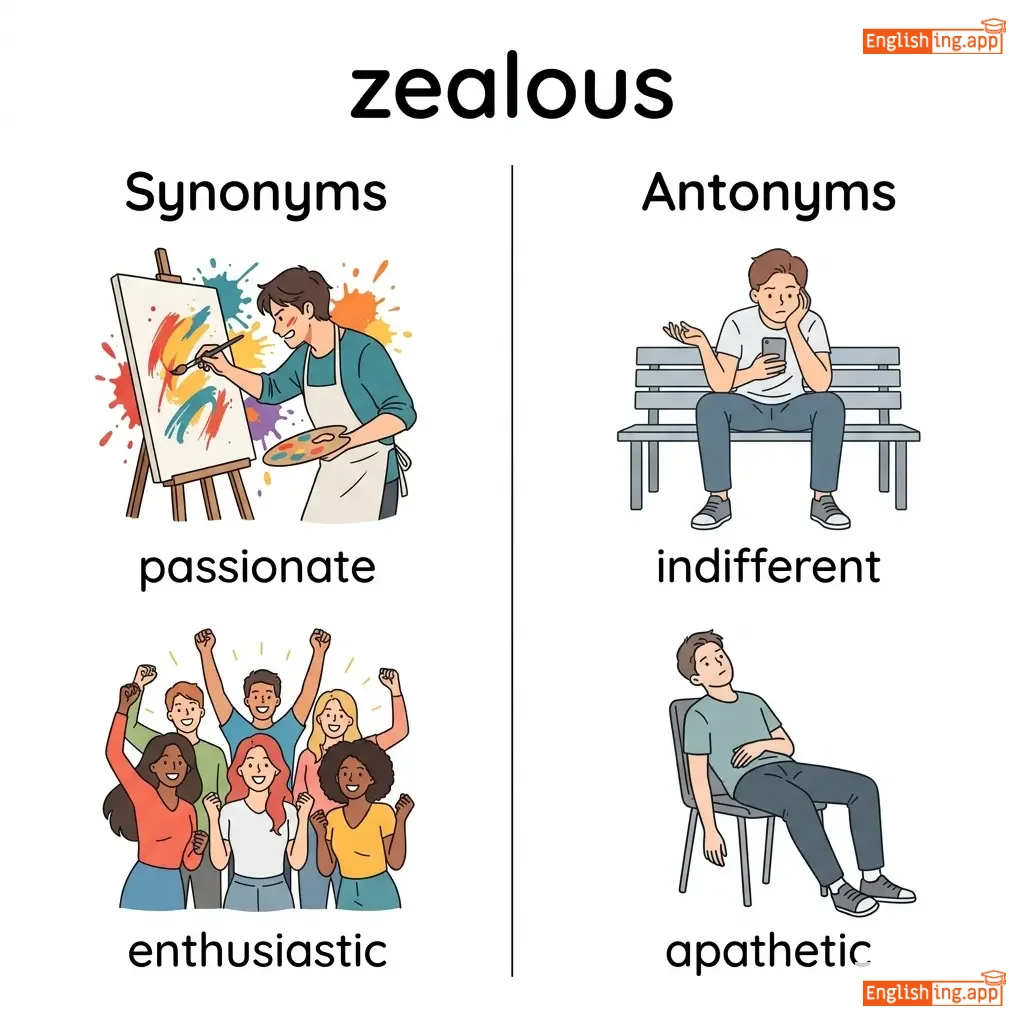
passionate, enthusiastic, fervent, ardent, devoted
••••••
|
apathetic, indifferent, unenthusiastic, lackadaisical
••••••
|
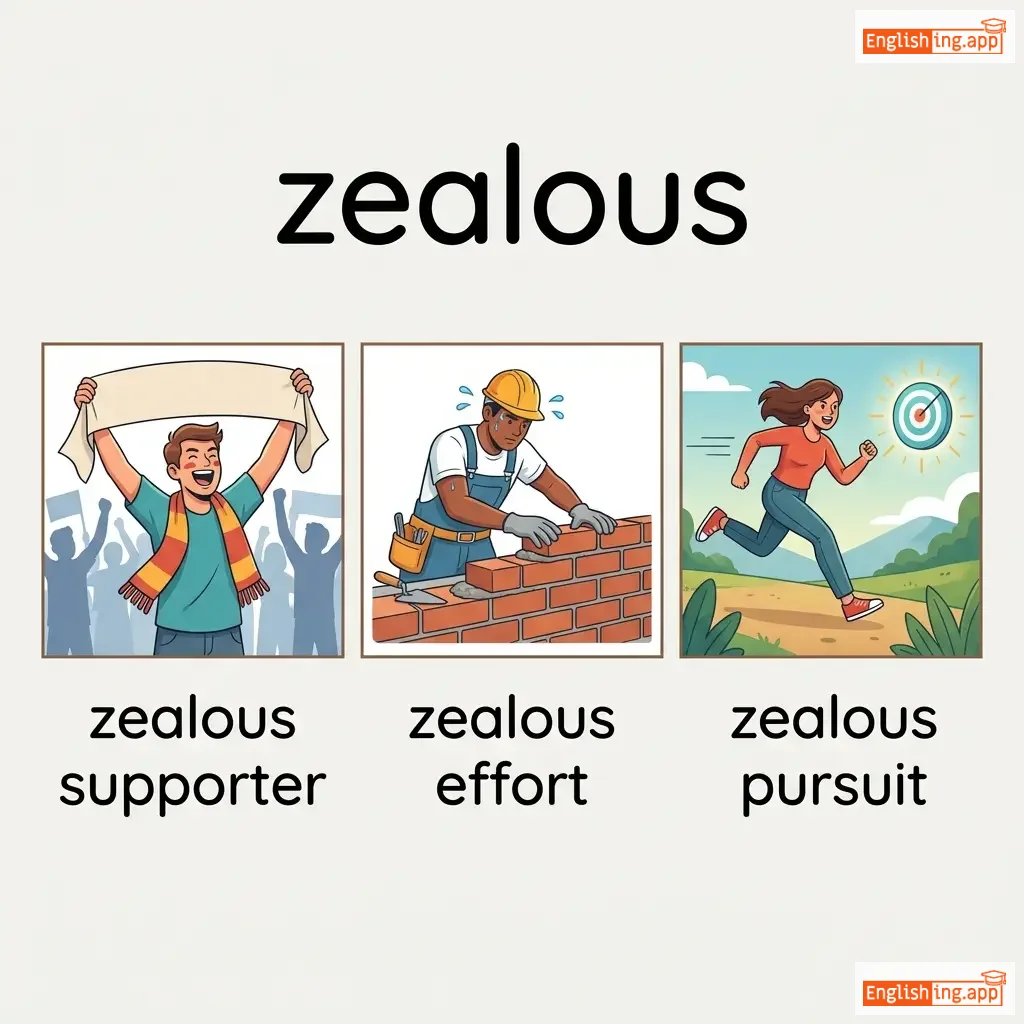
zealous advocate, zealous supporter, zealous pursuit, zealous defender
••••••
|
Zealous (热心的) = 对某事表现出极大的热情
••••••
|
|
#1144
✅
|
/ˈwɜːrkəbəl/
adjective
(wǔr kè bō)
••••••
|
- •••••• |
可行的; 实用的
ke xing de; shi yong de
••••••
|
capable of being done or put into effect; practical
••••••
|
We need a workable solution to solve this problem quickly. |
我们需要一个可行的解决方案来迅速解决这个问题。
Wǒmen xūyào yīgè kěxíng de jiějué fāng'àn lái xùnsù jiějué zhège wèntí.
••••••
|
practical, feasible, viable, achievable
••••••
|
unworkable, impractical, impossible, unfeasible
••••••
|
workable solution, workable plan, workable agreement
••••••
|
Workable 是可行且实用的!
••••••
|
|
#1145
😢
|
/ˈretʃɪd/
adjective
(rèchíde)
••••••
|
- •••••• |
悲惨的; 可怜的; 质量差的
bēicǎn de; kělián de; zhìliàng chà de
••••••
|
very unhappy; miserable; of poor quality
••••••
|
The refugees lived in wretched conditions. |
难民们生活在悲惨的条件下。
nànmínmen shēnghuó zài bēicǎn de tiáojiàn xià.
••••••
|
miserable, pitiful, pathetic, deplorable
••••••
|
happy, fortunate, excellent, wonderful
••••••
|
wretched conditions, wretched life, wretched state
••••••
|
No •••••• |
|
#1146
🌍
|
/ˈzoʊ.nəl/
adjective
(zonal)
••••••
|
- •••••• |
区域的
quyu de
••••••
|
relating to or arranged in zones; of, relating to, or having the form of a zone
••••••
|
The city implemented a zonal parking system to manage traffic congestion.
城市实施了分区停车系统来管理交通拥堵。
••••••
|
城市实施了分区停车系统来管理交通拥堵。
Chengshi shishi le fenqu tingche xitong lai guanli jiaotong yongdu.
••••••
|
regional, territorial, sectional, area-based
••••••
|
global, universal, general, widespread
••••••
|
zonal system, zonal planning, zonal restrictions, zonal boundaries
••••••
|
Zonal类似于区域划分,比如分区停车系统。
••••••
|
|
#1147
😔
|
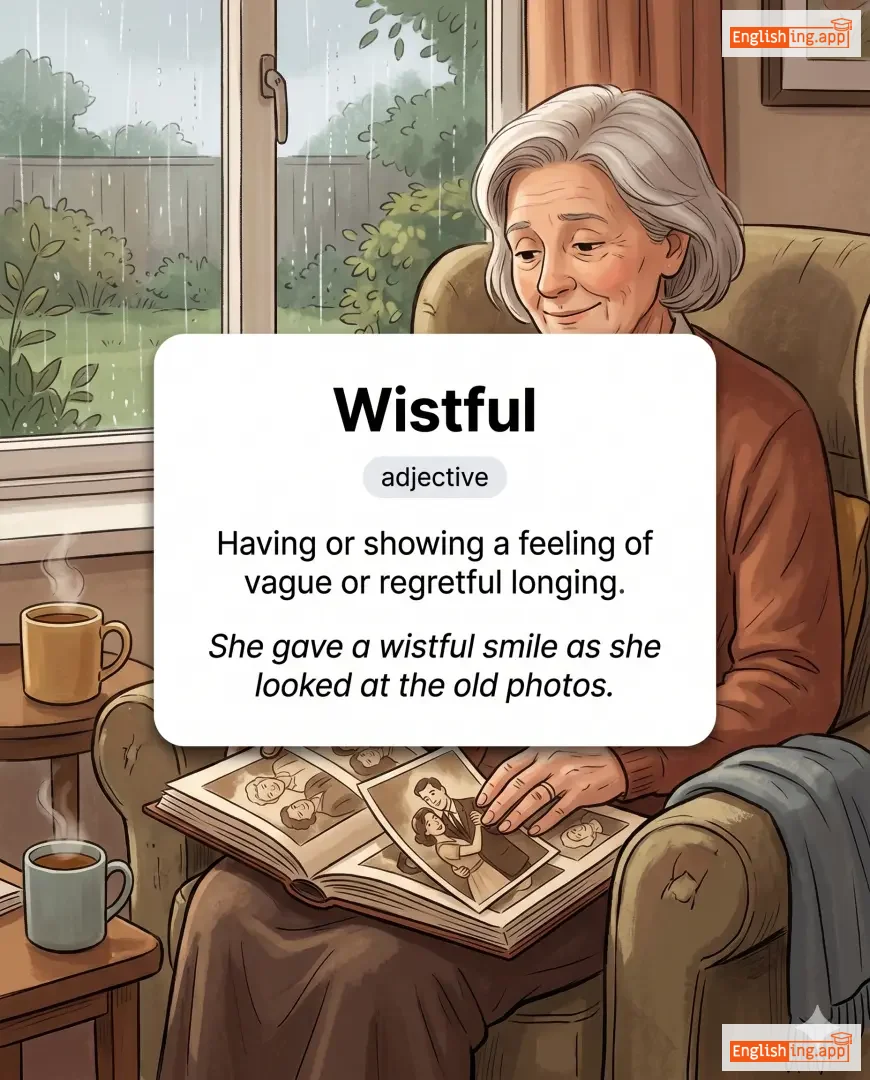
/ˈwɪst.fəl/
adjective
(威斯特福尔)
••••••
|
|
渴望的; 忧郁的
kewang de; youyu de
••••••
|
having a feeling of longing or yearning; melancholy
••••••
|
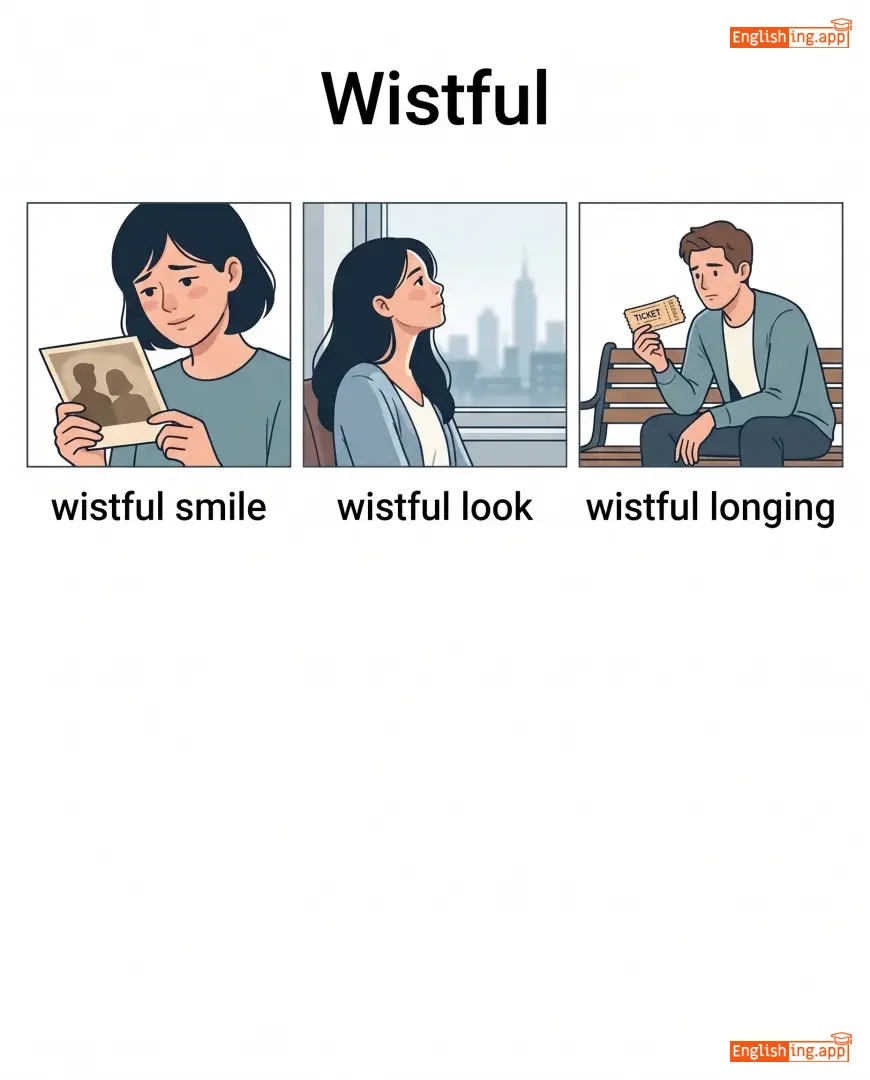
She gave a wistful smile when remembering her childhood days.
她在回忆起童年时,露出了一丝惆怅的微笑。
••••••
|
她在回忆起童年时,露出了一丝惆怅的微笑。
Ta zai huiyi qi tongnian shi, luchu le yi si chou chang de weixiao.
••••••
|
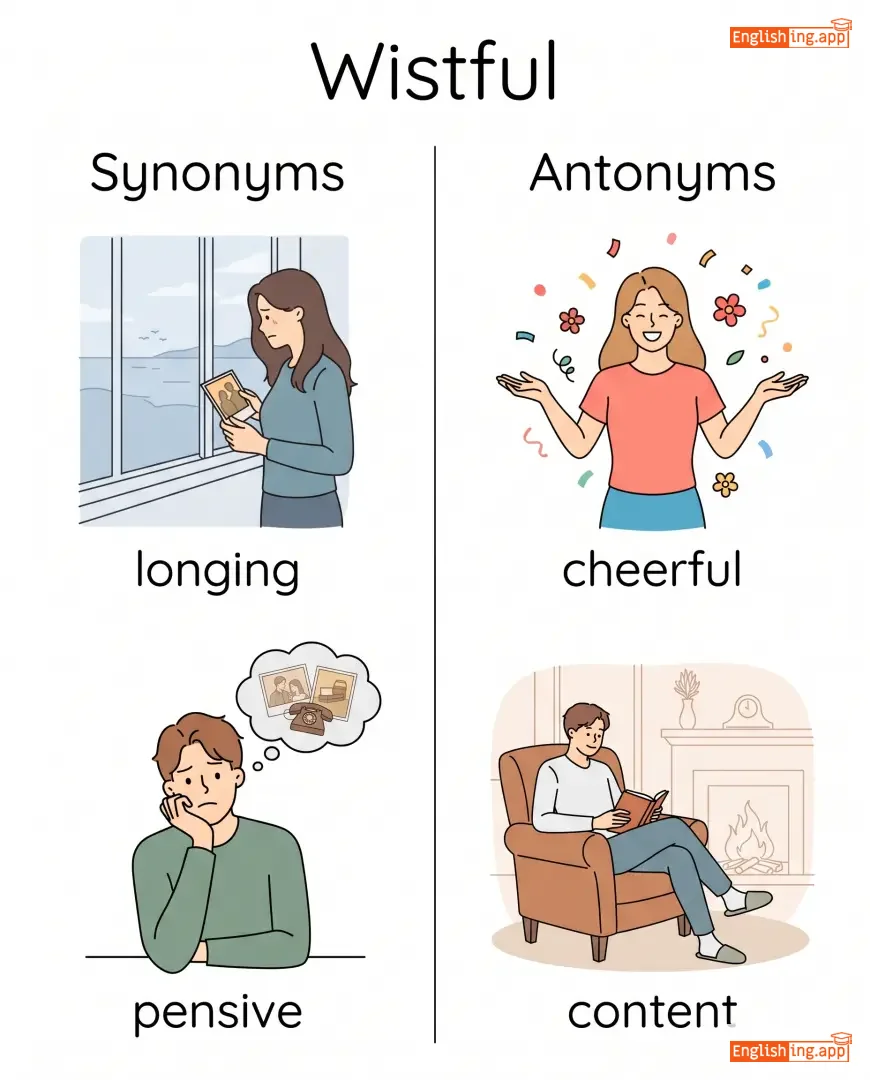
yearning, melancholy, nostalgic, pensive, longing
••••••
|
cheerful, content, satisfied, happy, joyful
••••••
|
wistful smile, wistful look, wistful expression, wistful mood
••••••
|
Wistful = 一种悲伤的微笑,回忆过去的美好时光。
••••••
|
|
#1148
😟
|
/ˈwʌrisəm/
adjective
(wōlìsīm)
••••••
|
- •••••• |
令人担忧的; 令人不安的
lìng rén dānyōu de; lìng rén bù'ān de
••••••
|
causing anxiety or concern; troubling
••••••
|
The student's declining grades were worrisome to his parents. |
学生的成绩下降让他的父母感到担忧。
Xuéshēng de chéngjī xiàjiàng ràng tā de fùmǔ gǎndào dānyōu.
••••••
|
troubling, concerning, alarming, disturbing
••••••
|
reassuring, comforting, encouraging, relieving
••••••
|
worrisome trend, worrisome sign, worrisome behavior
••••••
|
令人担忧的情况就像是成绩下降的学生,worrisome的感觉。
••••••
|
|
#1149
🟡
|
/ˈjeloʊ/
adjective
(yīlóu)
••••••
|
- •••••• |
黄色的; 胆小的
huángsè de; dǎnxiǎo de
••••••
|
having the color of the sun or gold; cowardly
••••••
|
The yellow flowers bloomed in spring.
黄色的花在春天盛开。
••••••
|
黄色的花在春天盛开。
huángsè de huā zài chūntiān shèngkāi.
••••••
|
golden, amber, lemon, canary
••••••
|
blue, purple, green, red
••••••
|
yellow light, yellow pages, yellow card
••••••
|
黄色是太阳的颜色,也用来描述胆小的人 (胆小的).
••••••
|
|
#1150
🤪
|
/ˈwɪt.ləs/
adjective
(威特莱斯)
••••••
|
- •••••• |
愚蠢的; 无知的; 没有智慧的
yúchǔn de; wúzhī de; méiyǒu zhìhuì de
••••••
|
lacking intelligence or wisdom; foolish
••••••
|
His witless remarks during the meeting embarrassed everyone present. |
他在会议中的愚蠢言论让所有在场的人都感到尴尬。
Tā zài huìyì zhōng de yúchǔn yánlùn ràng suǒyǒu zàichǎng de rén dōu gǎndào gāngà
••••••
|
foolish, stupid, mindless, senseless, brainless
••••••
|
intelligent, wise, clever, smart, brilliant
••••••
|
witless behavior, witless comment, witless person, witless action
••••••
|
没有'智慧'(wit)的就是'witless'!
••••••
|
|
#1151
🗑️
|
/ˈwɜːrθləs/
adjective
(wèrthlès)
••••••
|
- •••••• |
毫无价值的; 无用的
háo wú jià zhí de; wú yòng de
••••••
|
having no value; useless
••••••
|
The old computer became worthless after the new software updates. |
在新软件更新后,旧电脑变得毫无价值。
zài xīn ruǎn jiàn gēngxīn hòu, jiù diàn nǎo biàn dé háo wú jià zhí.
••••••
|
valueless, useless, pointless, futile
••••••
|
valuable, useful, precious, worthwhile
••••••
|
worthless item, worthless currency, worthless effort
••••••
|
A 'worthless' item in Chinese is '毫无价值的' (without value).
••••••
|
|
#1152
👶
|
/jʌŋ/
adjective
(yáng)
••••••
|
- •••••• |
年轻; 最近
niánqīng; zuìjìn
••••••
|
having lived for a short time; not old; recent
••••••
|
The young tree needs more water to grow. |
年轻的树需要更多水才能生长。
niánqīng de shù xūyào gèng duō shuǐ cáinéng shēngzhǎng.
••••••
|
youthful, juvenile, adolescent, new
••••••
|
old, elderly, aged, mature
••••••
|
young people, young age, young adult
••••••
|
Young 和 年轻发音相似
••••••
|
|
#1153
😄
|
/ˈwɪt.i/
adjective
(wìtì)
••••••
|
- •••••• |
机智的; 有趣的
jīzhì de; yǒuqù de
••••••
|
having or showing quick intelligence; amusing in a clever way
••••••
|
Her witty response to the critic's question impressed the entire audience. |
她机智的回答让批评者的问题给整个观众留下了深刻的印象。
Tā jīzhì de huídá ràng pīpíng zhě de wèntí gěi zhěnggè guānzhòng liúxiàle shēnkè de yìnxiàng.
••••••
|
clever, humorous, funny, sharp, quick-witted
••••••
|
dull, boring, humorless, witless, stupid
••••••
|
witty remark, witty comment, witty person, witty response
••••••
|
Witty is the quick spark that catches every eye!
••••••
|
|
#1154
🏆
|
/ˈwɜːrði/
adjective
(wɜːrði)
••••••
|
- •••••• |
值得; 配得上; 尊重的;
zhíde; pèi dé shàng; zūnzhòng de;
••••••
|
deserving respect or attention; having merit
••••••
|
Her charitable work made her worthy of the humanitarian award.
她的慈善工作使她配得上人道主义奖。
••••••
|
她的慈善工作使她配得上人道主义奖。
Tā de císhàn gōngzuò shǐ tā pèi dé shàng réndàozhǔyì jiǎng.
••••••
|
deserving, meritorious, commendable, admirable
••••••
|
unworthy, undeserving, contemptible, disgraceful
••••••
|
worthy cause, worthy opponent, worthy effort
••••••
|
worthy = 值得, 他配得上奖励
••••••
|
|
#1155
✨
|
/ˈjuːθfəl/
adjective
(yūthfūl)
••••••
|
- •••••• |
年轻的; 充满活力和新鲜感
niánqīng de; chōngmǎn huólì hé xīnxiān gǎn
••••••
|
having the qualities of youth; energetic and fresh
••••••
|
Her youthful energy impressed everyone at work. |
她的青春活力给工作上的每个人留下了深刻印象。
tā de qīngchūn huólì gěi gōngzuò shàng de měi gè rén liúxiàle shēnkè yìnxiàng.
••••••
|
energetic, vigorous, fresh, spirited
••••••
|
aged, worn, tired, elderly
••••••
|
youthful appearance, youthful energy, youthful spirit
••••••
|
Youthful = 年轻的,像年轻人一样充满活力!
••••••
|
Vocabulary Quiz
Test your vocabulary by matching words with their translations or meanings.
Login to take the quiz
Comments (0)
Share your thoughts and join the discussion.
Join the discussion by logging in
Login to CommentNo comments yet
Be the first to share your thoughts!