


Swipe left or right, or use the buttons. Tap image to zoom.
例句翻译
单词
Lesson 18Lesson 18 - 遮罩切换
|
表情符号
|
单词 | Images | 翻译 | 含义 | 例句 | 例句翻译 | 同义词 | 反义词 | 搭配词 | 助记符 |
|---|---|---|---|---|---|---|---|---|---|---|
|
#341
🏛️
|
/hɪˈstɔːrɪk/
adjective
(历史的)
••••••
|
|
历史的
lishide
••••••
|
relating to history; famous or important in history; having great and lasting importance
••••••
|
The historic building was preserved as a national monument.
这座历史建筑被保存为国家纪念碑。
••••••
|
这座历史建筑被保存为国家纪念碑。
Zhezuo lishide jianzhu bei baocun wei guojia jinianbei.
••••••
|
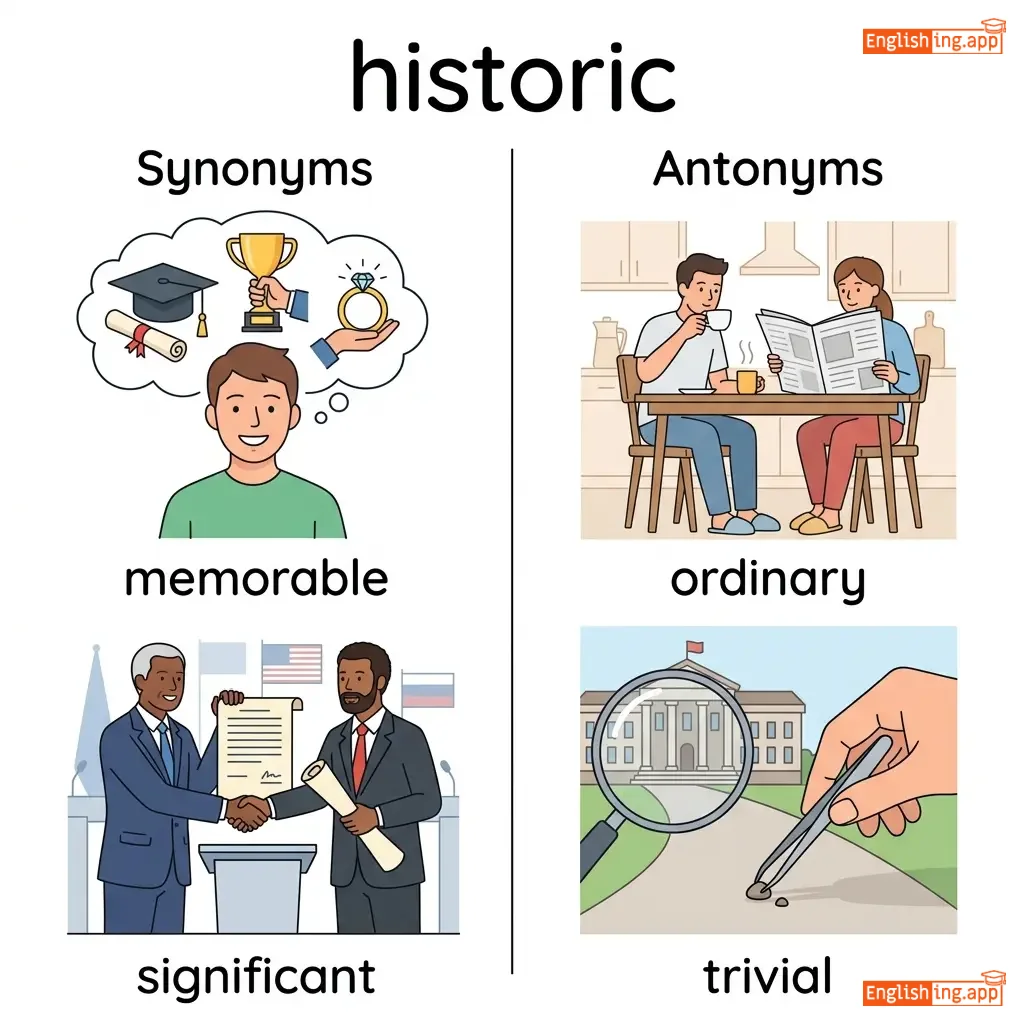
famous, significant, notable, memorable
••••••
|
modern, contemporary, insignificant, unimportant
••••••
|
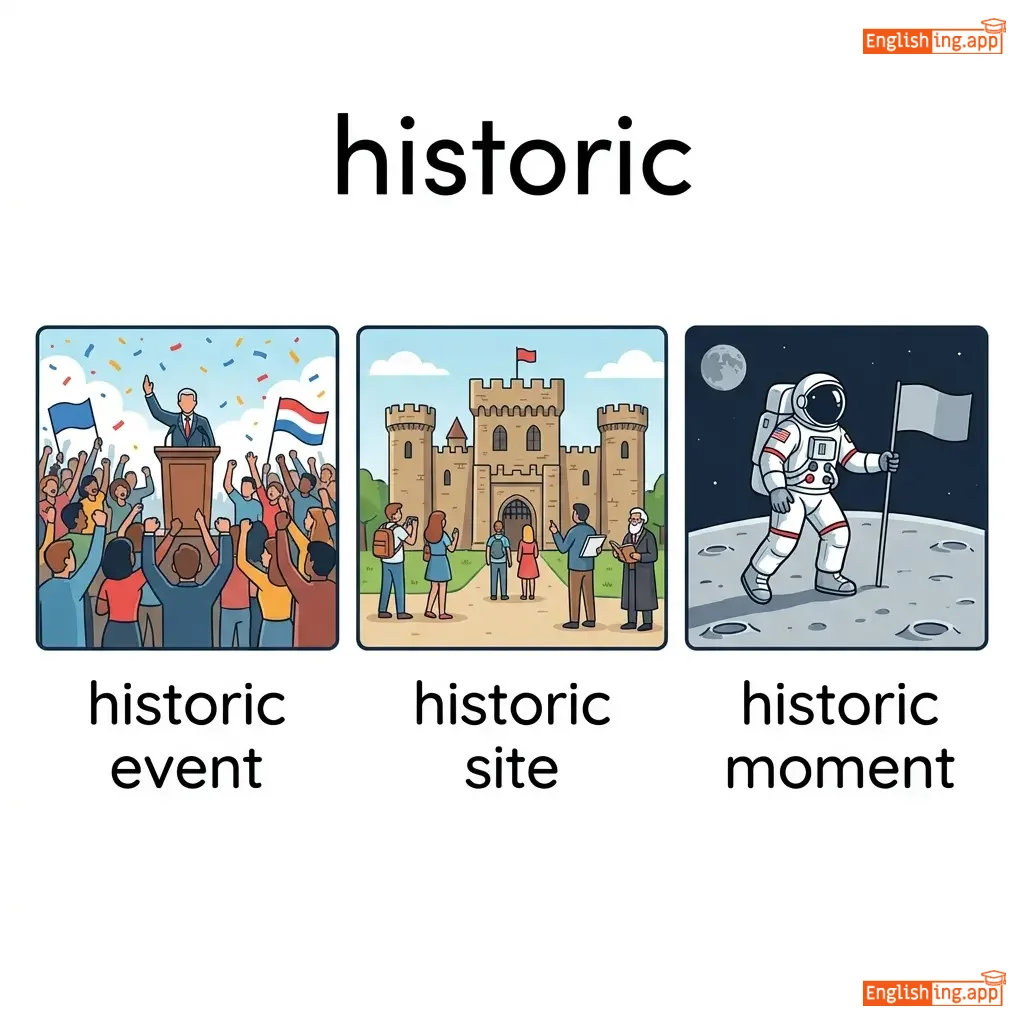
historic moment, historic building, historic event, historic site
••••••
|
历史的 — 类似于历史事件的重要性。
••••••
|
|
#342
😋
|
/ˈhʌŋɡri/
adjective
(hánglì)
••••••
|
- •••••• |
饥饿的
jī è de
••••••
|
feeling the need for food; having a strong desire or craving
••••••
|
I am very hungry after working all day.
我工作了一整天后非常饿。
••••••
|
我工作了一整天后非常饿。
Wǒ gōngzuòle yī zhěng tiān hòu fēicháng è.
••••••
|
starving, famished, ravenous, peckish
••••••
|
full, satisfied, satiated
••••••
|
hungry for success, go hungry, hungry stomach
••••••
|
饥饿 = 饥 + 饿
••••••
|
|
#343
🏠😢
|
/ˈhoʊmˌsɪk/
adjective
(hōm-sīk)
••••••
|
- •••••• |
思乡; 思念家园和家人
sī xiāng; sī niàn jiā yuán hé jiā rén
••••••
|
feeling sad because you are away from home; longing for one's home and family
••••••
|
She felt homesick during her first week at college.
她在大学的第一周感到思乡。
••••••
|
她在大学的第一周感到思乡。
Tā zài dàxué de dì yī zhōu gǎndào sī xiāng.
••••••
|
nostalgic, longing, yearning
••••••
|
content, settled, at home
••••••
|
feel homesick, get homesick, homesick for home
••••••
|
思乡就是在你离开家时感到心里空空的。
••••••
|
|
#344
😠
|
/ˈhɒs.taɪl/
adjective
(hàosītàilè)
••••••
|
- •••••• |
敌对的; 具有攻击性的; 对抗性的;
dí duì de; jù yǒu gōng jī xìng de; duì kàng xìng de
••••••
|
unfriendly; aggressive; antagonistic;
••••••
|
The hostile environment made it difficult to work. |
敌对环境让工作变得更加困难。
díduì huánjìng ràng gōngzuò biàn dé gèngjiā kùnnán.
••••••
|
aggressive, unfriendly, antagonistic, belligerent
••••••
|
friendly, welcoming, peaceful, amicable
••••••
|
hostile environment, hostile takeover, hostile attitude
••••••
|
Hostile = 敌对的环境让工作变得像战场一样艰难。
••••••
|
|
#345
🤧
|
/hɔːrs/
adjective
(hǒsī)
••••••
|
- •••••• |
沙哑或粗哑的声音; 因大声喊叫或生病而变沙哑
sha ya huo cu ya de sheng yin; yin da sheng han jiao huo sheng bing er bian sha ya
••••••
|
rough or harsh in sound; having a rough voice from shouting or illness
••••••
|
His voice became hoarse after shouting at the concert. |
他的声音在音乐会后变得沙哑。
Tā de shēngyīn zài yīnyuè huì hòu biàn dé shā yǎ.
••••••
|
rough, harsh, croaky, raspy
••••••
|
clear, smooth, melodious, sweet
••••••
|
hoarse voice, hoarse whisper, hoarse cough, hoarse throat
••••••
|
zh: 'cu ya' sounds rough, helping to remember hoarse
••••••
|
|
#346
😤
|
/ˌhɪpəˈkrɪtɪkəl/
adjective
(hīpòkè lǐkāo)
••••••
|
- •••••• |
虚伪的
xūwěi de
••••••
|
behaving in a way that contradicts one's stated beliefs or values
••••••
|
It's hypocritical to preach honesty while lying yourself.
tā shì jǐròu de, tǐyàn zhēnzhèng zhèngchéng.
••••••
|
在讲诚实的同时撒谎是虚伪的。
zài jiǎng chéngshí de tóngshí sāhuǎng shì xūwěi de
••••••
|
two-faced, insincere, dishonest, duplicitous
••••••
|
sincere, genuine, honest, authentic
••••••
|
hypocritical behavior, hypocritical attitude, hypocritical statement
••••••
|
虚伪就是自己做的与说的截然不同
••••••
|
|
#347
🔥
|
/hɒt/
adjective
(hè)
••••••
|
- •••••• |
热的; 温暖的; 灼热的;
rè de; wēnnuǎn de; zhuórè de
••••••
|
having high temperature; warm; heated;
••••••
|
The coffee is too hot to drink. |
咖啡太热了,不能喝。
kāfēi tài rè le, bù néng hē
••••••
|
warm, heated, burning, scorching
••••••
|
cold, cool, chilly, freezing
••••••
|
hot weather, hot food, hot water
••••••
|
手握一杯热咖啡,仿佛太阳在手
••••••
|
|
#348
🌟😊
|
/ˈhoʊpfəl/
adjective
(houpfūl)
••••••
|
- •••••• |
充满希望
chōngmǎn xīwàng
••••••
|
feeling or inspiring optimism about a future event; confident; optimistic
••••••
|
He remained hopeful despite the challenges.
尽管面临挑战,他依然充满希望。
••••••
|
尽管面临挑战,他依然充满希望。
Jǐnguǎn miànlín tiǎozhàn, tā yīrán chōngmǎn xīwàng.
••••••
|
optimistic, positive, confident
••••••
|
hopeless, pessimistic, despairing
••••••
|
hopeful sign, remain hopeful, hopeful outlook
••••••
|
希望让我们面对挑战
••••••
|
|
#349
😔💔
|
/ˈhoʊpləs/
adjective
(霍普莱斯)
••••••
|
- •••••• |
绝望的; 没有希望的
juéwàng de; méiyǒu xīwàng de
••••••
|
feeling or causing despair about something; without hope; desperate
••••••
|
The situation seemed hopeless until help arrived. |
直到帮助到来之前,情况看起来毫无希望。
Zhídào bāngzhù dàolái zhīqián, qíngkuàng kàn qǐlái háowú xīwàng.
••••••
|
desperate, despairing, impossible
••••••
|
hopeful, optimistic, promising
••••••
|
hopeless situation, feel hopeless, hopeless case
••••••
|
Hopeless - 当一切变得‘毫无希望’,我们才会感到绝望。
••••••
|
|
#350
🙏
|
/ˈhʌm.bəl/
adjective
(哈姆布尔)
••••••
|
- •••••• |
谦虚的
humble
••••••
|
modest; not proud; unassuming;
••••••
|
Despite his success, he remained humble and kind.
尽管他取得了成功,他仍然保持谦虚和善良。
••••••
|
尽管他取得了成功,他仍然保持谦虚和善良。
jinguan ta qude le chenggong ta rengran baochi qianxu he shanliang
••••••
|
modest, meek, unassuming, unpretentious
••••••
|
arrogant, proud, boastful, conceited
••••••
|
humble person, humble beginnings, humble opinion
••••••
|
Humble = 谦虚的心, 想象一个小人有大心, keep calm and be kind
••••••
|
|
#351
🕳️
|
/ˈhɑlːoʊ/
adjective
(哈洛)
••••••
|
- •••••• |
空的; 中空的;
kong de; zhong kong de;
••••••
|
having an empty space inside; lacking substance or meaning; insincere
••••••
|
The hollow tree trunk provided shelter for small animals.
空心树干为小动物提供了庇护。
••••••
|
空心树干为小动物提供了庇护。
Kongxin shu gan wei xiao dongwu tigong le bihù.
••••••
|
empty, vacant, void, concave
••••••
|
solid, full, dense, compact
••••••
|
hollow tree, hollow sound, hollow promise, hollow victory
••••••
|
空心在中文中意味着空的,就像一个空心的树干。
••••••
|
|
#352
🧊
|
/ˈaɪsi/
adjective
(aìxī)
••••••
|
- •••••• |
冰冷的; 极冷的; 敌对的
bīng lěng de; jí lěng de; dí duì de
••••••
|
extremely cold; covered with ice; unfriendly or hostile
••••••
|
The icy wind made everyone shiver.
冰冷的风让每个人都颤抖。
••••••
|
冰冷的风让每个人都颤抖。
Bīng lěng de fēng ràng měi gè rén dōu chàn dǒu
••••••
|
freezing, cold, frigid, frosty
••••••
|
warm, hot, friendly, welcoming
••••••
|
icy cold, icy stare, icy road
••••••
|
Icy like ice that freezes you to shiver (冰冷如冰)
••••••
|
|
#353
😱👹
|
/ˈhɔːrəbəl/
adjective
(可怕的)
••••••
|
- •••••• |
可怕的; 恐怖的; 骇人的;
kěpà de; kǒngbù de; hàirén de
••••••
|
causing or likely to cause horror; shocking; terrible; extremely unpleasant
••••••
|
The accident was a horrible sight to witness. |
这场事故是一个可怕的景象,令人无法忍受。
Zhè chǎng shìgù shì yīgè kěpà de jǐngxiàng, lìng rén wúfǎ rěnshòu.
••••••
|
terrible, awful, dreadful
••••••
|
wonderful, pleasant, delightful
••••••
|
horrible accident, horrible smell, horrible experience
••••••
|
Imagine the horrible event that strikes terror and leaves a lasting impact.
••••••
|
|
#354
💧
|
/ˈhjuː.mɪd/
adjective
(海皮尼斯)
••••••
|
- •••••• |
潮湿的; 湿润的
cháoshī de; shīrùn de
••••••
|
containing moisture; damp; moist;
••••••
|
The humid climate makes it feel hotter than it actually is. |
潮湿的气候使得气温感觉比实际更高。
cháo shī de qì hòu shǐ dé qì wēn gǎn jué bǐ shí jì gèng gāo.
••••••
|
moist, damp, muggy, sticky
••••••
|
dry, arid, dehydrated
••••••
|
humid weather, humid climate, humid conditions
••••••
|
中文: 潮湿的天气让你觉得更热。
••••••
|
|
#355
✨
|
/ˈhoʊli/
adjective
(圣洁)
••••••
|
- •••••• |
神圣的;献给上帝或宗教目的的;道德上和精神上杰出的
shensheng de; xian gei shangdi huo zongjiao mudi de; daode shang he jingshen shang jiedu de
••••••
|
sacred; dedicated to God or religious purposes; morally and spiritually excellent
••••••
|
The holy shrine attracts thousands of pilgrims every year.
圣地每年吸引成千上万的朝圣者。
••••••
|
圣地每年吸引成千上万的朝圣者。
Shengdi mei nian xian yin cheng qian shang wan de chaoshengzhe.
••••••
|
sacred, divine, blessed, consecrated
••••••
|
profane, unholy, secular, mundane
••••••
|
holy place, holy water, holy book, holy ground
••••••
|
Remember 'shensheng' as the sacred temple attracting pilgrims.
••••••
|
|
#356
✨
|
/ˌaɪdiəˈlɪstɪk/
adjective
(āi dì yǎo lì sī tí kè)
••••••
|
- •••••• |
理想主义的
lǐ xiǎng zhǔ yì de
••••••
|
pursuing high principles or ideals; unrealistically optimistic
••••••
|
She has an idealistic view of changing the world. |
她对改变世界有着理想主义的看法。
Tā duì gǎi biàn shì jiè yǒu zhe lǐ xiǎng zhǔ yì de kàn fǎ.
••••••
|
optimistic, visionary, utopian, romantic
••••••
|
realistic, practical, cynical, pessimistic
••••••
|
idealistic young person, idealistic goals, idealistic vision
••••••
|
追随理想,但保持现实。
••••••
|
|
#357
🏠🤗
|
/hɑːˈspɪtəbəl/
adjective
(hóspitābù)
••••••
|
- •••••• |
友好且热情地接待陌生人或客人; 热情好客
yǒuhǎo qiě rèqíng de jiēdài mòshēngrén huò kèrén; rèqíng hǎokè
••••••
|
friendly and welcoming to strangers or guests; generous in receiving guests
••••••
|
The local people were very hospitable to the tourists. |
当地人对游客非常热情好客。
Dāngdì rén duì yóukè fēicháng rèqíng hǎokè.
••••••
|
welcoming, friendly, generous
••••••
|
inhospitable, unwelcoming, hostile
••••••
|
hospitable host, hospitable environment, hospitable people
••••••
|
像接待亲朋好友一样,热情接待每一位来客。
••••••
|
|
#358
🏠
|
/ˈhoʊmli/
adjective
(hōng-lì)
••••••
|
- •••••• |
简单舒适;没有虚饰;外表朴素;温馨亲切
jiǎn dān shū shì; méi yǒu xū shì; wài biǎo pǔ sù; wēn xīn qīn qiè
••••••
|
simple and comfortable; unpretentious; plain in appearance; cozy and familiar
••••••
|
She enjoyed the homely atmosphere of the small café. |
她喜欢那个小咖啡馆的温馨氛围。
Tā xǐ huān nà gè xiǎo kā fēi guǎn de wēn xīn fēn wéi
••••••
|
simple, plain, cozy, comfortable
••••••
|
elegant, sophisticated, glamorous, fancy
••••••
|
homely atmosphere, homely appearance, homely comfort, homely meal
••••••
|
Think of a cozy 'home' when describing 'homely' in Chinese.
••••••
|
|
#359
😄
|
/ˈhjuː.mər.əs/
adjective
(hjuːmərəs)
••••••
|
- •••••• |
幽默的; 好笑的; 引起笑声的;
youmo de; haoxiao de; yinqi xiaosheng de;
••••••
|
funny; amusing; causing laughter;
••••••
|
His humorous stories always make everyone laugh. |
他的幽默故事总是让每个人都笑。
Tā de yōumò gùshì zǒng shì ràng měi gèrén dōu xiào.
••••••
|
funny, amusing, witty, comical
••••••
|
serious, solemn, grave, humorless
••••••
|
humorous story, humorous person, humorous remark
••••••
|
幽默的故事带来笑声
••••••
|
|
#360
👯
|
/aɪˈdentɪkəl/
adjective
(爱登提可尔)
••••••
|
- •••••• |
相同的; 完全一样的
xiāngtóng de; wánquán yīyàng de
••••••
|
exactly the same; not different in any way
••••••
|
The twins look completely identical to each other.
这对双胞胎看起来完全一样。
••••••
|
这对双胞胎看起来完全一样。
Zhè duì shuāngbāotāi kàn qǐlái wánquán yīyàng.
••••••
|
same, equal, matching, duplicate
••••••
|
different, distinct, unique, dissimilar
••••••
|
identical twins, identical results, identical copies
••••••
|
Identical 在中文中就像一模一样的双胞胎。
••••••
|
Vocabulary Quiz
Test your vocabulary by matching words with their translations or meanings.
Login to take the quiz
Comments (0)
Share your thoughts and join the discussion.
Join the discussion by logging in
Login to CommentNo comments yet
Be the first to share your thoughts!