





Swipe left or right, or use the buttons. Tap image to zoom.
例句翻译
单词
Lesson 21Lesson 21 - 遮罩切换
|
表情符号
|
单词 | Images | 翻译 | 含义 | 例句 | 例句翻译 | 同义词 | 反义词 | 搭配词 | 助记符 |
|---|---|---|---|---|---|---|---|---|---|---|
|
#401
🔥
|
/ɪnˈflæməbəl/
adjective
(易燃)
••••••
|
- •••••• |
易燃; 可燃
yì rán; kě rán
••••••
|
easily set on fire; flammable; combustible
••••••
|
The inflammable material caught fire quickly.
易燃材料很快着火了。
••••••
|
易燃材料很快着火了。
Yì rán cáiliào hěn kuài zháohuǒ le.
••••••
|
flammable, combustible, ignitable
••••••
|
fireproof, non-flammable, incombustible
••••••
|
inflammable liquid, highly inflammable, inflammable material
••••••
|
像火一样容易着火,像这可燃的材料
••••••
|
|
#402
✅
|
/ɪˈrɛfjʊtəbəl/
adjective
(不容反驳)
••••••
|
- •••••• |
不可反驳的
bù kě fǎn bó de
••••••
|
impossible to deny or disprove; undeniable
••••••
|
The evidence against him was irrefutable.
对他的证据是不可反驳的。
••••••
|
对他的证据是不可反驳的。
duì tā de zhèngjù shì bù kě fǎn bó de.
••••••
|
undeniable, incontrovertible, unquestionable, indisputable
••••••
|
disputable, questionable, refutable, doubtful
••••••
|
irrefutable evidence, irrefutable proof, irrefutable argument, irrefutable logic
••••••
|
不可反驳的 = '不容反驳的' - 一个无法反驳的事实
••••••
|
|
#403
🎵❌
|
/ɪnhɑːrˈmoʊniəs/
adjective
(因哈莫纽斯)
••••••
|
- •••••• |
不和谐
bù héxié
••••••
|
lacking harmony; discordant in sound; not in tune
••••••
|
The inharmonious sounds from the broken piano made everyone cover their ears.
破碎钢琴发出的不和谐声音让每个人都捂住了耳朵。
••••••
|
破碎钢琴发出的不和谐声音让每个人都捂住了耳朵。
Pòsuì gāngqín fāchū de bù héxié shēngyīn ràng měi gèrén dōu wǔ zhù le ěrduo.
••••••
|
discordant, dissonant, cacophonous, jarring
••••••
|
harmonious, melodious, tuneful, musical
••••••
|
inharmonious relationship, inharmonious sounds, inharmonious colors
••••••
|
In Chinese, '不和谐' describes the lack of harmony, like when a piano is out of tune.
••••••
|
|
#404
💝
|
/ˈɪn.tɪ.mət/
adjective
(因特马特)
••••••
|
|
亲密的; 私人的; 详细的知识
intimate
••••••
|
close in friendship; private and personal; detailed knowledge
••••••
|
They have an intimate friendship that has lasted for decades.
他们有一段持续数十年的亲密友谊。
••••••
|
他们有一段持续数十年的亲密友谊。
tamen you yi duan chixu shushi nian de qinmi youyi
••••••
|
close, personal, private, familiar
••••••
|
distant, formal, public, unfamiliar
••••••
|
intimate friend, intimate relationship, intimate knowledge, intimate atmosphere
••••••
|
Intimate 是指深厚的友谊,像最亲密的朋友一样。
••••••
|
|
#405
👑
|
/ˌɪnfluˈenʃəl/
adjective
(yinfuenshial)
••••••
|
- •••••• |
有影响力的; 强大的
you yingxiang li de; qiang da de
••••••
|
having great influence on someone or something; powerful; persuasive
••••••
|
She is an influential leader in the community.
她是社区中的一位有影响力的领导者。
••••••
|
她是社区中的一位有影响力的领导者。
Ta shi shequ zhong de yi wei you yingxiang li de lingdaozhe.
••••••
|
powerful, important, persuasive, significant
••••••
|
powerless, insignificant, unimportant
••••••
|
influential person, highly influential, influential role
••••••
|
有影响力的领导者通过自己的能力和魅力影响他人。
••••••
|
|
#406
❌
|
/ɪˈrɛləvənt/
adjective
(irrelevant)
••••••
|
- •••••• |
不相关的
bù xiāngguān de
••••••
|
not connected with or relevant to something; having no bearing on the matter
••••••
|
Your past mistakes are irrelevant to this discussion. |
你过去的错误与这个讨论无关。
Nǐ guòqù de cuòwù yǔ zhège tǎolùn wú guān.
••••••
|
unrelated, immaterial, beside the point, inapplicable
••••••
|
relevant, pertinent, applicable, related
••••••
|
irrelevant information, irrelevant details, completely irrelevant, largely irrelevant
••••••
|
Irrelevant = 不相关的, 无关紧要, 没有意义.
••••••
|
|
#407
😣
|
/ɪnˈtɒl.ər.ə.bəl/
adjective
(因托勒拉布尔)
••••••
|
- •••••• |
难以忍受的
intolerable
••••••
|
unable to be endured; extremely unpleasant or painful
••••••
|
The noise from the construction site was intolerable.
建筑工地的噪音令人难以忍受。
••••••
|
建筑工地的噪音让人无法忍受。
jian zhu gong di de zao yin rang ren wu fa ren shou
••••••
|
unbearable, insufferable, unendurable, excruciating
••••••
|
tolerable, bearable, endurable, acceptable
••••••
|
intolerable pain, intolerable situation, intolerable behavior, intolerable conditions
••••••
|
Intolerable mnemonic: In太 loud er able -> 想象 in 太 loud 的 场景, 人 cannot bear, 于是 就 明白 这是 难以忍受
••••••
|
|
#408
👹
|
/ɪnˈhjuːmən/
adjective
(因胡曼)
••••••
|
- •••••• |
不人道的
inhu man
••••••
|
lacking human qualities; cruel; brutal; savage
••••••
|
The dictator's inhuman treatment of prisoners shocked the international community.
de dike taite ers de yin hu man te ru te men te ao fu pu rui sen si xiao ke te de yin te na she ni ou kang mu ni di
••••••
|
独裁者对囚犯的非人道待遇震惊了国际社会。
de dike taite ers de yin hu man te ru te men te ao fu pu rui sen si xiao ke te de yin te na she ni ou kang mu ni di
••••••
|
cruel, brutal, heartless, merciless, savage
••••••
|
humane, compassionate, kind, merciful, gentle
••••••
|
inhuman treatment, inhuman conditions, inhuman behavior
••••••
|
inhu man = 不人道 的人 想象 一个 in 的 hu man 不是 人 而是 cruel
••••••
|
|
#409
🎯
|
/ˈɪnərmoʊst/
adjective
(īnermòusuǒ)
••••••
|
- •••••• |
最深的; 最个人的
zui shen de; zui ge ren de
••••••
|
most private and secret; deepest; most personal
••••••
|
She shared her innermost feelings with her closest friend. |
她与最亲密的朋友分享了她最深的感受。
Tā yǔ zuì qīnmì de péngyǒu fēnxiǎngle tā zuì shēn de gǎnshòu.
••••••
|
deepest, most private, intimate, personal, secret
••••••
|
outermost, surface, external, public, obvious
••••••
|
innermost thoughts, innermost feelings, innermost secrets
••••••
|
Inermost = 最深的感受与亲密的朋友分享。
••••••
|
|
#410
🔒
|
/ɪnˈveə.ri.ə.bəl/
adjective
(invariable)
••••••
|
- •••••• |
不变的;恒定的;始终相同的
bùbiàn de
••••••
|
never changing; constant; always the same
••••••
|
His invariable routine includes morning exercise and coffee.
他的恒定日常包括早晨锻炼和咖啡。
••••••
|
他的恒定日常包括早晨锻炼和咖啡。
tā de héngdìng rìcháng bāokuò zǎochén duànliàn hé kāfēi
••••••
|
constant, unchanging, fixed, consistent
••••••
|
variable, changing, inconsistent, fluctuating
••••••
|
invariable rule, invariable routine, invariable custom, invariable pattern
••••••
|
In Chinese, '不变的' conveys the meaning of 'invariable' perfectly!
••••••
|
|
#411
👕
|
/ɪnˈfɔːrməl/
adjective
(ɪnˈfɔːrməl)
••••••
|
- •••••• |
非正式的; 放松的; 随意的
fei zhengshi de; fang song de; sui yi de
••••••
|
relaxed and friendly; not official or ceremonial; casual
••••••
|
The meeting was informal and relaxed. |
会议是非正式的且轻松的。
Huìyì shì fēi zhèngshì de qiě qīngsōng de.
••••••
|
casual, relaxed, unofficial, laid-back
••••••
|
formal, official, ceremonial, strict
••••••
|
informal meeting, informal dress, informal conversation
••••••
|
当你放松时,会议就会变得非正式。
••••••
|
|
#412
💔
|
/ɪˈrɛpərəbəl/
adjective
(不可修复)
••••••
|
- •••••• |
不可修复的
bù kě xiū fù de
••••••
|
impossible to repair or fix; permanent damage that cannot be undone
••••••
|
The accident caused irreparable damage to his spine.
事故导致了他脊柱的不可修复损伤。
••••••
|
事故导致了他脊柱的不可修复损伤。
shìgù dǎozhìle tā jǐzhù de bù kě xiū fù sǔnhài.
••••••
|
permanent, irreversible, unfixable, irremediable
••••••
|
repairable, fixable, reversible, mendable
••••••
|
irreparable damage, irreparable harm, irreparable loss, irreparable injury
••••••
|
一个无法修复的裂痕,像摔破的玻璃。
••••••
|
|
#413
👼
|
/ˈɪnəsənt/
adjective
(无辜的)
••••••
|
- •••••• |
无辜的; 纯洁的; 无害的
wúgū de
••••••
|
free from guilt or sin; pure; harmless; naive
••••••
|
The innocent child had no idea that her parents were planning a surprise party. |
那个无辜的孩子不知道她的父母正在策划一个惊喜派对。
Nàgè wúgū de háizi bù zhīdào tā de fùmǔ zhèngzài cèhuà yīgè jīngxǐ pàiduì.
••••••
|
pure, naive, blameless, guileless, harmless
••••••
|
guilty, corrupt, experienced, worldly, cunning
••••••
|
innocent victim, innocent child, innocent mistake, innocent until proven guilty
••••••
|
无辜的孩子像是没有任何坏心情的春天花朵,充满了纯真和快乐。
••••••
|
|
#414
🔄
|
/ɪnˈvɜːs/
adjective
(逆向)
••••••
|
- •••••• |
相反的;反向的
inverse
••••••
|
opposite in order, nature, or effect; reversed
••••••
|
There is an inverse relationship between price and demand. |
价格和需求之间存在逆向关系。
jiage he xuqiu zhijian cunzai nixiang guanxi.
••••••
|
opposite, reverse, contrary, reciprocal
••••••
|
direct, same, parallel, corresponding
••••••
|
inverse relationship, inverse proportion, inverse function, inverse correlation
••••••
|
Inverse = 反向前进
••••••
|
|
#415
📚
|
/ɪnˈfɔːrmətɪv/
adjective
(因佛玛蒂夫)
••••••
|
- •••••• |
有教育意义的
you jiao yu yi yi de
••••••
|
giving or providing useful information; educational; instructive
••••••
|
The documentary was very informative and educational.
这部纪录片信息量很大,具有教育意义。
••••••
|
这部纪录片信息量很大,具有教育意义。
zhe bu ji lu pian xin xi liang hen da, ju you jiao yu yi yi
••••••
|
educational, instructive, enlightening, revealing
••••••
|
uninformative, misleading, confusing
••••••
|
informative article, highly informative, informative presentation
••••••
|
Info 信息量大 教育意义强 Informative 就是 information 与 meaningful 的结合
••••••
|
|
#416
😍
|
/ˌɪrɪˈzɪstəbəl/
adjective
(艾瑞兹斯蒂布尔)
••••••
|
- •••••• |
不可抗拒的
irizistibul
••••••
|
too attractive and tempting to be resisted; impossible to resist
••••••
|
The chocolate cake was absolutely irresistible.
这块巧克力蛋糕简直让人无法抗拒。
••••••
|
这块巧克力蛋糕简直让人无法抗拒。
zhekuaiqiaokelidangaojianzhirangrenwufakangju
••••••
|
compelling, tempting, alluring, captivating
••••••
|
resistible, repulsive, unappealing, resistable
••••••
|
irresistible charm, irresistible urge, irresistible temptation, irresistible force
••••••
|
IreSistIble 记忆法: 想象 IRE 的 resistance 被 ible 变成 一块 甜点, 难以 抵挡。
••••••
|
|
#417
♾️
|
/ɪˈnuːmərəbəl/
adjective
(无数)
••••••
|
- •••••• |
无数; 无尽; 无限
wushù; wújìn; wúxiàn
••••••
|
too many to be counted; countless; infinite in number
••••••
|
There are innumerable stars in the night sky that we cannot see with our naked eyes.
夜空中有无数的星星,我们无法用肉眼看到。
••••••
|
夜空中有无数的星星,我们无法用肉眼看到。
Yè kōng zhōng yǒu wúshù de xīngxīng, wǒmen wúfǎ yòng ròu yǎn kàn dào.
••••••
|
countless, numberless, infinite, myriad, countless
••••••
|
few, limited, countable, finite, numbered
••••••
|
innumerable possibilities, innumerable problems, innumerable benefits
••••••
|
想象一个充满无数星星的夜空,象征着生命中的无限可能性。
••••••
|
|
#418
💡
|
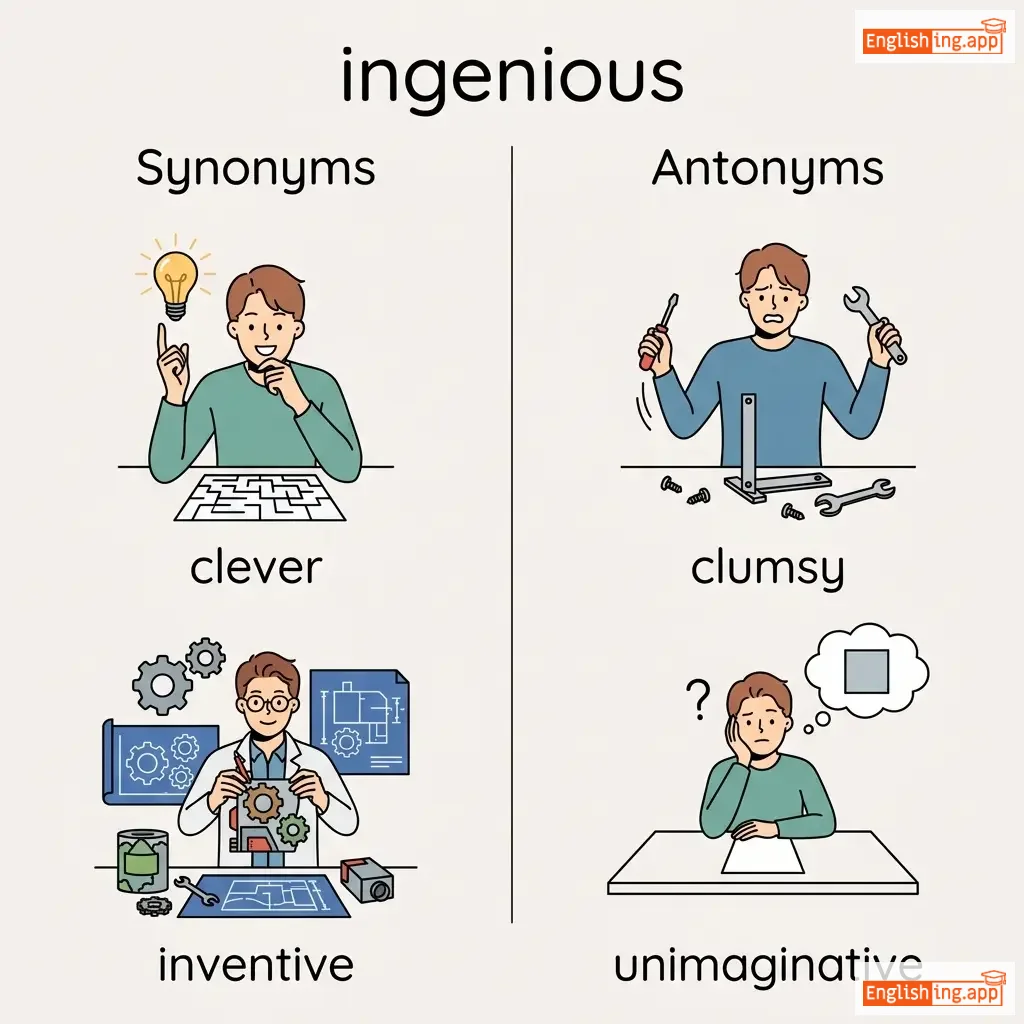
/ɪnˈdʒiːniəs/
adjective
(巧妙的)
••••••
|
|
巧妙的
qiǎo miào de
••••••
|
cleverly inventive; showing creativity and skill; brilliant
••••••
|
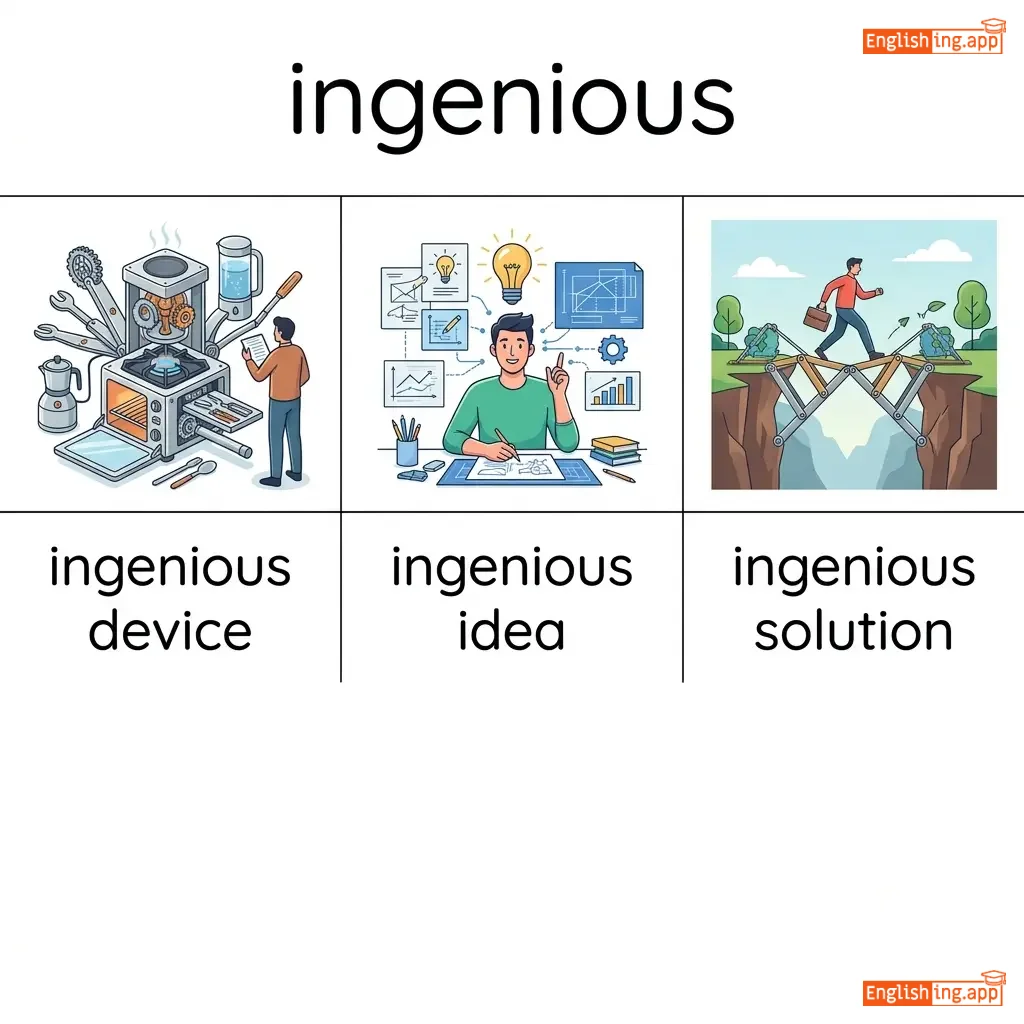
He came up with an ingenious solution to the problem. |
他找到了问题的巧妙解决方案。
tā zhǎodàole wèntí de qiǎo miào jiějué fāng'àn
••••••
|
clever, creative, inventive, brilliant
••••••
|
unimaginative, dull, stupid, foolish
••••••
|
ingenious idea, ingenious design, ingenious solution
••••••
|
巧妙的解决方案来自聪明的大脑
••••••
|
|
#419
👻
|
/ɪnˈvɪz.ə.bəl/
adjective
(yǐn wéi zǐ bù)
••••••
|
- •••••• |
看不见的
kan bu jian de
••••••
|
unable to be seen; not visible to the eye
••••••
|
The bacteria are invisible without a microscope. |
细菌在没有显微镜的情况下看不见。
Xìjùn zài méiyǒu xiǎnwēijìng de qíngkuàng xià kàn bùjiàn.
••••••
|
unseen, hidden, imperceptible, undetectable
••••••
|
visible, apparent, obvious, clear
••••••
|
invisible force, invisible barrier, invisible ink, invisible hand
••••••
|
看不见的,如同显微镜下的细菌。
••••••
|
|
#420
🤷♀️
|
/ˌɪrɪˈspɛktɪv/
adjective
(不考虑)
••••••
|
- •••••• |
无论如何; 不考虑
wúlùn rúhé; bù kǎolǜ
••••••
|
without taking something into account; regardless of
••••••
|
All students will be treated equally, irrespective of their background. |
所有学生都会平等对待,无论他们的背景如何。
suǒyǒu xuéshēng dōu huì píngděng duìdài, wúlùn tāmen de bèijǐng rúhé.
••••••
|
regardless, without regard to, independent of, notwithstanding
••••••
|
depending on, considering, regarding, respective
••••••
|
irrespective of age, irrespective of gender, irrespective of background, irrespective of circumstances
••••••
|
不考虑 (bù kǎolǜ) - 无论如何 (wúlùn rúhé)
••••••
|
Vocabulary Quiz
Test your vocabulary by matching words with their translations or meanings.
Login to take the quiz
Comments (0)
Share your thoughts and join the discussion.
Join the discussion by logging in
Login to CommentNo comments yet
Be the first to share your thoughts!