

Swipe left or right, or use the buttons. Tap image to zoom.
例句翻译
单词
Lesson 26Lesson 26 - 遮罩切换
|
表情符号
|
单词 | Images | 翻译 | 含义 | 例句 | 例句翻译 | 同义词 | 反义词 | 搭配词 | 助记符 |
|---|---|---|---|---|---|---|---|---|---|---|
|
#501
🧠
|
/ˈmen.təl/
adjective
(门特尔)
••••••
|
- •••••• |
心理的
menteer
••••••
|
relating to the mind; intellectual; psychological
••••••
|
She has strong mental health and resilience.
她的心理健康和韧性很强。
••••••
|
她的心理健康和韧性很强。
ta de xinli jiankang he renxing hen qiang
••••••
|
psychological, intellectual, cognitive
••••••
|
physical, bodily
••••••
|
mental health, mental strength, mental capacity
••••••
|
Mind Tale 心智 故事 Mental means 心理的 relates to the mind
••••••
|
|
#502
⚡
|
/moʊˈmentəs/
adjective
(莫门图斯)
••••••
|
- •••••• |
重要
zhòngyào
••••••
|
of great importance or significance; having far-reaching consequences
••••••
|
The signing of the peace treaty was a momentous occasion for both countries. |
和平条约的签署是两个国家的一个重要时刻。
Hépíng tiáoyuē de qiānshǔ shì liǎng gè guójiā de yīgè zhòngyào shíkè.
••••••
|
significant, important, historic, crucial, pivotal
••••••
|
trivial, insignificant, unimportant, minor
••••••
|
momentous decision, momentous occasion, momentous event, momentous day
••••••
|
重要的时刻,带来深远的影响,就像一个重要事件。
••••••
|
|
#503
🦅
|
/ˈmaɪ.ɡrə.tɔːr.i/
adjective
(māiɡɾɛɪtəri)
••••••
|
- •••••• |
迁徙的
qianxi de
••••••
|
moving from one place to another; characterized by seasonal movement
••••••
|
Many birds are migratory and travel thousands of miles each season.
许多鸟是迁徙的,每个季节都要飞行几千英里。
••••••
|
许多鸟是迁徙的,每个季节都要飞行几千英里。
xuduo niao shi qianxi de, mei ge jixiao dou yao feixing jiqian yingli.
••••••
|
nomadic, roaming, traveling, wandering
••••••
|
stationary, settled, permanent, resident
••••••
|
migratory birds, migratory pattern, migratory route, migratory species
••••••
|
迁徙的鸟像箭一样穿过天空,寻找新的家园。
••••••
|
|
#504
🔍
|
/maɪˈnuːt/
adjective
(分钟)
••••••
|
- •••••• |
极小的; 微小的; 详细的; 精确的
jí xiǎo de; wēi xiǎo de; xiáng xì de; jīng què de
••••••
|
extremely small; tiny; detailed; precise
••••••
|
The scientist examined minute details under the microscope.
科学家在显微镜下检查了微小的细节。
••••••
|
科学家在显微镜下检查了微小的细节。
Kēxuéjiā zài xiǎnwēijìng xià jiǎnchá le wēi xiǎo de xìjié.
••••••
|
tiny, small, microscopic, minuscule
••••••
|
huge, enormous, massive, gigantic
••••••
|
minute details, minute particles, minute examination
••••••
|
每个细节都需要精准地观察。
••••••
|
|
#505
🤲
|
/ˈmɜː.sɪ.fəl/
adjective
(mèrsīfūl)
••••••
|
- •••••• |
仁慈的; 富有同情心的
réncí de; fùyǒu tóngqíng xīn de
••••••
|
showing compassion or forgiveness; kind and forgiving
••••••
|
The merciful judge gave him a lighter sentence.
仁慈的法官给了他一个较轻的判决。
••••••
|
仁慈的法官给了他一个较轻的判决。
Réncí de fǎguān gěile tā yīgè jiào qīng de pànjué.
••••••
|
compassionate, kind, forgiving
••••••
|
merciless, cruel, harsh
••••••
|
merciful God, merciful judge, merciful heart
••••••
|
Merciful = 仁慈的, 就像宽容的法官。
••••••
|
|
#506
💰
|
/ˈmʌnid/
adjective
(má-níd)
••••••
|
- •••••• |
富有的; 富裕的; 有钱的
manid
••••••
|
having much money; wealthy; rich
••••••
|
She comes from a moneyed family with extensive real estate holdings. |
她来自一个富有的家庭,拥有大量的房地产。
tā láizì yīgè fùyǒu de jiātíng, yǒngyǒu dàliàng de fángdìchǎn.
••••••
|
wealthy, rich, affluent, prosperous, well-off
••••••
|
poor, impoverished, destitute, penniless
••••••
|
moneyed class, moneyed elite, moneyed interests, moneyed family
••••••
|
金钱充满心中,你是一个 manid。
••••••
|
|
#507
✨
|
/mɪˈrækjələs/
adjective
(奇迹的)
••••••
|
- •••••• |
奇迹的; 惊人的; 非凡的
qiji de; jing ren de; fei fan de
••••••
|
supernatural; amazing; extraordinary
••••••
|
Her miraculous recovery amazed all the doctors. |
她的奇迹般恢复让所有医生都吃惊。
ta de qiji ban huifu rang suoyou yisheng dou chijing
••••••
|
wonderful, amazing, extraordinary, supernatural
••••••
|
ordinary, normal, natural, expected
••••••
|
miraculous recovery, miraculous escape, miraculous healing
••••••
|
奇迹般的恢复如同奇妙的生命复苏
••••••
|
|
#508
🎭
|
/ˈmɪm.ɪk/
adjective
(米米克)
••••••
|
- •••••• |
模仿的; 有模仿能力的
mófǎng de; yǒu mófǎng nénglì de
••••••
|
imitating or copying; having the ability to imitate
••••••
|
The child has mimic behavior and copies everything his parents do.
这个孩子有模仿行为,并复制父母做的每一件事。
••••••
|
这个孩子有模仿行为,并复制父母做的每一件事。
Zhège háizi yǒu mófǎng xíngwéi, bìng fùzhì fùmǔ zuò de měi yī jiàn shì.
••••••
|
imitative, copying, imitating, emulating
••••••
|
original, authentic, genuine, unique
••••••
|
mimic behavior, mimic ability, mimic skills, mimic performance
••••••
|
Mimic,就像一个孩子,复制他父母的一切。
••••••
|
|
#509
🧘
|
/ˈmaɪnd.fəl/
adjective
(mái'ndfūl)
••••••
|
- •••••• |
专注; 意识到
zhuānzhù; yìshídào
••••••
|
being conscious or aware; paying attention to the present moment
••••••
|
She is always mindful of her surroundings and pays attention to details.
她总是注意周围的环境,并关注细节。
••••••
|
她总是注意周围的环境,并关注细节。
Tā zǒng shì zhùyì zhōuwéi de huánjìng, bìng guānzhù xìjié.
••••••
|
aware, conscious, attentive, careful
••••••
|
mindless, careless, inattentive, oblivious
••••••
|
mindful eating, mindful meditation, mindful approach, mindful practice
••••••
|
Mindful在中文中表示专注并意识到当前时刻。
••••••
|
|
#510
🔀
|
/ˌmɪsəˈleɪniəs/
adjective
(米色的)
••••••
|
- •••••• |
各种各样的; 混合的; 多样的
gè zhǒng gè yàng de; hùn hé de; duō yàng de
••••••
|
various; diverse; mixed; assorted
••••••
|
The box contained miscellaneous items from different periods. |
盒子里有不同时间段的各种物品。
Hézi lǐ yǒu bùtóng shíjiān duàn de gè zhǒng wùpǐn.
••••••
|
various, diverse, mixed, assorted
••••••
|
uniform, similar, identical, homogeneous
••••••
|
miscellaneous items, miscellaneous expenses, miscellaneous category
••••••
|
‘多样’ means various, perfect for remembering the mix of things in miscellaneous.
••••••
|
|
#511
😠
|
/ˈmɜː.sɪ.ləs/
adjective
(mèrsilès)
••••••
|
- •••••• |
冷酷无情; 残忍的;
lěngkù wúqíng; cánrěn de;
••••••
|
showing no mercy or pity; cruel and heartless
••••••
|
The merciless dictator showed no compassion. |
无情的独裁者没有显示任何同情。
Wúqíng de dúcái zhě méiyǒu xiǎnshì rènhé tóngqíng.
••••••
|
cruel, ruthless, heartless
••••••
|
merciful, kind, compassionate
••••••
|
merciless attack, merciless criticism, merciless punishment
••••••
|
冷酷无情就是没有任何怜悯。
••••••
|
|
#512
😴
|
/məˈnɒtənəs/
adjective
(单调)
••••••
|
- •••••• |
单调的; 无聊的; 重复的
dāndiào
••••••
|
lacking in variety; tediously unvarying; boring and repetitive
••••••
|
The monotonous sound of the rain made everyone feel sleepy.
雨的单调声音让每个人都感到困倦。
••••••
|
雨的单调声音让每个人都感到困倦。
Yǔ de dāndiào shēngyīn ràng měi gèrén dōu gǎndào kùnjuàn.
••••••
|
boring, tedious, dull, repetitive, unchanging
••••••
|
exciting, varied, interesting, dynamic, stimulating
••••••
|
monotonous voice, monotonous work, monotonous routine, monotonous sound
••••••
|
单调的雨声使每个人都昏昏欲睡。
••••••
|
|
#513
💸
|
/ˈmɪn.dʒi/
adjective
(敏吉)
••••••
|
- •••••• |
小气; 吝啬
xiaoqi; linse
••••••
|
mean or stingy; unwilling to spend money
••••••
|
He is too mingy to spend money on anything but necessities.
他太小气,不愿意在除必要的东西外花钱。
••••••
|
他太小气,不愿意在除必要的东西外花钱。
Ta tai xiaoqi, buyuan yong zai chu bixiao de dongxi wai huai qian.
••••••
|
stingy, miserly, cheap, tight-fisted
••••••
|
generous, liberal, extravagant, lavish
••••••
|
mingy person, mingy behavior, mingy attitude, mingy spending
••••••
|
Mingy是一个小气的人,只花钱在最需要的地方。
••••••
|
|
#514
😈
|
/ˈmɪstʃɪvəs/
adjective
(米斯奇夫)
••••••
|
- •••••• |
顽皮的; 淘气的; 调皮的
wán pí de; táo qì de; tiáo pí de
••••••
|
playfully naughty; causing minor trouble; impish
••••••
|
The mischievous child hid his sister's favorite toy. |
顽皮的孩子把他姐姐最喜欢的玩具藏了起来。
wán pí de hái zǐ bǎ tā jiě jiě zuì xǐ huān de wán jù cáng le qǐ lái
••••••
|
naughty, playful, impish, prankish
••••••
|
well-behaved, obedient, good, innocent
••••••
|
mischievous smile, mischievous behavior, mischievous child
••••••
|
Imagine a mischievous child hiding toys and causing a little mess
••••••
|
|
#515
🏆
|
/ˌmer.ɪˈtɔː.ri.əs/
adjective
(值得表扬)
••••••
|
- •••••• |
值得表扬的
zhí dé biǎo yáng de
••••••
|
deserving reward or praise; commendable; worthy of recognition
••••••
|
His meritorious service to the community was recognized.
他对社区的值得表扬的服务得到了认可。
••••••
|
他对社区的值得表扬的服务得到了认可。
Tā duì shè qū de zhí dé biǎo yáng de fú wù dé dào le rèn kě
••••••
|
praiseworthy, commendable, worthy
••••••
|
unworthy, disgraceful, blameworthy
••••••
|
meritorious service, meritorious conduct, meritorious achievement
••••••
|
值得 (worthy) + 认可 (recognition)
••••••
|
|
#516
👹
|
/ˈmɒnstrəs/
adjective
(怪异的)
••••••
|
- •••••• |
极其大的; 令人震惊的邪恶或错误; 不正常或不自然
guàiyì de
••••••
|
extremely large; shockingly evil or wrong; abnormal or unnatural
••••••
|
The monstrous crime shocked the entire community. |
那个怪异的罪行震惊了整个社区。
Nàgè guàiyì de zuìxíng zhènjīngle zhěnggè shèqū.
••••••
|
enormous, hideous, atrocious, terrible, horrific
••••••
|
beautiful, lovely, pleasant, gentle, kind
••••••
|
monstrous crime, monstrous behavior, monstrous size, monstrous act
••••••
|
Guàiyì de zuìxíng – big crime, bad crime!
••••••
|
|
#517
⬇️
|
/ˈmɪn.ɪ.məm/
adjective
(最小值)
••••••
|
|
最低
zuìdī
••••••
|
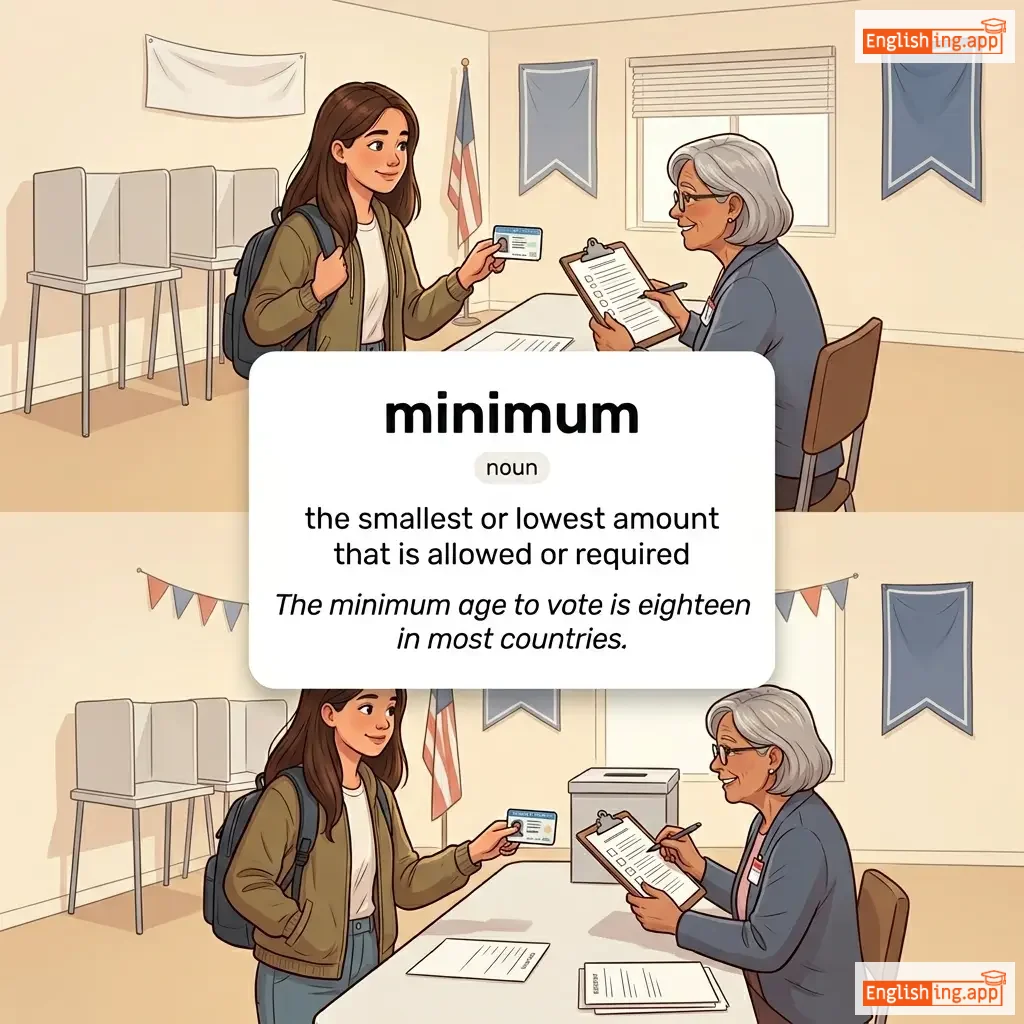
the smallest or lowest amount; least possible
••••••
|
The minimum age requirement for this job is eighteen years.
这个工作的最低年龄要求是十八岁。
••••••
|
这个工作的最低年龄要求是十八岁。
Zhège gōngzuò de zuìdī niánlíng yāoqiú shì shíbā suì.
••••••
|
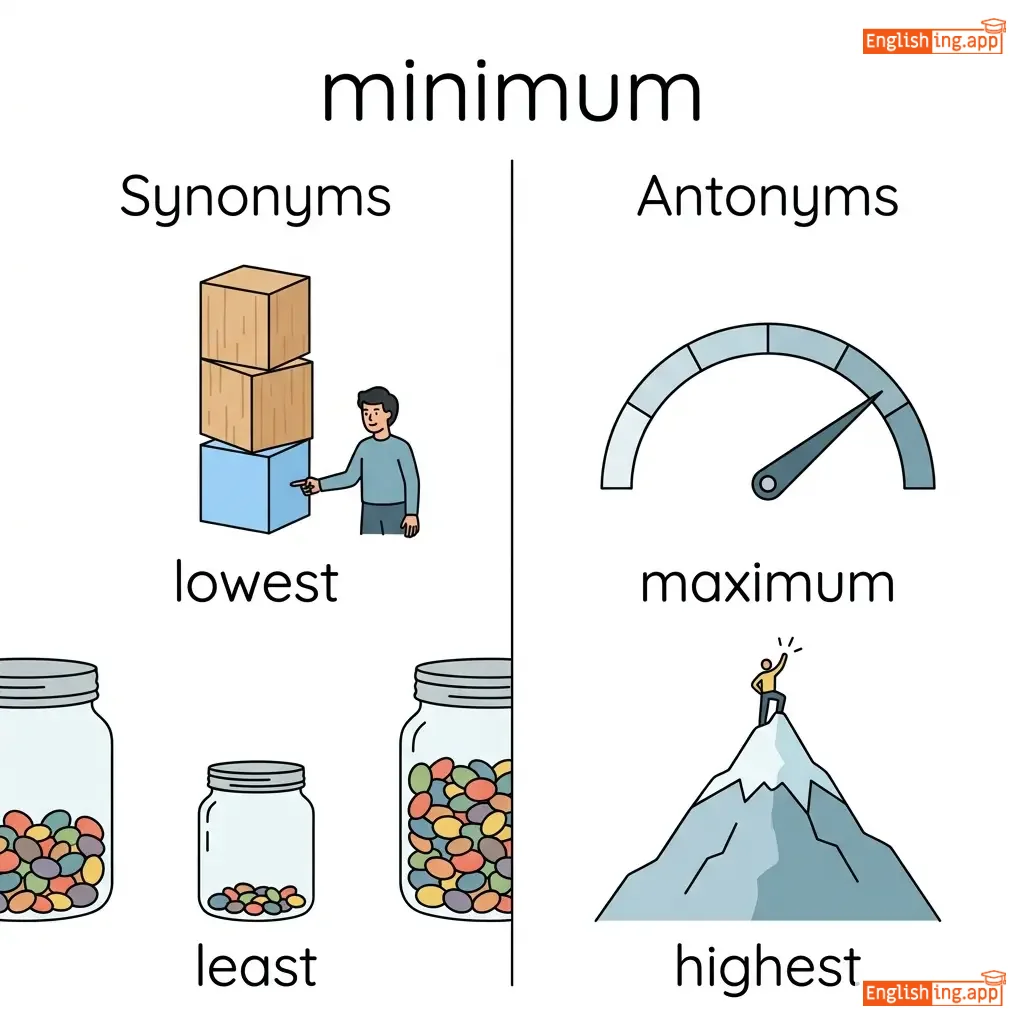
lowest, smallest, least, tiniest
••••••
|
maximum, highest, greatest, largest
••••••
|
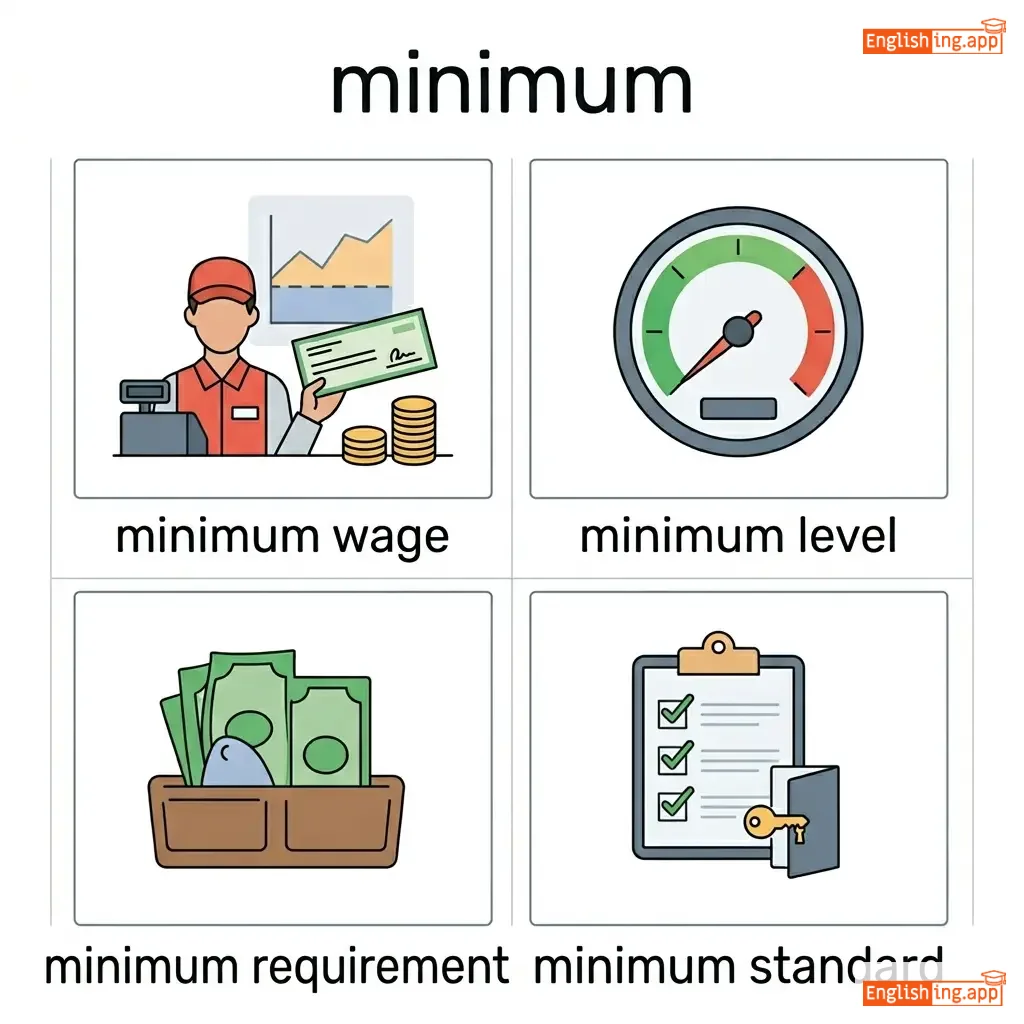
minimum wage, minimum requirement, minimum standard, minimum effort
••••••
|
Zuìdī sounds like 'dī' for 'least'. Think of it as the minimum or smallest.
••••••
|
|
#518
👨💼
|
/ˈmɪd.əl.eɪdʒd/
adjective
(míděl-èjíd)
••••••
|
- •••••• |
中年
zhōngnián
••••••
|
being of an age between young and old; typically between 40-60 years old
••••••
|
The middle-aged man started a new career.
那位中年男子开始了一项新事业。
••••••
|
那位中年男子开始了一项新事业。
Nà wèi zhōngnián nánzǐ kāishǐle yī xiàng xīn shìyè.
••••••
|
mature, adult, in one's forties or fifties
••••••
|
young, elderly, teenage
••••••
|
middle-aged man, middle-aged woman, middle-aged crisis
••••••
|
Middle-aged in Chinese means 'zhōng' (middle) years.
••••••
|
|
#519
😢
|
/ˈmɪzərəbəl/
adjective
(miserable)
••••••
|
- •••••• |
悲惨; 不幸; 引起痛苦
bēicǎn; bùxìng; yǐnqǐ tòngkǔ
••••••
|
very unhappy; wretched; causing suffering
••••••
|
He felt miserable after losing his job.
他失去工作后感到非常痛苦。
••••••
|
他失去工作后感到非常痛苦。
Tā shīqù gōngzuò hòu gǎndào fēicháng tòngkǔ.
••••••
|
wretched, unhappy, sad, dejected
••••••
|
happy, joyful, cheerful, content
••••••
|
miserable weather, miserable life, feel miserable
••••••
|
Miserable sounds like 'misery', think of how bad a situation can be to remember it!
••••••
|
|
#520
⚖️
|
/ˈmɒrəl/
adjective
(莫雷尔)
••••••
|
- •••••• |
道德的;伦理的;有德行的
moral
••••••
|
relating to principles of right and wrong behavior; ethical; virtuous
••••••
|
It is our moral duty to help those in need. |
帮助有需要的人是我们的道德责任。
Bāngzhù yǒu xūyào de rén shì wǒmen de dàodé zérèn.
••••••
|
ethical, righteous, virtuous, principled, honorable
••••••
|
immoral, unethical, corrupt, wrong, evil
••••••
|
moral duty, moral support, moral values, moral responsibility
••••••
|
道德是我们应该追求的行为准则,帮助他人是我们的责任。
••••••
|
Vocabulary Quiz
Test your vocabulary by matching words with their translations or meanings.
Login to take the quiz
Comments (0)
Share your thoughts and join the discussion.
Join the discussion by logging in
Login to CommentNo comments yet
Be the first to share your thoughts!