

Swipe left or right, or use the buttons. Tap image to zoom.
例句翻译
单词
Lesson 16Lesson 16 - 遮罩切换
|
表情符号
|
单词 | Images | 翻译 | 含义 | 例句 | 例句翻译 | 同义词 | 反义词 | 搭配词 | 助记符 |
|---|---|---|---|---|---|---|---|---|---|---|
|
#301
✨
|
/ˈɡlɔːr.i.əs/
adjective
(荣耀)
••••••
|
- •••••• |
荣耀的; 著名的;
rongyao de; zhuming de
••••••
|
magnificent; famous; having great beauty or splendor
••••••
|
The sunset was absolutely glorious.
日落绝对是荣耀的。
••••••
|
日落绝对是荣耀的。
Riluò juéduì shì róngyào de.
••••••
|
magnificent, splendid, wonderful, brilliant
••••••
|
terrible, awful, shameful, disgraceful
••••••
|
glorious victory, glorious day, glorious sunshine, glorious moment
••••••
|
荣耀 (róngyào) sounds like 'glory', both reflect greatness and beauty.
••••••
|
|
#302
☠️
|
/ˈhɑːrmfəl/
adjective
(哈姆富尔)
••••••
|
- •••••• |
有害的
yǒuhài de
••••••
|
causing or likely to cause harm; damaging
••••••
|
Smoking is harmful to your health. |
吸烟对健康有害。
Xīyān duì jiànkāng yǒuhài.
••••••
|
damaging, dangerous, detrimental, destructive
••••••
|
harmless, beneficial, helpful, safe
••••••
|
harmful effects, harmful chemicals, harmful substances
••••••
|
有害的 means causing harm, just like 'harmful' in English.
••••••
|
|
#303
🙏
|
/ˈɡreɪ.ʃəs/
adjective
(格雷肖斯)
••••••
|
- •••••• |
和蔼的; 礼貌的; 慷慨的;
he'ai de; limao de; kangkai de;
••••••
|
kind; courteous; generous;
••••••
|
She was very gracious and thanked everyone for their help. |
她非常和蔼,并感谢所有人的帮助。
Ta feichang he'ai, bing ganxie suoyouren de bangzhu.
••••••
|
kind, courteous, polite, generous
••••••
|
rude, ungracious, discourteous
••••••
|
gracious host, gracious manner, gracious living
••••••
|
In Chinese, '和蔼的' means 'gracious' or 'kind.'
••••••
|
|
#304
🚫
|
/ˈɡraʊnd.ləs/
adjective
(gǎo dé lì sī)
••••••
|
- •••••• |
无根据的; 毫无根据
wu genju de; haowu genju
••••••
|
without foundation or justification; baseless
••••••
|
His accusations against her were completely groundless. |
他对她的指控完全没有根据。
Ta dui ta de zhikong wanquan meiyou genju.
••••••
|
baseless, unfounded, unjustified, without basis
••••••
|
justified, founded, valid, substantiated
••••••
|
groundless fears, groundless accusations, groundless rumor
••••••
|
Groundless = 无根据的, 就像没有根基的房子
••••••
|
|
#305
😞
|
/ɡlʌm/
adjective
(glam)
••••••
|
- •••••• |
沮丧的; 忧郁的; 阴郁的
jǔsàng de; yōuyù de; yīnyù de
••••••
|
sad; dejected; downcast; gloomy
••••••
|
He looked glum after hearing the bad news.
他听到坏消息后看起来很忧郁。
••••••
|
他听到坏消息后看起来很忧郁。
Tā tīng dào huài xiāoxi hòu kàn qǐlái hěn yōuyù.
••••••
|
sad, dejected, despondent, morose
••••••
|
cheerful, happy, joyful, upbeat
••••••
|
glum expression, glum mood, look glum, feel glum
••••••
|
Remember 'glum' sounds like 'gloomy,' which means '忧郁' in Chinese.
••••••
|
|
#306
🕊️
|
/ˈhɑːrmləs/
adjective
(哈姆雷斯)
••••••
|
- •••••• |
无害的; 无辜的; 安全的
wúhài de; wúgū de; ānquán de
••••••
|
not able or likely to cause harm; innocent; safe
••••••
|
The snake looks dangerous but it's actually harmless. |
蛇看起来很危险,但它实际上是无害的。
Shé kàn qǐlái hěn wēixiǎn, dàn tā shíjì shang shì wúhài de.
••••••
|
safe, innocent, benign, non-toxic
••••••
|
harmful, dangerous, toxic, destructive
••••••
|
harmless fun, harmless joke, harmless bacteria
••••••
|
In Chinese, 'wúhài' sounds like 'no harm' (harmless).
••••••
|
|
#307
😠
|
/ˈɡrʌm.pi/
adjective
(grumpy)
••••••
|
- •••••• |
脾气坏的; 易怒的;
píqì huài de; yì nù de;
••••••
|
bad-tempered and irritable; easily annoyed
••••••
|
He was grumpy all morning because he didn't sleep well. |
他整个早上都很脾气坏,因为他睡得不好。
Tā zhěnggè zǎoshang dōu hěn píqì huài, yīnwèi tā shuì dé bù hǎo.
••••••
|
irritable, cranky, bad-tempered, moody
••••••
|
cheerful, pleasant, good-natured, happy
••••••
|
grumpy mood, grumpy old man, feeling grumpy
••••••
|
脾气坏的人可以叫做‘grumpy’。
••••••
|
|
#308
⏳
|
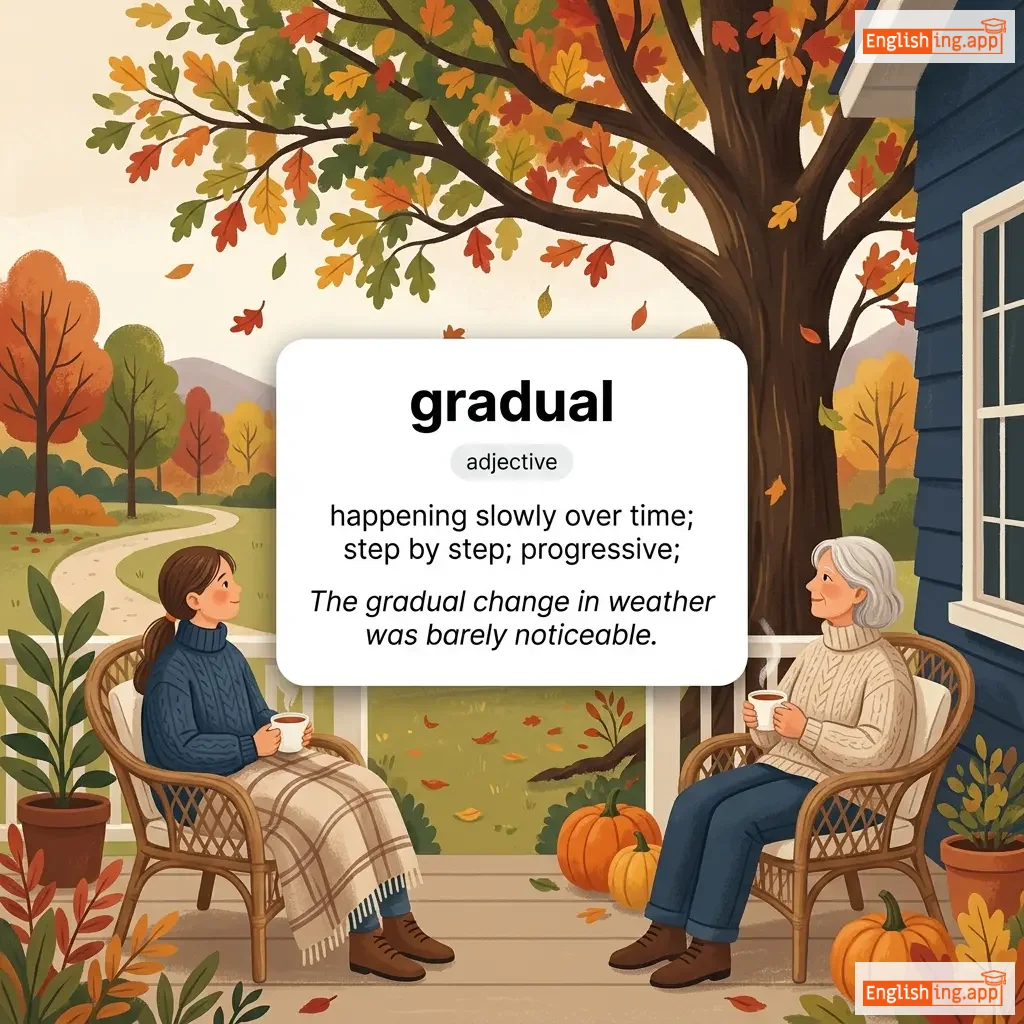
/ˈɡrædʒ.u.əl/
adjective
(gulai)
••••••
|
|
逐渐的; 逐步的; 进步的;
zhújiàn de; zhúbù de; jìnbù de;
••••••
|
happening slowly over time; step by step; progressive;
••••••
|
The gradual change in weather was barely noticeable.
天气的渐变几乎没有引起注意。
••••••
|
天气的渐变几乎没有引起注意。
Tiānsì de jiànbìan jīhū méiyǒu yǐnqǐ zhùyì.
••••••
|
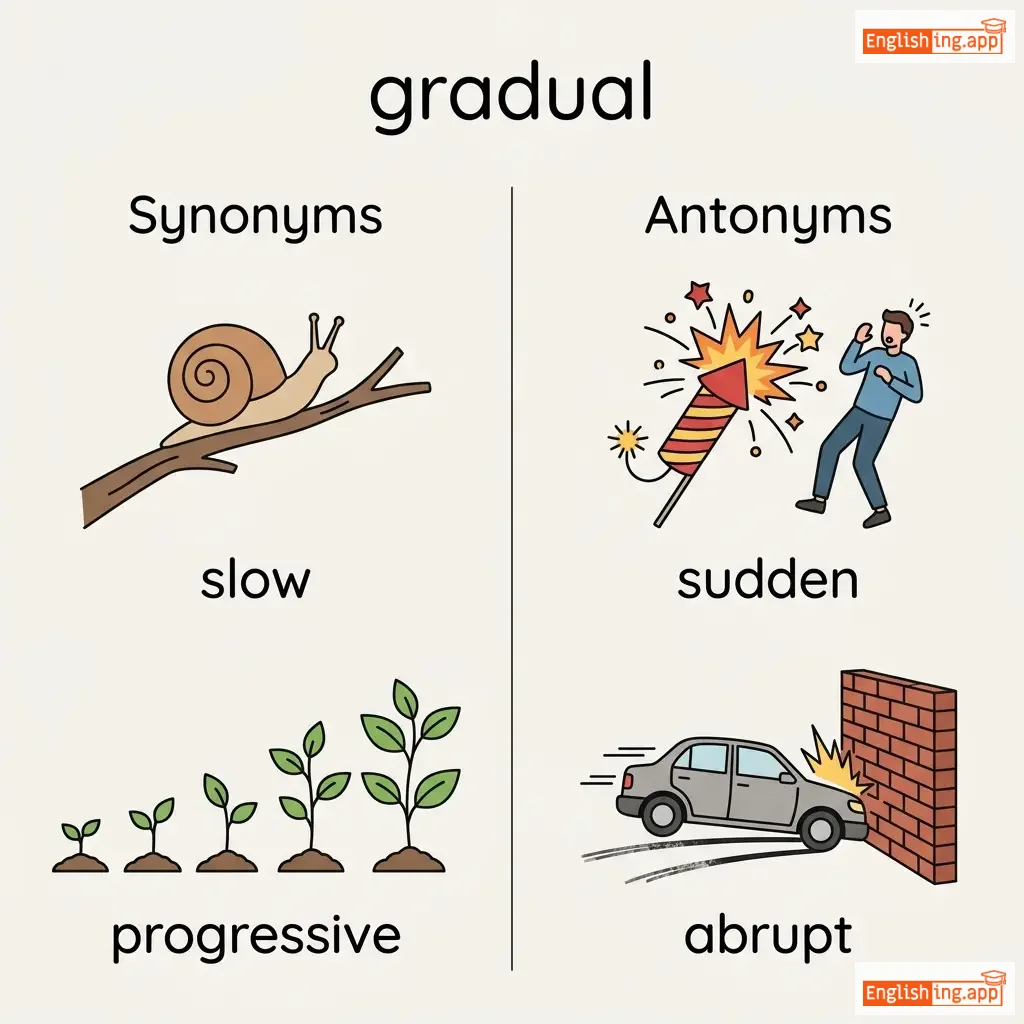
slow, progressive, incremental, step-by-step
••••••
|
sudden, abrupt, rapid, immediate
••••••
|
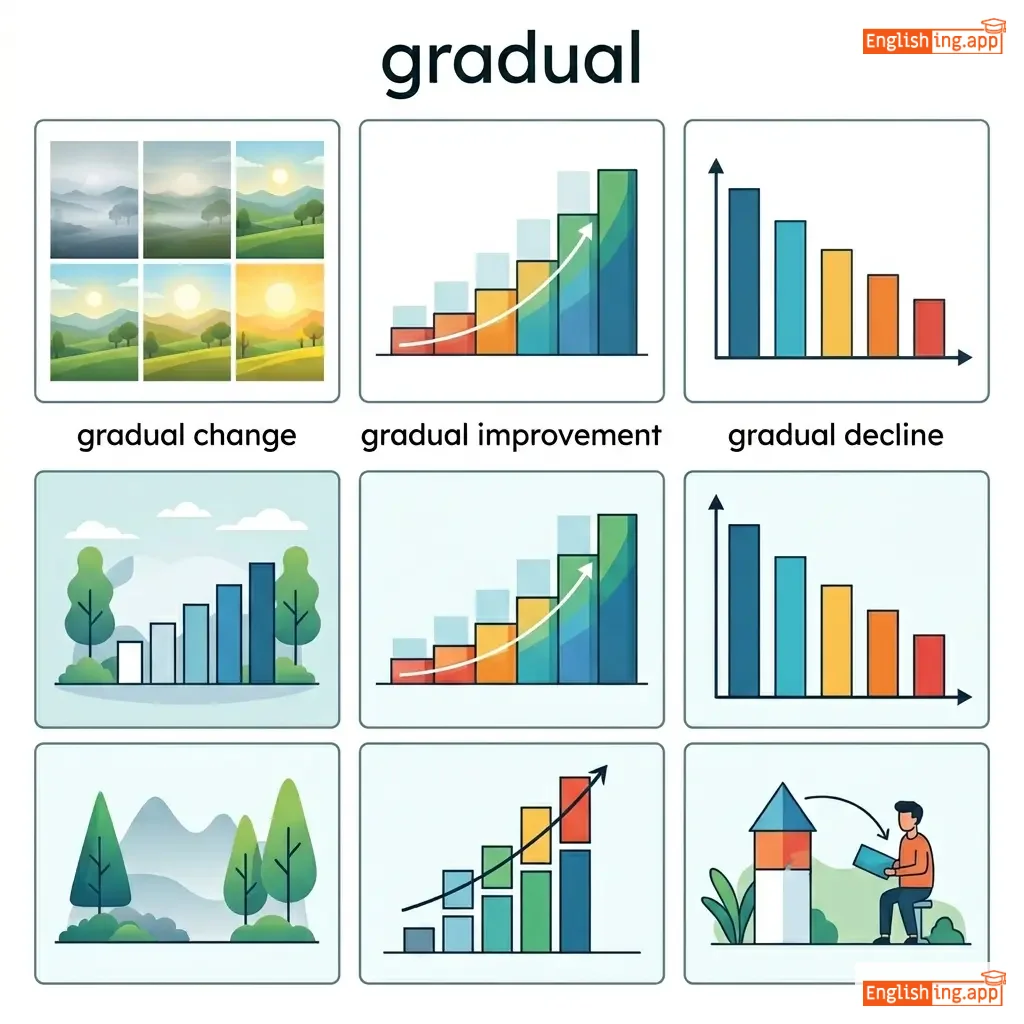
gradual change, gradual improvement, gradual decline
••••••
|
Gradual意味着缓慢的变化,就像天气一样。
••••••
|
|
#309
🏰
|
/ɡrænd/
adjective
(grænd)
••••••
|
- •••••• |
宏伟; 壮丽; 卓越;
hongwei; zhuangli; zhuoyue;
••••••
|
impressive; magnificent; excellent;
••••••
|
The grand palace impressed all the visitors. |
宏伟的宫殿给所有游客留下了深刻的印象。
Hongwei de gongdian gei suoyi youke liuxia le shenke de yinxiang.
••••••
|
magnificent, impressive, majestic, splendid
••••••
|
modest, humble, small, insignificant
••••••
|
grand opening, grand piano, grand total
••••••
|
Grand = 宏伟 (Magnificent)
••••••
|
|
#310
😔
|
/ˈɡɪl.ti/
adjective
(ɡɪlti)
••••••
|
- •••••• |
有罪的
youzui de
••••••
|
having committed a crime or offense; feeling responsible for wrongdoing
••••••
|
She felt guilty about lying to her parents. |
她因为对父母撒谎而感到有罪。
Ta yinwei dui fumu sahuang er gandao youzui.
••••••
|
culpable, responsible, blameworthy, at fault
••••••
|
innocent, guiltless, blameless, not guilty
••••••
|
guilty conscience, plead guilty, feel guilty
••••••
|
感到有罪的就是有责任的人
••••••
|
|
#311
😊
|
/ɡʊd/
adjective
(gud)
••••••
|
- •••••• |
好; 优秀; 有益;
hǎo; yōuxiù; yǒuyì
••••••
|
satisfactory; pleasant; beneficial; of high quality
••••••
|
She is a good student.
她是一个好学生。
••••••
|
她是一个好学生。
Tā shì yīgè hǎo xuéshēng.
••••••
|
excellent, fine, great, nice
••••••
|
bad, poor, terrible, awful
••••••
|
good idea, good job, good morning, good luck
••••••
|
好 (hǎo) + Good (gud) = 好 Good
••••••
|
|
#312
🎵
|
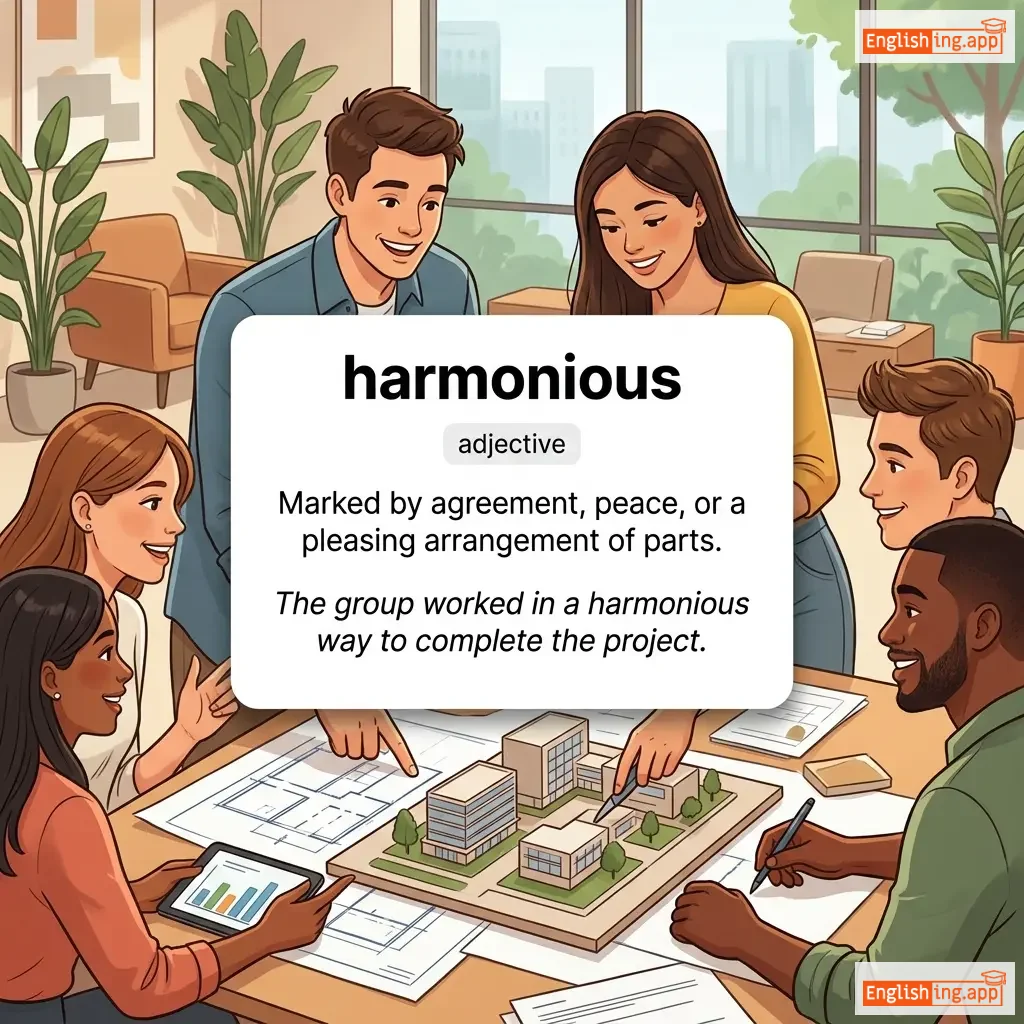
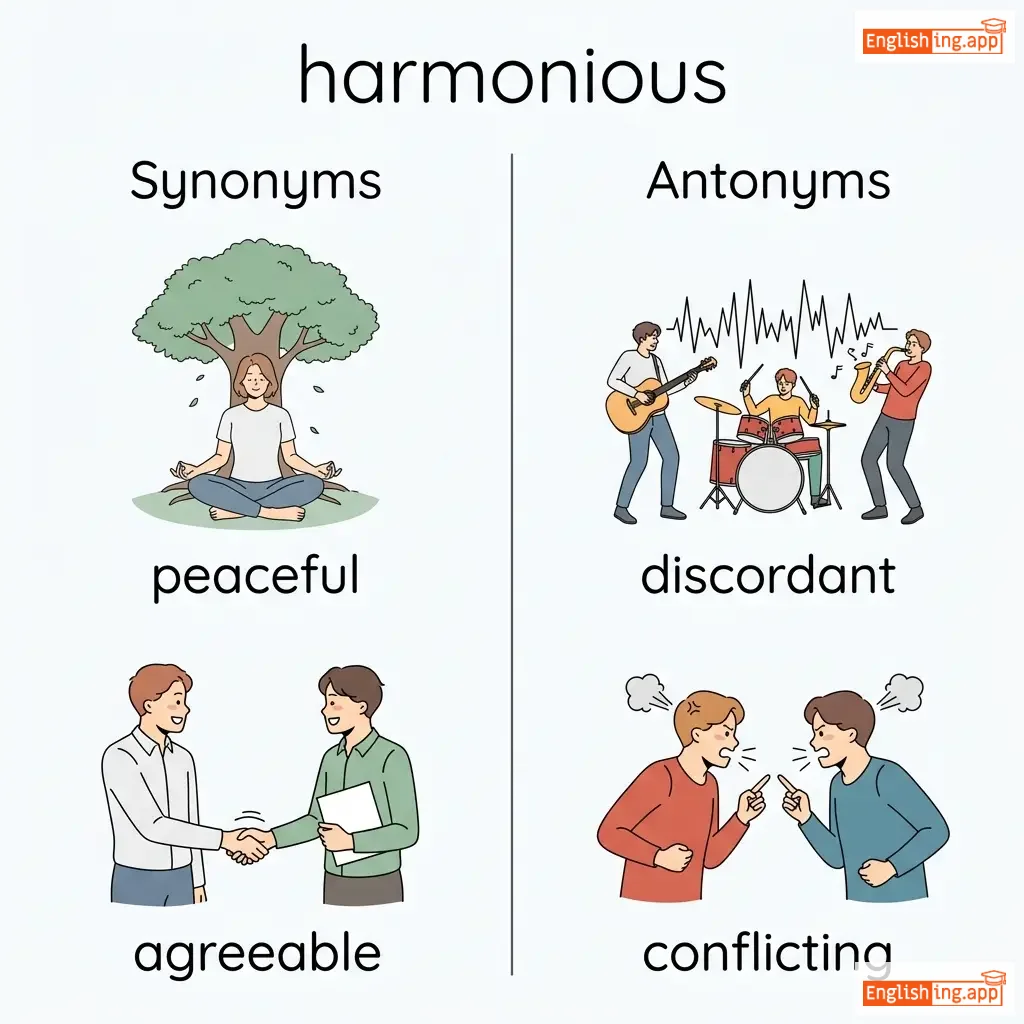
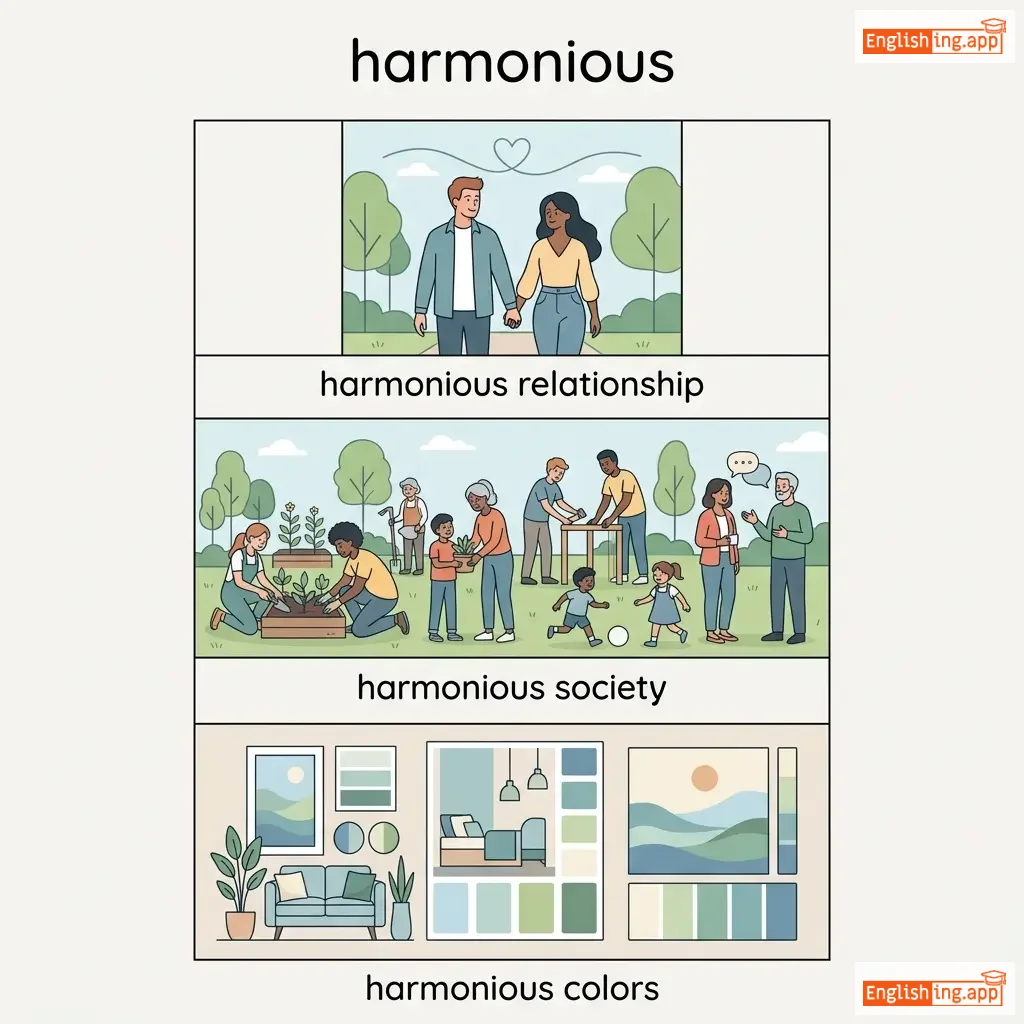
/hɑːrˈmoʊniəs/
adjective
(和谐的)
••••••
|
|
和谐的; 悦耳的; 平静的
héxié de; yuè ěr de; píngjìng de
••••••
|
forming a pleasing or consistent whole; melodious; peaceful
••••••
|
The choir sang in harmonious voices. |
合唱团唱着和谐的声音。
Héchàngtuán chàngzhe héxié de shēngyīn.
••••••
|
melodious, peaceful, balanced, coordinated
••••••
|
discordant, conflicting, chaotic, dissonant
••••••
|
harmonious relationship, harmonious colors, harmonious melody
••••••
|
和谐的歌声带来平静与快乐。
••••••
|
|
#313
🎨
|
/ˈɡræf.ɪk/
adjective
(图形的)
••••••
|
- •••••• |
图形的; 可视的; 生动的;
tuxing de
••••••
|
relating to visual design; vivid; clearly described;
••••••
|
The graphic design was colorful and eye-catching.
图形设计色彩丰富且引人注目。
••••••
|
图形设计色彩丰富且引人注目。
Tuxing sheji secai fengfu qie yinren zhumu.
••••••
|
visual, pictorial, illustrative, vivid
••••••
|
abstract, vague, unclear, indistinct
••••••
|
graphic design, graphic novel, graphic description
••••••
|
图形设计生动吸引眼球。
••••••
|
|
#314
🏠
|
/ˈhæb.ɪ.tə.bəl/
adjective
(哈比特布尔)
••••••
|
- •••••• |
宜居
yí jū
••••••
|
suitable or good enough to live in
••••••
|
The planet Mars may become habitable in the future.
火星在未来可能变得宜居。
••••••
|
火星在未来可能变得宜居。
Huǒxīng zài wèilái kěnéng biàn dé yíjū.
••••••
|
livable, inhabitable, suitable for living
••••••
|
uninhabitable, unlivable, unsuitable
••••••
|
habitable planet, habitable zone, barely habitable
••••••
|
宜居=居住地,适合生活,像火星可以变得宜居。
••••••
|
|
#315
💖
|
/ˈɡɔːr.dʒəs/
adjective
(ɡɔːrʒəs)
••••••
|
- •••••• |
极其美丽;吸引人;视觉上令人印象深刻
jíqí měilì; xīyǐn rén; shìjué shàng lìngrén yìnxiàng shēnkè
••••••
|
extremely beautiful; attractive; visually stunning
••••••
|
The bride looked absolutely gorgeous.
新娘看起来绝对美丽。
••••••
|
新娘看起来绝对美丽。
Xīnniáng kàn qǐlái juéduì měilì.
••••••
|
beautiful, stunning, magnificent, lovely
••••••
|
ugly, hideous, repulsive, unattractive
••••••
|
gorgeous dress, gorgeous weather, gorgeous view, absolutely gorgeous
••••••
|
在婚礼上,新娘总是必须看起来非常美丽!
••••••
|
|
#316
😠
|
/hɑːrʃ/
adjective
(hɑːrʃ)
••••••
|
- •••••• |
严厉的; 粗糙的; 残酷的; 严格的
yánlì de; cūcāo de; cánkù de; yángé de
••••••
|
unpleasantly hard or rough in texture; cruel or severe
••••••
|
The teacher gave harsh criticism about my work.
老师对我的工作给出了严厉的批评。
••••••
|
老师对我的工作给出了严厉的批评。
Lǎoshī duì wǒ de gōngzuò gěi chūle yánlì de pīpíng.
••••••
|
severe, rough, cruel, stern
••••••
|
gentle, mild, soft, kind
••••••
|
harsh weather, harsh words, harsh reality
••••••
|
'Harsh' 就像中文的 '严厉的' 或 '粗糙的'。
••••••
|
|
#317
🙏
|
/ˈɡreɪt.fəl/
adjective
(ɡreɪtfʊl)
••••••
|
- •••••• |
感激
ganji
••••••
|
thankful; appreciative;
••••••
|
I am grateful for your kindness and support. |
我感激你的善良和支持。
Wǒ gǎnjī nǐ de shànliáng hé zhīchí.
••••••
|
thankful, appreciative, obliged, indebted
••••••
|
ungrateful, unappreciative, thankless
••••••
|
grateful for, deeply grateful, grateful heart
••••••
|
感恩的心让世界更美好。
••••••
|
|
#318
🥰
|
/ˈɡreɪs.fəl/
adjective
(gureisiful)
••••••
|
- •••••• |
优雅的; 平滑的; 精致的; 具有优美的动作或举止
yōuyǎ de; pínghuá de; jīngzhì de; jùyǒu yōuměi de dòngzuò huò jǔzhǐ
••••••
|
elegant; smooth; refined; having beauty of movement or manner
••••••
|
The dancer moved with graceful elegance.
舞者优雅地移动。
••••••
|
舞者优雅地移动。
Wǔzhě yōuyǎ de yídòng.
••••••
|
elegant, refined, smooth, fluid
••••••
|
clumsy, awkward, ungainly, crude
••••••
|
graceful movement, graceful dancer, graceful pose, graceful manner
••••••
|
Graceful = graceful dancer in every move
••••••
|
|
#319
😴
|
/ˈhæɡ.ərd/
adjective
(哈格德)
••••••
|
- •••••• |
看起来疲惫和虚弱,尤其是由于疲劳、担忧或痛苦
kan qilai pibei he xuruo, youqi shi youyu pilao, danyou huo tongku
••••••
|
looking exhausted and unwell, especially from fatigue, worry, or suffering
••••••
|
After working three nights without sleep, he looked haggard. |
经过三夜没睡觉,他看起来很疲惫。
Jingguo san ye mei shuijiao, ta kan qilai hen pibei.
••••••
|
exhausted, worn-out, gaunt, drawn
••••••
|
refreshed, energetic, vibrant, healthy
••••••
|
haggard appearance, look haggard, haggard face
••••••
|
Haggard = 看起来因为劳累而虚弱
••••••
|
|
#320
🏃♂️
|
/ˈheɪsti/
adjective
(海斯蒂)
••••••
|
- •••••• |
匆忙的; 急促的
cōngmáng de; jícù de
••••••
|
done or acting with excessive speed or urgency; hurried
••••••
|
Don't make hasty decisions when you're angry. |
生气时不要做出匆忙的决定。
Shēngqì shí bùyào zuò chū cōngmáng de juédìng.
••••••
|
quick, rushed, hurried, rash
••••••
|
careful, deliberate, slow, thoughtful
••••••
|
hasty decision, hasty retreat, hasty conclusion
••••••
|
匆忙的决定可能会让你后悔。
••••••
|
Vocabulary Quiz
Test your vocabulary by matching words with their translations or meanings.
Login to take the quiz
Comments (0)
Share your thoughts and join the discussion.
Join the discussion by logging in
Login to CommentNo comments yet
Be the first to share your thoughts!