

翻訳
過去
過去分詞
三人称単数
動名詞
意味
例文
例文の翻訳
同義語
対義語
コロケーション
ニーモニック


Swipe left or right, or use the buttons. Tap image to zoom.
例文の翻訳
単語
Lesson 6Lesson 6 - マスクトグル
|
絵文字
|
単語 | Images | 翻訳 | 意味 | 例文 | 例文の翻訳 | 同義語 | 対義語 | コロケーション | ニーモニック |
|---|---|---|---|---|---|---|---|---|---|---|
|
#101
🔄
|
/ˈtʃeɪn.dʒə.bəl/
adjective
(チェンジャブル)
••••••
|
- •••••• |
変わりやすい; 不安定な
kawariyasui; fuanteina
••••••
|
able to be changed; likely to change frequently
••••••
|
The weather is very changeable in spring.
ザ ウェザー イズ ベリー チェンジャブル イン スプリング
••••••
|
春は天気が非常に変わりやすいです。
Haru wa tenki ga hijou ni kawariyasui desu.
••••••
|
variable, unstable, inconsistent, fickle
••••••
|
stable, constant, fixed, unchanging
••••••
|
changeable weather, changeable mood, changeable conditions
••••••
|
Changeable = Change + Able, 変化しやすいもの。
••••••
|
|
#102
👷
|
/ˈkɒm.pɪ.tənt/
adjective
(コンピテント)
••••••
|
- •••••• |
有能な; 能力がある
yūnōna
••••••
|
having the necessary skill or knowledge to do something successfully; capable
••••••
|
She is a competent manager who handles all tasks efficiently. |
彼女はすべてのタスクを効率的に処理する有能なマネージャーです。
Kanojo wa subete no tasuku o kōritsuteki ni shori suru yūnōna manējā desu.
••••••
|
capable, skilled, able, proficient
••••••
|
incompetent, incapable, unskilled
••••••
|
competent worker, competent authority, highly competent
••••••
|
有能な、すべてを効率的に処理する
••••••
|
|
#103
😊
|
/ˈtʃɪə.fəl/
adjective
(チアフル)
••••••
|
- •••••• |
陽気な; 楽観的な; 喜びに満ちた
yōkina; rakkan-tekina; yorokobi ni michita
••••••
|
happy and optimistic; full of joy and good spirits; bright and lively
••••••
|
She has a cheerful personality that brightens everyone's day. |
彼女は皆の日を明るく照らす陽気な性格を持っています。
Kanojo wa mina no hi o akaruku terasu yōkina seikaku o motteimasu.
••••••
|
happy, joyful, upbeat, bright, merry
••••••
|
sad, gloomy, cheerless, depressed, melancholy
••••••
|
cheerful smile, cheerful mood, cheerful disposition, cheerful voice
••••••
|
‘陽気な’を思い出すために、太陽のように明るく輝く気分を想像してみてください。
••••••
|
|
#104
🥶
|
/koʊld/
adjective
(kōrudo)
••••••
|
- •••••• |
寒い; 冷たい; 無愛想;
samui; tsumetai; buaisō
••••••
|
having a low temperature; lacking warmth; unfriendly
••••••
|
The cold winter wind made everyone shiver.
冷たい冬の風がみんなを震えさせた。
••••••
|
冷たい冬の風がみんなを震えさせた。
Tsumetai fuyu no kaze ga minna o furue saseta.
••••••
|
chilly, cool, freezing, icy
••••••
|
hot, warm, heated
••••••
|
cold weather, cold water, cold shoulder
••••••
|
Cold: 冷たい風で震える冬を想像してください。
••••••
|
|
#105
🌀
|
/keɪˈɒtɪk/
adjective
(カオティック)
••••••
|
- •••••• |
混沌とした; 秩序のない
konton to shita; chitsujō no nai
••••••
|
in a state of complete confusion and disorder
••••••
|
The situation became chaotic after the announcement.
発表後、状況はカオティックになった。
••••••
|
発表後、状況はカオティックになった。
Happyō go, jōkyō wa kaotikku ni natta.
••••••
|
disorderly, confused, turbulent, messy
••••••
|
organized, orderly, systematic, peaceful
••••••
|
chaotic situation, chaotic traffic, chaotic scene
••••••
|
大きな発表後に、何もかもが混乱する状況!
••••••
|
|
#106
🧩
|
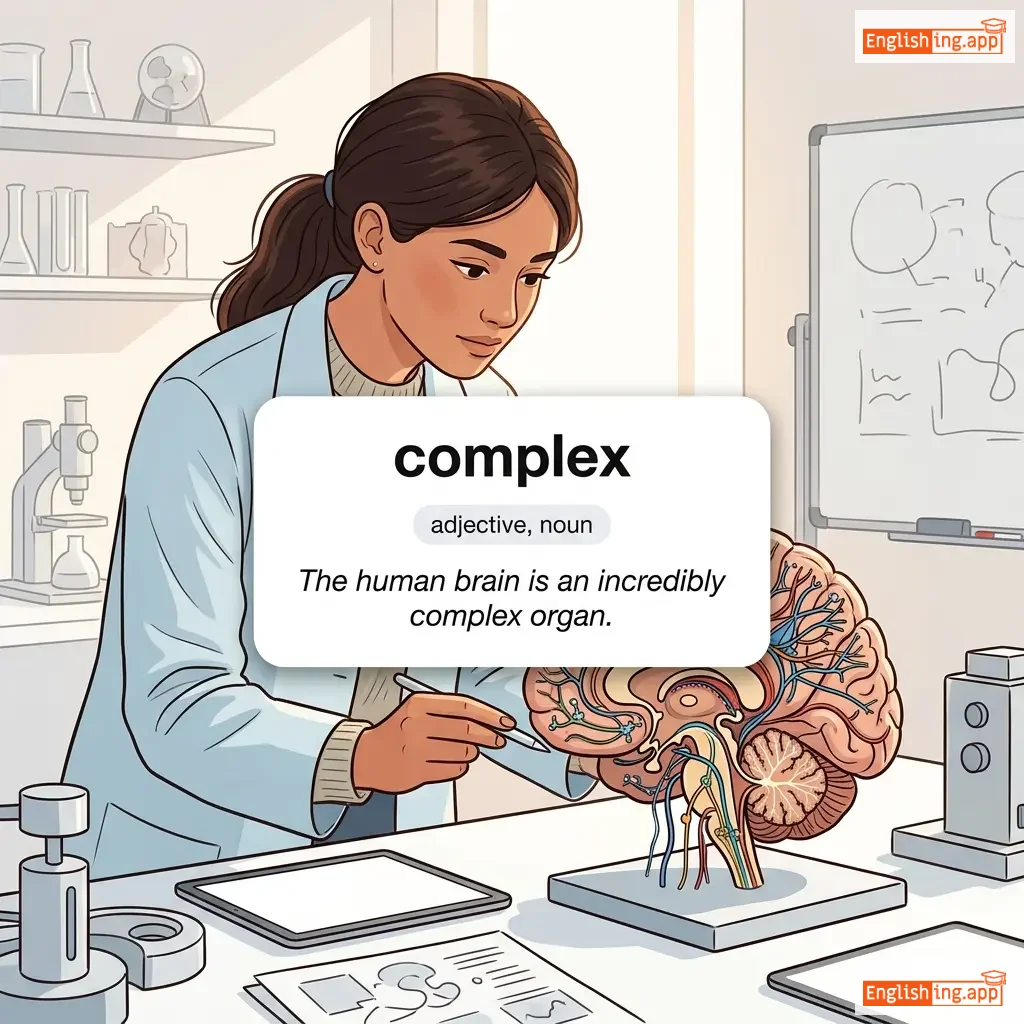
/ˈkɒm.pleks/
adjective
(コンプレックス)
••••••
|
|
複雑な; 難解な; 理解しにくい
fukuzatsu na
••••••
|
consisting of many different and connected parts; complicated; difficult to understand
••••••
|
The math problem was too complex for me to solve quickly. |
その数学の問題は私には複雑すぎて、すぐに解くことができませんでした。
Sono sūgaku no mondai wa watashi ni wa fukuzatsu sugite, sugu ni toku koto ga dekimasen deshita.
••••••
|
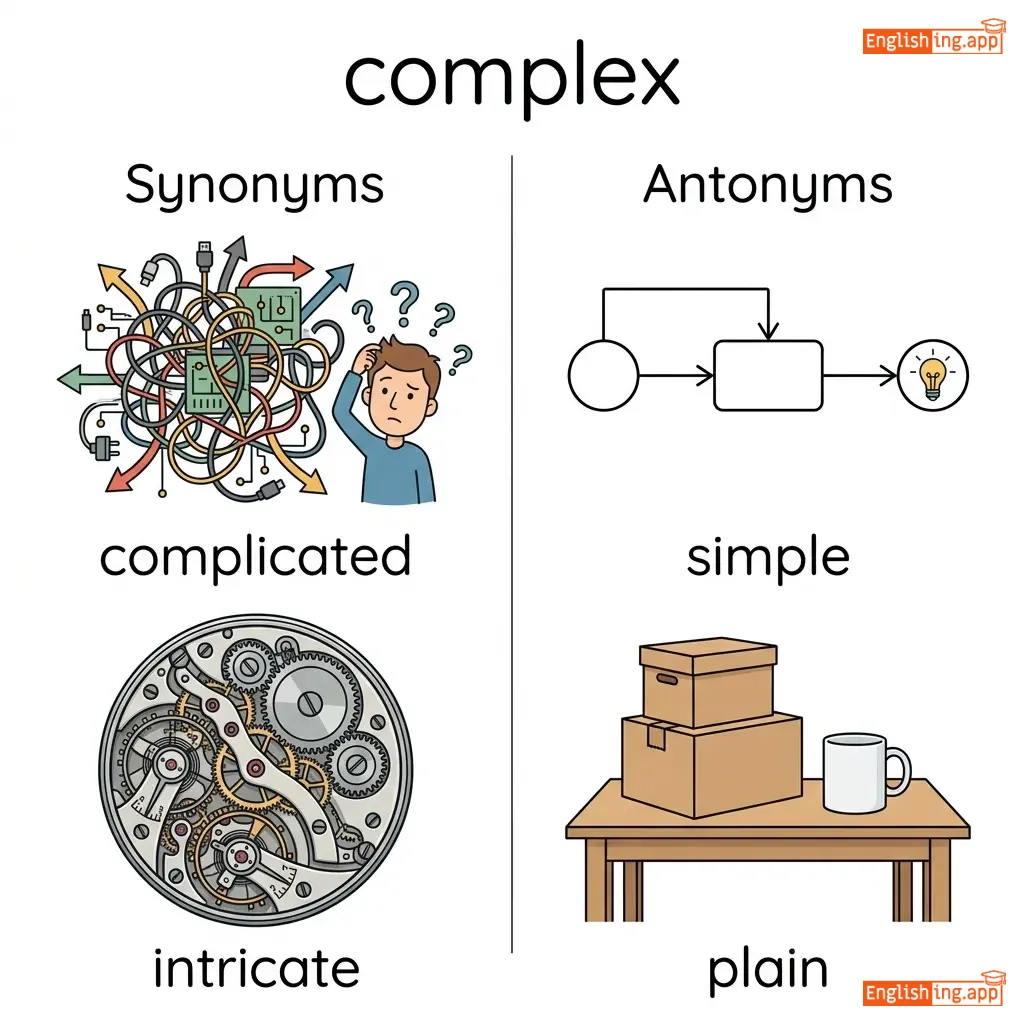
complicated, intricate, difficult, sophisticated
••••••
|
simple, easy, basic, straightforward
••••••
|
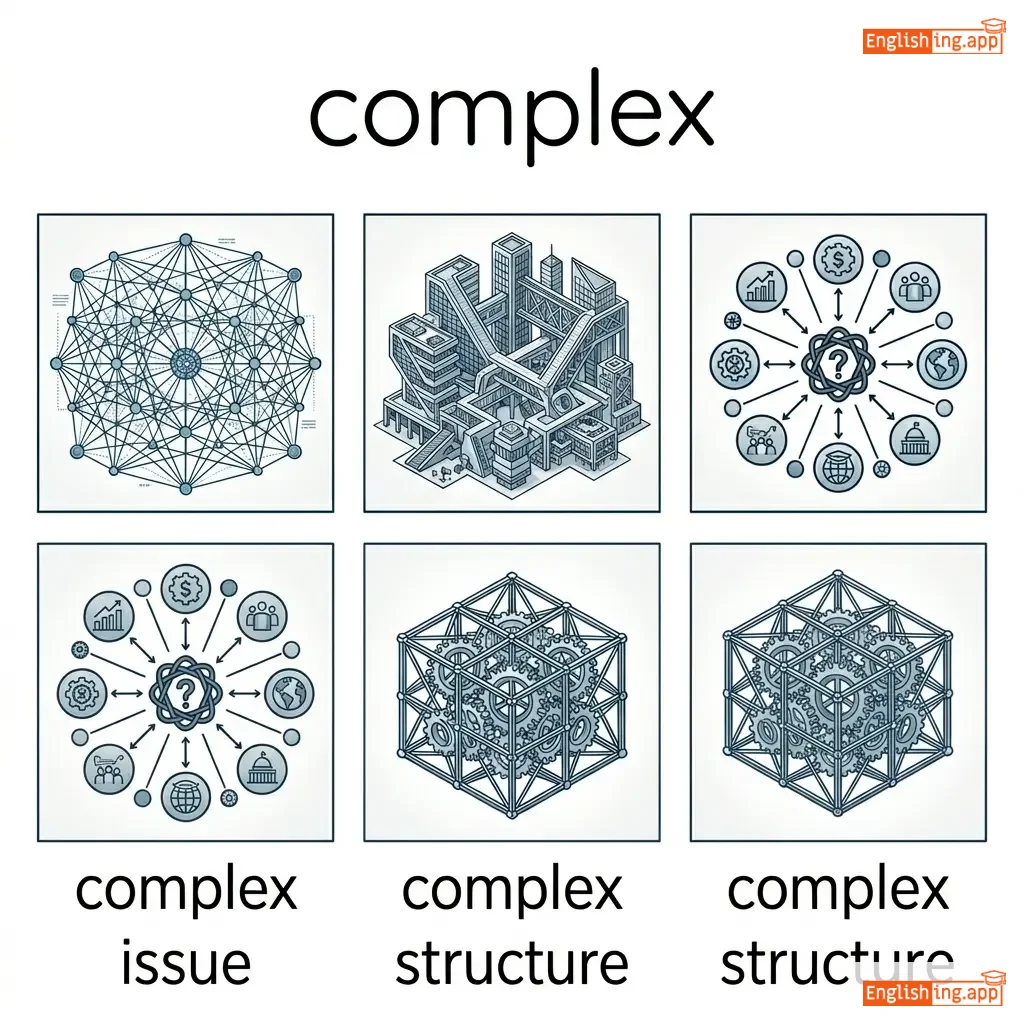
complex system, complex problem, highly complex
••••••
|
複雑なパズルはどんな言語でも理解するのが難しいです。
••••••
|
|
#107
😌
|
/ˈkʌmftərbəl/
adjective
(kʌmftərbəl)
••••••
|
|
快適な
kaiteki na
••••••
|
giving physical ease and relaxation; free from stress
••••••
|
This comfortable chair makes reading a pleasure. |
この快適な椅子は読書を楽しみに変える。
Kono kaiteki na isu wa dokusho o tanoshimi ni kaeru.
••••••
|
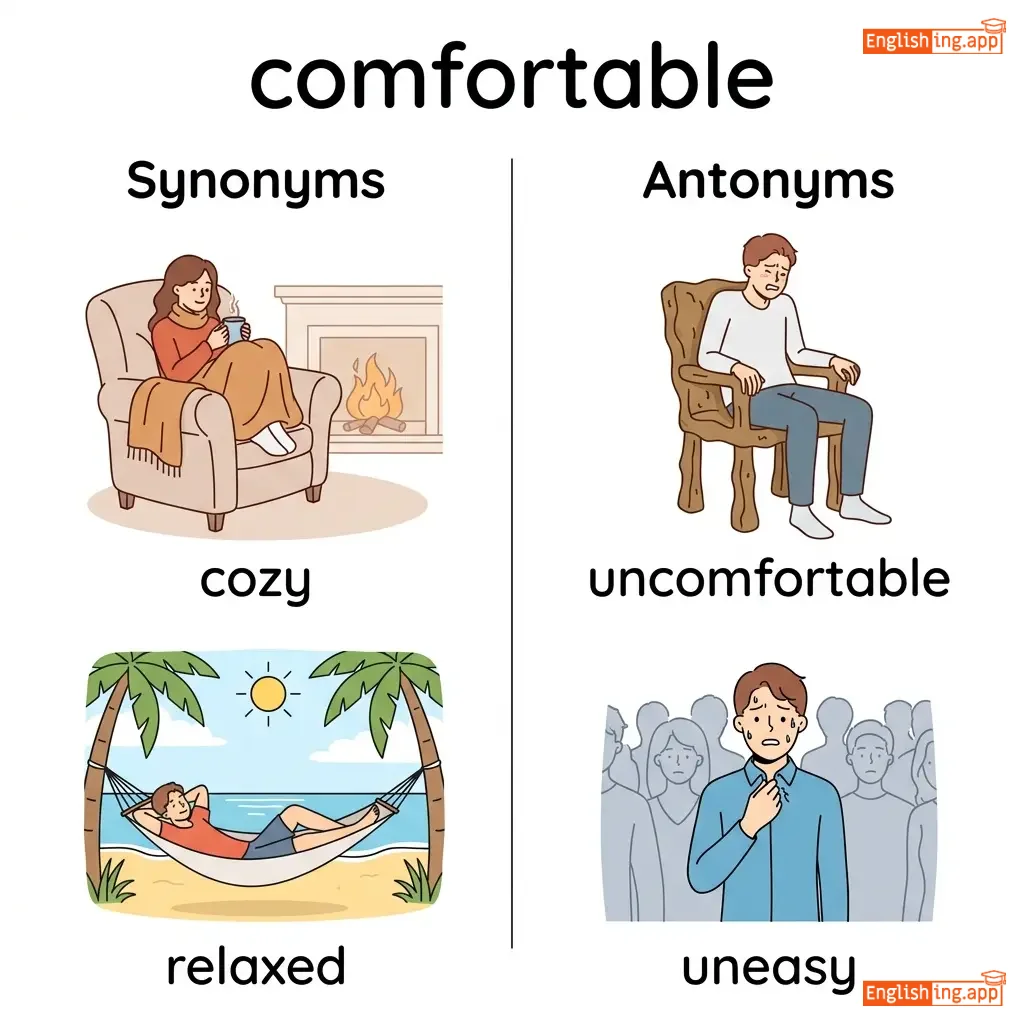
cozy, relaxed, pleasant, easy
••••••
|
uncomfortable, awkward, painful
••••••
|
comfortable bed, comfortable clothes, comfortable life
••••••
|
快適な (kaiteki na) という日本語とCOMFORTABLEでリラックスできる
••••••
|
|
#108
😞
|
/ˈtʃɪə.ləs/
adjective
(チアレス)
••••••
|
- •••••• |
憂鬱な; 陰気な; 悲しい; 喜びのない
yuutsuna; ingina; kanashii; yorokobi no nai
••••••
|
lacking happiness or comfort; gloomy; depressing; without cheer
••••••
|
The old house looked cheerless and abandoned in the winter rain.
古い家は冬の雨の中で寂しげで放置されているように見えました。
••••••
|
古い家は冬の雨の中で寂しげで放置されているように見えました。
Furui ie wa fuyu no ame no naka de sabishige de houchi sareteiru you ni miemashita.
••••••
|
gloomy, depressing, dismal, bleak, dreary
••••••
|
cheerful, bright, joyful, happy, uplifting
••••••
|
cheerless room, cheerless day, cheerless atmosphere, cheerless winter
••••••
|
チアレス = 憂鬱; 喜びのない空の家を想像してください。
••••••
|
|
#109
🧒
|
/ˈtʃaɪl.dɪʃ/
adjective
(チャイルディッシュ)
••••••
|
- •••••• |
子供っぽい; 子供のような振る舞いだが大人には不適切
kodomoppoi; kodomo no you na furumai daga otona ni wa futekisetsu
••••••
|
immature and silly; behaving in a way that is typical of a child but inappropriate for an adult
••••••
|
His childish behavior during the meeting was quite embarrassing.
His childish behavior during the meeting was quite embarrassing.
••••••
|
会議中の彼の子供っぽい行動はかなり恥ずかしいものでした。
Kaigi-chuu no kare no kodomoppoi koudou wa kanari hazukashii mono deshita.
••••••
|
immature, juvenile, infantile, naive, puerile
••••••
|
mature, adult, sophisticated, grown-up, responsible
••••••
|
childish behavior, childish games, childish tantrum, childish attitude
••••••
|
子供っぽい: 子供のような行動が大人には不適切
••••••
|
|
#110
📦
|
/kəmˈpækt/
adjective
(コンパクト)
••••••
|
- •••••• |
コンパクト; 小さくて効率的にデザインされた
konpakuto; chiisakute kōritsutekini dezain sareta
••••••
|
closely and neatly packed together; small and efficiently designed
••••••
|
She bought a compact car that fits easily in small parking spaces. |
彼女は小さな駐車スペースにも簡単に収まるコンパクトカーを買った。
Kanojo wa chiisana chūsha supēsu ni mo kantan ni osamaru konpakuto kā o katta
••••••
|
small, dense, tight, condensed
••••••
|
large, loose, spacious, expanded
••••••
|
compact disc, compact car, compact design
••••••
|
コンパクトな車は、小さな駐車スペースにもぴったり収まるように設計されています。
••••••
|
|
#111
❤️
|
/ˈtʃær.ɪ.tə.bəl/
adjective
(チャリタブル)
••••••
|
- •••••• |
慈善的; 寛大; 優しい
jienteki; kandai; yasashii
••••••
|
generous in giving to those in need; showing kindness
••••••
|
She is known for her charitable work in the community.
彼女は地域社会での慈善活動で知られています。
••••••
|
彼女は地域社会での慈善活動で知られています。
Kanojo wa chiiki shakai de no jienteki katsudou de shirareteimasu.
••••••
|
generous, kind, benevolent, philanthropic
••••••
|
selfish, greedy, stingy, cruel
••••••
|
charitable organization, charitable donation, charitable cause
••••••
|
チャリタブル(charitable)は、チャリティをする優しさが必要な行動です。
••••••
|
|
#112
🆓
|
/ˌkɒm.plɪˈmen.tər.i/
adjective
(kompurimentari)
••••••
|
- •••••• |
賛辞的な; 無料で提供される; 礼儀として提供された
sanjiteki na; muryō de teikyō sareru; reigi toshite teikyō sareta
••••••
|
expressing praise or admiration; given or supplied free of charge as a courtesy
••••••
|
The hotel offers complimentary breakfast for all guests.
ホテルはすべてのゲストに無料の朝食を提供します。
••••••
|
ホテルはすべてのゲストに無料の朝食を提供します。
Hoteru wa subete no gesuto ni muryō no chōshoku o teikyō shimasu.
••••••
|
free, praising, appreciative, flattering
••••••
|
critical, paid, charged, disparaging
••••••
|
complimentary ticket, complimentary remarks, complimentary service
••••••
|
賛辞的な行動で無料のサービスを提供する
••••••
|
|
#113
😇
|
/ˈtʃaɪld.laɪk/
adjective
(チャイルドライク)
••••••
|
- •••••• |
子供のような; 無邪気で信頼しやすい; 純粋でシンプル
kodomo no yō na; mujakide shinraishiyasui; junsui de shinpuru
••••••
|
innocent and trusting like a child; having the good qualities of a child; pure and simple
••••••
|
She maintained a childlike wonder about the world around her. |
彼女は周りの世界について子供のような驚きを保っていました。
kanojo wa mawari no sekai ni tsuite kodomo no yō na odoroki o motte imashita.
••••••
|
innocent, pure, naive, simple, trusting
••••••
|
cynical, sophisticated, worldly, jaded, experienced
••••••
|
childlike innocence, childlike wonder, childlike enthusiasm, childlike curiosity
••••••
|
子供のような無邪気さを持っていることは、純粋でシンプルな心を持つことを意味します。
••••••
|
|
#114
⚖️
|
/kəmˈpærətɪv/
adjective
(コンパラティブ)
••••••
|
- •••••• |
比較の
hikaku no
••••••
|
involving comparison between two or more things; relative
••••••
|
The study showed comparative results between different teaching methods.
研究は異なる教育方法間の比較結果を示しました。
••••••
|
研究は異なる教育方法間の比較結果を示しました。
Kenkyū wa kotonaru kyōiku hōhō kan no hikaku kekka o shimeshimashita.
••••••
|
relative, proportional, corresponding
••••••
|
absolute, independent, unrelated
••••••
|
comparative study, comparative analysis, comparative advantage
••••••
|
比較の: 異なる方法を比較することで結果を得る
••••••
|
|
#115
✨
|
/tʃeɪst/
adjective
(チェスト)
••••••
|
- •••••• |
清純; 徳
seijun; toku
••••••
|
pure and morally good; abstaining from sexual activity
••••••
|
She lived a chaste and virtuous life.
彼女は清純で徳のある生活をしました。
••••••
|
彼女は清純で徳のある生活をしました。
Kanojo wa seijun de toku no aru seikatsu o shimashita.
••••••
|
pure, virtuous, innocent, modest
••••••
|
impure, immoral, promiscuous, corrupt
••••••
|
chaste behavior, chaste life, chaste thoughts
••••••
|
Chaste: Like a pure and untouched snowflake, clear and serene.
••••••
|
|
#116
📚
|
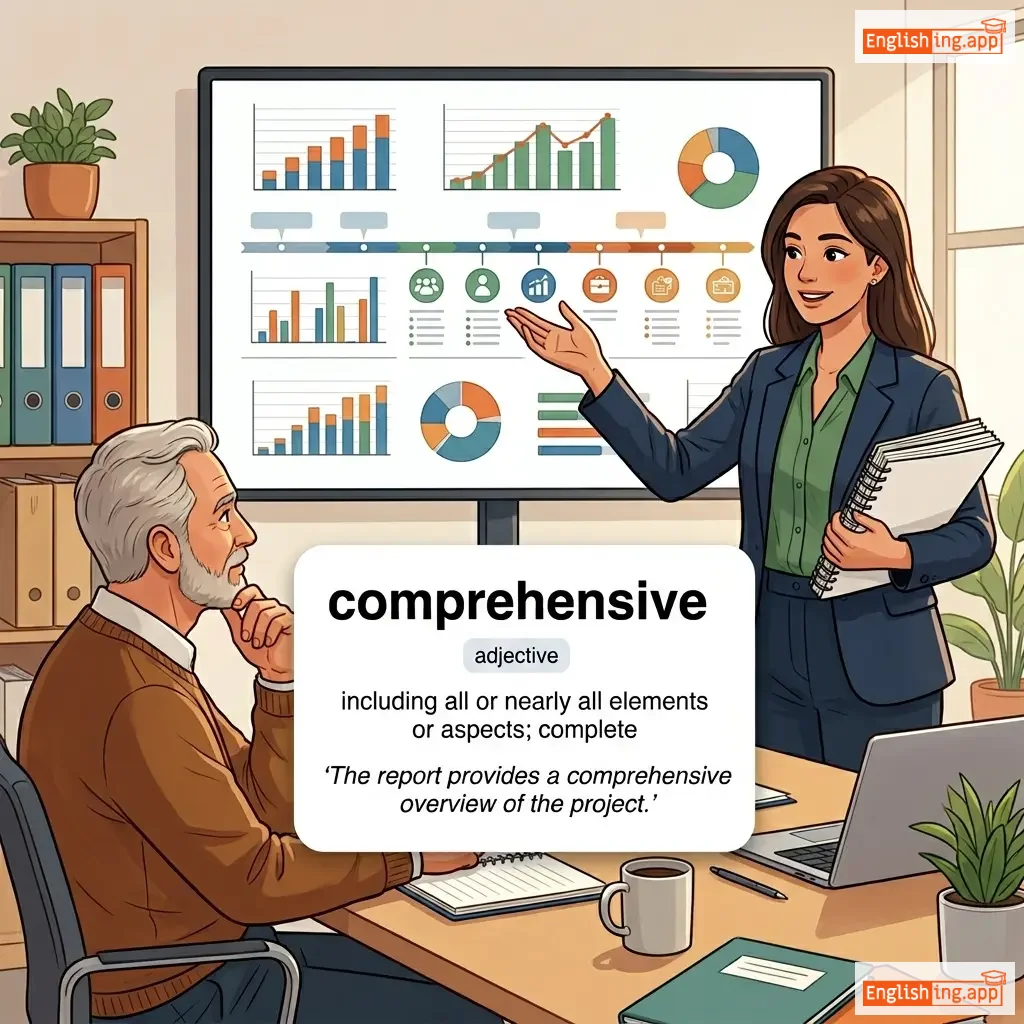
/ˌkɒm.prɪˈhen.sɪv/
adjective
(コンプリヘンシブ)
••••••
|
|
包括的な; 完全な; 総合的な
hōkatsuteki na; kanzen na; sōgōteki na
••••••
|
complete and including everything that is necessary; covering a wide range of topics
••••••
|
The report provides a comprehensive analysis of the market trends. |
報告書は市場動向の包括的な分析を提供します。
hōkokusho wa shijō dōkō no hōkatsuteki na bunseki o teikyō shimasu.
••••••
|
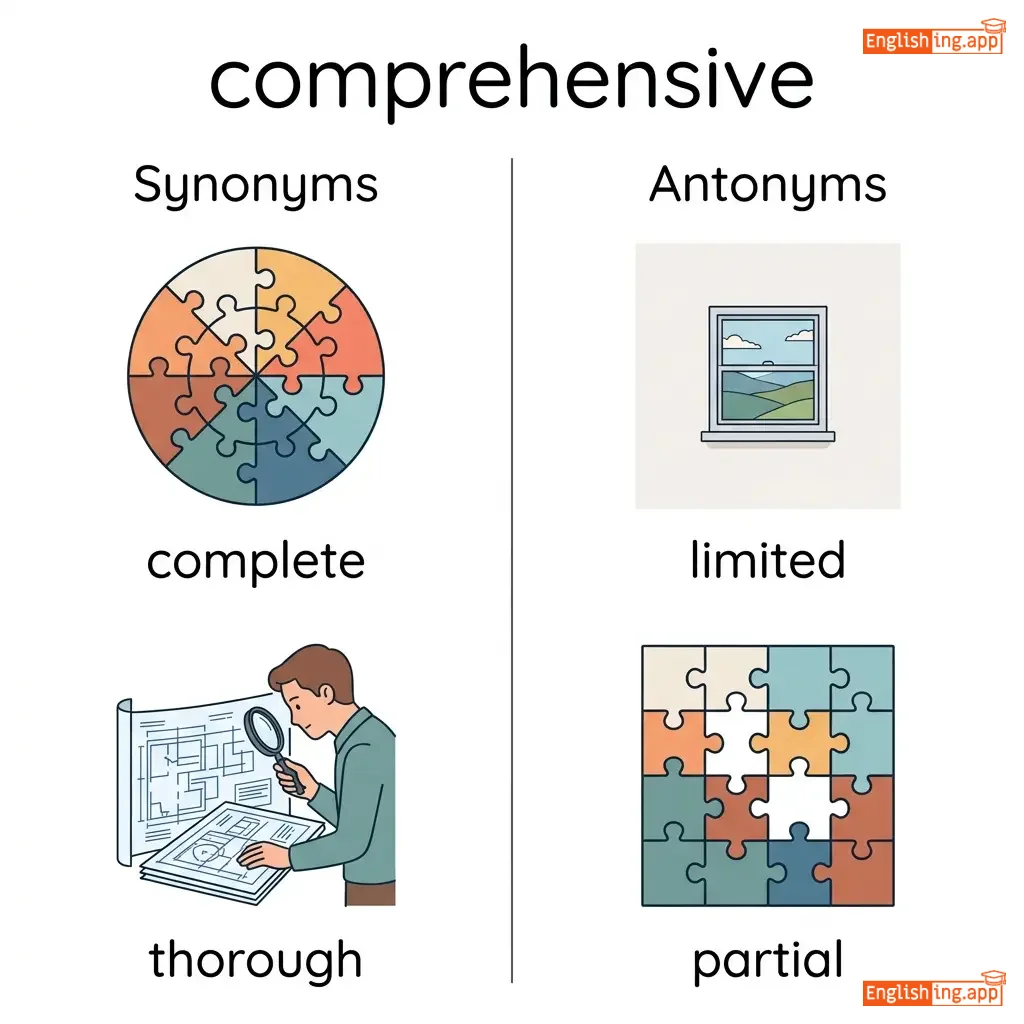
complete, thorough, extensive, all-inclusive
••••••
|
partial, incomplete, limited, narrow
••••••
|
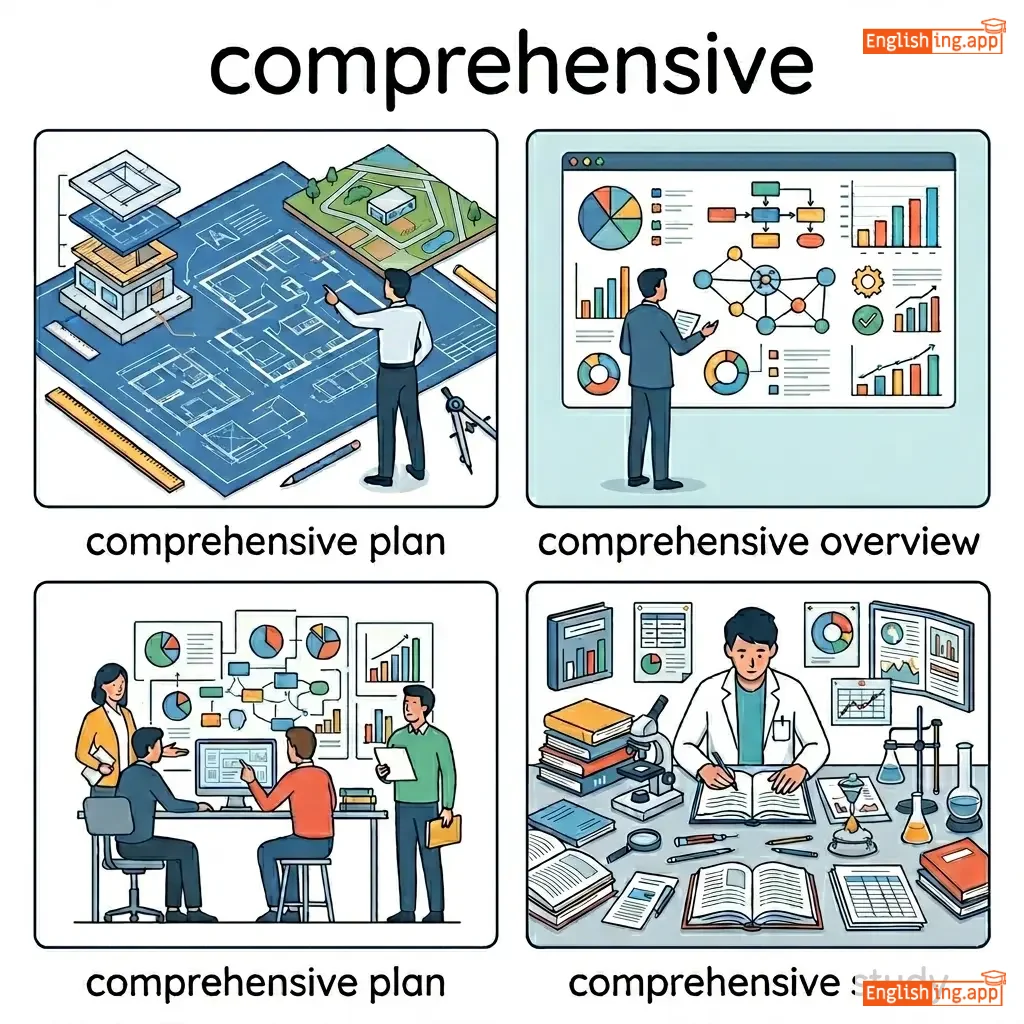
comprehensive study, comprehensive report, comprehensive coverage
••••••
|
完全に理解するには、すべてをカバーすることが大切です。
••••••
|
|
#117
🤔
|
/ˈtʃuː.zi/
adjective
(チューズィー)
••••••
|
- •••••• |
気難しい; 非常に選択的; 好きなことや受け入れることに関して特に気を使う
kizukashii
••••••
|
very careful in choosing; selective; particular about what one likes or accepts
••••••
|
He's very choosy about the restaurants where he eats. |
彼は食べるレストランにとても気難しい。
Kare wa taberu resutoran ni totemo kizukashii.
••••••
|
selective, picky, particular, fussy, discriminating
••••••
|
unselective, easy-going, accepting, indiscriminate, lenient
••••••
|
choosy eater, choosy buyer, choosy about friends, very choosy
••••••
|
気難しいとは、最良の選択をすることを意味します
••••••
|
|
#118
💰
|
/tʃiːp/
adjective
(チープ)
••••••
|
- •••••• |
安い; 低価格
yasui; teikakaku
••••••
|
low in price; costing little money
••••••
|
This restaurant serves cheap but delicious food. |
このレストランは安いが美味しい料理を提供します。
Kono resutoran wa yasui ga oishii ryouri wo teikyou shimasu.
••••••
|
inexpensive, affordable, low-cost, budget
••••••
|
expensive, costly, dear, pricey
••••••
|
cheap price, cheap goods, cheap hotel
••••••
|
Cheap means 安い, just like getting a 安い deal!
••••••
|
|
#119
❤️
|
/kəmˈpæʃənət/
adjective
(コンパッショネート)
••••••
|
- •••••• |
思いやりのある; 哀れみ深い
omoiyari no aru; awaremi fukai
••••••
|
feeling or showing sympathy and concern for others who are suffering
••••••
|
The compassionate nurse took extra time to comfort the worried patients. |
思いやりのある看護師は、心配している患者を慰めるために追加の時間を取った。
omoiyari no aru kangoshi wa, shinpai shite iru kanja o nagusameru tame ni tsuika no jikan o totta
••••••
|
caring, kind, sympathetic, merciful
••••••
|
cruel, heartless, indifferent, merciless
••••••
|
compassionate care, compassionate person, compassionate response
••••••
|
思いやりのある看護師を想像して、心配している患者を助けるシーン
••••••
|
|
#120
✂️
|
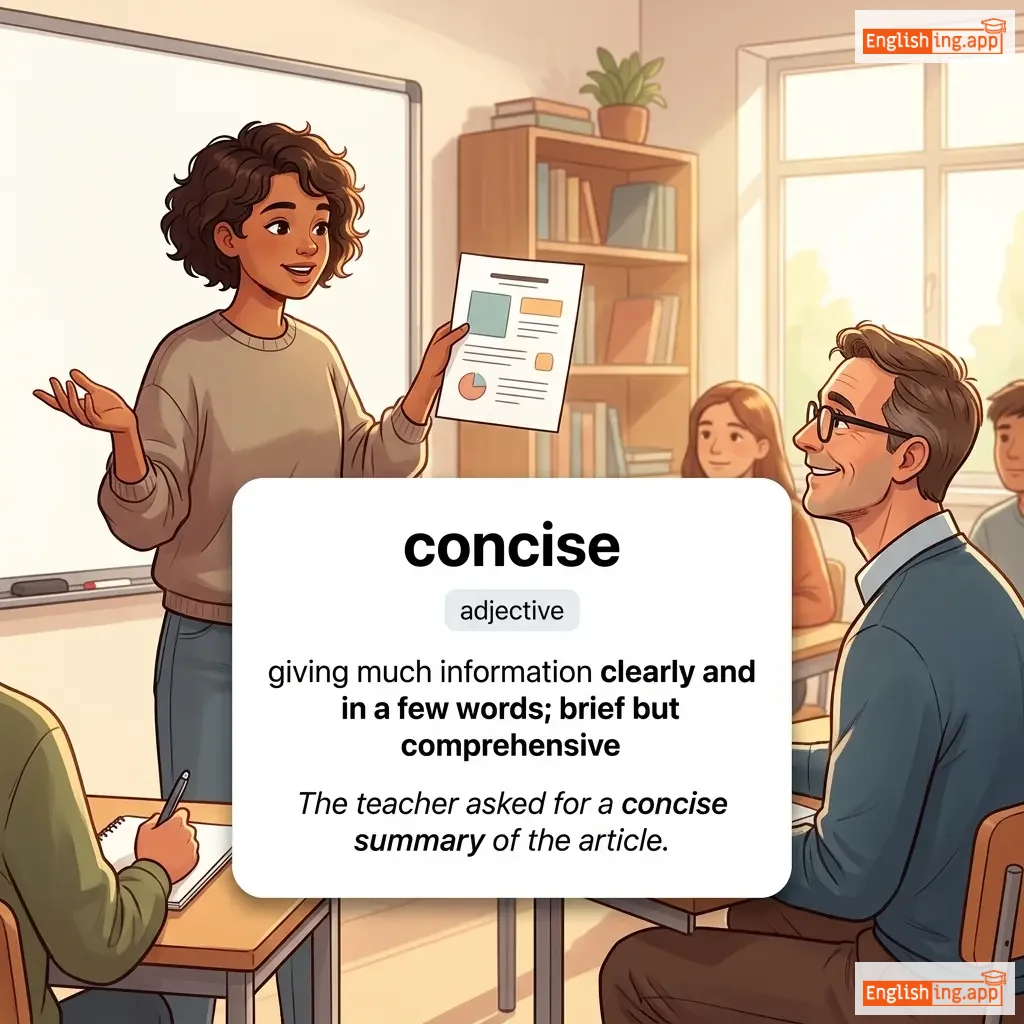
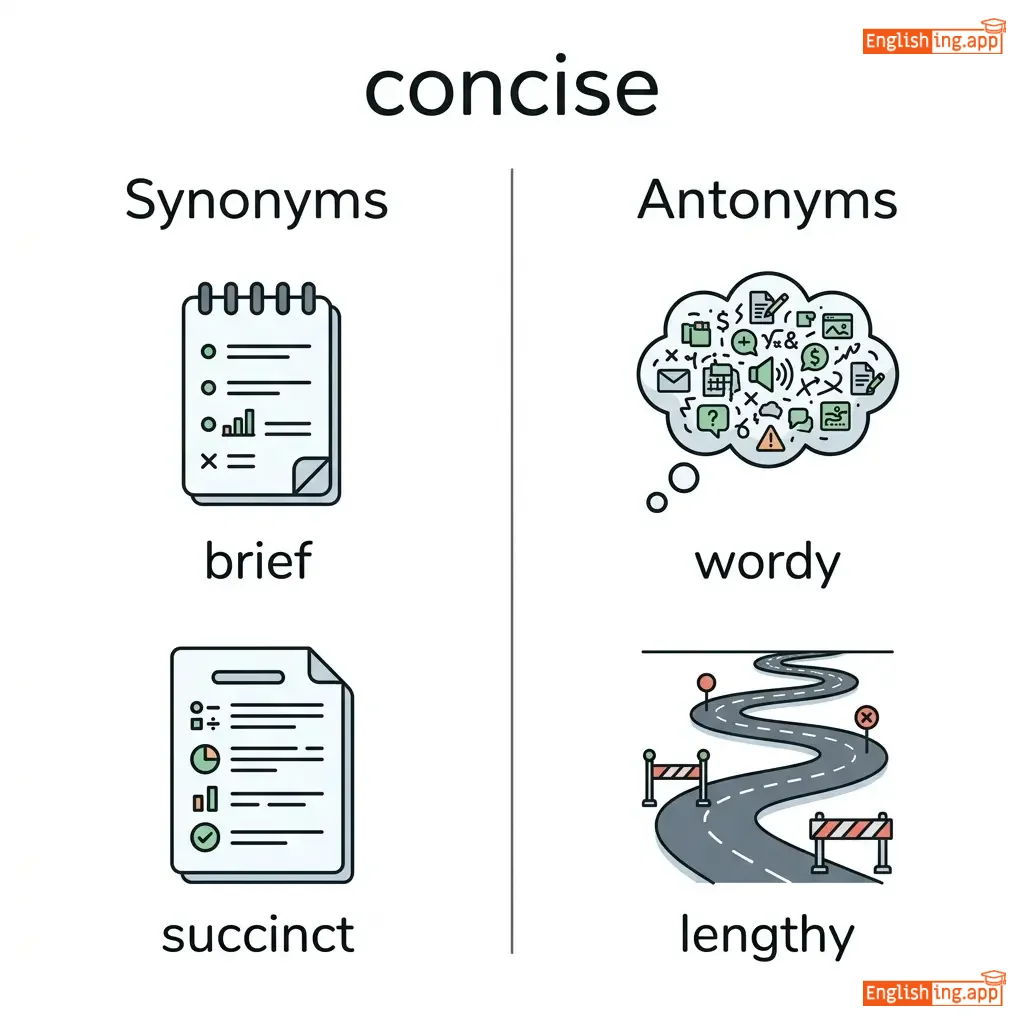
/kənˈsaɪs/
adjective
(コンサイズ)
••••••
|
|
簡潔
kanketsu
••••••
|
giving a lot of information clearly and in a few words; brief but comprehensive
••••••
|
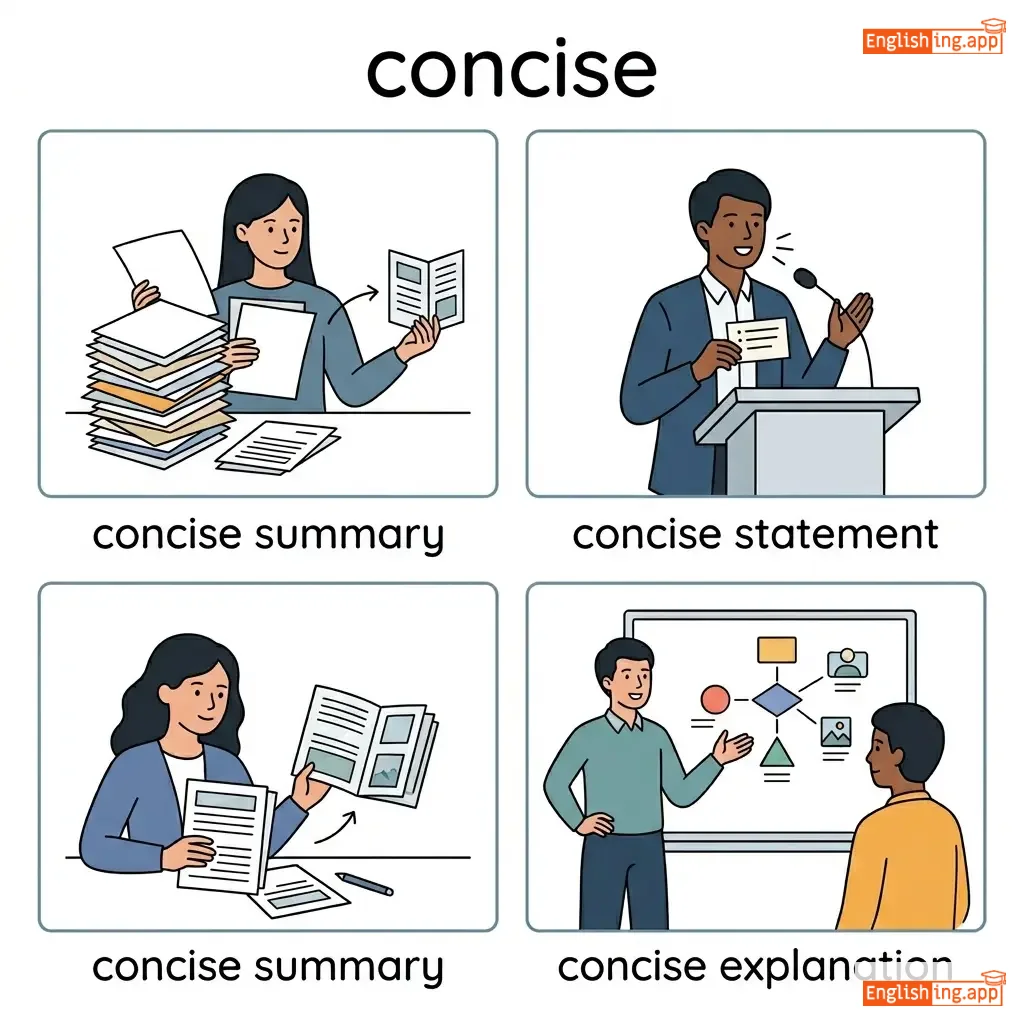
Please write a concise summary of the main points.
主要なポイントの簡潔な要約をお願いします。
••••••
|
主要なポイントの簡潔な要約をお願いします。
Shuyou na pointo no kanketsu na youyaku o onegaishimasu.
••••••
|
brief, short, succinct, compact
••••••
|
verbose, lengthy, wordy, elaborate
••••••
|
concise statement, concise summary, concise explanation
••••••
|
覚えておいて、'簡潔' は少ない言葉で重要な情報を伝えることです!
••••••
|
Vocabulary Quiz
Test your vocabulary by matching words with their translations or meanings.
Login to take the quiz
Comments (0)
Share your thoughts and join the discussion.
Join the discussion by logging in
Login to CommentNo comments yet
Be the first to share your thoughts!