

翻訳
過去
過去分詞
三人称単数
動名詞
意味
例文
例文の翻訳
同義語
対義語
コロケーション
ニーモニック
Swipe left or right, or use the buttons. Tap image to zoom.
例文の翻訳
単語
Lesson 8Lesson 8 - マスクトグル
|
絵文字
|
単語 | Images | 翻訳 | 意味 | 例文 | 例文の翻訳 | 同義語 | 対義語 | コロケーション | ニーモニック |
|---|---|---|---|---|---|---|---|---|---|---|
|
#141
💨
|
/ˈdæʃ.ɪŋ/
adjective
(ダッシング)
••••••
|
- •••••• |
魅力的; スタイリッシュ; 自信に満ちた;
miryokuteki; sutairisshu; jishin ni michita
••••••
|
stylish and confident; lively and energetic; attractive and charming
••••••
|
He looked dashing in his new suit. |
彼は新しいスーツで魅力的に見えました。
Kare wa atarashii suutsu de miryokuteki ni miemashita.
••••••
|
stylish, elegant, charming, handsome
••••••
|
dull, plain, unattractive
••••••
|
dashing gentleman, dashing hero, dashing appearance
••••••
|
おしゃれな男性が歩いている様子
••••••
|
|
#142
💪
|
/ˈdɪl.ɪ.dʒənt/
adjective
(ディリジェント)
••••••
|
- •••••• |
勤勉な
kinben na
••••••
|
hardworking and careful; showing persistent effort
••••••
|
She is a diligent student who studies every day. |
彼女は毎日勉強している勤勉な学生です。
Kanojo wa mainichi benkyou shite iru kinben na gakusei desu.
••••••
|
hardworking, industrious, conscientious, persevering
••••••
|
lazy, careless, negligent, idle
••••••
|
diligent student, diligent worker, diligent effort
••••••
|
勤勉な学生がディリジェントに勉強する姿を思い浮かべてください。
••••••
|
|
#143
❌
|
/dɪˈfektɪv/
adjective
(ディフェクティブ)
••••••
|
- •••••• |
欠陥のある; 不完全な
kenkan no aru; fukanzen na
••••••
|
having faults or defects; imperfect
••••••
|
The defective product was returned to the store. |
欠陥のある製品は店に返品されました。
Kenkan no aru seihin wa mise ni henpin saremashita.
••••••
|
faulty, flawed, imperfect, broken
••••••
|
perfect, flawless, functional, working
••••••
|
defective product, defective goods, defective gene
••••••
|
A defective product is 'kenkan no aru' because it is incomplete.
••••••
|
|
#144
🏜️
|
/ˈdesələt/
adjective
(デソレート)
••••••
|
- •••••• |
荒涼; 孤独; 不毛
kouyou; kodoku; fumou
••••••
|
deserted; lonely; barren
••••••
|
The abandoned village looked desolate and empty. |
放棄された村は荒涼として空っぽに見えた。
Houki sareta mura wa kouyou to shite karappo ni mieta.
••••••
|
barren, deserted, forsaken, isolated
••••••
|
populated, bustling, thriving, lively
••••••
|
desolate landscape, desolate place, feel desolate
••••••
|
荒涼 (kouyou) means desolate like a deserted landscape.
••••••
|
|
#145
🦁
|
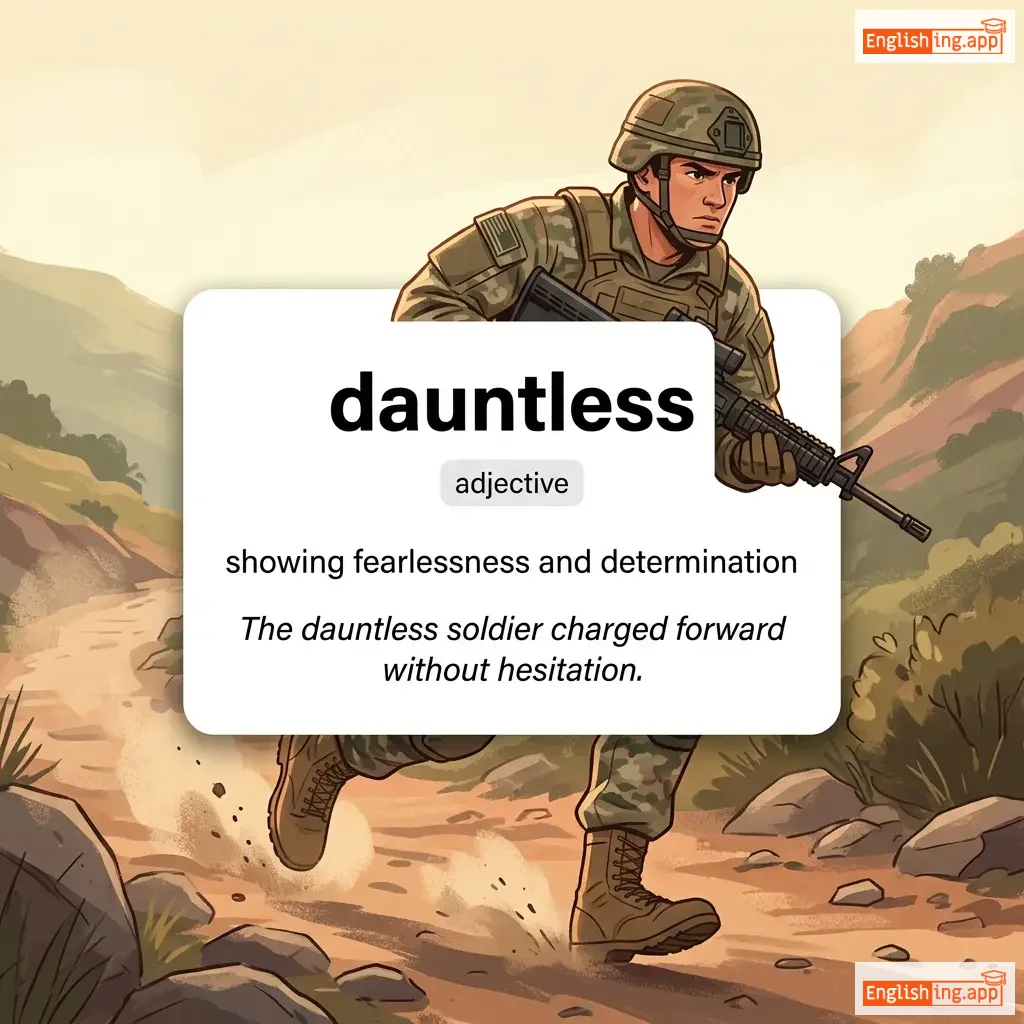
/ˈdɔːnt.ləs/
adjective
(ドントレス)
••••••
|
|
無謀な; 勇敢な; 恐れを知らない;
mumō na; yūkan na; osore o shiranai
••••••
|
fearless; showing courage and determination; bold and brave
••••••
|
The dauntless soldier faced the enemy without fear. |
無謀な兵士は恐れずに敵に立ち向かった。
Mumōna heishi wa osorezu ni teki ni tachimukatta.
••••••
|
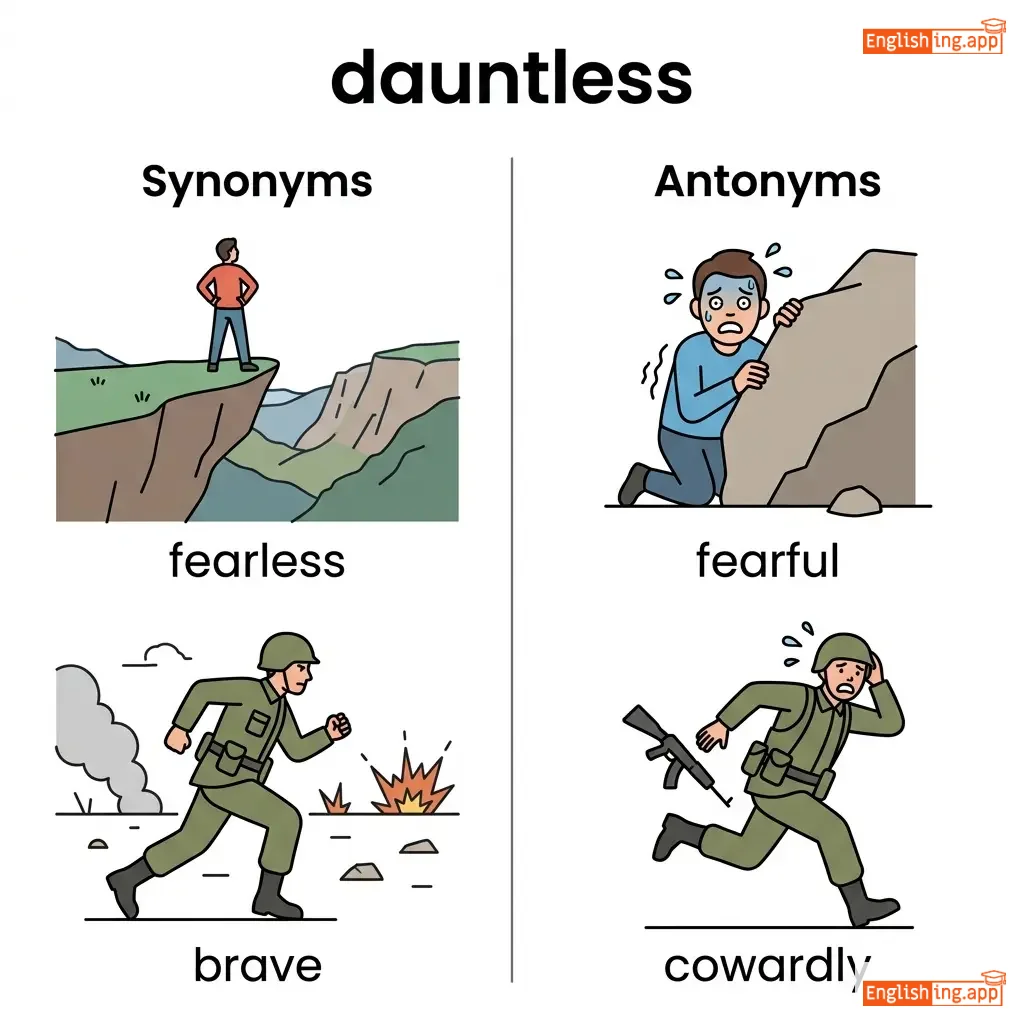
fearless, brave, courageous, bold
••••••
|
fearful, cowardly, timid
••••••
|
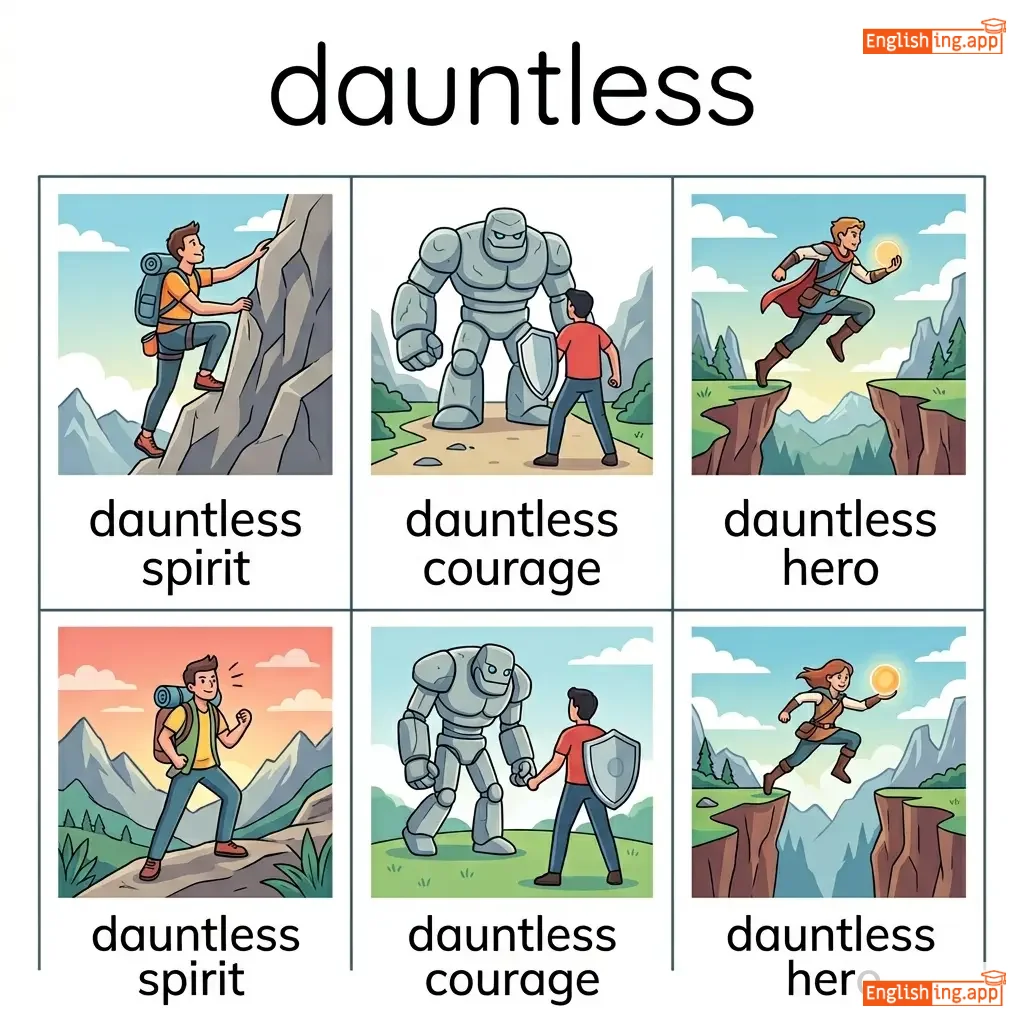
dauntless courage, dauntless spirit, dauntless warrior
••••••
|
Japanese: '無謀な' means fearless, embodying the dauntless courage in a soldier.
••••••
|
|
#146
🌙
|
/dɪm/
adjective
(ディム)
••••••
|
- •••••• |
薄暗い; 少ない光; 弱い
usugurai; sukunai hikari; yowai
••••••
|
not bright; having little light; faint
••••••
|
The room was dim with only a small candle for light.
部屋は薄暗く、ライトとして小さなキャンドルだけがありました。
••••••
|
部屋は薄暗く、ライトとして小さなキャンドルだけがありました。
Heya wa usugurai, raito toshite chiisana kyandoru dake ga arimashita.
••••••
|
faint, dark, dull, shadowy
••••••
|
bright, brilliant, clear, vivid
••••••
|
dim light, dim room, dim memory
••••••
|
Dim, Usugurai – 'Dim' is faint light.
••••••
|
|
#147
😞
|
/dɪˈsperɪŋ/
adjective
(ディスペアリング)
••••••
|
- •••••• |
絶望的な
zetsubō-teki na
••••••
|
feeling hopeless; in despair
••••••
|
She felt despairing after losing her job. |
彼女は仕事を失った後、絶望的な気持ちだった。
Kanojo wa shigoto o ushinatta ato, zetsubō-teki na kimochi datta.
••••••
|
hopeless, dejected, discouraged, downcast
••••••
|
hopeful, optimistic, encouraged, uplifted
••••••
|
despairing cry, feel despairing, despairing look
••••••
|
仕事を失うと感じる絶望的な感情
••••••
|
|
#148
🛡️
|
/dɪˈfensɪv/
adjective
(ディフェンシブ)
••••••
|
- •••••• |
防御的
bōgyoteki
••••••
|
used or intended to defend or protect; showing a tendency to react in an angry or hurt way when criticized
••••••
|
He became defensive when criticized about his work. |
彼は自分の仕事を批判されると防御的になった。
kare wa jibun no shigoto o hihan sareru to bōgyoteki ni natta
••••••
|
protective, guarded, cautious, wary
••••••
|
offensive, aggressive, attacking, open
••••••
|
defensive strategy, defensive position, defensive attitude
••••••
|
No •••••• |
|
#149
😤
|
/dɪˈfaɪənt/
adjective
(ディファイアント)
••••••
|
- •••••• |
反抗的な; 逆らう
hankō-teki na; sakarau
••••••
|
boldly resistant or challenging; disobedient
••••••
|
The defiant student refused to follow the rules.
その反抗的な学生はルールに従うことを拒否しました。
••••••
|
その反抗的な学生はルールに従うことを拒否しました。
Sono hankō-teki na gakusei wa rūru ni shitagau koto o kyohi shimashita.
••••••
|
rebellious, disobedient, insubordinate, stubborn
••••••
|
obedient, compliant, submissive, cooperative
••••••
|
defiant attitude, defiant behavior, defiant look
••••••
|
反抗的な学生は常にルールに挑戦します。
••••••
|
|
#150
😱
|
/ˈdespərət/
adjective
(デスパレート)
••••••
|
- •••••• |
絶望的
zetsubouteki
••••••
|
reckless; extremely urgent; critical
••••••
|
The situation became desperate as water supplies ran out. |
水の供給が尽きたとき、状況は絶望的になった。
Mizu no kyoukyuu ga tsukita toki, joukyou wa zetsubouteki ni natta.
••••••
|
urgent, extreme, dire, critical
••••••
|
calm, controlled, hopeful, secure
••••••
|
desperate situation, desperate attempt, desperate need
••••••
|
絶望的な状況とは逃げ場がない時です。
••••••
|
|
#151
✨
|
/ˈdæz.lɪŋ/
adjective
(dæz-ling)
••••••
|
- •••••• |
眩しい; 印象的な
mabushii; inshō-teki na
••••••
|
extremely bright and impressive; brilliant and stunning
••••••
|
The dazzling lights of the city amazed the tourists.
その都市の眩い光は観光客を驚かせました。
••••••
|
その都市の眩い光は観光客を驚かせました。
Sono toshi no mabushii hikari wa kankōkyaku o odorokasemashita.
••••••
|
brilliant, stunning, spectacular, blinding
••••••
|
dull, dim, ordinary
••••••
|
dazzling beauty, dazzling performance, dazzling smile
••••••
|
目を引くほど眩しい光を想像してみて!
••••••
|
|
#152
🏚️
|
/ˈdɪn.dʒi/
adjective
(ディンジー)
••••••
|
- •••••• |
汚れていて暗い; 色が鈍い
yogorete ite kurai; iro ga nibui
••••••
|
dark and dirty; gloomy; dull in color
••••••
|
The old building had dingy walls that needed painting. |
古い建物は、塗装が必要な汚れた壁を持っていた。
Furui tatemono wa, tosou ga hitsuyou na yogoreta kabe wo motte ita.
••••••
|
grimy, dirty, shabby, discolored
••••••
|
clean, bright, fresh, spotless
••••••
|
dingy room, dingy clothes, dingy appearance
••••••
|
汚れた場所で考えるとき、暗い場所を思い浮かべてみましょう。
••••••
|
|
#153
📉
|
/dɪˈfɪʃənt/
adjective
(デフィシエント)
••••••
|
- •••••• |
不足している
fusokushiteiru
••••••
|
not having enough of a specified quality or ingredient; lacking or inadequate
••••••
|
His diet was deficient in essential vitamins. |
彼の食事は必要なビタミンが不足していた。
kare no shokuji wa hitsuyou na bitamin ga fusokushiteita.
••••••
|
inadequate, insufficient, lacking, incomplete
••••••
|
adequate, sufficient, complete, abundant
••••••
|
deficient in vitamins, deficient diet, deficient skills
••••••
|
不足しているときは、何かが足りないことを思い出す。
••••••
|
|
#154
💸
|
/ˈdestatəʊt/
adjective
(デスティチュート)
••••••
|
- •••••• |
困窮した; 貧しい; 財産もお金もない
konkyū shita; mazushī; zaisan mo okane mo nai
••••••
|
extremely poor; without money or possessions
••••••
|
Many families became destitute after the economic collapse.
経済崩壊後、多くの家族は困窮しました。
••••••
|
経済崩壊後、多くの家族は困窮しました。
Keizai hōkai go, ōku no kazoku wa konkyū shimashita.
••••••
|
impoverished, penniless, poor, indigent
••••••
|
wealthy, rich, prosperous, affluent
••••••
|
destitute family, become destitute, utterly destitute
••••••
|
貧困、絶望の象徴
••••••
|
|
#155
☠️
|
/ˈded.li/
adjective
(デッドリー)
••••••
|
- •••••• |
致命的な; 死亡の; 危険な
chimiteki na; shibou no; kiken na
••••••
|
causing or able to cause death; extremely dangerous; lethal
••••••
|
The deadly poison killed the plant instantly. |
致命的な毒はその植物を瞬時に殺しました。
Chimiteki na doku wa sono shokubutsu o shunji ni koroshimashita.
••••••
|
lethal, fatal, dangerous, poisonous
••••••
|
harmless, safe, beneficial
••••••
|
deadly weapon, deadly disease, deadly serious
••••••
|
Deadly = 致命的な (chimiteki na) = 死亡の (shibou no)
••••••
|
|
#156
🤝
|
/ˌdɪp.ləˈmæt.ɪk/
adjective
(ディプロマティック)
••••••
|
- •••••• |
外交的; 人間関係をうまく扱うことができる
gaikō-teki; ningen kankei o umaku atsukau koto ga dekiru
••••••
|
relating to diplomacy; tactful; skilled in managing relationships
••••••
|
She gave a diplomatic answer to avoid offending anyone.
彼女は誰も怒らせないように外交的な答えをしました。
••••••
|
彼女は誰も怒らせないように外交的な答えをしました。
Kanojo wa dare mo okorasenai yō ni gaikō-teki na kotae o shimashita.
••••••
|
tactful, politic, strategic, skillful
••••••
|
blunt, tactless, rude, direct
••••••
|
diplomatic immunity, diplomatic relations, diplomatic approach
••••••
|
Diplomatic: まるで外交官のように答える方法。
••••••
|
|
#157
✅
|
/ˈdefɪnət/
adjective
(デフィニット)
••••••
|
- •••••• |
明確な; はっきりした; 特定の
meikakuna; hakkiri shita; tokutei no
••••••
|
clearly stated or decided; not vague or uncertain; specific
••••••
|
We need a definite answer by tomorrow. |
私たちは明日までに明確な答えが必要です。
Watashitachi wa ashita made ni meikakuna kotae ga hitsuyou desu
••••••
|
certain, clear, specific, precise
••••••
|
indefinite, uncertain, vague, unclear
••••••
|
definite answer, definite plan, definite article
••••••
|
Meikaku, hakkiri, tokutei! Kotae wa kore da!
••••••
|
|
#158
🧏
|
/def/
adjective
(デフ)
••••••
|
- •••••• |
耳が聞こえない; 聴覚障害がある
mimi ga kikoenai; choukaku shougai ga aru
••••••
|
unable to hear; having a hearing impairment
••••••
|
The deaf child learned to communicate using sign language.
そのろうの子供は手話を使ってコミュニケーションを学びました。
••••••
|
そのろうの子供は手話を使ってコミュニケーションを学びました。
Sono rō no kodomo wa shuwa o tsukatte komyunikeeshon o manabimashita.
••••••
|
hearing-impaired, hard of hearing
••••••
|
hearing, able to hear
••••••
|
deaf person, deaf community, stone deaf
••••••
|
デフの人は耳が聞こえない、手話を使う。
••••••
|
|
#159
💥
|
/dɪˈstrʌktɪv/
adjective
(デストラクティブ)
••••••
|
- •••••• |
破壊的な
hakai-teki na
••••••
|
causing damage; harmful
••••••
|
The hurricane was highly destructive to coastal areas. |
ハリケーンは沿岸地域に非常に破壊的でした。
Harikēn wa engan chiiki ni hijō ni hakai-teki deshita.
••••••
|
damaging, harmful, devastating, ruinous
••••••
|
constructive, beneficial, creative, helpful
••••••
|
destructive force, destructive behavior, highly destructive
••••••
|
The Japanese word '破壊的' (hakai-teki) shares the same root as 'destruction'.
••••••
|
|
#160
⚠️
|
/daɪər/
adjective
(ダイア)
••••••
|
- •••••• |
深刻な; 緊急の; 恐ろしい
shinkoku na; kinkyū no; osoroshī
••••••
|
extremely serious; urgent; terrible
••••••
|
The country is facing a dire economic crisis.
その国は深刻な経済危機に直面している。
••••••
|
その国は深刻な経済危機に直面している。
Sono kuni wa shinkoku na keizai kiki ni chokumen shite iru.
••••••
|
terrible, awful, dreadful, urgent
••••••
|
hopeful, encouraging, positive, mild
••••••
|
dire consequences, dire situation, dire need
••••••
|
Dire in Japanese sounds alarming, like a huge problem approaching.
••••••
|
Vocabulary Quiz
Test your vocabulary by matching words with their translations or meanings.
Login to take the quiz
Comments (0)
Share your thoughts and join the discussion.
Join the discussion by logging in
Login to CommentNo comments yet
Be the first to share your thoughts!