

翻訳
過去
過去分詞
三人称単数
動名詞
意味
例文
例文の翻訳
同義語
対義語
コロケーション
ニーモニック



Swipe left or right, or use the buttons. Tap image to zoom.
例文の翻訳
単語
Lesson 34Lesson 34 - マスクトグル
|
絵文字
|
単語 | Images | 翻訳 | 意味 | 例文 | 例文の翻訳 | 同義語 | 対義語 | コロケーション | ニーモニック |
|---|---|---|---|---|---|---|---|---|---|---|
|
#661
🤔
|
/ˈpruː.dənt/
adjective
(慎重)
••••••
|
- •••••• |
慎重な; 賢明な; 注意深い;
shinchou
••••••
|
wise; careful; cautious;
••••••
|
It's prudent to save money for the future. |
将来に備えてお金を貯めることは慎重です。
Shourai ni sonaete okane o tameru koto wa shinchou desu.
••••••
|
wise, careful, cautious, sensible, judicious
••••••
|
reckless, imprudent, careless, foolish
••••••
|
prudent decision, prudent investment, prudent approach
••••••
|
慎重は将来に向けてお金を貯めることです。
••••••
|
|
#662
🤫
|
/ˈkwaɪ.ɪt/
adjective
(kwaito)
••••••
|
- •••••• |
静かな; 穏やかな; 騒音を出さない
shizukana; odayakana; saon o dasanai
••••••
|
silent; peaceful; calm; making little or no noise
••••••
|
Please keep quiet during the movie. |
映画中は静かにしてください。
Eiga-chū wa shizukani shite kudasai.
••••••
|
silent, peaceful, calm, hushed
••••••
|
loud, noisy, boisterous, rowdy
••••••
|
quiet voice, quiet place, keep quiet, quiet time
••••••
|
静かな部屋を思い浮かべて、静けさが'quiet'を表現する。
••••••
|
|
#663
✖️4️⃣
|
/ˈkwɑː.drʊ.pəl/
adjective
(クアドラプル)
••••••
|
- •••••• |
四倍
shi bai
••••••
|
four times as much or as many; consisting of four parts
••••••
|
The company's profits have shown quadruple growth this year. |
会社の利益は今年四倍の成長を見せました。
Kaisha no rieki wa kotoshi shi bai no seichou o misemashita.
••••••
|
fourfold, four times
••••••
|
quarter, fourth
••••••
|
quadruple growth, quadruple increase, quadruple the amount
••••••
|
四倍の成長で会社が驚く
••••••
|
|
#664
📅
|
/ˈkwɔːrtərli/
adjective
(クォータリー)
••••••
|
- •••••• |
四半期ごと
shihanki goto
••••••
|
occurring every three months; relating to a quarter of a year
••••••
|
The company publishes quarterly reports to shareholders.
会社は株主に四半期ごとの報告書を発行します。
••••••
|
会社は株主に四半期ごとの報告書を発行します。
Kaisha wa kabunushi ni shihanki goto no hokokusho o hakko shimasu.
••••••
|
every three months, seasonal, periodic
••••••
|
annual, monthly, daily
••••••
|
quarterly report, quarterly meeting, quarterly earnings
••••••
|
四半期ごとの報告書は年を4つに分ける感じだね!
••••••
|
|
#665
⏰
|
/ˈpʌŋk.tʃu.əl/
adjective
(ハピネス)
••••••
|
- •••••• |
時間厳守
jikan genshu
••••••
|
on time; prompt;
••••••
|
She is always punctual for meetings. |
彼女は会議にいつも時間通りに参加します。
Kanojo wa kaigi ni itsumo jikan dōri ni sanka shimasu.
••••••
|
timely, prompt, on time, precise
••••••
|
late, tardy, unpunctual, delayed
••••••
|
punctual arrival, punctual person, punctual attendance
••••••
|
時間 (time) + 厳守 (strictly obey) – A person who always respects time!
••••••
|
|
#666
⚔️
|
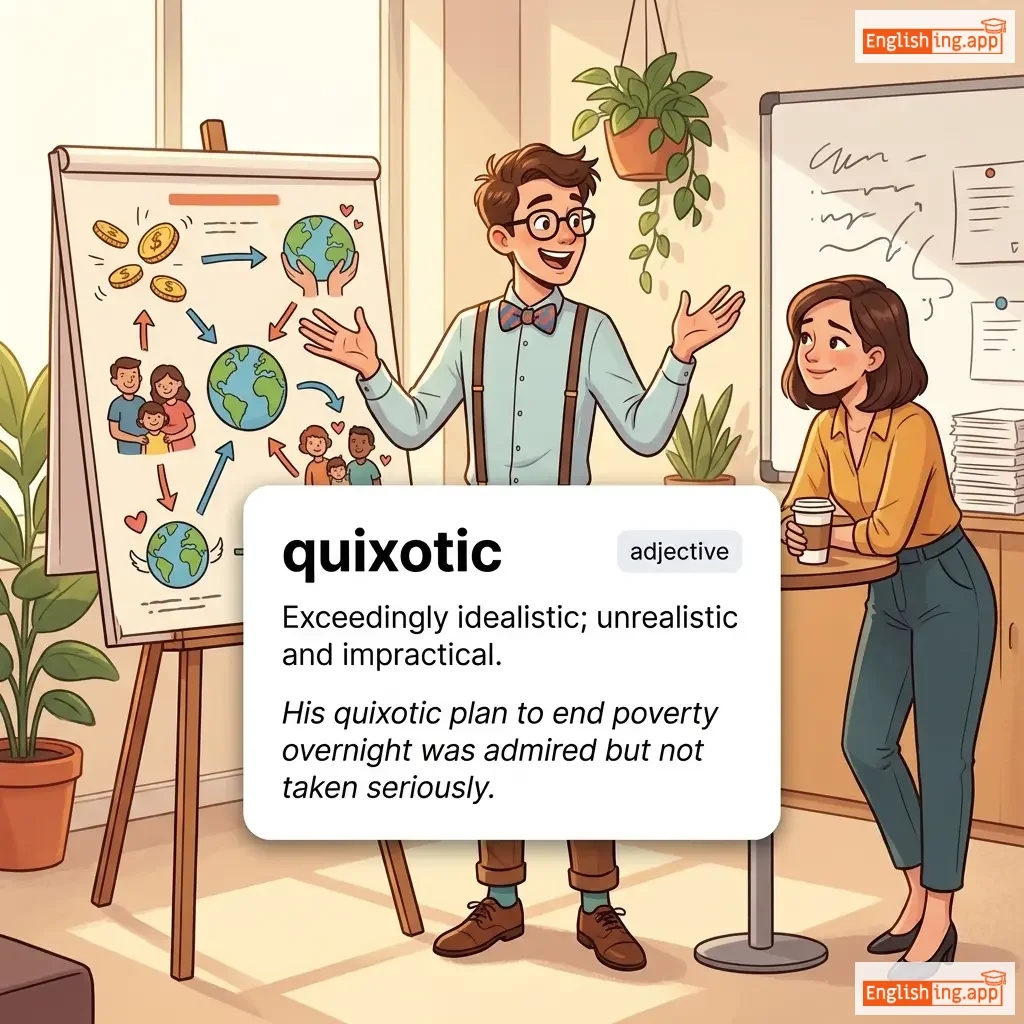
/kwɪkˈsɒt.ɪk/
adjective
(kwiksótik)
••••••
|
|
理想的な;
risōteki na
••••••
|
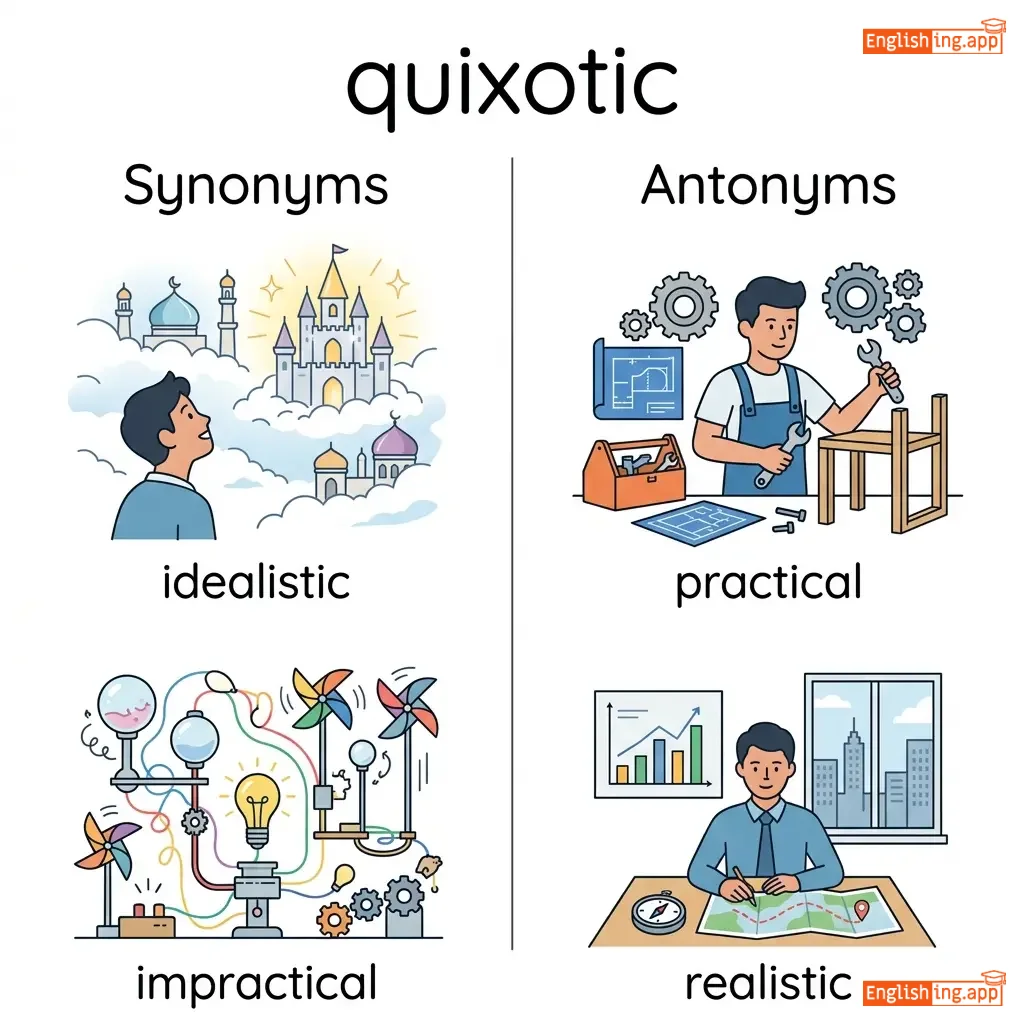
idealistic; impractical; unrealistic
••••••
|
His quixotic quest to save the old building was admirable but impractical.
His quixotic quest to save the old building was admirable but impractical.
••••••
|
古い建物を救おうとする彼の理想的な冒険は称賛に値するが、実用的ではなかった。
Furui tatemono o sukuu to suru kare no risōteki na bōken wa shōsan ni atai suru ga, jitsuyōtekide wa nakatta.
••••••
|
idealistic, impractical, unrealistic, romantic
••••••
|
practical, realistic, pragmatic, sensible
••••••
|
quixotic quest, quixotic dream, quixotic adventure, quixotic mission
••••••
|
理想と現実が交差した時に、何かを達成するために理想的に行動することがある。
••••••
|
|
#667
🤔
|
/kwɪər/
adjective
(クィア)
••••••
|
- •••••• |
奇妙な; 異常な; 特異な
kuia
••••••
|
strange; unusual; peculiar; odd
••••••
|
The old house had a queer atmosphere that made visitors uncomfortable. |
古い家は奇妙な雰囲気があり、訪問者を不快にさせました。
Furui ie wa kimyōna fun'iki ga ari, hōmonsha o fukai ni sasemashita.
••••••
|
strange, odd, unusual, peculiar
••••••
|
normal, ordinary, typical, conventional
••••••
|
queer feeling, queer behavior, queer theory
••••••
|
‘奇妙な’を‘kwīr’の同義語として覚えると覚えやすい。
••••••
|
|
#668
✅🎓
|
/ˈkwɑː.lɪ.faɪd/
adjective
(クオリファイド)
••••••
|
|
資格のある; 証明された
shikaku no aru; shōmei sareta
••••••
|
having the necessary skills, knowledge, or experience for a particular job or activity; certified
••••••
|
She is a qualified doctor with years of experience.
彼女は多くの経験を持つ資格のある医者です。
••••••
|
彼女は多くの経験を持つ資格のある医者です。
kanojo wa ōku no keiken o motsu shikaku no aru isha desu.
••••••
|
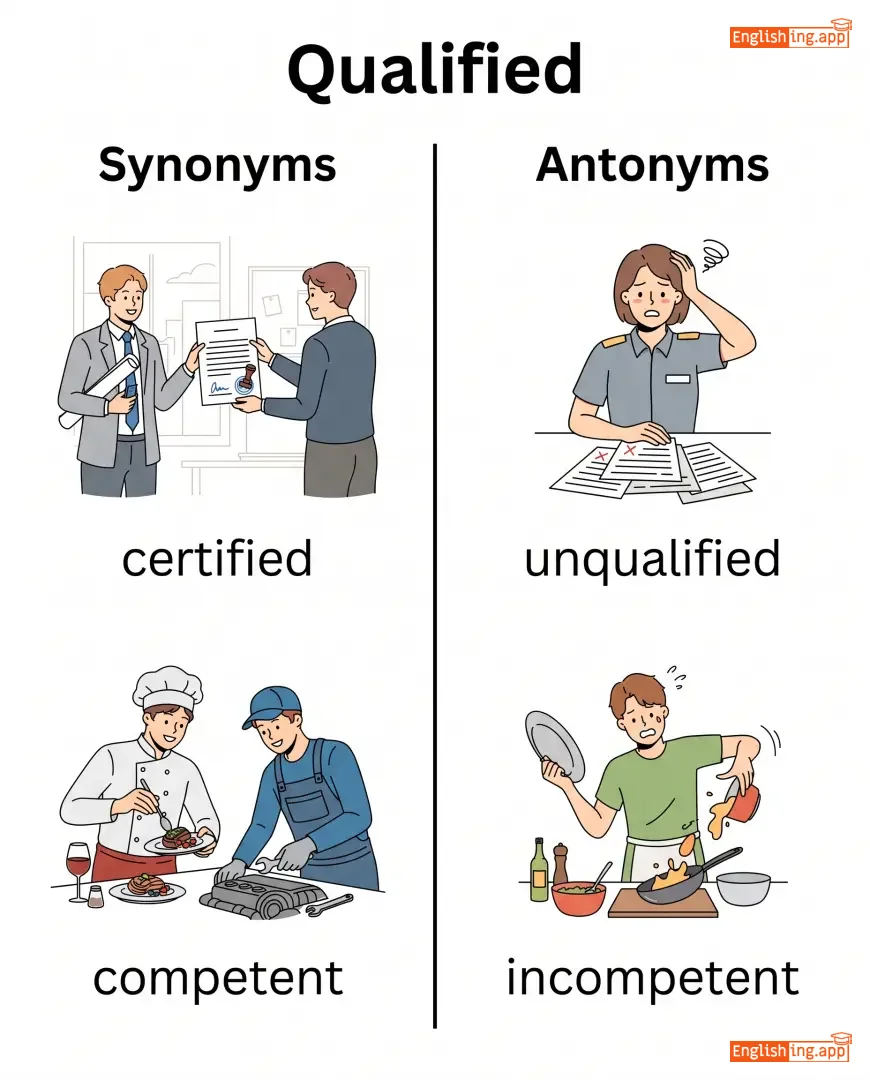
certified, competent, skilled, eligible
••••••
|
unqualified, incompetent, inexperienced
••••••
|
qualified teacher, qualified engineer, highly qualified
••••••
|
資格のある医者は常に証明書と経験を持っています。
••••••
|
|
#669
🔍📊
|
/ˈkwɑː.lɪ.teɪ.tɪv/
adjective
(クオリタティブ)
••••••
|
- •••••• |
定性的
teiseiteki
••••••
|
relating to quality or character rather than quantity; descriptive rather than numerical
••••••
|
The research focuses on qualitative analysis rather than numbers.
研究は数字よりも定性的分析に焦点を当てています。
••••••
|
研究は数字よりも定性的分析に焦点を当てています。
Kenkyū wa sūji yori mo teiseiteki bunseki ni shōten o ateteimasu.
••••••
|
descriptive, subjective, non-numerical
••••••
|
quantitative, numerical, statistical
••••••
|
qualitative research, qualitative analysis, qualitative data
••••••
|
定性的 = 数字より質重視
••••••
|
|
#670
❓
|
/ˈkwestʃənəbl/
adjective
(kwes-chuh-nuh-buru)
••••••
|
- •••••• |
疑わしい
utagawashii
••••••
|
doubtful; dubious; suspicious; open to doubt or suspicion
••••••
|
His questionable business practices led to an investigation. |
彼の疑わしいビジネス慣行は調査を引き起こしました。
Kare no utagawashii bijinesu kan'nō wa chōsa o hikiokoshimashita.
••••••
|
doubtful, dubious, suspicious, uncertain
••••••
|
certain, reliable, trustworthy, unquestionable
••••••
|
questionable methods, questionable ethics, questionable decision
••••••
|
Japanese speakers can use '疑わしい' (utagawashii) as a clear link to 'questionable'.
••••••
|
|
#671
🌶️
|
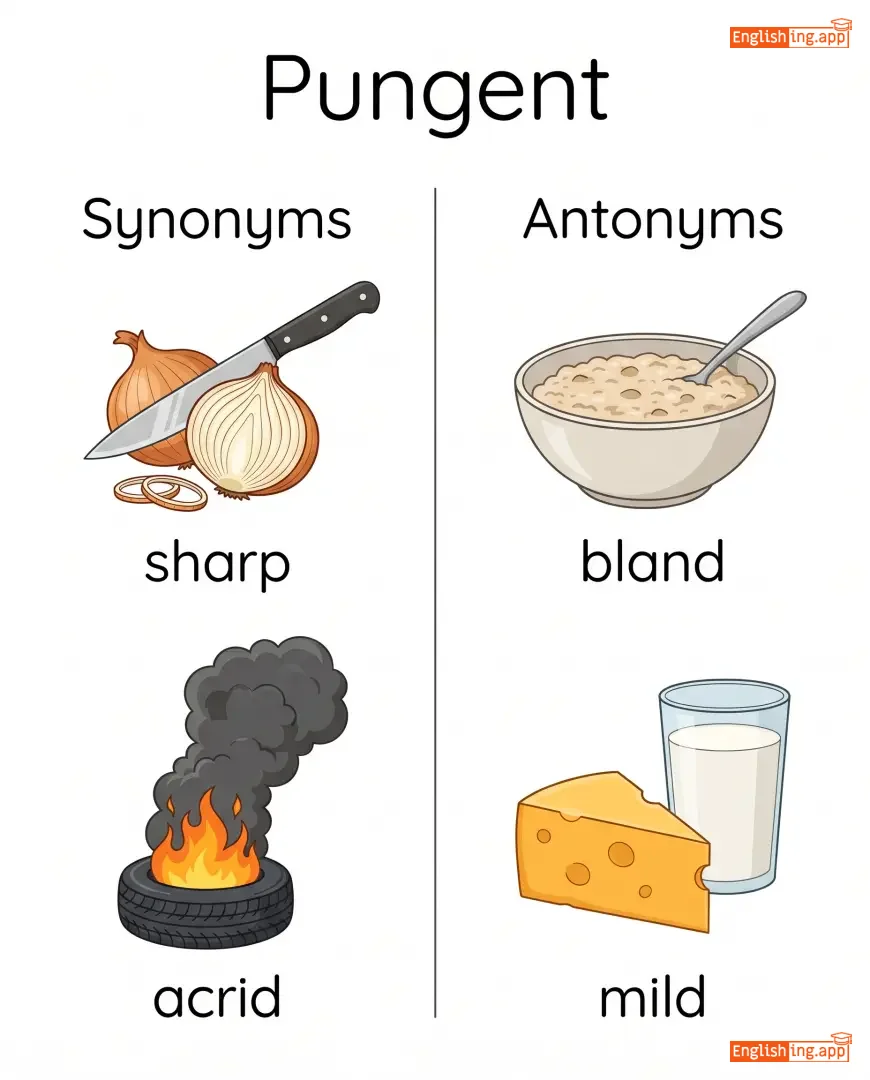
/ˈpʌn.dʒənt/
adjective
(パンジェント)
••••••
|
|
鋭い匂いのする
panjent
••••••
|
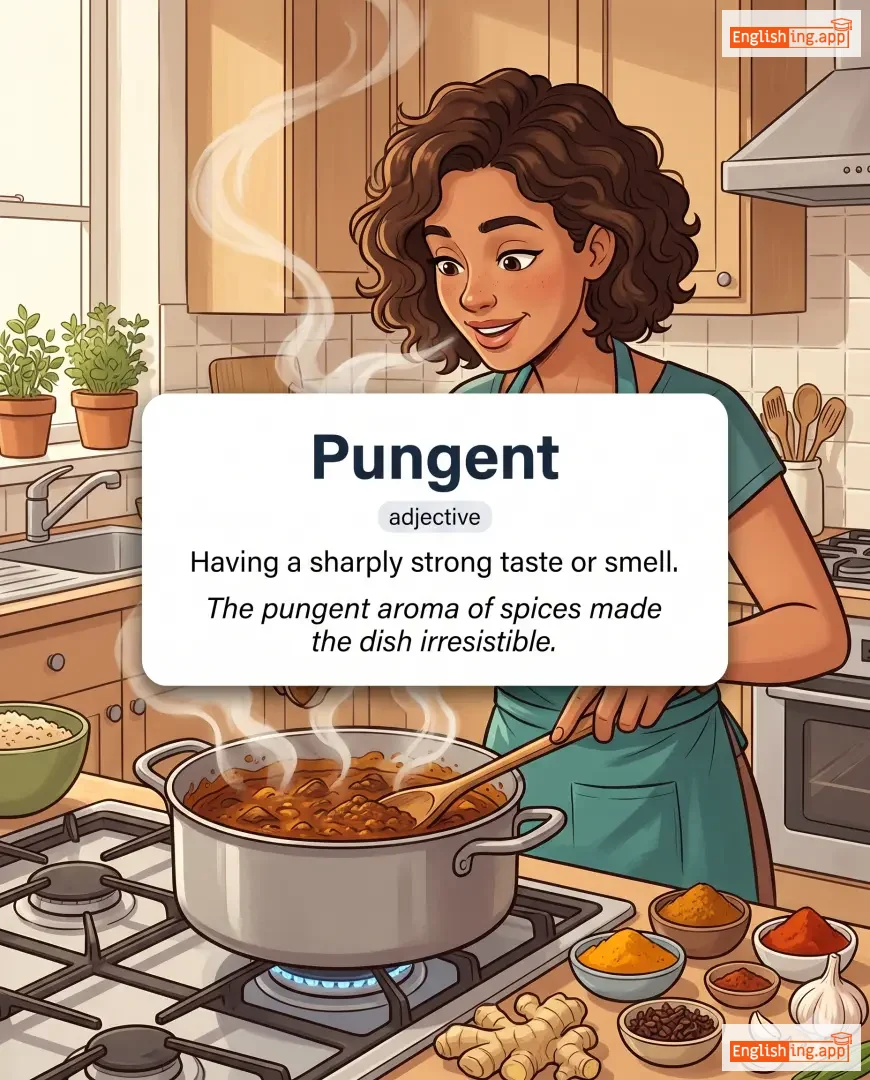
sharp; strong-smelling; acrid;
••••••
|
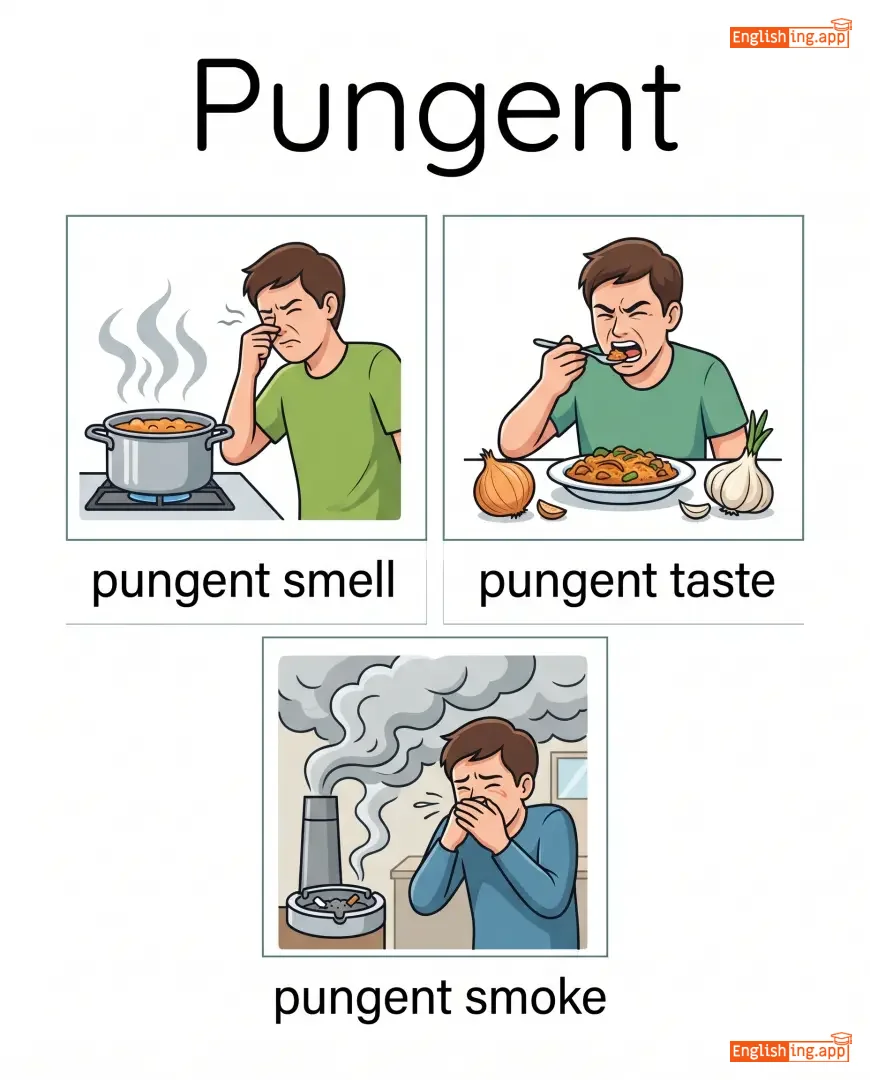
The pungent smell of garlic filled the kitchen.
にんにくの強い匂いが台所を満たした。
••••••
|
にんにくの強い匂いが台所を満たした。
ninniku no tsuyoi nioi ga daidokoro o mitashita
••••••
|
sharp, strong, acrid, bitter, penetrating
••••••
|
mild, sweet, bland, gentle
••••••
|
pungent smell, pungent taste, pungent odor
••••••
|
パンと garlic の scent が鼻を刺すイメージで覚える: pungent は punch scent です
••••••
|
|
#672
⚡
|
/ˈræd.ɪ.kəl/
adjective
(ラディカル)
••••••
|
|
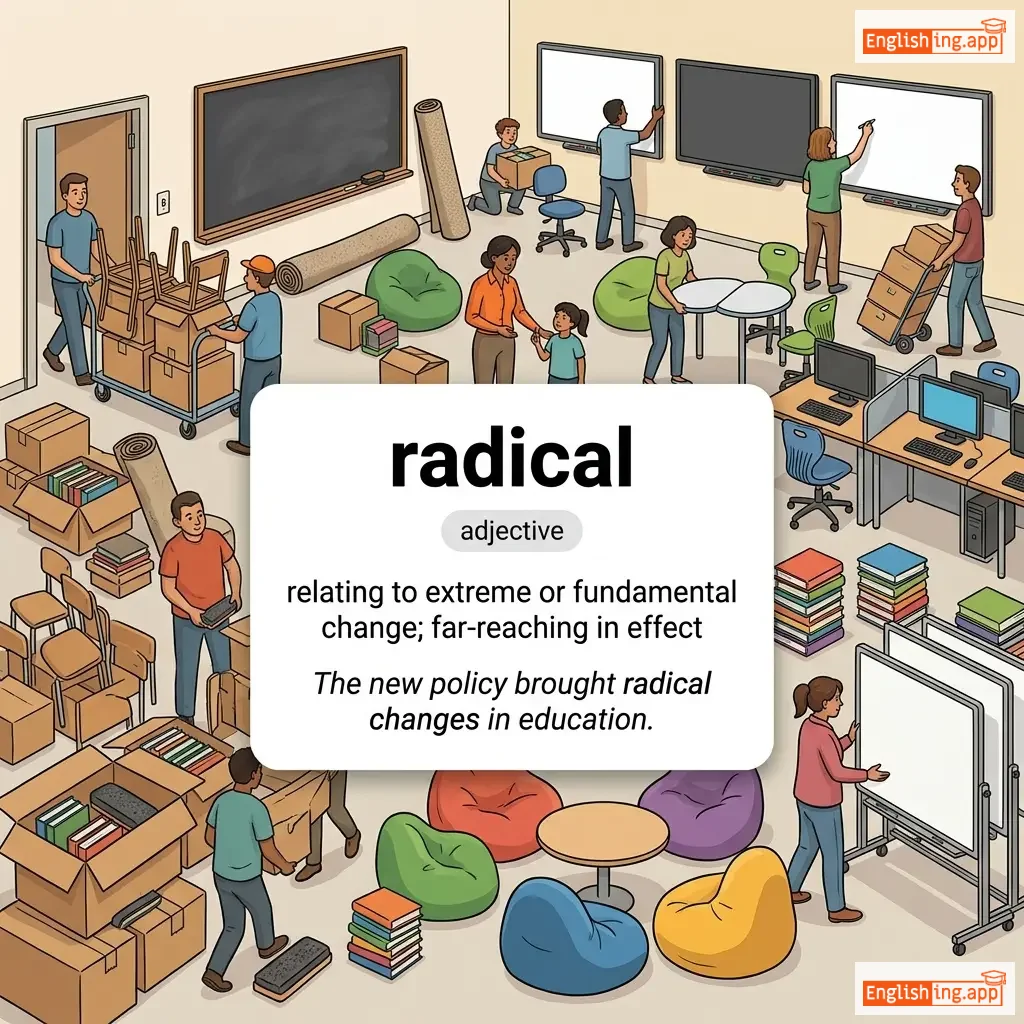
根本的; 極端な; 過激な; 革命的な
konbonteki; kyokutōna; kagekina; kakumeiteki na
••••••
|
fundamental; extreme; drastic; revolutionary
••••••
|
The company made radical changes to improve efficiency. |
会社は効率を改善するために根本的な変化を行いました。
Kaisha wa kōritsu o kaizen suru tame ni konbonteki na henka o okonaimashita.
••••••
|
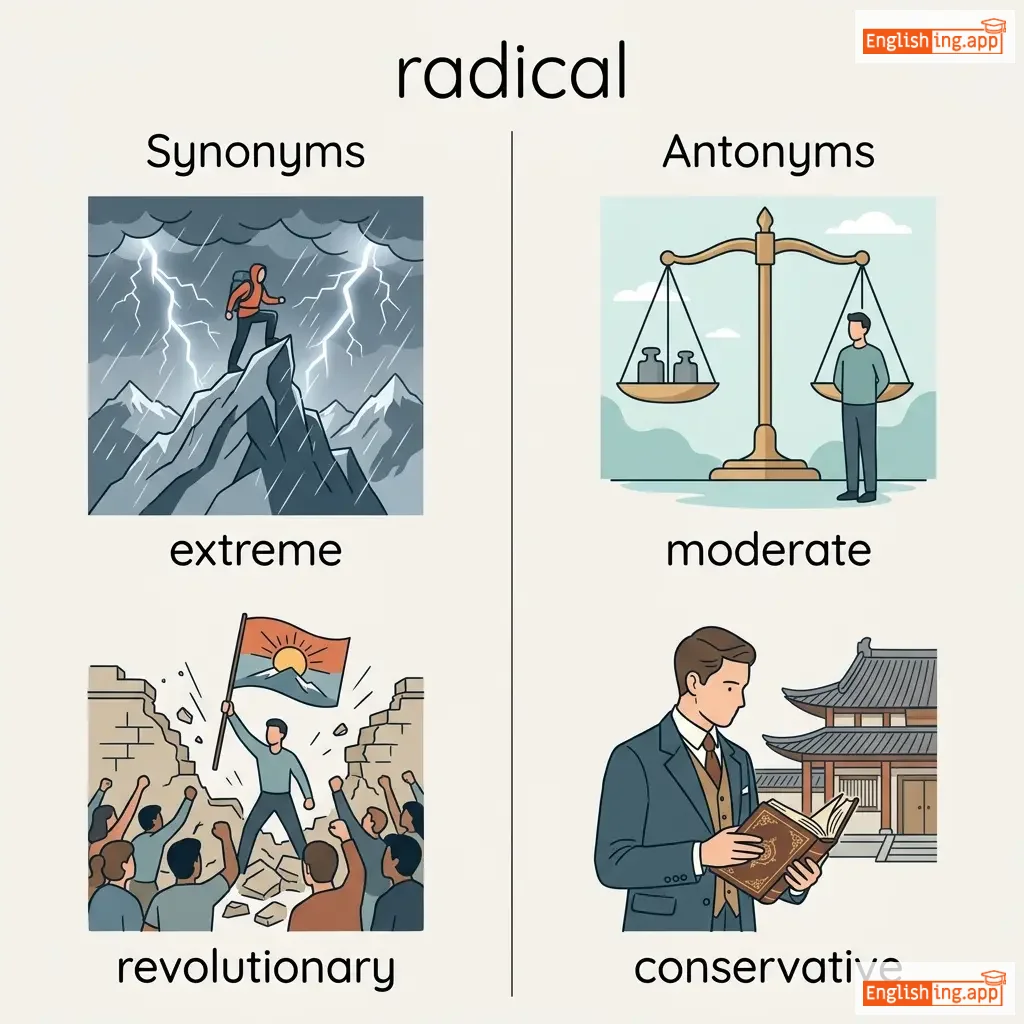
extreme, fundamental, drastic, revolutionary
••••••
|
conservative, moderate, gradual, conventional
••••••
|
radical change, radical reform, radical idea, radical approach
••••••
|
根本的な変化で効率を改善した会社。
••••••
|
|
#673
📊🔢
|
/ˈkwɑːn.tɪ.teɪ.tɪv/
adjective
(クオンティテイティブ)
••••••
|
- •••••• |
定量的
teiryōteki
••••••
|
relating to quantity or amount; expressed in terms of numbers or measurements
••••••
|
The study provides quantitative evidence of climate change effects. |
この研究は、気候変動の影響に関する定量的な証拠を提供します。
Kono kenkyū wa, kikō hendō no eikyō ni kansuru teiryōteki na shōko o teikyō shimasu.
••••••
|
numerical, statistical, measurable
••••••
|
qualitative, descriptive, subjective
••••••
|
quantitative analysis, quantitative data, quantitative methods
••••••
|
定量的に証明する 'Quantitative'.
••••••
|
|
#674
⚡
|
/kwɪk/
adjective
(kwik)
••••••
|
- •••••• |
速い
hayai
••••••
|
fast; rapid; swift; happening in a short time
••••••
|
She gave a quick answer to the teacher's question.
彼女は教師の質問に迅速に答えました。
••••••
|
彼女は教師の質問に迅速に答えました。
Kanojo wa kyōshi no shitsumon ni jinsoku ni kotaemashita.
••••••
|
fast, rapid, swift, speedy
••••••
|
slow, sluggish, leisurely, gradual
••••••
|
quick response, quick decision, quick learner
••••••
|
Quick = 速い (hayai) - 速さで問題を解決する感じ。
••••••
|
|
#675
✨
|
/pjʊər/
adjective
(pyua)
••••••
|
- •••••• |
純粋な; 清潔な; 汚れのない; 差別のない;
junsui na; seiketsu na; yogore no nai; sabetsu no nai
••••••
|
clean; clear; untainted; without discrimination;
••••••
|
The water from the mountain spring is pure. |
山の泉からの水は純粋です。
Yama no izumi kara no mizu wa junsui desu.
••••••
|
clean, clear, pristine, untainted, innocent
••••••
|
impure, contaminated, polluted, dirty
••••••
|
pure water, pure gold, pure intention
••••••
|
純粋な水のように、汚れがなく、差別もありません。
••••••
|
|
#676
👕
|
/ˈræɡ.ɪd/
adjective
(レイガッド)
••••••
|
- •••••• |
ボロボロの; 破れた; ぼろぼろ
boroboro no; yaboreta; boroboro
••••••
|
torn; tattered; frayed; shabby
••••••
|
The homeless man wore ragged clothes.
ホームレスの男はボロボロの服を着ていた。
••••••
|
ホームレスの男はボロボロの服を着ていた。
Hōmuresu no otoko wa boroboro no fuku o kite ita.
••••••
|
torn, tattered, frayed, shabby
••••••
|
neat, tidy, pristine, well-kept
••••••
|
ragged clothes, ragged edge, ragged appearance, ragged breathing
••••••
|
ボロボロの服はホームレスを象徴しています。
••••••
|
|
#677
😠🗯️
|
/ˈkwɑː.rəl.səm/
adjective
(kwar-eru-somu)
••••••
|
- •••••• |
喧嘩好きな; 論争的な; 争い好きな
kenka suki na; ronsō-teki na; arasoi suki na
••••••
|
given to arguing and fighting; argumentative and confrontational
••••••
|
His quarrelsome nature makes it difficult to work with him.
His quarrelsome nature makes it difficult to work with him.
••••••
|
彼の喧嘩好きな性格は、彼と一緒に働くのを難しくします。
Kare no kenka suki na seikaku wa, kare to issho ni hataraku no o muzukashiku shimasu.
••••••
|
argumentative, belligerent, contentious, combative
••••••
|
peaceful, agreeable, harmonious, cooperative
••••••
|
quarrelsome person, quarrelsome behavior, quarrelsome mood
••••••
|
喧嘩は何も良いことを生みません。
••••••
|
|
#678
🧩
|
/ˈpʌz.lɪŋ/
adjective
(パズリング)
••••••
|
- •••••• |
不可解な
pazuringu
••••••
|
confusing; perplexing;
••••••
|
The scientist found the results puzzling.
科学者はその結果を謎めいたと感じた。
••••••
|
科学者はその結果を謎めいたと感じた。
Kagakusha wa sono kekka o nazomeita to kanjita.
••••••
|
confusing, perplexing, baffling, mysterious
••••••
|
clear, obvious, simple, straightforward
••••••
|
puzzling behavior, puzzling question, puzzling mystery
••••••
|
Pazuringu = puzzle + ring: imagine a brain wrapped in パズリングのリング and a fukakai mystery waiting to be solved
••••••
|
|
#679
🤫
|
/kwaɪˈesnt/
adjective
(クワイエセント)
••••••
|
|
静止した; 穏やかな; 活動していない;
kwai-esent
••••••
|
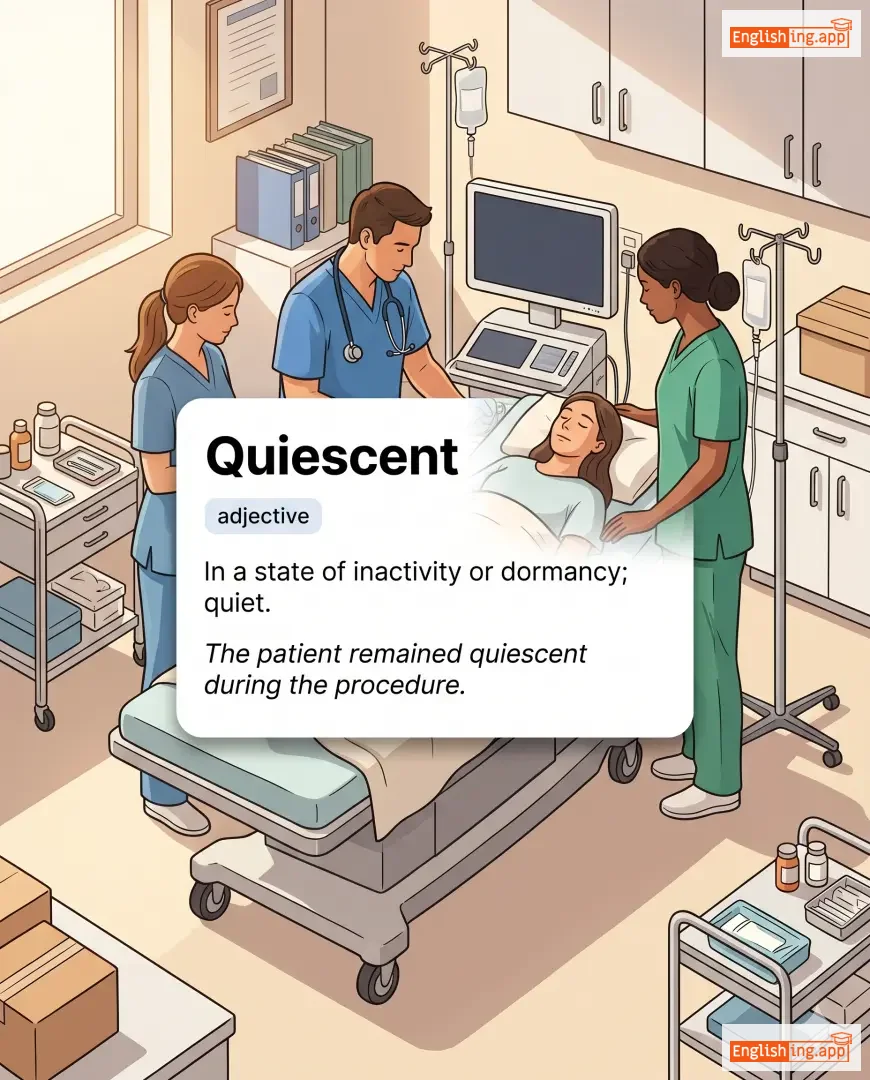
quiet; peaceful; inactive; dormant; at rest
••••••
|
The volcano has been quiescent for over a century. |
その火山は百年以上静止した状態です。
Sono kazan wa hyaku-nen ijō seishishita jōtai desu.
••••••
|
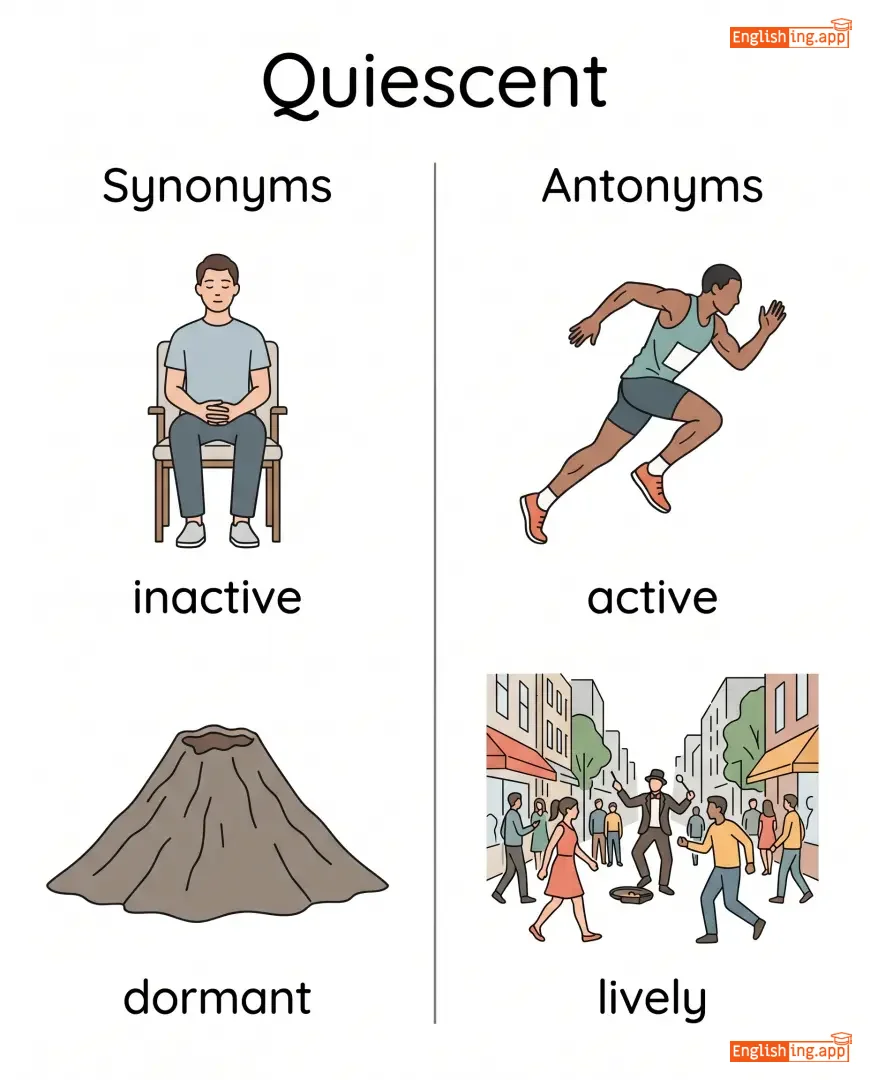
dormant, inactive, peaceful, still
••••••
|
active, turbulent, agitated, restless
••••••
|
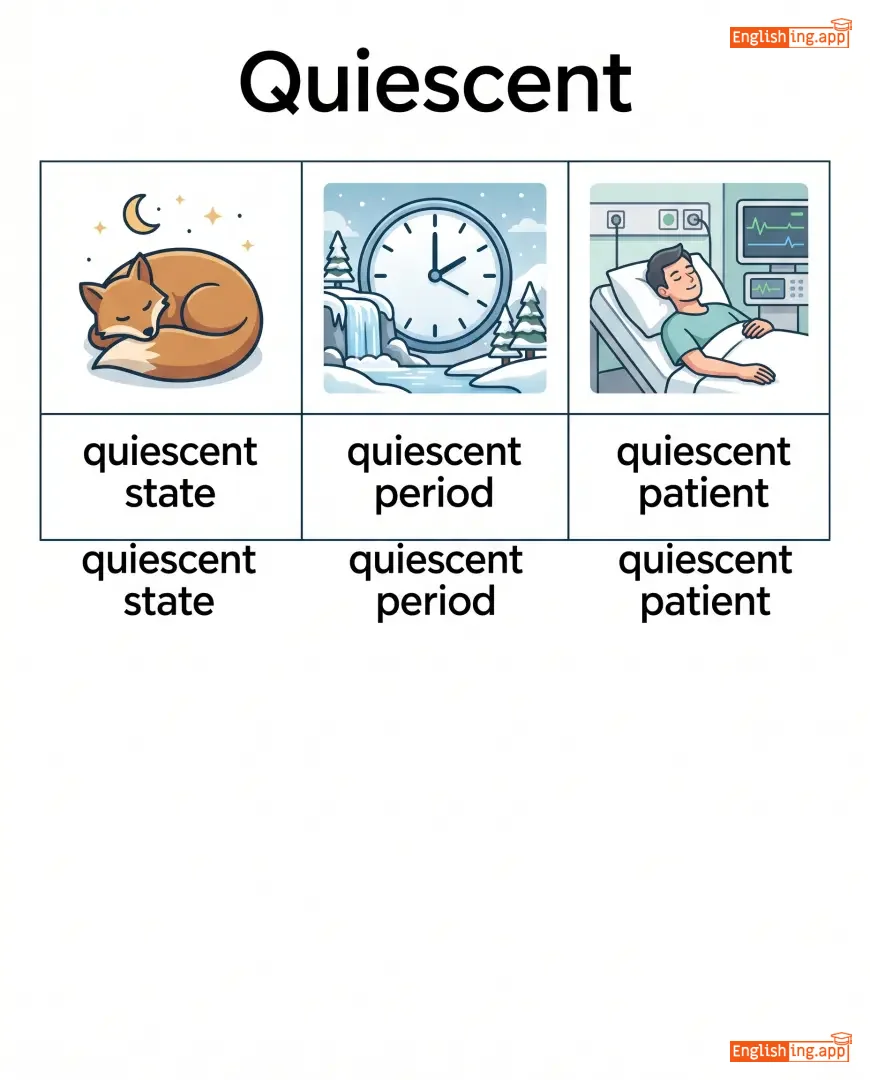
quiescent state, quiescent period, quiescent volcano
••••••
|
A peaceful volcano resting quietly, as it remains dormant for years.
••••••
|
|
#680
🌧️
|
/ˈreɪ.ni/
adjective
(レイニー)
••••••
|
- •••••• |
雨の日の
ame no hi no
••••••
|
characterized by rain; wet from rain; having much rain
••••••
|
It was a rainy day, so we stayed indoors. |
今日は雨の日だったので、家の中にいました。
kyō wa ame no hi datta node, ie no naka ni imashita.
••••••
|
wet, stormy, drizzly, showery
••••••
|
sunny, dry, clear, bright
••••••
|
rainy day, rainy season, rainy weather, rainy afternoon
••••••
|
Think of the word 'ame' (rain) as you stay inside on a rainy day!
••••••
|
Vocabulary Quiz
Test your vocabulary by matching words with their translations or meanings.
Login to take the quiz
Comments (0)
Share your thoughts and join the discussion.
Join the discussion by logging in
Login to CommentNo comments yet
Be the first to share your thoughts!