

翻訳
過去
過去分詞
三人称単数
動名詞
意味
例文
例文の翻訳
同義語
対義語
コロケーション
ニーモニック







Swipe left or right, or use the buttons. Tap image to zoom.
例文の翻訳
単語
Lesson 7Lesson 7 - マスクトグル
|
絵文字
|
単語 | Images | 翻訳 | 意味 | 例文 | 例文の翻訳 | 同義語 | 対義語 | コロケーション | ニーモニック |
|---|---|---|---|---|---|---|---|---|---|---|
|
#121
✅
|
/kənˈkluː.sɪv/
adjective
(コンクルーシブ)
••••••
|
- •••••• |
決定的な; 最終的な; 問題を完全に解決する
ketteiteki na; saishūteki na; mondai o kanzen ni kaiketsu suru
••••••
|
final; decisive; settling a matter completely
••••••
|
The evidence was conclusive and left no room for doubt.
その証拠は決定的であり、疑う余地を残さなかった。
••••••
|
その証拠は決定的であり、疑う余地を残さなかった。
Sono shōko wa ketteiteki de ari, utagau yochi o nokosanakatta.
••••••
|
decisive, final, definitive, absolute
••••••
|
inconclusive, uncertain, doubtful, ambiguous
••••••
|
conclusive evidence, conclusive proof, conclusive result
••••••
|
'Con' means final, 'clusive' means resolved.
••••••
|
|
#122
🏛️
|
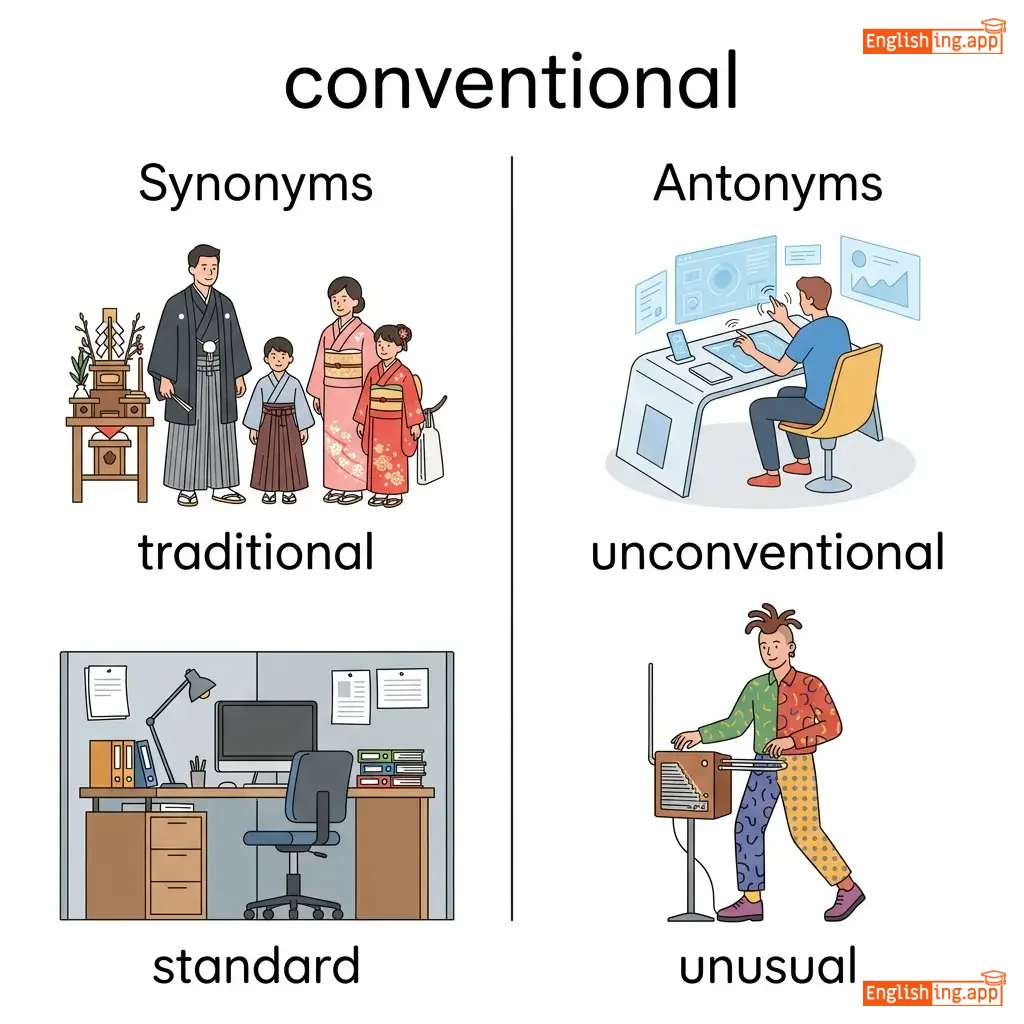
/kənˈvenʃənəl/
adjective
(コンヴェンショナル)
••••••
|
|
伝統的な; 従来の; 一般的に受け入れられている; 慣習に基づく
dentōteki na; jōraiteki na; ippan-teki ni ukeirarete iru; kanshū ni motozuku
••••••
|
following traditional practices; customary; generally accepted; bound by convention
••••••
|
She chose a conventional wedding dress for her big day. |
彼女は彼女の大きな日用に伝統的な結婚式のドレスを選びました。
Kanojo wa kanojo no ōkina hi yō ni dentōteki na kekkonshiki no doresu o erabimashita.
••••••
|
traditional, orthodox, standard, normal
••••••
|
unconventional, innovative, radical, modern
••••••
|
conventional wisdom, conventional approach, conventional medicine
••••••
|
伝統が今も受け入れられている
••••••
|
|
#123
🔗
|
/kənˈsek.jə.tɪv/
adjective
(コンセクティブ)
••••••
|
- •••••• |
連続的な
renzokuteki na
••••••
|
following each other in uninterrupted succession; sequential
••••••
|
She won three consecutive matches in the tournament. |
彼女はトーナメントで3回連続して試合に勝ちました。
Kanojo wa tōnamento de 3-kai renzokushite shiai ni kachimashita.
••••••
|
sequential, successive, continuous, uninterrupted
••••••
|
alternate, intermittent, sporadic, random
••••••
|
consecutive days, consecutive wins, consecutive numbers, consecutive years
••••••
|
連続は切れ目なく続くもの。
••••••
|
|
#124
🔄
|
/kənˈtɪn.ju.əl/
adjective
(コンティニュアル)
••••••
|
- •••••• |
継続的な; 絶え間ない
keizokuteki na; taema nai
••••••
|
happening repeatedly over a long period of time; constant and uninterrupted
••••••
|
The continual noise from the construction site was very annoying. |
建設現場からの継続的な音は非常に迷惑でした。
Kensetsu genba kara no keizokuteki na oto wa hijou ni meiwaku deshita.
••••••
|
continuous, constant, persistent, ongoing
••••••
|
intermittent, occasional, sporadic
••••••
|
continual improvement, continual process, continual effort
••••••
|
音が途切れないように、'継続的な'と覚える。
••••••
|
|
#125
🧱
|
/ˈkɒŋ.kriːt/
adjective
(コンクリート)
••••••
|
- •••••• |
固体; 実際; 目に見える; 具体的
kotai; jissai; me ni mieru; gutai-teki
••••••
|
solid; real; tangible; actual and specific
••••••
|
We need concrete evidence to support our claims. |
私たちは私たちの主張を支持するために具体的な証拠が必要です。
Watashitachi wa watashitachi no shuchou wo shiji suru tame ni gutai-teki na shouko ga hitsuyou desu.
••••••
|
solid, real, tangible, actual
••••••
|
abstract, theoretical, vague, intangible
••••••
|
concrete evidence, concrete example, concrete steps
••••••
|
具体的な証拠が説得力を増します。
••••••
|
|
#126
💪
|
/kənˈvɪnsɪŋ/
adjective
(コンビンシング)
••••••
|
- •••••• |
説得力のある; 信頼できる; 説得力のある; 誰かに何かを信じさせることができる
settokuryoku no aru
••••••
|
believable; credible; persuasive; able to make someone believe something
••••••
|
His convincing argument won over the entire jury.
彼の説得力のある議論は陪審員全体を納得させました。
••••••
|
彼の説得力のある議論は全陪審員を納得させました。
Kare no settokuryoku no aru giron wa zen peishin'in o nattoku sasemashita.
••••••
|
persuasive, compelling, believable, credible
••••••
|
unconvincing, doubtful, weak, implausible
••••••
|
convincing evidence, convincing performance, convincing argument
••••••
|
Convincing = 説得力のある (説得する力がある)
••••••
|
|
#127
⚡
|
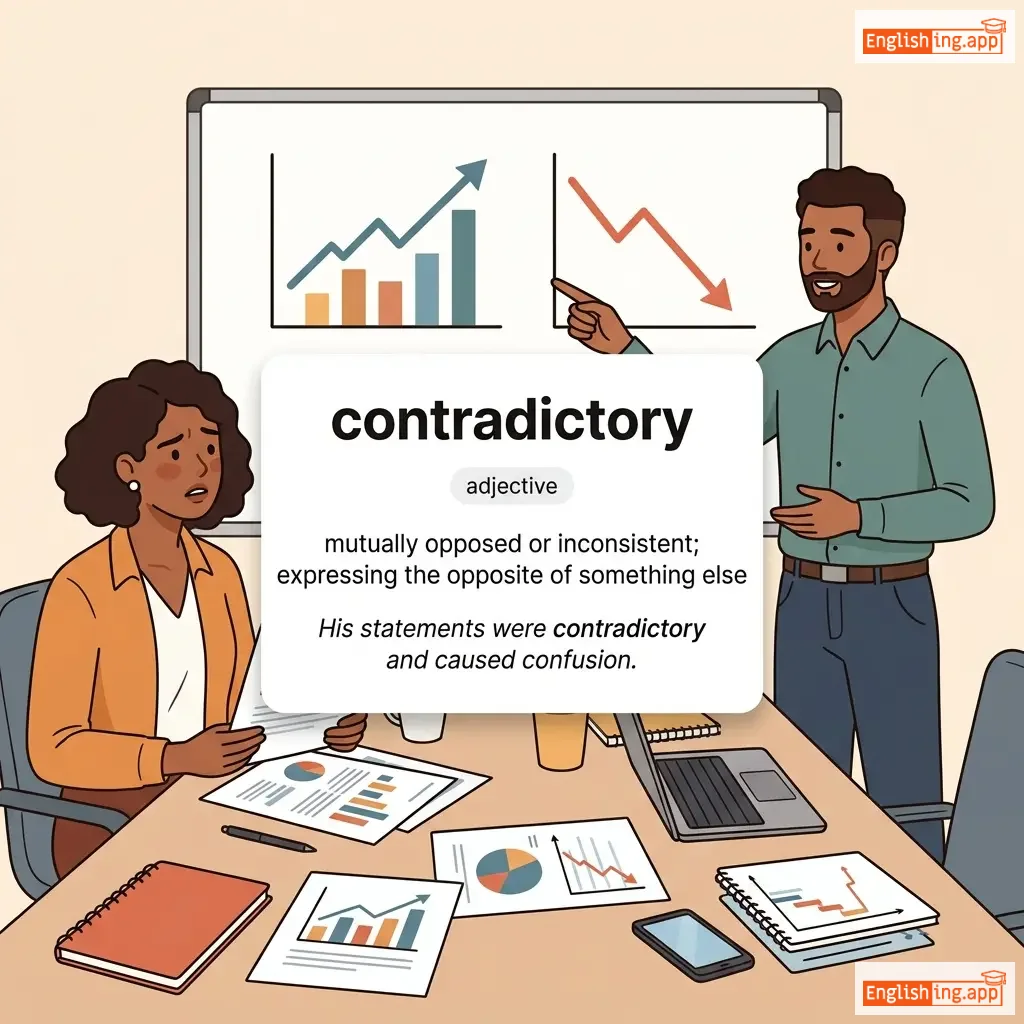
/ˌkɒn.trəˈdɪk.tər.i/
adjective
(コントラディクトリー)
••••••
|
|
矛盾した
contradictory
••••••
|
containing elements that are opposed to one another; inconsistent and conflicting
••••••
|
His statements were contradictory and confusing.
彼の発言は矛盾しており、混乱を招いた。
••••••
|
彼の発言は矛盾しており、混乱を招いた。
Kare no hatsugen wa mujun shite ori, konran o maneta.
••••••
|
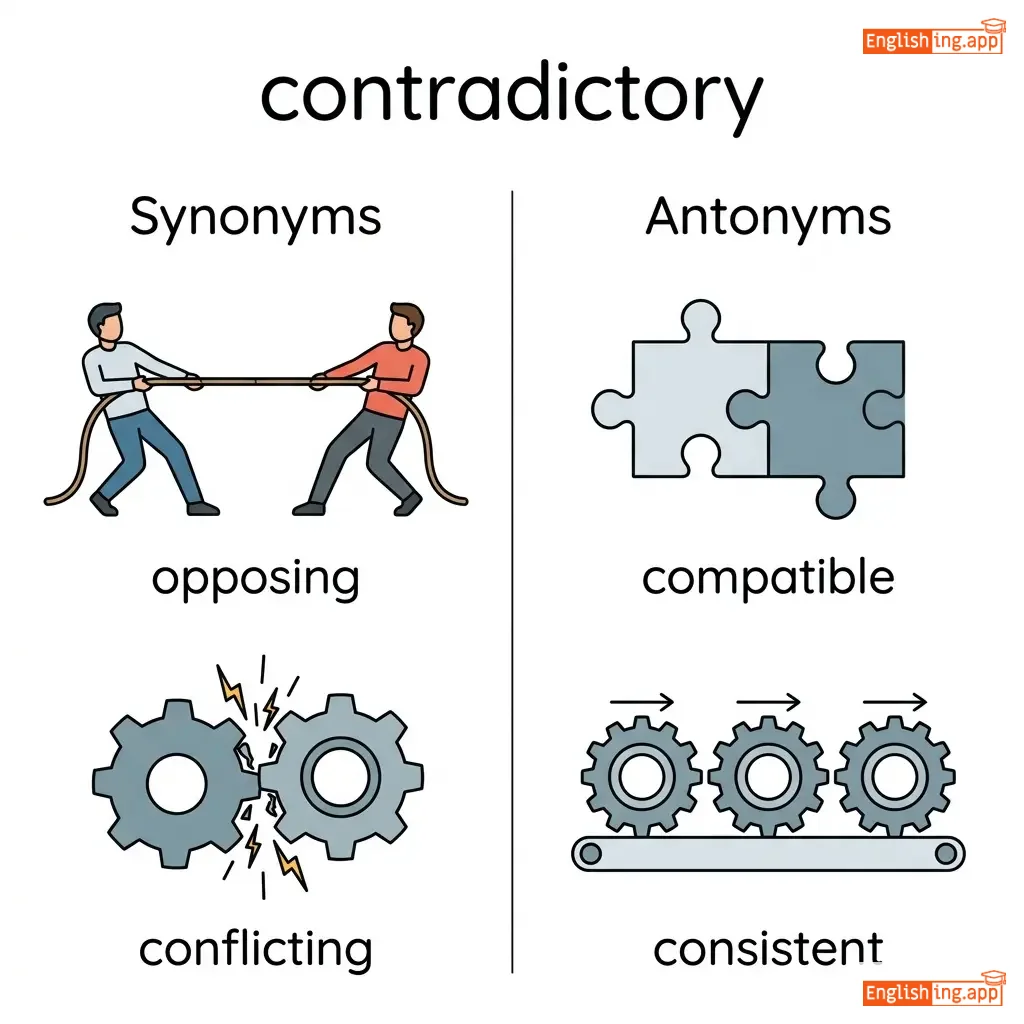
conflicting, opposing, inconsistent, paradoxical
••••••
|
consistent, compatible, harmonious
••••••
|
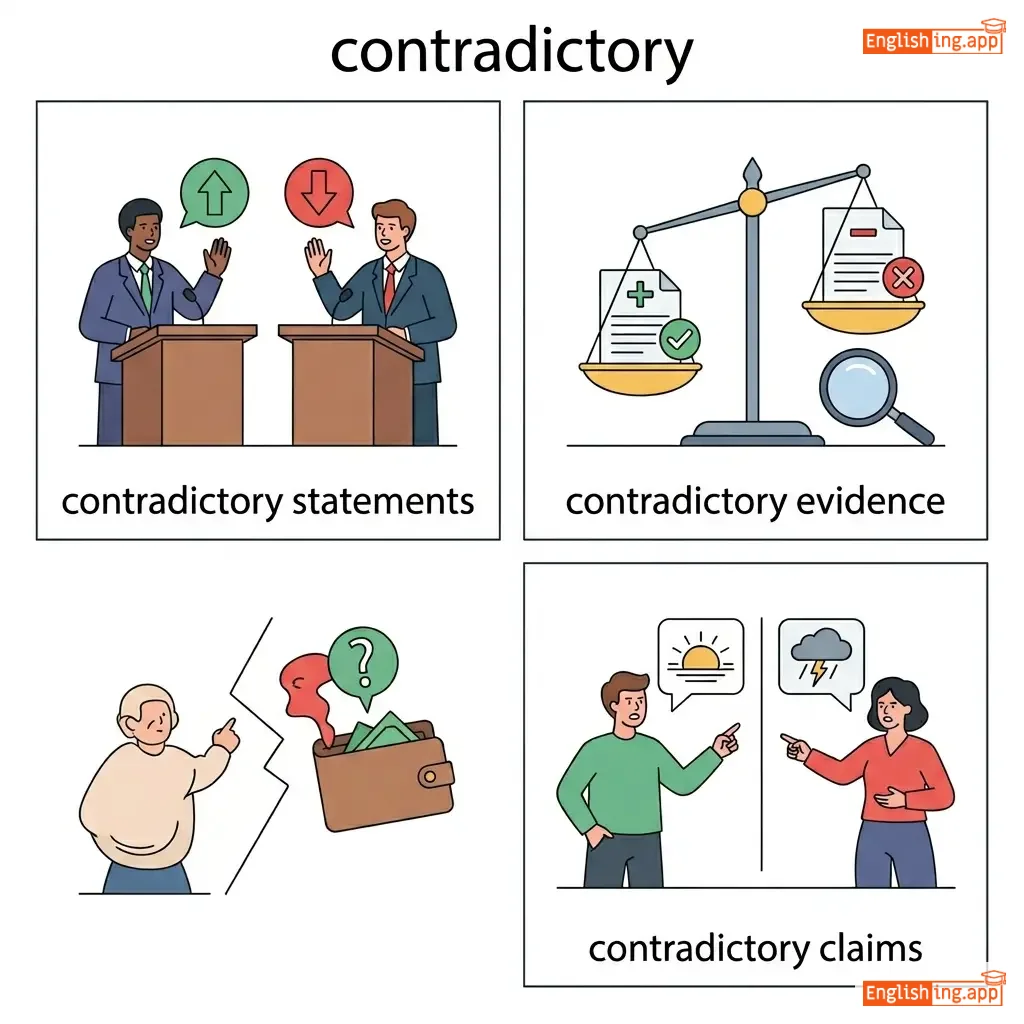
contradictory evidence, contradictory statements, contradictory advice
••••••
|
コントラディクトリー = con + tra + dict + ory; two ideas face off 矛盾した meaning. 想像してみて、英語のコントラディクトリーが日本語の矛盾と対立を並べて戦う様子をイメージ。
••••••
|
|
#128
🤗
|
/kənˈsɪd.ər.ɪt/
adjective
(コンシデレート)
••••••
|
- •••••• |
思いやりのある; 配慮深い
omoiyari no aru; hairyo fukai
••••••
|
showing careful thought about the feelings or wishes of others; thoughtful
••••••
|
He is always considerate of others' feelings.
彼はいつも他人の感情に配慮しています。
••••••
|
彼はいつも他人の感情に配慮しています。
Kare wa itsumo tanin no kanjou ni hairyo shiteimasu.
••••••
|
thoughtful, caring, kind, attentive, mindful
••••••
|
inconsiderate, thoughtless, selfish, rude
••••••
|
considerate person, considerate behavior, considerate gesture, considerate friend
••••••
|
In Japanese, '思いやりのある' (omoiyari no aru) reflects how you show care and consideration for others.
••••••
|
|
#129
⚙️
|
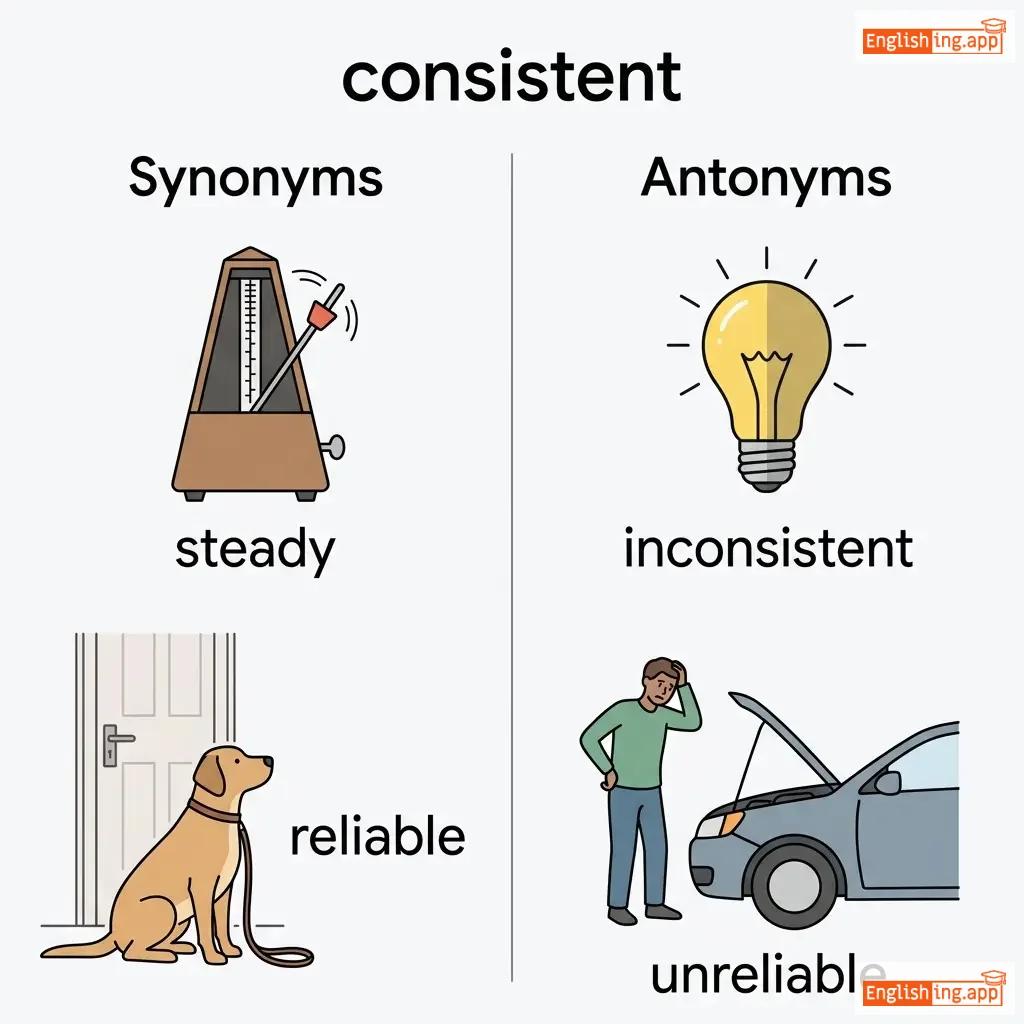
/kənˈsɪs.tənt/
adjective
(kənˈsɪstənt)
••••••
|
|
一貫した
ikkanshita
••••••
|
acting or done in the same way over time; unchanging in behavior or attitude
••••••
|
She is consistent in her work quality. |
彼女は仕事の質において一貫しています。
kanojo wa shigoto no shitsu ni oite ikkanshiteimasu
••••••
|
uniform, steady, regular, reliable, constant
••••••
|
inconsistent, irregular, variable, unreliable
••••••
|
consistent results, consistent performance, consistent quality, consistent approach
••••••
|
Consistent = 一貫 = 一貫した
••••••
|
|
#130
⬅️➡️
|
/ˈkɒn.trər.i/
adjective
(kọntreri)
••••••
|
- •••••• |
反対の; 対立する;
hantai no; tairitsu suru
••••••
|
opposite in nature, direction, or meaning; completely different
••••••
|
Contrary to popular belief, cats can be very social animals. |
一般的な信念とは反対に、猫は非常に社交的な動物であることができます。
Ippantekina shin'nento wa hantai ni, neko wa hijō ni shakō-teki na dōbutsu de aru koto ga dekimasu.
••••••
|
opposite, opposing, reverse, different
••••••
|
similar, same, agreeable, consistent
••••••
|
contrary to expectations, contrary opinion, contrary evidence
••••••
|
Japanese 'hantai' means opposite, just like 'contrary'.
••••••
|
|
#131
❓
|
/kənˈdɪʃ.ən.əl/
adjective
(コンディショナル)
••••••
|
- •••••• |
条件付き; 条件に依存する
jōken tsuki; jōken ni izon suru
••••••
|
dependent on certain conditions; not absolute
••••••
|
The job offer is conditional upon passing the background check. |
その仕事のオファーは、バックグラウンドチェックに合格することが条件です。
Sono shigoto no ofā wa, bakkuraundo chekku ni gōkaku suru koto ga jōken desu.
••••••
|
dependent, contingent, provisional, qualified
••••••
|
unconditional, absolute, definite, certain
••••••
|
conditional offer, conditional approval, conditional agreement
••••••
|
コンディショナルは、何かが特定の条件に依存していることを意味します。
••••••
|
|
#132
🤝
|
/ˈkɔːrdiəl/
adjective
(コーディアル)
••••••
|
- •••••• |
親切な; 誠実な; 心からの
shinsetsuna; seijitsuna; kokoro kara no
••••••
|
warmly friendly; sincere; heartfelt
••••••
|
She gave us a cordial welcome at the front door. |
彼女は玄関で私たちに親切な歓迎をしてくれました。
Kanojo wa genkan de watashitachi ni shinsetsuna kangei o shite kuremashita.
••••••
|
warm, friendly, sincere, heartfelt
••••••
|
cold, hostile, unfriendly, distant
••••••
|
cordial relationship, cordial welcome, cordial invitation
••••••
|
'コーディアル'は'親切'と'誠実'が合わさった言葉です。
••••••
|
|
#133
🌊
|
/ˈkɒn.stənt/
adjective
(コンスタント)
••••••
|
- •••••• |
一定の; 変わらない; 安定した
ittei no, kawaranai, antei shita
••••••
|
occurring continuously over a period of time; unchanging; steady
••••••
|
The machine runs at a constant speed.
機械は一定の速度で動作します。
••••••
|
機械は一定の速度で動作します。
Kikai wa ittei no sokudo de dōsa shimasu.
••••••
|
continuous, steady, unchanging, persistent, fixed
••••••
|
variable, changing, intermittent, irregular
••••••
|
constant pressure, constant temperature, constant speed, constant change
••••••
|
常に同じスピードで動く機械、まさにコンスタント!
••••••
|
|
#134
🔥
|
/ˌkɒn.trəˈvɜː.ʃəl/
adjective
(コン・トロヴァーシャル)
••••••
|
|
論争のある; 議論される;
ronso no aru; giron sareru
••••••
|
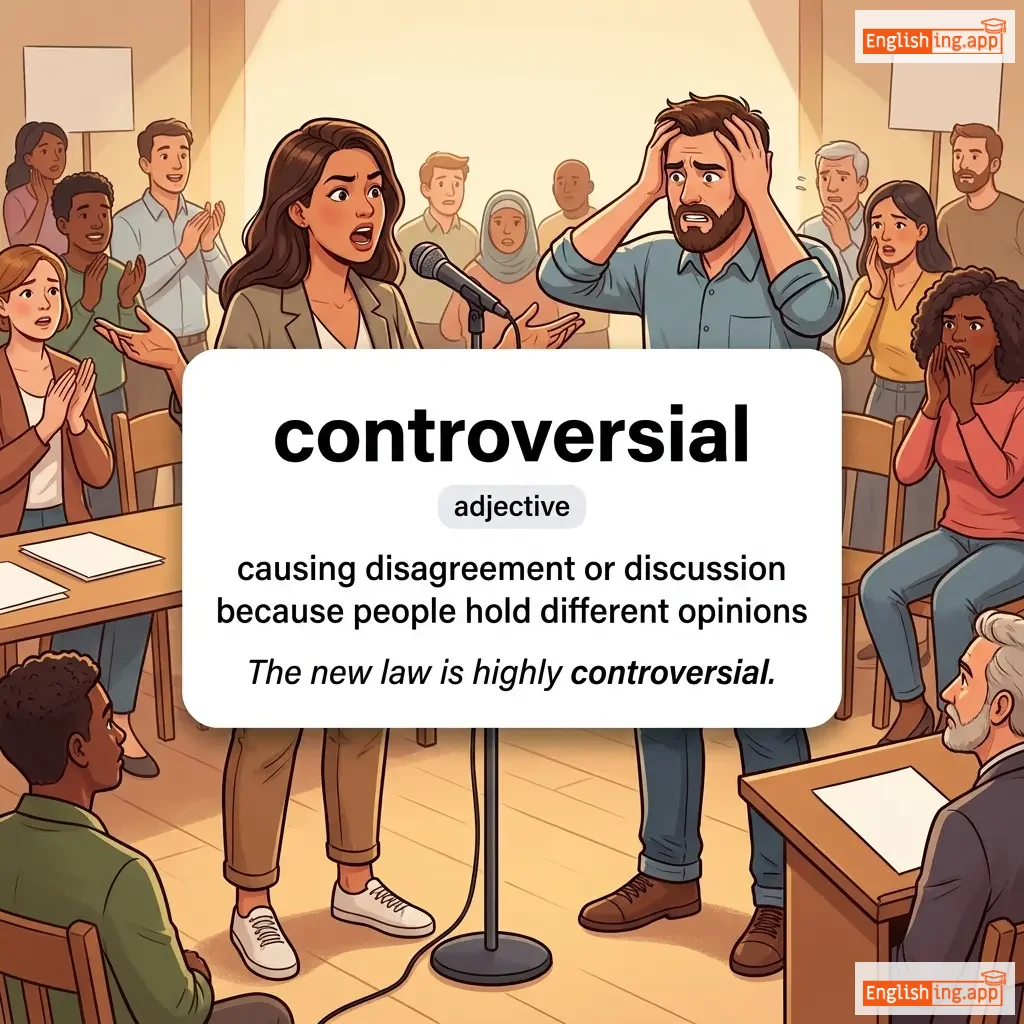
causing disagreement or heated discussion; disputed and debatable
••••••
|
The politician's controversial remarks sparked a heated debate.
政治家の物議を醸す発言は熱い議論を巻き起こしました。
••••••
|
政治家の物議を醸す発言は熱い議論を巻き起こしました。
Seijika no butsu gi o kamosu hatsugen wa atsui giron o makiokoshimashita.
••••••
|
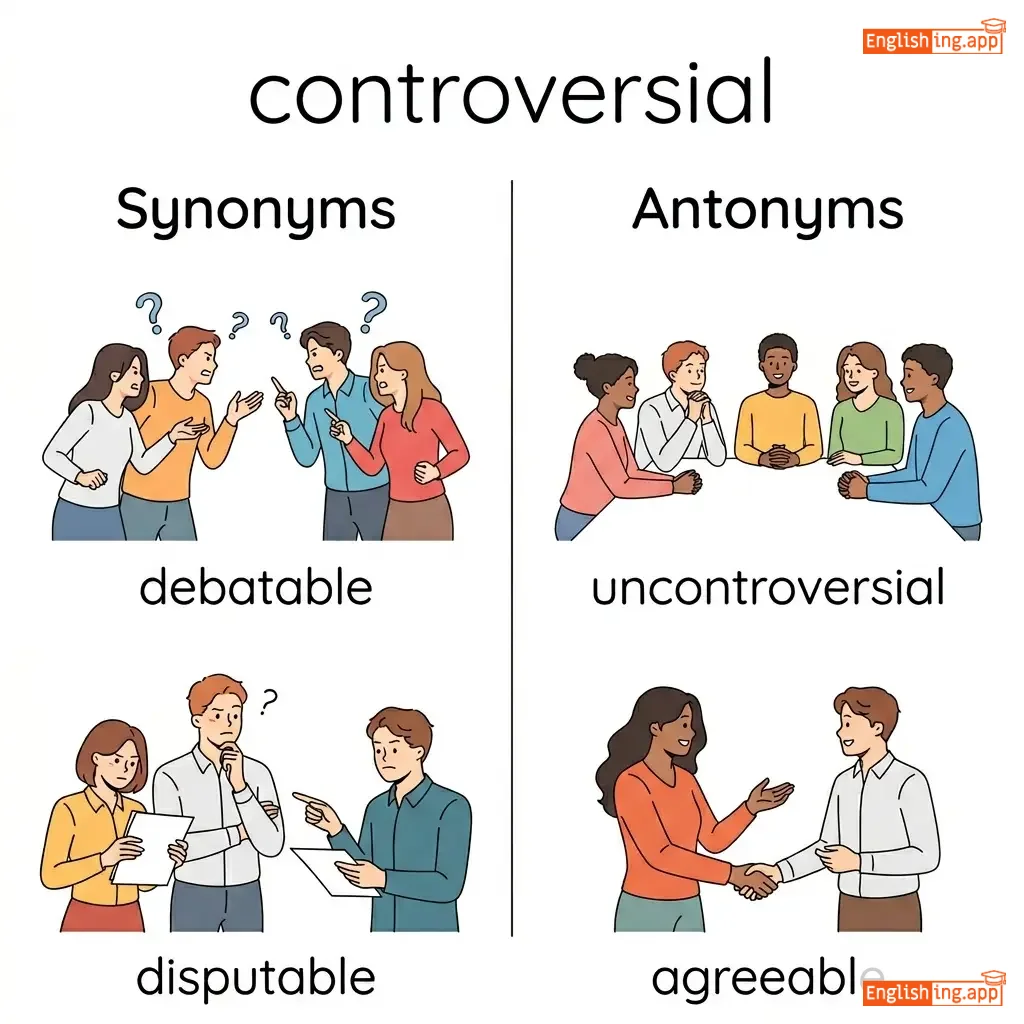
disputed, debatable, contentious, polarizing
••••••
|
uncontroversial, accepted, agreed-upon
••••••
|
controversial topic, controversial decision, controversial figure
••••••
|
論争のある = 'ロング' + 'ソー' (長い論争)
••••••
|
|
#135
💪
|
/ˈkɒn.fɪ.dənt/
adjective
(コンフィデント)
••••••
|
- •••••• |
自信がある; 確信している; 自信に満ちた
jishin ga aru; kakushin shite iru; jishin ni michita
••••••
|
self-assured; certain; having belief in one's abilities
••••••
|
She felt confident about her performance in the exam. |
彼女は試験での自分のパフォーマンスに自信を持っていた。
Kanojo wa shiken de no jibun no pafomansu ni jishin wo motte ita.
••••••
|
assured, certain, self-assured, positive
••••••
|
insecure, uncertain, doubtful, hesitant
••••••
|
confident person, feel confident, confident smile
••••••
|
Japanese 'jishin' means self-confidence, linked to confident
••••••
|
|
#136
🦁
|
/kəˈreɪdʒəs/
adjective
(コレイジャス)
••••••
|
- •••••• |
勇敢な; 恐れを知らない; 危険に立ち向かう勇気を示す
yūkan na; osore o shiranai; kiken ni tachimukau yūki o shimesu
••••••
|
brave; fearless; showing courage in the face of danger
••••••
|
The courageous firefighter rescued the family from the burning building. |
勇敢な消防士は燃えている建物から家族を救出した。
Yūkan na shōbōshi wa moete iru tatemono kara kazoku o kyūshutsu shita.
••••••
|
brave, fearless, bold, heroic
••••••
|
cowardly, fearful, timid, scared
••••••
|
courageous act, courageous decision, courageous leader
••••••
|
勇敢な (Courageous) は危険に直面しても勇気を示すことです。
••••••
|
|
#137
🦠
|
/kənˈteɪ.dʒəs/
adjective
(コンタギアス)
••••••
|
- •••••• |
伝染性の; 感染性の
denshō-sei no, kansenshō-sei no
••••••
|
likely to spread to and affect others; infectious
••••••
|
Her laughter is contagious and makes everyone smile. |
彼女の笑い声は伝染性があり、みんなを笑顔にする。
kanojo no waraigoe wa denshō-sei ga ari, minna o egao ni suru
••••••
|
infectious, spreading, transmissible, catching
••••••
|
non-contagious, isolated, contained
••••••
|
contagious disease, contagious laughter, contagious enthusiasm, contagious smile
••••••
|
伝染性は '伝染' から来ており、他の人に広がることを意味します
••••••
|
|
#138
🤐
|
/ˌkɒn.fɪˈden.ʃəl/
adjective
(コンフィデンシャル)
••••••
|
- •••••• |
機密; 私的; 秘密として保持することを意図する
kimitsu; shiteki; himitsu toshite hojisuru koto o ito suru
••••••
|
secret; private; intended to be kept secret
••••••
|
Please keep this information confidential.
この情報は機密として取り扱ってください。
••••••
|
この情報は機密として取り扱ってください。
kono jōhō wa kimitsu toshite toriatsukatte kudasai.
••••••
|
secret, private, classified, restricted
••••••
|
public, open, disclosed, revealed
••••••
|
confidential information, confidential document, strictly confidential
••••••
|
Confidential は秘密を意味し、日本語ではそれを機密として扱います。
••••••
|
|
#139
✅
|
/kənˈviː.ni.ənt/
adjective
(コンビニエント)
••••••
|
- •••••• |
便利な;使いやすい;実用的な;
benrina; tsukaiyasui; jitsuyōteki na
••••••
|
fitting in well with a person's needs, activities, and plans; suitable and practical
••••••
|
The new shopping mall is very convenient for our family.
新しいショッピングモールは私たちの家族にとってとても便利です。
••••••
|
新しいショッピングモールは私たちの家族にとってとても便利です。
Atarashī shoppingu mōru wa watashitachi no kazoku ni totte totemo benri desu.
••••••
|
handy, suitable, practical, accessible
••••••
|
inconvenient, impractical, unsuitable
••••••
|
convenient location, convenient time, convenient store
••••••
|
近くに便利なショッピングモールがあって、すごく使いやすい。
••••••
|
|
#140
🤪
|
/ˈkreɪzi/
adjective
(クレイジー)
••••••
|
|
クレイジー; 極端に愚か; 何かに非常に熱狂している
kureijī; kyokutan ni oroka; nanika ni hijō ni nekkyō shite iru
••••••
|
mentally ill; extremely foolish; wildly enthusiastic about something
••••••
|
That's a crazy idea, but it might just work. |
それはクレイジーなアイデアですが、うまくいくかもしれません。
Sore wa kureijī na aidea desu ga, umaku iku kamoshiremasen.
••••••
|
insane, mad, wild, absurd
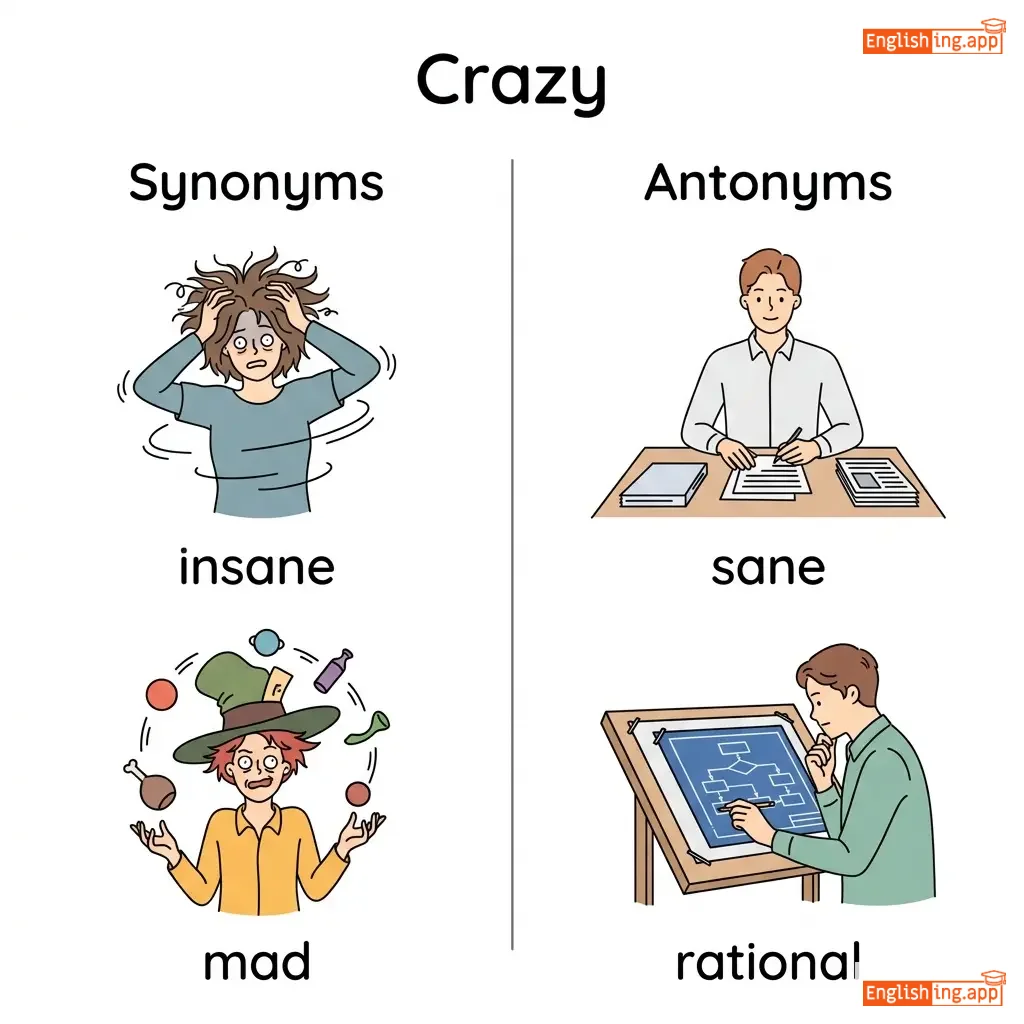
••••••
|
sane, rational, sensible, normal
••••••
|
crazy idea, crazy about, driving crazy
••••••
|
Crazy = 'クレイジー' – Picture someone screaming 'クレイジー!' as they go wild.
••••••
|
Vocabulary Quiz
Test your vocabulary by matching words with their translations or meanings.
Login to take the quiz
Comments (0)
Share your thoughts and join the discussion.
Join the discussion by logging in
Login to CommentNo comments yet
Be the first to share your thoughts!