

Upgrade für Zugriff auf alle Vokabeln
Erhalten Sie unbegrenzten Zugriff auf alle Vokabeln mit Pro-Mitgliedschaft
Upgrade auf ProÜbersetzung
Vergangenheit
Partizip Perfekt
Dritte Person Singular
Gerundium
Bedeutung
Beispielsatz
Übersetzung Beispielsatz
Synonyme
Antonyme
Kollokationen
Eselsbrücke
Swipe left or right, or use the buttons. Tap image to zoom.
Upgrade für Zugriff auf alle Sätze
Erhalten Sie unbegrenzten Zugriff auf alle Sätze mit Pro-Mitgliedschaft
Upgrade auf ProÜbersetzung Beispielsatz
Wort
Lesson 412Lesson 412 - Maske umschalten
|
Emoji
|
Wort | Images | Übersetzung | Vergangenheit | Partizip Perfekt | Dritte Person Singular | Gerundium | Bedeutung | Beispielsatz | Übersetzung Beispielsatz | Beispielausdruck | Bedeutung Beispielausdruck | Übersetzung Beispielausdruck | Synonyme | Antonyme | Kollokationen | Eselsbrücke |
|---|---|---|---|---|---|---|---|---|---|---|---|---|---|---|---|---|---|
|
#12325
👤
|
/huːm/
pronoun
(hum)
••••••
|
- •••••• |
wem
wem
••••••
|
- •••••• | - •••••• | - •••••• | - •••••• |
used to refer to the person or people that something is done to
••••••
|
The man whom I met yesterday is my friend. |
Der Mann, dem ich gestern begegnet bin, ist mein Freund.
Der Mann, dem ich gestern begegnet bin, ist mein Freund.
••••••
|
- •••••• | - •••••• | - •••••• |
who, that, the person
••••••
|
none
••••••
|
whom I met, whom I saw, to whom it may concern
••••••
|
Whom sounds like 'Wem' - 'Wem' as in the person you met.
••••••
|
|
#12326
❄️
|
/ˈwɪntər/
noun
(wɪntər)
••••••
|
- •••••• |
Winter
Winter
••••••
|
- •••••• | - •••••• | - •••••• | - •••••• |
the coldest season of the year, typically from December to February in the Northern Hemisphere
••••••
|
Winter in the north can be very harsh with heavy snowfall. |
Der Winter im Norden kann sehr hart sein, mit starkem Schneefall.
Der Winter im Norden kann sehr hart sein, mit starkem Schneefall.
••••••
|
- •••••• | - •••••• | - •••••• |
cold season, frosty period, chill, snowfall
••••••
|
summer, spring
••••••
|
harsh winter, cold winter, winter season, winter break
••••••
|
Winter bedeutet Kälte und Schnee - Winter means cold and snow.
••••••
|
|
#12327
🏆
|
/ˈwɪnər/
noun
(wɪnɚ)
••••••
|
- •••••• |
Gewinner
Gewinner
••••••
|
- •••••• | - •••••• | - •••••• | - •••••• |
a person who wins a competition or contest
••••••
|
She was the winner of the race. |
Sie war die Gewinnerin des Rennens.
Sie war die Gewinnerin des Rennens.
••••••
|
- •••••• | - •••••• | - •••••• |
champion, victor, first-place
••••••
|
loser, defeated
••••••
|
race winner, competition winner, winner takes all
••••••
|
Winners wear trophies—imagine yourself holding a shiny trophy as a winner!
••••••
|
|
#12328
🕊️
|
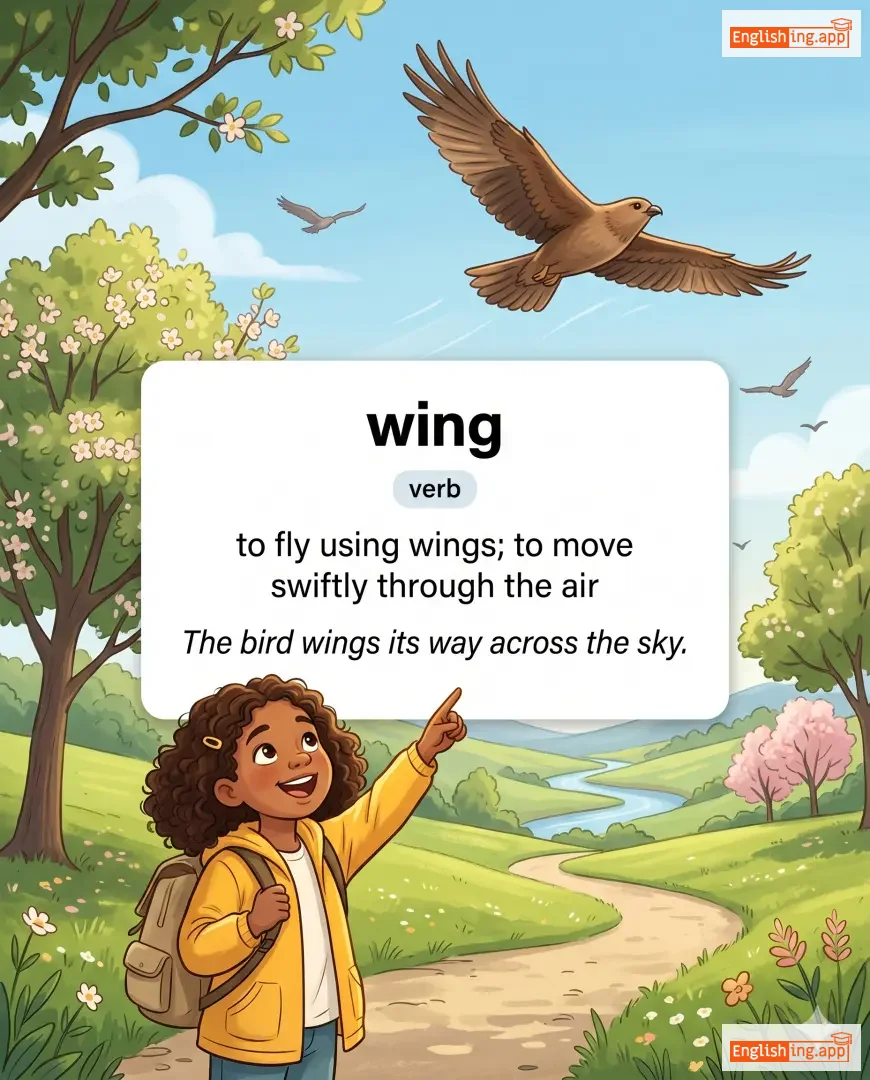
/wɪŋ/
noun
(wɪŋ)
••••••
|
|
Flügel
Fluegel
••••••
|
- •••••• | - •••••• | - •••••• | - •••••• |
a part of a bird or aircraft that is used for flying
••••••
|
The bird flapped its wings and flew away. |
Der Vogel schlug mit seinen Flügeln und flog davon.
Der Vogel schlug mit seinen Flügeln und flog davon.
••••••
|
- •••••• | - •••••• | - •••••• |
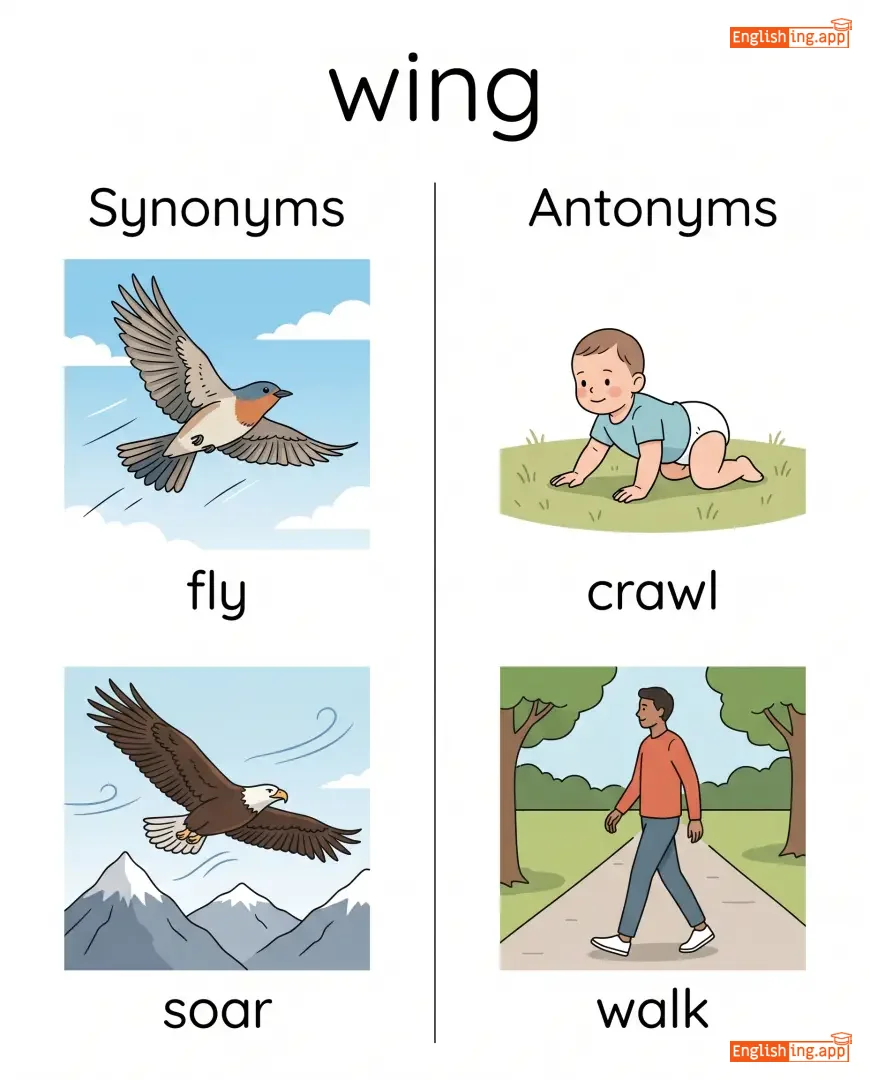
feather, fin, appendage
••••••
|
body, center
••••••
|
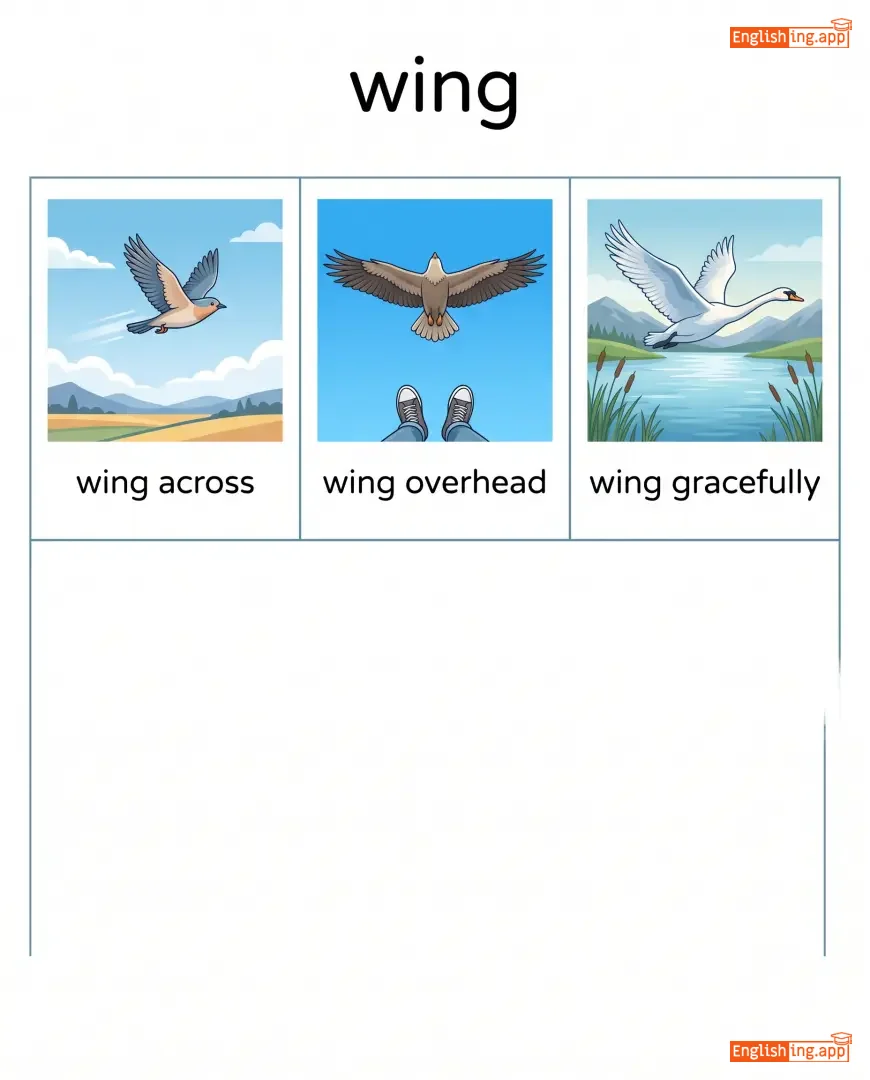
bird's wing, fly with wings, wing span
••••••
|
Flügel ausbreiten, wie ein Vogel, der in den Himmel fliegt!
••••••
|
|
#12329
🍷
|
/waɪn/
noun
(wajn)
••••••
|
- •••••• |
Wein
Wein
••••••
|
- •••••• | - •••••• | - •••••• | - •••••• |
an alcoholic drink made from fermented grapes or other fruits
••••••
|
They served a glass of red wine at the dinner.
Sie haben ein Glas Rotwein zum Abendessen serviert.
••••••
|
Sie haben ein Glas Rotwein zum Abendessen serviert.
Sie haben ein Glas Rotwein zum Abendessen serviert.
••••••
|
- •••••• | - •••••• | - •••••• |
vino, beverage, drink, alcohol
••••••
|
water, juice
••••••
|
red wine, white wine, glass of wine, bottle of wine
••••••
|
Wine pairs with dinner—imagine a glass of red wine with a fancy meal!
••••••
|
|
#12330
🪟
|
/ˈwɪndəʊ/
noun
(windo)
••••••
|
- •••••• |
Fenster
fenster
••••••
|
- •••••• | - •••••• | - •••••• | - •••••• |
an opening in a wall or structure that allows light or air to pass through, usually covered with glass or other material
••••••
|
I opened the window to let the fresh air in.
Ich öffnete das Fenster, um frische Luft hereinzulassen.
••••••
|
Ich öffnete das Fenster, um frische Luft hereinzulassen.
Ich öffnete das Fenster, um frische Luft hereinzulassen.
••••••
|
- •••••• | - •••••• | - •••••• |
pane, glass, aperture, opening
••••••
|
wall, door
••••••
|
open window, close window, window pane, large window
••••••
|
Fenster sind wie ein Blick nach draußen, ein Fenster zu frischer Luft und Freiheit.
••••••
|
|
#12331
🌬️
|
/wɪnd/
noun
(wɪnd)
••••••
|
- •••••• |
Wind
Wind
••••••
|
- •••••• | - •••••• | - •••••• | - •••••• |
moving air, especially in the form of a current of air blowing from a particular direction
••••••
|
The wind is blowing strong today. |
Der Wind weht heute stark.
Der Wind weht heute stark.
••••••
|
- •••••• | - •••••• | - •••••• |
breeze, gust, draft, airflow
••••••
|
calm, stillness
••••••
|
strong wind, cold wind, gentle wind, wind blows
••••••
|
Wind is the same in German, imagine the 'wind' sweeping through the German countryside.
••••••
|
|
#12332
👍
|
/ˈwɪlɪŋ/
adjective
(wɪlɪŋ)
••••••
|
- •••••• |
bereit
bereit
••••••
|
- •••••• | - •••••• | - •••••• | - •••••• |
ready, inclined, or eager to do something
••••••
|
She was willing to help with the project. |
Sie war bereit, beim Projekt zu helfen.
Sie war bereit, beim Projekt zu helfen.
••••••
|
- •••••• | - •••••• | - •••••• |
eager, enthusiastic, ready, prepared
••••••
|
unwilling, reluctant
••••••
|
willing participant, willing to help, willing attitude
••••••
|
Willing means ready and able 👍
••••••
|
|
#12333
✍️
|
/wɪl/
noun, verb
(wɪl)
••••••
|
- •••••• |
Wille
wille
••••••
|
- •••••• | - •••••• |
wills
wɪlz
••••••
|
willing
wɪlɪŋ
••••••
|
expressing future tense or intention; a legal document
••••••
|
She will attend the meeting tomorrow.
Sie wird morgen an dem Treffen teilnehmen.
••••••
|
Sie wird morgen an dem Treffen teilnehmen.
Sie wird morgen an dem Treffen teilnehmen.
••••••
|
Will to power
Wille zur Macht
••••••
|
the drive to assert one's own will over others
••••••
|
Wille zur Macht
Wille zur Macht
••••••
|
intend, shall, want, determination
••••••
|
won't, unwilling
••••••
|
last will, will and testament, strong will
••••••
|
Wille zur Macht, Wille zur Zukunft ✍️
••••••
|
|
#12334
👩❤️👨
|
/waɪf/
noun
(waif)
••••••
|
- •••••• |
Ehefrau
Ehefrau
••••••
|
- •••••• | - •••••• | - •••••• | - •••••• |
a woman who is married to someone
••••••
|
She is the wife of the famous author. |
Sie ist die Ehefrau des berühmten Autors.
Sie ist die Ehefrau des berühmten Autors.
••••••
|
- •••••• | - •••••• | - •••••• |
spouse, partner, better half
••••••
|
husband
••••••
|
wife and husband, loving wife, devoted wife
••••••
|
‘Ehefrau’ means wife in German! Simple to remember.
••••••
|
|
#12335
🌍
|
/ˈwaɪdˌsprɛd/
adjective
(waɪdˌsprɛd)
••••••
|
|
weit verbreitet
weit verbreitet
••••••
|
- •••••• | - •••••• | - •••••• | - •••••• |
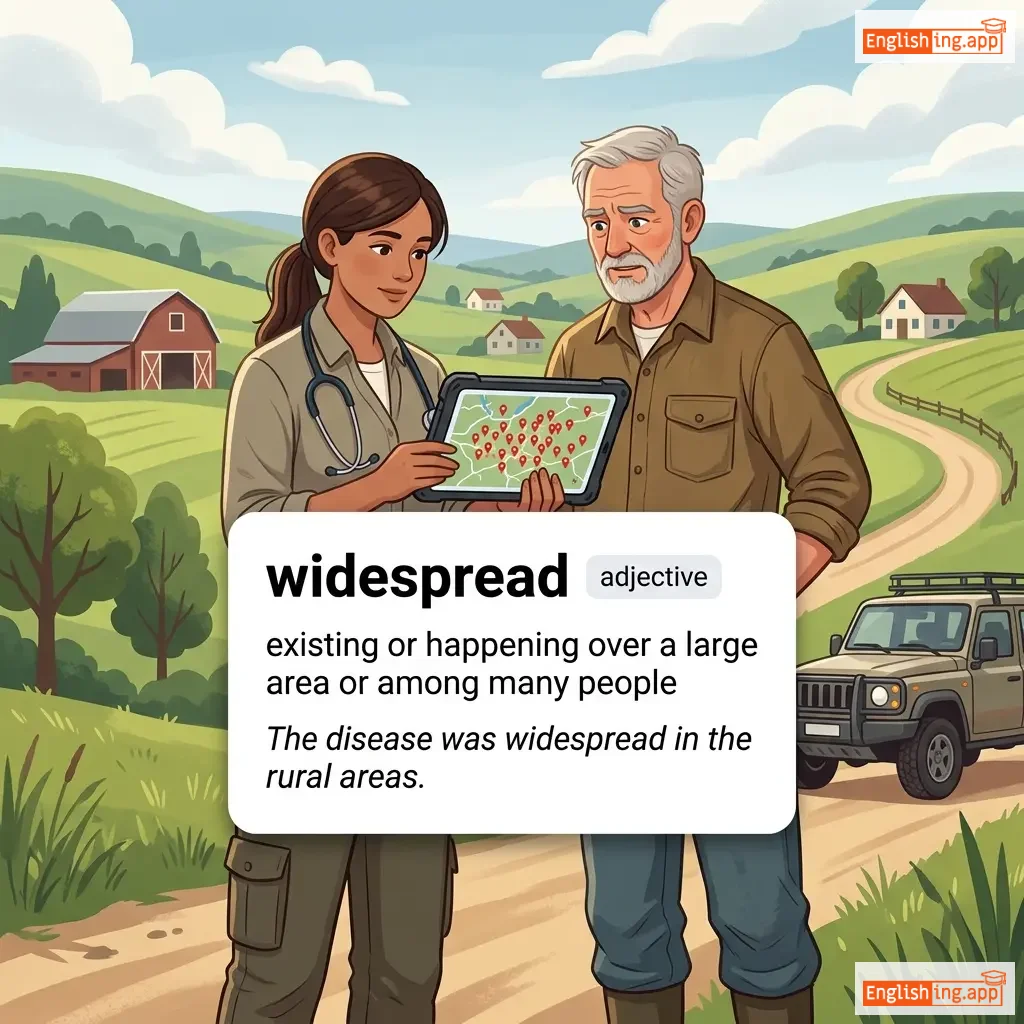
existing or happening over a large area or among many people
••••••
|
The disease was widespread in the rural areas. |
Die Krankheit war in den ländlichen Gebieten weit verbreitet.
Die Krankheit war in den ländlichen Gebieten weit verbreitet.
••••••
|
- •••••• | - •••••• | - •••••• |
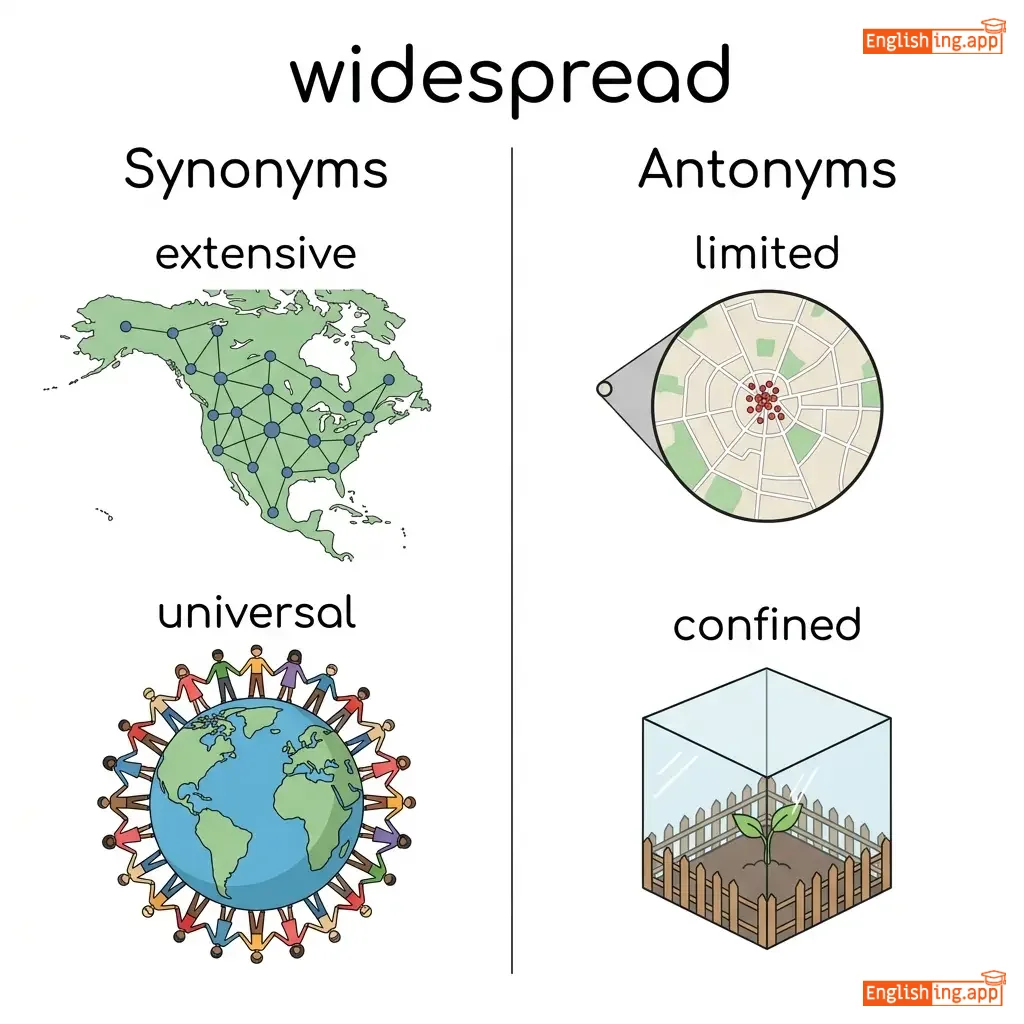
extensive, universal, far-reaching, pervasive
••••••
|
limited, confined
••••••
|
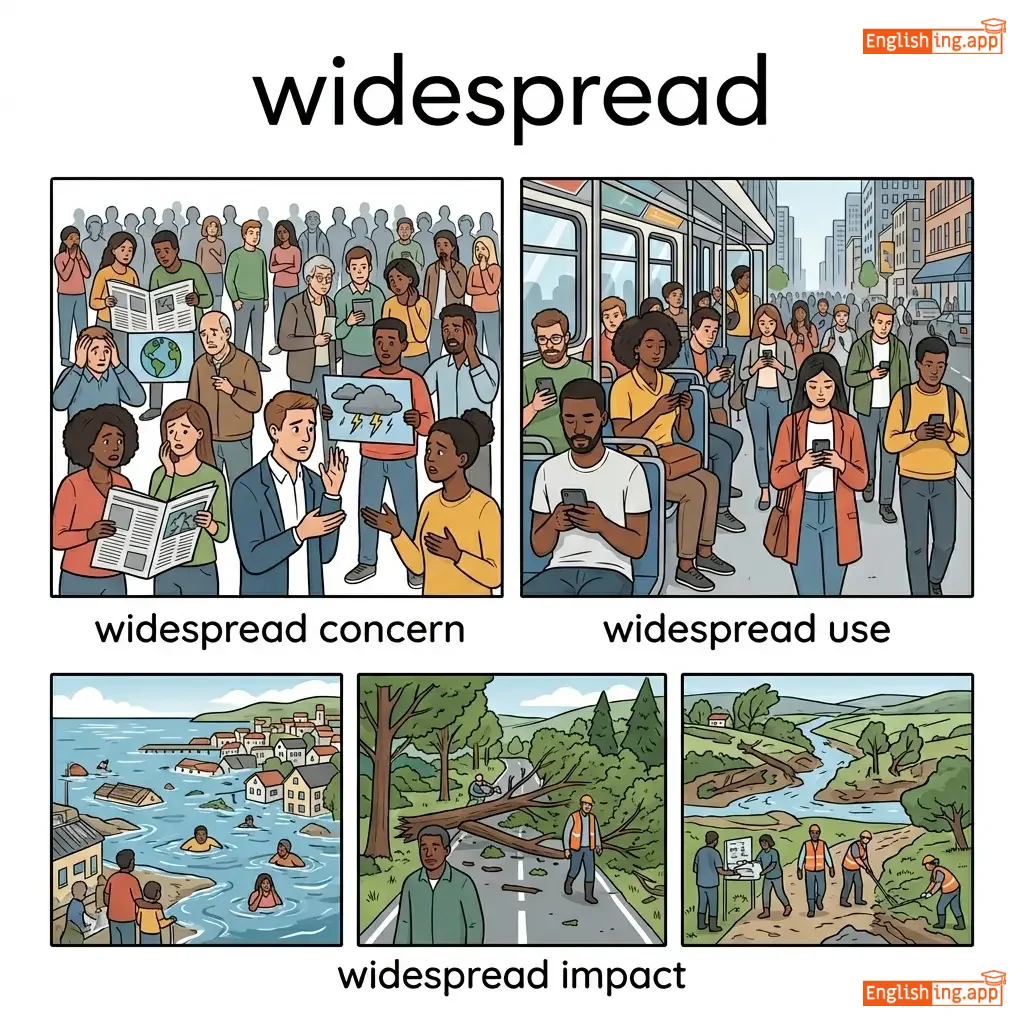
widespread concern, widespread use, widespread impact
••••••
|
Widespread – wie eine Welle, die sich überall ausbreitet 🌍
••••••
|
|
#12336
🌍
|
/ˈwaɪdli/
adverb
(weidli)
••••••
|
- •••••• |
weit verbreitet
weit verbreitet
••••••
|
- •••••• | - •••••• | - •••••• | - •••••• |
to a great extent or degree
••••••
|
The news of his promotion spread widely across the company. |
Die Nachricht von seiner Beförderung verbreitete sich weit in der Firma.
Die Nachricht von seiner Beförderung verbreitete sich weit in der Firma.
••••••
|
- •••••• | - •••••• | - •••••• |
extensively, broadly, widely, far
••••••
|
narrowly, limitedly
••••••
|
widely known, widely accepted, widely spread
••••••
|
Wide world 🌍 means a wide spread across everywhere!
••••••
|
|
#12337
🌍
|
/waɪd/
adjective
(wáid)
••••••
|
- •••••• |
breit
breit
••••••
|
- •••••• | - •••••• | - •••••• | - •••••• |
having a great extent from side to side; broad
••••••
|
The river is wide enough to fit a boat.
The river is wáid enaf tú fit a bót.
••••••
|
Der Fluss ist breit genug, um ein Boot aufzunehmen.
Der Fluss ist breit genug, um ein Boot aufzunehmen.
••••••
|
- •••••• | - •••••• | - •••••• |
broad, spacious, expansive, vast
••••••
|
narrow, tight, confined
••••••
|
wide river, wide road, wide range
••••••
|
Wide like 'Breit' fields – open and spacious!
••••••
|
|
#12338
❓
|
/waɪ/
adverb
(wai)
••••••
|
- •••••• |
warum
warum
••••••
|
- •••••• | - •••••• | - •••••• | - •••••• |
used to ask or talk about the reason for something
••••••
|
Why did you leave so early?
Warum bist du so früh gegangen?
••••••
|
Warum bist du so früh gegangen?
Warum bist du so früh gegangen?
••••••
|
- •••••• | - •••••• | - •••••• |
how come, for what reason
••••••
|
none
••••••
|
why not, why so, why did
••••••
|
Why is for asking the reason – In German, it's just ‘warum’.
••••••
|
|
#12339
📱
|
/huːz/
pronoun
(huːz)
••••••
|
- •••••• |
wessen
wessen
••••••
|
- •••••• | - •••••• | - •••••• | - •••••• |
used to ask or talk about the person or thing that owns something
••••••
|
The girl whose phone was stolen is my cousin. |
Das Mädchen, dessen Telefon gestohlen wurde, ist meine Cousine.
Das Mädchen, dessen Telefon gestohlen wurde, ist meine Cousine.
••••••
|
- •••••• | - •••••• | - •••••• |
who's, that person’s, of whom
••••••
|
none
••••••
|
whose phone, whose book, whose idea
••••••
|
Whose phone is this? – 'Whose' connects to 'Wessen Telefon'.
••••••
|
|
#12340
🌎
|
/ˈwɛstərn/
adjective
(wɛstɚn)
••••••
|
- •••••• |
westlich
westlich
••••••
|
- •••••• | - •••••• | - •••••• | - •••••• |
relating to or characteristic of the West, especially Europe and the Americas
••••••
|
She loves western music and culture. |
Sie liebt westliche Musik und Kultur.
Sie liebt westliche Musik und Kultur.
••••••
|
- •••••• | - •••••• | - •••••• |
occidental, westernized
••••••
|
eastern, oriental
••••••
|
western culture, western philosophy, western world
••••••
|
Westliche Kultur kommt aus dem Westen - Western culture comes from the West.
••••••
|
|
#12341
🍰
|
/hoʊl/
adjective
(hool)
••••••
|
- •••••• |
ganz
ganz
••••••
|
- •••••• | - •••••• | - •••••• | - •••••• |
all of something; complete or entire
••••••
|
He ate the whole cake by himself.
hi et dʏ hol keik baɪ hɪmself
••••••
|
Er hat den ganzen Kuchen ganz allein gegessen.
Er hat den ganzen Kuchen ganz allein gegessen.
••••••
|
- •••••• | - •••••• | - •••••• |
entire, complete, full, total
••••••
|
partial, incomplete, fragmented
••••••
|
whole cake, whole process, whole family, whole truth
••••••
|
Whole Kuchen ganz (Kuchen Ganz) - Whole cake is fully eaten.
••••••
|
|
#12342
🤔
|
/huː/
pronoun
(wer)
••••••
|
- •••••• |
wer
ver
••••••
|
- •••••• | - •••••• | - •••••• | - •••••• |
used to ask about a person or people
••••••
|
Who is coming to the party tonight? |
Wer kommt heute Abend zur Party?
Wer kommt heute Abend zur Party?
••••••
|
- •••••• | - •••••• | - •••••• |
whoever, which person
••••••
|
none
••••••
|
who is, who are, who knows
••••••
|
Ask 'wer' in German to know who!
••••••
|
|
#12343
🤍
|
/waɪt/
adjective
(wait)
••••••
|
- •••••• |
weiß
weiss
••••••
|
- •••••• | - •••••• | - •••••• | - •••••• |
having the color of milk or fresh snow, the opposite of black
••••••
|
She wore a beautiful white dress to the party.
Sie trug ein wunderschönes weißes Kleid auf der Party.
••••••
|
Sie trug ein wunderschönes weißes Kleid auf der Party.
Sie trug ein wunderschönes weißes Kleid auf der Party.
••••••
|
- •••••• | - •••••• | - •••••• |
pale, light, fair
••••••
|
black, dark
••••••
|
white shirt, white snow, white light
••••••
|
A white shirt shines bright just like 'weiß' in German!
••••••
|
|
#12344
🤫
|
/ˈwɪspər/
verb
(wɪspər)
••••••
|
|
flüstern
fluestern
••••••
|
whispered
wɪspərd
••••••
|
whispered
wɪspərd
••••••
|
whispers
wɪspərs
••••••
|
whispering
wɪspərɪŋ
••••••
|
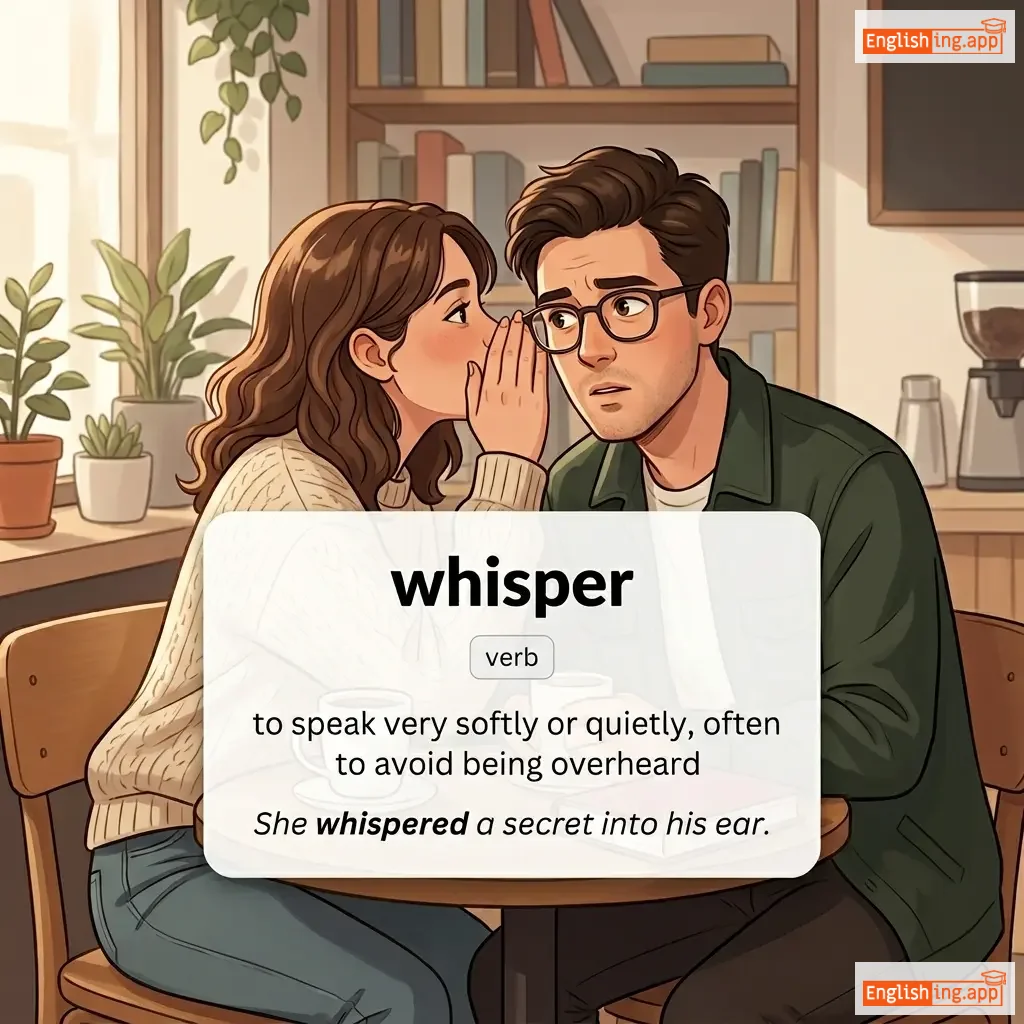
to speak very softly or quietly, often to avoid being overheard
••••••
|
She whispered a secret into his ear.
Sie flüsterte ihm ein Geheimnis ins Ohr.
••••••
|
Sie flüsterte ihm ein Geheimnis ins Ohr.
Sie flüsterte ihm ein Geheimnis ins Ohr.
••••••
|
- •••••• | - •••••• | - •••••• |
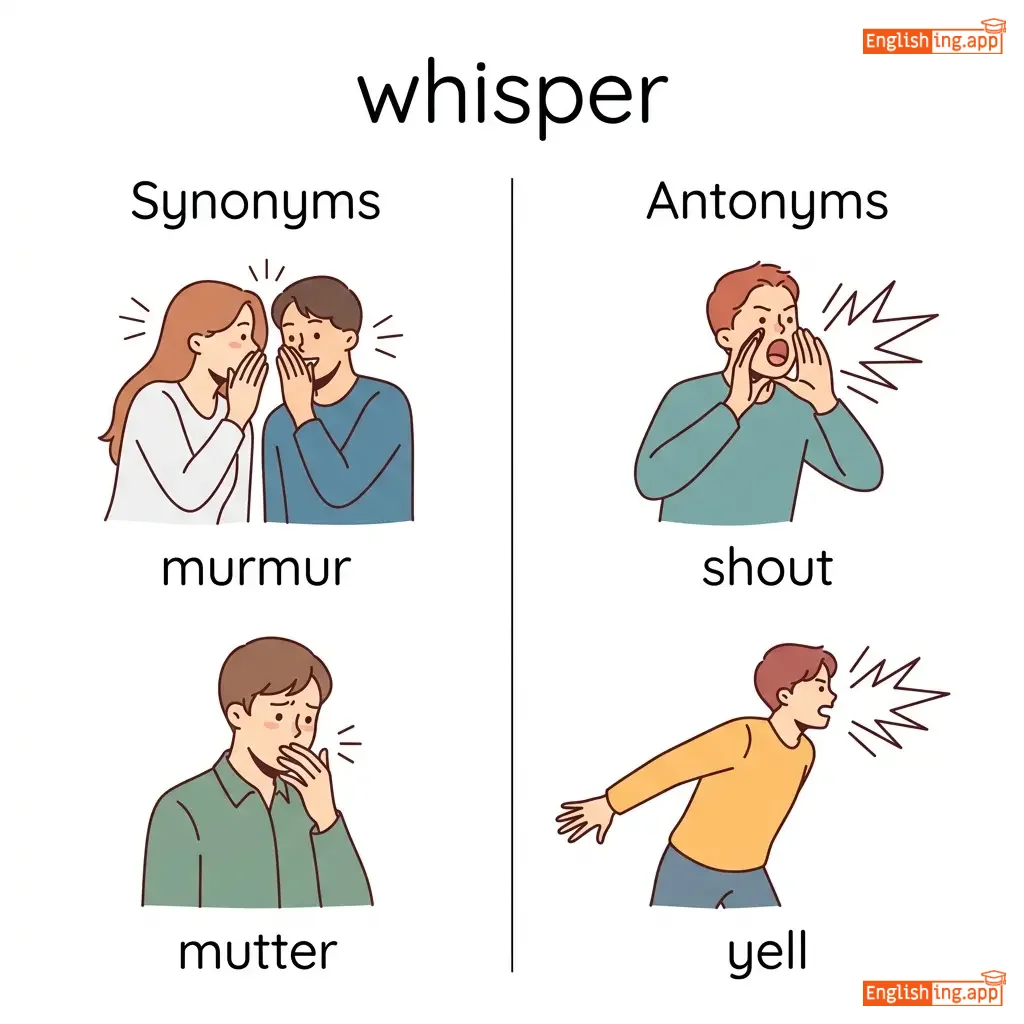
murmur, mutter, hiss
••••••
|
shout, yell
••••••
|
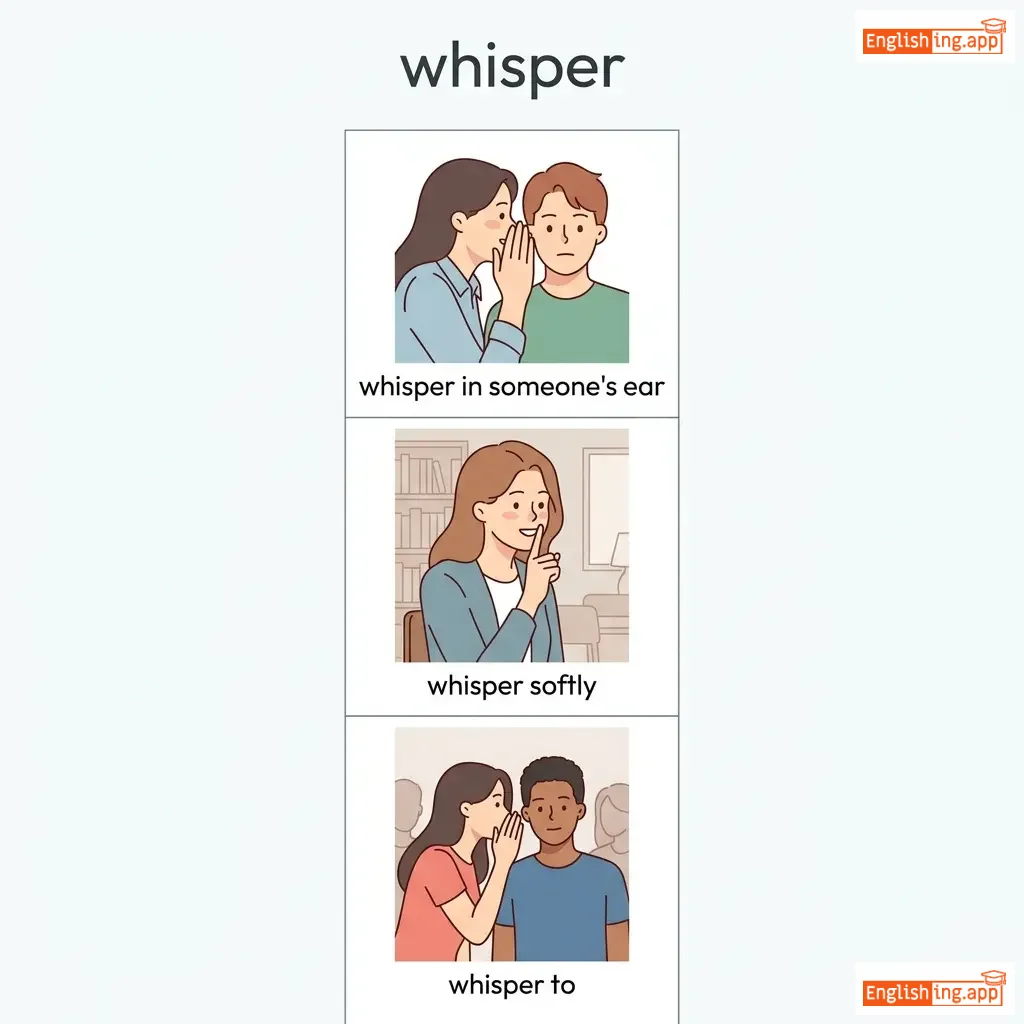
whisper in someone's ear, whisper softly, whisper to
••••••
|
Flüstere leise, damit das Geheimnis nicht verraten wird.
••••••
|
|
#12345
⏳
|
/waɪl/
conjunction
(wail)
••••••
|
- •••••• |
während
waehrend
••••••
|
- •••••• | - •••••• | - •••••• | - •••••• |
during the time that something is happening
••••••
|
She was reading while waiting for the bus.
Sie las, während sie auf den Bus wartete.
••••••
|
Sie las, während sie auf den Bus wartete.
Sie las, waehrend sie auf den Bus wartete.
••••••
|
- •••••• | - •••••• | - •••••• |
as, when, during
••••••
|
none
••••••
|
while waiting, while studying, while traveling
••••••
|
Während du wartest, denke an 'während' auf Deutsch!
••••••
|
|
#12346
❓
|
/wɪtʃ/
pronoun
(wɪtʃ)
••••••
|
- •••••• |
welcher
welcher
••••••
|
- •••••• | - •••••• | - •••••• | - •••••• |
used to ask about one or more items from a defined set
••••••
|
Which one do you prefer, the red or the blue? |
Welchen bevorzugst du, den roten oder den blauen?
Welchen bevorzugst du, den roten oder den blauen?
••••••
|
- •••••• | - •••••• | - •••••• |
what, that, who
••••••
|
none
••••••
|
which one, which way, which time
••••••
|
Which in German is 'welcher', helping you pick!
••••••
|
|
#12347
🤔
|
/ˈwɛðər/
conjunction
(wɛðər)
••••••
|
- •••••• |
ob
ob
••••••
|
- •••••• | - •••••• | - •••••• | - •••••• |
used to express a doubt or choice between alternatives
••••••
|
I don’t know whether I should go.
Ich weiß nicht, ob ich gehen soll.
••••••
|
Ich weiß nicht, ob ich gehen soll.
Ich weiß nicht, ob ich gehen soll.
••••••
|
- •••••• | - •••••• | - •••••• |
if, either
••••••
|
none
••••••
|
whether or not, whether to go, whether he will
••••••
|
ob (ob) fragt, ob du eine Wahl treffen musst
••••••
|
|
#12348
📍
|
/wɛr/
adverb
(wɛr)
••••••
|
- •••••• |
wo
wo
••••••
|
- •••••• | - •••••• | - •••••• | - •••••• |
in or at what place or position
••••••
|
Where do you live? |
Wo wohnst du?
Wo wohnst du?
••••••
|
- •••••• | - •••••• | - •••••• |
location, place
••••••
|
nowhere
••••••
|
where is, where are, where did, where do
••••••
|
Wo (wo) wo ist der Schatz?
••••••
|
|
#12349
📞
|
/wɛnˈɛvər/
adverb
(wɛnɛvɛr)
••••••
|
- •••••• |
wann immer
wann immer
••••••
|
- •••••• | - •••••• | - •••••• | - •••••• |
at any time, or whenever it happens
••••••
|
You can call me whenever you want. |
Du kannst mich anrufen, wann immer du willst.
Du kannst mich anrufen, wann immer du willst.
••••••
|
- •••••• | - •••••• | - •••••• |
anytime, whenever, at all times
••••••
|
never, seldom
••••••
|
whenever you like, whenever possible, whenever needed
••••••
|
wann immer (wann immer) du anrufen kannst
••••••
|
|
#12350
⏰
|
/wɛn/
adverb
(wɛn)
••••••
|
- •••••• |
wann
wann
••••••
|
- •••••• | - •••••• | - •••••• | - •••••• |
at what time
••••••
|
Do you know when the train leaves? |
Weißt du, wann der Zug abfährt?
Weißt du, wann der Zug abfährt?
••••••
|
- •••••• | - •••••• | - •••••• |
at what time, whenever
••••••
|
never, always
••••••
|
when will, when did, when does, when do
••••••
|
Wann von 'wann' (Wann von 'wann')
••••••
|
|
#12351
🚗
|
/wiːl/
noun
(wiːl)
••••••
|
- •••••• |
Rad
rad
••••••
|
- •••••• | - •••••• | - •••••• | - •••••• |
a circular object that revolves on an axle and is used to move or carry things
••••••
|
The wheel of the car broke down on the way. |
Das Rad des Autos ist auf dem Weg kaputt gegangen.
Das Rad des Autos ist auf dem Weg kaputt gegangen.
••••••
|
- •••••• | - •••••• | - •••••• |
disk, circle, rotor, rim
••••••
|
none
••••••
|
steering wheel, bicycle wheel, car wheel, turn the wheel
••••••
|
Das Rad dreht sich und bewegt das Auto (Das Rad dreht sich und bewegt das Auto)
••••••
|
|
#12352
🤷♂️
|
/wɒtˈɛvər/
pronoun
(watever)
••••••
|
- •••••• |
was auch immer
vas auk imer
••••••
|
- •••••• | - •••••• | - •••••• | - •••••• |
used to refer to anything or everything that is of the type mentioned
••••••
|
You can choose whatever you like. |
Du kannst wählen, was immer du willst.
Du kannst wählen, was immer du willst.
••••••
|
- •••••• | - •••••• | - •••••• |
anything, everything
••••••
|
- •••••• |
whatever you want, whatever happens
••••••
|
was auch immer - Whatever you want, you can have.
••••••
|
|
#12353
❓
|
/wɒt/
pronoun
(wɒt)
••••••
|
- •••••• |
was
was
••••••
|
- •••••• | - •••••• | - •••••• | - •••••• |
used to ask for information about something
••••••
|
What is your name? |
Wie heißt du?
Wie heißt du?
••••••
|
- •••••• | - •••••• | - •••••• |
which, that
••••••
|
- •••••• |
what time, what happened, what are you doing
••••••
|
was (was) wird verwendet, um Fragen zu stellen - 'What' wird verwendet, um zu fragen.
••••••
|
|
#12354
💧
|
/wɛt/
adjective
(ウェット)
••••••
|
- •••••• |
nass
nass
••••••
|
- •••••• | - •••••• | - •••••• | - •••••• |
covered with, or saturated with liquid (usually water)
••••••
|
The ground is wet after the rain. |
Der Boden ist nach dem Regen nass.
Der Boden ist nach dem Regen nass.
••••••
|
- •••••• | - •••••• | - •••••• |
damp, moist, soaked
••••••
|
dry, arid
••••••
|
wet ground, wet clothes, wet weather
••••••
|
Nach dem Regen ist der Boden nass.
••••••
|
Vocabulary Quiz
Test your vocabulary by matching words with their translations or meanings.
Login to take the quiz
Comments (0)
Share your thoughts and join the discussion.
Join the discussion by logging in
Login to CommentNo comments yet
Be the first to share your thoughts!