語彙集

英単語辞書 | 単語の意味、定義、例文

adjective
/ˈθrɛdˌbɛr/
過度な使用で薄くて擦り切れた (kadona shiyou de usukute surikireta)

Worn out and thin from too much use; shabby.

"His threadbare coat could not keep him warm in winter."

"彼の擦り切れたコートは冬に彼を温かく保つことができませんでした。" (Kare no surikireta kōto wa fuyu ni kare o atatakaku tamotsu koto ga dekimasen deshita.)
Threat definition card — visual illustration of the meaning
noun
/θrɛt/
脅威, 危険 (kyōi, kiken)

A statement or action indicating intent to cause harm or danger.

"The letter contained a threat against the company."
"手紙には会社に対する脅威が含まれていた。" (Tegami ni wa kaisha ni taisuru kyōi ga fukumarete ita.)
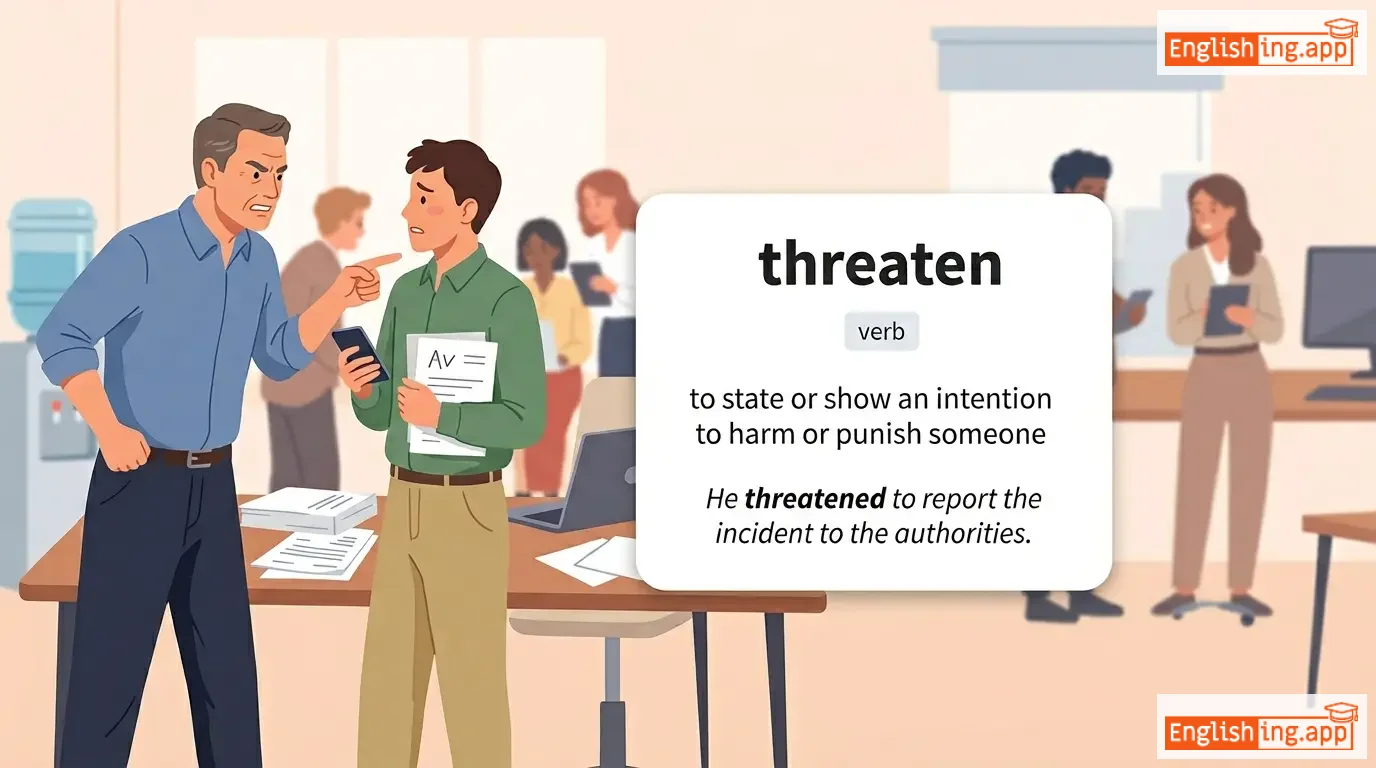
threaten definition card — visual illustration of the meaning
verb
/ˈθrɛtən/
幸せ (shiawase)

to state or show an intention to harm or punish someone

"He threatened to report the incident to the authorities."

"彼女は賞を受け取ったとき、自分の幸せを隠せなかった。" (Kanojo wa shō o uketotta toki, jibun no shiawase o kakusenakatta.)
adjective
/ˈθret.ən.ɪŋ/
脅威的な; 威圧的な (kyouiteki na; iatsuteki na)

expressing a threat; menacing; intimidating

"The dark clouds looked threatening before the storm."
"嵐の前に暗い雲が脅威的に見えた。" (Arashi no mae ni kurai kumo ga kyouiteki ni mieta.)
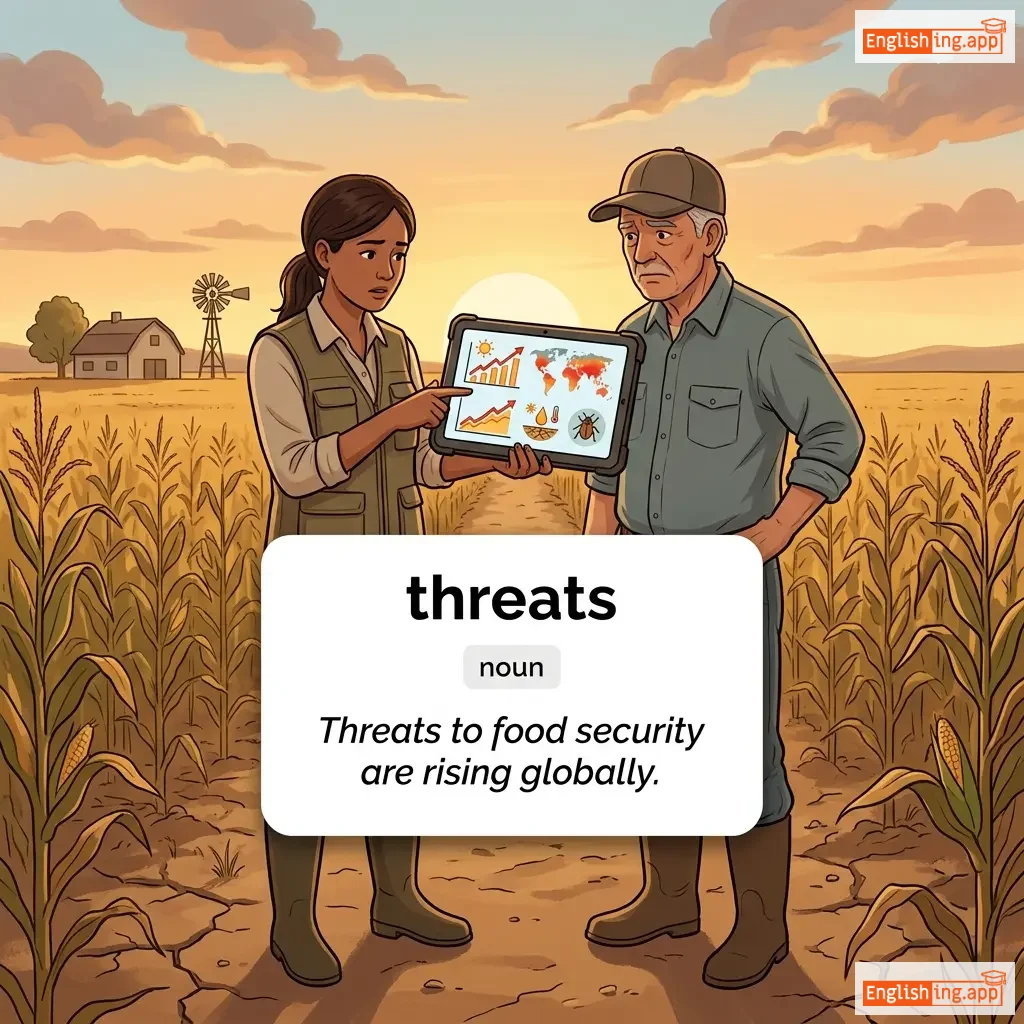
threats definition card — visual illustration of the meaning
noun
θrets
脅威 (kyoui)

A statement of an intention to inflict pain, injury, damage, or other hostile action.

"Threats to food security are rising globally."

"食料安全保障への脅威が世界的に高まっています。" (Shokuryou anzen hoshou e no kyoui ga sekaiteki ni takamatteimasu.)
numeral
/θriː/
(san)

the number equivalent to the sum of two and one

"She has three dogs at home."

"彼女は家に三匹の犬を飼っています。" (Kanojo wa ie ni sanbiki no inu o katteimasu.)
noun
/ˈθrɛnədi/
哀歌、追悼歌 (aika, tsuitouka)

A song, poem, or speech of mourning for someone who has died; a lament.

"The poet composed a moving threnody for the fallen soldiers."
"詩人は戦死した兵士たちのために感動的な追悼歌を作った。" (Shijin wa senshi shita heishitachi no tame ni kandouteki na tsuitouka wo tsukutta.)
verb
/θrɛʃ/

to separate grain from the plant by beating or by using a machine

"Farmers used machines to thresh the wheat after harvest."

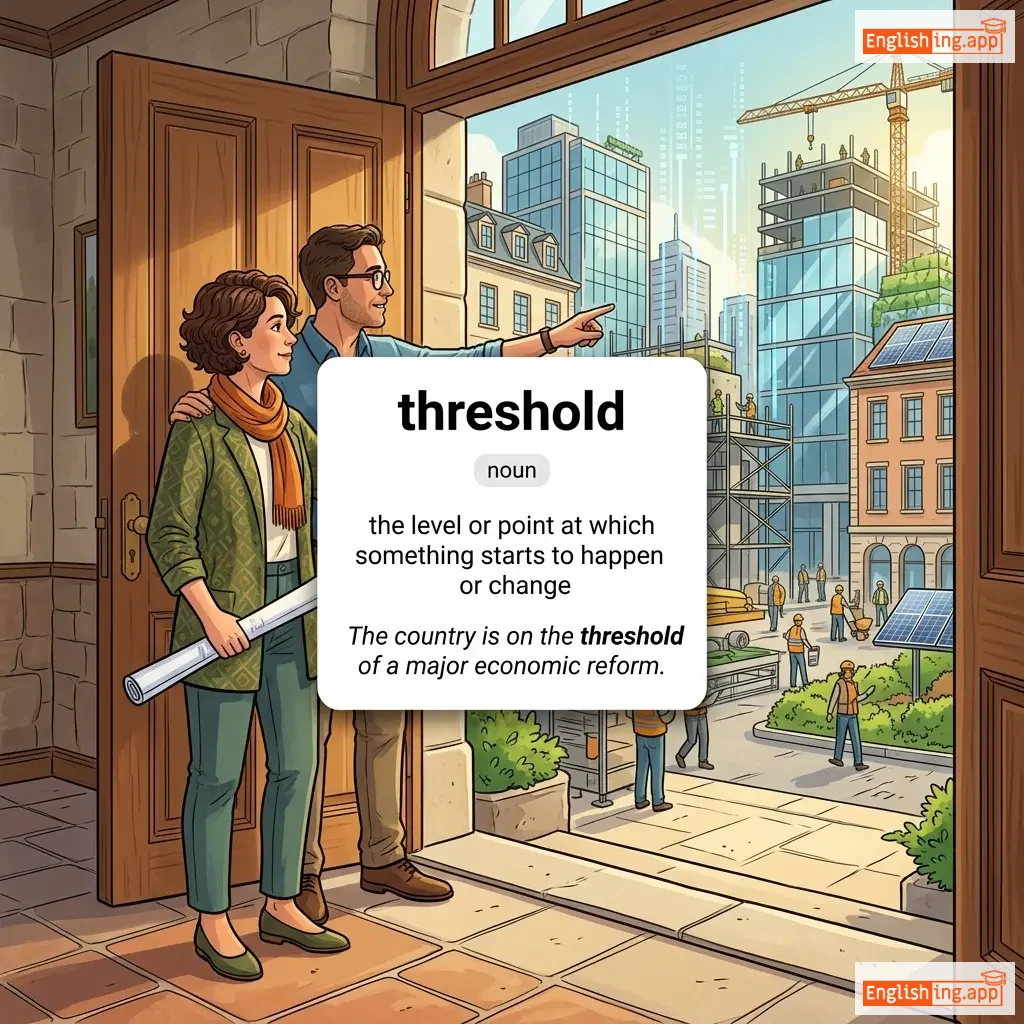
threshold definition card — visual illustration of the meaning
noun
/ˈθreʃ.həʊld/
しきい (shiki)

the level or point at which something starts to happen or change

"The country is on the threshold of a major economic reform."

"その国は重要な経済改革のしきいにあります。" (Sono kuni wa juuyou na keizai kaikaku no shikai ni arimasu.)
adjective
/ˈθrɪfti/
倹約的 (ken'yakuteki)

using money and resources carefully and not wastefully

"She is very thrifty and always saves money for the future."
"彼女は非常に倹約的で、いつも将来のためにお金を貯めています。" (Kanojo wa hijou ni ken'yakuteki de, itsumo shourai no tame ni okane o tameteimasu.)
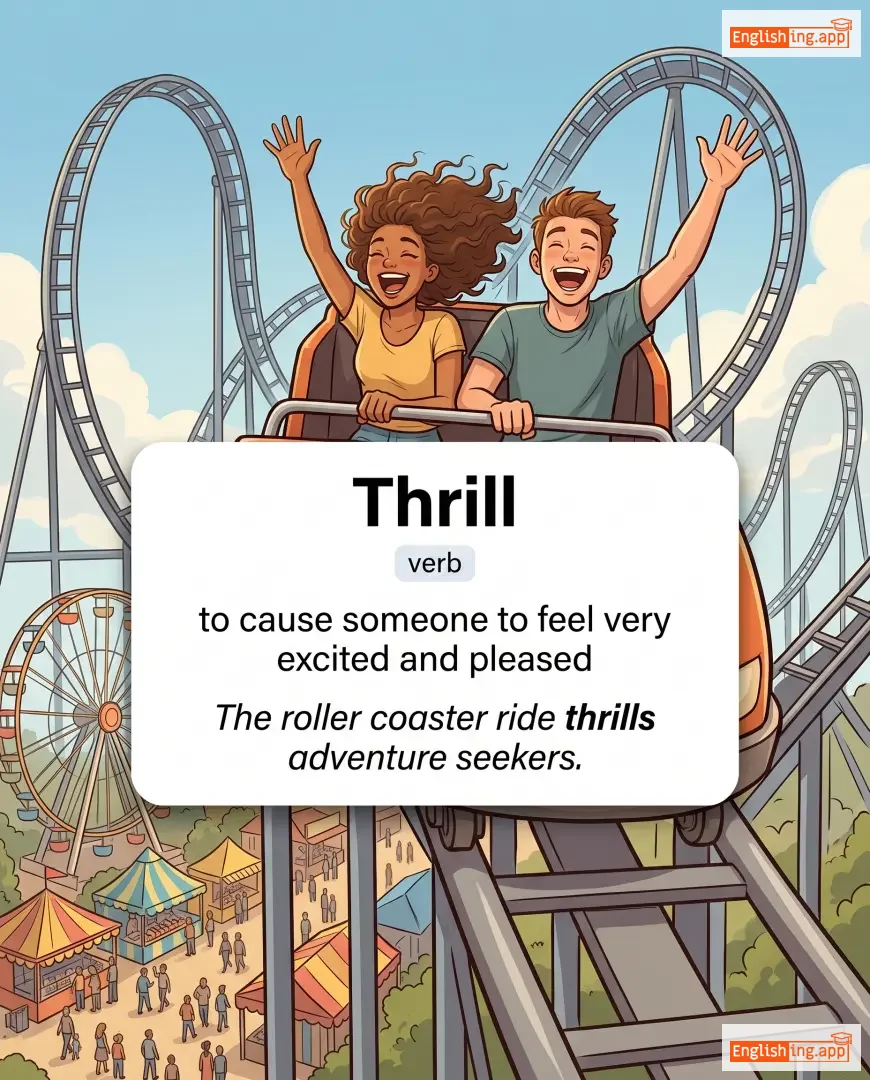
Thrill definition card — visual illustration of the meaning
verb
/θrɪl/
スリルを与える (suiru o ataeru)

to cause someone to feel very excited and pleased

"The roller coaster ride thrills adventure seekers."

"ローラーコースターのライドは冒険を求める人々をスリルさせます。" (Rōrā kōsutā no raido wa bōken o motomeru hitobito o suirusa semasu.)
adjective
/θrɪld/
興奮した (koufun shita)

extremely happy or excited

"She was thrilled with the surprise party."

"彼女はサプライズパーティーに興奮していた。" (Kanojo wa sapuraizu pātii ni koufun shite ita.)
thrive definition card — visual illustration of the meaning
verb
/θraɪv/

to grow, develop, or be successful

"Small businesses can thrive with proper support."

noun
/θroʊt/
(koro)

the front part of the neck, containing the pharynx and larynx

"He felt a lump in his throat while speaking."

"彼は話しているときに喉にしこりを感じました。" (Kare wa hanashite iru toki ni nodo ni shikori o kanjimashita.)
verb
/θrɒb/
脈打つ (myakuutsu)

to beat or pulse strongly, often with pain

"His head began to throb after the long day."

"長い一日の後、彼の頭が脈打ち始めた。" (Nagai ichinichi no ato, kare no atama ga myakuuchi hajimeta.)
noun
/θroʊz/
激痛 (gekitou)

intense or violent pain and struggle, often at the beginning or end of something

"The country was in the throes of a political crisis."

"その国は政治的危機の激痛の中にあった。" (Sono kuni wa seijiteki kiki no gekitou no naka ni atta.)
noun/verb
/θrɒŋ/

A large, densely packed crowd of people or animals; to fill or be present in a place in large numbers.

"Tourists thronged the streets during the festival."

verb/noun
/ˈθrɒt.əl/
絞める/速度を制御する (shimeru/sokudo wo seigyo suru)

To choke or strangle; to control the flow of fuel or power in an engine.

"The driver throttled the engine to slow down the car."

"運転手は車を減速させるためにエンジンのスロットルを調整した。" (Untenshu wa kuruma wo gensoku saseru tame ni enjin no surotoru wo chōsei shita.)
preposition
/θruː/
通過 (tsuuka)

moving in one side and out the other side of something

"The train passed through the tunnel."

"列車はトンネルを通過しました。" (Ressha wa tonneru o tsuuka shimashita.)
preposition
/θruːˈaʊt/
通して (tōshite)

in every part of a place or during the whole time of an event

"She worked throughout the night."
"彼女は一晩中働き続けた。" (Kanojo wa hitobanjuu hatarakitsudzuketa.)
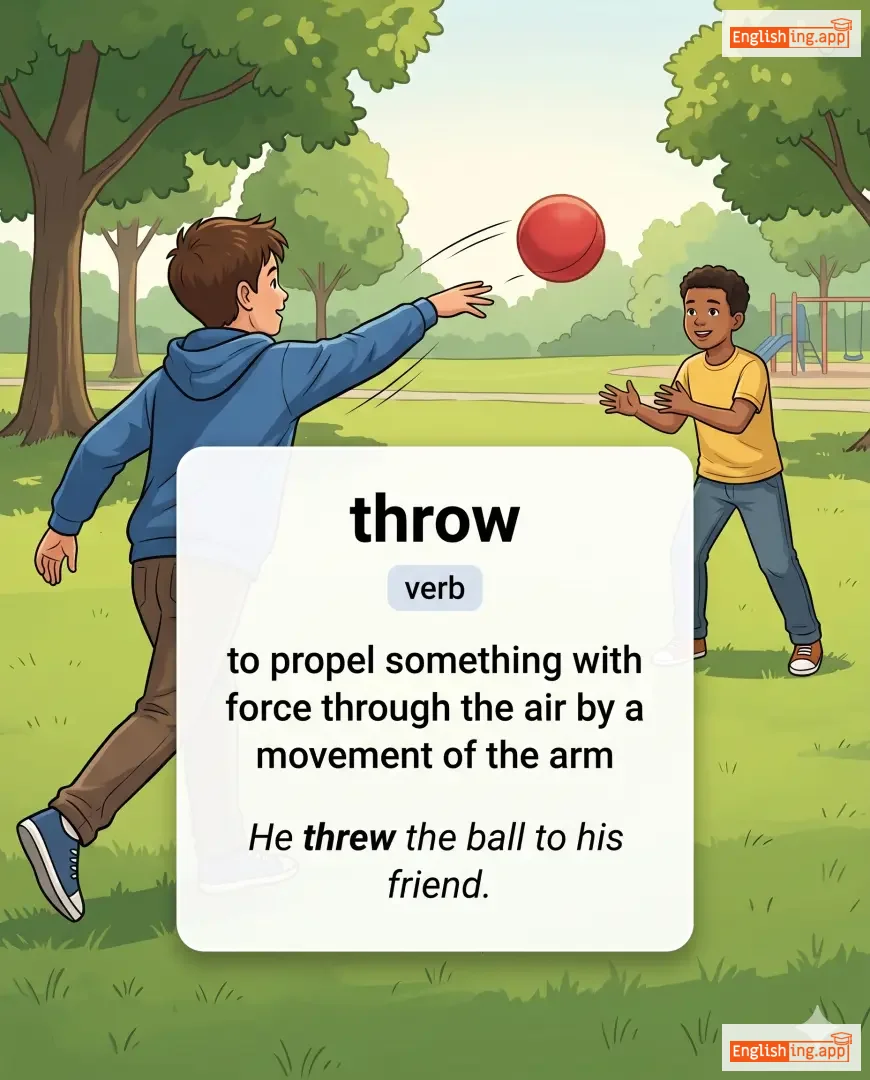
throw definition card — visual illustration of the meaning
verb
/θroʊ/
投げる (nageru)

to propel something with force through the air by a movement of the arm

"He threw the ball to his friend."

"彼は友達にボールを投げました。" (Kare wa tomodachi ni bōru o nage mashita.)
noun
/θʌm/
親指 (oyayubi)

the short, thick finger on the side of the hand, used for gripping and holding things

"He gave a thumbs-up to show his approval."
"彼は承認を示すために親指を上げました。" (Kare wa shounin o shimesu tame ni oyayubi o agemashita.)
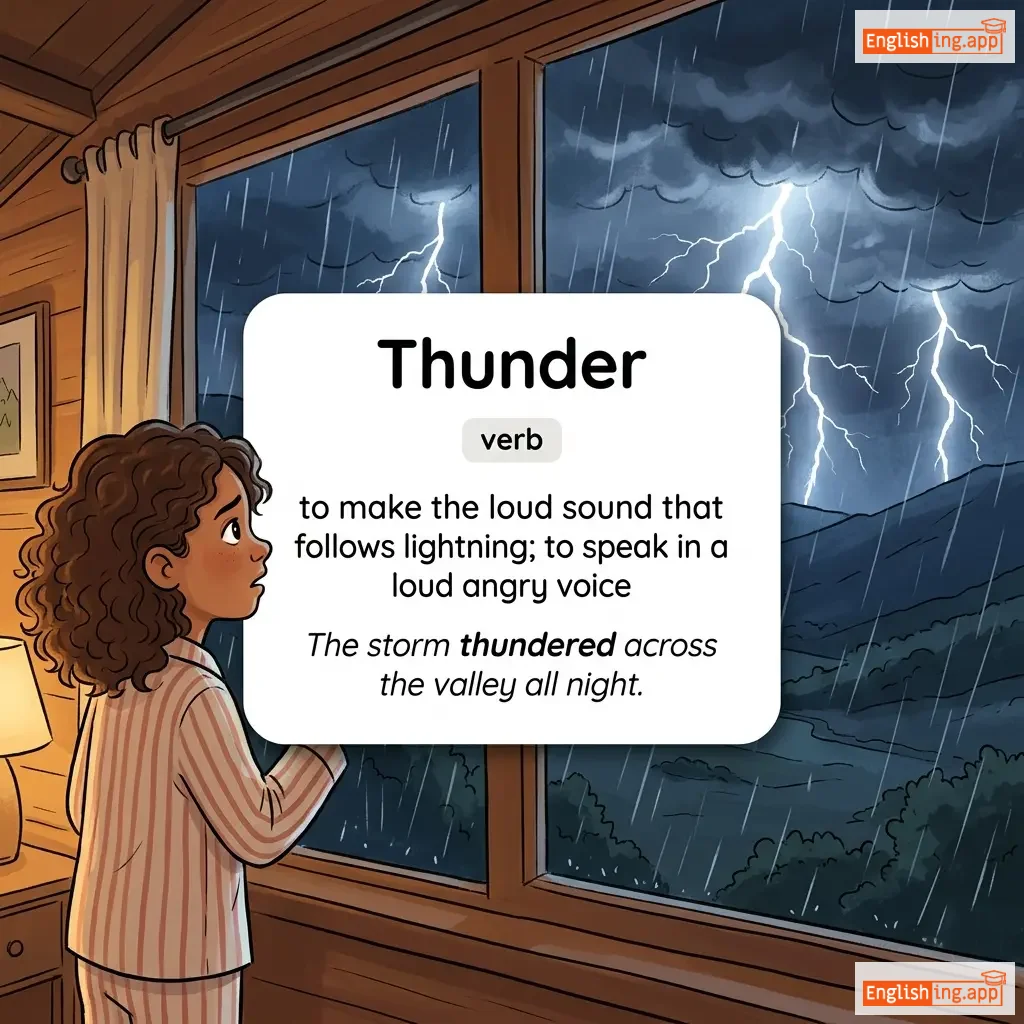
Thunder definition card — visual illustration of the meaning
noun
/ˈθʌn.dər/
(kaminari)

the loud rumbling or crashing noise heard after a lightning flash

"We heard thunder during the storm last night."

"昨夜の嵐の中で雷を聞きました。" (Sakuya no arashi no naka de kaminari wo kikimashita.)
noun
/ˈθɜːrzdeɪ/
木曜日 (mokuyoubi)

The fifth day of the week, following Wednesday and preceding Friday.

"We have a meeting scheduled for Thursday."

"木曜日に会議が予定されています。" (mokuyoubi ni kaigi ga yotei sareteimasu.)
adverb
/ðʌs/
このように (kono you ni)

as a result or consequence of something previously stated

"He was late, thus he missed the meeting."

"彼は遅れたので、このように会議を欠席しました。" (Kare wa okureta node, kono you ni kaigi o kesseki shimashita.)
verb
/θwɔːrt/
妨げる (samatajeru)

To prevent someone from accomplishing something; to oppose successfully.

"The police thwarted the robbery attempt."

"警察は強盗未遂を挫折させた。" (Keisatsu wa gōtō misui o zasetsu saseta.)
noun
/taɪm/
タイム (taimu)

A small aromatic herb used in cooking and medicine.

"She sprinkled thyme on the roasted chicken."

"彼女はローストチキンにタイムを振りかけました。" (Kanojo wa rōsuto chikin ni taimu o furikakemashita.)
noun
/tiˈɑː.rə/
ティアラ (tiara)

a jeweled ornamental crown worn on formal occasions

"The princess wore a sparkling diamond tiara at the royal ball."
"王女は王宮の舞踏会で輝くダイヤモンドのティアラを身に着けていた。" (Oujo wa oukyuu no butoukai de kagayaku daiyamondo no tiara wo mi ni tsukete ita)
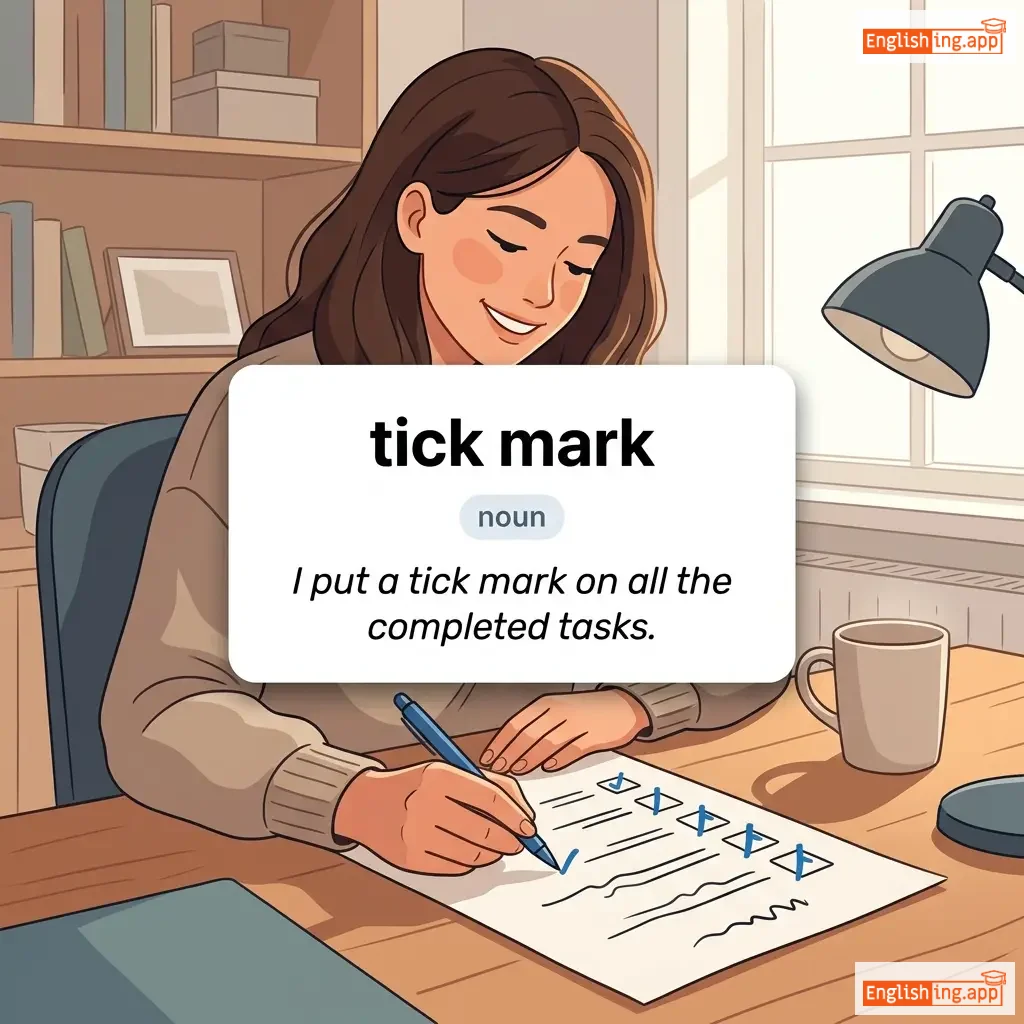
tick mark definition card — visual illustration of the meaning
noun
tɪk mɑːrk
チェックマーク (chekku maaku)

A mark (✓) used to indicate that something is correct or has been chosen, checked, or dealt with.

"I put a tick mark on all the completed tasks."
"私はすべての完了したタスクにチェックマークを付けました。" (Watashi wa subete no kanryō shita tasuku ni chekku māku o tsukemashita.)
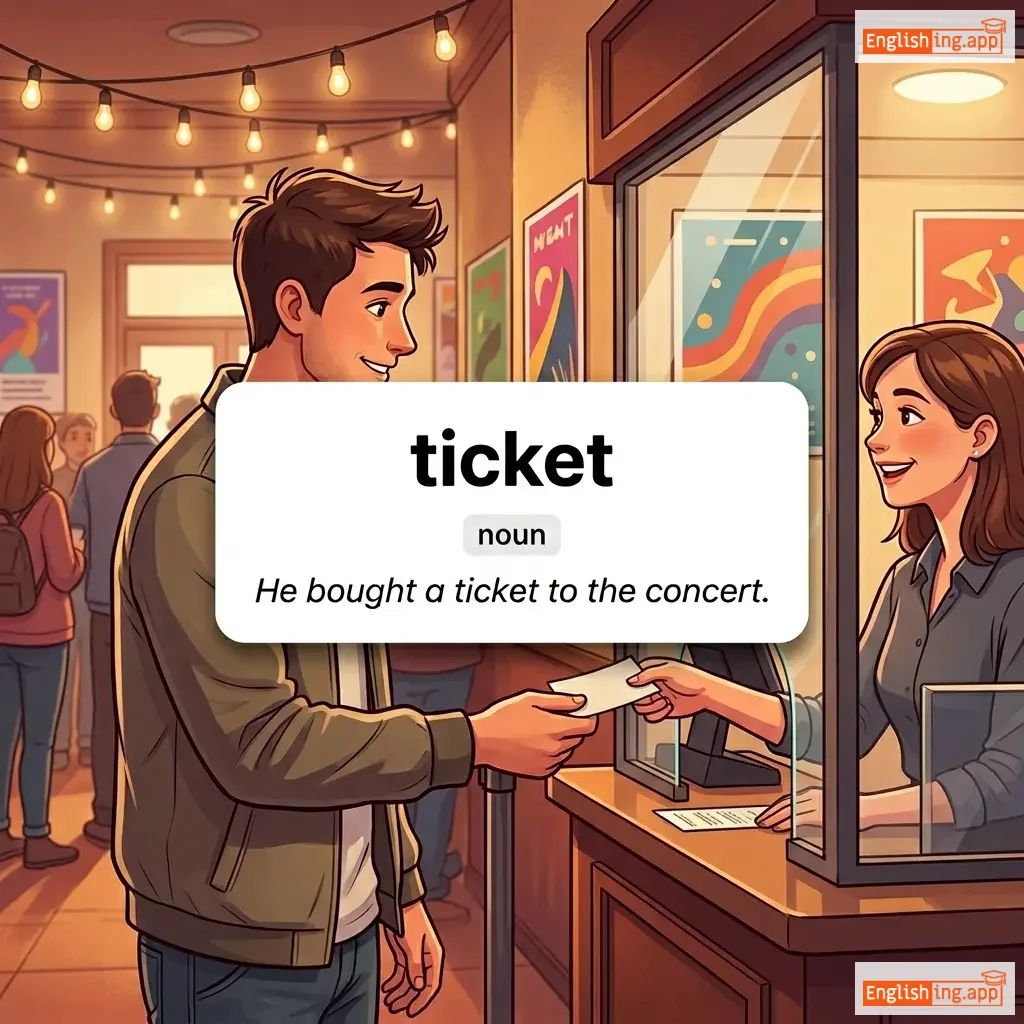
ticket definition card — visual illustration of the meaning
noun
/ˈtɪkɪt/
チケット (chiketto)

a small piece of paper or card that gives the holder a right to access a service or event

"He bought a ticket to the concert."

"彼はコンサートのチケットを買いました。" (Kare wa konsāto no chiketto o kaimashita.)
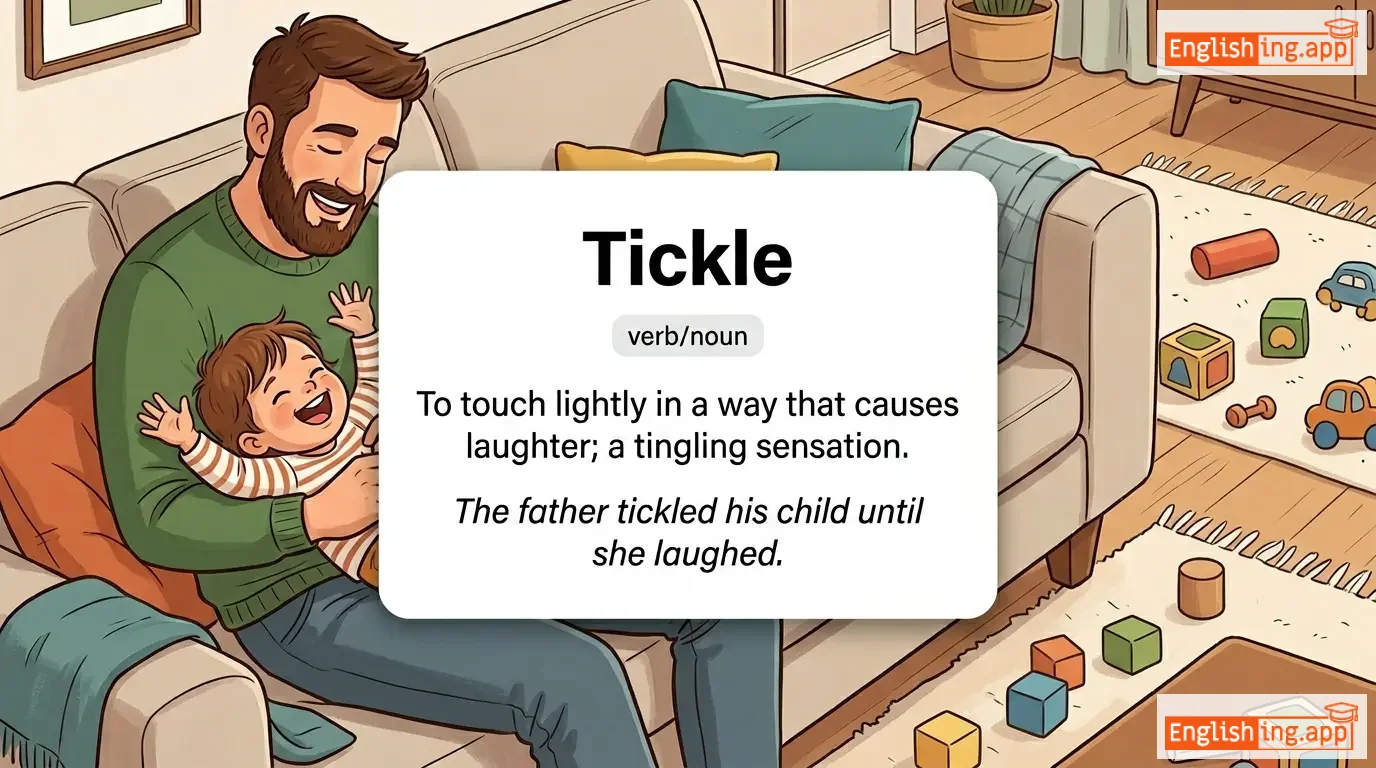
Tickle definition card — visual illustration of the meaning
verb/noun
/ˈtɪk.əl/

To touch lightly in a way that causes laughter; a tingling sensation.

"The father tickled his child until she laughed."

adjective
/ˈtɪklɪʃ/

easily made to laugh by being touched lightly; easily upset or sensitive

"She is very ticklish and bursts into laughter when touched on her feet."

adjective
/ˈtɪd.li/
軽く酔った; 小さいまたは微小 (tiddli)

slightly drunk; small or tiny

"After a few drinks, he felt a bit tiddley."

"いくつかの飲み物を飲んだ後、彼は少しtiddliに感じた。" (Ikutsuka no nomimono o nonda ato, kare wa sukoshi tiddli ni kanjita.)
noun
/taɪd/
潮の干満 (shio no kanman)

the regular rise and fall of the sea caused by the moon and sun's gravity; a powerful flow or movement

"The fisherman waited for the tide to come in."

"漁師は潮の干満が来るのを待っていました。" (Gyoshi wa shio no kanman ga kuru no o matte imashita.)
adjective
/ˈtaɪ.di/
整頓された; 清潔な (seiton sareta; seiketsu na)

arranged neatly and in order; clean and organized

"She keeps her room very tidy and organized."

"彼女は自分の部屋を非常に整頓されていて清潔に保っています。" (Kanojo wa jibun no heya o hijō ni seiton sarete ite seiketsu ni tamotsutteimasu.)
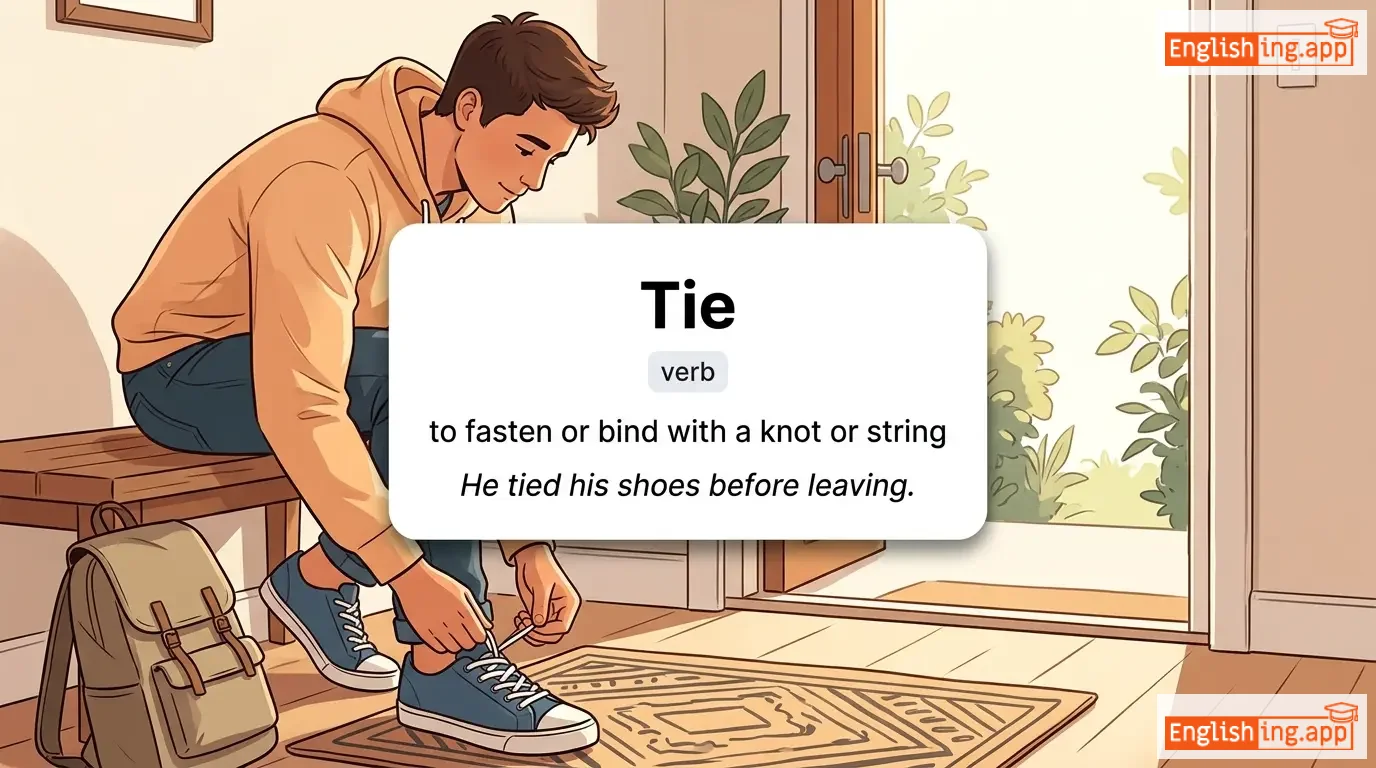
Tie definition card — visual illustration of the meaning
verb
/taɪ/
結ぶ (musubu)

to fasten or bind with a knot or string

"He tied his shoes before leaving."

"彼は出かける前に靴を結びました。" (Kare wa dekakeru mae ni kutsu o musubimashita.)
noun
/tɪf/
口論 (kōron)

a small or petty quarrel or argument

"They had a little tiff over what movie to watch."

"彼らはどの映画を見るかについて小さな口論をした。" (Karera wa dono eiga o miru ka ni tsuite chīsana kōron o shita.)
noun
/ˈtaɪ.ɡər/
(tora)

a very large solitary cat with a yellow-brown coat striped with black, native to the forests of Asia

"The tiger hunted silently through the jungle."

"虎はジャングルを静かに歩いて狩りをしていた。" (Tora wa jungu o shizuka ni aruite kari o shite ita.)
adjective
/ˈtɪp.tɒp/
最高の; 完璧な状態 (saikou no; kanpeki na joutai)

of the highest quality; excellent; in perfect condition

"The car is in tiptop condition."

"車は最高の状態です。" (Kuruma wa saikou no joutai desu)
noun
/ˈtɪʃ.uː/
ティッシュ (tisshu)

a piece of soft absorbent paper or fabric

"She used a tissue to wipe her nose."

"彼女はティッシュで鼻を拭きました。" (Kanojo wa tisshu de hana o fukimashita.)
adjective
/ˈtaɪərɪŋ/
疲れる (tsukareru)

causing someone to feel exhausted or in need of rest

"The long journey was extremely tiring."

"長い旅は非常に疲れるものだった。" (Nagai tabi wa hijou ni tsukareru mono datta)
adjective
/ˈtaɪərsəm/
退屈な (taikutsuna)

Causing one to feel bored, annoyed, or tired.

"The long meeting became very tiresome."

"長い会議はとても退屈になった。" (Nagai kaigi wa totemo taikutsu ni natta.)
adjective
/ˈtaɪərləs/
疲れ知らず (tsukare shirazu)

Showing great effort or energy without becoming tired.

"She worked tirelessly to complete the project on time."

"彼女は時間通りにプロジェクトを完了させるために疲れ知らずで働きました。" (Kanojo wa jikan dōri ni purojekuto o kanryō saseru tame ni tsukare shirazu de hatarakimashita.)
Tired definition card — visual illustration of the meaning
adjective
/ˈtaɪərd/
疲れた (kareta)

in need of rest or sleep

"I feel so tired after the long journey."

"長い旅の後、私はとても疲れを感じています。" (Nagai tabi no ato, watashi wa totemo kareta o kanjiteimasu.)
noun
/taɪər/
タイヤ (taiya)

a rubber covering around a wheel

"The car’s tire burst on the highway."

"車のタイヤが高速道路でパンクした。" (Kuruma no taiya ga kōsokudōro de panku shita.)
noun
/taɪˈreɪd/
激しい非難 (hageshii hinan)

a long, angry, or critical speech

"The manager launched into a tirade about poor performance."

"マネージャーは低いパフォーマンスについて長い激しい演説を行った。" (Manējā wa hikui pafōmansu ni tsuite nagai hageshī enzetsu o okonatta.)
noun
/tɪnt/
色合い (iroai)

a slight shade or variation of a color

"The walls were painted white with a slight blue tint."

"壁は白で、少し青いティントで塗られていました。" (Kabe wa shiro de, sukoshi aoi tint de nurareteimashita.)
adjective
/ˈtaɪni/
とても小さい (totemo chiisai)

very small

"She held a tiny kitten in her hands."

"彼女はとても小さな子猫を手のひらに乗せていた。" (Kanojo wa totemo chiisana koneko o te no hira ni nosete ita.)
noun
/tɪp/
アドバイス (adobaisu)

a small but useful piece of advice

"I received a tip on how to improve my presentation."

"プレゼンテーションを改善する方法についてアドバイスをもらいました。" (Purezentēshon o kaizen suru hōhō ni tsuite adobaisu o moraimashita.)
verb
/ˈtɪŋkər/
いじる (ijiru)

to make small adjustments or repairs to something, often experimentally or imperfectly

"He likes to tinker with old radios in his garage."

"彼はガレージで古いラジオをいじるのが好きです。" (Kare wa gareji de furui rajio o ijiru no ga suki desu.)