語彙集

英単語辞書 | 単語の意味、定義、例文

noun
/ˈθiːsɪs/
テーシス (teshisu)

A long piece of writing on a particular subject, usually for a degree at a university.

"She spent two years writing her doctoral thesis."
"彼女は博士論文を書くのに2年を費やしました。" (Kanojo wa hakase ronbun o kaku no ni 2-nen o tsuiyashimashita.)
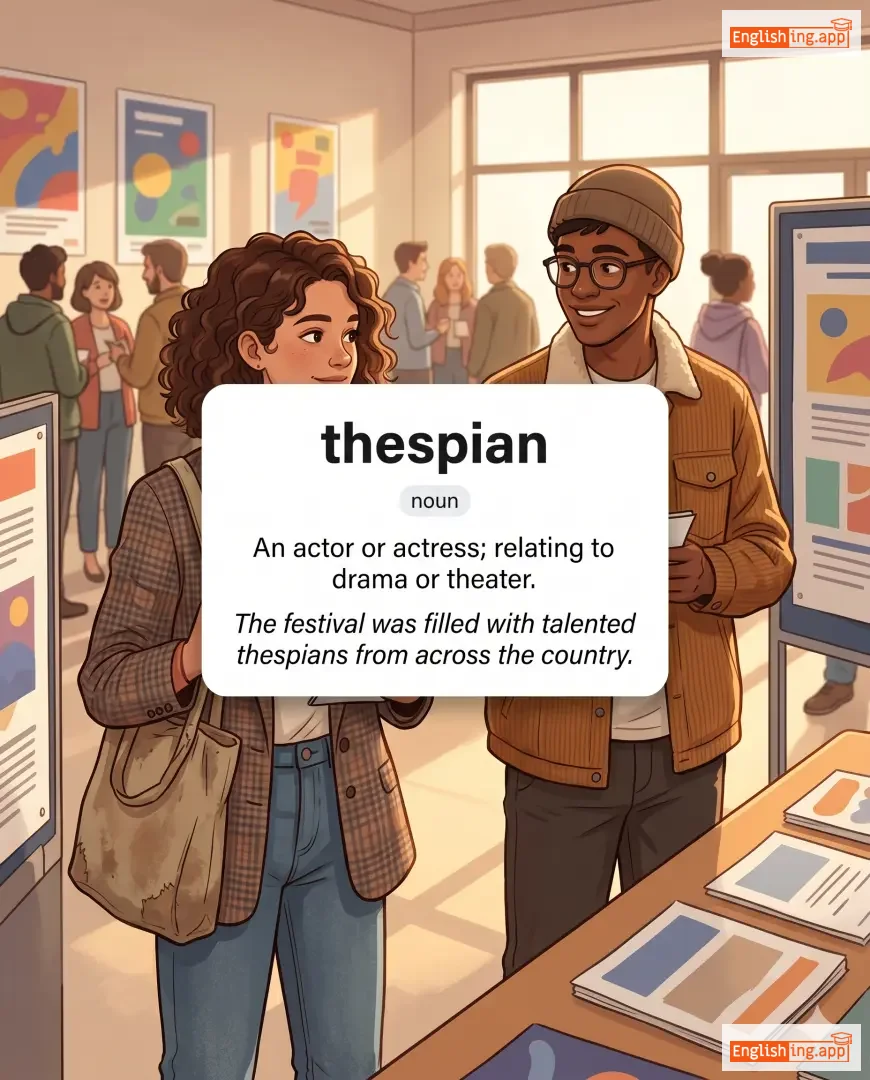
thespian definition card — visual illustration of the meaning
noun
/ˈθɛspiən/
俳優 (haiyū)

An actor or actress; relating to drama or theater.

"The festival was filled with talented thespians from across the country."

"フェスティバルは、国内各地から集まった才能豊かな俳優たちで満たされていました。" (Fesutibaru wa, kokunai kakuchi kara atsumatta sainō yutakana haiyū-tachi de mitasarete imashita.)
pronoun
/ðeɪ/
彼ら (karera)

used to refer to people or things previously mentioned or easily identified

"They are going to the park."

"彼らは公園に行きます。" (Karera wa kōen ni ikimasu.)
adjective
/θɪk/
厚い (atsui)

having a large distance between two sides; not thin

"The book was so thick it took weeks to finish."

"その本はとても厚くて、終わらせるのに数週間かかりました。" (Sono hon wa totemo atsukute, owaraseru noni suushukan kakarimashita.)
noun
/ˈθɪk.ɪt/
茂み; 低木の成長 (thiket)

a dense group of bushes or trees; a thick growth of shrubs

"The rabbit disappeared into the thicket."

"ウサギは茂みに消えました。" (Usagi wa shigemi ni kiemashita.)
adverb
/ˈθɪkli/
密集して (misshū shite)

in a thick manner; densely; heavily

"The forest was thickly wooded with tall pine trees."

"森は高い松の木で密集して覆われていた。" (Mori wa takai matsu no ki de misshū shite ōwarete ita.)
noun
/ˈθɪk.nəs/
厚さ (atsusa)

The measure of how thick or dense something is

"The thickness of the book made it hard to carry."

"その本の厚さのため、持ち運びが大変だった。" (sono hon no atsusa no tame, mochi hakobi ga taihen datta.)
🦹‍♂️

Thief (θiːf)

noun
/θiːf/
泥棒 (dorobo)

a person who steals things from others

"The thief was caught stealing from the jewelry store."

"泥棒は宝石店で盗んでいるところを捕まえられました。" (Dorobo wa housekiten de nusundeiru tokoro wo tsukamaeraremashita.)
noun
/θaɪ/
太もも (thighmomo)

the part of the leg between the hip and the knee

"He felt pain in his right thigh after running for an hour."

"1時間走った後、右太ももに痛みを感じました。" (1 jikan hashitta ato, migi thighmomo ni itami o kanjimashita.)
adjective
/θɪn/
薄い (usui)

having little thickness or width

"She wore a thin scarf in the winter."

"彼女は冬に薄いスカーフを着ていました。" (Kanojo wa fuyu ni usui sukāfu o kite imashita.)
noun
/θɪŋ/
(mono)

an object, idea, or matter that is being referred to or dealt with

"This is the thing I was looking for."

"これは私が探していた物です。" (Kore wa watashi ga sagashite ita mono desu.)
think definition card — visual illustration of the meaning
verb
/θɪŋk/
考える (kangaeru)

to use one's mind to consider or reason about something

"I think this is a great idea."

"私はこれが素晴らしいアイデアだと思います。" (Watashi wa kore ga subarashī aidea da to omoimasu.)
adjective
/ˈθɪŋ.kə.bəl/
考えられる (kangaerareru)

Capable of being imagined or conceived; possible to consider or believe

"It is hard to believe that such an outcome is even thinkable."

"そのような結果が考えられるとは信じがたい。" (Sono you na kekka ga kangaerareru to wa shinjigatai)
noun
/ˈθɪŋkɪŋ/
考え (kangae)

the process of considering or reasoning about something

"Her thinking was clear and precise."

"彼女の考えは明確で正確でした。" (Kanojo no kangae wa meikaku de seikaku deshita.)
adjective
/θɜrd/
三番目 (sanbanme)

constituting number three in a sequence

"She finished in third place."

"彼女は三番目に終わった。" (Kanojo wa sanbanme ni owatta.)
noun
/tɒp/
頂上 (choujou)

the highest or uppermost point, part, or surface of something

"The book is on the top shelf."

"その本は上の棚にあります。" (Sono hon wa ue no tana ni arimasu.)
noun
/ˈtoʊtəm/
聖なる象徴 (seinaru shōchō)

A natural object, animal, or symbol that is revered as a spiritual emblem by a group or tribe.

"The eagle is considered a sacred totem in many cultures."

"イーグルは多くの文化で神聖なトーテムと見なされています。" (Iiguru wa ōku no bunka de seinaru tōtemu to minasareteimasu.)
adverb
/ˈtoʊtəli/
完全に (kanzen ni)

completely or in an absolute way

"She was totally shocked by the news."

"彼女はそのニュースに完全にショックを受けていました。" (Kanojo wa sono nyūsu ni kanzen ni shokku o uketeimashita.)
adjective, noun, verb
/ˈtoʊ.təl/
合計 (goukei)

the whole amount; complete

"The total cost was too high."

"合計費用は高すぎました。" (Goukei hiyou wa takasugimashita.)
verb
/tɔs/
軽く投げる (karuku nageru)

To throw something lightly or casually; to move or turn suddenly.

"He tossed the keys onto the table."

"彼は鍵をテーブルに投げた。" (Kare wa kagi wo teeburu ni nageta.)
adjective
/ˈtɔːrtʃərəs/
痛ましい (itamashii)

Extremely painful or causing great suffering; relating to or involving torture.

"The journey through the desert was long and torturous."

"砂漠を横断する旅は長くて痛ましいものでした。" (Sabaku o ōdan suru tabi wa nagakute itamashī mono deshita.)
noun
/ˈtɔːtʃər/
拷問 (goumon)

the action or practice of inflicting severe pain on someone as a punishment or to force them to do something

"He was subjected to torture during the interrogation."

"彼は尋問中に拷問を受けました。" (Kare wa shinmon-chuu ni goumon o ukemashita.)
adjective
/ˈtɔːrtʃuəs/
曲がりくねった, 複雑 (magarikunetta, fukuzatsu)

Full of twists and turns; excessively complex or complicated.

"The tortuous mountain road made driving very difficult."

"曲がりくねった山道が運転を非常に難しくした。" (Magarikunetta yamamichi ga unten o hijō ni muzukashiku shita.)
noun
/ˈtɔːr.təs/
カメ (kame)

A slow-moving land reptile with a hard shell.

"The tortoise slowly crossed the garden."

"カメはゆっくり庭を横切った。" (Kame wa yukkuri niwa o yokotta.)
adjective
/ˈtɔːrʃəs/
不法行為 (fuhou koui)

Relating to or involving a wrongful act leading to legal liability.

"The company was found guilty of tortious interference with contracts."

"その企業は契約への不法干渉で有罪判決を受けた。" (Sono kigyou wa keiyaku e no fuhou kanshou de yuuzen hanketsu wo uketa.)
noun
/tɔːrˈtiːə/
トルティーヤ (torutiya)

A thin round flatbread made from corn or wheat, common in Mexican cuisine.

"She wrapped the vegetables in a warm tortilla."

"彼女は温かいトルティーヤに野菜を包みました。" (Kanojo wa atatakai torutiya ni yasai o tsumimashita.)
noun
/ˈtɔːrsoʊ/
胴体 (doutai)

The trunk of the human body, excluding the head and limbs.

"The artist painted the torso of the model in great detail."

"芸術家はモデルの胴体を詳細に描きました。" (Geijutsuka wa moderu no doutai o shousai ni kakimashita.)
adjective
/ˈtɒrɪd/
非常に暑く乾燥している; 強い感情や情熱に満ちている (hijou ni atsuku kansou shite iru; tsuyoi kanjou ya jounetsu ni michite iru)

Very hot and dry; full of strong emotions or passion.

"The desert heat was torrid during the day."

"砂漠の熱は昼間非常に暑かった。" (sabaku no netsu wa hiruma hijou ni atsukatta.)
adjective
/təˈrɛnʃəl/
豪雨 (gouu)

Relating to or resembling a torrent; very heavy and fast flowing.

"The hikers were caught in torrential rain."

"ハイカーたちは豪雨に捕まった。" (Haikaa tachi wa gouu ni tsukamatta.)
noun
/ˈtɔːrənt/
洪水 (kōzui)

A strong and fast-moving stream of water; a sudden, violent outpouring of something.

"A torrent of rain flooded the streets."
"雨の洪水が通りを浸水させた。" (Ame no kōzui ga tōri o shinsui saseta.)
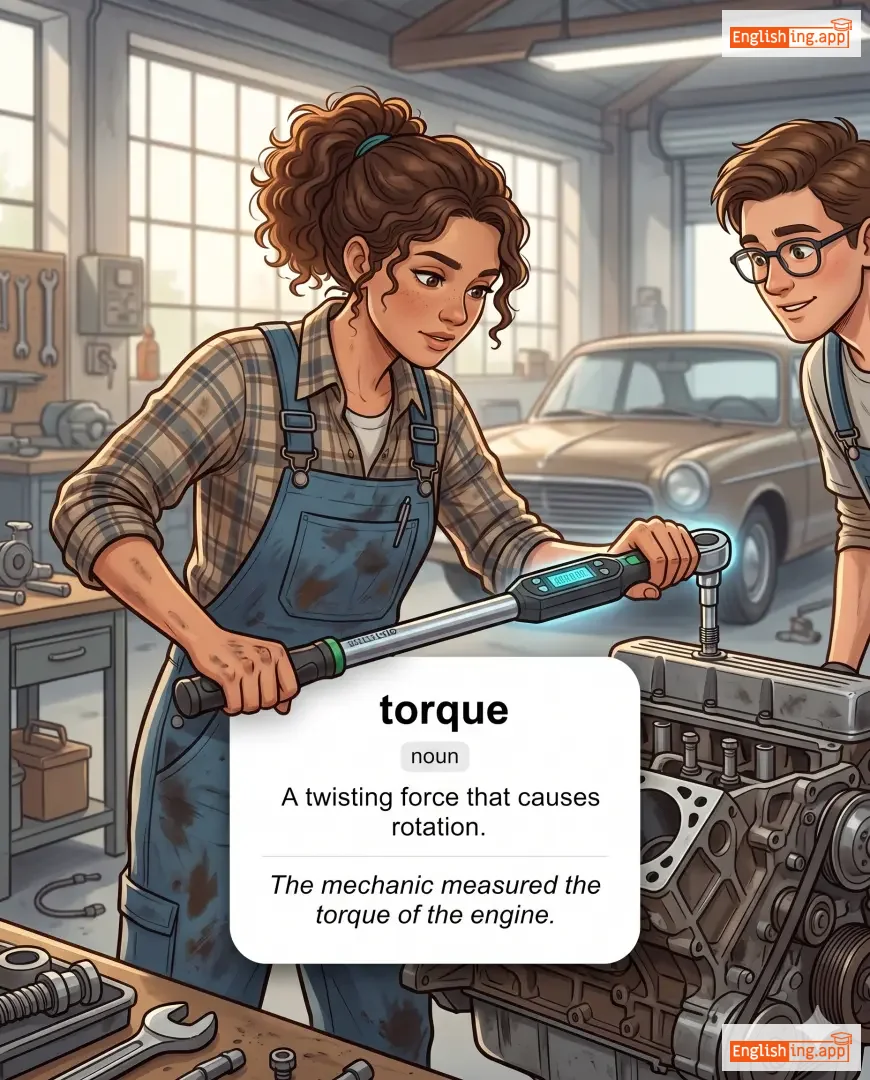
torque definition card — visual illustration of the meaning
noun
/tɔːrk/

A twisting force that causes rotation.

"The mechanic measured the torque of the engine."

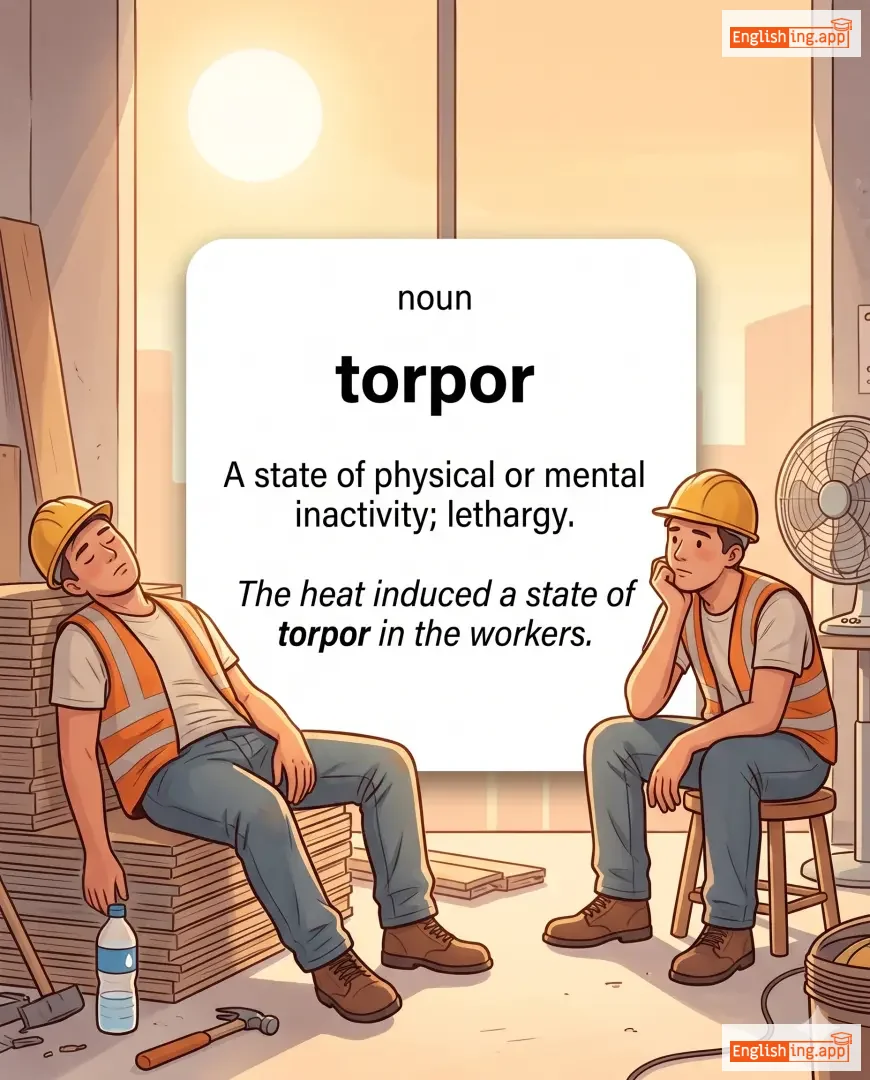
torpor definition card — visual illustration of the meaning
noun
/ˈtɔːrpər/
昏睡 (torpor)

A state of physical or mental inactivity; lethargy.

"The heat induced a state of torpor in the workers."

"暑さは労働者に昏睡状態を引き起こした。" (Atsusa wa roudousha ni konsui joutai wo hikiokoshita.)
adjective
/ˈtɔːrpɪd/
無気力 (torpid)

Mentally or physically inactive; sluggish or lethargic.

"After the long hike, he felt torpid and unmotivated."

"長いハイキングの後、彼は無気力でやる気が出なかった。" (Nagai haikingu no ato, kare wa mukiryoku de yaruki ga denakatta.)
noun/verb
/tɔːrˈpiːdoʊ/
魚雷 (gyorai)

A self-propelled underwater missile; to attack or destroy something suddenly and forcefully.

"The submarine launched a torpedo at the enemy ship."

"潜水艦は敵艦に向けてトーピードを発射した。" (Sensuikan wa teki kan ni mukete tōpīdo o hassha shita.)
noun
/tɔːrˈneɪdoʊ/
竜巻 (tatsumaki)

a rapidly rotating column of air in contact with the ground and clouds, often destructive

"The tornado destroyed several houses in the village."

"竜巻は村のいくつかの家を破壊した" (Tatsumaki wa mura no ikutsu ka no ie o hakai shita)
noun, verb
/ˈtɔːr.ment/
苦痛 (kutsuu)

severe physical or mental suffering; to cause extreme suffering

"The prisoner was in constant torment."

"囚人は絶え間ない苦しみに苦しんでいた。" (Shuujin wa taemanai kurushimi ni kurushinde ita.)
noun
/tɔːrtʃ/
懐中電灯/松明 (kaichu dento taimatsu)

a portable electric lamp powered by batteries; a flaming stick used for light

"Use the torch to find your way in the dark."

"暗闇の中で道を見つけるには、トーチを使いましょう。" (kurayami no naka de michi o mitsukeru ni wa, tochi o tsukaimashou.)
adjective
/ˌtɒpsi ˈtɜːvi/
混乱した (konran shita)

in a state of confusion, disorder, or upside down

"The sudden announcement left the office in a topsy-turvy state."

"突然の発表でオフィスは完全に混乱した状態になった。" (Totsuzen no happyou de ofisu wa kanzen ni konran shita joutai ni natta.)
noun
/ˈtɒpˌsɔɪl/
表土 (hyōdo)

the top layer of soil, which is rich in organic matter and nutrients

"Farmers rely on healthy topsoil for good crop yields."

"農家は良い作物の収穫のために健康な表土に依存しています。" (Nōka wa yoi sakumotsu no shūkaku no tame ni kenkōna hyōdo ni izon shiteimasu.)
verb
/ˈtɒpl/
倒れる (taoreru)

to fall or cause to fall over; to overthrow

"The earthquake caused the old building to topple."

"地震で古い建物が倒れた。" (Jishin de furui tatemono ga taoreta.)
noun
/təˈpɒɡrəfi/
地形学 (chikeigaku)

the arrangement of the natural and artificial physical features of an area

"The topography of the region made construction very challenging."

"その地域の地形は建設を非常に困難にしました。" (Sono chiiki no chikei wa kensetsu o hijou ni konnan ni shimashita.)
adjective
/ˈtɒp.məʊst/
最上部; 最高 (saijōbu; saikō)

highest in position or rank

"The flag was placed on the topmost branch of the tree."

"旗は木の一番高い枝に置かれました。" (ki wa ki no ichiban takai eda ni okaremashita.)
noun
/ˈtɒpɪk/
トピック (topikku)

a subject of conversation, discussion, or writing

"The topic of the meeting was company expansion."

"会議のトピックは会社の拡張についてでした。" (Kaigi no topikku wa kaisha no kakuchou ni tsuite deshita.)
noun
/ˈtoʊ.pæz/
トパーズ (topazu)

a precious stone, typically colorless, yellow, or blue, used in jewelry

"The queen's crown was adorned with a magnificent blue topaz."

"女王の王冠は素晴らしい青いトパーズで飾られていました。" (Joō no ōkan wa subarashī aoi topazu de kazara rete imashita.)
noun
/ˌtɒləˈreɪʃən/
寛容 (kanyou)

The practice of allowing something that one does not necessarily agree with.

"The government promoted religious toleration."

"政府は宗教的寛容を促進した。" (Seifu wa shūkyō-teki kanyō o sokushin shita.)
noun
/ˈtɒlərəns/
寛容 (kan'yō)

The ability or willingness to accept or endure differences, behaviors, or opinions without hostility.

"Her tolerance for different cultures impressed everyone."

"彼女の異文化への寛容さは、皆を感心させました。" (Kanojo no ibunka e no kan'yō-sa wa, mina o kanshin sasemashita.)
adjective
/ˈtɒlərənt/
寛容 (kan'you)

Showing willingness to allow the existence of opinions or behaviors that one dislikes or disagrees with.

"He is very tolerant of other people's beliefs."
"彼は他の人々の信念にとても寛容です。" (Kare wa hoka no hitobito no shin'nen ni totemo kan'you desu.)
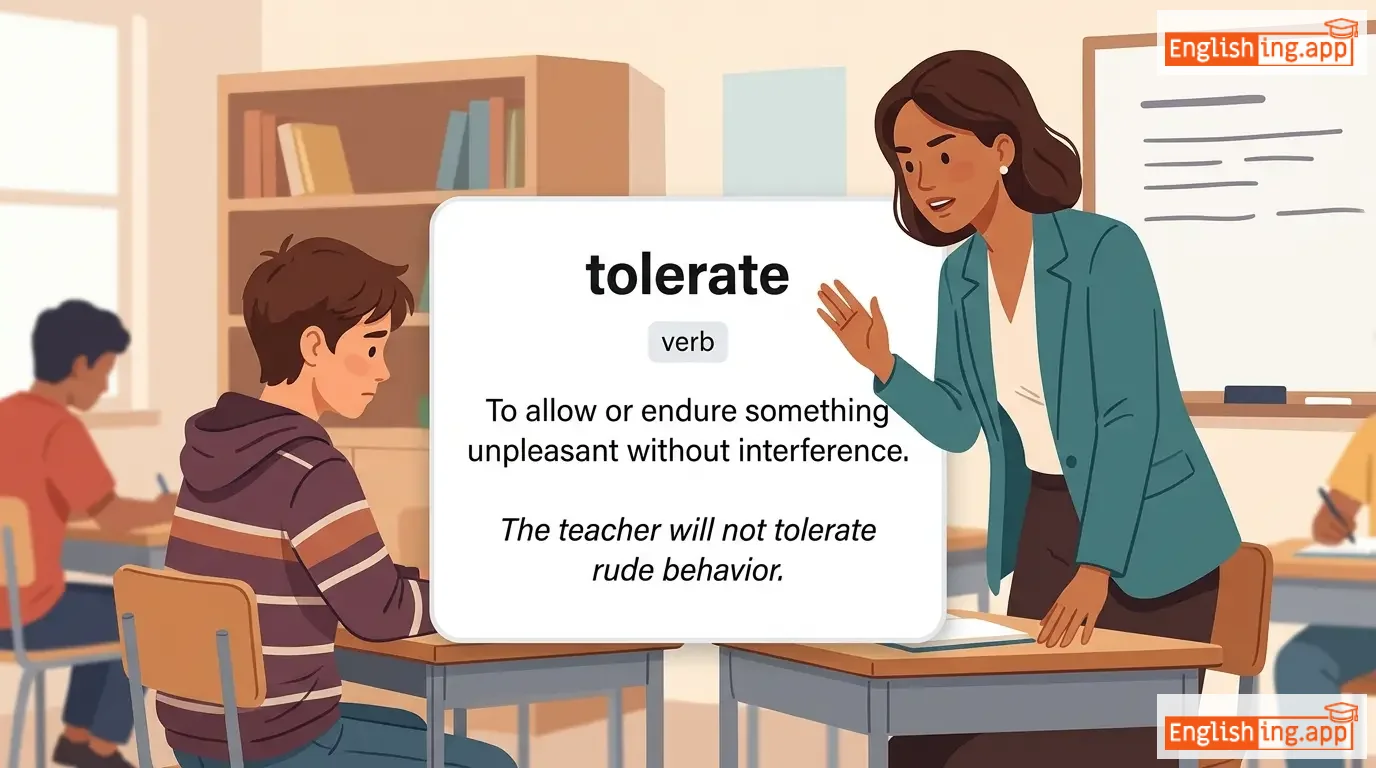
tolerate definition card — visual illustration of the meaning
verb
/ˈtɒləreɪt/
容認する (yōnin suru)

To allow or endure something unpleasant without interference.

"The teacher will not tolerate rude behavior."

"教師は失礼な行動を許容しません。" (Kyōshi wa shitsurei na kōdō o kyoyō shimasen.)
noun
/təˈmeɪtoʊ/
トマト (tomato)

a red or yellowish fruit that is typically eaten as a vegetable

"I added some tomato to the salad."
"サラダにトマトを少し加えました。" (Sarada ni tomato o sukoshi kuwaemashita.)
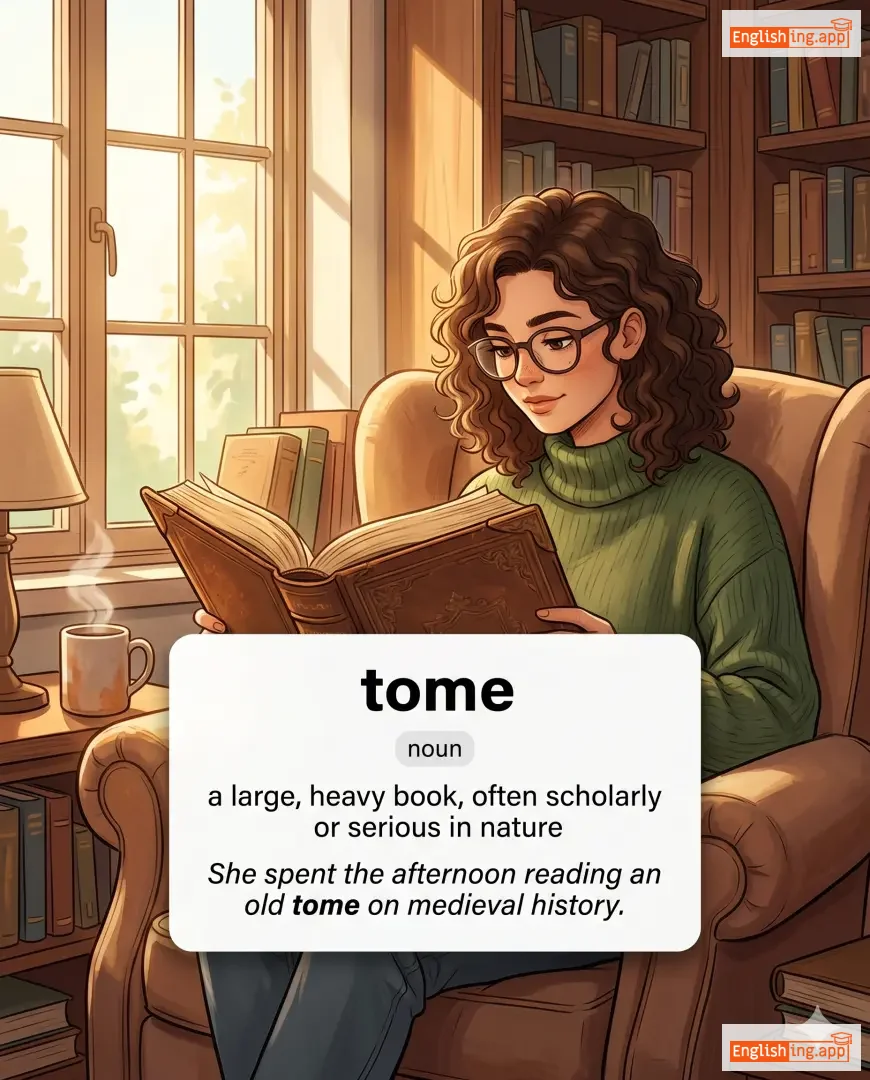
tome definition card — visual illustration of the meaning
noun
/toʊm/
重い本 (omoi hon)

a large, heavy book, often scholarly or serious in nature

"She spent the afternoon reading an old tome on medieval history."

"彼女は午後の時間を中世の歴史に関する古い重い本を読んで過ごしました。" (Kanojo wa gogo no jikan o chūsei no rekishi ni kansuru furui omoi hon o yonde sugoshimashita.)