語彙集

英単語辞書 | 単語の意味、定義、例文

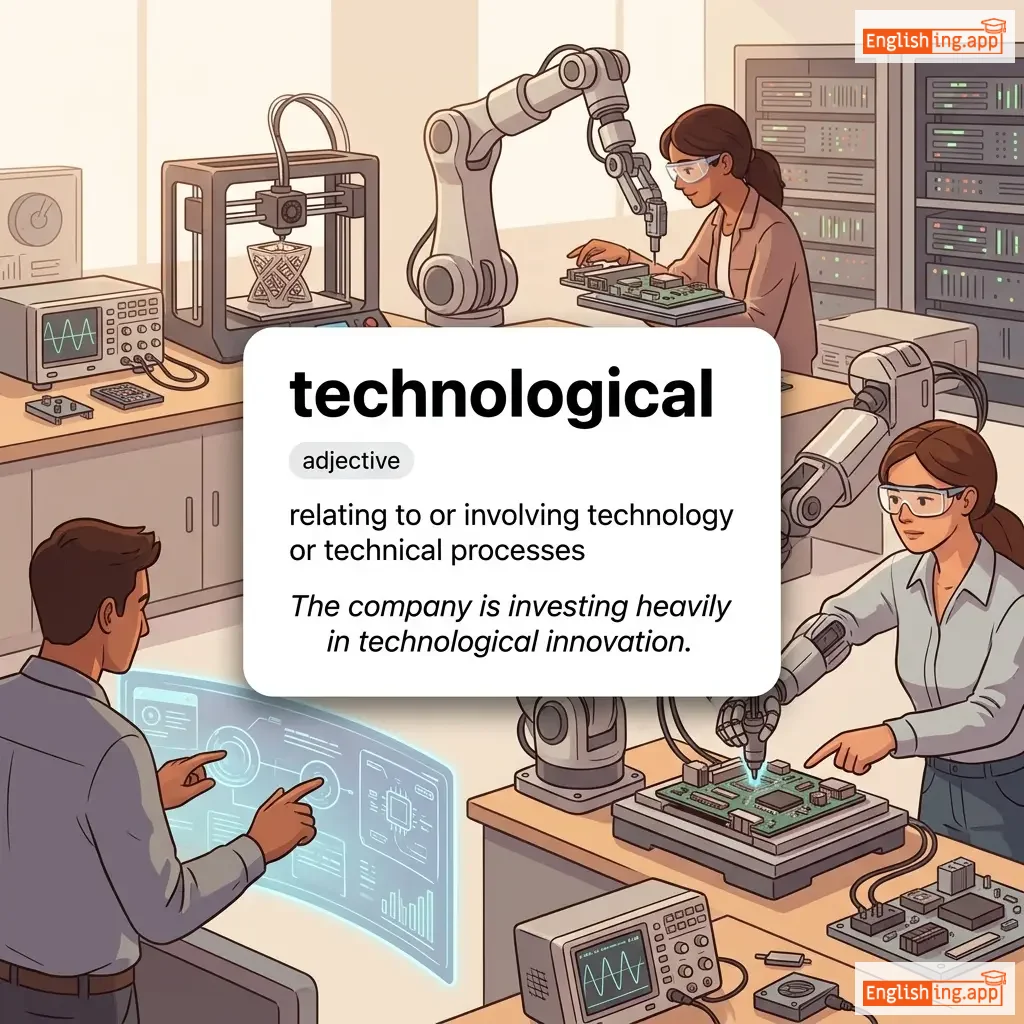
technological definition card — visual illustration of the meaning
adjective
/ˌteknəˈlɒdʒɪkəl/

relating to or involving technology or technical processes

"The company is investing heavily in technological innovation."

noun
/tɛkˈnɒɡrəfi/
テクノグラフィー (tekunogurafii)

the descriptive study or writing about the practical arts, technologies, or technical methods of a society

"The anthropologist specialized in technography to understand indigenous tool-making traditions."

"人類学者は土着の道具作りの伝統を理解するためにテクノグラフィーを専門としました。" (jinruigakusha wa dochaku no dougu tsukuri no dentou o rikai suru tame ni tekunogurafii o senmon to shimashita.)
noun
/tɛkˈniːk/
技術 (gijutsu)

A particular way of carrying out a task, especially with skill.

"She learned a new breathing technique in yoga class."

"彼女はヨガのクラスで新しい呼吸法を学びました。" (Kanojo wa yoga no kurasu de atarashī kokyūhō o manabimashita.)
noun
/tɛkˈnɪʃən/
技術者 (gijutsusha)

a person skilled in the practical aspects of a particular science, art, or job

"The technician repaired the computer within an hour."

"技術者は1時間以内にコンピュータを修理しました。" (Gijutsusha wa 1 jikan inai ni konpyūta o shūri shimashita.)
noun
/ˌtɛknɪˈkæləti/
テクニカルリティ (tekunikariti)

A small detail of law, rule, or procedure; a minor point that affects an outcome.

"The case was dismissed on a technicality."

"その事件はテクニカルリティで却下された。" (Sono jiken wa tekunikariti de kyakka sareta.)
adjective
/ˈtɛknɪkəl/
技術的 (gijutsuteki)

relating to a specific subject, art, or craft, or its techniques.

"He has a technical background in engineering."

"彼は工学の技術的なバックグラウンドを持っています。" (Kare wa kougaku no gijutsuteki na bakkuraundo wo motteimasu.)
noun
/ˈtɛknɪk/
技術 (gijutsu)

A method, skill, or art in a particular field, especially in the arts or sciences.

"The artist’s technic in watercolor impressed the judges."
"水彩画のアーティストのテクニックは審査員に感銘を与えた。" (Suisaiga no ātisuto no tekunikku wa shinsain ni kanmei o ataeta.)
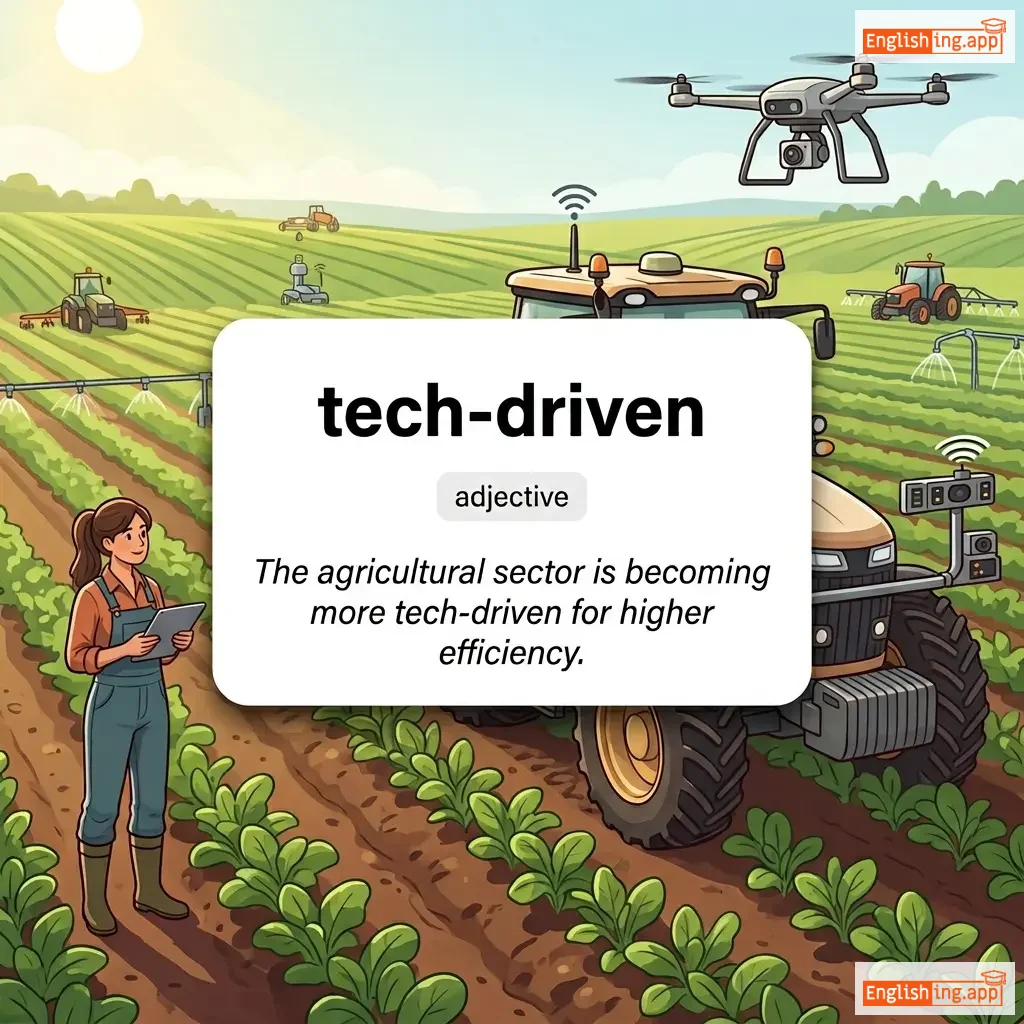
tech-driven definition card — visual illustration of the meaning
adjective
/tɛk ˈdrɪv.ən/
テクノロジー駆動 (tekunorojī kudō)

Powered or guided by technology; dependent on technological advancement for operation.

"The agricultural sector is becoming more tech-driven for higher efficiency."

"農業セクターは、効率を高めるためにますますテクノロジー駆動になっています。" (Nōgyō sekutā wa, kōritsu o takameru tame ni masumasu tekunorojī kudō ni natteimasu.)
noun
/ˈtiːspuːn/
幸せ (shiawase)

a small spoon used for stirring drinks or eating soft foods, or for measuring small amounts of ingredients.

"Add a teaspoon of sugar to the tea."

"彼女は賞を受け取ったとき、幸せを隠すことができませんでした。" (Kanojo wa shō o uketotta toki, shiawase o kakusu koto ga dekimasen deshita.)
verb
/tiːz/
からかう (karakau)

to make fun of someone in a playful or unkind way

"Children often tease their younger siblings playfully."

"子供たちはよく、遊び心で弟妹をからかいます。" (Kodomotachi wa yoku, asobigokoro de otōto imōto o karakimasu.)
adjective
/ˈtɪərfəl/
涙を流す; 泣きやすい (namida o nagasu; nakiyasui)

expressing or showing sadness and sorrow; inclined to weep

"She gave a tearful goodbye to her friends at the airport."

"彼女は空港で友達に涙ながらの別れを告げた。" (Kanojo wa kūkō de tomodachi ni namida nagara no wakare o tsugeta.)
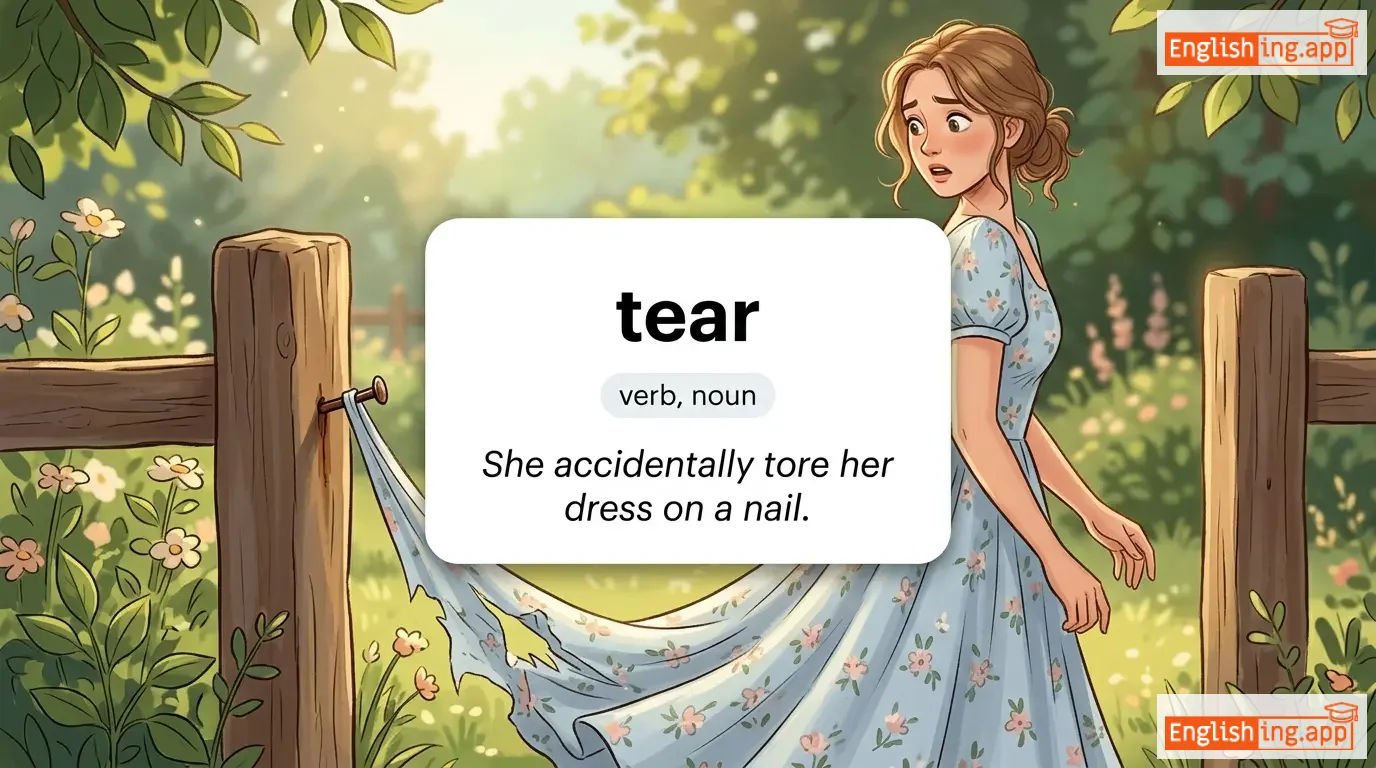
tear definition card — visual illustration of the meaning
💧

tear

verb, noun
/tɪər/ (noun: liquid) /tɛər/ (verb: rip)

As a verb: to pull apart or rip something. As a noun: a drop of clear salty liquid produced by glands in your eyes.

"She accidentally tore her dress on a nail."

noun
/ˈtiːmmeɪt/
チームメイト (chīmu meito)

a member of the same team

"He congratulated his teammate after scoring the goal."

"彼はゴールを決めた後、チームメイトにお祝いを言いました。" (Kare wa gōru o kimeta ato, chīmu meito ni oiwai o iimashita.)
noun
/tiːm/
チーム (chīmu)

a group of people working together towards a common goal

"Our team won the match after a great effort."

"私たちのチームは素晴らしい努力の後に試合に勝ちました。" (Watashitachi no chīmu wa subarashī doryoku no ato ni shiai ni kachimashita.)
noun
/ˈtiːtʃɪŋ/
教育 (kyouiku)

the profession or practice of teaching

"Teaching is a noble profession."

"教育は崇高な職業です。" (Kyouiku wa suukou na shokugyou desu.)
noun
/ˈtiːtʃər/
教師 (kyoushi)

a person who teaches, especially in a school

"Mr. Smith is the teacher of the math class."
"スミスさんは数学のクラスの教師です。" (Sumisu-san wa suugaku no kurasu no kyoushi desu.)
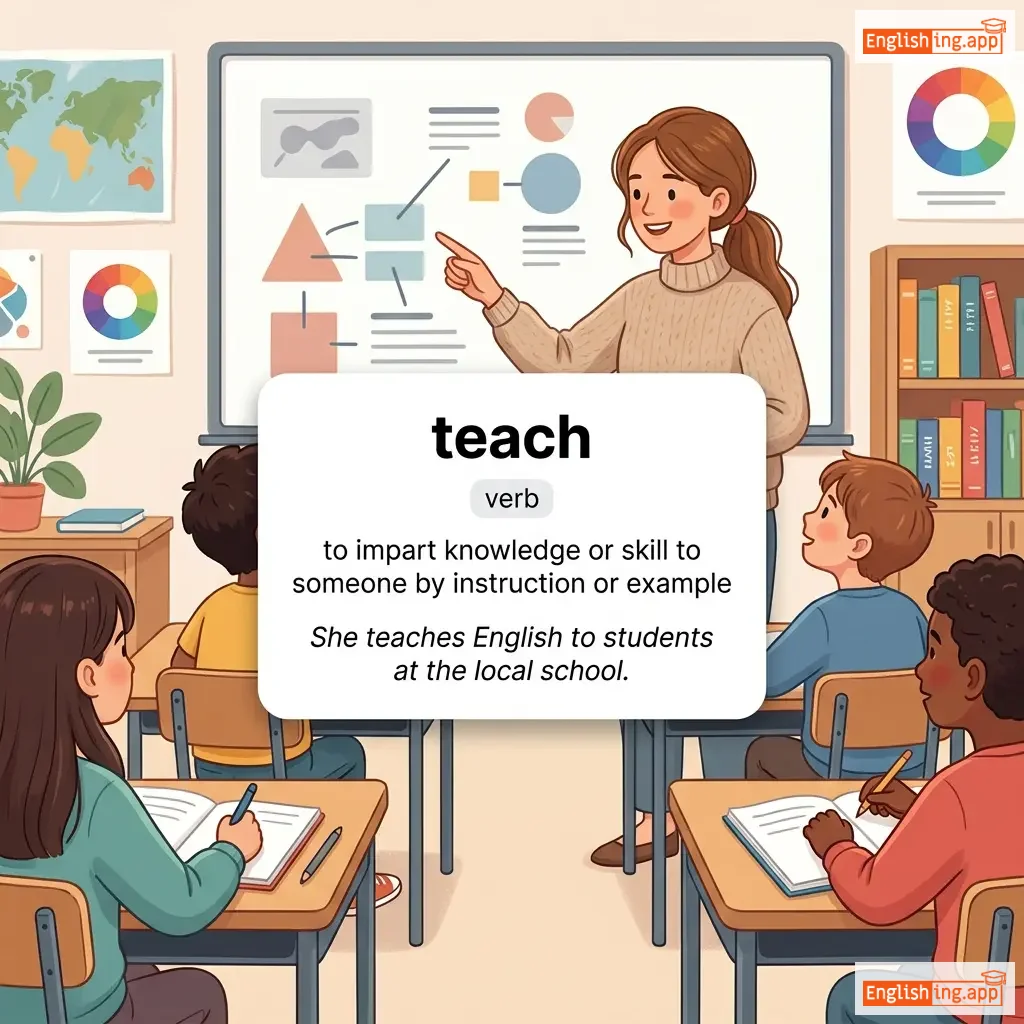
teach definition card — visual illustration of the meaning
verb
/tiːʧ/
教える (oshieru)

to impart knowledge or skill to someone by instruction or example

"She teaches English to students at the local school."

"彼女は地元の学校で学生に英語を教えています。" (Kanojo wa jimoto no gakkō de gakusei ni eigo o oshieteimasu.)
noun
/tiː ˈstreɪnər/
茶こし (chakoshi)

a small perforated device used to strain tea leaves from brewed tea

"I always use a tea-strainer when pouring tea into cups."

"私はお茶をカップに注ぐとき、いつも茶こしを使います。" (watashi wa ocha o kappu ni sosogu toki, itsumo chakoshi o tsukaimasu.)
noun
/ˈtiː.pɒt/
ティーポット (tīpotto)

a container with a lid, handle, and spout for brewing and serving tea

"She poured hot water into the tea-pot to make tea."

"彼女はお茶を淹れるためにティーポットに熱いお湯を注いだ。" (Kanojo wa ocha o ireru tame ni tīpotto ni atsui oyu o sosogida.)
noun
/tiː/
お茶 (ocha)

a hot drink made by infusing the dried, crushed leaves of the tea plant in boiling water

"I drink tea every morning to start my day."

"私は毎朝、1日を始めるためにお茶を飲みます。" (Watashi wa mai asa, ichinichi o hajimeru tame ni ocha o nomimasu.)
noun
/ˈtæksˌpeɪər/
納税者 (nōzeisha)

a person who pays tax to the government

"The taxpayers' money is used to fund public services."
"納税者のお金は公共サービスのために使われます。" (Nōzeisha no okane wa kōkyō sābisu no tame ni tsukawaremasu.)
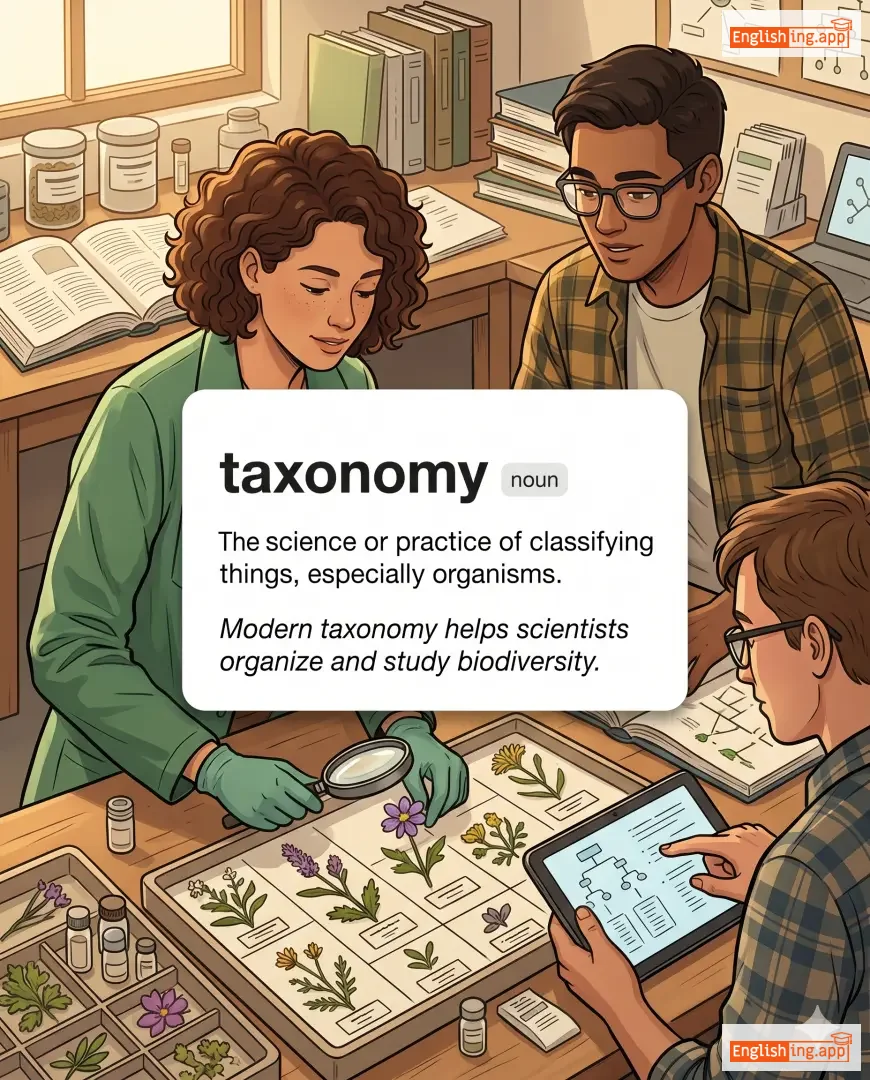
taxonomy definition card — visual illustration of the meaning
noun
/tækˈsɒnəmi/
分類学 (bunruigaku)

The science or practice of classifying things, especially organisms.

"Modern taxonomy helps scientists organize and study biodiversity."

"現代の分類学は、科学者たちが生物多様性を整理し、研究するのを助けます。" (gendai no bunruigaku wa, kagakusha-tachi ga seibutsu tayousei wo seiri shi, kenkyuu suru no wo tasukemasu.)
noun
/tækˈsɒnəmɪst/
分類学者 (bunruigakusha)

A scientist who classifies organisms into groups based on their characteristics.

"The taxonomist discovered a new species of insect."

"その分類学者は新しい昆虫の種を発見しました。" (Sono bunruigakusha wa atarashī konchū no shū o hakken shimashita.)
adjective
/ˈtæksɪŋ/
大変 (taihen)

Requiring a lot of effort; physically or mentally demanding.

"Preparing for the exam was a taxing experience."

"試験の準備は大変な経験でした。" (Shiken no junbi wa taihen na keiken deshita.)
noun
/ˈtæksɪˌdɜːrmi/
剥製 (hakkosei)

The art of preparing, stuffing, and mounting the skins of animals for display.

"The museum had a large collection of taxidermy animals."

"博物館には大量の剥製が展示されていた。" (Hakubutsukan ni wa tairyo no hakkosei ga tenji sarete ita.)
noun
/ˈtæk.si kæb/
タクシー (takushi)

A car that carries passengers for a fare, usually in cities

"We took a taxi cab to the restaurant."

"私たちはレストランにタクシーで行きました。" (watashitachi wa resutoran ni takushī de ikimashita.)
noun
/ˈtæksi/
タクシー (takushii)

A car licensed to transport passengers in exchange for payment of a fare.

"We hailed a taxi to get to the airport."

"私たちは空港に行くためにタクシーを呼びました。" (Watashitachi wa kuukou ni iku tame ni takushii wo yobimashita.)
noun
/tækˈseɪʃən/
課税 (kazei)

The system of imposing and collecting taxes.

"Taxation is necessary for funding public services."

"課税は公共サービスの資金調達に必要です。" (Kazei wa kōkyō sābisu no shikin chōtatsu ni hitsuyō desu.)
noun
/tɑːsk/
タスク (tasuku)

a piece of work or duty to be done

"He completed the task before the deadline."

"彼は締め切り前にタスクを完了しました。" (Kare wa shimekiri mae ni tasuku o kanryou shimashita.)
noun
/ˈtæntrəm/
癇癪 (kanshaku)

An uncontrolled outburst of anger and frustration, typically in a young child.

"The child threw a tantrum when he didn’t get the toy."

"子供はおもちゃをもらえなくて癇癪を起こした。" (Kodomo wa omocha o moraenakute kanshaku o okoshita.)
verb
/tæp/
タップする (tappu suru)

to strike something lightly, usually with a quick, sharp sound

"He tapped on the door to get her attention."

"彼は彼女の注意を引くためにドアをタップしました。" (Kare wa kanojo no chuui o hiku tame ni doa o tappu shimashita.)
noun
/teɪp/
テープ (teepu)

a long, narrow strip of material, often sticky on one side, used for fastening or sticking things together

"I need some tape to seal this box."

"この箱を封をするためにテープが必要です。" (Kono hako o fuu o suru tame ni teepu ga hitsuyou desu.)
verb
/ˈteɪpər/
先細りになる (sakihosori ni naru)

To gradually decrease in width, thickness, or intensity.

"The road tapers off as it reaches the mountains."

"道路は山に到達するにつれて細くなります。" (Dōro wa yama ni tōtatsu suru ni tsurete hosoku narimasu.)
noun
/ˈtæpəstri/

A piece of thick textile fabric with pictures or designs woven into it, often hung on walls.

"The museum displayed an ancient tapestry from the 15th century."

noun
/təˈræntjʊlə/
タランチュラ (taranchura)

A large hairy spider found in warm regions.

"The tarantula crawled across the desert floor."

"タランチュラは砂漠の地面を這っていた。" (Tarantyura wa sabaku no jimen o hatte ita.)
adjective
/ˈtɑːrdi/
遅刻 (chikoku)

Delayed; arriving or happening late.

"The student received a warning for being tardy to class."

"学生は授業に遅れて警告を受けました。" (Gakusei wa jugyou ni okurete keikoku o ukemashita.)
target definition card — visual illustration of the meaning
noun
/ˈtɑːɡɪt/
目標 (mokuhyō)

a goal or objective that one aims to achieve

"The team set a target to increase sales by 20%."
"チームは売上を20%増加させることを目標に設定しました。" (Chīmu wa uriage o 20% zōka saseru koto o mokuhyō ni settei shimashita.)
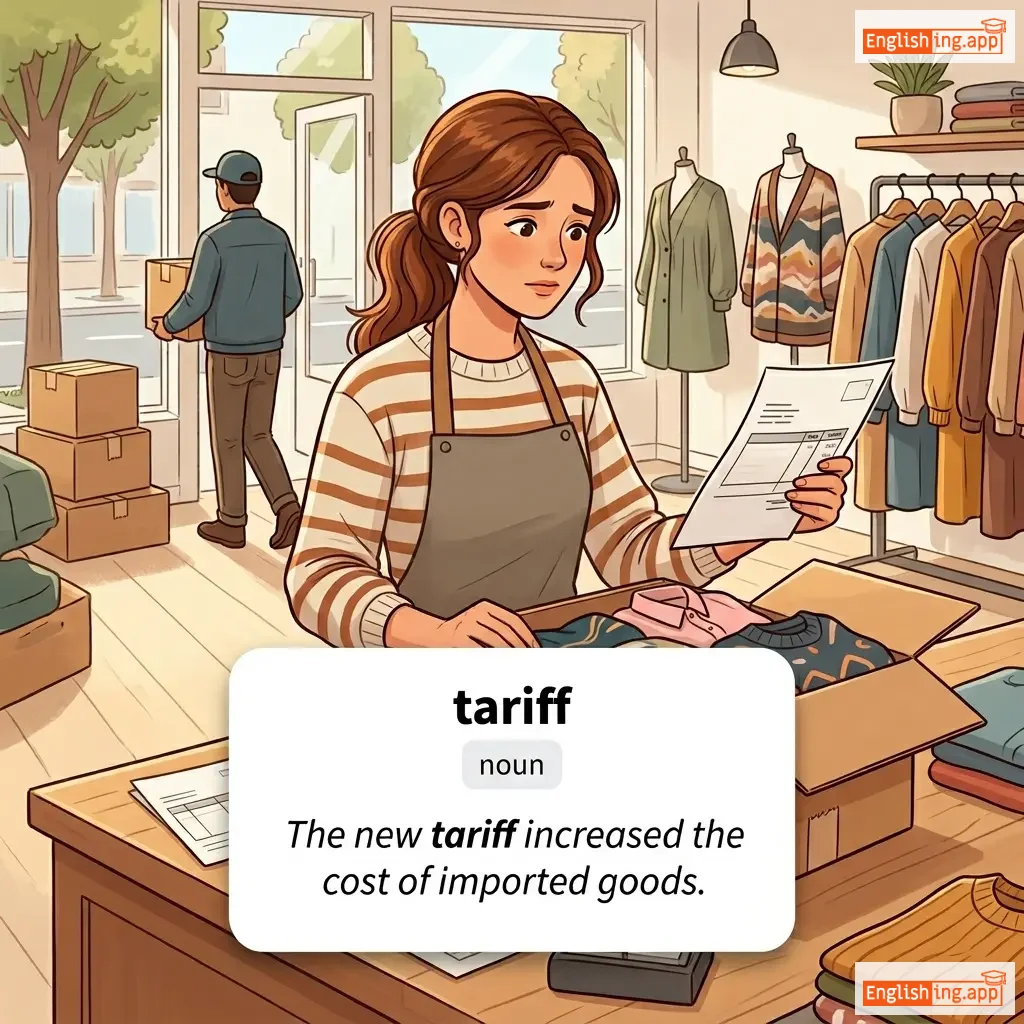
tariff definition card — visual illustration of the meaning
noun
/ˈtær.ɪf/
関税 (kansetai)

A tax imposed by the government on imported or exported goods, also known as duty, customs tax, or levy.

"The new tariff increased the cost of imported goods."

"新しい関税は輸入品のコストを増加させました。" (Atarashī kansetai wa yunyūhin no kosuto o zōka sasemashita.)
noun
/tɑːrn/
山間の湖 (sankan no mizuumi)

A small mountain lake or pool.

"We camped near a tranquil tarn in the highlands."

"私たちは高原で静かな山間の湖の近くにキャンプをしました。" (Watashitachi wa kougen de shizukana sankan no mizuumi no chikaku ni kyanpu o shimashita.)
verb
/ˈtɑːrnɪʃ/

To lose luster, especially as a result of exposure to air or moisture; to damage reputation.

"The silver jewelry tarnished quickly when left in the open air."

noun
/tɑːrˈpɔːlɪn/

A large sheet of strong, flexible, water-resistant material used for covering or protecting things.

"The workers used a tarpaulin to cover the construction materials from rain."

verb
/ˈtæri/
遅れる (okureru)

To delay or linger; to stay longer than intended.

"Do not tarry, or you will miss the train."
"遅れないで、さもないと電車に乗り遅れるよ。" (Okurenaide, samonaito densha ni noriokureru yo.)
🥧

tart

noun, adjective
/tɑːrt/

A small pie with a sweet or savory filling; or having a sharp, sour taste.

"She served a delicious apple tart for dessert."

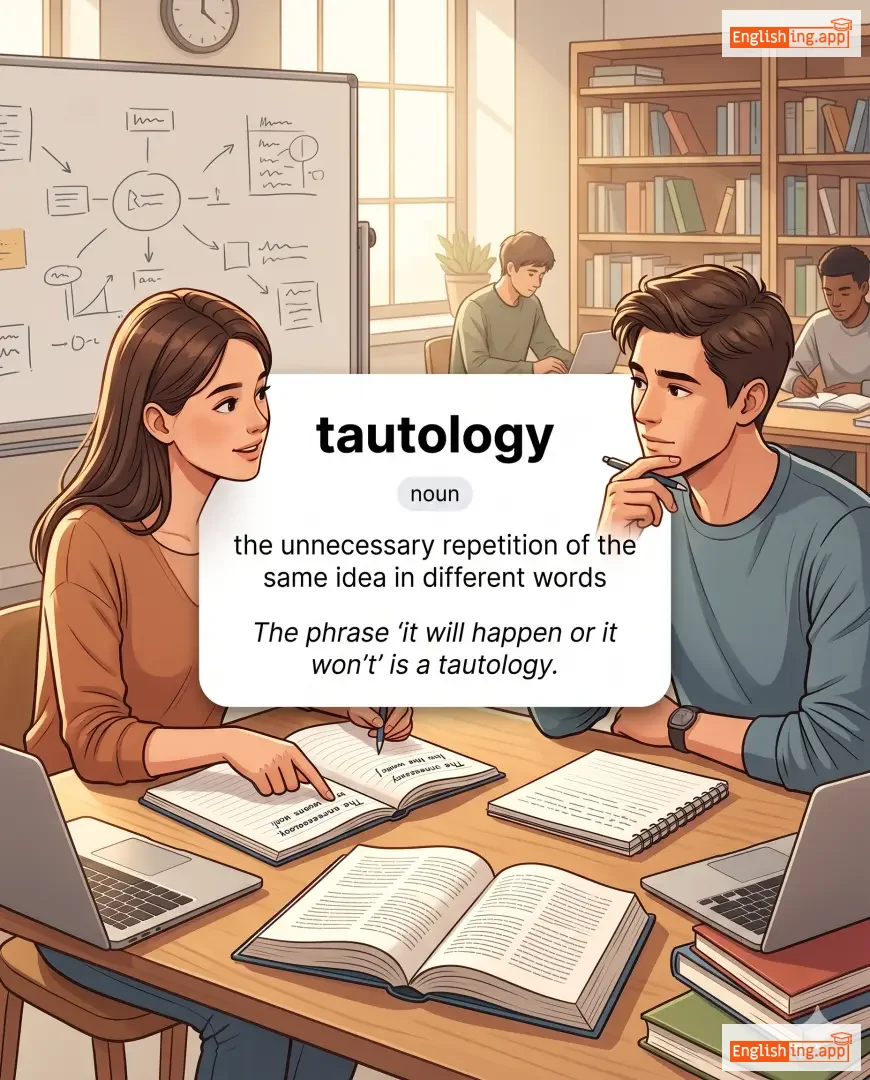
tautology definition card — visual illustration of the meaning
noun
/tɔːˈtɒlədʒi/
不必要な繰り返し (fuhitsuyou na kurikaeshi)

the unnecessary repetition of the same idea in different words

"The phrase 'it will happen or it won’t' is a tautology."

"'それは起こるかもしれないし、起こらないかもしれない'というフレーズはトートロジーです。" ('sore wa okoru kamoshirenai shi, okoranai kamoshirenai' to iu furezu wa tootoroji desu.)
verb
/tɔːnt/
からかう (karakau)

to provoke or challenge someone with insulting remarks

"The bully tried to taunt him with cruel words."

"いじめっ子は残酷な言葉で彼をからかおうとした。" (Ijimekko wa zankokuna kotoba de kare wo karakaou to shita.)
adjective
/tɔːt/
ぴんと張った (pinto hatta)

stretched or pulled tight; tense

"The rope was pulled taut between the two poles."

"ロープは二つのポールの間でぴんと張られていました。" (Roopu wa futatsu no pooru no aida de pinto hararete imashita.)
adjective
/ˌtɔːtəˈlɒdʒɪkəl/
冗長な (jōchō na)

expressing something by repeating the same idea in different words; redundant

"Saying 'free gift' is considered tautological."

"'無料ギフト'と言うことは冗長と見なされます。" ('Muryō gifuto' to iu koto wa jōchō to minasaremasu.)
adjective
/ˈtæti/
使い古しの (tsukai furushi no)

Worn out, shabby, or in poor condition.

"The sofa looked old and tatty after years of use."

"ソファは長年の使用で古くて使い古しのように見えた。" (Sofa wa naganen no shiyou de furukute tsukai furushi no you ni mieta.)
adjective
/ˈtɔːdri/
安っぽくて派手だが、質が悪い (yasu pooku te hade da ga, shitsu ga warui)

cheap and showy but of poor quality

"She wore a tawdry necklace that broke easily."

"彼女は安っぽくて派手なネックレスをしていて、簡単に壊れた。" (Kanojo wa yasu pooku te hade na nekkuresu o shite ite, kantan ni kowareta.)
adjective
/ˈtɔːni/
黄褐色 (koukasseki)

A warm, sandy or golden-brown color.

"The owl's tawny feathers blended with the tree bark."

"フクロウの黄褐色の羽毛は木の皮と混ざり合った。" (Fukurou no koukasseki no umou wa ki no kawa to mazariatta.)