词汇表

英语词汇词典 | 单词含义、定义和示例

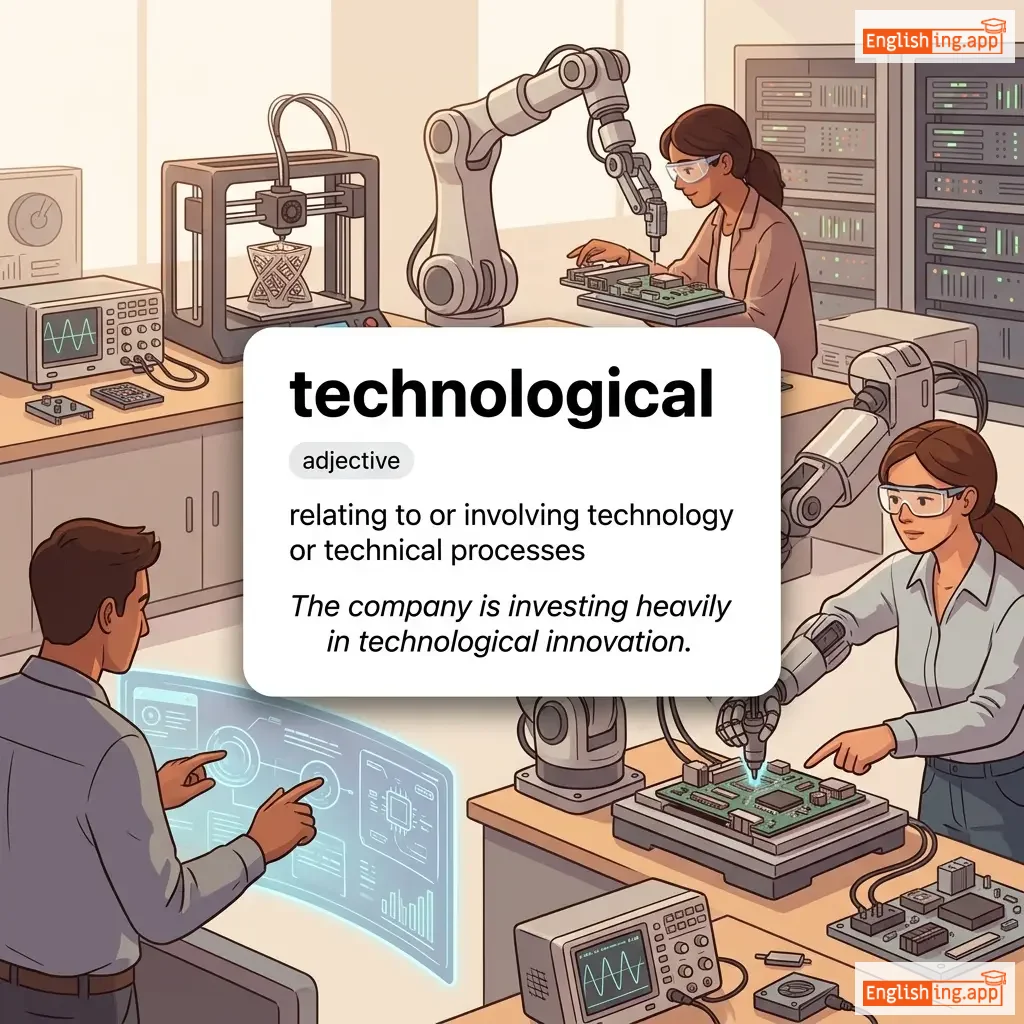
technological definition card — visual illustration of the meaning
adjective
/ˌteknəˈlɒdʒɪkəl/

relating to or involving technology or technical processes

"The company is investing heavily in technological innovation."

noun
/tɛkˈnɒɡrəfi/
技术学 (jishu xue)

the descriptive study or writing about the practical arts, technologies, or technical methods of a society

"The anthropologist specialized in technography to understand indigenous tool-making traditions."

"人类学家专门研究技术学,以了解土著工具制作的传统。" (Renleixuejia zhuanmen yanjiu jishuxue, yi liaojie tuzhu gongju zhizao de chuantong.)
noun
/tɛkˈniːk/
技巧 (jiqiao)

A particular way of carrying out a task, especially with skill.

"She learned a new breathing technique in yoga class."

"她在瑜伽课上学会了一种新的呼吸技巧。" (Tā zài yújiā kè shàng xuéhuìle yī zhǒng xīn de hūxī jìqiǎo.)
noun
/tɛkˈnɪʃən/
技术员 (jìshùyuán)

a person skilled in the practical aspects of a particular science, art, or job

"The technician repaired the computer within an hour."

"技术员在一个小时内修好了电脑。" (Jìshùyuán zài yī gè xiǎoshí nèi xiū hǎo le diànnǎo.)
noun
/ˌtɛknɪˈkæləti/
技术性问题 (jishu xing wenti)

A small detail of law, rule, or procedure; a minor point that affects an outcome.

"The case was dismissed on a technicality."

"案件因技术性问题被驳回。" (Anjian yin jishu xing wenti bei bohui.)
adjective
/ˈtɛknɪkəl/
技术 (jishu)

relating to a specific subject, art, or craft, or its techniques.

"He has a technical background in engineering."

"他在工程学方面有技术背景。" (Ta zai gongchengxue fangmian you jishu beijing.)
noun
/ˈtɛknɪk/
技巧 (jiqiao)

A method, skill, or art in a particular field, especially in the arts or sciences.

"The artist’s technic in watercolor impressed the judges."
"艺术家的水彩画技法给评委留下了深刻印象。" (Yishujia de shuicaihua ji fa gei pingwei liuxia le shenke yinxiang.)
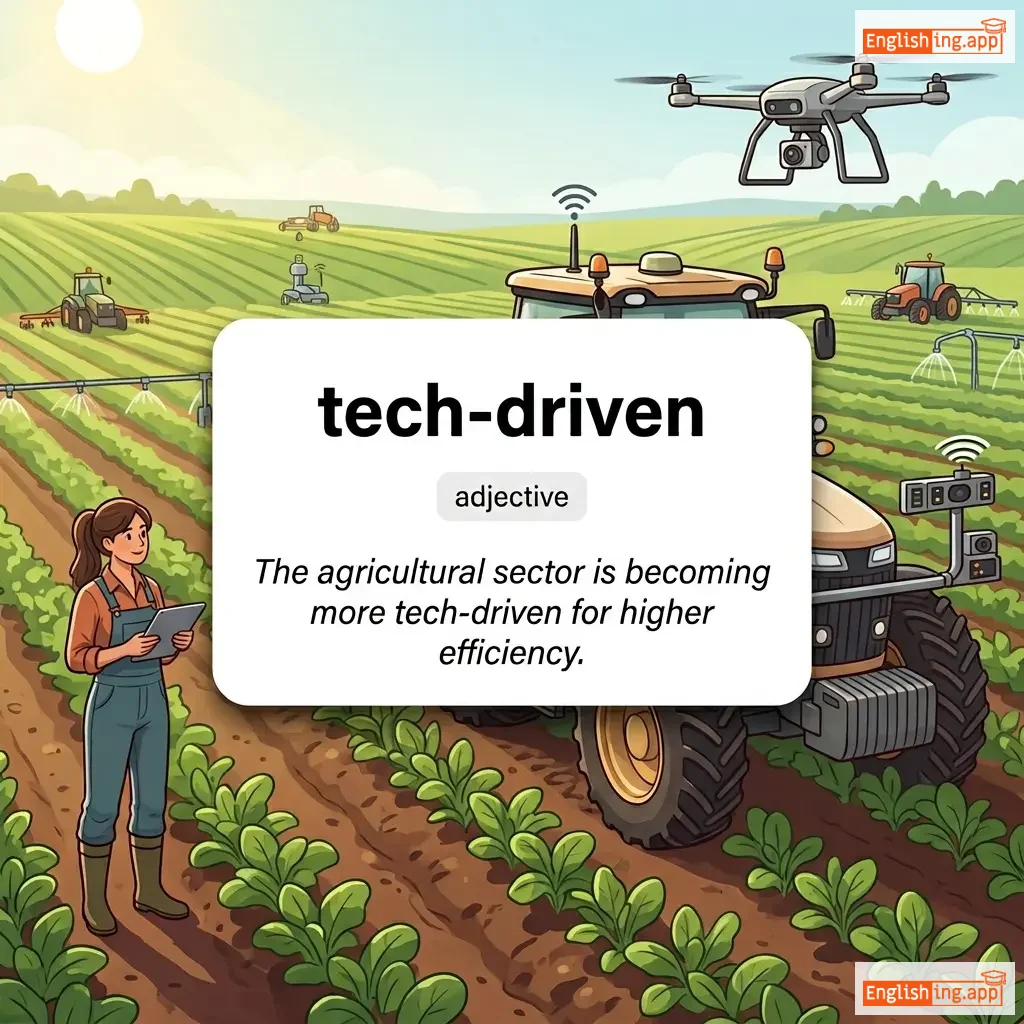
tech-driven definition card — visual illustration of the meaning
adjective
/tɛk ˈdrɪv.ən/
技术驱动 (jishu qudong)

Powered or guided by technology; dependent on technological advancement for operation.

"The agricultural sector is becoming more tech-driven for higher efficiency."

"农业部门越来越依赖技术以提高效率。" (Nongye bubmen yue lai yilai jishu yi tigao xiaolv.)
noun
/ˈtiːspuːn/
幸福 (xìngfú)

a small spoon used for stirring drinks or eating soft foods, or for measuring small amounts of ingredients.

"Add a teaspoon of sugar to the tea."

"她在收到奖项时无法掩饰自己的幸福。" (Tā zài shōu dào jiǎngxiàng shí wúfǎ yǎnshì zìjǐ de xìngfú.)
verb
/tiːz/
取笑 (qǔxiào)

to make fun of someone in a playful or unkind way

"Children often tease their younger siblings playfully."

"孩子们经常嬉戏地取笑他们的弟弟妹妹。" (Háizimen jīngcháng xīxì de qǔxiào tāmen de dìdì mèimei.)
adjective
/ˈtɪərfəl/
泪流满面; 易哭的 (lèi liú mǎn miàn; yì kū de)

expressing or showing sadness and sorrow; inclined to weep

"She gave a tearful goodbye to her friends at the airport."

"她在机场向朋友们告别时泪流满面。" (Tā zài jīchǎng xiàng péngyǒu men gàobié shí lèi liú mǎn miàn.)
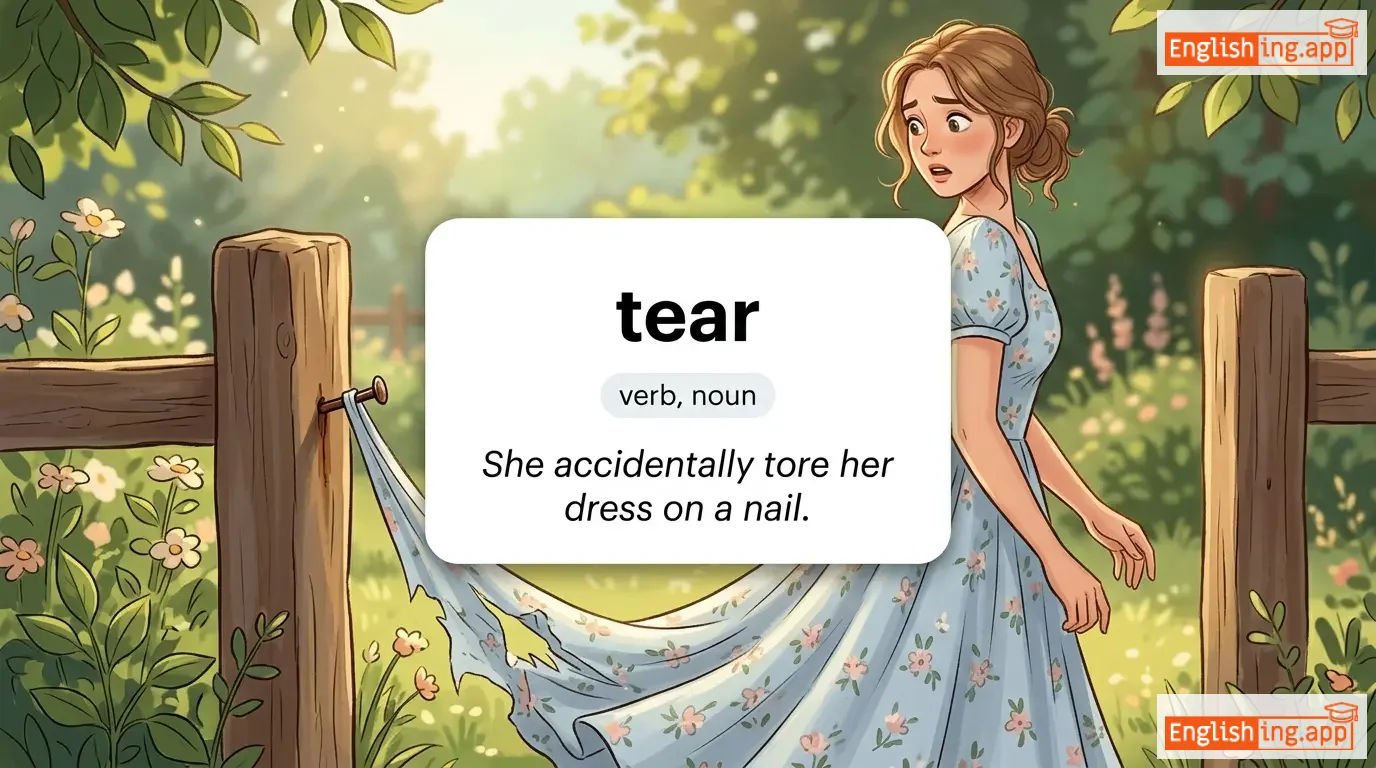
tear definition card — visual illustration of the meaning
💧

tear

verb, noun
/tɪər/ (noun: liquid) /tɛər/ (verb: rip)

As a verb: to pull apart or rip something. As a noun: a drop of clear salty liquid produced by glands in your eyes.

"She accidentally tore her dress on a nail."

noun
/ˈtiːmmeɪt/
队友 (duìyǒu)

a member of the same team

"He congratulated his teammate after scoring the goal."
"他在进球后祝贺了他的队友。" (Tā zài jìnqiú hòu zhùhè le tā de duìyǒu.)
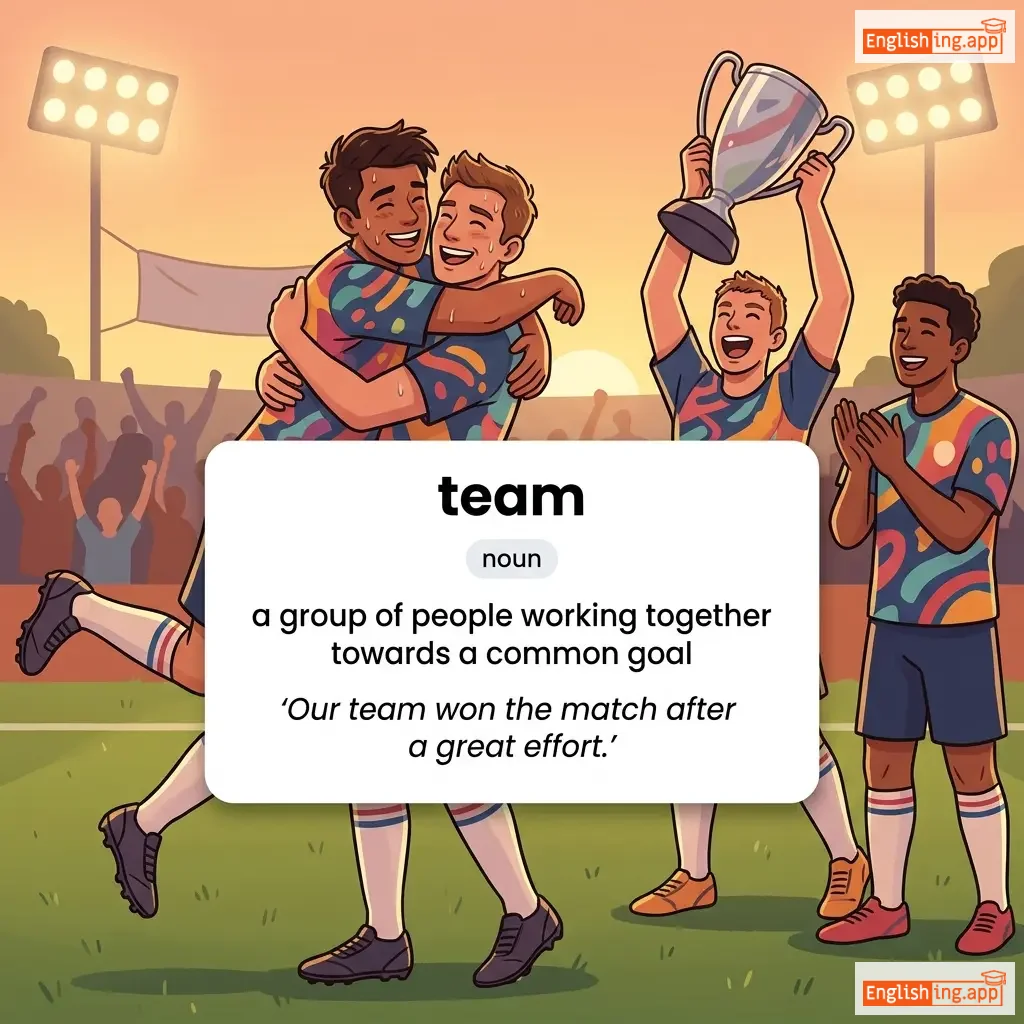
team definition card — visual illustration of the meaning
noun
/tiːm/
团队 (tuánduì)

a group of people working together towards a common goal

"Our team won the match after a great effort."

"我们的团队在一次巨大努力后赢得了比赛。" (Wǒmen de tuánduì zài yīcì jùdà nǔlì hòu yíngdéle bǐsài.)
noun
/ˈtiːtʃɪŋ/
教学 (jiaoxue)

the profession or practice of teaching

"Teaching is a noble profession."

"教学是一项高尚的职业。" (Jiaoxue shi yi xiang gaoshang de zhiye.)
Teacher definition card — visual illustration of the meaning
noun
/ˈtiːtʃər/
教师 (jiaoshi)

a person who teaches, especially in a school

"Mr. Smith is the teacher of the math class."
"史密斯先生是数学课的教师。" (Shǐmìsī xiānshēng shì shùxué kè de jiàoshī.)
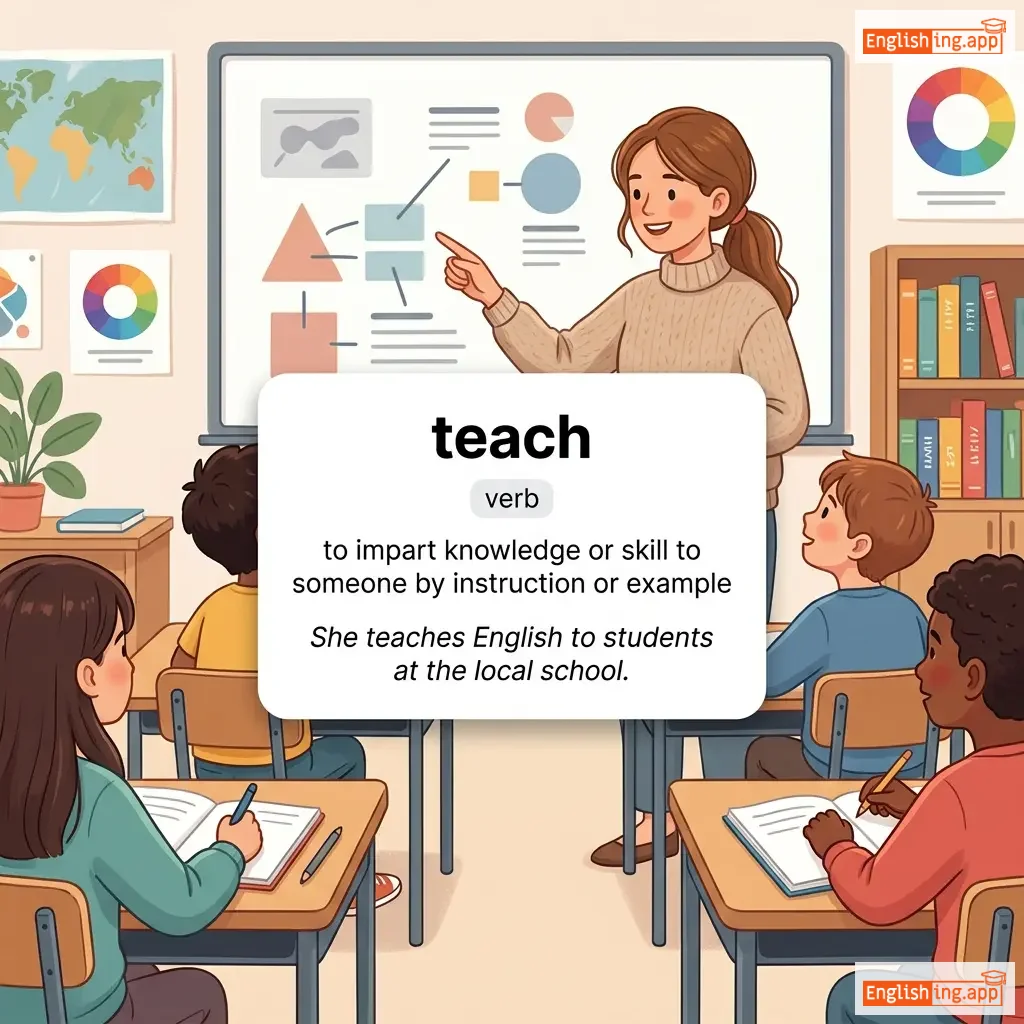
teach definition card — visual illustration of the meaning
verb
/tiːʧ/
(jiào)

to impart knowledge or skill to someone by instruction or example

"She teaches English to students at the local school."

"她在当地学校教学生英语。" (Tā zài dāngdì xuéxiào jiào xuéshēng yīngyǔ.)
noun
/tiː ˈstreɪnər/
茶筛 (cha shai)

a small perforated device used to strain tea leaves from brewed tea

"I always use a tea-strainer when pouring tea into cups."

"我在倒茶入杯时总是使用茶筛。" (wǒ zài dào chá rù bēi shí zǒng shì shǐyòng chá shāi.)
noun
/ˈtiː.pɒt/
茶壶 (cháhú)

a container with a lid, handle, and spout for brewing and serving tea

"She poured hot water into the tea-pot to make tea."

"她把热水倒入茶壶中来泡茶。" (Tā bǎ rèshuǐ dào rù cháhú zhōng lái pào chá.)
noun
/tiː/
(cha)

a hot drink made by infusing the dried, crushed leaves of the tea plant in boiling water

"I drink tea every morning to start my day."

"我每天早晨喝茶开始新的一天。" (Wǒ měitiān zǎochén hē chá kāishǐ xīn de yītiān.)
noun
/ˈtæksˌpeɪər/
纳税人 (nàshuìrén)

a person who pays tax to the government

"The taxpayers' money is used to fund public services."
"纳税人的钱被用于资助公共服务。" (Nàshuìrén de qián bèi yòng yú zīzhù gōnggòng fúwù.)
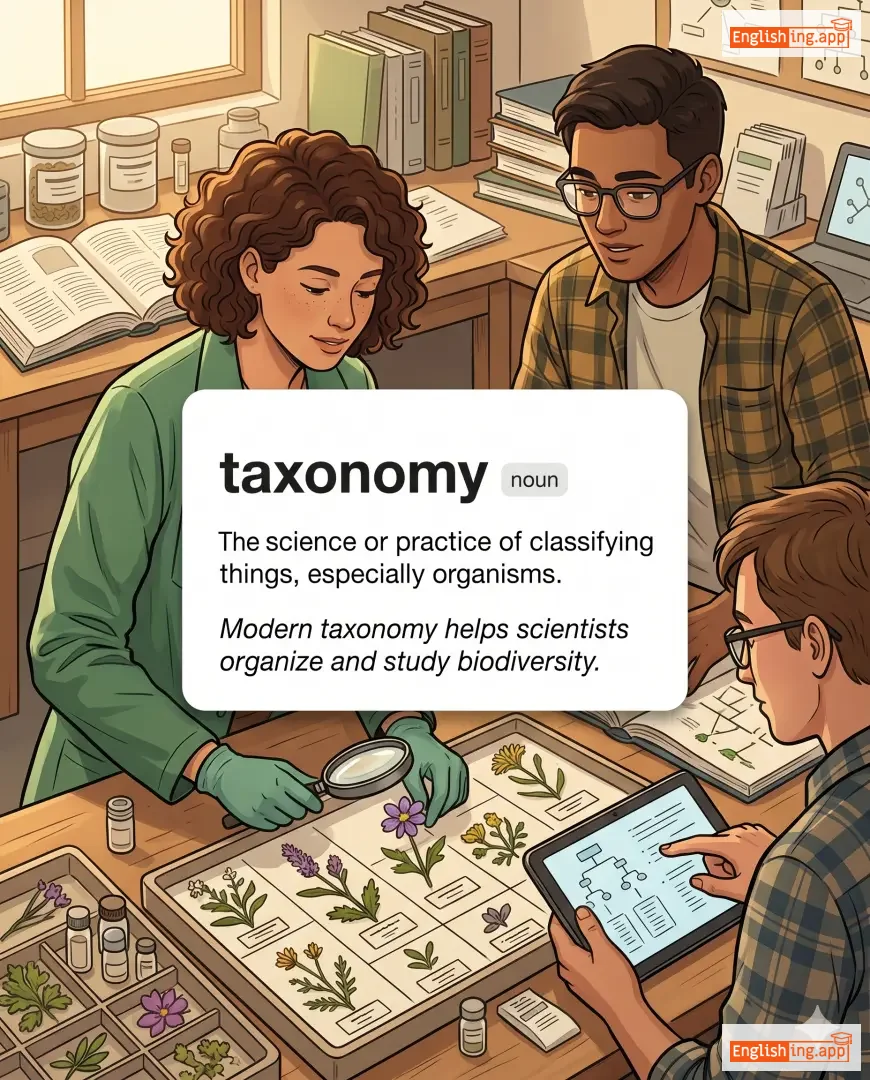
taxonomy definition card — visual illustration of the meaning
noun
/tækˈsɒnəmi/
分类科学 (fenlei kexue)

The science or practice of classifying things, especially organisms.

"Modern taxonomy helps scientists organize and study biodiversity."

"现代分类学帮助科学家组织和研究生物多样性。" (xiandai fenlei xue bangzhu kexuejia zuzhi he yanjiu shengwu duoyangxing.)
noun
/tækˈsɒnəmɪst/
分类学家 (fenleixuejia)

A scientist who classifies organisms into groups based on their characteristics.

"The taxonomist discovered a new species of insect."

"这位分类学家发现了一种新昆虫物种。" (Zhè wèi fēnlèixuéjiā fāxiànle yī zhǒng xīn kūnchóng wùzhǒng.)
adjective
/ˈtæksɪŋ/
繁重 (fánzhòng)

Requiring a lot of effort; physically or mentally demanding.

"Preparing for the exam was a taxing experience."

"准备考试是一次繁重的经历。" (Zhǔnbèi kǎoshì shì yīcì fánzhòng de jīnglì.)
noun
/ˈtæksɪˌdɜːrmi/
标本制作 (biāoběn zhìzuò)

The art of preparing, stuffing, and mounting the skins of animals for display.

"The museum had a large collection of taxidermy animals."

"博物馆里有一大批动物标本。" (Bówùguǎn lǐ yǒu yī dàpī dòngwù biāoběn.)
noun
/ˈtæk.si kæb/
出租车 (chūzūchē)

A car that carries passengers for a fare, usually in cities

"We took a taxi cab to the restaurant."

"我们乘坐出租车去餐厅。" (wǒmen chéngzuò chūzūchē qù cāntīng.)
noun
/ˈtæksi/
出租车 (chuzuche)

A car licensed to transport passengers in exchange for payment of a fare.

"We hailed a taxi to get to the airport."

"我们叫了一辆出租车去机场。" (Women jiao le yi liang chuzuche qu jichang.)
noun
/tækˈseɪʃən/
税收 (shuìshōu)

The system of imposing and collecting taxes.

"Taxation is necessary for funding public services."

"税收对于资助公共服务是必要的。" (Shuìshōu duìyú zīzhù gōnggòng fúwù shì bìyào de.)
task definition card — visual illustration of the meaning
noun
/tɑːsk/
任务 (rènwu)

a piece of work or duty to be done

"He completed the task before the deadline."

"他在截止日期前完成了任务。" (Tā zài jiézhǐ rìqī qián wánchéngle rènwu.)
noun
/ˈtæntrəm/
发脾气 (fā pí qì)

An uncontrolled outburst of anger and frustration, typically in a young child.

"The child threw a tantrum when he didn’t get the toy."

"孩子因为没有得到玩具而发脾气。" (Hái zi yīn wéi méi yǒu dédào wán jù ér fā pí qì.)
verb
/tæp/
轻拍 (qing pai)

to strike something lightly, usually with a quick, sharp sound

"He tapped on the door to get her attention."

"他敲了敲门,引起她的注意。" (Ta qiao le qiao men, yin qi ta de zhu yi.)
noun
/teɪp/
胶带 (jiaodai)

a long, narrow strip of material, often sticky on one side, used for fastening or sticking things together

"I need some tape to seal this box."

"我需要一些胶带来封住这个箱子。" (Wo xuyao yixie jiaodai lai fengzhu zhege xiangzi.)
verb
/ˈteɪpər/
逐渐变窄 (zhújiàn biànzhǎi)

To gradually decrease in width, thickness, or intensity.

"The road tapers off as it reaches the mountains."

"这条路在到达山区时逐渐变窄。" (Zhè tiáo lù zài dào dá shānqū shí zhújiàn biàn zhǎi.)
noun
/ˈtæpəstri/

A piece of thick textile fabric with pictures or designs woven into it, often hung on walls.

"The museum displayed an ancient tapestry from the 15th century."

noun
/təˈræntjʊlə/
塔兰图拉 (tǎ lán tú lā)

A large hairy spider found in warm regions.

"The tarantula crawled across the desert floor."

"塔兰图拉爬过沙漠的地面。" (Tǎ lán tú lā pá guò shāmò de dìmiàn.)
adjective
/ˈtɑːrdi/
迟到 (chidao)

Delayed; arriving or happening late.

"The student received a warning for being tardy to class."

"学生因上课迟到而收到警告。" (Xuesheng yin shangke chidao er shoudao jinggao.)
target definition card — visual illustration of the meaning
noun
/ˈtɑːɡɪt/
目标 (mùbiāo)

a goal or objective that one aims to achieve

"The team set a target to increase sales by 20%."
"团队设定了一个将销售增长20%的目标。" (Tuánduì shèdìngle yīgè jiāng xiāoshòu zēngzhǎng 20% de mùbiāo.)
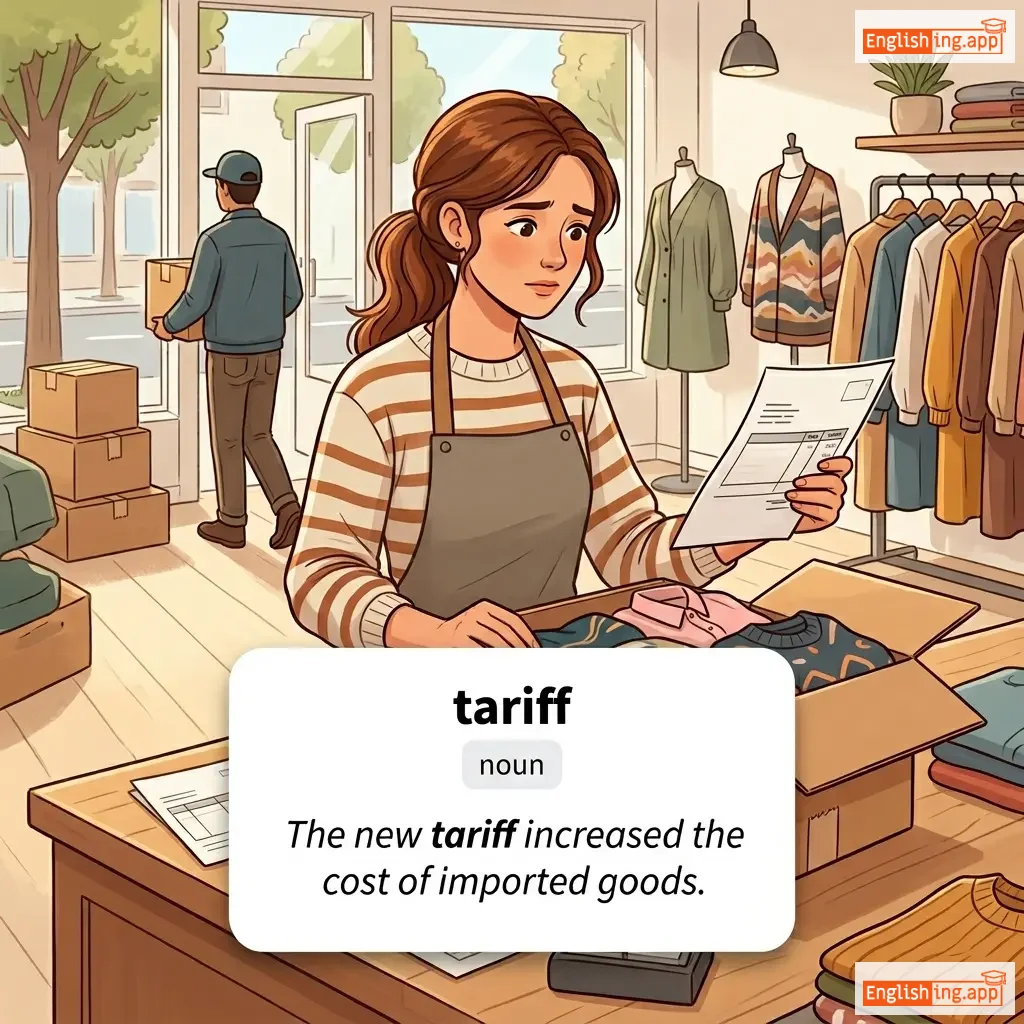
tariff definition card — visual illustration of the meaning
noun
/ˈtær.ɪf/
关税 (guānshuì)

A tax imposed by the government on imported or exported goods, also known as duty, customs tax, or levy.

"The new tariff increased the cost of imported goods."

"新的关税提高了进口商品的成本。" (Xīn de guānshuì tígāo le jìnkǒu shāngpǐn de chéngběn.)
noun
/tɑːrn/
山间湖泊 (shanjian hupuo)

A small mountain lake or pool.

"We camped near a tranquil tarn in the highlands."

"我们在高地附近的一个宁静的山间湖泊旁露营。" (Women zai gaodi fujin de yi ge ningjing de shanjian hupuo pang luying.)
verb
/ˈtɑːrnɪʃ/

To lose luster, especially as a result of exposure to air or moisture; to damage reputation.

"The silver jewelry tarnished quickly when left in the open air."

noun
/tɑːrˈpɔːlɪn/

A large sheet of strong, flexible, water-resistant material used for covering or protecting things.

"The workers used a tarpaulin to cover the construction materials from rain."

verb
/ˈtæri/
耽搁 (dāngē)

To delay or linger; to stay longer than intended.

"Do not tarry, or you will miss the train."
"不要耽搁,否则你会错过火车。" (Bùyào dāngē, fǒuzé nǐ huì cuòguò huǒchē.)
🥧

tart

noun, adjective
/tɑːrt/

A small pie with a sweet or savory filling; or having a sharp, sour taste.

"She served a delicious apple tart for dessert."

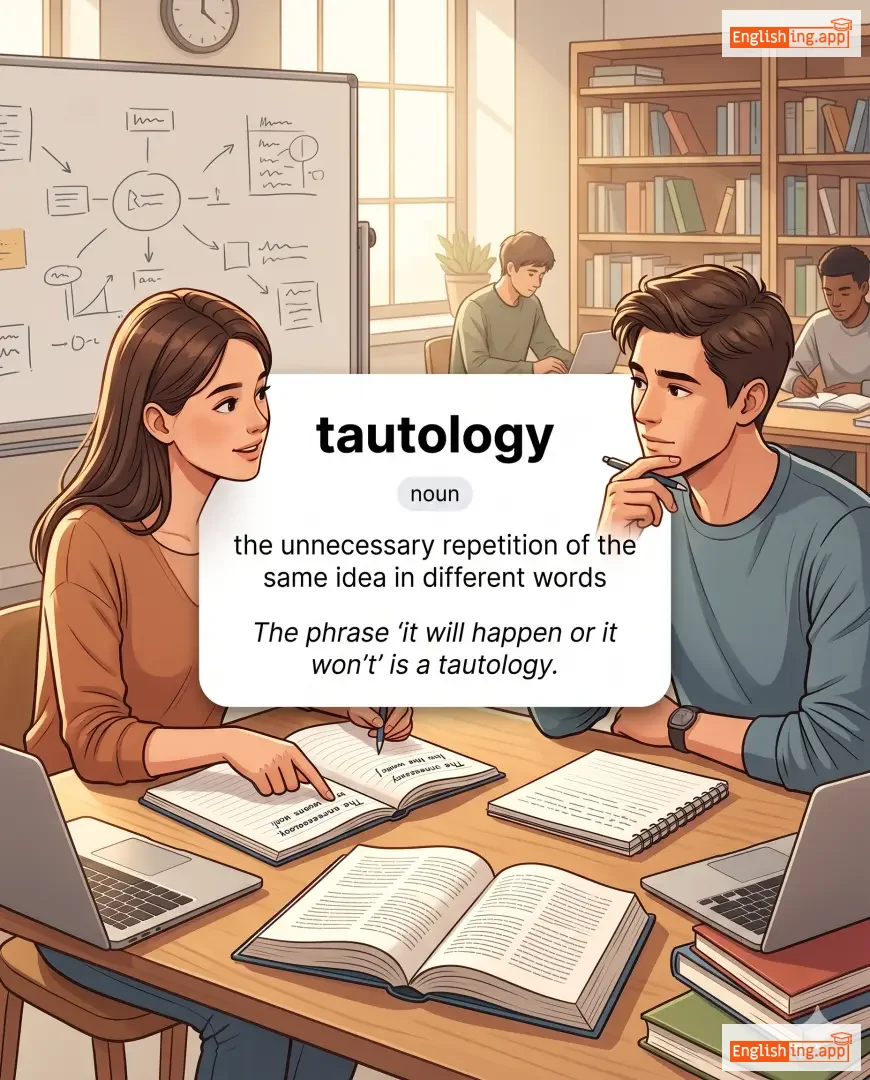
tautology definition card — visual illustration of the meaning
noun
/tɔːˈtɒlədʒi/
不必要的重复 (bù bì yào de chóng fù)

the unnecessary repetition of the same idea in different words

"The phrase 'it will happen or it won’t' is a tautology."

"'它会发生,或者不会发生' 这句话就是一个套词论。" ('tā huì fā shēng, huò zhě bù huì fā shēng' zhè jù huà jiù shì yī gè tào cí lùn.)
verb
/tɔːnt/
嘲弄 (chaonong)

to provoke or challenge someone with insulting remarks

"The bully tried to taunt him with cruel words."

"那个霸凌者试图用残忍的话挑衅他。" (Nàgè bàlíng zhě shìtú yòng cánrěn de huà tiǎoxìn tā.)
adjective
/tɔːt/
紧绷 (jinbeng)

stretched or pulled tight; tense

"The rope was pulled taut between the two poles."

"绳子在两个杆子之间拉得紧绷。" (Shengzi zai liang ge ganzi zhi jian la de jinbeng.)
adjective
/ˌtɔːtəˈlɒdʒɪkəl/
冗余的 (rǒngyú de)

expressing something by repeating the same idea in different words; redundant

"Saying 'free gift' is considered tautological."

"说'免费礼物'被认为是冗余的。" (Shuo 'miǎnfèi lǐwù' bèi rènwéi shì rǒngyú de.)
adjective
/ˈtæti/
破旧 (pojiu)

Worn out, shabby, or in poor condition.

"The sofa looked old and tatty after years of use."

"沙发在多年的使用后看起来破旧不堪。" (Shafa zai duonian de shiyong hou kanqilai pojiu bukān.)
adjective
/ˈtɔːdri/
廉价而花哨但质量差 (lianjia er huāshào dàn zhìliàng chà)

cheap and showy but of poor quality

"She wore a tawdry necklace that broke easily."

"她戴了一条廉价而花哨的项链,很容易断裂。" (Tā dài le yītiáo liánjià ér huāshào de xiàngliàn, hěn róngyì duànliè.)
adjective
/ˈtɔːni/
黄褐色 (huanghese)

A warm, sandy or golden-brown color.

"The owl's tawny feathers blended with the tree bark."

"猫头鹰的黄褐色羽毛与树皮融合在一起。" (Maotouying de huanghese yumao yu shupi ronghe zai yiqi.)