词汇表

英语词汇词典 | 单词含义、定义和示例

noun
/ˈtɛknɪk/
技巧 (jiqiao)

A method, skill, or art in a particular field, especially in the arts or sciences.

"The artist’s technic in watercolor impressed the judges."

"艺术家的水彩画技法给评委留下了深刻印象。" (Yishujia de shuicaihua ji fa gei pingwei liuxia le shenke yinxiang.)
adjective
/ˈtɛknɪkəl/
技术 (jishu)

relating to a specific subject, art, or craft, or its techniques.

"He has a technical background in engineering."

"他在工程学方面有技术背景。" (Ta zai gongchengxue fangmian you jishu beijing.)
noun
/ˌtɛknɪˈkæləti/
技术性问题 (jishu xing wenti)

A small detail of law, rule, or procedure; a minor point that affects an outcome.

"The case was dismissed on a technicality."

"案件因技术性问题被驳回。" (Anjian yin jishu xing wenti bei bohui.)
noun
/tɛkˈnɪʃən/
技术员 (jìshùyuán)

a person skilled in the practical aspects of a particular science, art, or job

"The technician repaired the computer within an hour."

"技术员在一个小时内修好了电脑。" (Jìshùyuán zài yī gè xiǎoshí nèi xiū hǎo le diànnǎo.)
noun
/tɛkˈniːk/
技巧 (jiqiao)

A particular way of carrying out a task, especially with skill.

"She learned a new breathing technique in yoga class."

"她在瑜伽课上学会了一种新的呼吸技巧。" (Tā zài yújiā kè shàng xuéhuìle yī zhǒng xīn de hūxī jìqiǎo.)
noun
/tɛkˈnɒɡrəfi/
技术学 (jishu xue)

the descriptive study or writing about the practical arts, technologies, or technical methods of a society

"The anthropologist specialized in technography to understand indigenous tool-making traditions."
"人类学家专门研究技术学,以了解土著工具制作的传统。" (Renleixuejia zhuanmen yanjiu jishuxue, yi liaojie tuzhu gongju zhizao de chuantong.)
technological definition card — visual illustration of the meaning
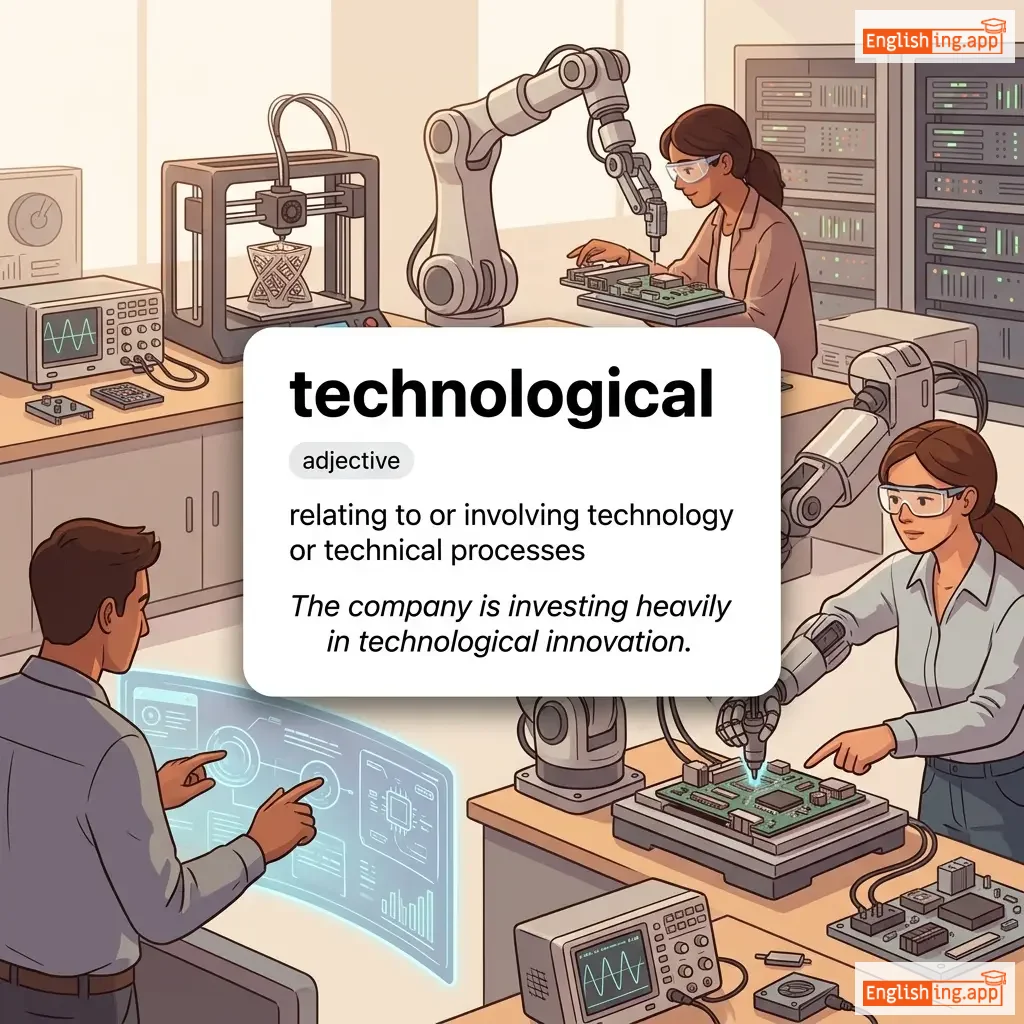
adjective
/ˌteknəˈlɒdʒɪkəl/

relating to or involving technology or technical processes

"The company is investing heavily in technological innovation."
temperature definition card — visual illustration of the meaning
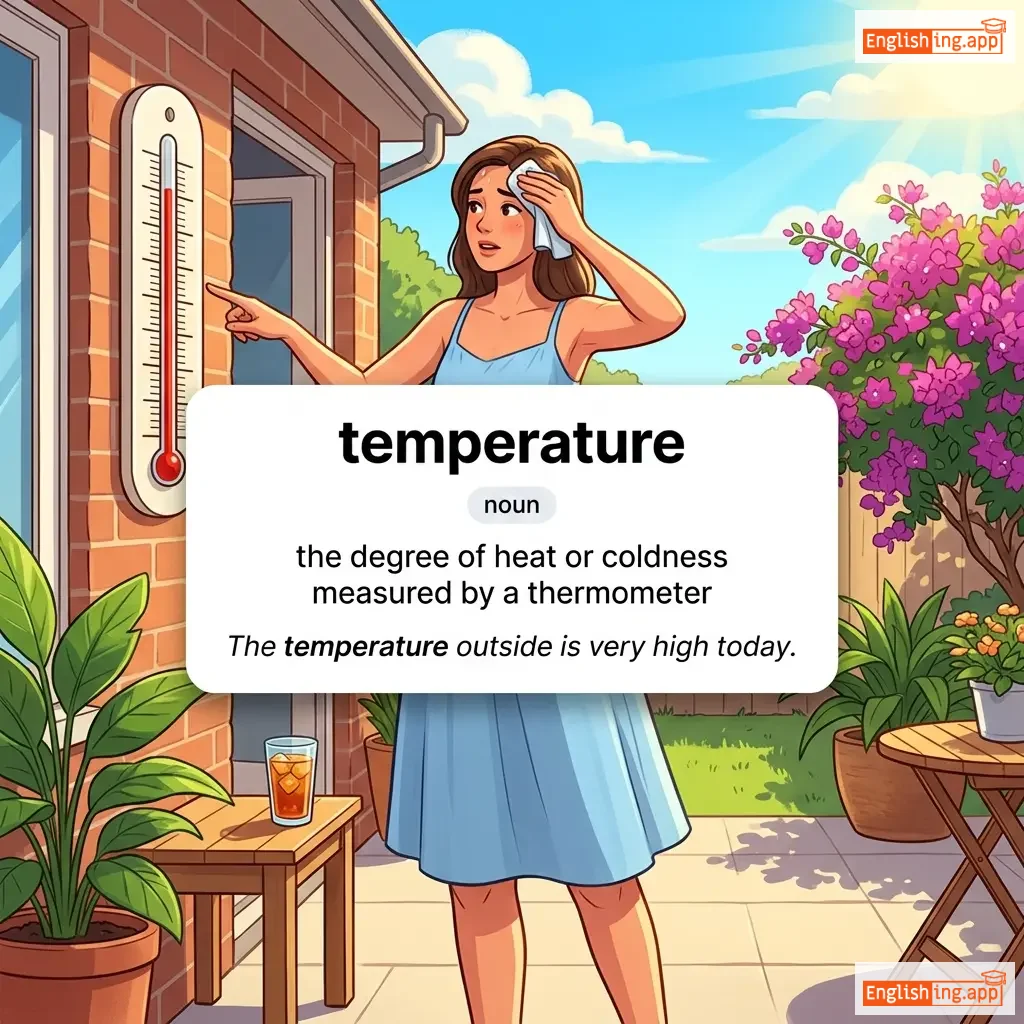
noun
/ˈtɛmpərətʃər/
温度 (wēndù)

the degree of heat or coldness measured by a thermometer

"The temperature outside is very high today."

"今天外面的温度非常高。" (Jīntiān wàimiàn de wēndù fēicháng gāo.)
tenet definition card — visual illustration of the meaning
noun
/ˈtɛnɪt/
原则 (yuánzé)

a principle, belief, or doctrine held to be true

"Honesty is a central tenet of their philosophy."

"诚实是他们哲学的核心原则。" (Chéngshí shì tāmen zhéxué de héxīn yuánzé.)
noun
/ˈtɛnəmənt/
廉租房 (liánzūfáng)

a large building divided into separate apartments, often in poor condition

"The family lived in a crowded tenement in the city."

"这个家庭住在城市里一个拥挤的廉租房里。" (Zhège jiātíng zhù zài chéngshì lǐ yīgè yōngjǐ de liánzūfáng lǐ.)
adjective
/ˈtɛnɪbrəs/
昏暗的 (hun'an de)

dark, shadowy, or obscure

"The cave was damp and tenebrous, filled with eerie sounds."

"洞穴潮湿而昏暗,充满了怪异的声音。" (Dongxue chaoshi er hun'an, chongman le guaiyi de shengyin.)
noun
/ˈten.dər.nəs/
温柔 (wēnróu)

gentleness and kindness; the quality of being easily hurt or damaged

"The mother showed great tenderness while caring for her sick child."

"母亲在照顾生病的孩子时表现出了极大的温柔。" (Mǔqīn zài zhàogù shēngbìng de háizi shí biǎoxiàn chūle jí dà de wēnróu.)
verb, noun, adjective
/ˈtɛndər/
提议 / 温柔 (tíyì / wēnróu)

to offer formally; soft and delicate in texture or character; a formal offer or proposal

"The company tendered its resignation to the board."

"公司向董事会提出了辞职申请。" (Gōngsī xiàng dǒngshìhuì tíchūle cízhí shēnqǐng.)
adjective
/tɛnˈdɛnʃəs/
偏见的 (pianjian de)

Expressing or promoting a particular cause or point of view, often biased.

"The article was criticized for its tendentious tone."

"这篇文章因其偏见的语气而受到批评。" (Zhe pian wenzhang yin qi pianjian de yuqi er shoudao piping.)
noun
/ˈtɛndənsi/
趋势 (qushi)

An inclination or likelihood to behave in a certain way.

"He has a tendency to forget small details."

"他有忘记小细节的倾向。" (Tā yǒu wàngjì xiǎo xìjié de qīngxiàng.)
verb
/tɛnd/
倾向/照顾 (qīngxiàng/zhàogù)

To regularly behave in a particular way or to take care of something.

"She tends to wake up early in the morning."

"她倾向于早上早起。" (Tā qīngxiàng yú zǎoshang zǎo qǐ.)
noun
/ˈtɛnənt/
租户 (zū hù)

A person who occupies land or property rented from a landlord.

"The tenant paid the rent on time every month."

"租户每月按时支付租金" (zū hù měi yuè àn shí zhī fù zū jīn)
noun
/ˈtɛnənsi/
租约 (zūyuē)

The possession or occupation of land or property as a tenant.

"The tenancy agreement was signed for two years."

"租赁协议已签署为期两年。" (Zūlìn xiéyì yǐ qiānshǔ wéiqī liǎng nián.)
tenacity definition card — visual illustration of the meaning
noun
/təˈnæsəti/
韧性 (renxing)

the quality of being persistent, determined, and not easily giving up

"His tenacity helped him succeed despite many failures."

"他的韧性帮助他在多次失败后成功了。" (Tā de rènxìng bāngzhù tā zài duō cì shībài hòu chénggōngle.)
tenacious definition card — visual illustration of the meaning
adjective
/təˈneɪʃəs/
顽强 (wanqiang)

holding firmly to something; persistent and determined

"She was tenacious in pursuing her goals."

"她在追求目标时非常顽强。" (Ta zai zhuiqiu mubiao shi feichang wanqiang.)
adjective
/ˈtɛnəbl/
可防御的 (kě fángyù de)

able to be defended or maintained against attack or objection

"His argument was strong and tenable in court."

"他的论点在法庭上既强大又可防守。" (Tā de lùndiǎn zài fǎtíng shàng jì qiángdà yòu kě fángshǒu.)
noun
/tɛn/
(shi)

the number following nine and preceding eleven

"I have ten apples in the basket."

"我篮子里有十个苹果。" (Wǒ lánzi lǐ yǒu shí gè píngguǒ.)
adjective
/ˈtemptɪŋ/
诱人的 (yòu rén de)

appealing to or attracting someone, even if wrong or inadvisable; alluring

"The chocolate cake looked very tempting in the bakery window."

"在面包店的橱窗里,巧克力蛋糕看起来非常诱人。" (zài miànbāo diàn de chúchuāng lǐ, qiǎokèlì dàngāo kàn qǐlái fēicháng yòu rén.)
noun
/ˈtɛmptər/
引诱者 (yǐn yòu zhě)

a person or thing that entices someone into doing something wrong

"The tempter whispered false promises into his ear."

"引诱者在他耳边低声许下虚假的承诺。" (Yǐn yòu zhě zài tā ěr biān dī shēng xǔ xià xū jiǎ de chéng nuò.)
noun
/temp.ˈteɪ.ʃən/
诱惑 (yòuhuò)

the desire to do something wrong or unwise; an urge to have or do something

"He resisted the temptation to eat the entire chocolate cake."

"他抵抗了吃掉整块巧克力蛋糕的诱惑。" (Tā dǐkàngle chī diào zhěng kuài qiǎokèlì dàngāo de yòuhuò.)
verb
/tɛmpt/
诱惑 (yòuhuò)

to entice or attract someone to do something, often something wrong or unwise

"The smell of fresh bread tempted him to enter the bakery."

"新鲜面包的味道引诱他走进了面包店。" (xīnxiān miànbāo de wèidào yǐn yuè tā zǒu jìn le miànbāo diàn.)
verb
/ˈtɛmpəˌraɪz/
拖延 (tuōyán)

To delay making a decision or taking action in order to gain time.

"The politician temporized when asked about the controversial issue."
"政治家在被问及争议问题时拖延了决策。" (Zhèngzhìjiā zài bèi wènjí zhēngyì wèntí shí tuōyánle juédìng.)
temporary settlements definition card — visual illustration of the meaning
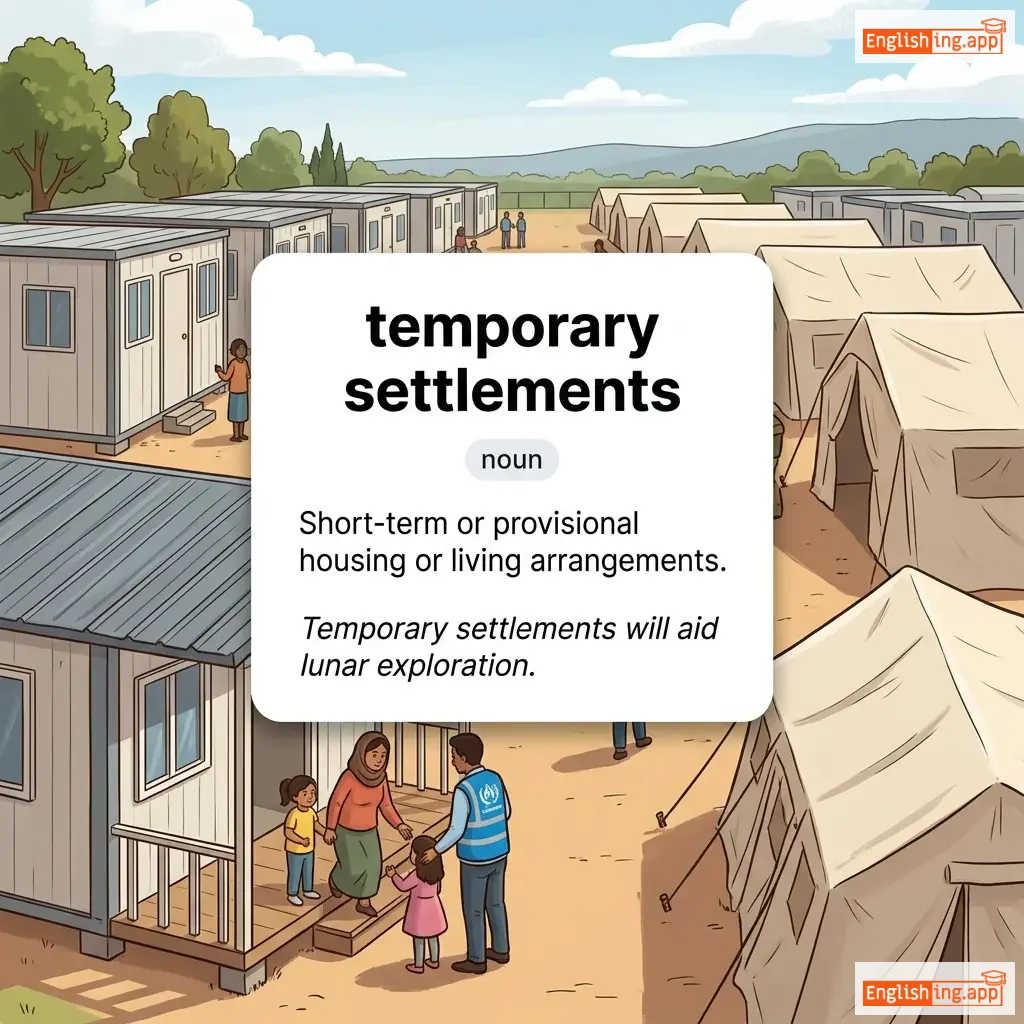
noun
ˈtempəreri ˈsetlmənts
临时定居点 (linshi dingjudian)

Short-term or provisional housing or living arrangements.

"Temporary settlements will aid lunar exploration."

"临时定居点将有助于月球探索。" (Linshi dingjudian jiang youzhu yuèqiú tànsuǒ.)
adjective
/ˈtɛmpərɛri/
临时 (linshi)

Lasting for only a limited period of time; not permanent.

"She found a temporary job during the summer break."

"她在暑假期间找到了临时工作。" (Tā zài shǔjià qījiān zhǎodàole línshí gōngzuò.)
adverb
/ˈtɛmpərɛrɪli/
临时地 (linshi de)

for a limited time; not permanently

"The road is closed temporarily for repairs."

"道路因维修而暂时关闭。" (Dàolù yīn wéixiū ér zhànshí guānbì.)
adjective
/ˈtɛmpərəl/
世俗的,时间的 (shìsú de, shíjiān de)

Relating to worldly affairs or to time rather than spiritual matters.

"The monk gave up his temporal possessions to live a simple life."

"僧侣放弃了他的世俗财产,选择过简单的生活。" (sēnglǚ fàngqìle tā de shìsú cáichǎn, xuǎnzé guò jiǎndān de shēnghuó.)
noun
/ˈtɛmpoʊ/
节奏, 速度 (jie2zou4, su4du4)

The speed or pace at which a piece of music or activity is performed.

"The band played the song at a faster tempo than usual."

"乐队以比平常更快的节奏演奏了这首歌。" (Yue dui yi bi ping chang geng kuai de jie zou yan zou le zhe shou ge.)
temple definition card — visual illustration of the meaning
noun
/ˈtɛmpəl/
寺庙 (sìmiào)

a building used for the worship of a god or gods

"They visited an ancient temple during their trip to India."

"他们在印度旅行时参观了一个古老的寺庙。" (Tāmen zài Yìndù lǚxíng shí cānguānle yīgè gǔlǎo de sìmiào.)
adjective
/tɛmˈpɛstjuəs/

Characterized by strong and turbulent emotions or stormy conditions.

"Their tempestuous relationship often swung between love and anger."

noun
/ˈtem.pɪst/
暴风雨 (baofengyu)

a violent storm with strong winds; a state of great disturbance or tumult

"The sailors struggled to navigate through the fierce tempest."

"水手们努力在猛烈的暴风雨中航行。" (Shuǐshǒumen nǔlì zài měngliè de bào fēngyǔ zhōng hángxíng.)
adjective
/ˈtɛmpərd/
调和 (tiaohe)

having a specified temper or disposition; strengthened or moderated.

"She gave a tempered response to the criticism."

"她对批评做出了调和的回应。" (Tā duì pīpíng zuòchūle tiáohé de huíyìng.)
🧑‍🦱

teen (青少年)

noun
/tiːn/
青少年 (qing shaonian)

a person aged between 13 and 19 years.

"He's a teenager who loves sports."

"他是一个喜欢运动的青少年。" (Ta shi yi ge xihuan yundong de qing shaonian.)
noun
/təˈlɛpəθi/

the supposed communication of thoughts or ideas by means other than the known senses

"The twins claimed to share telepathy with each other."

noun
/ˌtɛliˈɒlədʒi/
目的论 (mùdì lùn)

the explanation of phenomena by the purpose they serve rather than by cause

"Aristotle is often associated with the concept of teleology in philosophy."

"亚里士多德常与哲学中的目的论概念相关联。" (Yà lǐ shì duō dé cháng yǔ zhéxué zhōng de mùdì lùn gàiniàn xiāngguān lián.)
telemetry definition card — visual illustration of the meaning
noun
ˈtɛlɪˌmɛtri
遥测 (yaoce)

The process of recording and transmitting the readings of an instrument.

"The spacecraft transmitted telemetry data back to Earth."

"航天器将遥测数据传回地球。" (Hangtianqi jiang yaoce shuju chuan hui diqiu.)
noun
/tiːˈtoʊtəlɪzəm/
完全戒酒的做法 (wánquán jièjiǔ de zuòfǎ)

the practice or principle of abstaining completely from alcoholic drinks

"He practiced teetotalism throughout his life."

"他一生都践行着提托塔利主义。" (Tā yīshēng dōu jiànxíngzhe tí tuō tǎ lì zhǔyì.)
verb
/ˈtiːtər/
摇晃 (yaohuang)

to move or balance unsteadily; to wobble

"The glass began to teeter on the edge of the table."

"玻璃开始在桌子的边缘摇摇欲坠。" (Boli kaishi zai zhuozi de bianyuan yaoyao yujui.)
noun
/ˈtiːneɪdʒər/
青少年 (qīng shàonián)

a person aged between 13 and 19 years.

"Teenagers often enjoy hanging out with friends."

"青少年常常喜欢和朋友一起度过时光。" (Qīng shàonián chángcháng xǐhuān hé péngyǒu yīqǐ dùguò shíguāng.)
adjective
/ˈtiːnˌeɪdʒ/
青少年 (qīngshàonián)

relating to or characteristic of people aged between 13 and 19 years old

"She spent her teenage years in a small town."

"她在一个小镇度过了她的青少年岁月。" (Tā zài yīgè xiǎo zhèn dùguòle tā de qīngshàonián suìyuè.)
noun
/ˈtiːdiəm/
沉闷 (chenmen)

the state of being tedious; monotony or boredom

"The tedium of long meetings often drains motivation."
"长时间会议的沉闷常常消耗动力。" (Chang shijian huiyi de chenmen changchang xiaohua dongli.)
technology definition card — visual illustration of the meaning
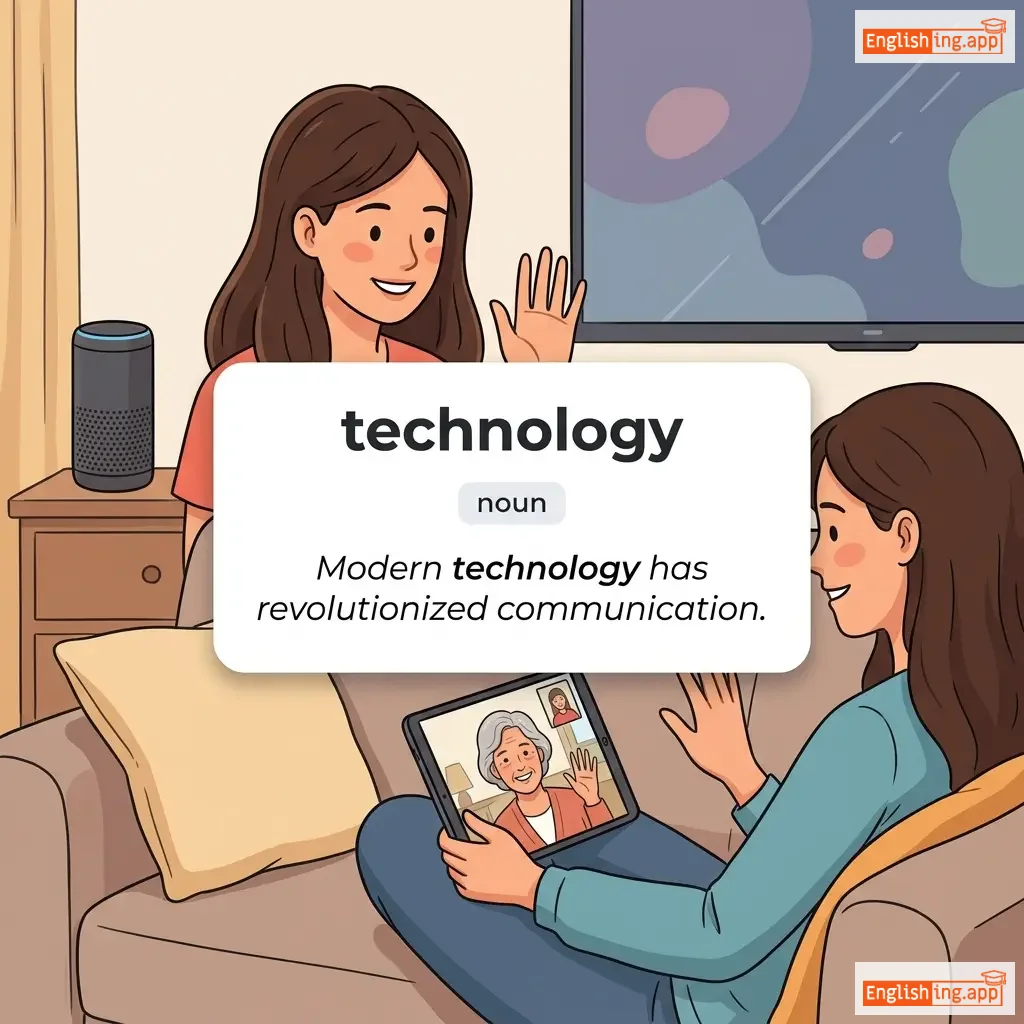
noun
/tɛkˈnɒlədʒi/
技术 (jishu)

the application of scientific knowledge for practical purposes, especially in industry

"Modern technology has revolutionized communication."

"现代技术已经彻底改变了通讯。" (Xiandai jishu yijing chedi gaibian le tongxun.)
tectonic definition card — visual illustration of the meaning
adjective
/tɛkˈtɑː.nɪk/
构造的 (gòu zào de)

Relating to the structure of the earth's crust and the large-scale processes that take place within it.

"Tectonic movements cause earthquakes and mountain formation."

"构造运动引起地震和山脉形成。" (Gouzao yundong yinqi dizhen he shanmai xingcheng.)
adjective
/ˈtiːdiəs/
乏味 (fáwèi)

too long, slow, or dull; tiresome or monotonous

"Filling out endless forms can be a tedious task."

"填写无尽的表格可能是一个乏味的任务。" (Tiánxiě wújìn de biǎogé kěnéng shì yīgè fáwèi de rènwù.)
noun
/ˈtɛlɪfəʊn/
电话 (dianhua)

a system for transmitting voices over a distance using wire or radio, typically for communication.

"I need to make a telephone call to my friend."

"我需要给我的朋友打一个电话。" (Wo xuyao gei wo de pengyou da yige dianhua.)
verb
/tiːm/
充满 (chōngmǎn)

to be full of or swarming with

"The forest teems with wildlife."

"森林里充满了野生动物。" (Sēnlín lǐ chōngmǎn le yěshēng dòngwù.)