词汇表

英语词汇词典 | 单词含义、定义和示例

noun
/ˈtoʊ.pæz/
托帕石 (tuōpàshí)

a precious stone, typically colorless, yellow, or blue, used in jewelry

"The queen's crown was adorned with a magnificent blue topaz."

"女王的王冠装饰着一颗美丽的蓝色托帕石。" (nǚwáng de wángguān zhuāngshì zhe yī kē měilì de lánsè tuōpàshí.)
noun
/tɒp/
顶端 (dingduan)

the highest or uppermost point, part, or surface of something

"The book is on the top shelf."

"书本在顶层书架上。" (Shuben zai dingceng shujia shang.)
noun
/tuːθ/
牙齿 (yáchǐ)

each of the hard, pointed structures in the mouth used for biting and chewing food

"He has a toothache and needs to see the dentist."
"他牙疼,需要看牙医。" (Tā yáténg, xūyào kàn yáyī.)
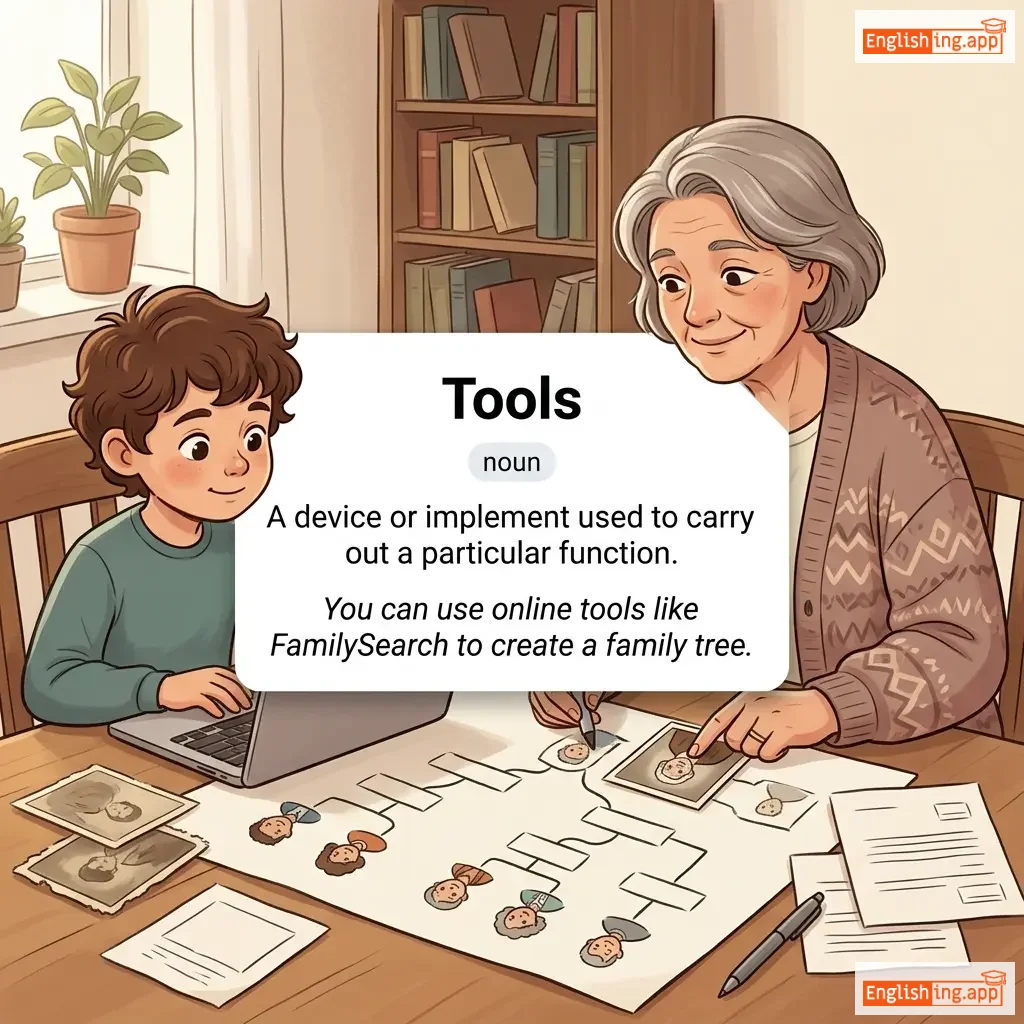
Tools definition card — visual illustration of the meaning
noun
tuːlz
工具 (gongju)

A device or implement used to carry out a particular function.

"You can use online tools like FamilySearch to create a family tree."
"您可以使用像FamilySearch这样的在线工具来创建家谱树。" (Nín kěyǐ shǐyòng xiàng FamilySearch zhèyàng de zàixiàn gōngjù lái chuàngjiàn jiāpǔ shù.)
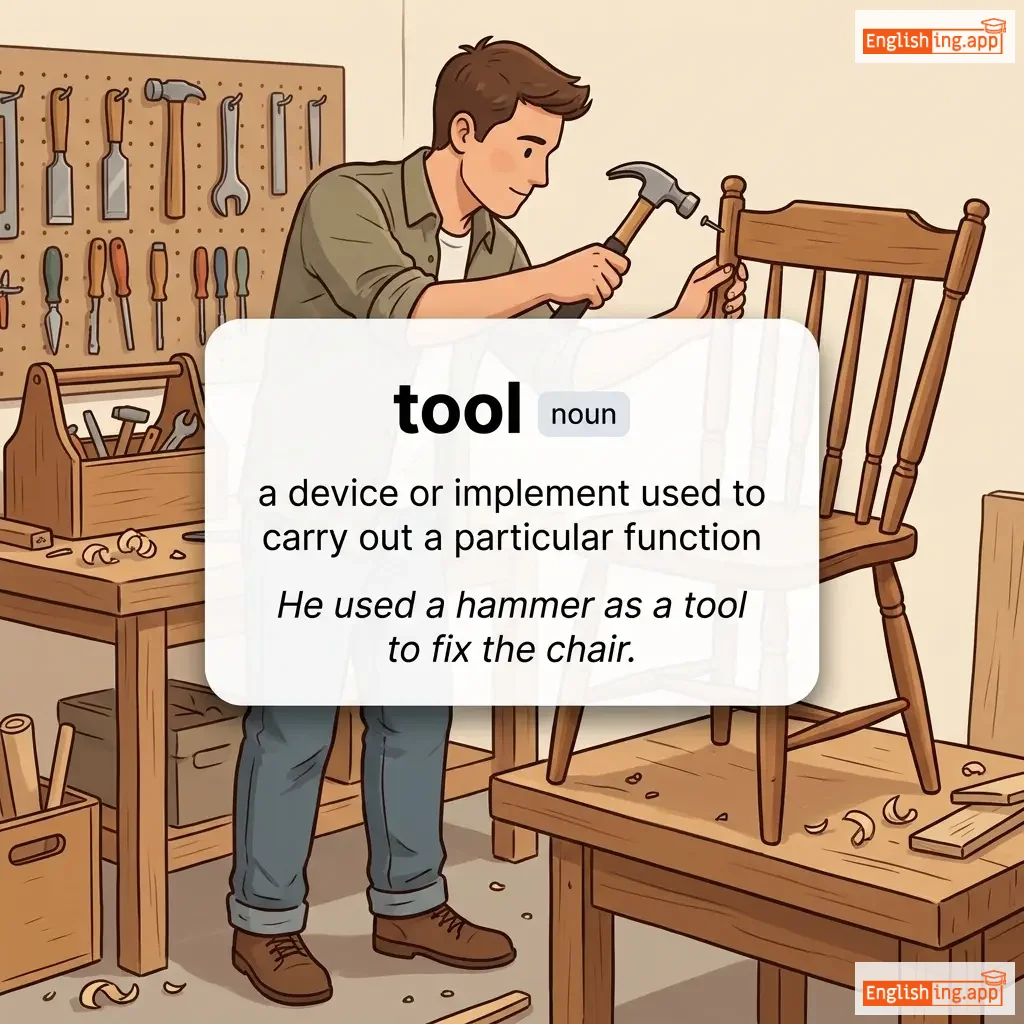
tool definition card — visual illustration of the meaning
noun
/tuːl/
工具 (gongju)

a device or implement used to carry out a particular function

"He used a hammer as a tool to fix the chair."

"他用锤子作为工具来修理椅子。" (Ta yong chuizi zuowei gongju lai xiuli yizi.)
adverb
/tuː/
太多 (tai duo)

to a higher degree than is desirable, permissible, or possible

"She is too tired to continue working."

"她太累了,无法继续工作。" (Ta tai lei le, wu fa jixu gongzuo.)
noun
/ˈtɒnʃər/
剃发 (tifa)

the practice of shaving or cutting the hair on the scalp, especially in a religious context

"The monk received his tonsure as part of his religious initiation."

"僧侣在其宗教启蒙过程中接受了剃发。" (Senglü zai qi zongjiao qimeng guocheng zhong jieshou le tifa.)
adjective
/tɒnˈsɔːriəl/
与理发师有关 (yu lǐ fà shī yǒu guān)

relating to barbers or hairdressing

"The town's new barber offered a wide range of tonsorial services."

"这座城市的新理发师提供了广泛的理发服务。" (Zhè zuò chéngshì de xīn lǐ fà shī tígōngle guǎngfàn de lǐ fà fúwù.)
adverb, noun
/təˈnaɪt/
今晚 (jin wan)

on or during the night of the current day

"We're going to the party tonight."

"我们今晚去派对。" (Wo men jin wan qu pai dui.)
noun
/ˈtɒnɪk/
补药 (buyao)

a medicine or drink that restores or refreshes health and energy

"A glass of lemonade was the perfect tonic on a hot day."

"在炎热的日子里,一杯柠檬水是完美的补药。" (Zai yanre de rizi li, yi bei ningmeng shui shi wanmei de buyao.)
noun
/tʌŋ/
舌头 (shétou)

a fleshy muscular organ in the mouth used for tasting, swallowing, and speaking

"She stuck out her tongue playfully."

"她顽皮地伸出了舌头。" (Tā wánpí de shēn chūle shétou.)
noun
/tɒŋz/
夹子 (jiāzi)

a tool consisting of two movable arms that are joined at one end, used for picking up and holding things

"Use the tongs to pick up the hot pieces of meat from the grill."

"使用夹子从烤架上取下热肉块。" (Shǐyòng jiāzi cóng kǎojià shàng qǔ xià rè ròu kuài.)
noun
/tɒŋ/
夹子 (jiazi)

a tool with two movable arms used to pick up and hold objects

"He used the tong to pick up the hot coal."

"他用夹子拿起了热煤。" (Ta yong jiazi naqi le re mei.)
noun, verb
/toʊn/
音调 (yīndiào)

the general character or attitude of a place, piece of writing, situation, etc.

"The tone of the letter was very formal."

"这封信的音调非常正式。" (Zhè fēng xìn de yīndiào fēicháng zhèngshì.)
noun
/tʌn/
(dun)

A unit of weight equal to 2,000 pounds (US) or 1,000 kilograms (metric); a large amount of something

"The truck carried a ton of apples to the market."

"卡车运送了一吨苹果到市场。" (Kache yun song le yi dun pingguo dao shichang.)
noun, adverb
/təˈmɒroʊ/
明天 (mingtian)

the day after today

"We are meeting tomorrow for the project discussion."

"我们明天会见面讨论项目。" (Women mingtian hui jianmian taolun xiangmu.)
tome definition card — visual illustration of the meaning
noun
/toʊm/
厚书 (hou shu)

a large, heavy book, often scholarly or serious in nature

"She spent the afternoon reading an old tome on medieval history."

"她花了整个下午阅读一本关于中世纪历史的厚书。" (Tā huāle zhěnggè xiàwǔ yuèdú yī běn guānyú zhōng shìjì lìshǐ de hòu shū.)
noun
/təˈmeɪtoʊ/
番茄 (fānqié)

a red or yellowish fruit that is typically eaten as a vegetable

"I added some tomato to the salad."

"我在沙拉里加了一些番茄。" (Wǒ zài shālā lǐ jiāle yīxiē fānqié.)
noun
/toʊl/
过路费 / 损失 (guòlùfèi / sǔnshī)

A charge payable for using a road or bridge; also the extent of damage or suffering caused by something.

"The flood took a heavy toll on the village."

"洪水对村庄造成了巨大的损失。" (hóngshuǐ duì cūnzhuāng zàochéngle jùdà de sǔnshī.)
noun
/ˌtɒləˈreɪʃən/
宽容 (kuan rong)

The practice of allowing something that one does not necessarily agree with.

"The government promoted religious toleration."
"政府促进了宗教宽容。" (Zhèngfǔ cùjìnle zōngjiào kuānróng.)
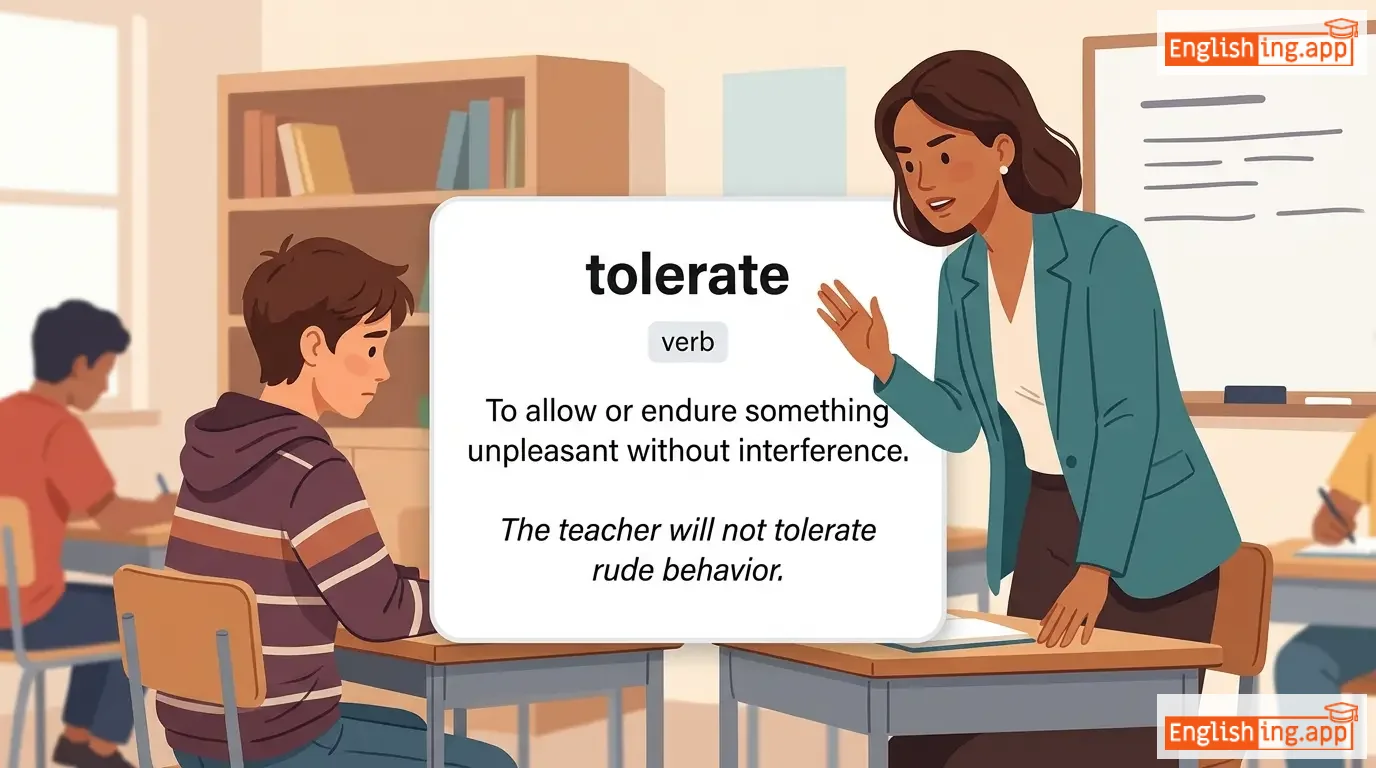
tolerate definition card — visual illustration of the meaning
verb
/ˈtɒləreɪt/
容忍 (róngrěn)

To allow or endure something unpleasant without interference.

"The teacher will not tolerate rude behavior."

"老师不会容忍粗鲁的行为。" (lǎoshī bù huì róngrěn cūlǔ de xíngwéi.)
adjective
/ˈtɒlərənt/
宽容 (kuanrong)

Showing willingness to allow the existence of opinions or behaviors that one dislikes or disagrees with.

"He is very tolerant of other people's beliefs."

"他对其他人的信仰非常宽容。" (Ta dui qita ren de xinyang feichang kuanrong.)
noun
/ˈtɒlərəns/
宽容 (kuanrong)

The ability or willingness to accept or endure differences, behaviors, or opinions without hostility.

"Her tolerance for different cultures impressed everyone."

"她对不同文化的宽容给每个人留下了深刻印象。" (Ta dui butong wenhua de kuanrong gei meige ren liuxiala shenke yinxiang.)
adjective
/ˈtɒl.ər.ə.bəl/
可容忍 (ke rong ren)

Able to be endured or put up with; fairly acceptable.

"The pain was tolerable after the medicine."
"药物后,疼痛是可以忍受的。" (Yao wu hou, teng tong shi ke yi ren shou de.)
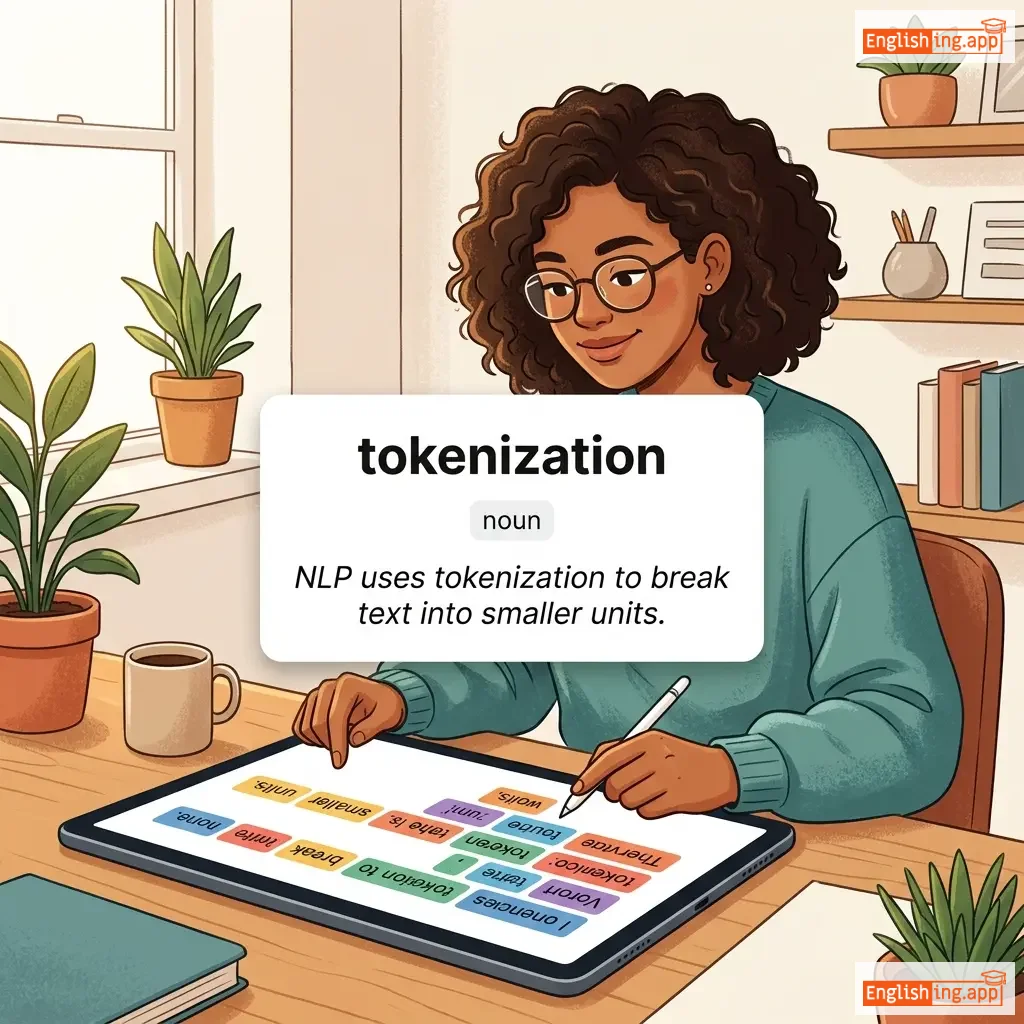
tokenization definition card — visual illustration of the meaning
noun
ˌtoʊ.kə.nɪˈzeɪ.ʃən
将文本分解为较小的单位,如单词、短语或符号进行分析的过程。 (tokenization)

The process of breaking text into smaller units like words, phrases, or symbols for analysis.

"NLP uses tokenization to break text into smaller units."

"NLP使用分词法将文本分解为更小的单位。" (NLP shǐyòng fēn cí fǎ jiāng wénběn fēnjiě wéi gèng xiǎo de dānwèi.)
noun
/ˈtoʊ.kən/
象征 / 代币 (xiangzheng / daibi)

A symbol or object that represents something, often given as a sign of appreciation or as a substitute for money.

"She gave him a small gift as a token of gratitude."

"她给了他一份小礼物,作为感谢的象征。" (Ta geile ta yi fen xiao liwu, zuo wei ganxie de xiangzheng.)
adjective
/ˈtɔɪl.səm/
辛苦的 (xīn kǔ de)

Involving hard or exhausting work; laborious.

"The workers had a toilsome day in the hot sun."

"工人在炎热的阳光下度过了辛苦的一天。" (Gōngrén zài yánrè de yángguāng xià dùguòle xīnkǔ de yītiān.)
noun
/ˈtɔɪlət/
厕所 (cesuo)

a fixture used for the disposal of human waste

"The public toilet was clean and well maintained."

"公共厕所干净且维护得很好。" (Gonggong cesuo ganjing qie weihu de hen hao.)
Toil definition card — visual illustration of the meaning
verb
/tɔɪl/
辛苦工作 (xīn kǔ gōng zuò)

To work extremely hard and continuously, often with difficulty.

"He had to toil for years to achieve success."

"他为了成功辛苦工作了多年。" (Tā wèile chénggōng xīnkǔ gōngzuò le duō nián.)
Together definition card — visual illustration of the meaning
adverb
/təˈɡɛðər/
一起 (yiqi)

with each other; in a group or combined form

"They worked together to solve the problem."

"他们一起合作解决问题。" (Tāmen yīqǐ hézuò jiějué wèntí.)
adverb
/ðʌs/
因此 (yin ci)

as a result or consequence of something previously stated

"He was late, thus he missed the meeting."

"他迟到了,因此错过了会议。" (Ta chi dao le, yin ci cuo guo le hui yi.)
Thrill definition card — visual illustration of the meaning
verb
/θrɪl/
激动 (jīdòng)

to cause someone to feel very excited and pleased

"The roller coaster ride thrills adventure seekers."

"过山车之旅让冒险爱好者感到兴奋。" (Guòshānchē zhī lǚ ràng màoxiǎn àihào zhě gǎndào xīngfèn.)
adjective
/θrɪld/
兴奋 (xīngfèn)

extremely happy or excited

"She was thrilled with the surprise party."

"她对惊喜派对感到兴奋。" (Tā duì jīngxǐ pàiduì gǎndào xīngfèn.)
thrive definition card — visual illustration of the meaning
verb
/θraɪv/

to grow, develop, or be successful

"Small businesses can thrive with proper support."

noun
/θroʊt/
喉咙 (hóulóng)

the front part of the neck, containing the pharynx and larynx

"He felt a lump in his throat while speaking."

"他说话时感到喉咙里有个肿块。" (Tā shuōhuà shí gǎndào hóulóng lǐ yǒu gè zhǒngkuài.)
verb
/θrɒb/
跳动 (tiaodong)

to beat or pulse strongly, often with pain

"His head began to throb after the long day."

"他的一天结束后,头开始跳动。" (Ta de yitian jie shu hou, tou kaishi tiaodong.)
noun
/θroʊz/
剧痛 (jutong)

intense or violent pain and struggle, often at the beginning or end of something

"The country was in the throes of a political crisis."

"该国正处于政治危机的剧痛之中。" (Gai guo zheng chu yu zhengzhi weiji de jutong zhi zhong.)
noun/verb
/θrɒŋ/

A large, densely packed crowd of people or animals; to fill or be present in a place in large numbers.

"Tourists thronged the streets during the festival."

verb/noun
/ˈθrɒt.əl/
限制/控制速度 (xian zhi/kong zhi su du)

To choke or strangle; to control the flow of fuel or power in an engine.

"The driver throttled the engine to slow down the car."

"司机将发动机调速以减慢汽车速度。" (Si ji jiang fa dong ji tiao su yi jian man qi che su du.)
preposition
/θruː/
通过 (tong guo)

moving in one side and out the other side of something

"The train passed through the tunnel."

"火车通过了隧道。" (Huo che tong guo le sui dao.)
preposition
/θruːˈaʊt/
贯穿 (guan chuan)

in every part of a place or during the whole time of an event

"She worked throughout the night."
"她整夜工作。" (Ta zheng ye gongzuo.)
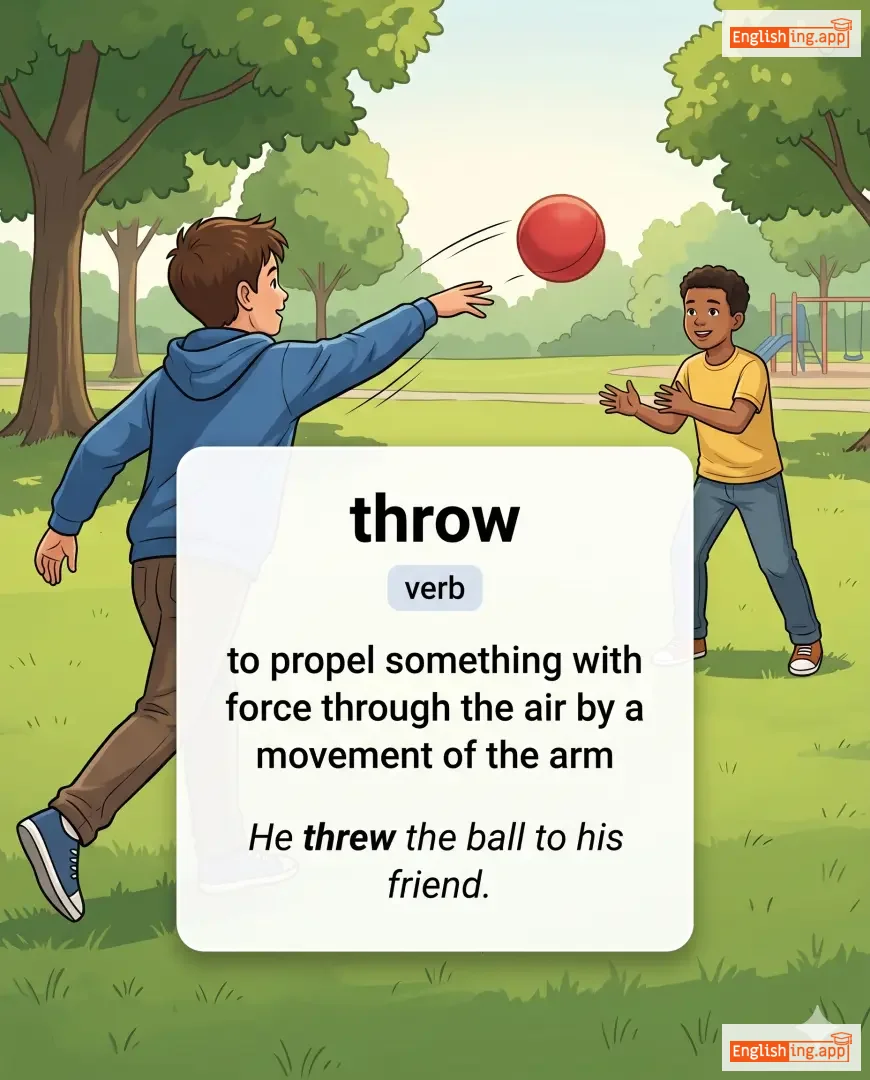
throw definition card — visual illustration of the meaning
verb
/θroʊ/
投掷 (tóu zhì)

to propel something with force through the air by a movement of the arm

"He threw the ball to his friend."

"他把球扔给了他的朋友。" (Tā bǎ qiú rēng gěi le tā de péngyǒu.)
noun
/θʌm/
大拇指 (da mǔ zhǐ)

the short, thick finger on the side of the hand, used for gripping and holding things

"He gave a thumbs-up to show his approval."
"他竖起大拇指表示赞同。" (Tā shù qǐ dà mǔ zhǐ biǎo shì zàn tóng.)
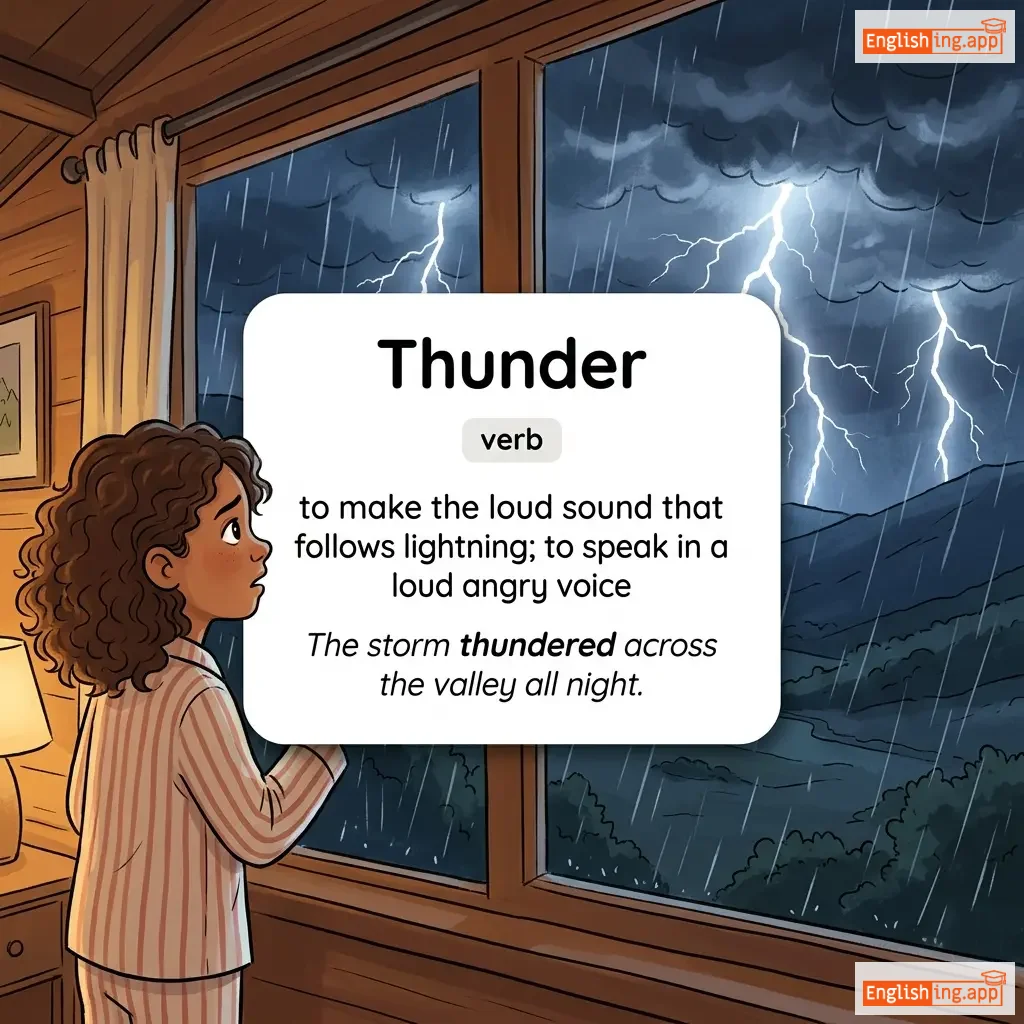
Thunder definition card — visual illustration of the meaning
noun
/ˈθʌn.dər/
雷声 (léi shēng)

the loud rumbling or crashing noise heard after a lightning flash

"We heard thunder during the storm last night."

"昨晚我们在暴风雨中听到了雷声。" (zuó wǎn wǒmen zài bàofēngyǔ zhōng tīngdàole léi shēng.)
noun
/ˈθɜːrzdeɪ/
星期四 (xingqi si)

The fifth day of the week, following Wednesday and preceding Friday.

"We have a meeting scheduled for Thursday."

"我们安排了星期四的会议。" (Wo men an pai le xingqi si de huiyi.)
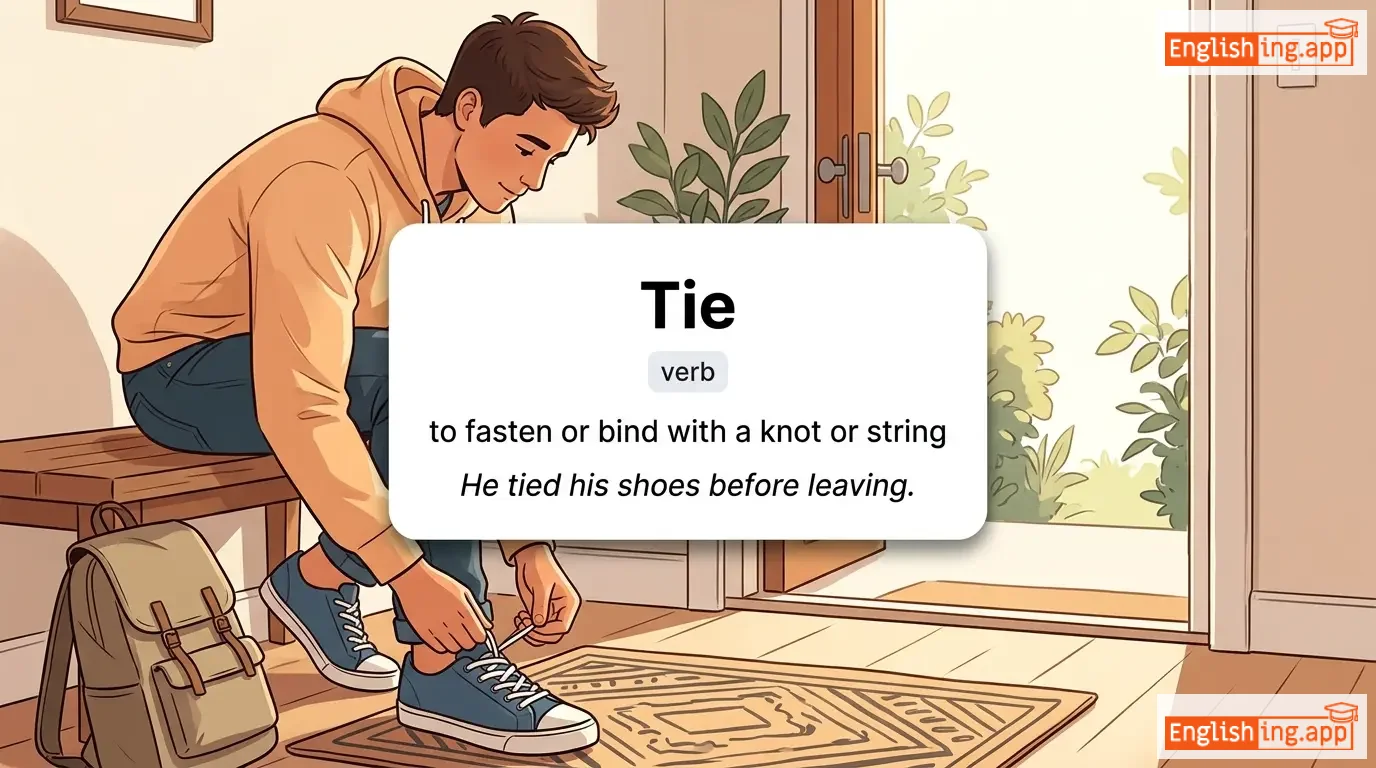
Tie definition card — visual illustration of the meaning
verb
/taɪ/
(xì)

to fasten or bind with a knot or string

"He tied his shoes before leaving."

"他在离开之前系好了鞋带。" (tā zài líkāi zhīqián xì hǎo le xiédài.)
adjective
/ˈtɪd.li/
微醉; 小或微小 (tiddli)

slightly drunk; small or tiny

"After a few drinks, he felt a bit tiddley."

"喝了几杯后,他觉得有点儿tiddli。" (He le ji bei hou, ta juede you dian'er tiddli.)
noun
/taɪd/
潮汐 (chaoxi)

the regular rise and fall of the sea caused by the moon and sun's gravity; a powerful flow or movement

"The fisherman waited for the tide to come in."

"渔夫在等待潮汐的到来。" (Yufu zai dengdai chaoxi de daolai.)
adjective
/ˈtaɪ.di/
整洁; 干净 (zhěngjié; gānjìng)

arranged neatly and in order; clean and organized

"She keeps her room very tidy and organized."

"她保持房间非常整洁和干净。" (Tā bǎochí fángjiān fēicháng zhěngjié hé gānjìng.)
adjective
/ˈtɪklɪʃ/

easily made to laugh by being touched lightly; easily upset or sensitive

"She is very ticklish and bursts into laughter when touched on her feet."