वोकैबुलरीज

इंग्लिश वोकैबुलरी डिस्कवर, लर्न और मास्टर करें

noun
/ˈtoʊ.pæz/
टोपाज (topaz)

a precious stone, typically colorless, yellow, or blue, used in jewelry

"The queen's crown was adorned with a magnificent blue topaz."

"रानी का मुकुट शानदार नीले टोपाज से सजाया गया था।" (rani ka mukut shandaar neeley topaz se sajaya gaya tha.)
noun
/tɒp/
शीर्ष (sheersh)

the highest or uppermost point, part, or surface of something

"The book is on the top shelf."

"किताब ऊपरी शेल्फ पर है।" (Kitaab oopari shelf par hai.)
noun
/tuːθ/
दांत (daant)

each of the hard, pointed structures in the mouth used for biting and chewing food

"He has a toothache and needs to see the dentist."

"उसके दांत में दर्द है और उसे दंत चिकित्सक के पास जाना होगा।" (Uske daant mein dard hai aur use dant chikitsak ke paas jana hoga.)
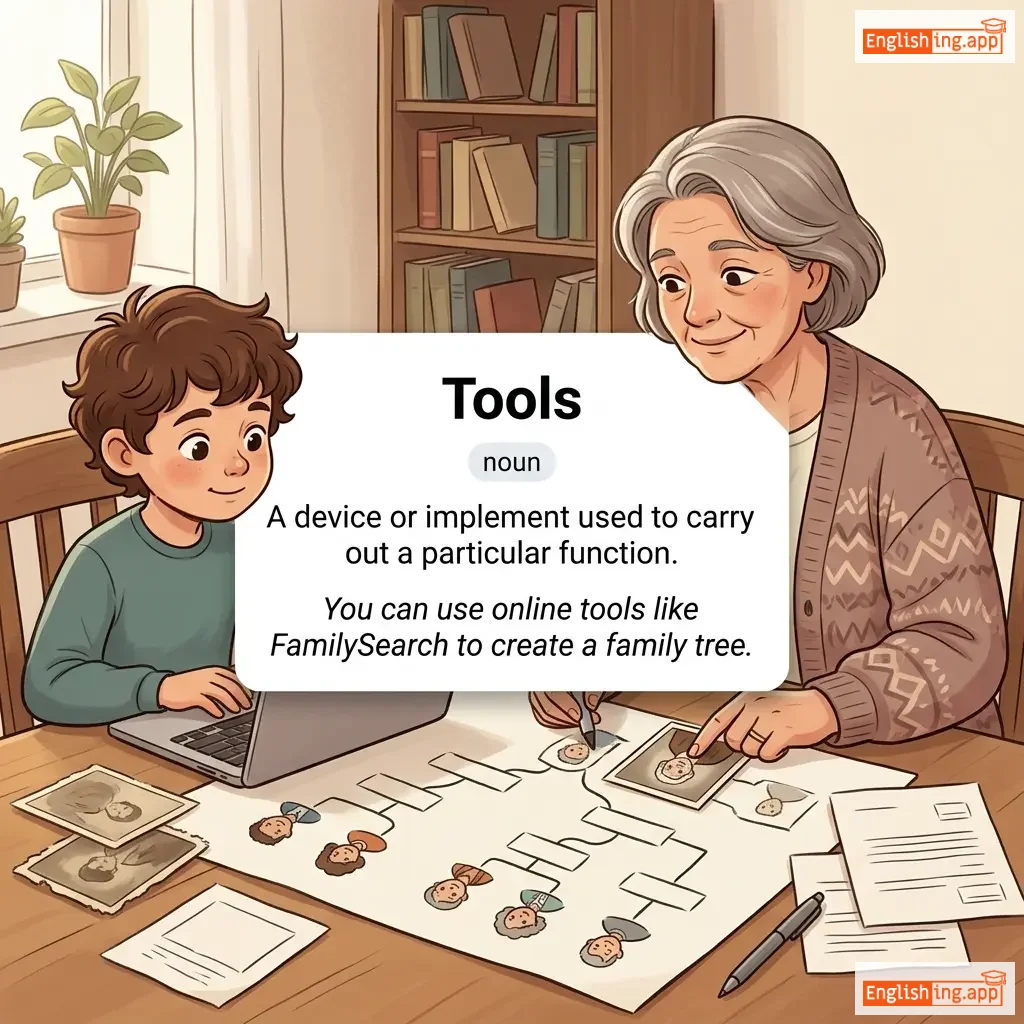
Tools definition card — visual illustration of the meaning
noun
tuːlz
उपकरण (upkaran)

A device or implement used to carry out a particular function.

"You can use online tools like FamilySearch to create a family tree."

"आप ऑनलाइन टूल्स का उपयोग करके FamilySearch जैसे परिवार के पेड़ बना सकते हैं।" (Aap online tools ka upyog karke FamilySearch jaise parivaar ke ped bana sakte hain.)
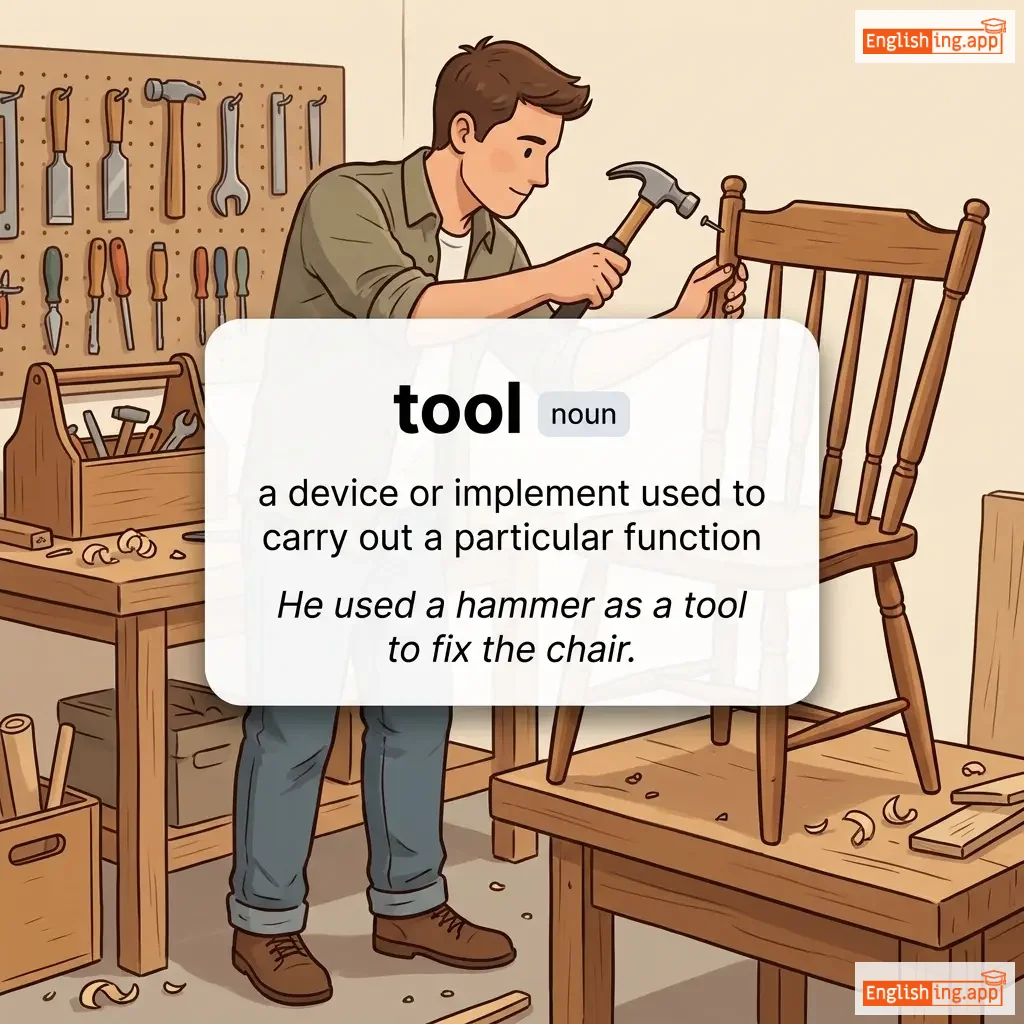
tool definition card — visual illustration of the meaning
noun
/tuːl/
उपकरण (upkaran)

a device or implement used to carry out a particular function

"He used a hammer as a tool to fix the chair."

"उसने कुर्सी को ठीक करने के लिए हैमर को एक उपकरण के रूप में इस्तेमाल किया।" (Usne kursi ko theek karne ke liye hammer ko ek upkaran ke roop mein istemal kiya.)
adverb
/tuː/
बहुत (bahut)

to a higher degree than is desirable, permissible, or possible

"She is too tired to continue working."

"वह काम जारी रखने के लिए बहुत थकी हुई है।" (Wah kaam jaari rakhne ke liye bahut thaki hui hai.)
noun
/ˈtɒnʃər/
चोटी मूंडना (chhoti moondna)

the practice of shaving or cutting the hair on the scalp, especially in a religious context

"The monk received his tonsure as part of his religious initiation."

"भिक्षु ने अपनी धार्मिक दीक्षा के हिस्से के रूप में अपनी चोटी मूंडवाई।" (Bhikshu ne apni dharmik deeksha ke hisse ke roop mein apni chhoti moondwai.)
adjective
/tɒnˈsɔːriəl/
नापित से संबंधित (napit se sambandhit)

relating to barbers or hairdressing

"The town's new barber offered a wide range of tonsorial services."

"शहर के नए नापित ने टॉन्सोरियल सेवाओं की एक विस्तृत श्रृंखला प्रदान की।" (Sheher ke naye napit ne tonsorial sevaon ki ek vistaarit shrinkhla pradan ki.)
adverb, noun
/təˈnaɪt/
आज रात (aj raat)

on or during the night of the current day

"We're going to the party tonight."

"हम पार्टी के लिए आज रात जा रहे हैं।" (Hum party ke liye aj raat ja rahe hain.)
noun
/ˈtɒnɪk/
टॉनिक (tonic)

a medicine or drink that restores or refreshes health and energy

"A glass of lemonade was the perfect tonic on a hot day."

"गर्म दिन में नींबू पानी एक बेहतरीन टॉनिक था।" (Garm din mein neemboo paani ek behatareen tonic tha.)
noun
/tʌŋ/
जीभ (jeebh)

a fleshy muscular organ in the mouth used for tasting, swallowing, and speaking

"She stuck out her tongue playfully."

"उसने खेल-खेल में अपनी जीभ बाहर निकाल दी।" (Usne khel-khel mein apni jeebh baahar nikaal di.)
noun
/tɒŋz/
चिमटा (chimta)

a tool consisting of two movable arms that are joined at one end, used for picking up and holding things

"Use the tongs to pick up the hot pieces of meat from the grill."

"ग्रिल से गर्म मांस के टुकड़े उठाने के लिए चिमटा का उपयोग करें।" (grill se garm maans ke tukde uthane ke liye chimta ka upyog karein.)
noun
/tɒŋ/
चिमटे (chimte)

a tool with two movable arms used to pick up and hold objects

"He used the tong to pick up the hot coal."

"उसने गर्म कोयले को उठाने के लिए चिमटे का इस्तेमाल किया।" (Usne garm koyle ko uthane ke liye chimte ka istemal kiya.)
noun, verb
/toʊn/
टोन (ton)

the general character or attitude of a place, piece of writing, situation, etc.

"The tone of the letter was very formal."

"चिट्ठी का टोन बहुत औपचारिक था।" (Chitthi ka ton bahut aupcharik tha.)
noun
/tʌn/
टन (ṭan)

A unit of weight equal to 2,000 pounds (US) or 1,000 kilograms (metric); a large amount of something

"The truck carried a ton of apples to the market."

"ट्रक ने बाजार में एक टन सेब पहुँचाए।" (Truck ne bazaar me ek ton seb pahunchaye.)
noun, adverb
/təˈmɒroʊ/
कल (kal)

the day after today

"We are meeting tomorrow for the project discussion."

"हम कल परियोजना पर चर्चा करने के लिए मिल रहे हैं।" (Hum kal pariyojana par charcha karne ke liye mil rahe hain.)
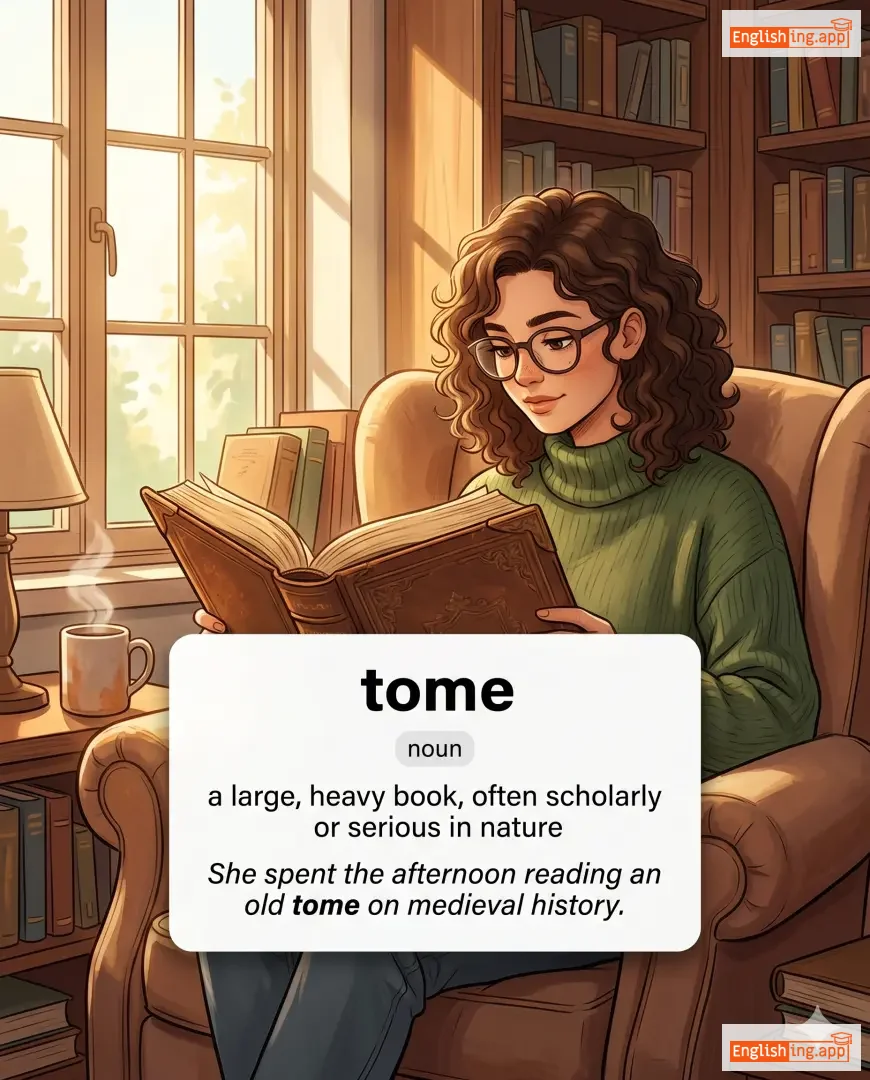
tome definition card — visual illustration of the meaning
noun
/toʊm/
वह किताब (vah kitaab)

a large, heavy book, often scholarly or serious in nature

"She spent the afternoon reading an old tome on medieval history."

"उसने मध्यकालीन इतिहास पर एक पुरानी किताब पढ़ी।" (Usne madhyakalīn itihās par ek purānī kitāb paṛhī.)
noun
/təˈmeɪtoʊ/
टमाटर (tamatar)

a red or yellowish fruit that is typically eaten as a vegetable

"I added some tomato to the salad."

"मैंने सलाद में कुछ टमाटर डाले।" (Maine salad mein kuch tamatar daale.)
noun
/toʊl/
शुल्क / क्षति (shulk / kshati)

A charge payable for using a road or bridge; also the extent of damage or suffering caused by something.

"The flood took a heavy toll on the village."

"बाढ़ ने गाँव में भारी टोल लिया।" (baadh ne gaanv mein bhaari toll liya.)
noun
/ˌtɒləˈreɪʃən/
सहिष्णुता (sahishnuta)

The practice of allowing something that one does not necessarily agree with.

"The government promoted religious toleration."

"सरकार ने धार्मिक सहिष्णुता को बढ़ावा दिया।" (sarkar ne dharmik sahishnuta ko badhava diya.)
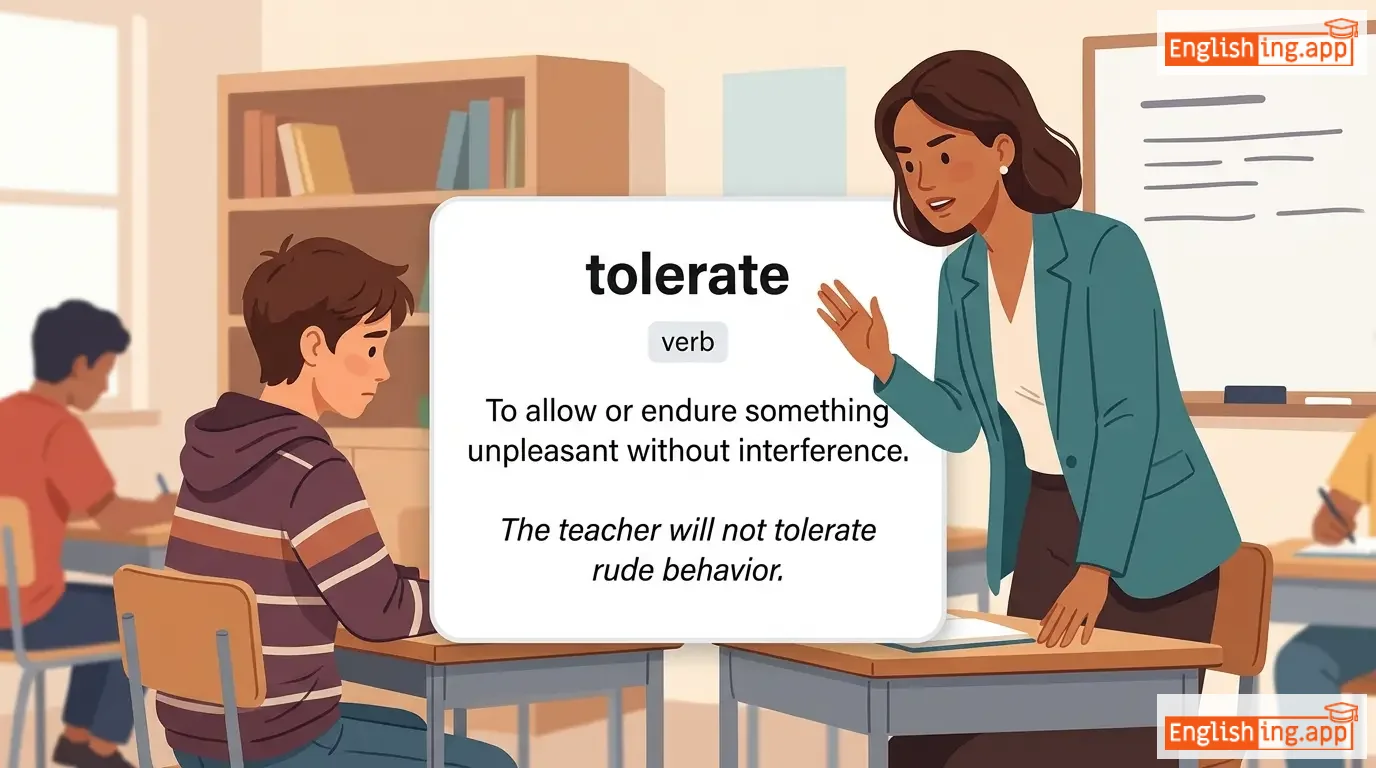
tolerate definition card — visual illustration of the meaning
verb
/ˈtɒləreɪt/
सहना (sahna)

To allow or endure something unpleasant without interference.

"The teacher will not tolerate rude behavior."

"शिक्षक रूड बहेवियर सहन नहीं करेंगे।" (shikshak rud behavior sahan nahi karenge.)
adjective
/ˈtɒlərənt/
सहिष्णु (sahishnu)

Showing willingness to allow the existence of opinions or behaviors that one dislikes or disagrees with.

"He is very tolerant of other people's beliefs."

"वह दूसरों के विश्वासों के प्रति बहुत सहिष्णु है।" (vah doosron ke vishwason ke prati bahut sahishnu hai.)
noun
/ˈtɒlərəns/
सहिष्णुता (sahishnuta)

The ability or willingness to accept or endure differences, behaviors, or opinions without hostility.

"Her tolerance for different cultures impressed everyone."

"विभिन्न संस्कृतियों के प्रति उसकी सहिष्णुता ने सभी को प्रभावित किया।" (vibhinn sanskrityon ke prati uski sahishnuta ne sabhi ko prabhavit kiya.)
adjective
/ˈtɒl.ər.ə.bəl/
सहनशील (sahansheel)

Able to be endured or put up with; fairly acceptable.

"The pain was tolerable after the medicine."

"दवा लेने के बाद दर्द सहनीय था।" (Dawa lene ke baad dard sahneey tha.)
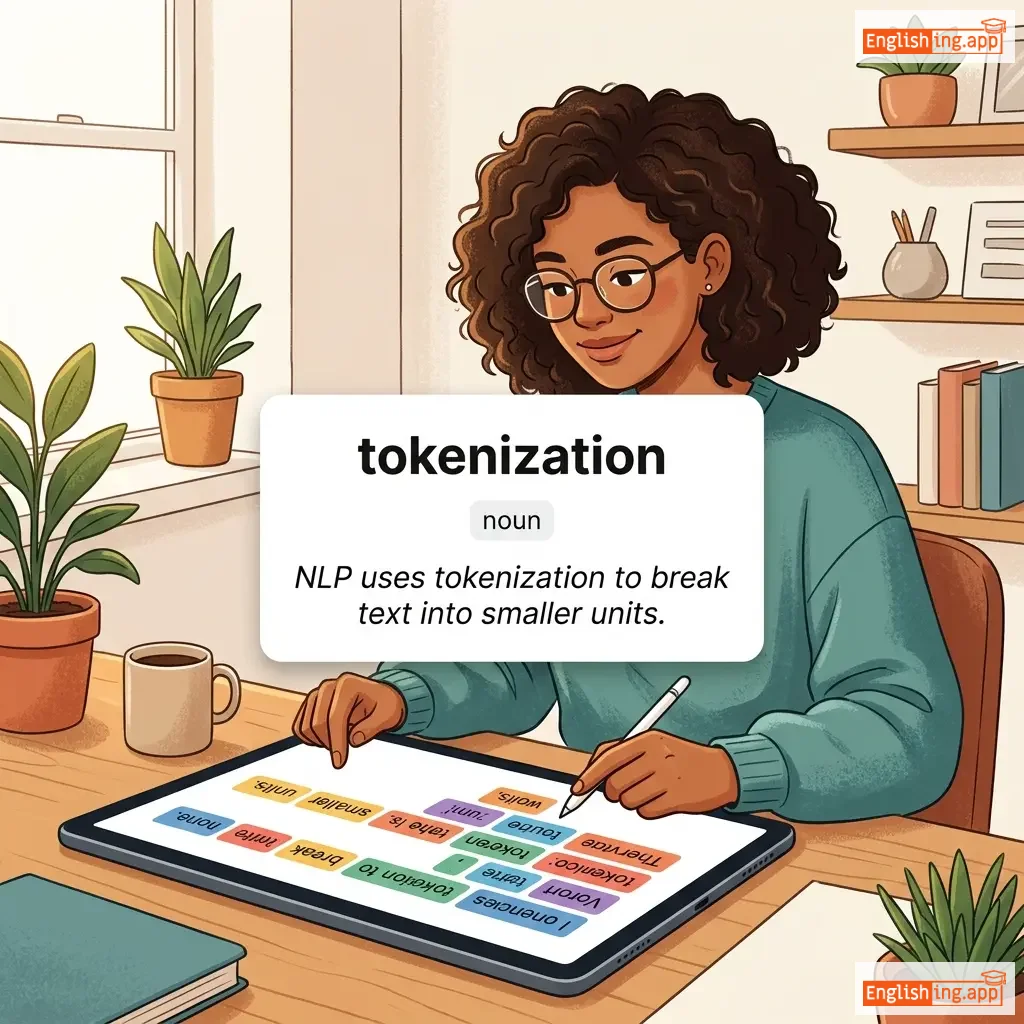
tokenization definition card — visual illustration of the meaning
noun
ˌtoʊ.kə.nɪˈzeɪ.ʃən
शब्दों, वाक्यांशों या प्रतीकों में टेक्स्ट को विभाजित करने की प्रक्रिया (tokenization)

The process of breaking text into smaller units like words, phrases, or symbols for analysis.

"NLP uses tokenization to break text into smaller units."

"एनएलपी टेक्स्ट को छोटे हिस्सों में विभाजित करने के लिए टोकनाइजेशन का उपयोग करता है।" (NLP text ko chhote hisso mein vibhajit karne ke liye tokenization ka upyog karta hai.)
noun
/ˈtoʊ.kən/
चिह्न / प्रतीक (chihn / pratik)

A symbol or object that represents something, often given as a sign of appreciation or as a substitute for money.

"She gave him a small gift as a token of gratitude."

"उसने उसे आभार का एक छोटा सा उपहार दिया, एक टोकन के रूप में।" (Usne use aabhaar ka ek chhota sa uphaar diya, ek token ke roop mein.)
adjective
/ˈtɔɪl.səm/
कठिन (kathin)

Involving hard or exhausting work; laborious.

"The workers had a toilsome day in the hot sun."

"कामकाजी लोगों को गर्म सूरज में कठिन दिन बिताना पड़ा।" (Kaamkaji logon ko garm sooraj mein kathin din bitana pada.)
noun
/ˈtɔɪlət/
टॉयलेट (toilet)

a fixture used for the disposal of human waste

"The public toilet was clean and well maintained."

"सार्वजनिक टॉयलेट साफ और अच्छी तरह से रख-रखाव किया गया था।" (Saarvajanik toilet saaf aur acchi tarah se rakh-rakhav kiya gaya tha.)
Toil definition card — visual illustration of the meaning
verb
/tɔɪl/
कठिन परिश्रम करना (kathin parishram karna)

To work extremely hard and continuously, often with difficulty.

"He had to toil for years to achieve success."

"उसे सफलता प्राप्त करने के लिए वर्षों तक कठिन परिश्रम करना पड़ा।" (Use safalta prapt karne ke liye varshon tak kathin parishram karna pada.)
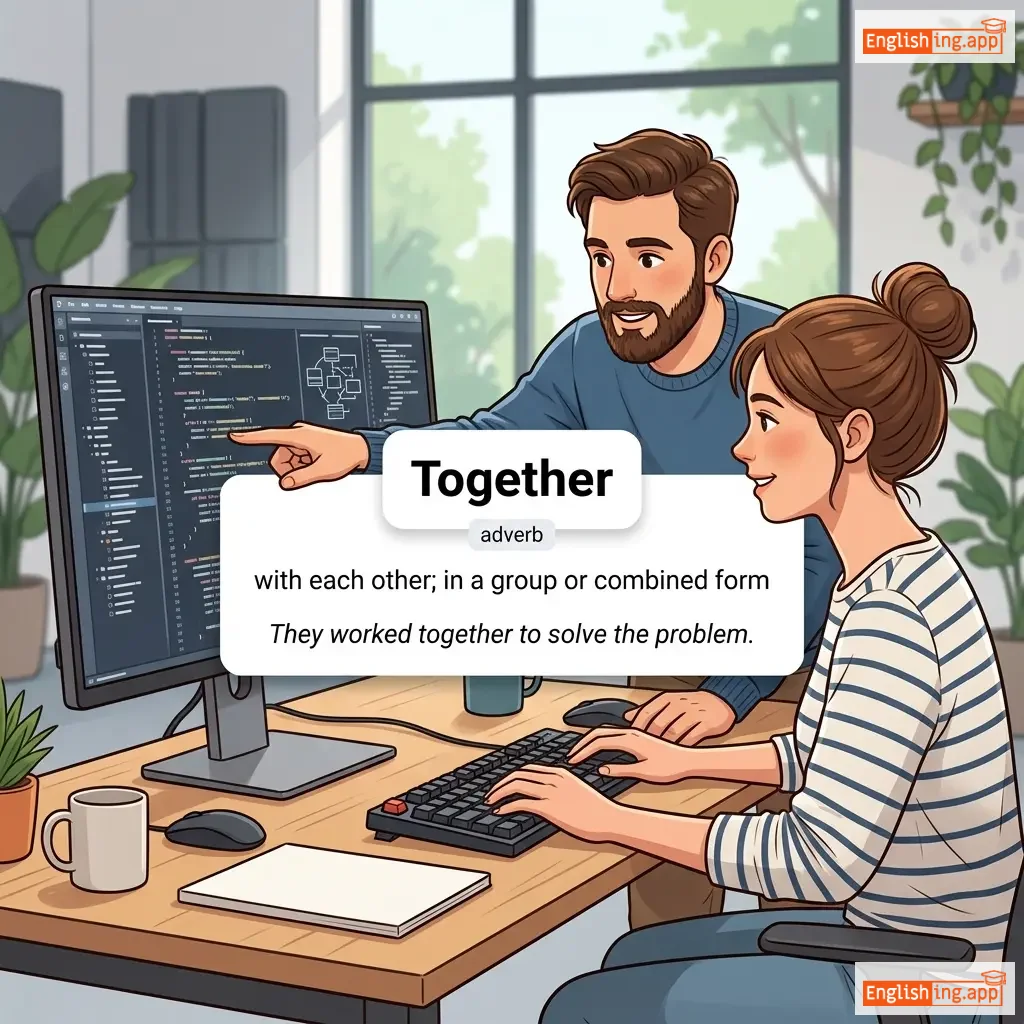
Together definition card — visual illustration of the meaning
adverb
/təˈɡɛðər/
एकसाथ (eksath)

with each other; in a group or combined form

"They worked together to solve the problem."

"वे समस्या को हल करने के लिए एकसाथ काम कर रहे थे।" (Ve samasya ko hal karne ke liye eksath kaam kar rahe the.)
adverb
/ðʌs/
इस प्रकार (is prakar)

as a result or consequence of something previously stated

"He was late, thus he missed the meeting."

"वह देर से आया, इस प्रकार वह बैठक से चूक गया।" (Wah der se aaya, is prakar wah baithak se chook gaya.)
Thrill definition card — visual illustration of the meaning
verb
/θrɪl/
उत्साहित करना (utsahit karna)

to cause someone to feel very excited and pleased

"The roller coaster ride thrills adventure seekers."

"रोलर कोस्टर राइड एडवेंचर सीकर्स को उत्साहित करती है।" (Roller coaster ride adventure seekers ko utsahit karti hai.)
adjective
/θrɪld/
खुश (khush)

extremely happy or excited

"She was thrilled with the surprise party."

"वह सरप्राइज पार्टी से खुश थी।" (Woh surprise party se khush thi.)
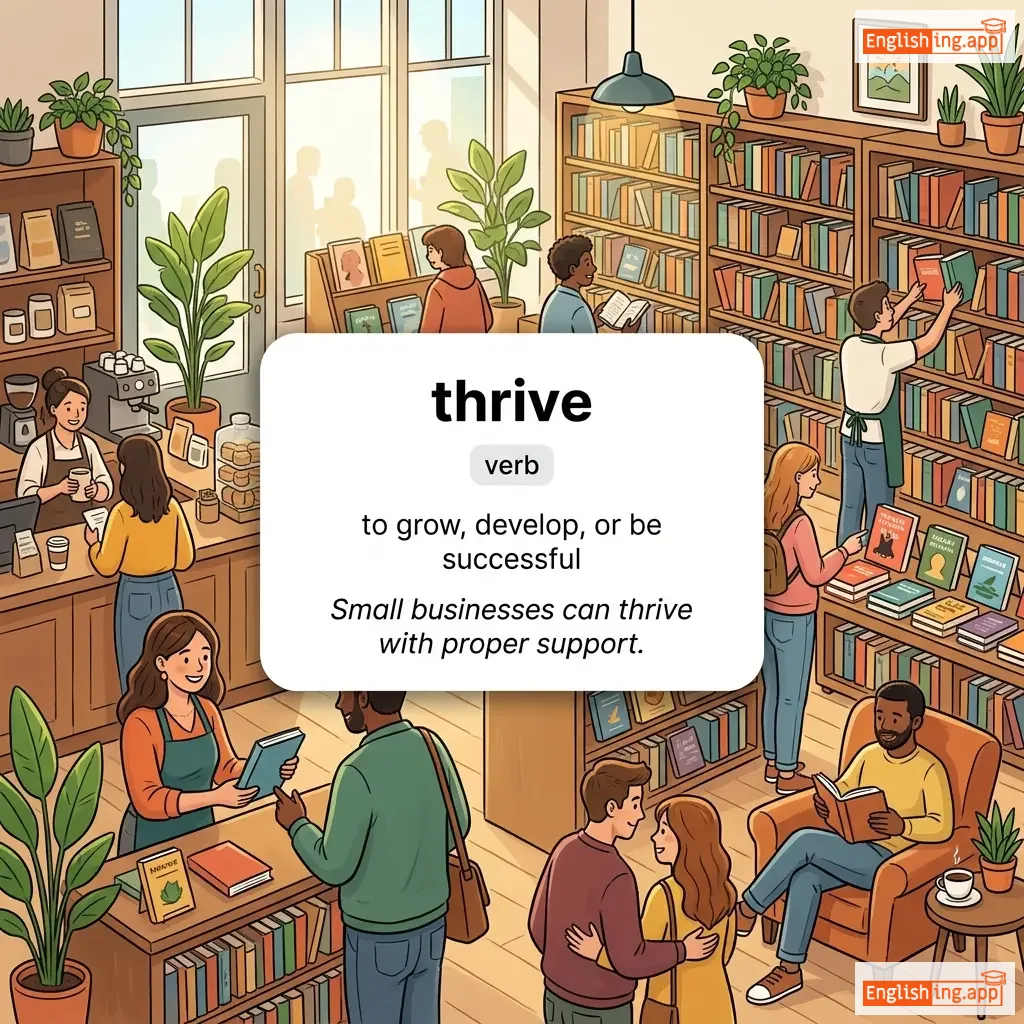
thrive definition card — visual illustration of the meaning
verb
/θraɪv/
समृद्ध होना (samriddh hona)

to grow, develop, or be successful

"Small businesses can thrive with proper support."

"छोटे व्यवसाय उचित समर्थन के साथ समृद्ध हो सकते हैं।" (Chhote vyavsay uchit samarthan ke saath samriddh ho sakte hain.)
noun
/θroʊt/
गला (gala)

the front part of the neck, containing the pharynx and larynx

"He felt a lump in his throat while speaking."

"उसे बोलते समय अपने गले में एक गांठ महसूस हुई।" (Use bolte samay apne gale mein ek ganth mahsus hui.)
verb
/θrɒb/
धड़कना (dhadakna)

to beat or pulse strongly, often with pain

"His head began to throb after the long day."

"लंबे दिन के बाद उसका सिर धड़कने लगा।" (Lambe din ke baad uska sir dhadakne laga.)
noun
/θroʊz/
वेदनादायक संघर्ष (vedanadayak sangharsh)

intense or violent pain and struggle, often at the beginning or end of something

"The country was in the throes of a political crisis."

"देश एक राजनीतिक संकट के वेदनादायक संघर्ष में था।" (Desh ek rajnaitik sankat ke vedanadayak sangharsh mein tha.)
noun/verb
/θrɒŋ/
भीड़ (bhid)

A large, densely packed crowd of people or animals; to fill or be present in a place in large numbers.

"Tourists thronged the streets during the festival."

"पर्यटकों ने त्योहार के दौरान सड़कों पर भीड़ जमा ली।" (Paryatkon ne tyohar ke dauran sadkon par bheed jama li.)
verb/noun
/ˈθrɒt.əl/
गला घोंटना/गति नियंत्रित करना (gala ghotna/gati niyantrit karna)

To choke or strangle; to control the flow of fuel or power in an engine.

"The driver throttled the engine to slow down the car."

"चालक ने कार को धीमा करने के लिए इंजन की गति कम की।" (Chaalak ne car ko dheema karne ke liye engine ki gati kam ki.)
preposition
/θruː/
के माध्यम से (ke madhyam se)

moving in one side and out the other side of something

"The train passed through the tunnel."

"ट्रेन सुरंग के माध्यम से गुजरी।" (Train surang ke madhyam se guzri.)
preposition
/θruːˈaʊt/
संपूर्ण (sampurn)

in every part of a place or during the whole time of an event

"She worked throughout the night."

"वह पूरी रात काम करती रही।" (Woh poori raat kaam karti rahi.)
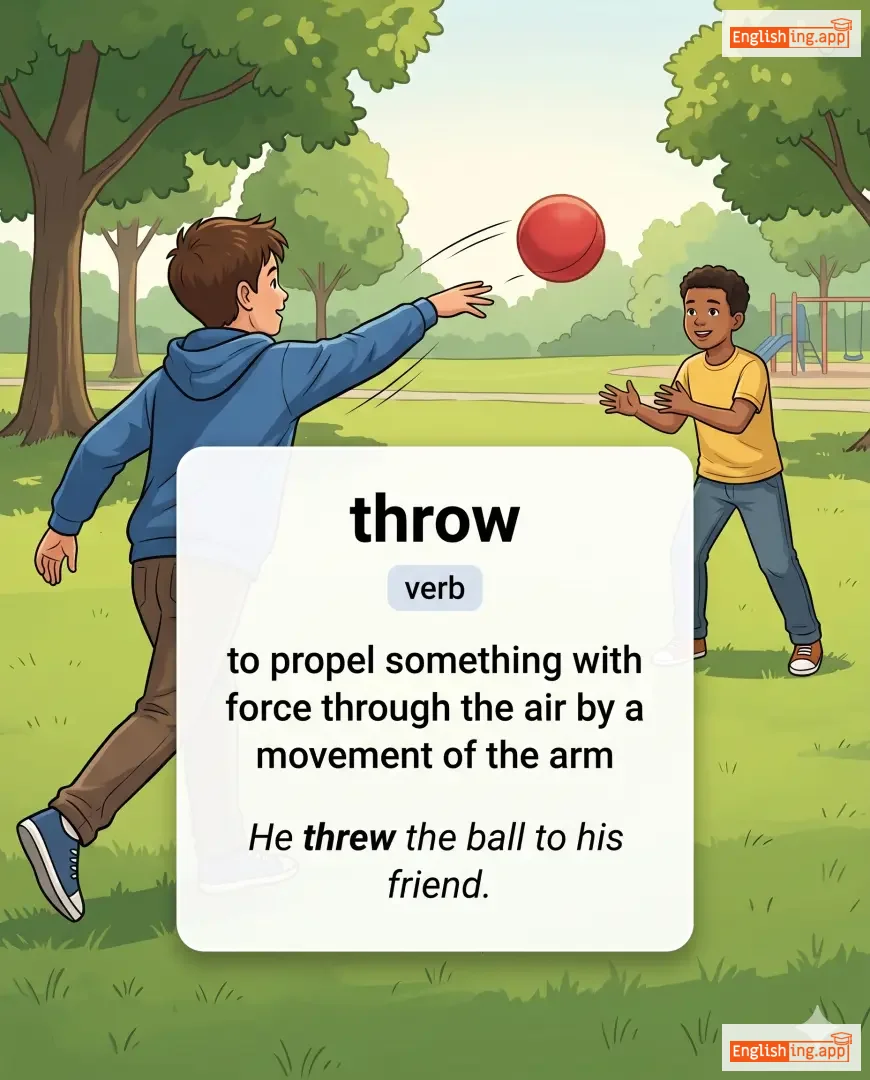
throw definition card — visual illustration of the meaning
verb
/θroʊ/
फेंकना (phenkna)

to propel something with force through the air by a movement of the arm

"He threw the ball to his friend."

"उसने गेंद को अपने दोस्त को फेंका।" (Usne gend ko apne dost ko phenka.)
noun
/θʌm/
अंगूठा (angutha)

the short, thick finger on the side of the hand, used for gripping and holding things

"He gave a thumbs-up to show his approval."

"उसने अपनी स्वीकृति दिखाने के लिए अंगूठा ऊपर किया।" (Usne apni sweekriti dikhane ke liye angutha upar kiya.)
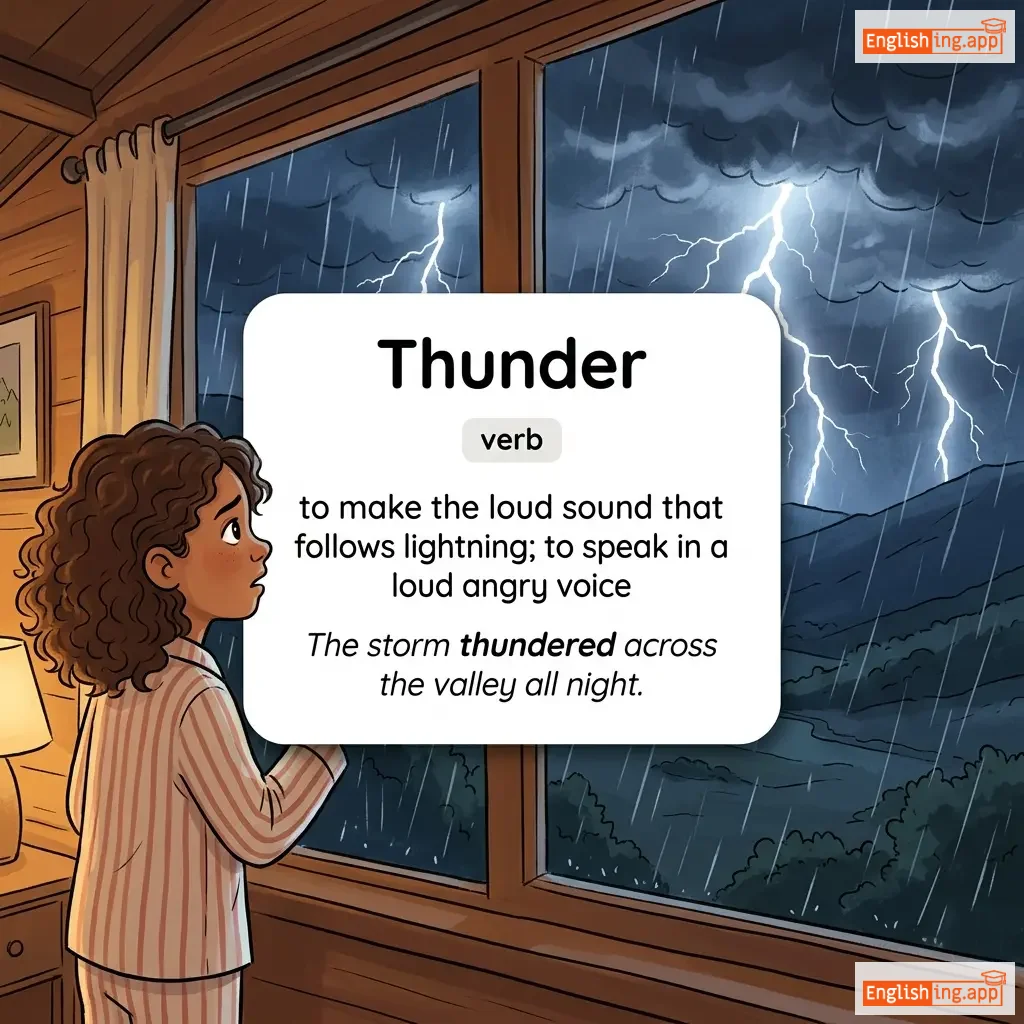
Thunder definition card — visual illustration of the meaning
noun
/ˈθʌn.dər/
गरज (garaj)

the loud rumbling or crashing noise heard after a lightning flash

"We heard thunder during the storm last night."

"हमने पिछली रात तूफान के दौरान गड़गड़ाहट सुनी।" (hamne pichhli raat toofan ke dauraan gadgadahat suni.)
noun
/ˈθɜːrzdeɪ/
गुरुवार (guruvar)

The fifth day of the week, following Wednesday and preceding Friday.

"We have a meeting scheduled for Thursday."

"हमारी मीटिंग गुरुवार को निर्धारित है।" (hamari meeting guruvar ko nirdharit hai.)
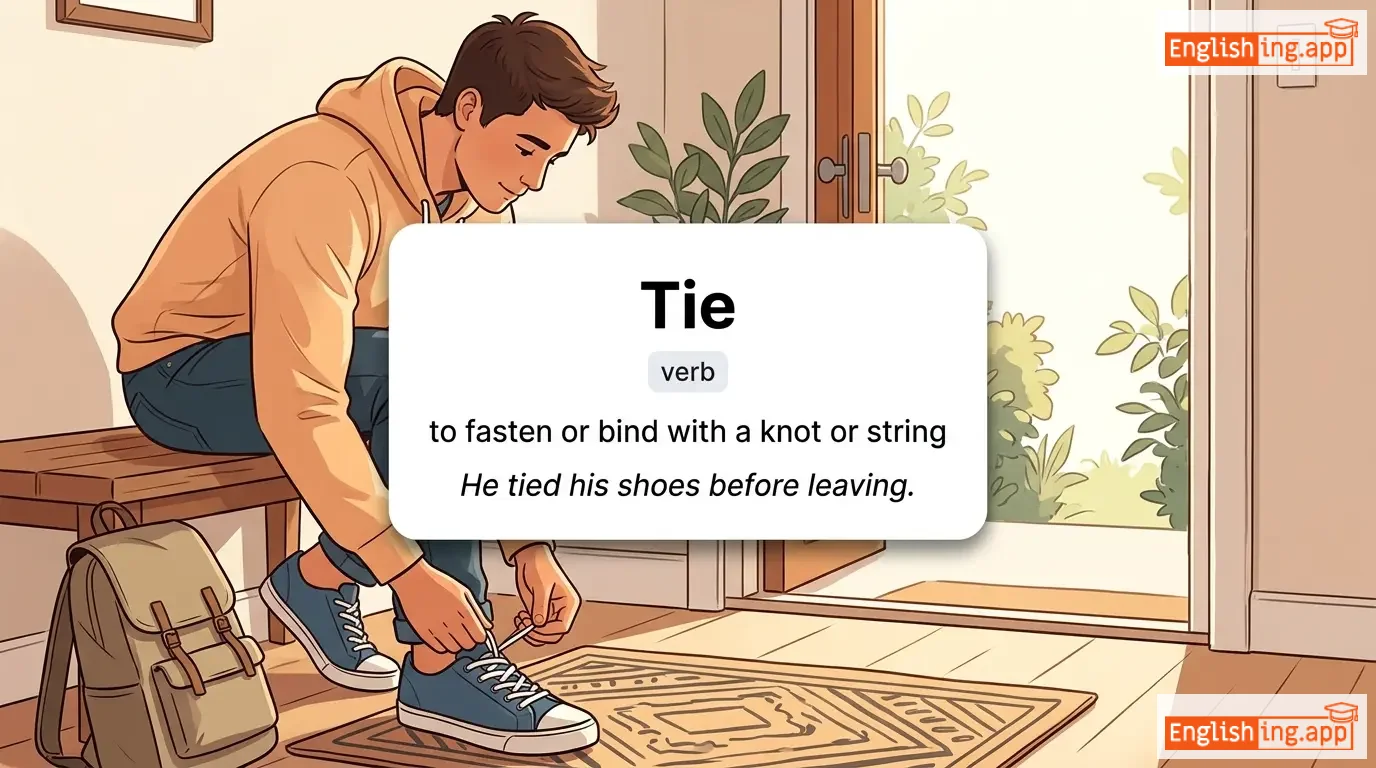
Tie definition card — visual illustration of the meaning
verb
/taɪ/
बाँधना (bandhna)

to fasten or bind with a knot or string

"He tied his shoes before leaving."

"उसने अपने जूते बांधने से पहले।" (Usne apne jute bandhne se pehle.)
adjective
/ˈtɪd.li/
हल्का नशा; छोटा या नगण्य (tiddli)

slightly drunk; small or tiny

"After a few drinks, he felt a bit tiddley."

"कुछ ड्रिंक्स के बाद, वह थोड़ा टिडली महसूस करने लगा।" (kuch drinks ke baad, wah thoda tiddli mahsus karne laga.)
noun
/taɪd/
ज्वार-भाटा (jwar-bhata)

the regular rise and fall of the sea caused by the moon and sun's gravity; a powerful flow or movement

"The fisherman waited for the tide to come in."

"मछुआरा ज्वार के आने का इंतजार कर रहा था।" (Machhuara jwar ke aane ka intezaar kar raha tha.)
adjective
/ˈtaɪ.di/
साफ; व्यवस्थित (saaf; vyavasthit)

arranged neatly and in order; clean and organized

"She keeps her room very tidy and organized."

"वह अपने कमरे को बहुत साफ और व्यवस्थित रखती है।" (vah apne kamre ko bahut saaf aur vyavasthit rakhti hai)
adjective
/ˈtɪklɪʃ/
संवेदनशील, हंसी में आसानी से लानेवाला (sanvedansheel, hansi mein aasani se lanewala)

easily made to laugh by being touched lightly; easily upset or sensitive

"She is very ticklish and bursts into laughter when touched on her feet."

"वह बहुत टिक्लिश है और जब उसके पैरों को हल्का सा छुआ जाता है, तो वह हंस पड़ती है।" (Vah bahut ticklish hai aur jab uske pairon ko halka sa chhua jaata hai, to vah hans padti hai.)