वोकैबुलरीज

इंग्लिश वोकैबुलरी डिस्कवर, लर्न और मास्टर करें

noun
/taɪð/
दशमांश (dashmangsho)

A tenth part of one’s income or produce, often given as a religious offering.

"He gave a tithe of his earnings to the church."

"उसने अपनी आय का दसवां हिस्सा चर्च को दान किया।" (Usne apni aay ka dasva hissa church ko daan kiya.)
noun
/ˈtɪt.bɪt/
स्वादिष्ट छोटा टुकड़ा भोजन; दिलचस्प जानकारी का छोटा हिस्सा (titbit)

a small piece of tasty food; a small interesting piece of information

"She served delicious titbits at the party."

"उसने पार्टी में स्वादिष्ट छोटे टुकड़े परोसे।" (usne party mein svaadisht chhote tukde parose)
adjective
/taɪˈtænɪk/
विशाल (vishal)

Of exceptional strength, size, or power.

"The company made titanic efforts to expand into new markets."

"कंपनी ने नए बाजारों में विस्तार करने के लिए विशाल प्रयास किए।" (Company ne naye bazaron mein vistar karne ke liye vishal prayaas kiye.)
noun
/ˈtɪʃ.uː/
टिशू (tishu)

a piece of soft absorbent paper or fabric

"She used a tissue to wipe her nose."

"उसने अपनी नाक पोंछने के लिए एक टिशू का इस्तेमाल किया।" (Usne apni nak ponchne ke liye ek tishu ka istemal kiya.)
adjective
/ˈtaɪərɪŋ/
थकाऊ (thakau)

causing someone to feel exhausted or in need of rest

"The long journey was extremely tiring."

"लंबा सफर बहुत ही थकाऊ था।" (lamba safar bahut hi thakau tha)
adjective
/ˈtaɪərsəm/
उबाऊ (ubau)

Causing one to feel bored, annoyed, or tired.

"The long meeting became very tiresome."

"लंबी बैठक बहुत उबाऊ हो गई थी।" (Lambi baithak bahut ubau ho gayi thi.)
adjective
/ˈtaɪərləs/
निरंतर (niranatar)

Showing great effort or energy without becoming tired.

"She worked tirelessly to complete the project on time."

"उसने परियोजना को समय पर पूरा करने के लिए निरंतर मेहनत की।" (Usne pariyojna ko samay par poora karne ke liye niranatar mehnat ki.)
Tired definition card — visual illustration of the meaning
adjective
/ˈtaɪərd/
थका हुआ (thaka hua)

in need of rest or sleep

"I feel so tired after the long journey."

"लंबी यात्रा के बाद मुझे बहुत थका हुआ महसूस हो रहा है।" (Lambi yatra ke baad mujhe bahut thaka hua mahsus ho raha hai.)
noun
/taɪər/
टायर (tayar)

a rubber covering around a wheel

"The car’s tire burst on the highway."

"गाड़ी का टायर हाईवे पर फट गया।" (Gadi ka tayar highway par phat gaya.)
noun
/taɪˈreɪd/
लंबा, गुस्से वाला या आलोचनात्मक भाषण (lamba, gusse wala ya alochanātmak bhashan)

a long, angry, or critical speech

"The manager launched into a tirade about poor performance."

"मॅनेजर ने खराब प्रदर्शन के बारे में एक लंबा गुस्से वाला भाषण दिया।" (Manager ne kharab pradarshan ke baare mein ek lamba gusse wala bhashan diya.)
adjective
/ˈtɪp.tɒp/
शानदार; उत्तम; (shandar; uttam)

of the highest quality; excellent; in perfect condition

"The car is in tiptop condition."

"कार बेहतरीन स्थिति में है।" (kaar behateerinn sthiti mein hai)
adjective
/ˈtɪpsi/
हल्का नशे में (halka nashe mein)

slightly drunk

"She felt tipsy after just one glass of wine."

"वह एक गिलास शराब पीने के बाद टिप्सी महसूस करने लगी।" (Wah ek gilas sharab peene ke baad tipsy mehsoos karne lagi.)
verb
/ˈtɪpəl/
शराब पीना (sharab peena)

to drink alcohol, especially regularly or in small amounts

"He likes to tipple at the local pub after work."

"वह काम के बाद स्थानीय पब में शराब पीने का आनंद लेता है।" (Wah kaam ke baad sthaniya pub mein sharab peene ka anand leta hai.)
noun
/tɪp/
सुझाव (sujhav)

a small but useful piece of advice

"I received a tip on how to improve my presentation."

"मुझे अपनी प्रस्तुति सुधारने के लिए एक टिप मिली।" (Mujhe apni prastuti sudharne ke liye ek tip mili.)
adjective
/ˈtaɪni/
बहुत छोटा (bahut chhota)

very small

"She held a tiny kitten in her hands."

"उसने अपनी हथेली में एक बहुत छोटा बिल्ली का बच्चा पकड़ा था।" (Usne apni hatheli mein ek bahut chhota billi ka bachcha pakda tha.)
noun
/tɪnt/
हल्का रंग का आभा (halka rang ka abha)

a slight shade or variation of a color

"The walls were painted white with a slight blue tint."

"दीवारों को हल्के नीले रंग के टिंट के साथ सफेद रंग में रंगा गया था।" (Deewaron ko halka neele rang ke tint ke saath safed rang mein ranga gaya tha.)
verb
/ˈtɪŋkər/
छोटे सुधार करना (chhote sudhar karna)

to make small adjustments or repairs to something, often experimentally or imperfectly

"He likes to tinker with old radios in his garage."

"वह अपने गैरेज में पुराने रेडियो के साथ छोटे सुधार करना पसंद करता है।" (Vah apne garage mein purane radio ke saath chhote sudhar karna pasand karta hai.)
noun
/ˈtɪŋktʃər/
एक हल्की छाप, एक दवा जो शराब में घोलकर बनाई जाती है (ek halki chaap, ek dawa jo sharab mein gholkar banayi jaati hai)

a slight trace of something; a medicine made by dissolving a drug in alcohol

"There was a tincture of sadness in her smile."

"उसकी मुस्कान में दुख का एक हल्का सा हिस्सा था।" (uski muskaan mein dukh ka ek halka sa hissa tha.)
noun, verb
/tɪndʒ/
हल्का रंग या स्वाद (halki rang ya swad)

a slight added color, flavor, or feeling; to add a slight amount of color or quality

"Her voice was tinged with sadness."

"उसकी आवाज़ उदासी से टिंज्ड थी।" (uski awaaz udaasi se tinged thi.)
adjective
/ˌtaɪtˈfɪstɪd/
कृपण (kripan)

unwilling to spend money; stingy

"He is so tightfisted that he refuses to tip at restaurants."

"वह इतना कृपण है कि वह रेस्तरां में टिप देना भी मना कर देता है।" (Wah itna kripan hai ki wah restaurant mein tip dena bhi mana kar deta hai.)
adverb
/ˈtaɪtli/
कसकर (kasakar)

in a way that is firm and difficult to move or open

"She held the baby tightly in her arms."

"उसने बच्चे को अपनी बाहों में कसकर पकड़ा।" (Usne bachche ko apni baahon mein kasakar pakda.)
noun
/ˈtaɪtwɒd/
कंजूस (kanjoos)

a person who is unwilling to spend money; a miser

"Everyone calls him a tightwad because he never buys gifts."

"सभी उसे कंजूस कहते हैं क्योंकि वह कभी तोहफे नहीं खरीदता।" (Sabhi use kanjoos kehte hain kyunki vah kabhi toffe nahi khareedta.)
noun
/ˈtaɪ.ɡrəs/
बाघिन (baghin)

an adult female tiger

"The powerful tigress hunted silently through the jungle."

"शक्तिशाली बाघिन जंगल के माध्यम से चुपचाप शिकार कर रही थी।" (shaktishali baghin jangal ke madhyam se chupchaap shikar kar rahi thi)
noun
/tɪˈlɑpiə fɪʃ/
तिलापिया मछली (tilapiya machhli)

a freshwater fish native to Africa, widely farmed for food due to its mild taste and fast growth

"Tilapia fish is one of the most commonly farmed fish species worldwide."

"तिलापिया मछली दुनिया भर में सबसे अधिक पाली जाने वाली मछलियों में से एक है।" (tilapiya machhli duniya bhar me sabse adhik pali jane wali machhliyon me se ek hai)
noun
/taɪl/
टाइल (tail)

a flat piece of baked clay or other material used for covering roofs, floors, or walls

"The kitchen floor is covered with ceramic tiles."

"रसोई के फर्श को सिरेमिक टाइल्स से ढका गया है।" (rasoi ke farsh ko ceramic tiles se dhaka gaya hai.)
preposition
/tɪl/
तक (tak)

up to the time of; until

"She waited till midnight for his call."

"वह उसके कॉल के लिए मध्यरात्रि तक इंतजार करती रही।" (Vah uske call ke liye madhyaratri tak intezar karti rahi.)
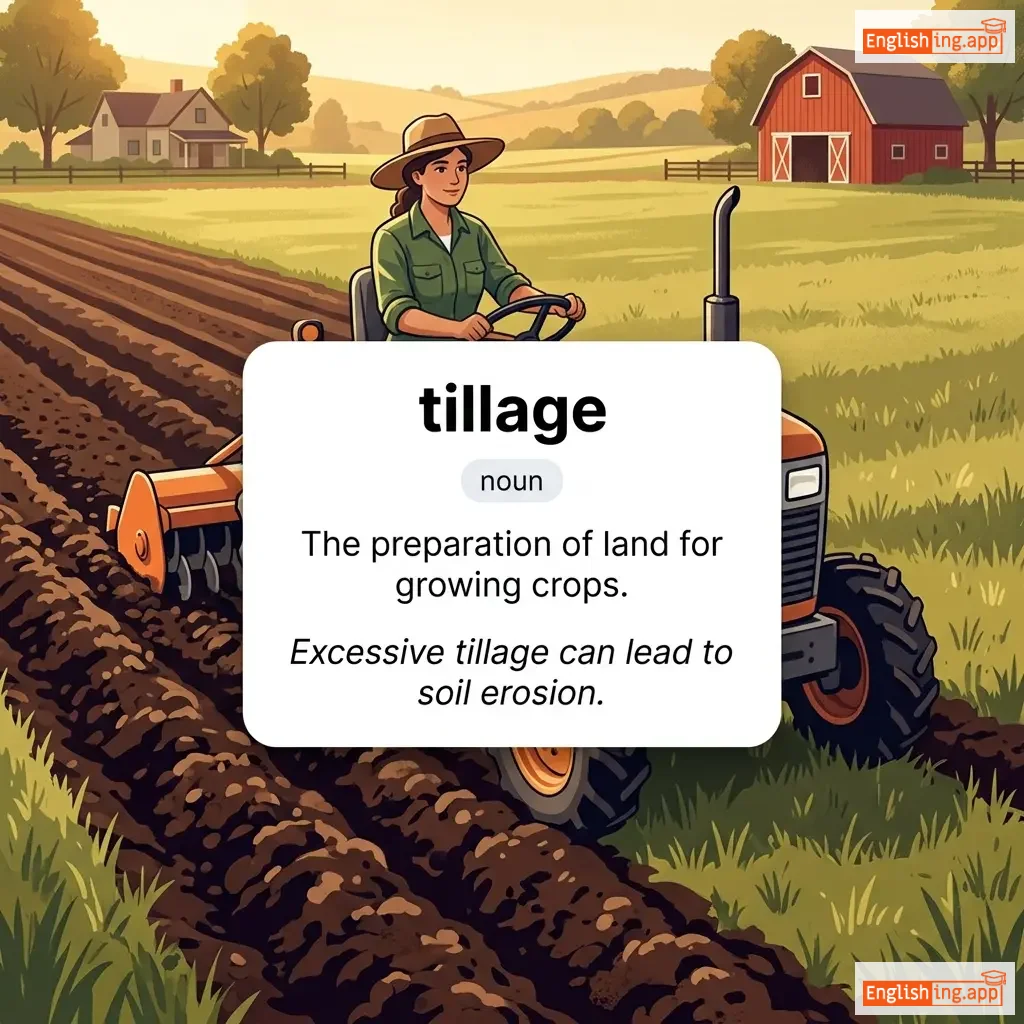
tillage definition card — visual illustration of the meaning
noun
ˈtɪl.ɪdʒ
भूमि की जुताई (bhumi ki jutaai)

The preparation of land for growing crops.

"Excessive tillage can lead to soil erosion."

"अत्यधिक जुताई मिट्टी के कटाव का कारण बन सकती है।" (Atyadhik jutaai mitti ke katav ka kaaran ban sakti hai.)
noun
/ˈtɪlər/
चालक या नाव का स्टीयरिंग यंत्र (chalok ya naav ka steering yantr)

A lever used to steer a boat or a person who tills the soil.

"The sailor gripped the tiller firmly to keep the boat on course."

"नाविक ने नाव को सही दिशा में बनाए रखने के लिए टिलर को मजबूती से पकड़ा।" (Navik ne naav ko sahi disha mein banaye rakhne ke liye tiller ko majbooti se pakda.)
noun
/tɪlθ/
मिट्टी की स्थिति (फसल उगाने के लिए उपयुक्तता) (mitti ki sthiti (fasal ugane ke liye upyuktata))

The physical condition of soil in relation to its suitability for planting crops.

"The farmer checked the soil's tilth before planting the seeds."

"किसान ने बीज लगाने से पहले मिट्टी की टिल्थ की जाँच की।" (Kisan ne beej lagane se pehle mitti ki tilth ki jaanch ki.)
noun
/ˈtɪmbər/
लकड़ी (lakdi)

wood prepared for use in building and carpentry

"The house was built entirely from local timber."

"घर पूरी तरह से स्थानीय लकड़ी से बनाया गया था।" (Ghar puri tarah se sthalīya lakdi se banaya gaya tha.)
noun
/ˈtæmbər/ or /ˈtɪmbər/
ध्वनि का स्वर या गुणवत्ता (dhvani ka swar ya gunwatta)

The character or quality of a musical sound or voice as distinct from its pitch and intensity.

"Her voice had a warm timbre that soothed the audience."

"उसकी आवाज़ में एक गर्म टिम्ब्रे था जो श्रोताओं को शांति देता था।" (Uski awaaz mein ek garm timbre tha jo shrotaon ko shanti deta tha.)
noun
/taɪm/
समय (samay)

a measured or measurable period during which an action, process, or condition exists or continues

"I don’t have enough time to finish the project."

"मेरे पास परियोजना को पूरा करने के लिए पर्याप्त समय नहीं है।" (Mere paas pariyojana ko poora karne ke liye paryapt samay nahi hai.)
time management definition card — visual illustration of the meaning
noun
/taɪm ˈmæn.ɪdʒ.mənt/
समय प्रबंधन (samay prabandhan)

The ability to plan and control time effectively to accomplish tasks efficiently.

"Effective time management improves productivity."

"प्रभावी समय प्रबंधन उत्पादकता को सुधारता है।" (Prabhavi samay prabandhan utpadakta ko sudharta hai.)
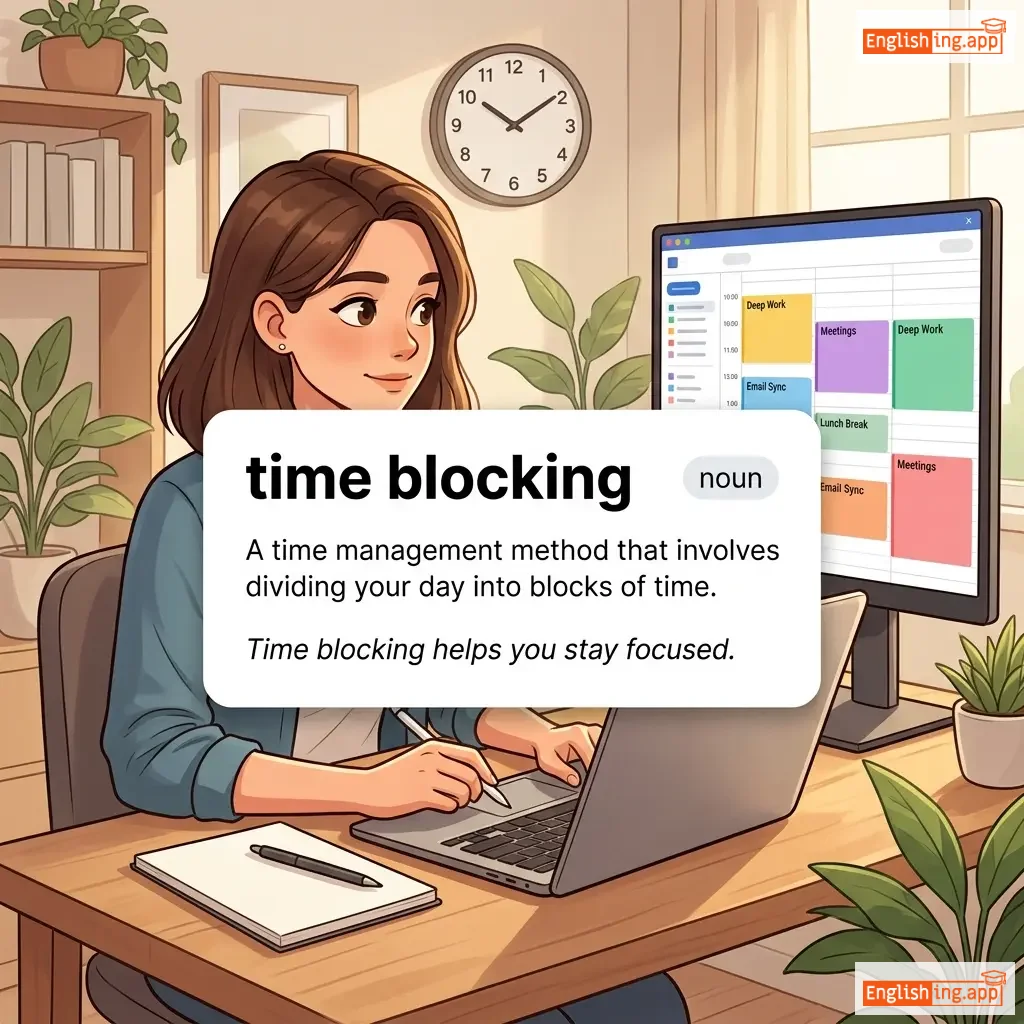
time blocking definition card — visual illustration of the meaning
noun
/taɪm ˈblɑːkɪŋ/
समय ब्लॉकिंग (samay blocking)

A time management method that involves dividing your day into blocks of time.

"Time blocking helps you stay focused."

"समय ब्लॉकिंग आपको ध्यान केंद्रित रहने में मदद करता है।" (Samay blocking aapko dhyan kendrit rehne mein madad karta hai.)
noun
/tɪn/
टिन (tin)

a metal container; a chemical element (Sn)

"She bought a tin of biscuits from the store."

"उसने दुकान से बिस्कुट का एक टिन खरीदा।" (Usne dukan se biskut ka ek tin kharida.)
adjective
/ˈtɪmərəs/
डरी हुआ (dari hua)

showing or suffering from nervousness, fear, or lack of confidence

"The timorous student hesitated to ask the teacher a question."

"डरी हुआ छात्र ने शिक्षक से सवाल पूछने में संकोच किया।" (dari hua chatra ne shikshak se sawal poochne mein sankoch kiya.)
noun
/ˈtaɪmɪŋ/
समय निर्धारण (samay nirdharan)

the choice, judgment, or control of when something should be done

"Good timing is essential in business negotiations."

"व्यावसायिक वार्तालाप में अच्छा समय निर्धारण महत्वपूर्ण है।" (vyavsayik vartalap mein accha samay nirdharan mahatvapurn hai.)
noun
/tɪˈmɪdəti/
संकोच (sankoch)

lack of courage or self-confidence

"His timidity kept him from speaking up during the meeting."

"उसकी संकोच ने उसे मीटिंग में बोलने से रोक लिया।" (Uski sankoch ne use meeting mein bolne se rok liya.)
adjective
/ˈtɪmɪd/
काँपनेवाला (kaampnewala)

lacking courage or confidence; easily frightened

"The timid child hid behind his mother when strangers approached."

"वह काँपनेवाला बच्चा अपनी माँ के पीछे छिप गया जब अजनबी पास आए।" (vah kaampnewala bachcha apni maan ke peeche chhip gaya jab ajnabi paas aaye.)
noun
/ˈtaɪm.teɪ.bəl/
समय सारणी (samay sarani)

a schedule showing planned activities or events at particular times

"Please check the train timetable for departure times."

"कृपया ट्रेन के टाइमटेबल को प्रस्थान समय के लिए चेक करें।" (kripya train ke timetable ko prasthaan samay ke liye check karein)
timer definition card — visual illustration of the meaning
noun
ˈtaɪmər
टाइमर (taimar)

An automatic mechanism for activating a device at a preset time; a device that measures time intervals.

"He set the timer for 30 minutes to complete the task."

"उसने कार्य पूरा करने के लिए 30 मिनट के लिए टाइमर सेट किया।" (Usne kaam poora karne ke liye 30 minute ke liye taimar set kiya.)
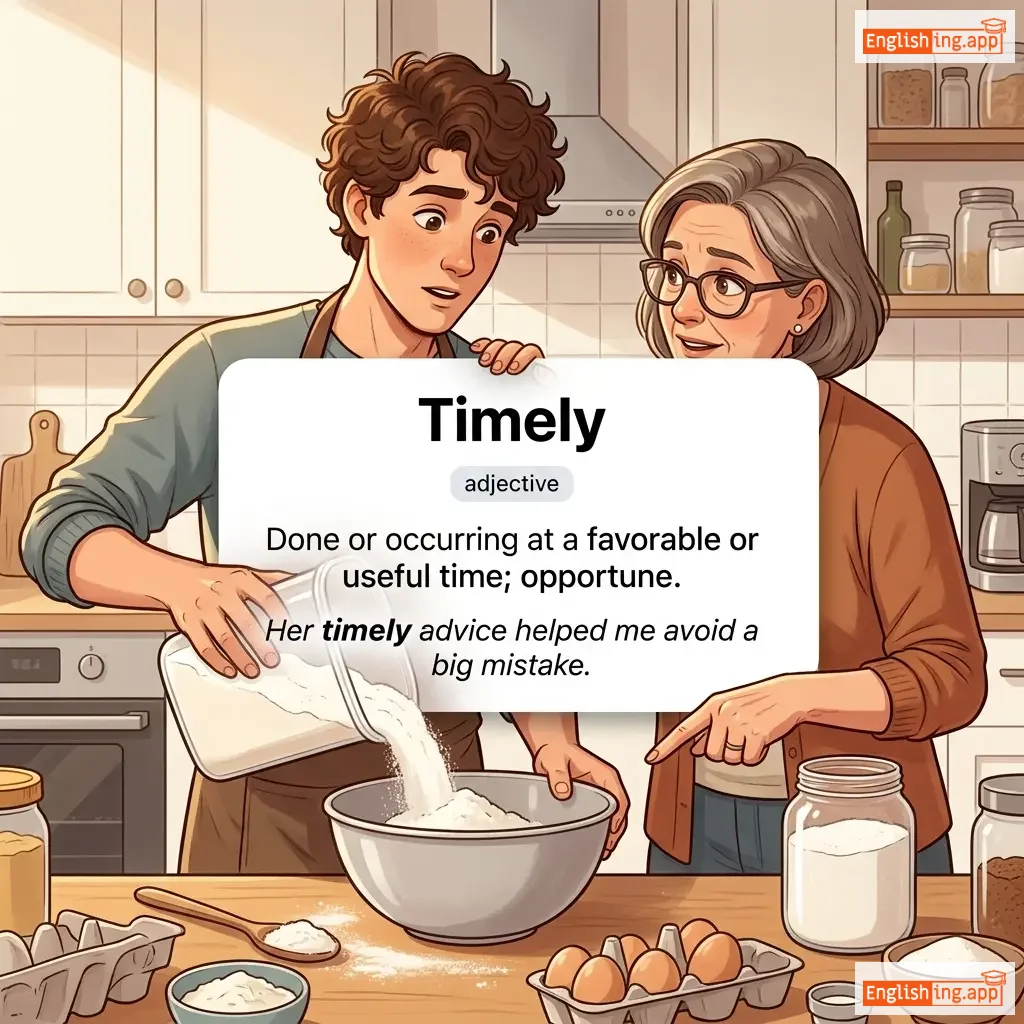
Timely definition card — visual illustration of the meaning
adjective
/ˈtaɪmli/
समय पर (samay par)

Done or occurring at a favorable or useful time; opportune.

"Her timely advice helped me avoid a big mistake."

"उसकी समय पर दी गई सलाह ने मुझे बड़ी गलती से बचा लिया।" (uski samay par di gayi salah ne mujhe badi galti se bacha liya.)
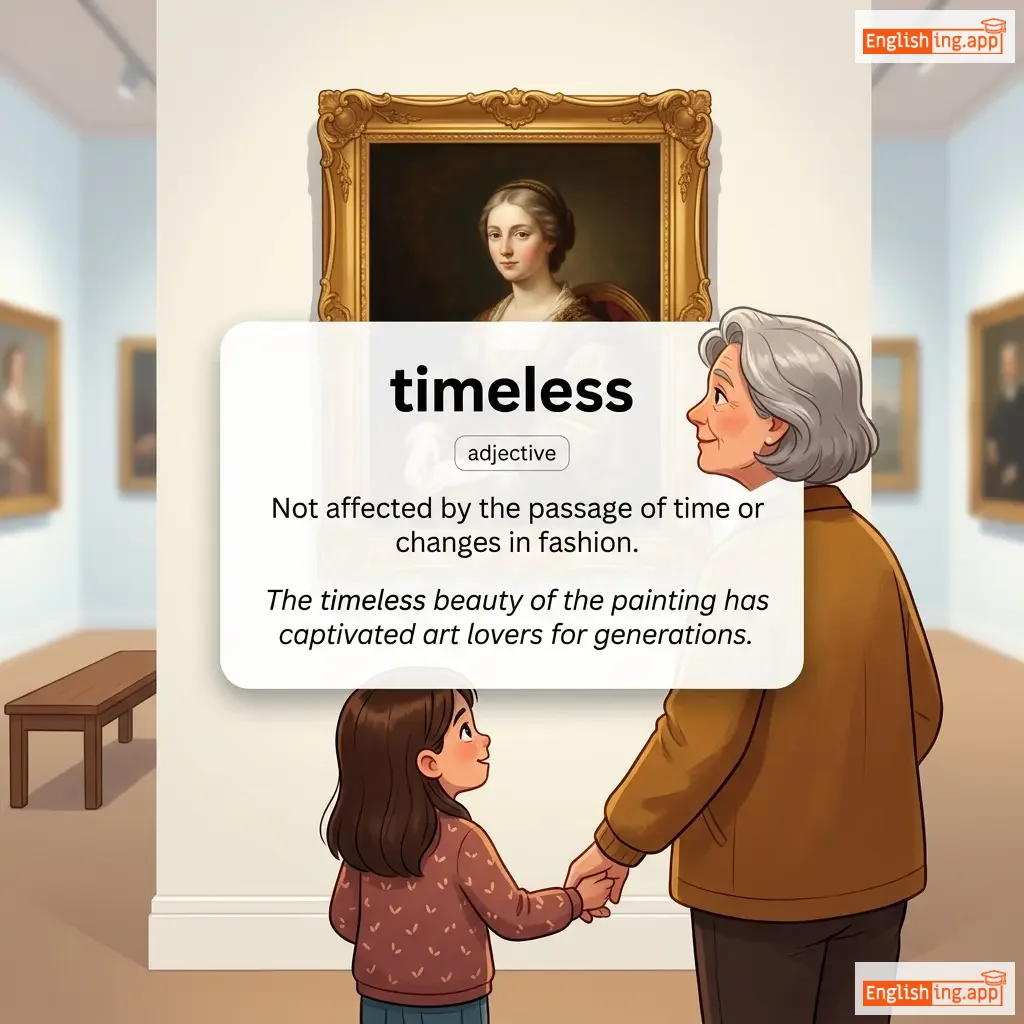
timeless definition card — visual illustration of the meaning
adjective
ˈtaɪmləs
कालातीत (kaalaatit)

Not affected by the passage of time or changes in fashion.

"The timeless beauty of the painting has captivated art lovers for generations."

"पेंटिंग की कालातीत सुंदरता ने पीढ़ियों से कला प्रेमियों को मंत्रमुग्ध किया है।" (Painting ki kaalaatit sundarta ne peedhiyon se kala premiyon ko mantrmughda kiya hai.)
verb
/taɪmd/
समय मापना (samay mapna)

to measure or record the duration or speed of something

"He timed the race with a stopwatch."

"उसने दौड़ का समय स्टॉपवॉच से मापा।" (Usne dour ka samay stopwatch se mapa.)
adjective
/ˈtaɪmwɔːrn/
पुराना और उपयोग किया हुआ (purana aur upyog kiya hua)

Worn or impaired by age; old and used many times.

"The timeworn house carried a sense of history and nostalgia."

"समय के द्वारा घिसी हुई घर में इतिहास और संजीवनी का अहसास था।" (Samay ke dwara ghisi hui ghar mein itihas aur sanjeevani ka ahsas tha.)
noun
/sɜːrˈsiːs/
समाप्ति (samaapti)

a temporary or final ending or stopping of something

"The noise finally came to a surcease after midnight."

"ध्वनि अंततः मध्यरात्रि के बाद समाप्त हो गई।" (Dhvani antatah madhyaraatri ke baad samaapti ho gayi.)
adjective
/suˈpriːm/
उच्चतम (ucchatam)

highest in rank or authority

"He is the supreme leader of the country."

"वह देश का सर्वोच्च नेता है।" (Vah desh ka sarvochch neta hai.)
noun
/suˈpriː.mə.si/
श्रेष्ठता; उच्चतम अधिकार या शक्ति (shreshthata)

the state of being supreme; highest authority or power

"The country established naval supremacy in the region."

"देश ने क्षेत्र में नौसैनिक श्रेष्ठता स्थापित की।" (desh ne kshetra mein nausainik shreshthata sthapit ki)
adjective
/ˌsuːprəˈmʌndeɪn/
अतिरिक्त-भौतिक (atirikt-bhautik)

beyond the physical or ordinary world; transcendent

"The monk spoke of supramundane peace beyond material life."

"संत ने भौतिक जीवन से परे अतिरिक्त-भौतिक शांति के बारे में बात की।" (Sant ne bhoutik jeevan se pare atirikt-bhautik shanti ke baare mein baat ki.)
adjective
/səˈprɛsəbl̩/
दबाने योग्य (dabane yogya)

capable of being restrained, controlled, or prevented

"The symptoms of the disease are suppressible with medication."

"रोग के लक्षण दवाइयों से दबाए जा सकते हैं।" (rog ke lakshan davaiyon se dabaye ja sakte hain.)