词汇表

英语词汇词典 | 单词含义、定义和示例

noun
/taɪð/
十分之一 (shi fen zhi yi)

A tenth part of one’s income or produce, often given as a religious offering.

"He gave a tithe of his earnings to the church."

"他把收入的十分之一捐给了教堂。" (Ta ba shouru de shi fen zhi yi juan gei le jiaotang.)
noun
/ˈtɪt.bɪt/
一小块美味的食物; 一小段有趣的信息 (titbit)

a small piece of tasty food; a small interesting piece of information

"She served delicious titbits at the party."

"她在派对上提供了美味的小吃。" (ta zai paidui shang tigongle meiwei de xiaochi)
adjective
/taɪˈtænɪk/
巨大的 (jù dà de)

Of exceptional strength, size, or power.

"The company made titanic efforts to expand into new markets."

"公司在开拓新市场时做出了巨大的努力。" (Gōngsī zài kāituò xīn shìchǎng shí zuòchūle jù dà de nǔlì.)
noun
/ˈtɪʃ.uː/
纸巾 (zhǐjīn)

a piece of soft absorbent paper or fabric

"She used a tissue to wipe her nose."

"她用纸巾擦了擦鼻子。" (Tā yòng zhǐjīn cāle cā bízi.)
adjective
/ˈtaɪərɪŋ/
累人的 (leiren de)

causing someone to feel exhausted or in need of rest

"The long journey was extremely tiring."

"长途旅行非常累人。" (Changtu luxing feichang leiren)
adjective
/ˈtaɪərsəm/
令人疲倦 (lìng rén píbèi)

Causing one to feel bored, annoyed, or tired.

"The long meeting became very tiresome."

"漫长的会议变得非常令人疲倦。" (Màncháng de huìyì biàn dé fēicháng lìng rén píbèi.)
adjective
/ˈtaɪərləs/
不知疲倦 (bù zhī pí juàn)

Showing great effort or energy without becoming tired.

"She worked tirelessly to complete the project on time."

"她不知疲倦地工作,按时完成了项目。" (Tā bù zhī pí juàn de gōngzuò, àn shí wánchéngle xiàngmù.)
Tired definition card — visual illustration of the meaning
adjective
/ˈtaɪərd/
疲劳的 (pilao de)

in need of rest or sleep

"I feel so tired after the long journey."

"长途旅行后我感到非常疲劳。" (Chángtú lǚxíng hòu wǒ gǎndào fēicháng píláo.)
noun
/taɪər/
轮胎 (luntai)

a rubber covering around a wheel

"The car’s tire burst on the highway."

"汽车的轮胎在高速公路上爆裂了。" (Qiche de luntai zai gaosu gonglu shang baolie le.)
noun
/taɪˈreɪd/
长篇怒斥 (chángpiān nùchì)

a long, angry, or critical speech

"The manager launched into a tirade about poor performance."

"经理对糟糕的表现进行了长篇的愤怒演讲。" (Jīnglǐ duì zāogāo de biǎoxiàn jìnxíngle chángpiān de fènnù yǎnjiǎng.)
adjective
/ˈtɪp.tɒp/
极好的;一流的 (jí hǎo de; yī liú de)

of the highest quality; excellent; in perfect condition

"The car is in tiptop condition."

"这辆车处于极好的状态。" (Zhè liàng chē chǔ yú jí hǎo de zhuàng tài)
adjective
/ˈtɪpsi/
微醉 (wei zui)

slightly drunk

"She felt tipsy after just one glass of wine."

"她在喝了一杯酒后感觉有点微醉。" (Tā zài hē le yī bēi jiǔ hòu gǎnjué yǒudiǎn wēi zuì.)
verb
/ˈtɪpəl/
小酌 (xiǎo zhuó)

to drink alcohol, especially regularly or in small amounts

"He likes to tipple at the local pub after work."

"他喜欢在工作后去当地的酒吧小酌一杯。" (Tā xǐ huān zài gōng zuò hòu qù dāng dì de jiǔ ba xiǎo zhuó yī bēi.)
noun
/tɪp/
建议 (jianyi)

a small but useful piece of advice

"I received a tip on how to improve my presentation."

"我收到了关于如何改进我的演示的建议。" (Wo shoudao le guanyu ruhe gaijin wo de yanshi de jianyi.)
adjective
/ˈtaɪni/
非常小 (fei chang xiao)

very small

"She held a tiny kitten in her hands."

"她手里拿着一只非常小的小猫。" (Ta shou li nazhe yi zhi fei chang xiao de xiao mao.)
noun
/tɪnt/
色调 (sètiáo)

a slight shade or variation of a color

"The walls were painted white with a slight blue tint."

"墙壁被涂成了白色,并带有一抹淡蓝色。" (Qiángbì bèi tú chéngle báisè, bìng dàiyǒu yī mǒ dàn lán sè.)
verb
/ˈtɪŋkər/
修修补补 (xiū xiū bǔ bǔ)

to make small adjustments or repairs to something, often experimentally or imperfectly

"He likes to tinker with old radios in his garage."

"他喜欢在他的车库里修修补补旧收音机。" (Tā xǐhuān zài tā de chēkù lǐ xiū xiū bǔ bǔ jiù shōuyīnjī.)
noun
/ˈtɪŋktʃər/
轻微的痕迹,一种通过将药物溶解在酒精中制成的药物 (qīngwēi de hénjī, yī zhǒng tōngguò jiāng yàowù róngjiě zài jiǔjīng zhōng zhìchéng de yàowù)

a slight trace of something; a medicine made by dissolving a drug in alcohol

"There was a tincture of sadness in her smile."

"她的微笑中有一丝悲伤。" (tā de wēi xiào zhōng yǒu yī sī bēi shāng.)
noun, verb
/tɪndʒ/
轻微的颜色或味道 (qingwei de yanse huo weidao)

a slight added color, flavor, or feeling; to add a slight amount of color or quality

"Her voice was tinged with sadness."

"她的声音带着一丝悲伤。" (Ta de shengyin daizhe yisi beishang.)
adjective
/ˌtaɪtˈfɪstɪd/
吝啬 (lìn sè)

unwilling to spend money; stingy

"He is so tightfisted that he refuses to tip at restaurants."

"他非常吝啬,甚至在餐馆里都不愿意给小费。" (Tā fēicháng lìnsè, shènzhì zài cānguǎn lǐ dōu bù yuànyì gěi xiǎofèi.)
adverb
/ˈtaɪtli/
紧紧地 (jinjin de)

in a way that is firm and difficult to move or open

"She held the baby tightly in her arms."

"她把婴儿紧紧地抱在怀里。" (Ta ba ying'er jinjin de bao zai huai li.)
🙅‍♂️💵

tightwad (taɪtwɒd)

noun
/ˈtaɪtwɒd/
吝啬鬼 (lìn sè guǐ)

a person who is unwilling to spend money; a miser

"Everyone calls him a tightwad because he never buys gifts."

"每个人都叫他吝啬鬼,因为他从不买礼物。" (Měi gè rén dōu jiào tā lìn sè guǐ, yīnwèi tā cóng bù mǎi lǐwù.)
noun
/ˈtaɪ.ɡrəs/
母老虎 (mǔ lǎohǔ)

an adult female tiger

"The powerful tigress hunted silently through the jungle."

"强大的母老虎悄悄地穿越丛林。" (Qiángdà de mǔ lǎohǔ qiāoqiāo de chuānyuè cónglín.)
noun
/tɪˈlɑpiə fɪʃ/
罗非鱼 (luo fei yu)

a freshwater fish native to Africa, widely farmed for food due to its mild taste and fast growth

"Tilapia fish is one of the most commonly farmed fish species worldwide."

"罗非鱼是世界上最常养殖的鱼类之一。" (luo fei yu shi shi jie shang zui chang yang zhi de yu lei zhi yi)
noun
/taɪl/
瓷砖 (cizhuan)

a flat piece of baked clay or other material used for covering roofs, floors, or walls

"The kitchen floor is covered with ceramic tiles."
"厨房的地板覆盖着陶瓷瓦片。" (Chúfáng de dìbǎn fùgài zhe táocí wǎpiàn.)
preposition
/tɪl/
直到 (zhídào)

up to the time of; until

"She waited till midnight for his call."

"她等到午夜才接到他的电话。" (Tā děng dào wǔyè cái jiē dào tā de diànhuà.)
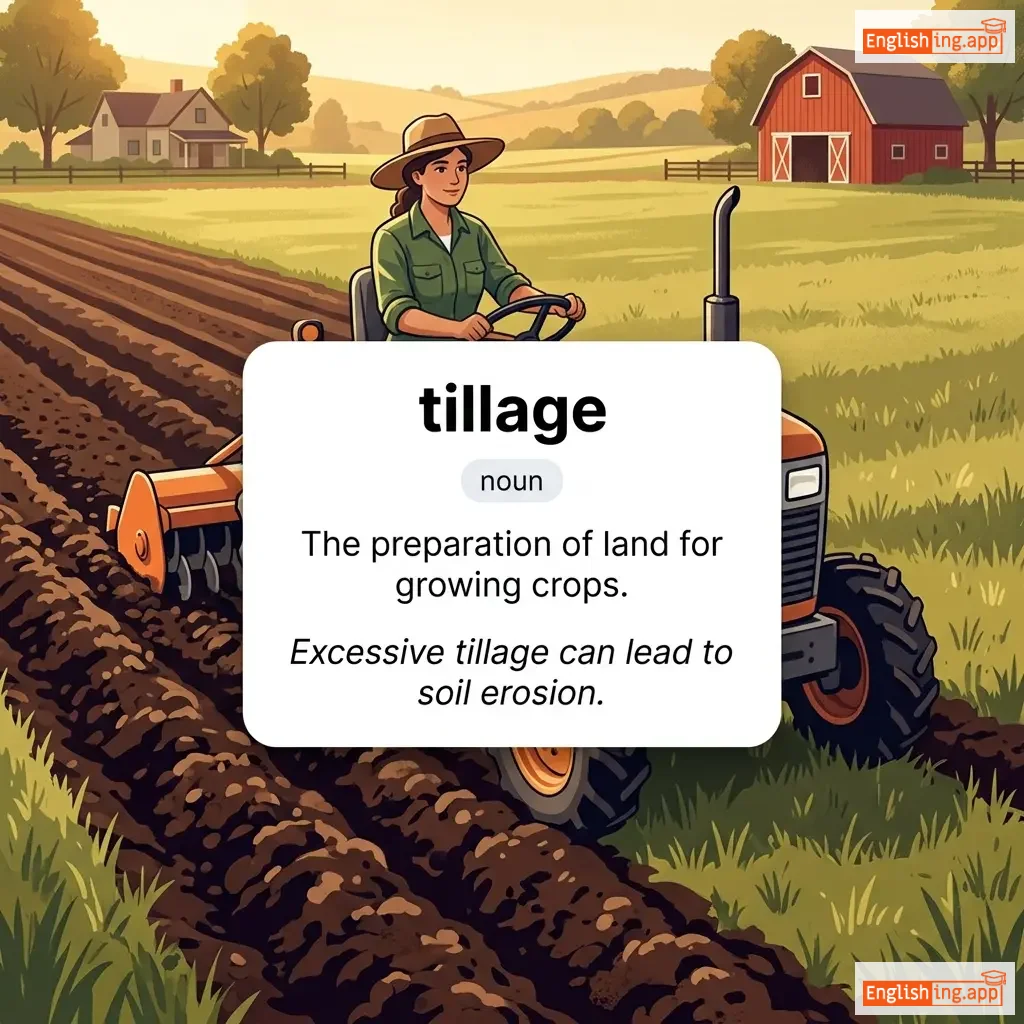
tillage definition card — visual illustration of the meaning
noun
ˈtɪl.ɪdʒ
耕作 (gēngzuò)

The preparation of land for growing crops.

"Excessive tillage can lead to soil erosion."

"过度耕作可能导致土壤侵蚀。" (Guòdù gēngzuò kěnéng dǎozhì tǔrǎng qīnshí.)
noun
/ˈtɪlər/
舵或耕地的人 (duò huò gēngdì de rén)

A lever used to steer a boat or a person who tills the soil.

"The sailor gripped the tiller firmly to keep the boat on course."

"水手紧紧握住舵,保持船只的航向。" (shuǐshǒu jǐn jǐn wò zhù duò, bǎochí chuán zhī de hángxiàng.)
noun
/tɪlθ/
土壤状况(适合种植作物) (tǔrǎng zhuàngkuàng (shìhé zhòngzhí zuòwù))

The physical condition of soil in relation to its suitability for planting crops.

"The farmer checked the soil's tilth before planting the seeds."

"农民在种植种子之前检查了土壤的tilth。" (Nóngmín zài zhòngzhí zhǒngzi zhīqián jiǎnchále tǔrǎng de tilth.)
noun
/ˈtɪmbər/
木材 (mùcái)

wood prepared for use in building and carpentry

"The house was built entirely from local timber."

"房子完全是用当地的木材建造的。" (Fángzi wánquán shì yòng dāngdì de mùcái jiànzào de.)
noun
/ˈtæmbər/ or /ˈtɪmbər/
音色 (yinse)

The character or quality of a musical sound or voice as distinct from its pitch and intensity.

"Her voice had a warm timbre that soothed the audience."

"她的声音有一种温暖的音色,安抚了观众。" (Ta de shengyin you yizhong wennuan de yinse, anfu le guanzhong.)
noun
/taɪm/
时间 (shijian)

a measured or measurable period during which an action, process, or condition exists or continues

"I don’t have enough time to finish the project."

"我没有足够的时间完成这个项目。" (Wo meiyou zugou de shijian wancheng zhege xiangmu.)
time management definition card — visual illustration of the meaning
noun
/taɪm ˈmæn.ɪdʒ.mənt/
时间管理 (shijian guanli)

The ability to plan and control time effectively to accomplish tasks efficiently.

"Effective time management improves productivity."
"有效的时间管理提高生产力。" (youxiao de shijian guanli tigao shengchanli.)
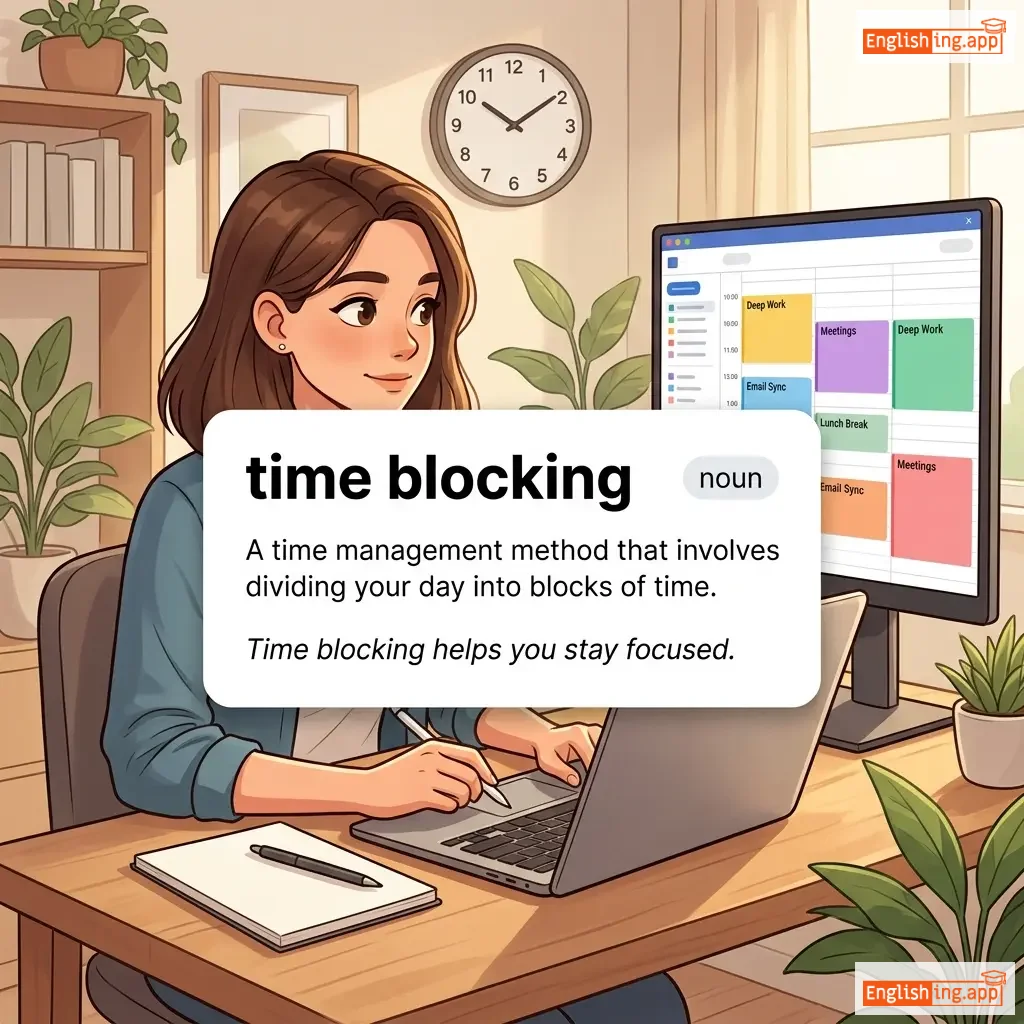
time blocking definition card — visual illustration of the meaning
noun
/taɪm ˈblɑːkɪŋ/
时间阻断 (shijian zuduan)

A time management method that involves dividing your day into blocks of time.

"Time blocking helps you stay focused."

"时间阻断帮助你保持专注。" (Shijian zuduan bangzhu ni baochi zhuanzhu.)
noun
/tɪn/
(xi)

a metal container; a chemical element (Sn)

"She bought a tin of biscuits from the store."

"她从商店买了一罐饼干。" (Ta cong shangdian mai le yi guan binggan.)
adjective
/ˈtɪmərəs/
胆怯的 (dǎnqiè de)

showing or suffering from nervousness, fear, or lack of confidence

"The timorous student hesitated to ask the teacher a question."

"那个胆怯的学生犹豫不决,没敢向老师提问。" (Nàgè dǎnqiè de xuéshēng yóuyù bù jué, méi gǎn xiàng lǎoshī tíwèn.)
noun
/ˈtaɪmɪŋ/
时机 (shiji)

the choice, judgment, or control of when something should be done

"Good timing is essential in business negotiations."

"在商业谈判中,良好的时机至关重要。" (zai shangye tanpan zhong, lianghao de shiji zhiguang zhongyao.)
noun
/tɪˈmɪdəti/
胆怯 (dǎnqiè)

lack of courage or self-confidence

"His timidity kept him from speaking up during the meeting."

"他的胆怯让他在会议中没有发言。" (Tā de dǎnqiè ràng tā zài huìyì zhōng méiyǒu fāyán.)
adjective
/ˈtɪmɪd/
胆小 (dan xiao)

lacking courage or confidence; easily frightened

"The timid child hid behind his mother when strangers approached."

"这个胆小的孩子在陌生人靠近时躲在母亲后面。" (zhe ge dan xiao de haizi zai moshi ren kaojin shi duo zai muqin houmian.)
noun
/ˈtaɪm.teɪ.bəl/
时间表 (shíjiānbiǎo)

a schedule showing planned activities or events at particular times

"Please check the train timetable for departure times."

"请查看火车时刻表以获取出发时间。" (Qǐng chákàn huǒchē shíkèbiǎo yǐ huòqǔ chūfā shíjiān.)
timer definition card — visual illustration of the meaning
noun
ˈtaɪmər
定时器 (taimoer)

An automatic mechanism for activating a device at a preset time; a device that measures time intervals.

"He set the timer for 30 minutes to complete the task."
"他把定时器设置为三十分钟以完成任务。" (ta ba ding shi qi she zhi wei san shi fen zhong yi wan cheng ren wu)
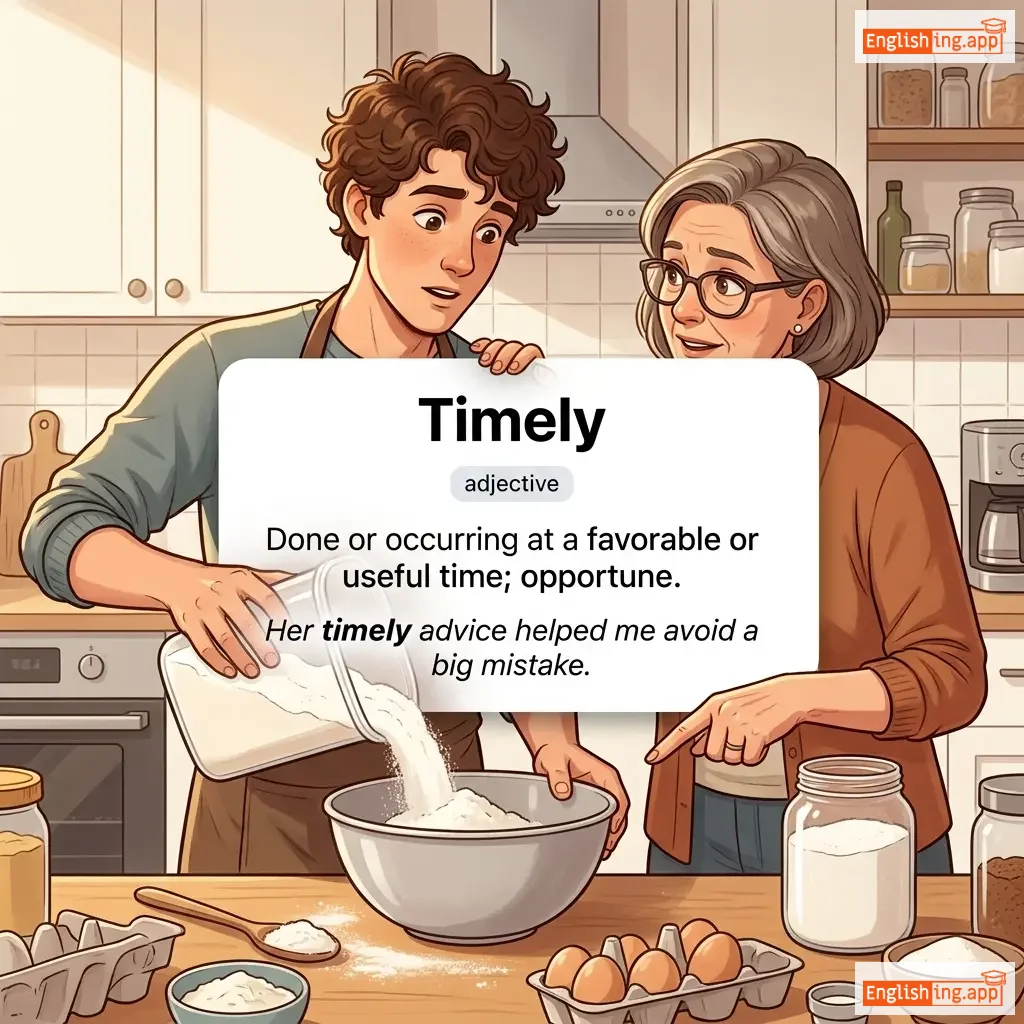
Timely definition card — visual illustration of the meaning
adjective
/ˈtaɪmli/
及时的 (jishi de)

Done or occurring at a favorable or useful time; opportune.

"Her timely advice helped me avoid a big mistake."
"她的及时建议帮我避免了一个大错误。" (ta de jishi jianyi bang wo bimian le yi ge da cuowu.)
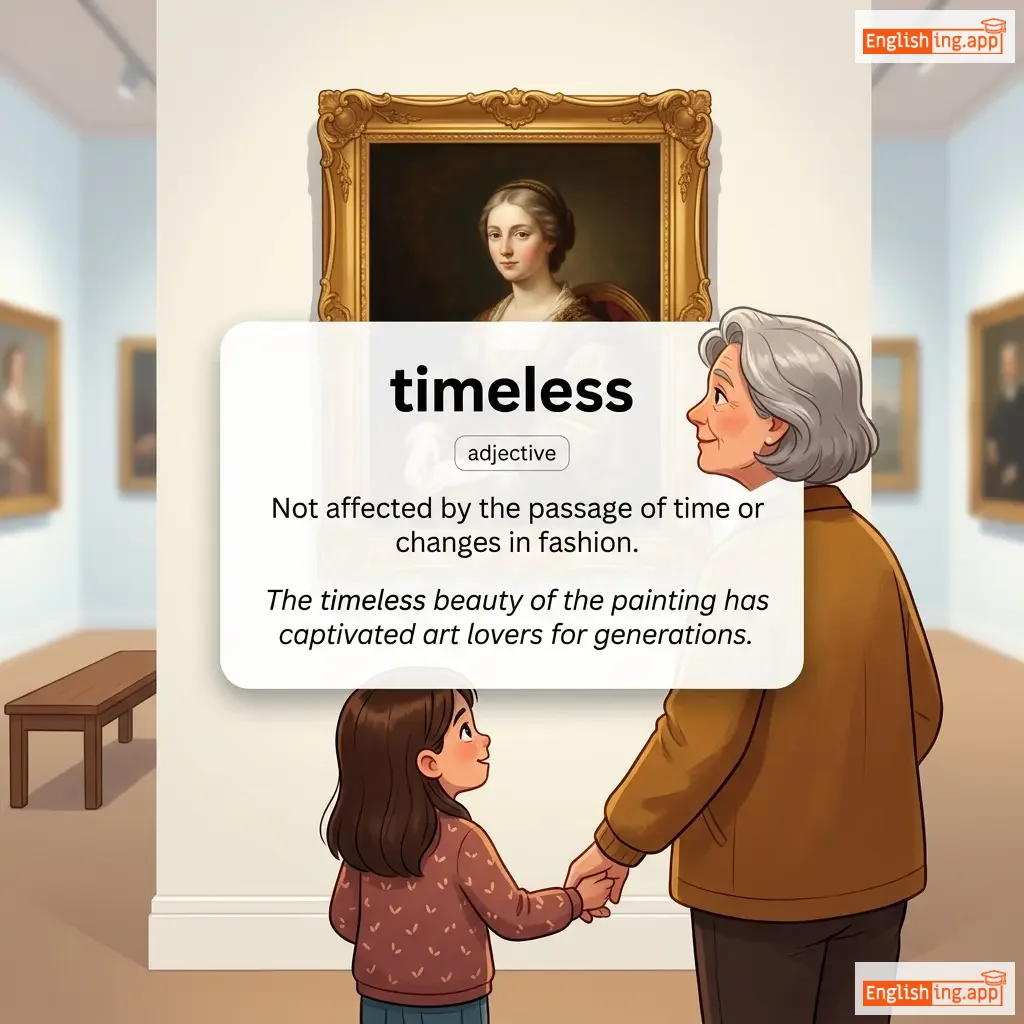
timeless definition card — visual illustration of the meaning
adjective
ˈtaɪmləs
超越时间的 (chaoyue shijian de)

Not affected by the passage of time or changes in fashion.

"The timeless beauty of the painting has captivated art lovers for generations."

"这幅画的超越时间的美丽,几代艺术爱好者都为之着迷。" (Zhè fú huà de chaoyue shijian de měilì, jǐ dài yìshù àihào zhě dōu wèi zhī zháomí.)
verb
/taɪmd/
计时 (jishi)

to measure or record the duration or speed of something

"He timed the race with a stopwatch."

"他用秒表计时比赛。" (Ta yong miaobiao jishi bisai.)
adjective
/ˈtaɪmwɔːrn/
被时间磨损 (bei shijian mosun)

Worn or impaired by age; old and used many times.

"The timeworn house carried a sense of history and nostalgia."

"被时间磨损的房子带着历史和怀旧的感觉。" (Bei shijian mosun de fangzi daizhe lishi he huai jiu de ganjue.)
noun
/sɜːrˈsiːs/
停止 (tingzhi)

a temporary or final ending or stopping of something

"The noise finally came to a surcease after midnight."

"噪音在午夜后终于停止了。" (Zaoyin zai wuyan hou zhongyu tingzhile.)
adjective
/suˈpriːm/
至高无上 (zhì gāo wú shàng)

highest in rank or authority

"He is the supreme leader of the country."

"他是这个国家的最高领导人。" (Tā shì zhège guójiā de zuìgāo lǐngdǎo rén.)
noun
/suˈpriː.mə.si/
至高无上;最高权力或权威 (zhì gāo wú shàng)

the state of being supreme; highest authority or power

"The country established naval supremacy in the region."

"该国在该地区建立了海军至高无上的地位。" (Gāi guó zài gāi dìqū jiànlìle hǎijūn zhìgāo wú shàng de dìwèi.)
adjective
/ˌsuːprəˈmʌndeɪn/
超世俗 (chāo shìsú)

beyond the physical or ordinary world; transcendent

"The monk spoke of supramundane peace beyond material life."

"和尚讲述了超越物质生活的超世俗的平静。" (Héshàng jiǎngshùle chāoyuè wùzhì shēnghuó de chāo shìsú de píngjìng.)
adjective
/səˈprɛsəbl̩/
可抑制的 (ke yizhi de)

capable of being restrained, controlled, or prevented

"The symptoms of the disease are suppressible with medication."

"疾病的症状可以通过药物抑制。" (Jíbìng de zhèngzhuàng kěyǐ tōngguò yàowù yìzhì.)