词汇表

英语词汇词典 | 单词含义、定义和示例

adjective
/səˈprɛsəbl̩/
可抑制的 (ke yizhi de)

capable of being restrained, controlled, or prevented

"The symptoms of the disease are suppressible with medication."
"疾病的症状可以通过药物抑制。" (Jíbìng de zhèngzhuàng kěyǐ tōngguò yàowù yìzhì.)
suppress definition card — visual illustration of the meaning
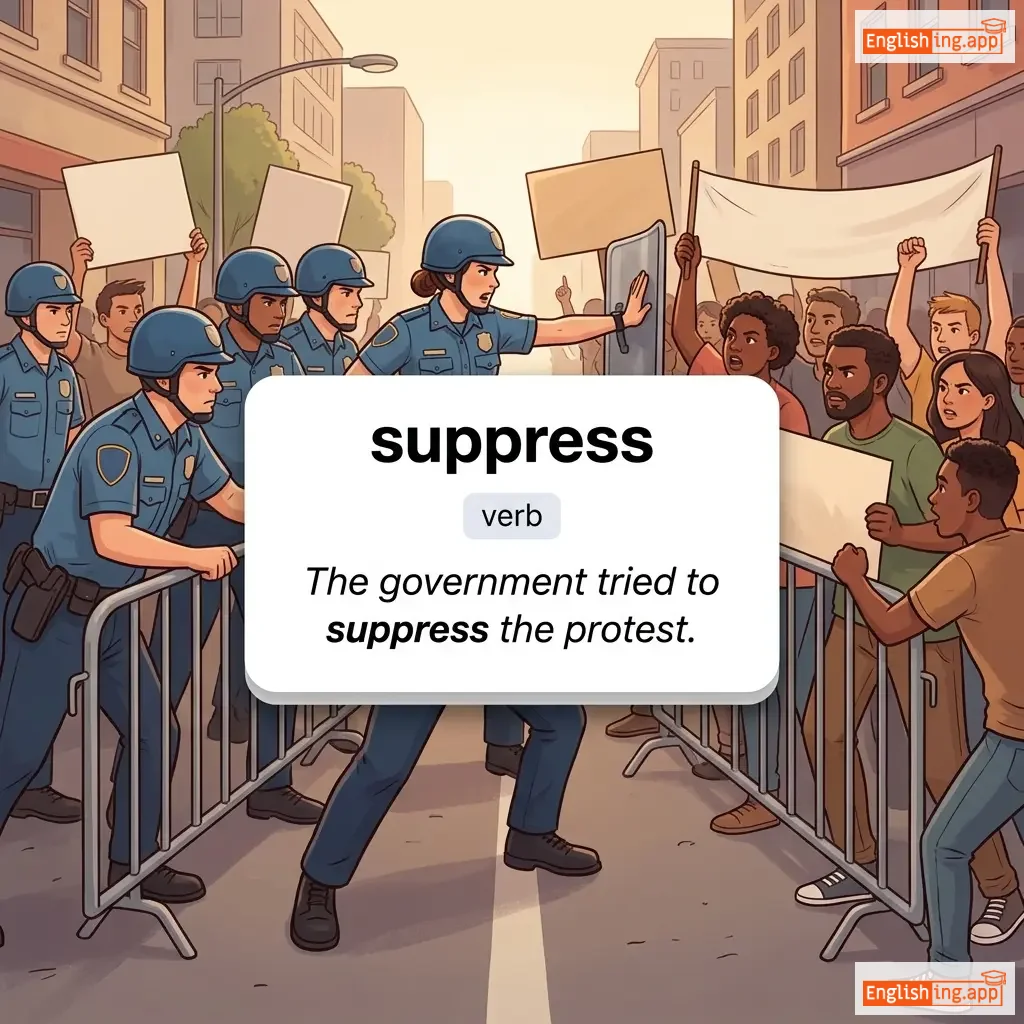
verb
/səˈprɛs/
压制 (yāzhì)

to forcibly put an end to something; to restrain or hold back an action, feeling, or development

"The government tried to suppress the protest."

"政府试图压制抗议。" (Zhèngfǔ shìtú yāzhì kàngyì.)
adjective
/ˌsʌpəzɪˈtɪʃəs/
假设的 (jiǎshè de)

Based on assumption rather than fact; not genuine or authentic.

"The story turned out to be supposititious, with no evidence to support it."
"这个故事证明是假的,没有证据支持它。" (Zhège gùshì zhèngmíng shì jiǎ de, méiyǒu zhèngjù zhīchí tā.)
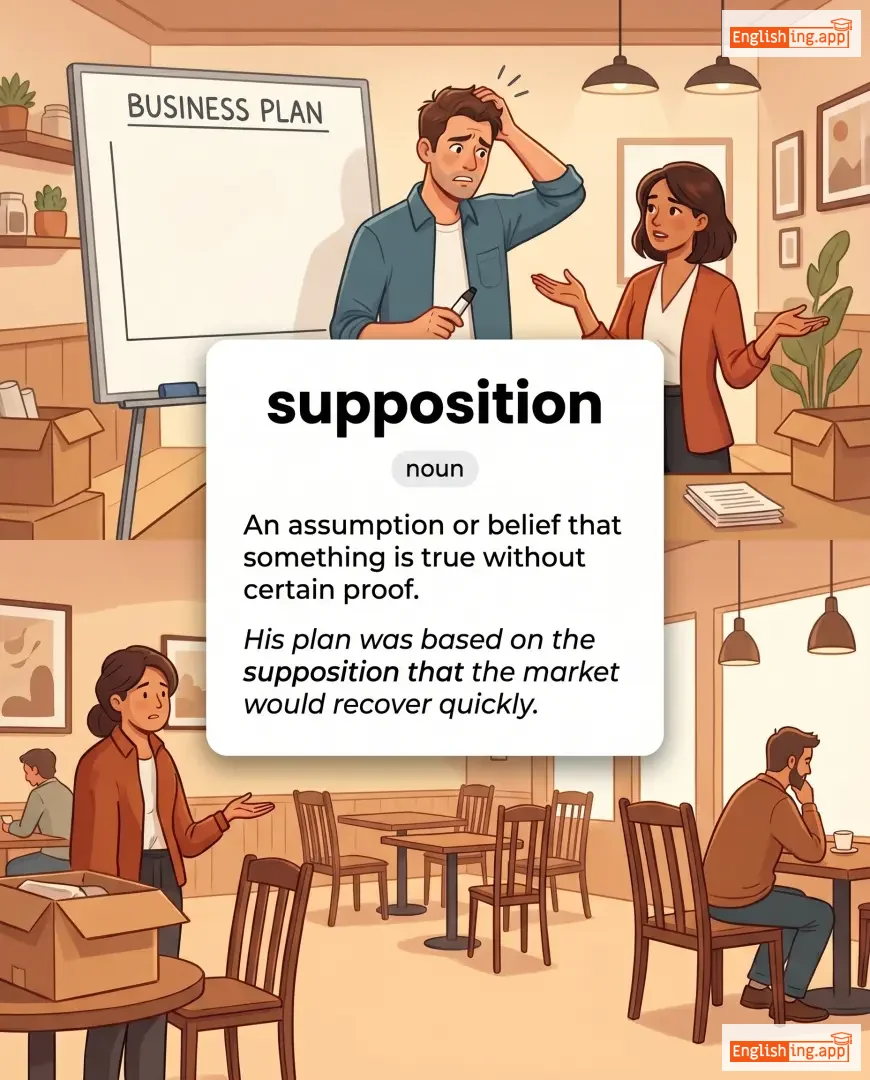
supposition definition card — visual illustration of the meaning
noun
/ˌsʌpəˈzɪʃən/
假设 (jiǎshè)

An assumption or belief that something is true without certain proof.

"His plan was based on the supposition that the market would recover quickly."

"他的计划是基于市场将迅速恢复的假设。" (tā de jìhuà shì jīyú shìchǎng jiāng xùnsù huīfù de jiǎshè.)
adverb
/səˈpəʊzɪdli/
据说 (jùshuō)

used to show that something is believed or claimed to be true, though it may not be

"He is supposedly the best player on the team."

"据说他是队里最好的球员。" (Jùshuō tā shì duì lǐ zuì hǎo de qiúyuán.)
adjective
/səˈpəʊzd/
假定的 (jiading de)

generally believed or assumed, but not necessarily true

"This is the supposed solution to the problem."

"这是问题的假定解决方案。" (Zhe shi wenti de jiading jiejue fang'an.)
verb
/səˈpəʊz/
假设 (jiǎshè)

to assume or believe something is true without proof

"I suppose she will be here soon."

"我猜你很快会到这里。" (Wǒ cāi nǐ hěn kuài huì dào zhèlǐ.)
adjective
/səˈpɔːtɪv/
支持的 (zhīchí de)

providing encouragement or emotional help to someone

"She was very supportive during my difficult times."
"在我困难的时刻,她非常支持我。" (Zài wǒ kùnnán de shíkè, tā fēicháng zhīchí wǒ.)
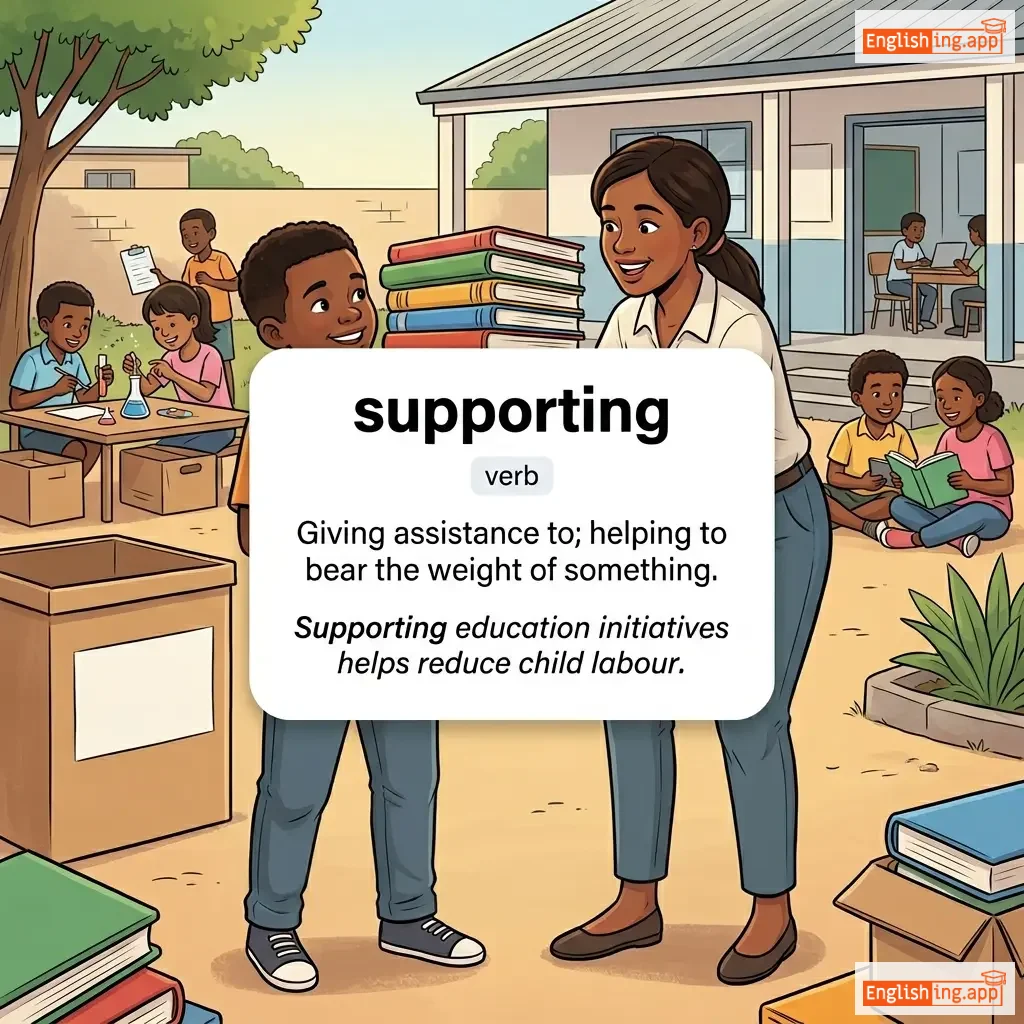
supporting definition card — visual illustration of the meaning
verb
səˈpɔːrtɪŋ
支持 (zhīchí)

Giving assistance to; helping to bear the weight of something.

"Supporting education initiatives helps reduce child labour."

"支持教育倡议有助于减少童工。" (Zhīchí jiàoyù chàngyì yǒu zhù yú jiǎnshǎo tónggōng.)
noun
/səˈpɔːtər/
支持者 (zhīchí zhě)

a person who supports someone or something

"She is a strong supporter of the local animal shelter."

"她是当地动物收容所的强大支持者。" (Tā shì dāngdì dòngwù shōuróngsuǒ de qiángdà zhīchí zhě.)
support definition card — visual illustration of the meaning
verb
/səˈpɔːrt/
支持 (zhīchí)

to give assistance or help to someone or something

"They always support each other during difficult times."

"他们总是在困难时互相支持。" (Tāmen zǒng shì zài kùnnán shí hùxiāng zhīchí.)
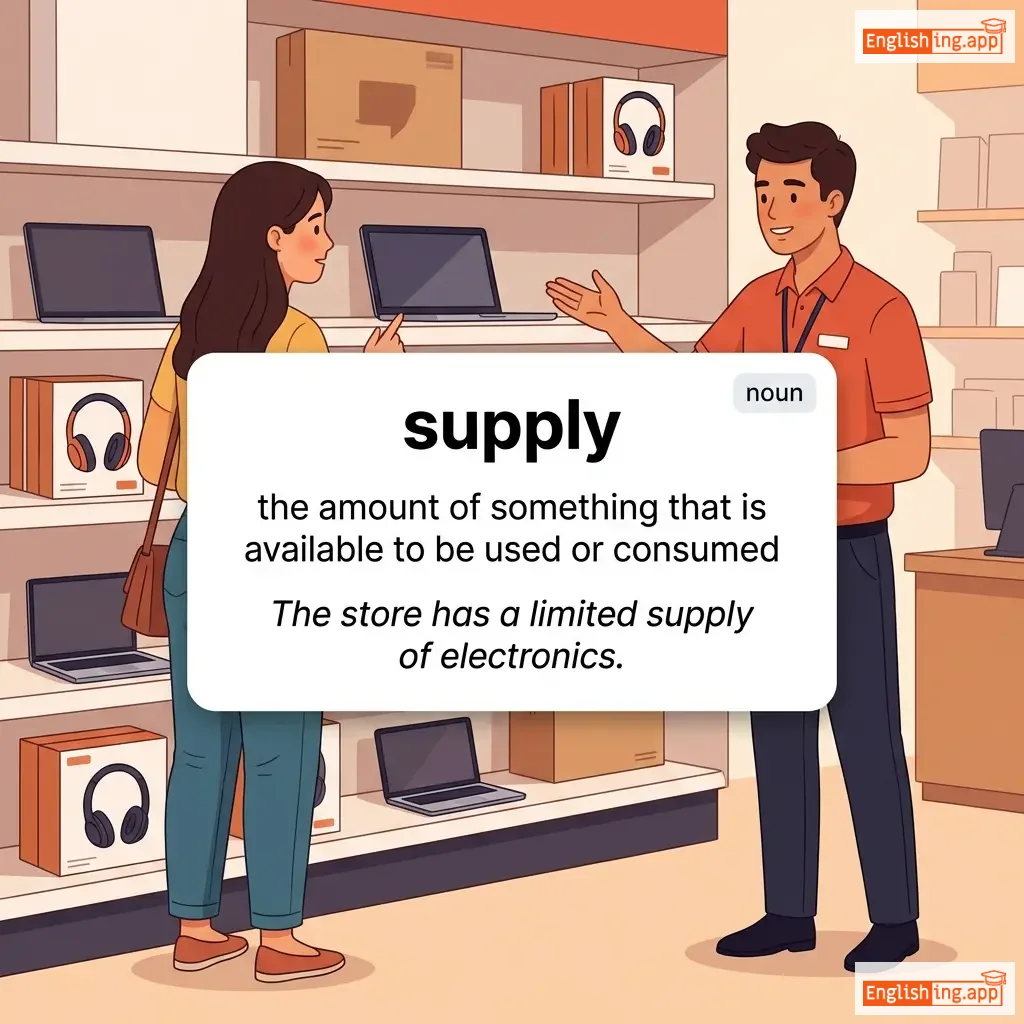
supply definition card — visual illustration of the meaning
noun
/səˈplaɪ/

the amount of something that is available to be used or consumed

"The store has a limited supply of electronics."

noun
/səˈplaɪə(r)/
供应商 (gongyingshang)

a person or company that provides goods or services

"The supplier delivered the products on time."

"供应商按时交付了产品。" (Gongyingshang anshi jiaofu le chanpin.)
verb
/ˈsʌplɪˌkeɪt/
恳求 (kěnqiú)

To ask for something earnestly or humbly, often in a religious context.

"The villagers supplicated the gods for rain during the drought."
"村民们在干旱期间恳求神灵降雨。" (Cūnmínmen zài gānhàn qījiān kěnqiú shénlíng jiàng yǔ.)
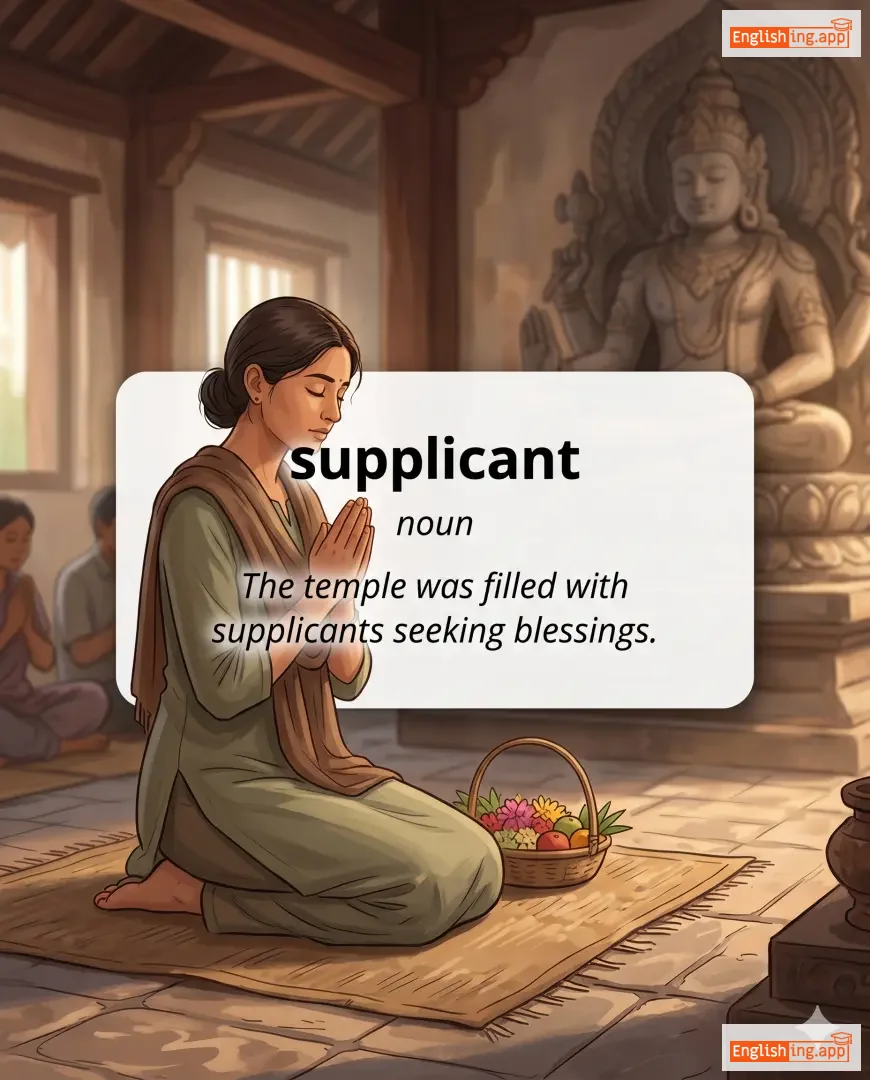
supplicant definition card — visual illustration of the meaning
noun
/ˈsʌplɪkənt/
恳求者 (kěnqiú zhě)

A person who humbly or earnestly asks for something, usually from a person of authority.

"The temple was filled with supplicants seeking blessings."

"寺庙里充满了恳求者,寻找祝福。" (Sìmiào lǐ chōngmǎn le kěnqiú zhě, xúnzhǎo zhùfú.)
suppliant definition card — visual illustration of the meaning
adjective
/ˈsʌpliənt/
恳求者 (kěnqiú zhě)

Humbly or earnestly asking for something, especially from a person in authority.

"The suppliant man begged for mercy at the king's feet."

"恳求者在国王的脚下乞求怜悯。" (Kěnqiú zhě zài guówáng de jiǎoxià qǐqiú liánmǐn.)
adjective
/ˌsʌplɪˈmɛntəri/
补充的 (buchong de)

Additional, completing, or enhancing something else.

"The teacher gave supplementary materials to help the students prepare for exams."

"老师提供了补充材料,帮助学生准备考试。" (Lǎoshī tígōngle bǔchōng cáiliào, bāngzhù xuéshēng zhǔnbèi kǎoshì.)
noun/verb
/ˈsʌplɪmənt/
补充 (buchong)

Something added to complete or enhance; to add extra to make up for a deficiency.

"She takes vitamin supplements to improve her health."

"她服用维生素补充剂来改善她的健康。" (Ta fuyong weishengsu buchongji lai gaishan ta de jiankang.)
adjective
/ˈsʌpl/
柔韧的 (róurèn de)

Easily bending or moving without breaking; flexible and adaptable.

"The gymnast’s body was remarkably supple."
"体操运动员的身体异常柔韧。" (Tǐcāo yùndòngyuán de shēntǐ yìcháng róurèn.)
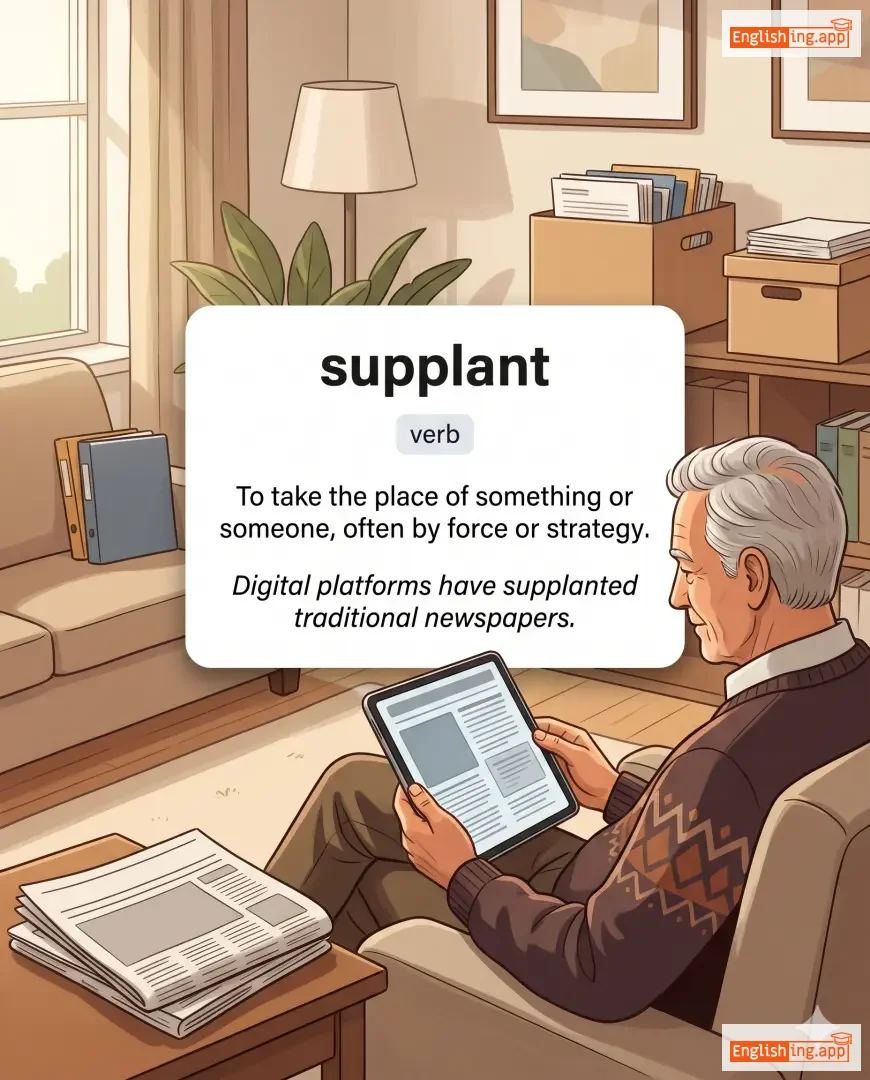
supplant definition card — visual illustration of the meaning
verb
/səˈplænt/
取代 (qudai)

To take the place of something or someone, often by force or strategy.

"Digital platforms have supplanted traditional newspapers."

"数字平台已经取代了传统报纸。" (Shuzi pingtai yijing qudai le chuantong baozhi.)
noun
/ˈsʌp.ər/
晚餐 (wǎn cān)

an evening meal, typically a light or informal one

"We usually have supper around seven o'clock."
"我们通常在七点左右吃晚餐。" (Wǒmen tōngcháng zài qī diǎn zuǒyòu chī wǎn cān.)
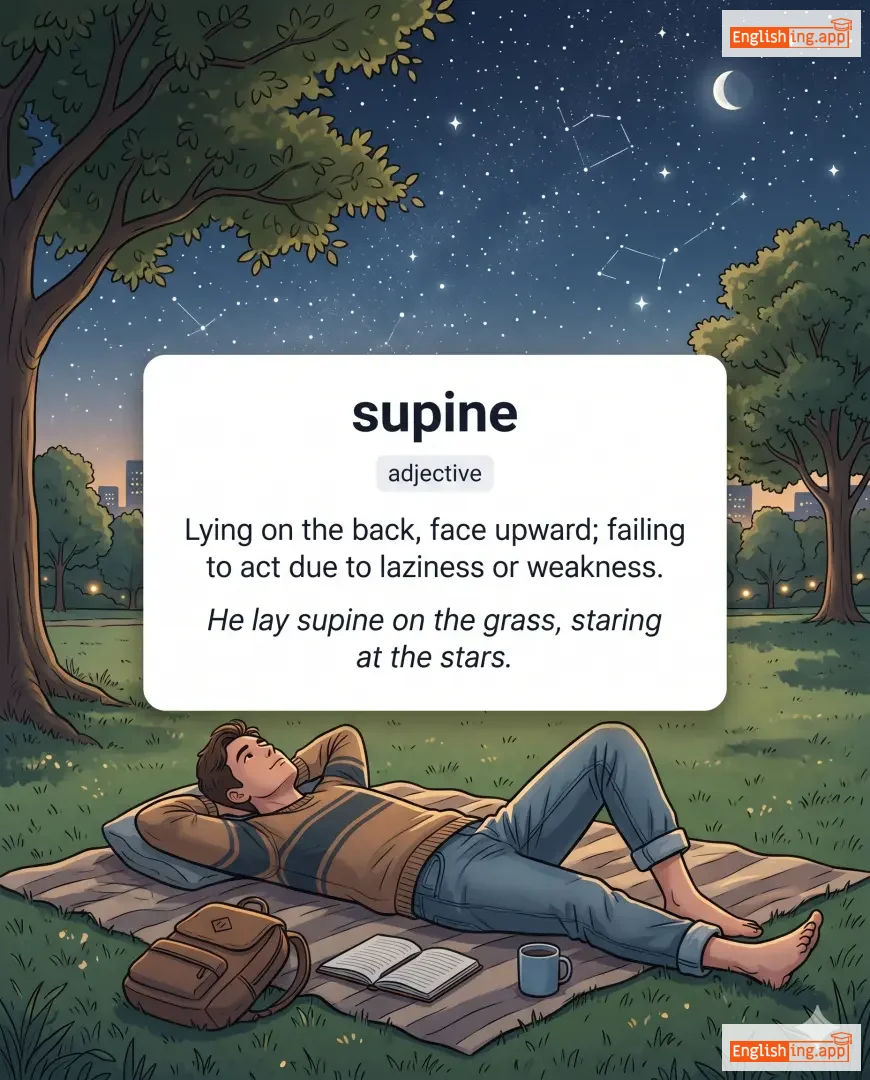
supine definition card — visual illustration of the meaning
adjective
/ˈsuːpaɪn/
仰卧 (yangwo)

Lying on the back, face upward; failing to act due to laziness or weakness.

"He lay supine on the grass, staring at the stars."

"他躺在草地上,仰望星星。" (Ta tang zai caodi shang, yangwang xingxing.)
noun
/swiːt/
套房 (tao fang)

a set of rooms designated for one person's or family's use or for a particular purpose

"They stayed in the presidential suite at the hotel."

"他们住在酒店的总统套房里。" (Tāmen zhù zài jiǔdiàn de zǒngtǒng tàofáng lǐ.)
noun
/ˈsʌn.deɪ/
星期天 (xingqi tian)

The day of the week between Saturday and Monday; often considered a day of rest or worship.

"We usually relax at home on Sunday."

"我们通常在星期天在家休息。" (Wo men tong chang zai xingqi tian zai jia xiuxi.)
noun
/ˈsʌn.flaʊər/
向日葵 (xiangrikui)

a large yellow flower that turns to face the sun

"The sunflower field looked amazing in the bright sunlight."

"向日葵田在明亮的阳光下看起来很美。" (xiangrikui tian zai mingliang de yangguang xia kan qilai hen mei)
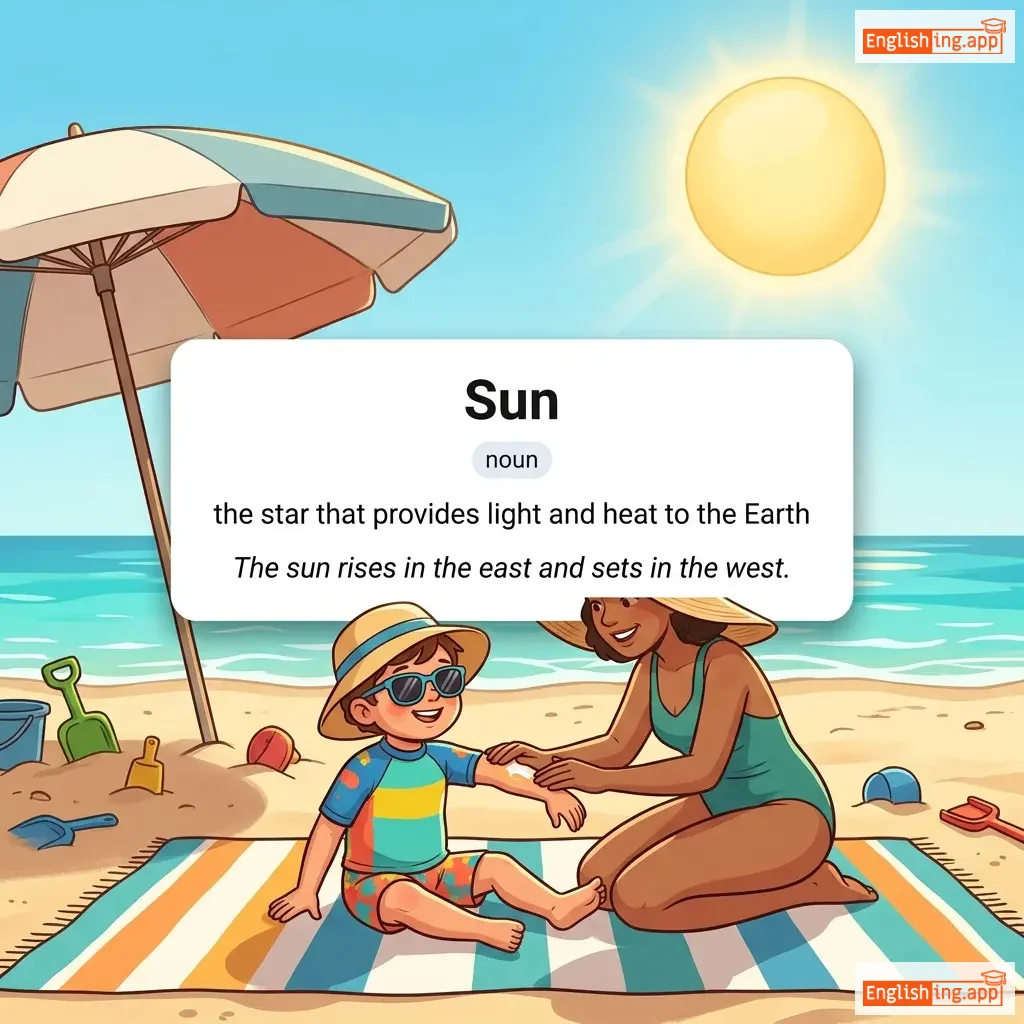
Sun definition card — visual illustration of the meaning
noun
/sʌn/
太阳 (taiyang)

the star that provides light and heat to the Earth

"The sun rises in the east and sets in the west."

"太阳从东方升起,西方落下。" (Taiyang cong dongfang shengqi, xifang luoxia.)
adjective
/ˈsʌmp.tʃu.əs/
奢华的 (shē huá de)

Splendid and expensive-looking; luxurious.

"The guests were treated to a sumptuous banquet."

"客人们被招待了一场奢华的宴会。" (Kèrén men bèi zhāodài le yī chǎng shēhuá de yànhuì.)
adjective
/ˈsʌmp.tʃuˌɛr.i/
与限制个人奢侈品支出的法律或规定相关 (yu xianzhi geren shechipin zhichu de falü huo guiding xiangguan)

Relating to laws or regulations intended to limit personal spending on luxury goods.

"In medieval Europe, sumptuary laws restricted the wearing of expensive fabrics to the nobility."

"在中世纪欧洲,奢侈品法限制了只有贵族才能穿戴昂贵的面料。" (Zài zhōng shìjì Ōuzhōu, shēchǐpǐn fǎ xiànzhìle zhǐyǒu guìzú cáinéng chuāndài ángguì de miànliào.)
verb
/ˈsʌmən/

To order someone to come or to gather courage or strength.

"The king summoned his advisors to the court."

Summit of the Future definition card — visual illustration of the meaning
noun
/ˈsʌm.ɪt əv ðə ˈfjuː.tʃər/
未来峰会 (wèilái fēnghuì)

A high-level conference focused on addressing future challenges and opportunities.

"The Summit of the Future addressed global challenges."

"未来峰会解决了全球性挑战。" (Wèilái fēnghuì jiějuéle quánqiúxìng tiǎozhàn.)
summit definition card — visual illustration of the meaning
noun
/ˈsʌmɪt/
顶峰, 峰会 (dingfeng, fenghui)

The highest point of a hill or mountain; a meeting between heads of state or leaders.

"The leaders met at the summit to discuss global issues."
"领导人在峰会上会面,讨论全球问题。" (Lǐngdǎo rén zài fēnghuì shàng huìmiàn, tǎolùn quánqiú wèntí.)
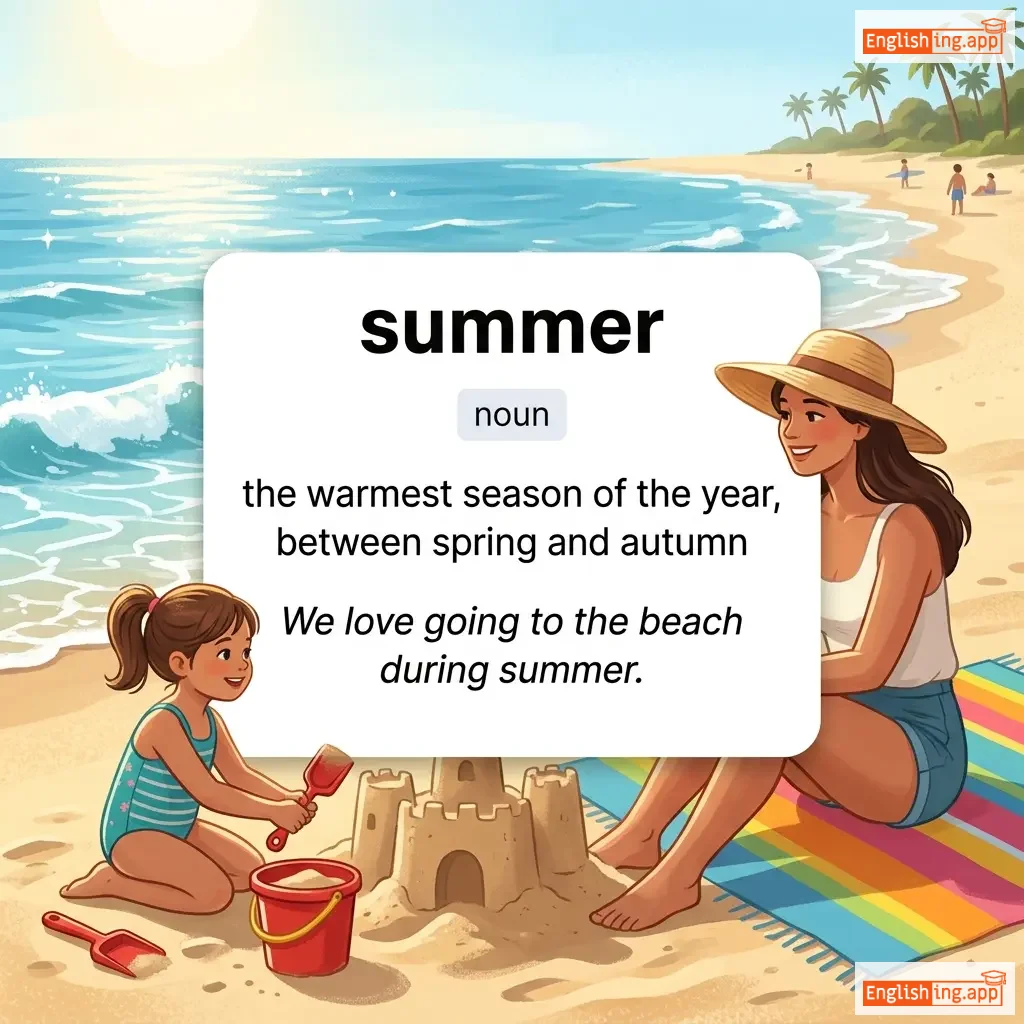
summer definition card — visual illustration of the meaning
noun
/ˈsʌmər/
夏天 (xia tian)

the warmest season of the year, between spring and autumn

"We love going to the beach during summer."

"我们喜欢在夏天去海滩。" (Wo men xi huan zai xia tian qu hai tan.)
noun
/sʌˈmeɪʃən/
总和, 摘要 (zonghe, zhaiyao)

The process of adding things together; a summary of points.

"The lawyer gave a powerful summation of the case."

"律师对案件进行了有力的总结。" (Lüshi dui anjian jinxing le youli de zongjie.)
noun
/ˈsʌməri/
总结 (zongjie)

A brief statement of the main points of something.

"She wrote a summary of the book for her class."

"她为她的课堂写了一份书籍总结。" (Ta wei ta de ketiang xie le yi fen shujii zongjie.)
verb
/ˈsʌməraɪz/
总结 (zongjie)

To give a brief statement of the main points of something

"She summarized the report in just a few minutes."

"她在几分钟内总结了报告。" (Ta zai ji fenzhong nei zongjie le baogao)
noun
/sʌm/
(he)

the total amount resulting from the addition of two or more numbers or items

"The sum of 8 and 12 is 20."

"8和12的和是20。" (8 he 12 de he shi 20.)
adjective
/ˈsʌltri/
酷热潮湿,迷人 (kùrè cháoshī, mírén)

Uncomfortably hot and humid; also describes someone attractive in a passionate or sensual way.

"The sultry weather made it hard to focus on work."

"酷热潮湿的天气使得集中精力工作变得困难。" (Kùrè cháoshī de tiānqì shǐdé jízhōng jīnglì gōngzuò biàn dé kùnnán.)
verb
/ˈsʌli/
玷污 (diànwū)

to damage the purity, integrity, or reputation of something

"The scandal sullied the politician’s reputation."

"丑闻玷污了政治家的声誉。" (Chǒuwén diànwūle zhèngzhìjiā de shēngyù.)
adjective
/ˈsʌlən/
闷闷不乐 (mèn mèn bù lè)

bad-tempered and gloomy; silently resentful

"She gave him a sullen look and walked away."

"她给了他一个闷闷不乐的眼神,然后走开了。" (Tā gěile tā yīgè mèn mèn bù lè de yǎnshén, ránhòu zǒu kāile.)
adjective
/ˈsʌl.ki/
脾气坏且沉默; 易怒 (píqì huài qiě chénmò; yì nù)

bad-tempered and sullen; moody

"The child became sulky when he couldn't get his favorite toy."

"孩子变得脾气坏,因为他无法得到自己最喜欢的玩具。" (Háizi biàn dé píqì huài, yīnwèi tā wúfǎ dédào zìjǐ zuì xǐhuān de wánjù.)
sulk definition card — visual illustration of the meaning
verb
/sʌlk/
生闷气 (sheng men qi)

to be silently resentful or moody

"He went to his room to sulk after the argument."

"他在争吵后走到他的房间去生闷气。" (Ta zai zhengchao hou zou dao ta de fangjian qu sheng men qi.)
noun
/ˈsuːtər/
追求者 (zhuiqiuzhe)

a man who pursues a relationship with a woman, often with the intent to marry

"She had many suitors vying for her attention."

"她有许多追求者争夺她的注意力。" (ta you xuduo zhuiqiuzhe zhengduo ta de zhuyili)
suffrage definition card — visual illustration of the meaning
noun
/ˈsʌfrɪdʒ/
选举权 (xuanju quan)

the right to vote in political elections

"The movement fought for women’s suffrage in the early 20th century."

"该运动在20世纪初为女性争取选举权。" (gai yundong zai ershi shiji chu wei nvxing zhengqu xuanju quan.)
noun
/ˈʃʊɡ.ər ˈkæn.di/
糖果 (tángguǒ)

crystallized sugar formed into small pieces; rock candy made from sugar syrup

"The children enjoyed eating colorful sugar candy at the festival."

"孩子们在节日上享受吃彩色的糖果。" (Háizimen zài jiérì shàng xiǎngshòu chī cǎisè de tángguǒ)
noun
/ˈʃʊɡər/
(tang)

a sweet substance made from plants or produced synthetically

"She added two spoons of sugar to her tea."

"她在茶里加了两勺糖。" (Tā zài chá lǐ jiāle liǎng sháo táng.)
verb
/səˈfjuːz/
弥漫 (mímàn)

to gradually spread through or over something

"A warm glow suffused her face as she smiled."

"当她微笑时,一种温暖的光辉弥漫到她的脸上。" (Dāng tā wēixiào shí, yī zhǒng wēnnuǎn de guānghuī mímàn dào tā de liǎn shàng.)
noun
/ˈsʌfrədʒɪst/
妇女参政权运动者 (fùnǚ cān zhèngquán yùndòng zhě)

a person advocating the extension of suffrage, especially to women

"The suffragists organized rallies to demand voting rights for women."

"妇女参政权运动者组织了集会,要求为女性争取投票权。" (Fùnǚ cān zhèngquán yùndòng zhě zǔzhīle jíhuì, yāoqiú wèi nǚxìng zhēngqǔ tóupiào quán.)
adverb
/səˈfɪʃəntli/
充分 (chōngfèn)

to an adequate degree or extent

"She studied sufficiently to pass the exam."

"她足够努力地学习,才能通过考试。" (Tā zúgòu nǔlì de xuéxí, cáinéng tōngguò kǎoshì.)
adjective
/səˈpraɪzd/
惊讶 (jīngyà)

feeling or showing astonishment or shock

"She was surprised by the news."

"她被这个消息惊讶了。" (Tā bèi zhège xiāoxī jīngyà le.)
adjective
/səˈfɪʃənt/
足够的 (zúgòu de)

enough; adequate for a purpose

"She had sufficient money to buy the dress."

"她有足够的钱买这件裙子。" (Tā yǒu zúgòu de qián mǎi zhè jiàn qúnzi.)