Словари

Словарь английского языка | Значения слов, определения и примеры

adjective
/səˈprɛsəbl̩/
подавляемый (podyemlyayemyj)

capable of being restrained, controlled, or prevented

"The symptoms of the disease are suppressible with medication."
"Симптомы болезни могут быть подавлены с помощью медикаментов." (Simptomy bolezni mogut byt' podavleny s pomoshch'yu medikamentov.)
suppress definition card — visual illustration of the meaning
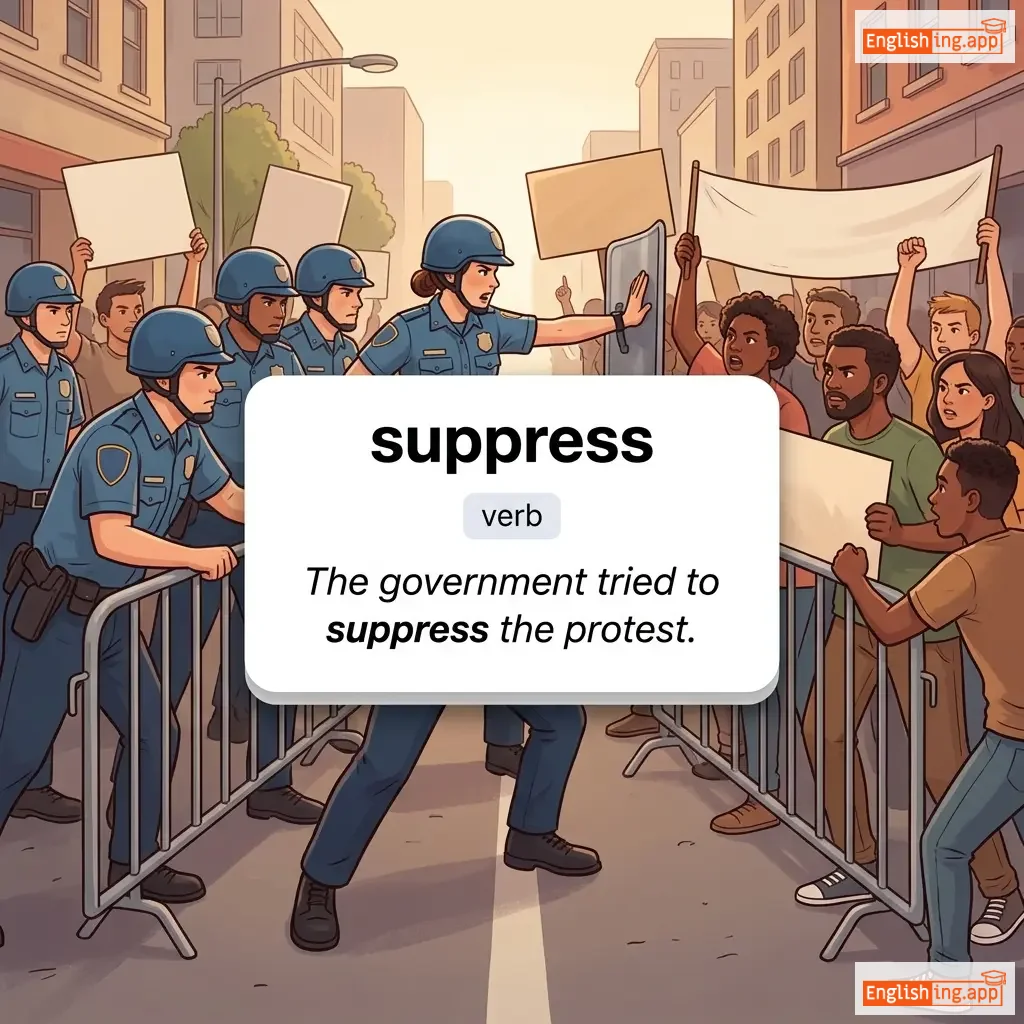
verb
/səˈprɛs/
подавить (podavit')

to forcibly put an end to something; to restrain or hold back an action, feeling, or development

"The government tried to suppress the protest."

"Правительство пыталось подавить протест." (Pravitel'stvo pytalos' podavit' protest.)
adjective
/ˌsʌpəzɪˈtɪʃəs/
предположительный (predpolozhitel'nyy)

Based on assumption rather than fact; not genuine or authentic.

"The story turned out to be supposititious, with no evidence to support it."
"История оказалась предположительной, без доказательств, которые бы её поддерживали." (Istoriya okazalas' predpolozhitel'noy, bez dokazatel'stv, kotorye by yeyo podderzhivali.)
supposition definition card — visual illustration of the meaning
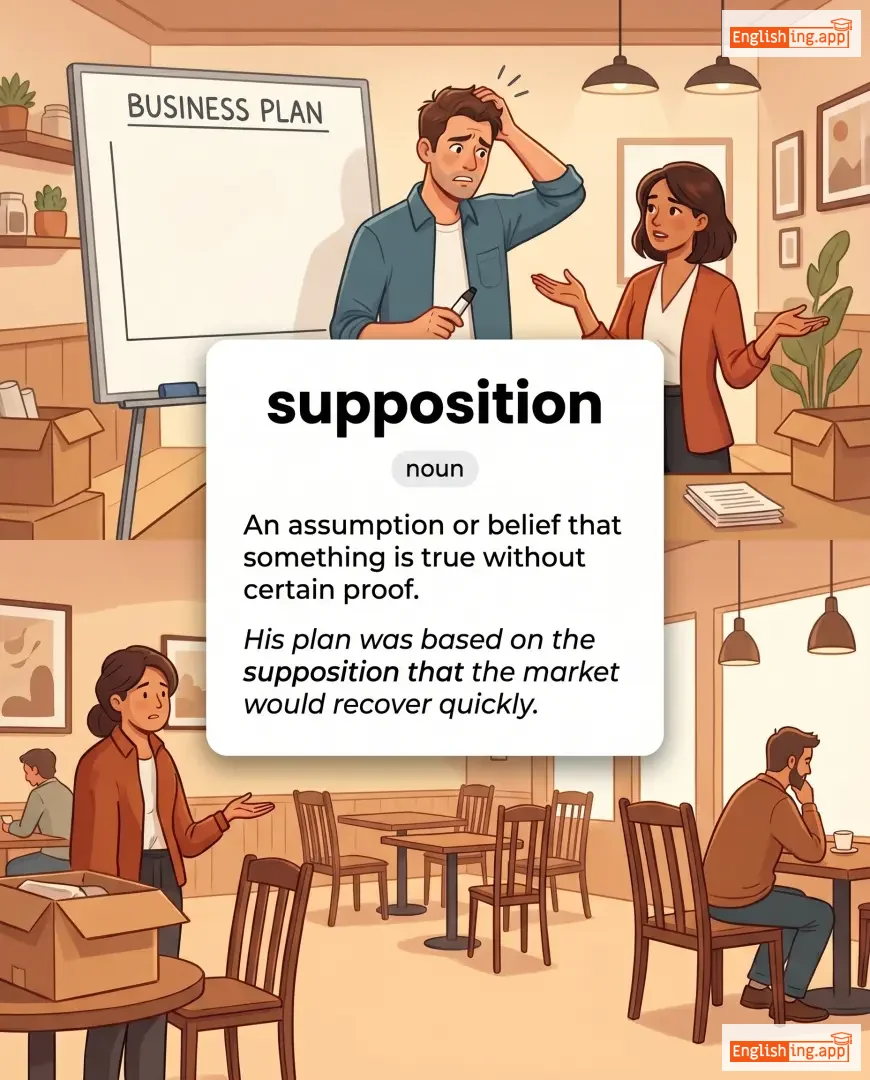
noun
/ˌsʌpəˈzɪʃən/
предположение (predpolozhenie)

An assumption or belief that something is true without certain proof.

"His plan was based on the supposition that the market would recover quickly."

"Его план был основан на предположении, что рынок быстро восстановится." (Ego plan byl osnovan na predpolozhenii, chto rynok bystro vosstanovitsya.)
adverb
/səˈpəʊzɪdli/
якобы (yakoby)

used to show that something is believed or claimed to be true, though it may not be

"He is supposedly the best player on the team."

"Якобы он лучший игрок в команде." (Yakoby on luchshiy igrok v komande.)
adjective
/səˈpəʊzd/
предположительный (predpolozhitel'nyy)

generally believed or assumed, but not necessarily true

"This is the supposed solution to the problem."

"Это предполагаемое решение проблемы." (Eto predpolozhitel'noe reshenie problemy.)
verb
/səˈpəʊz/
предполагать (predpolagat')

to assume or believe something is true without proof

"I suppose she will be here soon."

"Я предполагаю, что она скоро будет здесь." (Ya predpolagayoo, chto ona skoro budet zdes'.)
adjective
/səˈpɔːtɪv/
поддерживающий (podderzhivayushchiy)

providing encouragement or emotional help to someone

"She was very supportive during my difficult times."

"Она была очень поддерживающей в мои трудные времена." (Ona byla ochen' podderzhivayushchей v moi trudnye vremena.)
supporting definition card — visual illustration of the meaning
verb
səˈpɔːrtɪŋ
поддерживать (podderzhivat')

Giving assistance to; helping to bear the weight of something.

"Supporting education initiatives helps reduce child labour."

"Поддержка образовательных инициатив помогает сократить детский труд." (Podderzhka obrazovatel'nykh initsiativ pomogaet sokratit' detskiy trud.)
noun
/səˈpɔːtər/
сторонник (storonnik)

a person who supports someone or something

"She is a strong supporter of the local animal shelter."

"Она является сильным сторонником местного приюта для животных." (Ona yavyayetsya sil'nym storonnikom mestnogo priyuta dlya zhivotnykh.)
support definition card — visual illustration of the meaning
verb
/səˈpɔːrt/
поддержка (podderzhka)

to give assistance or help to someone or something

"They always support each other during difficult times."

"Они всегда поддерживают друг друга в трудные времена." (Oni vsegda podderzhivayut drug druga v trudnye vremya.)
supply definition card — visual illustration of the meaning
noun
/səˈplaɪ/

the amount of something that is available to be used or consumed

"The store has a limited supply of electronics."

noun
/səˈplaɪə(r)/
поставщик (postavshchik)

a person or company that provides goods or services

"The supplier delivered the products on time."

"Поставщик доставил продукцию вовремя." (Postavshchik dostavil produktsiyu vovremya.)
verb
/ˈsʌplɪˌkeɪt/
умолять (umolyat')

To ask for something earnestly or humbly, often in a religious context.

"The villagers supplicated the gods for rain during the drought."
"Жители деревни умоляли богов о дожде во время засухи." (Zhiteli derevni umolyali bogov o dozhde vo vremya zasukhi.)
supplicant definition card — visual illustration of the meaning
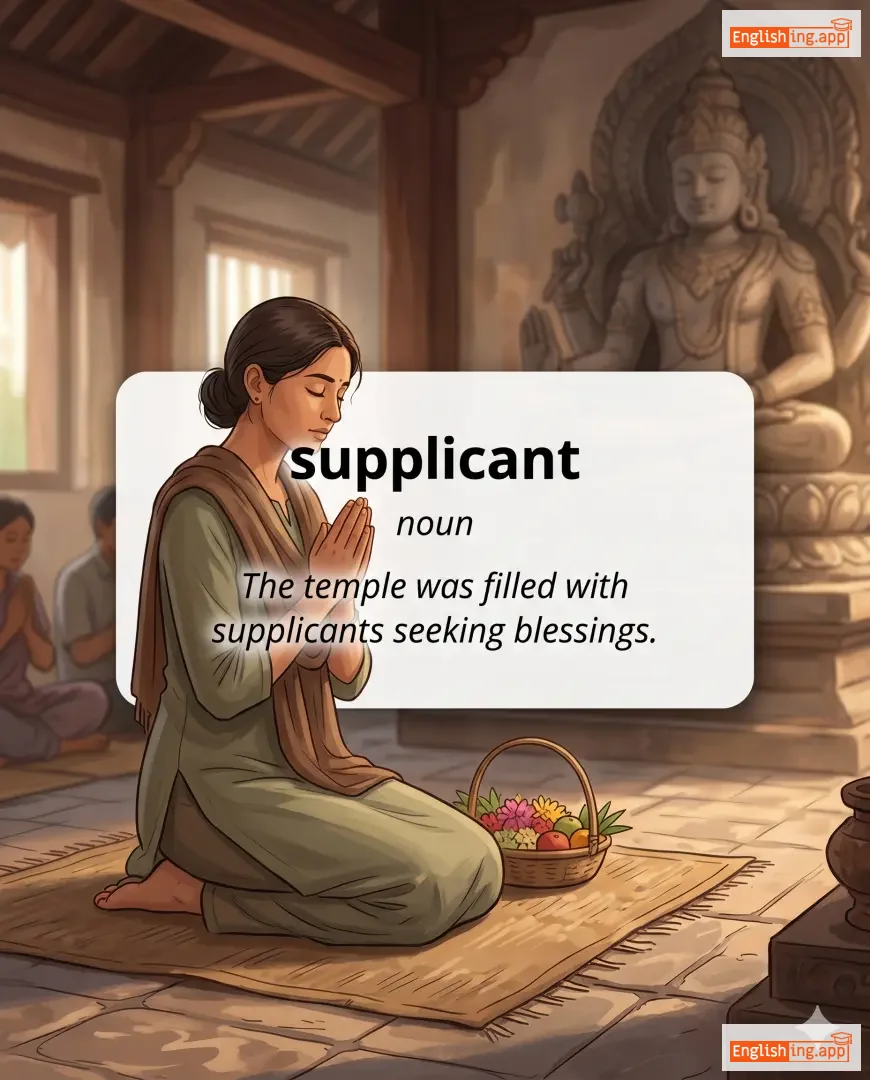
noun
/ˈsʌplɪkənt/
молящийся (molyashchiesya)

A person who humbly or earnestly asks for something, usually from a person of authority.

"The temple was filled with supplicants seeking blessings."

"Храм был полон молящихся, которые искали благословения." (Khram byl polon molyashchikhsya, kotorye iskali blagosloveniya.)
suppliant definition card — visual illustration of the meaning
adjective
/ˈsʌpliənt/
молящийся (molyashchiesya)

Humbly or earnestly asking for something, especially from a person in authority.

"The suppliant man begged for mercy at the king's feet."

"Молящийся человек просил милосердия у ног короля." (Molyashchiesya chelovek prosil miloserdia u nog korolya.)
adjective
/ˌsʌplɪˈmɛntəri/
дополнительный (dopolnitel'nyj)

Additional, completing, or enhancing something else.

"The teacher gave supplementary materials to help the students prepare for exams."

"Учитель дал дополнительные материалы, чтобы помочь студентам подготовиться к экзаменам." (Uchitel' dal dopolnitel'nye materialy, chtoby pomoch' studentam podgotovit'sya k ekzamenam.)
noun/verb
/ˈsʌplɪmənt/
добавка (dobavka)

Something added to complete or enhance; to add extra to make up for a deficiency.

"She takes vitamin supplements to improve her health."

"Она принимает витаминные добавки для улучшения своего здоровья." (Ona prinimayet vitaminnyye dobavki dlya uluchsheniya svoego zdorov'ya.)
adjective
/ˈsʌpl/
гибкий (gibkiy)

Easily bending or moving without breaking; flexible and adaptable.

"The gymnast’s body was remarkably supple."

"Тело гимнастки было удивительно гибким." (Telo gimnastki bylo udivitel'no gibkim.)
supplant definition card — visual illustration of the meaning
verb
/səˈplænt/
замещать (zamechat)

To take the place of something or someone, often by force or strategy.

"Digital platforms have supplanted traditional newspapers."

"Цифровые платформы заменили традиционные газеты." (Tsifrovye platformy zamenili traditsionnye gazety.)
noun
/ˈsʌp.ər/
ужин (uzhin)

an evening meal, typically a light or informal one

"We usually have supper around seven o'clock."
"Мы обычно едим ужин около семи часов." (My obychno yedim uzhin okolo semi chasov.)
supine definition card — visual illustration of the meaning
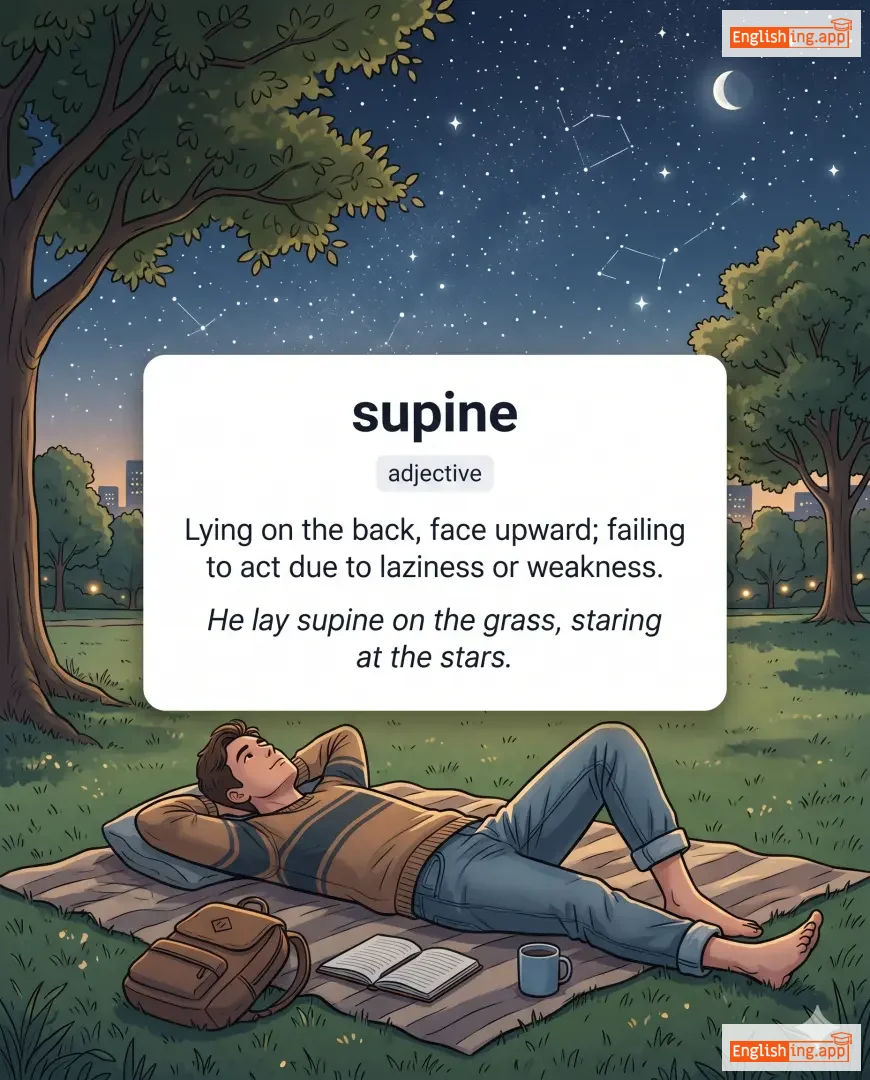
adjective
/ˈsuːpaɪn/
лежать на спине (lezhat na spine)

Lying on the back, face upward; failing to act due to laziness or weakness.

"He lay supine on the grass, staring at the stars."

"Он лежал на траве, смотрел на звезды." (On lezhat na trave, smotrel na zvezdy.)
noun
/swiːt/
люкс (lyuks)

a set of rooms designated for one person's or family's use or for a particular purpose

"They stayed in the presidential suite at the hotel."

"Они остановились в президентском люксе отеля." (Oni ostanovilis' v prezidentskom lyuksie otelya.)
noun
/ˈsʌn.deɪ/
воскресенье (voskresen'ye)

The day of the week between Saturday and Monday; often considered a day of rest or worship.

"We usually relax at home on Sunday."

"Мы обычно отдыхаем дома в воскресенье." (My obychno otdykhaem doma v voskresen'e.)
noun
/ˈsʌn.flaʊər/
подсолнух (podsolnukh)

a large yellow flower that turns to face the sun

"The sunflower field looked amazing in the bright sunlight."
"Поле подсолнечников выглядело потрясающе на ярком солнце." (pole podsolnechnikov vyglyadelo potryasayushche na yarkom solntse)
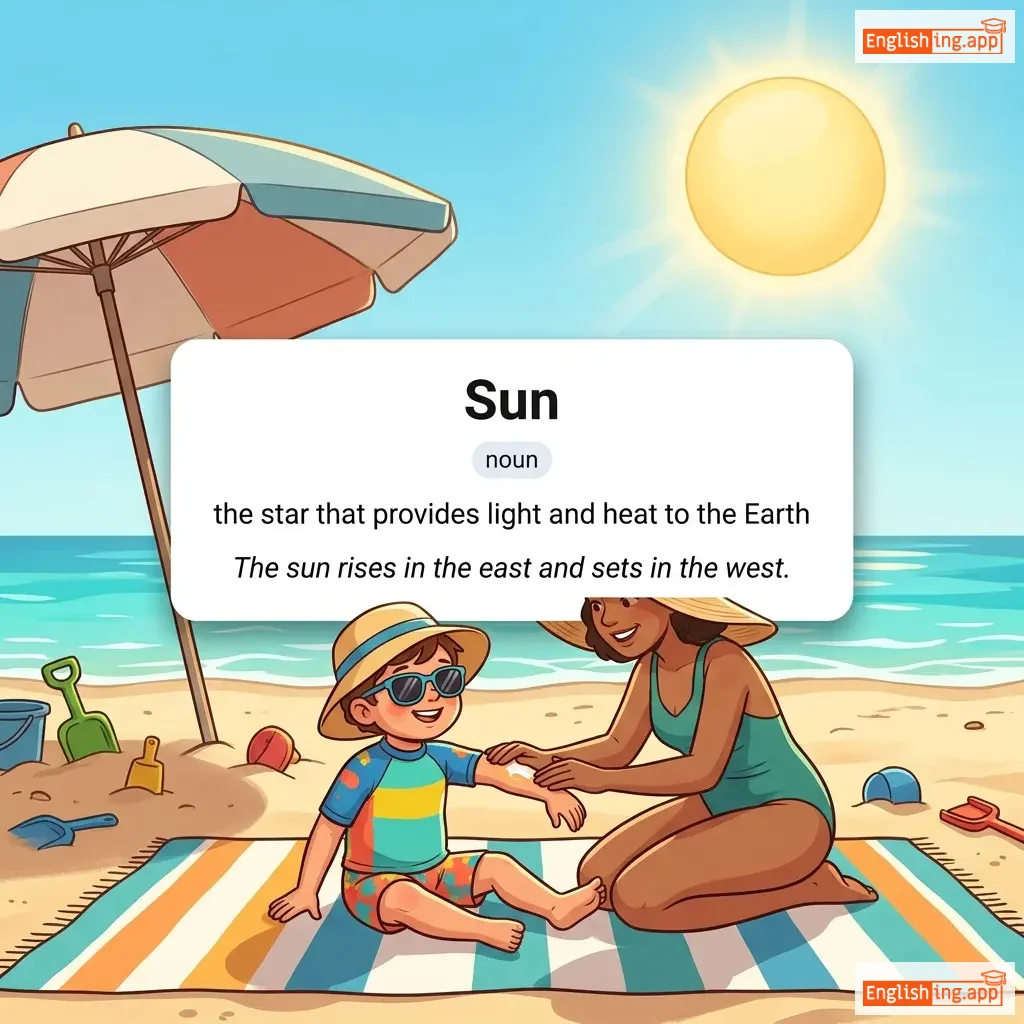
Sun definition card — visual illustration of the meaning
noun
/sʌn/
солнце (solntse)

the star that provides light and heat to the Earth

"The sun rises in the east and sets in the west."

"Солнце восходит на востоке и садится на западе." (Solntse voskhodit na vostoke i saditsya na zapade.)
adjective
/ˈsʌmp.tʃu.əs/
роскошный (roskoshnyy)

Splendid and expensive-looking; luxurious.

"The guests were treated to a sumptuous banquet."

"Гостям подали роскошный банкет." (Gostyam podali roskoshnyy banket.)
adjective
/ˈsʌmp.tʃuˌɛr.i/
относящийся к законам или регламентам, ограничивающим личные расходы на предметы роскоши (otnosyashchiesya k zakonam ili reglamentam, ogranichivayushchim lichnye raskhody na predmety roskoshi)

Relating to laws or regulations intended to limit personal spending on luxury goods.

"In medieval Europe, sumptuary laws restricted the wearing of expensive fabrics to the nobility."

"В средневековой Европе законы по ограничению расходов ограничивали ношение дорогих тканей только аристократией." (V srednevekovoy Yevrope zakony po ogranicheniyu raskhodov ogranichivali nosheniye dorogikh tkanej tol'ko aristokratiey.)
verb
/ˈsʌmən/
призывать, вызывать (prizyvat, vykhodyt)

To order someone to come or to gather courage or strength.

"The king summoned his advisors to the court."

"Король призвал своих советников в суд." (Korol prizval svoikh sovetnikov v sud.)
Summit of the Future definition card — visual illustration of the meaning
noun
/ˈsʌm.ɪt əv ðə ˈfjuː.tʃər/
Саммит будущего (Sammit budushchego)

A high-level conference focused on addressing future challenges and opportunities.

"The Summit of the Future addressed global challenges."

"Саммит будущего рассмотрел глобальные проблемы." (Sammit budushchego rassmotrel global'nye problemy.)
summit definition card — visual illustration of the meaning
noun
/ˈsʌmɪt/
пик, вершина (pik, vershina)

The highest point of a hill or mountain; a meeting between heads of state or leaders.

"The leaders met at the summit to discuss global issues."
"Лидеры встретились на вершине, чтобы обсудить мировые проблемы." (Lidery vstretilis' na vershine, chtoby obsudit' mirovye problemy.)
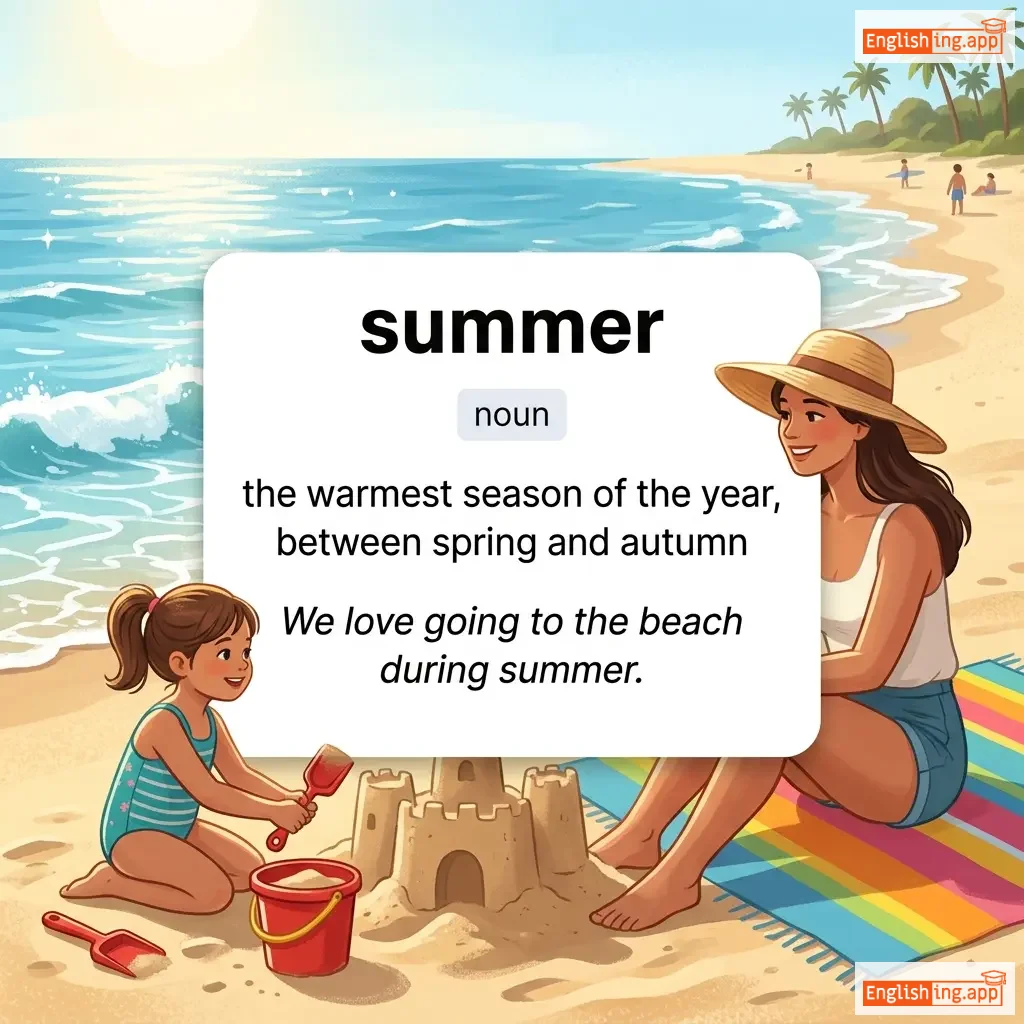
summer definition card — visual illustration of the meaning
noun
/ˈsʌmər/
лето (leto)

the warmest season of the year, between spring and autumn

"We love going to the beach during summer."

"Нам нравится ходить на пляж летом." (Nam nravitsya khodit' na plyazh letom.)
noun
/sʌˈmeɪʃən/
сумма, резюме (summa, rezyume)

The process of adding things together; a summary of points.

"The lawyer gave a powerful summation of the case."

"Адвокат дал мощное резюме дела." (Advokat dal moshchnoe rezyume dela.)
noun
/ˈsʌməri/
резюме (rezume)

A brief statement of the main points of something.

"She wrote a summary of the book for her class."

"Она написала резюме книги для своего класса." (Ona napisała rezyume knigi dlya svoego klassa.)
verb
/ˈsʌməraɪz/
подводить итог (podvodit itog)

To give a brief statement of the main points of something

"She summarized the report in just a few minutes."

"Она суммировала отчет всего за несколько минут." (Ona summirovala otchet vsego za neskolko minut)
noun
/sʌm/
сумма (summa)

the total amount resulting from the addition of two or more numbers or items

"The sum of 8 and 12 is 20."

"Сумма 8 и 12 равна 20." (Summa 8 i 12 ravna 20.)
adjective
/ˈsʌltri/
жаркий и влажный, привлекательный (zharkiy i vlazhnyy, privlekatel'nyy)

Uncomfortably hot and humid; also describes someone attractive in a passionate or sensual way.

"The sultry weather made it hard to focus on work."

"Жаркая и влажная погода затрудняла сосредоточение на работе." (Zharkaya i vlazhnaya pogoda zatrudnyala sosredotochenie na rabote.)
verb
/ˈsʌli/
порочить (porochit)

to damage the purity, integrity, or reputation of something

"The scandal sullied the politician’s reputation."

"Скандал порочил репутацию политика." (Skandal porochil reputatsiyu politika.)
adjective
/ˈsʌlən/
угрюмый (ugryumyy)

bad-tempered and gloomy; silently resentful

"She gave him a sullen look and walked away."

"Она бросила на него угрюмый взгляд и ушла." (Ona brosila na nego ugryumyy vzglyad i ushla.)
adjective
/ˈsʌl.ki/
вопящий и угрюмый; капризный (vopyashchiy i ugryumyy; kapriznyy)

bad-tempered and sullen; moody

"The child became sulky when he couldn't get his favorite toy."

"Ребёнок стал вопящим, когда не мог получить свою любимую игрушку." (Rebyonok stal vopyashchim, kogda ne mog poluchit' svoju lyubimuyu igrooshku.)
sulk definition card — visual illustration of the meaning
verb
/sʌlk/
подухать (poduhat)

to be silently resentful or moody

"He went to his room to sulk after the argument."

"Он пошел в свою комнату, чтобы подухать после ссоры." (On poshel v svoju komnatu, chtoby podukhat posle ssory.)
noun
/ˈsuːtər/
ухажёр (ukhazhor)

a man who pursues a relationship with a woman, often with the intent to marry

"She had many suitors vying for her attention."

"У неё было много ухажёров, борющихся за её внимание." (u neyo bylo mnogo ukhazorov boryushchikhsya za yeye vnimanie)
suffrage definition card — visual illustration of the meaning
noun
/ˈsʌfrɪdʒ/
избирательное право (izbiratelnoe pravo)

the right to vote in political elections

"The movement fought for women’s suffrage in the early 20th century."

"Движение боролось за избирательное право женщин в начале 20 века." (Dvijenie borolos za izbiratelnoe pravo zhenshchin v nachale dvadtsatogo veka.)
noun
/ˈʃʊɡ.ər ˈkæn.di/
сахарные конфеты (sakharnye konfety)

crystallized sugar formed into small pieces; rock candy made from sugar syrup

"The children enjoyed eating colorful sugar candy at the festival."

"Дети наслаждались едой разноцветных сахарных конфет на фестивале." (Deti naslazhdalis edoy raznotsvetnykh sakharnykh konfety na festivale)
noun
/ˈʃʊɡər/
сахар (sakhar)

a sweet substance made from plants or produced synthetically

"She added two spoons of sugar to her tea."

"Она добавила две ложки сахара в чай." (Ona dobavila dve lozhki sakhara v chay.)
verb
/səˈfjuːz/
наполнять (napolnyat)

to gradually spread through or over something

"A warm glow suffused her face as she smiled."

"Тёплый свет наполнил её лицо, когда она улыбалась." (Tyoplyy svet napolnil yeye litso, kogda ona ulybalas.)
noun
/ˈsʌfrədʒɪst/
суфражистка (sufrazhistka)

a person advocating the extension of suffrage, especially to women

"The suffragists organized rallies to demand voting rights for women."

"Суфражистки организовали митинги, чтобы требовать избирательных прав для женщин." (Sufrazhistki organizovali mitingi, chtoby trebovat' izbiratel'nykh prav dlya zhenshchin.)
adverb
/səˈfɪʃəntli/
достаточно (dostatochno)

to an adequate degree or extent

"She studied sufficiently to pass the exam."

"Она училась достаточно, чтобы сдать экзамен." (Ona uchilas' dostatochno, chtoby sdat' ekzamen.)
adjective
/səˈpraɪzd/
удивленный (udivlennyy)

feeling or showing astonishment or shock

"She was surprised by the news."

"Она была удивлена новостью." (Ona byla udivlena novost'yu.)
adjective
/səˈfɪʃənt/
достаточно (dostatochno)

enough; adequate for a purpose

"She had sufficient money to buy the dress."

"У нее было достаточно денег, чтобы купить платье." (U nee bylo dostatochno deneg, chtoby kupit' plat'ye.)